
In short
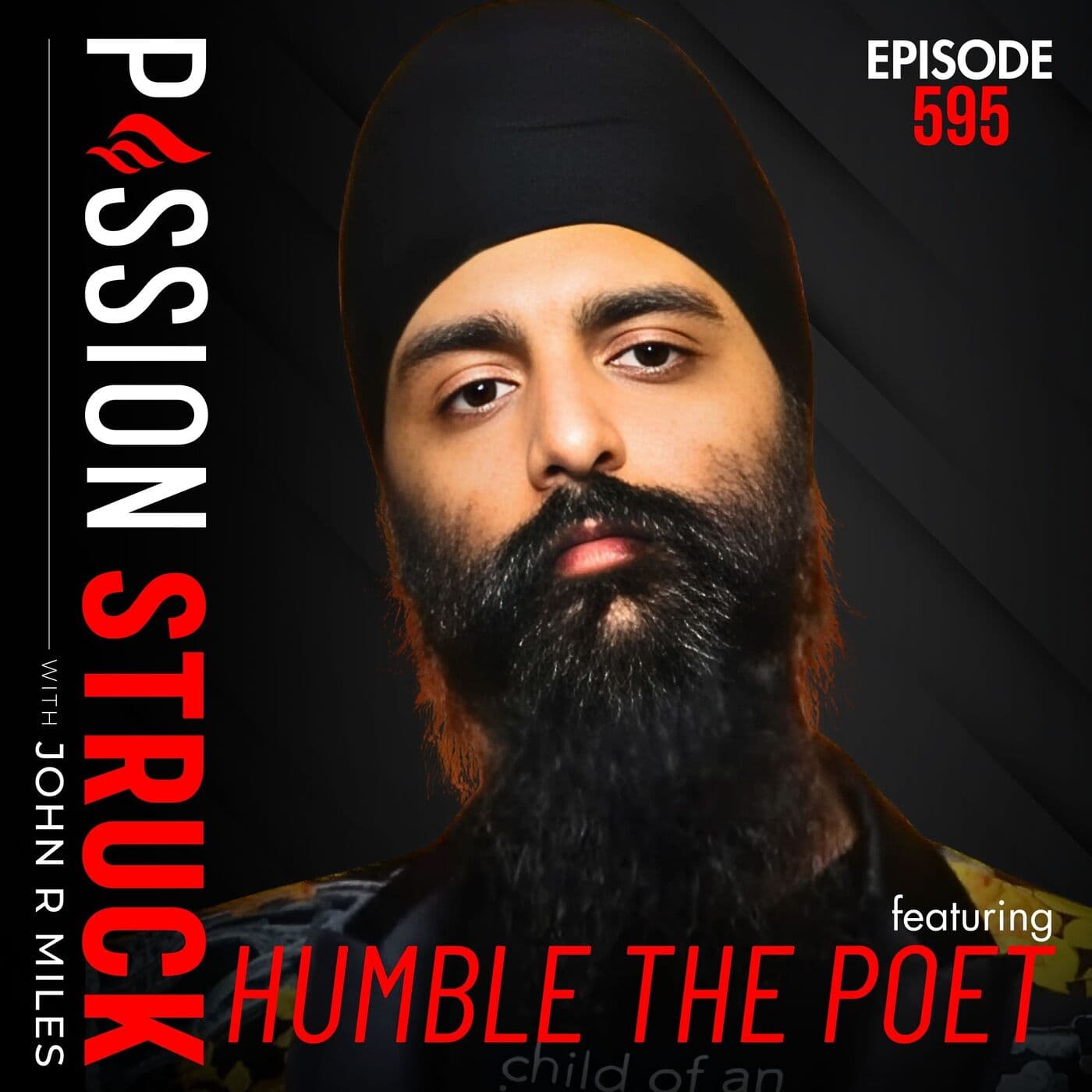
Podcast Episode Summary: Passion Struck with John R. Miles - Humble the Poet on How to Stop Anxiety and Find Inner Peace | EP 595
Episode Overview In this episode of *Passion Struck*, host John R. Miles interviews bestselling author and spoken-word artist Humble the Poet. They discuss anxiety, self-worth, and resilience, drawing insights from Humble's new book *Unanxious: 50 Simple Truths to Help Overthinkers Feel Less Stress and More Calm*. The conversation explores the societal roots of anxiety, the importance of self-compassion, and practical methods to manage emotional well-being.
Key Themes and Discussions
Understanding Anxiety
- Anxiety as Feedback: Anxiety is framed not as a flaw but as feedback that can guide personal growth.
- Overachievement and Anxiety: The societal pressure to succeed often leads to heightened anxiety, making individuals feel like their self-worth is tied to productivity.
Society's Role in Anxiety
- Modern Society's Influence: The episode highlights how contemporary life, with its constant noise and distractions, fosters anxiety.
- Disconnection: The shift from tight-knit communities to larger, impersonal societies contributes to feelings of isolation and anxiety.
Tools and Strategies for Managing Anxiety
- Vulnerability and Self-Compassion: Emphasizes the need for self-compassion and the importance of being vulnerable to manage anxiety effectively.
- Building Authentic Connections: The conversation stresses the value of genuine relationships over "fast food" emotional connections often found in the digital age.
- Micro-Practices: Suggestions such as grounding exercises and conscious reflection on emotions to cultivate resilience.
Reframing Failure and Success
- Failure as a Learning Tool: Humble urges listeners to view failure as a necessary part of growth rather than a reflection of self-worth.
- Redefining Success: Encourages setting "impossible goals" to shift focus from outcome-driven success to the journey itself.
Emotional Management and Resilience
- Managing Emotions: Discusses the significance of not suppressing anxious feelings but rather experiencing and understanding them.
- Triggers: Encourages viewers to confront emotional triggers as opportunities for growth rather than obstacles.
Practical Takeaways
- Self-Care Practices: Drink water, get adequate sleep, and engage with supportive people.
- Shifting Language: Replace "should" with "could" to foster a more compassionate internal dialogue.
- Preparedness over Calmness: A healthy nervous system is not about being calm all the time but being prepared for challenges.
Pivotal Quotes
- "Anxiety isn’t something to fix—it’s something to feel, manage, and grow through."
- "You can’t shame a caterpillar into becoming a butterfly faster."
- "The world is a dumpster fire, and it’s not your fault for feeling anxious."
Conclusion The episode serves as a potent reminder that anxiety is a universal experience in our fast-paced world. Humble the Poet emphasizes that acknowledging and navigating through anxiety can lead to resilience and personal growth. By fostering genuine connections and practicing self-compassion, individuals can better manage their anxiety and live more fulfilling lives.
Further Engagement For more insights and resources, listeners are encouraged to check out Humble the Poet's website and consider reading his book *Unanxious*.
- [Humble the Poet's Website](https://www.humblethepoet.com/)
- [Passion Struck Podcast Shownotes](https://passionstruck.com/humble-the-poet-on-stop-anxiety-find-inner-peace/)
Next Episode Teaser The following episode features Anne Marie Anderson, an Emmy Award-winning broadcaster, discussing leadership, resilience, and communication.
---
This summary encapsulates the essence and key points of the dialogue between John R. Miles and Humble the Poet, shedding light on how to manage anxiety effectively within today's challenging environment.
Written by AI. May contain mistakes. Listen to the episode to check what was said.
Transcript
Automatic transcript. May contain errors.0:00Coming up next on PassionStruck. All we need in our lives is a direction, an orientation, no matter how specific, no matter how vague. If we know where we're going, that in itself reduces our anxiety. If you put someone in the middle of the desert and they have no idea where to go, their anxiety is going to go up. Just say, hey, head north. That will reduce their anxiety. We need a little bit of clarity. We need a little bit of direction, something that we can orient ourselves towards. And then we just enjoy the journey, understanding that journey is going to have its highs and its lows, its easy days, its very difficult days, and who we become through going through.
0:38That is the only thing that matters. Welcome to Passion Struck. Hi, I'm your host, John R. Miles, and on the show, we decipher the secrets, tips, and guidance of the world's most inspiring people and turn their wisdom into practical advice for you and those around you. Our mission is to help you unlock the power of intentionality so that you can become the best version of yourself. If you're new to the show, I offer advice and answer listener questions on Fridays. We have long form interviews the rest of the week with guests ranging from astronauts to authors, CEOs, creators, innovators, scientists, military leaders, visionaries and athletes.
1:19Now let's go out there and become passion struck. Hey, passion struck fam. Welcome to episode 595. Whether you've been with us for a while or you're tuning in for the first time, I am absolutely thrilled you're here. You're now part of a global movement dedicated to unlocking your potential, forging resilience, and making what truly matters matter most. Let me ask you, what if your anxiety isn't a flaw to fix, but a signal to understand. What if managing stress wasn't about numbing it, but learning how to live through it intentionally and without shame? Today, I'm joined by someone who's redefining how we think about anxiety, Humble the Poet.
2:00He's a former elementary school teacher turned international bestselling author, spoken word artist, and creative force. In his latest book, Unanxious, 50 Simple Truths to Help Overthinkers Feel Less Stress and More Calm, Humble invites us into a deeply personal journey, offering fresh, actionable truths for navigating modern life with more grace, resilience, and self-compassion. In our conversation, we explore how modern society fuels our anxiety, why connection is a non-negotiable for emotional well-being, and how to trade shame for self-trust. We also dive into the high achievers anxiety trap and why so many of us mistake productivity for self-growth.
2:40But before we dive in, don't miss last week's conversations with organizational psychologist Dr. Tasha Yorick on building unshakable resilience, Stanford's Gregory Walton on the hidden power of social belonging, and Christy Smith on how to live with deep authenticity and truth. If you're new to PassionStruck, explore our curated starter packs on Spotify or visit passionstruck.com slash starter packs. Want more exclusive content? Subscribe to my Live Intentionally newsletter. And for full video episodes, check out the Passion Struck YouTube channel. Looking to bring more intention and resilience for your organization or team?
3:17Visit johnrmiles.com slash speaking to learn how I can help inspire your people toward real transformation. Now, let's get started on this powerful conversation about managing anxiety, building inner strength, and showing up as your most authentic self. Let's dive in with Humble the Poet. Thank you for choosing Passion Struck and choosing me to be your host and guide on your journey to creating an intentional life. Now, let that journey begin.
3:46I am absolutely thrilled today to welcome Humble, the poet, to PassionStruck. Welcome, Humble. Thank you so much for having me, John. I have to just congratulate you on your new book, Unanxious. The subtitle is 50 Simple Truths to Help Overthinkers Feel Less Stress and More Calm. Congratulations on its release. Thank you so much. I really appreciate that. We're going to be diving more into the book throughout our conversation today, but I'd love to open these conversations with a thought-provoking question. We all have defining moments, I call them in our lives, that influence who we become. I was hoping you might be able to share a defining moment for you.
4:25Yeah, so in 2010, I decided to walk away from my stable career as an elementary school teacher to pursue my creative itches. At the time, I thought I was just a mediocre teacher. And when I was creating art after work, I was known as the tough one, the guy who was getting everyone to work extra hard and put in the extra hours. And it really helped me differentiate. Oh, maybe I'm not lazy. I'm just doing the wrong thing. And I realized it was one of the first instances where I was able to give myself grace through observing myself and picking up on my patterns. and being my own cheerleader to encourage myself to pursue a life that felt more authentic.
5:10And it was definitely not the easiest leaving a job and starting from scratch as a creative, but definitely it was one of the largest turning points in my life where now as I live and have such unique, beautiful experiences, I wonder what if you didn't pull that trigger? You hadn't done it. So that definitely is one of those moments in my life that really changed everything, not just in my external world, but also in my internal world in terms of how I viewed myself and how I treated myself. Well, thank you so much for sharing that. And I have to say, when I think about myself, I've never really considered myself to be a teacher.
5:48In fact, it's something that I really feel like I struggle with. How do you come up with the lesson plans? How do you make sure that what you're saying is really reaching the audience? And I think one of the things I did when I first started this podcast is I felt like I was talking at the audience instead of talking with them and bringing them more into it. So they felt the emotion and there was a deeper connection and I still have a long way to go, but it's those who do it well. It is such an important art for people to understand. So I'm just grateful you were a teacher and trying to help shape lives because Lord knows we need good teachers.
6:30Most definitely. And it's such an interesting position to be in because a fraction of the job is the teaching. And if you start thinking, going back to your own memories and thinking about your favorite teachers, you don't remember much about what they taught. It's really about if they made you feel seen, they made you feel heard and how they made you feel about yourself. And I think that was a big valuable lesson because I went in thinking that, ooh, I love learning and I want to be a lifelong learner and this would be a great environment for that. And then I realized this wasn't just going to be a knowledge base.
7:01It was not to fill anybody's head with knowledge, not mine, not theirs. It was to light a fire in both them and I. And as you said, there's talking at an audience, talking to an audience, just talking through an audience. And it really is when we introduce emotion, vulnerability, honesty, is that when we build that authentic connection, which is a two-way street, even with a platform like a podcast where we may not be able to have the conversations with the people on the other end, we can still create a two-way street of connection. And I think that's the most important part for us to learn and grow with each other.
7:43So Hamal, this isn't part of anything I scripted out for today's discussion. I have to go a little bit deeper with you here because I think it's an important topic. You just brought up something so important. You said, as a teacher, one of the things that you're trying to do is to make the kids feel seen, to feel heard, to feel significant, which is the essence really of matter. And when I think about schools today, and now my kids have grown up, they're 21 and 26. But I remember as they were growing up and going through the school system, it just seems like in so many ways, they're being conditioned to do the opposite in so many ways.
8:24We have standardized tests that break people of being creative. Kids, instead of feeling comfortable about speaking their mind and giving the answer that comes top of their head and being inquisitive, get conditioned to give the answer that they think the teacher wants to hear, or they're embarrassed to do it in front of their classmates. and I could go on and on, but I'd love your perspective on this. It is really interesting because you start to realize that the structure of the school, the classroom, the clock, the hierarchy in terms of your teachers, your principals, a lot of it really feels industrial.
9:02And you start to realize you're like, oh, this is really, you're preparing children for society, but really what society is an economy. You're preparing them to contribute to an economy, not contribute to a community. Our communities have become so big. We live in cities of millions of people now that we can't have these deep connections with our village, with the people even in our own neighborhoods. And what ends up happening is in school, it's about, okay, let's get these basic lessons taught. Let's reward people with very specific learning styles. We're rewarding behavior that works well in a workplace.
9:38rewarding behavior that works well for somebody who's looking for a salary in two weeks off per year. And there are so many different learning styles and people absorb the world in so many different ways. Some people, a simple example would be if you want to teach children two plus two is four, some kids, you can just write it on the chalkboard and they'll get it. Some kids, you're going to have to give them a bunch of Cheerios to play with and manipulate and they have to get that structure that way. Some people, you can just tell it to them and they'll understand. There's auditory, there's visual, there's kinesthetic.
10:11And when you start to fill up a teacher's classroom with 35 kids, they don't have the bandwidth or the resources to approach each individual student the way they need to be approached. And then you start to recognize that some of the success and the failures with individuals as they grow up really has to do with a world just not being designed for them in the way they are. And that really robs us of some of the most important things that we need, which are soft skills. I'm sure you recognize it too just being able to work with people making friends cooperation coexisting sharing all of these are have they have such an important value not only just the society but even if you're working your job at some point everyone's got the same resume and they're going to hire the person they want to see every day and I think we really realize that a lot of this is really based on feeding something that may not be as important as we think it needs to be.
11:06As I said, the standardized testing, the reading, and we're not updating it. We're not updating it for the fact that there's a calculator in our phones. We're not updating it for the fact that AI exists or YouTube lessons exist. And it's a really interesting thing that I think individual parents have to take a look at when it comes to getting, preparing their kids for the world. I think you and I have both understood in our entrepreneurial journey that you got to learn as you go and you got to constantly learn there's no finish yeah there's no paperwork and I always the analogy that I use is the zoo in the jungle and it's like even when I was working in the school I felt like I lived in a zoo I felt like I was in a cage every two weeks someone gave me my food but I was trapped in a cage and then when I left the safety and security of a job, I moved to the jungle and I was definitely more free and I could go wherever I want, whenever I wanted.
12:03But that cage that held me in was also protecting me from predators. And it was also providing me food that I had to find myself. And there was a couple of years it took for me to adjust to it, but I'm grateful I did because I think, and I'm sure you can attest to this again as an entrepreneur, there are no more curve balls that we're not prepared for because every day is a curveball all we're doing is practicing our swing to deal with the curveballs of life and i think in the new world that we're in that's probably one of the most important things that we can teach younger children is resilience through challenge and the simple idea that the world will never get easier you can only get stronger and have them correlate that to the societies we live in where every single product being sold to us is sold in the name of convenience.
12:55This will make it easier to get your food. This will make it easier to watch a movie. This will make it easier for you to get from point A to point B. Not understanding that we're not just paying with money, we're paying with resilience. And then our lack of resilience is an abundance of anxiety, stress, tension. And when we have an abundance of those, then we start to lack empathy. We start to lack our ability to connect with other people. the idea the way education is currently structured it almost feels like it's sabotaging us from a mental health perspective but also from the perspective of us having even basic empathy for each other and caring about each other and hyper individualism is great for those who want to profit but it's not so good for us to be excited about getting out of bed in the morning Yeah, to me, it's almost like we become very good at preparing our kids to be controlled because all the systems that you're talking about are trying to control us, control our attention, control our buying habits, control the type of clothing we want, control the type of car we want.
14:06It's all a control mechanism. And when we give up our creativity and our free thinking, a lot of that goes to the wayside. Even governments control us. Absolutely. And I think the important thing to recognize as well is, especially during the pandemic, how much did we rely on creativity to keep our lips above water? We were listening to podcasts, we were watching Netflix, we were listening to music, movies. These are children that never grew up creating this. And we depended on that. We depend on music when we're stuck in traffic. We depend on these things and we should value them accordingly.
14:46This stuff isn't just here for fun. It is a necessary part of our system. It's a necessary part for our mental health and our ability to get through the day. And it can't just be for entertainment. It has to be storytelling because as a species, that's how we progress. We write our stories, we share our stories, and we learn from other people's stories. That's great. Right. And I want to direct us back to Unanxious, your book. And I really found it interesting how you started it with a powerful grounding exercise. Unclench your jaw, gently take your tongue off the roof of your mouth and let it rest.
15:24Why did you feel it was important to start the book that way? Because when I was going through my research and I came across some of these activities, it's almost presumptuous to assume that somebody needs to unclench their jaw and take their tongue off the roof of their mouth but that's where it's already at it's this the idea of the body keeps score it's we're already our bodies are already compensating for the stress and the tension that we're feeling and i wanted to meet people where they're at and say look we're all going through a difficult time and it's important that you understand that i see where you're coming from and I'm not here to promise you magical inner peace for the rest of your life.
16:08What I'm here to do is start a dialogue with you and address some of the despair that we all feel. Despair meaning the hopelessness when we think we've run out of options. This book isn't a magic pill to rid people of anxiety. This book is a book full of options that we may not have considered to manage our emotions more effectively and navigate this world, which is getting heavier and more challenging every single day. So it was important for me to start it where I felt I was already meeting people. My big question that I was asking myself as I was writing this book, because I wrote it selfishly to address the anxious feelings I was having around circumstances in my life.
16:53It was what does a white belt in anxiety look like? What does somebody who is just, we all have anxious feelings. Not all of us have realized it yet. And my question was just like, how do I meet somebody at the very beginning? And it was this idea that we're viewing anxiety as some sort of condition. I have in that same chapter, anxiety is in herpes. It's not dandruff. It's not a condition that you need to cure. It's a signal. It's like hunger or something that we need to pay attention to. It's something that when it's tuned correctly is one of our greatest gifts. it's on our team. And it was really important for me to recognize that all of us are dealing with way more than we should be dealing with.
17:38And I wanted to approach that with grace and respect. So the reader understood that, look, we're all in the same boat. Let's go on this journey together. I'm still on the journey and I'll forever be on this journey. And if we go through it together, I'll take the first steps by being vulnerable and open about it. And let's see if we can improve together as a collective. Yeah. What you just said reminded me of one of the lines that really stuck with me. And that is you wrote, I hate that you had to pick up this book. And I think we all hate that we have to pick up the book, but anxiety has become such a universal struggle affecting all components of life from the oldest people in society to Gen Alpha.
18:26It's just incredible. So we're going to talk about some of the ways to confront it throughout our discussion. But I wanted to go back to something you were talking about earlier. I happened to interview Dr. Sandra Matz, who's a professor at Columbia, and she wrote this recent book about digital psychology. And she starts her book out by talking about how she was born in a small village in Germany. And everyone in this village knew everything about her. Like when she lost her cat, everyone knew about it. When she got into a motorcycle accident, for better or worse, everyone knew about it. But throughout all of it, she always felt like she mattered.
19:08And you write and share in the book that your parents grew up in villages without electricity. Your mother felt nostalgic when she visited a small town in Kenya. And that sense of belonging to a tight-knit community is something that, as you brought up, now that we're in this global village, feel very disconnected from. How do you think modern isolation is contributing to our anxiety? It's something you and I talked about before we even came on the show. And what's your advice to the listeners on how they can build community in their own life? I think there's a general statement about us as a species, as I think our outside world has evolved and changed significantly quicker than our biology has.
19:54We're not even biologically designed to consume some of the colors that we're seeing. These colors don't exist in nature. There's a super normalness to them when we experience them and if you think about the world that we live in which is post-industrial super modern this is a world that's existed for maybe 300 years and we as a creature in our form we've been around for maybe 50 to 100 000 years looking the way and having the biology that we do and we if we for the majority of human history we were always in smaller communities we were in communities of probably 50 to 150 people. And we developed programming that put the needs of our village over ours, understanding that rejection would have led to our death, understanding that we are part of something greater than us.
20:47And then a lot of our modern day problems relate to the fact that we still have the software, but it doesn't work when you have a million people. You can figure out who the coolest kid is in your middle school if you got 300 kids, but you can't figure out who the coolest kid in Manhattan is if there's 11 million people here. And that does something that discombobulates our ability to process information. And what happens with that, and you include this concept of for the needs of the economy, we're being pushed towards a culture of hyper individualism. I think the first thing that I would love to say to the audience is understand your need for authentic connection with real people in real life.
21:29It's a non-negotiable. We need each other. We need each other. Not that we want. We need each other. And it's our responsibility to create these connections. And it's really important to understand that modern society has provided us with fast food options. just like eating fast food. If you're hungry, you can eat fast food and it'll be quick. It'll be cheap. It'll be easy. And obviously it'll be really delicious because of all the flavoring they put in. But if you eat it long enough, you start to realize, wait, I'm still lacking nutritional value. We can't replace nutrition with something that's just delicious.
22:11And we have fast food versions of connection, being on our phones. We have fast for dating apps, watching television, living through a screen. These are fast food versions of things. People encouraging us to feel sorry for ourselves, self-victimhood. That is pretty much developing a fast food connection with yourself saying nobody understands what I'm feeling except for me. And it scratches, temporarily scratches that itch for connection. And what we have to understand is community, authentic community is really important. And I cite in the book, just even the way we have urban planning. The amount of lanes between where you live and across the street determines how often you'll cross the street to even see your neighbor over there.
22:56And this is the part that's important. When we have connection, we build more empathy. We have more opportunities to be seen. I'm fortunate here in New York City, I have a really cute puppy. So when I'm not with her, people aren't looking at me, but when I'm with her, everybody remembers her. And that encourages a lot of different conversations, a lot of local businesses know her. For her, every day is Halloween. She's walking into stores, getting free candy, free doggy treats, et cetera. But I think from this concept of us building connections and needing each other, it's really important that we prioritize connecting with people in ways that feel authentic to us.
23:35We often try to fit in and we often have to. Maybe we have to fit in at work. We have to fit in at school. We have to fit in certain social circles, but figuring out where we authentically belong will give us a feeling that will scratch so many itches that we won't find ourselves spending too much time chasing these fast food distractions. Yeah. As I was thinking you, thinking through all the stuff that you were just saying, one thing that I have learned that I think is so important for people to understand is we've gotten to this point where we think connection, our bonds are earned. And what people don't realize, they're not earned, they have to be built.
24:22And when you don't take the effort to build them, they collapse. And that is what has happened is over time, they have collapsed. And this constant pressure for individualism that you brought up, that all the social networks are just driving down our throat is just making it worse. Absolutely. And piggyback off that, they have to be built and maintained. If you build a bridge between you and someone else, you got to clear the debris every now and then. There's going to be ruptures and it's good that are going to require repair and again we're in such a predicament where all this convenience is being provided to us and sold to us that when we hit these moments of challenge we're like well i can just swipe right and find a new date or i can just go hang out with another friend and it's something that i don't blame anybody for feeling because it's a challenge whenever we hit a roadblock there's an option of either getting some grit and pushing through or just bouncing off of it and moving on to the next thing.
25:27And in a world where everything is becoming hyperdisposable, it makes us feel hyperdisposable and it makes others feel hyperdisposable, which again, severs connections or minimizes our motivation to build a connection with others. Yeah, it just strikes me that when I think about the early days of the Biden administration, he was really pushing for an infrastructure bill to fix the infrastructure problems that we have throughout the United States, meaning bridges that haven't been taken care of for decades, roads that have potholes in them. And I don't know if anyone's driven across the country lately, but there are a lot of roads that are in really bad shape, bridges, other infrastructure.
26:12And the same thing comes as you're talking about to our relationships. If you don't keep maintaining that infrastructure, what's happening to the infrastructures in America where you and I live start crumbling. Same thing. Absolutely. None of our greatest relationships will have a happily ever after. There's always going to be a day after. And that day still requires more work. And oftentimes we've just been signaled by content that was designed to entertain us. But now we think it's there to inform us that no, you just find people. You just find that friend and you guys are best friends for life.
26:47And no work is needed. and there'll be no ruptures or you find that your soulmate and you guys will just be perfect and happy and have no issues or you find that perfect job or you find that perfect place to live and the only promise is change we're constantly changing and that's okay it's anticipating that change and being okay with the challenges that come from that change we can't avoid challenges because those are the gifts that allow us to grow and become more resilient it. No, absolutely. So Humble, one of the things you talk about in the book is the unlearn project, which is based on this idea that learning is never ending.
27:28And it's one of the things I always love Tom Billy, who talks about all the time, is that we are the ultimate learning machines. It's something I wrote about in my first book as well. What's something you had to unlearn about anxiety while you were writing this book? Oh, I think the first thing I had to unlearn is that anxiety is not my enemy. Anytime that I have anxious feelings, I'm not under attack. And I think also recognizing that anxiety, to say my anxiety, I have anxiety. I think that wording is not helpful. So I think recognizing things through the lens of, is this helping me or is this not helping me?
28:14So I stopped judging things as good and bad. So instead of saying my anxiety or I have anxiety, now my base sentence has to be, I feel anxious because, and this requires me then to go inwards to figure out what's happening. I feel anxious because I'm about to miss a deadline. I feel anxious because someone didn't reply to my text message. I feel anxious because Team Canada might be losing this hockey game, whatever it may be. But I think giving understanding anxiety is the most misunderstood emotion that we have. And one of the most intense, giving that I feel anxious and not labeling myself as I am anxious, allows me to separate myself from my emotions, understand that they're not permanent, understand they're not tattoos on my forehead labeling my identity and that goes for the positive and the negative emotions i feel happy i feel scared and for me that was probably the first step in going through all of this and then recognizing some of the signs of anxiety and trying to make sense of them without getting too scientific we have the polyvagal theory which is our safety fight or flight freeze and sometimes fawn and understanding this idea too was like, hey, I can logically understand that I shouldn't be in danger now, but my body is responding in a totally different way.
Read the full transcript
29:47And for me, a lot of that learning came from doing jujitsu. In the book, I talk about doing jujitsu. And the reason I think jujitsu was a great teacher for me, it's because you roll with people. You're rolling and jujitsu was grappling, or as I like to call it, professional cuddling. And you're rolling with somebody that you know holds no malice towards you but the moment they grab you and get an arm around your neck your body starts to panic and it shows you a big separation within you between how your body responds to something and how your logical mind can and very often when we are flooded with emotions it's not our logical mind it's not the prefrontal cortex that's responding it's our survival brain it's our amygdala.
30:30And what we're really trying to do to improve how we feel is to close that gap of reacting to something and converting that to a response. And the inconvenient truth of that, and I've been learning this a lot, is that you can't talk yourself out of anxiety, but you have to, you can't think your way out of it. You have to act your way. And a lot of that comes through voluntarily putting yourself in situations that make you feel anxious when you're in a great place and so for me that's required understanding this concept of triggers and realizing that triggers aren't my enemy again another cultural concept that we have is don't trigger me that's triggering this is a trigger warning and it's like the truth is a trigger is a roadmap the trigger is revealing where we need to do the work.
31:22So for example, if I'm walking down the street and I walk by somebody and they're wearing a fragrance and the fragrance is the same fragrance that maybe an ex-girlfriend wore of mine and she hurt me, that fragrance is going to trigger a pain. It's going to trigger an anxiety. Now in the moment, I feel when we do feel these triggers, we should be kind to ourselves and be like, all right, whatever I need to do to get over this. I need to grab my phone, doom scroll. Do I need to smoke a cigarette? Do I need to distract myself, avoid Medicaid? whatever I need to do fine in that moment do it but later when you're in a good place when you've hydrated when you've had a good night's sleep when you're in a good place now let's voluntarily go back into that trigger let's journal about it maybe let's go to a department store let's smell it let's re-identify what that is and what that means to us and this is the work that I realize it's voluntarily putting yourself in that so you know back to jujitsu somebody wrapping their arms around my neck made me freeze then doing enough jujitsu them wrapping their arm around my neck would put me in fight or flight now that i've been doing jujitsu for a couple of years i my heart rate doesn't change i stay calm and i can stay logical in those situations and be like oh he's trying to choke me does he have it is his elbow in the right place and i can and to me now it feels much more like a game and it's the same way you throw a kid in the swimming pool they're going to freak out the first time enough exposure allows their nervous system to be like, Hey, I'm not in danger.
32:50And a lot of the times that we feel anxious is because our survival brain says, Hey, this rhymes with something that might be dangerous. And its definition of dangerous is so broad, anything new, anything that kind of looks dangerous, anything that potentially harmed us in the past. And it really is the work that we have to do is to be like, Hey, let's voluntarily put ourselves in these stressful situations. We talked about Wim Hof earlier. That's all he's encouraging us to do. Put yourself in some really cold ice water and watch your brain freak out, but stay in long enough until your brain's like, wait, we're not going to die.
33:31This is okay. And it builds resilience. It's not magic. It's a nice, simple concept of we have to be nicer to ourselves, but at the exact same time, we have to voluntarily put ourselves through stress. And I think what I realized is, especially as a school teacher, is when we were kids, somebody else was in charge of putting us in these uncomfortable situations, in these new situations. They packaged it to be fun, but this is how we learned how to sound out letters and read. This is how we how to do math. This is how we learn almost every skill. But then as we become adults, we start to avoid anything that feels uncomfortable.
34:07And then that's when our growth almost becomes very stagnant. This is an opportunity for us to self-parent and self-advocate and be like, Hey, let's voluntarily find difficult things to do regularly. And that's how we train our resilience. So when hard things and challenging things find us, we're more prepared to deal with it. A healthy nervous system isn't a calm nervous system. It's a prepared nervous system. We need to be prepared. We don't need to be zen all the time. We need to be prepared and allow our emotions to be expressed the way they need to be expressed at the appropriate times. Two of the quotes from your book that resonated with me with what you were just discussing are you share an analogy about a house plant wilting under the sink, and you say you can water it all you want, but without sunlight, it's just wanting to die.
35:02And that really made me think about how much of our anxiety really comes from our internal struggles versus external environments that simply aren't nourishing us. But the other thing it made me really think about is one of my favorite quotes was this, you're not anxious. You're just living in an anxious world. You touched on this a little bit, but if you could share or unpack one big idea for the audience, how do we navigate an environment that constantly feeds our stress? I'll say it bluntly. The world is a dumpster fire. it's not your fault and there is nothing wrong with you for feeling anxious while existing here okay it is not a feeling to feel anxious in this current modern world that we're in this is not your fault and i think very often we internalize our challenges like oh no no i should be able to handle this everybody else around me is doing so well and it's no we're all trying our best to deal with this dumpster fire of a world.
36:09And it's really important to understand that it would be odd if you were completely emotionally regulated in this type of world. We are not designed for the amount of noise, the amount of light, the amount of stimulation, the exposure to bad news, the exposure to information, the exposure to different opinions, echo chambers, and all of this on a regular basis. This is not what we've been designed for as a species. So it's going to be overwhelming. It's going to feel heavy. It's going to feel challenging. And it's going to constantly trigger our survival brain, the amygdala, to think that there is danger just around the corner.
36:52So I think the first thing is to give yourself grace and understand this is not your fault. Now, even though it's not your fault, it's still definitely your responsibility. And you have options to make it easier or more difficult. And I think the key messages that I would put even before you have to read this book is like, hey, drink more water, get more sleep, be significantly nicer to yourself, and hang out with people that make you feel good about yourself and allow you to be who you are authentically. These are four options right there that will take some of that weight off your chest and some of that weight off of your shoulders.
37:39So when you deal with stress that you can avoid, like your job, like raising your children, like navigating the landscape of what our society is, you have a little bit more bandwidth, you have a little bit more gas in the tank. And I think that's the important part, which is recognizing what's in our control, and what's not in our control. We can't control so many of these outside factors. And it's very challenging for us to control some of the inside factors. So a lot of it needs to start with being kinder to ourselves. One word that I would highly recommend we divorce ourselves from is the word should.
38:18We keep saying, I should do this. I should do that. We're just creating tension by using that word. Let's replace it with the word could. I should wake up earlier. Let's change that to, I could wake up earlier. I should eat healthier. Let's replace that. I could eat healthier. I should go to the gym. I should make more money. all of these things every time we tell ourselves who we should be we are creating tension by not allowing ourselves to accept who we are self-love is accepting us as we are warts and all think about the person you love the most you could probably write a whole list of their imperfections none of that disqualifies them from love it's the same thing for us for us to have a connection with ourselves means we need to accept ourselves so shoulding and saying we should be doing this and And Phil Noseworthy is the man that put me into this idea.
39:08He said it funny. He goes, don't shit all over yourself. All this shitting isn't happening. And I think it's a beautiful way to look at it where it's just like, just let go of that word. Let go of that word shit. Catch yourself every time you use it internally and externally. And question, why should I two and a half kids in a picket fence? Why should I find a life partner as soon as I graduate university? why should i believe what this politician is telling me and i think it becomes a lot more interesting when we start doing that because it encourages an internal dialogue that i realize begins this infinite journey inwards and what it'll allow you to do is to make a lot more improvements on how you feel on the inside and it'll lead you down a journey of equanimity and equanimity just means prepared managed emotions again i'm not i have a chapter about eternal peace, inner peace.
40:03And I'm not here to sell you this idea that you can live on top of a mountain and meditate every day. I'm here to show you that you can have more managed emotions in this chaotic world, whether you live in New York City and have sirens in the back of your podcast episode, or whether you live out in a farm in middle America and your closest neighbor is 25 minutes away. The chaos on the inside is the chaos that we need to address first, which will allow us as a collective to improve the chaos around us. Well, thank you so much, Humble, for sharing that. And one of the areas I really wanted to go into, because I think it's important and it's something the audience of PassionStruck is going to want to talk about, is the overachievers anxiety trap.
40:47And in the book, you mentioned overachievers are overanxious. And I think a lot of people who are listening right now are like, yep, that's me. And I know being a high achiever myself, I have struggled with anxiety. Well, one thing I really like that you touched on is you write, not reaching for success, we're often just trying to fail. And I think that's a really important aspect of why we become overanxious. How does that fear of failure fuel our anxiety? And what's a better way to redefine success? Absolutely. So I lived in Los Angeles full-time and part-time for about six years. And there you meet some extremely famous, extremely successful people.
41:40And I, as a learner, wanted to see their drive, understand their drive, how they accomplish so much and still get up early in the morning and keep going. And I did start to realize a lot of that drive was an anxiety. There was something to prove. There was something to avoid. There was also a survival mode. They were in survival mode. It may not be survival for putting food on the table, but it was survival for relevance. Here in New York, I see a lot of people who are in survival mode for a lifestyle. So it's really not about succeeding. It's about this avoiding failure. it's kind of when we think about our families sometimes we do so much work not to really make them proud of us but just to get them off our back just to not have to hear their little comments and that's where the anxiety is because at any moment it can happen at any moment it can happen so i think the first thing we have to do is we have to recognize and redefine concepts like failure failure isn't the opposite of success failure is the path that we pave to get to success failure and rejection show us what's not for us what doesn't work for us the most successful strategy to accomplish anything is trial and error you try something either it works or it doesn't work now when we're kids and we do little science experiments it's fun we don't fall into emotional melancholy the moment we try an experiment and it doesn't work out the way we think it needs to.
43:09And we have to approach life the same way. We can be high achievers, but we have to even the same thing. We have to redefine what success is. So there's a concept that I explore, which is having the impossible goal. Because the only value of a goal is that it sets a direction and an orientation for us. And the only rewards through achieving a goal isn't hitting the goal. It's not the finish line. It's who we become on that journey. So when we set an impossible goal, let's say, for example, John, you're like, I want 25 billion people to hear this podcast. Now there aren't 25 billion people on earth, but what you've done is you've set a direction.
43:55You've set a direction for what needs to happen for this larger goal to occur. And you also save yourself from the subconscious idea that I'm not good enough until I hit this goal. Because what happens is we say, oh, I want a million subscribers. You hit a million subscribers. You're never chasing the actual number of subscribers. You're chasing the feeling that you think you're going to get when you hit the goal. And then you hit the goal and you're like, wait, this wasn't enough, or I didn't get that feeling. And the truth that we entrepreneurs know is the only way to hit a million is to aim for 10.
44:27And the only way to get to 10 million is same for 100. So these will be milestones on this journey. So let's just skip all that, pick something that is literally impossible, like wanting an audience that is largest in the population of the earth. And now we have a direction that we're headed. And I think that's the important part here is because now we're no longer associating our worth with the success of a finish line. All we need in our lives is a direction, an orientation, no matter how specific, no matter how vague. If we know where we're going, that in itself reduces our anxiety. If you put someone in the middle of the desert and they have no idea where to go, their anxiety is going to go up.
45:09Give them, just say, hey, head north. That will reduce their anxiety. We need a little bit of clarity. We need a little bit of direction, something that we can orient ourselves towards. And then we just enjoy the journey, understanding that that journey is going to have its highs and lows, it's easy days, it's very difficult days, and who we become through going through, that is the only thing that matters. Now, for me specifically, after hitting a couple of goals, financially, follower-based, career-wise, I think what I realized was authentically for me, my endless journey of success is how much can I minimize betraying myself?
45:52I don't think there will ever be a time where I can completely not betray myself, completely always be my authentic self, but just constantly working towards that idea. How do I further not betray myself? And because you sometimes realize somebody gives you a big check, that might actually be a golden handcuff that puts you in a situation that you actually don't want to be in. So for me, I realized The less masks I have to wear, the easier it is for me to breathe, the lighter I feel, and the less often I feel anxious feelings. And for me, every decision I come, I always ask that question. Am I betraying myself if I head in this direction?
46:37And I think that's important. And I give myself grace because sometimes you have to. Sometimes you got to wear that tuxedo to the wedding, even though you want to wear sweatpants. It's just the little things like that. I understand social contracts. I understand the world that we live in. But at the same time, as I said, I'm constantly minimizing. It's a journey towards minimizing. And for me, I understand that's a never-ending journey. And the direction is so much more important than the destination. It certainly is. And I can relate to what you were saying. One of the jobs I took earlier in my career was for one of the largest software and IT hardware companies in the world.
47:16And I got this huge seven figure plus sign on bonus. And when I first got it, I looked at it as a gift. and about three months into the job, I realized how much I was owned by them and it wasn't truly a gift at all. It was really a curse. So be careful what you ask for. Definitely. And I do want to just add the caveat that I think there's only two tax brackets. There's enough and not enough and in no way, shape or form are we being philosophical or spiritual when it comes to people who are in the not enough category. If you are in survival mode and you're struggling to pay for your groceries, do what you got to do to get yourself in a financial situation to get your lips above water.
48:01But please understand once you've done that, once you're in a comfortable financial situation, adding a couple of more zeros to your net worth will do nothing for your mental health. But that's only once you're out of survival mode. Yeah, it was so interesting, Humble. I can't remember the exact percentage, so I'm going to just guess. but I was listening to a radio show and they were talking about this whole topic. And the thing that struck me was they said that I think the number was 85 % of people who make a hundred thousand dollars are living paycheck to paycheck. And it just made me really step back.
48:44And it was like my own life. The more money I made, the more I wanted. And you start accumulating this life that you have to earn more and more to, to afford. And it just takes away all those things that bring joy into your life, so to speak. Absolutely. Is, is so true. And I think it's also about the journey of self-discovery. A friend of mine, just this year, he had started a company, left the company, still owned a lot of stock in it. And then this past year he had to sell his stock and he massive windfall. The joke was we call him an NBA player because he just had a massive windfall. And the question was like, what are you going to do with it?
49:27And I remember he said, I'm getting my mom a personal trainer because I want her to be able to open jars until she's 90. He goes, I want to get a chef because I want to see if I can eat healthier. And he goes, maybe a Jeep. and it was just like these it wasn't like diamonds in my teeth a rolex a lamborghini penthouse in the sky and it really felt like his these purchases that he was making were really in alignment with what mattered to him and i think the first thing i'm saying getting a personal trainer for his mother just like a full-time trainer to help his mom so she can open jars and be independent and do the things that she needs to do and i think that's the important thing where it's like we do become slaves to lifestyle thinking that this is survival and i think for me the gift of leaving my comfortable government canadian teaching job canadian teachers get paid more leaving all of that and starting from zero having to sell my condo move back in with my parents it taught me to live with much less way much less so once seven years later I started making decent money.
50:34I didn't have any expensive habits anymore. I got a puppy with expensive habits. We can afford her habits right now. But me, I don't really have anything too expensive. I think I learned to live without for so long that I was like, oh yeah, I really don't, I really don't need any of that stuff, even if I can afford it. And I think that was one of the gifts of going through that journey, which was like learning to live. I went years with a credit card. I was paying cash and I remember waiting outside. If I had to go park somewhere, I'd wait at the parking meter and offer people cash to use their credit card just to pay for parking.
51:07And those simplicities allowed me to learn my priorities. And I think when we know our priorities, our purpose, our direction, that does wonders for how we feel about ourselves. And then we start, we stop looking outside so much and feeling the outside pressure to keep up because we know that's on in alignment with who we are and being who we authentically are will take off so much tension, weight, and stress off our lives. Amen. So I wanted to go to guilt and shame. And in your chapter around this, you write guilt and shame don't help us improve. They just make us tired and sad. And we all tend to just cling to guilt and shame instead of letting them go.
51:55go. And I found you used a great metaphor in the book. You can't shame a caterpillar into becoming a butterfly faster. Yet so many of us become our worst critics. What's your best advice for shifting from self-criticism to self-compassion? I think I love using the entrepreneur analogy, which is I am self-employed. I have the worst boss and the worst employee ever. and I realize when I'm trying to get myself to do some work that it's not helpful like I don't get the results that I want being mean to myself and guilting myself it doesn't lead to the results that you think and then you realize like hey this wouldn't work if I was talking to my assistant I couldn't guilt and shame her that's not sustainable long term and I couldn't speak to my employer that way, it wouldn't be sustainable either.
52:53So I was like, oh, I can't speak to myself if I'm my own boss. And I can't speak to myself if I'm my own employee in these ways. I think there is an element of guilt that I think is important, which is when you feel like you're betraying yourself, when you feel like you've acted out of your own character. If I'm having a bad day and I'm rude to a barista at the coffee shop, and that's not me. And I know that's not me. I'll feel guilty. And I think that guilt is the authentic guilt that we probably need, which is, Hey, that's not you. Let's correct that. I think what ended up happening now is being weaponized.
53:24A lot of our emotions have been weaponized via manipulation, via generations and generations of practice with our families. There's a quote in the book that says, your parents know how to push your buttons because they installed them. And guilt and shame become some of the biggest weapons. There's that level of manipulation. So I think for us, it's realizing that we have to be our own best friends. And we have to just recognize that the guilt that we think we're feeling is really us doing an old practice of trying to metabolize other people's pain. I don't want to let John down. So I'm going to put myself through more pain so he doesn't feel it.
54:04And it sounds noble. John's a resilient person. And John can deal with me saying, hey, I can't make this interview today if I'm not feeling well. or we have to realize that like it's not helpful to to take everybody's stuff upon us and also recognize as i said you can't guilt and shame caterpillar into becoming a butterfly there's a process there the same way that you can't rip open a caterpillar in a cocoon to help it become a butterfly quicker its muscles wouldn't have developed and the wings won't fly so it's recognizing how often guilt and shame are used and becoming observant when you hear politicians using it, when you hear public figures using it, when you hear your family using it, when you start to realize that, hey, there's an internal dialogue that uses it for me too.
54:48And you realize, and I learned this a lot being an educator, working with little kids. If you have to speak to them, you have to motivate them. Hey, buddy, see, you haven't done any work yet. Let's get to work. Because you can't just keep using guilt, shame, and fear on them. And realizing that, look, when we're talking to ourselves, we're talking to a scared child within, that inner child. and the goal here is to be effective and helpful i'm not talking about what's right and what's wrong or what's ideal versus what's not ideal i'm talking about what's actually effective what's going to get you the results and for me it's the same thing where it's like okay i got to go to jiu-jitsu today but i'm not feeling good and then i have the conversation with myself like hey are we excuses because we don't want to go or are we actually just not feeling good and i can trust myself to have that authentic conversation and be like hey look man we have a good history with each other.
55:35Let's do that. And I think about that as a self-employed individual being like, hey, we've been self-employed since 2010. Let's look at our patterns. Have we ever missed a deadline or messed up work because we played an extra video game or we went out to watch a movie or we spent time with friends? No, we haven't. So we're not going to guilt or shame ourselves if we do it today. And I think collecting information about yourself and using that to pick up on your patterns as self-awareness, which I think is an important practice. And it allows you to be nicer to yourself. And when we're nicer to ourselves, we'll get more results.
56:09It will give us the results that we think guilt and shame will get us. And this is really important because the guilt and shame will increase the tension, which by default will increase the anxious feelings. And the goal is to feel anxious feelings less. So we only feel them when we absolutely need to. Thank you for so much for sharing that humble. Last question I wanted to ask you before we wrap up is if unanxious had a thesis statement, one single idea that you hope sticks with readers long after they finish it, what would it be? There's nothing wrong with you for feeling anxious. It's completely normal.
56:52It's like goosebumps. It's like hunger. It is a normal part of this. It is just an emotion. We have to do a lot more work to manage. Anxiety isn't anything we need to cure. It's just like hunger. You don't cure hunger. You manage it. And if you're feeling hungry, you don't ask yourself, what's wrong with me? I'm feeling hungry. And also, we've also had those moments where we feel hungry and it wasn't actual hunger. Food wasn't, maybe we're actually dehydrated. Maybe we were actually stressed. anxiety works the same way we may feel anxious and the secret to addressing and managing the anxiety is to feel it anxiety is a signal imagine anxiety you're driving in your car and the light turns on and it says low tire pressure that's a signal to check your tire pressure when you check your tire pressure maybe it wasn't low then we're like oh something must be wrong with the signal let's address it or your tire pressure is low you put the air in tire and you won't feel that signal anymore however we are living in a society that says instead of feeling your feelings let's medicate let's avoid let's distract so pretty much we live in a society that's telling us hey if you see that low tire pressure monitor in your car just put some duct tape over it but if you hear your smoke alarm go off don't look for the smoke just put some duct tape over it or take out the batteries.
58:21That does not solve the problem. That's putting a bandage on a bandage. Let's feel our feelings. And unfortunately, resilience, when we practice resilience, it's not a warm, fuzzy feeling. It's a very uncomfortable feeling. For those who are listening right now, an easy day at the gym wasn't a good day at the gym. It's the same thing with life. We can't constantly chase an easy life because we're trading our resilience that's the price we're paying for that and our resilience comes from voluntarily putting ourselves in challenging places we have to go out and find challenges so we are better prepared when challenges find us there's nothing wrong with us for having these types of emotions the work that we need to do is just to make sure these emotions show up at the right times and they're not misfiring just because we got an awkward text message or we have a deadline.
59:17And they show up when it really matters, when there's real danger, when there's real change. And I think that requires us to be significantly nicer to ourselves, being significantly more patient with ourselves. Patient doesn't mean waiting around. Patient just means respecting the time it takes for things to naturally occur. You know, you can't just turn up the oven and bake the pie quicker. We have to respect time that it takes. And it's the same thing with our personal growth and understand that this is a lifelong journey. We're not going to solve this by snapping our fingers or flipping a switch.
59:52This is a lifelong journey. For me, this book was inspired by the anxiety that I would feel around reaching out to people, reaching out to people and saying, hey, can I come on your podcast? Hey, can I share this book with you? I felt so much anxiety around asking because I was so afraid of rejection. and I was trying to figure out why. And then you start to learn that rejection is such an ancient fear of ours because when we live in these smaller communities, rejection meant ostracism, which meant death. So when we feel rejected, when we feel left out, our ancient software is still making that feel like death.
1:00:29So what do we do? We avoid, we distract, and we medicate. And what I realize now is that, no, I have to lean into that. I have to lean into rejection. If anything, I have to voluntarily get rejected as much as possible so I can build resilience from it. And I think everyone listening can understand that. We all hate being rejected, but we all fantasize about the idea of who we would be and what our life would look like if we were not afraid of it, if we were enthusiastic towards it. They say some of the most successful entrepreneurs get dopamine hits through rejection. And I think that's a really interesting idea.
1:01:05And for me, even now on this journey of promoting this new book, I've been reaching out. I've been texting, messaging people and asking them to come on podcasts and help me promote the book. And some are replying. Some have surprised me. Some have completely went ghost. And all the emotions that I'm feeling, all I'm doing is I'm surrendering to them. And my definition of surrender isn't giving into them. It's observing them and saying, hey, I texted so-and-so three days ago. they would always reply to me now since I've asked for a favor they haven't replied how does that make me feel and I journal about it it makes me feel like I'm not worthy it makes me feel like I'm not good enough it makes me feel like the connection wasn't authentic and I can explore these I can explore these feelings could there be any other explanations maybe they're busy maybe they have anxiety around saying no maybe they can't accommodate this and what it allows and it has taught me is that when I'm kinder to myself and have more grace for myself, I'm kinder to others and have more grace for others and vice versa.
1:02:08And this was the reason this book was such an important mission for me. It started as a selfish journey to deal with the anxiety that I was feeling. And it helped me realize that this is the biggest problem we are facing as people that currently, and I hope it doesn't change, but anxiety currently is the biggest problem that we're facing that hasn't been politicized. It hasn't become a polarizing topic. There isn't two sides to this conversation right now. And it's everybody of every walking, of all walks of life, no matter how you live, no matter what your political leanings are, we feel anxious feelings and i realize is if we can address this as a collective the anxiety that you're feeling isn't an individual problem it is a societal problem which means it's not going to have an individual solution it's going to have a societal solution and if we as people as individuals and a collective address this we are going to feel better as individuals and as a collective.
1:03:11And I don't think there's anybody, especially in this country, feeling like that we're united, that we're in a good place right now. And I think this is the first step to us feeling better in our own skin, in our own universe inside, and in the universe around us. I think that ties so well to how you end your book. You write, we may not have all the answers, but we can choose how we respond to life's uncertainties. So embrace the chaos. And remember, Life's too short to let anxiety steal your joy. Humble, I can completely relate to everything you just said because me getting on podcasts, as my book was coming out, was so much more difficult being a top podcaster than I ever expected it to be.
1:03:54So it must have brought you joy when I reached out to you. Really did. And I really appreciate that. As I said, every time, this is my fourth book through the major channels. and every time it's you're always pleasantly surprised you make a new friend and this is us now and at the same time it goes the other way too where you're unpleasantly surprised by others it's a part of the journey and as I said it's a great practice for grace and acceptance and a wonderful opportunity to sit there and observe the chaos that goes on in your mind and in your body when you deal with rejection, when people say pass, when people may say, oh, no, the story isn't interesting enough for us to cover.
1:04:38It's such an interesting thing where you start to realize the differences between worth and value and understanding how this game gets played. And it's been really interesting for me through my journey of self-love and self-acceptance of recognizing how much of this journey I want to play. And some of the best advice I was given, and I'll share it with you and anyone else listening, is I'm just on a mission. You watch those heist movies. You watch Ocean's Eleven and George Clooney just goes around recruiting people for the mission. That's all I'm doing here. I'm on a mission to help people better manage their emotions.
1:05:12And I'm reaching out to people to be a part of this mission. And some people have given me a thumbs up and they're like, you son of a bitch, I'm in. And everybody else is not. And that's okay. If they're not on the mission today, they may be on it later or they may never be. And I think that's completely okay. As long as I'm being authentic to what matters to me. and that's part of this and I've also been in this long enough to know that we have no idea how this stuff plays out this book is selling million copies and it could be the worst thing that ever happened to me it could sell ton copies and I could be completely happy we don't know we don't know how things play out anymore and I think it's a fantastic opportunity in surrendering observing and adjusting my stake in the outcome but I definitely with all my heart really appreciate you sharing your time and your platform with me to have this conversation.
1:05:59Well, Humboldt, my honor. And it was so incredible to have you here. Best of luck on the launch of the book. And I hope through this, we develop a friendship that extends beyond the podcast. Most definitely. Thank you so much for joining. Cheers. I appreciate it. That's a wrap on a powerful conversation with Humboldt the Poet. I hope this episode left you feeling seen, understood, and a little less alone. One of the biggest takeaways from today's discussion, there's nothing wrong with you for feeling anxious. In fact, it's a natural response to an overwhelming world. But instead of silencing the signal, Humble shows us how to listen to it, reframe it, and use it as a guide for growth.
1:06:39We explored the idea that modern life has become a fast food version of connection, leaving us emotionally undernourished. Humble challenges us to reclaim community, prioritize real belonging, and stop shooting ourselves into exhaustion. As he put it, you can't shame a caterpillar into becoming a butterfly faster. He also introduced a powerful mindset shift. Instead of fearing rejection, lean into it, practice it, get comfortable being uncomfortable, because that's how resilience is built. So I want to leave you with three questions. Where are you mistaking anxiety for failure instead of seeing it as a signal?
1:07:13How can you start building authentic connections, not fast food ones? And what's one area in your life where you can replace shame with curiosity? If you found value in this episode, I encourage you to pick up Humble's book, Unanxious. The link to the book and more resources are in the show notes at passionstruck.com. Looking to bring more intention and resilience to your team or organization? Then sign up for my weekly newsletter where I include tips, challenges, and ideas on how to drive your team to newer heights. If you enjoyed today's episode, a five-star review goes such a long way in helping PassionStruck reach more people.
1:07:50And if someone you know is struggling with anxiety or burnout, share this episode with them. It might just be the message they need to hear. Coming up next, a mind-expanding episode with Dr. Emily Falk on how the brain processes influence and how to use that knowledge to spread meaningful change. You won't want to miss it. The importance of social connection to us as humans is baked into our biology. And so it makes sense that we have an alarm system that helps us tell when we're at risk of losing those connections, right? So we're sensitive to signals of potential rejection or actual rejection because it then motivates a bunch of useful behaviors to help us reconnect either with the person if we've done something that causes harm or with other people if we've been excluded or rejected.
1:08:40Thank you for being here, for being curious, and for choosing to live intentionally. The fee for the show is simple. If you found it valuable, share it. Until next time, live life passion struck.
From the publisher
In Episode 595 of the Passion Struck podcast, host John R. Miles sits down with bestselling author and spoken-word artist Humble the Poet to explore the emotional terrain of anxiety, self-worth, and resilience in a world that never slows down.
They discuss themes from Humble’s new book Unanxious: 50 Simple Truths to Help Overthinkers Feel Less Stress and More Calm, including how modern society fuels anxiety, the trap of overachievement, and how to reclaim inner peace through vulnerability and self-compassion. This episode is a powerful reminder that anxiety isn’t something to fix—it’s something to feel, manage, and grow through.
Full Shownotes here: https://passionstruck.com/humble-the-poet-on-stop-anxiety-find-inner-peace/
In this conversation, we explore tools and micro-practices to regulate emotion and build resilience. We dig into:
- Why anxiety isn’t a flaw—it’s feedback
- The connection between overachievement and chronic stress
- How shame sabotages personal growth
- Why we mistake success for self-worth
- How to shift from self-criticism to self-compassion
- The dangers of “fast food” emotional connections
- How to build authentic community in a disconnected world
Connect with Humble the Poet: https://www.humblethepoet.com/
- Factor Meals: http://factormeals.com/factormeals50off and use code “FACTOR MEALS 50 OFF”
- Rosetta Stone: Unlock 25 languages for life at “ROSETTASTONE.com/passionstruck.”
- Prolon: Reset your health with 15% off at “ProlonLife.com/passionstruck.”
- Mint Mobile: Cut your wireless bill to 15 bucks a month at “MINT MOBILE dot com slash PASSION.”
- Hims: Start your journey to regrowing hair with Hims. Visit hims.com/PASSIONSTRUCK for your free online visit.
- Quince: Discover luxury at affordable prices with Quince. Enjoy free shipping and 365-day returns at quince.com/PASSION
Next on Passion Struck:
In the next episode of Passion Struck, John sits down with Anne Marie Anderson, an Emmy Award-winning broadcaster, sports journalist, and leadership expert. Anne Marie has spent years breaking barriers in sports media, navigating high-stakes environments, and coaching top athletes and executives on leadership, resilience, and communication. In our conversation, we'll dive into the mental frameworks of high performers, the art of storytelling, and how to build confidence in any field.
For more information on advertisers and promo codes, visit Passion Struck Deals.
Join the Passion Struck Community!
Sign up for the Live Intentionally newsletter, where I share exclusive content, actionable advice, and insights to help you ignite your purpose and live your most intentional life. Get access to practical exercises, inspiring stories, and tools designed to help you grow. Learn more and sign up here.
Speaking Engagements & Workshops
Are you looking to inspire your team, organization, or audience to take intentional action in their lives and careers? I’m available for keynote speaking, workshops, and leadership training on topics such as intentional living, resilience, leadership, and personal growth. Let’s work together to create transformational change. Learn more at johnrmiles.com/speaking.
Episode Starter Packs
With over 500 episodes, it can be overwhelming to know where to start. We’ve curated Episode Starter Packs based on key themes like leadership, mental health, and personal growth, making it easier for you to dive into the topics you care about. Check them out at passionstruck.com/starterpacks.
Catch More of Passion Struck:
- My solo episode on The Success Edge: How to Be an Effective Anxiety Optimizer
- Can't miss my episode with Dr. Jud Brewer on Breaking Anxiety Shackles and Rewiring Habits
- My episode with Dr. John Delony on the 6 Wise Choices to Build a Non-anxious Life
- Catch my interview with Homaira Kabir on How You Overcome the Tyranny of Perfection
If you liked the show, please leave us a review—it only takes a moment and helps us reach more people! Don’t forget to include your Twitter or Instagram handle so we can thank you personally.
How to Connect with John:
- Connect with John on Twitter at @John_RMiles
- Follow him on Instagram at @John_R_Miles
- Subscribe to our main YouTube Channel and to our YouTube Clips Channel
- For more insights and resources, visit John’s website
Want to explore where you stand on the path to becoming Passion Struck? Take our 20-question quiz on Passionstruck.com and find out today!
See Privacy Policy at https://art19.com/privacy and California Privacy Notice at https://art19.com/privacy#do-not-sell-my-info.


