
In short
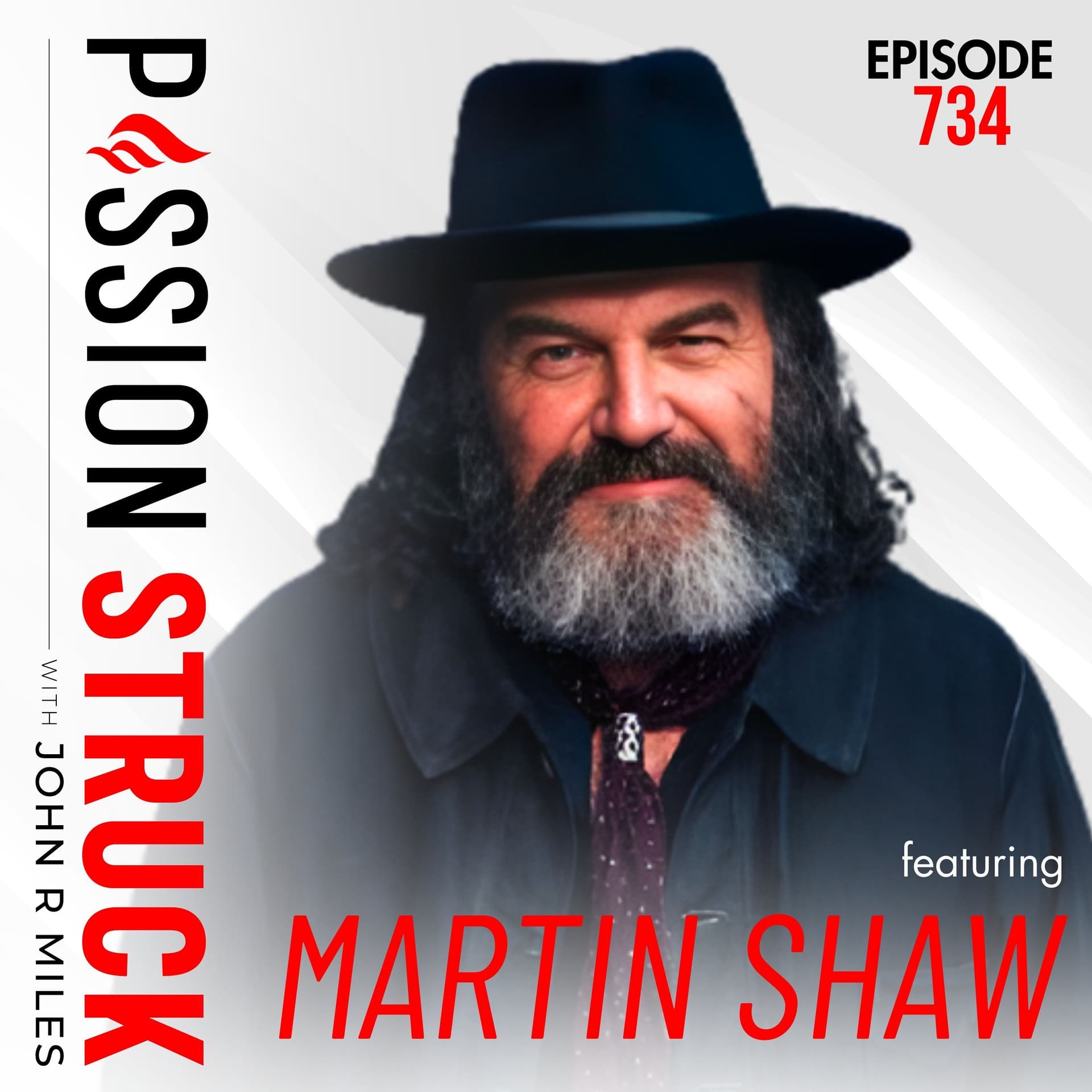
Podcast Notes: Passion Struck with John R. Miles - EP 734
Episode Title Liturgies of the Wild and the Ancient Art of Finding Meaning | Dr. Martin Shaw
Episode Summary In this episode, John R. Miles hosts Dr. Martin Shaw, a renowned mythologist and author of the book *Liturgies of the Wild*. They discuss the spiritual exhaustion of modern life, the importance of myth, and how ancient stories can foster a meaningful life. Dr. Shaw argues that modernity's excesses have led to a "myth-impoverished" culture and emphasizes the need to reconnect with deeper narratives that shape identity and growth.
Key Concepts and Themes
- Modern Life and Spiritual Exhaustion
- Diagnosis of Modern Life: Dr. Shaw notes that despite greater connectivity, modern life feels "thin and frantic." He attributes this to excessive choice and digital noise stripping the weight from our souls.
- Myth Imagination: Shaw believes we are not under-informed but rather myth-impoverished, lacking the profound narratives that could guide us through life's challenges.
- Understanding Myths
- Myth vs. Story: Myths are sacred narratives that explain how we came to be, while stories can be more varied and less profound. Myths provide communal identity and sacred truths.
- Participation in Myths: Shaw encourages people to actively engage with their personal myths rather than merely observing their lives as passive spectators.
- The Role of Limits
- Liturgy of the Limit: Meaning is often found in what we choose to say "no" to. Shaw argues for choosing depth over the superficial growth encouraged by modern society.
- Depth vs. Growth: He emphasizes that growth without depth leads to a shallow existence, urging listeners to focus on meaningful growth.
- The Importance of Initiation
- Crisis as a Catalyst for Growth: Initiation rites, often missing in modern culture, help individuals navigate adversity and build resilience. Shaw draws parallels to military training and traditional rituals that prepare individuals for life's challenges.
- The Need for Participation
- Active Engagement: Shaw stresses that a meaningful life requires active participation in one's own narrative. He compares life to a mosh pit, where true involvement is messy but vital for growth.
- The Power of Praise
- Discipline of Praise Making: Recognizing life as a gift involves cultivating an attitude of appreciation even amidst difficulties. This practice enhances our capacity for joy and connection.
Key Takeaways
- Reclaim Your Story: Listeners are encouraged to take their stories seriously and actively participate in shaping their narrative rather than being passive observers.
- Embrace Limits: Emphasizing limits can lead to deeper fulfillment and understanding of one's purpose.
- Rekindle the Mythic Imagination: Reconnecting with ancient narratives can provide guidance and meaning in contemporary life.
Action Items
- Engage with Myths: Listeners are invited to explore their own myths and stories, allowing them to be challenged and reshaped by those narratives.
- Practice Presence: Pay attention to moments of moral beauty and small acts of kindness, as these can lead to profound insights and connections.
- Support the Movement: Explore more about the podcast and Dr. Shaw's work by visiting his website and engaging with the materials linked in the show notes.
Additional Resources
- [Liturgies of the Wild (Book)](https://drmartinshaw.com/books/)
- [Passion Struck Podcast](https://passionstruck.com)
- [Connect with John R. Miles](https://linktr.ee/John_R_Miles)
---
This episode of *Passion Struck* highlights the need to rediscover meaningful narratives in our lives, turning away from the distractions of modern society and instead engaging with deeper stories that foster growth and connection.
Written by AI. May contain mistakes. Listen to the episode to check what was said.
Chapters
Tap a time to open that second in VOThe Importance of Mattering
0:45 to 3:06
John discusses the significance of feeling like you matter and its impact on mental health.
“This is the show where we explore the art of human flourishing and what it truly means to live like it matters.”
Introducing Dr. Martin Shaw
3:06 to 4:19
John introduces guest Dr. Martin Shaw and sets the stage for their conversation on myths.
“Because long before we had psychology, We had myth.”
Childhood Without Screens
4:19 to 6:43
Martin reflects on his upbringing without television and its effect on his imagination.
“I am absolutely thrilled today to welcome Dr.”
Myths vs. Stories
6:43 to 8:34
Martin explains the difference between myths and regular stories, emphasizing their significance.
“But that would have been the cinema, which I'm still a huge fan of the movies.”
The Nature of Myths
8:34 to 13:06
Martin discusses how myths are transmitted and evolve over time, similar to family recipes.
“One of the things that you could say about a myth, a myth usually at some embryonic level describes how we got here in the shape that we are.”
Entering the Mosh Pit of Life
13:06 to 14:00
Martin uses the metaphor of a mosh pit to describe the challenges and excitement of life.
“There's a phenomenal storyteller called Joya Timparelli, a Sicilian American woman.”
The Mosh Pit of Life
14:00 to 17:08
Explore the metaphor of life as a contact sport and the lessons learned from entering the mosh pit.
“And you've used this great image of myth as a kind of mosh pit, something you don't lightly observe, but you get thrown into.”
The Mythical Power of Music
17:08 to 20:16
Discuss the deep connections between music, myth, and the human experience.
The Role of Storytellers in Culture
20:16 to 21:56
Learn about the importance of storytellers and their role in preserving culture and history.
“And I wanted to go through this conversation with you because what we're going to be talking about today is all about myths.”
The Crisis of Modern Myth
21:56 to 23:20
Examine the concept of mythic starvation in today's society and the prevalence of superficial stories.
“Instagram is filled with stories for people with very, very shiny teeth looking terrifically healthy and successful.”
Show all 27 chapters
Myths and Attention Spans
24:23 to 28:00
Discuss the relationship between attention spans and the relevance of myths in contemporary life.
“Now, let's return to the conversation with Dr.”
Navigating Modern Myths and Personal Stories
28:00 to 29:18
Learn how ancient myths can help people navigate their personal struggles in modern life.
The Power of Storytelling and Connection
29:18 to 30:40
Explore the importance of storytelling in understanding and connecting with oneself and others.
“And then when you were talking about the Bible, I have to agree with you.”
Masks, Presence, and Personal Identity
30:40 to 33:14
Discuss how societal pressures create masks that obscure true identity and the journey to authenticity.
“But where I want to go from this is when we first started this passage, you said really that there's no one in the world who's not carrying a story.”
The Role of Stories in Human Growth
33:14 to 36:26
Understand how the stories we consume can hinder or facilitate personal growth and self-realization.
“And somehow or another, he miraculously becomes a Swiss guard.”
The Symbolism of Bones and Memory
36:26 to 40:02
Delve into the symbolic meaning of bones as representing deep structures that shape our lives.
“are getting spun is necessarily very accurate I probably have a very particular kind of encounter with how America looks at the moment because of European media.”
Initiation and the Military Experience
40:02 to 42:00
Examine the significance of initiation in military training and its broader implications for personal growth.
“And so there are things like our ancestral memory, our inheritance.”
The Mystery of the Soul
42:00 to 42:40
Discussing the enigmatic nature of the soul and its significance in human experience.
The Importance of Initiation
42:40 to 45:00
Exploring the role of initiation in military and modern culture, and its effects on personal development.
“is a very important part of being in the military.”
Facing Adversity and Growth
45:00 to 48:20
Examining how traditional rites of passage prepare individuals for life's challenges and adversity.
“I haven't done it for a few years, but coming to America and working specifically at men's events, you know, by nature, you were just going to meet a lot of vets.”
Passivity vs. Agency in Life
48:20 to 50:50
Analyzing the concept of passivity in modern life and the necessity of taking ownership of one's journey.
“And it reminded me of your chapter five on passivity.”
The Role of Passion and Intentionality
50:50 to 53:20
Discussing how passion can shape our lives positively or negatively depending on intentionality.
“or abdicated, or as again, we're thinking about Joseph Campbell today.”
Depth vs. Breadth in Life Experiences
53:20 to 56:00
Contrasting the value of deep, meaningful experiences against superficial growth and distractions.
“modern drummers who has technique is everywhere these days but but real poetic adventure on the drum seems to be hard to find but anyway i'm sorry i've wildly digressed we were talking about Where were we going?”
Exploring Awe and Moral Beauty
56:00 to 57:20
Learn how small acts of kindness relate to peak experiences of awe.
“If you're not being encouraged, then you are susceptible to being sort of entranced, actually, a lot of the time.”
The Nature of Prayer
57:20 to 1:01:56
Understand the complexities of prayer and the importance of listening.
“And what we were talking about is that so many of us have forgotten how to pray.”
Myths and Their Impact on Us
1:01:56 to 1:04:22
Discover how myths shape our understanding and personal growth.
“I'm very sorry to hear the beginning of that story and very relieved to hear the end of it.”
Finding Freedom Through Limits
1:04:22 to 1:08:57
Explore how limits can create depth, attention, and meaning in life.
“Follow that image home, see where it leads you.”
Transcript
Automatic transcript. May contain errors.0:00Coming up next on Passion Struck.
0:02John R. Miles:I talk in the book about making a covenant with limit. Because I don't think that's encouraged anymore with all the free credit cards and that you can be anybody you want and all of that kind of thing. Actually, myths say something very radical, very unfashionable. You are meant to be something quite specific. You're not meant to be a million different things. You're meant to trade growth for depth. So what I mean by that is growth is a wonderful thing. I've grown, but when it's a kind of hysterical growth that the internet and modern media encourages, you become three miles wide, two inches deep, you know, and I'm always looking for something that has greater depth.
0:43Dr. Martin Shaw:Welcome to PassionStruck. I'm your host, John Miles. This is the show where we explore the art of human flourishing and what it truly means to live like it matters. Each week, I sit down with changemakers, creators, scientists, and everyday heroes to decode the human experience and uncover the tools that help us lead with meaning, heal what hurts, and pursue the fullest expression of who we're capable of becoming. Whether you're designing your future, developing as a leader, or seeking deeper alignment in your life, this show is your invitation to grow with purpose and act with intention. Because the secret to a life of deep purpose, connection, and impact is choosing to live like you matter.
1:30Dr. Martin Shaw:Hey friends, and welcome back to Passion Struck and episode 734. Before we get started, a quick ask. If this show has ever been meaningful to you, share this episode with someone who might need it. And if you haven't yet, leaving a rating or review on Apple Podcasts or Spotify is one of the most powerful ways to help the show grow. This is a special moment in the You Matter series because just this past Tuesday, I released something deeply personal. My new children's book, You Matter Lima. And alongside that launch, I sat down with Dr. Gordon Flett, one of the world's leading researchers on the psychology of mattering.
2:10Dr. Martin Shaw:In that conversation, we explored something foundational, that beneath loneliness, beneath anxiety, even beneath much of the mental health crisis we're seeing today, is a deeper experience. The feeling that you don't matter. We talked about what he calls anti-mattering, the sense of being invisible, insignificant, or expendable. And we explored why mattering isn't just a feeling, it's a core human need, especially in childhood. because a child doesn't learn they matter through words. They learn it through experience, through attention, through whether their presence changes anything. But that raises a deeper question.
2:50Dr. Martin Shaw:If mattering is the foundation, what actually shapes the human being who carries that belief forward? What forms identity, guides transformation, and helps someone navigate challenge, suffering, and growth? That's where today's conversation begins. Because long before we had psychology, We had myth. My guest today is Dr. Martin Shaw, mythographer, storyteller, and author of the New York Times bestselling book, Liturgies of the Wild, Myths That Make Us. And his argument is striking. We are not just under-informed, we are myth-impoverished. Not because we lack stories, but because we are surrounded by stories that don't initiate us, don't challenge us, and ultimately don't help us become who we're meant to be.
3:38Dr. Martin Shaw:If Gordon Flett helped us understand why we need to feel like we matter, Martin Shaw helps us understand what kind of stories actually build a life that matters. In today's conversation, we explore the difference between a story and a myth, and why myths shape identity, why modern culture may be creating mythic starvation, how ancient stories act as technologies for growth, maturity, and transformation, and why initiation, not comfort, is what forms a human life. This episode is about moving from understanding to becoming, from feeling like you matter to living a life shaped by meaning. Thank you for choosing PassionStruck and choosing me to be your host and guide on your journey to creating a life that matters.
4:22Dr. Martin Shaw:Now, let that journey begin.
4:30Dr. Martin Shaw:I am absolutely thrilled today to welcome Dr. Martin Shaw to PassionStruck. Welcome, Martin. How are you today? I'm well, John. Glad to be here. I'm speaking to you, and you are in one of the most picturesque parts of the world I've ever been to. I love the western part of England, and when my grandparents lived in Cheltenham, I used to love to go visit them and see all the villages and the cottage life in that part of the world. As I sit here in Clearwater, Florida, I'm a little bit jealous that you get to live in such a picturesque place.
5:04John R. Miles:Oh, John, that's a nice thing to say. This is the Celtic fringe of Britain. So there is a little bit of Roman imprint here, but by and large, they gave up. We get to a town called Exeter or a city called Exeter, and they said, that's enough. And from then on in, you You move from Devon into Cornwall and then a little leap across the Irish Sea into Ireland. Also, interestingly, today in the Eastern Orthodox tradition is Christmas Day. So in my faith, I've literally just walked out of church. We've had double Christmas in The Hobbit. I think in all of the rings they call they have something called second breakfast.
5:42John R. Miles:We have second Christmas, you know.
5:45Dr. Martin Shaw:I love it. So do you get a second boxer day or only one?
5:49John R. Miles:No, I don't think so. I think for most people, by the time you're well into January, as we are now, there's a certain amount of psychological fatigue at the notion of being hurled back into the great flourishing of Christmas. But actually, to be the other side of all the glitter and a quieter way and have a religious ceremony is very beautiful. So it's good. But I think most of us are not mad for more partying.
6:20Dr. Martin Shaw:Well, Martin, as I was preparing for this interview, I was intrigued because you and I had very different upbringings. As I understand it, you grew up without a television, surrounded instead by books and stories. What did that kind of childhood do to your imagination, especially compared to the screen-saturated world we find ourselves in today?
6:42John R. Miles:Well, I must hasten to add, you know, any chance I got to be in front of a screen as a nipper, I would have gone for it. But that would have been the cinema, which I'm still a huge fan of the movies. So the cinema was an almost overwhelming event as a kid. You come out, you're kind of walking differently after seeing a Western or seeing Star Wars. But I didn't have that. My grandparents had a telly, so I got a little dose of it at the weekend. but sure enough I lived in a house where you could call it oral culture really mattered my father still is a really good preacher and so the house was filled with him learning sermons it was filled with him speaking or beginning to have a crack at speaking kind of embryonic Greek and Hebrew my mum is a wonderful storyteller we it's a language language was wealth that would be the way I would describe it and I remember when my friends would come in I think I only did this once but I would have a piece of cardboard and I'd say okay this is the television and I'd frantically draw images there's a video of Bob Dylan doing that with writing I'm just remembering from the 60s and you'd write things and so I in other words I had a kind of free-range uncorraled imagination.
8:01John R. Miles:It was no longer dictated to me through films that I could stop and start. I had to do a lot of work in my own head.
8:12Dr. Martin Shaw:Yeah, I love that. And I know a lot of people today, including myself, encounter myths either through our religious encounters, or often people have encountered it through the work of Joseph Campbell. But for a listener who's tuning in today, what's the difference between a myth and a story? Because they're not the same.
8:34John R. Miles:No, they're not. One of the things that you could say about a myth, a myth usually at some embryonic level describes how we got here in the shape that we are. In other words, there's usually some sort of creational fundament to it, even if nobody listening to it is digesting it in the same way that you do a shopping list. We're looking for a kind of poetic reasoning rather than just the facts of the matter. So myths are usually sacred stories, whereas a story and storytelling is such a broad term, it can mean many, many different things. There are stories when you're walking from one Scottish village to another and you've got six miles and it's starting to rain and you need short little zippy stories that are full of feasting and that encourages you to get from one village to the other but then come the winter come around now actually January you would be looking for a saga you'd be looking for Beowulf you'd be looking for the poetic Edda You'd be looking for an Arthurian tale.
9:44And those are stories that just have a greater wingspan.
9:49John R. Miles:There are some stories, fairy tales, you can almost put them in your pocket. It's a lovely thing to have a story that's two or three pages long. But, for example, I spent a lot of time with a story of the Holy Grail called Passible. Funnily enough, that story was one of Joseph Campbell's absolute favourites. He wrote about it all the time. Now, that story, even in a book, is 411 pages. So that's an entirely different proposition to a fairy tale that is three or four paragraphs. But I would say, yeah, myths have a sense of the sacred about them. They have a sense of putting together quite how we got here.
10:29John R. Miles:They're the stories that bring the tribe together and remind them of who they are.
10:35Dr. Martin Shaw:yeah i kind of think of a myth as something that is passed down verbally from like generation to generation it's it's not something i would find it very hard if not impossible to kind of create in my own original story it's kind of something that's shaped and expanded upon over time
10:53John R. Miles:is that a good way to think about it a very good way to think about it and what that brings up would be a question probably that many modern people have they'd say well surely lord of the rings is a myth isn't that a myth and i would say no that's a mythic story it's an incredible beautiful powerful life-changing mythic story but you are hitting again the thing about joseph campbell people are rude about campbell because of the degree of his success it makes people uncomfortable how many wise things he said in one lifetime and one of the things campbell would have said is myth means no author and you just kind of said that myth means no author it's not somebody hunched over a laptop doing a harry potter or being a vk rolling whoever else it is those are Jeanette Winterson these are powerful writers and I'm incredibly grateful for them but myth has its roots in oral culture and orality and storytelling and that makes modern people nervous because we do rather like the one version people are always looking for the well what's the absolute first version of this story and you can dig a little bit but obviously if I was coming to your village or your town or Florida where I was only 18 months ago lots of crocodiles lots of heat lots of Greeks very nice I enjoyed it however if I turned up 150 years ago in Florida and told a fairy tale that no one there was no book available that it was in you've only heard it once and so it would be your civic function to retain that story and then tell it about a week later to your pals that couldn't make the event and then they try and retain it and then they go they drive a hundred miles away tell it to their grandparents you tell it to somebody else And so you get a kind of catalogue of whispers and the story imaginatively stays lively because it's clearly the same story.
12:53John R. Miles:But there's all sorts of ornamental little bits and garnishes that weren't there when I turned up that one time and told it.
13:01Dr. Martin Shaw:Yes, it kind of gets added and expanded.
13:05John R. Miles:Yeah, it's a recipe. I've said this a million times. There's a phenomenal storyteller called Joya Timparelli, a Sicilian American woman. And she always said to me, she was very kind. She sort of spotted me when I was younger and was kind enough to encourage me. And she said, think of stories, old fairy tales, rather like a recipe handed down in the family. And you should loyally try and cook it in the way that your auntie cooked it. But if after 100 grindings of the herbs, you happen to discover smoked paprika and it adds and it tastes sublime, well, that's your little contribution. But storytelling in its most efficacious form is a combination of tradition and innovation, sense and matter.
13:53John R. Miles:the matter of the story is the bones of the story the sense of it is what you do as the storyteller your particular turns of phrase that evening and a lot of that's depending on like have you had enough sleep are you digesting a steak did you were you foolish enough to have a glass of whiskey beforehand all of these bad things that they all influence the telling martin as i was preparing
14:18Dr. Martin Shaw:for this, I learned that you and I both share a deep love of music. And you've used this great image of myth as a kind of mosh pit, something you don't lightly observe, but you get thrown into.
14:31John R. Miles:Yeah, yeah, yeah.
14:32Dr. Martin Shaw:So I've got a philosophical question for you. What happens to a human being when they actually enter the mosh pit instead of standing at the edge?
14:40John R. Miles:What happens is you realize that life is a contact sport. That's what happens. Life is a contact sport and it is full of jeopardy filled with excitement and the capacity for peril is everywhere so you know you can get a thump on the nose in a mosh pit but you can also get dragged off the ground by your comrade when you fall over so everything is happening in quick time and the mosh pit you know when you dare to love you've entered a mosh pit you've entered a contact sport and I would suggest probably that as you get older a 45 year old in the mosh pit is not as comfortable it's not as natural an environment as a 17 year old and it might be as you're aging you want to think more about tango or flamenco or something with a few particular steps to it that does involve the contact con of the contact but it's a little more ritualized than the absolute free-for-all of the mosh bit but that's where i grew up i would have been a drummer i still drum i drum too oh really are you a kit player yes oh really what do you play what kit do you play i play pearls oh lovely beautiful beautiful kit yeah i was at the moment i play gretch i used to play ludwig but but all of those old wonderful slingerland they're fantastic but i mean to be honest, sorry, we're digressing slightly, but the standard of drums is so high everywhere.
16:12John R. Miles:It's quite rare to have a bad kit these days, providing you've got a drum key and you know how to tune it. But anyway, yeah, so I was a young rock and roller, really, in the kind of mid to late 80s. I left school with an absolute impoverishment of qualifications. I had nothing. And so I was either working in sporadic little bits of work in factories and video shops, and a lot of time touring with you know what these days we think of as punk rock bands well I you and I discussed
16:44Dr. Martin Shaw:this before but I jumping off a camera here for those who are watching but you and I also share a huge love for a common band the water boys and my favorite album this is the sea I couldn't find it I was going through my record collection I couldn't find it but when I think about their music there's something mythical about this is the especially like this longing devotion what do you think music does that myth and religion also try to do when it's done right
17:18John R. Miles:well in the language of the water boys they all those things expose us in their fullness to something that mike scott the singer from the water boys we call the big music the big music and the big music really is an experience of awe it's an experience of what James Joyce used to call aesthetic arrest when your heart has a kind of murmuration and it's not something that you like it's something that you love now the Waterboys are a very interesting case in point they're still functioning to this day they are a terrific kind of Celtic tinged rock and soul band Mike Scott is an incredibly prolific fellow but there's no doubt about it the records that you just showed me and i appreciate that they're records not cds or tapes or downloads vinyl you know god bless finally gotta listen to the water boys on vinyl something very very special happens around this is the sea fisherman's blues pagan place room to roam there's a phrase in the anglican church they say god has his hand on that man or that woman and for a moment there was something just coming through Mike Scott his solo album Bring Them All In is also phenomenal to a I love it to a degree that his fiddle player is a guy called Steve Wickham and Steve Wickham I was walking through Dublin last Christmas this is a year ago and I just on my phone recorded a message of how phenomenal all Steve Wickham like Steve Wickham's fiddle playing does it just it's a sound that brings tears to my eyes and I sent this message out and within about 10 minutes Wickham had replied on Instagram and was saying well I'm proud to be a little bit of the big music but it belongs to all of us so music I remember being three or four years old and hearing a piece of classical music Vaughan Williams Fantasia on a theme for Thomas Tallis Vaughan Williams again The Lark Ascending go do if you haven't heard them go listen to this stuff Arvo Part John Coltrane The Love Supreme these are thing Miles Davis kind of blue I mean it just goes talk talk Spirit of Eden it goes on and on there's nothing like music I mean music music is music you know what I didn't know about when we were kids John was the notion of the storyteller I just sort of didn't know these people really existed I knew wonderful older ladies in libraries would read but there's a difference between reading a book and telling a story from memory so in other words it's not a recital it hasn't been memorized it's something that is living in the imagination of the person standing in front of you I was lucky enough to be privy to it through my dad a lot but my dad does it unconsciously really he doesn't know that he's doing it particularly but I would have had no idea for example the kind of work that I do now no one at school there was you know there was no mental place for that other than had we been raised in Ireland for example in the west of Ireland there's a tradition of somebody called a shanaki and a shanaki is a traditional storyteller could be it's usually a man could be a woman often speaking in Gaelic and they are what you could call a cultural historian of a place they know the folk tales of the place they know the gossip of the hedgerows they know the ecology of their place and they know the big myths as well and the way they would earn a living is by knocking at your door you'd know who they were they come and sit by the fire and if they're compelling enough they'll start the architecture of a story which is going to last seven days and you feed them and water them for those seven days and they get well looked after.
21:12John R. Miles:It's stories that do it.
21:13Dr. Martin Shaw:I love it. And I wanted to go through this conversation with you because what we're going to be talking about today is all about myths. I was so excited when the folks from Penguin Random House introduced me to your work and especially your brand new book, Liturgies of the Wild, which we're going to explore today. And I think what we've been discussing really sets up the book because as I was reading it, you open up by situating myth, not as metaphor or entertainment, but the way I would explain it is the technology for becoming fully human, which really ties into what I love to talk about on the show, Human Flourishing.
21:55Dr. Martin Shaw:but you argue that today we have a modern crisis it's not a lack of information but mythic starvation
22:03John R. Miles:can you explain that yes you know as you were just saying that john i was thinking to myself probably for the first time in culture we have too many stories perhaps perhaps there's a tyranny of choice that we're actually experiencing there's a kind of a la carte kind of stories being hurled at us every day through specifically through our screens and so what happens is myths as sacred stories seem to be in rather short supply but a kind of toxic myth or a toxic mimicry of stories are everywhere designed to encourage the sale of a you know a certain item a certain kind of lifestyle. Instagram is filled with stories for people with very, very shiny teeth looking terrifically healthy and successful.
22:57John R. Miles:And that hits for us the illusion of scarcity that we simply don't have enough. And when you do get mythic themes, so you might get a mythic theme in a Marvel movie, etc. I appreciate that, but I would see it as a facsimile or a photocopy of the real thing.
23:20Dr. Martin Shaw:Before we continue, I want to pause for a moment. Across this series, from Gordon Flett to Martin Shaw, we've been exploring two connected truths. We need to feel like we matter, and we are shaped by the stories we live inside of. That's why I wrote You Matter, Luma. It's not just about telling a child they matter. It's about helping them feel it early, before they learn to trade their worth for performance, approval, or silence. because as Martin suggests in this episode, the stories we carry don't just reflect our lives, they shape them. If you wanna learn more, you can visit umatterluma.com or links will be in the show notes.
Read the full transcript
23:58Dr. Martin Shaw:I also wanna take a moment to thank our sponsors. Their support makes this show possible. And if you've been getting value from PassionStruck, supporting the brands that support us is one of the best ways to help keep these conversations going.
24:19Dr. Martin Shaw:You are listening to PassionStruck on the PassionStruck Network. Now, let's return to the conversation with Dr. Martin Shah. You know what strikes me, and I'm going to just give my interpretation of some of Campbell's work is he tries to explain, I think, why new religions are born or new interpretations of religion are reborn. And it kind of says what ends up happening is that myths have been told, but people don't understand as time goes on the relevance of the myth because they've kind of become old compared to where life is at now. I'm not sure if I'm using the right words, but do you think part of the reason myths aren't as relevant as they used to be today is because people can't relate to them in the language of the life that we're living today?
25:13John R. Miles:yes to a degree to a degree i i think most people picking up the bible if you are under the age of 30 you know you're going to find that some fairly obscure territory unless you have a decent commentary or a few people around you who can help unpack quite what it is you have in front of you I also think that people I think our attention spans have gone insane. We don't have attention spans anymore. And so that's the covenant that you have to make with a myth is a covenant of imagination and concentration. You have to show fidelity to the story for as long as it's going to take. and actually the good news is that you can if you leave me alone with modern folk and let me at them you'd be amazed at their recall instantaneously the moment you say right turn your phones off I'm going to tell you a story for now you'd think they'd be twitching in their seat and reaching for this and actually once they've got the memo that we're on hiatus from that their old aboriginal emotional concentration lurches back up pretty quickly.
26:27John R. Miles:So I'm not despairing about it, but I'm certainly concerned because it's a very real thing. It's a thing in my own life. One of the things that I've done a bit of in the last year, because I recognized my own concentration was deteriorating, is fairly often I will learn a poem by heart just for the labor of getting the thing in my head and then on my tongue and it takes me a surprisingly long time to be honest I'm slightly embarrassed at how long it takes me but I would recommend to anybody if you feel that your phone is eating you alive there's a whole bunch of things you could do including throwing it in the lake or smashing the hammer but if you want to keep some kind of connection to the wider world as I do why not make sure that every now and then you learn WB Yeats would be a great poet to go to you know the song of wandering Angus I went to the hazelwood because the fire was in my head or to learn one of these Grimm's fairy tales that we were just mentioning but one way or another keep working I describe myth sometimes as a yoga of the imagination a flexing a turning a bending sometimes it's a a boxing match of the imagination you know it's a bit more pugilistic but one way or another don't be passive in the book liturgies of the wild that i've it's just about to come out it's divided up into chapters and the chapter could be on limit on evil on shame on passivity on praise making and with every chapter i'm trying to take one of these themes and saying well how does this look like in a modern person's life how does it look like in fairy tale in a myth how can somebody that comes to me and says i've lost all direction i'm heartbroken i'm very jaded i have no idea what to do well i'll listen to the conditions of their story but rather than just mirroring that story back to them i listen for the moment in their disclosure where i suddenly hear a fairy tale and you go okay oh yeah that reminds me of a story called the handless maiden once upon a time there was this guy boom and you're in and to some degree they are less lonely at that moment because they go oh okay this place where i feel so isolated so unseen so unwitnessed probably quite frightened is a familiar forest within myth other people have been here other people have got out the other end of this thing they may have even flourished, but we do not have enough of those stories around at the moment.
29:18John R. Miles:There is a deficit for sure.
29:20Dr. Martin Shaw:A couple of things that came to my mind as you were talking, one, when you brought up Yates, I'm not sure why, but my head went to the Smith's song, Symmetry Gates, where Morissette is talking about Keats and Yates are great, but Wilde is on his mind. And then when you were talking about the Bible, I have to agree with you. I grew up Catholic. In fact, I went to parochial school from the time I was in kindergarten until the time I finished high school. Yet, I don't think I ever learned the Bible. I think I learned what the Catholic Church kind of programmed in for the week that we were studying.
29:57Dr. Martin Shaw:And it wasn't until I was in my mid-30s and I was attending a Methodist church and I went through a 34-week program called Discipleship One, where you go through the whole Bible, and it's pretty intensive. It was like getting a master's degree because we met with our minister twice a week for two to three hours as we were reading the Bible. And I got very lucky because not only did he have a doctorate in theology, he also had a doctorate in history. And so he was able to take these stories from centuries ago, and he was able to relate them to modern times, which was the first time I ever really had that connection between the myths that were told centuries ago and how they relate to us today.
30:41Dr. Martin Shaw:So I felt very lucky. But where I want to go from this is when we first started this passage, you said really that there's no one in the world who's not carrying a story. But I think what's happening today as you write is that too many of our stories are being crumpled like a bus ticket. And what's happening, I think, is so many people today are wearing a mask covering who they really are instead of being proud when they look in the mirror when they wake up of the story that they've created. And long way around asking you this question of what determines whether a person treats their story as treasure or like so many people are doing, are throwing it away?
31:26John R. Miles:Great question. you are talking about the difference between persona masks and presence you know presence in other words your capacity to be fully yourself I was lucky enough to be in the presence recently of the former Archbishop of Canterbury Rowan Williams and he said an interesting thing to me he said when on your 300th birthday you fall down dead you will find yourself in front of God and God will say to you not Martin why were you not more like Martin Luther King Martin why were you not more like Mother Teresa he'll say why were you not more like Martin Shaw why did you not work on that little bit of genius that I put in everybody to blow on the embers to come to fullness why didn't you do that so in the first half of life the notion of a mask is very innate and natural because we move out into a rather scary world we go to school uh we may not feel safe at home there's all sorts of societal pressures that are put on us so we need innately a certain degree of disguise because we don't know who we are yet we don't know what our innate nature is and so there is a little bit of a sense of a dressing up box possibly for a long time and you go oh great now I'm a policeman thank goodness I'm okay I'm a cop I can rest behind being a cop or I can be a professor and then you are a professor for a bit and you're like well I'm kind of a professor but actually I'm who's the guy that was there before I got the certificate or got the qualification and then if you are lucky enough to get to midlife especially if you're lucky enough to have a life of reasonable length a lot of people begin to become more interested in this notion of presence like who am I really this is a poem by a guy called William Stafford he says you know maybe I'm a king maybe I'm a king even in the robberies of the rain maybe I'm a king and that is why for example a lot of my work I don't get tons and tons and tons of young people because they're just not at that stage yet at the moment the masks are working fine for them because society at large is mask orientated and celebrates that but of course the idea of a midlife crisis probably underneath that is saying gosh this is not fitting this is not serving me anymore i've got to get to something realer and that is i think when i always encourage as my mentors encouraged me take your own story seriously and as my teacher Robert Bly used to say he was a friend of Joe Campbell's he used to say tell the story of your own life and bit by bit cut out the lies cut out the lies yeah it's what you just said is so
34:33Dr. Martin Shaw:interesting I I had a gentleman on this program a couple years ago his his name isn't important But he was at the time like 18 years old and just lost in life. He grew up in Switzerland. And somehow or another, he miraculously becomes a Swiss guard. And he's guarding Pope John Paul II, who becomes a mentor to him. And what you were just saying is exactly what the Pope ended up telling him. He could see how lost he was and how he was walking through life wearing a mask that was completely hiding who he was underneath it. And he made the point to him that you're chasing the wrong thing. What God put you here to do is he made you a beautiful creation.
35:23Dr. Martin Shaw:And you have superpowers that only you possess that can make a real difference in the world. And your goal in life is to use those superpowers for good. What the Dalai Lama continues, I think, to try to say so eloquently. And so many of us don't learn that lesson until, like you're saying, in midlife. I just had Mark Nepo on the show when we were talking about the second half of life. And he was arguing, similar to you, that humans are made of stories, not just influenced by them, But what happens is we live in a culture where people are fed stories that aren't helping them mature in life. And you've got to bust through that to see your innate value in the world.
36:12Dr. Martin Shaw:Kind of paraphrasing our interview, but sounds very similar to what you discuss in the book.
36:17John R. Miles:I think so in the Bible I think it's Paul says you have to learn to test the spirits of the age test the spirits of the age and not everything out there is wishing you well and not every story you are getting spun is necessarily very accurate I probably have a very particular kind of encounter with how America looks at the moment because of European media. And at the same time, probably friends of mine in America have a very different view of what England looks like than I do actually living here. So I think discernment is important. I also think if you can handle it, limit the degree or show discernment about the voices you choose to listen to because if you allow yourself from the moment you turn your phone on in the morning or pick your phone up most people don't even bother turning it off anymore you are in a kind of ouija board of voices you're in a kind of seance of information much of which doesn't have any real true nutrition it's designed to make you anxious and then it's designed to make you purchase.
37:36John R. Miles:I never thought of that. Yeah. Anxiety to purchase, really. And oh, okay, if I get this, then that'll stop happening and I'll feel a little bit better.
37:46Dr. Martin Shaw:Martin, I'm going to go back to the Waterboys here for a second. So one of the Waterboys' most famous songs is Hole of the Moon.
37:55John R. Miles:Yeah.
37:55Dr. Martin Shaw:And I was listening to you talk on an interview this morning and you were mentioning this idea that in America, parts of Western culture, we've kind of, the words that come to me are like, we've hidden the moon from its true purpose. I'm probably not saying it correct, but you were referencing an Eastern philosopher and Eastern culture about how they view the moon. But I want to tie this into your chapter two, where you're talking about bones. I think there's some connection between the two and maybe you can take it from there.
38:33John R. Miles:OK, yeah, yeah. Well, the thing you're talking, the thing you're mentioning, actually, I had an encounter with a Chinese artist called Ai Weiwei, Chinese distant artist, very famous. And he'd actually been disappeared by the Chinese government for several months and just stuck in a room and sort of tortured, really. but anyway I was writing a catalogue for him a few years ago I was writing an essay for his catalogue of art and as I was leaving he said this strange thing to me he said tell the west we want the moon back and he wasn't talking about boots on the moon he was talking about the great symbolic value of the moon the difference between daylight and moonlight I mentioned at the beginning of this that I've been telling grail stories well some grail stories are what I would call sunlight tellings and some grail stories are moonlight tellings this is the sea going back to the waterways that is a tremendously moonlit album and of course this is the sea I mean if we're thinking about the sea now of course it's connected to the tides and it's connected to the moon La Luna.
39:44John R. Miles:Yates was a great fan of the moon. But yeah, that's about all I would have to say about that. What else would you like me to say about Bones of Initiation?
39:53Dr. Martin Shaw:Well, I think what bones represent is they are what lingers after illusion falls away. And so there are things like our ancestral memory, our inheritance. And I often talk on this show about the choices that we make. Bones to me are the deep structures that shape us before choice enters the picture. And I think so many people think it's these large events in life that end up shaping us. And I contend it's more the choices that we make that lead us to the large moments in life that truly shape us. It's those micro choices. And a lot of this is some of us ignore our bones and some of us hold on to our bones for too long.
40:42Dr. Martin Shaw:That both cases, they influence the choices that we make.
40:46John R. Miles:I was talking to my daughter actually she's at home for a bit now after Christmas and I was saying to her nothing is wasted in your life if you choose to pay attention there's nothing there's no wasted experience if you're interested in writing or thinking or being an artist or simply being a human being you know prowl around something you've been through give it I often give this a strange I say give it 12 secret names look at it from 12 different angles and you'll very soon move out of a victim posture and into something that is a little bit more nourishing. Funnily enough, in the notion of bones, I don't think I get to it in liturgies of the wild, but I've written, it's probably unpublished so far, you forget when you've written a few books, what is and isn't in your book.
41:34I talk about the difference between flesh memory, skin memory,
41:39John R. Miles:and bone memory and skin memory is what you put on the cv to get the the job application flesh memory is your appalling divorce or your two terms in iraq or whatever it was you know something that really formed you but then bone memory is down in the mythic structures it's down in the mythic structures of things and it's why i can tell psyche and eros for a couple of days very old ancient story and people are fully engaged with it because in some strange way it speaks to this primordial gloop called the soul which nobody quite understands we have theories about the soul we have an instinct for the soul but we don't quite know what it is thank goodness as soon as people tell me emphatically what the soul is i have no interest in it whatsoever because you've lost the mystery at that point but bones yeah over to you
42:38Dr. Martin Shaw:So I am a veteran and for those who have served, regardless of where you serve, initiation is a very important part of being in the military. That's why SEALs go through basic underwater demolition school. It's why Rangers go through ranger school. It's why every person who serves goes through some form of bootcamp. And even fraternities and sororities have initiations that they put people through because initiation is a deliberate shaping of a human being through ordeal, through thresholds, like we see in the military. But you argue in the book that modern culture is avoiding initiation more and more and more.
43:23Dr. Martin Shaw:And what it's doing is it's leaving people biologically adult, but spiritually adolescents. So without initiation, what happens when we
43:36John R. Miles:are faced with adversity we are unnecessarily tortured by it now adversity i would never go looking for adversity i would never fetishize initiatory experience because initiatory experience generally is rather unpleasant and leaves you feeling disorientated and it kind of reaches into you and says okay what are you going to do now what are you going to do now with the whole world turned upside down but in traditional rites of passage an initiation was an orchestrated crisis it was an orchestrated crisis because everybody knows that even in the kind of extremely affluent and fortunate world that most of us are living in in terms of access to medicine and health care and things like that if we have that you know you're still going to get bitten at some point you're still going to hit something that is absolutely terrifying and stories myths rites of passage initiation encounters where you basically have a kind of choreographed wrestle with death but with elders around you to pull you out to make sure that that doesn't become it doesn't move from symbolically fatal to literally fatal you don't have any of that you're simply unprepared for the moment that you get pushed into the dark waters you know you're unprepared and again in myth this is called experiences of the underworld and interestingly i notice i have colleagues and friends of mine who can become addicted to disorder in their life they almost become proud of it especially if like me they're a little bit arty they go hey you know come on how can you say i'm not initiated i'm on my third divorce man and i'm saying well no no that's you you're on a two step not a three-step program you've never stepped to the end of this that you've never seen this you've never seen this ordeal to the end of the sentence sentence good yeah like a like a prison sentence.
45:48So I was lucky enough.
45:51John R. Miles:I've worked with veterans on and off. I haven't done it for a few years, but coming to America and working specifically at men's events, you know, by nature, you were just going to meet a lot of vets. You were going to meet a lot of people, especially come out of Vietnam, the older fellas, and then the younger ones who would come back from, you you know, the middle of the Far East. And you will be deeply familiar with this idea that if you were pulled out of a combat situation very quickly, and then immediately you're at a barbecue in Texas 48 hours later with your kids hanging off you, that is disorientating.
46:32John R. Miles:And, you know, the notion of the bends when you come from the deep water and you're pulled up, And if it happens too quickly, you lose your stirrups. You know, you're not, you know, it needs to be a slow ritualized, in the best sense of the word, therapeutic process. And if you go back to the Irish myth, we're talking a lot about Ireland and Celtic world today. Cuchulain, the great warrior, when Cuchulain would come back for the village, the women would stand in a line and they would bear their breasts to him. Now interestingly people have a smile when I tell that bit of the story because they assume it's some sort of erotic moment for Cuchulain But the first time they did this to Cuchulain he was a child The reason they're doing it is not showing the breast in its sort of erotic possibility They're showing that they're mothers They're showing that he sucked on their pap And it's the milk and it's the nurture and the village not the battlefield Of course, a great story that people have done a lot of work with on this is Odysseus, the Odyssey, trying to get home.
47:37John R. Miles:Yeah.
47:39Dr. Martin Shaw:In my first book, Passion Struck, I have this chapter that kind of goes into conscious living versus unconscious living. And I contend that most people today are living unconsciously. And I use this analogy that I love playing pinball. Anyone who likes the game of pinball realizes that it's a very complex game because it's made up of mini games underneath it. But what I think is happening today is that so many of us are the pinball in the game instead of the player of the game. And we're allowing ourselves to be bounced around and we're not taking control. And my reason that I bring this up is we become spectators of life instead of being the force that shapes it.
48:28Dr. Martin Shaw:And it reminded me of your chapter five on passivity. Because you're right. I mean, what I got from this chapter is passivity is not peace. It's an abdication. And what's happening is the avoidance that so many of us are doing in our modern lives is a disguise. and you argue that myths demand participation, risk and response. So what happens when we keep remaining passive and we refuse to take that ownership of our lives and our spiritual agency?
49:05John R. Miles:Well, you know, we become, again, we're back in the dressing up box because to the rest of the world we could not look we may look very active most of us are not passive in every quadrant of our life but there's a part of it rather like a fairy tale where someone's deeply asleep or enchanted and i know real go-getters who have married women for example and the women are tremendously creatively active and in the community and the man is rather sort of zombified shuffling around after them but he has shown tremendous tenacity in earning money which should be respected and understood and seen i think for many men bringing money home to your beloved that's an act of love and it's really painful actually when that money just zips into a bank account no one ever sees it if you feel like you want to come home with a suitcase or a sack of gold actually would be better so i think we all have areas of passivity and it's worth saying okay where do i find myself asleep for an opposite illustration to something i just said i would know many people that have a gift for art but are tremendously passive when it comes to knowing what to charge for their paintings.
50:30John R. Miles:They fall into an inertia because it's not politically correct to have an eye about what you're actually worth. And so that's where the passivity is. So it's worth tracking. Most people, as I said, are not passive in every area, but there is somewhere where they are enchanted or abdicated, or as again, we're thinking about Joseph Campbell today. we have we've abdicated the adventure.
51:01Dr. Martin Shaw:So in this next chapter, which you know, I have to go into on passion, you write that I've recently noticed a lack of new love songs on the radio songs that celebrate the nuance of the romantic experience. We seem to have replaced the Leonard Cohen's and Joni Mitchell's, etc. And a lot of people ask me, what do I mean by living a passion struck life. And I think an interview I did with Angela Duckworth really summed it up. I think passion is energy that it can either mature us or it can destroy us. And we were talking about the beginning of her book, Brit, and again, a military reference, but she was talking about West Point cadets going through beast barracks and that you had to have passion and perseverance in order to get through.
51:50Dr. Martin Shaw:And I kind of argued with her, having gone to the Naval Academy, I said, you can have all kinds of passion, but without the right intentionality, you're going to apply it to the wrong things. And I think that this is something that I took from your chapter that myths don't suppress passion, they train it.
52:09John R. Miles:Very well put. Very, very well put. Yeah. Passionless life. Well, in a way, you know, in a way, we're back to the image of the mosh pit and the flamenco dance you know passion in a man in his 50s or a woman in her 50s is probably not necessarily best expressed in the mosh pit but in you know in the discipline the discipline of learning an art form that has tempos and patterns funnily enough I was just thinking you were talking about pinballs I was wondering if you were a fan of the who of course yeah so we're thinking about moony keith moon the great moon you know we're talking about moons one of the best drummers of all time such a poet so you want to listen to on youtube there are recordings of won't get fooled again one of the most mind-blowing tracks where they've just got the drum track and you can hear most of it is improvised and it's poetic and the who have been very lucky actually in the last 30 years or so they've had a guy called zach starkey playing with them who is ringo's son and zach starkey for me is one of the most monstrously wonderful modern drummers who has technique is everywhere these days but but real poetic adventure on the drum seems to be hard to find but anyway i'm sorry i've wildly digressed we were talking about Where were we going?
53:38John R. Miles:In other words, in Christianity, you often hear about the passions and the passions, I'm afraid, are often displayed as things that can. Can really can really ring you dry, you know, if you don't have a discipline to them, if you don't have a I talk in the book about making a covenant with limit. because I don't think that's encouraged anymore with all the free credit cards and that you can be anybody you want and all of that kind of thing. Actually, myths say something very radical, very unfashionable. You are meant to be something quite specific. You're not meant to be a million different things.
54:17John R. Miles:You're meant to trade growth for depth. So what I mean by that is growth is a wonderful thing. I've grown. But when it's a kind of hysterical growth that the internet and modern media encourages you become three miles wide two inches deep you know and i'm always looking for something that has greater depth for example you just mentioned him leonard cohen leonard cohen was married no he wasn't married forgive me he was he had briefly had a relationship with joanie mitchell and he said can you imagine getting out of bed every morning and there's joanie at a piano writing you know court and spark or blue or any of these
55:01John R. Miles:unbelievably fantastic pieces of work he said it makes you you know it can put a dent in your mood that's what he said however cohen has a much more modest garden to joanie's you know it's there's a lot of dark earth in there but it's maybe 10 foot by 12 foot but it's very very deep and he is not hypnotized by the garden next door he doesn't look too much in that way he pays attention to this small mythic bit of ground that is his life and everybody that is listening to this I cannot recommend take the conditions of your life seriously have a look back I think you were really onto something John where you said it's not always about peak moments or moments of great calamity It's tiny little moments all the way along.
55:54John R. Miles:In myth, I call it the breadcrumbs that you pick up. Those in the end dictate a lot of the journey. And if you're not being encouraged to pay attention, William Blake is a great one for paying attention to things. If you're not being encouraged, then you are susceptible to being sort of entranced, actually, a lot of the time.
56:13Dr. Martin Shaw:A few years ago, I did this series of interviews on self-transcendence. And I talked to Scott Barry Kaufman and Andrew Newberg and David Vago and David Vaden. And I ended up talking to Dacher Keltner. And I was trying to explore how we receive awe. And a lot of people think it's from these peak moments, which is certainly a way that you will experience. But I really love Dacher's research because what he found is the way we can most enter into or these peak moments is through what he calls moral beauty, which is small acts of kindness that we either observe or we do onto another human being. And to me, it really goes with what you were just saying about those tiny choices that we get to make.
57:02Dr. Martin Shaw:And that's how we experience peak moments, even though we don't realize it.
57:07John R. Miles:Did you say moral beauty?
57:10Dr. Martin Shaw:Yes, he called it moral beauty.
57:12John R. Miles:That's fantastic. I like that very much.
57:16Dr. Martin Shaw:I wanted to talk about prayer a little bit because I just went through a small group on this a couple months ago in my church. And what we were talking about is that so many of us have forgotten how to pray. And we do it unintentionally oftentimes. And the reason I'm bringing this up is I really love the way you write. And so I'm going to try to expose this to the people listening because I think the language you use is so incredible throughout the book. But you write that there's an antique belief that to pray is to sail out in a pregnant darkness where we will encounter God, that a prayer is as mighty as a Sinai, as deep as the Sea of Galilee.
57:58Dr. Martin Shaw:It's the notion that causes the ancient man in me to lean forward. And then you go on a little bit further and you say, honestly, my prayers have sometimes been a gabble booted along by occasional terrors or a shopping list of want or a fumbling recital of various friends. I'd wish protection over when I remember to ask. But you say, I don't think I respected prayers or people that prayed seemed a bit exhausted. It was something folks did when they'd rather given up. I'm reading into this because I love the language that you use here. But the whole thing you're trying to say in this chapter is that oftentimes we pray, but we don't really listen is how I kind of understood some aspects of this chapter.
58:43Dr. Martin Shaw:And I think in many ways, we have forgotten how to pray. And I'd just like to get your take on that.
58:51John R. Miles:Just yesterday, I would have been reading an old desert father who would have said, the only thing really you want from prayer is a masterclass in how to repent. You know, and as soon as you deviate much from that, you've lost a sense of quite what prayer is but on the other hand prayer mercifully is there are long prayers there are short prayers many people I'm sure who are watching this will be familiar with something called the Jesus prayer Lord Jesus Christ son of God have mercy on me some people say a sinner on it but I'm fully aware of that already so that's sort of part of it already lord jesus christ son of god have mercy on me and it's an interesting thing because i would presume that god knows my deepest yearnings already he would know what is going on now i think better out than in so if you're somebody that really just needs to talk i think god is listening i think he's absolutely fine absolutely fine but what i find myself as an older man is there's less gabble now and there's much more it's an older orthodox word there's more hesychasm hesychasm is a very deep kind of silence i'm incredibly attracted to it i would know it because i've been a wilderness rites of passage guide for 30 years so that's a four day a night fast out in the bush so hesychastic quiet is something that is going to descend on you whether you are necessarily prepared for it or not but praying you know praying and your capacity to listen as you've just pointed out also an old idea would be that once you have delivered that prayer one way or another there is going to be a response to it so you don't need to keep saying it so see what happens what would it be like if you made your prayer now it's not that god is going to give you necessarily what you want but God may give you what you need and if you can make your peace with that and proceed from that you may find the next day that actually gosh this this day is tinged with angel wings you know I've had a difficult Christmas for various reasons there's been some ill health in my family a lot of the Christmas I was on my own and I could feel myself feeling the you know the real darkness of the time and I just decided I prayed about it and from then on I presumed with Christian audacity that in some way God had heard that and there would be a return response but it wouldn't be that I would be airlifted out of my predicament but I might see the pinpricks of the eternal in it and sure enough I did I did I I managed to, you know, slowly walk myself through something that at times felt intolerable.
1:01:56Dr. Martin Shaw:I'm very sorry to hear the beginning of that story and very relieved to hear the end of it. And what I have found is sometimes human time and God time are completely different time horizons because God often takes much longer than we think he should in answering our pleas. But I think there's a deliberate aspect of God time when the prayer is answered when it should be, when we're ready to receive it. My biggest takeaway from reading Liturgies of the Wild is that it's not about learning myths. It's about letting myth make you. So if there was a takeaway you wanted to leave the listeners from your book and our discussion, what would it be about how they should allow myths to make them?
1:02:41John R. Miles:I'll say a few things. First of all, and this is very difficult for modern Western people. when you if you hear a myth if you hear an old story don't tell it what it is let it have its way with you which in a way is what you just said john because people often really old stories can be a bit disorientating and you want to get to the allegorical point the three points as quickly as possible well most of the myths don't usually work like that and it's quite all right for a myth to have a ton of questions in it so it's not just all sewn up the the edges of the the tent are flapping a bit in the wind so don't tell the story what it is don't hurry it don't stretch it on the rack of infinite progress but what i do notice is people that have sat with stories for a long time develop a very particular quality and it's an odd one it's it's their capacity to praise it's their capacity to praise many of us can be rather tight-lipped because we are just not living in a culture where we we remember we began with the image of the mosh pit the notion this is a relatable universe that is talking to us and we are talking to it and we begin to forge our own reality when we we find around us lean to the grace really is what i'm getting at the stories encourage us to lean to the grace to raise up what we see is beautiful and a value in other people that has moral courage to it notice it and you know in the arthurian metaphor the barley will be straighter in the field the salmon will leap higher in the river in other words you know be these myths these are these are not just clothes that you're trying on you you're caught in a great dreaming would be the old aboriginal idea of it and it's not as if an old story has to make sense to you from beginning to end but there'll be a moment in the story there'll be an image in the story that is trying to prompt your soul into communication.
1:05:00John R. Miles:Follow that image home, see where it leads you.
1:05:03Dr. Martin Shaw:And I will just close on what you just said with another take I had from the book. And that is, we often think in life, what does freedom really look like? And what I really took away from how you framed it is freedom is not found through access, it's found through limit. And what myths really teach us is restraint, fasting, like you talked about, rhythm, and patience. Limits create the depth, the attention, and the meaning that so many people are missing in their lives today. And what they're finding is that their life is becoming thin and frantic because of it. Well, Martin, I enjoyed having you so much today.
1:05:47Dr. Martin Shaw:It was such an honor. What an incredible book. Where is the best place people can learn more about you?
1:05:51John R. Miles:Well, if you just go online and Google Dr. Martin Shaw, you will immediately come to a website. The first thing you're going to see and you'll find some biography about me. You'll find I have a school that is over 20 years old. People come and study with me in England. It's not a school like Hogwarts. You're not there all the time. You come and go. There's a school. The most important thing is if there's anything at all in this conversation that you've enjoyed. And this is that this is the small copy. The big one is about to arrive. I'm not sure whether or not this will come out before February.
1:06:28John R. Miles:I have no idea what your scheduling is like, but pre-sales are phenomenally important. I never knew this, but they're the thing between a book, you know, between a book quietly going away and getting serious visibility. So if you have it in your heart to pre-order the book, either in your local bookstore or Amazon or wherever you get your books, that would be something.
1:06:52Dr. Martin Shaw:Well, thank you very much, Martin, for joining me. And congratulations on the launch of this book. And I hope you get many pre-sales.
1:07:01John R. Miles:Thank you, John. Appreciate that.
1:07:03Dr. Martin Shaw:That brings us to the end of today's conversation with Dr. Martin Shah. If this episode stayed with you, it's likely because it expanded something we've been building throughout this series. Because taken together, these conversations reveal something powerful. Mattering is the foundation. We all need to feel seen, valued, and significant, but stories are the structure. They shape how that sense of mattering grows or collapses. Not all stories serve us. Some initiate growth. Others keep us passive. A meaningful life requires participation. not just awareness, but engagement. That is the bridge between Gordon Flett and Martin Shaw.
1:07:42Dr. Martin Shaw:One helps us understand the need to matter. The other helps us understand how we become. If this conversation resonated with you, share it with someone who may need it. Leave a five-star rating or review on Apple Podcasts or Spotify and explore more at theignitedlife.net, our sub stack. To continue the journey, explore liturgies of the wild. Learn more at umatterluma.com or passionstruck.com and watch the full conversation on our YouTube channels. Before we close, quick look ahead. This Friday, I'm doing something a little different. Instead of my typical solo episode, I'll be sharing a guest appearance I did with Ken Lizotte, a trusted advisor to CEO, C-suite leaders, and thought leaders around the world.
1:08:25Dr. Martin Shaw:We dive into his new book, Walden for Hire, Business Lessons from Henry David Thoreau, and we explore how Thoreau's ideas on simplicity, intentional living, and independence translate into modern leadership, business, and personal growth. It's a conversation about cutting through the noise, thinking clearly, and building a life and a career aligned with what actually matters. I think you're really going to enjoy it. What drove him crazy was watching people just struggling and working five, six days a week in factories or on the farm or whatever to pay bills, just like we do now. That's where the The other quote, the mass of men's lives are lived in quiet desperation, but they don't know how to get out of it.
1:09:09John R. Miles:So what he was trying to say with your quote is there's another way to look at this.
1:09:14Dr. Martin Shaw:Until then, remember, you matter and the story you choose to live into shapes what that becomes. I'm John Miles and you've been PassionStruck.
1:09:34Thank you.
From the publisher
Why does modern life feel so "thin and frantic," even when we are more connected than ever?
Today, we are venturing into the "Celtic fringe" to sit with the man widely considered the preeminent mythologist of our time. Joining me is New York Times bestselling author Dr. Martin Shaw to discuss his profound new masterwork, Liturgies of the Wild.
In this conversation, we move beyond the clinical and the therapeutic to explore the mythic imagination. Martin argues that we are currently suffering from a profound spiritual exhaustion—not because we lack information, but because we have traded devotion for consumption.
We dive into the "mosh pit" of story, where Martin reveals why your life isn't a problem to be solved, but an ancient narrative to be lived. From the "Liturgy of the Limit" to the "Ecclesiastical Counter-Magic" required to meet the darkness of our age, this episode is a call to return home to a life of weight, worth, and wonder.
If you’ve ever felt like a passenger in a world moving too fast, this episode offers the ancient compass you’ve been looking for.
Passion Struck is the #1 alternative health and personal growth podcast dedicated to human flourishing and the science of mattering. It is ranked #1 on FeedSpot’s list of the Top Passion Podcasts on the Web and is consistently recognized among the world's top business and mindset podcasts.
- Check the full show notes here: https://passionstruck.com/liturgies-of-the-wild-martin-shaw/
- Download a Free Companion Reflection Guide:
- Connect with John (keynotes, books, podcast): https://linktr.ee/John_R_Miles
- Get the New York Times Bestseller Liturgies of the Wild: https://drmartinshaw.com/books/
In This Episode, You Will Learn
- The "Thin and Frantic" Diagnosis: Why excess choice and digital noise are stripping the weight from our souls.
- The Liturgy of the Limit: Why meaning is found through what we say "no" to, and how the "banks" of the river create the depth of the current.
- Myth as a Mosh Pit: Why we must stop politely observing our lives and start participating in the "sweat and friction" of our own mythic story.
- Ecclesiastical Counter-Magic: How to use ritual, story, and awe-filled attention to meet the darkness of the modern world without becoming it.
- The Discipline of Praise Making: Why maturity is the ability to recognize life as a gift and offer praise even amid the wreckage.
- Recovering the Ancient Good: How to reconnect with the enduring truths that remain "awe-filled, urgent, and alive" regardless of the era.
Support the Movement
Every human deserves to feel seen, valued, and like they matter. Wear it. Live it. Show it. https://StartMattering.com
Disclaimer
The Passion Struck podcast is for educational and entertainment purposes only. The views and opinions expressed by guests are their own and do not necessarily reflect those of Passion Struck or its affiliates. This podcast is not a substitute for professional advice, diagnosis, or treatment from a licensed physician, therapist, or other qualified professional
See Privacy Policy at https://art19.com/privacy and California Privacy Notice at https://art19.com/privacy#do-not-sell-my-info.


