
In short
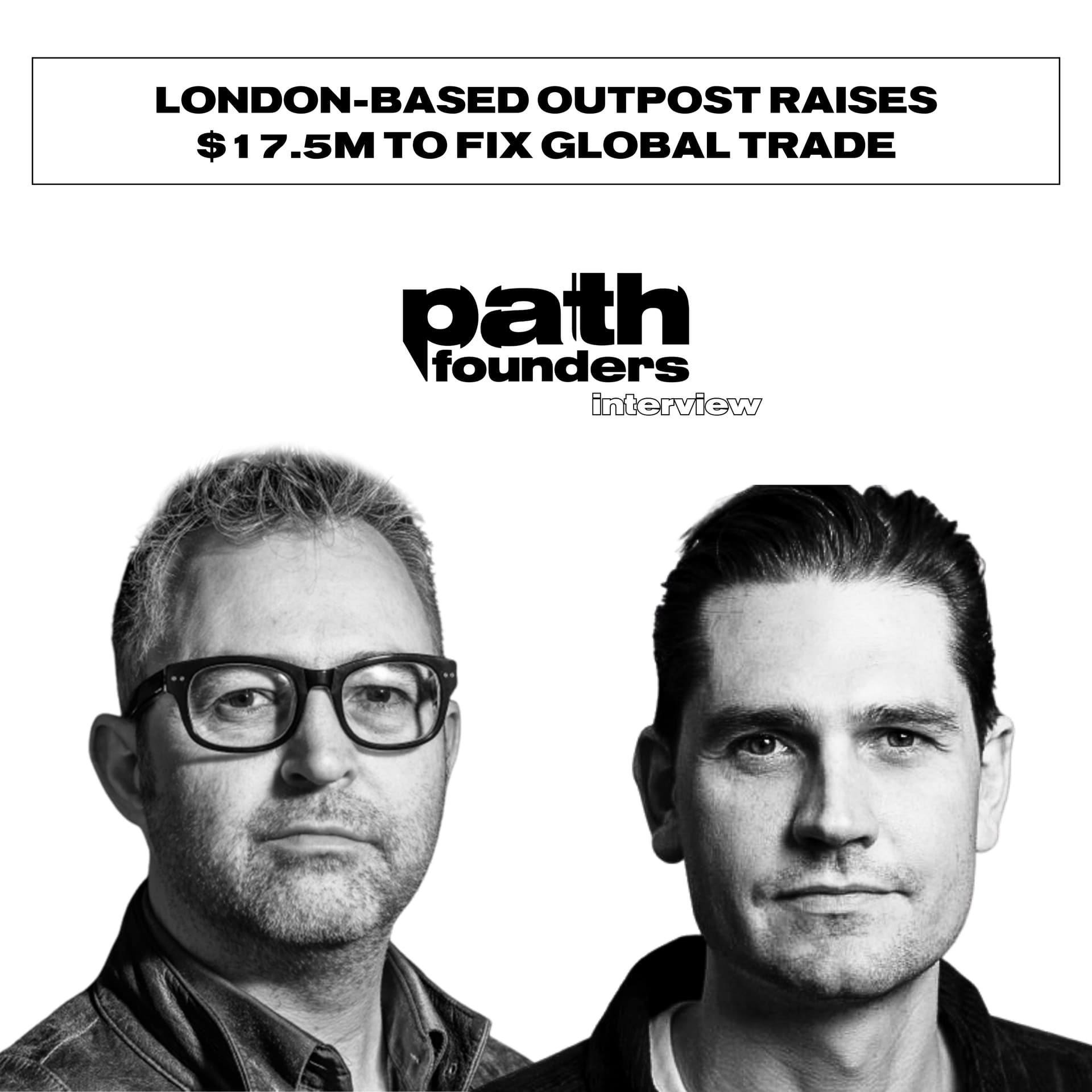
Podcast Episode Notes: London-based Outpost Raises $17.5M to Fix Global Trade
Podcast Information
- Title: Pathfounders
- Host: Mike Butcher
- Episode Title: London-based Outpost raises $17.5M to fix global trade
- Episode Description: Focus on the challenges of cross-border commerce and how London-based Outpost aims to simplify international sales through innovative tech solutions.
---
Key Themes
- The Complexity of Global Trade
- Cross-border commerce has reached new heights, surpassing $35 trillion.
- Despite the growth, navigating international sales has become increasingly complex due to:
- Brexit ramifications
- Varied tariffs
- Different tax regimes
- Compliance requirements across approximately 20,000 jurisdictions.
- Outpost’s Value Proposition
- Outpost aims to simplify international sales for companies using:
- Zero Liability Infrastructure: Manages payments, taxes, and compliance.
- An AI-powered platform that monitors regulatory changes in real-time.
- Focus on indirect taxation complexities (e.g., VAT, sales tax, GST).
- CEO Will Mahon-Heap's Background
- Previous roles at Revolut and an e-commerce lender provided insights into international payment challenges and regulatory compliance.
- Developed the idea for Outpost based on recurring issues faced by merchants seeking international expansion.
---
Discussion Highlights
The Role of AI in Global Trade
- AI Integration: Outpost utilizes AI to create a database of global trade regulations, making them queryable and accessible via APIs.
- Compliance Handling: Instead of hiring external consultants, Outpost automates tax compliance and regulatory registration through a network of registered companies in various jurisdictions.
Competitive Landscape
- Outpost operates in a space with minimal direct competition, particularly in global coverage.
- Positioned similarly to companies like Deal and Oyster but focused on e-commerce, aiming for a robust infrastructure play.
Recent Funding and Growth Plans
- Funding Round: Successfully raised $17.5 million in Series A funding led by Ribbit Capital, known for backing fintech success stories (e.g., Revolut, Coinbase).
- Investment Utilization:
- Scaling product offerings and expanding global coverage.
- Aiming to simplify international trade to the same level as domestic trade.
Market Expansion and Strategy
- Global Reach: Outpost has already launched in 58 markets with plans to continue rapid expansion into challenging territories like South Africa and Turkey.
- Strategy emphasizes the need for a global presence from day one to succeed in the international trade landscape.
---
Future Outlook
- Will Mahon-Heap expresses a clear vision of making international trade as easy as domestic transactions.
- Outpost is positioned as a strong contender in the fintech and global commerce space with its innovative solutions and expert backing.
---
Conclusion The episode provides an insightful look into Outpost's approach to tackling the complexities of international commerce through advanced technology and strategic funding. As global trade continues to evolve, Outpost's mission to simplify the process for merchants is both timely and necessary.
---
Final Notes
- Host: Mike Butcher commended Will Mahon-Heap for his vision and the potential of Outpost.
- Acknowledgments: The interview reflects the growing importance of fintech solutions in facilitating global trade, especially amidst existing geopolitical complexities.
---
For more information on Outpost and their services, listeners are encouraged to visit their website or follow their updates on social media.
Written by AI. May contain mistakes. Listen to the episode to check what was said.
Chapters
Tap a time to open that second in VOThe Complexity of Global Trade
0:45 to 2:28
Discussion on the challenges faced in cross-border commerce and the need for solutions.
“Well, you're going to give us a much better one, I hope.”
Introducing Will Mahnheap and Outpost
2:28 to 4:48
Will Mahnheap shares his background and the inception of Outpost.
“Let me talk about this in two ways, both from a compliance perspective and then a payments perspective.”
AI and Compliance in Global Trade
4:48 to 7:07
Will explains how Outpost uses AI to address compliance and payment issues.
“But your angel investors do include executives, I see, from Revolut, Uber, Affirm, Airwallex and Checkout.”
Funding and Growth Strategy
7:07 to 9:53
Discussion on Outpost's Series A funding and plans for global expansion.
“or Remote.com they became incredibly powerful because of the network of companies they had around the world and how quickly they scaled so I'm sure you're familiar with the term Deal Speed for example.”
Navigating Global Markets
9:53 to 11:15
Will shares insights on entering and succeeding in diverse global markets.
“A merchant might do incredibly well in Europe or a merchant might do incredibly well in the U.S.”
Transcript
Automatic transcript. May contain errors.0:00Mike Butcher:Welcome to Path Founders with me, Mike Butcher. In this episode, we're going to take a look at one of the strange paradoxes of the modern global digital economy. Cross-border commerce has never been bigger. Global trade passed$35 trillion last year. Yet for companies trying to sell internationally, the process has actually become more complicated, not less. I'm sure you can guess why. Between Brexit, tariffs, tax regimes, compliance rules and payment infrastructure, expanding globally now means navigating at least 20 ,000 different tax jurisdictions and constantly changing regulations. So my guest today believes that the complexity can be addressed.
0:44Mike Butcher:Will Mahnheap is the founder and CEO of Outpost, an AI-powered platform that lets companies sell globally with what they call zero liability infrastructure, handling payments, taxes and compliance across borders. Will, welcome to PathOunders. Great to meet you, Mike. Pleasure to be here. And thanks for the good summary. No problem. Well, you're going to give us a much better one, I hope. But before we get into zero liability infrastructure, whatever the heck that is, do you want to explain a little bit about your journey in terms of coming up with this idea? Yeah, sure. So I worked at Revolut.
1:20We ran international there and I expanded into multiple countries around the world. And then I worked at an e-commerce lender where we lent one point two billion to five and a half thousand merchants around the world. and all of our customers always complained about two big problems, which was how do I take international payments efficiently and effectively? And then how do I deal with all of the regulatory compliance and tax compliance around the world? And this was a problem that I've thought about for over a decade now and had to solve it with Outpost. But the timing is the most important thing with this.
1:49You mentioned the poly crisis, as they call it in the media, which is the trade war and the tariff war that's currently going on. But this is combined at a very opportune moment with AI where you can get all of these rules, you can put them into a database, you can make them queryable, and we can actually surface them in APIs so you can sell globally very effectively.
2:08Mike Butcher:I see. So actually what you're saying is that this confluence of AI and the crisis in global trade is actually incredibly opportune. But what are you doing in particular with AI that some of these sort of existing platforms that you might have done this global trade with that's different? Yeah, sure. Let me talk about this in two ways, both from a compliance perspective and then a payments perspective. So from a compliance perspective, let's pick one category of global trade, indirect taxation. So VAT as we call it in Europe, sales tax in the US or GST elsewhere in the world. There's over 18 ,000 tax jurisdictions around the world.
2:49Can you imagine how companies currently deal with this? They either hire consultants, lawyers and accountants to determine and what those rates are, then you have to register, file and remit your money to all of the relevant tax authorities around the world. Instead of Outpost, we have an engine, we monitor all of these regulatory changes in real time, we do all of the compliance in-house, and then that means that you don't have to worry about filing your taxes or registering around the world, because we have a network of companies, and these network of companies are registered with all of the relevant tax authorities in each jurisdiction.
3:18So that's the first point. The second point is around international payments, right? So imagine you have to take payments in 30 plus countries around the world. This is actually not a solved problem. For example, quite a few of our clients use us in Brazil, where holding RIAs as a currency is problematic. Getting access to local payment infrastructure like PIX is essential in order to sell to all of your consumers there. And the reason we're able to get access to this infrastructure is because of all of the local compliance we do enabled by AI around the world.
3:47Mike Butcher:So in a way, it reminds me a little bit of these companies like Deal and Oyster who allowed people to employ people anywhere, but this is what you're doing for companies instead. Yeah, great comparison, Mike. So actually quite a few of those companies you've mentioned, the executives are angel investors and Outpost. And when I spoke to them about what I was doing, they said if we were to start a new company, it would be e-commerce deal or e-commerce remote.com. And that's why they backed us. They were like, look, this is the new iteration of global trade. And it should be using our companies to sell whatever you need to around the world.
4:24Mike Butcher:Right. Well, one of the reasons we're talking to you today is that you've raised a$17.5 million Series A funding led by Ribbit. Ribbit is known for backing companies such as Revolut, Coinbase and Stripe. One thing I think that everyone would be asking would be, did Nick Staronsky invest as well? Nick's not very public with some of the stuff that he does, But I really loved working with him, learned a lot and still on incredibly good terms with Nick. I see that. But your angel investors do include executives, I see, from Revolut, Uber, Affirm, Airwallex and Checkout. So I think we could fairly safely assume that you do have some friends at Revolut who might have invested.
5:02Mike Butcher:We've got some great angel investors. We're very lucky. Tell us a little bit about maybe why you went with Rivet. What discussions you had with them about what you could do with this platform and what attracted you both to each other? Yeah, sure. I've known the Rivet team for quite a while and they're one of the best, if not the best fintech investor in the world. Huge fan of the team. And obviously they're back to Revolut, which is where my training ground was for international payments. So humbled that they've gotten on the journey with us. and also Better Tomorrow Ventures, which is a fintech fund in San Fran and New York founded by other fintech founders themselves.
5:38And I think Ribbit is well known for spotting opportunities in fintech as they emerge around the world and before they emerge. So one of the classic ones that they've talked about in their white papers is they held a significant percentage of Bitcoin in 2013 and 2014 before Bitcoin became a known entity around the world, similar with Coinbase and similar with Revolut. So when I went to talk to them about Outpost, the discussion was quite simple, actually. They were like, we understand this problem. We know how you are going to solve this problem. And it was a really collaborative conversation.
6:09Mike Butcher:I see. Well, it does help, doesn't it, if they know your space, doesn't it? What do you plan to do with this new cash injection? I mean, is it a matter of scaling product or what? Yeah, with a platform like ours, Mike, it's always about global coverage. And this is what we learned in the early days of Revolut. So at Revolut in 2017, when we were launching the company around the world, people would ask us, you know, why are you going to Australia, for example, or Singapore or Japan? And if you look at where Revolut's at 8, 10 years later, we now have 50 million users around the world. And a lot of that infrastructure that Revolut built in the early days has just compounded.
6:44Same thing with Outpost. These kinds of companies, they require a significant amount of capital because you're going after global market share. and our dream with Outposts or our North Star rather is to make international trade as simple as domestic trade and if you're going to achieve that aim you have to be global from day one you can't just be on one corridor or one country.
7:03Mike Butcher:So effectively you're going for a kind of infrastructure play here are you? Yeah correct so similar to what Deal did for hiring Deal became or Remote.com they became incredibly powerful because of the network of companies they had around the world and how quickly they scaled so I'm sure you're familiar with the term Deal Speed for example. At Outpost, we have Outpost Speed. We've gone from zero to 58 markets in a year and a half. And we're launching on average a new country every month and a half, including extremely hard ones to do like South Africa or Turkey, for example. We know that the more countries we're in, the more powerful our network is and the more valuable we are as a company, both to our investors and to our customers.
7:41Mike Butcher:Right. And now you're in London, I presume, right? I'm in London. My accent is I grew up in New Zealand. Absolutely. Well, London's very international, as you know. But it's interesting, isn't it, that you're doing this from London. London got such an amazing reputation for fintech in the last few years. Would you consider London still to be a decent place to launch a fintech like this? Or what's your general opinion about where things are right now? Personally, I love the city. It's been an amazing training ground for me. It's been the birth of Revolut. It is an international hub of finance, as it always will be.
8:21At the moment, Outpost actually has three hubs. So we've hired in Amsterdam, which is one of the best compliance hubs in the world. I don't know if you know this, but in order to become a tax professional in Amsterdam, you have to do a master's of law in order to get one of the roles there. So we've hired fantastic people in Amsterdam to run our local compliance in each market. and we've hired a great team of ex-Revolute people in London. But I'm moving to New York and we're hiring a team in New York as well because we're our global company and we service markets everywhere. Right.
8:53Mike Butcher:Well, obviously, to scale a company like this, then it does require going to big markets like the US. What's your view about the competitive environment, though? Because there must surely be others snapping at your heels with this idea. Yeah, honestly, we don't see any of our competitors in deals. And I think that if you look at the market and where we operate, no one has the global coverage that we do. No one has the infrastructure that we do. We're yet to come up head to head with a competitor and a deal. And I know, Mike, you'll hit me up and say, I don't believe you. But it's true. If you were to go through our HubSpot, we're actually coming across a lot of greenfield, both markets and opportunities.
9:29Mike Butcher:I mean, what's the scope also for, say, international trade in the global south? So markets that are less populated by infrastructure, such as the Middle East or Africa or Latin America? No, no. Great question. And I think those areas of the world have historically been really complicated for people coming from the U.S. or Europe. So what we typically see is someone dominates their home market, right? A merchant might do incredibly well in Europe or a merchant might do incredibly well in the U.S. And we've talked about at the beginning of this how cross-border trade is continuing to grow. So it's growing in some of the classic corridors and some of the non-classic corridors.
10:05So a classic corridor might be Europe-US or US-Europe, right? There's still significant complexity there. If you're a European seller and you're selling into the US, there are 18 ,000 sales tax jurisdictions there. It's an absolute nightmare. But to your point on, I guess, like the non-traditional corridors for a merchant selling from the UK, we actually think we can increase your revenue by opening up these markets. So some of the conversations we've been having with merchants is, oh, I would love to sell in South Africa, for example, but I don't know how to deal with the currency there. I've tried setting up international payments and our international compliance, but I don't have anyone on the ground and I would love some help.
10:44Exactly the same comparison that people make to deal where, oh, I would love to hire someone in South Africa, but in order to do so, I don't know how to do payroll. I don't know how to hire them legally. I don't know what a pension is in South Africa. Same thing with Outpost, right? How do I do my local tax compliance? How do I take payments in that market? And how do I sell? These are all questions that are unresolved.
11:04Mike Butcher:Yeah. And obviously, it means that you'll be hopefully presumably be able to reach into those markets in the future. No, not in the future, actually, Mike. We're live in most of these markets already. Well, I stand corrected then. So obviously, your ex-Revolute, would you consider yourself one of the Revolute Mafia or is that too early to tell right now? I'm happy for you to use those terms, Mike. I just want to build an extremely large company. Very diplomatic answer. Brilliant. Well, Will Manheap, congratulations on the Series A. I'm sure we'll be speaking again in the future and we'll be watching Outpost with Interest here at Pathfinders.
11:47Mike Butcher:But for now, thanks very much.
11:57We'll be right back.
From the publisher
Cross-border commerce has never been larger, but for companies trying to sell internationally, it has rarely been more complicated. London-based Outpost has raised a $17.5 million Series A round to help companies sell across borders without building an expensive patchwork of legal entities. CEO Will Mahon-Heap unpacks his strategy with Mike Butcher, Founder & Editor of Pathfounders.

