
In short
How AI coding agents speed up software delivery, but create a new bottleneck: product managers must still translate intent into precise specs and tasks across tools (Notion, Linear/Jira, Slack, Figma, code). Resonant aims to fix the “messy handoff” and help PMs drive faster, higher-quality development.
Guest
Emma Burrows, founder and CEO of Resonant (UK). Previously UK CTO at Stripe; earlier senior engineering roles at Google.
Key claims
PM-to-engineer ratios are shifting; agents need more explicit specification than humans; without control, agents produce “slop”/garbage. Companies will soon ship too fast, so quality gates must be redesigned.
Notable examples
Chrome extension that mimics PM engineering refinement by walking through changes with context from Figma/live sites; “voice to spec” feature; outputs can become PRDs, Linear/Jira tasks, or direct agent coding.
Written by AI. May contain mistakes. Listen to the episode to check what was said.
Chapters
Tap a time to open that second in VOThe Software Bottleneck in the Age of AI
0:45 to 2:18
Discussion on how AI coding agents are changing software workflows and the challenges faced by product managers.
“The faster the coding gets, the more expensive that messy handoff becomes.”
Resonant's Approach to Product Development
2:44 to 5:05
Emma explains how Resonant provides tools for product managers to keep pace with AI-driven coding.
“But the long-term vision really is to build on top of that and build much more automation.”
Flow and Features of Resonant
5:05 to 7:14
Discussion on the functionality of Resonant's tools and how they integrate with existing processes.
“I was also looking over something you sent me about the product and you'd have this voice to spec feature.”
Market Landscape and Competition
7:14 to 9:06
Emma shares insights on the competitive landscape for tools like Resonant and emerging trends.
“and you're going to be charging per seat, is that right?”
Funding and Growth Strategy
9:06 to 10:48
Discussion on Resonant's funding history, current strategies, and the talent landscape in the UK.
“What was that process like was it hard to sort of keep under the things under wraps?”
The Future of the Startup Ecosystem
10:48 to 12:49
Emma discusses the future of software development and the implications of rapid AI integration.
“No doubt that may come again because obviously there's a lot of talent wars out there and you need a war chest to hire that talent.”
The Rise of European Startups in AI
14:01 to 16:21
Explore the growth and impact of European startups in the AI space.
“And I think there's a hub in London, I think there's a hub in Paris with Mistral and also in Stockholm with Lovable, Agora, etc.”
Transcript
Automatic transcript. May contain errors.0:00Mike Butcher:Welcome to Path Founders with me, Mike Butcher, where we try to unpack the code, the capital and the consequences around the startup ecosystem. With the breakneck pace of software development created by the rise of AI, software teams are entering a new phase. AI coding agents can now write, refactor and ship code at such a speed, it's almost impossible to keep up. But there's a catch. Engineering teams still need to be told what to build. And that is where the old software workflow starts to creak. Product managers are still writing specs in Notion, turning them into tickets in Linear, discussing changes in Slack, checking designs in Figma, and trying to make sure engineers and now even AI agents understand the original intent.
0:50Mike Butcher:The faster the coding gets, the more expensive that messy handoff becomes. Today, I'm joined by Emma Burrows, founder and CEO of Resonant, a new UK startup. Emma was previously UK CTO at Stripe after senior engineering roles at Google, among others. Her new startup is building what it calls a product development workspace for the age of AI coding agents. Emma, thanks very much for joining PathFounders. Yeah, thank you for having me. So do you want to just unpack the problem I outlined a little bit more and tell us about how Resonant is going to address that? Yeah, absolutely. So as you said, you know, coding agents have made software delivery much, much faster.
1:36For the past 20 years, we have evolved all of these like processes to basically allow us to deal with the fact that engineering is incredibly expensive. But now that actually coding is almost the fastest bit of the whole process, that has really turned a lot of things on its head. And so there's a lot of different experimentation right now, but really there's this squeeze point for product managers and the ratio of product managers to engineers is changing and a lot more is being asked of them. And so they need to be able to do their jobs, you know, as sped up as engineers, if not more so, so that they don't get dragged into just building, you know, basically slop.
2:15Right. The PMs are the real drivers of the strategy of the kind of technical product. and they need tooling to help them do that. So that's why we built Resonant. It's designed as the kind of building block so that our initial release helps you write PRDs, specs, et cetera, from all of your different tools, but also with the context of the code so that you can go much, much faster and you can actually start to ship changes as well as a product manager. But the long-term vision really is to build on top of that and build much more automation. So any company can decide what they want to automate in this flow end to end and do it with control basically.
2:56Mike Butcher:Do you want to give us a little bit of a taster of how it operates on the ground? Yeah absolutely so one of our most powerful flows is you have a bunch of different resources between Figma as you said maybe looking at your live website you need to gather all of that context and it's very typical for a product manager to sit down with their engineering team and kind of do a run through of how they're thinking about the next phase of development. And so we just mimic that really with our Chrome extension. So essentially what you do is you walk through and envision the changes that you want to make.
3:30You just talk through them very naturally. You describe the changes that you want to see. You show the mock and then it just takes that, turns it into either can go direct into coding agents. It can go into tasks that get exported to Jira or Linear. It can go into a PRD. So whatever your preferred flow is, it can just accelerate it end to end, essentially.
3:51Mike Butcher:I think it's really interesting that you're kind of following a very typical startup journey, which is a founder who had an itch they needed to scratch themselves, as it were. And you're kind of solving a problem that you've encountered yourself. But it seems strange to me that there aren't that many tools like Resonant out there that address this. or do you feel that you're entering a market alone or that are other people thinking about the same thing? I think it will be a hot space. I think there's no doubt about that. You know, like as a startup, I think one of the most important things is timing.
4:25You know, have you entered the market at the right time and then can you keep pace with the changes, which right now in AI is like, it's a pretty big challenge, right? Like trying to work out where to take things. but no I think most things are pretty nascent you know there was a very interesting post by Linear in terms of its vision for the future kind of calling out that it feels like task tracking is dead which is a pretty brave thing to do for an app that is focused on task tracking but you know we'll see we'll see where how people kind of like think about the problem and and who ultimately brings the product to market that works the best, I guess.
5:08Mike Butcher:I was also looking over something you sent me about the product and you'd have this voice to spec feature. Tell us a little bit more about that and why you implemented that. Yeah. So that is the feature I was kind of describing where you talk to the product, describe it out loud. And because it's such a natural way of kind of working that product managers are used to, It's a very natural thing for them to do. But also because of the way you naturally think and talk and speak out loud, it actually captures a lot more of the nuances of the right material that then helps to feed into, you know, the LLM building eventually the right thing in whatever form you want it to take.
5:51um so yeah so that's why we like really double down on that it's the voice piece but it's also understanding the context of what you're looking at what you're pointing at um and then connecting that with the code base is really the kind of like big unlock for for us it's I think it's
6:07Mike Butcher:really interesting that you're leaning into this new world of um agents um you know how different is it dealing you know writing product specs for agents as opposed to humans yeah I think it is different. I think like agents need more specification than your average excellent engineer. But there's also some parallels as well, which is why it's, you know, we originally started making resonant for a very human process called engineering refinement, right, which is basically where you take a thing and break it down into lots of little chunks, so that engineers can kind of come in and ship very quickly.
6:44Now, there are organizations that run with very high autonomy, where that doesn't that's not really the process that they run they give a very vague spec to an engineer but for coding agents it's actually much closer to that process is required you you don't want any gray area uh in terms of what they are being asked to do because they will run with that and you'll end up with uh garbage at the at the end in a in many cases um what about um you know
7:10Mike Butcher:the the i mean obviously you're addressing a big market because this software development is huge and you're going to be charging per seat, is that right? Yeah, so we have a per seat model, but also it's credit-based. So you pay per seat, that gives you a certain number of credits. We track that in terms of usage. But I think for most product managers doing regular kind of product development, that should be plenty within the kind of per seat limit. But on the other hand, because we also support agent coding, we do need to have some amount of like overages, et cetera. So if you want to do all your development through Resonant, then in theory, eventually you can hit the kind of upper limit and add more credits as required, I would say.
7:56Mike Butcher:I mean, if you get this right and you solve this problem, where's the next bottleneck along the chain? Or do you kind of do we enter a kind of Shangri-La? I think the question then becomes, how do companies want to think about their product development strategy at the point at which you can ship almost anything incredibly quickly? I think we're going to see over the next kind of six months a trend where companies ship too fast. so companies will you know you'll be able to do this in in resonant within a couple of months to absorb customer feedback produce a feature and ship it in in the same kind of hour right um and if you can do that then then where does the kind of gate on quality sit and i think product orgs need to think hard about where do they want to allow things to happen very quickly and where do they want to be more deliberate so that they end up with a product that's actually coherent and elegant rather than just a mess um and I think there'll be a lot of experimentation uh on that front so yeah it'll be uh be interesting times as the last year has definitely been already well it'll be very interesting to see what happens next because you are coming out of stealth today yeah uh as we release this podcast and and the story comes out and you've been in how long have you been in stealth for uh we've been in stealth for maybe about five six months now um so we've been working with some kind of like private beta partners just to iterate on the product etc until we got it to the point where we feel like I mean as a founder you always feel like you have a hundred things you you want to do now that you've hit the next milestone but this is definitely the point where I'm keen to see how people use it more generally.
9:42Mike Butcher:What was that process like was it hard to sort of keep under the things under wraps? I don't think we've ever really tried that hard to keep things really tightly under wraps you know I think part of um building the right product is is getting feedback etc um but I do think it's important at the point when you know you you kind of open sign up that you have a degree of confidence in in what you're putting out there um but no I've I've never really been someone that's kept my my cards like that close to my chest from that perspective so therefore it wasn't that difficult so I know that you've raised previously from General Catalyst and First Minute Capital.
10:21Mike Butcher:Have you got any other kind of update on that? Nothing particular at the moment. You know, we've managed to run pretty lean as a consequence of really kind of leaning into the coding tools available. And so we're not looking to do a kind of fundraise in the immediate term. But of course, it's always something that like is at the back of your mind as a founder. But right now, it's really just about trying to get as much traction as possible. No doubt that may come again because obviously there's a lot of talent wars out there and you need a war chest to hire that talent. What do you make of the sort of talent wars at the moment in the UK, London, etc.?
11:03Yeah, I think that software engineering in general is a precursor for what is going to happen in many, many desk-based jobs, which is you see the talent wars for the top 10 % of people who can use this tooling to accelerate and make themselves at least 10x faster at their jobs. And the difficult aspect to this is like, if you're not in that top 10%, if you're in the kind of bottom 90%, then there's this kind of have and have nots to the industry, which I think is quite difficult, actually, you know, aside from being a startup founder, it's also going to raise some interesting societal questions.
11:46From our perspective as a company, we have, you know, obviously we're not able to pay as much as an anthropic, of course, but we do try and just recognize that the best people right now have a really outsized impact on a team. It used to be the case that people would talk about the 10x engineer and I kind of believed it, Like I've met the occasional person who I've considered to be a 10x engineer. But now I think if you have really leaned into the tools, your ability to make an impact is dramatic. And so we're conservative on pay, but like we pay well enough to try and get the top talent, I would say.
12:31Mike Butcher:Well, it's interesting. You mentioned Anthropik there and that they were in the news recently for paying quite a lot of money for someone in London. And you're a UK company. You are launching out of the UK. Do you ever feel the siren voices calling you to other shores? I think as a founder, you have to be very heads down and committed to what you're doing. And so, no, not personally. And, you know, I try and make sure that the people on the team are people who like really value autonomy, moving fast, etc. and are very bought into what we're working on. But it's, it's tricky if Anthropic are willing to pay, you know, like nearly three quarters of a million.
13:22That's definitely a pretty appealing package to people, I would say.
13:28Mike Butcher:What do you make of I mean, you've obviously been building yourself and you had heads down. But do you have any other thoughts about the wider startup market right now in terms of, you know, London pulling ahead of other capital cities in Europe? Or, I mean, there's a very interesting cluster developing around King's Cross at the moment, for instance. Yeah, I think it's funny because over the past year, there's been so much negative press about Europe at a time when there's really quite a lot of optimism, I think, if you're like on the ground and don't listen to what's coming out of the mouths of certain people in the US, right?
14:10And I think there's a hub in London, I think there's a hub in Paris with Mistral and also in Stockholm with Lovable, Agora, etc. And all three of those are actually pretty strong. I think London and Stockholm right now are really on top. But there's a lot of energy for the startup scene in Europe. So what I'm seeing is certainly not reflective of all the messaging that seems to be coming out of the US.
14:38Mike Butcher:It's really interesting that you're releasing Resonant out of the UK. Granola is also a kind of a tool that's come out of the UK as well, up there with its funding and its valuation. It's quite interesting to see that we're actually seeing like tools which are applicable globally coming out right now um do you see other things happening you know sort of ripple effects uh from the the acceleration and and from the sort of the new era of generative ai having on engineering and product development i think the core question now for any startup irrespective if you're in the uk or not is like is more about gtm and marketing than just about pure engineering.
15:26Engineering used to have such an outsized impact on a startup's probability of success. What San Francisco does have is a bit of an edge in terms of just an ecosystem for, you know, kind of using each other's products and that kind of thing. But I do also think we're developing the same ecosystem and companies like Granola and Lovable have proven that you can launch a global product in a way that I don't really think has ever happened before out of Europe. So it's it's it's quite it's pretty exciting, I would say.
16:04Mike Butcher:No, I concur. And I think it is very interesting to see real, you know, hardcore tools like yours coming out outside Silicon Valley, which is very interesting to see. And we'll we'll be watching it with with great interest. We're going to leave it there, but thank you so much for coming on PathFounders. Emma Burrows, founder and CEO of Resonance.
From the publisher
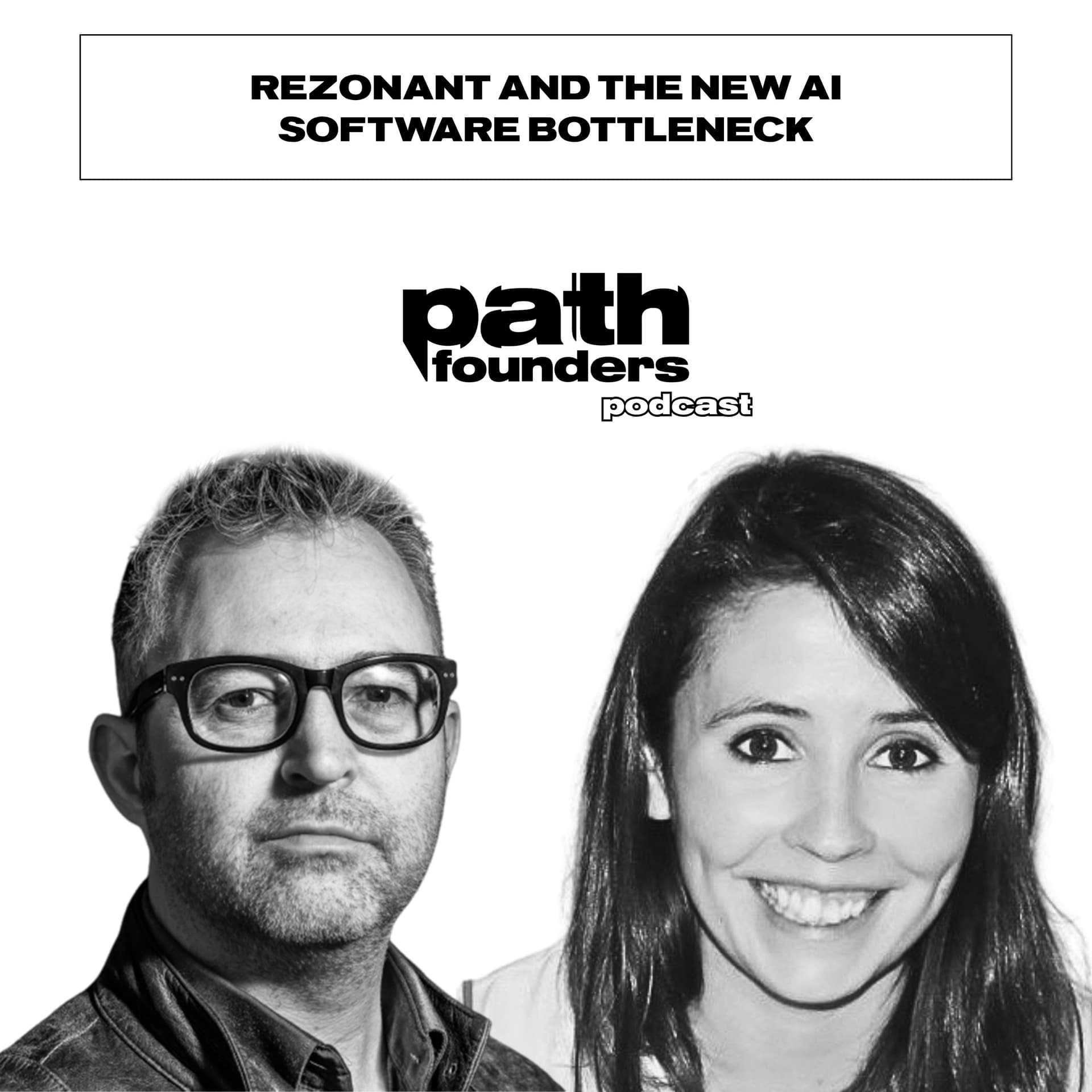
AI coding agents are making software faster to build, but it’s creating a headache for product managers, who are now the bottleneck. In this episode, Pathfounders’ Mike Butcher speaks to Emma Burrows, former Stripe UK CTO and founder of Rezonant, about why the next crisis in AI-driven software development may be the messy handoff between product managers, engineers and, now, Agentic engineers. Rezonant is now launching from stealth with a workspace designed to turn product intent into Agent-ready specs.

