
In short
YC-backed Ontora builds AI agents that interview employees to extract “operational knowledge” from people’s heads and convert it into process maps, operational insights, and context usable by other AI tools. It aims to enable AI automation opportunities, sentiment analysis, and inputs for business reviews, while emphasizing employee trust and a human-feeling conversational experience (voice agent and chat; future Slack/Google Meet integrations).
Guest backgrounds
Leon, David, and Max are Ontora co-founders (based in San Francisco during YC; Europeans).
Key claims
operational knowledge is mostly inaccessible in software/docs; Ontora’s goal isn’t extracting “all truth,” but making perspectives accessible at scale; YC provides focus and US market trust.
Notable examples
meetings early in SF with Brian Chesky (Airbnb) and Sam Altman (OpenAI), plus mention of “Europe maxing while being in the US.”
Written by AI. May contain mistakes. Listen to the episode to check what was said.
Chapters
Tap a time to open that second in VOUnderstanding Ontora's Mission
0:45 to 1:53
Discussion of Ontora's AI tool designed to map operational knowledge within companies.
“So, guys, congratulations on getting into YC.”
Interview Dynamics with Ontora
1:53 to 3:30
Exploration of how Ontora's AI interacts with employees for knowledge extraction.
“Do I get interviewed by an AI chat bot or a voice agent or an image of a human?”
The YC Experience and AI Boom
3:30 to 4:34
Co-founders share insights on their experience with Y Combinator and the current AI landscape.
“Very very cool very cool give us a bit of flavor what it's like to be in San Francisco right now in this AI boom?”
Concerns About AI and Employment
4:34 to 6:21
Addressing concerns about AI potentially replacing employees vs. enabling them.
“Today we've met Sam Altman and got like a glimpse into the future of AI models.”
Mapping Future Plans for Ontora
6:21 to 7:46
Discussion on Ontora's strategies and future use cases for their AI technology.
“and that's where we want to provide value.”
Cultural Perceptions of Europeans in Silicon Valley
7:46 to 9:09
Exploration of how Europeans are viewed and contribute to the tech scene in San Francisco.
“Garland a couple of years ago and had a few drinks, had a good time.”
Navigating Geopolitical Challenges
9:09 to 10:07
Discussion on the impact of geopolitics on startups and the tech industry.
“I think I've always said that San Francisco or rather Silicon Valley rather is has been largely built often by a lot of Europeans, ironically.”
Transcript
Automatic transcript. May contain errors.0:00Mike Butcher:Welcome to Path Founders with me, Mike Butcher. We like to explore the tech founders behind the code, the capital behind the founders and the consequences. Most companies are clueless about how the work actually gets done. Critical operation knowledge isn't really inside the software or the documents. It's in people's heads. Ontora, a startup which just won YC backing, is building an AI agent designed to interview every employee in a company, surface that knowledge and turn it into process maps, operational insights and context that AI tools can actually use. Now, I'm delighted to be joined now all the way from San Francisco.
0:45Mike Butcher:It's very late there in San Francisco. It's very early here in London. But I'm joined now by the co-founders. Welcome, guys. Introduce yourselves. Hey there, I'm Leon, David and Max. Happy to be here. Fantastic. So, guys, congratulations on getting into YC. I know how interesting and exciting it is to launch with YC. Do you want to just outline the kind of problem you think you're solving? Yeah, sure. So baseline, the problem we're solving is that a large part, if not the majority of operational knowledge in organizations, lives in people's heads and therefore is inaccessible to many crucial decisions.
1:27And what we do is building AI agents that interview all the employees in large enterprises to map exactly these processes and get to know how work actually gets done and empowering a variety of different use cases, ranging from identifying use cases for AI automation, but also for sentiment analysis and just gathering information for your next business review.
1:52Mike Butcher:Okay, so what's the kind of experience? Do I get interviewed by an AI chat bot or a voice agent or an image of a human? How does it work? Yeah, right now we enable the user to have a conversation with a voice agent and via chat interface. And in the future, we may ship like a Google Meet integration or Slack integration, but that's up to come. What about some kind of employees we like to say in England's gilding the lily or being a little bit not quite straight with the chatbot? So what do you do with that? I mean, our objective is or our hypothesis is not that we will extract all the truth, all the employees.
2:35our objective is to make it more accessible to also employees to tell their part of the story, their perspective, and make a tool that is easy, feasible, and feels like employees can actually trust with their information, with their perspective. And we believe that this information on scale will already be a huge advantage for many organizations.
2:56Mike Butcher:Have you released how much you've been backed by YC or what kind of fundraising you've done? I mean, at Y Combinator, we all get the standard deal it's 500 000 us dollars split up in two parts one is for seven percent and the other one is for non-cap 375 k usd safe nice it's an incredible process you guys go through there um tell us why you chose to go through yc rather than say uh go through a different path say raising in Europe etc. So YC is definitely a big batch that gives you a lot of trustworthiness in the international market especially in the US it really helps you accelerate it's one of those programs that really doesn't take up your time the whole point of YCometer is that you really get to do the things that you should do in the startup and not attend conferences without an end and yeah really get back to focus.
3:51Mike Butcher:Very very cool very cool give us a bit of flavor what it's like to be in San Francisco right now in this AI boom? I mean, it all starts with the people you meet along the way. For instance, right in the first week, we've gotten to know Brian Chesky, founder of Airbnb, and it was super exciting to see this icon of entrepreneurship telling us the ones at the very beginning of the journey how he would wish to be right in our situation right now in this super exciting time of AI in the era where everything seems to be mixed and everything, everyone gets like a new chance of working on something super cool.
4:28And it's just really exciting, but also I'm kind of like frightened. You never know what's happening in like the next two months. Today we've met Sam Altman and got like a glimpse into the future of AI models. And we're like, oh my God, we got to keep hustling. And it's exciting, but also kind of like scary.
4:46Mike Butcher:Did you want to give us any breaking news from that meeting with Sam Altman? unfortunately nothing uh super uh secret to share there it's uh it was just sort of a glimpse into um what they might be might be doing but yeah they're shipping many new features in the coming weeks yes and there's a view on what society will look like in the future and i think if you're staying ahead of the game it's definitely a brighter future very interesting well i'm sure you're probably under some NDA that you're not allowed to reveal too much. But the other thing I think that's very interesting about what you're doing is that you might be surfacing the kind of information it's very hard for companies to normally get.
5:31Mike Butcher:But there's also a cynical side, obviously, which is you might be replacing employees with your mapping of the organization. um are you do you have you factored in the fact that maybe uh people might be concerned about that or uh or or come or maybe companies approaching it in a way that might be used in that way 100 i think that's a super important um issue to consider but from our conversation from our learnings it's nothing that we directly influence it's more about um the cop the company's culture itself and how they approach the AI era itself. Do you see this as an enablement for your employees or a replacement?
6:14And I think that's also the exact framing that we put in depending on the corporate culture. I mean, we certainly prefer the type of organization that see AI as an enablement for employees and that's where we want to provide value.
6:28Mike Butcher:And how do you make it feel like a real conversation rather than a survey? Yeah. Yeah, so in general, we take it very important that the whole experience feels very human. That starts at the beginning at our branding. So we choose very light design, very like a very human feel in our application. And that's the same for the agent. So it focuses on the campaign goal or the mission it has when interviewing employees, but it still makes maybe some jokes here and there and still always keeps a light mood with the employees so that's very important. I see so it's quite conversational obviously. You've got the issue that you're going to get real scale by launching in the US first.
7:16Mike Butcher:Where do you see things going from here? How to map out the next year for you guys? I mean our first year will be focusing on one specific use case where we can really deeply embed and understand what is the best way to communicate with a certain type of customer, with a certain type of employees. And from there on scale to different use cases, as we've mentioned at the beginning, there might be different use cases where we can provide value with. And that's sort of the roadmap that we're following right now. Right. And Leon, we met at Start Summit in St. Garland a couple of years ago and had a few drinks, had a good time.
7:57Mike Butcher:You're going to be coming back to Europe and hanging out with us again, I hope? I mean, certainly. I mean, we always have our internal slogan that we do Europe maxing while being in the US. So we're proud Europeans. We're very grateful for everything that we've learned there and all our friends there. So we'll certainly be back. When you talk to people about Europe over there, there's a lot of disinformation, A lot of Russian bots and bullshit out there about Europe, isn't there? What sort of reactions do you get from people when you talk about Europe there? Well, in the US, it's always a very bright reaction.
8:32I mean, everybody loves German beer. So us as Germans, we come across very, very, like, loved and appreciated by everybody. Same goes for the Italians and the French. And it's really a big community. And all the Europeans also try to hold together and stick together. And one must also say that San Francisco is really a great agglomeration of Europeans and kind of the city is really shaped and built by them. And it's so cool that all kinds of nations come together here and then bring back the spirit back home and inspire even more people to start their own ventures. And that's kind of the way people see Europeans here.
9:08Mike Butcher:Yeah, I agree. I think I've always said that San Francisco or rather Silicon Valley rather is has been largely built often by a lot of Europeans, ironically. Also, I was going to say, you know, there's a lot of geopolitics, you know, Trump, et cetera, going on. What kind of feeling are you getting about that or is that not getting in the way of things? I think the big question is, is it something that we can influence or not? And unfortunately, we're not in the situation of influencing it. So we try to optimize under those circumstances. And I think that's basically the perspective most people that we've gotten to know and also here in the Bay Area take.
9:50And we just try to contribute our part to society, maybe in the US, maybe in Europe. And yeah, follow along.
9:59Mike Butcher:Things certainly change when you're actually in front of a real human being and you can have a conversation instead of a tweet. That's fantastic. Well, guys, the launch of OnTourer there, the launch on Y Combinator this week, very exciting. And I really appreciate you coming and talking to us on Path Founders.
From the publisher
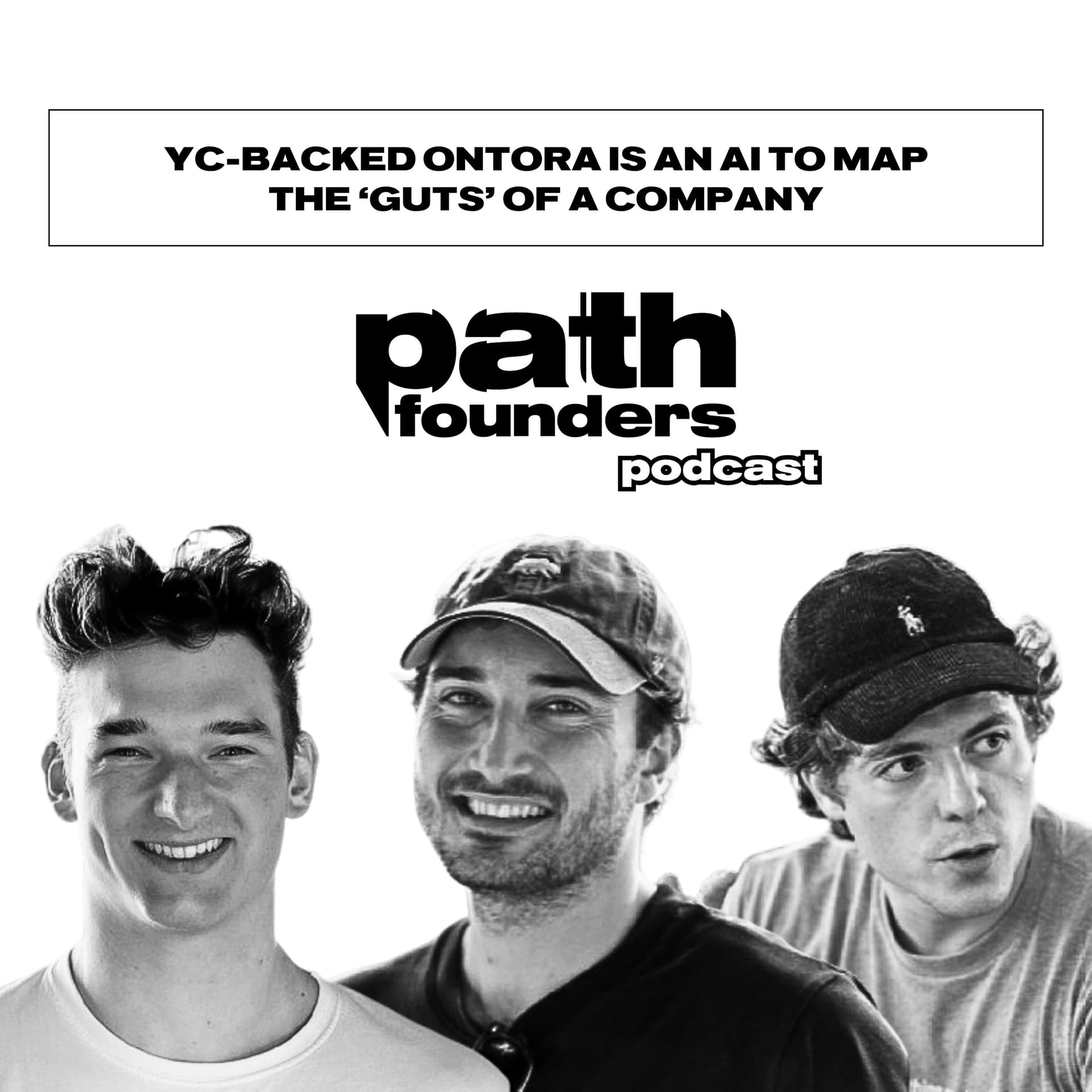
Ontora — a startup from Germany which just won YC backing — is building an AI agent designed to interview every employee in a company, surface hidden knowledge, and turn that into process maps, operational insight and context that AI tools can use. Pathfounder’s Mike Butcher spoke to the founders about the tool and their YC / Bay Area experience during today’s AI boom.

