
In short
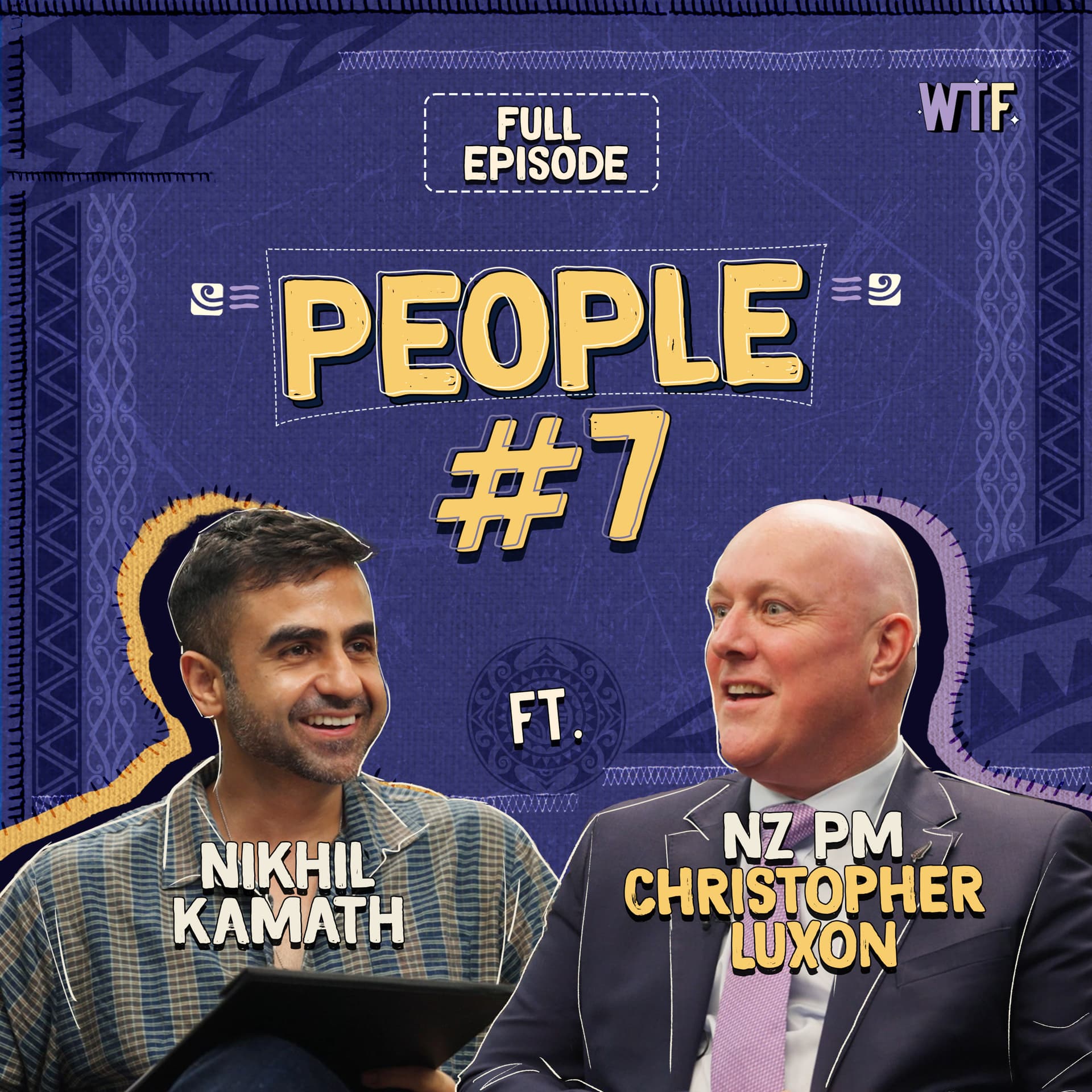
Podcast Summary: Nikhil Kamath x NZ PM Christopher Luxon | People by WTF Ep #7
Podcast Overview Podcast Title: People by WTF Host: Nikhil Kamath Guest: Christopher Luxon, Prime Minister of New Zealand Episode Number: 7 Description: In this episode, Nikhil Kamath engages in a dialogue with Christopher Luxon, exploring the intersections of business and politics, public scrutiny, global dynamics, and the evolving landscape of leadership.
Episode Highlights
Introduction
- Nikhil Kamath and Christopher Luxon open with a light-hearted discussion about cricket, specifically referencing the India-New Zealand cricket final.
- Luxon shares his experience visiting India and discusses how the country has progressed over the years.
Personal Insights
- Cultural Appreciation: Luxon discusses his admiration for Indian culture and the significance of Māori culture in New Zealand.
- Family Values: He emphasizes the importance of family, noting his relationships as foundational to his identity and leadership.
Transition from Business to Politics
- Career Shift: Luxon shares his transition from corporate leadership (Unilever & Air New Zealand) to political leadership and the motivations behind it.
- Skills Transfer: He discusses how skills from business, such as leadership and team building, are applicable to politics but acknowledges the differences between running a company and a country.
Leadership Perspectives
- Handling Criticism: Luxon talks about coping with public scrutiny and social media, emphasizing the need for emotional resilience and balance.
- Character Building: He highlights the importance of character, curiosity, communication, and conflict management in effective leadership.
Political Landscape
- Money in Politics: Luxon explains New Zealand's strict campaign financing laws and how they differ from other countries, ensuring political diversity.
- Challenges of Public Service: He acknowledges that voters present tougher challenges than shareholders due to expectations for improved public services and quality of life.
Global Dynamics
- Geopolitical Insights: Luxon discusses his views on global politics, emphasizing the shift from efficiency to resilience in international relations post-COVID.
- Future of Politics: The conversation touches on the potential for artists and entrepreneurs to enter politics, suggesting that the future of leadership may evolve beyond traditional pathways.
Vision for the Future
- Optimism for Younger Generations: Luxon expresses hope in the younger generation's altruism and ability to drive positive change in the world.
- Call to Action: He encourages young people to engage with political systems to enact change, rather than remaining passive observers.
Key Takeaways
- Identity and Leadership: Leaders should define themselves by their values and relationships rather than titles.
- Skills Application: The transition from business to politics requires humility and a willingness to learn new systems.
- Public Expectations: Politicians must be pragmatic and focus on delivering tangible outcomes for citizens.
- Global Shifts: The need for resilience in political and economic strategies has become increasingly apparent in the wake of global disruptions.
- Engagement in Politics: Encouragement for younger generations to participate actively in shaping political landscapes.
Conclusion Christopher Luxon shares a vision of optimism and responsibility for the future, emphasizing the importance of character, public service, and engagement. Nikhil Kamath’s conversation with Luxon provides valuable insights into the parallels between business and politics, leadership challenges, and the evolving role of governance in a changing world.
Written by AI. May contain mistakes. Listen to the episode to check what was said.
Transcript
Automatic transcript. May contain errors.0:00Thank you You Thank you
0:30Are we set guys?
0:37How should I address you? Prime Minister? Chris is fine. Yeah, you sure? Absolutely. So Chris, I'm not going to go the usual path of an interview. I think this is more a conversation. Yeah. And I went to the match recently, the India-New Zealand cricket final. Oh my goodness. I was hoping you weren't. This podcast was going so well. I totally had to go mention that.
1:04Hi, Chris. Thank you for doing this. It's so awesome to be with you and with such a celebrated entrepreneur like yourself. So it's great to be with you. How should I address you? Prime Minister? Chris is fine. Yeah, you sure? Absolutely. Absolutely. Well, welcome to India. I saw bits of you going to different places in India. How has that been so far? I saw you with the Prime Minister. I saw you at the Gurudwara, at a cricket game. Yeah, it's been absolutely magical. I mean, we've had a fantastic four to five days here in India. And essentially, you know, India is a place that I first got to know when I was working at Unilever and we had a very large business here called Hindustan Leaver.
1:45And as a result, I used to come here in my probably mid to late 20s. And, you know, when I think about how it has progressed from when I first visited to where I am today, it's just so inspiring. I mean, it's such an ambitious, aspirational, can-do positive kind of place. And you just see the trajectory that it has been on, that it is now, and that it's on now for the future. And it's just, it's all about growth and it's all about energy and drive and determination. And it's just really, really contagious. So it's awesome to be here. I brought the biggest delegation of any prime minister on any visit that we've had from New Zealand.
2:19And I had a big business delegation and also a community delegation and also our Indigenous Kapahaka team, performing arts team with us as well. So, you know, it's been a very full-on set of four or five days, but, you know, these are two great countries that should have a closer relationship and be a much deeper, broader relationship. I saw this member of parliament, I'd like to say, performing the haka at parliament. It looks so good. Can you tell us a bit about that? What was that? Well, look, it's really, you know, our Kapahaka, which is our Maori performing arts. Māori are the indigenous people of New Zealand.
2:54My brother has a Māori title. He does, he does. Yeah, yeah, yeah. They do it with a neb, right? Yeah, you got it, you got it. You got it. And they're just incredible because actually, you know, right from, you know, New Zealand's been a very innovative country. If you think about these Māori Polynesian navigators that navigated by the stars and came through the Pacific Ocean and to New Zealand. And so it's actually awesome to be able to bring them with me here because what I really appreciate is when you run into Indians, they've got huge appreciation for culture, your own culture. It's thousands of years of civilisation.
3:26It's just incredibly mesmerising and interesting. And I think there's huge respect for Māori culture as well. And it's a great way also to make the connections at a human connections level, a people-to-people level. So I'm really proud of bringing some of our best exponents of it to India. And I actually think they were due to at some point go perform in front of the Taj Mahal later on this weekend, which I think would be pretty awesome. Looking at you from this close, your eyes are a very interesting colour. Are they? Yeah. What colour are they? I think they're green. I think they might be like green.
4:00So, yeah. They seem to work. I seem to be able to see things pretty well, which is the main thing. So, I was going through your social media bio. Yeah. And amongst other things, it said, first a husband. Yes. Then a father, then a brother, then a son, and then New Zealand Prime Minister. Yes. Is that how you view life? Well, I think, you know, I've had the fortunate position of meeting lots of interesting people over my career and business and in the last four years in politics. And I always think it's not what you do, it's actually who you are that matters much more. If you put all of your identity into a title and into some perceived status, that then will come and go.
4:43and if you put all your identity into that stuff rather than actually who you are as an individual or a person and what kind of person you're becoming is much more interesting. You know, at some point I will no longer be Prime Minister of New Zealand and it will be a tremendous honour and it's a great responsibility and I absolutely love this job. But I'm not defined by the job and I think I've seen a lot of people get very defined by their job titles on their business cards and when that goes away they shatter themselves because they've put all their identity in store into that title. So that's all I think is just my approach to life in general.
5:14Can I also ask why husband and father first and then brother and son? Because those are older relationships in a way. Yeah, it's just, I mean, we're very close with my wife's family and my own family. But I was very fortunate that I met my wife Amanda when I was 15 years old. And we were dating at 19 and married at 23. And then we traveled the world together with my business career and then had our children overseas. And so I'm always very grateful that I married up and get to do life with Amanda as my life partner is pretty special. And then obviously I've got two children, William and Olivia, and we've been a very tight foursome because, you know, I left New Zealand as a 24-year-old.
5:54I was overseas for 16 years and we had our children overseas without a lot of family support around us, obviously, and we became a very tight unit. But equally, you know, I've got two younger brothers and an awesome mum and dad and we're all very close with as well. So family's everything, right? I mean, there's everything. It's where we learn how to behave. It's how we learn to, actually, the building block of our community. And so at the end of the day, I want to be able to get to 90 years old, look back on my life, and be able to put my arm around my adult son and say, you know, our relationships are awesome, you know.
6:29What you've achieved in life will be interesting to a point, but as I keep saying, who you are and the relationships that you have is what life's ultimately all about. So Chris, I'm not going to go the usual path of an interview. I think this is more a conversation. And I will not ask you many of the questions that you have been asked already. Maybe the Khalistani thing or the nuclear thing or New Zealand's relationship with China, India and so on and so forth. My audience is largely people who are working in a company or looking to start a company. I'm very interested in your transition from Unilever to Air New Zealand to being a politician today.
7:16That seems to be happening everywhere in the world right now as a trend. I could draw an analogy to Trump. And I want to ask you questions about that. How that transition felt like. Would you like to begin by describing it in your own words and tell me, A, was it worth it? And B, why the transition? Yeah, look, it is tremendously worth it. It's a, I mean, the privilege of being able to lead a country is really very, very special. You know, it's incredibly challenging, but it's also, you know, very, very rewarding. And you want to go to that job because you're bought into this notion of public service and actually you're there to actually improve the livelihoods of your citizens.
7:58And that's very much my motivation. So I'm not a career politician, which is very unusual in New Zealand. I have come from outside the system, but I actually think that's really good because you have a different outside-in perspective on what needs to change or what you want to do or how you think the country can be better. And I just feel New Zealand has so much potential that actually there's a real opportunity for us to actually get things sorted and solved for people so they actually get a better quality of life. And actually, I genuinely buy into that. With respect to the business, to the politics transition, I always felt I wanted to go do something else before I'd come to political life.
8:36Do you always think that, that you would come to political life? At some point, I always thought I would, or I'd like to think I would, or have the opportunity to do so. But essentially, the reason for that is very simply that I really think actually doing something else before you come to political life is often very, very helpful, because you understand more of the world and you understand more of what people are, how you can actually help people, how you can deal with them. So for me, yeah, having a business career was something I always wanted to do. But I always think that the skills from some of that is very transferable into my job.
9:08It's not the same thing running a company as it is a country. It's actually completely different and very different on a number of levels. But the principles by which you do that, the way that you lead, the way that you build a team of ministers to actually deliver the agenda, to actually get things done is very, very similar. And so some of the same principles that I learned in business actually are very applicable now into this role as Prime Minister. A lot of people ask me if I will ever be in politics. What do you think? I have no intent whatsoever, at least not today. But what is one skill that is serving you well in politics that you picked up in business?
9:46And what is one thing that is not working out for you? Well, I think the first thing is this notion of how do you protect and enhance the good things that have either happened in a country or a company, that principle is the same. And then also, how do you provoke and stimulate change? And actually, if it's all provoke and stimulate change, turning everything upside down, that never works. But if it's also just more incrementalism and more of the same, that also doesn't work. And I think the task of a leader, whether you're a CEO or prime minister, is to find that balance, protect and enhance the good stuff, make sure you stimulate and provoke change on new things that will actually move the agenda forward, move a country or move an organisation forward.
10:26But coming into politics, you know, the way I looked at it was that I was really, you know, I'd gone from playing cricket to now playing hockey, you know, like it's actually you had to start from the beginning and not come in assumptive that just because you've been successful in one sphere of life that you're immediately going to be successful in another sphere. And so actually being prepared to start at the beginning and actually be humble and learn what you need to know in order to help you move forward in your political career was very important to me. So yeah, that's how I approached life was just be curious about it and actually learn and focus on learning and the rest takes care of itself.
11:01So you're saying curiosity and learning that you learned in business serves you well is good for politics? Yeah, I think when I've sat down with, I remember sitting in Chicago where I lived for a long time with a bunch of quite high-powered CEOs and realizing that actually academically, maybe they were all B plus type students, smart enough people. But when you say, why are they successful and why are others not? I think it comes down to, do you have really good character in terms of a good, even temperament? I'm not someone who goes really high or low. I don't catastrophise when things go badly.
11:34I don't go bananas when everything's going well. I just stay pretty even at an emotional level, at a temperament level. But I think the character really matters. I think curiosity, that you're keen to keep learning new things, is really important. And you never stop learning. and you've actually just got to be smart enough to learn new things. I think, you know, communication skills are critical and also the other piece is conflict management skills. We're in the people business and politics actually and that requires good levels of EQ in terms of managing egos and personalities and people and all those things that you do to build good teams.
12:08You know, that's very transferable into political life as well. So, you know, I think those are the skills that actually say, you know, yes, I've got commercial skills. Yes, I have a good economics orientation. at a time when our economy has been somewhat challenged in recent years. We're coming through that. But, you know, that's been quite helpful, having that business commercial orientation. But I think the bigger piece is actually just the leadership skills that you have from one field to another are transferable if you can think through how to deploy them in often quite a different context.
12:38And when you say you don't emote the highs and lows, I'm assuming you're not as reactive as the next person. Are you not feeling the emotion or are you not projecting the emotion? No, I mean, I know I feel it. But the question is, I also do things like I'm fully informed about social media, but I'm not consumed by it. Because otherwise there's so many critics out there that you'd never get out of bed in the morning, right? If your whole life was defined by what comments are said about you on social media. So that's a way in which you make sure that you're not bounced around by people who you may or may not choose to take advice from.
13:15And so, you know, that to me is I've got a very good set of friends and mentors and family around me that keep me really grounded. And so for me, I'm just not, I'm a person who's always believed that, you know, like good sports teams, you know, when you see good, I study a lot of coaches and captains of sports teams because it's the same dynamic. In politics, people often think of it as an individual ego-driven game. But actually I've determined and the work that we've done with our team is now we're in a team game. I can play the position on the team. I may be opening bat or whatever, but I need a really fast bowler.
13:51I need a spin bowler. I need different people on the team that can play their position in a world-class edit and do a really good job. And it's about my job as captain is to make sure I get the right people in the right places on the right assignments with great clarity about what we're trying to achieve and what success looks like. This not allowing critique or social media affect you is a superpower in today's world almost. When I look back in time and history, a king's son always knew he would be king one day and was probably prepared for the good and bad of being in that place where everybody has an opinion.
14:31I'd love to learn this. For somebody who's a first generation politician, who I could maybe presume did not particularly know for sure that you would be a politician up until a few years ago. How did you inculcate that skill of not letting the criticism affect you? I think it just comes back to life, whether you're a community leader, whether you're a political leader or a business leader. It's the same principle, which is that ultimately, I am a person who gets very connected to the mission and purpose that I'm doing. I came to political life. I came home from overseas, back home to New Zealand.
15:07I came into politics because I genuinely am connected to the mission of New Zealand's an awesome country and it's got so much more potential and I genuinely want to do that. Beyond that, I listen to what people have. I take advice. That's a very important thing to be able to take on board feedback. But I'm not going to sit there and get bounced around by some comment on social media, for goodness sake. You know, like honestly, you know, everyone can have their opinions, but not all opinions are equal. I choose not to take advice from people on social media if I don't want to. So I get to choose that.
15:39There is a moment between stimulus and response as to how you choose to respond to that stimulus. So for me, it's I'm informed about what's going on, but I don't need to be consumed and I'm not on my phone looking at what everyone's saying. And I think that's really sad when people get that way because actually that's the real human to human connections and relationships that you want to be investing your time in. We all have 24 hours in a day and the question is, what do you do with your time? And I think when you get to the end of life, and I've spent time talking to people in their 70s and 80s and 90s and asking about what their life's like.
16:12It's about the quality of the relationships that they have, not how much money they've made or what status they've had. That's all very interesting. But actually, it's the quality of the relationships and the impact you've had with people that will ultimately matter. I think that's very well said. A lot of people can learn from that. When I think about who could be politicians in society next, I'm thinking artists, entrepreneurs, business people. If I were to assume that money is a precondition to success in politics, the logical path would almost be for businessmen to become politicians like we see happening in different pockets of the world.
16:51Also, excellence in business, in managing people like you said, is a big talent that translates into politics as well. Do you agree with the role of money in politics? No. I mean, we come from a political system in New Zealand where money, you know, we have very tight laws around campaign financing. And so we don't have the challenges that I observe in other countries around the world or other democracies where money buys influence. We have very strict, independent electoral commission laws. I think in an electoral campaign, you can't spend more than$26 ,000 New Zealand dollars. where every member of parliament, every candidate is allowed to spend up to that amount, but you can't legally spend over that.
17:34There isn't. So I think those are there, you know, we've got very tight laws around that. So actually in New Zealand, my story in politics is not very common. Actually, the more common pathway is people coming out of university, working as staffers in a political party or in a government, becoming a member of parliament, then becoming a minister. Actually, that hasn't been the story of someone like me coming from outside in the way that I have. Most countries, I think, have these laws, Chris, even in the US. But I think political parties find ways to circumvent them. Yes, I'm just saying to you, in New Zealand, we have very strict laws.
18:11And as a result, and you see it in some Scandinavian countries as well, where that is just not negotiable for us. There is just no way for that to happen. So, you know, there is really tight caps of spending. It's very, very small amounts of money relative to people running for office in local government, even in US cities or towns. But we like it that way because it means that then money isn't the reason for which someone can't run as a parliamentarian. And if you look at our parliament, what you want to see is diversity. You want to see people from all walks of life. As you said, artists, police officers, school teachers, business people.
18:52Yeah, we want to see a real diversity. Yeah.
18:58Who is harder to deal with? Shareholders at your previous role or voters today? I think without doubt the public. I mean you're dealing with much more substantive issues about whether they're getting a dividend or return. You know the most important thing is actually to improve the lives of New Zealanders and so you know and they have high expectations of us to deliver for them and to improve public services, to grow the economy, to keep them safe and have good law and order. Actually, I'm here to do the very best I can with what I know to improve the lot of New Zealand and my fellow citizens.
19:31And that's what the mission is. And so, you know, but as a result, there's huge expectations and quite rightly so. I went to the match recently, the India-New Zealand cricket final. I know you fall apart. In Dubai. Oh my goodness. I was hoping you were, this podcast was going so well until you had to go mention that. I haven't raised at all that 3-0 whitewash test series that we had here. I actually was down playing a little bit of cricket at the stadium here in Mumbai just today, just this morning, with Ajay Patel, who took 10 for 119 here. So, and as a son of Mumbai as well, now a New Zealander.
20:07In the stadium, they were, I don't know, 50 ,000 people. 49 ,950 of them were wearing a blue T-shirt. And there were 50 of New Zealanders in the crowd as well. but that brought me to a very interesting analogy that I heard somewhere that the sheep to supermodel ratio is highest in New Zealand. I have no idea about that. I have no idea about that. But what I can tell you is, yes, look, I mean, we're a country of 5.5 million people and we live in an incredible landscape and land called New Zealand. That's the size of Japan or the size of the UK. and how lucky are we because with all respect to my Indian friends, we live in the best country on planet Earth.
20:55And so we're really lucky to live there. But New Zealanders constantly punch above their weight. You know, that's the nature of our country is if you think about it, because we're at the edge of the world. I'm sorry, I meant supermodel to sheep ratio. Either way, I have no idea. It's not one of the stats that I get to see regularly. But, you know, really this is a country that is at the edge of the world and therefore has a lot to offer the world because it's when you have to be resourceful that you actually innovate and you end up doing amazing things. And so, you know, it was Lord Rutherford that split the atom, you know, out of New Zealand.
21:28It was Kate Shepard who gave women the vote, the first country in the world to ever do so by a long time before others got with the programme of equality. You know, you think about someone like Sir Peter Beck today who's now made New Zealand the fourth biggest launcher of rockets into space after the US, Russia and China. Very interesting. Yeah, so when you come from a small country at the end of the world, that's a huge advantage because you think different, because you have to think different. And as a result, that's why you see New Zealanders, whether it's in the field of sports or science or innovation or entrepreneurship, actually doing very well.
22:00As an entrepreneur investor, if there is one thing that I can do with New Zealand from the capitalistic lens to benefit, what would it be as an Indian entrepreneur? Well, I think, you know, we were very fortunate actually just last week. We had actually 107 organisations come down from 16 different countries with$6.5 trillion worth of money to invest to make that exact case to them. That's why we've just launched actually what we call the active investor visa. You know, if you want to put$5 million New Zealand into investment in New Zealand, there's a pathway to residency in three years. Much like the US.
22:37Yes, they copied us after us. But, you know, that sort of proposition doesn't exist in the UK or Australia now, really. But that's a great opportunity for us to get that connectivity because New Zealand, despite our distance and where we are placed in the world, we are not an inward looking people. We're very outward looking people. You know, we have one fifth of our country living overseas on any given day of the week. So we are very engaged in the world despite our remoteness at times or our geography. And so, you know, that's why, you know, we want to welcome people to New Zealand so that we can actually get more of those connections together so that we can actually, you know, deepen the relationships.
Read the full transcript
23:14Because when you deepen relationships, you talk about the possibilities of what you and I could do together. We get to know each other, then you put some plans together and you get some results. So the bigger the relationships, always the bigger the results. Do you like the US model, Chris? I heard a lot of your interviews over the last many years. there are many similarities in the direction America is taking and you seem to be taking I even heard that you spoke to Trump recently I mean in terms of him talking about meritocracy lesser weightage on DEI businessmen in politics the doge getting corporates to come in and try to fix politics in a very corporate way are there many similarities between what you're doing and what they are?
23:59No, I don't think, yeah, we're following our own path. And, you know, I've been in office now for 16 months and, you know, we've inherited a really challenging set of economic circumstances. And we went to our election in New Zealand saying we want to rebuild the economy, we want to restore the order and we need to deliver better health and education outcomes for New Zealanders. So, yeah, I get, you know, some of the parallels people make with any country, people might, you know, might make those assumptions, but it's definitely not the case for us. It's about our own, plotting our own course and saying what's right for New Zealand.
24:28and we want to embrace more science, technology, innovation. We want world-class infrastructure. We need to make sure it's an easy place to do business with little bureaucracy, and we need to make sure we attract trade and investment. Equally, for our most vulnerable citizens, we want to invest in what we call social investment, which is actually using our community organisations and actually get the money out of the bureaucracy into those organisations to get better health and educational outcomes and social outcomes for people. And obviously, we've got a big commitment to net zero 2050. and in fact our latest plan, which we have legislated into our parliament, even since we might even get there six years early.
25:04So we want to be able to deliver on our emissions targets. We want to be able to make sure we invest and make powerful interventions in people's lives so that they can actually get a better shot and obviously improve the living standards for everybody. When you said you're into your term halfway almost already, is it a problem that the term in New Zealand is as short as it is? Like in India, the incumbent leader has been in his position for a prolonged duration, which has given us a certain sense of stability in policymaking and even like the direction the country will move in. Is it a problem that the terms are so short?
25:36Yeah, I mean, I personally am a supporter of extending our terms to four years. I mean, obviously here in India, you have a five-year term. The UK has a five-year term. Australia and New Zealand, I think, are one of the few countries that have three-year terms. Most on average have four. I just think it would give governments more time to deliver and then for voters to ultimately make a decision as to whether they are or are not delivering. But having said all of that, that's not a decision that I want to lead. That should be one that's led by the New Zealand people. And so we have a bill going into our parliament now for extending the term from three to four years.
26:10And it's actually ultimately for the New Zealand people to make that decision. When you spoke to President Trump, can I ask one thing? I know this is a very tough question to answer and maybe I should not ask it. But one thing you like about him and one thing you do not. No, I'm not going to go there because actually it's not for me to comment on my relationships or conversations I have with other world leaders. I mean, my job and what I enjoy doing is building a relationship with each of the leaders that I deal with around the world. They were all different. And, you know, the US has been a longstanding partner of New Zealand for a very long period of time.
26:46And so, you know, it was very good at President Trump, frankly, to call me after he'd been, you know, had won the election. We had a good 20-minute chat. We talked a lot about actually the issues that we see in the Indo-Pacific region. And we've subsequently had good interactions with our foreign ministers and secretary of state and also our defence ministers as well. Could you tell maybe, in fact, that question is a complex one and maybe should not have been asked, but is there one thing in his form of governance that you think the world will be served well in adopting in President Trump's? Look, I'm not, I'm just really Do you think Doge is a good idea?
27:19Well, again, it's about making sure you've got a public – I'm not going to talk about US domestic politics because I'm not responsible for the US. But what I can do is the parallel in New Zealand is to make sure that my public service is as efficient as it possibly can be and that it's focused on delivering for New Zealanders. And I do think in the public service, and you think about the bureaucracies that exist in many countries around the world, is the question is how do you make it deliver so that it's always focused on the people? And sometimes that gets lost. And so in my case, what I'm doing is making sure that I want them to think of themselves as large service organisations that have customers.
27:53If you build customer centricity into any organisation, as you well know from your own background, we want the public servants of New Zealand to be thinking that they are there to serve patients who need healthcare services and need quality access to timely healthcare. We want to make sure that they are understanding that their job going into work today is to improve reading and mathematical outcomes for our kids. We want to make sure that infrastructure is getting built and roads and stuff. So I've spent a lot of time looking at other small advanced economies. And if you look at, say, Singapore, they've got a very effective public service.
28:23And I've actually spent a lot of time studying that system. I think there's a huge opportunity across government around the world, but certainly in my own country, to leverage technology to really make sure that the public service and the government is delivering for its people. And I just don't, I think we've got a lot of opportunity there. But it's about a customer mentality. If I were to bring it back to the entrepreneur turning into the politician, I don't have intent of being a politician, but for many people like me, I hope there are more people going from the corporate world to politics in India.
28:59Is there any advice you would like to give? What skill sets should they focus on acquiring? Well, I think you have to go being prepared to unlearn things that may have made you successful in one job and one career. Can you elaborate? That's very interesting. Well, just you've got to unlearn some stuff and you've got to learn some new things. And, you know, the way that you run companies is different from what's involved in politics. Politics, you're getting into policy areas that are often very layered, very nuanced, very, you know, complex. And sometimes you just can't hit those simplistically.
29:29You've got to be able to work your way through it. Now, your training and your discipline of how to attack a problem and how to define a problem, put a common sense solution to it, I think is, you know, something that I've learned from my business life as well is that governments don't do problem definition well. And therefore, the solutions are often roaming around in search of problems to attach to. So I think, you know, from my point of view, it's being prepared to start from the bottom and actually say I'm in a whole new thing. I have gone from playing cricket to hockey. And if I want to be really great at cricket, which I was, and now I'm going to be really great at hockey, well, what skills do I have to learn that are different?
30:03And that means mastering the policy areas. It means understanding how the parliament works. It's being connected to your party and, most importantly, delivering for people. And so, you know, that's what I encourage our new members of parliament to think about as well. I think it was Malcolm Gladwell who once said that... Great podcast, Revisionist History. Yeah. Yeah. I think he once said that it's probably a good thing that politicians are not too efficient because that way not too much can change at once, which might be risky for the world. Yeah, look, I think it comes back to that balance, which is if everything's just incrementally on how we've always done things, it doesn't get you there.
30:44Equally, if it's all chaos and it's everything's turned upside down, that doesn't get you there. And what you've really got to do is blend both those things. Protect the good and protect and enhance the good stuff, right? That's actually made a society work really well. Understand it, understand what's made it successful. Make sure you enhance, protect it. But on the other hand, you've got to challenge and provoke it as well. Otherwise you don't get any growth. You don't get any, you don't position your country, your organisation, your team in the right way. And so for me, it is actually getting both those bits right.
31:16You know, understand how you want to stimulate and provoke challenge, but equally protect and enhance the good stuff. And I think that's the better way to go because I think the public now across the world and in my experience in New Zealand as well is that they want delivery. They're sick of politicians talking and bumper stickers. is they actually want help me improve my education, help me improve my healthcare outcomes, help me get rid of the congestion that I'm dealing with and I'm wasting all this time and traffic, build me proper infrastructure, you know, grow this economy so I've got more choices and more money in my pocket so I can live the life that I want to live.
31:50So, you know, that's about delivery. It's about delivery. Chris, when you were heading Unilever, if a career politician applied for a job as your deputy, would you hire him? Well, again, it's not because of what they've done, it's who they are. So, you know, a lot of politicians really struggle coming out of political life and doing the switch from hockey to cricket, essentially. You know, they really don't fit going into the business world because they're not prepared to do the same things that we just talked about. You know, they also have to humble themselves and start at the bottom again and not just assume that they're going to be able to become a director of a company because they've been a politician.
32:26It's not actually about business people going into politics or politicians coming into the business world. What you're trying to do if you're a community leader leading a non-profit, if you are a business leader as you have been or a political leader, you really want the principles of great organisations is what you're interested in, good leadership. And there are many businesses that are very badly run with very bad CEOs that actually don't do a very good job at all. And therefore, just because they're CEOs doesn't mean they're going to make great politicians. It's not about that. It's about the principles of building great organisations and great leadership.
32:59If I were to generalise what you're saying a little bit, you're also saying that it's easier for a businessman to transition to politics than it is for a politician to transition to business because the former is more efficient that can be translated into politics? No, I disagree. I'm saying in both cases it's the same. That actually it's not relevant what your job title was as a business person or a politician. It's about the individual as to whether they can make that transition themselves. and really that transition is about the principles of leadership and the principles of creating and building great organisations.
33:34And as I said, it's not just about anyone going from the business world is going to make the political world better. No, it's not the case. And likewise, going the other way. It's purely about finding the right people, the right individuals that have the emotional intelligence, the skills, the experience to actually do the jobs properly is really much more important. I can tell you a number of really successful non-profit organizations that have outstanding leadership and are really well organized, very efficient, awesomely performing organizations. I could point to some countries that are run like that.
34:07I could point to some businesses that are run like that and non-profits. And so, you know, what's common is the individuals and the leadership principles and the principles of building good organizations, not whether they've been from one of those fields of business or politics. For someone like me, Chris, who has no access to world leaders like you might, can you teach me what is wrong with the world today? Why is so much, why are so many different people fighting with each other at the same time? Look, I think we're in a really different phase. I mean, you know, we've had a world order essentially for the last 70 years, post-World War II, that kind of has kind of worked.
34:46And actually most countries have done exceptionally well off the back of that. But you are seeing a shift from rules to power, as I said at Racena. You're seeing a shift from economics to security. Do you think the world order is changing, the established order? And I think also you're seeing a shift from sort of efficiency to resilience. And so, you know... Can you explain that, efficiency to resilience? Well, essentially, you know, the old model was that we would go find the lowest cost products and services in a global supply chain and actually make sure that, you know, we could source them from anywhere in the world, globally.
35:15COVID disrupted a lot of those supply chains. And so as a result, we end up determining we need to build more resilience into each of our individual countries as well. Economics, you want prosperity, but to have prosperity, you've got to have security. So are you saying the commoditized business of creating a product which is very close to the commodity, the cheapest version of it will no longer work, but the value add is? I'm just saying there's a shift. You know, there's a shift from that was the dominant efficiency model that we were working towards. And now what we've realised in a post-COVID world where often supply chains got disrupted or conflict disrupts the supply chain, actually having a degree of resilience is kind of important.
35:52So, you know, that's the macro trends that are happening on. But also you're dealing with an age of disruption where, you know, populations across the world are angry, they're frustrated, they feel dislocated, disrupted for a number of different reasons. And as a result, they want their politicians to deliver and improve their daily lives. Mm-hmm. Europe is arming itself again, rearming itself. I read in philosophy or in history that if there are warriors, there will be war. So where do you think the world is heading towards if more people are starting to arm themselves all over again? Will there be more war in the next 10 years?
36:31No, not necessarily. But if you think about, you know, peace through strength and you think about this idea of, you know, you just look at the war in Ukraine, right? That was an illegal and moral war launched by Russia on Ukraine. And the implication of that is that many people in Western Europe, actually through high energy prices, created huge amounts of economic pain and suffering. Go look at what's happened with grain prices throughout Africa, even rice prices throughout Southeast Asia. Huge impact because of that one conflict as a result. You know, that's why I keep saying, we don't want to have instability or insecurity in a region.
37:04You've got to make sure that you've got security and economic prosperity. The two go hand in hand. If you were to take pen to paper, have a whiteboard, and redraw government in the manner that will work for tomorrow, what would you change? Socialism, capitalism, left, right? I don't think those labels are really very helpful, to be honest. I think what's much more... How would you label your board? Well, what I'd label is it's about being customer-centric. It's really actually about delivering for your people and their needs. And when I talk to New Zealanders at the moment, what's the number one need that they have?
37:37It's about dealing with the cost of living, improving their economic wellbeing. It's restoring law and order so they feel safe in their homes, their businesses, their communities. It's certainly about delivering better health and educational outcomes so their kids have a great future. So if you stay focused on those things and those goals, then you drive government to deliver those goals. And you can talk about left, right and labels as much as you like, but actually the public wants you to deliver for them and actually help them have a better life. And they get more choices, more freedom as to what they get to do with their time and their money.
38:08Yeah. I think we have time for one last question. Chris, what would you say, what would you do if there was absolutely no fear? No fear of judgment, repercussions, nothing. One thing that you feel, but I'm not able to say. There's so many things I feel, but I'm not able to say. Well, I don't feel particularly constrained because I know what my mission and purpose is at a personal level and I know what we're trying to achieve at a country level. And so for us, it's like, right, let's go. But, you know, there will be trade-offs, I'm sure, along the way, which inevitably you have to make, you know, make.
38:42But because you're trying to make sure you deliver for the most amount of people in the fastest possible way, I think you've got to do the very best you can with what you know at the time and move forward. I don't even mean about New Zealand or governance or politics. I just mean about the world in general. What is one thing that should be said but is not being said? Well, I mean, I actually think the world's going to be in good hands. I think the next generation coming in behind me is actually, I look at my kids, you know, and I look at their friends. I think they're incredibly altruistic. They don't come with the baggage and prejudice of historical prejudice that often you see being observed in the generation even ahead of me.
39:18Is altruism real or is it more motivational? They want to collaborate. They want to work together in different ways. There's less prejudice sitting there on historical issues. And I think that's a good thing. So I actually feel very optimistic about the future in the world. I think I feel really optimistic about it, you know, that actually the next generation becoming behind us will lead just as well as be the right people for the right time. I think your generation is definitely optimistic, as is mine. But if you go to a generation of people born beyond 95 or 2000, they don't have the same optimism we did or we have today.
39:53Why do you think that is? Well, my request to them would be get involved. You know, get involved. You know, change the system. If you don't like the system, get into the system and actually make it a better system. You know, that's what I've tried to do. You can sit on the sidelines and you can comment and get behind your keyboard and sound off, but otherwise get into the arena and actually give it a go and actually shape it and make it change and be the change that, you know, famously said, you know, you want to see. So, you know, that's important. And I just would encourage young people, if you're frustrated with the system, you know, don't disengage from the system.
40:23Go towards it and walk into that system and try and change it. Thank you, Chris. This was lovely. Thank you for taking the time with us. It's lovely to be with you. I hope you had a good time. I loved it. And can I just say to you, come and visit us in New Zealand. We'd love to host you down there. I'd love to show you around a bit and show you some things down there, but I think you'd really enjoy it. I would love to. Yeah, I hope to see you there. 100%. Be great. Thank you so much. Appreciate it. Take care. Thank you, everybody. Have a good rest of the afternoon.
From the publisher
In our previous episodes, we’ve often spoken about the parallels between Business and Politics; be it risk taking abilities, micro vs macro zooming abilities, & most importantly, leadership.
In this episode, we sit down with Christopher Luxon, Prime Minister of New Zealand, to talk about exactly that. We also talk about the challenges of public scrutiny, and how global dynamics translate in today’s world.
If the leaders of tomorrow come from unexpected, and more nuanced places, who should we be looking at next? Could entrepreneurs, artists, business minds be the future of politics?
#NikhilKamath Co-founder of Zerodha, True Beacon and Gruhas
Twitter: https://x.com/nikhilkamathcio
LinkedIn: https://www.linkedin.com/in/nikhilkamathcio
Instagram:https://www.instagram.com/nikhilkamathcio
Facebook: https://www.facebook.com/nikhilkamathcio
#ChristopherLuxon Prime Minister of New Zealand
Twitter: https://x.com/chrisluxonmp
LinkedIn: https://nz.linkedin.com/in/christopher-luxon-bb701b195
Instagram: https://www.instagram.com/christopherluxon
Timestamps:
00:00 - Introduction
01:19 - PM Christopher on his Experience with India
02:38 - Haka in New Zealand’s Parliament
04:06 - Family & Prioritizing Responsibilities
06:41 - Transition from Business to Politics
09:41 - How Business Skills Affect Politics?
12:39 - Handling with the Highs & Lows
14:10 - PM Christopher on Dealing with Critique & Social Media
16:28 - The Role of Money in Politics
18:57 - Stakeholders vs. Citizens: The Tougher Audience?
20:06 - New Zealand’s Sheep-to-People Ratio
22:01 - Growing Investments & Economy in NZ
23:25 - Parallels in USA & NZ Politics
26:15 - PM Christopher on Meeting Trump
28:45 - Journey of Entrepreneurship to Politics
31:54 - Career Switch from & to Politics
36:12 - PM Christopher on Anticipated Geopolitical Conditions
37:09 - The Ideal Political Future
38:09 - In A World Without Fear
39:40 - Generational Shift in Optimism
