
In short
Podcast Notes: Pioneers of AI - Episode with Alexis Ohanian
Episode Overview
- Podcast Title: Pioneers of AI
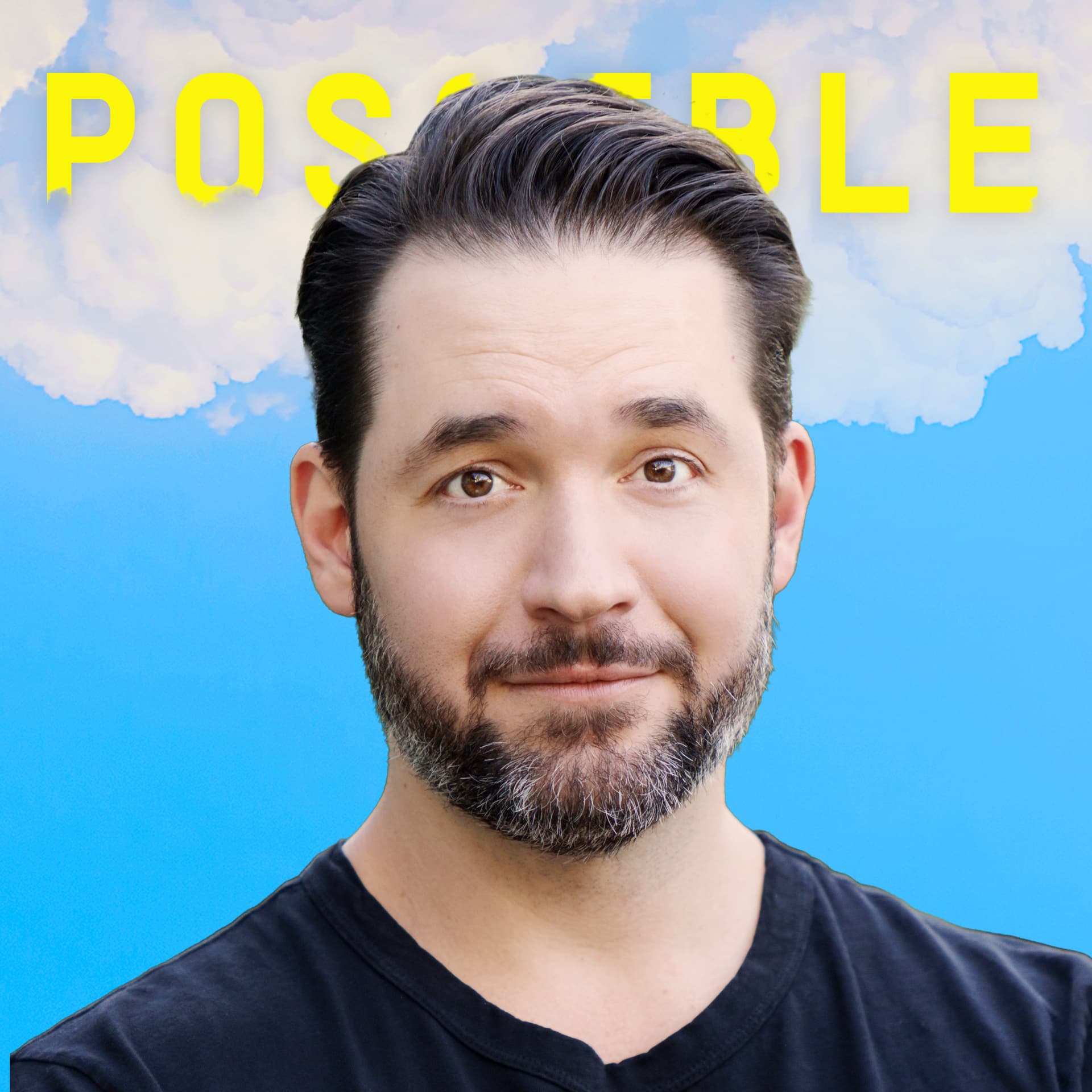
- Episode Title: Possible: Alexis Ohanian on the Future of Online and Offline Communities
- Host: Rana el Kaliouby
- Guests: Alexis Ohanian (co-founder of Reddit, investor, founder of venture firm Seven Seven Six)
Key Themes and Discussions
- Building Healthy Online and Offline Communities
- Alexis Ohanian's Vision:
- Advocates for creating platforms that foster joy and connection.
- Reminisces about the more enjoyable early days of the internet and social media.
- Expresses hope that AI can help recreate a positive online experience.
- Role of AI:
- Believes AI can temper negative human instincts and enhance user experience.
- Envisions AI tools helping to curate content that uplifts rather than divides.
- The Challenges of Social Media
- Current State:
- Social media has become overly focused on engagement metrics, prioritizing extreme content for clicks.
- Alexis emphasizes the importance of creating platforms that feel good to use, stating, "if you spend half an hour on Dig, you should feel good afterward."
- Reimagining Social Platforms:
- Discusses relaunching Dig with a focus on community and enjoyment.
- Advocates for a design that allows users to self-select their experiences and minimize exposure to harmful content.
- Alexis Ohanian’s Ventures
- Venture Capital Firm - Seven Seven Six:
- Focused on empowering women’s sports and innovative startups.
- Ohanian's commitment to investing in underrepresented areas, particularly women's sports, is underscored.
- Bid for U.S. TikTok:
- Discusses his intentions behind bidding for TikTok, emphasizing democratizing social media and leveraging blockchain for decentralized social identity.
- AI in Personal and Professional Life
- Parenting and Technology:
- Ohanian shares how he is raising his daughters with an understanding and appreciation for AI.
- Encourages his daughters to use AI as a creative tool, integrating it into their learning and artistic endeavors.
- Future of Work with AI:
- Optimistic about AI’s potential to enhance productivity and create new job opportunities rather than replace jobs.
- Addresses the importance of maintaining fundamental skills like reading and writing alongside embracing technology.
- Health and Well-being
- Future of Healthcare:
- Sees a transformative potential in AI for personalized medicine and health management.
- Emphasizes the need for equitable access to healthcare innovations as a benchmark for societal progress.
Key Takeaways
- Joy in Technology: The need for technology and communities that prioritize user experience and positive engagement.
- AI's Balance: While AI offers exciting possibilities, it is essential to ensure it promotes healthy interactions rather than exacerbating existing issues in social media.
- Empowerment through Investment: Investing in underserved communities, particularly women's sports, can lead to revolutionary changes in how sports are perceived and valued.
- Future of Healthcare: Optimism about the advancements in healthcare driven by AI, with hopes for improved access and efficiency for all demographics.
Final Thoughts
- Alexis Ohanian embodies a forward-thinking approach that balances innovation with social responsibility.
- The podcast encourages listeners to reflect on how technology can be used to foster community, joy, and equitable access to opportunities.
---
This structured summary captures the essence of Alexis Ohanian's insights on the future of online and offline communities, the role of AI, and his vision for a better future.
Written by AI. May contain mistakes. Listen to the episode to check what was said.
Transcript
Automatic transcript. May contain errors.0:00If you've spent any time building AI products or leading technical teams, you know this. Transformation doesn't fail because of ideas. It fails because teams can't move together. Enter Atlassian's Teamwork Collection. It has planning in Jira, documentation in Confluence, video updates in Loom, and now AI agents in Rovo, which connects the dots across your work so nothing gets lost. It's one AI-powered teamwork platform designed for how modern teams actually build. Learn more at Atlassian.com slash Team Changer. That's A-T-L-A-S-S-I-A-N dot com slash Team Changer. Hey there, listeners. It's Rana.
0:49Today, we're featuring an episode from one of our favorite podcasts, Possible, hosted by Reid Hoffman and Aria Finger. You'll hear Reid and Aria in conversation with serial entrepreneur, investor, and co-founder of Reddit, Alexis Ohanian. This conversation was recorded before the news that Alexis will be a guest shark on the hit show Shark Tank. This podcast explores the startups and women's sports ventures that Alexis is backing through his VC firm 776, whether kids should be using AI, and what will it take to make the internet fun again. We think you'll enjoy it.
1:31Spending time around user generated content felt a lot more fun 20 years ago. I think the thing that we have lost over this last couple of decades of social media is there was a certain joy to the internet back then. I think part of it's because there were fewer people on it. And I think we can get back to it. I think AI is going to be a big part of it. We have a chance to build systems that could hopefully temper the worst part of our instincts. and actually give a much better user experience. The North Star is, if you spend the half an hour on Digg, you know, killing some time, you should feel good afterwards.
2:11Hi, I'm Reid Hoffman. And I'm Aria Finger. We want to know how, together, we can use technology like AI to help us shape the best possible future. With support from Stripe, we ask technologists, ambitious builders, and deep thinkers to help us sketch out the brightest version of the future, and we learn what it'll take to get there. This is possible.
2:39In Silicon Valley, the word community often implies online. But while we talk about social platforms in the context of digital engagement and growth, the strongest platforms, the ones built to last, tend to find ways to connect people off-platform too. Take, for example, GitHub, Stack Overflow, and Hugging Face, along with other OGs we appreciate like Reddit and LinkedIn. The user experience begins in the 2D world, but the connections extend well beyond our screens, shaping careers, relationships, and ideas that play out in the 3D world. Here with us today to talk about the future of online and offline worlds is Alexis Ohanian.
3:20You may know Alexis as the co-founder of Reddit, which helped define what online community could be. As founder of the venture firm 776, he's also a prolific investor. More than 40 companies in his portfolio have valuations of over a billion dollars. Like us, he is bullish on AI. Alexis is also a deeply thoughtful leader who's vocal about using technology to make people feel more connected, healthy, and aware. It's all part of a bigger picture. using technology to foster spaces online and off that reflect the kind of world that he wants to raise his daughters in. He also happens to be married to one of the greatest athlete entrepreneurs of all time, tennis legend Serena Williams.
4:04We sat down with Alexis to talk about what drives his bold investments, including women's sports franchises before their popularity spiked, and his recent bid for U.S. TikTok. We get into the future of communities across platforms, places, and generations. So let's dive in. Here's our conversation with Alexis Ohanian.
4:30Thank you so much for being here. We really appreciate it. Pleasure to be here. You've built and backed some of the world's most ubiquitous social platforms, and we're going to get to that. But I first want to ask you about another role that you've been vocal about, which is golf caddy for your daughter, Olympia, who's in elementary school. Can you share more about this from what it looks like? And what have you learned from her? Well, being a daddy caddy has been a delight. She started learning, gosh, it was about two years ago. And I've sat on the board of Tiger's Foundation for about the last six, seven years.
5:04And during one of our board meetings, he surprised me with a set of clubs and Olympia-sized. Of course, the first thing I said was, hey, man, those are too small for me. So I bring them home. And at this point, I'd never played golf before, but I told Olympia, Uncle Tiger gifted her some clubs. So it's time she started learning. And so we go basically every Sunday here in South Florida and she's gotten really good. You can see some of the clips I post online. She's got a great swing tour and obviously got all of her natural athleticism from me. Clearly. And no, but it's been awesome. Another reason we thought it would be awesome to open with the kind of discussion of Olympia is as it gets into kind of work, you've described 776, the software and empathy focused venture firm, sounded in 2020 as your life's work, and credit Olympia as the inspiration.
5:59Can you tell us a little bit more about the firm's name, values, vision? Yeah. I'd started my first venture capital firm, initialized capital in 2012. And then I came back to Reddit in 14 as chairman and then left again in 18. And then in 2020, decided to split initialized in half to start 776. This was all within a month or two in the summer of 2020, resigning in protests on the Reddit board, speaking out against violence and hate communities on the platform, and then also splitting initialized in half. It was conversations I was having, I think like a lot of Americans around the dinner table about the state of our country.
6:40And for me in particular, having a black wife and a black daughter, one at the time, I was at two now, but having this three-year-old and trying to just think through the conversations I was going to have with her as she grew up and as she did a little bit more homework. And it made me reflect on some future conversation I'd have with her, which is, what were the choices that I made that professionally were going to have big consequences and maybe unintended ones at the time? And then how was I going to reconcile that with the responsibility I have to wanting the best for her and wanting to just be better?
7:16And in a way that made a really hard decision, which was leaving a company that I had built in for 15 years was my identity, right? I was the Reddit guy. What was I going to be after? And Olympia gave me a great grounding for that because I simply said, all right, let me make this my focus. Let me do my best work building companies, investing in companies early, early on, all in ways that I know are going to be both financially successful. That's obviously a requirement, but also in line with my values and things that I know I'd be really proud of telling her about and for her to see me doing while she was growing up.
7:51So 776, that is the year of the first ancient Olympic Games, 776 BCE. And I initially wanted to name the firm after her, but my wife pointed out that if we had another kid, they would be jealous. That's a good point. So instead of Olympia Capital or something like that, 776 being a nod to the first Olympics was a good enough homage. And it was a great reminder. There's a story in this, and it doesn't hurt that the first history class I took at UVA, the reason I declared my history major my first semester, first year, was ancient greek history and there's a famous story of this cook who got off his shift went to the first ever olympics olympia in greece and won the first ever event which was a foot race it was like a roughly like a 200 meter dash if i recall and it's this legendary story the first olympian and and it's this amazing story of you know this humble cook who's the fastest human in the world and it tells another story though that i don't think folks necessarily realize at first which is as great as he was, he was not the fastest human in the world that day.
8:57He was just the fastest human that they had invited because the Greeks only knew of people in their world. There were millions of people all over the world they had no idea existed, some of whom I'm sure were as fast or faster. The Greeks did not even let women watch the Olympics back then, let alone participate in them. So they were missing out on greatness in their own midst, in their own ranks. And that's not to say, look, this is an amazing invention. We're all better off for the ancient Greeks having created the Olympics and really sport as we know it, but they had some blind spots. And I looked back on my own career and thought, well, gosh, I relate a lot to this cook.
9:30And in many ways, perhaps there have been opportunities, whether it's been companies I've invested in, for instance, where I have not thought hard enough about this or sought greatness hard enough. And that is what I want to spend the rest of my life doing. We're still trying to produce outsized returns first and foremost, but I do think there's a different way to move in these spaces. and that's what we're trying to accomplish. And hopefully, like I said, just make my little girls proud of me one day. Well, one of the intersections between outsized returns and the world is you want to make it, which I think is awesome across all the fronts, whether it's women's sports or any number of other areas.
10:04You've also been quoted as saying you want to make the internet fun again. So what does that look like roughly? This was tied to the recent relaunch of dig.com, which was created by my friend and co-founder Kevin Rose, who was the original founder of Dig back in 2004, actually about a year-ish before we started Reddit. And I can say I have the email to prove it. I had no idea they existed and learned about them about a month after launching, which was, I guess, shame on us for not doing enough competitive research. They were the Goliath and they were the OGs there. And we did beat them, but to get the chance to rebuild with Kevin right now in this age of AI and sort of reimagine what a community platform looks like, especially a fun one, is very, very exciting.
10:51I think the thing that we have lost over this last couple of decades of social media is there was a certain joy to the internet back then. I think part of it's because there were fewer people on it and it was a much fringier part of culture. Today, internet culture is culture. Back then, that wasn't the case. And I think so much of social media has been weaponized. And I say this without judgment, but I think every one of these products is at the end of the day, well, really, it's more benign. Every product manager is just trying to get their raise. And so in order to get their raise, they know they have to hit engagement goals.
11:27And in order to get those engagement goals, they're going to prioritize content and behavior that stokes greater engagement. And the sort of banal trap of that happening day in and day out is what you have on the internet today, social media today, which is the most extreme takes get all the air. I gave an interview at a Forbes summit and the clip. So in the video, I was asked about DEI practices. And in my response, I said, listen, if you've been, you know, one of the greatest shams is that people made it seem like being interested in having a diverse and equitable and inclusive workplace wasn't about greatness and merit.
12:08It's a total farce that somehow these things got so distorted. One can absolutely want to have a meritocratic workplace that pursues excellence and also still has an eye towards being a hospitable place for diversity and equity and inclusion. Anyway, I gave this what I thought was a fairly reasonable take. And then sure enough, one of these meme accounts on Twitter grabbed, rewrote, basically said that I said something way more divisive. Like every company that abandoned DI policies is going to feel the wrath. And so on the one hand, I'm like, okay, well, I'm happy because in social media, I can respond in real time as I did quote tweeting it and showing the actual clip and being like, this is horseshit.
12:46Like, come on. And the account did after a day delete it because they realized I called them out for their bullshit. But this is an exhausting exercise. And this is the other side of now 20 years in where the stuff that really hits plays to either the most extreme supporters or the opposite because either one drives engagement. And all this is to say, look, we didn't have a roadmap for how social media would play out. None of us did. But we're in the situation we're in now. We kind of understand the matrix. We sort of see where these things go with time. But now thanks to AI, we have a chance to build systems that could hopefully temper the worst part of our instincts and actually give a much better user experience and just not feel bad after.
13:32I know that's a very nebulous type thing, but Kevin and I are both aligned here. The internet felt more fun. Spending time around user-generated content felt a lot more fun 20 years ago. And I think we can get back to it. I think AI is going to be a big part of it. But the North Star is if you spend a half an hour on Dig, you know, killing some time, you should feel good afterwards. So I want to get to another social network that you have been linked to in a moment. But I think there's a lot of people who feel pretty bad about social media. And, you know, they say to your point that the market just takes us there.
14:05There's a product manager who's looking for clicks. They're looking for time on site. There's lots of people who say, you know, I don't want to be on this social media, but I have to for whatever my job, my friends, whatever. Is your thesis that just the market can actually take care of it because you're going to create this better dig and because it's better, you'll win the day? Or what else can we do? Like, how can we get from this place where you think social media isn't the best thing for society? I will almost always defer to the entrepreneur, to someone building that better mousetrap as being the best solution.
14:40Because ultimately, it moves a lot faster than, let's say, the other option, which is government. And then even the societal, cultural one, I just think everyone says this thing, but no one changes their behavior. And I think the thing to actually get folks to change behavior is to build something that just is better. and I'll give you a little glimpse of how I envision this working you know Kevin and I have spent quite a few hours thinking through sketching and the team's ultimately going to do the real work of building it but you know if you have a I like using analog examples a lot or sort of offline examples a lot because as humans obviously we spend a lot more time offline than online and actually think they they map really well and so you take a platform like let's say dig 2.0 right It's a community platform and it has infinite spaces for people to congregate around the things they love.
15:28You can think of it almost like a digital Moscone Center or Javits Center. And if you own the Javits Center, right, you have stakeholders, like you have Nathan's hot dogs and you want to keep them happy because you're going to sell hot dogs and helps you pay the bills. Those are the brands or advertisers. And then you have all these infinite meeting rooms where you can hold conferences, conventions. So you can have the Pokemon one. You can have one just for Jigglypuff. You love Jigglypuff? You can just talk here about Jigglypuff ad nauseum. And this is also how I map why and how I draw the lines around certain types of content where this would never happen on Dig, but you can read about how it happened at Reddit.
16:03If you had a convention hall where people got together and just watched videos of people dying, and you said, this is the watch people die convention. And you have that literally right next to the Pokemon convention. One, for anyone looking there, you're normalizing a really horrific antisocial self-destructive act that is watching people die and talking about it with like Pokemon, perfectly reasonable, great stuff. So you take some responsibility as the Javits Center, right? Saying, yeah, these both deserve a space here. But then worse, you're creating a place for people to actually congregate that just sort of normalizes this really antisocial problematic behavior.
16:39The internet is a wild west and I'm okay with that. You can find that content if you look hard enough on the World Wide Web. And I'm not trying to restrain that. That's always going to be there, unfortunately. It doesn't make it good. That's the reality. But you as the Javits Center can decide, we don't want this stuff here. We're trying to sell some hot dogs. And these folks over here at the Pokemon Convention Hall, they're having a perfectly fine time. And we're not okay with this. And it's better for the community, society, fine. Now, let's say you're hanging out at the Pokemon Convention Hall.
17:11And all of a sudden, someone comes up to you. And you're having a conversation with a group of friends. You can think of that as like the thread, right? You're all talking about all the latest Pokemon release. And I don't know. This is clearly not sponsored by Nintendo. And all of a sudden, this guy comes up and he says, hey, pick whatever the most awful, horrible, bigoted conspiracy theory, whatever you want to call it. Some guy comes up spouting this stuff. there is an immediate social cue that comes back from most of those people, which is like, bro, we're just here talking about this Pokemon stuff.
17:42And if he keeps going on and on about it, he understands just how antisocial these ideas are because people are rejecting. And one of the things that we can do today that we couldn't have done 20 years ago is that if you're about to hit send on that post or that comment, and it is one of those, because everyone else is able to specify for themselves the kind of experience they want to have on Dig, you can see it as you hit send, like, hey, just so you know, 0.2 % of the audience is actually going to see this because their settings have self-selected out of this really crazy shit. And it's a version of that feedback loop of like, oh, maybe I'm a problem.
18:27Whereas today, the most radical ideas get rewarded by internet points because they find their way to all the people who love it and who then promote it because it reinforces what they believe. And then it infuriates the ones who believe the opposite and it's weaponizing that behavior. And so I think having software that can now truly read and understand the things that you are writing or reading can help you have a better experience as a consumer in this content and also help you guide the way you want to move through the world. Just like, you know, you can shut down a conversation with someone who's, you know, saying something unhinged.
19:03You're giving more of that agency. And again, that literally was not possible 20 years ago. And now we can take it for granted. It's trivial. And these are the things that we can unlock and reimagine in this new age that just get me so fired up. So let's also go to TikTok. Oh yes. My bid. Exactly. You know where we're going and you know, we want to ask you to do a little TikTok dance for us. You don't want to see that. You don't, I have no dancing skills whatsoever. Can't even do the Macarena. Exactly. As part of the, well, you know, Gangnam style, or maybe it's Alexa style. I still know. No one wants that.
19:39But anyway, so, you know, joined a bid to acquire the U S assets. Say a little bit about that say what the motives would say what how would be also in the same spirit of evolving you know kind of social media more positively i seeded coinbase back in 2012 so i i was captivated by brian armstrong's pitch you know 13 or so years ago and i've been looking for more and more examples of that next level you know we understand store of value i think just about everyone believes that bitcoin is here to stay and you can sort of go down the line for others but um at a minimum we have, okay, store value, that's been cool.
20:14But like, where do we actually see people building on chain in a way that's, that's useful. And decentralizing social identity has always felt like one of those that everyone in web three, whatever we're calling it now, crypto again, I guess has hypothesized, Oh, wouldn't this be dope? Like it makes sense to be able to have portability in all of that value you're creating in this one social network. Instead of it being a bunch of disparate sets of followers and reputation, it makes sense to have one that you can then bring with you and get the value from it everywhere. And unfortunately, that idea has stayed an idea because no real platforms have built to scale with that motion.
20:55And so a clever hack would be then to find an existing one that is willing and able, perhaps if they're going through a major secular shift themselves, like US TikTok being peeled off from TikTok, to then go in and say, okay, well, what if we reimagine this on chain? And with this amazing, massive user base could overnight turn a bunch of people who have never even really cared for a minute about crypto into folks that are benefiting from this underlying tech. And so I loved and was obsessed with the idea of potentially being able to do this should our bid win. Realistically, I've been very outspoken about TikTok for a very long time.
21:35Just have to look at my tweets. And I'm just happy to see it in what seems likely to be US hands at the end of the day. I guess we'll see. I don't try to pretend to have any clue what this administration is doing at any given time. But I'm hoping that it does end up properly in US hands for security reasons, for all kinds of things. And hopefully it's us, because I do think we have the most ambitious plan to actually try to bring all those users on chain. The bigger thing that it speaks to though is folks in crypto realizing that user experience is ultimately the thing that's going to matter. No new person is going to join this movement for the sake of the technology.
22:18We've reached that saturation point of the hardcore crypto anarchists through to the engineers and true believers. To actually have this reach its full potential, you need a bunch of people who don't even care about crypto don't even think about it being on chain they just like the user experience of what it lets them do and i think we're starting to see some breakthroughs here xmptp is a really interesting messaging protocol that i that was also an early investor in i think you're going to start to see some of this underlying tech breakthrough as it gets integrated more and more places there was a rumor going around that we already have some of this integration in dig i can't speculate on those rumors but it's it's interesting the thing that's more important though is understanding the why of your user and knowing that it has nothing to do with the tech it has to be about the user experience the average person does not care about the tech it's just it's got to work it's got to do the things that they think are interesting and exciting it's funny i think the same goes for ai a lot of people don't it's like i don't care if it's AI or not.
23:20Like, I just want a better experience for what I'm doing. And, you know, you co-founded Reddit on the principle that users should shape what content gets seen. And I think when people talk about AI in communities, they're worried about disinformation. They're actually worried about the addition of AI. But you just said, like, you're excited about it. What is the space for community-driven models in a world where more and more of the content we consume? Is AI generated and curated? And how do you think AI agents play a positive role in online communities? Well, I am a pretty firm believer in the dead internet theory.
23:56Not that the entire internet is dead, but I think much more of the internet than we realize, like user-generated content, I'm putting that in quotes, is actually automated or semi-automated at this point. And so I think you have a very interesting innovators dilemma if you're an incumbent, because you're already in some ways reliant, whether you know it or not, on this. Take all the broad and big, bold proclamations Elon made about removing bots from Twitter. Now, it's gotten better. If I'm just thinking of the low effort bot replies, I feel like it's slightly better, but it is nowhere close to removed.
24:35And I think what he found once he got under the hood was that this is actually, and we've looked at versions of this for 20 years. We didn't have bots per se, but we had ring voting when we started Reddit. We had lots of different ways that people were trying to game Reddit that were sort of gray, right? 20 people in a group chat all uploading the same link. Now, maybe to a fault, we tried to police that really hard. Whereas I think other platforms like Instagram and Twitter wisely realized that that helped lead to more growth. But there's structural reasons why we had that problem because we had a singular front page or even every subreddit had its own front page.
25:07So we needed it to feel authentic versus having just a feed of all the things you follow. And once you had an algorithm, then it just lets you kind of make up whatever you wanted. So anyway, it's a hard problem. It's not easy to solve. I think for a new platform like Dig, what are we doing? We have our little groundbreakers who for$5 can reserve their username right now. But we also are thinking through, okay, for all intents and purposes, every one of these users is real. Now you could still have weird behavior that happens with those accounts, but we know by having a credit card, by having a payment, like you're doing your bot detection through Visa and MasterCard, which is great.
25:46They spend lots of money to make sure that that's pretty authentic and you can start to win the arms race out the gate. It is an arms race though, no doubt. And so I think this new wave of UGC will prioritize proof of humanity. Obviously, Sam has his own version of that with WorldCoin. I do think there's an on-chain solve for this. I don't know which one wins, but that will become much more important in the years to come. I believe folks are going to figure it out, whether it's new on-chain fun stuff or old school, let's just rely on Visa and MasterCard to say every one of these first tens of thousands of Dig users are real humans.
Read the full transcript
26:21There's ways around this that we can kind of cobble together in these next few years. And then when I think of the role that they play on the platform, I actually think there's a tremendous role to be played. And assuming you're doing a very good job of finding proof of humanity, then you be very explicit about the role that bots are playing. There's been bots hacked into Reddit for years. There were Dogecoin tip bots on Reddit over a decade ago. I think Twitter has some pretty good examples of it. But Reddit is actually one of the best bot ecosystems, in part because a lot of the tools were sort of cobbled together by users to fix problems in the core Reddit UI UX.
27:03And so we want agents and bots from day one as a part of the dig experience. So what does that mean? A good example is the most powerful force that an AI could provide are the volunteer community leaders, the sort of moderators, who spend a disproportionate amount of their time actually doing janitorial work. It's not very fulfilling work. They go through a kludgy interface to basically say, yeah, this is spam, this is spam, etc. You can imagine in sort of our ideal scenario, the job of being a community leader is inverted. Instead of spending 90 % of your time doing janitorial work and 10 % of your time doing like fun community building work, like, hey, we're doing a giveaway this week, or hey, blah, blah, blah, we got so-and-so to do an AMA, it would be flipped.
27:48And we'd actually be able to use these agents, again, very transparently, but to let these community leaders spend most of their time doing the fun human stuff and not the annoying, very manual today type work. and i think like a lot of things if we create the right framework and again being transparent with users is crucial here um i think it'll also give birth to a ton of other great ideas you know the ama was not invented by any red employee the ama was invented by some random redditor and it's become probably one of the most iconic catchphrases of social media in the last decade ask me anything and it was just some random user well that whole network innovation thing is part of a what entrepreneurship does part of what silicon valley does part of obviously the question around you know kind of like where the amazing thing comes from left field out of field etc say a little bit about how you've been investing in ai you know kind of where you think ai is going to play kind of a role in the next generation of creation and human creation you know i don't know what ai means for women's sports it probably means a lot for trading and collectibles, but like, what's the set?
28:57Oh, AI means a lot for women's sports. The reason there's so much opportunity in emerging sports, which are oftentimes women's sports because they were underinvested in is because it is a blank canvas for innovation in men's sports. You will hear, you know, well, this is the way it's always been done. And there's a ton of infrastructure. There's a ton of people. There's a ton of folks that are going to tell you like, this is the way it's always been done. The one advantage to decades of underinvestment in women's sports is that you can just build in many cases. And so when we think about the next generation of women's soccer, women's track and field, these areas where we're innovating and investing really big, AI is going to have a radical impact on training, player safety, health.
29:44You're going to see soccer has tremendous investment, right? There's a lot of the best teams in the Premier league are using AI for training, for development. They're starting to get a lot better about understanding each player's strengths and weaknesses, again, all through great computer vision tech that we now have using basically off-the-shelf hardware. The women's side has so much less investment. We just think of scouting infrastructure. You look at second tier. I was trying to watch French soccer match, that second division. And over the weekend, it was impossible. I actually tried signing for three or four different services.
30:20I wanted nothing more than to pay money to be able to watch this. But getting the broadcast outside of the countries is nearly impossible. There's just literally no one providing it. That's how bad the infrastructure is. And so you run that down and you realize, okay, now that there's a ton of investment going to the highest levels, Angel City is now a$300 million sports team, the most valuable in women's sports. It didn't exist four and a half years ago. it will take a lot of time for that to flow down to the second divisions third divisions collegiate youth and so where that has been under invested in historically is an opportunity for someone to come in and say okay why would we be doing scouting the old-fashioned way with like dudes with clipboards when we could be running tape through a machine and identifying who had the best you know passes this game who had the best goals this game like there is an amazing revolution that's coming in emerging sports and will largely be women's sports.
31:13I think within five years, you will see software that understands talent and depth across multiple divisions and age groups and all that stuff in a couple of major women's sports. Soccer will probably be the first one that rivals the men where people are like, how is it possible that you have such forward-thinking, innovative software and data for the women's game that's better than the men while the men still are having bigger market caps for their teams, etc. And it's going to be because of that leapfrog. But then there's also been hardware. I pointed to teenage engineering here. They're thinking a lot more about how AI will play a role in their next generation of hardware.
31:54I think industrial design, because it's still very hard to make atoms. It's very hard to do them beautifully. It's logistically harder than ever to get all those components in one place. And taste is still so valuable. And while there are interesting things to build in software, as we get better and richer and richer digital lives, I actually think we'll start to appreciate the hardware even more. Even just seeing my own seven-year-old's relationship to AI. And the ChatGPT app is definitely the one that runs all the numbers for us. And seeing the way she converses with it, seeing the way we do a big question every night at dinner, we started doing this pre-AI.
32:32and so poor Papa had to be the answer. And we'd look it up if I didn't know, but she was also younger, so the questions were a lot easier back then. But now the questions are getting harder. I force her to bring a big question to the table every now for dinner so she can ask it and then we can get an answer. But now we just go right to OpenAI and she's just having a conversation with it. And seeing how natural that is helps me recognize my own biases to even go like this and type because that is not a natural thing for her. I think because I was so hung up with speech-to-text being bad for so much of my life that it took a seven-year-old who's really only known amazing speech-to-text to help me realize like, my God, you're right.
33:11Like this paradigm is here. And this is the fun part. This is where I think hardware is gonna really wow us in these coming years. And it's gonna be fun.
33:24Meet Nicole Nicholas, Capital One business customer and co-owner of Ansett Uncles, a plant-based restaurant and community space in Brooklyn, New York, that got its start from a need for unity. The inspiration, it was born from the desire to create a space that felt like home, where we can connect community culture, good food, and come together with family and friends. That's how we birthed aunts and uncles. Nicole and her husband, Mike, were fulfilling their dream of bringing people together out of their home kitchen. But they soon learned that the demand for community was greater than they knew.
33:55It became overwhelming and we were like, we need home, but not in our actual home. We realized that there was also a need in our community for something bigger in our neighborhood. So we had to find a place. Moving from a home operation into a storefront was a huge next step, but Nicole and Mike were able to take it on with the help of Capital One Business. It's not for the weak. As a small business, finding resources is super important because that's the way you'll be able to manage and scale. We would have never done that without having Capital One to be able to help us along the way. The cashback rewards are very helpful.
34:31You know, it just gave us that runway to be able to breathe a little bit. Then you get to focus on the cooking of the food and making the experience great. To learn more, go to CapitalOne.com slash business cards. For all the parents out there who are listening, first of all, tell us a little bit more about this nightly question. Like, what should we be doing to make dinner less terrible? and then two, like, what do you tell your daughters about living in the age of AI? Should they be using it every day? Should they be wary? Like, how are you preparing them for this sort of next generation of, you know, work and life with AI as ubiquitous?
35:06Oh, I want Olympia using it every day. I will make a point to say, I don't know, but you know what? I can find out instantly. And now, okay, the good news is, I mean, there was probably a version of this for Google that I would have done for her 10 or 15 years ago. And there was a version of this that my parents probably did with like the encyclopedia or a dictionary 15 or 20 years before that. But I genuinely am so awed by the fact that super intelligence will be a commodity for her. And I love that in my work life, but I also still have the baggage of being 41, almost 42 years old and trying to keep up, but not like we all aspire to be first principle thinkers, but there's nothing like actually seeing the world as a child, as like a blank canvas.
35:51And so, yeah, no, I want her to use it every day. I want her to use it as a tool for her creativity. We started with the latest Chat Chabu T release. I dug up some of my old sketches. I was an only child, so my dad and mom thankfully saved everything. And so I have a notebook of my old sketches from when I was a kid. And I took some photos of them for her to show her and had them convert these pencil sketches into full-color illustrations. And even some half-finished ones. And it was just so wild to see her reaction to it. Now, when we do our drawing classes, we're watching a YouTube video of there's this great father with a bunch of his kids and they do his art for kids YouTube channel.
36:32It's great. And he has these beautiful tutorials. You can draw anything. And so we'll do these drawing classes together where we've got this YouTube instructor teaching us fun little things and we're drawing it side by side. And then now I can take a photo of it and bring it to life. And my daughter is still engaging in the creative pursuit. she's still literally with a physical marker drawing on a physical dead tree paper but then we can level up that art with the playfulness of taking a photo and then seeing the photorealistic version of it and then you know make it flying through space and again these are the crappiest version these tools will ever be and so i encourage for parents is like please be using these we're on synthesis school as well to buff up on the math homework that's been going pretty well i want her to understand this is a superpower that she should have and i still need her to know the fundamentals of reading and writing and arithmetic for sure but i want her to know that the raw intelligence part has been solved for and now it's going to be about her agency and her grit and her creativity and that's great yeah and and by the way i completely agree with the breadth of enablement I do think that actually it's not solving the raw intelligence.
37:46I think it'll still be elevating intelligence in all different ways. But I want to particularly focus on this intersection between the land of bits and the land of AI and the land of atoms, the land of physics. And you do a lot of stuff about the future of physical products. You've invested in startups creating new physical artifacts like monumental labs, you know, AI and robotics that modernized stone carving, co-founder of Mantle, a social network for collectibles. So how are you thinking about physical products and the value in this digital world how is the ai intersection with that obviously what you're doing with art and parenting as a part of that but give some lens of that combination of bits and atoms so this is where i think things get really exciting the monumental story was an easy one i i saw a tweet and i have a bust well it's the head of a sculpture of an athlete, like maybe circa 600 BCE.
38:43So I couldn't get 776, but it was pretty damn close. And I thought, gosh, I'd love to know what this whole sculpture would have looked like. And here's this random startup doing this combination of AI, robotics, and sculpting. Like, hey, maybe the CEO can help me out. And that led me to a number of conversations just to better understand the state of stone carving in 2025. And the fact that we have all the buildings we have in America, because glass, steel, concrete are just so damn cheap. And we know the environmental impact of the concrete part is especially bad. And aesthetically, you could argue, things started looking a lot more cookie cutter versus you take that wonderful trip, go to pick your European city and you see beautiful stone carvings on building facades, not just sculptures, just everywhere.
39:29So enter robotics and AI and being able to do the stone carving for much, much, much more competitive prices. it still has humans in the mix. They actually do the last 10%. Humans design it digitally, right? And the robots get to work, knock out the first 90 % or so of the sculpting and the last 10 % is human. And if you love Michelangelo or pick your favorite sculptor, the reality is they actually literally only carved a small portion of that sculpture. They had their team of people, a studio that was actually doing a lot of the work. So it's actually a nice sort of comparison to the way it was done in the olden days.
40:05and here's an opportunity now to further human creativity not replace it but further it and it shouldn't surprise you that in even just the last year and a half two years as they've brought this technology to market artists sculptors in particular have now started pushing the boundaries of sculpture using monumentals robots to do sculpture that they never could have done before literally because there are certain movements and certain designs that only could happen robotically and they've actually integrated that into their art and i think you're going to start to see more and more playful remixes of this where you're taking an age-old human craft like chipping away at a stone and blending it in with technology and creating something that is beautiful creating something that is way more environmentally friendly by the way and creating something that is timeless and i really believe these screens that we sit in front of and that we take out of our pocket will just keep getting so damn good.
41:03Not just in their fidelity and their size and their cost coming down, but the things it will know because of AI to show us when we want to see it will just get so, so, so, so good. And again, the optimist in me believes that as a species, humans for whatever, hundreds of thousands of years have spent way more time around campfires, you know chasing gazelles holding physical things than we have in front of screens and there is some part of our fundamental species that will long for the atomic world as as good and in fact i think ironically as good as this digital world gets which i love don't get me wrong i love a good digital world i think for the vast majority of us it will actually make our yearn our craving for the physical atomic world even greater.
41:55And that's why I'm so bullish on live sports. I know I'm never taking my daughter to go see a robot have a perfect weekend at the Masters, right? The reason you're paying attention to that is a fundamentally human experience. Now, AI robotics will make that experience better for us as fans, for the training, for everything, but it's not going to replace that fundamentally human experience. I'm actually very bullish on theater. We will get a very different looking Hollywood 10 years from now. I don't think it's going away, but it'll be very different looking and what's on a movie set and all that.
42:24And the production quality, all that stuff is going to look very different. And I actually think again, because these screens will get so damn good, it will be more compelling than ever to go to a space and for a couple hours, have the lights go dark and have humans on stage. Maybe they're telling jokes or maybe it's Shakespeare. Maybe it's a Broadway musical. That live in-person stage experience, I think it's even more important and even more seductive for us. Because again, as a species, we have listened to someone in our tribe tell a story over a campfire way longer than we've seen a screen in our room showing us, you know, Iron Man.
43:00And again, love me some Iron Man. Big fan. But I actually think these human experiences, these atomic experiences don't diminish. I think it actually becomes even more important to have great ones and we will seek them out. You're hitting all my greatest hits. I mean, beautifying cities, in-person interactions. literally in the last 24 hours, my husband and I booked a magic show, a comedy show, a Mets game and a Liberty game. And we're like, F it, we're just doing it. Like we just got to do it. So I love it. And I couldn't agree more. So again, I'm a default optimist. I think the majority of people this will vibe with, and this will be the future.
43:36I do think realistically, there is a minority of people, I don't know, 10, 15 % for whom I think this does become the like, like the black hole of like, this is where I can go. And it doesn't necessarily have to be a bad anti-social experience, but I do think realistically there is some percentage though, that actually gets everything they need out of these screens. And for, I mean, not literally, but like there is a societal question there where if you have, I don't, I don't think it goes, Oh God, ready player one, but there is undeniably some dynamic though, where it goes in that direction too.
44:10And so look, part of the way to win there again, I really believe is keep making better stuff that gives people that reason to have community and that sense of belonging. And again, just having a laugh in a dark room or escaping whatever is on your mind for a few hours at a Taylor Swift concert. Like those are things that are still going to be durable. Now the other 80 % of music that's like one hit wonders, probably going to have a bad time, right? But I mean, Taylor's a religious experience. That will be an exception, but we're going to see a lot of change. I love your discussion of the real world.
44:43And I feel like of all of our podcast guests, I will say you probably have the most interesting background. So if you wouldn't mind, just tell us a few things you got there, maybe like a Russell Crowe mask from Gladiator. Like what do you got back there? So it's, I've got a little gentleman's farm here in South Florida. It's like four and a half acres and it was all just land. And I told my wife, I was going to build a farm. And she was like, you don't know anything about that. And I was like, I don't, but I'm a VC. So I can, I'm supposed to be pontificating on things I know nothing about. And I was like, trust me, I can do this.
45:18Turns out way harder than I expected. It was a very humbling experience, just like even building up the farm team house, all this stuff. Anyway, we got to set up and I've built this, this is like giant garage, but I've made it, it's my office. And so it is full of all kinds of collectibles that I would have, I think, dreamed of having as a kid that I just can get now. So yeah, that's, that is the helmet from Gladiator. Like when he takes it off and he's like father to a murdered son, husband to a murdered wife. And I have my vengeance in this life for the next. And, uh, and then I've got this Iron Man that was from the end game.
45:51They made like 30 that they placed in like movie theaters and stuff. That is an actual, I don't know if you can see, that's an actual Captain America shield from first Avenger. That was the one of the hero shields. Got a couple of signed jerseys. Alex Morgan, got to give her props. When I rage-tweeted about how undervalued women's sports was in March of 2019 and said I was going to buy a team and it would one day be worth a billion dollars, she was the one who responded in my replies and was like, I can help. She took an hour out of her day. I brought her down from Orlando. I was just taking notes trying to understand the opportunity in women's sports.
46:23She's technically signed that for Olympia. I've been holding on to it, keeping the office. I got a Brady jersey too, but But, you know, sorry, Tommy, you didn't get me into women's sports. And gosh, what other stuff? I got some Kaepernick jersey. Oh, there's Alexis Arguello. So he's right behind the helmet there. That's my namesake. He's a Nicaraguan boxer. I think he won titles in three different weight classes. Gosh, there's just a bunch of random stuff. I got my little mon-retro chromatic for, you know, gaming sessions in between here. I've got my Michael Jordan rookie card. I got, obviously, the most valuable Serena Williams rookie card ever.
46:55i kind of have the largest collection of her cards i quietly started buying them about five or six years ago when they were horribly underpriced and uh and then so we had that collection all vaulted with alton it's all for my kids and you know maybe grandkids one day um so yeah no shortage of collectibles
47:19all right so let's start with the rapid fire is there a movie song or book that fills you with optimism for the future? Movie. I only watch dystopian. You know, there needs to be more. Can I make a request? I would love to see the white mirror. I would love to see the tech optimist version of black mirror. I think, look, I think the cautionary tales are very important and it makes for some great storytelling. But I'd love to see the more optimistic take. I feel like I haven't seen one of those in a while. So yeah, that's my humble request. Not enough. But book, I don't know. You know, Unreasonable Hospitality keeps coming up all the damn time, and I give it to every one of my founders and CEOs.
48:01Such a good book. Big fan of EMP, the restaurant. And even if you're a tech CEO, you might be thinking, well, what the hell could a fancy vegan restaurant teach me about my business? But Unreasonable Hospitality is fantastic. At the end of the day, now having worked with a wide, wide range of successful and also the unsuccessful founders and CEOs from the very beginning, I see this common theme of the ones who really care, who give so many dams when it comes to the user experience, the customer experience, all this stuff. That's not a guarantee of success, but to me it feels like a necessary requirement.
48:35So that makes me optimistic. I think if we take a minute and realize just how many of the things we use every day are made by people who just don't care. It's fine, I get it. You just go home and pay the bills. I get that. But humanity lurches forward every time some fairly small group of people are so unreasonably concerned with doing the very, very best and just going that extra bit. And it makes such a difference. And again, it doesn't have to be some Michelin star restaurant. It could be the Taqueria down the street. But you can tell it when you see it, when you taste it, when you feel it, whether it's the products you use or what have you.
49:09And I love – I always want to champion the builders. If you care that much, consider me a fan and supporter. What is the question you wish people asked you more often? Why did you choose not to play in the NFL, Alexis? And the answer to that is, you know, I peaked in high school. Thank you for asking. There you go. No one has asked me that, as you can imagine. So where do you see progress and momentum outside of your industry that inspires you? I mean, am I technically in the women's sports industry now because of all these teams I own? I mean, I'm a tech guy, but the reason I love this job is we get to be true generalists.
49:49So I don't even know if there's an industry I'm not somehow a part of through some investment. So I'm going to cheat a little. I think space tech is definitely one I never could have fathomed when I got into this back in 2012 that I could be doing an investment in a rocket company like Stoke or just any company. space tech type company and now let's see these decks all the time and almost take it for granted and i got look at this here's a flex so i was obviously not fit to be an astronaut or my parents also never sent me to space camp i guess it was expensive but i love the fact that we're entering an era where this is normalized because look i love i love planet earth that is definitely the the plan a and and i do actually think lots of this new technology can help us live better lives right here on earth, which I think is paramount.
50:44That is very important. And it just gets me so fired up. There is a part of me, probably the one who loved, I mean, there's a prop pulse rifle from aliens. Also probably not the best advertising campaign for going out into space, but growing up loving sci-fi, I think it is, I feel so, so fortunate to live at a time where we're just starting to see this start to come to life. And it makes me excited for my kids who should reap some tremendous benefits from all of that. And look, AI plays a crucial role here, whether it's going to be those first robots that end up colonizing Mars, whether it's the space robots that are going to be floating around outside of our orbit.
51:25Who knows? This really feels like such an exceptional time. And I definitely will never be confused as an astronaut or a rocket scientist. Of all the industries that I'm really, I can't say I'm truly in, this one just fires me up so much. Like again, I think it's a good thing that we're pushing the boundaries of like colonizing Mars. I also think there's a lot of work to be done here. And what's great is Space Tech's going to help in so many ways. So let's go. I mean, so many people talk about what a terrible time we're in, but like you really do exemplify the possible attitude of like what an exciting time to be in.
51:59And so our final question is, can you leave us with a final thought on what do you think is possible in the next 15 years if everything breaks humanity's way? And what's, you know, what's the first step to get there? Wow. 15. I mean, look, we're looking at tremendous breakthroughs. Health is the first one that comes to mind. You know, it's very fortuitous that we have the capability of now affordably sequencing an entire human genome and doing it pretty quickly, which is just basically saying, hey, we've got a ton of data now. What do we do with this data? Oh, hey, AI. We've got your solve for that.
52:36And that was my thinking behind Nucleus, which is a company we seeded a few years ago. I am so optimistic about what the future of healthcare looks like the next 10 to 15 years when it comes to not just identifying, getting ahead of, and then even treating, I mean, personalized medicine. We are doing our job well. Everything breaks right for humanity. If 15 years from now, my kids are like, your medicine was barbaric. like it will look crazy how ham-fisted and inelegant our medicine was oh you've got cancer like we'll just nuke it with a bunch of radiation i don't speak about this lightly i lost my mom to brain cancer like i really feel very very strongly about finding these cures and i think it will be a testament to the success of this technology if our kids get to look back in a short window and just be like my god look how far we've come and if that can mean you know again not just for the wealthy, but for everyone, access to tremendous life-saving care or life-improving care, wow, that will be massive.
53:38And I'm less hung up on the, hey, if we can solve for energy and solve for work and money is meaningless, all that other stuff. I think we will always find something to do. There's some part of us that will just invent new jobs. And I don't mean that in like, hey, go dig this ditch and then, hey, you go fill that ditch the next day. But I'm not worried about us wanting to keep ourselves busy. When I go to how can the world be amazing in 15 years, I think about health and I think about the effect that it has on so many of our lives, how incredibly inequitable it is today. And yet still, even for the very wealthiest among us, they all fear the same call from their doctor.
54:24And yes, money can get you much, much better treatments and much, much better doctors. But again, if we get this right in 15 years, even those treatments that the wealthiest among us have access to, like those should look like amateur hour compared to what we'll be able to do and what the average person will be able to get in 15 years. And that, that to me would feel like a huge, huge win.
54:49Possible is produced by Wonder Media Network. It's hosted by Aria Finger and me, Reid Hoffman. Our showrunner is Sean Young. Possible is produced by Katie Sanders, Edie Allard, Sarah Schleid, Vanessa Handy, Aaliyah Yates, Paloma Moreno-Gimenez, and Malia Agudelo. Jenny Kaplan is our executive producer and editor. Special thanks to Surya Yalamanchili, Sayida Sepieva, Thanasi Dilos, Ian Alice, Greg Beato, Parth Patil, and Ben Relis. And a big thanks to Jenna Birch, Nefitieri Moncur, Ashraf Shemarani, and Maggie Comon.
From the publisher
How do we build products and platforms that support a healthy, prosperous future? What will it take to “make the internet fun again?” Should kids be using AI? This week, serial entrepreneur and investor Alexis Ohanian—who co-founded Reddit two decades ago and is currently working to reinvent the social news aggregator Digg—joins Reid and Aria to talk about (re)building online and offline communities in the age of AI. They hear from Alexis on his recent bid for U.S. TikTok, the startups and women’s sports ventures he’s backing through his VC firm Seven Seven Six, and his approach to raising AI-forward daughters with his wife, tennis legend Serena Williams.
See Privacy Policy at https://art19.com/privacy and California Privacy Notice at https://art19.com/privacy#do-not-sell-my-info.

