
 Ask ChatGPT


- Podcasts
- Political Currency
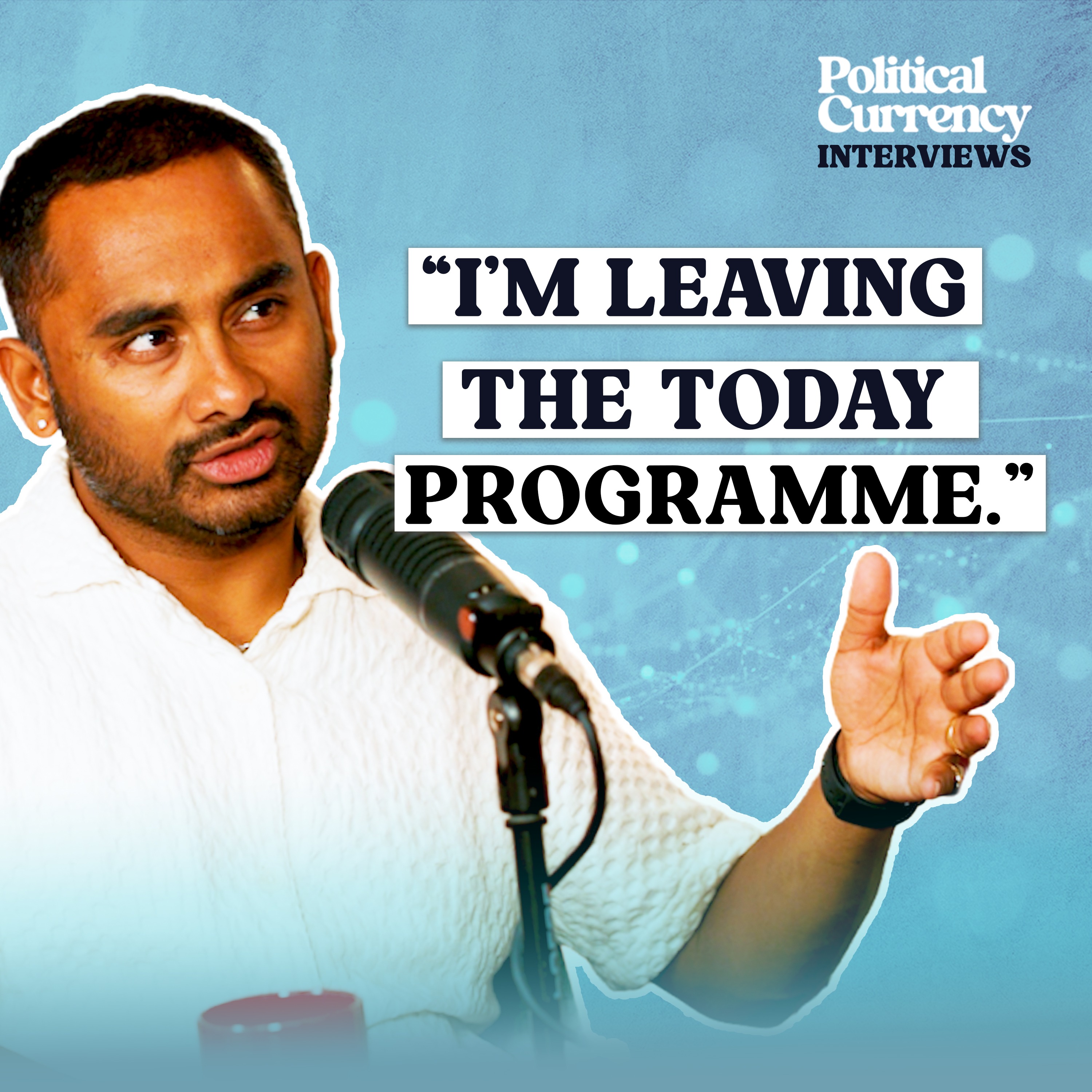
- Amol Rajan: Why I’m leaving the BBC
In short
Amol Rajan announces he’s leaving BBC News/Today after a final week and launching his own YouTube show, The Amal Rajan Connection, focused on “the future” and big underlying political, social, and technological trends. He argues politics has lost autonomy/liberalism/security/belonging, and claims the key scarcity in the AI era is human connection (not information). He also discusses media decline, ownership, and social mobility.
Guest backgrounds
Interviewer is George Osborne (former UK Chancellor). Rajan is the main guest.
Key claims
Rajan wants to “own” content and build a profitable business; BBC/IP constraints limit this. Today’s real achievement is retaining ~5.7 million listeners despite audience decline. He believes AI will make intelligence abundant but not replicate relational “attachments,” warning about AI replacing human connection. He says vocational specialization at 14 risks “schools for the rich and skills for the poor.”
Notable examples
His planned explainers on loneliness and declining capital to labor; guest ideas include Demis Hassabis (DeepMind) and restorative-justice campaigner Jacob Dunn (Punch play subject). He cites University Challenge’s “emotional journey” format and uses graphs to explain trends.
Written by AI. May contain mistakes.
Chapters
0:00
Introduction to Amol Rajan
Amol Rajan discusses his bold decision to leave the BBC.
“Thank you for calling the Bombas Comfort Line.”
2:06
Summer interview with departing Today presenter
The host opens the last of the summer interviews, introducing a guest who is leaving one of the BBC's top presenting jobs.
2:27
The Launch of The Amol Rajan Connection
Amol reveals details about his new YouTube show focused on significant trends.
“He's also the host of that famous quiz show University Challenge and normally people who land these plum jobs stay in them for decades and become part of the national furniture.”
4:35
Exploring Political Trends
Amol shares insights on major political trends affecting society today.
“It's going to be called The Amal Rajan Connection.”
6:00
The Role of Community and Connection
Amol discusses the importance of belonging and connection in society.
“Well, no, the person who said that was your mate, David Cameron.”
8:12
Ownership vs. Employment
Amol talks about his transition from being an employee to owning his content.
“and you own this, I mean, obviously, they'll take their cut.”
10:40
The Landscape of BBC News
Amol reflects on the future of BBC News and the media landscape.
“I have a entrepreneurial kind of itch that I want to scratch.”
14:00
Behind the Scenes of the Today Programme
Explore the dynamics and competitive spirit among presenters on the Today programme.
“Oh, yeah, well, while we're on it, is all that kind of gossip about discord among the presenters true?”
18:00
Embracing Change: Amol's New Venture
Amol discusses his transition from the BBC to creating his own show and the excitement of growth.
“If I said to you, You can have anyone you want on your first episode of your show.”
25:00
The Power of Storytelling in Media
A conversation about the importance of storytelling and diverse voices in media.
“My big passion in life has been trying to make sure that poor people don't get left behind.”
Show all 26 chapters
30:48
The Value of Knowledge
Discuss the significance of knowledge and personal anecdotes about family.
“Your thing about knowledge, can I just say something vaguely personal about that, which is that the idea that there's a kind of nobility about knowledge with a capital K is actually kind of the central idea of my life.”
31:40
Bombay or Mumbai?
A conversation about the cultural and political implications of city names.
“Whenever I visited India as a politician, I was always told you absolutely cannot call this city Bombay.”
33:08
Political Reflections
Reflections on past political endorsements and relationships.
“The other edict I have, which did concern you very personally, is I'm afraid to say, I sent a circular email to all staff banning pictures of you in a high-vis jacket.”
34:11
Unexpected Political Journeys
Discussion about unexpected life changes and the political landscape.
“Think, for instance, of the most powerful metaphors and phrases that abound in British politics in our time.”
36:32
Navigating Politics and Family
Insights into the challenges of balancing political life and family responsibilities.
“I would say that was one of the unexpected.”
37:59
The Non-Tribal Perspective
Exploring the idea of being politically impartial and the challenges of tribalism.
“I think I'd sort of struggle with slaughtering people that I liked.”
40:50
The Non-Tribal Perspective
Exploring the idea of being politically impartial and the challenges of tribalism.
“Ollie Kids Sleep helps little dreamers wind down with a gentle blend of melatonin, L-theanine, and botanicals for restful sleep.”
42:42
The Future of Human Connection in Technology
Explore the impact of technology on human connection and the importance of relational capital.
44:18
The Role of AI in Modern Relationships
Discuss the implications of AI on human relationships and the potential loneliness crisis.
“Religion is, the internet sort of to some extent replaced all of that.”
47:19
Economic Impacts of AI and Job Displacement
Analyze the effects of AI on jobs, particularly in call centers and the service industry.
“Mustafa Suleiman would say to me, who's one of the co-founders of DeepMind, you come home and you sort of download emotionally.”
51:47
The Disconnect Between Labor and Capital
Discuss the growing divide between labor and capital and its implications for wealth distribution.
53:18
Future Aspirations and Media Landscape
Consider future aspirations in media and the challenges of maintaining integrity while attracting viewers.
“I mean, I hope your investors aren't listening.”
56:00
Interview Techniques and Styles
Explore the nuances of interview styles and the importance of allowing politicians to express themselves.
“Well, actually, that comes back to your interview style.”
57:50
Privilege and Identity
Discuss Amol's perspective on privilege, identity, and the misconceptions of being an outsider.
59:50
Reflections on Career and Future
Amol reflects on his career at the BBC and his future endeavors with the new show.
“You know, it's not West Streeting or Angeles Rainer.”
1:02:15
Reflections on Career and Future
Amol reflects on his career at the BBC and his future endeavors with the new show.
“Hey, it's Hannah and Paige from Giggly Squad.”

Ask about this episode
Get the gist, explore an idea or ask about something said.
 Claude
On Political Currency, what are the key points of this episode?
Searching your listeningTranscript
Automatic transcript. May contain errors.
0:00Thank you for calling the Bombas Comfort Line. Bombas make socks, slippers, tees, and underwear made with the highest quality materials. Press 1 for comfort, 2 for style, 3 for donation. You chose style. Bombas is styles for whatever you enjoy. You can run in Bombas, lounge in Bombas, dress them up, dress them down, but always give back in Bombas. Because with every item purchased, another is donated. Bombas, comfort worth calling for. Go to bombas.com slash audio and use code audio for 20 % off your first purchase. That's B-O-M-B-A-S dot com and use code audio. Hey guys, it's Mary from Two Judgy Girls.
0:32This episode is sponsored by Aerie. If you're counting down the minutes until you take your bra off when you get home, it's probably the wrong bra. Or if the straps are digging into your shoulder or you're constantly adjusting throughout the day, it's definitely time to get a better fit. That's why we love Aerie. Their bras are designed to be the essential effortless first layer with soft fabrics, great fits, and up to 59 sizes. So you can find the one that's right for you. Your bra should be holding you in, not holding you back. Visit Aerie.com to find the right bra for you. That's A-E-R-I-E dot com.
1:10Think of a toilet as just an everyday object. Your entire perspective shifts the moment you experience a Kohler smart toilet. Design changes everything, transforming a basic routine into something extraordinary. With standout aesthetics and intuitive controls, these are functional works of art stunning design that never sacrifices performance enjoy customizable features for elevated comfort and convenience it's more than a fixture it's a cleaner routine and a more refined space experience the difference of kohler smart toilets find more at kohler.com
1:47Amol Rajan: i think talking to george osborne is something like a sacred experience the today program is the happiest of happy ships but there's an occasional dog fight i've got a kind of radical idea for politics people that i was on celebrity traitors with oh yeah who won that this guy should i tell you yeah cool
2:06well i'm here in our studio in hoxton and this is the last of our summer interviews and the person i'm about to speak to is doing something which no one ever does which is he is leaving the very top job or what many people regard as the top job at the BBC in terms of being a presenter. He is a Today programme presenter. He's also the host of that famous quiz show University Challenge and normally people who land these plum jobs stay in them for decades and become part of the national furniture. But Amal Rajan is making the bold and brave decision to walk away from the very top job in the BBC presenting world and to strike out on his own with his own show.
2:56We're going to hear more about that in the interview. He was born in India. He came here as a young boy, grew up in South London, went to Cambridge, was an editor of the independent newspaper at a very young age, then went to the BBC. So he's had a kind of stellar broadcasting career. But he, as you will hear, wants to stop being a wage slave and he wants to become a capitalist. And we're going to hear about that transformation in this interview, which I know you're going to enjoy because it also touches upon the big trends that are shaping our politics, our media and our society. amol raj and welcome to political currency now every time i ever did a today program interview i was always thinking i've got to be able to get my announcement out somehow i've got to work it into the questions and i kind of always appreciated the presenters who i think you are one who just says can we just start with your announcement so this was pre-recorded but it's going out today on the 27th of August and you have an announcement for the nation.
4:02Amol Rajan: I don't need to do this. I'm not a politician. We could get there. See, you're so trained and so honed and you're so masterful. You're not making use of the opportunity. Nick Clegg said something about George Osborne, which I've always resonated. The thing about George Osborne is he always understood that you had to see politics through the eyes of the other person and you've already done it in the first five seconds of this podcast. You're thinking, what does a mole need to do? But since you ask. Go on, get on with it. Oh yeah, look, I'm leaving the Today programme. A week after this wonderful show goes out, I am out of BBC News.
4:33Amol Rajan: They're not the BBC. I'm launching a YouTube show. And I can give you the scoop. Do you want the scoop? Yes, please. It's going to be called The Amal Rajan Connection. And The Amal Rajan Connection is going to be like a supercharged version of the podcast I did at the BBC called Radical. And the interview series I did called The Amal Rajan Interviews. And it's a bit like your show. It's going to come out on a Thursday and Monday, which turns out to be when people want to listen to podcasts. and it's going to be interviews with incredible people, former chancellors. There are quite a few of them.
5:04Amol Rajan: Quite a few of them. Public intellectuals, technologists, celebrities, all sorts of people. And it's basically a show about the future. And it is quite political in ways in which we'll get onto. But I think if I had to distill it down to one thing, it would be, you know, the great pollster, James Kanagasuri. He says that the biggest, one of the biggest ideas in politics today is that people all around the world, Europe, America, Britain, India feel completely overwhelmed by the speed and scale of change and feel they lack a sense of agency ability to control their future and I've spent 20 years trying to slow the world down shift the emphasis in news from daily events to underlying trends so I'm going to do a show about those trends and give people a sense of agency and tell them what they need to do to win the future you might find it useful actually yeah, sounds like a good listen you're channeling your inner Gene Hackman the Amal Rajan connection the French connection yes exactly where do you get the name what were the runners up for the name well I could have called it the Amal Rajan show but I'd have the acronym arse which given Amal Rajan as an anagram of major anal would have been a very bad way to go so I did want to do that I feel that's something you had to live with in your school I've had to live with that a fair bit yeah including the mispronunciation of my name can I tell you a real answer it's a bit deep but this is a podcast we've got time I think I've got a kind of radical idea for politics, which is that, as someone once said, there is such a thing as society, but it's not the same thing as a state.
6:34Amol Rajan: We remember the great lady. We remember the great lady. Well, no, the person who said that was your mate, David Cameron. No, yeah. He said, oh my goodness, George Osborne has been befuddled within 30 seconds of starting this podcast. No, no, no, he said. He said, there is such a thing as society, it's just not the same thing as a state. Do you remember where he said that? You were there, mate. I don't know, like part of the modernisation. I do remember the speech, yeah. It was the Hugo Young lecture at the offices of the Guardian where he announced the big society. Yes, yes, yes. And all courtesy of the future governor of California.
7:06Amol Rajan: All courtesy of... Will Steve Hilton be governor of California by the time we list this? No. Definitely not. So I think that there are three supreme goals in politics, at least since Thomas Hobbes, which is one, to stop us all killing each other, security, to prevent, because life and nature is solitary, poor, nasty, brutish and short, as opposed to me, which is nasty, British and short. But now you've got your health watch, it's not going to be short. It's not going to be very short. So, security, there's the great 20th century idea, which is autonomy and liberalism and giving people freedom.
7:38Amol Rajan: And I think we've lost the third of those, and something I worry about a hell of a lot, which we can get into, is a sense of belonging and connection. And I think we are living through in a way that is underappreciated, something like the collapse of what David Marquand called the public domain. And I really believe in connection. So this is identity, place. This is a sense that we belong to something bigger than ourselves. Community. Well, coming back, we'll come on to the sort of bigger philosophical ideas here. So in this show, your new show, which is going to be on YouTube, and you own this, I mean, obviously, they'll take their cut.
8:16Amol Rajan: They'll take a small cut, but I own it. I own it. And I'm one of many, many, many people, not least the great Holly Willoughby, who have worked out that I do want just as a sort of life stage thing to go from being an earner to being an owner. I want to build something. I like the idea of being an entrepreneur. But yeah, I'll own it outright. And why do you think an interview format with kind of leading figures is the right way to explore these ideas? So there will be a second way to explore these ideas, which is on YouTube.com forward slash Amal Rajan connection. the most most of the content will actually be two or three minute explainers for me so i used to go on the 10 o 'clock news and do these um in radio four terms you'd call them the widdy ams which is what does it all mean where you say not the kind of main news thing but you kind of explain the why not the what and most of what i would be doing would be pieces to cameras uh pieces to camera explaining that but i think conversation so you've interviewed uh i don't know mark zuckerberg or something then or sam altman from the company i work with what you do the interview but then And you're also going to then deconstruct the interview yourself.
9:19Amol Rajan: No, but separate to that, every day I'm going to do once or twice a day explainers about big ideas in the news. For instance, about the loneliness epidemic or the declining share of capital going to labor. I'm obsessed with the big forces changing the world because I think, and you know this and clearly know it given your current career, that we are living in this moment of extraordinary promise and extraordinary peril. And these huge forces of technology, of climate and of demography, I kind of want to slow them down and explain them and use graphs to explain to people where the world is going.
9:50So you currently sit on top of the kind of Mount Everest of how you can explain things, at least to a British audience, which is you are a presenter on the Today programme. You're also the host of University Challenge and you've got podcasts that the BBC has supported. And for most people, people would say, like, why on earth have you decided to kind of climb down off this summit? Particularly if what you want to do is find interesting people in the world to interview and explain to an audience the kind of concepts and thinking behind these people's careers or the issues they're dealing with.
10:32Amol Rajan: Do you think I make a mistake? No, not necessarily. I'm just making sure you've thought this through. I have a entrepreneurial kind of itch that I want to scratch. I like leadership. So is it about the ownership of the program or your control over the format or the medium in which it's distributed? It's about building a business, which I'm incredibly intellectually turned on by. When I was at the Independent, I was in charge of a budget. I like the kind of digital transformation of it. I like the idea of building a business. I like the idea of leading something. I like the idea of owning stuff.
11:07Amol Rajan: which are the BBC you can't do because you're you're the talent you're the presenter yeah and that's the right way to be so for instance with Radical the BBC would own the IP which is the podcast I did and I would be the kind of the face of it but it's something a bit deeper than that if I'm honest which is I feel that I've worked for 20 years in the media I had a wonderful 10 years in newspapers a wonderful 10 years in TV and radio and I've always been a bit behind the curve basically and I feel that I've always been basically in areas of rapid and accelerating decline, perhaps because of my contribution to those worlds.
11:41Amol Rajan: I mean, I spent 10 years in newspapers at one of the smallest of the national papers, and it was wonderful. I had an amazing time, got to run it, but it was a tale of decline. Yeah, although actually the Independent has turned out to be a success story in terms of... It went early and everyone was like, what on earth are they doing? Yeah, and I can't take any of the credit for it, and the people who are there now, people like Christian Broughton and Zach Leonard, it's the biggest and most amazing turnaround in the history of modern newspapers. They're now fully digital. But by the time I was there, they hadn't done that.
12:10Amol Rajan: And when I took over as editor, I had to sack a load of people on day two, sack a load of people on day 60, and then on the final day, shut the paper. But then similarly, the BBC, the Today programme is an absolute, does not fit with this argument, so I'm arguing against myself. But the BBC and BBC News is, in the years to come, going to get smaller at an accelerating rate. And I want to go to where the action is, and that's YouTube. But you would, I mean, if I said to you, you know, 5.4 million people. 5.7, I think. Is that the current Today programme audience? Which is absolutely amazing. Can I tell you the real story?
12:43Amol Rajan: I promise I'm going to let you interview me. The real story about the Today programme is not how many listeners. This is why Today programme presenters have to interrupt their excuses. Yes, exactly. I tend not to, though. And I'd be interested to know what you think of me as an interviewer on that programme. The real story about the Today programme is not how many listeners it's lost. It's the miracle of how many it's retained. Yeah. 5.7 million in this day and age is absolutely astonishing. And I think it's the last big mass market news program. You know, the person who's usually sat here does an incredible TV program, but it's smaller.
13:15Amol Rajan: And if it's still the case, as I think Brian Redhead said. You're referring to Ed Balls' Good Morning Britain. Good Morning Britain. Which is a fantastic program. Very different, but fantastic. It's still the case as Brian Redhead said. Is everything fantastic? You know, you're very polite, aren't you? You're being just... About Good Morning. No, about just all these different, you know, the show you're leaving, the show where it's presented. I think Good Morning Britain's really... No, I don't disagree. I'm just saying you're being very diplomatic. Would you like me to slag Ed off? No, not particularly.
13:46Amol Rajan: I do think Good Morning Britain's very good. I think it's a colourful antidote. You're just being a bit of a politician. You're saying, you know, this is wonderful and that was wonderful and this is great. I'll happily slag off absolutely anyone you want. Shall we go through BBC presenters? Shall we go through Today programme presenters? Oh, yeah, well, while we're on it, is all that kind of gossip about discord among the presenters true? George, how could you believe a word you read in British newspapers? The Today programme is the happiest of happy ships. You feel like Keir Starmer about a month or two again.
14:16Yes, exactly.
14:17Amol Rajan: The Today programme is a happy ship. Do you know what? It's competitive, and I think it's a good thing. Some of the people that you know who are on that programme take it extremely seriously. and the Today programme presenters are big dogs. But for the most part, what's surprising is how well they get on rather than how well they... But there's an occasional dogfight. Oh, yeah. An occasional... What is it over? If you get a big interview, who's going to do it? Is that the kind of thing? That's less of a thing. I think there is actually now in the modern incarnation of it, there are kind of specialisms that people do.
14:52Amol Rajan: So I tend to do a lot of tech or social mobility or social policy. Justin does a lot of America. Nick will do a lot of politics. Emma does a huge amount of social policy stuff. Anna is someone who, more than any of us, Anna Foster, has been to a lot of war zones, spent a lot of time in the Middle East. But I think there's a sort of knowledge of who has specialisms, but there's definitely an expectation that we can all do all of it. There are, honestly, there aren't that many dogfights. Honestly, there aren't as many dogfights as you might think. Nothing compared to when you were in government, for instance.
15:21That was very harmonious back then. So coming back to... So, Pete, you are kind of giving this up. You're doing, you're creating your own show, which, you know, I know you will tell me is very different, but fundamentally we're interviewing people about the state of the world. But what really kind of excites you is you are going to own it and control it. That's the thing, yeah? And even if the audiences can't be the size of the today program audience, at least on day one.
15:46Amol Rajan: But we'll get there. But what really excites me is, to be honest, is growth. It's a very strange thing. And I wonder how you think about this in terms of your career. It's a very strange thing to get to 43 and never have worked anywhere growing or profitable. Yeah, no, I know what you mean. I mean, we were both fortunate enough to be in the same stable, the newspaper, and I edited the Evening Standard. Oh, I'd left by then. Yeah. And I absolutely loved it, but I definitely felt it was a sort of tail end, you know, of already rapidly declining industry. But, you know, there are examples of paper.
16:21I mean, we talked about the independent, but, you know, you could look at the Times or the FT. I mean, there have been some very, very successful media transformations. But I know what you mean. It's depressing when you're kind of cutting budgets and, you know, there's a lack of resource to go around. But do you think I'm going to ask you one thing I've kind of observed in my career and life is, you know, some people do have a kind of talent for making money. and others can be really smart and very good at running organizations and you know engaging in national debate but maybe because they're not as that you know whatever it is they don't have the same motivation or the same talent and there's a difference between being in a even working for a commercial organization including like uh like a newspaper group and actually being the guy or girl who's the entrepreneur, who's motivated to make a return, make a profit, you know, work out the investment strategy and the ownership structure and, you know, be the capitalist as opposed to the wage slave.
17:22Amol Rajan: So I love that. I love because I think the people, you know better than me, but I think the people that are good at growing the top line rather than managing the bottom line, the people that are really good are the people that can sell a story. and the story that I'm selling and will be selling to people who come into my new world and on the basis of what I know so far, it's going to go quite well, are people who have to buy into the story of me and what I'm going to build. And I'm quite good at selling myself. So I love that. I find that incredibly exciting. The idea of, I'm really struck. But are you as like fundamentally interested in money making?
17:58Amol Rajan: Yeah. Yeah. And I think that - Because some people aren't, you know, I mean, put it this way. If I said to you, You can have anyone you want on your first episode of your show. You could interview anyone in the world. They'll say yes. Who would you pick? Would you pick, you know, Donald Trump or Vladimir Putin or something? Or would you pick a... I'd pick Demis Hassabis. Right. And I'd pick him because I think he's the greatest Briton alive. And because I think that most people... I've got a big thing about trying to make complicated ideas, as you do on this great show, complex ideas relevant and accessible to everyone.
18:32Amol Rajan: And I don't think people, most people, by the way, as you have thought about a lot, given what you do with open AI, a lot of people are turning against AI because they're thinking, what's this going to mean for my life, my family, my job? I think people don't really grasp that in the next 10 years, we're going to get a century of change. And that we have this kind of tendency to overestimate the change that's going to happen in two years, but underestimate what's going to happen in 10 years. and I think Demis Hassabis, Nobel Prize winner, the greatest AI inventor of his generation, including Elon Musk, explains it in amazing language.
19:04Amol Rajan: He's the dream guest for number one. Do you know, I only ever did one day's work experience while I was Chancellor of the Executive. DeepMind. And I went to DeepMind for a whole day. What about, okay, and I don't disagree with you about Demis being exceptionally impressive, but it's still a kind of, It's kind of like a great man, great woman theory of the world, isn't it? You're picking on big individuals who've built big things. You're not trying to find, you know, the lived experience of someone at the wrong end of the AI revolution. You know, your show is not going to have the, you know, I don't know, the person working in the call center in Manila who's just lost their job because that's all become automated.
19:48Amol Rajan: It might not have them, but I've missold it if I've conveyed the impression it's only going to be big and famous people. I'll tell you, the best interview that I ever did was with a guy called Jacob Dunn. Jacob Dunn is the guy from Nottingham who, in 2011, threw a punch, a single punch, which killed someone. He killed a guy called James Hodgkinson. And there's a play based on it. And James Graham wrote a play called Punch, which sold out the West End, sold out Broadway. It's now coming back to the UK. And Jacob Dunn's become a big campaigner for restorative justice. and he grew up in extreme poverty in a place called the Meadows just off the River Trent in Nottingham.
20:22Amol Rajan: So there'll be a lot of that kind of person. I'm not sure about the call centre in Manila. Actually, that sounds quite good. But I do want to get, you know, all of humanity onto my show and I want to, if there is a thing, I mean, look, there's going to be lots of different people. There's going to be people that I was on Celebrity Traitors with, which is going to be quite funny. Oh, yeah, who won that? This guy. This guy. Should I tell you? Yeah, cool. This is all going out afterwards. No, it's not going out afterwards. Look, through the glass there, your brilliant team are jumping up and down.
20:49Amol Rajan: I can't tell you that. I can't tell you that. But it was much of politics. I can't tell you that, George. You're averting your eyes. I can't tell you. No, I'm happy to look at you. I cannot tell you who won Celebrity Traitors. I could tell you we had a... It was wild. Yeah. It was wild. They did say who do you think we should invite on for next year? And I said you and Ed Balls. Would you do it? I'd love to do it, yeah. Okay. I thought it was I was a bit late to it I had not watched the earlier shows but you know Claudia through the British Museum right? I know Claudia, she's on my board at the British Museum and then Ed told me you've got to watch the last Celebrity Traitors that Anne and Carwell watched and I kind of downloaded it already there have already been several episodes gone out, I downloaded it all I had one of these long flights on behalf of my company and I was completely gripped and I felt like a bit, I was sort of texting, messaging Claudia going like, this is amazing.
21:52Like she hadn't heard it already. She is. And also one of my neighbours in London is Stephen Lambert who puts it together. Is that the case? So I've taken, I've talked to him about, not about going on the show but how the show's put together. He was telling me about, he hasn't of course revealed.
22:08Amol Rajan: He's very professional. I bumped into him earlier this week. No, he's very, he's one of the guys. He's brilliant. he's a bit of a genius yeah he's the guy who did Gogglebox yeah so Stephen Lambert is one of those guys if you met in the street you wouldn't necessarily I mean now he's a big famous guy who runs studio at Lambert he understands something about TV that very few people understand one of which things one of which is this game that I called Mafia which I used to play on Stag Do's which is basically sit around a table you all kill each other and betray each other there's Mafia there's the Mafia and then there's the Villagers it so obviously should be a TV programme there are other things you can do on Stag Do's I can't confess in front of this microphone, the things that I have done on Stag Do.
22:45Amol Rajan: I've done everything on Stag Do, including be offered the editorship of The Independent. I was on a Stag Do in Barcelona for my best mate, which I'd organised, and in a state of some emotional disrepair in the morning after a rave. It was at Sonar Festival 2013. I got a text saying, get yourself back to London because you're going to be editor of The Independent. I don't just get offered jobs as the editor of a newspaper or play Mafia. I know how to organise a stag do. One of my great talents, I'd say, is organising stag do's. Yeah. Would you like to present Traitors? No, because you do not want to follow Claudia Winkleman.
23:23Amol Rajan: Do you know something? You think the people who are going to do Strictly have got a hard act to follow, yeah. Oh, God, yeah. That's hellish. Did you ever go and watch Strictly? I did. I had a friend on it, Rob Rinder. Of course, yeah, yeah, yeah. I went to see him. By those days, I wasn't friends yet with Ed. and I went to sort of see Rob in the studio and whatever. So you watch that show, go out live, they record the Saturday and the Sunday in one hit. Tess Daly and Claudia Winkleman are absolutely phenomenal. Do you know, they don't drop a single syllable. It's recorded as live, there's no second takes, they're perfect, they move around.
24:01Amol Rajan: And you know, you could be snobbish, especially when, I'm afraid, say, Tess Daly left. And because she and Claudia are two very beautiful, very successful, highly intelligent women, they get so much grief they are phenomenal at that job and they are totally professional they're like you they've chosen to leave at the top of the mountain yeah but they've done it for 20 years whereas I've done it today for five I'm a bit worried about University Challenge because I don't think Andy Burnham will approve shouldn't you have like oh yes because it's not the water board anymore it's the hard hat yes we shouldn't have an over emphasis on academic education are the plumbers going to be going up against Downing College Cambridge I think that would be a really good show actually Well, did you read Michael Gove's piece in The Spectator and The Times the other day about this?
24:44No, there was a time when I used to read all of Michael's.
24:47Amol Rajan: But you don't really read newspapers anymore. The worry would be, can I diplomatically put this, that the danger is you end up with a system where you have schools for the rich and skills for the poor. And I'm obsessed, I'm going to write a book about social mobility in the age of AI. My big passion in life has been trying to make sure that poor people don't get left behind. And one of the ways, the story of my life, my parents in particular my my life is that you really want people from normal ordinary backgrounds to be invited to read the best that's been thought and read and i think the danger would be not taking a view on what it's the right thing to do is if you let them specialize in vocational stuff at 14 they might not miss out they might miss out on things that they don't know they're loved but university challenges i mean i don't mean this in a pejorative way kind of very old school i mean it's it's not very different from the university challenge i watched 30 years ago I mean, there were a few more Oxbridge colleges back then.
25:42Amol Rajan: Slightly more Oxbridge colleges, yeah. And maybe there's a bit more science. So when Bamberg Gascoigne did it, it was a bit more classics and humanities, whereas now it's got a bit more science. But it's still very difficult questions that most of the audience are not going to know. Most of the people asking the questions don't know the answers to. It is incredibly hard. And in a world where people are saying, you know, does that kind of classical education, even if it includes a bit of science whatever but you know the formal knowing of knowledge is no longer important and you know in the real world you'd never have to know the answer to those questions because you'd ask chat gpt or claude or whatever right you know the um why why is it still such a success and why is it why is it a format that why when you decided to leave the bb the today program you didn't also pack in university challenge by the way the answer So maybe they're paying you really well.
26:35Amol Rajan: Paying me very well. But I love that show so much. I just, you can't fake it, you know. It is such a privilege to spend time with those people. It's filmed in Media City in Salford, which is just west of Manchester, as you know. And I go for a little jog to Old Trafford every night after we finish filming. And the students who often stay overnight in the local Holiday Inn, there's something so beautiful about the fact that none of them know each other before they're on the same team together. And they go on this sort of journey of knowledge together. And I'm running around Media City in Salford, and there they are with their legs dangling over the water, sort of learning Mongolian flags of the 13th century.
27:15Amol Rajan: And I think there's something so beautiful about it. And what Stephen Lambert would say is that University Challenge is a brilliant TV format because the most successful TV formats are where you watch groups of interesting people go on an emotional journey to a satisfying conclusion. That's Tolstoy, it's traitors, it's University Challenge. And the thing about a quiz is what's particularly exciting about it is it's participative. The questions reach out to you and grab you. So every day on a Monday at 8.30, you have this little emotional journey, obviously within the sort of broader tournament, and it's participative.
27:48Amol Rajan: And the real stars of University Challenge aren't the hosts or even the students, it's the questions. And we have these brilliant question writers. So I feel this incredible sense of... They're not generated by... AI. No, not yet. Not yet. We give it time.
28:30Amol Rajan: science-backed formula is clinically proven to hydrate faster than water alone. Whether you're exercising, playing outside, or simply surviving a summer heat wave, it's an easy way to stay hydrated. Shop now at liquidiv.com. Liquid IV, hydration that goes wherever life takes you. This is Hannah Berner from Giggly Squad. O-Pill is the first over-the-counter daily birth control pill available in the U.S. Let's be real, getting a birth control prescription is not always easy, and it's so much admin. In fact, about a third of women face barriers to access prescription birth control. Between scheduling appointments, missing work, class, or just trying to exist, it's a lot.
29:09But now Opill is putting birth control in our control. Opill is a daily birth control that's FDA-approved, full prescription strength, and estrogen-free,
29:18Amol Rajan: and 98 % effective when used as directed. Grab it online, or at most major retailers, no prescription or doctor's appointment needed. So if you're thinking about birth control, check out Opill to see if it's right for you. Use code Giggly for 25 % off your first month of Opill at O-P-I-L-L dot com. That's code Giggly at O-P-I-L-L dot com. Birth control in your control. We love to see it. In a world where AI is changing every role in every industry, knowing who actually has deep expertise matters more than ever. Upwork connects you with the highly skilled freelance professionals with proven track records so you can hire with confidence.
29:55Upwork gives your business fast access to highly skilled specialists with deep expertise, so you can fill critical skill gaps, launch projects faster, and scale support up or down without committing to full-time headcount. With Business Plus, you can access the top 1 % of talent on Upwork. AI-powered shortlisting delivers a curated shortlist of top freelancers matched to your goals in under six hours. No endless searching required. Thousands of growing businesses already trust Upwork to hire highly skilled freelance professionals for everything from one-off projects to ongoing support. It's free to sign up and posting a job is easy.
30:30Visit Upwork.com right now and post your job for free. That is Upwork.com to connect with top talent
30:36Amol Rajan: ready to help your business grow. That's U-P-W-O-R-K.com, Upwork.com.
30:48Amol Rajan: Your thing about knowledge, can I just say something vaguely personal about that, which is that the idea that there's a kind of nobility about knowledge with a capital K is actually kind of the central idea of my life. Because my dad, who died a few years ago, was by a long way the smartest person I've ever met. And you're not just being, you know, the dutiful son, the sentimental about it? No, my dad was obscenely clever, crazy clever. I mean, mental arithmetic, so Rishi Sunak sort of vibes. But he also, he loved English literature. And when he was growing up in the 60s, he would buy all these books and he'd underline all these references to places in Kolkata at the time or wherever.
31:26Where is he?
31:27Amol Rajan: So my dad was from Southeast India, Tamil Nadu. Right. And my mum was from West India, Pune, which is India's ninth city near Bombay, as I still call it. And they were then posted to Kolkata, which is where I was born. But I don't have any Bengali heritage. I was just born in Kolkata. Right. Can I ask a question? Whenever I visited India as a politician, I was always told you absolutely cannot call this city Bombay. You are going to sound like the British imperialist. Well, I think you can't, but I can. And you turn up and you are the only person in the conversation calling the city Mumbai. And every Indian person you're meeting, including, you know, British Indians, are going like, no, no, it's Bombay.
32:05So Bombay. I always felt like this is so fake. But, you know, the mistake, you know, the downside of getting it wrong is huge. It's huge. So I'm just going to stick with this fiction. and no one else is calling it Mumbai.
32:20Amol Rajan: So I had two edicts as the editor of The Independent. One concerned you, which you might find amusing, and one was about Bombay. Bombay, I read a piece, I was very influenced by Christopher Hitchens, and Christopher Hitchens, before he died, pointed out that Mumbai is not a mispronunciation of Bombay. Mumbai is short for Mumbadevi, which is a Hindu goddess, and Mumbai was the renaming of Bombay by Hindu nationalists. And what Salman Rushdie, Christopher Hitchens, great mate and Christopher Hitchens would say, is that the thing about Bombay is the whole idea of Bombay is an open, cosmopolitan port city.
32:54Amol Rajan: And so if you call it Mumbai, you do the kind of nationalist work for them. So in a quite pompous way, I sent an email to all staff saying, we shall call it Bombay. But of course, this was picked up in India, where people went completely nuts. And the Hindu nationalists were on my case. I feel more relaxed about that. The other edict I have, which did concern you very personally, is I'm afraid to say, I sent a circular email to all staff banning pictures of you in a high-vis jacket. Oh, really? Because I felt... But you still endorsed us at the 2015 General Assembly. Well, I think I endorsed the coalition, if you remember.
33:27Amol Rajan: And was it I that endorsed you? That's a slightly more nuanced point. But I didn't want pictures of you. Yes, you did. I endorsed the coalition. And I said it should be less conservative and more liberal. Do you remember that? Not particularly. I seem to remember those definitely. I vote conservative if the conservatives can win in your area. No. was there? We'll have to go back and check it. I certainly remember having a conversation with the proprietor about it all. The first of many conversations. Did you read everything that I wrote then closely? I did read some of it. I wouldn't say everything.
34:01Amol Rajan: You know what? You may not know this, but I did my research for this thing, and I've been in cahoots with your brilliant producers. And this morning I WhatsAppped her and asked her to print off something which I just, it came back to me at 11 o 'clock last night, that I wrote in July the 29th 2015 and this is a piece about the most powerful man in Britain and the sub headline says that's George Osborne not David Cameron yeah and do you know the author of this piece that's what happens with the passage of time this is me this is me I wrote this piece about you in 2015 saying that you were the most powerful man in Britain and I said that the I said I'm going to read a bit of it if we are living in something like the age of Osborne it is because he grasps these truths more deeply than any of his contemporaries and happens to be in a position of strength to do something about them.
34:49Amol Rajan: And I say, though adept, much too adept as critics point out, at the daily machinations of politics, Osborne grasps that voters don't think about politics on a daily basis, but rather in terms of images and periods of several years. Think, for instance, of the most powerful metaphors and phrases that abound in British politics in our time. To Westminster watchers, these are boring cliches. I'm not going to interrupt this. To the voters, they are subliminal messages that deliver majority government. Long-term economic plan. A deeply uninspiring phrase, but it's been road-tested to death. The metaphors.
35:19Amol Rajan: The idea that Labour didn't fix the roof while the sun was shining is pure Osborne. So it's the bit in the article that says, but I'm a bit worried about this referendum that they're going to hold. Well, you didn't know in July 2015 that there was going to be a referendum, did you? Yeah, of course you did. Of course you did. Oh, my goodness. Okay. Yeah, yeah. That was the equivalent of the restaurant at the edge of the universe. My favourite bit from this podcast ever, because I've listened to more of this podcast than you and Ed Balls have, and I think this podcast is brilliant, and I so prefer you and Ed Balls' relation here as opposed to the Dispatch Box, was when you talked about going to sleep in the flat in number 10 after Brexit, and your world had just sort of collapsed.
36:00Amol Rajan: I find that quite moving, actually. Yes. I kind of lay on the sofa in the living room. What were you thinking? Well, I had enough... I knew enough about politics. And I always fancied that I could kind of see ahead that I knew it was the end. And even though everyone was saying, oh, you know, don't worry. And I just like I could I could see the kind of chess moves that would then going to play out. Did you see that you can have a podcast with their balls? I didn't. I didn't foresee that. I would say that was one of the unexpected. In fact, if someone had said to me, you know, I wouldn't have also foreseen I was going to get remarried, but that at my wedding, there were only going to be a couple of members of parliament and one of them was going to be Yvette Cooper.
36:55I mean, I would never have anticipated that, you know.
36:59Amol Rajan: That's because I think you prefer to be non-tribal. Yeah. But your politics forces you a little bit. Although I think there's a way you can conduct yourself. Yeah. Yeah. But anyway, back to you. Right. Because you're not interviewing me. I'm fascinated. You actually were on this. Why didn't you go into politics? So in you can always tell certainly if you've been a politician, there are some people who just really love it and really interested in you. I think are someone who, you know, it's not just a profession for you. You're absolutely fascinated by the inner workings and the personalities, as well as the big themes, the big, you know, you never thought of it yourself.
37:40Maybe you are thinking about it at some point.
37:42Amol Rajan: Not thinking about it. I genuinely, again, I don't think you can fake this. I genuinely just don't think I'm sufficiently tribal. And I, we just, I don't think you have to be tribal. You spent a lot of your, I'm going to let you interview, you spent a lot of your time in politics slaughtering the other guy. And in fact, yes, but that was because they were they wanted the same for you. Yeah, the same crowd. I think I'd sort of struggle with slaughtering people that I liked. I wasn't tribal in the sense of, you know, the Conservative Party is my life. I cannot understand why anyone would vote anything else.
38:11Amol Rajan: You woke up every day and wanted to destroy Ed Miliband and his career. Because he was an obstacle to me doing the job I wanted to do. I'm not sure that I could have. A bit like your rouse with the Today programme presenters. A bit like much like that. Yeah. So I'm genuinely, genuinely, I'm genuinely where I think most voters are, which is I'd sort of, you know, be someone, I'm genuinely impartial. I genuinely would be in the sort of radical centre. There are things that people on the left say which I would agree with, things that people on the right say that I'd agree with. Well, why don't you go and create the, you know.
38:38Amol Rajan: The radical centre? Go and do it. Isn't that called Change UK? Maybe you could be the Emmanuel Macron of... Don't want to do it. The real answer to your question is that I don't think, and I'm not trying to imply anything here, but I just don't see any evidence that you can reconcile it with the kind of family life that I want. And Sarah Vine's book, which is the best book about your time in politics that I've ever read, and I've read most of them, and I listened to it as an audio book, which is in her voice, and she was sat here with Ed not so long ago. It just goes through the toll. And, you know, you've lived it, so you tell me.
39:13You've got four kids, right?
39:14Amol Rajan: I've got four kids. And the idea that... You have to get up at three in the morning... Yeah, but I can structure one of the things. To go to the Today program. But I know what I'm doing and when. and first of all I don't have to move half my life to Cheshire and Darlington and Scunthorpe which is a huge thing for spouses to have to go through and kids to have to go through but also that constant pressure where you're at dinner I mean you've lived this for years but you're at dinner and David Cameron calls you and says you know it's kicking off in Libya come here now I don't want that so I couldn't so I wouldn't say I'm never going to go into politics and if I did go into politics I like the idea of these kind of emperors of cities I quite like the idea of being emperor of London rather than going into...
39:55Amal Rajan, next mayor of London.
39:57Amol Rajan: Not next mayor of London. Well, I don't think Sadiq's going anywhere anytime soon. He's not going anywhere. So give me 15 years, and once my kids have grown up, no, more than 20 years, and once I've bought my fourth yacht and you could come on and we could have a party on the yacht, then in 20 years... It's a sort of Donald Trump approach to... Yes, exactly. I'd like to be king of the South. Yeah. Exactly, as Adam Gronin would never say. So struggle with the tribalism, struggle with the impact on family. And I think I could have more fun elsewhere.
40:50are officially back. Ollie Kids Sleep helps little dreamers wind down with a gentle blend of melatonin, L-theanine, and botanicals for restful sleep. Translation, an easy way to put those school night negotiations to bed. And for the grownups, Ollie Sleep helps you fall asleep, stay asleep, and wake up feeling refreshed. Because as you know, the morning mayhem comes early. Visit ollie.com and stock up on back-to-school must-haves today. That's O-L-L-Y dot com. These statements have not been evaluated by the Food and Drug Administration. This product is not intended to diagnose, treat, cure, or prevent any disease.
41:27Amol Rajan: This episode is sponsored by Aerie. If you know me, you know that my philosophy is all about looking good and feeling good every single day. And that honestly comes down to the first layer. I'm talking about bras. If your bra is digging into your shoulder, or maybe it's riding up in the back, or you are dying to take it off at the end of the day, then that bra is not the right fit. And what I love about Aerie is that they have 59 different sizes in really soft fabrics and really good fits. Because at the end of the day, your bra should hold you in and not hold you back. Visit Aerie.com to find the right bra and your perfect fit.
42:01In private markets investing, better judgment starts with better insight. CFA Institute helps finance professionals navigate complexity through rigorous research, a new private markets pathway in the CFA program, and professional certificates. grounded in our long-standing commitment to ethics education and professional excellence these resources are built to deepen understanding across private markets and help you think more clearly in a fast-changing field visit cfainstitute at cfainstitute.org to learn more
42:41and what about um so come to the future i mean you are very interested in and engaged in technology and uh you know you bring it into a lot of your interviews um where do you where do you imagine in in five years time is this still going to be happening you and me people like us talking to each other into microphones is that still going to be the case in 10 years the nature of information and content creation and the dissemination of ideas is it still going to involve human beings talking to each other and that being broadcast in some way to people yeah so big influence on me on
43:17Amol Rajan: this subject is a guy called alex imas who's a behavioral economist economist in chicago works some of the big companies now he asks what becomes scarce when something becomes super abundant abundant so in the age of social media and smartphones information became super abundant so what became scarce was our attention so we have an attention economy what becomes scarce when we have super intelligence which is machine intelligence is human connection that's why my show is called the amal rajan connection because i think human to human relational capital is the thing that becomes of greatest value and i think you actually see it in you know when oasis reform or when there's a world cup you see this yearning now you see it in live events when you guys go on a tour you'll sell out in five seconds because this yearning for human connection is i think very very strong and therefore i think there will be podcasts that are created by ais talking to other ais but i think i hope people will be discerning enough to know that the human connection is really what makes life worth living but isn't that almost sort of religious to put such an emphasis on the human spirit i mean one of the interesting conversations in ai and the i'm not catholic myself but the vatican kind of intervened into this space saying there is something you know that the human being is more than a kind of organic computer in your brain yeah because you you know you are not yourself uh religious no grew up in a hindu family but i don't um yeah so you may respect the kind of traditions you grew up with but you are not um you don't believe there's some supernatural entity no so you must fundamentally believe that you amal rajin is a basically a computer in your head you're a kind of organic well computers used to refer to the word computer used to refer to humans i think um the internet is very much like religious experience if you think about you know for most of human history you know if you lived in seventh century baghdad which is a wonderful place religion was kind of everywhere it's the water you drink it It was the bazaar, the mosque, the madrasa, which was the educational institution.
45:21Amol Rajan: Religion is, the internet sort of to some extent replaced all of that. And I think that, you know, it's quite funny because the internet has its priesthood. It has its secular texts. It has its canon. I think that AI is going to make intelligence super abundant, but it's not going to make what this is about abundant. Well, why can't it just replicate this? Well, my big worry about AI is that the people that came for 15 years for our attention are now coming for our attachments. And there's this extraordinary story in Japan in October of last year where a woman got married to an AI bot. And I think that's terrible.
45:59Why? But maybe she's lonely. I mean, maybe she hasn't. Well, maybe in the short term. There are a lot of very lonely people in the world. I mean, it's an interesting, I see this with, you know, chat. I mean, people have relationships because. I don't believe those relationships. But there's got a lot of people sitting at home alone, right? Yeah, yeah, yeah.
46:13Amol Rajan: Exactly. The loneliness crisis is a huge thing. And it's interesting. Why can't they have a conversation with us? Because those conversations will never be as good as messy human relationships. I can't justify that. You see, that's why I think you're getting a little bit pseudo-religious. Because you're sort of elevating the human above the mechanical. And yet your view of the universe... Why is that religious? Well, because fundamentally your view of the universe is it's mechanical. That you are just made up of atoms that interact with each other. No, I think there's something sacred. I think there's something, the religious imagination has a lot on the secular imagination.
46:45Amol Rajan: And I have a kind of side project in trying to rescue certain ideas for the secular imagination, like the idea of the sacred. If you go to church and you drink some red wine, what is it that makes that red wine have a special power like it's the blood of Christ? It's the idea of the sacred. I think talking to George Osborne is something like a sacred experience. Sacral experience. Sacrilege. I don't think it's a religious idea to say something precious about being human. And I do think there's a real danger in the next 15 years that people think of relationships with technology and AI bots as being substitutes for human.
47:18Amol Rajan: I get it as a functional thing. Mustafa Suleiman would say to me, who's one of the co-founders of DeepMind, you come home and you sort of download emotionally. Was that one of your explainers? What do they call? Widi? Widi-ams. Widi-ams. Widi-ams on Radio 4. Mustafa Suleiman. Frackets. What does it all mean? And he was sort of download to Copilot, which is a Microsoft thing. I just don't think anything beats human relationships. Maybe you make me wonder how I could justify that view. I just think the best thing about being alive is other humans. And I think one of the big worries that we should all be contending with, one of the things I'm giving a lecture about in Edinburgh on the day this goes out, is the decline of the public domain.
47:54So you're not going to cuddle up to a robot in 10 years' time.
47:57Amol Rajan: Would you cuddle up to a robot? What's your relationship with AI like? Well, it's fascinating being in a company that is right at the frontier of it, that I just feel every day I'm learning new ways to... I feel like I should be using it more myself, and I'm constantly challenging myself to use it. I guess I'm a bit like you. I'm not particularly religious, but I can't see the human being being replaced. I don't quite drink the Kool-Aid that we're entering an age of super abundance and there's going to be no... It's not abundance, but available super intelligence, which is different to abundance.
48:35Amol Rajan: Elon Musk thinks that, yeah. Yeah, in that interview that he recently did with The Economist editor, he's saying no one's going to worry about money anymore, which if you've got a trillion dollars. Yeah, yes, exactly. It's something you could say. So I'm not quite a believer in that, but I'm actually pretty optimistic about, you know, I don't think it's also going to replace jobs in the way that people expect. But it will cause some disruption. Yeah, and the people caught up in it. It's going to be tough. The reason I use the example of the call center in Manila is I actually think that's like an immediate challenge.
49:08There's quite a lot of middle income countries like the Philippines, like some states in India, where, you know, whole industries have been built around customer care and call centers and service centers. And they are pretty good jobs in those countries, actually. You know, they're middle class jobs, if you like. and you know they are being eliminated at a rate of weeks i mean you know companies are built building ai chatbots in fact when just before we started this uh this interview as you saw i was on the phone trying to sort out my car insurance and eventually i had to go through to a human call center because the the chatbot wasn't helping me do it so but those so that you know and what do you say to people living in manila the thousands of people who work in those call centers what are So there's definitely going to be, you know, it's going to be very difficult for people involved in some of this transformation.
50:01But the overall opportunity is enormous.
50:04Amol Rajan: Yeah. But in the short term, it would do possibly to some white collar jobs what globalization did to a lot of blue collar jobs. And if you have blue collar jobs disappearing in the short term or have disappeared in lots of places like where J.D. Vance grew up. And I think, by the way, the other book other than Sarah Vine that I'd recommend people listen to or read is Hillbilly Elegy, which is a masterpiece. But if you have blue-collar jobs... I think Sarah would be pleased that you're... Putting her in that sort of... Pantheon. Oh, yeah, yeah. Those are my two recommendations. Sarah Vine's Diaries and J.D.
50:36Amol Rajan: Vance's Hillbilly Elegy. But my big worry is what happens when those jobs... I'm worried now about the movie that's coming. Who's going to play me in the Sarah Vine Diaries? Is there a movie coming? No. Oh, my God. It should be a movie. It should be a movie. It's a fantastic book. I don't think anyone will watch it. That's any problem. It's a great book. It would not be. It's a great book. It's raw. This is not Odysseus and Delamachus. I don't think anyone would show up. You could sell the rights to Christopher Nolan. But my worry is what jobs will people do? Not that there won't be other jobs, but in the short term, I think that the great thing we're living through, which is something I want to ask you about eventually, is if you break the link between labour and capital, work and wealth, what do you need to do about it?
51:16Amol Rajan: Because it seems to me pretty obvious, and this is true of the people who work in this great studio, it's true of lots of young people growing up in places where Annie Burnham is an MP, what's the story we're going to tell them about how they acquire wealth and meaning in their life? And this is exactly the sort of thing, by the way, that my show wants to address, which is that the central economic trend of the last 30 years is the broken connection between labour and capital. In other words, less and less of a country's wealth, capital, is making its way to the labour force. and in the 20th century there was a deal a bargain which the trade unions tried to get a bit more of and hence the labor party which is that you needed people to go to work and they could have a bit of that wealth when that stops how do people get money and i think one of the answers is um you need to spread ownership through making it cool to invest which is why i think andy burnham should take a look at what donald trump is doing with trump accounts yeah no i mean share you know the shareholding democracy and the ownership democracy are there i mean these things they do go in waves it's not a new argument you know it's actually at the core of karl marx's book death capital um and but and i'm not a marxist but since the second world war there was a in many societies there was actually a greater return to labor than to capital so it's not an inexorable thing but you're right at the moment it feels like the evidence is still mixed it's not as conclusive as people think but um yeah it's definitely evidence that the kind of gains are returning to capital more than to labor why did you get rid of the child trust fund uh well fundamentally i was also trying to make some savings i don't think they had established themselves and uh i would say today there are people who there is a cohort of people who've got some child trust funds who have no idea they've got them right it didn't but you know something i did do then for example was take the isa limit to 20 000 pounds and that has transformed the way people use isas for savings um maybe andy burnham could have his version of the trump accounts and call it the burnham bond and his accounts hey see the politician in me is thinking hard about how to sell this you never thought of becoming a director of communications for one of these i bet did anyone ever ask you no thank goodness um and you'd have to be much more adept at social media than i currently am if you're going to do that you're pretty good at it i'm pretty good by the you're going to do a social media show.
53:40I mean, I hope your investors aren't listening.
53:43Amol Rajan: No, no, no. You need to be someone who is, I mean, I'm obsessed with this and this one-to-one communication, which Burnham's actually doing very, very well. I mean, you hired someone from the world of TV, but no one has ever asked me, but I'm too busy building my own thing, I think. Right. So if I was to kind of jump forward 10 years time. And you're on my yacht, yeah. One of your four yachts? Yes. Yeah. one's in the pacific one's in the caribbean meds in the europe that's why the people have several years um uh what would you like i mean what would you really like would you like to own a whole series of other shows that other people are presenting do you because at the moment you're you're going to be owning your own show so you're sort of in the self-employed in in the labor capital i'm working too hard yeah you're working for yourself exactly and so i've You haven't yet got the people working for you.
54:34Amol Rajan: No, I'm going to very much have people working for me. And I would like very much to go. Basically, my entire career, apart from being a form of disaster tourism surrounded by decline, is basically I'm 20 years behind Piers Morgan. And what Piers has done brilliantly with Piers Morgan Uncensored is he's developed this mothership, which is him, where he has a lot of fun. And he's now launched other uncensored brands. And I could see a world in which the Imol Rajan connection is the mothership. and there'd be lots of other shows, which I think would above all be powered by my desire to give young people a voice, and particularly people from rough and tough backgrounds, because that's one of my great passions in life.
55:08And aren't you too...
55:09Amol Rajan: Old for that? Civilised for that? Civilised? In that you... What's he talking about, guys? Civilised? Because, you know, you care about your literature, your language, the state of society. Do you want to kind of contribute to the fragmentation of that to succeed in this world. I mean, I've a lot of respect for Piers, but he knows when to push the buttons to get the viewers, right? The constant challenge, and this is something with broadsheet newspapers back in the day, is it is just the case that if you promote conspiracies, not that Piers does actually, because I think he's a proper journalist, but if you have whack jobs on, if you invite Andrew Tate and Russell Brand on, then you're going to generate more clicks.
55:52Amol Rajan: And that's going to be a temptation I need to try and resist. And you're shielded from that at the Today programme. Because if you had Russell Brand on at 10 past 8, you'd have... Give him hell. Yeah, but you'd have... Well, actually, that comes back to your interview style. Wouldn't you give him space? You said, you know, unlike some other Today programme presenters, you're a bit more... You give a bit more oxygen to the... No, with politicians, I think, as you rightly said in your very first question, I think politicians often feel they need to get their bit out and they've got a spad in the corner.
56:24Amol Rajan: who's sort of saying, make sure you say these three things. And I sort of want to let them get that done and then move on to other stuff. And I do try very hard not to interrupt unless people are obfuscating or bloviating. But with, I've got a rule. Bloviating? Bloviating. Windbag. Just, you know, putting hot air out, you know. Yeah, bloviating. But I do have a rule, which is try and keep questions short. The longer the question, the more people can go at it. Keep it short. And with Russell Brand, my goodness, I would love to, Russell, if you're watching, please come on the Amol Rajan Connection.
56:52Amol Rajan: I have a very long list of very short questions I'd like to ask you. Have you got some Bible references you'd like him to read out? That was masterful. That was a masterful bit of interviewing. Do you want to do one of your widdy-ams? I could do one of my widdy-ams, yes. What does it all mean? No, you're misunderstanding widdy-ams. Widdy-am is just a Radio 4 news bulletin secondary piece, which is 45 seconds putting everything in context. So I wouldn't do a widdy-am about... You wouldn't have to explain. well we're talking about Russell Brand flailing around we're talking about very serious allegations which he denies which have yet to be proven in the court law anyway he's not about to go on the Today programme is he?
57:31but he might be on your show well I think in a couple of years
57:35Amol Rajan: I think I'd rather have Demis Hassabis for a little while after you've had Demis and the clicks aren't there yes exactly when I was hovering on low numbers Russell Brand, Andrew Tate and others that's a constant thing to have to try and try and resist but as your wonderful program has uh and show has shown the appetite for ideas and actual people giving time to this stuff is so immense and that's why you know if you were doing your old job i imagine you'd be doing a lot more podcasts and a lot less than today program i want to ask you just at the end like um do you see yourself as an outsider the the immigrant kid who grew up in the went to the comprehensive and then then it's cambridge and the bbc and the because i'm a bit struck uh you know when andy burnham arrives he goes oh i had a bit of imposter syndrome i get well hold on mate you're like in the cabinet when you're 30 you've been an mp and a politician for that you know you went to cambridge i mean who are these other people who are supposed to be running the country if it's not the prime minister i mean and who are the people who are running the country if it's not like the today program presenter and how could i be seen as an outsider i mean i i went i worked in my gap year at the foreign office i went to cambridge around independent amol connect what were you the amol in the foreign office exactly i used to call people i say hello it's a mole from the foreign office and they'd be like what you're you're a spy um it was very weird being called a mole but my name has been a yeah it has been a total nightmare my entire life because people can't pronounce it they go amol amol why do you care but because i think it's good manners right i really care people always spell my surname incorrectly I don't care I mean I guess it's not you cared enough about your name that you changed it from Gideon well yeah exactly or rather the other way I didn't care you didn't care about Gideon no I think it's good manners to us and I've been told off by various people saying you shouldn't ask people about the pronunciation of their name on it I just think it's good manners yeah so I think it's good manners and really hot on manners on the outside I think I mean how on earth could I people often assume because I have been obsessed and am and have made programs about sociability and poverty that I've tried to cast myself in that light.
59:44Amol Rajan: I am a son of extraordinary privilege, okay? I didn't grow up super impoverished. You know, it's not West Streeting or Angeles Rainer. There was food on the table. I had a stable two-parent home, immigrant mentality. I grew up in London, which is a massive advantage. I went to the best university in the world. So there's no hard luck story here, you know? I've had extraordinary privilege, even more so now. and my thing is um david cameron once said is that i'm not here to defend privilege i'm here to spread it and that's exactly true of me so i'm not some sort of outsider i would say that at the bbc you know i'm a i like capital and i like thinking about it and i like spreading it and i like thinking about how it grows and so i do feel instinctively more of a sort of entrepreneur and so in that sense i've never been a total insider at the bbc but you know i've got to present loads of programs but no i'm not here going to play the victim not not too many capitalists at the bbc more than you might think thank you very much for coming on this podcast by the way thanks for listening i know you because uh amal does message me occasionally and say oh that was good or that wasn't so good i love this show yeah i love this show and it's and you highlight in this incredible program some of the flaws of our democratic system because it turns out to be much more productive listening to you and ed across this table than the years i spent watching you at pmqs and thinking, God, get over it.
1:01:06Amol Rajan: Amol, thank you. Good luck with the new venture. Very exciting. Thank you, George. What an honour to be on my almost favourite podcast. Second favourite podcast. What's the favourite? The Amol Rajan Connection. Oh, yeah. Not out yet. Not out yet. All right. Cheers, mate. Thank you. Thank you very much to Amol, Amol Rajan, for joining me on Political Currency. I personally wish him all the best with his new show, The Amol Rajan Connection. thank you also to all of our summer guests to kemi basenock to yvette cooper to sue gray i hope you enjoyed all the shows and if you haven't heard them they're all available for you to watch or listen to next week ed and i are back we are back live but we're not back live in this studio we are back live with a very special guest a thousand year old guest almost a thousand year old guest and that is the bear tapestry which is going to be opening to the public at the british museum But we are going to be broadcasting our podcast from the exhibition.
1:02:06We're going to be one of the very first people to see it. Our friends at the British Museum have enabled us to do this. So please join us for that. I know you're going to enjoy it.
1:02:25Amol Rajan: Hey, it's Hannah and Paige from Giggly Squad. God, we all know finding the perfect pet treat for your cat can be as tricky as dating in the city. But we've got you. Try Temptations Cat Treats, America's number one cat treat brand. Their Temptations Crunchy Cat Treats are the crunchy outside, soft inside treat your cat will love. Butter and Daphne are obsessed. Plus, they're 100 % complete and balanced and under two calories per treat. Seriously, 9 out of 10 cats find Temptations treats irresistible. Make bonding easier with Temptations cat treats. Cats can't resist. This message is brought to you by Cologuard.
1:03:05If you recorded songs off the radio for a mixtape, it might be time to screen for colon cancer. The Cologuard test is non-invasive, requires no special prep or time off, and you start screening right from your home. It's just three simple steps. Set up, sample, and ship. If you're 45 or older and at average risk, ask your doctor about the Cologuard test. Available by prescription only. Learn more or request a prescription at Cologuard.com slash podcast. There are moments that reveal who we are and who we're meant to become. For those born to lead, such moments call for a vehicle of equal distinction.
1:03:43Dynamic by design, uncompromising in execution, the Range Rover Sport was engineered for those rare individuals who demand the world and possess the conviction to claim it. When your time to lead arrives, you need a vehicle that rises to meet it. The Range Rover Sport. Exclusive offers available now. Explore further at Range Rover.com.
From the publisher
In our final special summer interview, George Osborne sits down with Amol Rajan as he leaves the Today Programme for a new venture. Amol gives George the scoop on his latest endeavour on YouTube and how he sees the media landscape shifting from his old stomping grounds of newspapers, radio, and television.
They reflect over his career, touching on rumours of feuds among the Today Programme hosts, to his upcoming role on Celebrity Traitors, and what it's like editing a newspaper in the age of social media.
Amol gets into the very meaning of life with George, as they debate the impact AI will have on jobs, relationships, and podcasts like this one. They take it all the way back to Marx, before reflecting on the value of connections, which Amol will carry forward into his next undertaking.
Next week we’re back to our regular schedule, but with a twist. Ed and George will be back covering politics, but not from our Hoxton studio. We’ll be broadcasting from the British Museum with the Bayeux Tapestry. Stay tuned for that, you won’t want to miss it.
We love hearing from you, so please don’t forget to send all your EMQs to questions@politicalcurrency and make sure to include a voice note of your question or send a question to our social media handles:
👉 X
👉 TikTok
Thanks for listening. To get episodes early and ad- free join Political Currency Gold or our Kitchen Cabinet. If you want even more perks including our exclusive newsletter, join our Kitchen Cabinet today:
👉 patreon.com/politicalcurrency
Please note: Kitchen Cabinet is only available via Patreon.
Credits:
Production: Sam Burton & Nasreen Arain
Producer: Caillin McDaid
Video Editor: Oliver Geraghty
Executive Producer: Henrietta Harrison
Political Currency is a Persephonica Production and is part of the Acast Creator Network.
Hosted on Acast. See acast.com/privacy for more information.
More from Political Currency
All episodes

We use cookies.They keep VO running smoothly and help us improve it. Privacy policy