
 Ask ChatGPT


- Podcasts
- Political Currency
- What Russell Brand’s conviction means for politics
Political Currency12 Nov 2026 · 1h 5m · 18 chapters
What Russell Brand’s conviction means for politics
In short
The episode uses Russell Brand’s UK conviction and sentencing (rape and sexual assault) plus a David Walliams documentary to debate how politics and media handle sexual misconduct, whether safeguards and NDAs work, and what ministers should do. It then pivots to whether Labour’s government is prioritizing climate and Europe policy (COP in Turkey; European Political Community in Ireland), arguing climate messaging feels “empty” amid domestic delays, and Europe policy may shift toward closer EU ties.
Key claims
(1) Courts and judges have moved on, but old courtroom tropes about complainants persist; (2) political intervention is tricky, yet ministers feel compelled to respond; (3) workplace safeguards after earlier scandals “didn’t work,” so broader reform is needed; (4) Brand’s political “spell” helped mainstream institutions overlook warning signs; (5) Labour’s climate leadership is more tactical than substantive; (6) geopolitics and economics may pull Labour toward Europe.
Notable examples
Judge’s sentencing remarks (“whatever women wear… retain the right to say no”); historical UK scandals (Jimmy Savile, Rolf Harris, Elphick, Fallon, Greg Wallace, Philip Schofield); US Nvidia CEO Jensen Huang affair revelations.
Guests
Two hosts are interviewed: (a) George Galloway (shadow chancellor in 2015; discusses his past interactions with Brand) and (b) Lisa Nandy’s perspective is discussed, but she is not a guest; no other named guest appears in the transcript.
Written by AI. May contain mistakes.
Chapters
2:06
The Political Impact of Russell Brand's Sentencing
Discussion on how Russell Brand's verdict influences UK politics.
“And after last week's kind of huge politics, those are massive American midterms.”
3:00
Reflections on the Aftermath of the Sentencing
Analyzing reactions to Russell Brand's sentencing and its implications.
“And you are dealing with an aftershock of your own this morning, I believe.”
8:06
The Role of Politicians in High-Profile Cases
Exploring whether politicians should comment on ongoing legal cases.
“It was at the London School of Economics.”
14:01
The Impact of High-Profile Convictions on Victims
Discusses the implications of Russell Brand's conviction for victims and the judicial process.
“And then in politics, we had Elphick, we had Fallon and lots of pressure on Parliament to get its act together.”
16:51
Historical Context of Abuse Allegations
Explores past cases of abuse in the entertainment industry and politics, comparing them to current events.
“about arguably the most powerful business executive in America, Jensen Huang, you know, the founder of the world's most valuable company.”
25:52
Political Relationships and Russell Brand
Examines the political connections and cultural impact of Russell Brand during his rise in prominence.
“And he says that he'd tried to shake my hand.”
28:00
Owen Jones and Russell Brand's Connection
Explore the relationship between Owen Jones and Russell Brand amidst serious allegations.
“Owen Jones is the kind of was anyway, the kind of darling of the lefty commentators back in the day.”
31:59
Government's Climate Strategy and COP Conference
Analyze the UK's approach to climate leadership and political implications.
“But if you look at what was on the government's grid, assuming they do have a grid, and I think number 10 is functioning reasonably well at the moment, so they probably do.”
38:23
Historical Context of Climate Policy
Discuss the evolution of climate policy under various UK governments.
“They want a dividing line with Kemi Babenock on green issues, but they could have compensated for slowing things down domestically with a bit more oomph internationally.”
42:00
Mixed Signals in Climate Policy
Discussion on the confusion surrounding climate policy and its impact on investments.
“But the only problem I'd say with that approach, which is reacting to, OK, now suddenly inflation's high, oil's high.”
Show all 18 chapters
43:16
The European Political Landscape
Exploration of Andy Burnham's potential second referendum and the evolving stance of Labour leaders.
“Maybe Keir Starmer and Rachel Reeves are both wanting to shift their position next post.”
45:28
David Cameron's Influence on EU Relations
Analysis of David Cameron's recent comments on EU relations and the implications for Labour leadership.
“on alzheimer's and getting alzheimer drugs um available on the nhs which um and he's actually got his own podcast coming out on um outside on on the kind of fight against alzheimer um Alzheimer's disease.”
47:52
Geopolitical Pressures on UK-EU Relations
Discussion on how geopolitical dynamics, including Trump and China's influence, affect UK-EU relations.
“And he had a very good question to me, which don't worry, any Conservatives listening, I did answer.”
54:52
Cabinet Secretary's Vision for Reform
Overview of Cabinet Secretary Antonio Romeo's first lecture and her ambitions for civil service reform.
“As I said at the start, on Tuesday night, Cabinet Secretary Antonio Romeo gave the annual lecture, which the Cabinet Secretary gives, but this was unusual.”
56:00
Antonia Romeo's Vision for Civil Service Reform
Discussion on Antonia Romeo's plans and the implications for the civil service.
“She had a difficult path to become cabinet secretary.”
58:30
Centralization vs. Devolution in Government
Exploration of the potential centralization of power in the cabinet office and its risks.
“And was this Andy Burnham saying, no, I love my civil servants, I appreciate them, I respect them, and I've turned up, you know, to the boss's lecture?”
1:01:20
The Role of AI in the Civil Service
Examination of AI's impact on civil service jobs and productivity.
“That what they're going to want to do is say that the cabinet secretary, the prime minister are going to take control.”
1:05:40
Accountability and Political Leadership
Discussion on the importance of accountability in government and the role of strong leadership.
“All of those things are important lessons.”

Ask about this episode
Get the gist, explore an idea or ask about something said.
 Claude
On Political Currency, what are the key points of this episode?
Searching your listeningTranscript
Automatic transcript. May contain errors.
0:00If you've ever sent a cold email, you know how it goes. Figuring out who to email, where their contact info is, and what messaging will land. It takes time, and sometimes dozens of tabs. I've been there. That's why I use Apollo. Apollo is an all-in-one system for data enrichment, sequencing, automated messaging, and intelligence, powered by AI that helps do the work, so you can do everything from finding prospects to closing deals, all in one place. Head to Apollo.io and sign up for free. That's Apollo.io.
0:57perfect seasonal mood with Pura. Explore the holiday collection and learn more at pura.com. This time of year gets busy, and it can be easy to put off your colon cancer screening. If you're 45 or older and at average risk, here's how simple it can be. Request the Cologuard Plus test online, answer a few questions, and a healthcare provider reviews your request. If it's right for you, the kit is shipped straight to your door. No prep, non-invasive, used at home in about 15 minutes. Request the Cologuard Plus test online today or talk to your doctor. Available by prescription only.
1:34George Osborne: Coming up on today's show...
1:36Ed Balls: Russell Brand's verdict and sentencing. Very important moment in Britain this week. Do these individual cases make for bad laws? If there were safeguards in place, if they were put in place after some of those historic allegations, they didn't work.
1:50George Osborne: Explain something of why he held such a kind of spell over people. And I ask you because it feels like you were the one person who was not caught up in this romance with him.
2:04Ed Balls: So welcome. We are remote this week. And after last week's kind of huge politics, those are massive American midterms. The news overnight that Mississippi has elected a Democrat senator. The first Democrat for decades, the first black Democrat in Mississippi, really, since modern politics began 150 years ago in America. I mean, it is a seismic moment.
2:30George Osborne: I mean, it shows how much the Democrat Party has changed, because I think the last Democrat senator from Mississippi was a kind of white supremacist. And, you know, it was so Mississippi used to have Democrat senators. It's just they would never have tolerated a black person voting, let alone being a senator. You know, we're still waiting on the result in Alaska. So I think the kind of aftershock of the midterms is still actually just being felt. That's right. I think it's ricketing through American economic policy, domestic politics in the US, but also international politics.
3:07Ed Balls: And you are dealing with an aftershock of your own this morning, I believe.
3:12George Osborne: This is a bit like one of those talk shows where you've told the anecdote in advance. And so the talk show host leads you to the... You're referring to my trip on the Caledonian sleeper. Not last night, actually, the night before. Oh, the night before, wasn't it?
3:26Ed Balls: I thought you were looking quite fresh this morning, having been on the sleeper.
3:29George Osborne: Well, I was coming back from a telecoms conference in Glen Eagles Hotel, which was a very good conference, but connected with OpenAI. But I thought I'd take the sleeper back. And I thought I'd take the sleeper back for two reasons. And I haven't done this in decades. the first is it was actually the most convenient way to get back to London early rather than trying to wake up and then get to the airport and so on and then second I bought the trains these new Caledonian sleeper trains in one of my budgets I mean when I say I did you did you the listener the British taxpayer made a contribution to the new sleeper trains and And the reason why they featured in my budget in 2011, so it's taken quite a long time, they've been, you know, available for a few years now, is because, of course, the Chief Secretary to the Treasury was the Member of Parliament for Inverness, the great Sir Danny Alexander.
4:27And, you know, to be fair, he said, we're not going to have a Highlands MP running the
4:32George Osborne: Treasury anytime soon again. And I'm going to deliver for my constituents. talking about American politics. That's all, you know, a bit of pork barrel. And so one of the things he wanted was new sleeper trains, new sleeper carriages. And I've now been a kind of mystery shopper of my own product. And I have to say, I really liked it. You would love it if you've not done it. You climb into your little bunk. You get a like, I got a kind of full Scottish breakfast delivered at about 6 a.m. when we arrived into Euston. It's really well done. And I would really recommend it. I also can't wait to take my young kids on it because I think they find it really exciting.
5:13Ed Balls: Although I would say I have some advice for you there. I mean, look, personally, first of all, Daniel Alexander, contribution to the National Parks and to Sleepers of Britain. Thank you for your public service. I love a sleeper.
5:27George Osborne: There's also a Loch Ness Visitor Centre we built.
5:29Ed Balls: Very, very. I mean, just a pity that he raised tuition fees. But that's all in the history. and paved the way for the Brexit referendum. Although he'll, of course, deny that and get very cross with me for saying that. Last time I said that, he actually almost blew up. But in our family, we love a sleeper. When I was a young journalist, I did lots of sleeper trains across Ukraine and over to Moscow from Kiev. And then we've got on sleeper trains every summer, you know, from Paris to Hamburg or from... We got one last year from...
6:02George Osborne: Well, that can't take very long.
6:03Ed Balls: No, but we actually went from Scandinavia. I think it was Finland. That's not a country. Down to Italy. Anyway, this year, our youngest daughter said no.
6:16George Osborne: I don't think Finland, is Finland in Scandinavia? I thought Finland is actually one of the Nordics rather than Scandinavian.
6:24Ed Balls: Look, you're stopping me to get to my point. My youngest daughter said no more. She said, if you make us go on another sleeper train this year, I'm not coming.
6:32George Osborne: Yeah, but she's 20-something. She's the one I've seen singing. You've got a few years ahead. I mean, to be honest, I feel for her a bit. She's like the oldest daughter in the sound of music, slightly being forced to do this. I was talking about having very young children on the seat. Anyway, listen, we better get on with our podcast.
6:54Ed Balls: We do. And I think talking about my daughter and you talking about your kids and the importance of making sure that they're protected and safeguarded. And I think we probably both, because we have daughters in our 20s, feel this quite emotionally. Seeing Russell Brand's verdict and sentencing, very important moment in Britain this week. And also, of course, the Guardian ITV documentary about David Williams, which will have huge ramifications again as well. And we're going to start off by reflecting on how politics is handling this and what politics has done and needs to do.
7:30George Osborne: Yes, that's right. And of course, that's what government ministers have been talking about this week when they've been going on shows like yours on Good Morning Britain. But they have wanted to be talking about other things. The prime minister is, as we speak, addressing the climate change conference in Turkey, the COP conference. He's then flying to Dublin to join the European political community. So we're going to ask, you know, where is the Labour government on issues green, issues European, the agenda that presumably they wanted to talk about this week, rather than the Russell Brand, David Walliams, etc.
8:05George Osborne: stories.
8:06Ed Balls: And then we had a lecture this week from the new Cabinet Secretary Antonio Romeo, which was the annual lecture from the Cabinet Secretary, but unusually had the Prime Minister and the First Secretary of State in the front row to listen. It was at the London School of Economics. She talked about the urgent and vital need for civil service reform she said actually the civil service is on a burning platform it was a real call to arms and we're going to ask what that agenda is going to look like for reform of the civil service and what are the opportunities and risks for government in that but let's start with Russell Brand and David Walliams we had on Monday the sentencing of Russell Brand for over 10 years in prison one count of rape, three counts of sexual assault, alongside a day later, David Walliams' documentary being broadcast with allegations of inappropriate sexual behaviour.
9:01Ed Balls: There's been no police investigation or charge in that case at this point. And David Walliams, of course, denies the allegations. but the shocking thing in the last couple of days has been seeing all the the films and clips of comedians and tv stars and both brandon walliams themselves joking and laughing about their predatory behavior i mean it is is astonishing how much this was all happening for years in plain sight to use that traitor's uh phrase and um the way um russell brand abused his position of power with repeated young women and we played this on monday on on and tuesday on gmb but i want to play it again because i just think it's so important this is judge benethon um in his sentencing verdict on camera saying something which is just very very important in our society to stay whatever women wear wherever they go indeed whatever they drink they retain the right to say no and to demand justice from the criminal courts when sexual predators like you, Russell Brand, act without their consent.
10:20Ed Balls: Sexual predators like you, Russell Brand.
10:24George Osborne: Do you remember when we were just, I guess, sort of starting off in politics, there was that appalling case of the judge telling an eight-year-old girl that she was no angel in the early 90s in a in a horrific kind of sexual abuse case. So, you know, the criminal justice system, I think to its kind of credit, has moved on and certainly the judiciary has moved on a hell of a long way.
10:47Ed Balls: Although the barrister for Brand has referred himself to the regulator for the way in which he talked to the survivors, the witnesses in the trial, using old tropes like, well, you didn't cry out, you didn't complain, were you really vulnerable? I mean, it was actually, I guess his job is to put up a defence and his job was to put up the defence brand asked him to put up. But it's still shocking to see that old think still in a British court of law in 2026.
11:21George Osborne: Yes. I mean, I didn't sit through the court case. And I actually think there's been quite a lot of kind of commentary on the court case from people who didn't, you know, weren't there every day. I mean, there's been good commentary from the journalists who sat through it, but the politicians have weighed in. Well, that definitely includes me. I wasn't there every day. No, but I mean, I think, you know, look, you are sending someone away for 10 years of their life. So you have to approve beyond reasonable doubt in a criminal case. Absolutely. But this was established in this case. And I think the case of the barrister is what you said after the verdict, which strikes me as somewhat ill-disciplined, to put it mildly.
11:57George Osborne: And it's beyond the point you're making, which is barristers are there to defend their clients. what about politicians generally intervening I mean I've been a bit as I was just saying I think I've been a bit skeptical of the kind of commentary from politicians about the kind of handling of the trial itself because it feels to me like a very complicated very high profile trial was handled in a way that you know led to convictions of you know someone who was very well known and and arguably had a powerful following. But I think that's then spilt into this, like, should politicians be getting involved at all?
12:35George Osborne: And I don't know, you must have had this during your political career, where there's some court case. You want to go on the TV or the radio to talk about, you know, your initiative today or your speech today, and you end up having to kind of talk about, you know, what's in the news. And, you know, I can't help but notice, you know, ministers are now kind of out there saying, you know Lisa Nandy who's you know the culture secretary saying I'm going to summon media executives uh next week and you know I'm going to force media companies to sign up to some voluntary currently voluntary code um on kind of standards in the industry and then we've had other ministers saying these NDAs these non-disclosure agreements that um you know potential victims of sexual harassment are in sort of coerced into signing in order to kind of buy their silence you know I mean is it does that all is that kind of inevitable because politics is just the business of what's going on in society and politicians after all being asked these questions when they go on so it looks a bit strange not to say anything um or is it or is it just you know politicians should stay out of it full stop what's your kind of approach to you see how did you approach it when you are a minister?
13:47Ed Balls: Well I don't know I think I think I think when I was a minister I thought if there was a moment where you needed leadership and that you could speak out it was your duty to do so. I think there's two questions in in the aftermath of this. One is the number of of rapes which are reported and which lead to a conviction is so low and in this case you're right Russell Brand is going to prison but the the survivors the victims went through a torrid time in the court and lots of things said about them and you know question mark does it make it more or less likely that people will be willing to come forward in future and I think Andy Burnham said he wanted to make sure that the way in which we were conducting these trials supported victims when I spoke to the Met they said we are supporting them and that there are now more women coming forward in the Brand case with allegations so that's a good thing but there's a wider question about about others and then that leads you to the the second point which is I think what Lisa Nandy is raising which is 10, 15, 20 years ago we had cases like Hall, Saville, Rolf Harris, older men abusing their position of power but then that was all in the public domain and it was all condemned and it was all appalling.
15:08Ed Balls: And then in politics, we had Elphick, we had Fallon and lots of pressure on Parliament to get its act together. We had Greg Wallace, Philip Schofield in television, BBC and ITV. And then you've had these younger, attractive, I mean, you know, Brand was a film star married to Katy Perry, the global music star, David Walliams. These weren't dirty old men, but at the same time, they were acting in a predatory way in plain sight and being enabled to do that including by young people working the tv industry who was told it was their job and i think lisa nandy is right to say um are we sure tv executives are we sure parliamentary leaders are we sure business executives that actually we are understanding how power is abused in workplaces and what safeguards you have to have in place.
16:02Ed Balls: Because if there were safeguards in place, if they were put in place after some of those historic allegations, they didn't work. And they haven't continued to work over the last 10 years. And so I think there are big questions. And isn't it Lisa Nandi's job to articulate them? It's something she feels strongly about because both her father and mother worked in Granada when she was a child. So she comes from that world. And let's be honest, that world has not done a good enough job.
16:27George Osborne: I mean, first of all, I'm not personally sure that the entertainment industry or indeed politics is kind of any worse than the rest of society. It's just much more visible because the characters are well-known and the media take a much greater interest. But I think if you looked in a regular workplace, you might find similar behavior. And of course, you know, parallel to all this has been this extraordinary story in the United States about arguably the most powerful business executive in America, Jensen Huang, you know, the founder of the world's most valuable company. Nvidia and at the heart of the technological AI revolution, you know, not facing allegations, not just of having an affair with a Chinese spy.
17:12George Osborne: He hasn't admitted that he knew she was a Chinese spy, but he's admitted to that affair. And now it's revelations of further affairs and so on. So I don't think it's kind of very totally specific to the sort of TV environment. I guess the point -
17:25Ed Balls: It's so reckless, isn't it? It's so reckless. The reckless behavior of the older man.
17:30George Osborne: well i'm sure they're always older also the point i um it was a very obvious point but um what about the um what about the the the coming back to kind of lisa nandy and um and the kind of conversations on nda ndas and so on i mean doesn't do these individual cases make for bad laws i mean isn't that the i mean isn't it shouldn't you know generally should you rush to be kind of commenting on what's going on i i have some sympathy i'm not i'm not actually i'm sort of being a bit devil's advocate here um but i think there is a kind of risk in politics that you kind of are chasing the tale of the story rather than trying to set your own agenda and you know if you've got a strategy on you know sexual you know inappropriate behavior in the workplace or you want to bring higher standards to the media industry should you do it in the aftermath of a high profile case because that's when you kind of get attention for it I guess might be your argument or does that just
18:35Ed Balls: sort of look like a government chasing headlines I just think um that in societies it's very easy to think we've had me too we've had all these cases you think it's sorted it's been solved and
18:50George Osborne: then you find out that it hasn't but the case of me too there was then a kind of counter reaction wasn't there that it had gone sort of too far there was part of the kind of success of trump not recently but originally it was you know a couple years ago was to sort of come back on the kind of um um not the sort of you know it's a bad word to use but the kind of woke um movement and the you know latching on to specific cases of whole movements not just in the case of um me too but also black lives matter so it's just there's a risk i'll just say there's a risk for a government that you end up you want to stay in touch you want to show your contemporary you want to say you're part of the current conversation but you want to do it in a kind of structured way that that doesn't look like you're just trying to kind of elbow your
19:41Ed Balls: way into the story I don't disagree but I think if if you or I were doing the job Andy Burnham or Lisa Nandy's doing we would have spoken up this week and um Andy Burnham's got a daughter in her 20s and um Lisa Nandy has um children too and I think you know you and I would feel that responsibility on behalf of our daughters and that generation. So I think we would. That's my feeling.
20:10George Osborne: Now, what about Russell Brand? I've never met Russell Brand. I have met and I've known David Walliams, but I don't know Russell Brand. And this is not me just after the event, I promise you. I just could never really understand at the time when he was really at his sort of most powerful what the attraction of him was. I mean, I couldn't particularly understand it as a kind of entertainer and a comedian, but also he cast this extraordinary kind of spell over British politics, or the left of British politics. I'm not saying the right of British politics wouldn't also fall under the spell of someone, so it's not really a partisan point.
20:49George Osborne: But, you know, he was sort of like, you know, the new statesman did a photo of him as sort of Jesus at the Last Supper and let him edit the magazine, didn't they? And The Guardian gave him a column and fated him. And then, you know, famously, because it's been played many times in the last few days, Ed Miliband as leader of the opposition, you know, went to sort of have a crucial meeting with him before the 2015 general election and made a big deal of it. And I remember we were all asked about it at the time. um what explain something of why he held such a kind of spell over people why what was the what what and I ask you because we'll come on to this it feels like you were the one person who was not caught up in this in this kind of bromance with him um you were a shadow chancellor at the time but um we'll come on to a moment your personal involvement but just before we get to that just explain what was going on why was why was everyone sort of falling over themselves to be friends with Russell Brand.
21:51Ed Balls: I think he had, has a charismatic ability to communicate in a sort of unusual but kind of breakthrough way. And look, let's be honest, I mean, born again Christian Russell Brand is currently being feted by the Trumpian right in America who say it's all a conspiracy theory. So it's the right after the allegations who have been now his supporters. Margaret Thatcher, back in the day, was a great champion of Jimmy Savile as this sort of working class hero. And Savile in the 70s was fated in the same way. And there was something about Bran, the sort of, the self-styled working class guy, telling it how it is, direct communication, in touch with young people, you know, espousing revolutionary ideas, ideas which meant that the new statesman and the the guardian were were kind of drawn into it and then of course it's important to remember this about 2014-15 I mean Ed Miliband after he was Labour leader reinvented himself through his podcast on social media as a sort of you know champion of students but actually in the his time as leader he was on the back foot Labour wasn't breaking through with young people.
23:10Ed Balls: You had, you know, the hangover of the Iraq war, rendition flights, tuition fees, 90-day detention, all of those things. And there was a problem, which was young people were not coming to Labour, even though Nick Clegg was very unpopular, and the coalition was pretty unpopular. And so they were thinking, what could we do? Who is the person who could reach out?
23:30George Osborne: No, we were thinking the future for young people. They understood and appreciated that.
23:33Ed Balls: Well, I, yes. I'm not sure, I think if you did a poll now, that's not the view they'd take. But the point is, Ed Miliband had a problem and they wanted to solve it. And Russell Brand was a convenience. He was, I mean, it's ridiculous, but it was a, you know.
23:50George Osborne: And The Guardian and New Statesman and Owen Jones and all that crowd. What was going on?
23:55Ed Balls: As I said, I think they fell for the authentic working class hero shtick. And in plain sight, they were not seeing the truth. I mean, this was a guy in that period, he had already been removed from the BBC as a radio presenter because with Jonathan Ross, he had said shocking things on the telephone to Andrew Sachs about, I think it was his granddaughter. I mean, it was awful. And yet, and his book and the films he made were kind of in plain sight about predatory sexual behaviour. And yet, you know, that's what happens in society sometimes. times people have this persona which isn't challenged here's the education secretary
24:36George Osborne: lucy powell this week who was ed milliband's chief of staff or had been and she was kind of critical in brokering the conversation between brand and milliband ahead of that election this is her this week explaining herself in 2015 ed milliband was interviewed by russell brand and he was invited over his house to do it it's been reported that you were the one who set up the interview. So I was just going to ask if that's true and do you regret it? Look, I mean, it wasn't quite like that. It was a long time ago, obviously. And had I or Ed Miliband or anybody at the time had any sense at all that this was someone who was a sexual predator, who was involved in these sorts of crimes or any allegations around that that were known at the time then of course um that interview that you know the many platforms that he had at the time I'm sure would not have happened history would have been you know very very um different uh those things unfortunately weren't known at the time you were never part of this um loving with um Russell Brown were you because um he had he'd for some reason taken a dislike to you I don't know whether you started it or you started it but um what did he call you well I I don't know
25:50Ed Balls: I actually only met him once in the green room on the Andrew Marr program and he was he behaved my former aide Boucher was reminding me he behaved really weirdly and was sort of trying to come up and kind of prod me and get in my face and I was concentrating my interview and never engaged and then 2014 to 15 he did the channel 4 quiz at Christmas big fat quiz and he gets asked by Jack Whitehall about me. And he says that he'd tried to shake my hand. And he said, and he called me a clicky-wristed, snidey C word. He didn't say C word. He just said the word beginning with C. But he called me that on Channel 4.
26:34Ed Balls: And at the time, I remember thinking, where does clicky-wristed come from? And what does that mean? You might be right about the other things, but clickety-wristed, I agree. Very odd. I mean, that's where I really objected. And then I was doing BBC News in the afternoon with Emily Maitlis, who asked me about it. So I just said, well, look, you know, I don't know why he said these things. And, you know, he's supposedly a political commentator. But if you ask me, he's just a pound shop Ben Elton, which was a reference to how he had called Nigel Farage a pound shop something a few weeks before. And then I find out a few weeks later that this big meeting is being arranged with Ed Miliband.
27:09Ed Balls: And at the time, the feedback from my office back to them was, what are you doing with this guy? I mean, he's weird and he's untrustworthy and he's already been removed from the BBC for his behaviour. And do we really want this? But, you know, they decided to go ahead because they thought it would solve a political problem. I end up having to go on the television in which I have to defend this because I'm the shadow chancellor. So I say, well, you know, I guess they think it will connect with the young people and so be it. There's this interview between me and Susanna Reid where she's asking me, why is he doing this?
27:40Ed Balls: And I'm sort of saying, well, I mean, I think this is how they think about it. And, you know, it's your job when you share the chance. You've got to support the leader. But at the same time, I thought it was ridiculous. And this was before we knew any of the detail of the actual allegations which have come out in this case. I understand what their motivation was. But to be honest, when Owen Jones says this is a really good idea, I just tend to be more sceptical about it.
28:03George Osborne: Owen Jones is the kind of was anyway, the kind of darling of the lefty commentators back in the day.
28:09Ed Balls: But more than that, George, he appeared, he did an event with Russell Brand. he now says Owen Jones says he finds it you know he doesn't really know him very well it turns out Owen Jones's book has a big endorsement blurb on the front from Russell Brand I mean you know so he didn't know very well apparently uh-huh yeah no I know I mean look it's um it's amusing
28:32George Osborne: to see some of this play out but of course at the heart of it some desperately serious um allegations and convictions and lives ruined all of this talking about labor in that period is maybe a bit nostalgic of you know the time when labor was kind of associated with you know the woke comedians and the you know campaigning on climate change and you know development assistance around the world was the the big cause and so feels like labor's retreated from a lot of that and that to some degree Andy Burnham has returned to a much more kind of sort of I guess kind of classic Labour agenda a kind of blue collar cost of living fix the economy agenda and we're going to be discussing his week next
29:47We'll see you next time. Later. Now available nationwide. Start your offer at opendoor.com slash ACAST. Profits calculated after fees and costs, eligibility and offer price may vary. Hey, I'm Pablo Torre, host of Pablo Torre Finds Out, and I have chased down a lot of strange stories, but nothing quite like what's inside a McDonald's quarter pounder with cheese. 100 % fresh beef cooked right when you order it, hand-topped onions plus cheese and pickles in every bite. And right now, you can get one with medium fries and a drink for just$8. Only at McDonald's. For a limited time only, prices and participation may vary.
30:30Prices may be higher in Hawaii, Alaska, and California. And for delivery, fresh beef not available in Alaska and Hawaii. Offer not valid for delivery. Do you snore? Did somebody hand you a CPAP and did you quietly stop using it? The mask that never quite seals, the hose tugging at you every time you roll over, a machine sitting abandoned in a closet. Excite OSA works a different way. It treats a root cause instead of managing the noise, and you use it while you're awake. 20 minutes a day, while the coffee brews, while you set your fantasy lineup. An FDA-cleared prescription device for primary snoring and mild obstructive sleep apnea.
31:13Then you go to bed like a person, nothing strapped on, nothing plugged in. In clinical studies, 90 % of patients saw a reduction in snoring. No sleep study required. Prescribed online, shipped to your door. ExciteOSA at springsleep.com slash sleep20. Code sleep20 for 20 % off. Excite OSA is an FDA-cleared prescription-only device for primary snoring and mild obstructive sleep apnea. Not for everyone. Individual results vary. Risks and benefits at springsleep.com.
31:57Welcome back.
31:59George Osborne: So as we've been saying, ministers have been answering questions about Russell Brand and David Walliams all week. But if you look at what was on the government's grid, assuming they do have a grid, and I think number 10 is functioning reasonably well at the moment, so they probably do. There would have been, I suppose, three things on that grid. The first would have been the decision to go to the COP conference. This is the regular global set of meetings on climate change, and it's in Turkey. Andy Burnham has gone. That's not an obvious decision, by the way, because quite a lot of world leaders didn't go to this COP, but he's decided to go.
32:38George Osborne: Second, he goes to the European political community, which is the body that Emmanuel Macron created to bring in all European nations, including those who aren't in the EU, and very specifically a post-Brexit Britain, into a kind of conversation about the continent's future. That's taking place in Ireland. It would be very odd if he didn't go to that, I think, to be fair to the Prime Minister. And then third, we've had an interview from Alan Milburn, who is leading the government's review on welfare support for young people. And he's done an interview, although his report's not expected till next week.
33:09George Osborne: But I assume, you know, the government knew he was doing an interview because it's taken the headlines this morning. But let's start with the COP summit. And he, as I say, he's been speaking while we've been recording this podcast, and he has called for a new era of British leadership on climate. This is a clip from his speech.
33:57you.
33:57George Osborne: Ed, I'm going to ask you, I mean, there isn't a new era of British leadership on climate, quite the reverse. The British political classes are in full retreat, I would argue, from the consensus about 10 years ago, which was that we needed to move to net zero more quickly than other nations. That was a target set by a Conservative government, the Theresa May government, building on David Cameron's support for, you know, aggressive climate change legislation and a move to renewables, fully endorsed and to some degree trumped by a Labour opposition that wanted to go even further. You only have to remember back to Rachel Reeves and Keir Starmer.
34:39George Osborne: Remember them? You know, they got elected on a promise of a Green Deal, a big, you know, new industrial policy, which echoed what was going on with the Biden administration at the time in the US. And yet here we are. OK, so the Prime Minister turned up at the COP talks, but the government has just given the go-ahead to gas drilling in the Jackdaw field in the North Sea. People are expecting a decision on the Rosebank field, which is another untapped reserve of oil and gas in the North Sea. We were expecting an announcement this week, which I guess has been delayed because of these COP talks, that we're going to be moving more slowly towards adopting electric vehicles.
35:19George Osborne: And some of the Prime Minister's cost of living initiatives have been funded by raiding the funds set aside by previous governments to help developing countries adapt to climate change. So it's all a bit of a charade, isn't it, to say Britain's, or particularly the Burnham government, Or British politics in general is, you know, taking up the mantle again of leadership on climate issues in the world.
35:47Ed Balls: Look, no wonder he's gone to the COP talks, even if for a few hours, because when it looks like you're in retreat, I don't think he can afford to be in retreat because he's trying to put together a coalition which involves bringing back Green voters back into the Labour fold. and he's got to fight off the Zach Polanski and also the charge from some of his backbenchers. He's going cold on this agenda. But compared to past summits, other leaders are not turning up. Trump, Xi, in Europe, Macron, Mertz and Maloney, Mark Carney, none of them are going at all. At least Andy Burnham is turning up. I think the thing I would say is this.
36:23Ed Balls: In the Blair Brown era, which was after John Major, who really started this, a period of pushing the green agenda, really for the first time, major Blair Brown on climate change. They were not averse at key moments when you're under pressure politically on the cost of living or on the economy to slow things down. And we were criticised the whole time that the first ever carbon tax, energy tax, that we were too slow to get there and we had much lower rates for heavy energy users. Gordon Brown or Tony Blair would sometimes freeze fuel duty. But the way they would compensate for that was on the international stage, going out and making a big argument about the long-term plan we need for the world and trying to corral others into that, getting in place the international regulatory environment.
37:16Ed Balls: John Prescott was a big champion of that as well. I think the thing which is striking to me about Ed Miliband and Andy Burnham, Ed Miliband is the foreign secretary. He's been out there, the climate change champion. I mean, they have made no effort in recent months to put any flesh on this international leadership at all. Andy Burnham steps up and says, we're now going to be world leaders, but what? What's the plan? What is the strategy? What is the vision? I mean, it does feel a little bit like words. And so I think it's the right thing to do, but it does feel at the moment a little bit empty.
37:47Ed Balls: And you may have in Congress and in the White House in two years time, Democrat leadership who suddenly want there to be global leadership on climate change. That may happen. It slightly depends which direction the Democrats take. And so there's an interest in Andy Burnham and Ed Miliband being on the front foot on this. But are they in retreat on the green agenda in a fundamental way? Or are they making a tactical decision that right now they need to show that they're prioritising cost of living? And that's coming first. I think it's the latter. So I don't think they are wanting to say we don't care anymore.
38:24Ed Balls: They want a dividing line with Kemi Babenock on green issues, but they could have compensated for slowing things down domestically with a bit more oomph internationally. And it does feel a little bit empty. Maybe that's because nobody else has turned out.
38:38George Osborne: No, well, I think, first of all, this is the first time, to your point, that Andy Burnham has spoken about climate change really as prime minister. I mean, he was trying to make a big deal on one of his videos, TikTok videos this week of authorizing a couple of wind farms that have been long in the planning and development off the coast of East Anglia. but that is the first time climate change has featured not just in his kind of prime ministerial messaging think of the budget that we just had I mean there was just like no part of that budget about climate really that whereas previous budgets including under conservative chancellors would have had a kind of climate section and a renewable energy section so so there was no and certainly no there may have been a sentence or two on it but it was not in any way a kind of feature of the budget But and if you think of his kind of campaign in Makerfield to get elected and his pitch for the Labour leadership and his speech when he became Labour leader, you know, it's I would say it's in some ways a sort of return to.
39:40George Osborne: I mean, you say Tony Blair kind of led on this. I don't think climate was such a big issue for that Labour government until towards the end and the passage of the Climate Change Act and Gordon Brown appointed Ed Miliband as energy secretary. And I would say, but it might be my kind of biased perspective, that was partly a response to David Cameron picking up the green mantle as opposition leader. But it was not a big feature of the kind of Blair government. Climate action was not a big feature. And it certainly wasn't a big feature of the British political left or indeed the left, I would say, generally at that point.
40:16George Osborne: It was not the sort of go-to issue in the way it became in the subsequent decade.
40:20Ed Balls: we had a chapter in the red book in every budget on climate change but it was not the all kind of i know but it was because we wanted to defend ourselves against a charge that we didn't that we won't prioritize in climate change i know but you i mean that's why we had to populate it with policies and ambitions and aspirations but it was um it was why it was a gap in the mind i
40:43George Osborne: I remember the meeting David Cameron had with me and Steve Hilton, the recently defeated candidate to be governor of California, which was like, what's an unusual issue we can pick up that people will not think is kind of traditionally associated with the Conservatives or at least associated with the Conservatives at that point? And we did have a discussion. It could be development aid. And we ended up doing that in government and hitting the 0.7 percent target. Or it could be climate. And we decided to double down on climate. and people remember you know cameron that was going to have a windmill on his house and then
41:17Ed Balls: and then when did you ditch it was it 2012 well it's it was what was the phrase cut the green crap
41:24George Osborne: well it's interesting that of course what happened in 2011-12 is exactly a milder version of what's happened to the british politics in recent years which is we got hit by an inflation spike and an oil price spike so the cost of oil shot up in 2011-12 inflation went up to around five percent I think it was. And I was under enormous pressure as Chancellor to do something about, you know, cost of living, energy bills. I remember the meetings we used to have in Downing Street with the late Cabinet Secretary. We're going to come on to the current Cabinet Secretary at the moment, Jeremy Hayward, which was how can we strip out all these sort of green charges that have been put into electricity bills?
42:00George Osborne: But the only problem I'd say with that approach, which is reacting to, OK, now suddenly inflation's high, oil's high. And your point, which is, you know, pragmatic politicians have always been willing to kind of slow the pace of progress on kind of renewable energy and so on, is that, you know, some of these targets, like we want to move the car industry towards electric cars so that, you know, 80 % of electric cars have, 80 % of new cars have to be electric by 2030, which is already a delayed target. or you know we're going to have certain funds that are going to help countries think about their long-term resilience to climate change those are long long-term decisions car plants can't be changed overnight and changed to the the mixed signals true globally but also specifically in the UK and or other just the utter confusion about where climate policy at the moment will just mean one thing a total lack of investment because people won't want to commit their own money when that environment is uncertain regardless of whether Andy Burnham turns up at COP or not
43:05Ed Balls: so um on the subject of um mixed signals and total confusion let's turn to the second in your list which is um Europe um I think you know we've discussed this quite a lot in recent weeks and Andy Burnham's making a big speech um next week um before the the the meetings in in Brussels he's in Dublin for this um the European political community meeting today um there was a cabinet meeting on Tuesday we don't know what happened at that but we've had kind of dissenting noises from Lisa Nandy and John Healy about the Andy Burnham ambition to have a second referendum if that is what the ambition is I'm just a bit of a straw in the wind which I just think is interesting we talked about Rachel Reeves suddenly converting to wanting to rejoin the European Union having set her face against that when she was Chancellor and Shadow Chancellor there are rumours that Keir Starmer is now writing a book and we've had in recent days a whole series of former Starmer aides Chris Ward, Stringham, Paul Ovenden all out there saying you know that the case should have been put more more strongly or that now is the right time to drop the red lines from the manifesto that was the Chris Ward aide to Keir Starmer over a long period of time and you know this this may partly be um these were guys who were there with kia starmer certainly stewart and um chris in the starmer second referendum period before he became labor leader it may be that um they think this is the direction burnham's going in they don't want to um to you know be on the wrong side of that argument it may be that kia starmer's book is going to say i should have done it i would have done it but um it is interesting to see that particular group wanting to come out and almost most, I'm not going to say rewrite their past, but distance themselves from their most recent part on the European agenda.
44:55Ed Balls: Maybe Keir Starmer and Rachel Reeves are both wanting to shift their position next post.
45:00George Osborne: Well, I can't wait to read the book.
45:03Ed Balls: It's just a rumour. I just heard it.
45:05George Osborne: But I mean... Can I get her... How do I... I don't want to make sure I get a hold of a copy and that they don't sell out. So maybe I should go on Amazon now and buy it in advance as you can. um no on the europe first of all we should say on europe um david cameron has intervened of course in the debate um he's been doing an interview with bloomberg i think around his initiatives on alzheimer's and getting alzheimer drugs um available on the nhs which um and he's actually got his own podcast coming out on um outside on on the kind of fight against alzheimer um Alzheimer's disease. But anyway, he's been asked, and he said, I wouldn't rejoin the EU.
45:46George Osborne: It's 10 years of painful discussion. We don't need it again. But we've actually got, to preview our ex-minister's questions next episode, we have got a great question from Mishal Hussain, who conducts the interview, to us. So if you're interested, you can listen to our dissecting of David's views in the questions episode we got.
46:11Ed Balls: I think the interview is coming out on Bloomberg this week because it's her weekly weekend Bloomberg podcast interview on their site. Quite what Andy Burnham will think of taking advice from David Cameron on how best to conduct and win a referendum. I mean, I think he might roll his eyes.
46:33George Osborne: Yeah. I mean, he will roll his eyes, I suspect, and all the advice coming from people who... including you and me. You know, speaking of one of the casualties of this battle over the years. No, we'll see what he says next week. But, you know, there are two things that are true and two forces that I think are continuing to pull him in this direction of opening the door to some much closer relationship with the EU. either full membership or, you know, some version of single market and so on. And the first is the economic one, which is, you know, Britain's economic performance is not what people want it to be.
47:18George Osborne: And most, you know, economists or most people looking at the UK's economic situation say one of the solutions might be a closer trading relationship with our main trading partner or the removal of trade barriers and we've had the decision haven't we in the last week to take another big step on removing barriers to the export of agricultural goods and finally the pet passport which I'm hoping for so that we can take Albie on holiday our dog. So there's an economic logic pulling ministers towards re-engaging with the EU on a trade arrangement and as i've said before we don't have to kind of go through it all again i think there's a sort of political logic which is yes you run a risk as we've discussed in the maker fields of this world um the kind of more former industrial areas the what used to be called the red wall and so on but you are potentially reassembling for labor as they approach the general election the remain coalition of essentially professional middle-class england that voted remain and and You know, I did an interview for Wilfred Frost for his podcast coming out next week.
48:37George Osborne: And he had a very good question to me, which don't worry, any Conservatives listening, I did answer. But he said, but hold on, if it gets to the next general election and Labour's offering a referendum on the EU, won't you vote Labour regardless of the issues? Because you think it's more important than anything that's going on day to day. I said, look, I'm a member of the Conservative Party and I'm loyal to the Conservative Party. But because everybody's been very good to me over my career. But, you know, I've actually had quite a lot of conversations recently with people, friends of mine who go, well, yeah, but I mean, you know, if that was on the ballot paper at the general election, I could see myself supporting Andy Burnham and Labour in the polls.
49:17George Osborne: and it's a risk for the Conservatives to get themselves in a position where they want to refight the referendum, assuming that they can reassemble with reform breathing down their neck still. Although to be fair to Kimmy Benelot, she's now pulled ahead quite substantially from reform. But do they want to make Europe the issue of the election or does Labour? And I think there's a political logic to Andy Burnham and in some way making Europe the issue, an issue and not necessarily being too pinned down about it you know playing a little bit skating over the ice a bit and not and not being um not allowing himself to be too pinned down so we'll see in his speech next week whether he just does what i think you might see as an emerging burnham style which is you know you raise an issue and you keep it kind of the plate spinning but you never actually um kind of put the plate on the table look there is also a third geopolitical
50:14Ed Balls: logic to that argument as well. And we can come back next week to discuss Andy Burnham's speech. Next week we can also discuss the Milburn welfare reforms. I think they're coming out next week. They should land consensually. I think. I think actually it's been handled well. But is the Parliamentary Labour Party actually under the control of Andy Burnham? And his chief whip, Anneliese Dodds. We'll find out next week. But the third geopolitical logic is... That's on welfare. That's on welfare, yeah. But this is... The third geopolitical logic is this. We can also discuss next week the APEC summit and what's happening with Donald Trump in Washington.
50:49Ed Balls: But this is Donald Trump looking forward to the meetings he's going to be having in the next few days.
50:55George Osborne: Well, I'm going to be going to China. He just left here. And one of the meetings, I think, will be with President Putin and President Xi. And that'll be interesting. We'll talk a lot of things, including denuclearization. But we'll be talking a lot of things.
51:10Ed Balls: The one thing which pushes Andy Burnham and Britain towards Europe is the idea that Donald Trump and the Republicans think they can run the world in a tripartite arrangement between America, Russia and China. I mean, it's hugely divisive for the NATO alliance. And that geopolitical logic may increase if Trump goes wild in the next two years. But actually also what the next Democrat president's stance on Europe is will also be important. But geopolitics pushes us back towards Europe. I'm sure that's true.
51:45George Osborne: You just assumed there would be a Democrat president after the elections.
51:49Ed Balls: If, if, if. No, I really wasn't assuming that. I was just saying that it's not clear which way it goes. If the Republicans go for kind of MAGA global remaking around centres of power, fine. But if the Democrats push back towards kind of Europe as the bulwark, that also, for a different reason, pushes Andy Burnham back towards Europe. So both of them, you know, have that geopolitical logic to them. That's what I'm saying. I'm certainly not predicting a Democrat president.
52:21George Osborne: To be fair to many Republicans, they would be appalled by the American president. Not the American president going to the Asia Pacific Economic Cooperation Summit. That's what American presidents do. You know, America is a Pacific power as well as an Atlantic one. Nor indeed sitting down with the president of China. And some won't object to trying to have a dialogue with the Russian prime minister or Russian president rather. it's just um it's just the sort of sight of the three you know it's a bit like the kind of um those pictures from the second world war isn't it of the big three like um churchill roosevelt and stalin you know it projects the idea that these three are running the world and it that's hard to swallow if you're a european leader um at the moment anyway we can talk all about that
53:07Ed Balls: next week i'll give you a delusion which um which which perverted british politics for the following 70 years, but there we are. As you said, we can talk about that next week, but we're going to end by having a quick conversation about the Cabinet Secretary's lecture, and we'll do that after the break.
53:32This message is brought to you by Coligard. If you recorded songs off the radio for a mixtape, it might be time to scream for colon cancer. The Coligard test is non-invasive, requires no special prep or time off, and you start screening right from your home. It's just three simple steps. Set up, sample, and ship. If you're 45 or older and at average risk, ask your doctor about the Cologuard test. Available by prescription only. Learn more or request a prescription at colaguard.com slash podcast. Shipping, billing, admin, payroll, marketing. You're managing all the things. So why waste time sending important documents the old-fashioned way?
54:10Mail and ship when you want, how you want with Stamps.com. Print postage on demand and schedule pickups from your office or home. Save up to 90 % with automated rate shopping. Over 1 million small businesses trust Stamps.com. Get$20 in free postage when you sign up for the pro plan at Stamps.com slash Black Friday 2026. Terms and conditions apply. There are two types of business owners. Those who are busy and those who want to be busy. Toast is designed for both, with tools to keep you humming and help turn grind into growth. That's how you turn busy into business. Toast, built for busy.
54:52Ed Balls: So welcome back. As I said at the start, on Tuesday night, Cabinet Secretary Antonio Romeo gave the annual lecture, which the Cabinet Secretary gives, but this was unusual. It was her first. She had unusually the Prime Minister and the First Secretary of State, Andy Burnham and Lou Haig, in the front row for her speech. We don't have audio of that speech. We've all read the text. But to give you a flavour of it, this is Antonio Romeo earlier in the year talking about her vision for civil service reform to the Public Administration and Constitutional Affairs Committee of the House of Commons. One of the things that has most surprised me about starting this job just under four months ago is the absolute enthusiasm for change among a huge number of people in the civil service.
55:39So I have been writing to all staff and I've set out my future civil service programme, which I've noted to the committee in my letter. And I've had hundreds of emails from staff keen to engage, keen to get involved with strong views. They want us to be more agile. They want us to be better at delivery. They want us to innovate. They wouldn't have really strong pride in the service.
55:59George Osborne: So, you know, I think Antonio Romeo is a very good thing for the British Civil Service. She had a difficult path to become cabinet secretary. You know, at one point she was appointed permanent secretary to the Treasury, and then that had to be rescinded because of the Lizard's Trust kind of fiasco. And, you know, there was lots of speculation she wouldn't get the job. She was passed over by Keir Starmer the first time around and then appointed a year later when Kirsten, I assume, realized he'd made a mistake. And I think she brings, as you see in this lecture, kind of energy, intelligence, determination, reform.
56:33She wants to be a big
56:36George Osborne: reforming cabinet secretary. We've had a string of cabinet secretaries. She wants to go down as one of the people who shapes the civil service for many decades to come. And indeed, if you read her lecture, which is a, you know, it's a good, it's a very good kind of construction. It starts with, you know, the Northcutt-Trevelyan reforms from Gladstone that created the modern civil service, the Haldane reforms to the machinery of government after the First World War. I mean, she's putting herself and the Burnham administration in this pantheon of kind of the big changes of government and modern government and the structure of government, rather.
57:18George Osborne: And I think the kind of question is, is she clear and is the civil service and is the prime minister clear about what they want to achieve? And then are they going to be able to pull it off? And I just thought, let's start with maybe the sort of, it feels like a trivial point, but you mentioned it. The fact the prime minister goes to listen to the speech from the cabinet secretary. I mean, that's a bit of a, normally the cabinet secretary listens to speeches from the Prime Minister. It's not the other way around. And was Andy Burnham doing that to show, you know, I'm completely behind Antonia's agenda.
57:57George Osborne: And if you think this is just her, you know, pursuing her own kind of pet projects, forget it. We are behind it. Me and Louise Haig, the first Secretary of State. Or was it a bit of like Keir Starmer ended up with a terrible relationship with the civil service? I mean, ironic because he'd been a permanent Secretary himself. But, you know, he's fired Ollie Robbins, he fired Chris Wormald, the respective, you know, Foreign Office Permanent Secretary, and then the Cabinet Secretary who just appointed, you know, he had a really poor reputation with the civil service. And was this Andy Burnham saying, no, I love my civil servants, I appreciate them, I respect them, and I've turned up, you know, to the boss's lecture?
58:38Ed Balls: Well, I'm going to take a punt here and give you what I think is going on. I don't know this. But first of all, you are absolutely right that the thing which stands out, first of all, from the lecture is the energy and drive and determination. And that is very Antonio Romeo. The truth is, there wasn't much in that lecture which couldn't have been said by every other cabinet secretary in the last 20 years. the importance of recruiting the best people, of using technology better, dealing with a more uncertain world, rebuilding trust in civil servants, being able to deliver. I mean, I think the question for me on the substance is what is to come?
59:18Ed Balls: What is the policy agenda going to be? Because I don't think we know that yet from the lecture, but we know they're serious. And then you have the question of Andy Burnham. Now, it could be that, as you say, it's a signal of support. But of course, it opens Andy Burnham up to the charge we had, both from reform and also from Kevi Begnock. You know, is the civil service, is the blob, is the establishment in charge? Shouldn't you be making the speech rather than to Antonio Romeo? But I think what's going on here is that this is creating a platform for Andy Burnham and Lou Haig. I think the next move on this won't be from Antonio Romeo.
59:56It will be from them saying, this shows the civil service is up for it.
1:00:03Ed Balls: They want to reform. They want to change. And let me set out now our political agenda, the government's agenda for reform. And so, you know, whether Andy Burnham goes every year to hear Antonio Romeo's annual lecture, who knows? And, you know, there'll be a bit of a, you know, if he doesn't go next year, does that mean it's not so important? The way he jumps out of that is by him making a speech where he sets from the government what they think the agenda should now be and sort of restores the primacy of elected politics. And so that is, I think, probably why they've done it. They've done it so they can say, we've been, we've listened, they're serious.
1:00:46Ed Balls: Here's what we've got to do, which then takes you on to what is that agenda going to be? And I have some concerns about what that agenda might be. I think there's, by the way, there's loads of important, hugely important stuff to be done. And Antonio's got to want to do that around recruitment and the way in which promotion happens and the use of AI. We talked a couple of weeks ago about the work I've done with Harvard King's people on using AI for policymaking and rebuilding trust. So there's lots of really good stuff. But the speculation is that what is going to happen, and this I think comes from some of the former frustrated Keir Starmer people, is that what's going to happen is that there will be a centralisation.
1:01:33Ed Balls: That what they're going to want to do is say that the cabinet secretary, the prime minister are going to take control. And that the cabinet secretary will take the power to direct permanent secretaries on what they should do. At the moment, the cabinet secretary is very important in the appointing of them and the leadership of the civil service. But at the moment, secretaries of state are accountable to parliament for their policy responsibilities from the Crown. And individual permanent secretaries are responsible as accounting officer to the PAC for decisions about the use of public money. And the speculation is that that might change and that there will be a centralisation, Ironic, by the way, from the devolving prime minister.
1:02:18Ed Balls: I mean, Antonia makes a big thing in her speech about the importance of embracing devolution across the country. But are we going to see an attempt at centralisation within Whitehall in the person of the cabinet secretary, but it then becomes the prime minister and the policy unit of number 10? If they do that, I mean, I can explain, but I think that would be a big mistake. What do you think?
1:02:41George Osborne: well i to be honest i think strong governments strong prime ministers and indeed strong prime ministers in alliance with strong chancellors don't need um you know changes to the rules on direction of permanent secretaries to get their agenda done through whitehall it's because they've got a clear agenda and they've got the political authority to deliver it and that's if you don't have those things if you don't have a clear agenda and that's the you know question mark still against Andy Burnham and you don't have clear political leadership I think Andy Burnham is delivering clear political leadership within the labor movement at the moment you know then it doesn't matter why you change the rules it's not going to make any difference um so I'm a little bit skeptical of whether it really matters I mean I'd be interested to hear why you think it does I think the um I think the kind of second point on the use of technology yes for sure you know There was a big move when I was in government to deliver e-government.
1:03:38George Osborne: So you could, for example, renew your passport online, which now everyone kind of takes for granted, and file your tax return online and so on. I think AI does present this kind of additional kind of challenge, which is there are many functions within parts of the civil service. Of course, the civil service does include people like prison officers and, you know, people working on the front line and tax officers and so on. But there are, you know, there's a lot of advice functions as well, and they could be very substantially replaced by AI and agentic AI. And I think the kind of challenge here for a particular Labour administration, although it was recent Tory prime ministers who doubled the size of the civil service, despite all the, you know, pro-president rhetoric about cutting back.
1:04:23George Osborne: um you know is when they're actually facing like really substantial job losses or removal of posts because they probably won't fire people because that's very hard to do in the public sector you know will will labor ministers be really up for that if they're starting to shut kind of key regional offices with large numbers because 80 of the civil service are already based outside of london it's not like the civil service isn't regional and i think that's the big challenge But, you know, if you want to make the sums add up in your budget, you want to deliver the productivity gains that people are asking for in the civil service and are baked into the OBR numbers on public spending.
1:05:02George Osborne: And you want to make them full use of AI in this space. You're not going to do it with the same size civil service. And our ministers, you know, and their links to the trade union movement who are pretty powerful in the public space now, public sector space now, you know, are they really willing to go full hog on that? And we'll see.
1:05:19Ed Balls: So I think that is a hugely important and rich agenda. And having Antonio Romeo driving that from the Cabinet Office is going to be really, really good. And her speech kind of lays down lots of markers and lots of areas where she wants to do that. But I also totally agree with you that strong prime ministers don't need to try to change the rules to assert their power. And weak prime ministers can get into a lot of difficulty. and the Liz Truss sacking of Tom Scholar at the Treasury, Boris Johnson overruling Home Secretaries on migration policy, which led to the Boris wave, Number 10 driving procurement policies through from the centre at the beginning of COVID, Number 10 in the Blair era getting into trouble overruling concerns in the Foreign Office and the MOD about the use of intelligence in the build-up to a war.
1:06:08Ed Balls: All of those things are important lessons. And the way our system works is that secretaries of state are accountable to Parliament for difficult, complex, detailed issues, flood defences, the safety of transport, planning our exams, food safety, anti-terror legislation. And if you have a situation where the Secretary of State is no longer properly accountable to Parliament, or because their permanent secretary is being instructed by the Cabinet Secretary that they must not do what the Secretary of State wants to do because it's being centrally controlled, one is corrosive to the relationship between the Prime Minister and the individual Secretary of State.
1:06:44Ed Balls: It undermines parliamentary accountability and it puts the permanent secretary in an impossible position. Just imagine if Robin Butler had been ringing up Terry Burns in 1997 and instructing him on what he had to do, independent of what Gordon Brown, the new chancellor, wanted to do in the run up to his budget. It just can't work. And I think it puts permanent secretaries in an impossible position. Good prime ministers have patronage and they lead and they choose the right people and they can sack them. but if you start saying i'm going to overrule permanent secretaries and tell them what they've got to do independent of the judgment of the political lead in the department it all goes wrong what i would have is better accountability i like i always think the pac should hear from secretaries of state and permanent secretaries together and if you if you can improve the strength of number 10 at the center that's fine but if if you meddle with the constitution in this way, I think it could all go really, really badly wrong.
1:07:41Ed Balls: And as you say, George, strong prime ministers never think they need it. And Andy Burnham is the devolving prime minister who wants to trust the people who are accountable on the ground and know what's going on. Trying to suck power into number 10 to instruct because you are frustrated you can't make things happen is actually totally the wrong way to go. And I just hope that is not part of this agenda. And when Andy Burnham makes his speech endorsing civil service reform, I just hope this isn't an important part of it because I think that would be really really retrograde.
1:08:11George Osborne: Interesting well we will definitely watch this space because that was not in her lecture but I guess could flow from some things that Antonio Romeo was saying. Anyway we will watch all that and we'll follow all those key meetings we've been talking about the speech on Europe the Melbourne reforms Trump she and Putin you know brackets past the sick bag we're going to be in the podcast in the next couple of weeks. But that's it for this week. So we're going to be back tomorrow if you're a Gold subscriber or Kitchen Cabinet member with our EMQs episode, including that question from Michelle Hussain about David Cameron's views on the EU.
1:08:50George Osborne: It'll come out on Monday for everyone else. And of course, you can send your own question in. You don't have to be a top broadcaster like Michelle to send your question in. You can be anyone out there who listens and has a view and you can send those questions. Where can you send the questions to, Ed?
1:09:05Ed Balls: Well, you can email them If you use what I'm told is old technology, questions at politicalcurrency.co.uk, you can go on your socials. If you're watching on YouTube, you can go on the comments and send your question in there. But we always like a voice note because that's the thing which really makes it come alive. And we're enjoying our – actually, we've got a question on EMQs this week as well about whether or not having – using full video, the YouTube and Apple production of our podcast for both the main podcast and EMQs, Is that changing the way in which we do the podcast? We'll be answering that as well this week in EMQs.
1:09:39Ed Balls: That's it. We'll see you on Monday for EMQs and next week for the main podcast. See you then.
1:09:54Bad news travels fast and bad AI conversations can travel even faster because one mistake can happen again and again and again. Parloa Lens helps you spot those problems across every conversation. And Navigator helps you figure out why they're happening and what to do next. So your AI agents don't just handle more conversations, they get better at handling them. That's the power of Parloa. Find problems before they find your customers at Parloa. P-A-R-L-O-A dot com. Hi, this is Nicaela Matthews Okome from SideHustle Pro. The sale's right there. Don't miss it. This holiday, give shoppers a flexible way to pay with PayPal Pay Later and turn them into regulars.
1:10:35PayPal is built for all business. Get started at paypal.com slash business. Finally, TV on your terms. With Sling, you can stream the shows and sports you love on your schedule, all at a great price. Just pick a plan, add the channels you want, and skip the ones you don't. Want to pause your subscription? Well, Sling lets you do that. And you can keep watching over 600 free channels. I mean, the only thing better than flexible TV is free TV, right? Sling lets you do that. Base pack required. Visit sling.com to learn more.
From the publisher
The news has been dominated all week by the conviction of Russell Brand and allegations against David Walliams becoming public. As with any high profile case, politicians are expected to respond. Ed Balls and George Osborne delve into whether the government is equipped to legislate in light of these cases, or if it could become a mess. George asks Ed to reflect on Brand’s relationship with Labour, in light of his conviction, to which Ed reveals the reservations he had about Ed Miliband’s now infamous interview with Brand.
Brand’s case, and Walliams’ allegations, have overshadowed the government’s main agenda for this week, but Andy Burnham may not mind. The prime minister is in Turkey today for COP 31 and in Dublin tomorrow to meet with EU leaders. With the Milburn report due next week, it sheds light on three uncomfortable areas for Burnham: climate, Europe, and welfare. With climate, can he manoeuvre rollbacks on climate pledges while still being committed to a ‘new era’ of British leadership in this area?
Finally, the cabinet secretary, Antonia Romeo, this week delivered a speech outlining her vision of a reformed civil service reform. In attendance were the prime minister and his deputy, Louise Haigh, signalling government support for this agenda. But, we’ve heard much of this before. George recalls the similar pledges made under the Tories, while Ed cautions that the nature of these reforms could undermine the government and make matters worse.
We love hearing from you, so please don’t forget to send all your EMQs to [email protected] and make sure to include a voice note of your question or send a question to our social media handles:
👉 X
👉 TikTok
Thanks for listening. To get episodes early and ad- free join Political Currency Gold or our Kitchen Cabinet. If you want even more perks including our exclusive newsletter, join our Kitchen Cabinet today:
👉 patreon.com/politicalcurrency
👉 Apple Podcasts
Please note: Kitchen Cabinet is only available via Patreon.
Credits:
Production: Sam Burton
Producer: Caillin McDaid
Video Editor: Louis Norris, Sam Gruet, & Joel Court
Executive Producer: Henrietta Harrison
Political Currency is a Persephonica Production and is part of the Acast Creator Network.
Hosted on Acast. See acast.com/privacy for more information.
More from Political Currency
All episodes
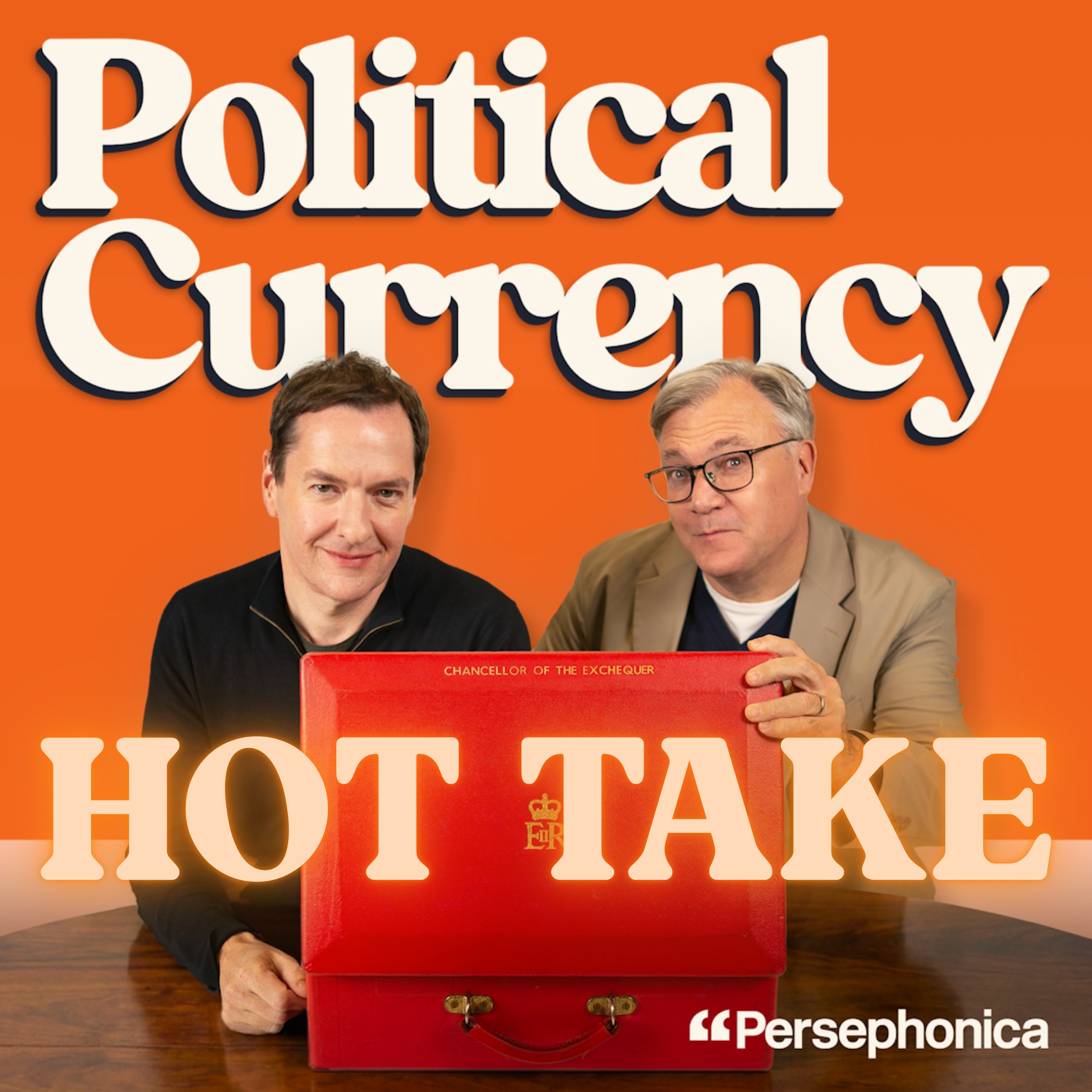
We use cookies.They keep VO running smoothly and help us improve it. Privacy policy