
 Ask ChatGPT


- Podcasts
- Political Currency
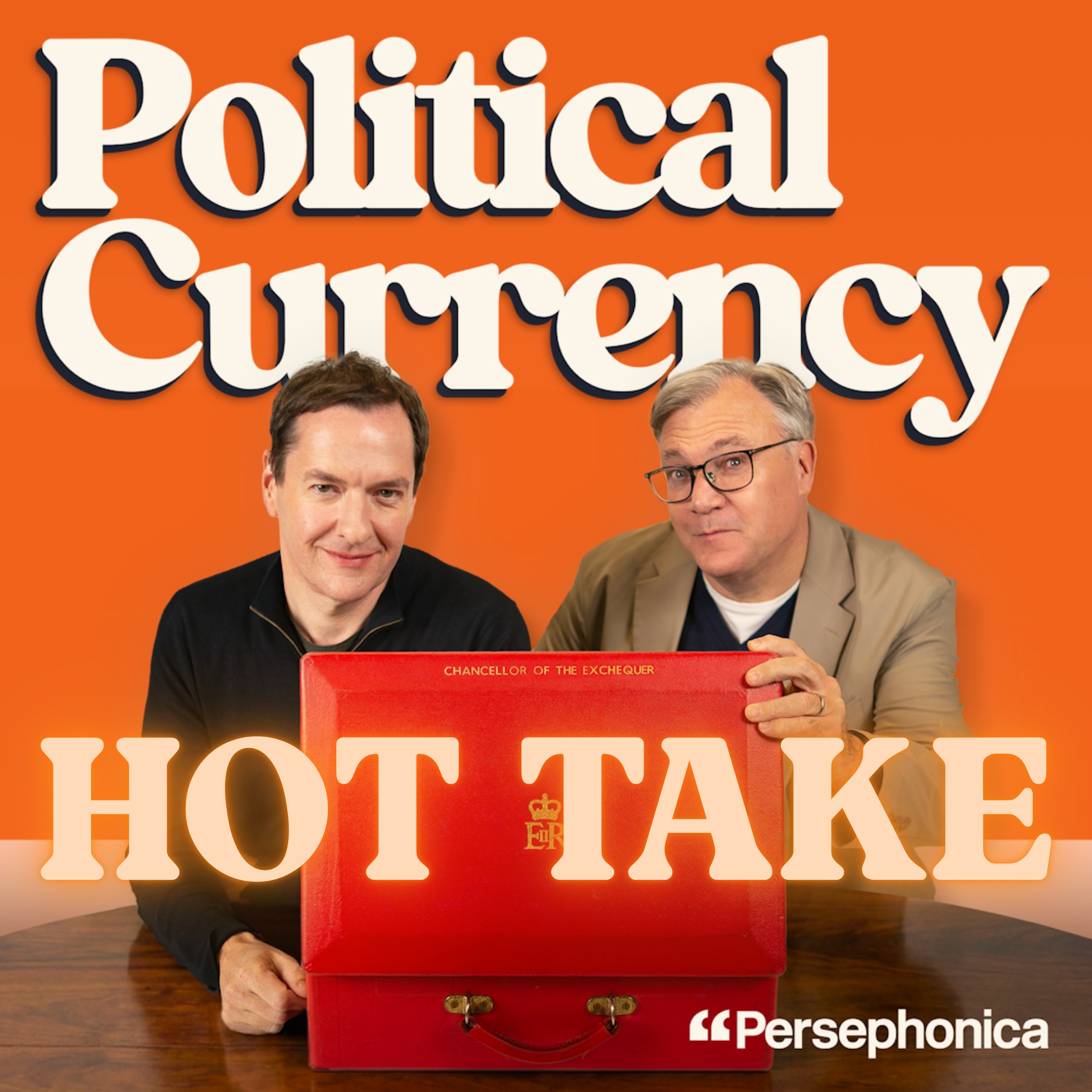
- HOT TAKE: Was Healey’s Budget inconsequential?
In short
A “hot take” on UK Chancellor John Healey’s first budget, arguing it was unusually “inconsequential” and may function as an election-launchpad rather than a big policy reset. Hosts debate whether it’s a pre-election budget, assess OBR forecasts (weak growth, worse living standards, rising borrowing), and scrutinize what’s actually new versus temporary or familiar.
Guests
Ed Balls and George Osborne (both former UK senior politicians; Balls is a former Labour Shadow/Chancellor figure, Osborne a former Conservative Chancellor). They discuss the budget’s political strategy and macroeconomic implications.
Key claims
The budget’s main impact is a one-year energy/council-tax style cash support; most other measures are small. Borrowing rises due to spending decisions (not just global shocks). Labour’s approach retreats from climate priorities and resembles Conservative-style tax cuts (e.g., founder relief, Help to Buy revival).
Notable examples
£100 cash for council tax bands A–D; founder’s relief (10% capital gains on first £10m); Help to Buy “revived”; changes to energy support (e.g., contract-for-differences conditions); defence spending uplifts; VAT/fuel duty freezes expiring; tax measures like VAT on private hire fares and higher savings income rates.
Written by AI. May contain mistakes.
Chapters
1:49
Assessment of Healey's Budget
Discussion on the implications and effectiveness of John Healey's budget.
“But is this Labour government going to deliver the breathing space?”
3:48
Evaluating Healey's Speech
Hosts evaluate Healey's delivery and political impact during the budget speech.
“And I think that's what the budget revealed.”
8:12
Economic Environment and Future Outlook
Hosts discuss the economic conditions and fiscal decisions following the budget.
“And, you know, we've said in the past few weeks, we want him to do a little bit more of that.”
14:00
Analyzing Healey’s Budget: Fiscal Credibility and Risks
Discusses the key elements of Healey's budget, focusing on fiscal credibility, borrowing, and economic growth.
“You certainly wonder why the OBR agrees to it, but they clearly think there's a credible plan underneath it, I guess, every year.”
20:23
Key Budget Measures and Their Implications
Explores significant measures in the budget, including tax cuts for entrepreneurs and energy policy changes.
“couple of things that just caught my eye.”
28:00
Analysis of Healey's Budget Impact
Explore the implications of Healey's budget and its perceived inadequacies.
“So people are going to feel worse off next year.”

Ask about this episode
Get the gist, explore an idea or ask about something said.
 Claude
On Political Currency, what are the key points of this episode?
Searching your listeningTranscript
Automatic transcript. May contain errors.
0:00Get under a blanket and get comfy. This message is sponsored by ADT. It's back to school, back to work, back to cozy nights at home season. And ADT is here for every moment of it. They handle your home security so you can focus on spending time with the people who matter. They make it easy with professionally installed systems you can access right from the ADT Plus app. If you need help, their reps are on-call 24-7 at the most company-operated monitoring centers in the industry. You deserve some cozy back-to-home time. ADT will keep an eye out. When every second counts, count on ADT. Visit ADT.com today.
0:58See how at Quicken.com. Still waiting in line? Again? That's time you'll never get back. Save time and money with Stamps.com. Over 4 million businesses have skipped the line with Stamps.com. Join them to save up to 90 % off carrier rates from your computer or phone right now. Print postage for certified mail, registered mail, and packages in seconds. Then schedule a pickup right from your home or office. For a limited time, go to stamps.com and use code podcast for a free welcome gift. Taxes and fees apply. So hello and welcome to this Political Currency live hot take with me, Ed Balls, and with George Osborne.
1:39It's now a tradition of ours to do an immediate reaction straight after the budget. And so we're going to be asking how big a deal was John Healy's budget today? He had the mantra, breathing space now, hope for the future, delivered by this Labour government. But is this Labour government going to deliver the breathing space? Will people feel better, Ross? Is it going to give that hope for the future? And I reckon for the next 24 hours, the question all the commentators, and let's be honest, cabinet ministers and ministers on both sides of the House are also going to be asking, is this a pre-election budget?
2:16is the clock ticking now for a general election before Christmas or maybe soon after. What do you think, George? Yeah, I mean, look, I think John Healy will be pretty happy with his budget performance. But let's be honest, he could have read out all of the budget measures he announced in about 10-15 minutes. He didn't need to detain the House of Commons for an hour. And it's very much therefore a kind of here today, gone tomorrow budget, in my view. It's probably the least consequential budget that I can remember. And in terms of, you know, the decisions to increase taxes or increase spending or cut taxes or cut spending, you know, they really don't amount to very much apart from an energy giveaway to families for one year only, which we'll come on to.
3:02And that sort of begs the question, because these are not times in which doing nothing feels like the right option for Britain. And I suspect John Healy doesn't think doing nothing is the right option, which means, and therefore begs the question, when is he going to take the big decisions? Or when is he and Andy Burnham and the Labour government going to take the big decisions? And as you say, I think now looms the big question. If you're not going to be taking decisions now, what are you waiting for? And maybe you're waiting for a general election, because the room for manoeuvre, the constraints within the parliamentary Labour party, the constraints of the Labour manifesto that Keir Starmer fought the election on a couple of years ago.
3:41And the constraints of the bond market all mean that, in fact, he doesn't have many options. And I think that's what the budget revealed. And so begs the question, when is he going to have some options? Look, this feels like something we like going into the history and thinking about the experiences we've had. And we've both been involved in quite a lot of pre-election budgets. And I guess to me, it didn't feel like one, didn't feel like a big, big moment. But as you say, maybe it's hard to have that big moment in this environment maybe getting the election out of the way is a you know a strategy anyway look perhaps we should talk about that when we get to the although to be fair you know I mean when Kemi Badenock actually said aren't they planning election both Andy Burnham and John Healy kind of look puzzled you know now maybe they would because they'd be sort of feigning you know oh we don't know what you're talking about but there are some big clues which maybe we'll come on to later when we're discussing it in this hot take and definitely tomorrow in our budget special as to why this might be setting up an early election or rather why there's going to have to be a budget event of some kind next spring because this budget won't last till the autumn and that's right what do you think of his speech well i thought it was pretty good actually i mean i thought he you know he commands authority he it's the combination of um you know kind of age i you know i mean parliamentary age he's been in parliament for a long time uh he's you know an older member of parliament uh he's a former defense secretary and um you know i remember looking i was looking at him and the house commons was all sort of quiet and respectful and listening to him and i think i was thinking that's not how they used to listen to me i used to have to shout to be heard on budget day um so i think he you know he's a person liked across the chamber who commands respect there was something sort of quite I don't think he is exactly like Alistair Darling because I think he's more political than Alistair Darling and clearly working more in lockstep with his prime minister than Alistair Darling did the late Alistair Darling I should say um but there's something about that you know he's he's not fireworks at all and and I think he that's his style and he likes it and the house of commons wasn't prepared to challenge him on it it did feel this is as we've talked about before this is the john healy who in 2010 the last shadow cabinet elections after edmund had just become leader he came top of the poll he's been around a long time he knows how to work the house i thought he used humor really well the joke about there being people being even more wrong about the state of the economy than who was going to be the next chancellor with Ed Miliband sitting just down from him was great.
6:32And actually... Didn't you see nervous laughs from Ed Miliband, Shabana Mahmood and Wes Streeting? You're all like, ha ha, that was a funny joke. But also when he misspoke about Miata Van Bulla and gave the impression that she had been disapproving rather than approving of the decision to open up the gas field last week. I mean, And actually, although that was clearly a misstep, it worked to his advantage in the House of Commons. People enjoyed that joke. He did as well. So I think you're right. It did sort of feel like a former Treasury minister, a former housing minister and a former defence secretary finally gets to say from the position of chancellor all the things they wanted to say and weren't able to in the past when they were doing those jobs.
7:17He was going some way to settle some old issues. but he did feel in command. The one thing I'd say in speech terms, what do you think about this? I don't think he'd decided how to end the speech. I think he had five different endings. He wasn't quite sure what his policy ending was going to be. When he did the stuff about support for families on their energy bills and then went into breathing space, hope, labor, it felt like the end of the speech. It was almost as though there was nothing big enough to end the speech. So he sort of three quarters ended it four times And then when he actually got to the end, there wasn't really anything left to say.
7:57So it was a little bit flat at the end. That's just one of those tactical things where he hadn't quite decided his big point. Well, I would say the last two chancellors who really wanted to go for the kind of rabbit out of the hat were myself and Gordon Brown. you know and if if either of us have been delivering that speech with that material we would have saved the energy definitely giveaway to every family for right at the end because so just for people who haven't seen the budget you know anyone with a council tax band of 80 is going to receive 100 pounds cash basically into their bank accounts to um try and ameliorate some of the impact of the energy bill increases and that was sort of buried a bit in the early part of the speech and so as a result the speech didn't have the final punchline now there are lots of people who say oh we've gone to the days when you need a white rabbit i disagree because you need to kind of end with the labor party or own supporters if you're a labor chancellor or you know tory supporters or tory charts are going like yes you know bang that's what we're going to go and sell and you want to throw the opposition leader like oh my god how am i going to respond to that and um and instead it did sort of peter out of it but i think that is kind of his style he's not flashy you know the the thing is though does that work in politics and i think in the end it comes down look i i really don't think we're going to be talking about this budget in a week's time but do bear with us for the next 24 hours because i think it tells you something about where british politics is at the moment and uh so perhaps it's just worth setting what did we learn about the kind of broader economic environment we we've got new forecasts from the office for budget responsibility and we've got the kind of overall fiscal judgment from the chancellor i.e you know did he tighten policy did he loosen policy um you've been looking at the abr report what what would be your sort of view on the kind of overall macro environment well so first of all on the macro environment um he was he was very clear to say what a kind of hostile dangerous world this is.
10:01And, you know, we've said in the past few weeks, we want him to do a little bit more of that. On the economy, there is a very modest uptick in growth this year by 0.1%, growth 1.2 % this year. He made a lot of the IMF's endorsement of what the government was doing on getting the deficit down and growth this year with a nod to Rachel Reeves, his predecessor. But then when you look at the numbers next year, it's a big downgrade. So that growth downgraded all the way down to one from 1.6%. So next year is a difficult year. And then in future years, 1.6 stays at 1.6, slightly higher in the later years.
10:46But the growth hit, which is the world, is causing him a problem. And in particular, living standards. The living standard squeeze, the OBR says, is more severe. People are not going to feel better off at the next election than they felt at the last election. And that is all like a global thing. The second thing on the fiscal side, there's quite a big increase in borrowing for the next few years. Borrowing is still on a downward path, but nowhere near as fast as before. And John wanted to blame the international situation for that. And that is partly true. debt interest payments are up by 14, 15 billion pounds a year this year.
11:31And it is a more difficult global environment. And that's offset a bit by higher inflation, bringing in some more tax revenues. And he sensibly decided not to try and maintain the same fiscal numbers next year and the year after as he was planning. He's used some of his margin in difficult times. And he made a virtue of that. And he says in difficult times, you run down the margin. And then in better times, you build it back up. But when you actually look at what's happening to borrowing in the numbers this year and next year, the hit to borrowing is not really coming from the global economy, or debt interest payments is coming because the government is spending more and in particular, big boosts to defence spending this year, next year and the year after.
12:20Plus also, you were saying the temporary support for families in council tax A to D getting£100 off their energy bills, they're paying for that by borrowing. So this is not higher borrowing forced upon the Chancellor. It's a decision to borrow more in the short term to pay for more spending with a hope, and this is in the forecasts, that the taxes decisions he made, not on working people, not on profits, are going to build up tax revenues in the later years, and therefore borrowing kind of gets back on track. But that's all very uncertain and quite a long way away. So, you know, he is, I'm not saying it's the wrong thing, but it's not the global environment which is doing this to the Chancellor, it's his decisions.
13:09Yeah, I mean, he casts it very much as a global environment under pressure because of the Iran war and the hit oil prices i think he could have cast it as a much more a sort of broader challenge globally but he wanted to make it kind of very specific to the conflict in in the gulf um and and you're right you didn't get the kind of big upgrades from the obr that the imf gave him and unfortunately for him his numbers based on the obr forecast but you're right the borrowing is you know if there's something to watch here a sort of straw in the wind it's yet another budget where a British Chancellor, and there were Conservative chancellors who did this recently, as well as Labour ones, who spend the money now and say, I promise you we're going to be virtuous, but not yet.
13:53And half of the extra money, George, is coming in from better HMRC tackling of tax avoidance, whatever that means. I mean, it's sort of, it's scored. You certainly wonder why the OBR agrees to it, but they clearly think there's a credible plan underneath it, I guess, every year. Yeah, and it's, no and i think fundamentally you know what's the big fiscal i say big i mean you read through the the scorecard and you know a lot of these measures wouldn't have made it onto one of the scorecards in my budgets because they would have been too small but also there are so many there are like five million pounds i mean this is remember this is the british government spending over a trillion pounds a year on things and there's five million pounds here and 10 million pounds there and 15 million but you know it's very very small beer and and fundamentally the kind of biggest chunk of money is this support for energy bills or support for households paid for by a kind of temporary bank tax and and the bank tax was not as uh either permanent although we'll see in trouble with temporary taxes as they tend to be extended uh or as high as the banks had expected and that's actually bank share prices have gone up after announcing a bank levy uh in the last hour or so But, you know, that's the kind of basic measure.
15:06And the actual energy giveaway is almost identical to Rishi Sunak's way of doing this. So it's not a kind of original labor approach to this. But you're right. The borrowing is the thing to watch, I think. You know, the deficit goes up this year from 2.9 % to 3.4%. That's quite a big jump. It goes up in terms of, you know, its forecast and then it's expected to fall. and you know in a world where bond markets are like where's the credibility here that that's a risk now i think the treasury and the um debt management office and the chancellor and andy burnham will be hoping well you know don't don't look at us take a look across the channel at the french i mean you know and and there's definitely you know to some degree bond markets will focus on you know one or two places at once and they're not currently focused on us and And as we said before in the podcast, you know, he has built up some fiscal credibility from organizations like the IMF.
16:05And he did use the headroom, as we predicted. He didn't try and rebuild it, as Rachel Reeves tried to do last year. But the risk is, you know, this is like the trouble with the McCorber strategy of like hoping something is going to turn up, is that sometimes things get worse. You know, he's now one budget away from the headroom being eliminated and suddenly in risk of breaching his fiscal rules, which is what kind of helped undo Rachel Reeves. So, you know, not not as kind of fiscally, you know, tough as he's making out some money up front, but it's temporary money. So the credibility, and this is the financial markets credibility, but also with the public, depends upon how things kind of turn out.
16:52And I think on three dimensions, on growth of the economy, on the tax measures, and then on the underlying spending. On the growth measures, as I said, growth is expected to recover, although still to such historically anemic numbers. I mean, 1.6, 1.7, 1.8. And the OBR says, well, if energy bills come down, there will be a bit of relief to consumers later in the forecast period and their real incomes. But is the global environment going to improve? Are energy costs going to come down? Is this growth going to be disappointingly low and they can get stronger growth? Or is this all that can be had?
17:35And I thought he tried hard on small companies and enterprise and founders relief and shops on the high street, you know, while clogging, clobbering vape shops and gamblers, which are probably the shops on the high street, which often do quite well. Anyway, whether we like that or not. But there was a growth story there about supporting business. But I'm not sure at the end of it, you felt as though there were measures to match on the devolution stuff with the mayors. I mean, the talk about tax devolution is interesting. I'm quite cautious about it. But beyond that, this wasn't a budget which delivered firepower for the growth agenda.
18:18Mod.com is changing the way people battle excessive fatigue. Ever hit a wall in the middle of the day and a third coffee just doesn't do it anymore? Here's what's actually happening. Coffee only briefly blocks adenosine, the chemical that tires you out. When it stops working, your system is flooded and you crash. Modafinil is a prescription treatment that works in a completely different way. Modafinil works by stimulating multiple receptors in the brain associated with wakefulness, including dopamine, serotonin, norepinephrine, histamine, glutamate, and orexin. It's a more complete solution that gives you 10 to 12 hours of steady focus and energy.
19:00To learn more, go to mod.com, fill out your intake form, meet with a licensed provider, and if approved, ModAlert ships straight to your door. Go to mod.com to get started. That's M-O-D dot com.
19:17Some days, getting the work done isn't the problem. Staying locked in is. Alpha Brain is Onnit's daily nootropic formula for cognitive support, designed to support memory, focus, attention, and mental clarity. Its formula with science-driven ingredients include theanine and huperzine A to support focus and memory. And it's caffeine-free. So when you're deep in the work, Alpha Brain helps support enhanced productivity and tune out distractions. Get focused on what matters. Shop Alpha Brain now at onnit.com. 500 orders a month was manageable. 5 ,000 is madness. Embrace intelligent order fulfillment with ShipStation, the only platform combining order management, warehouse workflows, inventory, returns, and analytics in one place.
20:04What used to take five separate tools, ShipStation does in one. Automate fulfillment and rate shopping to ship up to 15 times more with up to 90 % savings. Go to ShipStation.com and use code AUDIO to try ShipStation free for 60 days.
20:22Now, well, let's, should we just focus on a couple of things that I'll start with a couple of things that just caught my eye. So you mentioned one founder's relief. That's a new 10 % rate of capital gains for the first 10 million pounds of value that a founder creates in their own company. And that is, that's definitely heading in a different direction from the one we've had in recent years where wealth and capital gains have been taxed. it's the opposite of the kind of wealth taxes that people on some parts of the left have asked for. It's a bit of a return to the entrepreneur's relief that I think I had at£10 million, same level as him, 10 % of£10 million.
21:01So it's a bit of a return to the regime that I had. It's an echo of the regime that Gordon Brown had 20 years ago. 10 % capital gains tax on the business as you say, not expected from a Labour Chancellor. John Healy was quite Gordon Brown-like in that. I don't know whether Gordon Brown was neoliberal, but if he was, so was John Healy. So no wealth taxes. You know, people who've been reading manifestos around the world to say tax the gains of these tech entrepreneurs, quite the reverse, tax cut for them. So that's caught my attention. My help to buy scheme gets revived, having been killed off by various Tories.
21:41And so it's called now, you know, buy your first home or your first home. Very happy to see that coming as Halloween approaches, coming back out of the coffin and roaming the world again. I thought the other thing, you know, there were quite a lot of sort of measures around energy that were pretty anti-green. I mean, or certainly not pro-green. You know, the various things he said there about, which are quite technical, about things like the contract for differences which are paid to renewable energy sites like wind farms and solar farms. You know, well, they're no longer going to get paid if they're not connected to the grid.
22:23You can no longer add costs to energy bills to achieve things like low carbon commitments. Things have to be, you know, all about getting bills done. I mean, the Tory party, of course, there was the vote blue, go green under David Cameron. Theresa May goes for net zero. Now, can we be not won't allow someone to stand for the Conservative Party at an election if they support net zero? This is, to my mind, the Labour Party beginning to go down that path of retreating from climate as a big priority and prioritizing essentially lower energy bills and cutting the cost and getting, in fact, you praise the decision on the North Sea oil development that has been allowed to go ahead.
23:10I thought that's kind of quite, if you're looking at the sort of, things that other left-wing movements in the world would be doing, they'd be kind of going after rich entrepreneurs or capital gains and they'd be doubling down on green. this budget quite the opposite retreating for those things i think the the the other thing just to look out for and you know what it's like with um scorecards you have you have i mean this has got like eight pages as you said of measures five million 15 million uh 10 million those tend to be um to to go below the radar but there's a few things which are more chunky and i always figure if it's over 100 million you have a look and if it's over 250 you start to think I wonder what that means if it's 450 million a year you start to think well you know I wonder who's going to be paying this as you say the bank surcharge only lasts for a couple of years it's not that big it's only 300 million in the first year 900 down to 220 that's not the biggest thing in the scorecard The biggest thing is actually...
24:16To be clear, that's like 0.1 % of like, less than 0.1%, I think I'm right in saying, the sort of total national spending. I mean, these are very small sums. I mean, they're big sums of money, like any human being. But to the British government or governments of our size, not so big. When you get to the end of the forecast period, the move on machine gaming duty is bigger than anything being done to the banks. But then the writing down allowances in corporation tax is actually bigger. That's over a billion pounds a year every year. Private hire vehicle operators being liable for VAT on their full value of their fares.
24:55That's actually 400 million a year by the end of the forecast period. Property income, 450 million. Savings income increases taxing on savings incomes by two percentage points. Basic hire additional rates, 590 million. million for I think landlords and savers on higher incomes these are actually quite big numbers when you look in that section um it accumulates to to a couple of billion a year I just wonder who's actually going to be paying that yeah maybe there's a taxi tax in there and you know of course these things like the farmer's tax never called that on the day you know that's how they end up um no you know we we were doing um on our emqs um recently we've had questions from martin lewis the um kind of money saving expert and of course he was on the today program this morning so he'd been in to see the chancellor he could see the kind of envy on the in the voices of the today programs why the hell is the chancellor spending the budget morning with martin lewis because it was really a budget of kind of small things that you know i think in john healy's defense he was say are irritating and I'm cleaning up or I'm making easier for people you know I'm getting rid of standing judges and gas bills and I'm you know sorting out this that and the other it's just in the kind of macro scheme of things not doesn't add up to a big idea but maybe that is the big the big idea is to do nothing is to is to not I think you know you and I were came of political age when budgets were the big moment the big opportunity a thing to help a government and And maybe, you know, if you're sitting there in number 10, Downing Street, and therefore by extension in number 11, because I think the relationship there is still very strong between Andy Burnham and John Healy.
26:42They're thinking, you know what, things are, it's a tough economic environment. There's not a lot we can do about that. Things are going all right for us. You know, we're surviving. We've launched this new premiership. The Labour Party's poll ratings are up. Let's not screw it up with some kind of budget that's attempting to do a load of things. Let's just try and get through budget day and kind of and carry on with these sort of incremental improvements in the political situation for the government and and get ready for the real event that's coming in British politics and economics, which is the kind of cost of living shock from the Iran war being felt by consumers in rising energy bills later this year.
27:24It's already felt at the pump, but it's going to be felt in domestic energy bills. And maybe that, you know, it's not particularly heroic. It's not particularly bold. It's not going to earn you big kind of chapters in books on the history of British budgets. But maybe it's like OK for now. John Healy, though, went out of his way to talk about the budget, the Prime Minister's 10-year plan and the spending review, laying out the plan for the future. And as I said, his mantra, breathing space now, now what they've done on energy bills will be helpful. But people are going to see their energy bills go up regardless of the support they're going to get, because we're talking about, you know, support of£100 against an average bill going up more like£450 from January.
28:14So people are going to feel worse off next year. So the breathing space is going to be quite tough to sustain as an argument. I mean, they've definitely done things, but people aren't going to feel as though they've got more breathing space. They're going to probably feel under more pressure. I think the second thing that when you look into the OBR report in the context of the spending review to come and the 10 year plan, I mean, the OBR talks about risks, spending pressures, and they point to welfare reform and will it happen? What's the pressures on social care, defense spending? But the most kind of revealing section is when they kind of look at what happens after the end of the spending review in a few years at a time.
29:04The numbers are set up to, I think it's up to 28, 29 at the moment. So the government will have to do a spending review to set the future numbers. And even within this. they've got to do a budget event of some kind because um by the beginning of july next year the vat cut on energy bills which is much trumpeted and the fuel duty freeze continuing both expire which you only do because that means you don't actually have to at the moment pay for them later right you don't have to kind of account for that now so there's going to be some fiscal event in the spring as well but let's say that fiscal event was only sorting out those things what is the underlying position on spending um john healy has just said he's going to meet his nato commitment 2035 three and a half percent of gdp and he has setting a target of three percent in 2030 so that will be the um the first year of the new spending round at the moment even within this spending round you know the one we're currently in higher inflation means on average the OBR says departments are being hit by kind of um two billion a year in in lower spending because inflation is higher but then when you look at the later years they say in the OBR if you assume the NHS is growing after 28 29 by 2.6 percent a year now 2.6 percent is lower than you did after 2010 much lower than the historical average um if they assume that defense is going to get to 2030 and up to 3.5 percent 2035 that means defense spending grows markedly faster than the national health service and they say well what happens to everywhere else you've got to spend the money on special educational needs in schools because you've got a commitment there mainstream schools spending falls and the rest of public spending um outside those protected areas is actually falling on these numbers by 2.6 % a year in real terms in the next spending round.
31:16And you, at the moment, that is your election prospectus. Now, if the 10-year-old... What's wrong with fighting election on austerity? Well, John Healy rather went out of his way to say that he rejected austerity in his... But outside of defence, it is, right? Well, at the moment, that is absolutely what the OBR says. the the gap between the ambition of Andy Burnham and John Healy's 10-year plan and social care reform and their defence ambitions and what the numbers say what does this mean for policing for borders what does it mean for house building what does it mean for local government services what does it mean I mean it means real terms cuts in school spending what does it mean for spending on the things that all the mayors are going to want to do at the moment what this says is Defense is easily our number one priority for uplift, followed by a disappointing number for health.
32:11And everybody else is getting cuts. Is that the Burnham ambition? Well, isn't this the whole conundrum of this government? I mean, Andy Burnham said this was going to be the most radical government for 40 years. He was going to end 40 years of neoliberalism. And, you know, the moment in the reverse of their famous phrase, he is, you know, talking loudly and carrying a small stick. You know, this budget was a moment when you could have struck a blow for the end of neoliberalism. And instead, I would guess, you know, we should wrap up shortly. But I just ask you this question. What in this budget is that different from the kind of measures that a Tory chancellor would have delivered on a day like this?
32:55I mean, the energy support, exactly the same as Rishi Sunak's. Entrepreneurial relief, very similar to the thing I had when I was chancellor. the capital gain steps for founders. A retreat from some of the green things. The Tory party's been heading in that direction. Where's the big focus on future public spending? Defence. I mean, with the exception of perhaps the package around social housing and rough sleeping, there's nothing kind of particularly Labour about it all. I mean, that's straight. I'm not saying it's actually particularly Tory. I mean, it's not like these are sort of ultra Tory measures either.
33:31it's just it's not it's it's not delivering on the burnham promise but maybe that's because it's a promise that cannot be delivered either you know some of us will think ideologically we can probably never be delivered at the end of neoliberalism but it certainly can't be delivered now with the bond market breathing down your neck and the kind of cost of living pressures weighing down on an electorate that has made the parliamentary labor party already get rid of one Labour leader. And certainly without a big argument about two different futures and the choice of future. And you see Andy Burnham setting that out on Europe.
34:08But is there going to be a tax and spend discussion as well? Because, you know, it's not possible to save the NHS or invest in social care while investing in defence in this way, without either a massive surge in growth, which isn't in the forecast, or big cuts in welfare, which wouldn't be the Labour way. And I'm not sure the conservatives have found that particularly easy in the last 10 years either. So, I mean, maybe it takes us back to where we started. Either John Healy and Andy Burnham think it's all too difficult, or they think it's all too difficult now, or they think it's all too difficult after the first two years and without a mandate from the people.
34:55And if it's the latter. Get ready for polling day. I wonder. That's all we've got time for today. We're going to be back tomorrow with our main show. We'll have some more on the budget and other matters. And, of course, if you've got a question on the budget or anything else, we always love to hear from you. So send us a voice note. You can always go, if you're on YouTube, to the comments on YouTube and send us an EMQ question in and we'll sort out the voice note with you. But John Healy's done his first budget. Andy Burden's overseen his first budget as prime minister. And is George right that it'll all be forgotten in 24 hours?
35:34Or is this the election launching pad? Well, just hold on for 24 hours to hear our podcast tomorrow before you reach a view. But thanks for joining us on this hot take. By the way, this will appear in the podcast channels where you get your socials so you can listen to the whole thing. later. And we'll see you tomorrow. See you then.
35:59Thanks for listening to Political Currency. This has been a Persephoneca production.
36:17Or don't. Parloa's AI agents talk with customers right when they need help. No waiting for someone to pick up. Just natural conversations that get them somewhere. Because the goal isn't getting customers off the phone. It's giving them a reason to stay. Parloa, AI agents, real conversations. Unhold your customers at Parloa. That's P-A-R-L-O-A dot com. Your daily supplement routine doesn't need to be managing a handful of different bottles. Onnit's Total Human brings key research-based vitamins, minerals, herbs, and amino acids together in convenient day and night packs. One all-in-one product designed to make supplementation easier.
36:57The day pack supports cognition, focus, and cellular energy production. At night, the night pack helps you wind down and supports a calm, relaxed state. Less time managing your supplements, more support for your day and night. Shop Total Human now at onnit.com. You've got big plans for your money. You invest, you track, you plan ahead. But does your financial app actually help you decide what to do next? Quicken helps you go beyond balances and basic reports. Project your cash flow, dig into your investments, and use Quicken AI to understand what matters across your finances. With Quicken, you can make sense of your options and decide what to do next.
37:37Quicken. Know what to do next. See how at quicken.com. Thank you.
From the publisher
Ed and George went live this afternoon to give their Hot Take on John Healey’s Budget. They concluded the new chancellor was comfortable in his style, but the substance was not there.
George declares it an inconsequential Budget, and wonders if Healey’s plan is to do nothing. Ed speculates if this looks like a pre-election Budget.
We love hearing from you, so please don’t forget to send all your EMQs to questions@politicalcurrency and make sure to include a voice note of your question or send a question to our social media handles:
👉 X
👉 TikTok
Thanks for listening. To get episodes early and ad- free join Political Currency Gold or our Kitchen Cabinet. If you want even more perks including our exclusive newsletter, join our Kitchen Cabinet today:
👉 patreon.com/politicalcurrency
Please note: Kitchen Cabinet is only available via Patreon.
Credits:
Production: Sam Burton
Producer: Caillin McDaid
Video Editor: Oliver Geraghty
Executive Producer: Henrietta Harrison
Political Currency is a Persephonica Production and is part of the Acast Creator Network.
Hosted on Acast. See acast.com/privacy for more information.
More from Political Currency
All episodes

We use cookies.They keep VO running smoothly and help us improve it. Privacy policy