
 Ask ChatGPT


- Podcasts
- Political Currency
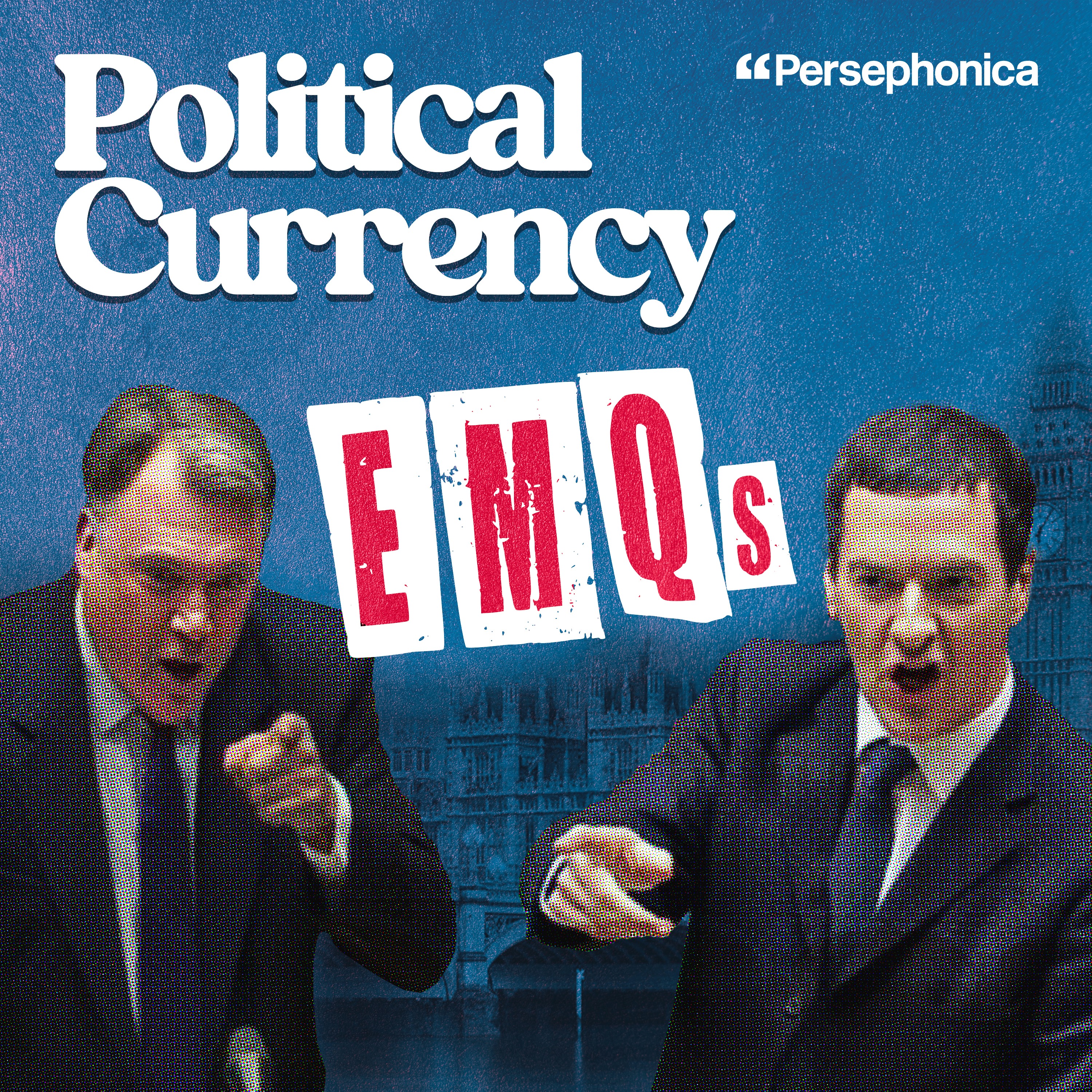
- EMQs: Are holiday taxes a threat to tourism?
In short
Whether “holiday taxes” (a proposed accommodation/overnight stay tax) threaten English tourism, plus two other EMQs: (1) why UK ministers can be dismissed without employment-law protections, and (2) whether a renewed national play strategy and better arts access should be priorities.
Guests/backgrounds
The episode is hosted by former UK Chancellors Ed Balls and George Osborne. Guest questioners include Ruby Sampson (UK Hospitality), Mark (head teacher/politics teacher, Isle of Wight), Sally (early childhood campaign director Start Strong; former civil servant), Lissy (opera/arts questioner; met Ed at Grange Festival), and Rich (Cheltenham; asks about ChatGPT bowling).
Key claims
Holiday taxes can be justified if revenue funds local area improvements and if devolution allows local choice; demand elasticity matters. Ministers are office holders, not employees, so employment law doesn’t apply (with allowances like maternity cover changing via later law). Children’s play investment and cross-government coordination (children’s schools/families agenda) should be revived; arts support shouldn’t be framed through class stereotypes.
Notable examples
Manchester’s voluntary hotel tax; Airbnb excluded in that model. Childhood holiday memories: Sheringham and North Norfolk; Lindisfarne/Holy Island. Minister example: Yvette Cooper’s pregnancy while a minister; later maternity allowance changes (Maternity Allowances Act 2021). Arts example: Angela Rayner at Glyndebourne; Ed’s opera attendance and criticism. Play example: Princess Diana playground in Kensington Gardens.
Written by AI. May contain mistakes.
Chapters
0:50
Summer Drinks Season Insight
Discussion about summer parties attended by the hosts.
“So hello and welcome to EMQ's Ex-Ministers Questions.”
1:28
Political Observations from Parties
Hosts share their experiences and observations from various political events.
“You know, the ambassadors are listening.”
2:05
Discussion on the Hospitality Sector
Exploration of the holiday tax and its implications for the hospitality industry.
“Michael Gove and Paul Marshall, the owner.”
4:23
Childhood Holiday Memories in England
Hosts share their personal childhood holiday memories in England.
“Do tennis players listen to political currency?”
6:00
Impact of Holiday Tax on Families
Hosts analyze the potential effects of the holiday tax on families and tourism.
“And do you think it's right that the hospitality sector is being seen as a cash cow to foot the bill for other services?”
7:30
Debate on Tax Powers for Mayors
Discussion on whether mayors should have the power to impose a holiday tax.
“So I think the kind of key test is what is the money being used for?”
9:03
Exploration of English Travel Destinations
Hosts discuss their favorite travel destinations and memories in England.
“Every year when I was small, we went to Sheringham for our holiday on the North Norfolk coast.”
10:22
Government Policy and Employment Law
Analysis of how ministers are not protected by employment law in the UK.
“I think the other thing is, you know, the economist in me says to you, Ruby, it all depends upon the elasticity of demand.”
14:00
Ministerial Employment Rights
Exploration of the unique employment status and rights of government ministers in the UK.
“So ministers absolutely are not covered by employment law.”
21:40
Listener Engagement and Teaching
Discussion on how the podcast assists students and teachers in political education.
Show all 16 chapters
22:20
Childhood Policy and Historical Context
A conversation on past and present child policy initiatives and the importance of children's play.
“It was the launch of a play strategy, which we've not actually had in England since then.”
28:06
Political Reflections on Education and Parenting
The hosts discuss the challenges of governance and personal anecdotes related to children's playgrounds and parental responsibilities.
“I think we did some great stuff and it was at the end of a government and therefore, you know, it was always harder when you've already been in power for 10 years and Michael, I think, made a mistake.”
29:36
The Role of Politics in the Arts
A listener's question prompts a discussion on the relationship between politicians and the arts, including class perceptions and cultural support.
“So, I mean, you're opening up a whole new vista of opportunity there.”
33:19
Opera, Culture, and Class Divisions
The hosts share personal experiences at the opera and discuss how societal views can shape perceptions of cultural events.
“I went to the Royal Opera House, had the Ring Cyclone, the four Wagner operas.”
40:09
ChatGPT and Humor in AI
The hosts analyze a humorous listener question about bowling, showcasing how AI like ChatGPT can engage in witty exchanges.
“Well, I was the one in Queensway, in Baseball.”
42:00
Discussion on Institutions and Collective Sentiment
The hosts explore the concept of institutions and collective feelings, with a nod to bowling.

Ask about this episode
Get the gist, explore an idea or ask about something said.
 Claude
On Political Currency, what are the key points of this episode?
Searching your listeningTranscript
Automatic transcript. May contain errors.
0:00Ed Balls: Your package says delivered, but delivered where exactly? The hallway? The lobby? Your neighbor's apartment? Instead of playing detective with your deliveries, get a mailbox at the UPS Store. We'll sign for your packages, text you when they arrive, and keep your deliveries low-key under locking key. Get three months free mailbox services with a new annual agreement at the UPS Store. For full details and to get your coupon, visit the upsstore.com slash offer.
0:32George Osborne: The Chancellor of the Exchequer. Getting a lesson from the Shadow Chancellor on how to balance the books is like getting a lesson from Dracula on how to look after a bloodbath.
0:41Ed Balls: Ed Balls. A steady-as-she-goes budget. What kind of ship does he think he's on, the Titanic? They're married, Celeste.
0:49George Osborne: Welcome to EMQs from Political Currency with Ed Balls and George Osborne.
1:00Ed Balls: So hello and welcome to EMQ's Ex-Ministers Questions.
1:04George Osborne: Yes, we're recording this in early July. And this is the height, I would say, of the Westminster summer drinks season, isn't it? So have you been sipping champagne with the great and the good, or the soon-to-be ex-great and good? Well, I went to the King's College London, the Policy Unit Strand Group summer party. That's not the level of glamour I was looking for.
1:29Ed Balls: unfortunately it started at the same time as the england football so there was a big screen and people watched that right and then i then went over to the um foreign office summer party it
1:38George Osborne: meant i missed the spectator party i was ferrero rocher was flowing every flowing everywhere everywhere
1:45Ed Balls: in this heat maybe they did they were definitely flowing but on the way in a gentleman shook my hand yes and he said i am the estonian ambassador right and i love your podcast you and george It's such a really interesting insight into British politics. And so there we are. You know, the ambassadors are listening.
2:00George Osborne: We're big in Tallinn. I think that's the capital of Estonia. If not, that's the end of the Estonian ambassador listening to our podcast.
2:09Ed Balls: Goodness.
2:10George Osborne: I was at the Spectator Party. You were there. Michael Gove and Paul Marshall, the owner.
2:15Ed Balls: Good.
2:16George Osborne: Hosting everything. I would notice one thing. I mean, it's not, you know, maybe it's a straw in the wind. but um i remember last year the reform mps kind of lauding it a bit and farage and and this year i felt they were a bit you know in retreat i don't know whether it's like farage's problems over his you know all this money he's taken and his inability and the potential of a by-election which is could be a you know dramatic development in british politics but you would think the spectators the sort of you know not their home turf because um you know michael has made sure it's not their home turf but nevertheless a place that they feel on the up and uh yeah just
2:58Ed Balls: he's somewhat on their uppers i felt he's also so unapologetic at the moment about taking very
3:03George Osborne: large sums of money well what would you say if you're him well i mean the five given you're not
3:09Ed Balls: going to give back five million quid the five million donation was clearly taken before he realised he was going to stand for Parliament.
3:18George Osborne: Or maybe he just thought, who cares about this rule before you get in?
3:21Ed Balls: But the large amount of money he's now taken from this sort of gold bullion merchant was clearly when he was a member of Parliament. He just feels as though it's either he doesn't care, or it's reckless, or he's thinking, I've got different priorities. Yeah.
3:36George Osborne: Anyway, I thought the Tories were in better cheer. And there were quite a lot of Labour ministers at the Spectator Party, which I always think is a good I mean, you know, it's clearly a centre-right magazine. But, you know, I remember when I was Chancellor, I used to try and go to things at the New Statesman and Demos.
3:54Ed Balls: Surprised you were invited.
3:55George Osborne: Yeah, no, that was, you know, got to keep them guessing.
3:59Ed Balls: And did you have any political currency feedback, as expected?
4:02George Osborne: There were lots of people who loved it. Actually, the last episode on Andy Burnham was one that seems to have really connected with people. That's interesting.
4:10Ed Balls: Well, we both know him and can get inside his head a bit.
4:13George Osborne: It certainly helps the viewership that Britain keeps changing its prime minister.
4:18Ed Balls: People have to keep checking in with us. Hot take after hot take. And you were also at Wimbledon.
4:24George Osborne: I was also at Wimbledon.
4:26Ed Balls: Do tennis players listen to political currency?
4:28George Osborne: I don't think so, no.
4:30Ed Balls: I'm not sure. I had this really embarrassing moment. I can't remember her name, but the Japanese tennis player who came, she's photographed the front of the newspapers in that amazing white Japanese float. And I said, good morning, Britain. I said, how does she hit the ball? I mean, if she's playing tennis with that massive white flowing, how does she get around the court? And they said it was like a tracksuit and she took it off before she played, which actually made more sense.
4:53George Osborne: Right. But you can't remember her name. I think actually it's Naomi Osaka.
4:59Ed Balls: Thank you, Henrietta. So, yes, that is the great advantage of Talkback. Shall we get on with it?
5:05George Osborne: Yes. Let's have our first question today from Ruby. Hi, Ed and George. My name's Ruby Sampson. I work at UK Hospitality and I wanted to ask your opinion on the holiday tax. The King's speech announced the government will be granting mayors the powers to implement holiday tax on all overnight accommodation. This will affect campsites, caravans, youth hostels, hotels and pubs with rooms. Whilst we sympathise with the constraints of local authority finances, it seems unfair and illogical to tax the hospitality sector again when we're already one of the most taxed sectors in the economy. This tax is the ultimate killjoy of all sin taxes.
5:46George Osborne: This will price hardworking Brits out of their summer holidays in England, with one in five unable to holiday in England if prices increase any more. My question is, what's your favourite childhood memory holidaying in England? And do you think it's right that the hospitality sector is being seen as a cash cow to foot the bill for other services? First of all, Ruby, I totally understand where you're coming from if you work in the sector. You know, I remember the holiday industry always felt hard done by overtax. There was always a campaign to cut VAT on the hospitality sector, which used to come knocking at my door.
6:24And I guess it's, you know, it's one of those sectors that's pretty cyclical in that, you know, when the economy is doing badly, people cut back on holidays.
6:32George Osborne: It's the first thing. So they're quite often on the brunt of things. probably at the very moment when at the same time governments are short of money and they're trying to put taxes up and collect more money so that i can see why you will feel like the last thing we need is a new holiday tax i mean i'm going to unfortunately disagree with you or challenge you a bit i think if devolution is to mean anything you've got to put some real policy instruments you've got to put some real tools into the hands of local government local mayors etc a lot of European cities have this, some form of hotel tax or accommodation tax.
7:11George Osborne: There are already parts of the country where it's working. In fact, I think in Manchester, there's a voluntary tax that the hotels pay there. So it's not a tax in that people voluntarily contribute, but it means that companies like Airbnb are left out of it, or people who take Airbnbs. And they put the tax in to improve the local area. So I think the kind of key test is what is the money being used for? If the money is being raised to improve attractiveness of the local area and bring more people in, then it's actually kind of money well spent. And of course, local areas can choose not to levy it if they want to.
7:48George Osborne: If they feel like, well, this might be a way of getting holidaymakers in because we're not charging extra, then so be it. I mean, this is we discussed it a bit on our main episode. But this is the kind of price of devolution. like in local experimentation not everyone's gonna make the same decisions and some people are gonna make mistakes as for your what's my favorite um childhood memory holidaying in england well do you know the place i think the place i've always felt was really sort of beautiful but i guess i know less well than other parts of the country is is up near the scottish borders in Northumbria, Lindisfarne and Holy Island.
8:32George Osborne: And the times I've been there, I've just thought it was such a beautiful part of the world. And it's the part of the world I most sort of like, the part of England I most like to kind of spend more time with. I've never been to Hadrian's Wall. So I've been up there, but I've never actually got to the Hadrian's Wall. So that would be, I think, the part of the country. You said specifically England, because I'm probably going to anger everyone in England when I say this. I do think the most beautiful parts of the country, of Britain are up on the Scottish islands. I mean, they are hard to beat.
9:01Ed Balls: Well, I'm going to stay in England. Every year when I was small, we went to Sheringham for our holiday on the North Norfolk coast. My uncle was the bank manager and they would go to their timeshare in the Algarve and we would go and stay in their house in Sheringham, look after their dog and go to the beach sharing. It was absolutely brilliant.
9:20George Osborne: You have crab, right? Isn't that the thing you get?
9:22Ed Balls: Cromer crab, but also great fish and brilliant arcades on the seafront where um you could put two peas in and then they would come out the other end and also it's the end or not or not and it's also the only place on the east coast where you see the sun set on the sea because because you look to the west down the wash and so you can get a you know a west coast sunset on the east coast um but then i once bombed cromer right as in was this was one of your antics was this like one of your i got to i got to fly the
9:53George Osborne: jet oh i see and they were doing training rungs over the north sea and one of the things they do i thought it was some kind of bullington club excursion wasn't that no it was i was i was in a jet over the north sea and uh they were showing you know to demonstrate their sort of targeting um approach and all that kind of thing they um picked on cromer should say there was no live
10:13Ed Balls: ammunition on the flight can i say that i mean keen as we are to hear your reflections it has nothing to do with the question at all and you stopped me from saying my favorite english holiday memory which was actually after the age of 11 my parents became more adventurous and we would go to um north yorkshire the lake tristick wales and my dad had this little camping pick your best area no my best one was we went on a holiday to um shropshire and we went up the long mind and the stifer stones and i loved malcolm savile books and in church stretton was a bookshop where you could buy signed copies of his books which are these adventures um and uh it was the age of innocence it was and my dad had a little camping gas stove yeah and we would go up these mountains with actually to be fair my sister complained the whole time and um and then we'd get to the top and my dad would light up the camping gas stove they'd boil the kettle and then we'd have cuppa soup and uh it often in the rain or the cold but it was oh it's i used to love it pot noodle mushroom no not pot noodles it was this is pre-pot noodles i think this is you'd have cup of soup mushroom or minestrone but to be honest they all tasted the same anyway i feel as though i also give one word to ruby on a serious question i think that the the tax here is about giving mayors power so it's a devolutionary act and there's nothing to stop the government allowing mayors to have that tax power but if they judged to do so to um to do an offsetting cut in vat for the hospitality industry in fact one of the things i've talked about in the past Now we're outside the European Union, you could decide to have much lower VAT, even have zero VAT for certain areas which are struggling on the seaside coasts.
11:53Ed Balls: So you can offset it. I think the other thing is, you know, the economist in me says to you, Ruby, it all depends upon the elasticity of demand. If you are in a very popular tourist area and you have a tourist tax, all it means is the prices go up. But it's only if it's not popular, that would mean less people coming. So quite often, I think, in a popular area, you'd be able to pass on the cost to consumers harder when families are under pressure and a cost of living crisis. So you have to keep an eye upon your demand point.
12:23George Osborne: Do you think the Chancellor, Rachel Reeves, has sort of cut prices for summer attractions has been working? You know, she's got this, for those who haven't noticed, Treasury have reduced taxes on things like, you know, domestic theme parks. I don't think anyone, unfortunately, I don't think anyone's really noticed. And the problem with cutting VAT is there's obviously no requirement to pulse it on, and it just gets absorbed into sort of general pricing calculations.
12:50Ed Balls: That's right. But I think if you felt that the tourist tax was putting people off and there was a VAT cut, then the sensible thing to do would be to offset that and keep your numbers up in your boarding house or whatever. So those are choices employers and people in the hospitality industry can take. But no, I'm not sure where their temporary tax cuts for a month make a huge amount of difference. Thank you, Ruby, for a great question. Next question is from Mark.
13:18George Osborne: Mark here from the Isle of Wight. I'm both a head teacher and a teacher of politics. And in that second bit, can I just thank you for your podcast, which is a great way of preparing people for A-levels. But it's my roller's head that makes me ask this question today. I guess we're looking ahead to a reshuffle in the next few weeks and I've always been confused as to how ministers can be just got rid of without much reference to employment law. That's certainly not something which I can do when I'm managing my own teams in a school. Is there a reason why ministers cannot access and evoke employment law or is it just that it's not the convention to do so and it will be seen as being politically naive or difficult to do and also are there any examples that either of you are aware of where actually a minister who is being moved away in order to make way for somebody else has sought to invoke the law as a reason why they should stay in office well this is a very good question from mark So I'm going to have a go at this and I stand ready to be corrected by Ed and indeed by anyone who knows what they're talking about who's listening.
14:31George Osborne: So ministers absolutely are not covered by employment law. They have no rights at all on kind of unfair dismissal or paternity, maternity rights, harassment at work, all this kind of stuff. The standard panoply of rights don't apply to them. And the reason for that is that they are not employees of the crown, as you might think, in the same way that a civil servant is an employee of the crown. They are office holders. So they hold an office from the crown and office holders just historically have not been covered by employment law. Now, some things have grown up around that to sort of offset all the disadvantages that brings.
15:16George Osborne: And I know there'll be not many people with any sympathy for a minister, but, you know, just imagine you're a minister. It's quite a lot more than many people are paid, but it's quite a lot less than lots of people are paid. And suddenly you lose your job with no notice and you suddenly lose half your salary. You're still an MP usually, unless you're in the House of Lords. And you have no appeal. You don't even, you know, there's no kind of final warning conversation with your employer. It's just like the prime minister on the day decides you're gone. As a result, various things have sort of grown up.
15:51George Osborne: So I think for the last few decades, there's been this severance pay. You get a quarter of your salary. That actually became very controversial under the Boris Johnson. Because people were doing the job for a week. And then suddenly getting a quarter of a year's salary. And I think they all basically took it. So since actually, I think under Keir Starmer's government, they've changed that. You have to have been in office for at least a few months. and you can't immediately return to the job and keep the money. There's now severance pay. I got severance pay, I remember, when I stopped being chancellor.
16:23George Osborne: And there is also a form of maternity cover that exists. You have now had government ministers who've gone off on maternity, but it's not a sort of statutory right. I think the way it works is they just, you resign the office, someone else is appointed to the office, but it's all understood that that person's then going to quit and you're going to come back it's not like you've sort of kept the in in the same way that you would have a sort of right to return to the job if you were on you know under kind of classic paternity rights so there are no rights and i don't think they're likely to be anytime soon that's my reading of it but i might be wrong
17:00Ed Balls: about all that i'm going to correct you on one thing but in general you are completely right and um ministers are appointed to office by the crown on the advice of the prime minister the prime minister de facto makes those decisions the ministerial code gives the prime minister full discretion to make those decisions on behalf of the crown and there's no
17:19George Osborne: because you're technically under the it's a royal office that's right yeah and so therefore there's
17:24Ed Balls: no employment rights and there's no um unfair dismissal you know i don't know whether the equality act would um would apply but i'd be um very hard to enforce it but there is one thing i think you're not quite right when yvette was the junior health minister she was the first ever woman to be pregnant while a minister right and she went to see her permanent secretary and she ends up in the cabinet secretary he says look i'm afraid your employer is the crown and i don't think we should ask the queen and there's nobody else who has any discretion to tell you what to do because there's nothing in the ministerial code So you've got to decide.
18:05Ed Balls: So Yvette basically decided that the right thing to do was for her to take maternity leave. And she took six months, although I think she worked quite a lot there. And she had quite difficult negotiations with certainly not the health department, but the next department about whether or not her office would continue to function. Because you need institutional memory as a minister. But there was no legal basis for this.
18:27George Osborne: Someone else did her ministerial job or she just? What happened? Or some of the colleagues covered. Colleagues covered, but she wanted to continue.
18:35Ed Balls: But no one was actually appointed. Nobody was appointed. She wanted to continue to receive papers. And for her office, for there to be somebody from her office who carried on in another office, so that'd be institutional memory. When she went to another government department, they were much, much less supportive of that. The law changed then in 2021, which is called the Maternity Allowances Act 2021. And that was for Suella Braverman, who is in the cabinet. And that legal change gives an office holder six months paternity leave at full pay. And so I think for Sveta Braverman, the law was changed to allow this to happen formally until then.
19:14George Osborne: It was all informal. I stand corrected on that.
19:16Ed Balls: That is the only thing that she would not write about.
19:18George Osborne: But they're not classic employment rights, are they? They're more like allowances. And you're not an employee. It's quite an interesting question, though. But say you were a minister and you were harassed at work. or say you could prove that you were discriminated against. Say some piece of information came out.
19:37Ed Balls: I think the Equality Act 2010 could in principle apply.
19:41George Osborne: Yes.
19:42Ed Balls: I think you could take action.
19:43George Osborne: I mean, I don't know how far it would get you because, you know.
19:46Ed Balls: I mean, constitutionally, this would be very, I mean, you'd be legislated, you'd be suing, you'd be taken to, I mean, I'm not sure what the court process would be. It's not an employment tribunal because it's not employment law.
19:58George Osborne: Yeah, I guess it's, I don't know.
19:59Ed Balls: At this point, we realise we're not lawyers.
20:03George Osborne: The trouble is I don't see what the remedy would be, because I'm not sure staying in your post would be realistic.
20:09Ed Balls: The problem is it would be you versus the Crown.
20:12George Osborne: Well, you versus the Prime Minister. Well, I'm not sure it would be.
20:14Ed Balls: The Prime Minister is an agent of the Crown.
20:16George Osborne: Well, hold on. But what happens if, yes, I guess there would be disciplinary action in the department or parliamentary. How about this? Would Parliament, you know, because obviously there are disciplinary procedures now against members of parliament who harass or bully people.
20:30Ed Balls: But I think parliament would say that that is... That's for the department.
20:34George Osborne: That's for departments. All the prime ministers. It's basically for the prime ministers.
20:36Ed Balls: All for the crowd. Constitutionally, this is messy.
20:40George Osborne: There is an interesting... We're going down a rabbit hole here, but one of the things people discovered under the Boris Johnson premiership, because he sort of just pushed the limits of everything, is that fundamentally, because the prime minister writes the ministerial code, the prime minister can kind of do anything. There are very, very few constraints. But all these things, we're talking about constraints or laws or the procedures around the job of a minister. But let's apply this to a prime minister. There are basically no rules when it comes to a prime minister. And they can kind of do whatever they like, provided the parliamentary party and their colleagues keep the faith with them.
21:17Ed Balls: And then they get thrown out.
21:18George Osborne: And if they don't, then they get kept thrown. But there's nothing you can do. And the prime minister can rewrite the ministerial code. The prime minister can do all sorts of things. is an interesting right at the top of the british state this can become an issue that they are the prime minister is an office holder not an employee let me thank you to mark for the question
21:35Ed Balls: and also for the fact that um you're using our podcast for your a-level politics teaching and these are the kind of questions which we like talking about but also i think probably your students um end up writing essays about so if we can help and if there are any other a-level politics or economics tutors out there and teachers who think there are things which we could talk about which might help you in your class and your teaching we are always up for that
21:59George Osborne: and you've got an a-level politics student right here in the studio a level economics student
22:04Ed Balls: although when i went to university i dropped politics i just did economics and philosophy
22:07George Osborne: well that became obvious when you got into parliament thank you very much we'll be back
22:11Ed Balls: after this break
22:24George Osborne: welcome back now here's a question from sally i think this is pretty relevant for you ed hi ed and george my name is sally and i am the director of an early childhood campaign called start strong but i was a civil servant and i worked with ed in the department for children on the child poverty bill it was great to hear ed talk about the photo shoot with andy burnham in the playground uh we all remember that well those of us that were in the department at the time Ed mentioned that was to do with the youth strategy. It wasn't actually. It was the launch of a play strategy, which we've not actually had in England since then.
23:00George Osborne: It was a great time for children's policy. We had Every Child Matters, the children's plan, the play strategy and some really positive work for young people led by Bev Hughes. I wondered if you thought with Andy's arrival back in Westminster, whether it was time again to have a really positive vision for babies, children and young people in the UK. Great to hear your thoughts. Thank you. Well, look, first of all, Sally, thank you for all of your public service, including your work in the Department of Children, Schools and Families, where I was the Secretary of State, the Education Department, but with broader responsibilities.
23:37Ed Balls: responsibilities and um brilliant to hear about um your campaign she's basically saying you got
23:44George Osborne: it wrong ed well she is and i mean let's let's talk about students and a levels of what i'm
23:49Ed Balls: right she might be right um andy burnham and i might well be right andy burnham and i definitely went down to south london and we were in a children's playground and on a rope swing and um you know in my mind because i work andy with andy closely on lots of different things i thought it was about kind of youth activities but it may well be i was the secretary of state who published the first ever play strategy it was all about how in schools with teaching but also in the community if you invested in places for kids to go and play which was safe and good for parents this kind of was good for child well-being and it was a good i mean i thought under the Blair Brown government,
24:30George Osborne: I think all the kind of playgrounds got a bit of an upgrade, didn't they?
24:33Ed Balls: That was because of our department. That was the thing, that was what our play strategy is about.
24:38George Osborne: The school playing fields, they continue to be sold. I mean, it's funny how no government's been able to stop that really, hasn't it?
24:44Ed Balls: But playgrounds, we absolutely enhanced. And there were lots of playgrounds which have still got DCSF rainbows on the sign saying that that's when it was built. Don't you think it though,
24:54George Osborne: you know, the days when every British kid had the right to fall on a piece of hard concrete if they came flying off the roundabout or off the swing. You know, those days are gone. We're all modley cuddle now. We land on some sort of spongy, plasticky thing that doesn't crack our head open. And I think we've gone soft as a nation as a result.
25:13Ed Balls: I think it may be quite a good idea to stop children cracking their heads open or breaking their legs when they fall off play equipment. Falling is a good thing.
25:20George Osborne: But being able to get up is also quite good as well.
25:23Ed Balls: One of the things which really took me aback when I was Secretary of State was that, you know, When I was little, when it was cold, you didn't go outside to play. And actually, these days...
25:33George Osborne: Did you not have ready break? Did you not have central eating for kids?
25:38Ed Balls: Of course I did, yeah. And I glowed with orange on the way to school, unless I was having Weetabix, in which case I would eat three. But it's part of good teaching now, and was when our kids were little, so over this last 20 years, for children to be playing outside, and you know including in the winter including when it's cold and they bring their coats and hats and gloves and really important you know play is very important part of learning and about teaching um the Labour MP for Bournemouth East Tom Hayes has been campaigning to revive the national play strategy and he had a Westminster Hall debate and sent questions into us I think we've talked about it Tom before and his uh work I think what's needed now well I think it's about continuing the investment but also um making sure that it's kind of integrated into what schools are doing and championing parks and play but i think there is a wider point here if i was andy burnham
26:35George Osborne: talking to michael gove he came in in 2010 in in my view an act of vandalism ripped up the hole
26:42Ed Balls: of the children schools and families department went back to education i've talked to him since I think he knows that that was a mistake, that actually things like Sure Start, more widely the children's agenda, was an important part of getting kids ready to learn. If you take the current debates we're having, think of online safety for children. It's a cross-cutting thing because it's about what education's thinking is about. You mean on the internet and social media? Yeah, all of that. It's about education. It's about science and technology. It's about the business department. In our day, the Children's Schools and Families Department would have led on this issue, coordinating across government.
27:23Ed Balls: It was me with Andy Burnham who commissioned the first Tanya Byron review into internet safety back in 2008. And the same thing applies in other areas as well. The debate around misogyny and how we support boys in adolescence. Again, that would be led by the Children's Department. And I think Bridget Philipson has been broadening the scope of education in her successor to Sure Start, some of the things she's been doing around special educational needs. But if I was Andy Burnham, have a look at the case for children's schools and families and the wider children's agenda, because it's necessarily about coordination.
27:59Ed Balls: It's always cross-cutting, but a champion at the heart of government for the well-being of children and parents and families. I think we did some great stuff and it was at the end of a government and therefore, you know, it was always harder when you've already been in power for 10 years and Michael, I think, made a mistake. But if I was Andy Burnham, bring it back. Have a new Secretary of State. Call it what you like, but children's schools and families was fine. Caricatured as curtains and soft furnishings. What were they talking about? But it's a good agenda and at the moment...
28:30George Osborne: We've given you long enough to plead for your job.
28:33Ed Balls: The reason I've gone on about it is because you seem to think it would be better to go back to a world where children fell off, swings onto concrete. As a father of young children, George, this is not responsible.
28:44George Osborne: Do you know they're renovating? Probably the best playground in the whole country, I'm going to guess, is the Princess Diana playground in Kensington Gardens in London, which was the playground created in memory of Princess Di. And it's all around the theme of Peter Pan, because Peter Pan was based in Hyde Park and Kensington Gardens. And so it's got a pirate ship. Anyway, it's undergoing a massive renovation and it's going to open this summer and it's going to be very exciting. And when I took my young kids there a few years ago, who did I see as another dad in the playground playing with his children?
29:19George Osborne: Vice President J.D. Vance.
29:22Ed Balls: Right.
29:22George Osborne: He was on a trip to London and he was just then a senator, but he'd gone to the playground with his kids. So many things come to my mind and I'm suppressing all of them. Yeah.
29:33Ed Balls: Because we've got to move on. George is going to have to leave at 12.30 and we've got to finish these questions. So, I mean, you're opening up a whole new vista of opportunity there.
29:41George Osborne: I've got the British Museum's trustee board to chair. Yes.
29:45Ed Balls: George's mate, JD. I bet he likes, you know, the school of hard knocks. This next question is from Lissy.
29:52George Osborne: Hi, Ed and George.
29:53Ed Balls: My husband had the pleasure of meeting Ed at the Grange Festival in Hampshire last week and it got us talking about politicians attending the opera and how it often prompts quite a debate about class
30:02George Osborne: and who the opera and the arts more generally are for. I'm sure you both remember the discourse around Angela Rayner attending Glyndebourne a few years ago.
30:10Ed Balls: What more do you think politicians can do to increase support for the arts without perpetuating class divisions or stereotypes, particularly because during times of economic hardship, funding for the arts is often the first thing to go?
30:23George Osborne: Love the podcast. Hope you both are well. And Ed, I hope you had a fantastic time at the Grange.
30:28Ed Balls: So thank you, Lissie, for this question.
30:30George Osborne: Ooh, what were you? What were you?
30:31Ed Balls: I went down. Get you. In black tie, right? No, I didn't wear black tie. The reason was, actually, I did wear black tie, but I didn't wear the tie. It was last Thursday. That's even more posh. It was a week ago.
30:43George Osborne: You know it's the really posh people take off the black tie.
30:46Ed Balls: No, no. I'll tell you why. It was the Grange Festival, which is a house down in Hampshire.
30:52George Osborne: This is an opera in the garden or whatever.
30:55Ed Balls: It's actually an opera house. It's like Glyndebourne. It has an opera house in the house. it's a charitable festival which has been around for decades charitable it was it was all for charity well no in the sense that it's not a profit making thing it's just a it's just a festival but i did meet lissy's um husband who's the director of it in the bar beforehand what was what are you watching um it was julius caesar handle opera memorably politicians in the back exactly getting rid of leaders memory was sung by dame janet baker um kind of years ago but But this was done for countertenors. It had five stars from The Telegraph.
31:32Ed Balls: It was actually a really great performance. But it was 37 degrees that day. And it was an un-air-conditioned theatre. And I got to the end and loved it, although I came out absolutely drenched. I mean, I was at the younger end of the audience, so let's just say that it was challenging, but you needed to take on water. um so it was not a night for um excessive alcohol but it was absolutely brilliant and i suppose so to answer this is question seriously um i think she's making a good point but i'm going to say this not everybody has to be an opera fan i love opera handle opera i really like classical music i like um debussy i like herbert howells but i don't think my job is to persuade other people that they have to like opera or they have to like classical music.
32:27Ed Balls: What you want is an approach to culture and the arts, which allows everybody to enjoy the music and the art that they enjoy. And the fact that Angela Rayner likes opera and goes to Glyndebourne is great. One of the, I think, tragedies of politics sometimes is people think they have to sort of shape what they say they enjoy to fit a preconceived view about what is acceptable. You know, Gordon Brown loved Bach. I mean I'm sure he liked James Blunt as well and he's probably heard of the Arctic Monkeys but actually the fact he liked Bach was the most important thing and that's what he should have said and I'm very happy to say I like Handel Opera and Herbert Howes I don't I don't think I ever felt that I had to sort of tailor that to a particular view of what is you know popular and on the other side I don't think that there's a problem about supporting and championing opera but that's one art form and it's brilliant they did a good job at the grange festival but it's not the only
33:23George Osborne: art form yeah well i like i like opera too um i was i felt very aggrieved as chancellor over a particular incident and i i promise you my general attitude to the job was you know you take the rough with the smooth and of course people are going to have a knock because you're the chancellor and you know that's like part of british politics but i went to the opera as Chancellor. I went to the Royal Opera House, had the Ring Cyclone, the four Wagner operas.
33:50Ed Balls: I know that that is really hard work.
33:52George Osborne: No, it's brilliant.
33:53Ed Balls: So I go to the first one. I would not want to go to Wagner. Let alone the cycle.
33:58George Osborne: No, I'll take you. You'd love it. Once you get into it. Anyway, went to the first one.
34:03Ed Balls: That one you'd have to drink a lot. Just to get through it.
34:06George Osborne: Well, they're quite long. So I go. I went actually with Ed Vasey, the Arts Minister. I was Chancellor. We go. We're guests of the Opera House. So I go to the first one, but then I go to the second one and the Daily Mail ran a huge piece saying, taking the piss, what's the Chancellor doing in the opera, wasting his time. And, you know, I happen to know the editor at the time and his wife were big fans of the opera.
34:31Ed Balls: Not Geordie Grigg?
34:32George Osborne: No, no, Paul Dacre. Oh, really? Paul and his wife. In fact, Paul's wife.
34:36Ed Balls: Why would they do that?
34:38George Osborne: Paul's wife has been instrumental in building up, for example, Shakespeare in Knowsley up in Merseyside, building a festival theatre there. So I just thought it's such a cheap shot. And I can see, you know, if you're putting together the paper that day, why not?
34:54Ed Balls: As Lissy says, perpetuating class division and stereotypes is ridiculous.
34:59George Osborne: Yeah. And I went to talking about boiling, boiling opera houses. when I stopped being chancellor one of the first things I did uh was go to the uh Wagner festival in Germany at a place called Bayreuth which where you went all the way to Germany to hear when we Michael Gove who'd also got fired from the cabinet as well by Theresa May and um so we both go you know to drown our sorrows it was boiling hot I mean it's a bit like you describe this festival theater unbelievably hot we were young we were the youngest members of the audience and various people kind of keeling over in the heat. But in the audience, just sitting in a row, just like a regular seat in the theatre, was Angela Merkel, Chancellor of Germany, with her husband just enjoying the opera.
35:44George Osborne: And everyone thought it was great she was there, but not in Britain. In Britain, you know, if Andy Burnham or whatever turned up at the opera, everyone would go, ooh, you know.
35:52Ed Balls: Andy Burnham likes the Smiths, but if he also likes Handel, that's fine.
35:56George Osborne: Yes.
35:56Ed Balls: Have you been to Verona?
35:58George Osborne: A long time ago.
35:59Ed Balls: We went to see...
36:00George Osborne: That's the open air one, isn't it?
36:01Ed Balls: Yeah, a couple of years ago, we went to see Turandot, which is Puccini. And it's the one which has Nessun Dorma, so it has the big Pavarotti-style football anthem. But actually, it's a great opera. I love Puccini.
36:13George Osborne: Na, na, na, na, na, na, na, na, na.
36:17Ed Balls: Bum.
36:18George Osborne: Da, da, da, da, da, da, da, da, da, da, da, da, da, da, da, da, da, da, da. Yeah. Oh. Italia 90, was it?
36:27Ed Balls: Yeah, da, da. Was it the 1990? I think I'm not sure we're going to make it up to the top C. I don't even know what the top C is. Okay. Thanks for your question, Lissy, and for championing opera in our podcast. We'll be back after this break with one more question.
36:55Right.
36:56George Osborne: Well, welcome back. now we have got a really important question here and it is from rich hi ed and george it's rich
37:04Ed Balls: from cheltenham here love the podcast i wanted to test chat gpt out by asking it a really important question so i asked which of you ed and george would win at tempin bowling chat gpt said this was a surprisingly difficult sporting question and it came up with some great attributes for both of you that it took into consideration. Ultimately, though, it went on to suggest that Ed would win, with George claiming it was a statistical anomaly and Ed insisting it was a crushing victory. Can you confirm whether or not the response was accurate? Thanks. The most striking thing about that question, aside from the fact that they only think that I win 2-1 because it would be clear.
37:49George Osborne: I can't say it's inaccurate because it's my company's product. I'm absolutely, I've been bowled clean.
37:54Ed Balls: But aside from that, this is chat GPT, but it's so human and it has a sense of humor. And I think we've talked about this on the podcast before about how AI and these large language models found it hard to get to humor. But unless it's more complicated than we realize in terms of the way in which Rich has done the prompt, this prompt doesn't seem to me to say make this funny but the chat gpt has understood the context and the humor and they have made it funny and ironic and i mean it's it's amazingly sophisticated answer no i mean these these um
38:34George Osborne: large language models are getting very very sophisticated and rapidly improving and becoming essentially more human i.e more you know they can do light and shade and humor and context and all Amazing. But we're still working on accuracy at OpenAI because I'm not sure you would beat me. Why would you beat me suddenly at bowling?
38:54Ed Balls: Could you pick the ball up?
38:55George Osborne: Well, the big one we're talking about.
38:56Ed Balls: Could you pick up the big ball?
38:59George Osborne: I've done bowling in my life. Have you?
39:01Ed Balls: I'm not suggesting that you would struggle. I think you might need a lighter one.
39:05George Osborne: I'm not saying that hand-eye coordination has always been my strong point.
39:10Ed Balls: This is the missing element in the theme because what they don't understand is bowling is all about dexterity and finesse and what they've not got is i play the piano i have that sort of dexterous hand coordination that would give me an extra advantage in the lane whereas i think you would need to have the um the guards up the bumpers the what well if you knew about 10 people bowling you would know that those little gates come up so when you go totally wrong is that right is that right i tell you one of the things
39:42George Osborne: i would most like to see and i've never seen and i probably never will is the bowling alley under the white house is there one yes oh i didn't know that i think someone like lyndon johnson or richard nixon had it put in i might be out we should check we'll check gpt but the ball has a sort of presidency on it. Yeah, I mean, I think it's being renovated, unfortunately.
40:11Ed Balls: It would be good to go. Where do you bowl normally, George? Where's your regular bowling alley?
40:15George Osborne: Well, I was the one in Queensway, in Baseball.
40:19Ed Balls: Have you been lots?
40:21George Osborne: Well, not in recent decades.
40:24Ed Balls: Recent decades? Oh my gosh. I bowl. I bowl from time to time in Escape in Castleford. and I have a very, very I've worked on my technique. It's all about the glide. And you just slide and glide.
40:39George Osborne: You do, yes. Looking at you now, there's a sort of certain camp pose that makes me think you could probably pull that off. What's that really good movie about bowling? You know, the American comedy one. Is it called Kingpin, maybe?
40:50Ed Balls: Oh, possibly.
40:51George Osborne: I don't know.
40:52Ed Balls: I don't know, but at least I've been to a bowling alley in the last 30 years. I think JetGPT may be underestimating how wide the gap would be.
41:00George Osborne: Stick to Covengott.
41:03Ed Balls: Stick to Wagner. Thank you for your question, Rich. And, you know, I mean, that is, I mean, really revelatory for me about ChatGPT. I mean, that was so much, so much cleverer and funnier.
41:14George Osborne: I see the interesting thing about these models. They don't give you always the same, the way they work, they don't give you automatically the same answer to the same prompt. They do, they sort of think it through and that the results can be different. So you might get a different result like to put the same prompt in.
41:29Ed Balls: Anyway, that's a brilliant question. That's all we've got time for this episode of EMQs.
41:32George Osborne: Yeah, if you've got an EMQ of your own, do send it to us, questions at politicalcurrency.co.uk. You can message us on our socials and we take questions on anything and everything, as you will have gathered from this episode.
41:43Ed Balls: Clearly. I mean, including bowling. We'll be back on Thursday with our main show.
41:48George Osborne: There's a very good book called Bowling Alone. Do you know that?
41:51Ed Balls: I do. It was written by Robert Putnam, who was the Kennedy School professor. And it was all about
41:57George Osborne: the decline of community in America and whether or not you had enough people go bowling alone
42:01Ed Balls: exactly do you have institutions where you have a sense of collective well anyway that is I mean George finally thinks of something to say about bowling which which which he can discuss back on Thursday with our main show see you then
42:21George Osborne: thanks for listening to political currency this has been a persifonica production Thank you.
From the publisher
The proposed holiday tax from the King’s speech is a subject of controversy in the hospitality sector, and on this week’s EMQs Ed Balls and George Osborne speak to these concerns. Does this drive away tourism? Or, can they follow in the footsteps of other European cities and help inject funding into these destinations through the extra cashflow?
Then, they delve into the lack of employment rights for ministers. They explain why discrimination laws don’t apply to heads of office and debate the possible route if a minister was harassed at work and wanted to take it further.
A question to Ed takes us back to his trip to the playground with Andy Burnham. One listener asks how might the incoming PM revive New Labour-era play strategies and support for children and families?
Another listener spotted Ed at the opera last week and wonders how politicians can increase support for the arts without perpetuating class divisions or stereotypes.
Finally, the pair are put to a test when a listener sends ChatGPT’s assessment of who would come out on top in a 10-pin bowling game. They debate the outcome, but agree the answer demonstrates the striking advancements in tone and humour of these AI language models.
We love hearing from you, so please don’t forget to send all your EMQs to questions@politicalcurrency and make sure to include a voice note of your question or send a question to our social media handles:
👉 X
👉 TikTok
Thanks for listening. To get episodes early and ad- free join Political Currency Gold or our Kitchen Cabinet. If you want even more perks including our exclusive newsletter, join our Kitchen Cabinet today:
👉 patreon.com/politicalcurrency
Please note: Kitchen Cabinet is only available via Patreon.
Credits:
Research: Sam Burton
Production: Caillin McDaid & Nasreen Arain
Video Editor: Louis Norris
Executive Producer: Ellie Clifford & Henrietta Harrison
Political Currency is a Persephonica Production and is part of the Acast Creator Network.
Hosted on Acast. See acast.com/privacy for more information.
More from Political Currency
All episodes

We use cookies.They keep VO running smoothly and help us improve it. Privacy policy