
 Ask ChatGPT


- Podcasts
- Political Currency
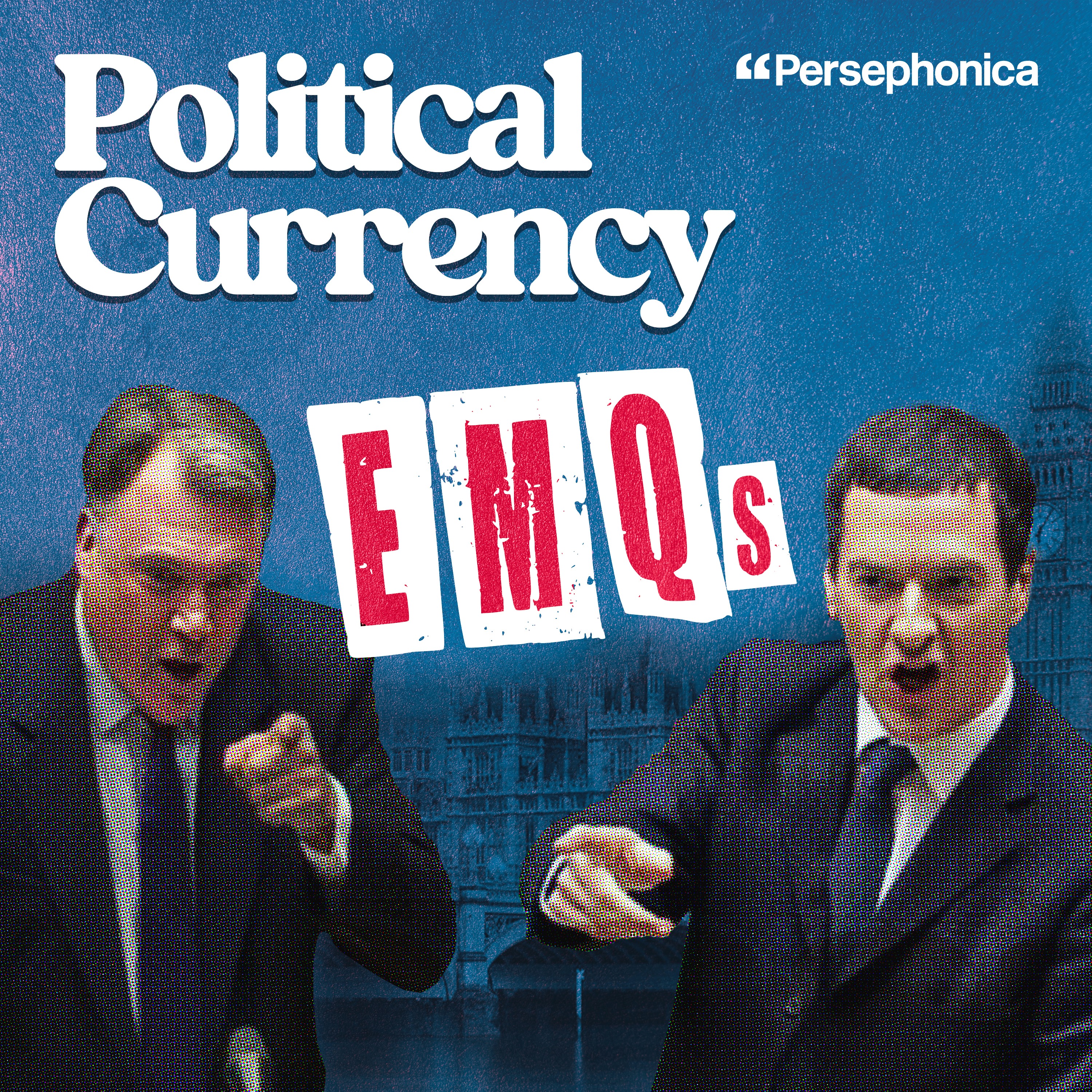
- EMQs: Biggest conference clangers
In short
A “political Q&A” episode (EMQs) where Ed Balls and George Osborne answer questions about party conferences, international politics, economic policy, and a UK by-election. It includes personal “conference cock-up” stories, favorite Labour conference speeches, Reform UK’s international migration deal, and debates on using tax vs interest rates for inflation, plus whether Andy Burnham could call an early general election.
Guests (hosts and questioners)
Ed Balls (former Labour MP/Shadow Chancellor), George Osborne (former Chancellor), Beth Rigby (Sky News political editor), Bridget Phillipson (Labour Party chair), Robert Buckland (former Lord Chancellor), plus questioners “James” and “Kevin” (audience/corporate attendees).
Key claims
A Tory conference email was accidentally sent to Liberal Democrat Mike Hancock, risking a damaging leak; Labour’s best speeches often succeed amid hostile hall reactions; Farage’s Reform conference MOU with Jordan Bardella signaled major international legitimacy, but could be politically toxic in France; inflation control via interest rates is usually preferred due to speed/clean transmission, except in liquidity-trap conditions; Burnham is unlikely to call an early election despite by-election momentum.
Notable examples
Ed Miliband forgetting a deficit paragraph (2014); Ian Duncan Smith’s “volume” speech (2003); Gordon Brown’s 2007 early-election speculation “cock-up”; Tony Blair’s 2001 post-9/11 conference speech; Farage/Bardella MOU on asymmetric returns; Hoban and St Pancras by-election (Keir Starmer’s seat) and likely Labour vs Greens outcome.
Written by AI. May contain mistakes.
Chapters
2:55
Conference Cock-Ups Discussion
Discussion on embarrassing moments from past political conferences.
“You can do it on Instagram, on X Twitter.”
3:40
Beth Rigby's Question
Beth Rigby asks about the biggest conference mistakes.
“And I thought, how can they be playing at Stamford Bridge?”
6:34
2007 Conference Disaster
Discussion on a major conference blunder involving leaked plans.
“What was the biggest conference cock up you can recall?”
8:19
Ian Duncan Smith's Speech
Recalling Ian Duncan Smith's final speech and its challenges.
11:37
Gordon Brown's Mistakes
Analyzing Gordon Brown's conference strategy and its implications.
“Also, another one, the year of Gordon Brown's No Time for a Novice speech, where David Miliband, the photo with the banana, a conference speech from him which didn't overwhelm.”
14:03
Celebrating Austerity: The Petrus Dinner Incident
Learn about the surprising moment at a Tory conference involving expensive wine amidst austerity.
“And he threw this sort of dinner where everyone was having Petrus.”
16:22
The Significance of the MOU at Reform UK Conference
Explore the implications of the MOU signed between Nigel Farage and Jordan Bardella.
“And thank you so much for starting our first ever video edition of EMQs with a fabulous question from somebody who is famous from our TV screens.”
22:41
The Significance of the MOU at Reform UK Conference
Explore the implications of the MOU signed between Nigel Farage and Jordan Bardella.
“inventory, returns, and analytics in one place.”
24:36
Memorable Labour Party Conference Speeches
Discover memorable moments and speeches from Labour Party conferences throughout history.
“Now, here's a question from someone that I interviewed for this show who ran for the deputy leadership of the Labour Party and is now in Burnham's cabinet.”
28:00
Memorable Conference Moments in Politics
Explore impactful speeches from Labour and Conservative conferences over the years.
“But I think probably the 2000 Labour Conference, the 2009 Labour Conference, where Gordon Brown, at the end of his speech, does the very long list of Labour achievements from the last 13 years.”
Show all 14 chapters
35:04
Fiscal Policy vs. Interest Rates for Inflation Control
Understand the debate on using fiscal policy versus interest rates to manage inflation.
“I've always wondered why we only use interest rates to tackle inflation.”
36:54
Keynesian Economics and the Liquidity Trap
Delve into the concept of liquidity traps and their implications on economic policy.
“And I think most economists would say that's the right way to do it.”
43:13
Political Implications of By-Elections
Discuss the significance of the Hoban and St Pancras by-election in political strategy.
“Do you think there will be some studying of that history in number 10 and an understanding that if Labour does very well in this by-election, that may be the springboard to an early general election?”
48:26
Future of Labour and Public Sentiment
Explore the future of the Labour Party in light of public sentiment and potential early elections.
“You cited, as Robert does, the 1964 parallel.”

Ask about this episode
Get the gist, explore an idea or ask about something said.
 Claude
On Political Currency, what are the key points of this episode?
Searching your listeningTranscript
Automatic transcript. May contain errors.
0:00Hello, this is Chris Winterbauer from What Went Wrong? TCM and Criterion joined forces for the plot thickens Stanley. This season's podcast traces Stanley Kubrick's journey from a curious Bronx teenager, first inspired by a camera gifted to him by his father, to a revolutionary filmmaker who rewrote the rules. Featuring a never-before-heard audio interview with Kubrick himself, go behind the camera with some of Kubrick's closest friends and collaborators to examine his legacy, including Katerina Kubrick, Steven Spielberg, Sofia Coppola, Matthew Modine, and many more. Available starting now wherever you get your podcasts.
0:34Hey everyone, it's Chris Guillebeau here, host of the Side Hustle School podcast. This episode is powered by AT &T Business. In my early days, I did some of my best work in parked cars or coffee shops. But when I landed my first big contract, I realized I couldn't bet my future on a public connection that cuts out if someone turns on a blender. As a small business owner, you're already wearing at least 10 hats. You shouldn't have to be your own IT department as well. That's why I rely on AT &T Business. They keep your connectivity reliable so you have one less thing to worry about. Powered by AT &T Business.
1:09Built to work. Get AT &T Business at business.att.com. Is there anything better than your team bringing home a W? How about a personal W for your health? If you're 45 or older and at average risk, it's time to screen for colon cancer. Now the number one cancer killer of people under 50 in the U.S. It's easy to put off when screening feels like a hassle, but Cologuard Plus makes it simple. It's non-invasive, requires no prep, can be completed at home in about 15 minutes, and is 95 % effective. Talk to your health care provider or request ColoGuard Plus online, Rx only.
1:47Ed Balls: Welcome to Ex-Ministers Questions EMQs with me, Ed Balls and George Osborne. Every Monday, we answer all of your burning questions on economics, politics, history, culture, to be honest, anything you like. And this week, we've got a great show for you. We're going to start with the Sky political editor, Beth Rigby, asking us as people arrive in Liverpool for the Labour conference, what are the most embarrassing cock-up moments we remember from past conferences that we were involved in? We've got the Labour chair, Bridget Philipson, asking us to remember the most special conference speeches that we've seen, but also the ones we've seen on TV from history.
2:26Ed Balls: Also, did Nigel Farage pull off a great coup by having the National Rally politician Jordan Bardella come to the Reform Conference and make that deal to take migrants back to France? And we've also got the former Lord Chancellor, Robert Buckland, asking whether Andy Burnham is going to bounce out of the Hobans and Pancras by-election and go for an early general election. Great questions. We hope you enjoy it. And every week you can send your questions in. You can do that on YouTube comments. You can do it on Instagram, on X Twitter. You can email them to us as well. Questions at politicalcurrency.co.uk.
3:03Ed Balls: Loads of ways to send them in. However you do on any subject, we will do our best to answer them every week. We hope you enjoy it.
3:15Right.
3:15George Osborne: Welcome to X Ministers Questions, EMQs. If you're watching us on YouTube for the very first time, it's the first time we've broadcast this on YouTube, it's a bit like PMQs, Primus's Questions, except it's better because... Yeah, but it's X. Yes, but we're actually...
3:34Ed Balls: That doesn't mean X rated. It just means that...
3:37George Osborne: We are X.
3:38Ed Balls: And let's be honest, we were never current. I mean, we never did PMQs. Did you ever do a Primus's Questions? I did, yes. Did you? Standing in for David Cameron? Terrifying. How many did you do?
3:47George Osborne: I did two or three, I think. oh right yeah but the difference between pmqs and emqs is we actually try and answer your question of course we do so um people have sent us in questions uh people in the westminster world but also members of the public people who listen to our podcast all over the world they they send in their questions i'm going to start with a quick question to you oh yeah i got an invite this week to go and see Shakhtar Donetsk play AEK Athens in the Champions League at
4:19Ed Balls: Stamford Bridge. And I thought, how can they be playing at Stamford Bridge? And it turned out...
4:24George Osborne: Ukraine team, yeah.
4:25Ed Balls: No. Why are they playing there?
4:29George Osborne: Well, Donetsk can't play because it's occupied by Russian forces, right?
4:32Ed Balls: No, the real reason is because Chelsea didn't qualify for the Champions League. And therefore Oh, there's no matches for Chelsea fans. So, I mean, sorry.
4:40George Osborne: Okay, but that might be why the stadium's available, but it's not why these two non-English teams are playing.
4:46Ed Balls: That is my EMQ for you today.
4:47George Osborne: Okay, I've got a good question for you, which is, if I said to you that I bought you a present when I was in Dublin this week, and it was a bar of lemon soap from Sweeney's, would that mean anything to you?
5:01Ed Balls: Nothing.
5:02George Osborne: And then I went to Davy Burns afterwards and had a gorgonzola sandwich and a glass of burgundy.
5:09Ed Balls: A gorgonzola sandwich with burgundy. I'm afraid. I mean, I like that.
5:14George Osborne: I really did buy you a bar of lemon soap. Why? These feature in Ulysses by James Joyce. This is what Leopold Bloom does on his walk around Dublin. He goes to Sweeney's Pharmacy, which is still there, although now it's a kind of James Joyce themed place, but it's got the original look of the pharmacy. And then you can still go to David Burns, which is a pub restaurant, and have a very good Gorgonzola sandwich, which is what he has.
5:43Ed Balls: You're exposing, you know, I'm more D.H. Lawrence than James Joyce, I'm afraid. I mean, I've tried a few times.
5:50George Osborne: Yeah.
5:51Ed Balls: Not my cup of tea.
5:52George Osborne: You need to listen to it on audiobook. I tried a few times.
5:55Ed Balls: A bit too magic realist.
5:56George Osborne: I'm not sure it's that. But anyway, modernist, maybe.
6:00Ed Balls: Modernist. Just kind of hard work.
6:02George Osborne: Now we're going to put people off, aren't we? We need... We are. I mean, go on.
6:05Ed Balls: Our producers are saying in our ears, cut, cut. What are you doing? You're destroying the YouTube audience. They're not going to want to listen to this rubbish.
6:12George Osborne: Let's bring it down. We've got a great question from Beth. Beth Rigby. Hello there. It's Beth Rigby. I am the political editor at Sky News. It means I go to a lot of party conferences. And I'm also a host on the Electoral Dysfunction podcast. And my question to Ed and George is this. You were both big beasts in your respective parties with big headline moments at party conference. What was the biggest conference cock up you can recall? Ideally, it will involve you rather than a colleague. But I'll take the latter if you were both perfect. Thanks. Bye.
6:53Ed Balls: Biggest conference cock up. I mean, thankfully, it means you can't go on about your inheritance tax speech again in 2007.
7:00George Osborne: No, although the biggest cock up also happened in 2007. I mean, by far, I mean, it was almost terminal for me and for David Cameron and the prospects of the Conservative opposition and could really could have changed the outcome of British history, which was in the build up to that conference on the Friday before the conference. so the context is we've had the Labour conference there's a huge amount of speculation that Gordon Brown's going to call the general election it's the kind of do or die moment for the Tories and we have come up with a series of policies which we're going to announce at conference and a kind of media grid of when we're going to announce them and you know we're quite organized we've got a plan for the conference and we email it to Matthew Hancock so Chris Skidmore who's a junior researcher for the Tories, later became a very successful government minister and so on, member of parliament.
7:58George Osborne: But at the time, he's a researcher. So he emails it to my chief staff, Matthew Hancock, later the health secretary.
8:04Ed Balls: Later known as Matt Hancock. Yes. Later known as the guy who had the inappropriate clinch.
8:09George Osborne: Also the guy who rescued us from COVID, I think he would like me to say.
8:13Ed Balls: Okay, yeah. I'm not sure that's how he's remembered from that period. No. Sorry, Matt.
8:18George Osborne: Yeah. anyway he Chris Skidmore researcher emails to Matthew Hancock
8:25Ed Balls: you're advisedly using the word Matthew
8:27George Osborne: Matt Hancock he emails him all of our plans for the conference and then it turns out he sent it by mistake to Mike Hancock who's a Liberal Democrat MP on the Friday night so it's before conference and this is catastrophic and we assume that Mike hancock's going to see the email that he's going to take it to nick clegg who's the party leader that they're not our friend at this point and he's just going to announce this is the latest cock up for the tories and the cameron opposition they've sent us all their plans for the conference here well here's what the plans are which would have destroyed the conference i think helped uh bring about a general election because it did we would have had a terrible we would have had a terrible conference start so that was the what that was the pit in the stomach moment when you
9:18Ed Balls: go oh my god luckily mike hancock was otherwise engaged his eyes and mind had wandered elsewhere he was he was he was he was up to other stuff i ran around to his office i was the shadow
9:31George Osborne: in the in the house commons but it was friday afternoon he wasn't there it was all shut up and we just prayed that he wouldn't see it he later claimed i saw it but i didn't want to ruin your conference which was bullshit so beth that was the worst moment i was involved in that was like potential catastrophic cock up um i'll just say the only thing i was something i wasn't really involved in but i was a member of the audience i was a i was a like a junior mp um i was the junior whip was um ian duncan smith's final party conference speech as leader when he's facing this is in 2003 and um you know there's lots of talk he's going to be brought down and he organized the whips of which i was one organized this these standing ovations is that the quiet man speech was that the year before it's the quiet no the previous year had been the quiet man speech this was the quiet man's here to stay and he's turning up the volume speech oh my gosh oh my gosh and i just remember kind of getting up and down we had to sort of it was like the north korean uh you know Party Congress, except without the discipline and all the threat of execution.
10:40Ed Balls: And when you're there, especially if you're a junior MP, and you're with people you know well, every time you go up, you sort of say, Christ, as you get up, I mean, lots and lots of off-mic comments. Brilliant question from Beth. And we love, I mean, it's a rival, but we love the electoral dysfunction podcast, don't we? Yeah, really good. And they do really, really well.
10:59George Osborne: You know, people of many hours in the day, they can listen to both.
11:02Ed Balls: That's right. And I think if you, I mean, I would almost say complimentary. these two podcasts. I mean, I would say, in fact, probably the two best political podcasts in the UK. That was what I would say. But Beth says, don't make it about others if you could avoid it, make it about yourself. And I'm going to do that. And I'm actually going to end up kind of agreeing with you. But before I do, quick meander. These involve me, by the way. 2014, I'm the shadow chancellor, Ed Miliband, in the final conference before the general election, making a speech without notes, fails to remember and therefore say his whole paragraph about the importance of the deficit and fiscal responsibility hard to underestimate quite what a catastrophe that was for ed and for all of us and i remember driving down the motorway um with yvette in our car and nick robinson saying that was the moment which defined the conference and we looked at each other and said he's right I mean, total disaster.
12:06Ed Balls: Also, another one, the year of Gordon Brown's No Time for a Novice speech, where David Miliband, the photo with the banana, a conference speech from him which didn't overwhelm. And then also, that's when he was caught in the lift with a, he didn't recognise a political producer, was in there saying to his aide, you know, I couldn't have gone further. this was in striking against Gordon Brown because it would have been seen as a Hesseltide moment, like total catastrophe politically. However, I'm going to go back to the same year as you, 2007. That was the conference where we went into the Labour conference.
12:46Ed Balls: Gordon Brown, reluctant to call an early election, Labour well ahead in the opinion polls. The speculation started from the first Saturday. I think Douglas Alexander, who was our campaign chief, had done an interview with The Guardian, headlined as Labour on a campaign footing. And throughout that week, all of us, including Gordon, and I was part of this as well because I tried to, I did an interview on the Sunday where I said over the coming weeks and months, we will be preparing our position for the future and then got knocked back. People saying, you know, that sounds like you are ruling out an early election.
13:25Ed Balls: And if Gordon Brown didn't want an early election, He had to rule it out in those days, and he didn't. And as a piece of politics, that was a total cock-up, because one, it set you up for the next week. And then what it meant was when Gordon didn't go for the early election, it looked like he was putting his own and Labour's position before the needs of the country. He was not wanting to give people their say. So the 2007 general election, allowing the speculation to run, not closing it down, a total cock-up.
13:56George Osborne: I thought of another funny one which was in 2010 so this is the first party conference where we've won the election but it's you know very serious times and you know it's austerity and you know so there's a ban goes out and there's no champagne at the Tory conference you know but of course people love to celebrate and you know it's quite hard to stop people.
14:20Ed Balls: Also David Cameron was the prime minister and you were the chancellor i mean of course it had to be champagne i mean
14:24George Osborne: the bollington boys had taken power we know that champagne is gordon brown's drink of choice but our drink of choice was red wine who was it and uh i thought it was bolly no and uh and um one of our very generous and lovely donors had decided to celebrate at this austerity party conference by opening several cases of Petrus red wine, which is basically the most expensive red wine out there pretty much, which was incredibly generous of him. And he threw this sort of dinner where everyone was having Petrus. And, you know, I said, I can't go to the Petrus dinner. But if I'm, you know, I'm the chance exchequer who's like making all these cuts and I absolutely cannot turn up at the Petrus dinner.
15:11so um i stay in my hotel room basically pretty knocked so that i can't go and have an ice cream
15:18George Osborne: but um i do send one of my um aides to go down and nick a bottle of the patrice and bring it up
15:25Ed Balls: to the hotel i think i think when you think about this this cock up question um pretty much all of the examples 2014 labor weren't going to win yeah theresa may when she um loses her voice
15:37George Osborne: she was already in trouble and that comedian gives her the p40 in duncan p45 in duncan smith
15:43Ed Balls: already on the way out david milliband was past his peak by that point in terms of um of any challenge so although they were cock-ups they sort of reinforced the direction the reason why 2007 is significant is because i mean that was not um where things were if your cock-up had happened that at the time would have been reinforcing. But the Gordon Brown, our team cock up on allowing the speculation, that changed the weather in a material way. It's not often that cock-ups actually are game-changing. I think that one probably was. Great question, Beth. And thank you so much for starting our first ever video edition of EMQs with a fabulous question from somebody who is famous from our TV screens.
16:31George Osborne: Right. Yes, thank you, Beth. Next question is from James. I had the interesting pleasure of attending the Reform UK conference for the first time. The bit that really struck me, and I don't feel has been talked about as much as I would have expected, was the MOU that Nigel Farage signed on stage with Jordan Bardella from the national rally. Was it a significant moment or was it just a gimmick?
17:04Ed Balls: now we know that james was not there as a reform member or supporter he was there as one of the um the corporate people had come to the reform conference as part of his his job but we should
17:14George Osborne: just explain which was telling in its own right that corporate britain did turn up exactly but
17:19Ed Balls: we should explain the significance both of jordan bardella being there and also this uh this mou Yeah.
17:25George Osborne: So Jordan Bardella is the young, charismatic number two in the rally for France, the kind of the new Le Pen party. And there was a lot of speculation he might be the presidential candidate because Le Pen had been barred by the French courts from standing. But she's won her court or won the appeal. So he probably isn't the presidential candidate. But he's, you know, he's a very articulate, attractive, young French politician.
17:57Ed Balls: Likely to be prime minister if she was to win.
17:59George Osborne: And and so, well, we'll come on to what the MAU is about. Maybe you can talk about the MAU. But I guess the significance, I would say, James, to your question is, if you think the kind of Nigel Farage movement is, you know, eccentric, British only, can be dismissed. I think if you can get someone on the stage who may well be the next French prime minister, it's quite hard to dismiss it and say you know these are all a bunch of fruitcakes you know you don't need to pay any attention to them because you go hold on they've they've got important international alliances with important parties and important individuals um and and i think i don't think reform or ukip a few years ago would have been able to deliver such a kind of important european figure but partly because that's european politics has also changed
18:55Ed Balls: That's right. Although I think you could also say no British political party seeking to win a general election and going to number 10 would have thought it was in their interests to have a, in the past, National Front, now National Rally politician on the stage. And that tells you how much French politics has shifted, but also how British politics has been in flux as well. So that is definitely not a gimmick. That is significant. In terms of the MOU, the MOU was, I mean, we're having this conversation.
19:30George Osborne: It's a memorandum of understanding. That's right. We should exchange people.
19:33Ed Balls: Yeah, the memorandum of understanding. We're having this conversation just as Shabana Mahmood is concluding the negotiations, if it carries on, for the one-in-one-out agreement between Britain and France, in terms of Britain sending back people who've crossed over on boats who are not credible asylum seekers, but also Britain taking people into the UK, people who have a good reason to come to the UK. What this MOU was, was Jordan Bardella agreeing with Nigel Farage that a much bigger returns agreement that France would take back in much bigger numbers and in an asymmetric way, people who had crossed to Britain.
20:15Ed Balls: And so this was Nigel Farage saying, I can deliver and send people back in the way that Rishi Sunak couldn't do and Kirsten Andy Burnham can't do. And it was significant that Jordan Bardella was willing to come on the platform and sign up to this. Of course, what then happened in these subsequent days was a very significant backlash within French politics against him signing up to this asymmetric agreement with people saying, why are we taking all of these people back to France who have no right to reside here and if they're going to Britain why are they coming back and I think so that I think to James is the significant point if Nigel Farage at the next general election can point to an MOU agreed with French President Le Pen and Prime Minister Bardella for this asymmetric returns agreement, then that is very, very significant.
21:18Ed Balls: But if the first and last we ever hear of this agreement was that Friday at the Reform Conference, because the Le Pen party realised very quickly, this is politically toxic for them in France, and we never hear of it again, then I think on that basis, James, it was a gimmick.
21:34George Osborne: but it's interesting that reformer thinking i remember labor in opposition when tony blair was opposition leader sort of striking deals with british companies like they had a deal with british telecom to roll out the world wide web or whatever they called it back then although if
21:52Ed Balls: you remember the problem was tony blair was striking the deal with british telecom to roll out the world wide web while gordon brown and um us at the treasury were saying i'm really sorry but British Telecom is going to pay the windfall tax on the privatised utilities and there is no way British Telecom are being let off this. However many letters Ian Vallance writes to Gordon Brown and however many times he has meetings with Jonathan Powell because the moment you exclude BT legally, this totally falls apart. So a bit controversial that was.
22:22George Osborne: But it was, it did demonstrate, you know, they're not the government yet but they're already running the country. That's right. That was the purpose of it. And I think, coming back to James's question, that's what Farage is trying to demonstrate. You know, foreign powers, foreign political leaders are already negotiating and dealing with us.
22:37Ed Balls: Anyway, thanks, James, for your question. Very good one. We'll be back shortly after this break.
23:02inventory, returns, and analytics in one place. What used to take five separate tools ShipStation does in one. Automate fulfillment and rate shopping to ship up to 15 times more with up to 90 % savings. Go to ShipStation.com and use code AUDIO to try ShipStation free for 60 days. Bad news travels fast, and bad AI conversations can travel even faster. Because one mistake can happen again and again and again. Parloa Lens helps you spot those problems across every conversation. And Navigator helps you figure out why they're happening and what to do next. So your AI agents don't just handle more conversations, they get better at handling them.
23:41That's the power of Parloa. Find problems before they find your customers at Parloa. P-A-R-L-O-A dot com. The youth mental health crisis is growing, and social media is a major driver. Kids are spending up to nine hours a day on screens, often unsupervised, and studies show a direct link to anxiety, depression, and even suicidal thoughts. That's where Gab comes in. Gab offers safer phones and watches for kids with no social media, tailored to every age, offering the right tech at the right time, or tech in steps. From GPS tracking-enabled watches for younger kids to phones with parent-enabled apps for teens, each device allows kids to more safely grow their independence.
24:25Visit gab.com slash getgab and use code getgab for an exclusive offer. That's g-a-b-b dot com forward slash getgab. Gab. Tech in steps. Independence for them. Peace of mind for parents.
24:46George Osborne: Welcome back. Now, here's a question from someone that I interviewed for this show who ran for the deputy leadership of the Labour Party and is now in Burnham's cabinet. Bridget Phillipson. Hi, Ed and George. It's Bridget Phillipson here. It's party conference season and there have been some fantastic Labour Party conference speeches over the years. From Nye Bevan opposing unilateral disarmament through to Wilson promising white heat and a personal favourite of mine, Neil Kinnick, taking on militant. so my question to you is what is your favorite conference speech or moment Bridget thank you she's now chair of the Labour Party so presumably she's chairing
25:24Ed Balls: the Labour Party conference she will be yeah absolutely absolutely big big week for her and great to have her I mean so busy they're up to conference making time to do a question for for us and you know she was um very effective education secretary in the last two years and
25:39George Osborne: And was rewarded by being kicked out of that post.
25:42Ed Balls: I know, but...
25:44George Osborne: That's life, isn't it?
25:45Ed Balls: That is the way politics works. But she's absolutely still there and at the heart of things. So great question. It was interesting, the ones that she cites there. I mean, the... They're all Labour, for a start. They're all Labour. And I know them all.
25:59George Osborne: And, you know, I wasn't... I remember the Neil Kinnock one. I actually watched that at home. I mean, slightly nerdy teenager watching the Labour Party conference. But I did watch that one live. That's when he says, you know, we're going to, you know, you can't play politics with people's lives and people's jobs. And Derek Hatton, the Labour leader in Liverpool, walks out of the conference hall.
26:18Ed Balls: And Eric Heffer. The grotesque chaos of Labour councils.
26:24George Osborne: A Labour council.
26:25Ed Balls: Labour council ferrying round in taxis, delivering redundancy notices to their own workers. You can't play politics with people's lives and their jobs and their services. It was a full frontal attack on militant. And the interesting thing about two of the examples that Bridget cites, that one, and also Nye Bevin, is that both of them were speeches made not just in the teeth of opposition, but in terms of angry demonstration in the hall. And part of their power comes from their spontaneity in pushing back against angry voices in the hall. The other one I would put into that historic list, 1976, when Dennis Healey is called back from the airport.
27:06Ed Balls: He's flying off to Manila to the IMF conference and he has to come back to the Labour conference. But because he's not a member of the National Executive Committee, which Bridget is involved in now, he has to speak from the floor as a delegate. and he basically lectures the conference as they boo and shout about why there must be fiscal discipline and you can't just have an easy free lunch. Utterly brilliant speech. All of those though...
27:35George Osborne: Come on, all of the ones you've actually seen yourself.
27:37Ed Balls: Exactly, because all of those are ones which are historic. And I, like you, saw the Neil Kinnick speech. I was about to go to university and sat at home watching it. I mean, it was utterly brilliant speech. So the ones that I'm going to cite, and I'm going to go back to the Blair Brown era, First of all, kind of Gordon Brown. I think best when we're bold, best when we're Labour, was a very, very powerful moment. But I think probably the 2000 Labour Conference, the 2009 Labour Conference, where Gordon Brown, at the end of his speech, does the very long list of Labour achievements from the last 13 years.
28:14Ed Balls: And he does this technique.
28:15George Osborne: The minimum wage for Scottish Parliament.
28:17Ed Balls: Maternity pay, paternity pay. And it's alliterative and rhythmic. But what he does is this thing, which you'll know, where you surf. So what happens is you do it. So the audience starts to clap like a wave. And you carry on. And you ride the wave. Use the microphone. And so you ride the wave of the speech. And it just goes on and on. That was a really electric moment. The other speech I'm going to cite, not the Tony Blair Clause 4 speech in 1994. because nobody, I mean, we knew, but nobody quite knew he'd said it. But the Tony Blair 2001 after 9-11 conference speech when he talks about the kleidoscope scope of the world having been shaken.
29:02Ed Balls: And, you know, in retrospect, things become much more difficult because of what happens with Iraq and all of that. But in 2001, this was a Labour prime minister saying that at a time of global turmoil, our responsibility is to rise to the challenge and to lead. And he talks about kind of other parts of the world in which we should have or will now lead and talks about Kosovo and Rwanda. It was also an electric moment. It's those moments where you know that you are there hearing a speech which will resonate for a very, very long time and where the audience feels that sort of that buzz and emotion.
29:48Ed Balls: And those are the two I'm going to say.
29:50George Osborne: Well, I was there in the hall for the Tony Blair Clause 4 speech as the Conservative Party observer. And I remember thinking, oh, my God, we've got a job on our hands with this guy.
29:59Ed Balls: Although did you know he'd actually announced the average? Yes, I did.
30:01George Osborne: Because it was all in code. It was all in code. But I was, you know, enough of a kind of insider on Labour politics, being the official Conservative observer and researcher into Labour. that I knew what he had said. And I remember having lunch afterwards with a guy, young guy who I didn't actually particularly know that well at the time, Danny Finkelstein, who's now a very good friend of mine. And I was like, oh, I think, you know, we've got a massive problem with this guy, Tony Blair. And he's just announced the end of Clause 4. So I feel that was probably one of the more historic things I saw.
30:33George Osborne: The 2007 conference, which we've already alluded to in the earlier questions, you know, my own speech on inheritance tax is probably the most significant single moment in my political career. And I remember the kind of roar from the crowd at the Winter Gardens in Blackpool. It was an incredible moment. My parents were in the audience. My mother was reminding me of it the other day. And Cameron's speech without notes, that was a kind of big moment. But I tell you, it's not one, only because I'm going to try and think of something that anyone else will remember. A really significant speech. It wasn't that it was a particularly amazing speech.
31:09George Osborne: which was more that he had turned up to do it, was we were persuaded in 2006 the then chief executive of Google, Eric Schmidt, to come to the Conservative Party conference to talk about this new company and this new technology. And if you were someone like me, you'd just grown up with all the important people going to the Labour conference for years and years and years. And suddenly here was this guy coming to the Conservative conference and he overrode, he promised me he'd come, and all the people inside Google said, you must be mad. You're going to the Conservative Opposition Conference. It's not clear they're going to win the election.
31:45George Osborne: The Labour government's going to be very unforgiving if you do. But he said, no, no, I made a promise to this guy, George, who I met somewhere, so I'll come. And the only thing he wanted to know was how long Bournemouth runway was because he was going to fly himself to the conference, which he did in his own plane. And then because we had this chief executive of Google there, all the media people wanted to come and not just the political reporters, but the editors and the proprietors, everyone wanted to meet. This was like the hot company at the time. And I forever was grateful to him. I was like, thank you so much.
32:18George Osborne: It was just a straw in the wind that maybe the kind of mood was changing and suddenly people were starting to take the Conservatives seriously. So it's an obscure moment, but I remember it and I'm very grateful still. Eric, thank you.
32:29Ed Balls: And in terms of, you know, we talked about Dennis Healy, Wilson, Kinnock and those speeches also and Nye Bevan. in conservative folklore.
32:39George Osborne: Oh, it's Thatcher's. It's Margaret Thatcher, 1980. You turn if you want to.
32:43Ed Balls: The lady's not for turning. And I met, he was still working.
32:46George Osborne: He used to, there's a guy called Ronnie Miller. He'd been a kind of theatrical impresario. And he came back to help John Major write speeches. And he had written those words. He was Margaret Thatcher's speech writer. He was sort of brought out of retirement by John Major. And I was a really junior person in number 10. and I remember meeting this guy and he would write the speech you know back then of course no computers or anything it was all like written out in his pen and then someone would type it up and he had this glass of champagne and I just remember him sort of this legendary speech writer and thinking my god this is the guy who wrote the Thatcher conference speech he said he said she had no idea what why it was going to be funny or a big moment but she trusted him he said just read it out i promise you promise it's going to work and she did i was just finding this um
33:39Ed Balls: tweet just from a couple of weeks ago keby badenock reform says abolishing inheritance tax is morally wrong i think it's morally wrong to punish people for doing the right thing robert jenrich replied that's funny because when you're in a minister of the treasury you froze the thresholds and went on to say but tories have got form george osborne promised to abolish inheritance tax only to betray the voters once he was in power no one's falling for it again
34:06George Osborne: Robert Jenrick you know the fight goes on I will say that if you have a million pounds now if it includes a property it is inheritance tax free so we did deliver if you have a million
34:16Ed Balls: pounds but I'm feeling in 2007 you said you could abolish it no we said we'd raise the inheritance
34:21George Osborne: tax threshold to a million pounds it was only the manifesto where you said you'd abolish it
34:25Ed Balls: no I never said we're gonna abolish it in 2010 manifesto it was raise it to a million pounds
34:29George Osborne: which back then would take on almost all people out of inheritance tax. I promise you. And then we only delivered it because the Liberal Democrats didn't want to do it as part of the coalition. So we did it in one of the budgets. I'm not saying you're wrong. No, no, I promise you.
34:45Ed Balls: I'm trying to remember the manifesto words in 2010.
34:48George Osborne: Raise the inheritance tax. We never said we were going to abolish it because, you know, then you do have the problem of people with huge estates. Anyway.
34:57Ed Balls: Very interesting. Thank you, Bridget. Good luck with your conference. And I would think Bridget will speak on Sunday. That's normally when the chair would speak.
35:03George Osborne: Rouse the crowd.
35:04Ed Balls: Rouse the crowd. Brilliant. Our next question is from Kevin.
35:08George Osborne: Hi, Ed and George. I've always wondered why we only use interest rates to tackle inflation. Taking money out of people's pockets by raising interest rates reduces demand and lowers inflation. But why don't we temporarily increase tax to achieve the same effect? This would have the added benefit of boosting government finances. Is it just politics that stops us going down this path? Or are there also sound economic reasons?
35:32Ed Balls: So I think the answer, Kevin, is actually there are sound economic reasons why trying to fine tune the economy, as it would historically have been called, trying to manage demand through fiscal policy in a short term way is a much, much harder thing to do than through interest rates. You can make a structural decision to tighten fiscal policy for the next five years. But if you're trying like quarter by quarter or even year by year, the problem is changing tax rates takes longer. It's more complicated to do in legislation. Also, if you raise people's taxes, they can choose to save less in order to compensate.
36:13Ed Balls: You may not have the same impact. It has kind of complex distributional effects. But generally, the delays and the lags make it much harder. Whereas the great advantage of doing it through interest rates is that the transmission is cleaner, it's faster, it's simpler. And also, once you have an independent central bank, they're making the decision rather than needing to do it announced in a budget. So it actually can be at arm's length from the political process. And so in general around the world, that sort of aggregate demand management happens through central banks and interest rates rather than through short term budget policy.
36:54Ed Balls: And I think most economists would say that's the right way to do it.
36:58George Osborne: Well, it's a good question from Kevin. I'm going to challenge you a bit here. I think what you were just expressing there was absolutely the orthodoxy. and certainly in Britain it was an orthodoxy I'm right in saying I think established by Nigel Lawson in his Mace lecture that you used monetary policy to manage demand in the economy and you didn't use fiscal and policy and tax and spending.
37:23Ed Balls: Which he went on to be extremely bad at doing himself as it happens.
37:27George Osborne: Well and that's all true but if you think of post the crash one of the arguments that I was pitched into against the likes of Larry Summers and to some degree, you know, you and the Labour opposition, was that the country at the time needed a fiscal stimulus. And so it was not it was not using at the time they were trying to loosen policy. So the argument was that, you know, interest rates were no longer very useful because we were close to the zero band, that also the monetary transmission mechanisms had all been damaged by the credit crunch and the aftermath of the financial crash. And so therefore, okay, you didn't need to raise taxes to tighten demand, but you needed to cut taxes and spend more money.
38:15George Osborne: And Alistair Darling did cut VAT and the argument was this is going to boost demand in the economy. And the kind of Obama argument at the time, as I say, Larry Summers was the proponent of it, was um he was the chief economic advisor at the present time was that you know you you did you did need to use tax um fiscal policy to boost demand in the economy but you are right and i
38:40Ed Balls: think um we love um the very wide range of audiences who listen to our podcast but um within that there are a-level students and university students who listen to the podcast and their teachers teaching politics and economics. And I gave you what would be the, in normal times, economists' answer as to why, if you want to manage aggregate demand, it's better to use interest rates and monetary policy than fiscal policy. And that is in normal times. But there is the special case, the exceptional case, which is actually what Keynes wrote about in his general theory in 1936, where economies get stuck in what is called a liquidity trap, where interest rates are low and they can't go any lower and if actually you try to make them lower things would backfire and that is what happened to the world in the 1930s it's what happened to the Japanese in the 1990s as you say to some extent it happened in the the world in the early 2010s and in those circumstances where monetary policy is effectively ruled out as an effective instrument all you've got is fiscal policy and you then think to yourself well if I'm going to use fiscal policy what is the thing which I can use which is most like an interest rate, the thing which is cleaner and quicker.
39:58Ed Balls: And that is why, in your case, raising VAT, in Alistair Darling's case, cutting VAT was a more, you know, VAT is the closest you get to it acting like an interest rate. Whereas if you get into income tax rates, it just becomes much more complicated and messy. But that is the special case, the exceptional case, the liquidity trap. And the whole failure of Keynesian economics in the post-war period was to think that you should be Keynesian.
40:26George Osborne: In all times.
40:27Ed Balls: In all times. Yeah. Whereas it's particularly in the exceptional liquidity trap that it really works.
40:33George Osborne: Although there was an interesting ask, I think, by Andy Haldane. I apologise if I got this wrong. But in the last couple of weeks in the FT saying, you know, the problem these days is people anticipate, OK, well, they're cutting my taxes now, but they're going to have to put taxes up in the future. or they're increasing spending, but I know I've read about the problems with the bond market and whatever. You know, they're going to have to raise my taxes in the future, so I'd better save the money to pay for it.
40:57Ed Balls: A bit more economics. That is called Ricardian equivalence and was famously revived as an idea by Robert Barrow in the 1970s. And exactly that idea. If I cut taxes to boost the economy, people think, ooh, that means there's going to be a fiscal problem. I'd better increase my savings in order to be ready. and therefore the argument is in the extreme. It has no impact at all. And the same wouldn't be true of interest rates. And so that is also an argument for monetary activism. More economics in that five minutes of EMQs than we normally have. We'll take a break and we've got one more question back to politics.
41:35Ed Balls: And after Beth Rigby and after Bridget Phillipson, a final famous name for our first YouTube EMQs.
41:51Is there anything better than your team bringing home a W? How about a personal W for your health? If you're 45 or older and at average risk, it's time to screen for colon cancer. Now the number one cancer killer of people under 50 in the U.S. It's easy to put off when screening feels like a hassle, but Cologuard Plus makes it simple. It's non-invasive, requires no prep, can be completed at home in about 15 minutes, and is 95 % effective. Talk to your healthcare provider or request Cologuard Plus online, Rx only. Making million-dollar decisions about your branches? You need insights to get that right.
42:28Believe in Banking is the award-winning podcast for leaders balancing digital investment with the reality that branches still drive growth. expert conversations on branch strategy, customer experience, and what actually moves the needle designed to empower your decisions from adrenaline. Search Believe in Banking and listen now. There are two types of business owners, those who are busy and those who want to be busy. Toast is designed for both with tools to keep you humming and help turn grind into growth. That's how you turn busy into business. Toast built for busy.
43:12George Osborne: yes welcome back uh here is a question from former member of parliament former lord chancellor member of the cabinet colleague of mine robert robert buckland as we come to the hoban andst pancras by-election in early october are there parallels with 1966 when harold wilson won the hull north by-election with an increased majority and the promise of a new Humber Bridge, which then led him to call a general election that year, which of course he won. Do you think there will be some studying of that history in number 10 and an understanding that if Labour does very well in this by-election, that may be the springboard to an early general election?
44:01George Osborne: Well, the thing about Robert, he's a great student of history and politics, and he loves that. And he also has a very good podcast, Hidden Wiring, with a former civil servant colleague of his.
44:14Ed Balls: He was a fellow at Harvard with me at the same time in the Mosserar Romani Centre at the Kendi School. And he was very popular amongst the students because they loved that mix of history and experience.
44:26George Osborne: Yeah. His politics, his conservatism, a bit out of favour these days, but I always liked it. And was somewhat more successful, you might argue, than later forms of conservatism. But he's got a good question about the by-election. So, I mean, here, Wilson basically builds a socking great suspension bridge across the Humber, which I visited, and reduced the tolls on to help win seats in the East Yorkshire area. He's saying, you know, Wilson used that. That's an example, isn't he? He wins in 64, but only just two years later calls another general election, gets a big majority. And that's the example of, you know, call the call the early election, increase your mandate.
45:10George Osborne: And there's a lot of speculation. In that case, Wilson was the same leader in both elections. But here should Burnham, as we were speculating, call the election? And the thing he points to here is the Hoban and St Pancras by-election. Because the key thing about this is it's the Keir Starmer seat. People haven't followed it. You know, he's left Parliament. And Zach Polanski, the Green leader, you know, who was making hay a few months ago, but has gone rather quiet since Burnham arrived, has sort of been, you know, forced into being the Green candidate in this election. so if he wins great for him he's in parliament massive green win they've won the former prime minister's seat and any hopes that burnham had put a stop to the green surge you know dashed but but if burnham wins or labour wins my god he's he's you know defeated polanski polanski's a broken reed you know can't really claim he's very popular if he can't get himself elected to parliament and would be an example of Burnham using a by-election like he did in Makerfield to deliver a national message.
46:25Ed Balls: So there are...
46:26George Osborne: Will he then go to the polls? It's quite tempted, right?
46:28Ed Balls: So the two questions are the by-election and then what happens afterwards.
46:34George Osborne: Peter Kellner says this is tight for Labour,
46:37Ed Balls: thinks the Greens might win.
46:39George Osborne: This was a big Labour majority seat. It was.
46:41Ed Balls: I mean, it was Keir Starmer's seat, big majority in 2024, challenged by the Greens. But even in the local elections, Labour still did OK. The candidate is the leader of Camden Council, Sagal Abdi Wally, and she has standing, she's young, she's dynamic. I think she will kind of reach into that potential Green vote. And of course, you've seen in recent weeks the announcement by Ed Miliband and Andy Burnham of sanctions against Israel because of actions in the West Bank. And you had Andy Burnham appearing with Mark Carney and Emmanuel Macron at the UN this week talking about those issues.
47:26George Osborne: You're not telling me that had anything to do with the Hoban by-election. I thought it was all to do with peace in the Middle East.
47:31Ed Balls: We discussed this last week. And it's not going to do any harm when it comes to the by-election. Let's just say that. You don't have to cynically say... Every time I try to lift my sights, you bring me crashing down to earth. You don't have to cynically say that that is the only motivation, to say that in politics you have to have a one eye on the domestic consequences of your foreign policy decisions. And maybe Keir Starmer got into trouble in the days after October 7th by not doing that. And he ran to catch up for years afterwards. And Andy Burnham's not making the same mistake. I would expect, I think, Labour should win this by-election.
48:08Ed Balls: Burnham's up. Labour's doing better. Polanski's more on the back foot. She's a good candidate. Politics and those policy things have moved in Labour's direction, at least on, and, you know, it's going to be a tough autumn, but maybe that toughness and that budget is still to come. So, but does this provide that launch pad? You cited, as Robert does, the 1964 parallel. I mean, Labour starts with... Well, the 64 to 66. 64, Labour has barely got a majority. The question is, can they get to a working majority? In 2024, Labour's got a huge majority. The question is... Is it a working majority? Well, but if they have another general election, does it go up or down?
48:51Ed Balls: It would definitely go down. In 2007, which we discussed earlier in this podcast, Gordon Brown is more than 10 percentage points ahead in the polls. Decides it's too risky. In 2017, Theresa May is, you know, slightly less than 10 percentage points ahead in the polls. goes for it, loses her majority. Andy Burnham's not 10 or 9 or 8 percentage points ahead in the polls. He's barely 1 percentage points ahead in the polls. And he knows he's going to go into an autumn, which is going to be tough because energy bills are going up, interest rates are going up, the economy is under pressure. People are feeling, you know, this is a difficult time.
49:29Ed Balls: This is an inauspicious time to fight a general election, especially when you've already got a large majority. and is there anything at the moment coming from Andy Burnham and his team which makes you feel as though, I mean, if they were going for an early election, this would be the budget which would be shifting all the issues into the medium term, but trying to set up your election platform, I don't see any sign of that being a strategy.
49:54George Osborne: Maybe they just learned the lesson from 2007. Don't speculate about it. But they have set the ground.
50:00Ed Balls: You said earlier in the summer, you said earlier in the summer when Andy Burnham was taking over that you thought that that is what they may do. You may turn out to be right. Because the right strategy is to give no indication that's what you're going to do until you do it. My instinct is Andy Burnham does not look like, to me, somebody who wants to be a prime minister for a short time.
50:19George Osborne: He's loving it. He's really enjoying it. Does he want to roll that dice now? No, that's what they all end up thinking. But it is a moment, if you wanted to go for it. Tories divided. reform, you know, still there, splitting the right. Polanski defeated in the polls in Hoban on his uppers.
50:39Ed Balls: Although you've got to say, there's no bridge needed in Hoban and St Pancras.
50:43George Osborne: No. Well, there's the Hoban Viaduct.
50:46Ed Balls: But I think it's there. I'm not sure. That's that funny, you know. I know.
50:51George Osborne: Do you know what, that's that interesting bit of, you know, there's a sort of road on a bridge over a road.
50:55Ed Balls: I know, but I'm not sure rebuilding that is going to win him any votes in the Vilection. I'm not sure Sangley is saying let's rebuild the Holborn Viaduct. I think he's not going to, but I might be wrong, but it's a great question for Robert.
51:07George Osborne: I think he's not really defining the question. By this point, you want to be setting up the question that a general election has to resolve, like Boris Johnson successfully did in 2019. That's right. Get Brexit done. That's right. Which Robert and I did not agree with him on. But anyway, thank you for your question, Robert. Listen, if you've got other questions, I hope you've enjoyed this first YouTube broadcast EMQs. and if you're listening regularly on the podcast, do enjoy it. You can, of course, message us with your questions, questions at politicalcurrency.co.uk, but also message us through our various social channels.
51:39Ed Balls: You can check out Electoral Dysfunction, which is Beth Vigley's podcast. You can check out Robert Buckland's new podcast, Hidden Wiring, former civil servant Alan Evans, or you can just stick with political currency. As you said, George, earlier, people have time to listen to more than one.
51:54George Osborne: Yeah. Or maybe even more than two. But if you don't have time to listen to more than one, stick with us.
51:58Ed Balls: And don't forget, we love variety in our tone, creativity, lots of different questions, history, economics, things which are serious, things which are fun. Beth's question was, you know, a fun question about cock-ups. Bridget's question about emotion and triumphs. And all of those are great. And we hope you enjoy our first ever EMQs on camera. and the production team will be doing a brilliant job putting together lots of clips and footage to go with it. We really hope you enjoy it and we will see you back on Thursday. Actually, we've got a special treat this week.
52:37George Osborne: Yes, on Tuesday, we're going to come live to you after Andy Burnham's first conference speech as Labour leader. So watch out for that.
52:45Ed Balls: Big moment. Looking forward to discussing that. Back on Thursday and then EMQs at the weekend. If you want it early, go gold. Go kitchen cabinet. it. See you soon. See you then.
53:14When everything is moving all at once, your workforce, your tech stack, your business, you don't need more tools. You need one solution. That's why Paylossity built a single platform to connect HR, finance, and IT with AI-driven insights and automated workflows that simplify the complex and power what's next. Because when everything comes together in one place, growth comes easy. Experience one place for all your HCM needs. Start now at paylossity.com slash one. Hey everyone, it's Adam, host of Ted's podcast, Rethinking with Adam Grant. And this episode is powered by AT &T Business. When you're building a business, momentum is everything.
53:52There's nothing worse than hitting your stride only to have a spinning loading icon bring everything to a halt. When navigating competing priorities, reliability isn't a luxury. It's a foundation. AT &T Business is built to work so you can spend less time troubleshooting and more time focusing on what actually matters. Powered by AT &T Business. Built to work. Get today at business.att.com. Colon cancer is on the rise. It's the second deadliest cancer and the number one cancer killer of people under 50 in the U.S. Yet it remains one of the most preventable cancers. If you're 45 or older and at average risk, it's time to talk about screening.
54:30Cologuard Plus is a non-invasive at-home collection kit that requires no prep, can be completed in about 15 minutes, and is 95 % effective. If you've been putting it off, you're not alone, but timely screening matters. Let's talk about what isn't talked about. Talk to your provider or request ColoGuard Plus online, Rx only.
From the publisher
In a star studded edition of EMQs, Sky News political editor, and rival podcaster, Beth Rigby asks Ed Balls and George Osborne for their biggest party conference cock-ups over the years. George takes us behind the scenes and back to 2007 to a moment that could have ended his and David Cameron’s careers, while Ed recounts the moment that changed British political history.
Labour’s party Chair, Bridget Phillipson, asks a more upbeat conference themed question: Which are Ed and George’s favourite speeches? This takes them from Thatcher’s triumphant defence of her policy in 1980, to Tony Blair in the wake of 9/11.
Elsewhere they discuss measures to combat inflation and the far-right in France working with Reform. Plus ex-MP Robert Buckland asks if a decisive win for Labour, in the Holborn and St. Pancras by-election, could prompt Andy Burnham to call an early election.
We love hearing from you, so please don’t forget to send all your EMQs to [email protected] and make sure to include a voice note of your question or send a question to our social media handles:
👉 X
👉 TikTok
Thanks for listening. To get episodes early and ad- free join Political Currency Gold or our Kitchen Cabinet. If you want even more perks including our exclusive newsletter, join our Kitchen Cabinet today:
👉 patreon.com/politicalcurrency
Please note: Kitchen Cabinet is only available via Patreon.
Credits:
Production: Sam Burton
Producer: Caillin McDaid
Video Editor:Louis Norris & Oliver Geraghty
Executive Producer: Henrietta Harrison
Political Currency is a Persephonica Production and is part of the Acast Creator Network.
Hosted on Acast. See acast.com/privacy for more information.
More from Political Currency
All episodes

We use cookies.They keep VO running smoothly and help us improve it. Privacy policy