
 Ask ChatGPT


- Podcasts
- Political Currency
- EMQs Books Special: Do politicians make good writers?
Political Currency11 Aug 2025 · 41m · 15 chapters
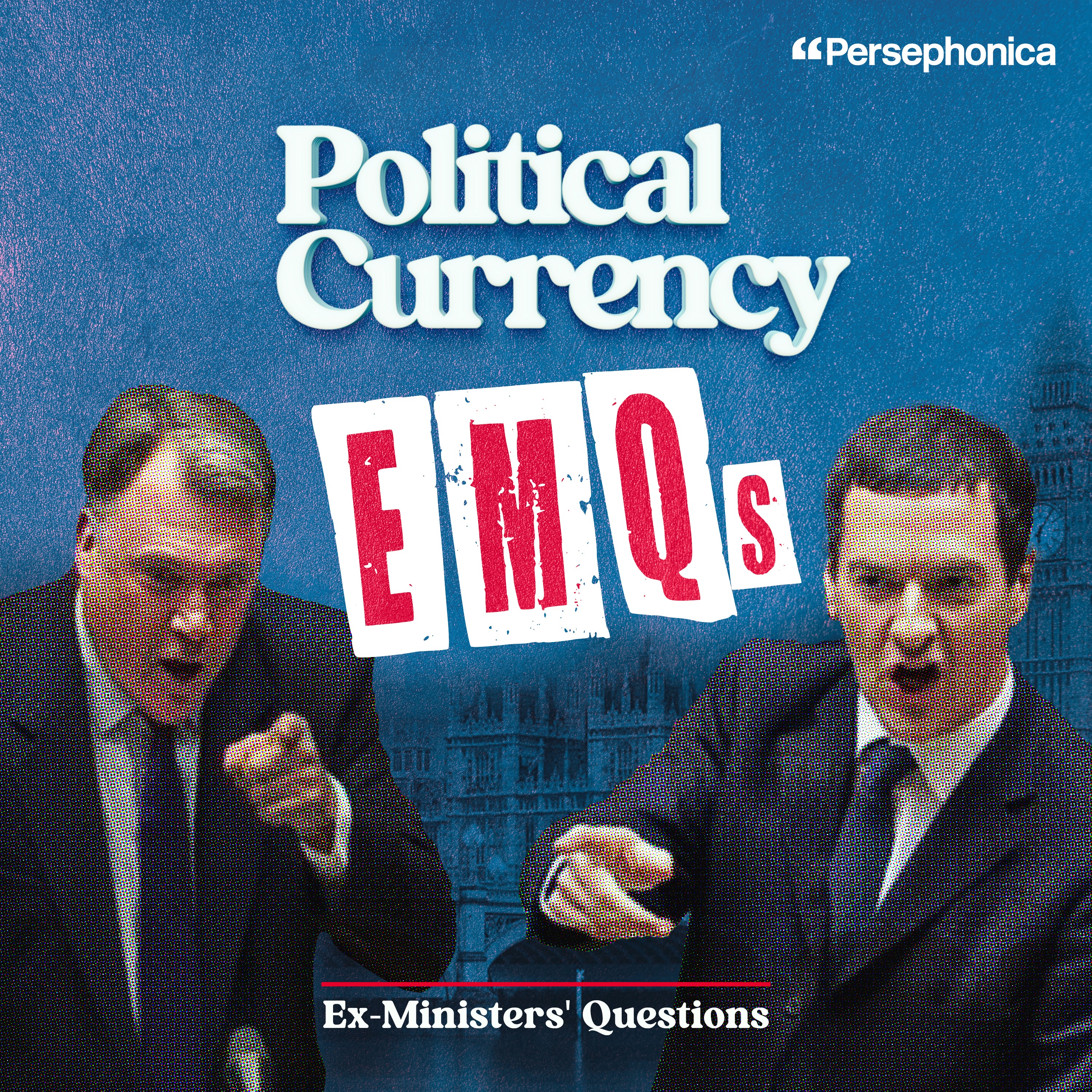
EMQs Books Special: Do politicians make good writers?
In short
A summer “EMQs Books Special” where Ed Balls and George Osborne answer listener questions about what to read on holiday, political books, and books written by politicians (including whether politicians make good writers).
Guests (in this episode)
No separate guests appear; questions come from listeners Ian Dale (publisher/writer), Daniel (reader of Steve Richards), Preston (Jeremy Hunt reader), and Laura Shepard Robinson (Labour background; historical crime novelist). Main hosts are Ed Balls and George Osborne.
Key claims
- Balls: prefers thematic, non-narrative political writing; denies a claim that he and Tony Blair stopped speaking after a euro row; says Blair and Brown both wanted challenging voices.
- Osborne: reads novels for escapism on holiday; finds some political fiction (e.g., Wolf Hall) hard to start; would prefer “how-to” political economy/establishment guides over dull political autobiographies.
- Both: political memoirs can be dull; some politician-written books surprise readers.
Notable examples
- Books discussed: Wolf Hall; A Place of Greater Safety; Alan Clarke Diaries; Nigel Lawson memoir; Churchill’s My Early Life; Jeremy Hunt’s Zero; Laura’s The Art of a Lie; Disraeli’s Coningsby/Sybil; Primary Colours; Barton Swain’s The Speechwriter; Taffy Brodesser-Akner’s Long Island Compromise; Curtis Sittenfeld (American Wife, Rodham).
Written by AI. May contain mistakes.
Chapters
0:30
Summer Reading Recommendations
Discussion about book choices for summer holidays and political books.
“So why are so many people quietly Googling a therapist between summer Fridays?”
2:36
Summer Reading Recommendations
Discussion about book choices for summer holidays and political books.
“Yeah, now for the month of August we're going to be answering your questions based around certain themes and topics.”
3:21
Shift from Political to Fiction
Ed discusses his transition from reading political books to novels.
“I think you're thinking of the Sound of Music musical tour by bike in Salzburg as being one of the highlights of our holidays.”
4:51
Nostalgia for Historical Novels
George shares his experience with historical novels and authors.
6:56
Books Written by Politicians
Discussion on the challenges and experiences of writing political books.
“But again, I found it hard to read because of the way it's structured and recently did do it as an audiobook and loved it.”
11:41
The Future of Political Books
Exploration of potential future writing projects by hosts.
“non-time sequence, not comprehensive so that I could write about the bits I wanted to write about and not write about the bits I didn't want to write about.”
14:01
The Writer's Journey: Politicians and Books
A discussion on the challenges and experiences of politicians writing books.
“Look, I'm quite why I am being ribbed at you.”
18:40
Debating Blair and Brown: The Euro Controversy
An exploration of the dynamics between Tony Blair and Gordon Brown regarding the Euro.
“I wrote the Lyndon Johnson chapter of his book on presidents.”
23:23
Clarifying Relationships: Blair and Brown
Clarification on the relationship between Blair and Brown following the Euro discussions.
“And so therefore, I think he always sensibly positioned himself on the euro side of the argument and let us do the hard work.”
28:17
Exploring Political Literature
Discussion on surprising political books and authors, including Alan Clarke's diaries.
“And this question has been voiced by a producer.”
Show all 15 chapters
29:42
Notable Works by Politicians
Hosts share insights on books by politicians such as Winston Churchill and Dennis Healy.
“And the thing I was going to say was that the worst political biographies, and there are loads of them, aren't there?”
35:31
Political Fiction Recommendations
Hosts discuss favorites in political fiction, including works by Laura Shepard Robinson and others.
“Summer's supposed to be the easy season.”
36:22
Political Fiction Recommendations
Hosts discuss favorites in political fiction, including works by Laura Shepard Robinson and others.
“Availability and coverage vary by state and insurance plan.”
42:00
Political Novels and Recommendations
Explore notable political novels and their authors.
“politician novelist is Benjamin Disraeli.”
46:12
Political Novels and Recommendations
Explore notable political novels and their authors.
“Taxes aren't something you can only think about once a year.”

Ask about this episode
Get the gist, explore an idea or ask about something said.
 Claude
On Political Currency, what are the key points of this episode?
Searching your listeningTranscript
Automatic transcript. May contain errors.
0:00Hi, this is Paige from Giggly Squad and today's episode is brought to you by McDonald's. Honestly, Caesar sauce and a Diet Coke at McDonald's might be the perfect girl dinner. And McCrispy strips dipped in Caesar sauce, no notes. Right now at participating McDonald's, the$2.99 Caesar snack wrap is making me rethink my entire go-to order. Caesar sauce is at participating McDonald's for a limited time, so go try it before it's gone. Prices and participation may vary. Summer's supposed to be the easy season. So why are so many people quietly Googling a therapist between summer Fridays? Because more daylight doesn't fix the hard stuff.
0:38Sometimes it just turns the volume up. Grow does therapy differently. Grow connects you with thousands of high-quality licensed therapists across the U.S., offering both virtual and in-person sessions, nights and weekends. There are no subscriptions, no long-term commitments. You just pay per session. Grow helps you find therapy on your time. The therapist you want takes your insurance on Grow. Grow accepts over 125 insurance plans. Sessions average$21 with insurance and some pay as little as$0 depending on their plan. Visit growtherapy.com slash ACAST today to get started. That's growtherapy.com slash ACAST.
1:20Growtherapy.com slash ACAST. Availability and coverage vary by state and insurance plan. Hello, I'm Monica Reinagle, host of the Nutrition Diva podcast. Summer is here and with it, the hot and sticky weather. A morning working in the garden or maybe on the golf course can leave you more depleted than you realize. And plain water isn't always the most efficient way to restore the balance. That's where liquid IV comes in. Its science-backed formula is clinically proven to hydrate faster than water alone. Whether you're exercising, playing outside, or simply surviving a summer heat wave, it's an easy way to stay hydrated.
1:56Shop now at liquidiv.com. Liquid IV, hydration that goes wherever life takes you.
2:04George Osborne: The Chancellor of the Exchequer. Getting a lesson from the Shadow Chancellor on how to balance the books is like getting a lesson from Dracula on how to look after a bloodbath.
2:12Ed Balls: A steady-as-she-goes budget. What kind of ship does he think he's on, the Titanic? They're married, Celeste.
2:21George Osborne: Welcome to EMQs from Political Currency with Ed Balls and George Osborne.
2:30Ed Balls: So hello and welcome to this summer edition of EMQs Ex-Ministers Questions.
2:36George Osborne: Yeah, now for the month of August we're going to be answering your questions based around certain themes and topics. And this week, we thought we'd do that classic summer topic of books. What books should you take on holiday? And more broadly, since we're a political currency, what are the political books that have inspired you? What are the political books you've read? And what about the books written by politicians, which aren't always about politics? So we're going to have a series of questions we've received on that topic. But what do you do, So, Ed, when you're sailing on the channel or you're inter-railing across Europe, I'm trying to remember all the various holidays you've had since we've been doing this podcast, or, you know, I don't know, sitting out in Harvard Yard.
3:25George Osborne: What do you read?
3:26Ed Balls: I think you're thinking of the Sound of Music musical tour by bike in Salzburg as being one of the highlights of our holidays. when I was a student and then you know just kind of getting into into politics when I was at the FT and then first working for Gordon Brown I used to read political books in the summer I used to enjoy reading historical biographies you know Ben Pimlet on Margaret Thatcher or the the Morgan book on Attlee and just sort of you know to relive these big detailed historic events and but what I found was that the long rise in politics and especially when I was um in the treasury and then in um in in the cabinet I mean it was the last thing I wanted to do because it was so triggering and you're always seeing the parallels and then thinking you know well you know this guy was already foreign secretary at 42 what's happened to my life or you know am I behind and um and so I think I had a switch um once I was actually elected and I switched to to novels which had absolutely nothing to do with politics because I was desperate for escape and to get away and take my mind somewhere else and not to feel you know every time the Blackberry had a message you were plunged back into the reality of politics and your job but when you're reading a novel by the pool and the last thing you wanted to be doing was thinking about whether or not Wilson should have devalued in 1964 because then you would think and you know and should we have done something last year so um yeah I think my strategy shifted and now I I would read political books during the year but I don't think I'd read them on holiday I think I would take novels that's
5:05George Osborne: it was exactly my approach in government in government you're reading so much non-fiction every night you know you've got all these submissions all the time that you have to get through that when you go on holiday i wanted escapism and i wanted novels and having spent much of my kind of early adulthood reading non-fiction i then switched almost entirely to fiction and novels um i guess there were always sort of things that you felt you had to read although you know the books that came out that were consequential you know i remember matthew dancona producing a big book on the coalition government which you know you had to read and it was well written and some of the memoirs of um some of the labor cabinet ministers were coming out in the early time i was in government uh like alistair darling's memoir for example so there were things you felt you needed to read to be informed um and if you felt the extracts in the newspapers weren't kind of quite doing enough justice but generally yes i would try and pick up a novel and i'd always try and i'd mix it between something that was really kind of contemporary like i remember the hillary mantel novels coming out then uh but the wolf hall novels um but also um i always felt you should kind of revisit a classic or or or a classic you've never read like a dickens or a definitely you know a jane austen or uh you know i i have a it's a bit of a you know kind of middle class fomo thing but i kind of i have a fear that i'd get to the end of my life and have not read like you know the old curiosity shop or northanger abbey or and then like oh why didn't i do that so yeah i would read novels still do actually although now i'm much more on i listen to them in the unabridged audio version usually when i'm traveling to work and
7:00Ed Balls: things like that i think one of my challenges always i mean i love reading historical novels although at different stages of your life different ones make sense so when i was a teenager into my 20s i went to nottingham high school that was the school which dh lawrence went to i read every lawrence book um big dh lawrence fan but i think if i went back and tried it now i'd find it very hard and um my one failure in life i've never particularly like magic realism in in writing and i find um the mantel books hard to read i love the tv programs but i feel that this is my failure i i want to go and read wolf hall and enjoy it but i've tried on more than one occasions and i just find it a bit impenetrable and oh yeah so i think my advice here it is quite impenetrable to start particularly the first book and because it's sort of flashbacks
7:54George Osborne: it's done as flashbacks to his childhood and thomas crongle's childhood and you should listen to it on audiobook it'll make much more sense and there's another hillary mantel book which i tried and failed to read in government called A Place of Greater Safety about the French Revolution, which is brilliant. But again, I found it hard to read because of the way it's structured and recently did do it as an audiobook and loved it.
8:20Ed Balls: That is really interesting. I've got a big audiobook listener. I don't really listen to them, but maybe I should. Do you think we should get on with it? Yes. Our first question is from Ian Dale. Hello, George. I'm Edith Iandale, Lying in the Sun on a Cawthoo Beach. It doesn't get better than that, does it? I want to ask you about books. I'm just reading Sarah Vine's book at the moment, which I agree with you two. It's really, really good, well worth any political reading. But it did occur to me that neither of you have written a book about your time in politics. You wrote a memoir after the Six We Come Dancing, but that wasn't really political.
8:55I did read it. George, I think you had a book contracted, didn't you?
9:00Ed Balls: But you decided not to go ahead with it. Why was that? Because I think you both owe it to political history, certainly economic history, to write down the story of what you both went through in those tumultuous years. I've just published a short book of the Amalgam Factor. I know how time-consuming and difficult it is to write a book. I think you should get on with it while it's still all in your head. and before you get too decrepit. Another podcast. Bye. Well, thank you, Ian, for that question. Ian, of course, is a publisher, but also a great writer of books and also compendium books about politics and some brilliant things he's done.
9:44Ed Balls: Did you hear that? Hold on. He said we were getting decrepit.
9:48George Osborne: He wasn't. In the end, he said, before you get too decrepit.
9:53Ed Balls: that implies we're already on that journey well look i'm not going to accuse ian in any way of being decrepit but he's clearly not read my book um or at least or at least if he did he must have skim read it right because it is true ian that in the paperback version there is a final chapter at the end about strictly but the actual book came out before i was on strictly so it's definitely not a book about dancing what you write about is the book i wrote it wasn't a narrative conventional political biography. It doesn't have every policy. It doesn't intend to be comprehensive, but it was completely about politics.
10:29Ed Balls: It was the book I wanted to have read when I was 27. And it's thematic. And if you look at the contents, you know, risk, leadership, ambition, you know, mistakes, jokes, opposition, civility. I mean, it's themed chapters, which are reflections on politics and being a person in politics. And so you are right, it's a different kind of political book. What I've never done is written... How do people get hold of this incredible toe? Well, it was actually a Sunday Times top 10 bestseller, George. So a lot of people will have already got hold of it. And if they wanted to, there it is, speaking out. For those listening on audio, he's just held up a copy of the book.
11:14Ed Balls: And do you know why? I had to get it off the shelf to remind myself what I wrote because I couldn't remember any of the chapter titles. So I thought I'd have to get it out and read it. What I didn't do, at the time, I'd only just came out of politics quite suddenly and I didn't know what was going to happen. But also lots of the issues I would have written about were quite recent. And sometimes people want to write a book to kind of stir things up. I didn't really. So I deliberately made it non-narrative, non-time sequence, not comprehensive so that I could write about the bits I wanted to write about and not write about the bits I didn't want to write about.
11:50George Osborne: Okay, my question to you, it wouldn't come on to me at the moment, but you're quite bookish, I mean that in a good way. You're quite academic, you do your work at King's College. We've just been talking about the various things we read. Do you have another book in you? Do you feel now with the passage of time, you can look back on the period you were involved and have more to say or have a different perspective? Or do you think you've done? And why, so sort of simple quote, why haven't you written a second book?
12:21Ed Balls: Well, I did write a second book called Appetite, a memoir and recipes of family and food, which actually goes from, you know, being bored and having Yorkshire puddings aged three weeks all the way through to now. So in a way, that one is the more personal memoir-y one around food. I don't think I want to write a political autobiography because I think quite often they can be quite dull and turgid and only really of interest to the person who writes them and maybe their close friends and family.
12:52George Osborne: You could write a book of political economy, couldn't you? I mean, you could like, it might be quite helpful to the current Labour government because they're sort of scrabbling around for some ideas. I think so either I could do I mean I would like to write about you know the economic policy I was
13:10Ed Balls: part of and the budgets or I would like somebody else to do that what I would like really is Ian Dale to do a you know one of his compendium brilliant compendium books on chancellors or the great budgets and have different people write about the different budgets and critique them and reflect upon them and you know I would quite like to do you know there'd be at least two regions of that. Well, this is my point. So if you want to be in the Sunday Times top 10 bestseller list, which I've been twice, you don't write a book about the new Labour budget. Was that what we call flexing when you just said you've been in it twice?
13:47Ed Balls: Well, I was just sort of, you know, adding in a little wrinkle of detail there for those who've missed it. People might be thinking about what books to take on holiday to the pool. And if you fancy politics and recipes... They have to be able to find them in a bookshop. Well, they're all available on Amazon. They're not Remainded. I'll tell you, George. Look, I'm quite why I am being ribbed at you. You've never written a book. I've done two. I'm agreeing with Ian that I've not done the book he wants. Although I'm trying to get him to write the book that he wants. And I'll do one of the chapters.
14:19But you, I mean, you had a contract and then didn't do it.
14:23George Osborne: Yeah, I haven't written that book yet. Yet. Yet. Isn't that why Meghan Markle, that's a great Meghan Markle. She's the power of yet on her new lifestyle channel. So does that mean every time we have a conversation, you're making notes?
14:43George Osborne: So I had an idea for a book called The Age of Unreason, which I thought was quite a good title. I say it myself. And it was going to be kind of using my career, but also commentary on the Brexit referendum and the first Trump election in 2016. The truth was that I then became the editor of the Evening Standard, which I hadn't expected to be when I got the book contract. And I had a daily outlet in the editorial column, which I wrote, for my kind of polemical contribution to that debate about what was going on in politics at that time. And then, so, you know, I did that for several years. And then since then, you know, I've done other things like the banking job and chair of the British Museum.
15:28George Osborne: As I sort of look back on it, I do think there's an interesting, to answer kind of Ian's question directly, I think there are several types of memoirs. There are these sort of, I think, quite dull political, slightly self-justificatory political memoirs. And you think of a lot, in my case, ex-chancellors, you know, quite a few have written memoirs. And even I haven't read them all, you know, and I did the job. and the only kind of standout ex-chancellor's memoir is Nigel Lawson's which is pretty heavy going the view from number 11 but it is the great book on the Thatcher period written by someone who was in that government actually much better than her own memoirs don't know what you think Ian because you know you've written a book about it recently but that's that's kind of almost like part manifesto it's part an exponent it's part a book on political economy and it also has another interesting element to it it has things like how to deliver a budget speech or how to do the mansion house speech in nigel lawson's memoirs and i i i'm quite attracted to that kind of book and i always thought you know i could do now partly having been in government and been an mp but also having edited a newspaper and now chair a big museum you know i could almost do a sort of how to guide to the british establishment like you know how how do how you know how do politicians secure newspaper headlines that they want how do you do a budget how do you deal with newspaper owners what you know what are these big arts institutions and what's their connection with the state um and and i'd try and do it in a more kind of user guide like that's almost like a kind of advice to a young politician which is a model that some people have done the memoirs in so if i was going to do a book i think and i'm sort of warming to it more than i was a few years ago i would do that kind of thing what i've seen which people then might go well that's a load of rubbish but it would be it would at least be putting down on on paper these various experiences i've had i've got another idea how about we do a
17:35Ed Balls: kind of Johnson Boswell, reverse Boswell Johnson. We'll do it in one volume. I will write the story of George Osborne and you can do B.
17:50George Osborne: Yeah, but again, I think only two people would read that.
17:57George Osborne: This is... I mean, you know, I mean, you know, there are other podcasts. I'm surprised. There are other political podcasts which have spawned books by their presenters.
18:10Ed Balls: I know, but are they works of fact or fiction?
18:13George Osborne: Maybe we should walk along some path together
18:16Ed Balls: along the coast of England and just make it all up. Never ever be disparaging about a bestseller. No. He says, as the author of two, thank you, Ian, for that brilliant question. We hope you enjoyed your beach holiday. And if you want a good political book this summer, Just look up Ian Dale on Amazon and you've got a huge range to choose from.
18:39George Osborne: I contributed to one of them. I wrote the Lyndon Johnson chapter of his book on presidents. Did you? He's got one coming out, I think, on great political campaigners. He asked me whether I'd be interested in writing the chapter on Lyndon Crosby, which I was very tempted to do, but decided to pass.
18:57Ed Balls: So our next question is from Daniel.
19:01George Osborne: Hi, George and Ed. Really enjoying the podcast. That's my favourite listen of the week. My question is for Ed. I'm currently reading Steve Richard's interesting book, The Turning Points. It talks about Brexit as a clear turning point, but also he's talking about the events leading up to Brexit. And he refers to Tony Blair's desire for the UK to join the Euro. An extract in the book says, At one meeting to discuss the issue, Balls was unflinching in what he said to Blair about the dangers of pursuing such a course. The two did not speak again during the rest of Tony Blair's period in number 10.
19:31So my question is, how true is this? and what was said between the two of them. Thanks very much. Well, look, I'm afraid there's a theme developing
19:41Ed Balls: on this EMQs today. And before I say what I'm going to say, I would say Steve Richards is the best chronicler of the new Labour years, and in particular, his book about Gordon Brown, but also the Brown-Blair relationship and its kind of precursor and aftermath. I mean, brilliant. however what about Andrew Rawnsley I thought he had that great servants of the people Andrew wrote a good book but Steve Richards is the um you know I would say and stand out however the idea that his son's now a Labour MP isn't he he is that's right um however the idea that that Tony Blair and I had a row about the euro in 2003 and then we never spoke to each other again while Tony Blair was Prime Minister until 2007 is completely untrue and a bit absurd, really, because I became an MP in 2005.
20:36Ed Balls: I was in tons of meetings with Tony Blair. He may be a minister in 2006. And the reality is that... So you're saying this never happened?
20:46George Osborne: There was never a frosty meeting and... No.
20:49Ed Balls: The relationship wasn't quite the same thereafter. Definitely not saying that. Daniel says, quotes, The two did not speak again during the rest of Blair's period in number 10 after a tough meeting on the euro. It's just not right. Yeah, but that's a bit of a non-denial denial.
21:06George Osborne: No, no, no.
21:08Ed Balls: I mean, maybe you did speak, but... We actually spoke a lot. And the bigger point I'm going to make is that Gordon Brown and Tony Blair were both politicians who wanted people around them who said what they thought and were challenging. And I always did that with Tony Blair, but not with Tony Blair because I was being rude to him or offending him. That was the nature of the conversations we had in the scores of meetings with Gordon Brown, Tony Blair, me and Jeremy Hayward. It was my job to say, this is a problem. Let me tell you why. Did this thing happen?
21:45George Osborne: Did you have a frosty meeting where it at least took a while for things to get back?
21:51Ed Balls: We had tons of frosty meetings on the euro because at the time, Tony was saying he wanted to join the euro and the five test assessment was saying it wasn't in the national interest. However, I think this story is much more complicated because there may have been a short period after the election in 2001 when Tony Blair thought, maybe I should go for the euro. once he'd seen the polling, talked to Philip Gould and Alastair Campbell about the research they'd done, talked to us about the economics. And then also you had 9-11 and that whole shift in the foreign policy terrain. I don't think from that point on, Tony Blair ever thought joining the Euro was a good idea.
22:29Ed Balls: I think he was always very cautious about it. Indeed, he knew how risky and dangerous it would have been. But on the one hand, he didn't want to be the prime minister who said Britain won't join the euro. He was very happy for that to be his chancellor. I think that he thought his leverage in European meetings would be undermined if he was a person who was saying we shouldn't join the euro. And he undoubtedly said to some people around him, I want to do this. And therefore the dynamic in that period was the Treasury saying we can't join and Tony Blair resisting. However, if we'd ever turn around and say, go on then, Tony, we'll join, I think he'd have been horrified because I think he'd have known how risky and destabilizing that was at the time.
23:12Ed Balls: And therefore, you know, it's true there were meetings which were tense. To the extent there were ever tensions, they were probably about other issues rather than the euro. I've never been persuaded that Tony Blair was kind of really... But if he had an ambition to be president of Europe, which I think he did, if things had worked out, you know, if the stars had aligned in the right way for him and there had been elected president after the Stang report and the convention, being the president of Europe who had not wanted to join the euro would have been a huge problem for him. And so therefore, I think he always sensibly positioned himself on the euro side of the argument and let us do the hard work.
23:55George Osborne: No, there's no doubt. I think he was obviously a very, very effective politician and good at winning elections. I'm sure he would have thought, how on earth are we going to win this referendum if we do want to join the euro and you know he had made that commitment to the referendum and the opposition which he didn't need to make he didn't um uh you know he wrote that and he wrote that famous son article my love for the pound that was the headline literally um of the article when he was opposition leader but i think he maybe um tell me if i'm getting this wrong i But I think maybe, you know, he's obviously was a very, very effective, I think, politician and understander of where power lay and kind of what kind of key decisions.
24:42George Osborne: And I think maybe he did perceive at the time what was much clearer with hindsight, that Britain's decision not to join the euro, which was a very big decision of the major government of the Maastricht Treaty and then the Blair government as the immediate successor to that, a more pro-European successor to it. That, you know, did set in train a set of events that you can argue led to Brexit. Because if we'd been in the euro, it would have been much harder to extract ourselves from the European Union, as Greece found when it confronted this question. Well, I'm going to stop you there, George.
25:17Ed Balls: I'm going to stop you there because we are, as you know, going to do one of our August EMQs on what ifs in politics. What would have happened if? And one of the what ifs we're going to do is if we had joined the euro. and that is a really, really interesting debate. But we're supposed to be talking about books. So you're basically saying... I'm holding myself back from engaging in this argument. I'm saying let's come back to it.
25:42George Osborne: I'm going to sum up. So you say Steve Richards is the best chronicler of the new Labour years, but he's got this completely wrong. I don't think he got it completely wrong.
25:51Ed Balls: I think undoubtedly, undoubtedly... Look, 2003-04 was a tough time in the Blair-Brown relationship. I'm not totally sure that the euro was the most important part of that. There were other things going on about, you know, on promising to leave and then reneging and the aftermath of Iraq. And in fact, Tony Blair and I had, you know, cordial relations and in some ways good relations. And, you know, I've continued to see him to this day. So the idea that we didn't speak again isn't really true. Right. That's all I'm saying. Should we, I think we should take a break and then we'll have another question.
26:58We'll be right back. for exploring the outdoors. Download it today and find your outside.
27:30outside or simply surviving a summer heat wave, it's an easy way to stay hydrated. Shop now at liquidiv.com. Liquid IV, hydration that goes wherever life takes you. You're a pro at running your life, at committing to your workout, at showing up every day. At Bombas, we're pros too. Pros at making socks. Our Sport Astortman has specialized socks for whatever sport you're committed to. Running, hiking, golf, Pilates, and so much more. Made with sweat-wicking yarns, blister-fighting details, and targeted arch support. Bombas Sport is pro-level socks from the pros of socks. For another pro, you. Go to bombas.com slash audio and use code audio for 20 % off your first purchase.
28:09That's bombas.com and use code audio.
28:16George Osborne: Welcome back. So our next question is from Preston. And this question has been voiced by a producer. Hi, Ed and George. I've been listening to the podcast since the first episode, and a year in, I still look forward to every Thursday when a new episode is released. My question today is for the Political Currency Book Club. I've been reading Jeremy Hunt's book, Zero, about unnecessary deaths in the NHS. It has not only given me a new perspective on the NHS, but also on the author, Jeremy Hunt, as a politician and as a person. My question is, are there other books written by politicians that might surprise people when they read them.
28:52Thank you to the political currency team for all their great work. Keep it up.
28:56Ed Balls: Really interesting question, Preston. I would say that the political book I really enjoyed, but took me completely by surprise, was actually the Diaries of Alan Clarke. Because I was expecting Alan Clarke's diaries to be, you know, a slightly pompous old Tory buffer. And in fact, when you read these diaries, they are funny, they're reflective they're self-defecating they're thoughtful and you know in a way you just said
29:25George Osborne: self-defecating self-defecating i'm not going to allow you to correct self-defecating i'm not going
29:30Ed Balls: to allow you to we're not going to get that edited out in no way am i going to reveal because people may want to buy it the alan clark's diaries but if he had self-defecated he would have undoubtedly There's no other way to defecate. It would have been in the book. But I actually said self-deprecating. And I think you just weren't listening. And the thing I was going to say was that the worst political biographies, and there are loads of them, aren't there? Which I'm not going to talk about, are the ones which are dull and boring and self-aggrandizing. And the Alan Clark diaries are not like that.
30:08Ed Balls: And so those would be... Alan Clark is my choice. I'm actually going to slightly pick you up on what you said earlier. I think that Dennis Healy and Ken Clarke also both wrote thoughtful, reflective, culturally interesting, wide-ranging books, which were about their time of Chancellor, but also about lots of other things as well. So I'm going to put them, you know, I'm not going to say they are as weighty as tomes as the Nigel Lawson book. But actually, I bet you that Dennis Healy's books had, and maybe Ken Clarke's book. What was it called? Kind of Blue. Kind of Blue. That is right, because of Miles Davis.
30:53Ed Balls: I think they will have sold as many books and had as many delighted readers as Nigel Lawson. that that is you know i'm sure somebody can correct the record of that that is my that is
31:04George Osborne: my prior so one of my first jobs when i was 18 was i was a um worked in foils bookshop on charing cross road as a shop assistant and um i i got very rapidly promoted because basically the people above me were fired and i ended up within about three weeks of arriving as this 18 year old shop assistant being in charge of the biography section at foils and foils in those days was the big dominant book it was like the biggest bookshop in britain and it's where you went to get you know it had but you're most likely to get a copy of a book there and you know it's all years before amazon and so on and i remember my job as head of the biography section was to order books in and the sales people would from the different publishing houses would come around and say we've got this new memoir coming out or we've got this new autobiography coming out and i remember dennis healy's um autobiography coming as a thing that um you know we had to make a decision on with dubai and we bought lots and it did sell very well so i can confirm from my own memory about that um on um i'll tell you so i agree with you about alan clark but we should say first of all jeremy hunt i think it's massively to his credit that he writes these books he's just written a book about um the economy and britain's place in the world could called Can We Be Great Again?
32:23George Osborne: And I think, you know, we don't want to, we can't overpromise, but hopefully we're going to talk to Jeremy about his experiences in politics inside the room at some point. So we can save up some of that for then. I'll tell you a book, I mean, this is not a particularly original observation, but I bet it's a book that lots of people haven't read. And it's Winston Churchill's autobiography, not the one he wrote about the Second World War, which won the Nobel Prize for Literature. The first one's called The Gathering Storm. And, you know, it's a kind of definitive history from his perspective of the Second World War.
32:57George Osborne: But My Early Life by Winston Churchill, which is a book he wrote when he'd just become an MP in his 30s. And it's about his adventures in the military and he fights essentially up by the Khyber Pass. And then he is captured during the Boer War and escapes from prison. It is an absolutely brilliant book. it's even though it was written i don't know 100 years ago or so it's a it's a real page turner and it made his reputation because this book was such a big seller in its own in its own time still in print um and it's really interesting because he has all these you know he's quite kind of self-reflective for example he you know at the time he has this sort of classic upper class education where he's sent to a boarding school and he hates it and he writes in the book about hating going to boarding school, which I don't think many people in the 1910s or 20s or whatever would have said in writing.
33:57George Osborne: So there's lots of really interesting things. I mean, it stops with him becoming a member of parliament. He becomes, I think, first of all, a Conservative MP, doesn't he? And then he switches to the Liberals. But I would strongly recommend my early life to people.
34:12Ed Balls: Very good. I think I'll be ordering that for the Eurostar as we set off on our cross-European journey this summer. We'll take a break and we've got time for one more question.
34:43requires no special prep or time off, and you start screening right from your home. It's just three simple steps. Set up, sample, and ship. If you're 45 or older and at average risk, ask your doctor about the Cologuard test. Available by prescription only. Learn more or request a prescription at colaguard.com slash podcast. Back to school is busy enough. The last thing you need is shopping that makes it harder. Whether you're moving into a dorm, your first apartment, or just getting organized for the semester, Wayfair makes it easy to get everything you need in one place. Furniture, bedding, storage, decor, study essentials, all at prices you'll love with fast shipping before move-in day.
35:26Get everything you need for back-to-school season. Shop Wayfair.com today. Wayfair, every style, every home. Summer's supposed to be the easy season. So why are so many people quietly Googling a therapist between summer Fridays? Because more daylight doesn't fix the hard stuff. Sometimes it just turns the volume up. Grow does therapy differently. Grow connects you with thousands of high-quality, licensed therapists across the U.S., offering both virtual and in-person sessions, nights and weekends. There are no subscriptions, no long-term commitments. You just pay per session. Grow helps you find therapy on your time.
36:04The therapist you want takes your insurance on Grow. Grow accepts over 125 insurance plans. Sessions average$21 with insurance and some pay as little as$0 depending on their plan. Visit growtherapy.com slash ACAST today to get started. That's growtherapy.com slash ACAST. growtherapy.com slash ACAST. Availability and coverage vary by state and insurance plan.
36:37George Osborne: welcome back now our last question is from Laura Shepard Robinson hi Ed and George love the podcast although I now write historical crime novels I worked in politics myself for a great many years and there is always a political strand to my books I also love reading political fiction from Hilary Mantel's Wolf Hall trilogy to John Le Carre's spy novels to Michael Dobbs's House of Cards. What political fiction do you like to read? Have you read any novels by your former colleagues that you've enjoyed? And would you ever have a bash at it yourself?
37:09Ed Balls: So thank you, Laura. And a huge congratulations because Laura's third novel just come out in the last few weeks, The Art of a Lie, has gone straight into the Sunday Times top 10 books for fiction. And Laurie worked years ago in the Labour Party. As it happened, and she's a daughter of Tony Robinson, as in Baldrick from Blackadder. But she's written three hugely successful historical novels, Blood and Sugar, Square of Sevens, and now the new novel, The Art of a Lie. Are you on a commission? Pardon? Are you on a commission? No, I'm not. I'm just talking you up. They're sort of historical 18th century novels.
37:47Ed Balls: The Art of a Lie is all about ice cream making in a shop in Piccadilly, but also a mystery and a murder and then an intrigue which happens around that. And the other two, one was about the slave trade in London. One was about horoscopes in Georgian society.
38:06George Osborne: I'll definitely read the ice cream one. That sounds great.
38:09Ed Balls: I'd never realised. I mean, there would be these places where you could buy ice. Ice would be made in the winter and stored in these vaults.
38:19George Osborne: Have you ever seen those when you go around those National Trust houses? That's right. There was always an ice house.
38:24Ed Balls: It's amazing. But the ice would be iced in the winter and then stay frozen all summer. And then the ice would be brought into London in order for the ice cream makers to make their ice cream, which was like the big delicacy of 18th century London. And The Art of a Lie is about an ice cream seller and the murder of her husband. That's where it begins. And off it goes. There's always, as Laura says, politics in them. I said at the beginning that I was quite cautious about reading contemporary political biography because it's too triggering but the thing I've got into is reading is reading historical novels which have lots of history in them I don't know if you've read the C.P.
39:04Ed Balls: Sansom books the Shardlake novels there's six of them about the period of Henry VIII and the lawyer Shardlake and his engagement with with with Henry VIII and the court but also it's about the huge religious arguments happening at the time and north-south divides absolutely brilliant so part of the answer
39:22George Osborne: laura's question is about mps who've written novels isn't it well you see i'm not totally
39:28Ed Balls: sure about this i mean you know do you have you read any novels by your former colleagues she's asking well um robert peston jonathan friedland tom bradby have all written really good novels in the case of peston's novels i think they're they're rather less novels and more autobiographical although whether he actually got my life as a rock star i know whether actually all the things were consumed in the groucho club which happened in those novels i have no idea but i reckon it's rather more autobiographical than robert would um would agree to although and tom's are about um spies but you know i'm not we don't know do we i mean we don't know and jonathan freedom is about being american president we definitely know that he um he wasn't that but so those are like could broadly define journalistic colleagues i mean alistair campbell i mean wrote a series of books which one could describe as a work of fiction although he calls them diaries um but so but i'm not totally only joking only joking i thought you used to
40:25George Osborne: write didn't you used to write pornography in his uh in an earlier incarnation he certainly
40:30Ed Balls: he certainly did but i'm not totally sure um about i'm not sure if i've read novels by current colleagues tom watson had a book out which i've um a novel yeah a novel which i've got on my list to read but i've not actually read it yet douglas heard wrote novels didn't he
40:47George Osborne: um and widdekombe has written novels i mean there was actually jeffrey archer do you read yes so jeffrey archer is the out you know jeffrey archer whatever you think of him as a person and i've i actually have a sort of soft spot for him um and i've stayed in touch with him um i agree But he is an outstandingly successful novelist. I mean, in a totally different category from everyone we've just been talking about. His books have been unbelievably successful. And he started writing them when he was in politics. He didn't come in as a novelist. and his book about British politics. I mean, I read it when I was a teenager and I haven't read it since.
41:26George Osborne: I don't know how dated it would be now. First Among Equals was, I remember at the time, a great political thriller about four young MPs basically battling it out to become the prime minister over their careers against each other. They start off as friends and rivals. I remember that being an absolutely cracking book. And he, yes, I think he must be far and away the most successful novelist.
41:54Ed Balls: In terms of sales?
41:55George Osborne: I mean, of course, you know, I mean, the other really famous, much more famous than Geoffrey Archer even, politician novelist is Benjamin Disraeli. And his books, which were novels at the time, Coningsby and Sybil, they were political. In fact, that whole, you know, people have heard who listen to this podcast about One Nation, which is that conservative movement about how we should basically care for everyone in our society, you know, in fact comes from a Benjamin Disraeli novel where he talks about two nations, the rich and the poor, who carry on their lives without ever interacting with each other or knowing about each other.
42:37George Osborne: So I think he is the outstanding political novelist, politician novelist, isn't he? And I've definitely read his books.
42:45Ed Balls: Very interesting. Have you got any more recommendations as we end this episode for summer reading? While you're thinking about it, I'm going to give you three. One, Curtis Sittenfeld. I've talked about them to our Kitchen Cabinet members. Her imagined fictional accounts of real life events. She has one called American Wife, which is about her imagined life of George Bush Jr.'s wife, Laura. And then Rodham, which is the imagined life of Hillary Clinton if she had ditched Bill Clinton when they were in Arkansas because of his affairs. Both of them are really, really good. I've said in the past in this podcast, Primary Colours is one of the great political reads.
43:25Ed Balls: And I've also been told...
43:26George Osborne: That's a good movie as well, isn't it? um although it actually had such an impact that novel when it came out because it was anonymous do you remember it was like we don't know who's written it it was about clinton really wasn't it
43:37Ed Balls: it was that was a great great book it's a great i've been told to read the speechwriter by barton swain um and i'm going to look that up in the summer i've been told it's amazing um just out it's about you know it all happens around obama's speeches but i'm told that's a good read as well So, you know, I'm not recommending that. I'm just saying, you know, it's been put on my radar. So anything else on yours?
44:03George Osborne: Well, then it's not a political thing at all. But the novel I'm listening to on audiobook at the moment is by someone called Taffy Brodesser-Akner. And she wrote that book, Fleischman's in Trouble, which then became a TV show. But she's got this book. I'm almost finished it called Long Island Compromise is very, very funny. And it's a kind of take on contemporary America. um in terms of uh yeah i mean political not what would i recommend what would i say to people um there's still the kind of great book of um the presidential race of 1988 called what it takes by richard ben kramer which is one of the great political novels of all time and then if you want a kind of memoir from someone who wasn't a politician but was um ronald reagan's speech writer peggy noonan her book what i saw at the revolution is fantastic and you ever have to write a political speech either for yourself or someone else i would advise you read that book first
45:08Ed Balls: and if you can't stand the idea of politics books on the beach tom lake by ann patchett and long island by comb tobin are two that i've read in the last few months and totally loved so non-political recommendations. Thank you to Laura Shepard-Robinson for her question and good luck with her third novel. I'm sure it's going to do brilliantly well. That's it for this special books episode of our summer EMQs.
45:31George Osborne: Yeah, do keep sending in your voice notes, emails, questions at politicalcurrency.co.uk. As you'll see, we always get around to answering these questions. You know, they don't always get answered the next week, but sometimes we store them up and answer them in the summer or other breaks. make sure you review the show as it helps us reach more listeners and don't forget you can
45:53Ed Balls: always hear the show early if you are a gold subscriber or a kitchen cabinet member early and ad free the links are in the show notes and see you soon see you then
46:11George Osborne: thanks for listening to political currency this has been a persifonica production
46:24This message comes from Jackson. Taxes aren't something you can only think about once a year. With investments, planning for tax days year-round. Fortunately, Jackson offers tax-efficient products. Visit jackson.com for more information on how our products can make your tax bill a little bit less painful. Jackson is short for Jackson Financial Incorporated, Jackson National Life Insurance Company, Lansing, Michigan, and Jackson National Life Insurance Company of New York. Purchase New York. This message is brought to you by Cologuard. If you recorded songs off the radio for a mixtape, it might be time to screen for colon cancer.
46:57The Cologuard test is non-invasive, requires no special prep or time off, and you start screening right from your home. It's just three simple steps. Set up, sample, and ship. If you're 45 or older and at average risk, ask your doctor about the Cologuard test. Available by prescription only. Learn more or request a prescription at colaguard.com slash podcast.
47:44at vanta.com.
From the publisher
Why haven’t Ed Balls or George Osborne written political memoirs? Broadcaster Iain Dale puts the question to them, asking what’s stopping them, what they’d reveal if they did, and whether political history is incomplete without their accounts.
And another listener digs into a moment of political tension between Ed and Tony Blair over the Euro. Did Steve Richards’s book Turning Points get it right, and what was really said in that meeting?
Plus - the political fiction and non-fiction worth reading this summer, and whether George or Ed would ever dare to write a political thriller of their own.
To get episodes early and ad-free, join Political Currency Gold or the Kitchen Cabinet:
👉 patreon.com/politicalcurrency
👉 Apple Podcasts
Please note: Kitchen Cabinet is only available via Patreon.
Credits:
Producer: Miriam Hall
Senior Producer: Silvia Maresca
Video Editors: Maha Albadrawi
Executive Producer: Ellie Clifford
Political Currency is a Persephonica Production and is part of the Acast Creator Network.
Hosted on Acast. See acast.com/privacy for more information.
More from Political Currency
All episodes

We use cookies.They keep VO running smoothly and help us improve it. Privacy policy