
 Ask ChatGPT


- Podcasts
- Political Currency
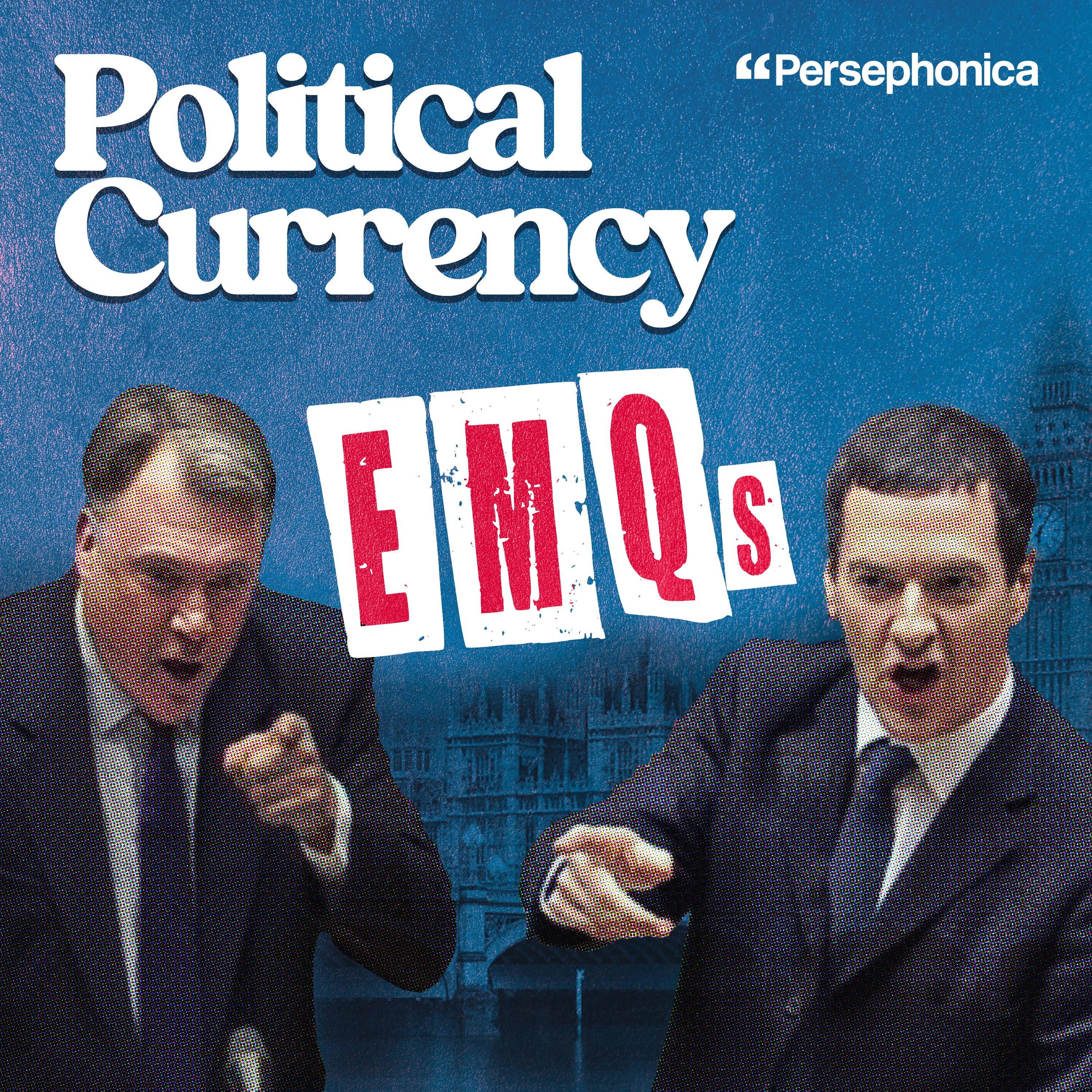
- EMQs: Is Britain lazier than America?
In short
The episode argues Britain isn’t simply “lazier” than America; it discusses heatwaves/wildfires in Western Europe and media “silence,” then tackles work culture, regional economic policy (using Grimsby as a case), Labour Party history, “sliding doors” career moments, and why environmental politics is often seen as left-leaning.
Guests/backgrounds
No named guests; it’s a host/hosted “Ex-Ministers Questions” format with Ed and George Osborne (ex-Chancellor) and Andy Burnham referenced as current PM. Questions come from Labour MP Melanie On; John (international work experience); an anonymous civil servant; Stephen (Labour shadow cabinet history); Beverly (green politics).
Key claims
Americans and Chinese generally work more hours than Britons; Britain’s economic ambition/grievance culture may affect growth. Devolution should be “universal” (not only big-city mayors). Grimsby needs transport, skills, and “anchor tenants” plus North Sea renewables focus. Green politics isn’t monopolized by the left; conservatives have historically backed conservation and climate action.
Notable examples
Grimsby’s fish processing (Young’s Seafood), Humber Bridge toll reduction, “La Rotonde” dinner with Emmanuel Macron (90-hour restaurant week), Labour’s 2010 shadow cabinet vote (Yvette Cooper top; John Healey second; Ed Balls third; Andy Burnham fourth), and Cameron/Major/John Major-era climate initiatives.
Written by AI. May contain mistakes.
Chapters
0:35
Introducing EMQs: Ex-Ministers Questions
Discussion about the current political landscape and upcoming interviews.
“Boost your credit scores instantly by getting credit for bills you're already paying.”
1:58
Summer Political Reflections
A humorous take on the summer vacation habits of political journalists.
“So hello and welcome to EMQ's Ex-Ministers Questions.”
4:40
Grimsby's Political Landscape
Analysis of Grimsby's challenges and opportunities in the political context.
“Hi Ed and George, it's Melanie On, the Member of Parliament for Great Grimsby and Cleethorpe.”
10:59
Strengths and Opportunities for Grimsby
Discussion on the strengths of Grimsby and its potential for regeneration.
“And the argument I was making in the answer to the question last week, which Melanie heard, was that you have to be universal in your approach to devolution.”
14:01
Grimsby's Political Tapestry
Learn about the political history and notable figures from Grimsby.
“That Kevin Clifton, whose daughter Joanne, also strictly superstar.”
16:44
Cultural Work Ethic Comparison
Explore the differences in work ethic and vacation culture between the UK, US, and France.
“Melanie, that was the longest answer we've ever given because every week we want to discuss Grimsby more and more.”
24:20
Sliding Doors Moments
Discuss significant personal moments that shaped career trajectories.
“Now here we've got another question from one of our civil servants, because we've had lots of civil servants send us questions.”
28:00
Sliding Doors and Life Choices
Explore pivotal moments that shape personal and political paths.
“And the Bank of the Union wouldn't be independent, would it?”
32:24
Labour Party Shadow Cabinet Elections
A discussion on the history and significance of Labour's shadow cabinet elections.
“The recent cabinet reshuffle reminded me that the Labour front bench, in opposition at least, used to be voted by party members.”
42:34
Is Green Politics Only for the Left?
The hosts answer a listener question on why environmentalism is tied to the left, covering Conservative climate history, shifting priorities, proportional representation and the means-versus-ends debate, then preview August episodes.
“Is there such a thing as a centre-right green agenda?”

Ask about this episode
Get the gist, explore an idea or ask about something said.
 Claude
On Political Currency, what are the key points of this episode?
Searching your listeningTranscript
Automatic transcript. May contain errors.
0:00This week on Outrage and Optimism we look at the remarkable summer we've been having in Western Europe with heatwave after heatwave that has now translated into wildfires in France, in Spain and even in Scotland. There has been a conspiracy of silence in the media that is preventing us from seeing what is really happening. This week on Outrage and Optimism we cut through to understand what's going on and how our society can and should change to deal with these issues.
0:30Hi, it's Paige from Giggly Squad, and this episode is sponsored by Experian Boost. Summer glow up? Check. Credit glow up? Even better. Boost your credit scores instantly by getting credit for bills you're already paying. Your phone, utilities, rent, and insurance. I wish dating kind of worked like that. Connect your bank account, add those on-time payments to your Experian credit file, and your FICO score updates right away. You could instantly raise your FICO score by an average of 14 points with Experian Boost. Download the Experian app for free today. Results will vary. Users who received a boost improved their FICO score 8 from Experian by an average of 14 points.
1:09See App Store or Experian.com for details. Results will vary. Not all payments are boost eligible. Users who received a boost improved their FICO score 8 from Experian by an average of 14 points. Some may not see improved scores or approval odds. Not all lenders use Experian credit files, and not all lenders use scores impacted by Experian See Experian.com for details.
1:58So hello and welcome to EMQ's Ex-Ministers Questions. We are moving into week three of the Andy Burnham Premiership and all the political journalists will be thinking, Andy, surely, time to have a holiday, especially if they're all themselves going off on their summer vacations. I was thinking, you know, give it a rest. No, but the new prime ministers who take over before the summer, they always feel they have to work through that summer. Remember Gordon Brown? You probably were summoned. I think you told me he was summoned to play tennis. That's true. Somewhere in Suffolk. Is that right? Yeah.
2:32Yeah, I can see. If you've just become prime minister, you're not like, okay, I'm off to my Greek villa. Do you think we are obliged to stick with Andy through August? No, we're going on holiday, aren't we? We've pre-recorded our episodes. It's like the great escape. You think we're still in the building. but actually we've got this device called pre-recorded interviews that makes it look like we're still around but in fact we've left. But what a good summer lineup we have. Kemi Bainok, Yvette Cooper, the health and social care secretary, Sue Gray and Amal Rajan. We almost lost Yvette because she turned up and I gave her the mug and she said oh the political currency mug and then she took one look at it and said well hold on it's it hasn't been washed and uh unfortunately we had given her kemi badenock's unwashed coffee mug so we hastily had to go and uh wash it up we had a challenge with kemi badenock because she um she asked for her usual coffee uh or tea right which is um condensed milk four teaspoons of sugar really yeah the nigerian way that's that's what she said she um that's how she likes to drink it but uh anyway i think um both of interviews zested along on a a surge of sugar yvette was telling me about when you did the sound of music tour with your family in salzburg totally recommend it on the way to greece on the way that's right this year we're going norway and then to copenhagen by overnight ferry but we're not doing an overnight train because the youngest daughter has vetoed She said, if you arrange another overnight trade, mum, I'm not coming.
4:11Right. And I bet she's weak. She's what? She's given into it. Surely your daughter realises an overnight ferry is actually not better than an overnight train. She has very good memories of going from Harwich to Zee Brugger. And there being really good chicken nuggets when she's about seven. She's now in her early 20s, but she still believes she likes an overnight ferry buffet. And, you know, I'm not going to disabuse her. It's probably the same chicken nuggets. Anyway, let's get on with EMQs. So our first question comes from a Labour MP. Hi Ed and George, it's Melanie On, the Member of Parliament for Great Grimsby and Cleethorpe.
4:51I was really excited last week to hear Grimsby get a mention on the podcast. And I just wondered why Grimsby had sprung to mind, particularly for George when talking about areas that need additional attention for transformation and whether or not Ed agreed with his analysis. Thank you. Love the show. Great question for Melanie. I never overlapped with her in Parliament. I worked with her in Labour Party headquarters and then she worked for Unison before she became an MP when I was shelled a chancellor. But did you know her when she was in Parliament? Yeah, I absolutely remember her. And I remember.
5:33So when she sent in this question, I was going, oh, yeah, I remember her. And then I was looking up and she actually lost her seat in 2019 to the Conservatives. The Conservative MP subsequently now has defected to reform. But Melanie won the seat back in 2024. So I was asking you, wasn't I, just before we started recording, it's interesting, isn't this question on Grimsby? Why did we talk about Grimsby? Just to give you some context here, when we were asked before about regional growth, and we were talking about also the role that Greg Clark, the conservative politician and business secretary back in the past, played.
6:10You know, we were saying there was a kind of it's fine and not fine. At least, you know, in the big cities what you're trying to do, which is try and create clusters of economic activity. but what do you do with the Grimsby's of this world? Melanie, since she's the MP for Great Grimsby and Cleethorpes, she says, why did you mention Grimsby? And I think I've got an answer to this. Do you want me to go first? You go first. It's good. I mean, you actually said that governments secure anchor tenants who are sent to Grimsby. So I think Melanie on here, like a good constituency MP, her ears pricked up and she thought Osborne's got a plan.
6:48he knows what's going on. I don't know whether, is chat GPT thinking of relocating a chunk of its work to Grimsby? I seem to remember. She thinks there's an opportunity and she's right. So I'm going to, you may be surprised by this answer, but I spend quite a lot of time as Chancellor X-Jekka trying to work out what to do about this particular part of England because I thought it was a sort of problem that was replicated in other parts of the country. and we're talking here about northeast Lincolnshire and also on the other side of the Humber, East Yorkshire. And we came up with things like an enterprise zone and we reduced the tolls on the Humber Bridge.
7:32I remember standing on the middle of that bridge doing that. And it's a part of the country where it's not close to a big city. I mean, there are places that whole, but it's not close to a Leeds or a Manchester or a Birmingham, right? I'm certainly worried about John Prescott turning in his grave at the idea that Grimsby is close to Hull, but not a big city. I mean, he would have taken that very badly. Hull is a wonderful place and the home of William Wilberforce as well as John Prescott. But what I'm saying is... A biggish city. Yeah. Kind of quite big. Emphasis on the word quite. It's got a big bridge.
8:05It's got a big bridge, which was built to win a by-election in the 1970s. That's right. But what I'm saying, there are parts of England. I guess the general theory about devolution and city mayors and the work that Jim O 'Neill did, which I picked up as Chancellor and which Andy Burnham is, I would say, continuing with his talk of Manchesterism. Hang on. All based upon the pamphlet I wrote with John Healy. Of course. Don't forget that. Which I think we established you did more of the writing than John did. Joint effort. But the central idea is outside of London, you can create centres of economic activity around big city regions.
8:46When the answer to what do you do for places like Bolton or Oldham or Wakefield or the like is to connect them into the city centres of Manchester and Leeds. And then you create kind of agglomeration effects. Indeed, you can create agglomeration effects between Manchester and Leeds and you create big kind of urban conurbations. And then that creates a kind of cluster of skills and economic activity. And you essentially create, if you think of London, people commuting into London from the towns around the M25, you're creating a kind of somewhat smaller version of that in these cities around England.
9:23The problem, and to come back directly to Melanie's question, is there are some large urban centers like Grimsby, like Carlisle, to my mind would be another one, which are a long way from one of these big cities. And it's not really, you can't really say to people, live in Grimsby and commute into Leeds, however good you make the local transport. You can't live in Carlisle and commute into, I don't know, Glasgow. So that's the problem. But at the same time, they're not really big enough to, particularly now in a place like Grimsby, where the kind of the fishing industry left. I mean, I know there's still important local employers.
10:06Like I remember going around the fish processing plant, I think Young's Seafood in Grimsby. I remember doing that visit myself. But, you know, what is the kind of answer? And then you end up with governments kind of rather randomly sending kind of little bits of economic activity, like a government department or part of the government department to these places. But they're not kind of economically self-sustaining. And I'm afraid the kind of long answer to this question is I don't think we do yet have a good answer for what you do with these stranded towns. I mean, stranded geographically and where the economic activity has been replaced.
10:39But fundamentally, what we were trying to do in northeast Lincolnshire, I think, remains the answer, which is try and create better transport links, skills, some anchor business tenants that create enough critical mass that you can get things going in the town. So I agree. And the argument I was making in the answer to the question last week, which Melanie heard, was that you have to be universal in your approach to devolution. You can't say we're only going to have mayors and combined authorities in some parts of the country, the big urban conurbations. you have to allow that local leadership and the resources and the powers that they can combine and employ.
11:28There has to be open everywhere in Grimsby and Blackburn and Bolton and Carlisle as well. There is no doubt that Grimsby has had economic challenges. I remember going to speak to the Grimsby Chamber of Commerce, Andy O'Dinner, and talking about, you know, the... They still remember it from Grimsby. They do, they do. Good jokes. the economic strains but there's also you have to think well what are the opportunities and you mentioned fish processing but also that part of the north sea northeast coast has had a whole new regeneration around renewables and the wider sort of north sea energy industry and those are the kind of things you have to kind of focus on and double down on you need your transport to be effective but you've also got to be asking the question of what are the strengths we've got in these areas.
12:14I think the difference is, I mean, you know, in the past you had Rishi Sunak say, I'll have free ports. You have a competition and some people get them and some people don't. And if you haven't, that's like the end of it. Or you have in the Boris Johnson period, a pot of money and you just simply hand out some grants. I think what Andy Burnham is trying to say, and this in a way is the male model that, as you said, you championed, is let us hand over some leadership and some flexibility and some resource to all parts of the country and then see what they come up with and it doesn't mean they're all going to succeed but give them a chance and you succeed partly by having an effective local MP who do lobbies which is what Melanie is doing very effectively.
12:55Would you dive into I think in this part of the country one of the kind of thorny issues is do you unite East Yorkshire which is much more connected to North east lincolnshire than it is frankly to the rest of yorkshire and create a sort of single area that's sort of a coastal humberside area that's the i think that in the end government has to make people work together on sensible economic geographies you can't have leicester not collaborating with derby and nottingham and pretend that you're thinking sensibly about these midlands and you can't have southampton and portsmouth not working together because they are so much part of our kind of collective economic collaboration and when it crosses these county historic divides that's hard but in the end you have to face up to some of these difficult things.
13:43I said play to your strengths. Here's two strengths for Grimsby. First of all, I'm not sure if you know this, the husband of Rachel Reeves, former Chancellor who worked with both of us in the Treasury is currently working at the Blavatnik School of Government in Oxford. It's from Grimsby and therefore bring back your rising stars. Bring back Nick. And then Kevin Clifton. You know Kevin Clifton? Yes, I think. Go on then. No, I don't know. Kevin from Grimsby. Kevin Clifton, strictly superstar. Oh, that Kevin Clifton. That Kevin Clifton, whose daughter Joanne, also strictly superstar. Their parents, Keith and Judy, ran a famous ballroom dancing school in Grimsby.
14:27I mean, Grimsby has such a dance heritage. There's also David Ross, the Carphone Warehouse entrepreneur. I think that might, he's done a lot in Grimsby. And I think what we're doing here, George, is helping. We're putting together the sort of, the kaleidoscope, the sort of, what do you call it? The tapestry, the Grimsby tapestry. Can I just tell you one story about Grimsby, politics of Grimsby? It's a good Roy Hattesley story. And we know, sadly, he passed away a few weeks ago. he was the sort of young Labour star in the 1970s. Although Austin Mitchell, former MP for Grimsby, also thought he was a big star.
15:06No, no, no, but this is my point, right? So there are two by-elections on the same day that Labour are defending. One in Grimsby, right? And one, I believe, was in a Birmingham constituency, right? I would have done more prep for this, but it's a basically Solid Labour seat in Birmingham, right? I think like maybe Birmingham-Erdington or something like that. Roy Hattley is put up as the Cabinet member, he's in the Cabinet, on the TV show to explain, to do the results of the show. And the Prime Minister calls him up beforehand and says, you know, look, it's always so embarrassing when you're having to kind of defend, you know, before the results, saying we're confident of winning.
15:52when we're obviously, we're going to obviously lose Grimsby, but we should hold the Birmingham seat. And so Roy Hasley does his prime minister's bidding. Which would have been Wilson. Yeah, I think Wilson. And he goes, yes, of course, you know, we're expected to hold the Birmingham seat, but Grimsby's really tough. Anyway, local TV reporter. Calendar star. Austin Mitchell wins in Grimsby. Because of his Yorkshire win. And Roy Hasley is like, and then they lose in Birmingham. No. And a young Andrew Mackay, I think, I believe, wins it. who became a Tory MP later. I mean, was a Tory MP there. The great thing about this podcast is there's always lessons in it.
16:27I think I might have got that story all wrong, but I will double check later. Compared to the previous story you just told, which we've had to cut because it was so inappropriate that our producer went, no way can that possibly appear. That story, even if it's wrong, doesn't matter. We enjoyed it. I think we should move on. Melanie, that was the longest answer we've ever given because every week we want to discuss Grimsby more and more. Right. Our next question is from John. Hi, Ed and George. I have a question that risks make me very unpopular here in the middle of the lazy British summer. But here goes anyway.
17:02I've spent long periods living and working in both China and the US before coming back to London. And I can't help reflecting that people seem to both work much harder, take less holidays and be willing to make more sacrifices for their career in those places than they seem to these days in London. And I've been wondering, is it too simplistic to relate that to the wider economic growth of those places? So, George, with your job on the West Coast of the US, I wondered if you'd also noticed a similar difference in working culture. And Ed, are there wider studies that relate the economic performance of a country or a city with simply how hard people work?
17:47Many thanks. Now, this is a really interesting one, isn't it? I was talking to friends of ours whose son is working out in a summer camp this summer in the United States on the East Coast. I think Maine or New Hampshire. Our daughter did this a couple of years back. And the kids who go, these are kind of like 10, 11, 12, 13, 14, some of them 5, 6, 7, 8. I think he's working with the older ones. They're all there at the summer camp for the full 7, 8, 10-week duration. And the reason is because in the United States, people don't have these August holidays. People are still working through the summer, and the kids go off and have a fabulous time or not a fabulous time at summer camp.
18:31You remember the famous song, Hello Mother, Hello Father, and Hello to My Little Brother. Do you not remember this from the 70s? No. Wait a minute, it stopped raining, boys are swimming, boys are sailing, playing baseball, gee, that's better. Mother, father kindly disregarded this letter. Famous children's song about summer camp. Not that famous. Well, I think you're just too young. And I bet you loads of people kind of recognise that song. anyway but the reason is because they're all working hard is it true americans in your experience work hard and are we not pulling our weight or let's be honest if you go to france the whole town shut down in august i mean they work even less hard than us so i'm afraid i think there is something to this story i've got i'll come on and talk a bit about france but i think what john is saying is right i mean there's no doubt that americans work a lot harder by which i mean they just work more hours i mean in the year they work more hours now americans you know it's often said Americans only get a couple of weeks holiday a year.
19:27That's not strictly true, because they have a lot of what we would call bank holidays. And they have these sort of long weekends like Memorial Day weekend and President's Day. So it's not completely accurate to say they have way less holiday, but they do have less holiday. And they certainly work longer hours. And certainly the culture, you know, I see it in OpenAI and in other, you know, associated with other american firms like blackrock yeah it's like a you work hard you know obviously people are well paid in all of these firms we work out but even of course in those kind of low paid parts of the american economy they're long hours as well so it is just generally and then even more so the case in china isn't it and so there's quite a lot of places it's a kind of you know six days a week you know 12 hours a day sounds miserable well but we need a bit of work-life balance Well, it's an interesting question, isn't it?
20:23Because I think it also speaks to kind of maybe the ambition of a country. I mean, there's something that doesn't really get talked about much. We have discussed it before where you, you know, I think there's always a kind of risk in a country that it becomes. We were talking about it on this podcast a few weeks ago, which is, you know, if you get into a sort of grievance culture, which is it's all about the injustices of the past and how badly, you know, our lot is and how unfair everything is and we don't like success. the problem is you know you lose some of that appetite which is we want this country to be the wealth creating innovation driving invention creating center of the world i think there is a bit of a risk that britain and europe rest europe have lost that and i used to think britain was not necessarily in the same category i will tell you one story another story and when um emmanuel Macron was the economy minister, which is sort of the equivalent of the business secretary here.
21:20He took me out for dinner and I was chancellor to a French brasserie in Paris called La Ratonde. Was this counted as work? This was a vital Anglo-French negotiation. So he was working long hours. Working long hours. And we went for dinner. It's a famous, for those who know about Emmanuel Macron, know about Paris and French politics, this brasserie is very associated with him is this is the place that he takes people to and he said to me and this was at the time when there was a big kind of debate about the 35-hour working week in france and you know how hours were being limited for workers in france and i think britain was seeking an opt-out from the european working time director and he called over the owner of the restaurant in fact two brothers are in the restaurant and he said george I want you to meet the owners of this restaurant.
22:13Do you know their names? I can't remember their names. Do you know where they were born? I just feel like giving us all this detail. We might have a bit more. No, they come from the Auvergne, which apparently is where lots of people who own or run Brasseries in Paris come from. Do you know Songs of the Auvergne by Cantaloupe? I don't know. One of the great pieces of French classical music. Anyway, he says to these guys, he says, how many hours a week do you work? And they said, I don't know, 90 hours a week. And he said to me, George, that's the real France. there are very hard-working entrepreneurial people here.
22:43Don't believe all you hear about 35 hours. I bet they shut their restaurant for six weeks in August, July. It's a great place to go, by the way, if you want an absolutely brilliant classic French brasserie in Paris. I recommend La Retonde. Can I just say that for all the people listening to our podcast on their holidays on the beach, you deserve it. Have a good holiday. Right. And thanks, John, for your question. We'll be back after this break.
23:15Hi, it's Paige from Giggly Squad, and this episode is sponsored by Experian Boost. Summer glow up? Check. Credit glow up? Even better. Boost your credit scores instantly by getting credit for bills you're already paying. Your phone, utilities, rent, and insurance. I wish dating kind of worked like that. Connect your bank account, add those on-time payments to your Experian credit file, and your FICO score updates right away. You could instantly raise your FICO score by an average of 14 points with Experian Boost. Download the Experian app for free today. Results will vary. Users who received a boost improved their FICO score 8 from Experian by an average of 14 points.
23:55See App Store or Experian.com for details. Results will vary. Not all payments are Boost eligible. Users who received a boost improved their FICO score 8 from Experian by an average of 14 points. Some may not see improved scores or approval odds. Not all lenders use Experian credit files. and not all lenders use scores impacted by Experian Boost. See Experian.com for details.
24:19Right, welcome back. Now here we've got another question from one of our civil servants, because we've had lots of civil servants send us questions. For understandable reasons, they wish to remain anonymous, and that's the case today. So we have an anonymous question, but it has been voiced by one of our producers. I was a little bit shocked, though not altogether surprised, by the flippancy with which you answered last week's question on Oxbridge Colleges. It's clear neither of you suffered from any lack of confidence aged 18. Your answers made me reflect, though, on sliding door moments and how often we need personal supporters in our professional and personal lives.
24:56You've both talked recently of opportunities you almost had in the near past, for example, George Osborne as the US ambassador or Ed Balls as chancellor. I wonder though what is your earliest big sliding doors moment and who was responsible for enabling it? So I don't think that we intended to come over as flippant and that we just sort of assumed that we would get into Oxford or Cambridge. I certainly didn't. I mean I worked incredibly hard and for my dad and my uncle it was such a big deal. Are you called Charles Ryder or Sebastian Flight or what are you? You've got a kind of quite foppish hair at the moment.
25:34I've never been for lunch and had plovers, eggs and champagne served. It wasn't that kind of Oxford. But anyway, it didn't feel that straightforward. Well, not for you anyway. I think our anonymous questioner, I think she meant you. I don't know. When she said flippant. No, no, no. Are you sure? We are both in her firing line. Really? Understandably. Well, I know, but I don't think she meant me. I'm thinking back. I think we were a bit flippant. I don't think she meant me. Okay, well. I'm just saying. I mean, but, you know. anyway do you have a sliding doors moment i do go on i when i started the sixth form was absolutely going to follow in the footsteps although he's younger than me i think so to take the same path as andy burnham you know i was going to apply to um oxford to study english literature right and um that was my passion and i went to the school which dh lawrence had gone to and we did loads of Lawrence and O-Level and A-Level and Browning, Shakespeare, of course, but lots of Austin, Mansfield Park.
26:39And I was going to do English literature. All right, stop sharing off. I'm just telling you some books. I mean... Very Oxbridge thing to do, parading their knowledge. I was going. Well, that's only an inch thick, as we know. But I had, there was this new teacher that arrived. He didn't actually teach me, but he was the assistant tutor in my tutor set and he set up the Politics Society. And I was interested in politics. And I'd just started economics, and he taught economics and politics. And he was called Peter Baker. And he just made economics and politics come alive for me in a way they never had.
27:14And gave me a couple of books to read. John Eatwell, Whatever Happened to Britain. A book by a guy called Peter Donaldson. Ten times economics. A book by Trevor Thicke. It was called Inflation. and I sort of learned from him that if you really want to understand politics economics was at his core and I was doing a level economics but that's like my third a level and I shifted over the course of that year to applying to Oxford to do economics politics to do PPE and it was all him and I did extra classes with him after school and he tragically lost his life some years later but what an amazing teacher he was and it's one of those things I think you know I've done quite a lot of stuff at harvard the last few years you never know um when you have lots of contact with students the ones you have an impact upon but he absolutely changed the direction i was going to take in my whole life and if it wasn't i mean i you were going to apply to english oxford for english and instead you applied for pp and became and became the economics advisor to gordon brown and the chief economic advisor of the treasury it wouldn't have happened without peter baker What I'm saying to you is that is my sliding doors.
28:20And the Bank of the Union wouldn't be independent, would it? No. And we'd probably join the Euro. And just think what a mess we'd have been. We'd have been out of the European Union 10 years before. No. Oh, my God. Peter Baker, what did you save us from? Thank you so, so much. We might still be in the EU. Are you suggesting that I'm being flippant in my answer here? No. Although, you know, I'm wondering what might have happened to you if you followed Andy Burnham. What happened to him? I know. Well, I would have felt like an outsider and an imposter and gone to work in a local newspaper for 10 years before I became prime minister.
28:55I know. I know. We associate with his struggles. It's a good question. I'm not going to... I gave you that long answer to try and fill a bit of space while you came up with yours. I don't know. I mean, they're not sliding door moments in that they would have radically altered the course of my life. but um there are two moments in my life so the first was you know uh when i was at school when i was at um in my secondary school and it's like it was a private school in in london so i'm not claiming that um you know things were tough at all but i did never i didn't the same one that hamish falconer went to yes no uh no he actually went to westminster it turns out where do you go i went to some balls oh didn't you get in i didn't apply okay but i tell you it's the same school that James Murray, the guy who was health secretary of British.
29:45Went to St Paul's? Yes. And Nick Clegg went to Westminster. Do you know, I just confused you with Nick Clegg. It happens so often. Tech bros, a bit confused about where they stand for politically. He was making an impassioned appeal for Britain to be a home of wealth creators again last week. Anyway, in this school, I never thought of myself as sort of particularly one of the most academic. and they used to do this thing, which you wouldn't get away with these days, which you'd all assemble the whole year. It was like 150 kids in the year. Where you would come academically in the year would be read out in reverse order.
30:20So it would be like, you know. That is awful. It would be like, B. Smith, you're 151st. You know, T. Jones, you're 150th. And all the way to number one, right? What happened when you were, did people clap or boo or what? Or was there silence? I was always in the bottom kind of 20 or so. And then they actually thought that I needed to do some exam practice. And they had a kind of scholarship class because this is a fee-paying school, but if you had a scholarship, you didn't have to pay as much. The teacher said, this guy just needs more exam practice. And so they put me in for this exam when I was about 14.
30:59And blow me, I kind of did well in the exam and got a scholarship. and it completely changed my own view of myself that i was actually more academic than i ever thought and not sort of bottom of the class so um that was the kind of and then i guess after i left university i i very much wanted to be a journalist i like edited the um university magazine and i applied for a times scholarship a times graduate scheme a bit like andy burnham who was complaining he wasn't hired by the times actually or said that um you know he felt shut out from those things but did you ever have imposter syndrome really no i didn't think so no that i got to the final like four people for two jobs i was asked by the then editor what i thought about the maastricht treaty talking about your own and um obviously didn't give a very good answer and i didn't get the job and therefore peter stuttard yeah and then i went there therefore i went like oh okay there was a job vacant at the conservative research department i wasn't a member of the conservative body so peter stottard major chancellor yeah how how about that we would not have had all the you know we wouldn't have the sound money the falling deficit the um you know austere approach to public expenditure can i just say i mean moving as it is and and it's a good story i think all of our listeners on the beach they can't get over yeah they're reading out of people in reverse order you know 150 well i mean to refer to our earlier question bunty hastings 150 this is a major junior 140 it's shocking this is what john this is what john was asking about earlier because i think a bet in shenzhen and in palo alto they are doing that kind of thing spur people on i am totally reeling let's move on our next question is from steven this is actually such a fabulous question.
32:50And let's just hear Stephen. The recent cabinet reshuffle reminded me that the Labour front bench, in opposition at least, used to be voted by party members. And so I looked up the results from the final vote in 2010, and I was surprised and interested by some of the results. And I was wondering if you'd like to try and have a guess of who the top four MPs were in that vote. So it is true, the final time there was a Labour shadow election... You only think this is a fabulous question because it involves you, right? Well, it does. I'm not going to give it away. Final election was in 2010. Parliamentary Labour Party.
33:25Just explain what is a shadow cabinet election. Because not everyone will know, right? And it doesn't happen in other parties. So it started with Ramsey MacDonald in the 1920s. Right. And all the way through the history of the Labour Party, in opposition, the Parliamentary Party elected the members of the shadow cabinet. It was for the leader of the party then to decide what jobs they put them into. But the slate to choose from was voted by the parliamentary party. But of course, when you go into government, then the prime minister takes control. So in 1997, Gavin Strang or Michael Meacher, they were in the shadow cabinet because they'd been elected there.
34:10And Tony Blair took them into government. but then I think to be fair moved them out of government quite fast and that from that moment on all the time Tony Blair or Gordon Brown were prime minister there were no shadow cabinet elections because it was the actual cabinet but then in 2010 when Labour went back into opposition there was a shadow cabinet election in September. Before we jump to this actual is it was it the case right up until like 2024 that Keir Starmer could only choose his shadow cabinet from the people who were elected no and they're elected by the parliamentary party because what happened is that ed milliband then put it to the parliamentary labor party in 2011 to abolish this practice and the labor party mps voted in 2011 to abolish the election so it ended the last ever election as stephen says was 2010 this happened in september so by this point ed milliband is the leader of the Labour Party.
35:04Oh, right. So he's not in the election. No, he is not a candidate. Right. Because he is already the leader. And the other ex-officiaries would be the chief whip, Rosie Winton, didn't stand and the leader of the Lords wouldn't have stood because they were the Lords anyway. And David Miliband was not a candidate. He didn't want to be in his brother's shadow cabinet. He was already off. So there is a vote in Parliament. And the question Stephen is asking is, who were the top four? Now, who do you think? I'm going to guess. There's someone I'm pretty sure, just because I've just interviewed her, and I just remember in my briefing that she did well in Shadow Cabinet Actions.
35:45That's your wife, Yvette. So I'm guessing Yvette Cooper. I think she tops the poll, right? You wouldn't be so interested in this question if it didn't include you. So I'm going to put you in there. I didn't write this question. It just popped up yesterday. Yeah, yeah, right. I'm going to guess that you also wouldn't be as keen on this question. I honestly have no, I've not booked this up, I promise you. I would, but I'm, I know you now well enough that you would also not be that keen on this question if somehow Andy Burnham had beat you in the poll. So I'm reckoning that you came ahead of Andy Burnham and you don't mind coming behind your wife.
36:21So I'm going to go Yvette Cooper, Ed Balls, Andy Burnham and, oh, God knows who, who would be the fourth. I'm trying to remember who I don't know, Alan Johnson or something So, first of all you got three of them right and you got top right Yvette was top When I saw this question yesterday, I wrote down my four and then looked it up and I got all the four names but a bit like Mork and Wise and Andre Previn in the 1970s I got all the right names, but not necessarily in the right order. So I didn't guess the right order. But I'm not going to tell you the order I guessed because Yvette would kill me.
37:05So I'm just not going to even be drawn into that. You always knew she'd won. But the answer is Yvette Cooper won. Don't forget Yvette Cooper had not stood in the Labour leadership. And then they'd elected a man, Ed Miliband. And Yvette was a popular MP. but I think there was a kind of quite a strong view of the PLP that this should be recognised. Yvette, number one. Yep. Two, John Healy. Ah. Three, me. Yeah. Four, Andy Burnham. Right. Isn't it fascinating that... So you've got, hold on, the Prime Minister, the Chancellor's Exchequer, the Secretary of State for Health and Social Care... Who was the former Secretary.
37:48...and the guy who didn't win Strictly Cum Dubs. Isn't that four? That's right. However, as you said, don't put me fourth. Where are they now? Can I just say, don't put me fourth? Because just to be absolutely clear, in the Labour leadership election, who came third and who came fourth? You came third and... In the shadow capital elections, who came third and who came fourth? Andy Burnham. Came fourth. And who came third? So what, John Healy beat you even then? Yeah. Cooper won, Healy two, Paul's three, Burnham four. But isn't it fascinating? That is 16 years ago. And three of the four people who topped the poll in 2010, the last Evershada cabinet poll, are still there in the top jobs.
38:28And of course, as I said, Ed Miliband, who's now the foreign secretary, was leader. So really, you should say top five, Ed Miliband one, Yvette Cooper two, because, I mean, he'd already won the election. But it's amazing how in 16 years, have things changed? Actually, not much. And they've gone back because Rachel Reeves... Keir Starmer wasn't an MP. I don't think... Was Rachel an MP? She was an MP. She came in 2010. Okay, but she's definitely not going to be in the Shadow Cabinet election in 2010. Would you like to know who just got... Who made the Shadow Cabinet in... This is the order. Right.
39:04Cooper Healy, Balls-Burnham. Angela Eagle. In the Shadow... In the capital. Comes fifth. She's Environment Secretary right now. She's Shadow Chief Secretary to the Church. She's Environment Secretary now. Yeah. Alan Johnson. Douglas Alexander. Okay, Alan Johnson wasn't a terrible guess. No, no, he's a good guess. Douglas Alexander, Secretary of State for Work and Pensions. He's now Secretary of State of Scotland. Jim Murphy. Tessa Jow. He's running a very successful lobbying operation. Tessa Jow passed away. Caroline Flint. John Denham. Hilary Benn. Sadiq Khan. Hilary Benn kicked out of the cabinet by Andy Burnham.
39:36Sadiq Khan. Sir Sadiq. Mary Cray, just being kicked out of the government by Andy Burnham. Anne McEckin. Maria Eagle. Meg Hillier. Ivan Lewis. She chairs the public council. Or maybe doesn't she now? That's right. And then Liam Byrne is 19th. Where's the money gone, eh? And then so the ones who just missed it. By the way. How did Liam manage to win the shadow cabinet election having written that note? Assiduous hard work. Good question. Shadow Secretary of State for Wales was Peter Hayes and Sean Woodward. They get there because of kind of interesting reasons. it says in the notes, because they were lower down the pole, but they get the jobs.
40:17I think there must have been... Are you interested enough for me to look up the note? I'm not sure you are. I don't know why Sean... Why does Sean not go off that point? The ones who just missed it were Emily Thornberry, Fiona McTaggart, Barbara Keely, Vernon Coker, Pat McFadden, back in, Helen Goodman, David Lammy, Stephen Timms, Chris Bryant, George Wood, Gareth Thomas, Kevin Jones, Kevin Brennan. The list goes on. isn't that isn't that it's what a great question from steven a bit of political question if you're able i mean if we've got anyone listening can you imagine can you imagine in 2005 to 2010 in the conservative party who would have been elected by tory back benches to be the shadow cabinet members that david cameron had to appoint yes the labor party's behaving quite responsibly there isn't i mean they are about remember we're only a couple of years before they decide to make Jeremy Corbyn the leader.
41:09So it's the calm before the storm. That is absolutely true. That's a great question, Stephen. Thank you so much. Bit of history there. Bit of down memory lane. We'll be back after this break with one more question.
41:30Hi, it's Paige from Giggly Squad, and this episode is sponsored by Experian Boost. Summer glow up, check. credit glow up even better boost your credit scores instantly by getting credit for bills you're already paying your phone utilities rent and insurance i wish dating kind of worked like that connect your bank account add those on-time payments to your experian credit file and your fico score updates right away you could instantly raise your fico score by an average of 14 points with experian boost download the experian app for free today results will vary users who received a boost improve their FICO score 8 from Experian by an average of 14 points.
42:09See App Store or Experian.com for details. Results will vary. Not all payments are boost eligible. Users who received a boost improve their FICO score 8 from Experian by an average of 14 points. Some may not see improved scores or approval odds. Not all lenders use Experian credit files, and not all lenders use scores impacted by Experian Boost. See Experian.com for details.
42:34welcome back and we've got a final question date from beverly hi ed and george love the pod i'm not a gold subscriber but if i ever do decide to double my podcast subscriptions then you're at the top of the list my question is about what it means to be green politically Why is support for the environment, nature, animal welfare and climate action always associated with left-leaning politics? Not just in this country, but globally. Is there such a thing as a centre-right green agenda? Does the left have the monopoly on caring about these things? Seems to me that not even the so-called Green Party here talks much about it anymore.
43:15I'm very interested in your thoughts about this. yeah so i think this is an interesting i think you're right beverly to say that at the moment support for the environment nature animal welfare climate action uh are associated with the left or the center left or what you would call kind of progressive politics here in this question i don't think that has always been the case at least for some of those topics and you know the kind of most obvious example in recent political history was david cameron's support for action on climate change and vote blue go green was the slogan but also after 1992 the early stage of Kyoto climate change action John Major and John Gummer were the big champions I think in a way before Labour really engaged with that opposition so I mean the clues in the name conservative conserve so there's I would say there's two kind of forms of concern about the world there are lots concerns about the environment but two in particular one i think is still very associated with the right or conservatism and that is kind of protection of the natural environment i.e don't build on green fields don't cut down forests and so on of course there are periods when conservatives like margaret thatcher is actually not a bad example of someone who you know or harold millen where they you know actually do want to kind of build new homes and build new roads and But often kind of conservation is, as you say, the same kind of word as conservative.
44:47And then climate action, as you say, the John Major government, David Cameron's government and so on. And Labour's a little bit slow to the party, actually. Although, you know, Gordon Brown's government, I think, tries to pick up on it. And Ed Miliband's the climate change secretary. But it's hard. Don't forget we had the climate change levy in 97, which actually was slightly ahead of its time. and very hard to get people to engage with when it was raising revenue. We had the British Airways Chair, who was head of the CBI, Colin Marshall did a report on climate change for the early Brown Treasury.
45:23So we were there, but I don't think it was ever centre stage. I think the answer to your question, Beverly, is that there are moments when on the right there is an association with conservation. I think you do ask an interesting question, which is, i would say in the last few years climate action has sort of quite dramatically dropped down the the scale of kind of the the issue that the kind of forefront of people's minds in the you know if you think about even like a couple of years ago climate protests were very big just a boil etc um would that be true of 20 year olds and 25 year olds i don't know i think maybe well i certainly noticed it with the example is the like protests um you know they're now much more focused on kind of geopolitical events like the situation in gaza than that kind of climate protests i think that's the top and it may be that there's just like other more pressing and immediate issues that people are concerned about and i think also it's probably true isn't it that the kind of cost of living and the like has made it feel i mean you can see this in the way labor is moving on North Sea oil drilling, but that's become not really politically sustainable.
46:36And it doesn't mean, you know, since the issue is not going away, obviously, it doesn't mean we won't return to it. Also, there's a breakdown of global consensus, isn't it, fundamentally? And I guess it's harder to argue than in places like Britain. You know, we are kind of setting the global pace that we are setting a global example that others like the United States and China are going to follow if it's kind of pretty obvious that China, India, US are going their own path. It's hard to argue that what we're doing is really making a difference. So three observations, which I don't think are inconsistent with anything you said.
47:11One is if you go back historically in the 20th century, before climate change became a big and more mainstream political issue, there was always on the left a green, but actually green anti-growth, anti-capitalist kind of quite anarchic strain of thinking in a way as climate issues became more mainstream and organizations appealed to a wider group organizations became kind of moved away from that lineage but there was always like a streak of that on the the left secondly although the hard left you know the sort of soviet communist type i mean they're associated with like environmental catastrophes and contaminated land and toxic cities and whatever that is true the second thing is if you have proportional representation there is more of a long-standing history of kind of organized green politics yeah and so in britain um the green party has never broken through as an electoral force i mean actually in some ways it's do more of that in recent years, but never in terms of representation because we don't have PR.
48:27The same is true in the United States, whereas in Germany, for example, other European countries with proportional representation, you would have kind of green parties. And I think the other thing is that as climate change becomes an established worry and concern, the debate becomes about ends and means. So if you had a conversation with Kemi Badenock, as a conservative, she would say, I'm worried about climate change. It's a goal of mine. And actually lots of conservatives are very motivated by worrying about climate change. But then if the question becomes, what do you do about it? And you'll have Labour politicians...
49:04Stop people who are in favour of net zero standing for your party. Well, that is right. Because, she would say, they're signing up to kind of left, statist, regulatory, tax-based solutions. And therefore it becomes about the means rather than the end and maybe the debate about means and government action has become you know a left-right divide again in recent years i'm just thinking aloud okay but you can't imagine that andy burnham okay his first couple of weeks prime minister would have chosen to do a speech on climate change which i think you would have thought you know a new prime minister maybe 10 years ago, or even five years ago, maybe, would have said, you could imagine, a Labour Prime Minister, you could imagine.
49:53And it's, isn't it that you would, he would just, I can see why he says, like, that's not my, But if you think about, That's not what I'm trying to do. I'm actually trying to make an argument about cost of living. But if you think about the debate, Well, putting, cutting VAT on electricity and fuel, is, you know, if you're a climate change activist, you would say that is the exact opposite. You want to make these things more expensive. But if you think about the debate on the right, at the moment, you would say that the conservatives and reform are fighting to the death dividing the right hoping one of them will prevail um but they probably agree about climate change they're both skeptical whereas on the left andy burnham's goal is to try and unite the center left and to stop leeching votes to labor to liberal democrats but also to the greens although interestingly part of the reason why he's going to talk about Gaza more than about green politics is because probably the Green Party does the same and in a way he's not making climate change the central issue because that's actually not the reason he's losing votes to the Greens I would say the growth and support of the Green Party in recent years has been driven by the Gaza issue much more than climate change Andy Burnham raided in his first week as Labour Prime Minister the pot of money for Britain's support for climate projects abroad and no one noticed and no one back neither.
51:17Very interesting it's a very good question Beverly and thank you so much and that's it for this episode of EMQs. We've got EMQs happening all the way through August and if you want to send us questions please do so questions at politicalcurrency.co.uk. We'd like to have questions as well on the bio tapestry for our special edition we're going to be doing from the british museum in early september yeah and then uh we're going to be back on thursday not with our regular show but with as uh summer begins because unlike the americans and the chinese we are taking a summer break on this podcast we are going to start with our interviews and you've interviewed kemi badenock that's the first up and uh that's coming on this coming thursday can i just say unlike the french yeah political currency is not shutting down the whole of august we're carrying on is just in a slightly modified form.
52:08Yeah. Can we be a bit not a vet cooper, Sukhree, Amal Rajan? Yeah. A feast of August conversations. Yep. And there are going to be special theme DMQs as well, which will come out on Mondays or Fridays if you're one of our subscribers. That is right. And our kitchen cabinet briefings will flow through August to see you on Thursday. Well, I'm going to be talking to conservative leader, can we be not including about climate change? See you there.
52:40Thanks for listening to Political Currency. This has been a Persephoneca production.
52:53Hi, it's Paige from Giggly Squad, and this episode is sponsored by Experian Boost. Summer glow up? Check. Credit glow up? Even better. Boost your credit scores instantly, by getting credit for bills you're already paying. Your phone, utilities, rent, and insurance. I wish dating kind of worked like that. Connect your bank account, add those on-time payments to your Experian credit file, and your FICO score updates right away. You could instantly raise your FICO score by an average of 14 points with Experian Boost. Download the Experian app for free today. Results will vary. Users who received a boost improved their FICO score 8 from Experian by an average of 14 points.
53:33See App Store or Experian.com for details.
From the publisher
Grimsby MP Melanie Onn sends in a question for this week's EMQs, querying why George went straight to Grimsby as a challenge for devolution in a recent episode. The pair delve into challenges facing Andy Burnham’s devolution agenda, and how past governments have failed and succeeded in addressing these disparities.
A listener then poses a question: is Britain lazier than other countries? And, is that stalling our growth? George and Ed compare our outlook to work in comparison to superpowers like China or the US, as well as our European counterparts. George even tells a story of a pre-president Macron.
They reminisce on Labour’s final shadow cabinet elections, and the heavyweights elected, their biggest sliding door moments, and why the left seemingly has a monopoly on climate issues.
Look forward to our summer interviews beginning on Thursday, where Ed speaks to Tory leader Kemi Badenoch, and even asks her about climate issues. Look forward to more interviews throughout August, as well as special themed EMQs.
We love hearing from you, so please don’t forget to send all your EMQs to questions@politicalcurrency and make sure to include a voice note of your question or send a question to our social media handles:
👉 X
👉 TikTok
Thanks for listening. To get episodes early and ad- free join Political Currency Gold or our Kitchen Cabinet. If you want even more perks including our exclusive newsletter, join our Kitchen Cabinet today:
👉 patreon.com/politicalcurrency
Please note: Kitchen Cabinet is only available via Patreon.
Credits:
Production: Sam Burton & Nasreen Arain
Producer: Caillin McDaid
Video Editor: Sam Gruet
Executive Producer: Henrietta Harrison
Political Currency is a Persephonica Production and is part of the Acast Creator Network.
Hosted on Acast. See acast.com/privacy for more information.
More from Political Currency
All episodes

We use cookies.They keep VO running smoothly and help us improve it. Privacy policy