
 Ask ChatGPT


- Podcasts
- Political Currency
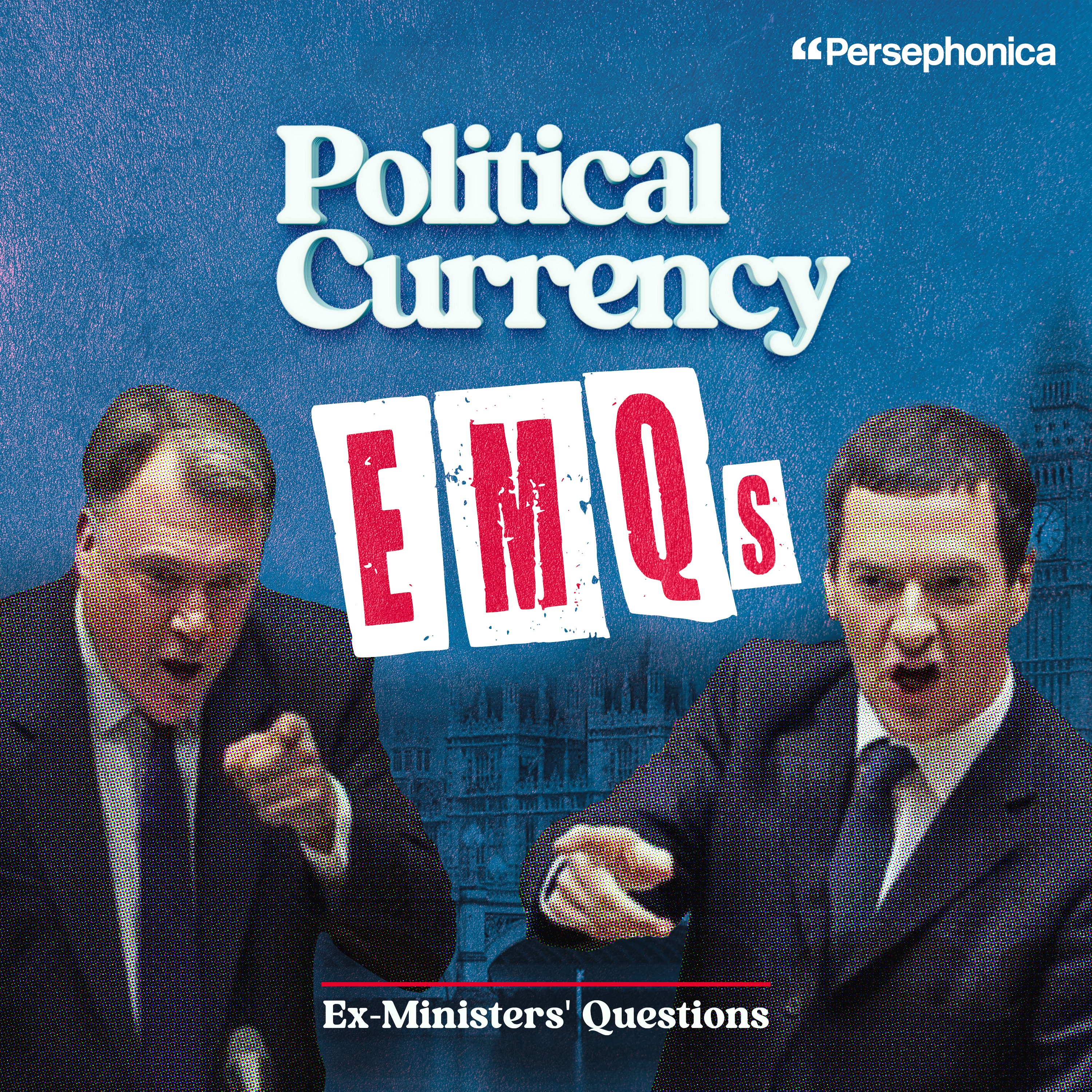
- EMQs: Is it time to abolish the state pension triple lock?
In short
Main points
- Hosts: Ed Balls and George Osborne
- Theme: Discussion on the feasibility and political implications of abolishing the triple lock on pensions, along with reflections on political strategies and historical political events.
- Definition: The triple lock guarantees that pensions increase by the highest of inflation, average earnings, or 2.5%.
- Political Risks: Ed and George explore the political ramifications of abolishing the triple lock, suggesting it could be politically disastrous for any government attempting such a move.
- Historical Context:
- Introduced in coalition talks in 2010.
- Initially seen as inexpensive due to low earnings projections after the 2008 financial crash.
- Current debates focus on the sustainability and fairness of maintaining the triple lock given the rising costs and demographic shifts.
Written by AI. May contain mistakes.

Ask about this episode
Get the gist, explore an idea or ask about something said.
 Claude
On Political Currency, what are the key points of this episode?
Searching your listeningTranscript
Automatic transcript. May contain errors.
0:00The Chancellor of the Exchequer. Getting a lesson from the Shadow Chancellor on how to balance the books is like getting a lesson from Dracula on how to look after a bloodbath. Ed Balls. A steady as she goes budget. What kind of ship does he think he's on, the Titanic? They're married, Celeste. Welcome to EMQs from Political Currency. With Ed Balls and George Osborne.
0:27So hello and welcome to EMQs, Ex-Ministers Questions. And before we answer your questions, we're going to do some provision of different kind of question answers. Because last week on EMQs, we talked about the Chris Martin fundraiser that George and I were, George is rustling papers, getting sweets out. Will you please behave? I need a bit of a sugar thing. You definitely do. We talked about the Chris Martin fundraiser where we were both presenting the first quiz round for Sarcoma UK. It was a fabulous night. for those of you who bid for the bottle of champagne signed by nine prime ministers it actually went including boris johnson's signature by the end of it for over nine thousand pounds i didn't know that that's great and the whole evening raised eighty thousand pounds just on that one night i'm gonna say something really i'm gonna say something a bit creepy crawly which is i thought you were a really really good compa ed was comparing the whole evening this is by the way a room full of civil servants politicians all in the fabulous lancaster house which is one of the big kind of grand government buildings near buckingham palace which i think actually my mate david cameron had allowed as foreign secretary to be used for this but it's great that the current foreign secretary also allowed ed balls in you did a very good job thank you and we raised i mean the auction was tens and tens of thousands of pounds it's the auction which is the hardest thing but also you just got to keep it moving because people complained you know that our quiz was too hard and also there were too many questions but then you know the electoral dysfunction podcast you know beth rigby harriet harman ruth the davidson they had more questions on their quiz than ours and they said ours was egotistical and male but it was about you mean the round chances the round that they had put together yeah there was also a former chancellor in the room who didn't know the answer to one of our questions which is what are the other three titles that the chance of the exchequer holds.
2:18Anyway, we asked you some questions on our podcast a week ago, and we told you not to copy George and look on Google, but to try and answer it fairly. And I think we should give the answers now. Do you want to go first on the gold question? Oh, I love the gold question. So the gold question was, when Gordon Brown sold the gold in 1999, it raised£2 billion. How much would that gold be worth today to the nearest£5 billion pounds. And we had various guesses. We had Dan saying 80 billion pounds. We had Steve saying 220 billion pounds. I mean, I know where they're all coming from, which was it was a huge mistake by Ed Balls to have agreed to this and recommended it to Gordon.
3:03But the actual answer, and I think Rahul, who came in as one of our listeners, was pretty close to it, was 40 billion he said 30 billion pounds but he wasn't that far off what's 10 billion between friends it was you know clear advice from the treasury supported by the bank of england this was the right thing to do to diversify the portfolio at the time people thought the gold price might go down so there we are that is the world the second question we asked you thought the gold price might go down i was just you know being respectful towards um advice the um second question was this one uh for one point tell me what all these former MPs have in common.
3:40Neville Chamberlain, Tony Benn, Michael Foote and Estelle Morris. For a second point, aside from her gender, tell me why Estelle Morris is the odd one out. Now Henry got in touch to say, is it because she's a woman? Henry, for a second point aside from her gender, why is she the odd one? And the answer is, first of all, all their fathers were members of parliament. That is what they all have in common. But Estelle Morris is the only one whose father was always an mp for the same political party as her tory neville chamberlain his father his father was originally a liberal mp labor michael foot father originally a liberal mp labor tony ben father originally a liberal mp labor estelle morris father alf 31 years a labor mp i mean i thought you know easy i thought it was too easy but it turned out not to be too easy This is one of my favorite questions.
4:36So the clue was how we read this out. Let's talk names, Gideon, which of course was my original first name, which is the odd one out from these four Labour prime ministers, Ramsey MacDonald, Harold Wilson, James Callaghan, and Gordon Brown. And so lots of people came up with things like, well, you know, some people were elected and some people weren't. But the clue is in the name. And the great answer to this question is the odd one out is James Callaghan because he's the only one not called James because it was James Ramsey MacDonald and James Harold Wilson and James Gordon Brown, but it's Leonard James Callaghan.
5:14Very good. And by the way, when we were on WhatsApp working out this quiz, you set that question to me. Did I get it right immediately? Well, you definitely knew that Gordon Brown was called James, so you were kind of onto it. But I didn't think you knew that James Callaghan was called Leonard, did you? Unlike you, I didn't need to look on Google. The other question we asked was, by what name did Barack Obama mistakenly call George at their first meeting at the, it turns out, G8 summit in Ireland? Rob said, was it Gareth? No. Happy Dad fan answered Jeff from Accounts, which is actually right on it.
5:49Many of you did say Jeffrey, which then prompted my joke in the House of Commons. The president calls him Jeffrey. His friends call him George. George. George... I've got to write these jokes for you these days. But the rest of us just know he's called Bungle. Yes. That is a rainbow reference. And if you don't know what we're talking about, you're too young. Do you know, I think this is risky and sounding a bit like Alan Partridge. We're doing like happy dad fan answer. It is absolutely, totally Alan Partridge. Anyway, there we are. If you would like us to do some of the other questions from the quiz, we can do that in future weeks.
6:26Yes. We're now going to get on to your questions, because if we don't, George will have to go before we finish, that would be annoying. Our first question comes from Hamill. Hi, Jude and Ed. Loving the pod. Listening to the Times Radio interview, how should we understand Hague's claim that if Rames resigned, Starmer would follow within days? Why wouldn't it simply be treated as PM replacing a Chancellor in a normal reshuffle? So I don't agree with William Hague on this one. Nor do I, actually. Normally, I think William Hague's very good on this stuff, but I'm sorry, William. What's he talking about?
6:57Nul point. I mean, look, Keir Starmer is the Prime Minister. He chooses his Chancellor. And if Tony Blair had sacked Gordon Brown, or if David Cameron had sacked you as Chancellor, they would not have been out of their job in a few days' time. And that is the same with Keir Starmer and Rachel Rees. There's no doubt, by backing Rachel Rees very strongly, by saying last September that Rachel Rees was the first name to stay in her job when he was doing his reshuffle, Keir Starmer has made it more complicated for him. But, you know, of course it is the case. if you're the Prime Minister and you want to change your Chancellor, you can.
7:32The reason why when Prime Ministers lose Chancellors, they sometimes lose their jobs themselves. Think of Margaret Thatcher sacking Nigel Lawson, Liz Truss sacking Quasi Quarten. It's because, I mean, you could say John Major getting rid of Norman Lamont and then losing the next election himself a few years later. If you are yourself or your government is the problem and getting rid of the Chancellor doesn't solve the problem if in the end it's about communication challenges or political mistakes which are broader than the individual of the Chancellor and in the end you don't solve the problem.
8:07So that may be what William Hague is thinking of that you know this is a bigger problem for the government than simply a Rachel Reeves problem but I don't think you're right William disagree on that one. I mean it's complicated this isn't it like all these things politics each case is sort of particular. I think it's true that if you got rid of a really powerful Chancellor who is snapping at your heels, then that could trigger a leadership challenge almost immediately. So you could imagine a situation where Tony Blair fires Gordon Brown, but probably not immediately after a general lecture or something, but in the middle of a kind of crisis.
8:38And then that triggers the kind of contest against Blair. Equally, you could think of a case where William would be right, where it's, you know, frankly, days are numbered for Liz Truss. And her last throw of the dice is to fire Kwasi Kwarteng. but everyone knows they're absolutely joined at the hip and, you know, they go down together. But I think the kind of broader point William's making, and we have made before, which is that fundamentally prime ministers are tied to their chancellors and the economic decisions of their chancellors, means that we couldn't think when we looked at this before of an example of a prime minister firing a chancellor and then going on to win the next election.
9:17There are cases, obviously, of prime ministers replacing chancellors. I mean, Margaret Thatcher replaced Geoffrey Howe with Nigel Rawson, but that was after she'd won re-election. But the John Major example is where fundamentally Major couldn't escape Black Wednesday despite getting rid of his chancellor. Of course, the thing about history is it's not an absolute guide to the future, and who knows? But put it this way, I think if people in number 10 think if you get rid of the occupant of number 11, somehow we can kind of draw a veil under the decisions of the last year and a half they'd be making mistakes that is completely right thanks for your question hammer we'll take a break and we'll be back in a moment
10:09welcome back our next question comes from james dear ed and george when he's being asked an uncomfortable question why does kia starmer look away and drag his pen all over his notes like a toddler drawing a treasure map it's really irritating me so any insight would be greatly appreciated thanks right so james i hadn't actually noticed about your point here and i'm sorry you find it extremely annoying but uh so you're saying that he kind of basically doodles kia starmer the person who was like the most extreme doodler when i was uh in government was francis maude and francis maude had been chairman of the conservative party when we were in opposition he'd actually been an important part of the kind of modernization of the Conservative Party in opposition.
10:53And then in government, he kind of led some of the reforms of the civil service and, you know, did a pretty effective job. Although some of the things he proposed, I wasn't 100 % convinced of myself and didn't implement in the Treasury. But he would sit in meetings. And I like Francis a lot. So this is not in any way a criticism because it used to just amuse me watching. And he used to do the most elaborate doodles such that by the end of a kind of cabinet committee meeting a whole page would look like a kind of medieval manuscript that some monk had done all these kind of filials on and different kind of shapes and whatever and i guess you know it's a way of people thinking isn't it it's a kind of device people use to distract themselves and enable themselves to sort of distract themselves from what's going on and kind of enable themselves to think and I am absolutely not a psychologist, but I suspect that's what Keir Starmer is doing.
11:49I don't know. What do you think? Well, like you, I'd never noticed it before. Unlike James, I've not found it really annoying. But I do think that there is something happening. I'm trying to remember this. This is in my memory, reading about Barack Obama and how he used focus during the debates. He had a problem with Romney in one debate and where he had been sort of thought to be too rambling and too kind of complex and then he came up with a technique which was to write down on a piece of paper in front of him during the debate one word and that was the word which he had to be at the centerpiece of his response and the point was to channel all the complexity of preparation into the delivery of the simple message and to focus on that word.
12:37I know that sometimes when I'm working and I'm on TV, I will do a little doodle, but it's keeping me in the moment. It's keeping me focused. I think that may be what Keir Starmer's doing. I have a feeling that with your Francis Maud one, if he's doing it like an elaborate 45-minute doodle with turrets and finials, I think that may be because it's having the opposite effect, that rather than being focused and thinking about his message, he's got completely bored, his mind's gone astray, and he's no idea what the hell's going on. So if Keir Starmer's doing that, then that would be a bad strategy.
13:06But I don't think he's taking the moored path. We had Obama's debate team come in and help us in the election. It was a bit ridiculous because, you know, it's like the presidential debate, like a slightly bigger event than what goes on in British politics. But they were a really great team. And I was the kind of dry run. Obviously, the main event was Cameron's big debate. And, you know, they were actually pretty consequential in the 2010 election. Or certainly it felt like they were at the time. There's an argument that they didn't in the end make a big difference, but certainly felt like they did because they led to Clegg mania.
13:38But I was the dry rung because I had a shadow, sorry, a chancellor's debate. I was the shadow chancellor against Alistair Darling and Vince Cable on Channel 4. By the way, George is doodling while he's speaking here to try and keep his focus because at the moment, you know, our listeners may think he's rambling on, but no, there is a point here. I'm actually writing, I'm writing things down. On the debate team told me for my little chancellor's debate on Channel 4, but what Obama had done, he'd come on, there's a piece of blank paper on the lectern and you get a pen. So you walk on set, which is also part of the show, and then you have a couple of seconds, as they say, welcome to the big debate, Dedler, to write something down or to put something in front of you.
14:17And apparently what Obama did was he would just take, I'm going to demonstrate this to Ed, but he would just draw a line across the middle of the page of A4, just a line straight line across the level and it was to remind him that in every answer he had to say problem and then pivot to solution you had to frame every answer in two halves and so he literally drew a line i thought bloody hell can't i just take it a load of notes and put them on the lecture so the question is is keir starmer drawing the line on the right place of the page. Is there enough space for solution? Well, I think neither of us have noticed this.
14:57Going by James's question, I think he's making a lot of squiggles, which might explain why the government's going around in circles. Look, my view about this government is they don't spend enough on defying the problem and building the case for action. And they jump too quickly to solutions and they haven't made the argument for the problem, which actually is what we were talking about with David Lammy and juries and courts reform. That's what they need, Ed. They I need this piece of paper. It's just a blank piece of paper with a line drawn down the middle. That may be a breakthrough moment. Our next question is from Andrew.
15:28Hi, Ed and George. My question is, might no parties prepare to make any changes to the state pension triple lock, given the increasing pressure on public finances? Economic think tanks such as the IFS have warned about its long-term affordability, but neither Labour nor the Tories and their planned 47 billion pounds of cuts will touch it. Surely changing to a more sustainable double lock, or even a single lock, is a much easier sell than the winter fuel cuts, as you're not actually taking away any money currently being given to pensioners. Thank you. So the triple lock, expensive, needs to be ditched?
16:01Could there be a political consensus? So the history of the triple lock, which I introduced, was that in 2010, when we had the coalition discussions, the Liberal Democrats wanted the triple lock. And it's worth reminding ourselves why it's called the triple lock. So until that point, pensions had been linked to inflation. It was actually Margaret Thatcher's government who had, in order to save money and because things were expensive, had taken off the link to earnings. So she had broken the link with average earnings. Earnings tended to be higher than inflation. And so this had saved money. It had become a big kind of core celebrity.
16:37Barbara Castle, the former Labour government minister, was the biggest campaigner for re-establishing the link with earnings. The Brown and Blair period, they actually resisted this pressure, did a whole lot of other things like winter fuel payments, free TV licenses, bus passes, but they didn't re-establish the link with earnings. We as a conservative opposition had already committed to re-establish the link with earnings. And then when we get into the coalition talks in the cabinet office, Nick Clegg says, you know, we need this triple lock. And the third bit of the lock, so the first is inflation, second is earnings.
17:07The third bit was or two and a half percent. So whatever is the highest. So if inflation is less than 2.5%, which it should be, given the Bank of England target, if earnings are below 2.5%, which they might be because there'd just been a recession, remember, there'd just been the financial crash and the earnings have gone down, then you have the 2.5 % guarantee for pensioners. And I would say there are two things. One, at the time, the Treasury, who were helping these negotiations, it was complicated because Gordon Brown was still the Prime Minister, but the Treasury was providing assistance via Gus So Donald, the cabinet secretary to the talks, said he actually is not going to cost very much because we're not we're expecting earnings to be above two and a half percent.
17:43So you can happily concede this. And I think they projected at the time it only cost 50 million quid. But as it does out, that was somewhat mistaken because we had a big deflationary period thereafter. But these days, it's not the triple lock that is leading to the big rise in the pension. So I think Rachel Reeves, didn't she, in the budget just announced a pension increase of I think I can't remember exactly. it was around four and a half percent. So it's not the third bit of the lock that's operating at the moment. It's the earnings link. It was extremely controversial when Margaret Thatcher took the pension off the link with earnings.
18:16And I cannot see a Labour government doing it. And I certainly can't see a Conservative government doing it either. I think you are right about that. And I think actually, sometimes you have to kind of dig under what people are really saying when they say, get rid of the triple lock. Because look, you are right. The inflation target, two and a half percent, doesn't really bite. and it has been unusual in the past few years to have quite high levels of overall inflation pushes up the pension more than earnings but also of course if inflation is strong as we've seen in the latest OBR forecast higher inflation tends to bring in more tax revenues so there is a sort of you know an upside to that as well in terms of the revenues coming in to pay for more expensive things.
18:58It also inflates away the debt isn't it it's one of the reasons why people think governments like a bit of inflation. That's right. Which is why you have independent central banks. So it really comes back to the earnings link. And are you going to ditch the earnings link? But I think you have to dig behind that and say, well, what is going on here? It is true to say that there are very many more pensioners than 20, 40, 60 years ago who have incomes which take their income way beyond the income of the basic pension. The consequence of people saving more in their lifetimes and what's happened in the housing market, that pensioners on average are wealthier compared to working people than would have true 20, 30, 40 years ago.
19:37Another way to say that is that pensioner poverty is a smaller issue than it was 20, 30, 40 years ago. It was a huge political issue. And I'm not saying pensioner poverty is not an issue today for people, but it's absolutely no, it doesn't feature in our political debate, does it? That's right. When we came into government in 97, the proportion of pensioners in poverty and the proportion of the overall population in poverty were pretty similar, and that wouldn't be the case now. But if you think about what you're saying here with get rid of the earnings link, it is true to say that the earnings link for all people getting the basic pension is expensive.
20:13But if you didn't uprate the basic pension by earnings, then people who rely upon the basic pension would see progressively their incomes fall behind other pensioners and the working population and over time you'd be getting back into a problem of relative poverty relative poverty actually the solution if you want to constrain the cost isn't to um break the earnings link for the basic pension but to means test the basic pension and say that people who are relying upon the basic pension but people are paid their staff yeah but but for the person on the median income person on the top 20 they shouldn't be getting the basic pension uprated by earnings that is massively controversial to take the basic pension away or to means test it.
20:57I mean, it's already taxed, isn't it? It is taxed. That's right. So you could increase taxation for pensioners. Of course, if you were to extend national insurance to pensioners, that would be one way to do it. If you think of the Rachel Reeves idea, which was around to increase income tax and cut national insurance, that was another way of saying let's tax pensioners more. Because pensioners don't currently pay national insurance. That's right. So the Rachel Reeves wheeze that she was thinking of would increase tax take from pensioners. Relatively, yes. If you want to increase the proportion of pension spending on the poorest pensioners through the state, I think what you have to do is means test the basic pension.
21:35But if you break the earnings link, you just hit poor pensioners harder. When people say, we should just get rid of this earnings link, if they're really willing to face up to that decision on the basic pension, fine. No way. No way is any political party going to means test the basic pension and therefore to remove the earnings link would be to clobber the poorest pensioners hard and i don't think that would happen so i sort of feel there's this shorthand oh you know if we were serious reformers we would break the earnings link would get rid of the triple lock i don't think that's actually facing up to the choice if we're going to have a universal pension which is the same for everybody which we've had for a hundred years we're not going to break the earnings link no so one of those things by the way people who listen to this podcast they go what happens if these guys ever went back into politics?
22:21What about all the things they've said on the podcast? And most of it would be completely irrelevant. Well, it's probably irrelevant when we say it, but it's certainly irrelevant some years later as politics moves on. But Ed Balls' political opponents in 10 years' time will say, but if you let Ed Balls into Dan Downing Street, he's going to means test the basic pension. No, no, but no, no, look, George, unlike you, as I've often argued on this podcast - Opposition research, it's called. I believe in progressive universalism. I like the idea of a universal benefit for all and doing more for those who need it most.
22:51That's why I wouldn't have taken child benefit away from the richest. It's why I wouldn't take the basic pension away or means test it. And I would then want my pension credit or my universal credit to do more for the poorest. So, you know, I'm not advocating at all mean assessing the basic pension. But I think if you want to make savings in a fair way, that's what you would do. But if you do it by getting rid of the triple lock, all you do is deepen pension of poverty for people who only rely on the basic pension. So that is absolutely not what I was saying. And I think most of our listeners who are listening, George, unlike you who was doodling, understood exactly what I was saying.
23:25I think we've got time for it. Hold on. That's a prelude. that basically was a insight into the answer the defensive answer that ed's going to give when this comes up in the prime ministerial debate in 10 years time on tv that george osborne wasn't listening um we're going to take a break we've got time for one more question
23:53welcome back our final question today is from delith hello ed and george Rachel Reeves has been criticised for boxing herself in on tax before the last election. But if she hadn't ruled out raising taxes, the Tories would have gone for her as they did successfully against John Smith in 1992. So my question is, would it be possible for any party to win an election if they refused to rule out an increase in tax rates? Thank you. This is a great question, Delis. And the reason we wanted to do this today was also for us to say that when we did this kind of what if question in the summer we had a great listener response and for this christmas we're going to do an emqs which will be christmasy and end of year and looking forward to new year but we're also going to do another what if emqs where we answer some of your what would have happened the kind of counterfactual that historians hate but we enjoy talking about so if you've got those kind of questions do send them into questions at politicalcurrency.co.uk and put christmas or what if or even if you don't put anything we'll still get the the question and so because we'd love to have some of those to record over our christmas period what's the answer to this one george well it's a it's a very good point which is can you avoid making a cast iron commitment in your manifesto not to raise taxes and i'm afraid you know i plead guilty here in the 2015 tory manifesto i mean it was actually invented by the team in 10 Downing Street who may be listening in their new lives, something called the tax lock, which we put in the 2015 manifesto, which was if the Tories are reelected, then we will not put up your income tax, your VAT or your national insurance.
25:31And we hadn't had that in our 2010 manifesto. But in 2010, we had increased VAT. So there was some people were going to say, well, hold on, last time you put up VAT, so let's have a cast iron commitment in your manifesto. And we were also trying to trap you and Ed Miliband. And I was pretty uncomfortable with the tax lock and unfortunately it kind of entered the political discourse but you didn't do it in 2010 no why not in 2010 well because i thought we were going to have to put up taxes and and you didn't know what you're going to find and uh and in fact the whole debate was there's going to have to be cuts we're being honest about cuts and gordon brown isn't that was the sort of theme of that election i think the one thing however i've made two sort of two observations here one is i think if you're strong and i think keir starmer and rachel reese were in very strong position running into the 2024 general election.
26:17And it's easy to say when you know the result that, but I think everyone, including, by the way, the then prime minister, Rishi Sunak thought they were going to lose. In that situation, you really do have to start thinking about what am I going to get a mandate for in this election? What am I going to use this manifesto to say? Look, this is what people voted for. And certainly in the 2010 case, even though we ended up in coalition, no one ever said, well, I didn't vote Tory and expected to get this. This is what we told people basically we were going to do. So I think a strong party going into an election doesn't have to make this kind of commitment.
26:49And actually the kind of 92 example that you give, Deleth, is slightly different because what happened there was that the shadow chancellor, John Smith, set out a shadow budget with very specific plans to increase national insurance, I think, on middle and high earners from memory. And so it wasn't that he kind of left open-ended this, you know, ooh, I don't know what Labour's going to do if they win. And remember, they were way ahead in the polls, weren't they? They were 10 % ahead in the polls. Everyone expected Neil Kinnock to be the prime minister. But by setting out a specific budget plan, a shadow budget, that then gave the Tories and Saatchi and Saatchi with the tax bombshell ads a real target.
27:32And what has certainly been the case ever since is that oppositions, even though this was many decades ago, oppositions do not set out shadow budgets. That was the death of the shadow budget. But since then, parties have got elected without making blanket promises not to raise taxes. Look, there is no doubt this is hard and difficult and it's a tightrope and you have to work out what your strategy is. and of course um there was an alternative what if which is what if we make promises not to raise taxes and then have to break them which of course john major did in 1992 you know no tax rises from the tories a version of george bush's um read my lips and then there were 22 tax rises between 92 and 97 and the public um saw that and felt that very very clearly and that was the political editor of the evening standard would ask the same question in every single press conference of john major in the 97 election wasn't it which is you promised not to raise taxes and texas gone up x and for some reason john would always call this guy to ask the question and that and that is of course the challenge for the government uh now back in 1992 the problem was that john smith and neil kinnick had made a whole series of big spending pledges and they hadn't shown how they were going to pay for them and the reason they had to do a shadow budget was to show that they we're going to raise taxes to meet those spending pledges.
28:54And that allowed the Tories to say, aha, so they are raising taxes. And here's the tax bombshell. Whereas in 1997, five years on, Gordon Brown, Tony Blair... Much better advised. Much better advised. I mean, I don't know who behind the scenes was coming up with this genius stuff. We said no uncoasted and unpaid for spending commitments. In fact, we went further and said we'd stick to the inherited spending totals for two years. We said we will not raise the basic rate or the top rate of income tax. But we said, we're not going to go through every one of the 240 tax rates, reliefs and allowances and answer all of those because you can't do that as a responsible chancellor before you get into government and know what the financial situation is.
29:37You have to come up with a plan and stick to it. And there's one end where you'd say, you know, where you make no commitments and say, I just can't tell you. That's impossible. But if you say a version of your tax lock, that only is fine if you are 100 % confident you can deliver that tax lock in government. And if not, you have to find the middle ground. And I think I agree with you. And this is what we said before the election in 2024. We said that were we advising Rachel Reeves and Keir Starmer, we would not have made those promises because given the public spending problems and the growth problems in the economy, they couldn't have the confidence that they'd be able to stick to that.
30:20And therefore, you had to find that middle ground. And there are people who say, oh, well, you know, that would have been risky and might we have lost the election. But politics is a dynamic game and you've always got to be thinking about where were you going to be in one, two, in three and four years. Okay, but this has prompted several thoughts and a question to you, which maybe we'll park into our what if episode. So first of all, you know, Rachel Reeves would not be, if you interpret the income tax threshold freeze as a breach of the manifesto, it's certainly not the first case this has happened.
30:48The Boris Johnson government was elected in 2019 with a promise, but the tax lock, we're not going to raise the main rates of income tax on national insurance. And his chancellor, Rishi Sunak, did raise national insurance rates on employers and employees. And went on to lose the subsequent election. Well, Boris Johnson then fell. Liz Truss reversed the national insurance rises. And Jeremy Hunt and Rishi Sunak didn't reimpose them. But in the middle of that parliament, legislation was passed that breached the Tory manifesto. And I'm also thinking, but I need to check up on this, that when Labour increased the top rate of income tax right at the end of the Labour period to 50%, I think that was in breach of the 2005 manifesto, which had repeated the mantra that they weren't going to raise the main rates of income tax, including the top rate.
31:31But they had the financial crash as a kind of excuse. And my what if question to you, which we will park. So you get elected in 97 on your manifesto. And then in 1999, 2000, there's the dot-com crash. There's the Asian financial crisis. I think there's also big problems in Russia at the time. Someone we were talking about earlier on the show, Francis Maud, shadow chance of predicts a downturn made in Downing Street. A recession made in Downing Street. Doesn't happen, but it's quite a close run thing. I think there's a quarter and there's like zero growth. But if there had been a big kind of recession back then, maybe caused by world events, my question is, would the Labour manifesto commitments in 1997 on tax have had to be breached because of the collapse in the state of the public finance system?
32:17Or should we, we could come back to this in the what if question? I don't think, I think we had so much flexibility from that manifesto that we could do stuff without needing to break the manifesto. And of course, in 2002, we raised national insurance. We don't break our manifesto, but we had this long... Because you hadn't made a promise on national insurance. We didn't make a promise on national insurance in 1997 or 2001. And there was a particular moment when one cabinet member, Patricia Hewitt, said something about national insurance, which caused us problems for a few hours. And then John Prescott punched a voter in Wales and luckily it took the story off the newspaper schedules.
32:51I do think, to be fair, the voter had not punched him, but thrown an egg at the point No, no, it was definitely provoked. But I think we had a long deliberative process through the wondrous review about the needs of the health service. It was still controversial when we raised national insurance. But the time you got to the 2005 election, it was never mentioned because it didn't break the manifesto. Did they then have to promise not to raise national insurance? No, I do not believe so. Okay, we'll come back. I mean, look, if I'm wrong, I am wrong, but I would be amazed. But I bet there was a promise not on the top rate of income tax, which had been in the labor manifesto since 97.
33:27That is right. So I think that you are almost certainly right that the top rate... The 50p rate was a break of the manifesto. But not the national insurance price. Oh, Delif, good question. Very good question. Thank you. And as I said, you know, that's one what if. If there's some more what ifs you would like us to answer over Christmas, we would be very, very happy to do that. What if Ed runs for the premiership and we remind him that he wants to means test the basic state policy? Look, look, are we really going to get into a conversation about what next career moves we might both take? I mean, I don't think we should go there.
34:04I'm a Good Morning Britain presenter and very happy in my job. You can send, though, those what-if questions to questions at politicalcurrency.co.uk. Please make sure to include a voice note with your question if you possibly can. That's all we have time for in this episode of EMQs. And we're going to be back next week in our current jobs with another episode. See you then. See you then.
34:30Thanks for listening to Political Currency. This has been a Persephoneca production.
From the publisher
Will any government be brave enough to abolish the triple lock on pensions? The cost-saving case has been made by many, but Ed Balls and George Osborne explain why it could be politically calamitous to try and ditch it.
They debate William Hague’s theory that, were Rachel Reeves sacked, Keir Starmer would follow and look back at how chancellors and Prime Minister’s fates have been intertwined. Plus - why is Keir Starmer always doodling during PMQs? Is he following the brilliant debate strategy of Obama, or easily bored when being questioned?
Finally, in a preview of our upcoming ‘What If’ EMQs, Ed and George imagine how the 2024 election could have gone, had Reeves followed a path like John Smith in 1992. Would she have avoided her budget nightmares? Or, would we still have Rishi Sunak as Prime Minister?
Don’t forget to send in questions for our upcoming Christmas and ‘What If’ themed EMQs episodes. You can send those to questions@politicalcurrency, and make sure to include a voice note!
Thanks for listening. To get episodes early and ad-free join Political Currency Gold. If you want even more perks including our exclusive newsletter, join our Kitchen Cabinet today:
👉 patreon.com/politicalcurrency
Please note: Kitchen Cabinet is only available via Patreon.
Credits:
Research: Sam Burton
Production: Caillin McDaid & Jack Boswell
Video Editor: Maha Al-Badrawi
Executive Producer: Ellie Clifford
Political Currency is a Persephonica Production and is part of the Acast Creator Network.
Hosted on Acast. See acast.com/privacy for more information.
More from Political Currency
All episodes

We use cookies.They keep VO running smoothly and help us improve it. Privacy policy