
 Ask ChatGPT


- Podcasts
- Political Currency
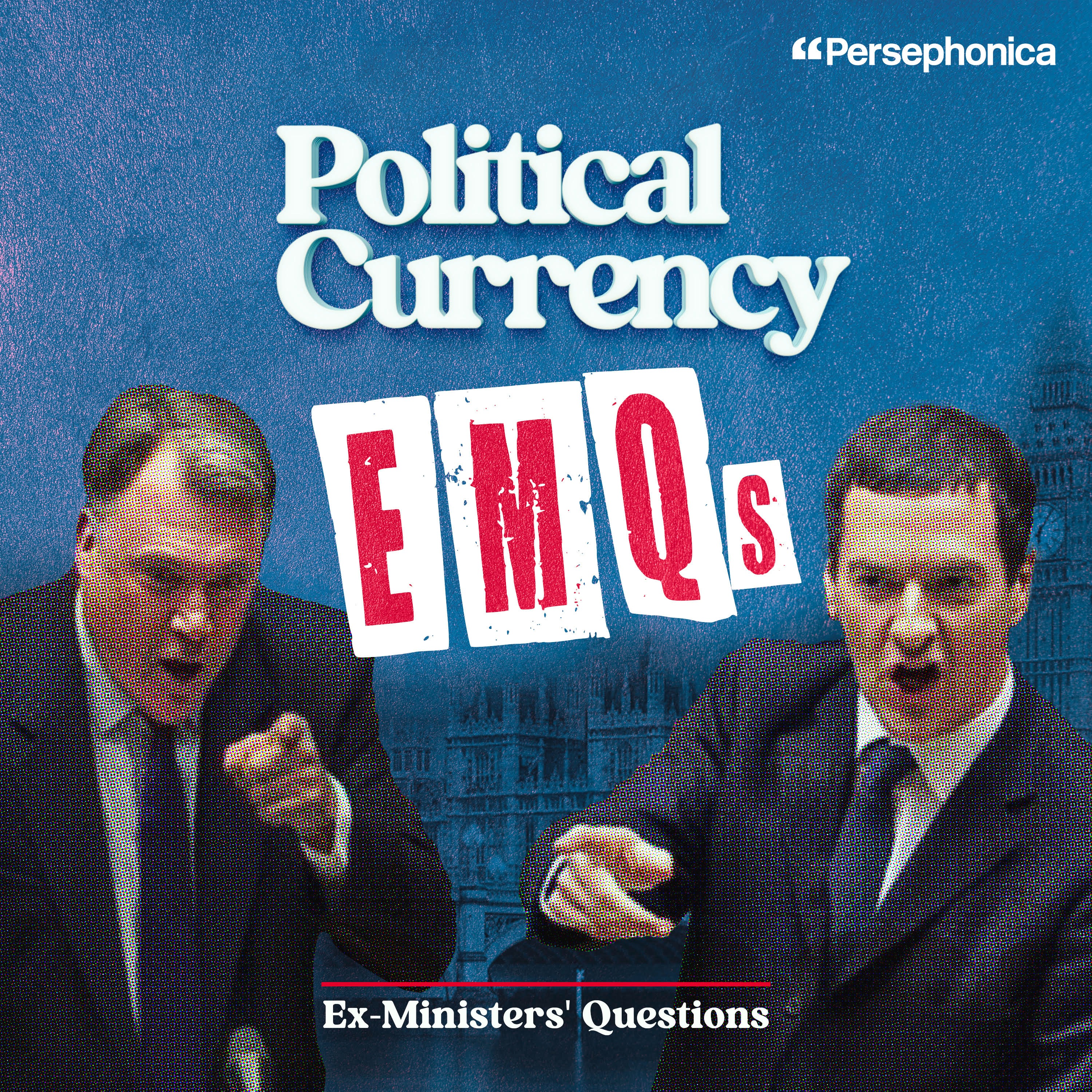
- EMQs: Is politics worth the family sacrifice?
In short
EMQs (Ex-Minister’s Questions) answers questions about politics and family costs, Brexit leadership counterfactuals, government transparency over a fatal crash, and how to spend money in spending reviews; it also discusses AI’s economic impact.
Guests
No external guests. Hosts are Ed Balls and George Osborne. Questioners include Sarah Vine and her daughter Beatrice Gove; an anonymous listener about the 1994 Chinook crash; Sarah Atkin (Gold subscriber); Jimmy McLaughlin (podcast host); plus a clip from Jimmy’s interview with London Mayor Sadiq Khan. Liam Fox is referenced.
Guest backgrounds
Sarah Vine is a political commentator/author; Beatrice Gove is Michael Gove’s daughter; Jimmy McLaughlin is a former government adviser and runs “Jimmy’s Jobs of the Future”; Sarah Atkin is a Gold subscriber and councillor.
Key claims
Cameron staying on might have reduced immediate Brexit chaos but wouldn’t have prevented Conservative internal conflict; politicians should keep children out of public view consistently; 100-year document secrecy is likely about protecting sensitive identities, not necessarily a cover-up; spending priorities should favor child-focused Sure Start over lifting the two-child benefit cap; AI will disrupt mid-level white-collar jobs.
Notable examples
Downing Street privacy shifts (Sunak/Starmer daughters); Gordon Brown’s family exposure; the 1994 Mull of Kintyre Chinook crash; Sure Start vs benefit cap; AI-generated posters and likely automation of accounting/legal/call-center work.
Written by AI. May contain mistakes.
Chapters
2:28
Celebrating a Birthday and Remote Recording
The hosts discuss the challenges of remote recording and celebrate a colleague's birthday.
“It's because I was getting this plane back from Washington.”
5:36
Exploring Political Legacies: Sarah Vine's Question
The hosts discuss Sarah Vine's question about David Cameron's decision post-Brexit.
“how not to be a political wife is the actual title, and her daughter, Beatrice, Beatrice Gove.”
8:30
Family Sacrifices in Politics: Beatrice Gove's Question
Beatrice Gove asks about the impact of political careers on family life.
“And then Theresa May emerged as the new leader.”
13:03
Advice for Politicians: Keeping Families Private
The hosts discuss the importance of keeping family life private while in politics.
“I don't remember there being photos of you and your kids, Michael and Sarah and their kids.”
14:01
The Struggles of Family in Politics
Exploring the challenges families face when one member is in politics.
“And that the media will respect your decision to keep them out of the public eye, so long as you are absolutely consistent in that.”
16:15
Public Exposure and Child Privacy
Discussing the balance of public exposure and protecting children's privacy.
“And this is a very good question from Bea.”
19:35
Support Among Politicians' Children
Examining the networks among children of politicians and their shared experiences.
“That's what it was because I was going on Five Live after and you all went off to breakfast and you had a great time.”
21:19
Support Among Politicians' Children
Examining the networks among children of politicians and their shared experiences.
“Dom Perignon spent his whole career trying to get rid of champagne's bubbles.”
23:05
Seeking Justice for the Mull of Kintyre Tragedy
A listener shares a tragic story and seeks advice on campaigning for justice.
“Our next question is from a listener who, given the sensitivity of the subject, is asked to be anonymous.”
28:00
Pilot Exoneration and MI6 Secrecy
Discussion about the exoneration of pilots and the secrecy surrounding MI6 operations.
“But it's still the case they can't access the information.”
Show all 16 chapters
30:12
Sarah Atkin's Contributions on Spending Reviews
Listener Sarah Atkin shares her views on spending priorities and housing crisis.
“I am a gold member and absolutely love the pod.”
33:18
Housing Crisis and Political Accountability
Exploration of the housing crisis and the government's accountability for promises made.
“He actually messaged me to point out that before our conversation, he'd already submitted to Labour List, which is a Labour email thing, an article.”
35:39
Protected Departments in Government Budgets
Discussion on the concept of protected departments and their implications on budget allocation.
“And so the proof of the pudding will be in the eating.”
39:20
Critical Analysis of Zero-Based Budgeting
Analysis of zero-based budgeting and its effectiveness in government financial planning.
“But what they really are is an expression of political priorities.”
44:32
Impact of AI on the Economy
Discussion on how AI is reshaping various sectors and jobs.
“Availability and coverage vary by state and insurance plan.”
49:56
Cooking Preferences of Politicians
Light-hearted discussion about which cabinet ministers would make good cooks.
“And deep fakes of Ed and me come online and start talking about Iran and Israel and maybe say more sensible things than we do and put us out of business.”

Ask about this episode
Get the gist, explore an idea or ask about something said.
 Claude
On Political Currency, what are the key points of this episode?
Searching your listeningTranscript
Automatic transcript. May contain errors.
0:00Hi, I'm Angie Hicks, co-founder of Angie. When you use Angie for your home projects, you know all your jobs will be done well. Roof repair? Done well. Kitchen sink install? Done well. Deck upgrades? Done well. Electrical upgrade? Done well. Angie's been connecting homeowners with skilled pros for nearly 30 years, so we know the difference between done and done well. Angie, the one you trust to find the ones you trust. Find a pro for your project at Angie.com.
0:54They really are that good. Snag a pair at rothys.com. You'll never take them off. That's rothys.com. Apartheid. White supremacy. Are Israelis indigenous? Are Palestinians? These are the conversations most people are too afraid to have. I'm Yeram Yahu, and my new show, Borderlines with That Semite, walks straight through that minefield. Every episode, I hit the street to ask regular people what they really think, then sit down with an expert who often sees it completely differently than I do. No slogans, no point scoring, just two people trying to understand. Search Borderlines with That Semi wherever you get your podcasts.
1:30From Unpacked.
1:33George Osborne: The Chancellor of the Exchequer. Getting a lesson from the Shadow Chancellor on how to balance the books is like getting a lesson from Dracula on how to look after a bloodbath.
1:42Ed Balls: Ed Balls. A steady-as-she-goes budget. What kind of ship does he think he's on, the Titanic? Bem-ary, Celeste.
1:50George Osborne: Welcome to EMQs from Political Currency with Ed Balls and George Osborne.
2:01Ed Balls: Hello and welcome to EMQs, Ex-Minister's Questions. Disastrously, George, we're remote. And so, you know, on our special podcast recording software, we are both sitting here drinking a cup of coffee, watching all of our team eating cake and drinking sparkling wine, probably champagne, who knows, because it is our executive producer, Ellie Clifford's birthday, and we're not there. We are being excluded from the party.
2:31George Osborne: Oh, Ellie. Sorry. It's because I was getting this plane back from Washington. And in fact, thank God we are remote, because my plane was very heavily, well, first cancelled, and then the new plane was heavily delayed. so um i wouldn't have made it anyway but i have made it home actually i'm eating a rather nice big thing from uh do you know what a calisson is this is a like a little french cake sort of almond cake uh which i picked up in france when um went to see thea's parents this
3:02Ed Balls: weekend had a very nice weekend uh so um when we go sailing is the only time in my life that we buy Kipling's cakes because there's something about the sailing school we did always bought Kipling's cakes.
3:16George Osborne: Not Kipling, I said Cali soy. I know but I'm saying we had Kipling's cakes. It's the opposite of Kipling's cakes. It's like very sophisticated.
3:22Ed Balls: Bacel tart, apple tart. This week we had like a blueberry tart and you know What about a fancy cake? That's what Kipling's cakes do.
3:32George Osborne: You know the little pink squares.
3:35Ed Balls: I love a Kipling's cake but you can't eat many of them. um i actually also had some eccles cakes and they were really good doesn't mr kipling make
3:43George Osborne: exceedingly good exceedingly good um i also do you think that's lost i actually you've got me thinking now one of the things that we grew up with because we're so old are adverts that everyone saw that's right and kind of taglines as a result like the you know when mash gets smash or the only the crumbliest, flakiest. I don't think Miss Era. And the Hovis ad. How about there's only three steps to
4:12Ed Balls: flavour cubes from Bovril. Use cubes from Bovril and you'll see so when you're cooking meat and you want it to taste great. Just use these steps from Bovril. Step one, they crumble easily.
4:24George Osborne: And it goes on from there. Right, even Bovril's... But you know, our millennial producers are like looking at us saying,
4:31Ed Balls: what wtf look they're not actually because they're just drinking this champagne and eating cake they
4:35George Osborne: don't care but it does transport you back these adverts because they were everyone in the nation saw them and uh they transport you back to that era in the same way of listening to a song does and i don't think it really exists anymore because of the because of kind of the way media is set up and social media you don't really get these ads that capture the the national imagination and locate you in a time and place. Like Mr. Kipling's Exceedingly Good Cakes. Anyway, this is a massive diversion. Well, it's not actually. It's a teeing up. From what we planned
5:09Ed Balls: to talk about. No, no. It's a teeing up because we are about to bridge the generational divide. Last week, we had a conversation about Sarah Vine's new book about being a politician's wife, published by HarperCollins. And this week, we have two questions from the Vine-Gove household, which bridge the generational divide, from Sarah Vine, how not to be a political wife is the actual title, and her daughter, Beatrice, Beatrice Gove. Shall we start with Sarah? Sarah's question first. Hi, George and Ed. It's Sarah Vine here. Thank you for taking my question. My question really is for George. Do you think that if Dave had stayed on after the Brexit vote, things might have gone more smoothly and that the Tory party wouldn't have imploded so catastrophically.
6:05That is my question. Thank you.
6:08Ed Balls: I don't think Sarah should be thanking us for taking a question. She should be thanking us for all the massive free publicity we're giving for her book, How Not to Be a Political Wife, and, you know, all free.
6:21George Osborne: No, she, I got a message from her. That was the most revealing mm I've ever heard. I got a message from her after we discussed this last week saying, you know, thank you. So I said, you know, I tried to be nice about Sarah because I like her. And that her daughter, Bea, who I know very well, you know, is a big fan of the podcast. And had come rushing down saying, oh, mum, you're on their podcast. Anyway, so she sent in this question. Let's answer the question. It's a good kind of what if. What if David Cameron had stayed on? And he got a lot of criticism for quitting the day after the referendum.
6:58And it was seen to be kind of walking away from the job and walking away from the mess that had been created.
7:04George Osborne: In his defense, and, you know, I was one of the very small number of people who discussed this with him before he made the announcement. I think he felt you just couldn't continue to be the prime minister, having made this kind of big recommendation about the country's future. And that recommendation had been rejected. And he also thought, and we thought, and I think now still, that if he had stayed on, the Brexiteers, and particularly Boris Johnson, would have ultimately come after him probably that autumn. This all happened in July, June and July in 2016. And by the autumn, the sort of pressure on him to go would have been impossible because, you know, people said, how can this person be the person who's negotiating our Brexit?
7:50George Osborne: He's a person who didn't want Brexit to happen. And Boris Johnson would not have been happy to sit there. I'm not saying this is ignoble of him because he had an ambition to be the prime minister. And he would have been absolutely manoeuvring and marshalling the forces to bring Cameron down. And I didn't think Cameron wanted his premiership to end like that. So directly to Sarah's question, I think if he'd stayed on, I think what would probably have happened, but who knows, you would have avoided that immediate aftermath, which was very frenetic. And of course, Michael Gove was hugely involved in that because he supported Boris and then he backed off Boris.
8:25George Osborne: This all happened within a week of the Brexit result. And that fatally damaged the Johnson campaign. And then Theresa May emerged as the new leader. So all of that drama would not have happened. And therefore, you might have jumped straight to the kind of Johnson premiership. But it would have happened still in a messy way because Cameron would have been brought down. and probably by then the party many of whom voted remain and didn't want to see johnson which is why teresa may got elected and why teresa may you know even though she voted remain became the kind of continuity candidate but i think if some months had passed the party would probably have thought it's got to be a brexit here who delivers brexit um so we might have been spared some of the kind chaos but the fundamental contradictions of brexit which exist to this day could not have been avoided and the fundamental point which is that david cameron could not have survived
9:27Ed Balls: i think remains the case so i don't think you're taking this deep enough into this psycho drama of sarah's book how not to be a political wife um so that's where i'm going to take you to but i think you're right it's really easy to say if only cameron had stayed on um he could have managed it better but the reality was Theresa May found it impossible because she wasn't trusted as a Remainer to secure you know even the beginning and the middle of the Brexit deal and David Cameron would have been in a worse position but two things first of all far from fracturing the Gove-Johnson alliance which is what happened in fact if David Cameron had stood on The two of them, Boris Johnson and Michael Goff, had made this seminal decision to break from David Cameron in the cause of leave.
10:23Ed Balls: And I think if he had tried to stay on, it would have united them rather than divided them. Or kept them united, yeah. Yeah, well, it's quite hard to believe that they'd kind of been that united on the day of the vote, given how quickly it fell apart. But I think they would have been an ongoing political struggle against David Cameron for the soul of the Conservative Party and the Leave vote. It may have meant that they would have kind of been able to reconcile their differences more effectively. It might have been Boris Johnson who emerged as the leader. Maybe Michael would have persuaded Boris Johnson it should be him, not Boris.
11:04Ed Balls: And therefore, Michael and Sarah would have ended up in number 10. But secondly, back to Sarah's book, you can be absolutely sure that the break between her and Michael and the Cameroons would have been even more destructive. There would have been, you know, absolutely, you know, it wouldn't have been a clean break. It would have gone on and become more political and antagonistic. antagonistic so all the stuff she writes in the book about how sad she was about the the breakdown of her relationship with samantha cameron that would have been more bloody and more hideous if david cameron had stayed on so you know both those things michael and sarah going to number 10 after a bloody fight with samantha in the months before would have led to even more colorful chapters of her book but would it have made her happier maybe not oh no it's a very good point that of course
12:03George Osborne: fundamentally michael gove also wanted to be leader of the conservative body and and uh that maybe would have had a bit longer to play out anyway very good question sarah and thank you for getting in touch and now we got a question from sarah's daughter and michael's daughter Beatrice or Bea Beatrice Gove hi George hi Ed um I hope you're both well love the pod Bea Gove here um I have a question about politics and family um my question is had you known everything now as in known how politics would pan out known how your family would be affected known how your friendships would be affected so on and so forth would you still made the decision to go into politics and have you got any advice for up-and-coming or current politicians who are struggling with the impact that being in politics inevitably has on one's family and friends?
13:03Ed Balls: So that is a really good question from Beatrice and I think I'm going to answer the question in reverse order starting with the advice because I think the interesting thing is that you, George, and Michael and Sarah, and me and Yvette have all taken a particular decision, which was to entirely keep our families out of the public eye when we were serving in high office. I don't remember there being photos of you and your kids, Michael and Sarah and their kids. I mean, it's always a choice. And I think one of the things which always worries me is when young upcoming politicians who aren't yet senior are posing with their kids in their election leaflets, because it's risky.
13:57Ed Balls: Because once you've crossed that threshold, it's harder to go back. But I think that the right advice is always to remember that you've chosen to be in politics, but your children haven't. And that the media will respect your decision to keep them out of the public eye, so long as you are absolutely consistent in that. I think it's really hard. As Gordon Brown discovered, it's very hard when you're prime minister because Gordon Brown and Sarah were much more hardline than David Cameron or Tony Blair. And I think he paid a price for that. But that was the decision.
14:27George Osborne: A price in that people didn't see the whole Gordon Brown. They didn't see Gordon Brown the father.
14:31Ed Balls: Exactly. And I think that if you are in the highest office, if you are the monarch, it's very hard. But I think we all had that choice. And tell me if I'm wrong, I think we made that choice. And then I suppose the first question, look, I've not had this conversation directly with our kids. They're all now 21, 23, 25. They can speak for themselves. But even though there were times when it was really hard, not just the travel, but, you know, cameras outside the house, front pages of newspapers, all that exposure. I don't think that our kids would ever have said that we made the wrong choice. as I said I can't speak for them this is my feeling that in the end going into politics and public service and trying to do your best in difficult jobs was like a good thing and a worthy cause I have to say from my point of view the only time I've ever had trouble with our kids was when I put them through the media ringer not in the pursuit of public service but doing strictly come dancing and that caused me much more grief because I sort of didn't have to do that and it it clear that was such a worthy cause and I was banned from going to parents evenings for at least two years after I did Strictly because it was so embarrassing having teachers coming up and asking me about the Paso Doble and so on that they don't really I think they may not fully forgive me but I don't think that I wouldn't you know I would I think you have to be very careful about how you go about this Beatrice but I think in the end I don't know what you think but I I don't regret the decisions we made to be in public life.
16:07Ed Balls: I think it was the right decision. And I want to believe that our kids don't regret it either.
16:13George Osborne: I agree with a lot of that. And this is a very good question from Bea. So first of all, I'll take it in the same order you took it in. I think that's right. You can, to some degree, shield your children from public exposure. and in fact recent prime ministers have sort of gone back to the privacy model of gordon brown more than certainly tony blair people remember tony blair standing on the steps of downing street with his kids and david cameron of course had a child while in downing street as did tony blair so that was a big deal um but if you think of rishi rishi sunak's daughters i mean they don't feature.
16:55George Osborne: If you think of Keir Starmer's children, they don't feature. So that kind of direct privacy is maintained. Of course, what you can't protect your children from is the fact that you are a very prominent individual who people have a lot of opinions on. Quite a few of those opinions will be negative. And in some degrees, when they're children, they are somewhat insulated from it although i remember one of my daughter's teachers directly kind of challenging her when she was a teenager about something i'd done on teachers pay which i just thought was absolutely pathetic and totally unfair totally unfair but generally they kind of can be protected when they're young it's it's when they start getting older and they go to college and and suddenly you know you get other people coming up saying i your what your father did you know was outrageous or disgusting or whatever that is harder and of course you're not really there to help them i think some of the strain that children have politicians endure are the same strain that children of famous people generally like sports stars or tv stars whatever endure hence your point about strictly come dancing i would just say this though and you know so perhaps i would say this you do get an extraordinary kind of window into the world as a child of a politician you do get to meet some incredibly interesting people and often in life you know you kind of think the grass is green on the other side but i think there'd be a load of people who grew up in in more you know less kind of exciting households or less households less exposed to kind of all these global events who who would sort of yearn for something that the child of a politician sees more regularly which is a kind of got like a front row seat to what's going on in the world and so you know there are kind of swings and roundabouts and the final point i absolutely echo i mean i would not choose not to have had my political career and i don't think knowing michael he would have made that choice either and it's partly of course people drawn to politics particularly people who are successful at it you know have a calling and you you you may wonder think of the counterfactual which is if you had not chosen to do these things if your parents hadn't chosen to do the things that were really motivated them maybe they would have been much more unhappy and less fulfilled and that wouldn't have made for a great family life oh my gosh it's like are we doing a psychology podcast here i thought we were about to be sponsored by relate
19:29Ed Balls: halfway through your answer so i was i was i was pleased that you veered away from getting in too much kind of self analysis there but in the end look i've met your kids um especially luke but especially your daughter liberty and they are kind of really confident well-adjusted kind of brilliant to speak to and um you know i don't get the feeling that um that they've uh didn't i
19:55George Osborne: babysat i babysat one of your kids when uh you you did briefly i mean we were both doing the um andrew marshall this is when i was chancellor and you were shadow chancellor and um you'd brought your son in and that's right uh i said he didn't really know what to do when you were going on i That's how I look after him.
20:12Ed Balls: That's what it was because I was going on Five Live after and you all went off to breakfast and you had a great time. Anyway, they've got some great stories to tell, although some of them are pretty tough, you know, when me and Yvette get kind of told about, but our kids are a real team and they've kind of grown up together, supporting each other through. And what's interesting, I don't know, without going to kind of broader on this, but as they become older and get beyond the 18, And there's some important support networks which go on with kids of politicians, kind of being in touch with other kids of politicians and helping them and talking to them.
20:52George Osborne: I remember Catherine Blair. Understanding the reality. Catherine Blair, Tony and Shreve's daughter, being incredibly nice to my children as well, about living in Downing Street, which is what they did.
21:02Ed Balls: Beatrice, that was a great question. And thank you for sparking us. And, you know, we can't presume to know what your answer to these questions would be. But we hope that they are kind of warm and positive answers. We're going to take a break, and then we're going to do some more questions.
21:30Dom Perignon spent his whole career trying to get rid of champagne's bubbles. And that famous line, I am tasting stars, he never said it. Somebody invented it for an ad 170 years after he was already dead. Every drink has a story like that. Distillate finds it and tells you the real one, not the label. Season 2 starts October 6th. Follow now and pay attention to what's in the glass. 75 % of women who seek menopause care don't receive it. The lying awake at 3 a.m. wondering what's happening to your body ends now. Midi is virtual care built for women in perimenopause and menopause with clinicians who specialize in women's health.
22:13Plus, it's covered by most major insurances. Getting started is easy. You can book your first visit with a clinician right away. Midlife needs Midi. Visit joinmidi.com to book your first visit today. That's joinmidi.com. Insurance coverage varies. Check with your plan for coverage. Hi, I'm Angie Hicks, co-founder of Angie. When you use Angie for your home projects, you know all your jobs will be done well. Roof repair? Done well. Kitchen sink install? Done well. Deck upgrades? Done well. Electrical upgrade? Done well. Angie's been connecting homeowners with skilled pros for nearly 30 years, so we know the difference between done and done well.
22:53Angie, the one you trust to find the ones you trust. Find a pro for your project at Angie.com.
23:04Ed Balls: So welcome back. Our next question is from a listener who, given the sensitivity of the subject, is asked to be anonymous. And so this is a question which we're going to voice with Miriam, one of our producers. Hi, George and Ed. Long time listener, first time asker, but a huge fan of the podcast. And I've been listening to the show from the very start. On the 2nd of June 1994, a Chinook crashed into the side of the Mull of Kintyre. My father and 28 members of the Serving Armed Forces, security services, police base in Northern Ireland and crew were killed in the crash. Initially, the pilots were blamed of gross negligence.
23:43As George may remember, Liam Fox, as Defence Secretary, launched a review in 2011 that cleared the pilots of this. In a BBC documentary last year, it was revealed that the documents relating to the crash would be locked away for 100 years, rather than be released after a period of time as per normal rules. Since this time, the families of those who died have joined together to ask the government to launch a judicial review of the crash and its documents. We've had some success with contacting individual MPs, but the government has so far rebuffed our efforts. My question is twofold. Some have suggested the documents being locked up for 100 years is evidence of a cover-up.
24:27The government claims it's GDPR issues. What are your thoughts? And two, how would you advise us to get government to endorse our campaign and launch a review? Thanks very much.
24:39Ed Balls: I don't know the facts of this case. And I thought to myself, should I try and find out? But I didn't do so. Because I thought actually the better answer for me to give would just be to kind of think about this from the outside. And my guess is that there will have been something in these documents which is hugely problematic to reveal, whether that's about who the people on the helicopter were or the activities they were involved in or the links to others. and that the individual people involved, if those names were in the public domain, would cause a great deal of risk to others more widely.
25:30Ed Balls: And so it's really tempting to think that this is some kind of cover-up to reveal some terrible truth, but I think it's much more likely that it's to do with the individuals themselves and the sensitive nature of the jobs that they were doing. But I would say that doesn't stop the government finding a way to properly communicate with the families involved. And, you know, I don't know whether that means you need to have a public review, but you would think the government should be able to find a way to provide proper explanation and comfort to the families without revealing kind of secret information, which would be put others at risk.
26:14George Osborne: Yes. Thank you so much for getting in touch. And obviously the pain is still there for all of the families of, you know, a lot of people who died on that helicopter crash. I mean, I remember it. I was an early adult when it happened and it was a big story at the time. And, you know, there was a feeling that the RAF blamed the pilots. They crashed in sort of poor weather over the coast of Scotland coming from Northern Ireland. And there were all these people who were potentially in special forces or MI6 or the Northern Ireland office at the time who were on board, as well as soldiers and airmen.
26:49George Osborne: And it was definitely felt that the sort of word from the military was that the pilots were to play. And that caused a lot of upset with the pilots' families. And they couldn't get to the bottom of what happened. And so this happened under the John Major government. You had the Blair and Brown governments. This campaign grew. So Liam Fox, in particular, took up the issue. And I've actually spoken to him about your question. And he says, well, he did take up the issue. He took up the issue at the urging of James Arbuthnot. People might remember James Arbuthnot, Conservative MP, he was a kind of key figure in the post office, exposing the post office scandal.
27:29George Osborne: And he had been an armed forces minister, and he had told Liam it's not all straightforward, what's been going on. and the RAF are, or some people in the RAF are blaming these pilots, and it's not fair. So when Liam became the Defence Secretary, he commissioned this report, as you say, and that exonerated the pilots. And the report was done by three Scottish politicians, Michael Forsyth, Helen Liddle, and Malcolm Bruce, from the three different political parties in Scotland at the time, the main parties, not the nationalists at that point. And they exonerated the pilots. But it's still the case they can't access the information.
28:07George Osborne: And some of that is to do with the fact that we do protect the identities of people who serve in, for example, MI6. And there are rules around keeping things secret for 100 years. But it's interesting, talking to Liam, he now has some doubts about whether the review he set up did get all the information. And he has heard these stories that potentially the review did not hear all the evidence about the airworthiness of the helicopter that potentially the um the the helicopter itself was deemed not to be air worthy or there were at least questions about it airworthiness and yet it still flew and then it crashed and um he himself has doubts and so i think you're right to be campaigning for more answers you and the other families liam says he's really happy to help so please get in touch i can help you get in touch with him if you can't do that directly and he'll take up your take up your cause he says ultimately what you need to do is you need to get the prime minister to hear your case and decide to act and and open up the files it's a prime ministerial decision not a defense department decision ministry of defense decision and uh and he says he's happy to help you either directly or to advise you on how best to do that and how to appeal to kia starmer who can uh help at least you know hopefully allay any um concerns that people have or expose wrongdoing uh so there's an offer from liam and uh i would um i would certainly suggest you take it up.
29:51Ed Balls: I'm sure John Healy, the Defence Secretary, would be kind of happy to talk with Liam about it as well. So maybe that's what should happen. Thank you for that question. And, you know, hope that some understanding and some comfort and some facts and truth can come from that. Up next, we have a question from Sarah Atkin, who's one of our gold subscribers. Hi, Ed. And hi, George. I am a gold member and absolutely love the pod. If this is allowed, I have an answer, a comment, and then a question. So in answer to your challenge, George, about if I had£3 billion, would I spend that lifting the two-char benefit cap or spending that on SureStart centres.
30:43I think longer term and for the good of the country and what we know, I would have to spend that on SureStart centres. As long as course, if I could have a few of them in Scotland and the Highlands where I live and I'm a local councillor. My comment is you're talking about the spending review and I just don't think you focused enough or gave enough credit to the housing element. I do agree that the government is really struggling to have some kind of political narrative, but I genuinely think we have the most horrendous housing crisis in the country. And that narrative could so easily be framed around housing.
31:25My question is about spending reviews more generally. Why are there ever protected departments? Because I first feel this is grossly unfair, but also rather short-sighted, because all elements of government are surely connected to the other. So if one is absolutely decimated, that is going to have a huge impact on another.
31:51George Osborne: Sarah, thank you very much. You're perfectly entitled to have an answer, a comment and a question. Because it's your podcast. Although it was a bit long.
32:03Ed Balls: It was a Do you know what I mean? I think, Sarah, you know, it's fine to have three different things, you know, but, you know, it's a bit long. Just saying.
32:11George Osborne: I was about to say this podcast belongs as much to our listeners as to us, Ed. I think you'd rather ruin that. Look, Sarah, let's quickly try and answer them. So your answer, spend the money on Sure Start centres rather than lifting the two-char benefit gap. I agree with you. If there was this summer money available and your overriding objective was to address child poverty in a lasting way, a meaningful way, I would spend the money on the Sure Start centres rather than get rid of the True Child benefit cap. Although we did say that we're going to come back
32:48Ed Balls: and have a proper conversation about this on the podcast. And so I'm not going to pre-empt that discussion other than to point out Jake Richards, son of Steve Richards, Labour MP, the guy whose career we destroyed by saying that he looks and sounds like a young Tony Blair. You just repeated it. He messaged me. You just put another nail in the coffin. I am. He actually messaged me. For all Jake is like, enough, all right, Ed? Thank you. I know I'm trying to take out everybody in this particular question. He actually messaged me to point out that before our conversation, he'd already submitted to Labour List, which is a Labour email thing, an article.
33:27Ed Balls: Instead of scrapping the two-child benefit cap, invest in SureStart. Jake Richards argues for investing in new Labour's SureStart policy. So Jake is on your side on this one, but I'm going to wait for our proper discussion. That's point one done. Ducking the question again.
33:43George Osborne: No, second time. Right. Second point. Only because we're having a proper discussion about it. The second was the comment from Sarah, which is the housing element of the spending view didn't get enough attention in Hervey or enough credit. Did we underplay it? Hmm?
33:58Ed Balls: Did we underplay it?
33:59George Osborne: Well, first of all, I guess we didn't discuss it in great detail. We mentioned it in passing. It did get a whole sort of day of media coverage because it was pre-briefed. I think the problem here is there's just a lot of scepticism about these housing announcements because, you know, this was certainly true of the last government. and of this government, these big promises are made, we're going to have 300 ,000 homes a year, and they're just not delivered. And whether they're, you know, homes to be bought or homes for social housing, the same is the case. And, you know, whilst this government has been talking about more money into social housing, and it's a priority, as we did mention on the podcast, the number of planning permissions for new homes has in this year, in like 2025, just fallen to a 12-year low.
34:42George Osborne: So despite the big push on planning reform and housing, in practice, it's not happening on the ground. So I think this is going to be one of those cases where the public just aren't going to believe it until they see it. And in any case, when it comes to housing, it's one of those things where when politicians say, we're going to build 300 ,000 homes, it's sort of meaningless to someone who just wants to get their own home. You know, you've got to make it personal. You've got to, it's too abstract for people and well where are these 300 ,000 homes and where are they going to be and is one of them going to be mine and I think the language needs to be if they really want to make housing a big initiative of this government they've got to find a way of connecting it to people's aspirations rather than just talking in these big numbers.
35:26Ed Balls: The actual as I understand it the numbers are less than the numbers being announced in the Blair Brown period in terms of housing investments. But as you say, we look back on that period as being a period where we didn't build enough homes. And so the proof of the pudding will be in the eating. The third part of Sarah's question, I'm going to throw this back to you because actually I thought about this. In the time when we were in the Treasury, up to 2010, I don't remember there being a thing called protected departments. I mean, it's certainly the case that we were wanting to make sure we got the money for the health department and the money for the education department.
36:03Ed Balls: There was a commitment to getting aid to 0.7%. But the idea that you had departments which were protected and they would get the money anyway, and then if the overall spending pot was smaller, all the other departments got less, and if it was even smaller, even less. I don't, I mean, it's one of those things where I think lots of people listening will assume there's always been something called protected departments, health or educational defense or aid over decades but i think that's true so do you know yeah i
36:34George Osborne: think started i think that's right um i'll tell you where i think the origins of this is so we in in 2010 coming into office and in the opposition period beforehand we had said we we needed to cut back on the government budget to deal with the deficit but when you do that of course people say ah does that mean you're going to cut the nhs right does that mean you're going to cut money for schools right and you can generally resist those things and say well we're not making those decisions now we're you know we're going to look at the books and so on but some of them have the risk of really cutting through particularly on the nhs and so to reassure people that we could be trusted with the nhs we said we're going to cut the deficit but we're not going to cut the nhs in fact there was a quite you know um a mocked poster of david cameron saying we're going to mocked because his picture was sort of airbrushed, saying we're going to cut the deficit, not the NHS.
37:33George Osborne: And then you didn't do either.
37:35Ed Balls: The NHS declined and the deficit didn't really come down compared to Alistair Darning's plans. So, I mean, you know, it was a double failure. We're not going to engage in that. Anyway, anyway.
37:46George Osborne: The deficit down and the NHS budget went up and we were still hitting all those NHS targets when I was in office.
37:51Ed Balls: Were you? Were you really?
37:53George Osborne: So you start with the sort of political aspiration and then people like the IFS and whatever and go, ah, well, that must mean they, but their definition of, what is their definition of protecting the NHS? Must mean no real terms cut.
38:09Ed Balls: Or historical average in the case of the NHS probably.
38:11George Osborne: So then that kind of gets, once you've, so that suddenly becomes a kind of fixed point around which everything else manoeuvres.
38:19Ed Balls: Did you get that for the 2010 spending review then, do you think?
38:22George Osborne: So I think we went into the 2010 spending review with a couple of things we had promised. One was that we wouldn't cut the LHS. The other was that per pupil funding in schools, which is not the same as the education budget, but per pupil funding in schools wouldn't be cut because we've made a big point about education being important. And that the aid budget would go up, although we didn't have a timetable for it. So defense, interestingly, at that point was not, people weren't on to the kind of defense has to be 2 % GDP. And you were cutting that. So you start with those sort of political commitments, and then suddenly the Treasury gets hold of it, and the government machine gets hold of it, and says, well, these are like protected.
39:01George Osborne: Everything else is up for grabs, but these are protected elements. And it kind of filters through into the public discourse, the political discourse, and suddenly they become protected departments.
39:11Ed Balls: And Sarah says it's unfair and short-sighted, because everything's connected, and in the end, it's counterproductive.
39:18George Osborne: Well, I think that I don't completely agree with that because I think, you know, in the end, you can call them protected departments or not. But what they really are is an expression of political priorities. And how you spend the money is a political priority. And obviously, you would be better if everything was more joined up and the like. But fundamentally, when you're doing the budget, you're still having to decide how much you're going to spend on a hospital, how much you're going to spend on a tank. and yes they're all kind of connected because you know if you can't defend your country you can't have a health service but in truth the way you actually do the budget and i think you'll always have to do the budget is make those sorts of trade-offs and although budgets are an expression of therefore of your of what you think is the most important thing to spend money on
40:02Ed Balls: although the government made a big deal about this being a zero-based review the first first zero-based review for years and years and on the one hand they gave the same efficiency cut to every department which doesn't sound like a very zero-based review and secondly surely protected departments and zero-based reviews are in contradiction because if it's zero but these
40:23George Osborne: zero i was very skeptical i mean i'm sure i had as i called it a zero-based review just because everyone around me was very keen on the idea but i always thought it was absolute nonsense because you know probably the zero-based review this is your sort of like let's start right from the beginning where you know instead of just taking all the accumulated decisions of the past where should we spend the money and you go right right it's a bit like a kind of monty python sketch you go right are we going to have a health service yes are we going to have an army yes are we going to have a police force yes are we going to honor the pensions we promised people yes so once you've done that you're sort of back to okay well what will the defra budget go up by this year i mean your zero-based review is sort of nonsense in my view the disappointing thing is had we won
41:07Ed Balls: the 2015 election there would have been a zero-based review then because we'd spent the whole year before the election saying we're going to have a zero-based review but it's one of those things opposition say i know and then you have to go and do i've got to say sarah i mean you know what a great question in fact three great questions no it was an answer a statement and a question it could have been it could have been a whole podcast i mean it could be a podcast series at least we could have done three episodes on each one. Anyway, Sarah, we're not going to be so indulgent to every person, but to you, it was well worth it.
41:38Ed Balls: We're going to take a break, and then we've got a final contribution from a famous podcasting star.
41:55Hello, this is Chris Winterbauer from What Went Wrong? TCM and Criterion joined forces for the plot thickens Stanley. This season's podcast traces Stanley Kubrick's journey from a curious Bronx teenager, first inspired by a camera gifted to him by his father, to a revolutionary filmmaker who rewrote the rules. Featuring a never-before-heard audio interview with Kubrick himself, go behind the camera with some of Kubrick's closest friends and collaborators to examine his legacy, including Katerina Kubrick, Steven Spielberg, Sofia Coppola, Matthew Modine, and many more. Available starting now wherever you get your podcasts.
42:29If you're still sleeping on cotton or satin, that could be the reason for frizzy hair, sleep creases, overheating, and even breakouts. Dermatologists actually recommend switching to silk because it's naturally cooling and much gentler on your skin and hair. That's exactly why over 3 million people have made the switch to Blissey. Blissey pillowcases are made from 100 % pure mulberry silk, the highest quality silk you can get. It's breathable, hypoallergenic, and surprisingly machine washable, so it's easy to care for. People love waking up with smoother hair, calmer skin, and no sleep lines. Plus, Blissey makes the perfect gift.
43:05And you can even complete the set with matching sleep masks, silk bonnets, and crease-preventing scrunchies. Blissey is offering 60 nights risk-free. Plus, 30 % off when you shop at blissey.com slash rest easy. Your skin and hair will thank you. Therapy's biggest impact doesn't show up in some dramatic breakthrough. It shows up in the smallest moments. You bite your tongue instead of escalating. You put your phone down instead of firing off that text. You say what you actually mean instead of what would hurt someone else the most. Nobody applauds those moments, but they quietly change your life.
43:41That's what growing feels like. And that's exactly what Grow Therapy is here for. Grow is therapy that works, covered by insurance. Sessions average$21 with insurance and some pay as little as$0 depending on their plan. There are no subscriptions, no long-term commitments. You just pay per session. Grow connects you with thousands of high-quality licensed therapists across the U.S. offering both virtual and in-person sessions nights and weekends. You can search by what matters, like insurance, specialty, identity, or availability. And you can book a therapy session in minutes and begin in as little as two days, not the national 48-day average.
44:21See if you could pay as little as$0 for therapy in seconds at growtherapy.com slash ACAST. That's growtherapy.com slash ACAST. growtherapy.com slash ACAST. Availability and coverage vary by state and insurance plan.
44:44George Osborne: Right, our next question comes from Jimmy McLaughlin. And he has a great podcast called Jimmy's Jobs of the Future. And I know Jimmy well. He was a special advisor in the last government. He probably doesn't want me to say this, but he's the son of Patrick McLaughlin, who I served in the government with. But his podcast is a great success. He had Tony Blair on recently for an interview. And Sadiq Khan. So he gets some top guests. Anyway, this is his question to us. Hi, Ed. Hi, George. It's great to have a political podcast which focuses on the economy and business, which so often feel like they get sidelined in our day-to-day political debate.
45:23George Osborne: One of the things that I think Westminster woefully underestimates is how much AI might have an impact. It could completely reshape our economy in just two or three electoral cycles. So my question is, where are you seeing AI have the biggest impact on our economy and how are you using it in your day-to-day lives? What was the last thing you used it for?
45:47Ed Balls: Okay, well, the last thing I used it for was I actually went onto the AI meta kind of feed on WhatsApp to find out where the second test was and just to make sure it was at Lord's and what day it started. I don't think you need AI. Do you need AI for that? I know, but the thing about AI is it will become ubiquitous. we will find out we're doing searches and looking things up and we won't realize that it's gone from simply being like a search engine to an AI feed and it actually told me I mean I did this search and it started telling me all sorts of stuff I hadn't even asked about about um who were likely to be the stars of the match and who was the one to watch and so I learned loads so it um it fed up a whole bunch of stuff I wasn't expecting but I also did work out that the second test was at lords um and um i was going on the second day um so thank you to ai for that i don't know biggest impact um i think probably on the one hand there will be this will happen all around the world loads of professional service jobs in accounting in law maybe in the civil service maybe in kind of advertising, which will be taken over by AI.
47:06Ed Balls: And that will be a kind of a big shift in employment patterns. But it might be that if we are good as a country, that we will be, and I think there's some evidence that this is an advantage for Britain, that the kind of software, back office software, AI stuff you can do in order to help companies make the most of the advantage of A &E when it comes to their operations and their back office operations, that that is an area where the UK has a lead and is one of the leading places for those kind of firms. And therefore, in 5, 10 years' time, there may be a lot of value added being generated by British companies helping other companies to take advantage of AI.
47:53George Osborne: Yeah, so good question, Joby. um so i use i'm now a pretty regular user of my chat gbt app um it it's great coming up with things like cooking recipes good places to eat i was just like restaurants to eat in washington and it's so you get a kind of cleaner answer than the search engines these days because you're not sort of bombardable all the ads and is it accurately well the answer is not always because i was asked this question about something you know where to buy something and it said oh actually that shop's closed down um but um having recommended it but um i'll tell you where i thought where i used it recently i was like wow you know i can see the way things are going in where i have a house in somerset in bruton there's a bunch of people putting together this uh plan for a kind of festival in bruton like a festival of ideas which is gonna be great i'm not directly involved but um i know the people who are and um and they were sort of thinking about how you might plan it and how you might publicize it i said well what happens if you just like let's just i thought i'd try an experiment i said and i didn't do anything more than this i just wrote into the search engine onto the kind of chat engine design for me a poster for a festival of ideas in bruten and about a you know 30 seconds later this very impressive kind of poster that you would otherwise have commissioned to graphic designer to design comes up with all sorts of and suggested things and pictures and local pictures from Britain.
49:21George Osborne: And I was like, wow. I mean, that is the kind of thing that, as I say, would have taken people several weeks to do. And it kind of reveals that there are a lot of jobs that are going to change dramatically or disappear entirely as this becomes more ubiquitous. I fear somewhat for some other countries who have sort of built whole economies on things like call centers and the like, you know, in the Philippines and South Africa, you know there are there are places where you know these are good jobs and lots of people are employed in in these service centers and they are rapidly disappearing and so they may feel the impact a bit before us but Ed's right it's the sort of mid-level kind of white collar jobs in accountancy legal services and the like that are that are at risk I guess because it's not concentrated in the same way that job losses in in previous sort of big dislocations like closure of the coal mines it was very concentrated in in some communities and became very very politically charged you know here because it's sort of across the whole of society people will not notice as much but there should also be you know a massive opportunity to improve public services and we've discussed it before on the pod um so anyway there's one thing's for sure Well, hopefully we're not yet at the point where we just tell the pod to produce political currency for us this week.
50:49George Osborne: And deep fakes of Ed and me come online and start talking about Iran and Israel and maybe say more sensible things than we do and put us out of business. But I guess we'd have the licensing arrangement. So we'd just be happy. We'd be the capitalist rentiers of the AI economy.
51:06Ed Balls: a friend of mine had a leaving do for one of their staff members and asked chat gpt to do a haiku poem and then um it was a bit taken aback when having read it out the person then asked for to have it framed because they assumed it had been written by this this person so i put in in chat gpt um i would like a um a tribute to yvette cooper in the style of a shakespeare and sonnet and it came out really well but don't tell it better than you could have done right much better than I could have done but don't tell her it was I went to I went to the you know it was
51:39George Osborne: it was like something out of a kind of um you know C.S. Lewis biopic I went to a funny event at Oxford about six months ago where they had the a bunch of Oxford poets reading poems out that um they had composed and also poems that uh an AI chat had composed and the audience had to guess which ones were real they had like professors of english in the audience and they got they got like loads wrong loads of bones they thought we humans were were actually um ai we can't finish the um podcast without playing a clip from jimmy's recent interview with the with no lesser figure than the mayor of london and his advice on where to get some good food um i listened to this and i I thought this would be good material for the pod.
52:27Ed Balls: Which cabinet minister would you most like to cook you dinner?
52:31George Osborne: Who would be the best chef in the cabinet? Well, I'd give you the answer, but it's not because of her. It's because of who she's married to. So Yvette Cooper, because Ed Balls is a great cook. And I'm told by Ed, Yvette is an awful cook. So on condition that the cabinet minister doesn't do the cooking, I'll go for Yvette.
52:51Ed Balls: Defend yourself, Ed Balls. I look Yvette she made a really really excellent risotto it was a mushroom risotto in um in 1995 and um so the idea that she's not she's not a good cook I mean you know I know from experience but it was 30 years ago so she's it's not she's not an awful cook she's just a deeply inactive cook and so what started for me as survival has gone on to be something which um she and the kids will request for me to do the cooking. But it started off because she just, she didn't do it. Are you sure you just, Elba, you mansplained in the kitchen. You pushed her out. But I'm going to answer Jimmy's question.
53:33Ed Balls: Which cabinet minister would you most like to cook you dinner? I remember being invited to do a fundraiser in Birmingham for Shabana Mahmood, who's now the justice secretary, when she was in my shadow treasury team. That was about 10 years ago. And beforehand, we met at her family's house and I met her mum and I saw her store cupboard and talked to her about cooking. And Shabana Mahmood's mum is an absolutely brilliant, amazing cook. And it was so fabulous. And I tasted a few sample items. And so I think that Shabana has sat at the feet of her mother and learned to cook. So I would choose Shabana Mahmood like a shot.
54:16Ed Balls: If I was invited round, you know, do you know what I'd do?
54:19George Osborne: I'll take a bit oh I feel like Keir Starmer's cooking is probably not very good you get a sort of vegan dish is he vegan he's vegetarian yeah he could probably do fish fingers fish fingers cordon bleu to be fair like Yvette he's got a country to run so yes they got Margaret Thatcher though she did the
54:46Ed Balls: cooking didn't she what was it didn't kia starmer tell us what his favorite recipe was a few weeks ago and then it all got a bit confused because it sounded like it was made with meat and it had to be corrected to point out no it was in fact vegetarian my favorite when i was a junior
55:00George Osborne: researcher in the attack unit on labor discovering that um tony blair had told the sedgefield times that his favorite dish was fish and chips and then he'd also told the islington cookbook that it was like, you know, spaghetti with pesto and pecorino cheese.
55:20Ed Balls: Anyway, we're all getting so hungry. If you listen to this podcast and you're about to have dinner, this is the moment to go and eat. And if you haven't started cooking, now's the time to go and start cooking. That is it for this episode of EMQs.
55:33George Osborne: Yes, do keep sending in these absolutely brilliant questions to questions at politicalcurrency.co.uk. We prefer them to be voice noted, although in the case of the Chinook question, the question on the Chinook crash, we totally understand that sometimes people need to be anonymous.
55:49Ed Balls: And, you know, do them as long as you want. Well, within reason. We'll be back next week with another episode. See you then.
56:04George Osborne: Thanks for listening to Political Currency. This has been a Persephoneca production.
56:38Thank you. helps you wind down, and supports a calm, relaxed state. Less time managing your supplements, more support for your day and night. Shop Total Human now at onnit.com. This is Hannah Berner from Giggly Squad. O-Pill is the first over-the-counter daily birth control pill available in the U.S. Let's be real, getting a birth control prescription is not always easy, and it's so much admin. In fact, about a third of women face barriers to access prescription birth control between scheduling appointments, missing work, class, or just trying to exist. It's a lot. But now Opil is putting birth control in our control.
57:18Opil is a daily birth control that's FDA approved, full prescription strength, and estrogen free, and 98 % effective when used as directed. Grab it online or at most major retailers, no prescription or doctor's appointment needed. So if you're thinking about birth control, check out Opil to see if it's right for you. Use code GIGLY for 25 % off your first month of Opil at O-P-I-L-L. dot com. That's code Giggly at O-P-I-L-L dot com. Birth control in your control. We love to see it. Too many credit unions are still the best kept secret in their communities. Tansley Stearns, CEO of Orsa Credit Union and leader of the Backbone Coalition, is changing that.
58:01In episode 86 of Believe in Banking, she shares how storytelling can build visibility and drive real growth. From Adrenaline, search Believe in Banking, episode 86, and listen now.
From the publisher
What happens when politics clashes with family life? Ed Balls and George Osborne take on big questions this week, starting with Michael Gove’s ex-wife, Sarah Vine, who asks whether David Cameron should have stayed on after Brexit. Her daughter Beatrice wants to know if Ed and George would still choose a political career, given its toll on family and friends.
The pair also hear from an anonymous listener fighting for answers about the Mull of Kintyre Chinook crash, and discuss why the documents have been sealed for a century and what that means for the families seeking the truth.
Plus, a listener challenges the logic of ring-fencing certain government department in the Spending Review. And fellow podcaster Jimmy McCloughlin asks how AI is really shaking up the economy, and what Ed and George have been using it for lately.
To get episodes early and ad-free, join Political Currency Gold or the Kitchen Cabinet:
👉 patreon.com/politicalcurrency
👉 Apple Podcasts
Please note: Kitchen Cabinet is only available via Patreon
Producer: Miriam Hall
Senior Producer: Silvia Maresca
Video Editor: Oliver Geraghty
Executive Producer: Ellie Clifford
Political Currency is a Persephonica Production and is part of the Acast Creator Network.
Hosted on Acast. See acast.com/privacy for more information.
More from Political Currency
All episodes

We use cookies.They keep VO running smoothly and help us improve it. Privacy policy