
 Ask ChatGPT


- Podcasts
- Political Currency
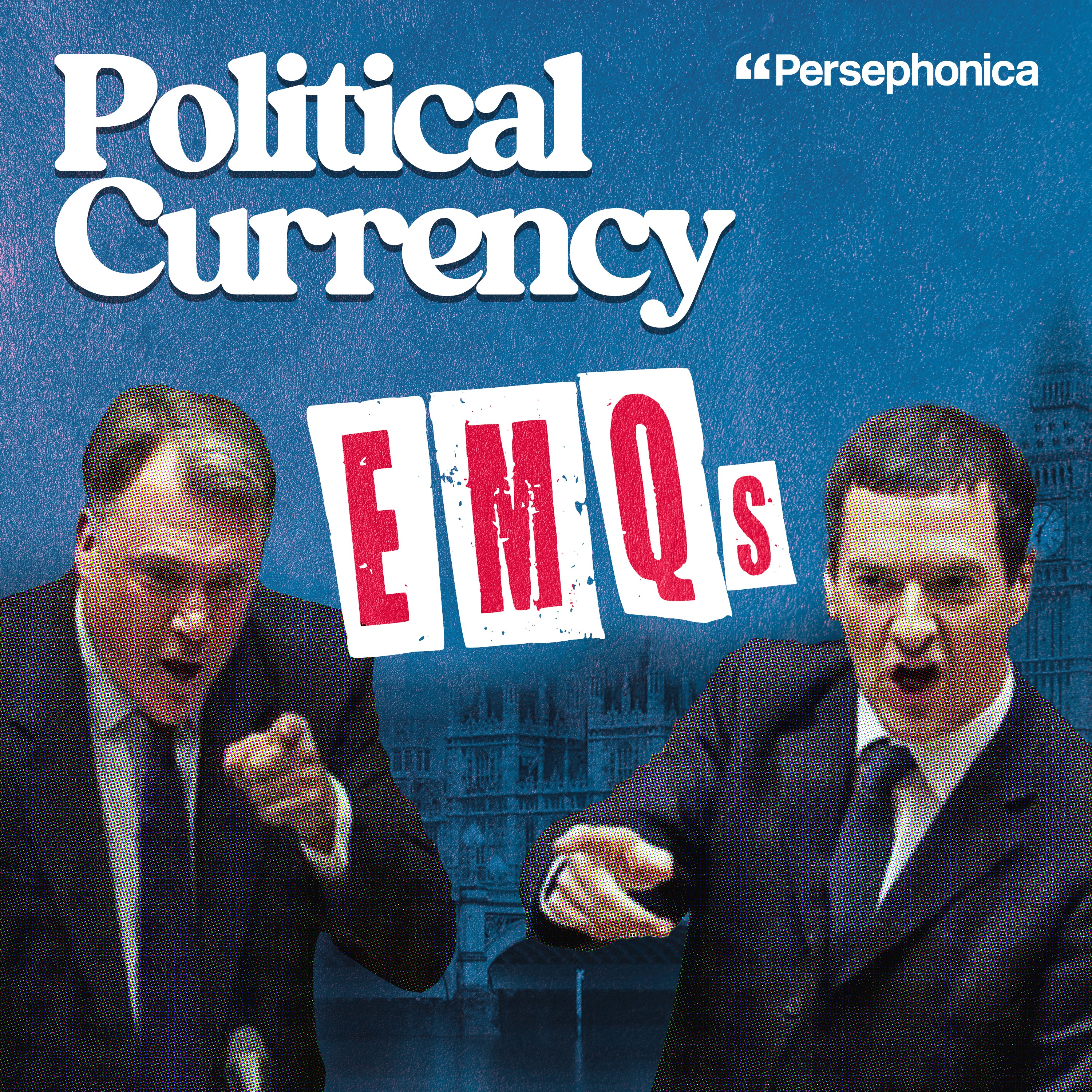
- EMQs Media special: Did podcasts ruin Keir Starmer?
In short
The episode of EMQs Media special asks whether podcasts “ruined” Keir Starmer, and uses that theme to discuss media incentives, long-form political interviewing, and how books and journalists shape politics.
Guests
Ed Balls (former UK Shadow Chancellor/Chancellor; political commentator and podcast host) and George Osborne (former Chancellor; political commentator and podcast host). They also answer questions from podcasters Jane Garvey and Fee Glover (Off Air) and from listeners Jake, Arto, and Martin.
Key claims
ghostwriting is acceptable; AI-assisted writing is only fine as a tool, not a replacement for human craft (example: Paul Gascoigne’s autobiography “Eight,” written with journalist Victoria Williams). Brian Walden-style interviews declined because politicians learned to disrupt the methodology and because incentives to do tough, long interviews are weaker now.
Notable examples
Walden interviews with Thatcher; Paxman/Andrew Neil comparisons; Damien McBride’s “Power Trip”; Nigel Lawson’s “View from Number 11”; Windrush exposer Amelia Gentleman; and Starmer “downfall” is attributed to governance failures, not podcasts.
Written by AI. May contain mistakes.
Chapters
0:45
Summer Reflections and Sailing Plans
Hosts Ed Balls and George Osborne share summer plans and discuss sailing in Greece.
“Welcome to EMQs from Political Currency with Ed Balls and George Osborne.”
2:49
Questions from Fellow Podcasters
Jane Garvey and Fee Glover pose questions about celebrity books and political interviews.
“From the Off Air with Jane and Fee podcast, a podcast that remains moderately successful.”
3:10
The Role of Ghostwriters and AI
Discussion on the legitimacy of ghostwritten and AI-assisted books in politics.
“Have we got to the point where out of respect for the book buying public, celebrity books that are actually ghost written or AI assisted should have a great big bloomin' sticker on the front saying exactly that?”
7:18
Brian Walden's Interviewing Style
Exploring Brian Walden's impact on political interviews and how they have evolved.
“And it's written by Paul Gascoigne with the help of a very well-known, brilliant northeast journalist called Victoria Williams.”
14:00
The Dynamics of Effective Interviews
Explore the challenges of engaging political interviews and the changing methodologies of interviewers and interviewees.
“you could destabilise the whole interview.”
18:06
Recommended Political Autobiographies
Discover insightful political autobiographies that provide context to current events and personal political journeys.
“And what better way to start our special media summer EMQs with that?”
23:25
Consequential Journalists in Politics
Delve into the discussion of influential journalists who have shaped political discourse through their writing.
“Instead of recommending your book, which you hijack, you've hijacked entirely.”
28:00
The Impact of Journalism on Political Leaders
Explore how influential journalists and their writing shaped political narratives and leaders' reputations.
“newspapers, probably Simon Walters was the agenda-setting news journalist made on Sunday.”
33:30
Podcasts and the Downfall of Keir Starmer
Discuss whether podcasts have played a role in Keir Starmer's political challenges and failures.
“To what extent do you think podcasts like yours have contributed to the downfall of Keir Starmer, Especially in your case, Ed, the relentless criticism of him by saying what you would have done.”

Ask about this episode
Get the gist, explore an idea or ask about something said.
 Claude
On Political Currency, what are the key points of this episode?
Searching your listeningTranscript
Automatic transcript. May contain errors.
0:00This week on Outrage and Optimism we look at the remarkable summer we've been having in Western Europe with heatwave after heatwave that has now translated into wildfires in France, in Spain and even in Scotland. There has been a conspiracy of silence in the media that is preventing us from seeing what is really happening. This week on Outrage and Optimism we cut through to understand what's going on and how our society can and should change to deal with these issues.
0:28George Osborne: The Chancellor of the Exchequer. Getting a lesson from the Shadow Chancellor on how to balance the books is like getting a lesson from Dracula on how to look after a bloodbath.
0:37Ed Balls: Ed Balls. A steady-as-she-goes budget. What kind of ship does he think he's on, the Titanic? Hello, Mary Celeste. Welcome to EMQs from Political Currency with Ed Balls and George Osborne.
0:55George Osborne: so welcome to one of our summer episodes of ex-ministers questions emqs we're looking at questions we've had around the media around culture and their interaction with politics it being the summer you know i'll be on the island of paxos in greece in the ionian sea and um when When are you going to sail by? Because, of course, you are a yachtsman. We're waiting for you. There's a hearty meal, a warm bed. You can moor up. You can be like a Greek hero.
1:30Ed Balls: Trouble is, our youngest daughter, who's coming on holiday with this, won't go on the boat. So that knocks out August. Basically, I tend to sail in.
1:36George Osborne: She won't go on the train either, will she?
1:38Ed Balls: Not this year. She said, no, wait, Jose, to that as well. She's only really into planes. No, she's doing an overnight boat, though. All right. Because when she was young, we did a Harwich to Zybrugge, I think it was, ferry. And they had a really good buffet where they had chicken nuggets. And she loves it so much. So for some reason, she's still happy to do the overnight ferries. The old glamorous Harwich to Zybrugge. That one. Nothing like one of those. That one. But, you know, I love sailing. I love sailing in Greece. We tend to go out of Lefkada. so around the Ionian Islands.
2:15George Osborne: A bit further south from Paxos, yeah.
2:16Ed Balls: But not normally in August. No. Normally slightly out of season.
2:21George Osborne: Right. Why?
2:22Ed Balls: Because August is like full of trippers.
2:25George Osborne: Ah.
2:26Ed Balls: Amateur sailors. It's like cabinet ministers and MPs and journalists on holiday in August. But, you know, if you're enjoying your holiday, listen to EMQs in the Ionian Sea or on an Ionian Island because you're an MP, a cabinet minister, a special advisor or a journalist. You know, we hope you enjoy this, but you won't see me sail past.
2:48George Osborne: Now, our first question is from two great fellow podcasters and media stars. Hi, George. Hi, Ed. This is Jane Garvey and Fee Glover. Hello, boys. Boys. From the Off Air with Jane and Fee podcast, a podcast that remains moderately successful. We're very proud of it. So here are our questions. My colleague Fee will start. Have we got to the point where out of respect for the book buying public, celebrity books that are actually ghost written or AI assisted should have a great big bloomin' sticker on the front saying exactly that? And my question is, what politician these days would survive an interrogation by the late, great Brian Walden, who was so ferocious in some of his full-body ding-dongs with Margaret Thatcher.
3:42Is there anyone around today who's close to him in any way at all? Shall I go first?
3:50George Osborne: Sure. I would draw a distinction between ghostwritten and AI-assisted. First of all, when it comes to autobiographies, I mean, there is a long, distinguished history over hundreds of years of people getting help in writing their autobiographies. And after all, you could have a very interesting story to tell about your life, but you might not be very good at writing. And why not get someone to help? I don't think we should be against ghostwriters. And they usually get some acknowledgement somewhere in the book. AI assisted, I think it's a bit like saying, you know, should you have said 30 years ago, So I've used a word processor to write this book as opposed to I've written it out by hand or I've used a spell checker.
4:37George Osborne: I've used Microsoft Word. You know, AI assisted. If you simply asked AI, write a book for me and you put it out under your own name. OK, fine. But it may not be brilliant, the book. but if you've used AI to help you say what you want to say and really engaged with it and prompted it correctly, then it just becomes another writing tool, not unlike a WordPress assistant. So I think I don't want to disagree with you here, Fi. I think you're being a bit tough on people who use all sorts of assistants, whether they're human or digital, to tell their story.
5:12Ed Balls: Well, thanks very much to Fi and Jane for the questions. and I love their podcast. And so I am very, very pleased that they are also enjoying us and that we are cross-fertilizing here. We had on Good Morning Britain a few weeks ago, and I say this in the aftermath of England's World Cup demise, we had Paul Gascoyne come on to talk about life. But his book, Eight, was just out in paperback. and it is a absolutely brilliant rollicking read and the stories in it are hilarious and the story of why he signed for Spurs rather than for Man United he told Alex Ferguson he was going to sign for him but then he's at home and he gets a call from the Spurs chair and he says you know come and sign for us and his dad yells no way you're going to Man United and the Spurs chairman and says, can I speak to your father?
6:11Ed Balls: Has a chat with him. And basically, he promises the dad he'd buy him a car and give him a cash payment. So Paul ends and Paul says, what do I do? And his dad says, well, you know, it's obvious you're going to Spurs, aren't you? So that's why he signed for Spurs. Amazing story about how Paul Gascoigne was addicted to Red Bull drinks, energy drinks.
6:34George Osborne: I thought it was also alcohol, wasn't it?
6:35Ed Balls: Before that. But he's got an addictive personality, addicted to Red Bull drinks. and we have this conversation i've read this book he's at alcoholics anonymous at a meeting and he's quite hyper one of the people says are you okay paul are you having a heart attack what's going on are you and he says well i'm just a bit over all and person says have you been drinking alcohol he says no no no he said but i've had red bull and um the person says in the a meeting how many how many have you had and he said well today so far i've had 35 35 red bulls that day he had to go to some special detox in Arizona.
7:12Ed Balls: He said it was harder detoxing from Red Bull than from alcohol. Anyway, it's a totally brilliant autobiography.
7:19George Osborne: And it's written by Paul Gascoigne with the help of a very well-known, brilliant northeast
7:27Ed Balls: journalist called Victoria Williams. Now, Victoria Williams is a professional. She's a journalist. She's a professional writer. There's no way Paul Gascoigne could have written that book on his own. He's a professional footballer. There's no way that book could have been written without. And Victoria couldn't have scored that goal against Scotland, which I saw at Wembley in 1996. But nor could she have written that book without Paul Gascoigne, because they're all Paul's stories. A brilliant journalist and writer, in partnership with a fabulous footballer and wildly experienced human being, together writes just a brilliant book.
8:03Ed Balls: So, you know, it goes for writers. It changed my view, actually, because I think I probably always had a sort of slight, you know, is it a con? Have you really written it? But actually, in this case, the sum was massively bigger than the parts. I've changed my mind. I think ghostwriters are great.
8:18George Osborne: And using AI to help?
8:20Ed Balls: Well, I mean, I don't think that Victoria Williams could be replaced by AI and have the same excellence of innovative turn of phrase. So I'm not against using AI, but I reckon you can tell it was written by AI. and this was not written by AI, it was written by Victoria. She's brilliant.
8:38George Osborne: Don't you love the Robert Harris book? Is it called The Ghost? About the ghost writer for essentially Tony Blair. I mean, they don't call him Tony Blair, but he's a British prime minister who's, you know, stuck on Martha's Vineyard because, you know, he's being pursued for his war in the Middle East. And we won't give away the final plot twist, but there's a very, very good movie as well. Now, what about, so Brian Walden, did you know, I had the great fortune of getting to know Brian Walden a bit. Was that when he was in the country?
9:09Ed Balls: He was. He helicoptered in, didn't he, from the Channel Islands because he was a tax exile. Yeah. He was a Labour MP, wasn't he? He was. He was a Labour MP who… Became very close to Margaret Thatcher.
9:20George Osborne: Well, he ended up being the presenter of Weekend World, which is what Jane is asking us about here.
9:26Ed Balls: And then it became called Walden, didn't it, in the end?
9:29George Osborne: Yeah, maybe. Weekend World, I'm just about old enough to remember that Weekend World was the political program. ITV, wasn't it? It was on a Sunday, and it was sort of Sunday lunchtime. And there was essentially an almost hour-long interview. And Ryan Walton, because he'd been a Labour MP, you know, he wasn't sort of totally unsympathetic to politicians, which I think you sometimes get from journalists. And if you're a politician, you go, well, you know, why don't you try doing this, mate, is what you're privately thinking. so he had the kind of credibility amongst politicians and and he's i mean i i was a teenager at the time but i absolutely remember these long interviews with people like margaret thatcher so the question is um i got to know him when william haig knew him and he brought him in for essentially for a sort of give him advice and he'd kind of give william advice and i'd be there and then he'd bring him in to it started this practice which no one had done before getting tory and peas to go away for a sort of way day and brian wolman would come and give a kind of like the after dinner speech to sort of give advice on what works in politics and what doesn't and he was replaced by Matthew Paris on Weekend Worlds who was a Tory MP so I just think the problem here it's a question is like is there anyone around today who's close to him in any way at all well there are some excellent excellent broadcast interviewers out there um you know some of the presenters of the Today program are really excellent good morning Britain has a very good interview I'm looking at him now um so I don't think it's I don't think you can say Brian Walden was sort of uniquely brilliant, although he was obviously great.
10:59George Osborne: Back then, I think that if you were a top politician like Margaret Thatcher, there were a limited number of ways of communicating with the public. You know, you could give a speech and it would be reported in the paper and it might be reported on the news. Parliament wasn't televised. Right. And so then you get to the question of how do you and these big broadcast shows, the big broadcast interviews with one of the principal means of communication. The problem today with politicians, and if you want to revive the long form interview and the tough interview, is what's the incentive on the politician to do the show?
11:34George Osborne: And I think journalists tend to assume, well, because we're in a democracy and people should be held to account, to which the politician goes, well, thank you very much. I'll handle the accountability and the democracy. And some politicians just refuse to do the Today program, for example, as a result. And I think you have to create a set of incentives for why you'd want to do it. And, you know, there was when I was shadow chancellor, I did an interview with Jeremy Paxman and he was so rude. And it was such a sort of pathetic interview. I said to him when I stopped, I said, I am never, ever doing an interview with you again.
12:06George Osborne: And I never did. And throughout the time I was chancellor, Newsnight used to come back again and again and again and say, look, you know, that was a bad day. We didn't mean the interview to be like that. And I was like, and I did do in Newsnight interviews, but never with Jeremy Paxman, because I just thought that's not a problem. Yet I would do the Today programme with John Humphreys very regularly because I thought that was a tough but fair interview. And so I think just the kind of set up interview where you get slapped around the head as a politician. These days, a politician goes, why would you do that?
12:35George Osborne: And to be fair to Brian Walden, that wasn't the interview he did either.
12:38Ed Balls: It wasn't. One of the very first experiences I had of media from the political end was with Gordon Brown preparing for him to go on the Walden programme. This would be back in 1993, probably. And as you say, at that time, this was a big test, whether you could do those Walden interviews. He was respectful and forensic. And very importantly, he listened to everything he said. But what I remember about it was that by that time, it had become a bit destructive, the formula. Tony Blair and Gordon Brown both believed they knew the Walden methodology, partly because they'd talked to people who'd worked.
13:20Ed Balls: with Walden, which is basically...
13:23George Osborne: And Peter Mandelson was on Weekend Wells as a researcher, wasn't he?
13:26Ed Balls: He had a thesis he wanted to get to. He wanted to kind of prove his thesis. And they would have this huge elaborate plan, which was how did you get to the thesis? You'd start at the top. If the politician gives this answer, here's your follow-up question. But if they give the alternative answer, here's the alternative question, which in the end roots your way through the 45... It's like a tree, like a... Yeah, big complex tree. The trouble is, what Tony Blair and Gordon Brown worked out was, if you could work out what the thesis was going to be, what the catch was, what the reveal was, you could say at the beginning why the thesis was wrong, you could destabilise the whole interview.
14:04Ed Balls: So Gordon got into his idea, well, actually, maybe there's five different theses, so what I should do is try and deal with all of them in the first answer. I remember Gordon subsequently going on... Fifthly. He got to, and seventhly in his first answer, And David Jordan, who was the editor, who was actually the, by this point, it was Humphreys on the record, just head in his hands saying, what is going on? And the problem was that sort of, although Walden was respectful, the methodology and how the politicians turn out to work out how to deal with it just like killed it all. And it just became turgid and too complicated.
14:38Ed Balls: And I think that's partly why. So I think the answer to Jane's question is actually part of the reason why these long interviews stopped in that particular style was because the good politicians worked out how to close it off and disrupt them. But the thing I was going to say was that they listened and they responded to what you say. And I think that the great interviewers are listeners. I have to say in my experience, Jeremy Paxman was a listener. I never had your experience. I always liked being interviewed by Paxman. He was tough. But like Andrew Neil, he listened to what you say. He wouldn't be out of left field.
15:13George Osborne: Yeah, I didn't mind. I mean, Andrew Neil is a very, very tough interviewer. I didn't mind doing him. I thought that was fair.
15:17Ed Balls: He listened in the way Walden did. I think that part of the thing which has changed, as you said, there's lots of outlets. But also, I think that people want to be interested and engaged and entertained. And the politician and the interviewer has to both have to think that that is part of our purpose here. We want to keep the audience. And I'm not sure whether those Walden interviews always were so great at keeping the audience. But the answer is, if you're going to listen and be revealing, but also have some light and shade and some entertaining, I think Jane is right. It's both hard to be the interviewer and it's hard to be the interviewee.
15:56Ed Balls: And there are lots of politicians, and I see this all the time, who can't cope with the idea of being open and revealing and responding to the question. and if you go in determined to shut it down a bit like Gordon Brown and Tony Blair were doing with Waldron in 93 you just kill the whole thing there aren't that many politicians in the modern era who can do the great interview but you have to want to do it and as the interviewer you have to also want to do the interview which reveals and draws out but is has that sort of entertaining quality I would say in my experience in the recent years that Andrew Neil is the interviewer he came closest to that but um even andrew neil every now and then would sort of just
16:39George Osborne: become destructive he always had this thing which is you know he would he would basically ask you a number you didn't know that was his opening line and then you were on the back foot i remember he interviewed me during the referendum and i'd spent a lot of time preparing for this interview and i thought of every single question and i did guess the question he was going to ask me and so i was able to say well the answer is x and then you know i was off to a much better start but you know
17:03Ed Balls: in a social media world you can you can do gotcha interviewing but does it really help what i always figure is as an interviewer you want the person to do well and good give a good answer the moment they actually just prevaricate and block at that point you can call them out and go on the offensive but until that point you should want the interviewee to succeed yeah i
17:25George Osborne: think central point is you've also if you're a journalist listening to this you what what is the incentive on the politician to come and do my interview rather than you're serving democracy
17:34Ed Balls: and all that kind of think of frost yeah i mean frost often caught people out and he was actually brilliant at it but it was never done with hostility and aggression he almost lured people into got nixon to cry over watergate exactly and i think that is um you know it has to be entertaining and the audience has to enjoy both sides of the interview and if you can do that then that's how you succeed. So I think, Jane, what we're saying is it's both about the interviewee and the interviewer. But thank you to Jane and Fee for that brilliant question. And what better way to start our special media summer EMQs with that?
18:11George Osborne: So here's our next question. It's from Jake. Hi, Ed and George. My name is Jake, and I'm a regular listener of this podcast. I'm looking forward to my summer holiday in August, and I'm thinking about what to read. You guys have both said a number of times now that history doesn't repeat itself, but it does rhyme. so what are the one or two best political or economic autobiographies that you would recommend to make sense of what's going on in the uk today thanks so much and looking forward to hearing your thoughts right so what are your recommendations here the autobiography i would definitely buy is this one by ed balls called speaking out which um i produce you can't get it anywhere though it's uh no is it been turned into pulp well hang on a sec you can't get yours because you've not written it
18:56Ed Balls: that's true whereas i've written two yeah and they are both and you can't get those either they are both in they are both absolutely in print they are very much available on uh amazon historically speaking i look i love reading the dennis healy time of my life book yeah his own account of his time as chancellor in the 70s i think ken clark's um autobiography kind of blue was also great play on the miles davis album isn't it the book about which is an autobiography not written by an elected politician which has like mega reviews and it's very revealing quite hard um at times to read it's so revealing is a power trip by damien mcgride damien was the the the advisor to um gordon brown as a civil servant then as a political appointee ended up i'm leaving
19:43George Osborne: downing street under a cloud in back in 2009 for attacking me for attacking you his book is a very
19:49Ed Balls: honest, open and revealing about the things he got wrong. But Ian Daly published it. I know it's said it's the best political book he ever published. Tim Shipman kind of totally fabulous review of the book. The young people who read that book, if you want to understand politics and actually you want to be a politician Damien's book is a good book to read.
20:10George Osborne: I'm trying to think of, I mean, I wouldn't bother with most of the autobiographies written by chancellors. Although you wrote a nice review of my book, I remember. Yes. Although I wasn't Chancellor. No. But still a nice review. Yeah. Do you remember what you said about my book? No. I have no idea. But I did read it. You wrote a review. Yeah, I know. It was years ago. I know, but I'm giving you the chance to give me a review on the podcast. Oh, yeah. Right. It's a great book. You must. You should have read it back then when it was available. Did I review your book? No. Why not? Why didn't I review it?
20:45Oh, because it's on its way. George has had the advance. He just never wrote the words.
20:50Ed Balls: He is the Boris Johnson of this podcast. Is Boris' book on Shakespeare out? No, it's not. Do you think he paid the advance bank? Well, I don't think he got enough of an advance, which is one of my theories of why COVID, the response to COVID isn't quite as it should be. Did you get an advance for yours, which you haven't written yet? I'm still writing my book.
21:12Now, speaking of autobiographies that are available.
21:16George Osborne: So actually one of the problems with writing a autobiography I think is You have to actually write it But you have to write a good one right And most of the kind of Ones that even you know I talk about the Chancellor ones because Prime Minister ones Are a different category but Prime Minister ones you know they can kind of get away with it because Loads of people feel they've got to have The biography of the Prime Minister on their shelf Maybe that's fading these days now we've had so many Prime Ministers but The Chancellor ones are quite dull I mean The standout one is Nigel Lawson's view from number 11.
21:46George Osborne: I mean, that is a guide to how to be the Chancellor's Checker, not just a Tory guide, a Tory or Labour guide. You know, if you ever aspire to the job and whoever, you know, is the Chancellor's Checker of the day should definitely read Nigel Lawson's book.
22:01Ed Balls: And of course, he was a journalist. He was editor to The Spectator on the Financial Times in the 60s. He's a writer.
22:06George Osborne: So it's a story of his life. It's a story of his time as Chancellor. It's also a how-to guide. So it sort of has chapters like how to do a budget. And then it has economic theory. There's a whole section on currencies and whether you should try and control them or not and the money supply. Anyway, lots of interesting things. Did I ever tell you that? It's not a barrel of laughs though. It's kind of quite a, I think it's these days actually been rebranded as memoirs of a Tory radical.
22:31Ed Balls: Did I ever tell you that I didn't actually write my book at all? No. You dictated it? I dictated the whole thing. Maybe given you do a podcast, you should think about this method. I would work out the chapter plan. Maybe I should just get ChatGBT to the end. earlier point earlier question i would turn on the tape machine speak for an hour 8 000 words and then edit it down to about 4 000 and actually it meant doing the audio book was really easy because it's a very spoken book do you know i mean it's actually done the audio book but it's in the style of and i think that is um for something like you you would find speaking your book easier than having to write it down oh thanks what's wrong about writing i've just tried I'm just trying.
23:09To be fair. What I mean is because you are a professional speaker these days.
23:12Ed Balls: You do a podcast. I'm just trying to think, you know, clearly you've got writer's block.
23:16George Osborne: No, I haven't. I've just got so much to say. I've got so many interesting things happening in my life. Where do I, you know, it's not over yet. Anyway, we're doing Jake a disservice here. Instead of recommending your book, which you hijack, you've hijacked entirely. What about my book?
23:31Ed Balls: I did Dennis Healy, Ken Clark and Daniel McBride.
23:33George Osborne: Right. So I've got two other suggestions here, which are older ones, much older ones. So first of all, I'm not sure this counts as an autobiography. In fact, it doesn't, but you'll see it's in a special category. Tony Crosland was the Labour Foreign Secretary, died as Foreign Secretary in office. But he was a kind of big thinker on the left in the 60s and 70s. His wife, Susan Crosland, wrote a book about Tony Crosland, and it's a great read. It's a really interesting book. So it's not quite an autobiography, but it's written by his wife. And And anyway, I'd recommend that. And then I tell you, there is a book that it really has endured, even though it must be 100 years old now.
24:12George Osborne: And that is Winston Churchill's My Early Life, which is his autobiography of his first 30 years. It's about his school days. It's about being in the army. It's about escaping from a prison in the Boer War when he's a journalist, not a soldier. And it's becoming a young member of parliament. and it's just brilliant. It's just a really interesting read. I don't think all the Churchill books, he wrote lots, partly because he was short of money and a bit like Boris Johnson. That was sort of the one thing he knew how to make some cash from. But the My Early Life book does endure. It's very readable.
24:51George Osborne: It gives you a kind of, you suddenly realise some of the appeal of, you need much imagination to imagine the appeal of Winston Churchill. But reading the book, you can see why he was such a big star. so young. So that's my recommendation, Jake. We're going to take a break now and we'll be back shortly afterwards with a question about consequential journalists.
25:22George Osborne: Welcome back. So the next question is from Arto. Hello, this is Arto from Helsinki, Finland. I am a third-way enthusiast, fan of the podcast and seriously contemplating on the Kitchen Cabinet membership. Ed and George, you often refer to journalists and public discourse they contribute to. knowing that the world of media has totally changed can you name three most consequential journalists of your time in politics who through their reporting made difference and tell us why consequential journal who are the this is fraught with risks yes we are going to piss off everyone
26:03Ed Balls: we uh so i i thought about this in advance because i thought i'd provide you with a framework yeah and um because i think you have to narrow this down we can't just you know yeah we have to focus. So I'm going to think about this in this way. I'm going to think about writing journalists. So we're knocking out broadcasters. So there's clearly been some very influential broadcasters, you know, Robert Peston, hugely agenda setting.
26:26George Osborne: You're putting him in because he's in your band.
26:28Ed Balls: No, but I'm saying, but he's not, I'm not counting him because we're not doing broadcast journalists. We're doing writing journalists. And secondly,
26:35George Osborne: Didn't Robert Peston write books and stuff? You're just getting your excuses out for why you're not going to... He did, but
26:42Ed Balls: But he's also probably better known as a broadcaster. And then secondly, I'm going to be political journalists. So I'm not going to count economics journalists. So, you know, Martin Wolf, Larry Elliott, Bill Keegan, a huge number, David Smith, big economic journalists, very influential in the gender setting. They're not counted in this either. And thirdly, I'm going to think about people in the era when I was active in politics and in government. So we're not talking about people who are writing now. So, you know, Tim Shipman, Patrick Maguire, a huge number of very kind of influential journalists of the now.
27:15Ed Balls: They're not counting because I'm looking back to the time when I was actually in parliament or in government. And I'm going to split it into two. The news agenda driving journalists, the ones who absolutely wrote the news story, which a week later people were still talking about. And then secondly, the columnists, the people who were shaping ideas. so on the former who were there's a lot of preconditions i know it's a lot longer than arto's question so get on with it okay so oh this summer's going to be on the former who were in my era the yes all right we know writing political news journalists and the answer is i would say phil webster of the times absolutely called doyen trevor cavanaugh on the sun yeah in the sunday newspapers, probably Simon Walters was the agenda-setting news journalist made on Sunday.
28:08Ed Balls: I mean, there were people who were, you know, George Parker's been around forever, but I'm knocking him out because he's contemporary because he's still writing in the FT today. Sorry about that, George. People like Pippa Carrera, Steve Swinford, they weren't around then. But Phil Webster, Trevor Cavernous, Simon Walters, I mean, you know, I'm going to say they were totally top draw. And there were lots of other people like Andy Porter, Paddy Hennessy, people who are kind of big journalists but i think they would probably say actually for both to trevor kavanagh i mean they were the the top guys then in terms of columns this this is really hard think about um columnists in my era i'm going to say that the best columnist about labor i think was steve richards uh on the independent certainly the best columnists about the economy and gordon brown but also tony blair as well there were lots of other people you could choose guardian independent andrew rawnsley was been around forever and obviously he's kind of a great reporting columnist polly tor would be a great campaigning uh columnist i actually think probably of those in that era jonathan friedland on the guardian for us was very influential so i'm going to pick him out the other person in the sort of three that were on we're on your like 30th once you've ruled out like i mean once you've qualified you basically said You've started at the beginning saying it'd be very invidious to do this and I'm going to make some enemies here.
29:35And then you've now gone and named every single journalist you could possibly think of. You really have created a situation where if you've forgotten some of them, they're going to be really offended.
29:44Ed Balls: No, that's not true. Because I've only just chosen there Steve Richards and Jonathan Friedland. I just mentioned others in dispatches. Peter Riddle on The Times was also hugely important. Columnist in his time. I think probably Kevin Maguire, Guardian Mirror, also very influential columnist. That is my answer to Arto. And, you know, you could easily have a conversation about who is the Trevor Kavanaugh of these times. Who's the Steve Richards? As I said, Tim Byshipman, Patrick Maguire would definitely be up there. But they don't quite fit in my category. So that's my answer. I thought that through, George.
30:19Ed Balls: How about you?
30:21George Osborne: I can't think of anyone you haven't mentioned. Who were the – well, I'll mention a couple of people. I mean, I don't know if you can count him as a journalist. Paul Dacre, editor. But, you know, he told the journalist what to write. So I guess he was a journalist. I mean, it's hard to think of anyone who was more consequential.
30:39Ed Balls: And the column he wrote last week when the Prince Harry case settled was so good.
30:43George Osborne: I saw Paul the other day at a drinks party and had a quite long chat with him. And we always kind of got on. I mean, he's definitely not everyone's favourite person. And he quite often duffed me up. But we had a chat and when I became editor of The Evening Standard, I took him out for dinner and said, I was quite like, how on earth do you edit a paper? Paul, tell me. And so I think he is definitely a very, very consequential journalist. I would say someone, he's not really in my time in politics, but he became a kind of friend and mentor. So he had a big impact on me personally. Harry Evans. I was very lucky to know him.
31:18George Osborne: The great, arguably the greatest newspaper editor, certainly since the Second World War. editor of the Sunday Times and married to Tina Brown who's also a friend of mine and um there's a wonderful set of um scholarships and things set up in his name but he again told me he told me he told me lots of great things about how to edit newspaper one thing he said to me are you gonna have a diary column on the evening standard and I said yes he said now look as an editor you're just not going to be able to read particularly when it comes to the evening standard everything that's produced every day because you don't have time right and that's not the job of the editor to read everything.
31:50George Osborne: You've got other people to do that. You have got to read your diary column every day before it goes out because it's the one thing that can get you sacked by the afternoon. If you have done over the proprietor's friend without knowing, or the diary columnist won't necessarily know, but you will. First rule of editing, read your diary column every day. And talking about the question we just answered that Harry wrote a great autobiography.
32:15Ed Balls: He did, yes.
32:16George Osborne: I'm going to mention someone who I think did have quite an impact Millie Gentleman you know it was her but I know her she's I was at university.
32:24Ed Balls: Her byline's Amelia
32:25George Osborne: Yes she exposed the Windrush scandal I mean that was a great piece of investigative journalism in The Guardian and it caused no end of trouble for Tory governments and led to the resignation of a Home Secretary and so on but
32:38Ed Balls: That was a category I could have done investigative journalist I've got five names I can mention in that but I won't
32:44George Osborne: Can I give a little shout out One of my favourite columnists, I was very lucky because this man wrote the biography of me. It's Janan Ganesh in the FT.
32:54Ed Balls: I bet that's Remainded.
32:55George Osborne: I think it's on its like 11th or 12th reprint.
32:58Ed Balls: Is that really true? Yeah, but think how many epilogues you have to write. Epilogue 12, George has just got a new job.
33:06George Osborne: Yeah. I could write a book on like all the bits of the British establishment I've seen. Editing a newspaper, being in the cabinet, British Museum. How the country works. I think Robert Peston wrote a book like that, didn't he once? He did.
33:18Ed Balls: We will take a break and we've got time for one more question.
33:31Ed Balls: The final question is from Martin. And it's a challenge to ask this one. To what extent do you think podcasts like yours have contributed to the downfall of Keir Starmer, Especially in your case, Ed, the relentless criticism of him by saying what you would have done.
33:51George Osborne: Have podcasts contributed to the downfall of Keir Starmer? No, not particularly in the sense that I think Keir Starmer contributed to the downfall of Keir Starmer. What's true, I think, of maybe other podcasts, Seneas, is that we, you know, did try and address some of the structural problems or the innate challenges of the Starmer premiership. And we know that our podcast is listened to by Labour MPs. And so maybe they took those on board and thought, yeah, these are unfixable. I don't know. What do you think? I'm going to say two things in our defence. Why do we need a defence? We were doing the work of the people.
34:30Ed Balls: No, because Martin talks about our relentless criticism, continually saying, I would have. But I think, to be fair to us and our podcast, our podcast is distinguished by two things. one that we believe in politics and we believe in government and we want politicians to succeed and we want to care starmer we want andy burnham we want keby badenock to succeed doesn't mean that we won't be critical but we're not against them we want them to succeed and the second thing is that we talk about what they're doing in real time as events are occurring and as decisions are being made we are saying look out for this worry about that the danger with what you're doing is this could happen this is why this is a mistake we called out the manifesto commitments being too boxed in for kirstama we called out the winter fuel allowance abolition you know in the week they happened and at the time we said you know this is a mistake or this is what you should be doing.
35:34Ed Balls: I think we've done that repeatedly. Now, what that also means... Relentlessly. Relentlessly. What that also means is that when things clearly have gone wrong and when people are failing, we also look back and say... I told you so. We told you. We warned you at the time. I was hearing. But we didn't say what we... We're not after the fact. I don't think we're wise after the fact. I mean, I think we are wise after the fact. We're wise before the fact. No, but I think... To be fair to us. The hard thing, it's easy. In fact, when we think of the greatest journalists of our age, what about us? If you think about the winter allowance, there are some people who shrug their shoulders or even said, is it smart?
36:11Ed Balls: Who three months later or six months later said, terrible mistake. I think to be fair to us, we said this is the wrong call in the week in which it happened. And I think the thing to be judged on is not what you say after the fact, but what you say at the time. And I think if Keir Starmer had listened to advice, including from us, he'd have made better calls along the way. That is my view. Do I think that we brought him down? Absolutely not. In the end, as we said on our podcast at the time of his departure, that in the end, it was him not being able to govern and to lead and to have a compelling vision and to hold his covenant together and manage his team.
36:51Ed Balls: That was his failure. It wasn't us. So do I feel that we are responsible? No. And should we keep saying to Andy Burnham and Kemi Badenock every week on this podcast, be careful, don't do this. That's a mistake, but it's not too late to change your mind. Time to do a U-turn. I think that that's the responsible thing to do. And if they then don't listen, at times we're then going to say, told you. You're on your own. Do you disagree with that? No. You sounded like you were mocking me. Would I?
37:22George Osborne: Yes. I think we were being a little bit, you know, self-congratulatory. Nothing wrong with that, though. I have to say, of all the people in my life to accuse me of being self-congratulatory, you, hello. I know what I'm talking about. Thank you for your question, Martin. That's all we have time for on this episode of EMQs. Yeah, do send us some questions for the autumn. questions at politicalcurrency.co.uk and message us on our socials.
37:54Ed Balls: You can also email us questions at politicalcurrency.co.uk We always like a voice note and if you think there is anything over the last few years where we've got wrong at the time hold us to account. It's important. Okay.
38:07George Osborne: And maybe we'll include your question. We're going to be back on Thursday with a special interview. See you then.
38:19George Osborne: Thanks for listening to Political Currency. This has been a Persephoneca production.
From the publisher
In this media themed episode of EMQs, Ed Balls and George Osborne dip into the archive of questions from the past year to put all things media and politics into the spotlight. Fellow podcasters Jane Garvey and Fi Glover send in a question to find out why there are no interviewers quite like Brian Walden anymore, and whether biographies assisted by AI should be labelled as such in future.
Ed and George then look to the past to get some inspiration for the future, with a listener asking which political biographies give us the best indication of just how history may rhyme in the coming years. They then name the best political journalists from their time in politics, and who left the biggest impact in the day to day of government.
Finally, the pair are challenged on whether podcasts like this one are what really doomed Keir Starmer. Was Ed saying how he would have done things differently too destabilising? Or, was the fall of the Starmer government inevitable no matter how much commentary there was?
We love hearing from you, so please don’t forget to send all your EMQs to questions@politicalcurrency and make sure to include a voice note of your question or send a question to our social media handles:
👉 X
👉 TikTok
Thanks for listening. To get episodes early and ad- free join Political Currency Gold or our Kitchen Cabinet. If you want even more perks including our exclusive newsletter, join our Kitchen Cabinet today:
👉 patreon.com/politicalcurrency
Please note: Kitchen Cabinet is only available via Patreon.
Credits:
Production: Sam Burton & Nasreen Arain
Producer: Caillin McDaid
Video Editor: Sam Gruet
Executive Producer: Henrietta Harrison
Political Currency is a Persephonica Production and is part of the Acast Creator Network.
Hosted on Acast. See acast.com/privacy for more information.
More from Political Currency
All episodes

We use cookies.They keep VO running smoothly and help us improve it. Privacy policy