

 Ask ChatGPT
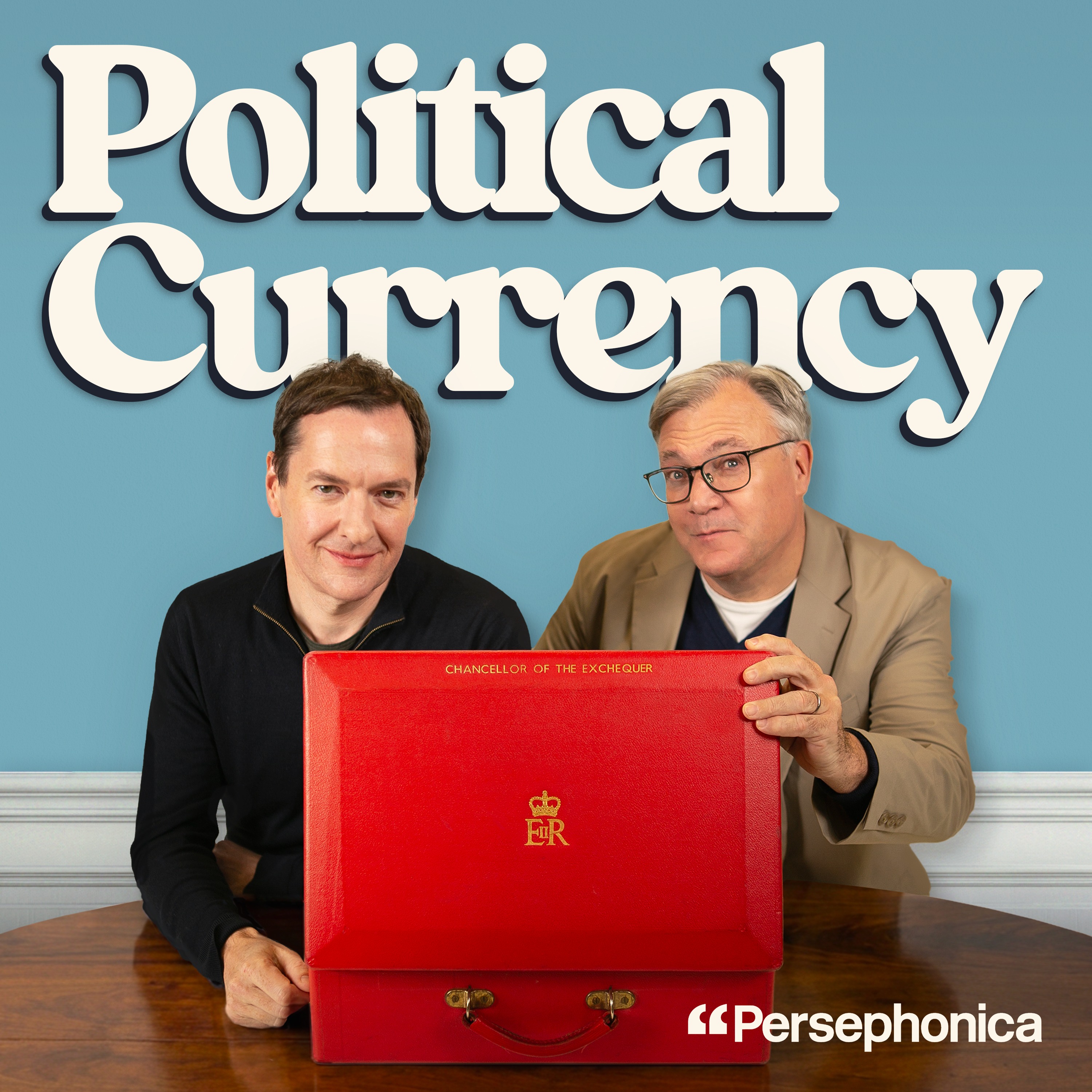

- Podcasts
- Political Currency
- EMQs: Should PMs be youthful or experienced?
In short
EMQs episode covering (1) whether political leaders should be youthful or experienced, (2) Heathrow rail expansion and whether governments prioritize broader economic connectivity, (3) how a Chancellor should manage fiscal headroom amid gilt volatility, and (4) whether government should publicly instruct citizens on actions during national emergencies (e.g., war, flooding, drone attacks).
Guests
No recurring “guests” appear; questions come from listeners and one named public figure. Named questioner: Baroness Jo Valentine (chair of Heathrow Southern Railway Limited; ex-CEO of London First; cross-bencher in the House of Lords). Other questioners: Alec (Hampshire), Danvers Bayview, Patrick (Barclays Brief podcast), Louise (Gold subscriber).
Key claims
Youth can be an underestimated political advantage (energy, less “seen it all” caution), but wisdom and learning from history matter. Heathrow access should be judged by wider regional economic benefits, not just airport passenger flows. The Chancellor is constrained: limited spending cuts left, borrowing constrained by markets/fiscal rules, so likely “stealth taxes” or constrained spending; chancellors should lead broader reforms for credibility. Government should plan and communicate calmly; public “prepare for war” messaging can backfire and increase anxiety.
Notable examples
Libyan crisis age debate; Rwanda/Srebrenica context; Crossrail origins (1930s ideas) and long project gestation; Olympics legacy (transport links and V&A East); Millennium Dome/O2 and Jubilee line extension; Cold War nuclear planning; COVID compliance; Ukraine drone threats; Gulf air-defense examples (Iron Dome comparison).
Written by AI. May contain mistakes.
Chapters
1:59
Easter Traditions and Chocolate Thievery
Explore the lighthearted exchange about Easter traditions and chocolate theft.
“He's the sort of bad bunny, I think, is the pop parallel here, isn't it?”
3:00
Egg Throwing: A Unique Tradition
Delve into the peculiar tradition of throwing eggs and its humorous consequences.
“I went round and hoovered up the debris until actually quite a lot of it.”
4:00
Book Recommendations and Cultural Insights
Discover book recommendations and the cultural significance of literary works.
“It depends how many you're catching, but let's say you've got 10 catching.”
5:00
Curate's Egg: Origins and Misunderstandings
Unpack the origin of the curate's egg phrase and its implications in modern usage.
“Well, normally if you throw 12 or 14, you might get one.”
6:20
The Dynamics of Age in Politics
Explore the tension between youth and experience in political leadership.
“EMQ's listeners if you've not read Gorky Park it's a thriller it's a thriller written in the 80s about a kind of cop in communist Moscow solving a murder right captures that sort of communist Moscow feel.”
7:30
Youthful Leadership vs. Experience
Discuss the benefits of youthful leadership in political contexts.
“is a very junior cleric, hired by a vicar from the Latin vicina, a locality, the assigned priest of a parish to help him with his duties, or, too often, do them for him.”
9:00
Perceptions of Age in Tech and Politics
Examine how perceptions of age influence dynamics in politics and the tech industry.
“He was just trying to suck up to the bishop.”
14:03
Youth vs. Experience in Leadership
Explore the debate on whether youthful leaders or experienced ones are more effective in politics.
“But Tony Blair was the youngest Labour MP of his intake.”
19:28
The Heathrow Rail Conundrum
Delve into the complexities of the proposed rail link to Heathrow and its broader implications.
“Now, our next question is from someone we both know, Ed, from Jo.”
26:54
Fiscal Policy Under Pressure
Understand the challenges of managing fiscal policy amid market volatility and inflation.
“And it was all at the time that was a kind of rather strange Boris Johnson phrase called Olympicopolis that he was wanting to build there.”
Show all 16 chapters
28:00
Chancellor's Fiscal Challenges and Options
Explore the fiscal constraints faced by the Chancellor and potential policy strategies.
“There's also growing market speculation about what this means for the Chancellor's fiscal headroom, especially with expectations that the Bank of England may raise rates in the months ahead.”
35:20
Public Preparedness for National Emergencies
Discuss the need for government education on preparedness for threats and emergencies.
“Gold subscriber, you're my go-to podcast for all things political.”
42:03
Risk Management in Governance
Discussing the balance between addressing public risks and avoiding panic.
“If you remember, there was a lot of worry about the Millennium bug at the turn of the Millennium.”
44:05
Public Compliance and Leadership Credibility
Examining public compliance during crises and the credibility of leaders.
“They got very angry about people breaking those rules.”
46:04
Preparing for Threats: A Comparative Analysis
Comparing how different countries prepare for potential threats in schools.
“You want to know the government is doing that.”
48:00
Audience Engagement and Question Reflection
Reflecting on audience questions and the insights they provoke.
“broadcasting on Good Morning Britain, 20 past nine, no sound in the studio, but in our ears, we hear the fire alarm go off.”

Ask about this episode
Get the gist, explore an idea or ask about something said.
 Claude
On Political Currency, what are the key points of this episode?
Searching your listeningTranscript
Automatic transcript. May contain errors.
0:00Security program on spreadsheets, new regulations piling up, and audit dread? It's time for Vanta. Vanta automates security and compliance, brings evidence into one place, and cuts audit prep by 82%. Less manual work, clearer visibility, faster deals. Zero chaos. Call it compliance, or call it compliance. Get it? Join the 15 ,000 companies using Vanta to prove trust. Go to vanta.com slash com. Business is booming, but you know what really helped? Zero, the accounting platform for small businesses. I used to think unpaid bills were just part of it. Ugh. But batch payments? Wow. Automated accounts payable?
0:44Even better. All in one place? That's a big one. And I can keep track from my phone while I get the job done. No bills in sight. What a life. Do right by yourself and your business. and search X-E-R-O for your free trial. Conditions apply. Shipping, billing, admin, payroll, marketing. You're managing all the things. So why waste time sending important documents the old-fashioned way? Mail and ship when you want, how you want with Stamps.com. Print postage on demand 24-7 and schedule pickups from your office or home. Save up to 90 % with automated rate shopping. That's why over 1 million small businesses trust Stamps.com.
1:23Go to stamps.com and use code podcast to try stamps.com risk-free for 60 days.
1:31George Osborne: The Chancellor of the Exchequer. Getting a lesson from the Shadow Chancellor on how to balance the books is like getting a lesson from Dracula on how to look after a bloodbath. Ed Balls. A steady-as-she-goes budget. What kind of ship does he think he's on, the Titanic? They're married, Celeste. Welcome to EMQs from Political Currency with Ed Balls and George Osborne.
1:59George Osborne: hello and welcome to x ministers questions emqs uh this is actually our first emqs that we've recorded since easter and uh for aficionados of our podcast you will know we've been debating like easter egg hunts and uh what you do with all the chocolate that the kids get on easter But essentially, it was revealed that Ed is the Easter Bunny thief. He's the sort of bad bunny, I think, is the pop parallel here, isn't it? Because you go around kind of basically stealing the kids' chocolates. I mean, I say kids, your kids are all grown up. But you go and steal their chocolates after they've got a bit sick with eating them.
2:41That is true. And in fact, I had a cream egg last night because we have a tin on the kitchen table where I've accumulated the small eggs, cream eggs and a bit of chocolate egg. and it's still going, you know, what is it now? Two weeks on, Easter is still the gift which keeps giving. You really are a bad bully. I absolutely am. Look, you know.
2:59George Osborne: The Super Bowl is beckoning. I went round and hoovered up the debris until actually quite a lot of it. Hoovered is a code for eating. No, I'm still hoovering. Well, I'm literally hoovering as well. What about, so you revealed before Easter that the Balls Cooper household has a strange tradition, which I don't think is particular to where you live or where you grew up or whatever. It's like unique to you guys, which is you throw raw eggs, real eggs, over your house. This is the house in Yorkshire, right? Or any house we're staying in. Right. Chevening's probably a bit harder to... It's quite high.
3:38George Osborne: Anyway, until you got into stately homes when you were just regular people, you would throw them over your semi and catch them, right? No, I deny this is simply a Balls-Cooper tradition. I think it's a venerable British tradition, and there will be listeners to this podcast who I believe also participate. But yes, the throwing of raw eggs, that was an Easter highlight, Easter Sunday morning. Tell me, let's take this through. What do you do? You go and buy your eggs in advance. It depends how many you're catching, but let's say you've got 10 catching. You need about 12 eggs. 10 people catching.
4:09Yeah, I mean, because the thrower can't see where the catches are because they're throwing over a house. Right. You do a sort of lob. So it's a kind of like a lob moment because the egg needs to fall. It's all about the trajectory of the fall. And then in the cat...
4:23George Osborne: Well, hold on. Before we get to the catching, presumably you need a good thrower because I can imagine quite a lot of people would throw and it goes straight into the roof. It caused huge problems one year for me with my mother-in-law and father-in-law because we were throwing eggs over their caravan in the Lake District. I missed a couple of times, didn't throw far enough. It landed on the caravan roof. And for the next two months... I feel like a caravan's easier than evening to throw over. But for the next two months, birds arrived at dawn every morning to eat the yolk from the caravan. So they were woken up every morning by the battering of the nightmare.
4:58Anyway, but this year, as often happens, an egg was caught. About four or five of our kids... So normally they're not caught. Well, normally if you throw 12 or 14, you might get one. I would say half the time, you'll have about three or four people who get one in the act of catching. Big splash. OK, so that's the that's that's what it's all about. It's all it's all about. And of course, the interesting thing as well is if you throw into grass, sometimes the egg falls. And because of the nature of the egg, it lands and doesn't break because of the strength. And that is the same. You've got to catch it with a catching motion.
5:33So, yeah, this is a bit like a cricket ball. It was my second highest highlight of Easter, the eggs. but do you know my highlight was and i'm going to share this with you george um you won't remember this um or you might but some months ago in fact maybe last summer we were talking about book recommendations and you made a recommendation and i bought the book you recommended and it sat around for months i read it over easter um gorky park by martin cruise smith and i've read it is so good in fact it's so good i'm now three quarters of the way through polar star which is the next Renko book and I also watched the movie which is good not quite as good as the book but it is absolutely brilliant if you're a kitchen cabinet member you'll be used to our our cultural recommendations which we do every couple of weeks in our newsletter but for our EMQ's listeners if you've not read Gorky Park it's a thriller it's a thriller written in the 80s
6:27George Osborne: about a kind of cop in communist Moscow solving a murder right captures that sort of communist Moscow feel. It's brilliant. Yeah, because he's the honest cop in the corrupt system. So good. So I'd just like to say a related thank you. You probably know more about the fur trade than you thought you'd ever know. I know. Without giving it away. It's not giving anything away. It's a really good book. Yeah. So thank you. Talking of eggs, our very first question is about eggs and it comes from our listener, Alec. Hi, Ed and George. From Alec in Hampshire. Thanks for the podcast which always goes to the front of my listening queue.
7:05The curate's egg is the punchline from a rather weak joke in Punch in 1895. A curate, a very junior cleric, is having breakfast with his bishop, vastly superior in the hierarchy. He's served a bad egg. The bishop asks if it's good, and he answers, Good in parts, my lord, thus demonstrating his inferiority. A curate, from the Latin curare, to care for or heal, is a very junior cleric, hired by a vicar from the Latin vicina, a locality, the assigned priest of a parish to help him with his duties, or, too often, do them for him. Some livings are so well remunerated that the vicar could afford to pay a curate to do nearly all the work while he lived a life of well-funded idleness.
7:52Some used the time to do quite capable scientific or other research. Others did not, but accepted the leading social position conferred by his post. So it was, in retrospect, a bit embarrassing that neither of us knew where this curate's egg line came from. I think, actually, that puts us... I think you just didn't even know what a curate's egg was. I knew the curate's egg good in parts, but I didn't know what the derivation was. But I think most people didn't know. So we're providing a public service here to our listeners.
8:22George Osborne: Sorry, Alec is providing a public service. Well, we provide a public service. We actually haven't done the hard work that he's done of finding out what a curate egg is and telling us. So I don't know whether you know this, George. It all goes back to it was a cartoon which appeared in Punch in the 1890s. I know that because Alec has just told me. Did he say it was Punch? Yes. It was a weak joke. It's actually a cartoon. It was a picture. I'm not sure he said it was a picture. Anyway, the whole point is, I never realised this. I always thought the curate egg was good in parts. I never understood it.
8:51But the whole point is the curate egg is bad, as Alec explains. But he's saying to the bishop in this sort of English, slightly forwarding way, that it was good in part. But it wasn't good in part. It was bad. He was just trying to suck up to the bishop. Exactly. I am really pleased to say that I now know what this phrase means. And I will now use it differently because I think often in modern usage, people think a curate's egg is good in part. But it's not. A curate egg is bad. It's just that you pretend it's good in part. It's a con.
9:21George Osborne: Yeah, although I think it's now taken to mean good in pox, even though that was the origin. But that's wrong. That is not the joke. Alec has wrote on this. That is not the joke. Yeah, although... This podcast could change modern English usage. Do you think you get new expressions come into the English language? Because often when you look at aphorisms and sayings and things, they kind of have their origins in the 19th century, and you go, or Shakespeare or whatever, and you go like, could you invent a new one? And I was thinking when I was listening to Alex's question, jumping the shark is a regularly used phrase now.
9:56George Osborne: If you jump the shark, you do something that's just sort of outlandish and incredible. You know, in politics, if you do something, you say, make some promises, you say, oh, he's jumped the shark or she's jumped the shark. And that actually comes from an episode of Happy Days and the Fonz, where the Fonz is water skiing and there's a shark and the Fonz jumps over the shark on his water skis. And people say it was the moment that Happy Days was no longer credible. And that's a kind of relative. I would say people listening to this, what's he talking about? This was a show that was quite popular in the 1970s and 80s.
10:34I did a lot of work with Henry Winkler. yes the Fonz because he's a great campaigner for um dyslexia and children learning to read better so um little plug for um the Fonz Henry Winkler there look I mean I think that Happy Days was a really sick series sick being a modern phrase which you and I would never have used when we were growing up because we thought sick meant throwing up yeah but actually sick has become cool and it's a bit like the curate's egg it sort of changes in its usage but that that's I feel the nature of language. Yeah.
11:07George Osborne: Although I feel the phrase sick has just jumped the shot because you've used it. I probably killed it. That is the end of that. Shall we move on to our next question? And it's actually off the back of our Inside the Room from Danvers. Hi, Ed and George. My name's Danvers Bayview. I've recently turned 50 years old. So listening to your excellent Inside the Room editions on the Libyan crisis, I thought it was interesting that there was discussion about the youthful leadership at the time of the crisis when yourself and David Cameron were in your, I guess, late 30s, early 40s. Could you reflect a bit more on the issue of age in politics?
11:50Having turned 50, I'm beginning to feel a little bit old. But as a activist in the Tory party, I feel distinctly young. However, I also work in tech and have done since my 30s, I've always felt a bit old. George, you've recently gone to work in tech. Do you feel like you're ancient there? And do you feel you're just about getting old enough to be a Tory party member? Thanks a lot. Look, we all know about George Osborne's emergence in the tech world at Danvers. He's joined your world. And what happened immediately?
12:23George Osborne: Hoodie, rucksack. He assumed the accoutrement of the youthful text body. It seems to have gone, actually. He's arrived today in a blue shirt and a jacket. I don't know what's happened. I mean, was it short-lived? Was it short-lived? I put on my suit because I'm talking some finances later. Oh, I see. By the way, Danvers Belieu, what a great name. That's straight out. We're talking about novels. That is an... You should be in a Jane Austen novel with a name like that. Let's go... I think there's an interesting age issue, which we discussed in the Libyan series we did. And for those who didn't listen, I can't believe that anyone who didn't listen, but for those who didn't, it was essentially this tension between the kind of 40-something-year-olds who were shaped by, you know, the failure to intervene in Rwanda, the massacre in Srebrenica, to some degree the fall of the Berlin Wall in their youth, and the kind of older hands who are more cautious about getting involved in Libya.
13:18George Osborne: I think there is something, you know, it's often in politics clear what the kind of disadvantages of youth are, which is inexperience. But there are big advantages to youth. And if you look at some of the most successful premiers, they've been the younger premiers. And I think it's because there's a kind of energy. And in some ways, this is going to come out the wrong way, but you can be too constrained by experience. You can be too like, I've seen it all, nothing ever works. There's no point trying anything new. you know there are too many obstacles in the path that I can foresee and sometimes in politics it's the young kind of vigorous leadership which you know doesn't want to hear that there are obstacles in the path doesn't want to know that this has been tried before that kind of succeeds but if you look at the kind of some of the successful governments of the last hundred years it's often been the kind of young dynamic leadership early on that you know achieves sort of lasting success and it's the kind of more you know weary you know the more um what's the word more yeah there's a more experience seen it all leadership that's too cautious and doesn't get on with things so i think youth in politics is an underestimated quality and can often is better actually of course at also engaging the population and making them you know think of obama and jfk and the young clinton and you know they can get you know people very excited in in what they're up to i think in tech it's interesting i mean it's certainly the case you know i found that almost everyone i work with is younger than me but it's interesting that you know increasingly as these companies engage with governments society or whatever that you know they are bringing in people who have more experience of that and have had sort of other careers and other professions so you know i'm not at the cutting edge of the kind of ai research that's not what i'm doing at the company i'm helping it engage with governments and it's my experience in my youth of doing that that presumably is of benefit it's interesting isn't it because um if you think about big reforming governments margaret thatcher i mean she wasn't young when she became prime minister no although margaret thatcher was the at the time of her election to parliament which is was the youngest woman ever to take a seat in parliament there had been there had been a young i think shin fein mp who'd never taken the seat.
15:45George Osborne: But Tony Blair was the youngest Labour MP of his intake. That's true. Becoming an MP, Tony Blair was a young prime minister. Margaret Thatcher was a more middle-aged prime minister at the beginning of her term. Clement Attlee was older and surrounded by older figures with a lot of experience. If you looked at Iraq or Libya, listen to our series, you might conclude that the younger leaders didn't get it all right in those particular campaigns. I think, Danvers, you shouldn't worry. One 50 is actually still quite young. I mean, Keir Starmer only became an MP in his 50s, didn't he? Although I think he is the oldest person in our history, I think, to have been elected to Parliament and become Prime Minister.
16:27So, Danvers, it's not too late for you.
16:30George Osborne: Not the oldest Prime Minister, but the oldest person at the age of which he got into Parliament. It's not too late for you, Danvers. And I think also there is something, which is that in politics, you have to both know how to learn the lessons of history positively and negatively to know when history is repeating itself and when it's not and to understand context. I think wisdom is important. So if you look at the American political system where you have a presidential system where leaders are chosen through primaries, they actually choose older leaders to be president than in our parliamentary system where it comes through the party process which is i don't know whether that tells you that age and wisdom is more respected in that country or um whether it's about money or whether it's about it goes in fads doesn't it i mean you've had periods when they've had young that's right leaders and now older leaders who knows what happens next danvers don't write yourself off and as you say given that you are probably um at 50 still 25 to 30 years younger than the average age of a conservative party member you're still a member of the young conservatives, even at 50.
17:38George Osborne: Danvers, thank you. Yes, we'll be back after this break with another question.
17:52George Osborne: Business is booming. But you know what really helped? Zero. The accounting platform for small businesses. I used to think unpaid bills were just part of it. Ugh. But batch payments? Wow. Automated accounts payable, even better. All in one place. That's a big one. And I can keep track from my phone while I get the job done. No bills in sight. What a life. Do right by yourself and your business and search XERO for your free trial. Conditions apply. Shipping, billing, admin, payroll, marketing. You're managing all the things. So why waste time sending important documents the old-fashioned way? Mail and ship when you want, how you want with Stamps.com.
18:34Print postage on demand 24-7 and schedule pickups from your office or home. Save up to 90 % with automated rate shopping. That's why over 1 million small businesses trust Stamps.com. Go to Stamps.com and use code PODCAST to try Stamps.com risk-free for 60 days. Security program on spreadsheets, new regulations piling up, and audit dread? It's time for Vanta. Vanta automates security and compliance. brings evidence into one place and cuts audit prep by 82%. Less manual work, clearer visibility, faster deals. Zero chaos. Call it compliance or call it compliance. Get it? Join the 15 ,000 companies using Vanta to prove trust.
19:17Go to vanta.com slash com.
19:28Welcome back.
19:29George Osborne: Now, our next question is from someone we both know, Ed, from Jo. Hello, both. Baroness Jo Valentine, as in Blackpool Regeneration, George, as in Crossrail Funding, Ed. I've got a question about a Heathrow rail conundrum. This government has said they want to expand Heathrow in what sounds to me like an unachievable time frame, but that's an aside. Heathrow is at an end of a branch line from Paddington effectively and so government has said as part of the expansion you need to do better on surface access but they've also said Heathrow you need to pay for it which of course the airlines are not at all pleased about at all because they end up paying indirectly.
20:16What that does is focus any surface access that will be done as part of expansion on just air passengers. There's a much wider economic benefit from looking to the southwest and to the south providing connectivity not just for passengers to the airport. What would you do in the public interest? Thank you very much indeed to Jo for that question. I knew her when she was the chief executive of London First when they were doing a brilliant job pushing us to fund Crossrail. She's a great campaigner, cross-bencher in the House of Lords. We should declare her interest here. She's the chair of Heathrow Southern Railway Limited, which is a private company aiming to connect the rail link connecting Heathrow Airport to the southern western mainline to make sure that you get rail access to Heathrow from Surrey, from Hampshire, from South London.
21:12She asked a really kind of interesting question, both about connectivity, but also whether governments go after the wider economic benefits from this kind of investment.
21:23George Osborne: I'll get on to that. I've got to tell a story, which was when I was at school in West London at St. Paul's School, they arranged for work experience. And you can all send in your messages about how unfair it is with private schools and so on. But they had this thing which was, you know, you could go and do some work experience when you were 15 or 16. and I did two pieces of work experience. The first was to spend a week with the police in Soho. And I have to say that was unbelievably fun if you were a teenager in London in the 1980s going on the beat with the police in Soho. And the other thing I did was I work shadowed the then chairman of British Rail.
22:07George Osborne: It was like the nationalised British Rail back then. and obviously you know it was an extraordinary privilege to be able to do that so i go along and i sat in the back of these meetings and i remember a meeting that this chairman had where they were discussing whether or not to build a rail link to heathrow and uh i just sat thought it was quite interesting and that later became the heathrow express so i was i happened to be in the meeting where they were deciding to have the and i went on the Heathrow Express last week, actually, and was just sitting there thinking on the Heathrow Express, oh gosh, back when I was a teenager, I remember the meeting about this.
22:46George Osborne: And there is some relevance to all this, which is it takes a long time for things to get built in Britain. It's not unique to Britain. It's true of many advanced and complicated democracies like the United States or continental Europe. What I found as Chancellor when I was sort of looking for projects to back is that there's a kind of quite limited list. And it's like, what can we do? And you go, well, you know, there's been an idea to do this thing called Crossrail. I mean, it was quite far developed by the time I became Charlesville. But, you know, if you look at Crossrail's origins, it was actually way back in the kind of middle of the 20th century.
23:24George Osborne: Crossrail 2, which isn't being built at the moment, you know, used to be the hackneyed Chelsea tube line was the proposal. And that was first muted in the 1930s. there's an idea of extending the bakerloo line into southeast london that's sort of sitting there on the shelf and that's been around for decades and the lower thames crossing which is finally being built by this government you know has also been knocking around for decades in other words you you kind of need to kind of put the idea into the system and it kind of circulates and germinates and there'll be lots of false starts and lots of governments that say they're going to do it and then cancel it but often these projects do in the end get built and what i would say to joe not that she needs our advice because she's experienced experienced about this thing um you know in all the conversations about heathrow access that i remember at the time we were looking at a second runway it was all about trying to actually link up the hs2 proposal at the time with a sort of branch that didn't go into euston but went towards heathrow airport and i think was going to connect at old oak common which is a place to the west of london between the central london and heathrow and i think that's all sort of been shelved i don't remember ever a proposal to extend heathrow's rail links beyond heathrow into the south and southwest of england it was also london facing so that is new to me and that doesn't mean maybe it did exist but it was certainly never put in front of me and i have no memory of it so i think joe you know if you want to get your project off the ground the first thing is to get it circulating then get a kind of bit of a head of steam behind it make it a political thing you know in other words if you want to do if you if you're a party that wants to do well in the south of england you want to get behind this project and and then it you know one day there'll be a chancellor and a prime minister to say yeah let's go ahead with that if you think about um big projects the one she's you know which have happened in the past think about the channel tunnel what's a channel tunnel as a rail link thought of as a wider economic regeneration opportunity or as a way of improving travel between London and Paris.
25:31I guess you could ask the same question about HS2, whether it was fundamentally about the journey, in this case from London to Heathrow, or whether it's about the wider economic regen. I suppose if you think about the Millennium Dome, nobody thought about the economic potential there, although the Olympic Park is an example, contrary to Joe's concern, where clearly the government thought very hard, Labour and then Conservative governments, about the wider economic potential from that piece of development. So it wasn't only about the event or the journey. It was about the wider economic potential.
26:04If you were in the Treasury, would you be thinking about serving Heathrow with Heathrow being the economic opportunity? Or would you, as Joe is suggesting, be trying to think about the broader footprint?
26:19George Osborne: Yeah, I mean, I think the Olympics is the outstanding example of Britain getting it right under several administrations. It was planned under the Blair Brown period and delivered under the Cameron period. And the post-Olympic legacy has been built on ever since. And, you know, those transport links were put to good use that were put in place for the Olympics. And, you know, in fact, in the last week, of course, V &A East has opened. Our mate Tristram Hunt presiding there as director of the V &A. So that was actually given the go ahead in 2012, 2013 as like, let's bring culture to this Olympic park after it's no longer being used for the Olympic Games.
26:53George Osborne: And let's get the V &A and let's get Sadler Wells there and so on. And it was all at the time that was a kind of rather strange Boris Johnson phrase called Olympicopolis that he was wanting to build there. So I think that's the best example. I think the Millennium Dome is a strange example of where you think, you know, there was no planning for what to do with that dome. it was a bit of a dud on the day wasn't it and the transport links failed on the key moment on the on the night of the millennium and now you look at the millennium dome or the o2 as it's now called it's like the most successful entertainment venue in um in europe and the jubilee line extension has been critical uh so you sometimes can't kind of predict what's going to happen next very good question from joe and in my experience i think george is too if joe valentine is on the case the chance of it happening is quite high.
27:43So on to our next question. That's from Patrick from the Barclays Brief podcast. Hi, Ellen George. On our weekly podcast, the Barclays Brief, we've been discussing the recent volatility in the UK gilt market, particularly through the lens of inflationary pressure coming from higher energy prices. There's also growing market speculation about what this means for the Chancellor's fiscal headroom, especially with expectations that the Bank of England may raise rates in the months ahead. So given your experience of managing fiscal policy under pressure and balancing supports with tight arithmetic how do you think the Chancellor is approaching this moment?
28:25Are there any policy levers available to her that markets may be under-appreciating and with everything you've seen what advice would you give her now? Thank you very much, love the podcast and really appreciate any of your insights on this topic.
28:39George Osborne: Well, Patrick, good to hear from you. And congratulations on your podcast, Barclays Brief. We discussed quite a lot of this in our regular podcast this week. And I won't speak for Ed, but he makes the observation that he doesn't actually think the Bank of England are going to raise rates in the months ahead. But what we both concluded was that the Chancellor had very few options because it's pretty hard for her to cut spending. it's the second half of the parliament all the attempts or it's about to be the second half of the parliament all the attempts in the first half to cut spending have kind of amounted to not very much because of pushback from the plp and her position and the prime minister's position is weaker than it was a couple of years ago we disagreed a bit in the regular podcast didn't we but the pressure in the bond market we agree on means that she's very unlikely to be able to borrow more in a very overt way i.e change in the fiscal rules and that leaves tax rises but they are hard you know they're particularly hard once your political capital is a bit thin and again you're starting to approach an election and think of all the kind of criticism that has been delivered against the government for its national insurance rise on employers so i think she is kind of largely constrained so that begs the question kind of what happens if something goes wrong i.e the economy is much weaker than she expected and you've really got two choices i think if it's sort of just somewhat off track the treasury will always have a set of tools it can deploy some you know what used in the jargon is sort of political jargon is stealth taxes there'll be some ways of finding a few billion pounds tax increases and there'll be some ways of constraining the kind of non-politically sensitive spending in a way that will now allow them to avoid a kind of near miss on the fiscal rules.
30:29George Osborne: I think there's a bigger question if they really are bust, the fiscal rules. Well, then you probably do have to have a brand new narrative about the Iran war being completely off track. I think there's a question then of whether the chancellor survives that or the prime minister moves her to a different job and puts in a different chancellor to launch the new fiscal rules. But those to me look like the sort of two scenarios you might come across. It is true that any chancellor will be constrained now by the situation. Although, you know, I'm thinking back to when Jeremy Hunt took over from Kwasi Kwarteng.
31:06You know, you do get an opportunity when you start again. without kind of being too much of a broken record from our podcast in the last two years. I do think as Chancellor, you always have to try to avoid being boxed in by your manifesto or by your pronouncements. You always have to be preparing the ground for things to go wrong. You don't want to be in a position where you say, I'm not going to raise taxes or that's our tax rises done for the parliament because you never know what is going to come along. But other than that, I kind of agree with your characterization. I guess I would say this, which is how you think about being chancellor.
31:41And I think this matters not just politically, but also for the markets. If there are big structural challenges, I think as chancellor, you want to be seen to be leading them. We talked about the defence review. Take welfare reform as well. If the chancellor comes in to those subjects at the last moment, they're always going to look a little bit like they're the ones who are saying no or cutting. whereas if you're leading the process about efficiency and defence or better procurement if you are leading the process of welfare reform in order to deliver better outcomes it's easier to in a credible way drive reform and open up fiscal space rather than looking like you are the kind of narrow treasury person you could say the same thing about public pensions reform you could say the same thing about long-term health reform I think there are advantages to to chancellors having a broader canvas and leading bigger reform efforts, because I think that does open up credibility and space for you when it comes to kind of budget to budget fiscal decision making.
32:47And if you take a narrow view of the role of chancellor, you allow yourself to be caricatured as the person who wants reform to make immediate cuts or the blocker. I think it makes it harder for you to do the job. So, you know, I know there's, we have this kind of rolling debate about Do you want one fiscal event or two? I think there's a second parallel debate. Should chancellors be narrow finance ministry or broader finance economics ministry? I absolutely think the latter, because I think that buys you space and credibility. And I think financial markets care about those things as well. So that would be the advice I'd be giving.
33:24George Osborne: Very good. And we'll listen to your podcast. Maybe you can respond on the podcast to our answer to your question, Patrick. Now, look, our final question today comes from Louise, and we're going to get it after this break.
34:00That automate? That's a big one. And I can keep track from my phone while I get the job done. No spreadsheet in sight. What a life. Do right by yourself and your business and search X-E-R-O for your free trial. Conditions apply. Shipping, billing, admin, payroll, marketing. You're managing all the things. So why waste time sending important documents the old-fashioned way? Mail and ship when you want, how you want with Stamps.com. Print postage on demand 24-7 and schedule pickups from your office or home. Save up to 90 % with automated rate shopping. That's why over 1 million small businesses trust Stamps.com.
34:38Go to Stamps.com and use code PODCAST to try Stamps.com risk-free for 60 days. Security program on spreadsheets, new regulations piling up, and audit dread? It's time for Vanta. Vanta automates security and compliance, brings evidence into one place, and cuts audit prep by 82%. Less manual work, clearer visibility, faster deals. Zero chaos. Call it compliance or call it compliance. Get it? Join the 15 ,000 companies using Vanta to prove trust. Go to vanta.com slash com.
35:20So welcome back. Our final question is from Louise. Very timely question.
35:24George Osborne: Hi, Ed and George. Louise here. Gold subscriber, you're my go-to podcast for all things political. You track the perfect balance between enough information but not scaring the living daylights out of all of us. The reason I say that is on the evening of the 7th of April I went to bed thinking, is World War 3 about to break out? All of the news outlets seem to indicate this. I did some slightly strange things. I filled a sink with water, left a couple of jugs of water out, I checked if we had any bottled water, asked my husband where he thought the safest point in the house was in the event that there was going to be some form of attack so my question for you have we reached a point where government should be better informing us of what we should and shouldn't be doing in the event of a national emergency you could expand it to flooding fire as well as the risk of drone attacks i could be wrong But perhaps as millennials and Gen Zs are woefully equipped for a situation like this, education could be a good thing from government.
36:27George Osborne: Any thoughts? Well, my main thought, Louise, is I'm not sure a sink of water is going to get you through World War III. I don't want to belittle your efforts to prepare. Although people in Dubai, when the bombs were suddenly coming from Iran, were being told to stay away from the window, get under the table, make sure that you've got water available. Well, you can see why, you know, in any situation where things are scary, you think, well, what can I do? And the jugs of water makes sense. I'm not sure if I quite understand the thinking behind the sink, but maybe you need to wash or something. No, it's for drinking, Ed.
37:00George Osborne: Is it? No. Actually, come on, let's take Louise's point very seriously, which is, well, first of all, you know, I think her concerns and fears are widely shared. There is a high degree of anxiety out there in the general population. And not just amongst adults. If you're a teacher at the moment or a parent and your kids are saying, the news says, you know, are we at war? I mean, it's scary. They'll have lots of questions. I remember in the 1980s when we had the conversations about nuclear weapons and there were those public information films going to the village hall in our where we live to see when I was about 14.
37:36The film, the schools weren't showing it, but we went to see it about how you'd be ready for a nuclear attack. And it was a CND film. So it was a bit contentious at the time, but it was sort of, you know, it's quite scary.
37:48George Osborne: That was your lefty upbringing, CCND movie. Anyway, lots of people at the time were kind of worried about it. OK, so there's a serious point here, isn't there? So first of all, back during the Cold War, when there was a risk of nuclear attack, there was a lot of kind of national planning and national education about what to do in an event of a nuclear war. And there was kind of genuine contingency planning in the form of stockpiling food. I remember when I was a special advisor at the now long gone and long lamented Ministry of Agriculture, we actually had like warehouses full of tinned food in case of an emergency.
38:23George Osborne: And there were bunkers built, which you can, which are now kind of museums you can go and visit to where a regional government would operate from and so on. And of course, during COVID, there was a lot of, and there still is, but the inquiry ongoing, a lot of discussion about, well, what was the contingency planning? Why didn't you stockpile plastic? But some of the things that happened during COVID, like the building of the Nightingale hospitals, was the deployment of contingency plans. And there are tons of contingency plans in government for things like terrorist attacks and so on. What there isn't is a kind of, we should now prepare the population for a general war.
38:58George Osborne: Because I don't think people think, quite rightly, that we're on the verge of some general conflict that could be visited on us. It's very different if you're living today in the Gulf or close to a hotspot or an active conflict. But I do think you touch on something which I think, and I should say, maybe that will change. And, you know, maybe we are entering a vastly more dangerous world, although I have some doubts about that personally, that that's the case. I think you raise something which I think is a much underappreciated risk in Britain. And that is the risk of drone attacks. So at the moment, you know, you can obviously see in the Iran conflict the use of drones by the Iranians, flying them into buildings and gas facilities and the like in the Gulf states or into ships trying to go through the Strait Stormers.
39:48George Osborne: And it's quite sort of asymmetric because these, you know, it's quite hard to deal with these drones. But what's emerged is this technology. And it's even more so if you go to the war in Ukraine, where drones are now the kind of weapon of choice on the front line. The defences against these drones are very limited. Now, it's interesting that some of the Gulf states, not all of them, did have and do have air defences, not unlike Israel's Iron Dome. Britain does not have an Iron Dome or a Golden Dome or anything. It does not have a drone defence system. Because we've always decided it wasn't the right way to spend money.
40:26Right.
40:26George Osborne: But now, you know, both from the purpose of defending ourselves against a foreign aggressor or against a terrorist attack or a kind of lone wolf attack with a drone. See-through was shut down because of people flying drones. You know, if you think of our big public buildings that now have all those defences and the police and the bollards that came up after 9-11 to prevent car bombs and things like that. You know, sort of street architecture around those buildings. I think is an interesting question and it's in the context of the defense debate and all the pressures on public expenditure you know it used the missile shield which was a subject of a debate in the 1980s was about you know could you protect Britain or back then the United States against Russian intercontinental ballistic missiles but where is the technology I mean I know it's being developed and it's a huge kind of space of kind of tech startups and so on you know what about drone defense and i think the sort of striking thing is not okay where's the technology going on drone defense and you know it's evolving very rapidly in ukraine but i think it is striking that some of the gulf states did have air defense systems that are knocking those drones out of the sky you know i'm not sure we do have those we have defense systems we can deploy ad hoc so during the olympic games we were talking about earlier in this show you know i was part of the government that we forward deployed anti-aircraft missiles in and around london which we'd not normally do that would normally go with the british army if it was deployed but i think there's going to be a big big debate about drone defense going forward and so it's a spit off to your kind of central topic louise but it's just something worth flagging i think you're right and i think what louise says about broadening this from war to wider risk, flooding, drone attack, maybe kind of long-term power outage.
42:24If you remember, there was a lot of worry about the Millennium bug at the turn of the Millennium. We were talking about the Millennium Dome earlier and lots of preparation and planning done for that. And what you want to know is, are we resilient? Have we got the plans in place? And if the government doesn't talk about risk, then in a way that I think Louise kind of emotionally communicates, it makes people worried because they think, is that something they're not telling us? On the other hand, this is a huge dilemma for government because you don't want a scaremonger. I've talked in the past about leadership, and I often think about this in my mind, when you think about what is leadership, what is a good leader, and you think to yourself, if you are in a restaurant and there is a fire or an incident, if somebody jumped on the table and said, run that way, would they be listened to and would people follow their instruction and i think you can think of the political leaders who people would follow and the ones who they would follow but if somebody jumped on a table in a restaurant and said are you ready there might be a fire people would think are you mad i mean why are you doing that i mean that's ridiculously scary so i think in a scary way telling people to prepare can sometimes have the opposite effect and that's why governments want to talk more about in a calm way about contingency and in a more open way about prevention but you are right Louise there are certain things you want to be ready for every school.
43:55But don't you think
43:55George Osborne: just to pick you up on that didn't you think Covid those early months of Covid you know I think there There was a lot of worry at the top of government that people wouldn't follow instructions. And in fact, it turned out the British public were unbelievably compliant in that early, the first lockdown. People did stay at home. They got very angry about people breaking those rules. And, you know, talking about credibility. In fact, many millions of people would tune into those broadcasts from Boris Johnson in that early period. True. And took seriously his instructions of, you know, stay at home, wash your hands, all that kind of thing.
44:27But I think the point I'm making is once there is a fire in the restaurant, a credible leader who jumps on the table and points, people will follow. But that happens once the threat is there and apparent. If you tried to have a sort of COVID preparation exercise a month or six months before involving the public when it wasn't there, I don't think people would have followed. Another way to think about that, another example I was just thinking of, if you think about American schools and British schools, the threat of gun violence in schools. I mean, now, I think in a routine way, schools and children in schools will rehearse what you would do if a shooter came into school.
45:11In America, yeah. In America. In Britain, if I was a...
45:14George Osborne: It's one of the main arguments in America, interestingly, for allowing kids to have mobile phones, that in a shooting incident they can indicate where they are in the school. in britain if i was a head teacher i would absolutely think to myself with my leadership team if there was such an incident here what would we do and how would we prepare but i think as a school leader in britain given the much much lower levels of gun usage and gun violence if i was to tell parents and children in primary school we were going to do a exercise in how we would handle a gun attack, I actually don't think that would be stabilising and reassuring.
45:53I think it would be scary and unnecessary and frightening. And I think it would be the wrong thing to do. There are things government needs to plan for in a more under, behind the scenes way. You want to know the government is doing that. You want to know there's a conversation about resilience. And there may be things which we should talk about and do. But I think if the government starts in a scaremongering way, trying to have preemptive public planning that can have the opposite effect on public confidence. And when I go back to those 1980s and preparing for nuclear war, I slightly wonder whether that didn't kind of cross that line.
46:31George Osborne: We did, when I was at school, there was a bomb scare when I was there. That was my school in West London. And we all had to, schools like evacuated. And all the classes lined up like it was the fire drill. because you know that's the only thing they prepared for they never had a kind of preparation for a bomb scare and so all the classes lined up really close to the building right even though it was supposed to blow up apart from my class because i was in 2p and 2p was p4 was for pain p-a-y-n-e major pain was my teacher and he had actually fought in the second world war this is going to make me sound absolutely ancient he was quite old i have to say and he made our class he says it's a ridiculous place to wait we're right by the bomb and he made our class unique among all the classes in school and we were quite second year was quite junior we had to move away from the building and every other class was facing the building and he said the bomb blew up all the glass would like go into their eyes so we all had to turn the other way and all i remember from this whole thing as you can see i'm still scarred on my memory you know 40 something years later is um how mortifying it was for everyone in 2p that we were singled out that we had to leave all the other classes that this eccentric teacher made us turn in the opposite direction and uh although if it had been a real bomb to it only 2p would have survived and maybe the major needed to pass on his his learning to others we actually had an incident about a few weeks ago we were kind of broadcasting on Good Morning Britain, 20 past nine, no sound in the studio, but in our ears, we hear the fire alarm go off.
48:13It became clear that this was a fire alarm and it wasn't a test. And so we had to just say, look, we're off. We're going to a break. And we evacuated. We went off air.
48:25George Osborne: Maybe if there was a war, you would be the, you know, we interrupt this program. You would be the person who tells the nation. You know, now you're doing your news broadcasting role. you could say if you're in 2p it's time to leave for the rest of you there louise that was a fabulous question and we love having questions like that and it sort of provokes lots of thoughts and conversation and reflection and um i'm not sure how much kind of you know more heat than light like a bomb i'm not sure that was the right way to end this podcast but anyway thank you for your question louise that's all we've time for in this episode of emqs yeah and of course if you've got a question of your own, then do make sure you send it along, along with a voice note to questions at politicalcurrency.co.uk.
49:09We love our questions to be about economics, about history. They can be funny. They can be quirky. They can be provocative. And Louise was a great question.
49:20George Osborne: We have lots of topics, as you can see from this episode on EMQs. And if you missed our latest Inside the Room, which was a discussion of how Britain went to war in Libya in 2011, then do check out the episodes. They're all available on YouTube at the moment. Have a listen. Have a listen to all three episodes. If you're not a member of our Kitchen Cabinet or Political Currency Gold subscriber yet, you're missing out because you can also hear our bonus inquiry episode and you can hear the full interviews we did with Deputy National Security Advisor at the time, Hugh Powell, and the EU's Chief Diplomat, Cathy Ashton.
49:55George Osborne: and you can ask us some questions having listened to all of that. That's right. Gold members also get our episodes early and ad-free. If you're a Kitchen Cabinet member, you also get the mug and our cultural recommendations, our newsletter events. I mean... Members only chat. Members only chat. You are part of the Kitchen Cabinet. That's right. Anyway, so we'll see you for our main show on Thursday. See you then.
50:24George Osborne: Thanks for listening to Political Currency. This has been a Persephoneca production.
50:47Tax-efficient products. Visit jackson.com for more information on how our products can make your tax bill a little bit less painful. Jackson is short for Jackson Financial Incorporated, Jackson National Life Insurance Company, Lansing, Michigan, and Jackson National Life Insurance Company of New York. Purchase New York. Security program on spreadsheets, new regulations piling up, and audit dread? It's time for Vanta. Vanta automates security and compliance, brings evidence into one place, and cuts audit prep by 82%. Less manual work, clearer visibility, faster deals. Zero chaos. Call it compliance or call it compliance.
51:23Get it? Join the 15 ,000 companies using Vanta to prove trust. Go to Vanta.com slash com.
From the publisher
Fresh off the back of our latest episodes Ed Balls and George Osborne get an answer to their queries around the curate eggs and a follow up to the Libya crisis series on age in politics. In politics, particularly the Tories, you’re considered young at 40 or 50 while in tech it makes you ancient. Why is this? Youth is often seen as a negative in politics, but is there value to not being weighed down by your experiences?
Then the pair answer a question from the Barclays Brief podcast on the gilt markets, and options open to Rachel Reeves should higher energy prices limit her fiscal headroom. They explain why her options are severely limited coming into the second half of this the parliament and what options are still available for her.
Baroness Jo Valentine then asks a question around rail development at Heathrow should the third runway be developed. They point to past projects like the Millennium Dome and Olympic Park as pointers on what you should and shouldn’t do, while exploring why planning often takes so long in Britain.
Finally, they address a question on many people’s minds: what happens if we’re plunged into active war? They discuss whether the government should better prepare the public for this event, and what areas of weakness the government should address to better protect the public in future.
We love hearing from you, so please don’t forget to send all your EMQs to questions@politicalcurrency and make sure to include a voice note of your question.
Thanks for listening. To get episodes early and ad- free join Political Currency Gold or our Kitchen Cabinet. If you want even more perks including our exclusive newsletter, join our Kitchen Cabinet today:
👉 patreon.com/politicalcurrency
Please note: Kitchen Cabinet is only available via Patreon.
Credits:
Research: Sam Burton
Production: Caillin McDaid & Nasreen Arain
Video Editor: Carla Mercer
Executive Producer: Ellie Clifford & Henrietta Harrison
Political Currency is a Persephonica Production and is part of the Acast Creator Network.
Hosted on Acast. See acast.com/privacy for more information.
More from Political Currency
All episodes
We use cookies.They keep VO running smoothly and help us improve it. Privacy policy