
 Ask ChatGPT


- Podcasts
- Political Currency
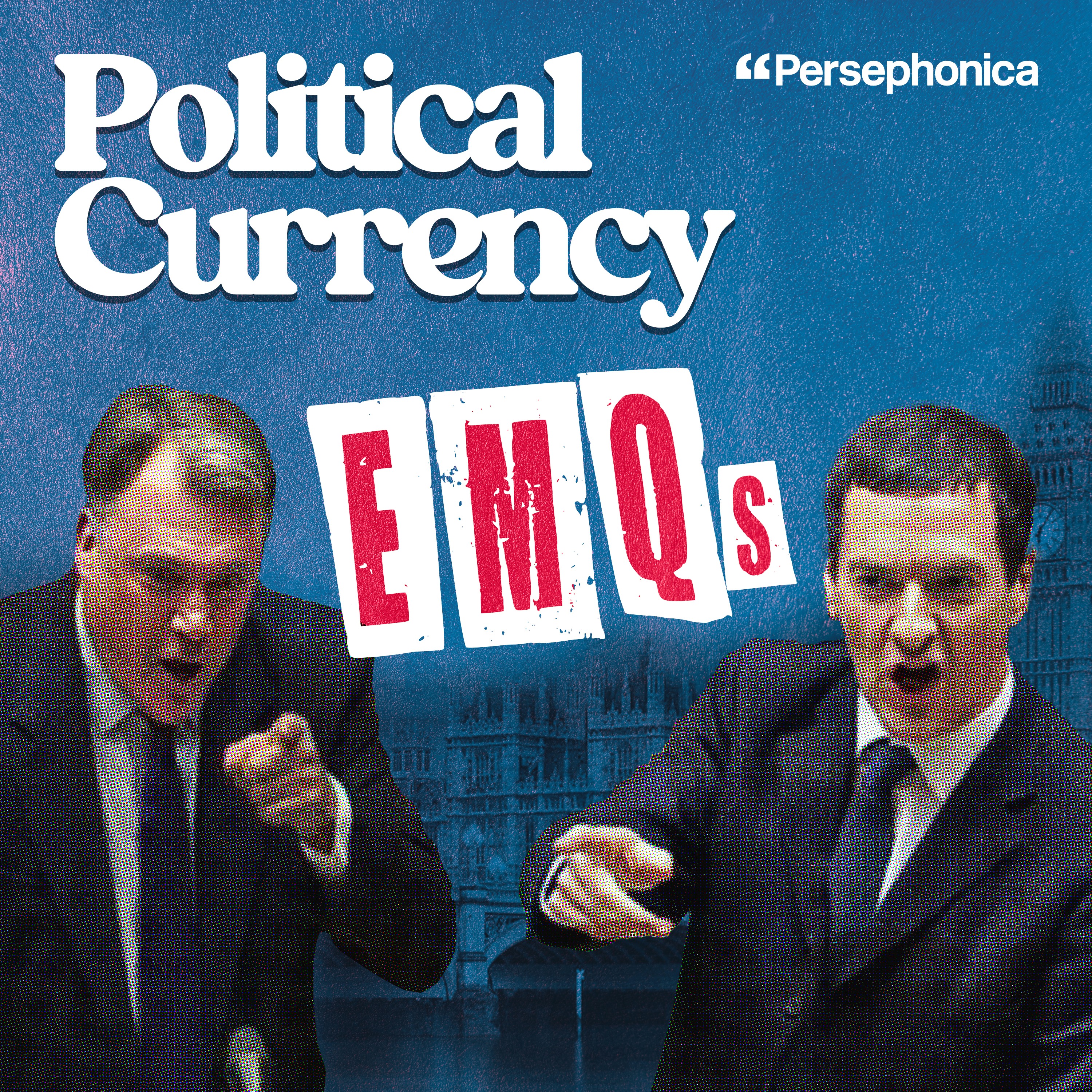
- EMQs: Should we vote on weekends?
In short
EMQs (Ex-Ministers Questions) episode debating whether UK elections should be held on weekends and whether vote counting should happen overnight; then covering Reform/Green political targeting, UK energy-transition speed and investment signals, and assisted dying law/ethics.
Guests
Ed Balls and George Osborne (former UK chancellors/Shadow Chancellor and Chancellor roles). They answer questions from listeners: Andy Welsh, Louisa Butler (producer Nigel Farage mentioned), John (Australian listener), and Phil (Leeds listener). No other guests appear.
Key claims
Weekend voting is mainly a tradition/cost issue; counting overnight is justified because people want results (and local counts are costlier). Reform’s “detention centres in Green seats” is framed as a populist stunt to polarize and starve Conservatives of support. Energy policy must be consistent to attract long-term investment; don’t “junk” renewables or nuclear signals. Assisted dying debate hinges on preventing abuse/manipulation and protecting agency, not just “not being a burden.”
Notable examples
FA Cup final chat; 2017 election exit poll timing; US election day (Tuesday) and weekend counting in continental democracies; Wigan Reform council dominance; North Sea oil/gas vs renewables; longevity research vs unchanged maximum lifespan.
Written by AI. May contain mistakes.
Chapters
2:45
FA Cup Excitement
Discussion around the FA Cup final and personal experiences.
“So hello and welcome to EMQ's Ex-Ministers Questions and we are recording this days before the FA Cup final.”
7:17
Voting on Weekends Discussion
Exploration of why voting occurs on weekdays and the implications.
“Now, I think this is really interesting, Andy.”
14:07
Understanding Political Polarization
Explores the dynamics of political polarization and its impact on voter behavior.
“So I think my answer to Louisa is while those parties like this polarised way of describing politics, that isn't the right approach for either the centre left party Labour or the centre right party to take.”
20:58
Energy Transition Debate
Discusses the nuances of the UK's energy transition and the role of oil and gas.
“Dear George and Ed, I've been listening to your wonderful podcasts as I walk across Spain.”
26:08
Perspectives on Assisted Dying
Phil's perspective prompts a discussion on assisted dying and agency in elderly care.
“But it's also the case, George, that if you are halfway down your 900-kilometre walk and you suddenly have a Damascene conversion, you may end up going in the wrong direction rather than the right one.”
28:01
Reflections on Assisted Dying
Discussing personal views on assisted dying and the complexities involved.
“To me, that's not just about being a burden, it's about the quality of my own existence.”
29:16
The Legislative Challenges
Exploring the legal hurdles and public opinions on assisted dying legislation.
“It's about preventing people ending up having imposed upon them a death that they didn't choose.”
31:30
Longevity and Its Implications
Examining the impact of longevity on society and the limits of human lifespan.
“I think it's actually, I think it feels right.”
33:57
Pilgrimages and Spiritual Journeys
Discussing personal reflections on pilgrimage and its significance.
“That's all we've got time for in this episode of EMQs.”

Ask about this episode
Get the gist, explore an idea or ask about something said.
 Claude
On Political Currency, what are the key points of this episode?
Searching your listeningTranscript
Automatic transcript. May contain errors.
0:00Ed Balls: Hello podcast listener. Hello you. It's me, Greg James. And me, Alice Levine. Now look, I know that you're very much enjoying this podcast that you're listening to. And we're sorry to interrupt. We really are. And it genuinely might not be our place to say, but is it time to try something new? We would like to steal you for our new podcast. It's called Bad Chat. And it sounds a bit like this. This one goes out to the walkers and the talkers and the late night. Stalkers. Maybe not that one. Alice is my best friend. I am not Alice's best friend. Do you know that horses' legs are their fingers? That is a bit of bad chat from me, Greg James.
0:38And me, famously, Alice Levine. Listen wherever you get your podcasts.
0:50Buying furniture for your business can be full of compromises, confusing choices and little support. National Business Furniture is here to change all of that. We believe that every business deserves furniture that lasts, service that cares, and a partner who gets it at a budget that works. At National Business Furniture, that's our commitment to you. Find the right furniture for you and your team at National Business Furniture. Visit nbf.com and use promo code POTEN to save 10 % now. Business is booming, but you know what really helped? zero the accounting platform for small businesses i used to think spreadsheets were just part of it but real-time cash flow wow invoices that chase themselves even better books that automate that's a big one and i can keep track from my phone while i get the job done no spreadsheet in sight what a life do right by yourself and your business and search xero for your free trial conditions apply If you work in university maintenance, Grainger considers you an MVP because your playbook ensures your arena is always ready for tip-off.
2:01And Grainger is your trusted partner. Offering the products you need all in one place, from HVAC and plumbing supplies to lighting and more. And all delivered with plenty of time left on the clock, so your team always gets the win. Call 1-800-GRAINGER, visit grainger.com, or just stop by Grainger. For the ones who get it done.
2:25The Chancellor of the Exchequer. Getting a lesson from the Shadow Chancellor on how to balance the books is like getting a lesson from Dracula on how to look after a bloodbath.
2:34Ed Balls: Ed Balls. A steady-as-she-goes budget. What kind of ship does he think he's on, the Titanic? They're married, Celeste. Welcome to EMQs from Political Currency with Ed Balls and George Osborne.
2:53Ed Balls: So hello and welcome to EMQ's Ex-Ministers Questions and we are recording this days before the FA Cup final. And Chelsea, who otherwise, let's be honest, have had a disappointing season. They're in the final of the FA Cup. Disappointing is a bit like what, you know, in the sense of like Labour had disappointing local election results. It's not been the best evening, but we're still in the Premier League. We're not being relegated. But yes, we've got the FA Cup. Oh, it's very exciting. because we're recording it now although some people will listen after the result it's a bit like Schrodinger's cat you know Chelsea have either won or lost and we don't know it's like in the ether Are you going?
3:32Yeah I'm going and I'm going
3:33Ed Balls: What's your prediction for the result? Oh I don't know Oh go on Well I hope the Blues are going to win By the way isn't it Man City at the final? Don't they both play in blue? Yes So Chelsea surely you've got to believe Chelsea are going to win Yes of course I do What's the score going to be? 2-1 2-1 to Chelsea. Good. So therefore, if Man City have won 5-0 and you're listening on Monday, George got that completely wrong. I have been to a few FA Cup finals in my life. And I remember having a bet. You know, I don't remember the year because I'm not that knowledgeable. I did have a bet on Roberto Di Matteo scoring the first goal in the FA Cup final.
4:15And I think he was like 10-1 to be the first goal scorer. and he scored within the first minute or so. I think it was the fastest goal in an FA Cup final. That was a great time at Wembley. So I've had some good times at Wembley, but I was also there when, actually against Manchester City, I remember we lost an FA Cup. It must have been like semi-final or maybe Carabao Cup. I remember there when we lost, but I was there in Portugal when we beat them in the Champions League. So anyway, I'm going with Bo, my son. He's the first FA Cup. He's just four. Going with Luke, my son. Going with my dad. and I'm going with a couple of my nephews.
4:50So it's a big family outing.
4:52Ed Balls: The last time I went to the FA Cup final was 1996, a year before the general election. I went with Gordon Brown, the Shadow Chancellor, Charlie Whelan, his press officer. We went on the train, the three of us from Marleybone. Liverpool Man U, the atmosphere was so hostile on the train and then walking through the ground. We were walking along, and as I was sitting next to Gordon Brown, this fist went across in front of Gordon Brown's face. and it was a Man United fan reaching across us to totally punch a Liverpool fan in the face. It was absolutely shocking. And we just carried on walking and we were in opposition, no security.
5:31But who were you supporting then? Because Wraith Rovers weren't playing and Norwich wasn't playing.
5:35Ed Balls: Gordon, being of that generation, born in the early 50s, had a soft spot for Man United. I just went along for the ride. I think... If you're a child of the 80s, Liverpool's your kind of soft spot, isn't it? Ian Rush and so on. I think that the winning goal, I think, was scored by Eric Cantona. I think I'm right in saying. Although the man of the match, I've just looked it up, the man of the match was Roy Keane. Was it Cantona who scored? I hope it was. We're not a football podcaster, as people are gathering. I know, there's Cantona in the 85th minute. So I was right. Anyway, that was my last cup final.
6:10Ed Balls: You are right. Our first question is from Andy Welsh. And it's a really interesting question. Hi, Ed and George. So I've only recently had more of an invested interest in politics. I've been listening to podcasts like yourselves with Political Currency to find out more about what is going on. Unfortunately, I'm not a Gold subscriber, so there is room for improvement in there, but I'm hoping you can answer my questions. Why do we vote during the week? Wouldn't having a vote at the weekend encourage more people to go out and vote? My second question is, why do we count the votes overnight? This election has a lot of votes getting counted during the day because it's cost effective for both councils and governments.
6:51The second benefit of the count during the day, it will increase the interest people have in politics. With this election what I've really enjoyed is I'm getting to see what's happening, the votes coming in and I've got a lot more interest in it. And wouldn't that encourage more people to have an interest in politics when they can see all the action and drama happening in mealtime rather than finding out when they wake up in the morning? But keen to get your thoughts on both these questions and hope you can answer them.
7:18Ed Balls: Thanks for your help. Now, I think this is really interesting, Andy. Why don't we have votes at weekends? And the easy thing to say is to throw back at you your question. that if you had voting at weekends and counting at weekends, that would cost a lot more money than if you did them on a weekday to open the facilities to pay extra for the staff. So you could see why the same impetus for local authorities not to count overnight, but to count on a Friday would be an argument against weekend elections. But traditionally, I think voting used to happen over more than one day, but it used to end with market day, which was often a Thursday.
8:01Ed Balls: That was when a lot of markets traditionally happened in the UK. So people would come along, come to market, buy the produce. You wouldn't have voting on a Friday because that was payday and people often got paid on payday and then went to the pub. And if they got drunk, they might vote the wrong way. You also didn't have voting on a Sunday because if people went to church, they might be influenced from the pulpit to vote one way rather than the other. And so I think that is the history to why it's tended to be Thursdays. I wondered if it was also because you sort of want to have it at the end of the week, which is less destabilising for the markets.
8:38Ed Balls: But I didn't find, I was reading yesterday, I couldn't find any evidence for that theory. There are other countries who do vote at weekends, but it's just never been part of the British way. I mean, there's nothing to stop an election on another day. It's not part of our constitution. so a prime minister who sets the date of the election could choose another day but i think you're right i think it's just by tradition these days continental countries often count at the weekend i mean the americans have their election on a tuesday that is set in the constitution i guess where i take issue with you andy and i certainly don't want to um put you off your newfound interest in politics but um if you are interested in politics you don't go to sleep on election night you stay up uh now you may not stay up all through the night that's really for the hardcore political uh pros but um lots of people stay up late and wait for well they see the exit poll at 10 o 'clock and uh they wait to see some of the early results or maybe they get up early in the morning and um local elections are different um and they don't want to pay the cost of uh keeping count you know the tellers counting through the night uh i think on an election night, you want to know the result.
9:48And that's true of other continental democracies. You do get the result that evening in the United States, you get the result overnight as well. So I don't think it's realistic to say, let's not count the ballot papers. Frankly, it's just more important for people to find out who their prime minister is rather than their local council leader. No disrespect to council leaders listening. And there's a lot of drama. And can I just say, if you want to get the best commentary during the night then itv ed balls george osborne actually nicola sturgeon last time as well she was a great addition to our team hosted by tom bradby uh yeah hosted by tom and um i would say this podcast would not exist if we had not both been booked separately to do the 2017 um election coverage and that was probably the most exciting election not in terms of the outcome because it was right you had to stay up all through the night and teresa made just one if she included you know she needed support from ulster unionists it was
10:48Ed Balls: really touch and go but the exit poll when that dropped was amazing wasn't it was electric and we got the exit poll 20 minutes before everyone else because we are part of the uh do you remember we have to sign an nda and then we we hear it do you know i'm not sure if you're right we got the exit poll in 2019 and 2024, I think in 2017, because we were not part of the team in quite an established way, I don't think we found out until it dropped at 10 o 'clock. You know, I think we found out it was a hung parliament in the moment. I bet you that's right. Actually, you're right. And Tom, who's a top professional in the broadcast, absolutely committed not to leaking it.
11:26The one thing he said to us is, just as we're about to come on out he says it's going to be pretty interesting we're in for a long night that was the only clue we got that is you are right that is a great question from andy um our next question
11:41Ed Balls: is from louisa butler and this has been voiced by one of our producers nigel farage recently posted a reform government would build large-scale migrant detention centers and would prioritize citing them in areas with green mps and councils what struck me wasn't just the immigration policy itself, but the political logic behind targeting the Greens. Farage seems to be framing politics as if voters are now sorting into two hardened camps, a nationalist populist right versus a progressive liberal left with very little meaningful centre ground left in British politics. Is Farage's strategy less about winning over Green voters themselves and more about reinforcing a broader culture and political divide in which Labour and the Conservatives become increasingly irrelevant or squeezed in the middle?
12:33Or does this suggest reform now sees the main axis of British politics not as left versus right in the traditional sense, but as popular nationalism
12:43Ed Balls: versus progressive liberalism? So we referred to this debate last week in our main podcast when we were thinking about the local elections. And we were talking about the fact that it's in reform's interests to motivate their vote by saying, you know, the Greens, they're the extremists, they're the wild ones, vote reform to stop the Greens or to stop Labour going into coalition with the Greens. And the Greens have an interest in saying, vote Green to stop reform, we're the only ones who can stop them. And that sort of crude polarisation is the best recruiting sergeant for both of those parties.
13:24Ed Balls: You think of the way in which reform might say about woke issues or trans issues, the Greens are the ones who will pull a government in their direction. But I would say, even in the current opinion polls, Greens and reform, they're only picking up 40 % of the vote. The other 60%, I don't think that they respond to that kind of messaging the same way. I think that they worry about both sides, actually more centre orientated. And if you are a Labour politician and you go running after Green voters, as we've said, you're in danger of alienating your vote on the other side and vice versa. So I think my answer to Louisa is while those parties like this polarised way of describing politics, that isn't the right approach for either the centre left party Labour or the centre right party to take.
14:23Ed Balls: And what you've actually got to do is say that we're from neither ideological extreme and it's the extremes which would be dangerous and destabilising. So I don't think that that polarisation is now endemic in our politics, even if that may be in the interest of reforming green politicians to peddle. Yeah, well, I kind of agree with that. I think the interesting, I mean, so to Louise's question about the, you know, what was Farage thinking when he says we're going to have immigration detention centres in green constituencies? He's not really believing that that's a deliverable policy. I mean, there's no way in the British state you can decide where your detention policies are solely on what the local MP is.
15:09The courts and the planning system, you know, would not allow it to happen in practice, even if you were trying to deliver that. And of course, by the way, these green seats are often in sort of highly urban areas where you probably don't have the space for these detention centers. So anyway, set aside like whether it's workable in practice, it was designed as a stunt. and it was pretty effective because here we are all talking about it weeks later. I mean, who can remember a policy announced by the Conservative Party or the led party during the elections that people are still talking about several weeks later?
15:41So it's worked and it is classic populist politics. It sort of cuts through the complexity of life with an apparently simple solution. It kind of challenges those on the other end of the kind of solution to say, oh, it's all too complicated and the world doesn't work like that. Or in the case of Greens, maybe exposes some hypocrisy where they're supposed to be in favour of unrestricted immigration, but in practice, don't want to manage it. Although I think if you were Zach Glansky, you'd say, oh, I'm not in favour of a detention centre full stop anywhere. So it's a kind of good example of sort of how populist politics works.
16:16I think it is in Farage's interest to try and marginalise. Certainly, he wants the Conservative Party written out of the equation. That's got to be in his interest. So that anyone who is against the incumbent government, the Labour government, whoever's leading it, and is on rightward-minded votes reform. He wants to starve the Conservative Party of oxygen. And I guess it's in his interest to talk up the Greens, because it also causes trouble for Labour. I would say, I'd love to see some analysis on this, and I apologise, Louisa, I haven't done my homework before answering a question. I suspect you, and I might be wrong about this, that you might find voters who are kind of weighing up between green and reform.
16:58You would think, no, no, that can't be the case, because as you frame it in the question, you know, populist nationalism versus progressive liberalism. But they're both kind of anti the parties, anti the establishment for the simple answers. You know, why can't we just deal with these problems in a simple way? And I remember when we were analyzing why people voted liberal Democrat, this was in the kind of 2000s, before the coalition, before that election and so on. You know, often the most kind of Eurosceptic voters down in the southwest of England, anti-European, were voting Liberal Democrat, even though the Liberal Democrats had the most sort of pro-European policies.
17:37And so it's not, you know, people who vote Green don't necessarily sign up, have not read every bit of Polanski's manifesto. And people who vote reform, they're kind of voting for a farage and sticking two fingers up to the establishment and so on. And, you know, it remains a mystery, I think, to many Labour politicians. How are the people in my constituency, you know, working class people, people left behind by globalization, marginalized in, you know, poor housing? Why on earth are they falling for this Farage guy? You know, why does everyone in Wigan vote for reform? You know, reform took almost every council seat in Wigan, didn't it?
18:17And famously, like, you know, where George Orwell's Road to Wigan Pier was set. And I think that's just a misunderstanding of the appeal of these parties. They're not examining the policies. It's like we offer an escape from the present. We offer simple answers, simple solutions. And even if in practice, coming back to my first point, they're undeliverable, you only ever find that out when they're actually in government.
18:40Ed Balls: I remember Liam Byrne doing analysis in 2005 of why people voted Liberal Democrat, because Labour was losing votes to the Liberal Democrats. Number one was concern about the Iraq war. Number two was they wanted tougher controls on immigration. And as you say, that doesn't fit to the stereotype of the left Liberal Democrat voter. But of course, many of them won't. Fast forward to the 2016 referendum. Who were the two party leaders who were most sceptical of membership of the European Union? Well, Jeremy Corbyn and Nigel Farage. and the interesting question for the Greens, because a lot of that Corbyn group are now in with the Greens.
19:23Ed Balls: I think historically, I think you would have thought of the Greens as being more sort of internationalist and collaborative and maybe pro-European, but there'll be very many people who are now joining the Greens as activists who hear Zach Polanski's rhetoric about capitalist plots and think, well, that includes the European Union. And so the centre ground has a lot to go after on both flanks. I do think it's still an outside chance that in my lifetime, there'll be a Conservative Labour coalition, which is what's happened in these European countries as politics has fragmented in Germany, for example.
19:59You know, at the moment, of course, you have another Christian Democrat, Social Democrat coalition.
20:04Ed Balls: And if we get brought back, I'll ask you to be my chief secretary. Yes. Let's take a break. Yeah.
20:21If you work in university maintenance, Grainger considers you an MVP because your playbook ensures your arena is always ready for tip-off and Grainger is your trusted partner. Offering the products you need all in one place from HVAC and plumbing supplies to lighting and more and all delivered with plenty of time left on the clock so your team always gets the win. Call 1-800-GRANGER, visit grainger.com, or just stop by Grainger. For the ones who get it done.
20:58Ed Balls: So welcome back. Here's a question from John. Dear George and Ed, I've been listening to your wonderful podcasts as I walk across Spain. I'm Australian and we are embroiled in a debate about the speed of the energy transition. The Labour government has set extremely ambitious targets for the country. Many, including me, are now questioning the speed with which we are moving, giving the impact on electricity prices and industrial capacity. I'd be fascinated to hear your views on the UK's transition. Thanks. John, are you on a pilgrimage to Santiago de Compostela, that beautiful beautiful town on the uh coast of spain um because um that's often why people walk through spain and i'm just the reason i ask is i was just picking up on a couple of your uses of word you're using the word evangelical and i think the um word you're referring to that begins with z is zealot isn't it and i think they're both religious words um so anyway if you are good luck on your um pilgrimage um i think it's a good question here i mean i'm i'm a bit in two minds here.
22:07I think it is like a bit crazy that we're not using our oil and gas reserves in the North Sea when to manage the energy transition and i.e. you know to help ease the transition to renewable energy in a world where oil and gas supplies are exhausted and in a world where we're concerned about climate change. But you have to be in politics and in government practical about things. And I think the kind of complicated thing to pull off here is you have to send certain investment signals that mean that people can make decisions over the medium to long term on where to invest their money, where to build factories, where to build battery plants, where to put in wind farms.
22:50These things are long-term commitments. And if a country is jumping around all the time with its energy policy, the result is no one's going to invest in anything because they can't be sure. I have some sympathy, and this was certainly what the coalition government I was part of tried to do with liberal Democrats, like Chris Hewn involved, was kind of set some kind of consistent pricing for renewable energy. And so I have some sympathy with the Ed Miliband thing, which is we don't want to just like junk all of our renewable plan just because, you know, suddenly oil and gas is expensive and so on.
23:24But I'm equally, I think he's being too zealot-like, to use your language, in saying, you know, and Labour is being too zed, like it wasn't just him, this was a Labour Party commitment before the election, that we're not going to exploit our oil and gas reserves in the northeast of Scotland and that huge resource and the amazing kind of skilled industry that grew up around it in places like Aberdeen. It's a bit of a kind of muddled answer, but it is a muddled situation. The one thing I wouldn't do is just junk the signals on renewables because that is an important part of our energy mix going forward and on things like nuclear power if you're not sending consistent signals you know these are 100 year investments you're not going to get people committing money from around the world to build nuclear power stations unless there's some kind of consensus in the country on a longer term plan so to carry on
24:14Ed Balls: the religious theme and we don't know if um john is on a pilgrimage but uh you know in your in your politicians and in particular in your climate change secretaries you don't want people who believe in miracles but you probably do want people who are believers and have and bring some passion and you were very praising of Ed Miliband on our podcast last week Chris Bowen who is the climate change minister in Australia also a friend of this podcast we've answered his what if questions before I've known him for very many years I mean he's also you know a believer and And both Ed and Chris have championed the use of renewables in domestic electricity and energy consumption.
25:00Ed Balls: But actually, both of them have also been in their way pragmatic rather than zealot. So if you take, for example, in Australia, and we talked on the last May podcast about the William Hague article and Australia's approach to energy, consistent with that focus on renewables, Australia has also been opening up new investments in its oil and gas fields, which are a very important part of the Australian economy. And then here in Britain, while Ed Miliband has been resisting that pressure on oil and gas, he's also, in a way which is actually quite distinct from what happens in Australia or in Germany, has been a champion of nuclear energy and nuclear is also something which requires you to take a a long-term investment-based approach and so what you want is people who are pragmatic and can adjust and don't believe in miracles but it's okay to be um believers john and it's okay to believe in passion the passion it's a bit like religion isn't it it's like it's okay to have religious beliefs but um that shouldn't end up with you burning your opponents at the stake.
26:12Ed Balls: But it's also the case, George, that if you are halfway down your 900-kilometre walk and you suddenly have a Damascene conversion, you may end up going in the wrong direction rather than the right one. And that is always a risk in politics. Because you're not heading towards Damascus, you're heading towards Santiago de Compostela. You're literally heading in the wrong direction. Very good. Listen, enjoy your walk, John. And thank you for your question. Always good to have an Australian listener. We'll take a break and then we've got one final question from Phil.
27:06managing multiple suppliers, and no room for shipping delays. That's why Grainger offers millions of products in fast, dependable delivery, so you can keep your facility stocked, safe, and running smoothly. Call 1-800-GRAINGER, click grainger.com, or just stop by. Grainger, for the ones who get it done.
27:33Ed Balls: Welcome back. So our final question is from Phil, and he's responding to one of the conversations we had on our main show a couple of weeks ago. Hi, Ed and George. Phil from Leeds here. I wanted to pick up on Ed's concern last week about people choosing assisted dying because they don't want to be a burden on others. This is often dismissed as a negative, but I think it deserves more nuance. I'm 42 with a 13-year-old daughter, and watching relatives' ages inform my perspective on my own old age. Looking ahead to my 80s and 90s, I can honestly say I might prefer assisted dying over a life of being housebound and requiring daily care from my daughter.
28:09To me, that's not just about being a burden, it's about the quality of my own existence. We often hear people telling the elderly or sick that they aren't a burden. But I wonder, will those same people feel the same way when they are the ones sitting in the chair 40 years from now? Love the show. And George, please tell your new tech friends to hurry up with the immortality code so I don't have to worry about any of this at all. Cheers.
28:34Ed Balls: Look, I understand this argument, Phil. And I know in my own wider family how strongly people feel that they want agency and they want to be able to make choices and they want to choose their own path. The reason why this is complicated, though, is that that is not the worry that lawmakers have. What worries lawmakers is people who de facto have their agency taken away from them through manipulation and through abuse and finding a way in law to protect people's genuine and legitimate agency while protecting others from abuse. I mean, in the end, it's not about preventing people who want to choosing the right way to manage their death.
29:23Ed Balls: It's about preventing people ending up having imposed upon them a death that they didn't choose. And I think that is the reason why this legislation is very, very hard. And that is entirely consistent with your concern and your desire. But the law has to be watertight to people who don't have the agency that you're seeking. I think you're making a very good point, Phil. You know, where this debate starts, if this were to become law, is not where it's going to end. You know, the law will evolve. But to get it through Parliament, and we were discussing what a real struggle it is to get through Parliament, and it may not get at all onto the statute books.
30:04You know, the constrictions have been around the circumstances in which someone could opt for assisted dying are very limited. You know, you have to be diagnosed with a terminal illness. I think it is, you know, that diagnosis is you'll die within six months. You then have to get, like, you know, doctors involved and so on. But once it came onto the statute books, I think things would evolve, as have other aspects of like social legislation. And you might well get into a world in which people say, a consideration is not just my own pain, but also the cost and the burden I'm imposing on my family.
30:40Now, the critics of the law say, yeah, exactly what we want to avoid. That's Wes Streeting calling for your...
30:50Ed Balls: It was actually a divine intervention. That's the first of the phone lines going in. Do you know what it was? It was actually, look, it was Robert Peston. He'll be ringing up to say, have I done the rehearsal for Madonna? No, he'll think, Ed, what's going on? Tell me. In fact, he won't ask you. He'll tell you. Exactly. I won't get it when it's worse. He'll be ringing us about our band. You know, we're actually at the Water Rats on the 2nd of July. We're playing in a fundraiser for the 10-year anniversary of the formation of the Joe Cox Foundation. Very good cause. So for those political currency fans who've been before, 2nd of July, Thursday, Water Rats.
31:26Ed Balls: See you there. Anyway, I think we were talking about a sister dying. I'm so really sorry. We've gone off subject there. No, no. I think it's actually, I think it feels right. It's not just families putting pressure, kind of Dickens style, on the old man who's sitting on the will. I think a lot of people feel they don't want to be a burden necessarily to their children. I think that is where things will go over the next century in terms of. But how does the law differentiate? It's so hard. I know it's really hard. But, you know, the Lord, there was a kind of gray space for a long time where people allowed their doctors to kind of give, you know, when they knew they were in hospital and they weren't going to live that long.
32:05Doctors gave like morphine doses that eased the pain, but also, you know, eased their passage from this world. The final point is an interesting one. The tech billionaires are spending a lot of money on longevity. And there are lots of longevity companies in California. And the interesting thing about longevity is that the world has been very successful at increasing the average life expectancy of individuals. So it's gone up from the 20s and 30s when you're in the age of the Romans to the 50s and 60s and now to the 80s and 90s. That's the average age. Most people live much, much longer lives than they would have done even 100 years ago.
32:47And that's the development of medicine and so on. But what is amazing about longevity is that we have not succeeded in increasing the maximum possible life of a human being. So there are the odd person lives to be 110, 115, even 120 in some cases. But that was also true a thousand years ago. There were documented cases and there are certainly documented cases where there's been much more modern, you know, birth records and so on in the 19th century and 18th century of people living to be 110 and so on. The human life, maximum possible human lifespan has not been increased, even with all of modern medicine, to like 150 or something.
33:26And so that's interesting. Generally, people live much longer lives, but the maximum possible human life has not been extended. Very interesting.
33:35Ed Balls: Well, we will keep a close eye on whether George's quest for the immortality code is successful. But I think on the assisted dying debate, Phil, I don't think either of us have a hard ideological position. We are very sensitive to the complex legal and political challenges facing here. But we will continue to talk about this and also to take a view on how to get this onto the statute book, if that proves to be possible. But thanks for your question. That's all we've got time for in this episode of EMQs. Yeah, if you've got a question, send it to us by emailing us at questions at politicalcurrency.co.uk or you can message us through our socials.
34:16Ed Balls: Do send a voice note and politics, business, fun, serious, religious. I mean, we've not had a lot of religious questions in the past, but, you know, I mean, I don't know whether you're one of those politicians or former politicians who didn't do God, but I'm very happy to reflect upon. You know, I'm not particularly religious myself, although I was at the Vatican recently, but I quite fancy a pilgrimage. Wouldn't that be fun? Like, you know, a big journey, sort of planning it all, stopping along the route of the various hostels and monasteries. The food's good in those kind of Santiago de Compostela, you know, travelling inns.
34:50I've been to Santiago de Compostela. The food was very good.
34:54Ed Balls: I mean, can I say, that isn't the only reason for going on a pilgrimage. No, but spiritual nourishment has to be matched with physical nourishment. Got to keep the troops well fed and watered. And that's true whether they are soldiers or Christian soldiers. Yes. Or other soldiers. Onward they go. We're going to be back on Thursday with our main show. Or who knows, we might have to have a hot take before then, given developments in the Labour Party. But we look forward to seeing you soon. See you soon.
35:31Thanks for listening to Political Currency. This has been a Persephoneca production.
35:45When you manage procurement for multiple facilities, every order matters. But when it's for a hospital system, they matter even more. Granger gets it and knows there's no time for managing multiple suppliers and no room for shipping delays. That's why Grainger offers millions of products in fast, dependable delivery, so you can keep your facility stocked, safe, and running smoothly. Call 1-800-GRAINGER, click grainger.com, or just stop by. Grainger, for the ones who get it done.
36:18Ed Balls: Hello, podcast listener. Hello, you. It's me, Greg James. And me, Alice Levine. Now look, I know that you're very much enjoying this podcast that you're listening to. And we're sorry to interrupt. We really are. And it genuinely might not be our place to say, but is it time to try something new? We would like to steal you for our new podcast. It's called Bad Chat. And it sounds a bit like this. This one goes out to the walkers and the talkers and the late night. Stalkers. Stalkers. Maybe not that one. Alice is my best friend. I am not Alice's best friend. Do you know that horses' legs are their fingers?
36:54That is a bit of bad chat from me, Greg James. And me, famously, Alice Levine. Listen wherever you get your podcasts.
From the publisher
Last week’s local elections saw votes counted during the Friday to save costs, and inspired one listener to ask Ed Balls and George Osborne why that isn’t always the case. He also wondered why we don’t vote at weekends like other European countries. The pair explain the historical roots of the tradition and the benefits of weekday votes and overnight counts for general elections. Plus they recall their own experiences as commentators during the last 3 elections.
They then address the divisive policies and language seen in the Greens and Reform campaigns, and whether this is a sign of the centre losing ground or an opportunity to seize. They also take a question from an Australian listener, who wonders if we’re moving too fast in the energy transition.
Finally, a listener returns to the assisted dying debate from a few weeks ago and proposes their own case for the legislation. We also hear the pair debating the possibility of immortality…
We love hearing from you, so please don’t forget to send all your EMQs to questions@politicalcurrency and make sure to include a voice note of your question or send a question to our social media handles:
👉 X
👉 TikTok
Thanks for listening. To get episodes early and ad- free join Political Currency Gold or our Kitchen Cabinet. If you want even more perks including our exclusive newsletter, join our Kitchen Cabinet today:
👉 patreon.com/politicalcurrency
Please note: Kitchen Cabinet is only available via Patreon.
Credits:
Research: Sam Burton
Production: Caillin McDaid & Nasreen Arain
Video Editor: Avi Asher
Executive Producer: Ellie Clifford & Henrietta Harrison
Political Currency is a Persephonica Production and is part of the Acast Creator Network.
Hosted on Acast. See acast.com/privacy for more information.
More from Political Currency
All episodes

We use cookies.They keep VO running smoothly and help us improve it. Privacy policy