
 Ask ChatGPT


- Podcasts
- Political Currency
- EMQs: The best place to be an MP if you're a lover of rhubarb
Political Currency8 Jun 2026 · 50m · 18 chapters
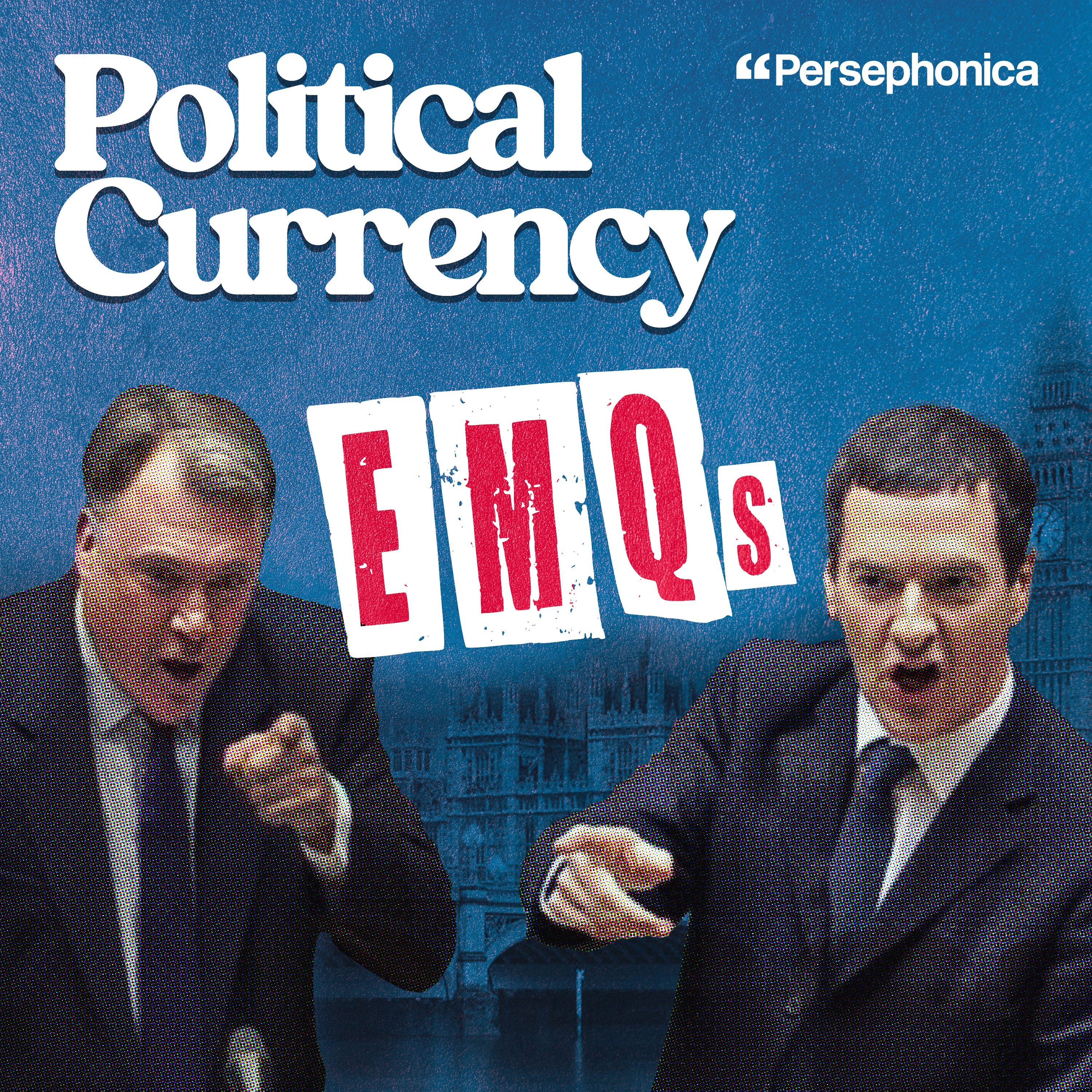
EMQs: The best place to be an MP if you're a lover of rhubarb
In short
EMQs “Ex-Ministers Questions” episode mixing culture recommendations with Q&A on UK economic policy, AI regulation ethics, non-dom tax politics, and constituency experiences (including rhubarb).
Guests/backgrounds
No formal guests. Hosts George (recently visited/was at the Vatican) and Ed. Questions come from listeners: Jeremy Hunt (author of Can We Be Rich Again?), Eleanor Hallam (ex-Treasury civil servant, AI/policy question), Jonathan (Perth, Australia; non-dom tax question), Josh McAllister MP (mountain rescue volunteer; constituency question), and Paul Jones (Centrist Dad band question).
Key claims
- Big chancellors’ reforms can start early, but often require groundwork and consensus; “emergency” first budgets matter, yet later reforms still succeed.
- Pope’s AI encyclical frames AI risks around human dignity, warfare, and child protection; influence matters because AI rules are being written now.
- Non-dom changes were likely driven by both politics (Sunak family tax controversy) and opposition “shooting the fox,” with possible long-run damage.
- Constituency identity shapes policy perspective (e.g., Tatton → “Manchesterism”); Ed’s Morley and Outwood is the forced-rhubarb capital.
Notable examples
Paris, Texas (Wim Wenders) and controversy over a nude scene involving Natasha Kinski; Booker Prize winner Hotel du Lac (Anita Bruckner); Helvellyn mountain rescue; forced rhubarb sheds under candlelight; Normanton 19th-century station lunch crowds (Queen Victoria, Ulysses S. Grant, Brazil’s president); Jess Asato legal action over Grok deepfakes; Pope Leo XIII parallel (1891) and Pope John XXIII nuclear-weapon encyclical (1963).
Written by AI. May contain mistakes.
Chapters
0:06
Cultural Recommendations
The hosts share their recent cultural experiences, including movies and books.
“Over 4 million businesses have skipped the line with Stamps.com.”
2:16
Cultural Recommendations
The hosts share their recent cultural experiences, including movies and books.
“Anything this week you've been watching while flying?”
4:53
Reading and Rediscovering
Discussion about a recent discovery of classic literature and its impact.
“I arrived at Euston Station last Saturday, no, last Friday, to get the train up to the Lake District to climb Helvellyn, which we'll come back to later in the show.”
6:11
Exploring Jeremy Hunt's Book
The hosts discuss Jeremy Hunt's new book and its implications.
“I think I've seen the film, but I'd never actually, there was a BBC film, but I've never read the book before.”
7:20
Chancellor's Strategies
An in-depth discussion about strategies for chancellors based on historical examples.
“There are times when chancellors do big reforms at the beginning of their time in offices to get them through.”
14:00
Reflections on Government Decisions
Exploring the long-term impact of key government decisions and reforms.
“even if I was going to, you know, survive in the government.”
16:40
Honoring Kevin's Contributions
A tribute to Kevin's impactful career in the Treasury and his professionalism.
18:10
AI and the Pope's Encyclical
Discussing the implications of the Pope's encyclical on AI and its societal impact.
“this very topic, expressing serious concern that AI could be a force for bad, especially if it's not met with sufficient regulation and care, both from within the industry but also from governments.”
22:50
The Need for Regulation in AI
Examining the urgent need for AI regulation and potential risks involved.
“Obviously follows the details of our podcast very carefully because she knows all about our religious speculation of recent weeks.”
25:00
Legal Actions Against AI Misuse
Analyzing legal actions against AI misuse and the implications for future legislation.
“And as with Pope John XXIII in 1963, the Pope is leading and contributing and framing a debate in kind of moral and human terms.”
Show all 18 chapters
27:50
The Intersection of Religion, AI, and Politics
Reflecting on how religion, AI, and politics intertwine in modern discussions.
“yeah, the Pope is at the heart of it all.”
28:00
Political Regulation Discussion
Exploration of the enforcement of the Crime and Policing Act and its implications.
“Liz Kendall, the technology secretary, produced amendments to the Crime and Policing Act in order to tighten the law here.”
30:46
Non-DOM Tax Status Debate
Discussion on the implications of non-DOM tax status changes and political motivations.
“Here is a question, this time from the other side of the world, all the way from Australia.”
35:08
Historical Context of Tax Laws
Analysis of historical changes in tax laws related to prime ministers and personal interests.
“And I think they also wanted to shoot Labour's fox, which was kind of classic, you know, what it's told to do if you're a smart government, you know, pinch the opposition's policies and expose them.”
39:48
Rhubarb and Parliamentary Identity
Personal anecdotes about representing the rhubarb capital of Europe as an MP.
“This one is from a member of Parliament from Josh McAllister, who is Minister for Children and Families and a mountain rescue volunteer.”
42:00
Rhubarb's Rich Heritage in Morley and Outwood
Learn about the unique history of rhubarb cultivation and its significance.
“Morley and Outwood was the rhubarb capital of Europe.”
44:05
Influence of Constituency on Political Perspective
Explore how representing a northern constituency shaped the speaker's views.
48:56
Discussion on Centrist Dad's Decision
Delve into a light-hearted examination of a band's gig decision and related rumors.
“I'd like to thank Ed for clarifying that it was a simple lack of time that led to centrist dad turning down the offer of playing Trinity College Oxford recently.”

Ask about this episode
Get the gist, explore an idea or ask about something said.
 Claude
On Political Currency, what are the key points of this episode?
Searching your listeningTranscript
Automatic transcript. May contain errors.
0:00Still waiting in line? Again? That's time you'll never get back. Save time and money with Stamps.com. Over 4 million businesses have skipped the line with Stamps.com. Join them to save up to 90 % off carrier rates from your computer or phone right now. Print postage for certified mail, registered mail, and packages in seconds. Then schedule a pickup right from your home or office. For a limited time, go to Stamps.com and use code PODCAST for a free welcome gift. Taxes and fees apply. Business is booming, but you know what really helped? Zero, the accounting platform for small businesses. I used to think unpaid bills were just part of it.
0:39Ugh. But batch payments? Wow. Automated accounts payable? Even better. All in one place? That's a big one. And I can keep track from my phone while I get the job done. No bills in sight. What a life. Do right by yourself and your business and search XERO for your free trial. Conditions apply. Do you keep hearing podcast ads like this one, for example, but always wonder how you actually get involved with them for your own brand or organization? Well, it's easier than you think. We're Acast, and we give you the platform to do it all yourself. Browse thousands of popular podcasts, choose the shows that match your perfect audience, set your budget, and launch.
1:21And if you want a hand, our podcast specialists are there to help you launch with confidence. This is podcast advertising without barriers. Get started at acast.com slash advertise.
2:03So hello and welcome to EMQ's Ex-Ministers Questions. And this is the programme where we, you know, we go broad. We like to be talking about religion, art, politics, science, AI. George has just got off a plane. Anything this week you've been watching while flying? Any books, any movies, any cultural recommendations? Do you know, I watched a really good movie on the way to Washington, an old movie or oldish movie called Paris, Texas by Wim Wenders. It's an absolutely brilliant movie. It's a sort of American road movie, a sort of odyssey movie, talking of which I'm really looking forward to the odyssey coming out in a month's time.
2:46And it stars Natasha Kinski, who was the kind of great sort of film star of the 70s and 80s. As opposed to Natasha Kaplinsky, who was the breakfast television presenter and won Strictly in the first series. It's interesting. When I actually looked her up, I thought, I don't know enough about Natasha Kinski. And then I realised I was actually reading about Natasha Kaplinsky by mistake. Two big stars at stage and screen. Yeah. Anyway, it's a really beautifully shot, very kind of emotional movie set in Texas, not in Paris. And then I just noticed today that there's been a big row about an earlier movie that Wim Wenders did.
3:32And Wim Wenders is this kind of great European film director who's, I think, this week being honoured by the German Film Academy and stuff. Anyway, one of his early movies, a 10 years earlier movie, I can't remember his name, with Natasha Kinski. You've got me now getting confused. natasha kinski he has she's she's nude in the movie and she's only 13 years old when it was shot and she has been she's still alive they're both still alive and she has been complaining about this for years and saying that movie should be withdrawn from circulation and he's always refused and he's always like well you've got you know different times different morals you can't start interpreting you know the past through our our moral lens anyway he has this week agreed not to edit the movie which is the simplest thing to do just remove the scene of her nude but to remove it from all distribution and it will be unwatchable because he would rather do that than just um kind of chop out the bits that are unacceptable now um anyway it was all total coincidence um it was one of those not coincidence one of those things where you know suddenly you're more alert to stories about Natasha Kinski and Wim Wenders anyway Paris Texas is a great movie and there's uh there's no nudity in that we are here giving um our wider EMQ listeners an insight into what we do for our kitchen cabinet members every every week where we talk a little bit about culture and things which we've read and seen.
5:07I arrived at Euston Station last Saturday, no, last Friday, to get the train up to the Lake District to climb Helvellyn, which we'll come back to later in the show. And I had just finished... That's that hillock in the Lake District. It's actually a mountain. And I had just read and done for Kitchen Cabinet the new books by Elizabeth Strout and Anne Tyler or was it Ann Patchett? And both of them. And I, so I went on to Claude and said, if I like these books, what else should I read? And they gave me a list. And one of them was on the shelves in Euston W.H. Smith, which was Hotel du Lac by Anita Bruckner, which is like, you know, early 80s, I think.
5:55But it's a great book. It won the Booker Prize, didn't it? It won the Booker Prize. And I bought it and had it read by the time I got off the train on the way back down from the lakes on Sunday. And so I'm now reading. I've just ordered another couple of Anita Brookers. So that's my new rediscovery. I think I've seen the film, but I'd never actually, there was a BBC film, but I've never read the book before. It's really good. Anyway. Now talking about books that we need to read. Talking about books. We are going to talk about this book. We've both been sent the book that was published this week by Jeremy Hunt.
6:30Can we be rich again? And our first question is from Jeremy Hunt. Hi, George and Ed. Thanks for the terrific podcast. Jeremy Hunt here, a former chancellor who has just published this week my book, Can We Be Rich Again? And one of the observations I make in it is that any chancellor, because the impact of economic reforms can often take four or five years to show through, needs to do any big reforms really quickly when they arrive in office. Otherwise, they just don't have enough political capital to get anything through. Is this advice that you agree with? And would you give it to any new chancellor that we may end up seeing this year?
7:14So this is an interesting question and idea. I'm not sure I fully agree with Jeremy. There are times when chancellors do big reforms at the beginning of their time in offices to get them through. And, you know, when we came into government in 97, clearly we made the Bank of England independent, but started off with tax credit reform. And you could start off with big reforms around, clearly, the spending review and VAT and fiscal policy, make the difficult decisions early. But when I think about, if you think about Nigel Lawson, his big corporate tax reforms were 1984, beginning of his chancellorship, but he had actually been in the Treasury for a while before that.
8:04His personal tax reforms, I don't think it happened until five years later, until 1989. For Gordon Brown, although he started working on it, the big health service tax rise was 2001. Were they in 87? Sorry. The personal reforms. Were they? I think so, yeah. i thought it was um um when he abolishes independent taxation oh i see that's sorry that of the um introduces independent taxation women i thought you're talking about the big reduction in um the top i was actually thinking more like the structural reform i thought the structural reform was 89 i might be wrong about that gordon brown health service reform for the national insurance tax rise was 2001 to competition policy reform which is a big reform 2001 and one there's times when Jeremy even if you have your eye on a reform you have to prepare the ground and do things over a period of years even get a second mandate from an election so it doesn't always have to have to happen at the start and then there's other reforms where in some ways what matters is even a change of government if you think about auto enrollment for pensions started under the Brown chancellorship, taken forward by Alistair Darling, then by you.
9:22The reason why that's lasted is it was consensual. I made the argument last week on our podcast that when it comes to social care, it's only going to last if you overtly go after consensual cross-party, cross-parliament reform. So while I agree with Jeremy that sometimes you have to move early, i don't think that's always the case yeah i'm i'm with you um i think jeremy being a little bit sort of pessimistic i mean i think that about your sort of political space to do things and it might speak more to his experience as chancellor in the sort of tail end of the sunak government when the kind of whole government's running out of political authority and people know there's going to be a change of government and and then it's much harder to announce big reforms over several years because people say you're not gonna be around mate and who knows what's gonna you know happen um when the labor lot get in um i think where he's right is that usually the first budget particularly when you're coming out of opposition i mean there are only changes of government when something's gone wrong because that's why the country's kicking out the incumbent government and it's usually economic and normally the government's been kicked out because it's exhausted it has no political authority and it's not been able to do anything about the economic situation so then the new government comes in and has all the authority and the mandate if crucially if they bothered to create one to do things and um so i think you know if you look at um you know possibly the thing gordon brown will be most famous for forever will be the independent bank of england which is a very early in fact first week decision isn't it which you you would obviously intimately involved in um and i think my first budget which i dubbed the emergency budget is the one where i cut spending and i increase vat and i increase the state pension age and all these things which are very difficult but other kind of you know the cod liver oil to solve the problem that britain was facing at the time as i prescribed it and and had the ground had been laid before the election so there was no kind of sense of betrayal and we've done a lot of thinking about it so that is true that often your your kind of tough budget is your first one and jeremy hunt's most famous budget is is of course the one where he has to sort out the mess of liz truss um and reverse lots of things and you know stabilize the situation to to his eternal credit and the credit you know of the whole country which it was required um but i think you're right that it's a mistake then to think that's it and you know i using my own experience as chancellor i ended up giving eight budgets and i remember after the so i did the big one in 2010 and that was a lot of my ideas that i developed as shadow chance over the previous years and then you get to um the sort of 2011 budget and it's a bit of a damp squib because i've sort of oh i've done all my big things and they're now underway and they're being legislated for 2012 is um the one that unravels because i'm trying to cut the 50p rate attack so that is a kind of big decision but it's quite narrow is that the one we call the omni shambles i think ed milliband uh didn't he come up with that no i think it was actually the telegraph daily email yeah yes i think it was ben brogan who first used omni shambles thanks ben um but the um but i remember thinking like um um you know i i there's more to this job than just sort of seeing through the things i came in to sort of you know solve and deal with the deficit and uh and these you know you never know whether this budget is your last budget as chancellor you know who knows whether rachel reeves will ever give another budget and um and i kind of rejuvenate i sort of re-energize myself to think like come on what are the big things we could do uh and i was also by then much more experienced you know how to make the treasury work and how to make government work and so my later budgets i did things like reform the pension system you know radical reform the pension system out of the blue no one expecting it not pre-briefed at all or the whole northern powerhouse concept and the creation of the Manchester mayor that Andy Burnham now occupies, or the sugar tax, you know, my last budget.
13:57Again, I didn't know it was going to be my last budget, but I had an inkling it was probably my last budget, even if I was going to, you know, survive in the government. And I thought, come on, what's the thing that will, that, you know, is memorable and a kind of lasting reform? And so I think with Jeremy, I think it's too, and it took years to introduce the sugar tax, because I had long since left. And some of the decisions I took, like, you know, funding the Elizabeth line, you know, didn't open until five, six years after I'd left office. So I'm not sure I totally agree with that. I think the kind of emergency stuff, yes, the tax rise is pretty hard to do if you don't do them initially.
14:37But, you know, it's a mistake for a chancellor or a prime minister to sort of then just run out of steam. While we are talking about the Treasury, can we just mark a moment? because today is the retirement of Kevin, who has been the messenger and kind of organised the chancellor's office in terms of, you know, he was a guy who came in with coffee and tea. He has been there for 40 years. I don't know whether his first chancellor was Nigel Lawson or John Major. Was it Nigel Lawson? No, no, it was Lawson. I remember, I think, having a conversation about it. It's astonishing. Yes. And nobody has had a bigger ringside seat in British politics from the ERM crisis through the financial crisis and the omni shambles budget and the quasi-quarting.
15:30I love the way you just string my pasty tax in with the global financial crisis and the Liz Truss's inflation. Excuse me. You'll get any way with that. Kevin wouldn't let you get away with that. You did quite a long puff on your time in the Treasury. so I thought I'd just put a bit of balance in. Kevin was there all the time. When he came in the room, chancellors never stopped speaking, did they? They always carried on talking about the issue of the day, the most sensitive problems, because you always knew Kevin, total discretion, total professional. He was the guy in 2003, Mark Bowman was the chancellor's principal private secretary and I, we had the Treasury's five test assessment and we hadn't shared it with number 10 and we just said to kevin go and deliver it to jeremy hayward with a letter from mark saying here is the five test assessment kevin delivered the assessment to jeremy in person jeremy hayward tried to to give it back to him and say i don't want to receive this it was like a subpoena he didn't want to you know once you've been kind of served you don't want to be once it had been served but i mean kevin what a guy yes no it is I assume you have as I've sent a message I think they're putting they're doing a big event and he is I've just done one yes he's been the treasuries messenger he brought in the coffee and the tea he brought over the red boxes late at night he's a lovely guy and yeah what he has seen over the years what he's seen chancellors come and go but Kevin remained Jeremy Haywood when he was Norman LeMont's private secretary changed the system so that um kevin was incentivized um to um both kind of make savings he was always very careful about public money kevin i mean it wasn't possible to go and nick the milk out of kevin's fridge but he was always incentivized to on the one hand sort of nescafe coffee there was no there was no barista going on there but he was but he was paid by the cup so kevin would come in with a cup of a new cup of coffee like every 15 minutes and you couldn't say no because you're denying him is i mean i tell you the amount of coffee i've drunk off kevin stuck in that little room with gordon brown typing away at his speech oh my goodness anyway have a good retirement kevin yes thank you our next question is from eleanor hi ed and george it's eleanor hallam here a regular listener i love your work um so i've been following the public discourse around AI being a force for good or bad in the world with much interest.
18:09One of the biggest contributions to the debate came on Monday when the Pope delivered his first encyclical on this very topic, expressing serious concern that AI could be a force for bad, especially if it's not met with sufficient regulation and care, both from within the industry but also from governments. you've discussed religion in recent emqs and of course you george fed into the debate at the vatican on your recent visit to rome so my questions what are your reactions to the pope's comments and what impact do you think they will have particularly in the uk context thanks so much so first of all i thought it was a very smart and interesting move by the new pope to tackle AI as his first big topic.
18:56And it was very deliberate. I mean, there's a suggestion that he actually chose the name Leo as an echo of a previous Pope Leo, Leo XIII. He's Leo XIV. Well, the last Leo, Leo XIII, issued a similar kind of document back in 1891, one of these encyclicals. And it was all about the Industrial Revolution and the humanity of the workforce and the treatment of the workforce in the Industrial Revolution. And, you know, that this pope is framing his papacy around this challenge of AI. The whole, that's why he's chosen the name Leo as an echo of this previous pope who engaged with the technological change at the time of the, in the 19th century.
19:45So that's, I think, really interesting. um second you know i think he's actually been very careful in the way he's gone about it so he is not he is not a luddite he's not saying ai is a terrible thing uh at all you know he actually at times says that it's a kind of marvelous um uh and he calls it an exceptional product of human genius and of course i guess if you're you know i'm not a catholic but you know all these things are in some senses kind of human creations, but also God's creations, aren't they? And so he's not sort of anti the technology, and he says it has the potential to do a lot of good.
20:28But then he is clear of where he thinks the risks are. There's a whole section on the use of AI in warfare, and quite understandably the Catholic Church is very concerned about that as it is more broadly about conflict. but then there's a very interesting set of things. There's also stuff around youth protection of children and so on. But there's also this very interesting, I think, at the heart of it, is that at the heart of all of this technology must be human dignity, that the machines must serve the people, not the people serving the machines. And I absolutely agree with that, and I think it's where the AI companies themselves are heading.
21:13I think then to answer the kind of second question which is does it matter is anyone going to pay any attention and so on I think the answer is it does and I tell you it's for this reason I mean first of all the Catholic Church is obviously a huge and influential organization all over the world and has a particularly strong presence in you know the developing world but second we're at a time when the rules on AI are being written so the laws don't exist at the moment really I mean there are some, but they're emerging. But countries like the United States, this week, President Trump issued the first kind of executive order on AI regulation.
21:53For example, the EU has just issued some AI regulation, British government's talking about it. In fact, we've got London Tech Week coming up where various ministers are talking about AI regulation. So this is sort of, you know, of insert yourself into that process with real thinking and intellectually thought through argument, then I think you can have an influence. And that can come from the papacy, just like it can come from others. I'm not saying they're the only source of wisdom on this. But I think it can be quite influential and it will start to shape, it just sort of helps shape the debate from which the parliaments and the governments of the world will eventually draw the laws.
22:41I very much agree. Good question from Eleanor, who actually know Eleanor, ex-Tresury civil servant, did her PhD at King's on the financial crisis. Obviously follows the details of our podcast very carefully because she knows all about our religious speculation of recent weeks. Interestingly, I don't agree with every papal encyclical. And, you know, the popes who said we should forgive all debt never seem to be quite in the real world. But the parallel is actually Pope John XXIII, whose 1963 encyclical after the Cuban Missile Crisis on the subject of the danger and threat of nuclear weapons, saying that we don't have rules of the game, that humanity has to come together.
23:30we have to kind of draw up a framework so that we can deal with the threat and make sure that we manage this correctly. Now, as you say, the new Pope isn't saying this is all threat equivalent to nuclear weapons, but he is saying there are lots of potential dangers to equality, but also to war and peace if you allow autonomous AI to run riot. And he says you can't leave it to a few you can't leave it to the invisible uh hand um that interesting quote where he says um ai systems do not undergo experiences do not possess a body do not feel joy or pain do not mature through relationships do not know from within what love work friendship or responsibility can mean um says technology is never neutral because it takes on the characteristics of those who devise finance regulate and use it of course for ai to be disarmed not by rejecting it but by preventing it from running riot says it can't be just managed by a few.
24:36I mean, I think you and I, both of us, have echoed those sentiments in the last couple of years talking about this, because although you're now working in that world, I think you've always agreed that there has to be a framework, regulatory rules of the game, that it can't just run riot, that you can't allow allow individual countries to use AI in a way which would be dangerous for kind of war and peace. And as with Pope John XXIII in 1963, the Pope is leading and contributing and framing a debate in kind of moral and human terms. And so good on him. I was just kind of struck while we were talking.
25:21I heard this on the TV program this morning, but I just got sent the press release. um jessica asato the labour mp for lowest stuff in suffolk is launching today legal action against musk's ai company for the creation of sexualized and abusive fake images and videos of her on grok i think that um they put her into a bikini and distributed the images and she's taking legal action and you know hoping that this would be a you know a lead to wider action around deep fake pornography sexualized contact for around women and girls the reason why that's happening I think legally it's being backed by the NSPCC is because at the moment the government's not quite there is it they're not no I mean there's a whole move on particularly sort of protection of this is all about nudification but there's a g7 summit in the next couple of weeks hosted by france in evia the you know as in the famous mineral water and one of the topics is youth protection of children and teenagers in a world of ai and some of the big um the big ai you know founders like sam altman are going so i would say that there is sort of emerging kind of international conversations about and domestic conversations about regulation coordination control and it's you know the problem is it takes place at a time of intense competition between the united states and china over this competition over this technology and you know neither side wants to kind of hamper the development of the technology in a way that might um kind of hand the advantage to the other country but you know as you were saying in the 1960s even at the you you know, height of the Cold War, which was a lot more dangerous than the world is today, that, you know, they were able to reach agreements and international inspection bodies like the International Atomic Energy Association, like the International Atomic Energy Association were created.
27:30And, you know, treaties were reached on controlling missile development and test bands and so on. So it is possible. And I think, you know, you are seeing the steps towards that. and certainly the court case will be interesting if it proceeds but the Pope is, coming back to Eleanor's question yeah, the Pope is at the heart of it all. I may be unfair on lawmakers Jess Asato's press release says she first campaigned for a ban in 2024 and Liz Kendall, the technology secretary, produced amendments to the Crime and Policing Act in order to tighten the law here. Whether or not we're in a position yet to enforce that kind of legislation, I don't know.
28:19In a way, I think probably the courts are being used to push the regulators into faster and tougher action. But we will follow this. And it's always good to discuss religion on political currency and to discuss AI and to discuss politics. And Eleanor allowed the Trinity of religion, AI and politics to come together in an almost spiritual way. A trinity. What a load of bollocks. Let's take a break.
28:59Business is booming. But you know what really helped? Zero. The accounting platform for small businesses. I used to think unpaid bills were just part of it. Ugh. But batch payments? Wow. Automated accounts payable? Even better. All in one place? That's a big one. And I can keep track from my phone while I get the job done. No bills in sight. What a life. Do right by yourself and your business and search XERO for your free trial. Conditions apply. Still waiting in line? Again? That's time you'll never get back. Save time and money with Stamps.com. Over 4 million businesses have skipped the line with Stamps.com.
29:42Join them to save up to 90 % off carrier rates from your computer or phone right now. Print postage for certified mail, registered mail, and packages in seconds. Then schedule a pickup right from your home or office. For a limited time, go to Stamps.com and use code PODCAST for a free welcome gift. Taxes and fees apply. Here's a tip for you. There's a podcast out there with fans waiting to be your next customer. They tune in every week, they trust the host, and that host wants to talk about brands like yours in their own words to their audience. The problem is, you just haven't been introduced yet.
30:17We're Acast, where that introduction happens. As the world's largest podcast marketplace, we let you browse shows, see who's listening, and book host-read sponsorships or run your own ads all from one platform. Transparent pricing, real-time data, complete control. Start advertising on podcasts by visiting acast.com slash advertise.
30:46So welcome back. Here is a question, this time from the other side of the world, all the way from Australia. This is Jonathan, a gold subscriber living in Perth, Western Australia. I was reflecting on your recent comments around the changes to non-DOM tax status and the fact that these were initially introduced by the Sunak government in March 24. It was, I think, reported that 10 ,000 millionaires left the country in that year alone, partly as a result. It seems to me that these changes were brought in largely in response to the ongoing attacks on Rishi Sunak's wife, her family wealth and references to her tax status.
31:29Would you agree with that? And can you think of any previous examples of government policy being driven by criticism of a member of the prime minister's immediate family? I'd love to hear your thoughts. So I'm just trying to recall in my memory, I mean, at the time, I remember having a conversation about Jeremy Hunt as chancellor and whether he would move on non -dom taxation in order to shoot Labour's fox. Because if you remember at the time, Rachel Reeves was relying upon money coming in from non-DOM taxation tightening to fund pledges which Labour was making in opposition on the health service.
32:15And Jeremy Hunt then did just that. But was it only shooting the fox or was there also a worry in the mind of Rishi Sunak as prime minister that personal issues in his family taxation were going to cause problems for the government and therefore tightening up the rules was good politics as well? I just don't know whether that is correct or not, Jonathan. And maybe we need somebody else to provide the detail there. I mean, I think there was a broader point here, which is I'm not sure whether I can think of examples of prime ministers choosing to change the law to suit a personal or family interest.
33:04But it's certainly the case that prime ministers and have to make sure that they act in a way which is consistent with and seem to be consistent with the way everybody else is treated. Do you remember in The Crown when Margaret Thatcher is worried about the disappearance of Mark Thatcher in the desert? The Paris-Dakar rally. But she doesn't want the government to do anything for him, which they wouldn't do for any other British citizen, because she doesn't want to be advantaged. And I think in this case, to the extent that Rishi Sunak was motivated, it would be removing anything which could be perceived to be an advantage rather than creating one.
33:48I mean, of course, it's a testament, actually, to the strengths of our democracy. Often on the show, we are talking about the problems, but the strengths that, you know, we're talking about lawmakers who go out of their way to sort of disadvantage themselves. Whereas in most kind of ruling systems, and most times in history, rulers have changed the system to enrich themselves and their families. And so, you know, it's interesting that we're talking about the opposite here. I think there's no doubt, certainly in my mind, that the tax status of Rishi Sunak's wife, you know who was very much you know apart from an indian family brought up in india was living in england because she had married rishi and they met in california you know so she kind of properly ticked to the kind of non-dom status and what it was created for but there's no doubt that the row that that had caused which at the time looked like it was sort of finish off Sunak's ambitions to be a prime minister influenced all this because it I think it was embarrassing and of course it's quite you know the whole point about non-dom status was that you had an intention to leave Britain that you were not going to spend the rest of your life in Britain you to claim non-dom status you had to be able to say you had to have a it had to be realistic that you were not going to stay in Britain and that's quite hard if you are the prime minister of Britain's family.
35:22So I think it was influenced by them. And I think they also wanted to shoot Labour's fox, which was kind of classic, you know, what it's told to do if you're a smart government, you know, pinch the opposition's policies and expose them. And it led to a sort of arms race when then Rachel Reeve said, OK, well, we're going to go even further and we're going to change the inheritance tax laws around rich people. I think it's done enormous damage in a way that is not really understood yet. I had quite a revealing conversation with someone earlier this year who said that they had left and they didn't have to tell HMRC for another year that they've left.
35:57It's not that you have to tell people at the beginning of the tax year that you're gone. It's only went the end of the tax year and then there are months after that before you actually have to file the tax return. You say, well, actually in this year I wasn't in the UK for more than 90 days. And I think you'll find quite a large number of people have gone and I don't think the treasury knows the numbers and i don't think the obr particularly knows the numbers and whatever i think it's going to come as quite a shock um and it was actually one of the things in the tony blair essay that needs correcting it's really hard to do i understand that but it's required um to the very specific question are there any other examples i was sort of racking my head i mean the only thing i can think of but it's not really a didn't tony blair change the rules to say that you could become a prime minister if you were catholic uh yeah i don't think it was ever a but wasn't it the sovereign who couldn't be yes you could have a catholic ever since the um 19th century when they changed the laws about catholics becoming mps it was a sovereign of course the sovereign couldn't be catholic i see was that because tony was going to convert and wanted to be sovereign or emperor well i mean um no i think wasn't it all part of the changes anyway to uh in case william and kate had a daughter as well they were changing the laws of succession so that um there was no primogeniture of of a male child over a female child but um anyway the coming back to like i was trying to think of it you know are there any other specific examples the only thing i can think of is i think certainly in recent decades i mean there's no doubt in my mind that david cameron who faced a lot of um chrism and inquiry into his background and his the fact he'd been to eton and all of that and that was you know thrown at him constantly i think as when it came to education policy um there were always sort of some tory ideas about like should we revive the assisted places scheme which is which you which uh tony blair's government got rid of which is basically sort of government subsidies for people to study at private schools um or more controversially should we reintroduce grammar schools and i think david's own education background and the fact that he was always being kind of criticized for it all you know meant that he was much more sort of lent into no no no we're trying to improve of education comprehensive education for everyone um and um you know and his own children were going to were sent to local state schools and so on so i think that i'm it's the best parallel i can think of but there may be others maybe people listening can think of better examples over the years just to um correct the the record because of course you could be a catholic could be prime minister for you know ever no no not forever that was just since they because you couldn't be an mp until the middle of the 19th century okay so um for a long time but i was in my mind was recording something there was a debate about it in the new labor years tony blair said it was too complicated and it wasn't done he then converted to catholicism in 2007 after leaving office and then it was your government david cameron changed the law to allow um roman catholic um to um be in the line of succession and so um that's when it happened there we are that's what i knew there was something i think it was part of this clearing up also that it was before kate before young george was born because they also wanted to change the laws it was quite complicated because you know that you then had to get the other countries where the king is or queen is the head of state to agree It was much more complicated than just passing a law in the House of Commons.
39:48Let's move on to another question. This one is from a member of Parliament from Josh McAllister, who is Minister for Children and Families and a mountain rescue volunteer. Hi, Ed. Hi, George. I've just come home from a mountain rescue call out to a casualty who had been up Helvellyn and was walking back down. I know, Ed, that you were due to be walking up Helvellyn today, so I was relieved to find that you were not the casualty in question. As well as being a volunteer in a mountain rescue team, I'm also a member of parliament covering a beautiful patch in Cumbria covering the Western Lake District amongst other places.
40:24So my question was, what were the features of your constituencies that influenced you in ways that might have surprised you? And can you give examples of issues or causes that you picked up that were pretty distinctive to your own patch? and secondly were you jealous of any of your colleagues for representing beautiful places for example the western lake district so the answer josh is i was on henna vellin on saturday and actually when we got to the summit we saw the mountain risk the summit of the mountain when we got to the summit we saw the mountain rescue helicopter hovering over striding edge um we'd actually gone up the other way around we went up to sticks pass and up to raise and then went down striding edge by which time the issue had been cleared but it is brilliant look I have to say Josh is a rising star he's a very good junior minister to interview on Good Morning Britain because he's very kind of good at handling the the media but the fact he also spends his time volunteering in the mounted rescue service is brilliant and I think it shows you know kind of real commitment but also it's the kind of thing which will I'm sure will help him in his ministerial career so congratulations to him well getting people out of tricky situations with a helicopter or actually rishi seo i knew quite a lot about helicopters um that that wasn't what i was thinking i was just sort of thinking public service but his question to us is was there something distinctive i mean by the way brilliant to be a mp for the lake district but i was a member parliament for morley and outward and i don't know whether you know this george but um While we didn't have mountains and mountain rescue, Morley and Outwood was the rhubarb capital of Europe.
42:08It's where the forced rhubarb is grown. This is the rhubarb that comes in the spring or whatever it is. When does it come? But it's actually grown in sheds under candlelight. And you put the roots into the ground and they kind of grow. and you move them inside and then in the warmth. No, but you transplant the roots. It's sweeter and more delicate. We have a rhubarb festival, rhubarb sausages, rhubarb cheese, plays about rhubarb. I mean, it is, I love rhubarb and being the MP for rhubarb was a great honour for me. Also, in the 19th century, my constituency, Normanton, had the largest station in Britain measured by the number of lunch covers they could do.
43:01Because the main line train from London to Edinburgh would pull off the main line, go into Normanton, and they would do 400 people for lunch every day. Queen Victoria, President Ulysses C. Grant, the President of Brazil, all came to my constituency in the 19th century for lunch. because, you know, there was no restaurant cars on the train, but you got off and had this really long station. And there is a part of Normanton which has the Dom Pedro way. Isn't that a tequila brand? Where the Dom Pedro colliery was. It's like the stag lights out in Normanton. He was so interested in coal mining, he came off, visited the Normanton coal mines, and then bought the technology to take back to Brazil.
43:46And the only reason he came was because he stopped for lunch. So there we are. normanton morley and outward rhubarb and train lunches i mean you know beats pretty much anything other than a cream tea down the mountain having conquered the mountain hell yeah you haven't really answered his question but anyway um he says and issues or causes that were distinctive to your own patch the issue of rhubarb and the cause of train lunch so i it's a good question from Josh thank you very much for sending one in I hope your answer is going to be better than mine I'm not sure it won't be as interesting pretty good um well I think it's a good I'll tell you two things one is um I was enormously influenced by the constituency I represented and I was basically trying to get myself selected for safe conservative seats around the country and I had just come number two in the you know the local contest to become the Tory candidate on the Welsh border um near lemster in herefordshire very beautiful constituency with the river y running through it and then i literally was like okay next one's in tatton up in cheshire and it was the first time i'd ever been to tatton physically um except maybe driving through on the m6 and stopping at the nutsford services so i didn't know the area at all um and i and i wasn't really thinking like where do i want to represent i was frankly looking at the majorities but that was how I approached getting the seat but once I had the seat it had an enormous influence on me because I'd grown up in central London I'd gone to school in central London my whole life had been around central London and you know Oxford was about as far as I've been and suddenly here I was in the north of England okay an affluent part of the north but nevertheless very much the north of England where people didn't really look to London and they looked to Manchester and they looked to Liverpool and and it did change quite a lot my kind of perspective on the country and it did me a world of good and it also led to very much my kind of policy that led to things like now being debated Manchesterism and engaging in the economic development of Manchester and the creation of the mayor and so on so it had a big big impact on me personally and it was definitely very good for it would be much better for me it was much better for me to be the MP for Tatton than say be the MP for Kensington or Westminster or Battersea or someone like that um it is true I mean Tatton is a beautiful place and it's got some lovely countryside and so on there were times I thought it would be nice though to be the MP for some really wild and beautiful part of the country I was a little to Josh's direct question sometimes I was a bit jealous of that and the way I kind of got around it was that when I had a constituency house I wasn't in the constituency I was in the Peak District and I was up on these and these moors it was the most beautiful location absolutely stunning on the moors of the Peak District and it was only about 15 10-15 minutes drive from the kind of border of my constituency and so I kind of had the best of both worlds I had this interesting constituency crucially with a big Tory majority and then and then I had this home on the moors which were really beautiful so anyway if i take a stroll up thank you one of these hills and i don't know twist my ankles i think josh is going to turn up in um a helicopter to pick me up or maybe you can just drive up is there a road as well um i'm not sure i mean if you fall off a table at three in the morning does that does that count um probably not that was a different kind of injury let's take an ad break we've got time for one more ridiculous question
48:03We'll see you next time. Over 1 million small businesses trust Stamps.com. Go to Stamps.com and use code PODCAST to try Stamps.com risk-free for 60 days. Quick question. When was the last time a display ad changed your mind? Now think about the last time a friend told you about something they loved. Different feeling, right? That's how podcast advertising works. A host who's built real trust with their audience talks about your brand in their own words, in their own voice. It doesn't interrupt the experience. It's part of it. With Acast, you can access the world's largest podcast marketplace. Choose the right shows, the right audiences, the right format.
48:41Then watch the data tell you it worked. You're not buying impressions. You're buying influence. Learn more by visiting acast.com slash advertise.
48:56so our final question relates to centrist dad turning down the offer to play at a top university this summer we discussed this on our podcast a few weeks ago and um paul has now emailed in um i'm not saying gonna say challenging just sort of you know quizzically pondering my explanation Hi Ed, hi George, this is Paul Jones, love the podcast. I'd like to thank Ed for clarifying that it was a simple lack of time that led to centrist dad turning down the offer of playing Trinity College Oxford recently. This was due to the thoroughly plausible explanation of the band's packed schedule in the spring.
49:38I think this well and truly scotches any potential for rumours that it was actually the band's clear connections to Trinity rival and neighbour Balliol College that was actually behind the decision. Great to hear Ed getting ahead of this and nipping it in the bud before it became a bigger story. My question, should we expect a rendition of Gorduli at the next Centrist Dad gig? Thanks. So, I mean, the answer, Paul... You were lying. It was... No, the answer, Paul, was that our diaries were... Diaries? You only do about two gigs a year. It's not like the Rolling Stones who cough it in another way.
50:16We couldn't make things stack up for that particular day. Yeah, the Dartmouth Park summer thing. It is true to say that one member of the band, who shall remain nameless, did, when I kind of explained this invitation, yell out over my dead body, but they were immediately drowned out by the rest of us who said, no, no, that is ridiculous. And it turns out that this person had gone to Balliol. This is pester. and I'm not going to say, but he was drowned out by the others, and it was really diaries. You then make a reference, Paul, to the Gorduli. I'd never heard of the Gorduli. There's no chance.
51:00We are playing at our next gig, The Clash and Madonna. We aren't going to play Gorduli. It turns out that it is a song, I looked it up on the internet, it's a song which people from Balliol go and sing by the wall next to Trinity. And it goes, Gorduli, he got a face like a ham, cos Bobby Johnson says so, and he should know, bloody Trinity, bloody Trinity, bloody Trinity, menates once, menates twice, hoey jumping Jesus Christ, flim flam wham bam, oh shit. And they sing this song while drunk late at night. I mean, this is the world's not mind George. No, I'm about to pick up on this. I take all this shit from you about like Bullington Club, Brideshead, all this kind of crap.
51:49And who's the one reciting sort of Balial songs that they sing at Trinity? And who's the one who... I didn't go to Balial. I've just looked it up on Claude or ChatGPT because I've never heard of it before. This is the song. Who's the one who's banned? News to me. I would have been in... I never got drunk late at night. I was always in bed. you know I was not wearing white tails on tables drinking champagne and being photographed with boris johnson he'd already left he was too old but the um that was david cameron well yeah he'd also left as well in the photo yeah but he wasn't the photo with boris just not you oh fine fine sorry we should just clear that up anyway that is the answer paul i'd never heard of gurduli we're not going to sing it we'd love to come to trinity the diaries didn't add up somebody said over my dead body but they were drowned out by the rest of us you've never heard of this song do you think we can have enough of this kind of oxbridge you know jeunesse dorae kind of bunch of bunch of 60 year old men you could never get it anyway second of july the water rats in favor of the in all proceeds to the Joe Cox Foundation.
53:05Listeners to EMQs, all welcome. We will put the link in our Kitchen Cabinet newsletter, which comes out on Monday. And there we are. Thankfully, that is all we have time for in this episode of EMQs. So thanks again for all your questions. As you can see, we read them all and we reply to as many as we can. By the way, people keep asking me, is George coming on the 2nd of July? And I say, I'm sure he'll come if he can. I think that is a great answer. I'm sure I will come if I can. If you've got a question, you can send it to us either by emailing questions at politicalcurrency.co.uk or by messaging us on our social media.
53:41And we're going to be back on Thursday with our main show. So see you then. See you then.
53:54Thanks for listening to Political Currency. This has been a Persephoneca production.
54:15We'll see you next time.
54:31Write by yourself and your business and search XERO for your free trial. Conditions apply. Still waiting in line? Again? That's time you'll never get back. Save time and money with Stamps.com. Over 4 million businesses have skipped the line with Stamps.com. Join them to save up to 90 % off carrier rates from your computer or phone right now. Print postage for certified mail, registered mail, and packages in seconds. Then schedule a pickup right from your home or office. For a limited time, go to stamps.com and use code podcast for a free welcome gift. Taxes and fees apply.
From the publisher
In this week’s EMQs George Osborne and Ed Balls take on a question from Jeremy Hunt who asks if chancellors are under pressure to push through new reform as soon as they are in office. Ed and George bring their experience to the query.
Following the Pope’s letter on the topic of AI, one listener asks for Ed and George’s reaction to the papal intervention. In the Pope’s encyclical, he asks if AI is a force for good or bad. George and Ed applaud Pope Leo’s early engagement into the topic and, like the Pope, think human dignity needs to be at the heart of all new technological advancements.
MP, Minister and mountain rescue volunteer Josh MacAlister asks a question that takes George back to his constituency in Tatton and prompts Ed to share his knowledge and his appreciation for rhubarb. Also a query from Australia triggers a debate on politicians shaping policy to benefit their loved one. Plus there’s confirmation of what’s NOT going to be on the setlist at the upcoming Centrist Dad’s gig at the Water Rats in London.
We love hearing from you, so please don’t forget to send all your EMQs to questions@politicalcurrency and make sure to include a voice note of your question or send a question to our social media handles:
👉 X
👉 TikTok
Thanks for listening. To get episodes early and ad- free join Political Currency Gold or our Kitchen Cabinet. If you want even more perks including our exclusive newsletter, join our Kitchen Cabinet today:
👉 patreon.com/politicalcurrency
Please note: Kitchen Cabinet is only available via Patreon.
Credits:
Research: Sam Burton
Production: Sarah Beaumont & Nasreen Arain
Video Editor: Sam Gruet
Executive Producer: Ellie Clifford & Henrietta Harrison
Political Currency is a Persephonica Production and is part of the Acast Creator Network.
Hosted on Acast. See acast.com/privacy for more information.
More from Political Currency
All episodes

We use cookies.They keep VO running smoothly and help us improve it. Privacy policy