
 Ask ChatGPT


- Podcasts
- Political Currency
- EMQs: The challenges criticising Netanyahu with rising anti-semitism?
Political Currency21 Sep 2026 · 38m · 8 chapters
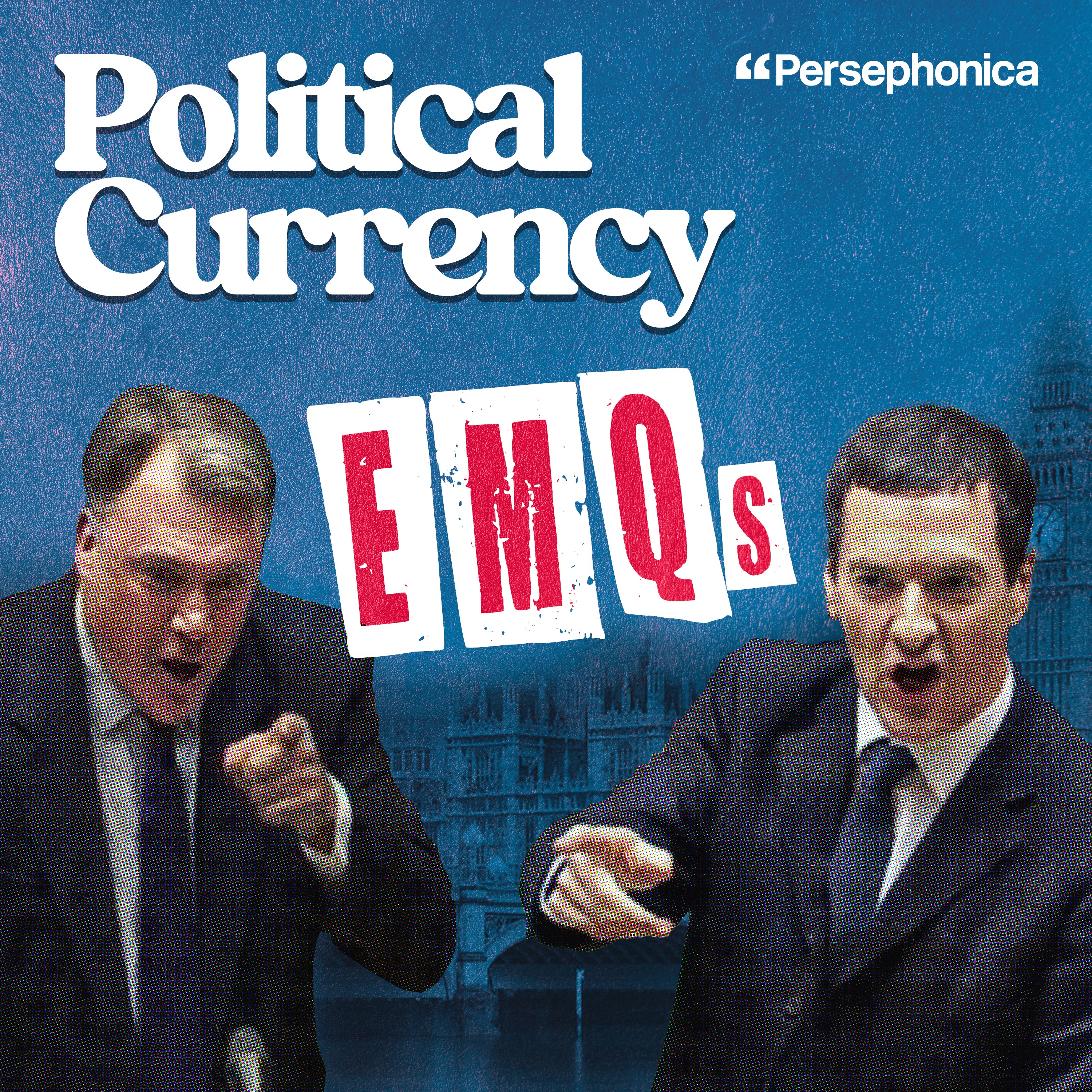
EMQs: The challenges criticising Netanyahu with rising anti-semitism?
In short
EMQs (Ex-Ministers’ Questions) episode mixing political debate and “hope” listener questions. It covers: (1) backlash to appointing Paul Novak (TUC) to the Bank of England Court; (2) how to keep hope and development messaging effective at the UN; (3) evidence that Dollywood Foundation books are read; (4) how British Jews can publicly discuss concerns about Netanyahu without fueling antisemitism; (5) whether North Sea oil/gas approvals are delayed for political reasons; (6) whether music can shift politics, with historical examples.
Guests (questioners/spotlighted)
Tom Fletcher, UN Under-Secretary-General for Humanitarian Affairs and Emergency Relief Coordinator; Helen Hassell, Dollywood Foundation; Hannah (Northern Israel/Rosh Hashanah context), British Jewish community questioner; Nick Butler (gold subscriber), energy policy questioner; James, music-and-politics questioner.
Key claims
Trade union representation on the Bank of England Court is longstanding; critics are scoring points. Development aid arguments must be re-framed for a fragmented modern world. Dollywood’s book program is empirically effective (88,000 books/month; 8 millionth soon). British Jews should “pipe up” publicly about Netanyahu-related security concerns while distinguishing Israel’s existence from government actions. North Sea drilling delays may be politically motivated and undermine energy security. Music can unify and influence politics (e.g., French Revolution anthem; Clinton saxophone; Dennis Healey piano).
Notable examples
Fowder (Israeli TV) series on post–Oct 7; UN sanctions on illegal settlements; Thatcher peerages to union leaders; “Marseillaise” origin; Bill Clinton Arsenio Hall sax; Dennis Healey on Mike Yarwood; Ted Heath/Herbert Howells “Prayer for 10 Downing Street.”
Written by AI. May contain mistakes.
Chapters
2:28
Reflections on Montreal
Ed and George share their experiences and thoughts about Montreal.
“and I have never been to Montreal before, so it was the first time.”
3:56
Trade Unions and the Bank of England
Discussion on the appointment of Paul Novak to the Bank of England and trade union influence.
“But just between you and me, I love foie gras.”
6:16
Historical Context of Trade Unions
Exploration of the history and significance of trade unions in UK politics.
“I think we had Dave Prentiss, who was the leader of Unison.”
8:02
The Role of Development Assistance
A critical examination of the current state of development assistance and its relevance today.
“No, and you know, KB Vade Knox had a good year.”
14:00
Impact of Dollywood Foundation on Children's Reading
Learn about the success of the Dollywood Foundation's reading program and its positive effects.
“It's a different world and they need to adjust to that would be my very candid advice as a fan.”
21:02
Challenges Facing the British Jewish Community
Explore the delicate balance for British Jews in expressing criticism towards Israel amidst rising anti-Semitism.
“Here's an important question and a good question from Hannah in response to our discussion last week on the British government's moves on sanctioning the illegal Israeli settlements in Palestine.”
28:00
Political Decisions and Energy Security
Explore the political dynamics affecting energy policy in the UK.
“despite the renewed risk that supplies will be short because of the conflict in the Middle East.”
32:39
Music's Role in Politics
Discuss how music influences political communication and history.
“It's chicken that's just chicken, and their lightly breaded chicken nuggets are free from gluten, dairy, and soy.”

Ask about this episode
Get the gist, explore an idea or ask about something said.
 Claude
On Political Currency, what are the key points of this episode?
Searching your listeningTranscript
Automatic transcript. May contain errors.
0:00This is Hannah Berner from Giggly Squad. O-Pill is the first over-the-counter daily birth control pill available in the U.S. Let's be real, getting a birth control prescription is not always easy and it's so much admin. In fact, about a third of women face barriers to access prescription birth control. Between scheduling appointments, missing work, class, or just trying to exist, it's a lot. But now O-Pill is putting birth control in our control. Opill is a daily birth control that's FDA approved, full prescription strength and estrogen free and 98 % effective when used as directed. Grab it online or at most major retailers, no prescription or doctor's appointment needed.
0:38So if you're thinking about birth control, check out Opill to see if it's right for you. Use code Giggly for 25 % off your first month of Opill at O-P-I-L-L dot com. That's code Giggly at O-P-I-L-L dot com. Birth control in your control. We love to see it. Hey, everyone. It's Adam, host of Ted's podcast, Rethinking with Adam Grant. And this episode is powered by AT &T Business. When you're building a business, momentum is everything. There's nothing worse than hitting your stride only to have a spinning loading icon bring everything to a halt. When navigating competing priorities, reliability isn't a luxury.
1:13It's a foundation. AT &T Business is built to work so you can spend less time troubleshooting and more time focusing on what actually matters. powered by AT &T Business, built to work. Get today at business.att.com. Rothy's is up to something big. The famous Flats brand has reimagined their iconic point shoe to be better than ever. To celebrate its 10th anniversary, Rothy's made the point even more beautiful and comfortable than before. Every closet needs a little black flat, and Rothy's makes the best one of all. Discover the point at rothys.com and learn why this timeless shoe is so special.
1:51That's R-O-T-H-Y-S dot com.
2:15George Osborne: from Political Currency with Ed Balls and George Osborne.
2:24George Osborne: Welcome to EMQs, Ex-Ministers' Questions. Now, I have just got off the plane from Montreal, and I have never been to Montreal before, so it was the first time. I absolutely loved it. I mean, I wasn't there for very long, but it's just a very unusual city. I mean, the most obvious thing is it's this sort of big North American city where they all speak French, which is quite unusual if you've not seen it. and really good food as well and it helped that there was good weather too and it's all sort of somewhat stuck someone explained it's interesting it's kind of stuck a bit in the the architecture stuck a bit in the 1970s these sort of brutalist buildings and then the old kind of french town and and apparently that was because you know the threat of separation meant that sort of investment kind of dried up for a bit so it got got stuck the threat of quebec leaving canada meant that it kind of got stuck a bit in aspic but anyway that's changing and it's pretty dynamic have you been to Montreal?
3:16Ed Balls: I have. I went when I was at Harvard, the autumn of 1988. I went in the winter. It was incredibly cold. But the thing about Montreal is the whole city exists underground. So, you know, in Hong Kong, you can basically walk around Hong Kong in sort of walkways above the streets. In Montreal, you can basically park, go shopping, go to restaurants, go out, move between different parts of the city without ever coming outside because it is so cold that is my kind of big memory of it i've always enjoyed going to these big canadian cities so i'm a
3:51George Osborne: envious envious you would i tell you what you would have been envious of i did actually think of you because i'm always thinking about you you know you're in my you're in my thoughts all the time and uh i went to a restaurant blimey yesterday called joe beef which i agree doesn't sound very French but it is a one of the kind of culinary institutions of Montreal and had a fantastic meal there and I was thinking you know you would have really enjoyed it included you may you maybe or not maybe for ethical or for taste reasons you'll object but it included an amazing foie gras course you know they have a sort of sandwich which is their signature dish obviously for the purposes
4:31Ed Balls: of the podcast, I will say nothing. But just between you and me, I love foie gras.
4:37George Osborne: Wasn't the Starmer government going to ban it at some point? I'm not sure what happened. Anyway, you can be a culinary refugee in Montreal. There was no sign they were going to ban foie gras anytime soon.
4:50Ed Balls: So the other thing which has been happening while you've been away, but I thought it was important to kind of mention this to you because you'll have a view on this while you're away. John Healy appointed Paul Novak, the General Secretary, the boss of the TUC, to become a director of the Bank of England. That means he joins the court of the Bank of England. And it's caused this big outcry from reform. Richard Tice, Robert Jenrick, actually, Kemi Badenock joined in. Only one party has ever rescued the country from trade union control. We're ready to do so again. And if you weren't sure what kind of Labour gun we have or want to know, the news below is a big clue and it's not good news.
5:30Ed Balls: That's the news that John Healy has appointed.
5:32George Osborne: You said that? Kemi said that.
5:34Ed Balls: Kemi Batenot.
5:36George Osborne: Now, who did you appoint to the Court of the Bank of England? Well, I did. I had trade union leaders. I mean, the Court of the Bank of England is partly a kind of representative body. I refused also to change the name. They always wanted a, it's a bit old fashioned, the idea of the Court of the Bank of England. I didn't want to be the chancellor that abolished the court after hundreds of years. But they kept wanting to call it the board of the Bank of England. It's not the decision making. It's not the monetary policy. It's not deciding interest rates. But it sets the kind of budget of the bank and it provides oversight and scrutiny of how the bank is run by the governor.
6:10George Osborne: I thought it was always important that you had a representative of the trade union movement on the court. I think we had Dave Prentiss, who was the leader of Unison.
6:20Ed Balls: Margaret Thatcher appointed Gavin Laird to the Court of the Bank of England when she was Prime Minister. He was the electrician's kind of engineering union on the right of the trade union movement. But, you know, important figure in the trade union movement. The Labour press people pointed out, I mean, Robert Jenrick, Burnham's lost support from credible economists. So he's resorted to dishing out jobs to his mates. That's how he responds to the appointment of Paul Novak from the TUC. Labour Press points out that when Robert Jenrick was himself a Treasury Minister, Francis of Grady, the General Secretary of the TUC, was appointed to the court in 2019.
7:03Ed Balls: So, you know, every now and then you have these confected nonsenses. And in this case, reform and conservative politicians fighting it out to be more anti-trade union. There have been trade unions on the board of the Court of the Bank of England for decades under Labour and Conservative governments. What are they on about?
7:18George Osborne: They're on about trying to score a political point today rather than remembering what happened yesterday. It's a different kind of politics, isn't it? I mean, I was all for big tent, try and, you know, win over your opponents, make it harder for Labour by, you know, working with the trade union people and so on. and let's be honest these trade union leaders they love the court of the bank of england and a good glass of claret and you know the great thing about the british trade union movement i think this is compared to some of the continental trade union movements in the 20th century is it's utterly small c conservative in my experience doesn't mean they don't do a great job but they they are not anarcho-syndicalists who will not uh break bread with the governor of the bank of England.
8:02Ed Balls: No, and you know, KB Vade Knox had a good year. But you know, whoever thought that it was a good idea, I'm going to say to put that tweet out in her name, they got that one wrong.
8:12George Osborne: Margaret Thatcher used to give peerages to their trade union leaders, used to drive Arthur Scargill mad. You know, she gave Joe Gormley a peerage. And it was a big trade union and scargle and furious been president of the um of the num so there you go what are we going to talk about we just take a question shouldn't we our first question this is the hope uh movement among podcasts to try and bring some hopeful thinking into the british political discourse right and we've got a question from tom fletcher who's the who's the un's uh humanitarian chief as part of this initiative
8:52Ed Balls: That is true. To give you a little bit more context, this is the Be Hope podcast takeover, which we're joining for the second year running. And they're allowing podcasts to spotlight leaders, activists and experts around the world around the theme of hope. And as you said, Tom Fletcher, friend of this podcast, often contributed in different ways. And we both knew him when he was working in the British government, as you said, Undersecretary General for Humanitarian Affairs and Emergency Relief Coordinator. Hi, Ed. Hi, George. This is Tom Fletcher here, the UN humanitarian chief. We're gathering, as you know, world leaders in New York in the coming days.
9:30And from AI to climate change to new weapons and new conflicts, it's surely becoming clear to everyone that a driverless world is a pretty perilous place. Now, we're setting out to make big progress on our campaign this year to save 87 million lives. But we're really struggling to cut through the noise right now. And so my question, how can we find a way to get this message to land with leaders and with the public at large? Thank you.
10:01Ed Balls: I mean, good question from Tom. And in a way, it picks up from the conversation we had on our main podcast, because the conversation about AI and regulation, the conversation about climate change regulation, these are both kind of global imperatives, which at the moment, the US administration is not driving, in fact, not really engaging with at all. But I think the answer is that leaders, as we said on AI, both need to drive this forward, British, Canadian, Australian, French, German, but not by giving up on America, Because in the end, if you haven't got the US heat in, much, much harder to drive these agendas forward.
10:49Ed Balls: And I think you just have to be persistent.
10:51George Osborne: Yes. I mean, is it persistence or I feel somewhat that the development community, two things. I was a big supporter in government of the development community and proud to be the chancellor that hit the 0.7 % target of national income spent on development aid. And it's very sad that subsequent Conservative and Labour governments have kind of retreated from that. But I do feel the development, I'll be blunt, I mean, to Tom, you know, I think they're a bit stuck in a kind of world of 10, 15 years ago, where, you know, there were these targets, there was kind of the Millennium Goals, the global community coming together to agree them and support them.
11:32George Osborne: And they were, as Tom was alluding to, they were the subject of things like next week's UN General Assembly Week. But the world has moved on. And there are like, first of all, it's much more fragmented, as he says. And you can't just like ignore that. You have to lean into it. And there are lots of other issues crowding in. And rather than just be persistent, I think you have to sort of re-win the argument of why development assistance and these campaigns like the one that Tom is promoting are required in today's world. Rather than just saying, well, hold on, we all signed up to this 20 years ago.
12:06George Osborne: Yeah, for sure. But we signed up to a lot of things 20 years ago. and I think what is somewhat lacking I mean the when I was a member of parliament and I'm not a member of parliament now so maybe if our current MPs who say I'm wrong about this please correct me but when I was a member of parliament you know I felt there was a very strong kind of grassroots development movement in other words in the towns I represented there were there were charity shops there were kind of successful campaigns to get people to write to their MP to support you know development assistance and the 0.7 goal and you know there was a kind of groundswell movement which of course you know if you're our age you know live aid is a kind of massive example of that in our lifetime i feel all that's somewhat gone i think the charities have sort of changed their focus um there's been this interesting row the churches were very involved at the time weren't they yeah i mean anyone who's i know it's a bit tangential but anyone who's been following the row about how Amnesty International has got a bit kind of waylaid into issues that were not central to sort of, you know, political prisoners in oppressive regimes.
13:10George Osborne: And I think the development charities have sort of, they're no longer absolutely on this issue of how do you, how do you, you know, help the world's very poorest and bring development assistance and pressure on governments. So I think there needs to be a sort of re-energizing of the movement. And I think there needs to be that kind of re-energizing the grassroots movement. I think intrinsically British people are generous and when there are appeals, you know, they take part. But it's all sort of fizzled away. And I think to some degree there needs to be a sort of rethinking of like how do we present this argument in the modern age rather than wishing we were back at the millennium when, you know, you had sort of progressive US administration signing up to this thing and there was only one superpower and the UN held the stage.
14:00George Osborne: It's a different world and they need to adjust to that would be my very candid advice as a fan.
14:07Ed Balls: But it's good that the UN is taking part in this podcast takeover and encouraging these kind of conversations. And so Tom's the kind of guy who'll always be thinking and challenging and asking how can we do things better. you have to look to both those people who want to sign up to a social justice mission and those people who who know that there's self-interest in the world but we need to solve big challenges which impact upon us very negatively through cooperation whether that is climate change or global migration so hope is the the key here I still believe in a town called hope do you remember
14:45George Osborne: that yeah i do right our next question this is a good segue to the united states this is a question from helen hello i'm george my name's helen hassell and i'm from the dollywood foundation home of dolly parton's imagination in my group obviously i love the podcast i was delighted to hear ed's story about meeting dolly parton again however i was horrified to hear this time the civil servant's advice that the books just pile up and aren't read we mail around 88 000 books a month direct to children across the UK. We're about to mail our eight millionth and I can tell you that all the research indicates that the books are read again and again.
15:23Families tell us they love the monthly book gift, it's a nudge to read and children soon learn to recognise the package that comes through the door is their book and they want it read immediately. The programme has a huge impact on children's lives from supporting bonding with tiny babies through to increased school readiness and embedding a culture of reading for pleasure within the family. We've got lots more research that I'd love to tell you about if you're interested. Thank you.
15:48Ed Balls: I have to say, when I saw this question came in, I was briefly nervous because I thought, you know, we were going to be dressed down because of Robert Peston's rendition of Jolene, that somehow the Dollywood Foundation would think Centrist Dad had taken a step too far. But no, we hadn't.
16:07George Osborne: I don't think Dollywood feels hugely under threat yet from Centrist Dad. I mean, I mean, maybe. I'm not sure single-handedly you're going to destroy the reputation of Jolene as a song.
16:21Ed Balls: I think that is true, but I think I'm also going to go a stage further than that and say that I actually think it's clear. I mean, I don't think this is always clear, what I'm about to say. So within our band set, I actually think that our rendition of Pink Pony Club is actually better than Chapel Roan's, which is controversial. but I think Jolene, I think Dolly Parton did it better than Robert Peston and Century of Death. That is my view. But that is not what we were being dressed down for. I don't think it was actually being dressed down at all.
16:57George Osborne: No, she was pointing out that the books are read, that this amazing programme works. When you told the story of meeting Dolly Parton and the... I seem to remember the British... Do you want me to tell it again? The British Civil Service were a little bit sceptical, weren't they? That A, you'd have to end up giving them money and B, that sending people books wasn't a very good idea, essentially, or a lot of the books wouldn't be read. But it's good to, you know, it's good to hear that A, you ignored the Civil Service and B, that Helen points out they got this one wrong.
17:33Ed Balls: Well, unfortunately, I mean, I ignored the Civil Service in their advice not to have the meeting with Dolly Parton.
17:39George Osborne: And then they wanted to be part of the meeting, didn't they?
17:41Ed Balls: They all want to be part of the meeting. But what I didn't ignore the civil servants on, you know, we didn't provide British government financial support to the Dollywood Foundation. And, you know, as I said at the time, the advice at the time was they were worried that unless you gave the book into somebody's hand, they were less likely to read it. That was the research. And also that if you, because people are often itinerant, if you just keep sending the books, they could often be sent to an address where the family no longer live. But the conclusion I draw from Helen's excellent question, but also the documented empirical evidence on the success of their programme and how much of an impact it's had on children's reading, is that you, and this is an important lesson for all the ministers who listen to our podcast, you should always challenge the advice of your civil servants.
18:32George Osborne: Yeah. If Dolly Parton says she wants a meeting, don't say no.
18:36Ed Balls: That is completely right. And the great thing is that the work of the Dollywood Foundation is going to continue, including support for children's reading around the world. And brilliant to know that I'm not sure she said this in her question, but I happen to know it's true that Helen and her family are big listeners to our podcast. So good to see the legacy lives on. Thanks, Helen, for your question. We'll be back shortly after this break.
19:11There are moments that reveal who we are and who we're meant to become. For those born to lead, such moments call for a vehicle of equal distinction. Dynamic by design, uncompromising in execution, the Range Rover Sport was engineered for those rare individuals who demand the world and possess the conviction to claim it. When your time to lead arrives, you need a vehicle that rises to meet it. the Range Rover Sport. Exclusive offers available now. Explore further at rangerover.com. Hey, it's Paige DeSorbo from Giggly Squad. Everyone is always looking for a new way to make some extra cash, but sometimes the easiest place to start is your own closet, with a little help from Depop.
19:51Think about how many clothes you have that you love, but you just don't wear anymore. On Depop, it's quick and easy to list those pieces, there's no selling fees, and suddenly those clothes have a chance to find someone who actually wants them. And the best part, you're making room for whatever you're into next. Make money on Depop with no selling fees and find what you want for less. This message is brought to you by Depop. This episode is sponsored by HeyGen. HeyGen turns a script, photo, or presentation into a polished video of you in minutes, no camera or crew required. It's how real estate agents, financial advisors, attorneys, and creators show up consistently on every feed and build a brand that brings in clients without spending their whole week making content.
20:31Rated the number one AI video platform for small businesses on G2 with the most realistic AI avatars in the industry. Trusted by a community of over 30 million people and 85 % of the Fortune 100 and built to work in over 175 languages so you can reach your audience in theirs. Here's the wild part. Record yourself for just 15 seconds and HeyGen builds an AI avatar that makes professional videos for you So you can post everywhere your audience is, as yourself, without filming every time. Your first three videos are free at heygen.com slash pod. That's H-E-Y-G-E-N dot com slash P-O-D.
21:12George Osborne: Welcome back. Here's an important question and a good question from Hannah in response to our discussion last week on the British government's moves on sanctioning the illegal Israeli settlements in Palestine. time. Hi Ed and George. I absolutely love the podcast. I was listening to the recent episode from Northern Israel while I was preparing my bomb shelter for the Rosh Hashanah holiday, which thankfully passed with no trauma. I know both of you are staunch supporters of the British Jewish community, and yet despite it all, I still thought there was a subtle but uncomfortable undertone that British Jews need to be good Jews and pipe down, which was uncomfortable for many reasons, especially after what happened in Manchester this time last year.
21:49There obviously there needs to be a balance between legitimate criticism of Israel, which many British Jews will do in private, if not in public, and supporting the Jewish community. How can the British Jewish community be best supported in these challenging times?
22:03Ed Balls: Oh, look, it's really good to have this question from Hannah. And let's come to the substance of a question in a second. But before we do, just listening to her question and thinking about the the reality of her lives and the safety of her family. I don't know whether you have watched this. I actually mentioned this on our Kitchen Cabinet briefing earlier in the week. There is a Israeli television programme called Fowder, which is into, Fowder means chaos. It's in Hebrew with, you know, by watching the subtitles. And the first four series are brilliant. And the fifth series has just come out. The first four series, it's about operation of an Israeli secret service unit into the occupied territories.
22:52Ed Balls: But the praise it's had over the years has always been about the very kind of balanced, careful way the television programme is made. Not to say that there isn't an Israeli perspective or bias. Of course, every television has a bias, but very well-reviewed, thoughtful programme. The fifth series is all about the team in the months after the October the 7th attack. And within the series, and I've just watched it, I hadn't watched it when I did the thing for our kitchen cabinet briefing. Halfway through the series, they have two episodes, which they say is optional not to watch because for the flow of the narrative, you don't need to watch them.
23:33Ed Balls: But it has two episodes where it takes you back in a sort of almost drama documentary way to the events of October the 7th. And it is utterly horrifying and upsetting and very, very difficult to watch. And the fearful reality that Hannah and many people like her, including people listening to our podcast, will experience is worth watching. and we totally understand the huge pressure and challenge you'll face, Hannah. I'm going to say this because it was George who was critical of the chief rabbi. I don't think that you were saying he should pipe down or the British community should pipe down. I think the thing which we were pointing out is that for anti-Semitism, which can sometimes occur in our country, is the idea that if you are Jewish, that means you are necessarily, whether you're in Britain or in America or in Canada or wherever, that you are necessarily a defender of and therefore should be criticised or attacked for the actions of the Israeli Prime Minister and the Israeli government in Israel.
24:48Ed Balls: And I think you were saying, weren't you, that the way the Chief Rabbi stepped into that political debate about British government sanctions against Israel was in danger of legitimising those kind of attacks on British Jews, and that that was a risky thing for him to do?
25:07George Osborne: Yeah, I think the way I put it, well, first of all, you know, on the issue of illegal settlements, they are illegal. I mean, they've been deemed illegal by the United Nations. We're a member of the United Nations. The UK has signed up to that. And we're a member of the Permanent Security Council and Conservative governments, as well as Labour governments, have, you know, I use the evidence of David Cameron as foreign secretary. You know, he sanctioned individual illegal settlers. And so it's a mistake to think this is all like some brand new thing. You know, there's been a consistent British government policy on illegal Israeli settlements.
25:43George Osborne: And then second, I mean, I would say my argument is actually pipe up, not pipe down. And I'm absolutely, if that's the impression I gave, that somehow the Jewish people need to just be kind of quiet and don't make a noise, that's the opposite of what I'm saying. I'm saying that, and it's in your question, that you hear privately from Jewish people, they're very critical of the Netanyahu government. and they're very worried. Lots of my friends are very worried that things that the Netanyahu government are doing are not increasing the security of Israel, undermining the security of Israel. And yet when it comes to saying anything in public, I think people are nervous of doing so.
26:26George Osborne: They feel that like there's enough criticism out there of Israel, or indeed there's genuine anti-Semitism out there, that the last thing they need to do is sort of add to the criticism by expressing any concerns about the Netanyahu government. So that's where they actually pipe down, to use the language you've used in the question, Anna. And so I would say I think we want to hear more. If there are things the Israeli government does wrong, let's hear not just criticism from the kind of perennial opponents of Israel or people who don't want Israel to exist or the anti-Semites. It's good to hear that debate inside the Jewish community, which happens, as you say.
27:02George Osborne: I think I said in the podcast, you know, we can't have a like, you know, I support Israel right or wrong. You can support Israel's right to exist, absolutely, and challenge anyone who challenges that. But that doesn't mean you uncritically agree that anything the current government of Israel, whoever that government is, does, has to be supported. Or if you have any doubts about it, you should only express those doubts in private, be my kind of argument. But it's good to hear from you. And certainly if I gave the other impression, that's not what I wanted to do.
27:37Ed Balls: and thank you Hannah for your for your question in sharing the reality of Rosh Hashanah with us next question from a another friend of this podcast hi Ed and George this is Nick Butler
27:51George Osborne: I'm a gold subscriber and a very happy listener to the podcast the government has postponed the approval of new oil and gas fields in the North Sea and it continues to block new exploration despite the renewed risk that supplies will be short because of the conflict in the Middle East. Is political fear of the Greens now driving policy at the risk of making Britain more dependent on imports? Do you think the postponement will be effective? Are there any examples you can remember of occasions when political calculations have overridden rational economic choices? You know Nick Butler very well. And he worked and helped the Gordon Brown government, didn't he?
28:41George Osborne: He came into number 10. But before that, he worked at BP. So you might say, OK, well, he's got a vested interest in oil exploration. But I actually think the point he's making here is a very strong one. I mean, I think this is a kind of good example of what we talk about in the main podcast. So Andy Burnham comes in. And his first job, as I think he would say, is to establish himself as the new prime minister and try and make Labour a bit more popular and squeeze the Greens, which is a way of making Labour a bit more popular and reducing the political pressure, at least on the left of Labour. So he has been doing that.
29:14George Osborne: But as a result, he has been postponing a decision which the Starmer government also has postponed about drilling in the North Sea. And this is a hangover from, you know, an age when oil security and oil prices were not nearly such a big issue. It was quite a controversial time, but Labour in opposition said they would not allow any more drilling in the North Sea. But the world's moved on, events moved on. And there's a political price Labour are paying for that position as well, because the Conservatives rather unexpectedly won a by-election in Aberdeen on this issue. and everyone was expecting Burnham to come in and just make the announcement that the drilling could go ahead, at least in one of these fields.
29:56George Osborne: But they've postponed it and postponed it and now there's a sense they're postponing it because of the by-election in Hoburn, Keir Starmer's seat, which he vacated, and Polanski is the Green candidate. But I don't think, you know, that's not very good politics in my view. I mean, because if you're interested in this issue, you know that they're just stalling and postponing and they're probably going to say yes. And meanwhile, the kind of country could get could do with some energy security and some and it's not like the oil is going to come gushing tomorrow. These are long term developments and it would instill some confidence that the government's got a kind of medium term economic plan.
30:29George Osborne: So I rather agree with Nick. I don't I don't think they're winning any votes by delaying on this personally.
30:35Ed Balls: Completely. Look, it's entirely consistent with a long term net zero policy. And it's entirely consistent with wanting to increase our use of renewables. The fact is that we are going to be using fossil fuels for some time to come. And we're going to be importing them unless we have continuing supply from the North Sea. And given Andy Burnham has made it absolutely clear he is going to do this, the appearance of not doing it for political reasons, I kind of think is also, I agree with you, it's undermining. Get on with it. Thanks for your question, Nick. We'll be back after this break with one more question.
31:25Rothy's is up to something big. The famous Flats brand has reimagined their iconic point shoe to be better than ever. To celebrate its 10th anniversary, Rothy's made the point even more beautiful and comfortable than before. Every closet needs a little black flat, and Rothy's makes the best one of all. Discover the point at rothys.com and learn why this timeless shoe is so special. That's R-O-T-H-Y-S dot com. Bank and credit union decision makers. Hear the expert conversations that actually move the needle. Believe in Banking is the award-winning podcast bringing you bold ideas and real insights from your peers.
32:04The leaders shaping what's next in banking and credit unions. Whether you're navigating digital transformation, brand strategy, or building a stronger brand, we cover the conversations that matter most. Lead your organization forward. Search Believe in Banking and listen now. Hi, this is Monica Reinagle of Nutrition Diva. Today's show is sponsored by Nature Raised Farms. Grocery shopping can be a little overwhelming, especially if you're reading labels. And in my opinion, chicken shouldn't be complicated, which is why I appreciate Nature Raised Farms. It's chicken that's just chicken, and their lightly breaded chicken nuggets are free from gluten, dairy, and soy.
32:45Look for Nature Raised Farms on your next grocery trip and feel more confident about your choices.
32:58Ed Balls: So welcome back. This is a very good question from James. Hi Ed and George. I recently attended my local street party where I was lucky enough to see Centra's dad perform for the second year running. I thought Ed and his bandmates were great and I particularly enjoyed your rendition of London Calling. It got me thinking about music and politics. You probably saw that Andy Burnham was recently filmed playing guitar to a Smith song on a recent trip to see troops in Kiev. You got quite a mixed reaction online. So do you think that music can actually work as a genuine tool for political communication?
33:37Or are politicians just always going to look a bit uncool trying it and is it best left to the actual musicians ted heath famously had a piano moved into downing street but i'm not aware that he ever played it publicly or as part of a campaign effort
33:53Ed Balls: i was trying to think what is the um the best example i could think of of music shifting politics and um obviously things can only get better the labor 1997 anthem is sort of is remembered as a the young blair and brown coming into government uh that was their anthem but but i'm not sure it changed politics it was more of a reflection of what was going on this is my best
34:17George Osborne: example no one remembers that i got dereamed to say they were voting tory in 2010 which i i thought was one of my great i couldn't believe the coup and then no one was interested why why did what happened well i i said let's get the people who did the things can only get better song in 97 to say they're going to support us in 2010. And we managed to pull off, or at least some members of the band, as far as I remember, and then no one was interested in the story. I thought it was such a great story, but I was wrong.
34:47Ed Balls: So that is also an example of music not changing the course of urban politics, because, you know, if it had an impact, you'd have won a majority. But do you remember this? 1992, Bill Clinton, young rock star politician, new on the block, up against, you know, the ageing George Bush Senior, up against Ross Perot, goes on the Arsenio Hall show to play the saxophone.
35:28Ed Balls: But he went on the Arsenio Hall show and it was like, oh my goodness. you know he's young and cool he really is a rock star and actually it was one of those moments where music was used to tell a wider political story and it certainly worked to build clinton's
35:44George Osborne: advantage i think it probably helped as well didn't it that people knew that tony blair played in a band at university ugly rumors you know that it was that he was also because the interesting thing about john major is he wasn't actually that much older than tony blair but he felt like he was from the sort of 50s generation and Tony Blair was from the 60s generation and that was true of Bill Clinton too this was the first sort of 60s generation child who was they were assuming kind of leadership roles.
36:14Ed Balls: There was also a moment I think you may be too young for this but do you remember in the 1970s there was a massive Saturday night show called the Mike Yarwood show Mike Yarwood did impressions and at the height of you know the Labour government's economic challenges the Chancellor of the Exchequer Dennis Healy went on the Mike Yarwood show on a Saturday night and played the piano and he did it really well but with humour and it's sort of it had a big impact on his standing as a politician that he was relaxed and dealing with the situation.
36:52George Osborne: Do you remember when Margaret Thatcher chose as her favourite song, Two Little Boys, by the now utterly disgraced Rolf Harris? My favourite song of all time.
37:04Ed Balls: Two little boys with two little toys. Oh yeah, that is, yeah, I'd expunge that for my memory.
37:12George Osborne: I've got a serious history example, actually, of where I think music matters. So you have to go back into the French Revolution you know the French Revolution is happening in Paris but it's also breaking out elsewhere across France in different cities but it's not particularly unifying and there's not a kind of sense of nationhood to the revolution and then there's a group of workers I think they are I should I should have looked this up before I say this but anyway because I might get this wrong but from memory anyway there's a group of workers who start marching from marseille up to paris and and the kind of march gets bigger and bigger and bigger as it comes towards paris more and more people join it and they pick up a song which they didn't invent but i think it had been a kind of military like the french revolutionary forces someone had already come up with this song and but they start singing the song on the march and it's um it's now the french national anthem the Marseilles, that's why it's called the Marseilles because it's from the march from Marseilles and I think the anthem does create a kind of it unifies the revolution across Paris across France rather it brings a kind of national identity to the revolution and the fact that the national anthem is a song not from Paris but from the Marseilles marches so that's my best stab at a kind of piece of music that did change or help change history
38:39Ed Balls: Have you got any Ted Heath music stories?
38:42George Osborne: Well, I think you're being a bit unfair to Ted Heath. Well, two things. I mean, while we've been recording this, as anyone listens to the podcast, we actually had a piano delivered at this house. It's the famous picture here is the piano leaving the house, not arriving. So it's Ted Heath's piano being taken out of 10 Downing Street, I think is the real sort of symbol. It's a sort of classic British. It's right in front of the cameras of any being kicked out. and I think to be fair to Ted Heath he really was a serious musician and he actually was a conductor wasn't he? He conducted an orchestra while he was Prime Minister and I think he took his music very very seriously and so he wasn't a bit like Centrist Dads he was like a proper musician.
39:27George Osborne: I do agree with our questioner that the best song you do is probably London Calling since it sort of shouted not a song anyway it effectively pulled off. I'm not going to be true.
39:38Ed Balls: Look, at the moment, our best song is Madonna, Like a Prayer. But that's also, it's sung in a particular way. I've got a great Ted Heath story. The best, in my view, core composer of the 20th century, Herbert Howells, wrote a huge amount of English liturgy for English cathedrals, also used to judge competitions. And in the 1930s, he was judging an organ competition. and awarded the first prize to this young musician called Ted Heath. And Ted Heath, or Edward Heath, then asked Howells to give him a reference when he was applying to be the organ scholar at Balliol College, Oxford. And Howells said he would only on the condition that when Ed Heath became prime minister, Howells would be invited to Downing Street and could write a piece of music for Ted Heath.
40:35Ed Balls: And then Ted Heath becomes prime minister and invited Howells to Downing Street to a special dinner they were having. I think the guest of honour was Her Majesty the Queen Mother. And Howells writes a piece of music, which I've actually conducted with the BBC Singers. And the words to it were written by Ted Heath's principal private secretary. And it's called Prayer for 10 Downing Street. And so Howells wrote Prayer for 10 Downing Street for Edward Heath. And it was performed for the first time in Downing Street at this dinner. And isn't that a great story?
41:13George Osborne: That is a really good story. I didn't know that one. And here I'm going to argue that that does change the course of British history because Ted Heath is from a very, very ordinary poor background. He's one of the humblest origin prime ministers we've ever had. I think his mother was a chambermaid in Broadstairs in Kent. Getting to Oxford, getting back then, getting the scholarship to Balliol, that is what would have propelled him into a position where he could then become a Conservative MP and then become Prime Minister. Without that endorsement from Howells, maybe he would never have gone to university, never have become Prime Minister, and then Britain would never have joined the EU.
41:52George Osborne: And that was the end of the story. Oh, no, sorry, we left, didn't we? But for at least for 30 or 40 years we were in.
42:00Ed Balls: There we are, James. You were right to say music can change the course of history, and that included with Ted Heath. Thanks for your question. That's it for this episode of EMQs. Don't forget, you can always email us questions at politicalcurrency.co.uk or message us on our socials.
42:15George Osborne: Yeah, and we're also pleased and excited to announce, you may have been watching our main podcast on YouTube. It's become really, really successful and popular there. we are now going to be posting a video version of emqs at the moment we've only been doing an audio version but we will have a youtube version of emqs coming out shortly um and that is not all
42:34Ed Balls: for those of you listen on apple podcasts there's also going to be a visualized episode of the show
42:40George Osborne: there as well as on youtube so you can look at our pretty faces as well as listening to our dulcet
42:45Ed Balls: tones and george playing the piano we'll be back on thursday with our main show in full video and
42:51George Osborne: we will see you then.
42:59George Osborne: Thanks for listening to Political Currency. This has been a Persefonica production.
43:13Hey, everyone, it's Chris Gillibow here, host of the Side Hustle School podcast. this episode is powered by AT &T Business. In my early days, I did some of my best work in parked cars or coffee shops. When I landed my first big contract, I realized I couldn't bet my future on a public connection that cuts out if someone turns on a blender. As a small business owner, you're already wearing at least 10 hats. You shouldn't have to be your own IT department as well. That's why I rely on AT &T Business. They keep your connectivity reliable so you have one less thing to worry about. Powered by AT &T Business, built to work.
43:48Get AT &T Business at business.att.com. Hey, this is Adam Grant, host of Ted's podcast, Rethinking with Adam Grant. One assumption many organizations rarely rethink? How their financial operations actually get done. That's why smart leaders turn to Bill, the intelligent finance platform that helps businesses and accounting firms scale with proven results. In fact, Bill reports that 98 of the top 100 U.S. accounting firms, trust them to manage, move, and maximize their clients' money all in one place. The right systems can free up time, reduce drag, and make growth more intentional. Visit bill.com slash proven to talk with an expert about automating your business finances and get a$150 gift card as a thank you.
44:29Terms and conditions apply. See offer page for details. Your daily supplement routine doesn't need to be managing a handful of different bottles. Onnit's Total Total Human brings key research-based vitamins, minerals, herbs, and amino acids together in convenient day and night packs. One all-in-one product designed to make supplementation easier. The day pack supports cognition, focus, and cellular energy production. At night, the night pack helps you wind down and supports a calm, relaxed state. Less time managing your supplements, more support for your day and night. Shop Total Human now at onnit.com.
45:07Thank you.
From the publisher
How do you unite leaders to come together and work for a common goal? Tom Fletcher, who works for the UN on Humanitarian Affairs and Emergency Relief, asks this very question to Ed Balls and George Osborne on this week’s EMQs. As part of the Be Hope podcast takeover, Tom asks the pair how to make a global philanthropic message land in a divided, economically challenged world.
Off the back of Ed’s reminiscence about Dolly Parton, someone from Dollywood corrects the record on the civil service’s more pessimistic view of the Imagination Library. She details just how effective the initiative has been and explains the impact it has had on children’s lives.
An Israeli listener then questions George on his comments on how some British Jews are reacting to the sanctioning of West Bank settlements. Ed and George debate the challenge of navigating criticism of the Israeli government amidst rising anti-semitism.
Ed’s King’s College colleague, Nick Butler, then asks how the Burnham government can continually delay a decision on North Sea drilling and if it is really all part of a play to win over Green voters.
Finally, the music of Centrist Dad inspired a listener to ask when music has had a real impact on politics. This takes the pair from the French Revolution all the way to Britain joining the EU…
This episode is part of the BE HOPE Podcast Takeover, bringing podcasts around the
world together to explore the theme of hope and how we can continue to make progress
in a rapidly changing world.
We love hearing from you, so please don’t forget to send all your EMQs to questions@politicalcurrency and make sure to include a voice note of your question or send a question to our social media handles:
👉 X
👉 TikTok
Thanks for listening. To get episodes early and ad- free join Political Currency Gold or our Kitchen Cabinet. If you want even more perks including our exclusive newsletter, join our Kitchen Cabinet today:
👉 patreon.com/politicalcurrency
Please note: Kitchen Cabinet is only available via Patreon.
Credits:
Production: Sam Burton
Producer: Caillin McDaid
Video Editor: Sam Gruet
Executive Producer: Henrietta Harrison
Political Currency is a Persephonica Production and is part of the Acast Creator Network.
Hosted on Acast. See acast.com/privacy for more information.
More from Political Currency
All episodes

We use cookies.They keep VO running smoothly and help us improve it. Privacy policy