
 Ask ChatGPT


- Podcasts
- Political Currency
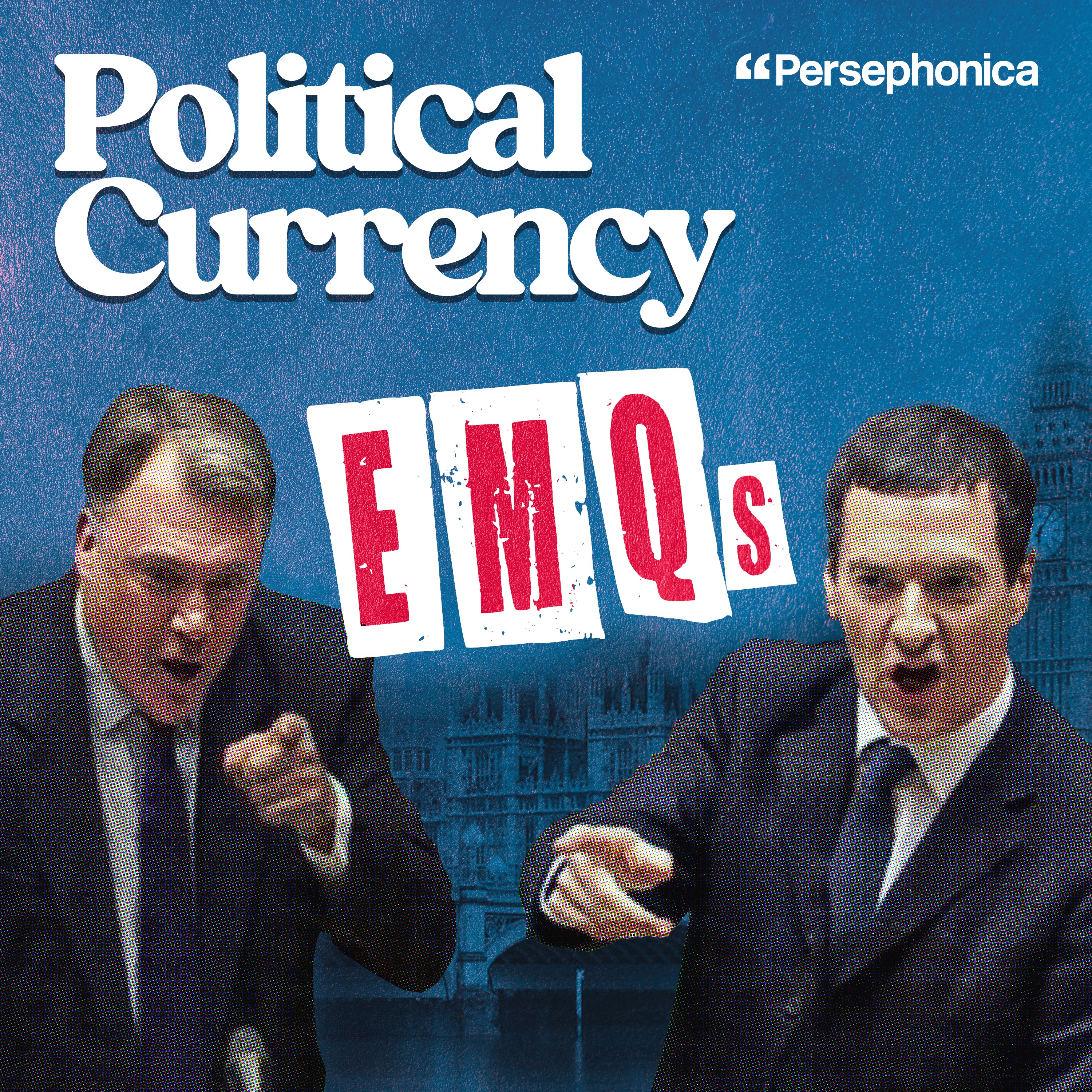
- EMQs: The reality of reshuffles
In short
EMQs (Ex-Ministers’ Questions) discusses UK political “reshuffles” and related media moments, then pivots to mayoral devolution, Oxford college choice, and the politics of equal marriage.
Guests/backgrounds
Hosts Ed Balls (former Labour minister; interviewed by John Humphrys on Today in 2010; ex-Chancellor/Shadow Chancellor) and George Osborne (former Conservative Chancellor/Shadow Chancellor). They also reference guests: Robert Jenrick (Reform spokesperson; ex-Tory minister) and Oliver Coppard (Mayor of South Yorkshire). A listener is a civil servant (anonymous) and another is Daniel (A-level student).
Key claims
Hot-mic moments are ethically/technically complex; reshuffles take long due to negotiations, waiting rooms, and people saying no causing cascades; mayoral route can build governing experience and national profile (Burnham/Johnson examples); gay marriage passed as public opinion moved faster than politics, with MPs’ “constituency pressure” criticized.
Notable examples
Robert Jenrick “hot mic” on Good Morning Britain; Gordon Brown “Mrs Duffy” hot mic; Blair reshuffle 2001 (Robin Cook/Foreign Office); Rachel Reeves offered education vs defence; equal marriage coalition strategy and Church of England opposition; Section 28 and civil partnerships timeline.
Written by AI. May contain mistakes.
Chapters
0:58
Analyzing Robert Jenrick's Interview
Discussion on Robert Jenrick's interview and the implications of a hot mic moment.
“Welcome to EMQs from Political Currency.”
2:52
Ethics of Hot Mics in Broadcasting
Exploration of the ethical considerations surrounding hot mic incidents.
“Of course, Gordon Brown had the most famous hot mic moment of all with Mrs Duffy in 2010 during the election campaign.”
4:32
Personal Hot Mic Experiences
Hosts share personal stories of their own hot mic moments.
“between the broadcaster and the politician.”
6:41
Political Context of Hot Mics
Discussion on the political implications of hot mic incidents and public reactions.
“But I don't think I particularly regret it.”
7:50
The Future of Mayoral Politics
Debate on whether being a mayor is a viable path for ambitious MPs.
“But anyway, that kind of thing happens, doesn't it?”
14:00
The Dynamics of Political Reshuffles
Learn about the complexities and tension involved in political reshuffles, including personal anecdotes from the hosts.
“I mean, you're right that Burnham couldn't possibly have been Prime Minister, I think, or very unlikely to have been Prime Minister if he hadn't been Mayor.”
23:59
Choosing the Right Oxbridge College
Explore insights on selecting a college at Oxford or Cambridge through personal experiences and historical context.
“Daniel here, an A-level politics and economic student, applying for PPE at Oxford this October.”
28:00
Family Legacy and Education Choices
Exploration of family educational traditions and personal choices regarding colleges.
“And his brother went to Cambridge and he went to Oxford.”
31:43
The Journey to Equal Marriage
Discussion on the political landscape and challenges surrounding the legalization of gay marriage in the UK.
“Today equal marriage might feel like it was always inevitable progress but at the time in the campaign it felt incredibly hard thought.”

Ask about this episode
Get the gist, explore an idea or ask about something said.
 Claude
On Political Currency, what are the key points of this episode?
Searching your listeningTranscript
Automatic transcript. May contain errors.
0:00Here's a tip for you. There's a podcast out there with fans waiting to be your next customer. They tune in every week, they trust the host, and that host wants to talk about brands like yours in their own words to their audience. The problem is, you just haven't been introduced yet. We're Acast, where that introduction happens. As the world's largest podcast marketplace, we let you browse shows, see who's listening, and book host-read sponsorships or run your own ads all from one platform. Transparent pricing, real-time data, complete control. Start advertising on podcasts by visiting acast.com slash advertise.
0:42George Osborne: The Chancellor of the Exchequer. Getting a lesson from the Shadow Chancellor on how to balance the books is like getting a lesson from Dracula on how to look after a blood bank.
0:50Ed Balls: Egg balls. A steady-as-she-goes budget. What kind of ship does he think he's on, the Titanic?
0:58George Osborne: Welcome to EMQs from Political Currency. With Ed Balls and George Osborne.
1:09George Osborne: Welcome to EMQs, Ex-Ministers' Questions. There are quite a lot more ex-ministers knocking around these days after Andy Burnham cleaned out quite a lot of the Starmer team. Anyway, maybe some of them are listening and maybe some of them will want to send us questions in the future. You had an ex-minister actually on Good Morning Britain, an ex-Tory minister, now a reform spokesperson, putative reform chancellor exchequer, Robert Jenrick. And I couldn't help noticing, Ed, that I think it was a good interview and then at the end of it, I can see why he was a bit frustrated, but he probably didn't realise his microphone was still on and he said something a bit disobliging.
1:49George Osborne: Well, here's a clip right at the end of his interview with you. If a young person in your family is about to head off travelling this summer...
1:59Ed Balls: Oh dear. I think it wasn't a waste of time. I think Robert Jenner gave us very clear answers. And on the police investigation, it's not a waste of time for him to make clear that he believes there's no police investigation. So, I mean, it was good he came on the probe. Yes, look, we have all been there. Golden rule. Never assume the microphone is off. Actually, to be fair, it was a good interview. And he had a very clear run at attacking Labour and the Conservatives on early release of prisoners. And he finds it a bit awkward, the fact that he is an ex-Conservative minister, because he just wants to dump on everything the Conservatives did, including all the things that he was involved in.
2:37Ed Balls: But, you know, he's gone to reform now and he didn't particularly want to answer questions about a police investigation into his finances, which he says is not happening and he's not being contacted. But then that hot mic moment at the end. And in the end, it was fine for him. Of course, Gordon Brown had the most famous hot mic moment of all with Mrs Duffy in 2010 during the election campaign. I actually had one. Just some bigoted woman. I blame Sue. I know. Well, that wasn't 30 seconds after the interview. That was like some minutes. And so that was really unfair.
3:12George Osborne: I was going to ask you, before you get on to our own experience, I just want to ask you the ethics as a broadcaster of a hot mic. So in the case of Robert Jenrick, it's clearly, it's not a sort of deliberate setup by Good Morning Britain. It's just like the microphone's still on and you're recording and broadcasting. In the case of the Gordon Brown thing, that's clearly a decision by the broadcaster at the time. Many, as you say, half an hour later or whatever it was, or 10 minutes later even, to play something because it's nationally significant that the Prime Minister has said this in private.
3:43George Osborne: Where are we on the ethics of hot mics and what was your own experience?
3:46Ed Balls: If you remember, there was a debate about that with Rishi Sunak when he was prime minister, when he did an ITV interview and sat down in the chair and said some things which then included the interview which he was annoyed about. It's always more complicated when it's pre-recorded. In the case of Robert Jenrick, I don't know whether a technician hadn't pressed a button or whether Robert Jenrick was in charge of his own technology, because I think he was doing this from home, but it was live. And therefore, nobody in Good Morning Britain decided to play that. It just bounced into our ears as interviewers and as listeners because of what he said.
4:26Ed Balls: It's more complicated when it's, as you say, pre-recorded. and what exactly has been agreed about what isn't acceptable between the broadcaster and the politician. I think I always assumed if I walked into an interview and sat down in the chair and my microphone was on, at that point, I would think all of this is for use. But if I walked into the room and hadn't sat down and put the microphone on and somebody said, hi, how's it going, Gordon Brown? And I'd said, oh my God, yeah, what a nightmare. And it turned out they had the boom on the camera and they decided to use that, I would have thought that was completely out of order because that wouldn't have been part of the acceptable deal.
5:07Ed Balls: And I think in the case of Gordon Brown and that microphone, he did not think he was still being recorded in the end though. You know, it was such a problematic thing to say for him that he couldn't possibly complain. But I thought it was pretty harsh. My hot mic moment was live on the Today programme during the leadership election in 2010. I was being interviewed by John Humphreys. But mine wasn't like a technical, inadvertent thing. It was my one interview on the Today programme as a Labour leadership candidate. John Humphreys only wanted to talk about Tony Blair and whether Gordon Brown and I had been unfair or rude to Tony Blair in past years.
5:43Ed Balls: And of course, the answer was, you know, sometimes we're pretty tough on him, but not all the stuff you read in the papers is true. However, I was attempting to talk about, you know, today and the next five years rather than the past.
5:54George Osborne: But the Bulls leadership, what could have been?
5:57Ed Balls: So we get to the end of the interview and I'm in the studio around the table looking at him. And I was so kind of like, what? You know, I was so annoyed at how destructive he was. I just looked at him and said, well, that was a waste of time. Same words as Robert Jenrick. But I kind of, I kind of, you know, did I know what I was doing? Well, I think the answer is I didn't care. And I just said it because that's what I thought. To John Humphreys, I kind of, you know, if I'd thought about it, the mics were live. But at that point, I thought, you know, John Humphreys, you've probably just shafted my leadership attempts by making it all about Tony Blair and Gordon Brown of the past.
6:33Ed Balls: And you wanted to find me entirely in that context. And, you know, what a waste of time that was. And I just said it and it caused me a bit of grief. But I don't think I particularly regret it. I think in the case of Robert Jenner, it didn't cause him so much grief, but he probably doesn't regret it either.
6:49George Osborne: I don't think I did have a hot mic moment. I've been trying to rack my brains. I mean, there were lots of various things I said in private, which later emerged like when I said that we were the heirs to Blair at a kind of private dinner with a telegraph anyway one thing I learned but not on camera I mean you have to say that that thing last
7:07Ed Balls: week with I mean it was terrible um the joking between West Streeting and Shabana Mahmood where they were ribbing Alex Norris the new justice secretary about early release and West Streeting jokes to Shabana Mahmood yeah but he just wanted to let them all out and of course it was so kind of jarring given what we were reporting that morning about PC Harper's family being so upset about the early release of the people involved in his killing. On the other hand, they were on the Downing Street Terrace having drinks. And my guess is that the footage was filmed by, I don't know whether it was a pool from the press or whether it was a Downing Street insider, but in that environment, they just wouldn't have been thinking that this was being recorded and therefore to be taken seriously.
7:50Ed Balls: But anyway, that kind of thing happens, doesn't it?
7:53George Osborne: The best hot mic of all time was Ronald Reagan. Don't you remember, he was getting ready to do a broadcast and he said something like, the nuclear war starts in three, two, one.
8:09George Osborne: I'm going to press the button anyway. We should get on with our questions. Our very first question today comes from one of our mayors, one of our mayors in the north. Hi, Ed and George, Oliver Coppard here, Mayor of South Yorkshire. Big fan of the show and grateful for the work you've both done in various ways to further devolution. My question is, now that Andy is in number 10 with mayors getting more powers and attention than ever before, do you think we're going to see more ambitious MPs wanting to become mayors, particularly opposition MPs or those Labour MPs who might be out of favour under the new regime.
8:48For what it's worth, I think being a mayor is the best job in politics, and I'd be amazed if more politicians didn't want to join our ranks. Look forward to hearing your thoughts. Thanks very much.
8:58Ed Balls: Thanks very much indeed, Oliver Coppard. Good to know that we've got mayors listening to our programme and that the debates we have are helping to advance that agenda. And I think Oliver is totally right. If you think of Boris Johnson and Andy Burnham, both of their assents to power have come through being, you know, not only a directly elected mayor, but elected by a far greater group of ordinary voters, not party members, than ever happens for a sitting prime minister who are generally only elected by party members and then by their own constituents. In some ways, we're catching up with the United States, where it has been a longstanding route to becoming president, to be the governor of your state and to have a national profile based upon, quite often, your ability to work across parties and in a consensual way in the interests of that state.
9:54Ed Balls: I suppose the only thing I'm just wondering is if you are a backbench or a frontbench MP and you're wondering about the mayoral route and you go from Westminster now, you do the opposite of Anasawa and go from Westminster to go and be an elected mayor. Is that going to lead to your opponent's reform, for example, saying it's another gravy train? They're just trying to use you, the people of Greater Manchester, for their own Westminster political ambitions. Don't be fooled by these careerists. I mean, clearly the case of Oliver, that wouldn't be the case because he has been in South Yorkshire. And as a very long track record, he didn't go from Westminster to the South Yorkshire morality.
10:41Ed Balls: But both Boris Johnson and Andy Burnham did do that. Is it going to be harder for candidates who take that route to persuade the electors that they're actually really in it to be the mayor, as opposed to seeing this as a stepping stone to their Westminster ambitions?
10:58George Osborne: I think, you know, what we don't really know, because I'm in enough examples of whether it's not so much that Andy Burnham and Boris Johnson were mayors and use that as sort of springboards. or was it the fact that they were already famous when they became the mayors? I wonder whether it's possible for someone like Oliver to kind of use it as a, and he's saying he doesn't want to and he loves the job, but, you know, to do, could you pull off a Burnham if you've just been the mayor? If you've been a kind of local councillor or, you know, even a kind of backbench MP who's gone or a junior minister.
11:32George Osborne: The point about Boris Johnson was he was already very, very famous when he became the mayor of London. Of course, he'd been an MP as well. And then Andy Burnham, as we've discussed many times, had run for the Labour leadership twice and been runner-up to Jeremy Corbyn. So I don't know whether you could use the mayorality to sort of start from scratch and establish your reputation. I think some of the mayors haven't really established national reputations, partly because they've been too much like the local councillor or the local backbench MP people didn't know of. I mean, I would say personally, I was thrilled when Burnham decided to run to be mayor of Greater Manchester, because having created that role, I wanted big people, big political figures to see a job worth doing.
12:15George Osborne: And it set rather the tone for other people to go for these mayoralities. So that's the only question I have. Was it that they brought their Westminster reputation in?
12:24Ed Balls: I don't know. But George, there's no doubt Andy Burnham would not have become prime minister if he hadn't been mayor. Definitely. So therefore, even if you're quite a senior figure, politically, if you're quite a well-known figure, it may be that the Andy Burnham example says if you want to have a national platform and to be able to be simultaneously loyal to the party, but an outsider and a critic, that actually the mayoral route gives you that path. I totally accept if you're not well-known, then you're not well-known. And I don't think it's impossible to become well-known starting as a mayor.
12:57Ed Balls: But the question Oliver is asking is whether there's an advantage to being a mayor which could mean more well-known people decide that's the route.
13:05George Osborne: There's definitely two advantages. One is you can demonstrate actual, sorry, three advantages. You can demonstrate governing experience, which helped Boris Johnson enormously because people thought, well, can this guy actually run things? Yeah. Okay. He's run London.
13:18Ed Balls: Second, I think it exposes - When Jeremy Corbyn was in opposition for Labour, Andy Burnham was much better being in power than being, you know, outside a shadow cabinet.
13:27George Osborne: Right. Totally. I mean, I think if you're in opposition, it's a no brainer that you'd rather be an executive mayor. Then I think there's also something about, you know, you get exposure. I think one of the things in politics that's underestimated is that the prime minister, the job of the prime minister is so different from almost any other member, all members of the cabinet, even the chancellor, in that you have to carry everything with your own personality. And I think people who've been mayor have more direct experience of that, even than senior members of the cabinet. And then the third thing, which, you know, Burnham used massively to his advantage, was you're not there at the kind of attracting blame for what the national government's doing.
14:01George Osborne: I mean, you're right that Burnham couldn't possibly have been Prime Minister, I think, or very unlikely to have been Prime Minister if he hadn't been Mayor. He benefits enormously from the implosion of Starmer. If Starmer had done what everyone expected him to do, which was survive at least five years, I think, you know, Burnham's time would have kind of probably come and gone and maybe re-entered Parliament at the next election to be. So anyway, the key thing, Oliver, is you enjoy the job and you're getting on with it and you're taking the job seriously. And that is, and you're presumably going to get some more powers if Andy Burnham delivers on his promise in that speech he gave a couple of weeks ago.
14:36Ed Balls: And I think that's really important because I'm slightly, I think both of us slightly fell into the trap Oliver set for us, which is to make the conversation about whether or not the morality is a good stepping stone. The truth is, if you want to have an influence on people's lives, then actually in this environment, going to be a mayor as the summit of your ambitions. Kim McGuinness, we talked about her, the Northeast mayor. I don't think she wants to be a Westminster politician, but actually she'd have a fabulous career, especially if more powers flow in the direction of mayors. And so I think probably for Oliver, it is his ambition.
15:09Ed Balls: And let's hope Andy Burnham and John Healy help him to deliver those ambitions. I have to say, I'm just going to say this, given that we're talking about the morality. We had our Harvard King's paper about what the government needs to do now, based upon what Keir Starmer and Rachel Reeves didn't do in the past. The combination of Andy Burnham, John Healy as Chancellor, Angela Rayner at Housing Communities Local Government is the best opportunity to cement the combined authority mayoral devolution agenda I think we've ever had. even better than when Gordon Brown was Chancellor or when you were Chancellor, because the constellation of forces is in place to make this happen.
15:49Ed Balls: And let's hope they deliver.
15:51George Osborne: We will see. Our next question comes from a civil servant. They want to remain anonymous. And their question has been voiced by one of our producers. As I sit relentlessly updating my news feed for news of the reshuffle this evening, I'm wondering why it takes so long from when the ministers are seen going into Downing Street for us to get news. Obviously, in some cases, there are negotiations to be had. But is there more to it? And what happens to those who are waiting for their turn to see the PM? Are they all sat together waiting nervously in the number 10 waiting room? So have you sat nervously waiting in a number 10 waiting room for a job?
16:25George Osborne: Have you been through this experience?
16:27Ed Balls: I have never been through that experience. I did sit nervously in my office in my constituency, waiting to see whether I was going to get a junior ministerial job from Tony Blair. And he made me wait for 36 hours, although I did go home halfway through because it was nighttime. But no, not to be a cabinet minister. What did he say when he called you?
16:46George Osborne: Didn't he make some joke? He did.
16:48Ed Balls: This is where he famously said to me, Ed, I've thought very hard about how to use your particular skills and talents. And I want you to be a junior business minister in Northern Ireland. And I swallowed hard and then said, Tony, it would be an honor. And I then said, Prime Minister, if you don't mind me saying this, it's the job I've always wanted. and he went ah only joking it's the treasury and that's how i got the job um but that wasn't that wasn't that wasn't into the cabinet and that wasn't in a waiting room i think to answer this brilliant question from our civil servant listener number one the palace can sometimes slow the things down because the announcements um the formal announcements tend to um be coordinated with um the palace because these are all you know appointments by um the crown secondly absolutely Absolutely.
17:36Ed Balls: People who arrive and get there early, I mean, often they'll drive around in their cars around Parliament Square quite a few times or up to Trafalgar Square and back because they're told don't arrive yet. But even when they arrive...
17:47George Osborne: And you can't arrive late, so you've got to be waiting.
17:49Ed Balls: You can't arrive late, but you drive round and round. But even if you get there when you're told to arrive and you've done your walk up, you then go in and find the Prime Minister is behind. And therefore you end up in a room with a teapot and some teacups and four other people who think they're about to be appointed to a job, but they're not sure which one. And they're not sure whether you're going to get the one they want and whether they're going to get the one you want. And it is probably one of the most tense and unusual gatherings to be in. But thirdly... A bit of gallows humour, I imagine.
18:21Ed Balls: Lots of gallows humour.
18:22George Osborne: Because they all know each other really well, yeah.
18:23Ed Balls: Although as West Street and Siobhan and Mahmood found out, you don't want the gallows humour to be captured on an iPhone.
18:32George Osborne: But thirdly, part of the reason why this sometimes goes awry and why you end up having to wait for ages is because people do arrive and say no.
18:43Ed Balls: And there are arousing difficulties and complications. Now, I think in the modern times, Downing Street's trying to avoid this by having a phone call before you drive up. to tell you what job you're going to get to make sure that you're going to be in the right place. But sometimes people play along with that. And sometimes people don't and say, yeah, thanks very much for the call. And then when they get in there, famously in 2001, when Tony Blair was moving Robin Cook out of the Foreign Office to become leader of the House, and people were wondering whether Gordon Brown was going to be moved out of Chancellor, he wasn't.
19:19Ed Balls: and Jack Straw arrived thinking he was going to go to another government department and suddenly became foreign secretary. All three of them ended in different rooms, all waiting, while Tony Blair was shuttling between them, trying to work out how he was going to hold this whole thing together. And sometimes it gets very messy and very complicated and people get very angry and that can slow everything down. Because, of course, if somebody doesn't take the job you want, but there's another job that they will take, that means all the phone calls you made in the last three hours telling people you're going to get this job, they have to be unwound.
19:52Ed Balls: So somebody might walk up Downing Street, having been told by phone, you're about to become Defence Secretary. And when you walk in, the Prime Minister says, so pleased to see you. It's agriculture, farming and fisheries. And you think, well, hang on a sec, that's not what you told me an hour ago. So the answer is it can sometimes get very messy indeed.
20:11George Osborne: Yeah, I think that all of that is true. And having, I've not been the sort of subject of reshuffles, but I've been involved. I was fortunate in the years I was Chancellor and Shadow Chancellor to be right involved with David Cameron in doing reshuffles, which was a very privileged position, which I was lucky to get. But when people say no, that causes a huge cascade. There's a limited number of jobs. You know, you suddenly, oh, well, you don't want to be the Defence Secretary, in which case I need to find someone who can be Defence Secretary. who, you know, it's got to be a pretty senior person to be the defence secretary, in which case I've got to move them out of something else I was planning to do, or maybe I was going to fire them and now I'm not going to.
20:53George Osborne: I use the defence secretary analogy because, you know, it's widely reported that Rachel Reeves turned down the offer of being defence secretary in the most recent research. I don't think she did, actually.
21:03Ed Balls: I think it was education.
21:04George Osborne: Was it?
21:04Ed Balls: Yeah. It's been reported as a bit. It was said on the first day that it was defence. Number 10 then said, no, it wasn't defence. that emerged that it was education. And that was the one she was offered. There may have been another one offered. It may have been education and then defence, but I think the one that they actually wanted her to do was education, as she said. Right, right.
21:27George Osborne: Which is interesting,
21:29Ed Balls: because what does that tell you about the appointment of Lucy Powell, who I think probably expected to be both education secretary and deputy prime minister. She didn't become deputy prime minister, even though she's deputy leader. The first secretary of state is Lou Haig. and they almost gave the jobs you wanted, education secretary, to Rachel Reeves. So that's a bit messy.
21:48George Osborne: Yeah. No, now I can remember - These reshuffles, goodness. Yeah, no, they usually, I wouldn't say they always go wrong, but quite often something goes wrong and you need to be pretty nimble and have your team working out some options and I think have difficult conversations in advance. I remember various examples where we had difficult conversations. It's best to try and square people in advance, but it's risky because then it leaks you know if they're unhappy they go out and say there's about to be a reshuffle i've refused a job and you know there's a mess and yes you do shuffle people around the different waiting rooms and various offices get commandeered in downing street for that reason um and it's the one moment when no one's a team player because there's only a limited number of
22:30Ed Balls: people on the team so the rest of us wait for our news feeds to be refreshed through the evening i I mean, this reshuffle of the cabinet did go on a very, very long time. I mean, you know, they took hours.
22:42George Osborne: I guess it's from scratch, isn't it? It's a brand new cabinet.
22:46Ed Balls: I slightly wondered whether some of the people at the end got jobs just because, or stayed in the same job because they thought, you know, it's been going on so long, let's just get it done. Because, you know, I was surprised.
22:57George Osborne: It's partly because Andy Burnham said he wanted to speak to everyone, personally, unlike Keir Starmer. But that does delay things, doesn't it? That's true.
23:04Ed Balls: Let's take an ad break. after that cracking question, and then we'll be back shortly.
23:19While every other channel is fighting for your customers' attention, podcasts are where they've already given it. No one accidentally listens to a podcast for 45 minutes. They choose to be here. They trust the voice in their ears. And when that voice talks about your brand, it doesn't sound like advertising. It sounds like a recommendation from a friend. ACAST gives you that trust at scale. Digital precision, host-read authenticity, and performance data that proves it worked. Don't fight for attention. Buy it with ACAST. Learn more by visiting acast.com slash advertise.
23:58Ed Balls: Welcome back. Here's a question from Daniel. Hi, Ed and George. Daniel here, an A-level politics and economic student, applying for PPE at Oxford this October. I'm very stuck on how to pick a college after visiting three on the open day and surprisingly for me, not coming away with any strong opinions. I'm interested to hear how both of you, having attended Oxford yourselves, chose your colleges and whether looking back, it turned out to be a less important decision than it felt at the time. Thank you.
24:24George Osborne: OK, it's a slightly bright-set question, isn't it? Which Oxbridge College shall I choose?
24:29Ed Balls: Although I think the number of graduates of Oxford or Cambridge in this cabinet is also historically high. So, you know, it is in tune with political currency.
24:42George Osborne: Is it an amazing fact? There'll be loads of people shouting at the podcast at this point. But we've often talked about Oxbridge, the phrase used for Oxford and Cambridge. And, you know, our political classes have come from Oxbridge. But our prime ministers have primarily come from Oxford, not Cambridge. And Andy Burnham is the first Cambridge-educated prime minister since Stanley Baldwin in the 1930s. Isn't that amazing?
25:08Ed Balls: What does it say?
25:09George Osborne: Well, that Cambridge isn't as good as Oxford.
25:14Ed Balls: I can't argue. I can't argue. Do you have an answer to this question? I do have an answer to this question, but you go first.
25:19George Osborne: We should just say for many millions of people who never go near these places, you know when you apply to Oxford or Cambridge you don't just apply to the university you apply to a specific college and both of these universities have I don't know 30 odd colleges each different histories and sizes and and the like and often people don't really know much about it as I suspect that's what we're being asked by Daniel how on earth do you pick a college well my advice would be go up there not necessarily on an open day and just sort of walk around and look around and see which one you like they're very you know do you want to be in a big place a small place do you want to you know does it matter to you whether it's an old college or a new college and the like i mean i i actually changed when i look back on it was like mad suicidal like i applied originally to oxford and you know i knew christ church because i know everyone will grown but that was where my dad had been and i really liked merton which was this very small highly academic college very beautiful next to christ church and then i went there and i and i walked around i thought oh i really like this college maudlin which is slightly on the edge and had this big ground the gardens and grounds and i thought well that's really nice and i i said oh can i just change my application i know i've applied for christ church but um can i insert maudlin and then they sort of went well i guess so and then i thought oh my god i've completely screwed up the whole thing i've been so you know arrogant that i've turned up and changed midway through my college application um but i was very pleased i think to be honest you'll be happy i don't know many people who like went to oxford and weren't happy because they were in the wrong college i think every college is special in its own way i think the thing which has changed though
27:04Ed Balls: since our time is that back then it was very very controlled by the the colleges individually whereas nowadays there is a more sort of collective quality control so these days you're much more likely to apply to one college, but then find that you meet the university threshold, but that college only has a small number of places for that subject, or they happen to have lots of people who are really good apply, and you end up going to another college. So I think in our day, most people would have applied to the college they go to. Lots more people these days will go to a college that they didn't apply to.
27:39Ed Balls: In my case, it was actually really straightforward. And this will sound like a fuddy-duddy establishment thing to say, but it was really the opposite of that. My dad's dad died when he was 10. He drove a lorry for the gas company and his mother never worked. But he went to the grammar school in Norwich, City of Norwich School. And he and his brother were the first kids in their family ever to go to university. And his brother went to Cambridge and he went to Oxford. And he went to Keeble College. And the reason was because it was 1957. And Keeble was one of the one or two colleges which allowed you to defer your national service until after university and my dad gambled that national service would be abolished by the time he's university finished and so he went to keble and pretty much everybody there had done national service and was very different and then my mum's brother who was also the very first person to go to university from their whole family he was the seventh child uh the youngest brother
28:37George Osborne: i think inspired by my dad i'm sounding a bit neil kinnock here with why am i the first bulls in a A thousand generations.
28:44Ed Balls: That is the story. And he also applied to Keyboard College.
28:47George Osborne: Sorry, Joe Biden nicked the speech, didn't he?
28:49Ed Balls: And so he also applied to Keyboard College. I'm not going to be diverted by you. He also applied to Keyboard College because my dad had gone there and got in. And so in my upbringing, that had been, for my dad and my uncle, the most life-changing experience by far. And therefore, it was always in my mind that that's what I wanted to do. So I then applied to Keeble College and went. And my brother went to Keeble College and went because it was so big deal in our upbringing. And then when it came to our kids and I said, but surely you'll want to go to Keeble College. They said, absolutely no way do we want to go where our dad or our mum went.
29:28Ed Balls: It's always the third generation.
29:30George Osborne: They squander it, don't they? I know. First generation makes it. Second generation kind of coasts along.
29:35Ed Balls: Surely you want to go where your granddad and your great uncle and your uncle and your dad went. And they said, no, that's the opposite of what we'd want. Forget it. So that was the end of that. The Keeble tradition. The Keeble tradition. And me and my brother are both honorary fellows of Keeble College Oxford. Oh, God. Stayed in the...
29:58George Osborne: Some people might say there's a lot of nepotism going on here, but I would not be one of those people.
30:02Ed Balls: Are you an honorary fellow of your college?
30:04George Osborne: I'm not, no.
30:05Ed Balls: This is one of the very few jobs that you've not got. It's not really a job. But what happened?
30:11George Osborne: Well, I don't know. They never offered it. David Cameron was an honorary fellow of Brazenage, wasn't he? Yeah, but George?
30:19Ed Balls: I'm actually an honorary fellow.
30:21George Osborne: I was an honorary fellow of Manchester University. I was so chuffed when they offered that, when I stopped being a chancellor. I was like, I've really made an effort to connect to this city that I don't know. and I was honestly, I was so chuffed to be given that. But what happened with Magdalen? I don't know, you have to ask them.
30:41Ed Balls: Well, look, what we would like is the master or warden or provost. President. President, top boss of Magdalen. We just need to know next week for EMQs what happened.
30:51George Osborne: What about the Chancellor of Oxford University, ex-Magdalen man, William Hague?
30:56Ed Balls: I know, well, that would be the political equivalent of leftistism. We'll take a break and then we're back with another question.
31:10Do you keep hearing podcast ads like this one, for example, but always wonder how you actually get involved with them for your own brand or organization? Well, it's easier than you think. We're Acast, and we give you the platform to do it all yourself. Browse thousands of popular podcasts, choose the shows that match your perfect audience, set your budget and launch and if you want a hand our podcast specialists are there to help you launch with confidence this is podcast advertising without barriers get started at acast.com slash advertise welcome back now our final question is from richard hi ed hi george Richard here.
31:57Back in the early 2010s I worked on the campaign for equal marriage so I wanted to say thank you to George for his leadership shown on the issue and of course before Ed says it I know very well and I'm very grateful that it was delivered with the votes of Labour MPs and of course Lib Dems in government. My question is twofold. Today equal marriage might feel like it was always inevitable progress but at the time in the campaign it felt incredibly hard thought. I'm curious what the mood was like in Downing Street at the time. Did it ever feel politically too hot? Was there any serious concern it might not pass or that it wasn't worth the political capital, even as part of modernising the Conservative Party?
32:33And a question for you both. Many MPs who voted against the changes told us at the time that they might personally support gay marriage, but their post bags were full of opposition and that they had to listen to constituents. Where is the line as an MP between personal conscience and belief and a loud coordinated mailbag pushing back against any changes?
32:53George Osborne: Well, I feel quite strongly about the questions you're asking here, Richard. So we're talking about the legalisation of gay marriage by the coalition government. And it was amazing how quickly the kind of mood changed, essentially, politically, that this became possible. Because I'll use a parallel, in the United States, Barack Obama, had only recently at the time in 2012 got re-elected promising never to introduce gay marriage. The mood of the country was changing quickly. The Liberal Democrats in the coalition were keen on the idea. And then David Cameron, I remember the meeting, me, David, and a couple of his close aides and said, let's go for it.
33:33George Osborne: It's the right thing to do. It's going to be difficult with some traditional elements in the Conservative Party and with the church and so on. But it's the right thing to do. And why not? What's the point of doing these jobs if you don't try and achieve some of these things? So I remember very clearly the meeting and definitely getting quite a lot of cautionary advice from the whips and others that it was going to be difficult. I would say it ended up being much less difficult than we thought it was going to be a real struggle with the sort of traditionalist elements of the Conservative Party.
34:03George Osborne: But that was not the case. And it was also pretty well handled by our minister in the House of Lords, Tina Stoll, who I don't think had started off as a big believer in the cause, but she pushed it through. But where I would, I'm going to, you know, vent a little bit here. I have no time for members of parliament who said it then, oh, you know, I'm kind of privately, I'm sympathetic, but I just can't, it's too difficult with my constituents. There was an organised campaign by the Church of England at the time, which I think personally was pretty disgraceful. And so they were feeling the pressure a bit, but, you know, you're a member of parliament, I mean, you should be able to withstand that kind of pressure.
34:39George Osborne: And, you know, the polls were showing it was not unpopular with the general public. And I think, sure, if you're in all conscience, say, I don't support gay marriage, fine, vote against it. But if you're someone who thinks it's probably the right idea, but I don't want to take the heat in my constituency, I have very little time for you. And I have very little time for the MPs who subsequently say, well, I always knew it was going to pass, you know, but it was going to be difficult for me locally. or even less time for the MPs to go now. Why can't we just stick with civil partnerships? And then it turns out they voted against civil partnerships as well.
35:13George Osborne: Matthew Paris wrote a really good column about this, pointing out essentially the hypocrisy of these MPs. Because after the event, a lot of MPs started saying, they were pinned down on it. Didn't you vote against gay marriage? And they were like, oh, well, you know, I've changed my mind. The point about being an MP is you've got to make your mind up at the time and your decisions can change the law of the land. And then finally, I remember talking to a very senior cleric, it's probably unfair to say who, but a very senior cleric, who said to me, I had a private meeting with him, and I said, I don't understand your opposition to gay marriage.
35:46George Osborne: He says, oh, privately, I'm very supportive, but you understand with my leadership role in the Church of England, I can't say that. And I was like, what is the point of a bishop if they can't give you some moral leadership and, you know, deliver in public what they think in private. So, sorry, you got me going, this question. This is because at the time, you know, although it turned out to be easier than we thought, we thought it was going to be very hard.
36:11Ed Balls: And it was a hugely important reform. And it was to David Cameron's credit that he spearheaded it. And it was, I think, to the credit of parties and parliament that it went through. Because as we know, and as Richard says, because I've said this before, it couldn't have happened just with government votes. Sometimes we think about political leadership and how politics leads public opinion. But sometimes it happens the other way around. Sometimes politics can get a bit behind. And if you think back to the early 1990s, when there were kind of votes in Parliament on Section 28, which was hugely controversial about banning local authorities from the promotion of homosexuality, as it would have been said at the time.
36:57Ed Balls: I mean, I remember very senior Labour people voting for Section 28. And then Tony Blair didn't go anywhere near gay marriage, but introduced the legislation on civil partnerships. And then by the time you get to the 2010s, we move to gay marriage. I think throughout that whole period, in my experience, politics is trying to catch up with actually where public opinion was. And you referred to wider public support. When I think about in our own family, I mentioned my uncle who went to Keeble, the youngest son, my mum's younger brother. He came out as gay. He wrote to me when I was 18 a letter to tell me this.
37:37Ed Balls: And it was like a big surprise, a big surprise in the family. He wouldn't have talked to his brothers and sisters because it just wouldn't have been okay to do that in the 1970s into the 1980s. But then he had a partner and they lived together. but they he didn't live long enough to have a civil partnership or to be married but they should have been and over that time our family embraced glenn his partner and it just became part of our lives and i think that was just the reality for so many families in our country that things change and attitudes change and we caught up with the reality of people's lives and we didn't want to pretend things weren't happening and then once you open to it then you embrace it and so i just think the public was ahead of politics through this period and the problem is if you've got sort of particular activists who are older in your constituency you have a particular view well you know you have to take them on as a member of parliament but it's not the activists who matter it's your voters and actually the voters weren't in their you know it may be the people who wrote letters the thing about the church of england was the church of england is is a global church and the the problem i'm not i'm not going to defend them i'm just going to say this if you're the archbishop of canterbury and you have the general synod with all these bishops coming from around the world their problem is that what is now i think clear in our country is not currently clear in very many other parts of the world and if your job is to to unite um the global church you end up doing things which look make you look completely out of touch and reactionary within the uk and isn't that where these bishops and clerics got themselves into a terrible
39:26George Osborne: mess that's not a defense it's just a no explanation no i got a whole load of explanation of why in West Africa this wouldn't go down well. But, you know. Anyway, in the end, these things, quite often you actually have to lead public opinion too on things like death penalty, the initial legalisation of homosexuality. The previous generation of politicians who defied public opinion, if you like, on those things, I also should be applauded.
39:53Ed Balls: That is true. But I think on two, when both of us were members of parliament, on two very controversial kind of civil liberties issues, gay marriage and the smoking ban i think what was really interesting to me is how the moment they became law yeah all the controversy went away and the reason is because the public in those cases were just ahead of where politics had um got to so i that by the way that is not just sort of i'm not diminishing what david carmen did because in parliament in the conservative party It was a huge thing. But the reason why, in the end, it settled is because, you know, people were just ahead of the political game.
40:34George Osborne: There are examples like forcing people to wear a seatbelt. Barbara Castle, that's another interesting one. Anyway, very good question.
40:42Ed Balls: Although in that case, there she definitely was ahead of public opinion, wasn't she?
40:45George Osborne: Oh, yeah, the public loathed it. The right of every, you know, true-born Englishman to crash their car and get smashed up.
40:52Ed Balls: And they're way home while pissed from the pub. But can you imagine somebody now asserting their right to put their children in the back of a car without a seatbelt? I mean, it would now feel barbarous. Fascinating. Thank you. That's a great quick question, Richard. And we really enjoyed answering it. And that is it for this episode of EMQs.
41:13George Osborne: Yeah, do send us questions over the next few weeks. You can do it by emailing us, questions at politicalcurrency.co.uk. You can message us on our socials. We love a variety of tone, subject, era. You can get historic with us. You can ask personal questions. You can ask whatever you like.
41:30Ed Balls: And next week, we will be teetering on the brink of August. And so if you've got any kind of summary political questions, we would like that very much. We'll be back with our main show next Thursday. And we'll see you then.
41:44George Osborne: See you then.
41:52George Osborne: Thanks for listening to Political Currency. This has been a Persephoneca production.
42:05Here's a tip for you. There's a podcast out there with fans waiting to be your next customer. They tune in every week. They trust the host. And that host wants to talk about brands like yours in their own words to their audience. The problem is you just haven't been introduced yet. We're Acast, where that introduction happens. As the world's largest podcast marketplace, we let you browse shows, see who's listening, and book host-read sponsorships or run your own ads all from one platform. Transparent pricing, real-time data, complete control. Start advertising on podcasts by visiting acast.com slash advertise.
From the publisher
South Yorkshire Mayor Oliver Coppard is our first questioner on this week’s EMQs, asking whether other MPs will follow in Andy Burnham’s footsteps and leave Westminster to become mayors. Ed Balls and George Osborne speak about the career opportunities that could come with these positions and how they can uniquely prepare you for No. 10 more than any cabinet role can.
A civil servant then enquires why Burnham’s reshuffle took so long, and what MPs are thinking during the tense hours that follow one. Ed recounts his own anxiety when first entering government, while George explains the complications in moving ministers who are not keen for new jobs and how governments stop the house of cards from toppling.
They also give advice on how to pick the right college at Oxford, recalling their own time at school. The pair then reflect on the behind the scenes debates that led to the vote for equal marriage in 2013, with George venting long held frustrations at some MPs for their opposition...
We love hearing from you, so please don’t forget to send all your EMQs to questions@politicalcurrency and make sure to include a voice note of your question or send a question to our social media handles:
👉 X
👉 TikTok
Thanks for listening. To get episodes early and ad- free join Political Currency Gold or our Kitchen Cabinet. If you want even more perks including our exclusive newsletter, join our Kitchen Cabinet today:
👉 patreon.com/politicalcurrency
Please note: Kitchen Cabinet is only available via Patreon.
Credits:
Research: Sam Burton
Producer: Caillin McDaid
Video Editor: Sam Gruet
Executive Producer: Henrietta Harrison
Political Currency is a Persephonica Production and is part of the Acast Creator Network.
Hosted on Acast. See acast.com/privacy for more information.
More from Political Currency
All episodes

We use cookies.They keep VO running smoothly and help us improve it. Privacy policy