
 Ask ChatGPT


- Podcasts
- Political Currency
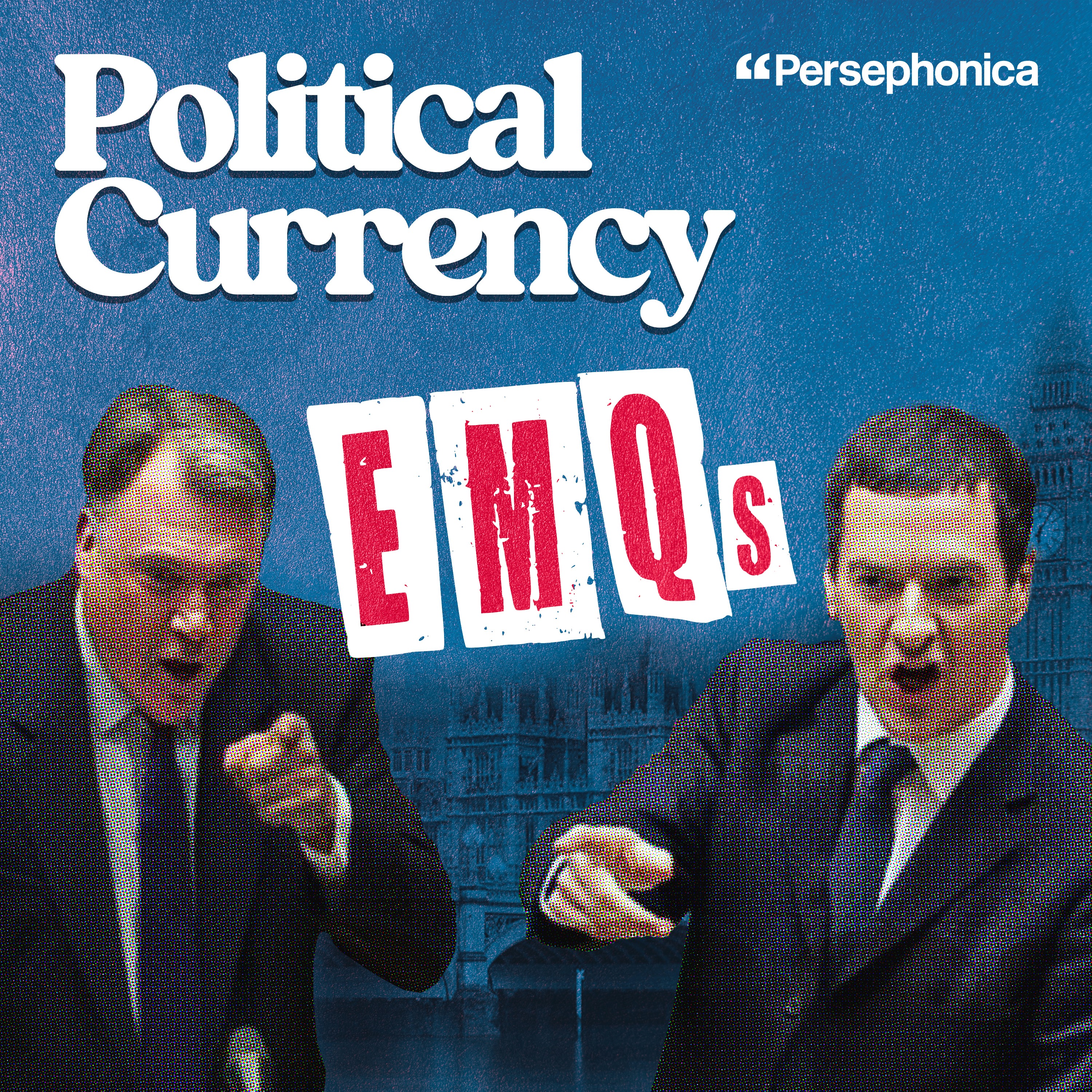
- EMQs: The reshuffle dilemma facing Andy Burnham
In short
EMQs (Ex-Ministers’ Questions) focuses on ministerial reshuffles and government continuity, plus civil contingencies, classics in state schools, and a few political “what-if” scenarios.
Guests
No guests appear as interviewees. Hosts are Ed Balls and George Osborne. Questions come from anonymous listeners and named “Kitchen Cabinet” member Douglas Law; other callers include Mark, Ola, Jen, and Tom.
Key claims
Frequent reshuffles disrupt delivery and morale; governments should prioritize continuity in junior ranks and make major reshuffles later once a PM has a “core” team. Starmer’s large churn is framed as partly due to lacking a loyal cabinet core and “lashing out” as polls fell. For civil contingencies, drills exist inside government (e.g., terrorist/aircraft scenarios), but public guidance can seem ridiculous unless threats are credible.
Notable examples
Keir Starmer’s autumn reshuffle; Andy Burnham’s potential reshuffle timing; housing minister Matthew Pennycook; 2003 Iraq-related school preparedness anecdote; nuclear-war civil contingency debate; classics taught mainly in grammar/private schools; analogies to Scipio Africanus/Caesar/Cincinnatus.
Written by AI. May contain mistakes.
Chapters
0:39
Cultural Commentary: New Statesman Spoofs
Discussion on the New Statesman covers and their cultural significance.
“Keep your wellness routine going strong all summer.”
2:14
Cultural Commentary: New Statesman Spoofs
Discussion on the New Statesman covers and their cultural significance.
“And we're going to start with a shout out to the New Statesman.”
3:57
Upcoming Tapestry Exhibition
Details about the Bayeux Tapestry exhibition coming to Britain.
“But there are going to be so many cartoons and parodies and whatever of the tapestry.”
4:28
The Reshuffle Dilemma
Exploration of the challenges posed by government reshuffles.
“And we had a competition for our Kitchen Cabinet members to win two Water Rats tickets for the show.”
10:00
Continuity in Government Leadership
Discussion on the importance of stable leadership in government roles.
“Whereas if he does it now, much harder to redo it in six or nine months time.”
14:01
Keir Starmer's Leadership Challenges
Explore the challenges faced by Keir Starmer during his leadership journey.
“The problem with Keir Starmer, it didn't work.”
15:00
The Gorton and Denton By-Election Discussion
A detailed analysis of the implications of Andy Burnham running in key elections.
“Whoever you are, because you are anonymous, but it's good to know we've been listened to by senior civil servants and that made us think and we appreciate it.”
19:34
The Importance of 'What If' Scenarios
Discuss the value of hypothetical questions in political analysis.
“Professional historians hate what if questions.”
21:12
Re-engaging with Audience Queries
Return from the break to answer a listener's question regarding government preparedness.
“So why do your marketing results look the same as six months ago?”
21:58
Government Preparedness for Emergencies
Examine the government's role in preparing citizens for potential emergencies.
“There was an EMQ a little while ago about the government's role in preparing the country for significant events or emergencies.”
Show all 16 chapters
28:00
Civil Contingencies and Political Decisions
Explore the challenges of planning for national crises and the political implications of decisions made during such events.
“The truth is, it's just very hard to get kind of senior members of government to focus on all sorts of potentially different things that might happen in the world.”
30:26
Education and Classical Civilization
Discuss the lack of emphasis on classical civilization in state education and its relevance today.
“Maybe he'll send us an EMQ next week and we can discuss it.”
31:30
Classical Analogies in Modern Politics
Examine the parallels between ancient political figures and today's politicians, particularly in light of recent events.
“Why didn't you reintroduce the classics into our comprehensive?”
36:18
Fashion and Image in Politics
Delve into the significance of personal style and presentation for politicians, including anecdotes and advice.
“Our final question is from Tom, and he is pondering the kind of thing prospective parliamentary candidates ponder.”
42:00
Fashion in Politics: The Gender Divide
Explore the challenges of political fashion for women compared to men.
“And Disraeli always wearing those kind of flamboyant velvet suits.”
43:14
Audience Engagement and Questions
Learn how to engage with the podcast and submit your questions.
“if you've got a question of your own, send it to us by emailing questions at politicalcurrency.co.uk or you can message us on your socials.”

Ask about this episode
Get the gist, explore an idea or ask about something said.
 Claude
On Political Currency, what are the key points of this episode?
Searching your listeningTranscript
Automatic transcript. May contain errors.
0:00George Osborne: Parles-tu français? Hablas espagnol? Parle italiano? If you've used Babbel, you would. Babbel's conversation-based technique teaches you useful words and phrases to get you speaking quickly about the things you actually talk about in the real world. With lessons handcrafted by over 200 language experts and voiced by real native speakers, Babbel is like having a private tutor in your pocket. Start speaking with Babbel today. Get up to 55 % off your Babbel subscription right now at babbel.com slash acast. Spelled B-A-B-B-E-L dot com slash acast. Rules and restrictions may apply. Keep your wellness routine going strong all summer.
0:42George Osborne: Cachava's new travel packs help you stick to your daily ritual even when you're on the go. Just one packet of Cachava's All-in-One Nutrition Shake provides complete nutrition wherever you are. with 25 grams of protein, 6 grams of fiber, greens, adaptogens, and more. Simplify your daily ritual. Go to cachava.com and use code NEWS for 15 % off. That's K-A-C-H-A-V-A dot com code NEWS. Do you keep hearing podcast ads, like this one for example, but always wonder how you actually get involved with them for your own brand or organization? Well, it's easier than you think. We're Acast, and we give you the platform to do it all yourself.
1:24Browse thousands of popular podcasts, choose the shows that match your perfect audience, set your budget, and launch. And if you want a hand, our podcast specialists are there to help you launch with confidence. This is podcast advertising without barriers. Get started at acast.com slash advertise.
1:45George Osborne: The Chancellor of the Exchequer. Getting a lesson from the Shadow Chancellor on how to balance the books is like getting a lesson from Dracula on how to look after a bloodbath. Ed Balls. A steady-as-she-goes budget. What kind of ship does he think he's on, the Titanic? Hello, Mary Celeste. Welcome to EMQs from Political Currency with Ed Balls and George Osborne.
2:13So hello and welcome to EMQs, Ex-Ministers' Questions. And we're going to start with a shout out to the New Statesman. And this is relevant to you, George, because they are on a storming run of brilliant covers. Last week, they had a superb David Hockney spoof in the week of his death.
2:33George Osborne: That was like it was Keir Starmer standing at the edge of the swimming pool watching Andy Burnham swim up. And we're streeting just underwater. This week, they've done a Bayou Tapestry spoof. Northern Conquest. It's a piece by Alvaro Ray. It has Andy Burnham on a horse with Keir Starmer taking the arrow out of his eyes, gone through his glasses, and there's arrows in the shield. It is so good. And, you know, the tapestry is coming to Britain soon. Well, it's literally about to arrive in the next couple of weeks at the British Museum. Then it has to be very carefully unpacked and, you know, put on.
3:08George Osborne: The display has to be got ready. Don't lose it. Honestly. I don't want to cause you any concerns, but don't damage it on the way. What would Emmanuel say? There is a quite big insurance bill, which you'd have to pay because it's insured by the British people. Can you ask the question? How does the insurance help? There's only one Bayou tapestry. I mean, if you lose it or you break it, what do you do? I mean, I'm really sorry, Emmanuel. Here is the payment in lieu. It's not going to work. Let me be serious. I've suddenly realised, as chairman of the British Museum, I need to reassure the French.
3:37George Osborne: We are taking it very seriously. Yeah, you do. I tell you what, if you travel around on the London tube at the moment, you'll have seen, I think, now the ads have gone up. Tickets are about to go on sale. In fact, when this episode comes out, they'll be on sale this coming week for the public. There's going to be huge demand. And I hope the French government will appreciate, I think they will, because Emmanuel Macron has been instrumental in making this happen, that on the adverts in the tube, there's a specific reference in the ad to the French government and thanks to the French government for allowing this to happen.
4:08George Osborne: But there are going to be so many cartoons and parodies and whatever of the tapestry. It is the most kind of identifiable bit of iconography in British history. So I think the New States should be congratulated for getting in there first. And talking of major cultural moments of great significance, in a few days' time, Centrist Dada playing the Water Rats for the Joe Cox Foundation. And we had a competition for our Kitchen Cabinet members to win two Water Rats tickets for the show. And it's been won by Kitchen Cabinet member Douglas Law. Well done, Douglas. See you on Thursday. If George shows, you can pogo with him.
4:46George Osborne: I'm on the VIP list, I hope. Or the VVIP. Or the VVVVIP list. You're on the guest list. You get a T-shirt and a T-towel in a bag. Friend of the band. Tote bags, T-towels and T-shirts. Friend of the band. And caps. Is it only blue M &Ms in your green room? Do you have like a bottle of Jack Daniels? We have Jack Daniels. Actually, to be honest, you have to buy drinks at the bar. And that includes the band. Do you not have your... Well, what's it called? The list. that pop stars insist on. The rider, they're riders. You know, the thing that the agents insist are in their dressing room. We have a sound guy.
5:21George Osborne: You showed me a picture of your dressing room the other day in Good Morning Britain and all that I could see was an enormous picture of Richard Madeley. I know, it's a very beautiful watercolour, Richard Madeley, which he's hung. And every morning at 4.30, I reflect with Richard on the day ahead. But not in person. No. Not in person. Now, listen, we're going to crack on, aren't we? We should say we were doing our pre-meeting because I was in the dressing room going off to an event. And there I am on my phone having a kind of Google, whatever you call it, chat with you. But Richard was there with us.
5:59George Osborne: Staring over us, yes, on the wall. So our first question today comes from a serving civil servant. And for that reason, they have been kept anonymous. and we're not going to say who they are, but we have checked them out and their voice is being voiced by one of our producers. Hi, Ed and George. I've been a civil servant for coming up to 12 years this autumn. Assuming that this change in Prime Minister results in a somewhat inevitable reshuffle across the ministerial roles, I will be serving my 17th Secretary of State in 12 years. While five of those changes have been a result of my own job moves, the remaining 11, including four in my current job, are the result of leadership changes, elections, reshuffles and machinery of government changes.
6:47George Osborne: So my question is, how can governments create longevity in their senior leaders who are not the Prime Minister to ensure ongoing delivery is consistent and to avoid the slowdown in productivity that occurs in government departments when ministers change? Who would you say to the new PM should stay in their current job in the coming reshuffle? I think this is a really, really important question and we should throw it forward to the choices Andy Burnham is going to be making in a few weeks' time. But, you know, just to say, I didn't realise this and somebody pointed this out to me, the Keir Starmer reshuffle in the autumn of last year, more than half of the whole government cabinet ministers and junior ministers change jobs in that reshuffle, more than half, just over a year into government.
7:40And I don't think anybody on the outside properly understands how much anger and upset that caused, because all these, not just cabinet ministers, but junior ministers, they are just getting into their brief. They're just getting on top of the issues. They're just starting to really drive their agenda, having in almost all cases not been ministers before and then suddenly for reasons which nobody understood and which were i think they were driven by a search of headlines but below that why and so when you express your frustration as a civil servant about the churn i think that is also felt by ministers and cabinet ministers often look prime ministers have the right to choose their government but think hard about the turmoil you cause when you just decide to do a reshuffle like that.
8:29And I don't think Keir Starmer was well advised at all to do that reshuffle. I guess the second thing I'd say is that if you're an effective government, then the direction which is being set by your treasury or your home office or your education department, it ought to be bigger than the individual cabinet minister. And of course, in a reshuffle, you change the actual minister and there'll be there'll be nuance and detail but if your government is a government where if you change the cabinet minister the whole approach changes that kind of says to me you don't really know what you're about as a government in the first place and you're not really being properly driven and led from the centre so then that raises the question about Andy Burnham what does Andy Burnham do I mean Andy Burnham could come in and say I'm going to have the second massive disruptive reshuffle of the parliament even though it's not even two years in, barely two years in.
9:25But is that wise? Of course, he needs to stamp his authority and he needs to make some senior changes. But in the junior ministerial ranks, cabinet ministers, I mean, isn't he better at this point to do what our questioner is asking for and give stability? And then at a certain point down the track, when he's got a sense of what he really wants and who's really delivering, you know, that's when he does his big reshuffle. If I was Andy Burnham and I want to do a big reshuffle this parliament, I would think I should do that six or nine months or a year into my time as prime minister when I really know what I want.
10:00Whereas if he does it now, much harder to redo it in six or nine months time. So I think probably I would be thinking, look, some big symbolic and important changes at the top. But I would be thinking, actually, it's in my interest to start with continuity in the junior rank, certainly.
10:18George Osborne: Yeah, I think that's all very sensible advice. I think it's a kind of interesting question. I mean, this question from our civil servant friend is striking because it has been utterly chaotic the last 10 years. You've had, you know, a new secretary of state for education on average every year, a new housing minister. I mean, it's hopeless. The list of housing ministers is astonishing. I mean, no wonder we haven't built any houses. And even with the best win in the world, even if you're both a sort of civil service private office and as a new minister, trying to get on top of everything and work out the best way of working together, that takes some months.
10:54George Osborne: And familiarity with the policy issues, familiarity with the stakeholder groups. I mean, the best continuity is when you've won an election and your shadow cabinet become your cabinet because they're already very on top of the issues. They thought about what they want to do. They know all the stakeholders. as they've been kind of engaging with them, probably more so, in fact, than cabinet ministers have time to do. And I think if you pick, it'd be invidious to choose the kind of early Cameron government. But I think there was a lot of stability in those posts. I think if you look at the early Blair government, one of its great strengths was, you know, Gordon Brown, Robin Cook, Donald Dewar, David Blunkett, Jack Straw, you know, these characters were in their posts for a number of years at the start of that government.
11:42George Osborne: And you could argue things all start to unwind a bit when people start to move, like Robin Cook. But there's just an enormous kind of strength in the continuity. The civil service, you know, they know what to expect. Therefore, they're not worrying about some new person and their new preferences and whatever. They're just getting on with developing the policy and delivering it. So yes, but the question is then why, I guess the only thing I'd say to both of us in answering this question is, so we agree with each other. So why is it that these prime ministers are making all these changes and why have there been so many irritations?
12:15George Osborne: Partly because there's been a lot of prime ministers. But why would Keir Starmer undertake such a big reshuffle? Is it just, you know, he hadn't thought strategically? I think it actually speaks to a weakness he has, and it'll be a kind of challenge for Andy Burnham. His weakness is he never had allies in the cabinet. There was never a Starmer team. I mean, even Rachel Reeves, who was bound to him, was, you know, I don't think you really think of her as sort of core team Starmer. He didn't have his, you know, David Cameron and me and he had William Hague and Tony Blair had actually Gordon Brown in those early years.
12:49George Osborne: But, you know, also there's other characters around him like Alan Milburn and Stephen Byers who were sort of outriders for him and so on. And Jack Straw. There was never kind of a core senior cabinet team for Starmer. And so he didn't really notice that he was sort of moving these people around. And, you know, maybe he didn't think that mattered. It was all about him. I wonder with Burnham, you know, because he's been out, he knows, you know, he obviously knows these people very well. But, you know, who is the sort of core loyal Burnham team in the cabinet? He can't really pick it because he's just arrived.
13:23George Osborne: And it's going to be a challenge. I think he's going to have to sort of build it as he goes along. It's such an unusual situation. I mean, it's unique in British history. actually, to come in straight into Parliament. OK, I know he was there before. He's coming straight into Parliament to be the Prime Minister. And I think you, yeah, OK, get all the junior ministerial posts right. Remember that if you fire anyone, there'll be enemies for life. But try and, I think, construct a kind of four or five strong senior cabinet team that people think are very predictable and that ultimately, you know, you're taking into your general election as your kind of call team.
14:01I agree. The problem with Keir Starmer, it didn't work. His poll ratings were falling. He went from the civil servants being brilliant to the civil servants being the problem. He went from his new team to blaming his team. I think there was just always a tendency to lash out. And I think that reshuffle was just like a big lashing out. But if you take housing, because we mentioned it a moment ago, Matthew Pennycook has been the housing minister since the start. He didn't change when Angela Rayner went and Steve Reid took over. Government is struggling to deliver the housing numbers. But you've got a guy who's been in there who's competent and can do good interviews for two years.
14:40Let him get on and do it. And if in the end he's the problem, get rid of him. Is Andy Burnham going to know on day one whether Matthew Pennycook is the reason why housing numbers aren't being delivered? and actually is Matthew Penny Cook probably better placed than anybody else to tell him why it's not working? Yes. So that's what I'd do. Very good. Thank you for that question. Whoever you are, because you are anonymous, but it's good to know we've been listened to by senior civil servants and that made us think and we appreciate it. Our next question is from Mark and he harts back to conversations we were having earlier in the year.
15:13George Osborne: Hi, Ed and George. Back in January, I asked you whether you agreed with me that tactically Keir Starmer should allow Andy Burnham to stand in Gorton and Denton. At that point, he had the opportunity potentially to see him lose, or if he won, to keep an eye on him from the House of Commons. He chose not to do that, and you found better questions to answer at the time. In hindsight, was I right? And if he had let him stand, would the events of the 22nd of June still have happened? Thanks. So you know what, Mark? I was thinking exactly this a few days ago, My mind went to the Gordon and Denton by-election.
15:51George Osborne: I was thinking, what if he'd let Burnham stand in that? Because you said not to let him. And I said let him. Right. But before you get all smug... I'm just saying. Let's not dwell. No, no. But you haven't heard me out. My advice would have been stop him fighting the Makerfield by-election. The moment you let him in, you're finished. and it's no good stopping him in, you know, earlier in the year and then letting him in. And maybe, you know, by that point he couldn't have persuaded the NEC, but I have it from a very senior source in the late body that he still had the numbers on the NEC to stop Burnham being a candidate in Makerfield.
16:29Even despite Shulmala Mahmood, the chair, clearly working with Andy Burnham via Josh Simons to make it happen. Really?
16:36George Osborne: Well, you know probably more about the... I don't. Anyway, so it has proved fatal. So the question is, given that he was going to stand in Makerfield, so I'm not using my scenario where you block him in Gorton and Denton and you block him in Makerfield, where I think if that had happened, there'd still be, oh, well, Burnham can't get in, and is West Streeting better than Keir Starmer, and is Angela Rayner better than Keir Starmer? But yes, knowing that he was going to stand in Makerfield, it clearly would have been better to let him stand in Gorton and Denton because I think there would have been less of a kind of coronation in that contest.
17:15George Osborne: It would have been potentially a harder contest for him to win with the Greens, you know, eating into a lot of his vote. And ultimately, of course, they won the seat. So it wouldn't have been him versus Reform. It would have been him versus Greens, which might have been harder. I still think he probably would have won, but there would have been more jeopardy. And, you know, who knows? he wouldn't have kind of arrived and immediately challenged, potentially, in the way that he has. Yeah, I mean, he's literally got off the train and kissed on his head. I mean, look... Very good question, yeah. Going back to that conversation, I think he would have won, and make you feel suggests he'd have won it bigger rather than less big.
17:56I, at the time, said, then give him a serious big job, you know, where you've got some challenging stakeholders, like farming, where he can show his skills in action. But, you know, if you're Keir Starmer, say, go on then, you know, if you're the messiah, let's see you deliver. And I think, you know, and I think that that would have been a good call for Keir Starmer. I don't think it would have made any difference at all. Keir Starmer was, I'm afraid, on a rapidly downward trajectory from, you know, before the beginning of this year. And it was going to happen in the end.
18:26George Osborne: Well, again, would he have accepted a job in the cabinet? He would have just waited for the local election results and challenged that, wouldn't he? It's really hard to know, isn't it? Because things unfolded over these weeks through the local election result. I think it would have been hard for Andy Burnham at that point earlier in the year to say no. He may have tried, but it certainly would have made him look kind of less loyal to the wider cause. Keir Starmer, though, was, I'm afraid, just in huge trouble. And it was going to get worse. And it did get worse. Where you're right is this, that the particular way in which it worked through Makerfield just made the colonization then, you know, inevitable.
19:05It was like, it was an unusual moment. That wouldn't have happened in the same way Gorton and Denton.
19:10George Osborne: Not least because they wouldn't have lost the Gorton and Denton by-election, which set up Makerfield as the, you know, amazing Burnham win when they couldn't win in a similar seat. And Andy Burnham would have been in Parliament for some months. And I think it's more likely that there would have been a challenge and a contest rather than a correlation. So I don't think, I'm not sure it would have saved Keir Starmer, but it could have changed the course of political history. Very good question, Mark. We love those questions, don't we? Those sort of what ifs. Professional historians hate what if questions.
19:39George Osborne: I've never understood why. I think it's a very good way of trying to really analyse the situation. of. Look, if this was called political history rather than political currency, then, you know, but this is not a history podcast. This is a podcast which makes you think about how politics and economics work. And I think the what-ifs are really interesting, not because they are telling you something about history or something which is objective, but they force you to think through, so how do I think about that? And what does that tell me about my underlying assumptions? So as long as you understand what they're about, I like them.
20:10We're going to take a break, and then we're back.
20:22George Osborne: Hey, Yetis. This is Nick and Jack from the Best One Yet podcast. Now, the last company we worked at, they used Paylocity and everything just worked. It wasn't until launching our own media business, this show, that we realized how rare that is. Because Paylocity is one delicious burrito of operational needs. They roll up HR, finance, and IT seamlessly into one delicious bite. And everything wraps together like that all at once, your workforce, your tech stack, your business, you don't need more tools. You don't even need cilantro. You need one solution. And that is why Paylocity built a single platform to connect HR, finance, and IT with AI-driven insights and automated workflows that simplify the complex and power what's next.
20:59George Osborne: Or as we call it, a delicious operational burrito. Yes, we do. Experience a one place for all your HCM needs, besties. So start now at paylocity.com slash one. Paylocity.com slash O-N-E. You've got social dialed in. Search is doing its thing. So why do your marketing results look the same as six months ago? That's because you're fishing in the same pond as everyone else. Podcast listeners are a different audience entirely. More engaged, harder to reach through traditional channels, and ready to act when someone they trust makes a recommendation. We're Acast, and we put them right in front of you.
21:36Browse thousands of the world's leading podcasts, book host reads or run your own ads, and track every conversion in real time. Same skills you already have, brand new results. ACAST, acast.com slash advertise.
21:57Welcome back. Here's a question from Ola.
22:00George Osborne: Hi, Ed and George. It's Ola here. Hope you're managing okay in this heat. There was an EMQ a little while ago about the government's role in preparing the country for significant events or emergencies. This reminded me of being in primary school in early 2003 and practicing evacuations to a nearby secondary school in case of attacks on us following the Iraq invasion. I wonder whether this is something the government had advised, and if so, how else were the public prepared for possible consequences of the invasion? The message certainly landed with my friend who prepared a bag in case of having to evacuate home, although I'm glad she didn't need to use it in the end.
22:35George Osborne: Thanks, looking forward to your response. Look, I have to say, Ola, I have absolutely no memory of this at all. The idea that schools in early 2003 were genuinely preparing for an Iraq invasion. Look, I don't know. No, no, I don't think it was an attack. It's not an Iraqi invasion of Britain. It was as we invaded Iraq, whether there be retaliation. I think Ola is really... Possibly in the mind of Alastair Campbell, you know, maybe Alastair Campbell having, you know... Well, we were only 30 minutes away from destruction, weren't we? And maybe an Iraq invasion or maybe an Iraq attack. So maybe in the particular primary school he was involved in.
23:14But I think more generally, I am not sure. And it surprises me that you're prepared. However, when I was a child, and you may be slightly too young for this, but there was a period where there was a genuine public conversation, which the government got involved in about preparing for a nuclear war and what you should do and what you should have stored and how you should take shelter. And it totally supercharged the CND movement because all this conversation about civil contingency made people think, well, hang on a sec, I'm not sure we want to have this nuclear war. It was very scary indeed. And so it's interesting.
23:52For this to work, it has to be a genuine, real and credible threat. We said a few weeks ago that unlike America, we don't have schools preparing drills for gun attacks by kind of lone armed people coming to schools. Tamara Finkelstein, former permanent secretary at Deferra, corrected us to say that may be true in general in schools, but in the Jewish community, that kind of preparedness for attack is something which is very real as part of people's lived experience. And I totally understand that. We were corrected by that. Right now, more generally, if you're thinking about the possibility of a big power outage or flooding or a sustained period of very, very hot weather, I mean, you would think at the moment that is the kind of thing that the government should be suggesting we think about and prepare for.
24:47Because I'm not sure, as far as I can see, that our schools or any of us were particularly prepared for these kind of historic record succession of days, massively high temperatures, over 36, 37 degrees. So maybe there is a conversation we ought to be having.
25:05George Osborne: I remember the 1976 heat wave, which I think we're just... How old were you? I was five. Yeah. I do remember it. It's actually one of my, I wouldn't say it's my earliest memory, but I think it's my earliest sort of sustained period of memory. Who was the Minister for the Droughts? Well, I don't know. I wasn't. I was five years old. I think it was Dennis Howe was the minister in the Wilson government. And I mean, I think it was one degree lower temperature than we've seen in the last few days. Yeah. But it came after some very dry, a very long dry period. It was a drought. People getting water from the standpipes.
25:37You couldn't water your garden. My dad rigged this thing up in the back garden. We would take baths because, you know, back in then, this will shock our younger listeners. I mean, I never had a shower in my life other than at school after football until I was like...
25:49George Osborne: You should remember the Starmer government because they were all fooling over themselves to say what a tough upbringing they had. No, no, no. Houses didn't have showers. Someone described it today as the whole, you know, the four Yorkshiremen government where they all compete to say how miserable they were. Houses didn't have showers. We had baths. Yeah. And on our, you know, the upper floor in our house, there was a bath. Yeah. And probably somebody had a bath. I mean, look, it's kind of once a week, really. I mean, that was the nature of life in the 17s. But when you had a bath, you'd pull out the plug and the water would go down the plug hole.
26:18My dad rigged up this drain. So when the water came down, rather than going down the drain, it then came down this big pipe onto the garden. So he's Robinson. And he would move the thing round. So he'd watered his lawn. And then my mum bought us these little ducks. And we had a duck each. And me and my brother and sister, we'd have our ducks ready. somebody upstairs would say, pulling out the bath plug now, the bath plug would come out, the water would come down and we would see which duck won the race to get all the way down the pipe onto the watered lawn. That was my rather romantic and rosy view.
26:49You were chucking eggs over the roof at the same time. That was Easter, but I mean, this was the summer, but it was the same house, the same roof.
26:57George Osborne: He drew those eccentric pictures of gun machines. We didn't throw ducks over the roof, live or plastic. Now listen, I need to answer Ola's question. So first of all, I'm very surprised your primary school conducted this drill. And I have to say, I mean, I was an MP at the time. And, you know, my constituency, there were a load of primary schools, I think more than 50 or something. But I don't remember any schools. So I think you have to direct your questions, Ola, I'm afraid, to your head teacher at that school. But I'm being a bit flippant. Who had an underground shelter in their back garden in case of an alien attack.
27:35George Osborne: but there was civil contingencies I think is an is and is sort of interesting rather dry space in government because politics is all the here and now and the you know what you're going to do tomorrow and so sort of preparing for eventualities that may or may not happen it's quite sort of draining on people's time and patience of course when things then go wrong say well why didn't you prepare for it and that's what the kind of covid inquiry for example has been looking at in the contingencies around that. The truth is, it's just very hard to get kind of senior members of government to focus on all sorts of potentially different things that might happen in the world.
28:13George Osborne: But there is a civil contingencies unit in the cabinet office, and there was role playing and exercises within government while I was there. I mean, particularly for things like terrorist attacks. One of the things I did a lot of role playing on was, you know, what you do if there's a passenger plane flying into the UK, that 9-11 style that you can't make contact with the pilot. And what do you do? Do you ultimately shoot down a plane that might be entirely innocent in the sense it hasn't been hijacked and it's just as radio is broken? And we did lots of contingency planning around that and real live exercises with fighter jets in the air and the RAF control centre.
28:55George Osborne: And ultimately, it's a political decision. It's ultimately the prime minister or someone that the prime minister chooses, if they can't be caught hold of, who has to make the final call. So there was lots of that kind of drills. But the problem is, when you start kind of giving general advice to the public, it can look a bit ridiculous. I remember during one of the sort of, I can't remember exactly, but I think it was a sort of strike of tanker drivers. And Francis Maude, who I think is, by the way, a very good thing. So this is a bit of an unfair story about him, but generally he was a very good force inside the government.
29:27George Osborne: I remember he telling people to fill up a jerry can in the garage of petrol and everyone thought that was such an unusual word to use, jerry can, and he got kind of lambasted for it. So civil contingencies... Wasn't he also the guy who talked about kitchen suppers? Maybe. I can't remember that. I think he was. He was also the guy who in 1998 declared a recession made in Downing street and it turned out there wasn't but that's but he was generally a good thing it was his modernization of government uh was good i actually there's a story we're talking about reshuffles he was in line for a big promotion into the cabinet before that jerry can comment and he got absolutely sort of lampooned and lambasted and it was sort of politically impossible to go ahead with the promotion and so politics can be very very unfair anyway that was all around civil contingencies so but francis maude's contribution has been recognised on political currency today.
30:20And that's good.
30:21George Osborne: He actually goes around advising governments around the world now on things. And I think he's advised, did he not do some piece of work for the Starmer government? Maybe he'll send us an EMQ next week and we can discuss it. It would be good to hear from him. Let's get another question. This one's from Jen. Hi, Ed and George. Jen here from North Warwickshire. As a new Kitchen Cabinet member, I thought I would send in my first question. I am lucky enough to live near a non-selective state school that teaches classical civilisation. Our eldest daughter loved this subject so much that she is about to start a PhD in this area after already achieving a bachelor's and master's degree.
30:59George Osborne: So, my question is, why doesn't the government place a greater emphasis on this subject being taught in state schools, instead of leaving it as a preserve for mainly grammar and private school students? And secondly, if I may, with all the political infighting from both the previous Tory government and the current Labour government, are modern day politicians any different to the scheming and backstabbing politicians from ancient Rome and Greece? Thanks. Look forward to hearing your thoughts. Yeah, come on, you were the Education Secretary. Why didn't you reintroduce the classics into our comprehensive?
31:36Well, I mean, I think it was because it was up for individual schools to decide what they wanted to teach. And the national curriculum was already kind of quite directive. Already deflected. Some of the schools did laughing. It's already dodging.
31:46George Osborne: The question is... Mary Beard always said that after Gladiators, there was a lot more discussion of classics in schools. But, you know... She's on my board at the British Museum and a brilliant member of it. I think, look, I did medieval history A-level. I think actually learning medieval or classical history is great because it tells you about politics and about power and you learn to write and synthesize and Latin is helpful as an underpinning for language. We wouldn't be doing this podcast if we'd lived in medieval times. A, because the technology wouldn't have existed and B, I would have had you executed as chancellor because you were a bit of a threat.
32:20So let me test your classical civilization knowledge given that you are trying to chastise me.
32:27George Osborne: Yeah, execute you. What are the three best classical civilization analogies? politically for what Andy Burnham's just done to Keir Starmer? Ooh, well, there's... Is it Cincinnatus who returns from his field? Summoned back from his farm to deal with the crisis. I've had no advance warning at this, right? There is Caesar. Well, Caesar returning from Gaul. Crossing the Rubicon. Yes. Although that leads to a civil war. Yeah, but he wins it. But, you know, Andy Burnham didn't want a civil war. Yeah. The other one, actually the best one, was the... Scipio Africanus. recalled to save Rome. After winning victories in Spain and Africa, he returns to rescue the Republic from crisis.
33:12Having spent ages kind of building his reputation, you know, at a distance, he comes back in and sorts it all out.
33:19George Osborne: Isn't Andy Burnham more, I'm going to jump forward to the kind of 17th and 18th century. Isn't he more like the king over the water? The Jacobites, the, you know, things were better under the old monarchy though. So, you know, there was always the toast of the king over the water. Or you can just go to contemporary... There's no water between Manchester and London. No. Where Scipio returns from the provinces. Crossing the Irwall. Scipio Africanus. I'm surprised you don't know what the history is. Anyway, maybe at school you didn't study classics in the way I did. I did do Latin O level. I'll tell you this...
33:54Iram, Iras, Irat, Iram, Iratus, Irat. Sum, est, est, sumus, estis, sunt.
33:59George Osborne: Yes. But I tell you, if you want to give a speech, the way that Cicero constructed his speeches, which is essentially three points, is still the best structure for any speech. That sounds like Jack Straw. Although Jack Straw in the cabinet, he always had three points. He never knew what the third point was when he started. He would always have got three points to make. And they're thinking, honestly, Jack, do them in the reverse order. You'd have no idea. First point, we know he's racking his brain. He's read his Cicero. He's got to have three points, but he's only thought of the first two. That was always my view.
34:32But in the end, his third point was always interesting, if sometimes off subject.
34:38George Osborne: Let's answer the question. Well, first of all, modern politicians are no different from the backstabbing politicians of the past. Although, as I say, the stakes are somewhat lower, because in the past you would lose your head or be executed. I think the Scipio Africanus did a good job. And I think what Mary Beard has done, and actually Tom Holland, who's also on the British Museum board, You know, they've reminded people that you can make classics accessible. And it seems like a different, obviously a different planet, but it's not. These are human beings struggling with real world situations.
35:09George Osborne: And I think that that period of Roman history around Julius Caesar, a bit like the Tudors, there's something about it. You know, it still resonates today. I think it will continue to be taught and schools will probably be better off if they do teach it. Very good question from Jen. We'll take a break. Time for one more question.
35:37Do you keep hearing podcast ads like this one, for example, but always wonder how you actually get involved with them for your own brand or organization? Well, it's easier than you think. We're Acast, and we give you the platform to do it all yourself. Browse thousands of popular podcasts, choose the shows that match your perfect audience, set your budget and launch. And if you want a hand, our podcast specialists are there to help you launch with confidence. This is podcast advertising without barriers. Get started at Acast.com slash advertise.
36:18Welcome back. Our final question is from Tom, and he is pondering the kind of thing prospective parliamentary candidates ponder.
36:27George Osborne: Hey, guys. How are we today? Tom from London here. Huge fan of the podcast. Day one listener, if ever there was one. Now, my first question, may my riddle, is for one George Osborne and one Edward Balls, which is if you were an ambitious young Conservative pining to enter Parliament at the next election, which could be as soon as September. How likely do you think it is that the Conservatives will remain His Majesty's official opposition? My second question is from where do you buy your suits, shirts and shoes? I mean, first of all, will the Conservatives be the official opposition by the time we get to the next election?
37:07George Osborne: It's after the election. After the election. They're going to stay the official opposition until the election. Oh, that's right, after the election. And therefore, I think what he's saying is, should he stand for the Conservatives or reform? Well, I think it's certainly true that quite a lot of people on the right, if they kind of want to get into Parliament, are weighing up who on earth do you stand for? And what is a safe-ish Conservative seat these days? You know, that's like a challenge. I personally, if I was Tom, I'd stick, you know, you want to get in at the, you want to buy in at the bottom of the market.
37:36George Osborne: I'm not saying it's actually the bottom of the market quite at the moment. Things have risen a bit. But it was a huge help to me and David Cameron and Andy Boris that we all came into Parliament in 2001, the second Blair Landskye win, because, you know, we were in at the bottom and then as fortunes of the party recovered, we were able to ride that wave. And as we said on the main podcast, these are tough times for reform and it's not clear which way it's going to go for Nigel Farage in the coming months. Now, the suits and shirts, well, first piece of advice, don't get Lord Ali to pay for them.
38:09That is a very good point.
38:11George Osborne: Don't buy 30. Yeah, buy your own would be my advice. I'll tell you one thing. I think I was shadow chancellor. I might have been chancellor. I went to Crockett and Jones's shoe factory in Northampton. And sometimes when you went on factory visits, you came away and go well i'm never eating that again in my life now i've seen how it's made and other places you'd go and you you were so impressed you go oh wow i had no idea the kind of love and care and what is it so i went and i went to the crockett and jones they make kind of gentleman's shoes basically there and they um i saw them make it how they made the shoes from leather and i was so impressed by the kind of care and the sort of old style way they did it Ever since then, I've worn Crockett and Jones shoes.
39:04George Osborne: And last week, I went to buy my, because my old pair finally gave up on me, I went to buy a new pair of Crockett and Jones shoes. So, Crockett and Jones shoes. Crockett and Jones shoes. From Northampton. How about suits? We're giving advice to Tom here. Suits? I used to, back then, I don't really wear suits these days. But Timothy Everest was a guy who made suits in London. Brilliant guy. So when I was an advisor, I think I bought suits from Marks and Spencers off the peg. Although when we got married, I did have a Hugo Boss suit, although it slightly hang off me. It didn't really fit. But then Gordon Brown said, when I was coming to be a candidate, he said, you've got to get yourself sorted out on suits.
39:48And I've got this guy called Martin Pryke, who will come to your office, measure you up, goes away.
39:58George Osborne: Bespoke Samuel Rowe Taylor. Brings you back. Well, the thing was, he didn't have a shop or any overheads. It was that grand. But he worked with tailors. And so it was much, much better value for money. And for the next 10 years or so, even more like 20 years, until I started doing Good Morning Britain, where it's a kind of slightly different kind of sartorial look, although mainly from the waist up. But I... I assume you are wearing trousers under the desk. Nobody would know. but I bought basically a suit a year or 18 months from Martin who was utterly brilliant but I realised early on a few years in that all he did was he made the suits with the same cut as Gordon Brown which was a sort of slightly old fashioned and I realised that this was so I said Martin can you not sort of slightly tailor me up a bit so it's quite important Tom to choose your style But I think a fitted suit, you can get really value for money fitted suits, but they last so much longer and they are so much better.
41:01And Martin Price is brilliant.
41:03George Osborne: Isn't the most famous example of what you wear, I think? Well, there's two examples. Peter Mandelson, when he becomes kind of director of communications for the Labour Party under Neil Kiddock, he sort of puts the shadow cabinet in suits. He goes and kind of gets them all suits and ties because they they're all be wearing like Michael Foot donkey jackets. They looked like a peach shabbles. I don't think Michael Ford ever wore a donkey jacket. He did to the senator. Was it a donkey jacket? It was just a slightly scrappy coat. Right. So that's one example. And don't you remember there was also Cameron's put down to Corbyn was like, my mother would say to him, do your tie up, do your shirt up, sting the National Anthem.
41:44Yeah.
41:45George Osborne: I mean, how you look, it does. Put it this way. We're all Burnham's T-shirt look under his suit has kind of made him instantly recognizable. That's true. I mean, I'm not comparing him yet with this, but like Churchill's bowler hat and the V and Harold Wilson's pipe. And his Mac. And Disraeli always wearing those kind of flamboyant velvet suits. I mean, Boris Johnson's hair. These things actually do catch on. They do become your kind of... Gordon Brown's embrace of casual clothes. He wore that suit you're talking about on the beach, didn't he? I think every now and then he put on a turtleneck pullover over his suit.
42:23George Osborne: Tony Blair's kids all dressed in the Ralph Lauren. Do you remember that? On the trip to Tuscany? Well, goodness. I think one of the great inequalities of politics is if you're a man, it's really easy. And if you're a woman in politics, it is so hard getting clothes right. Because you have so much higher expectations and the weather makes so much difference. And you have to change your outfit. it. You want to see Yvette going off on trips now, she's going for four or five days. I mean, it's just monumental effort to work out what to do. Whereas if you're a man, you just take four shares. And that's soup from the guy you bought 20 years ago.
42:58George Osborne: I know. I don't know why you are having a go at my soup maker. He's actually very good, Ed. No, he's brilliant. Martin's superb. That was a great question, Tom. And we think you should be a candidate. Yeah. And we'd like to know when you stick with the Tories would be my advice. There we are. That's it. Now, listen, if you've got a question of your own, send it to us by emailing questions at politicalcurrency.co.uk or you can message us on your socials. Serious, amusing, contemporary, historical, classical civilisation, you know. If you've got better examples than Scipio Africanus, let us know.
43:29And just to say, if you are a new kitchen cabinet member, the mugs will come. But, I mean, there's been such a rush and we're out of stock and they're being reordered. But it means, I'm hoping, slightly different style. So slightly different collector's item. Very exciting. Do join. We'll be back on Thursday with our main show. See you then.
43:56George Osborne: Thanks for listening to Political Currency. This has been a Persephoneca production.
44:09You've got social dialed in. Search is doing its thing. So why do your marketing results look the same as six months ago? That's because you're fishing in the same pond as everyone else. Podcast listeners are a different audience entirely, more engaged, harder to reach through traditional channels, and ready to act when someone they trust makes a recommendation. We're Acast, and we put them right in front of you. Browse thousands of the world's leading podcasts, book host reads or run your own ads, and track every conversion in real time. Same skills you already have, brand new results. Acast.
44:45Acast.com slash advertise.
From the publisher
Should Andy Burnham appoint an entirely new Cabinet or resist the temptation for a full reshuffle? Ed Balls and George Osborne discuss whether constant ministerial churn is a hindrance to effective government, and who the new Prime Minister should keep in post to provide stability.
They also revisit one of the biggest political "what ifs" of the year. Was Keir Starmer wrong to stop Burnham returning to Westminster earlier? Looking back, could allowing him to fight Gorton and Denton have changed the course of events, or was Starmer's fate already sealed?
A listener's memories of school evacuation drills before the Iraq War prompt a wider conversation about how governments prepare the public for crises. From terrorist attacks and pandemics to extreme weather, Ed and George reflect on the challenge of planning for events that may never happen.
Elsewhere, they discuss why Classical Civilisation remains out of reach for many pupils, whether today's political infighting has more in common with Ancient Rome than we might like to admit, and reveal the surprisingly practical advice they'd give to an ambitious young Conservative hoping to enter Parliament, including where politicians really go to get suited and booted.
We love hearing from you, so please don’t forget to send all your EMQs to questions@politicalcurrency and make sure to include a voice note of your question or send a question to our social media handles:
👉 X
👉 TikTok
Thanks for listening. To get episodes early and ad- free join Political Currency Gold or our Kitchen Cabinet. If you want even more perks including our exclusive newsletter, join our Kitchen Cabinet today:
👉 patreon.com/politicalcurrency
Please note: Kitchen Cabinet is only available via Patreon.
Credits:
Research: Sam Burton
Production: Caillin McDaid & Nasreen Arain
Video Editor: Sam Gruet
Executive Producer: Ellie Clifford & Henrietta Harrison
Political Currency is a Persephonica Production and is part of the Acast Creator Network.
Hosted on Acast. See acast.com/privacy for more information.
More from Political Currency
All episodes

We use cookies.They keep VO running smoothly and help us improve it. Privacy policy