
 Ask ChatGPT


- Podcasts
- Political Currency
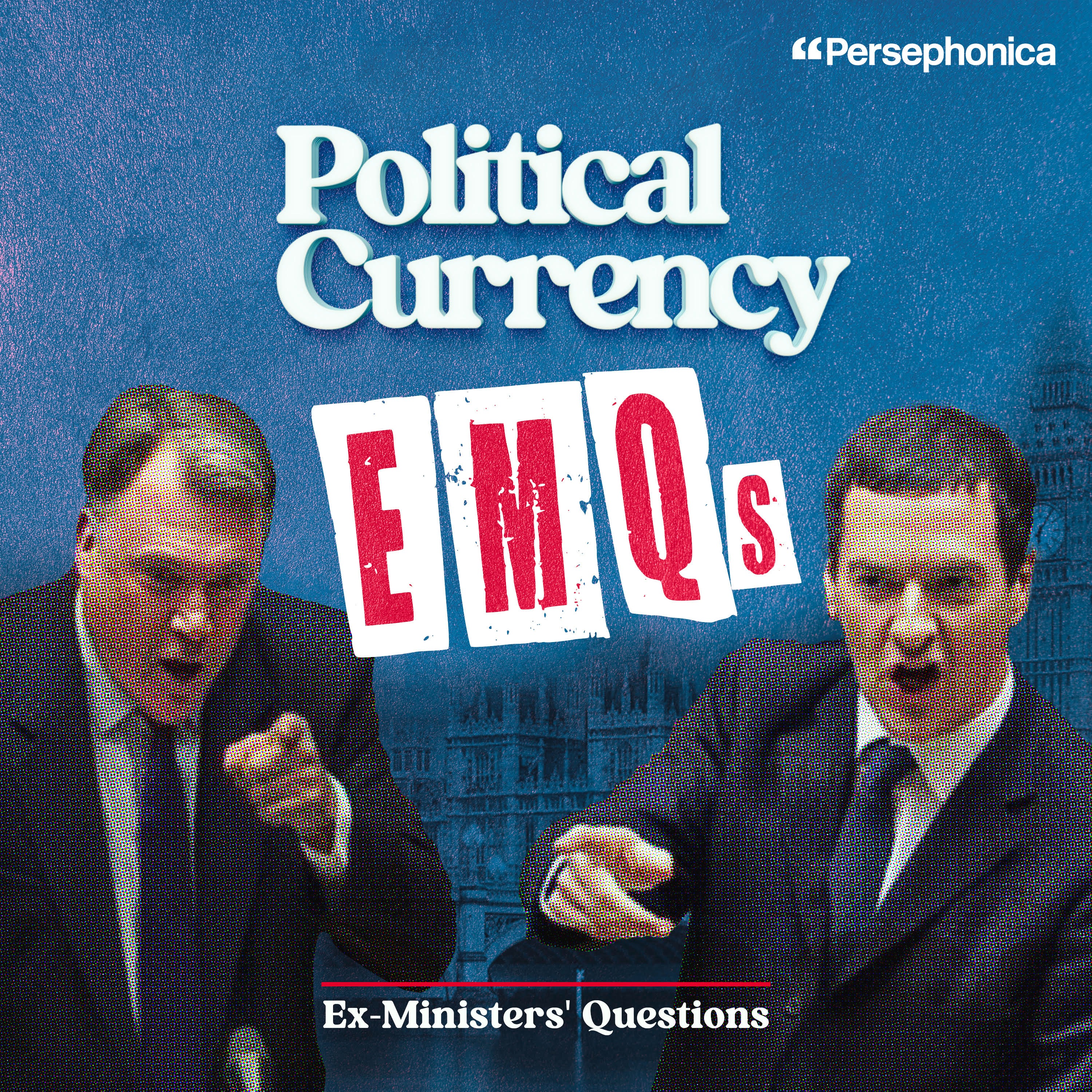
- EMQs: The return of the TBGBs?
In short
In this episode, Ed Balls and George Osborne explore the unexpected resurgence of interest in New Labour among Gen Z, discussing its implications for current political dynamics. They reflect on recent political events, including the Labour Party conference and the upcoming Conservative Party conference, while addressing questions from listeners about various topics related to political strategy and party leadership.
Written by AI. May contain mistakes.

Ask about this episode
Get the gist, explore an idea or ask about something said.
 Claude
On Political Currency, what are the key points of this episode?
Searching your listeningTranscript
Automatic transcript. May contain errors.
0:00The Chancellor of the Exchequer. Getting a lesson from the Shadow Chancellor on how to balance the books is like getting a lesson from Dracula on how to look after a bloodbath. Ed Balls. A steady as she goes budget. What kind of ship does he think he's on, the Titanic? Hello Mary Celeste. Welcome to EMQs from Political Currency with Ed Balls and George Osborne.
0:27so hello and welcome to emq's ex-ministers uh questions and we're going to start by um immersing ourselves in the modern 21st century social media world well we already do that with our podcasts i suppose we do don't we is a podcast like 21st century i guess it is Yeah. I don't remember Gladstone doing a podcast. No. Or Churchill. Churchill and Attlee doing a political currency. I mean, not that I'm comparing you to Attlee. It's hard. Thank you. It's hard to imagine there was ever a world without podcasts. A world without political currency. It's hard to imagine. No. Well, it was a long time ago.
1:05But I have been, I don't know how, I guess the algorithm in my phone, Apple knows that I have something to do with you. or X or TikTok keep sending me videos of you, basically. There's a brilliant one. I mean, brilliant and much to be discouraged, kids. One of you smoking. You're literally lighting up a cigarette. And when you look at it, it looks like you know perfectly well you're being filmed. It looks like it comes from some sort of BBC documentary or something like that about life in the Treasury. And they've got like, and here's the Chancellor's special advisor lighting up a fag. This is true.
1:43I've been sent these videos as well. Apparently, there's a trend on TikTok in particular for people to put together these sort of jazzy videos using footage from the TBGB, the Brown Blair era, you know, with Alistair Campbell in them or with me and Ed Miliband. And the one you're talking about, I've been sent it by our kids, is... What were you up to, Daddy? who's... I know that's true, but it comes from the Channel 4 documentary called We Are the Treasury, which was filmed in the six months before the 97 election and then the first two months after. It's a very good, modest title as well. Can I go...
2:21We Are the... That's true. And we had... I didn't choose a title. It was made by Channel 4. It's actually available on YouTube, two one-hour documentaries. Absolutely. I mean, it's actually kind of great television for seeing inside the Treasury. But, you know, I'd forgotten all about this fact, which is that when we were sitting around talking and relaxing with this fly on the wall camera with us, we would sometimes smoke cigarettes and Marlboro Light. And the reality was, that was like normal back then in 96, 97. So people look at it now and say, oh my goodness, you're smoking on television.
2:54How could you have done that? And I have to say that two years later, when Yvette became the public health minister, I was then immediately banned from ever doing so again. But when we were relaxing, I was never a... Hold on, hold on. Banned from smoking or banned from smoking on television? I was banned from smoking. And actually, I didn't smoke. The truth is, listen, don't tell Yvette. Yeah, I won't. Because I wouldn't want her to know. But all through the time when I was an MP, up until like 2010 anyway, I'd have a pack of 10 marble lights in the car and I would have one on the way home after a hard day campaigning during general election campaigns.
3:28I was somebody who smoked. I could not smoke for a year and then smoke a cigarette a day for a week and then not smoke for a year. I was never a proper smoker. But we used to sit around and casually have a cigarette. And this is all on these TikTok videos. And when you look at it, I mean, people who are not of our era, they can't believe people are smoking in a public place, in an office, on the train. But this was what happened all the time. People used to smoke on airplanes in the back 20 rows of the plane. People would light up the cigarettes when the plane took off. I think loads of people, I think, what was that world?
4:04Well, that is this TikTok world. Well, I've got to say, George, quite why they're making videos of me. It turns out there's also loads of videos of you all over TikTok. Do you think we should hear some clips? Is this a long way of giving ourselves an excuse to play some clips of ourselves? Yes. Okay. This is a job which we find more fun. now that we've discovered that Ed Balls was once a member of the Conservative Party. This is actually true. But don't worry, Ed, we're not going to tell anyone. We're as embarrassed about it as you are. By the way, where's the evidence? You should either put up or shut up.
4:45Apparently there's an account on TikTok called Osborne Defender. I don't know if you finance this, George. Are you sure this is not a sort of Putin bot trying to sow discord in British politics? I am sure of. No, I'm very grateful. Thank you very much for the millions who continue to defend my record of growing the economy and creating jobs. Yeah, it's called austerity. We have our first question. The reason for playing these clips is because our first question is from Joe Blenkinsop. And actually, Joe wanted to remind us of these times. Hi, Ed and George. It's Joe from Sutton Caulfield again.
5:22Thanks for answering my previous question about the fate of the penny. I have another, this time more for Ed. I hear that this summer saw a big social media trend amongst teenagers fascinated by the drama of the TBGBs of the early 2000s. What do you make of that resurgence? With the ongoing deputy leadership race, are we seeing a return of the TBGBs? I guess the answer to Joe's question, first of all, I have no idea why there's been a resurgence of videos of me and George. But the TBGBs was raw politics over 15 years. TV programmes were made about it. Numerous books were written. There's lots of footage out there.
6:03So if people are feeling a bit nostalgic about politics and they can put together some mashups, I guess that is going on. But on your serious question, the deputy leadership election, I don't think, no, that this is a return of the TBGBs. Presumably here, what, Lucy Powell is the brownite and Philipson is the Blairite, is that right? Or what's the allegation here? Well, that is the suggestion. But I think if you listen to Keir Starmer's speech last week at the Labour Party conference, and you were talking about that speech on the podcast last week and the way in which he had a go at Tony Blair and Gordon Brown about the financial crisis, I don't think you would call Keir Starmer a Blairite.
6:48So even if Bridget Philipson is the Keir Starmer candidate, I'm not sure that makes her a TB or Blairite candidate. But when you stand back and look at the things that Bridget Philipson has been advocating in her speeches last week or over the last few months, she's the one saying that we need to bear down on child poverty by abolishing the two-child rule. She was the one who was briefed against by Number 10 earlier in the year when she wanted to make changes to academy schools, which were moving away from the more independent school Tony Blair model. So I think the reality is that Bridget Philipson is as much a brownite as Lucy Powell.
7:28I mean, they're both brownites. You're trying to say we're all brownites now. We're all brownites now. The difference in this deputy leadership candidate is that Bridget Philipson is the insider in the cabinet and Lucy Powell is the outsider. But, you know, it's brownite insider versus brownite outsider, isn't it? Did you not think, actually, we didn't discuss this in the main podcast, but there's a section in Keir Starmer's speech where he talks about, you know, meeting a lady from Oldham in Manchester and talking about kind of, she wasn't racist because she was raising concerns about immigration.
8:01It did make me think of the kind of Gordon Brown meeting of the woman in Rochdale. Mrs. Duffy. Mrs. Duffy. I agree with you that I don't think Keir Starmer fits into the kind of Blairite, Brownite, you know, categorization. And in some ways, he was sort of distancing himself from Tony Blair globalization and sort of millennial optimism. And I thought it was a little bit of a kind of, maybe I was reading too much into it, a little bit of a kind of swipe at Brownites. Do they not really these days stand for slightly different things, which is there are different traditions inside the Labour Party.
8:34There's obviously the socially conservative, conservative, quite right-wing on issues like national identity and defense, quite often associated with the working-class trade union movement of the past. And then there's the millennial, very pro-immigration, very socially liberal, attached to big causes like gay rights and so on, which I guess in the past would have been associated with the sort of hamster garden suburb liberals of the Hugh Gates school types. I mean, it was sort of brown-eyed, Blair, just a kind of latest version of that. And I guess these, like any party, the Labour Party is a coalition of enduring differences and different strands.
9:15I think there were people who supported Tony Blair and people who supported Gordon Brown, who reflected both of those more socially conservative and more city urban globalist tendencies. I think that the fundamentals of new labour, which would have been the market economy, fiscal discipline, believing that you could have dynamism and social justice in the economy, willing to work with the private sector to create wealth, but also seeing a role for the private sector in delivering services. I mean, Gordon Brown was new labour, and so was Tony Blair. I I mean, there were differences from time to time on policy differences, and then there were clearly different groups.
10:02So some people around Tony Blair wanted to do down Gordon Brown because they wanted to take over the Labour Party rather than him. But fundamentally, the gap between Blair and Brown in terms of ideology and policy was very narrow. And I would say Keir Starmer was less having a go at the Blairites or the Brownites and more having a go at New Labour, because he says too much embrace of globalisation, not enough worrying about where ownership was located, too open about migration. I mean, those are charges you can place against Tony Blair and Gordon Brown. Yeah. I mean, some is much more for a kind of state involvement in the economy.
10:39But I guess if you're being fair to him, look at the United States of America and the public administration intervening heavily in the economy and taking stakes in companies and look at China and so on. I mean, I still feel personally for an open free trading market economy like the UK. I'm not sure that's a path where we either have the money that we can go down or we want to go down and will lead to good results. But I guess the world has changed. But, you know, I guess you wouldn't call Starman New Labour, would you? I think you would not. No. Our next question comes from Richard. Hi, Ed and George.
11:16Richard here. Love the podcast and I often listen to it when I drive two hours every week to visit my elderly father. I love political trivia and I recently discovered that George is the only person, at least since the Second World War, to have been chancellor but never held any other cabinet post before or after his time as chancellor. Then I looked at Ed's ministerial career and although he had a junior ministerial post, he also held just one cabinet post. So my question is, from your experience, what are the advantages and disadvantages of holding one cabinet post in your career? Would you have preferred to have held a succession of different posts as other ministers often do?
12:01Look forward to hearing what you've got to say. Thanks very much. Richard, thank you for that question. And we give your best wishes to your father as well. I'm not going to speak for Ed, but let me be absolutely clear that I definitely wanted to hold more than one cabinet post. I was very happy to start as Chancellor. That was not a bad place to start in the Cabinet, but I did have my eye on another Cabinet post, which was First Lord of the Treasury. Because I was thinking, when I read this question, I was thinking, well, hold on, Gordon Brown, his only job was Chancellor, and then, of course, he became Prime Minister.
12:33I don't think it's any great secret to anyone that I would quite like to have done that job. And I think I also, if we'd won the Brexit referendum, it was my plan, obviously I needed David Cameron's consent to it, to switch to being foreign secretary. Precisely because I thought by that point I'd been chancellor for six years, it would be good to do another job. It's great to start almost at the top, but I would like to have kept going. And I'm guessing that you would have liked to have held more than one cabinet post. Well, I mean, Tony Blair only held one cabinet post. He was prime minister for 10 years.
13:10And And if that was the one post option, I think I would have taken that myself. David Cameron was also almost an only one cabinet role. But then, of course, he came back as foreign secretary under Rishi Sunak. And so he ended up with two. So I think politically, 10 years of being foreign secretary. Was Harold Wilson only prime minister? I don't think he... No, he was a cabinet minister at the end of the Attlee government. Yes. He was president of the Board of Trade. Right. And Keir Starmer, I guess, unless he comes back as Wes Streeting's foreign secretary, will probably only be prime minister.
13:46That's right. So I was saying that you could have three cabinet jobs for three months each, a bit like quite a few cabinet members in the... I mean, I think Grant Shapps was home secretary for about a week, and Nadeem Zahawi was not exactly chancellor very long, was he? No, although features prominent in his bio. In fact, there was a whole period, wasn't there, when people were cycling through those jobs, when Boris Johnson was falling and already announced he was going. and couldn't actually staff his administration? The answer I'm going to give is that I was a Treasury Minister for a year, Economic Secretary, but was in the Treasury for eight years before that as an advisor.
14:22There's no doubt that that Treasury experience, not Cabinet Minister, helped me understand how to deal with the Treasury when I was a Secretary of State in education, children's schools and families. There's no doubt that it helped having the previous experience. But presumably experience as a Treasury advisor more so than a Treasury minister. Because you would have seen much more of the inner workings of the Treasury than, frankly, a junior minister the Treasury does. That is right. But the experience of being a Secretary of State for three years, and what delivery actually feels like on the ground, and the challenge of persuading people to do the things you want them to do, understanding why sometimes people are frustrated that the Treasury thinks, if we say it in the budget speech, it's going to happen, which is true of a change in cigarette duties, but isn't always true when it comes to other announcement chancellors making spending reviews about infrastructure projects being built, or planning reforms being put in place or even public buildings being built.
15:21So as a consequence of that, my three years as Secretary of State for Education would have meant if I had a second cabinet job as Chancellor's Exchequer, I would have been a much better Chancellor's Exchequer for that experience. And I'm sure I would say the same of George, but he didn't. It's true. There's certainly a part of me that feels I missed out on being like a junior minister and a junior cabinet minister. But I think being shadow chancellor was a very, very good preparation for being chancellor. I mean, most chancellors don't actually get the chance to think really about what they want to do with the job because they're catapulted into the role mid-government.
16:02I mean, that's been the history of the job generally. The examples of people who've gone from being shadow chancellor to chancellor in my lifetime is actually pretty few. I think that possibly is a better training for the job or a better kind of lead up to the job than having done a string of internal government jobs. But I do think you're right about delivery. I mean, the great advantage the Treasury has, except on some tax administration policy, is you don't in fact have to get into all the nitty gritty of how you're going to deliver this in a country of 65 million people and get public service bureaucracies to function and make things happen when you come into contact with the real world.
16:42And there's definitely a frustration in other so-called delivery departments, but the Treasury thinks it's all very simple and it can be put on two pages when life isn't like that. And it is different department by department. I remember Jim Knight moving from the education department, he was schools minister, over to the Department of Work and Pensions and talking to him a few months later, in him saying to me that when he went into DWP as the minister, he realised that when he said, this is what we'll do, employment officers all across the country, DWP staff said, okay, that's what we're going to do.
17:18Whereas when you're the Secretary of State for schools, for education, children's schools and families, 22 ,000 different head teachers, each with their own budget and board of governors and their own fiefdom. I mean, you tell them what to do. You could even legislate to say this is the law. But in the end, they only really do it if they believe it's the right thing to do. And therefore, in that kind of decentralized department, the hearts and minds process of winning the argument with them is very different from a command and control department like DWP. And it's interesting, it's not like the NHS, has aspects of both.
17:57But I think the NHS has always been more responsive to injunction from the centre. However, the deeper you go into hospitals and you kind of deal with the world of the consultants, they still kind of do what they think is the best thing. And that kind of learning is important if you are then trying to pull the levers from number 10 or from the treasurer. That is a great question, Richard. Thank you so much. We'll take a break and then we'll be back in a moment.
18:33welcome back our next question is from zoe she's one of our gold subscribers hi ed and george zoe here i'm a gold subscriber and loving the podcast and today i'm asking my question all the way from bavaria where i'm staying with my in-laws so anasawa has quite the uphill battle to win the elections in Holyrood next summer, despite the number of Labour MPs and despite the poor record of government from the SNP. So what do you think, as a former Chancellor and shadow Chancellor, does Rachel Reeves need to do this upcoming budget to help swing it in Anna Sarwa's favour? Thanks very much, guys. Bye.
19:11That's a really good question, Zoe, because the reality of being the leader of a Scottish political party seeking election in Hollowood into the Scottish Parliament is that while you want to be elected on a manifesto which is based upon what you can promise to do with the power and resources you have within Scotland, a big part of your electability comes from what is happening down in Westminster, the decisions that your political party is making in in the UK realm and we've seen in the last year or so Anas Sawa as Labour leader worried about the impact that the winter fuel allowance was going to have in Scottish electability clearly worried about what was happening around child poverty with the SNP promising to make changes with the discretion they've got contrary to the direction being set from Labour in Westminster.
20:10So I think maybe flowing from that, two things. First of all, there was a hint at the end of the Labour Party conference, a briefing to the Guardian from the Treasury that Rachel Reeves is going to move on lifting the two-child cap in the budget. She's going to spend money on that. I think she's unlikely to abolish it. They talked about a tapered system. That probably means that she'll move from a two-child cap to maybe three children or four children or some kind of sliding scale. And there's no doubt that will help Anasawa because the dividing line with the SNP on child poverty, opening up a divide between Scotland and the UK is a problem for him.
20:52But it may also be, there's something also about political language, those issues which have caused a problem for Labour in the last year, like the winter fuel allowance, the welfare reforms, which they had to do a U-turn on. maybe Anasawa, rather than him explaining why he thinks Keir Starmer and Rachel Reeves didn't get it right and had to change course, maybe it would be easier for him if they were more public in explaining some of the things they got wrong in the last year and how they learned and how they put things right. Because it would help him in his election if some of that political challenge was diffused by Keir Starmer and Rachel Rees being a bit more open on those issues rather than trying not to talk about the winter fuel allowance or the welfare reform problems, for example.
21:42So rather than latitude for him to criticise, what maybe he needs is for them to give him a bit of text and language and breathing space by them acknowledging some of the things which haven't gone to plan. I mean, I've always been a little bit sceptical that Scotland has a completely separate... set of views about tax and spending and welfare. I think there's sort of an assumption on the left that they see the SNP not so much as nationalists, but more as sort of social democrats, and that there's more of a consensus on issues like you're talking about, like child poverty. I don't see much evidence that getting rid of the two-child limit or tapering it away is going to be any more popular in Scotland than it is in England, where, by the way, most recent polling in the last week shows it's still very unpopular and very unpopular amongst people who vote Labour because they don't think that welfare should just you know necessarily go up and up and up and families should get automatically more money by having more children when that's not the situation for the rest of the population.
22:46Although I bet you Anasawa disagree with you don't you think I mean he will think he wants it. Yeah but I would say you know and look I'm not Scottish and so I always I'm a little bit cautious here. But the question is directed to what do you do if you're basically an English chancellor? How do you help in Scotland? Well, you obviously don't want to do something that's seen as sort of very anti-Scottish. I'm just questioning whether kind of moves on welfare or any kind of more or less unpopular in Scotland. I thought it was an interesting and I think welcome thing to see at the Labour conference, you know, a kind of explicit move towards embracing the flags of the United Kingdom.
23:27You know, there's been these protests, haven't there, over the last year. And you see it if you drive around England quite a lot now on motorway bridges, where people have sort of tied Union Jacks to the bridge or they've tied crosses of St. George to lampposts. And, of course, in Scotland, the Salter, you know, was just sort of adopted by the SNP as their flag, and the Unionist parties were nervous to go there and wanted to use the Union Jack. Whereas I think I agree with Starmer in his speech when he talked about this, saying, hold on, it's our flag, it's not their flag. Quite a lot of people in the Labour audience at the conference waving Scottish flags and Welsh flags and so on.
24:10I think that, you know, I think in some ways calling out nationalism and linking the SNP to Farage is the right way for the mainstream unionist parties to go. So rather than sort of competing for being more socially democratic on the left, on economic policy, I would go for where I think they're most vulnerable, the SNP. You know, the clue is in the name. They're the Scottish Nationalist Party. And nationalism is not something that we are in favor of, if for certain. I'm not in favor of. I don't think you are in favor of. I don't think the Labour Party is. And I think the Conservative Party is.
24:46You know, when they're true to their real traditions. You know, I don't know if you can help the Scottish leader for the Conservatives or the Labour Party do that. You know, in the end, the SNP has been sort of a bit called out in recent years when people have taken them on as rather unpleasant nationalists and got into the kind of dynamics of that party. And that's where they've struggled. And that's why they've, you know, there's at least the prospect, although it feels like it's diminishing, that they might lose control of Holyrood. Although, of course, if you are voting for the SNP in Hollywood, you aren't voting for independence.
25:21You're voting for a Scottish government within the union. And there may be issues. I mean, another one might be North Sea Oil and Gas, where the Treasury National UK-wide restriction, sorry, on oil and gas exploration, clearly unpopular, certainly amongst the trade unions in Scotland, but maybe more widely. Is that the kind of issue which the SNP can use for leverage against Labour in those elections around jobs and incomes? Yes, possibly. You know, I thought John Swinney has done quite a good job, hasn't he, of sort of being on the international stage. Managed to get himself into the White House, amazingly, and had a meeting with Donald Trump around Scottish whiskey and things like that.
26:02And I don't think this applies to the Scottish Labour leader, but the Labour Welsh leader, Luna Morgan, she boycotted the state banquet with Trump, which I thought was pretty silly, frankly. I mean, it's not like Donald Trump's going to notice whether she's there or not. You know, and I think one of the advantages of being a Labour or Conservative politician is that you can say, I'm going to use the platform of the UK to make sure I am at the meeting with Donald Trump. And Swinney's, I think, been rather smart at saying that's not a disadvantage, whereas I thought the Welsh Labour leader took a wrong turn on that one.
26:38What we need is some of our Scottish political currency listeners, our gold members, anybody to send us in a voice note telling us what they think the answer to Zoe's question is and challenging us to say whether we think they're right or wrong. That would be a really good thing. And who knows, maybe Anasawa will send us in a voice note and tell us whether we've got it right. Our next question is from Mark. Mark's question has been voiced by Cailin, one of our producers.
27:28Winning back reform voters requires a more constructive approach, rather than using language that effectively paints the entire support base with the same brush. I do think there is a risk here. We talked about this in the main podcast last week, that when Keir Starmer uses the word racist, applying to a particular reform policy, the danger is that he ends up having to explain why he's not saying that people who vote reform therefore are racists. which can't be what he wants to be saying. And I think there is a lesson here from Hillary Clinton. I remember being, I made a set of documentaries for the BBC called Travelers in Trumpland.
28:08As part of that, down at a big festival just south of Texas, got into a conversation which is in the documentary with a group of quite affluent Texan people who were deeply offended by the Hillary Clinton use of the word deplorables. They thought that she was telling them that their values were wrong, and that pushed them away from the Democrats and towards Trump. They had kind of issues with the state of American politics, and I think they wanted to be listened to. If you're going to do politics well, you've got to listen to people who are worried and who are concerned, who might be voting the other way, but might just be worried about the state of the country.
28:55and you start from listening and hearing and responding. And as part of that, you can say why you've got the right answer and why your opponents don't. But if you use a word like deplorable, if you categorise them as being sort of unacceptable, off the range, not to be spoken to, then that has the opposite of signalling, listening and understanding. It looks like you've just decided to caricature and ignore. And I don't think Keir Starmer can afford, I don't think Labour can afford, I don't think the Conservatives can afford to look like they are dismissing and not listening to people who currently say they might vote reform.
29:35And labels about reform voters has exactly that effect. As someone who studied history, I'm a great believer that you should take a look at the mistakes of your predecessors and try and learn from them. And I think you often say this on the podcast as well. If you look at David Cameron and Michael Howard, you know, quite different Tory politicians, but when they were leaders of their parties, they both tried to essentially characterize the supporters of UKIP, which, you know, was essentially a precursor of reform, you know, beyond the pale. Michael Howard described UKIP as full of cranks and gadflies.
30:15David Cameron, almost 10 years later, called them fruitcakes, loons, and closet racists. And both of them, and I know work for both of them and have huge respect for both of them and like both of them, both of them had to retreat from those remarks over time. And it became a kind of millstone around their neck so that every time they were talking about UKIP, you know, but didn't you call them closet racists and whatever? And in both cases, they had to sort of apologize and back off. And so it's a very fine line you walk when you say Nigel Farage is a racist, but people who support Farage are not racists.
30:52That's quite hard to make stack up because if you say Farage is racist, this is what Keir Starmer did at the Labour conference in an interview. Are you saying the people who support him are racist? No, no, of course I'm not saying that. They've got legitimate concerns. Okay, so what are you saying? Are you saying that they're too stupid to realize that he's a racist or that he's fooling them? You know, you get yourself into quite tricky territory. And I think it's also the case that generally attaching sort of strong labels to your political opponents doesn't really work. You know, there's a great rule in politics, which is what you say about your opponents says more about you than it says about your opponents.
31:33because people discount what you're saying about your opponents and they read into your remarks something about yourself. So if I were Labour, you know, I would go for, I wouldn't do the Conservatives, I'd go for a much more forensic dismantling of Farage's position and his contradictions and his, you know, he wants tax cuts here and he wants to spend more money there. Immigration plan doesn't work out and so on. I mean, I would go for that. and you know the days when you could say this guy you know is beyond the as i say where i started beyond the pale have long gone you know he's clearly a big player in british politics and indeed in some ways by making him a centerpiece of his conference speech kia starmer you know has sort of reconfirmed that thank you mark um we're gonna be back with one last question after this
32:34welcome back now our final question today is from samantha and she is another of our gold subscribers thank you for subscribing samantha here's your question hi ed and george love the podcast my question to you is about the conservative party as the conservatives head into party season and continue to struggle on the polls, what can they do to win back support? In particular, how can they rebuild economic credibility, counter-reforms appeal, and avoid alienating centre-right voters who fear being left politically homeless? Keep up the good work. Thanks. So that's a big question, Samantha. And we were addressing, weren't we, how to deal with reform a bit in that last answer to the last question.
33:15And I've no doubt, unless there's some pretty dramatic things that happen in the next week, that we'll look back on the Tory conference and discuss that in our regular podcast. I mean, I think there's two things that I would advise the Conservative Party to do. The first is have a bit of patience. And that is very, very hard if you're living it and breathing it and you are the Tory leader and you are in the Tory shadow capital. But the party was just ejected from office after 14 years in government. That's a long time to be in government. And they were pretty soundly ejected at the general election.
33:51and you can't expect people to immediately give you a hearing again. You know, it's painful and it's tortuous. And, you know, Ed, you and I have both been through it in our own ways in opposition. I remember John Howard, who was a very, very successful Australian prime minister, conservative prime minister. They call them liberals there, but no, it's like the conservative body. And he said to William Haig, you're in your first year in opposition. He came to see us. He said, and you'll actually quite enjoy your first year because you'll go, oh, this is all a bit different and feeling a bit more liberated from government and there's lots of new things I'm doing.
34:29And actually, and the first conference in opposition is usually one where you're picking a new leader because the outgoing prime minister has resigned. And that's all quite exciting. It's the second conference in opposition, which is terrible. And then the third and the fourth. And so you've just got, I think partly the Conservative Party just has to accept it's going to take some time. and therefore what you want to be doing now is laying a trail that when people potentially do start listening to the Conservative Party in a couple of years time they can go well there's some consistency here and they've been saying these things for a couple of years and now we're starting to listen and I made this point on the regular podcast this week you know I do think there's a gap in the market for being the fiscally responsible party that is pro-business and believes that you balance the books partly by controlling spending as well as with taxes and that's you know been vacated by Labour.
35:21They certainly held that position at the general election. But the view amongst the business community at the moment is they've got a big repair job to be done. So the Conservative Party can kind of step into that space. Yeah, I don't want to sort of prefigure too much of our discussion about the Conservative Conference, which hasn't yet happened as we record this. There are things that Conservatives can look around and go like, well, that's, you know, a relatively positive sign. So, you know, there've been some recent newspaper columns of journalists who say, you know, well, maybe the Conservative Party is going to be the answer in the future if Labour are failing and we don't want Farage.
35:59So a couple of prominent columnists have come out and said that recently. Some of the appointments inside the Conservative Party, a guy called Mark McInnes has just been appointed as chief executive of the party. He's a very smart and well-organized individual. So there are just these, you know, maybe these are only straws in the wind, but the conservative body is beginning to function and get itself organized as an opposition. There's still, to my mind, is a big question over the leadership, not is Kemi Bader not up to it. It's like, what do you do with Robert Jenrick? Because Robert Jenrick is challenging for the leadership.
36:39Kemi Bader's got a decision to make. She can either ignore that and the risk of that is it looks like you're not you know you're kind of ignoring the elephant in the room and you're tolerating disloyalty in your shadow cabinet but if you confront it maybe it blows up in your face and you are deposed because you've confronted you brought on a fight you didn't actually need to bring on i think one of the things she's got to work out is how to deal with that because if you have a sort of open challenger it's not straightforward how to deal with it but if you don't have a plan then you can be a bit overwhelmed by that narrative.
37:17I mean look it is about policy it's about positioning it's about leadership and you don't necessarily need lots of policy at this stage but you certainly need to get your positioning right and the leadership has got to cut through. If you take the issue of immigration and borders and the big argument at the moment clearly there the Conservative Party is desperately trying to position itself as close as they can to Nigel Farage. On policy, it looks like they're about to make big decisions to leave the European Convention on Human Rights at the conference. But the problem is they are so burdened by past failures on immigration.
37:53And at the moment, Kemi Badenok is not breaking through in that argument between Keir Starmer and Nigel Farage. I'm not actually sure that Robert Jenrick is, particularly in the public debate. He's clearly doing so to some extent within the Conservative Party in the leadership debate. When you move to the economy, which you're suggesting they do, they don't need a lot of policy at this stage, but the position you need to get to the responsible centre ground, which is what Mel Stride is trying to do. As you say, Labour under pressure on that are going to become increasingly so in the run-up to the budget.
38:26Nigel Farage and reform are not the races at all in that space around taxation, spending, the sums adding up. They're completely wild. Unlike immigration, the economy is a big opportunity for the Conservatives at the moment. But that requires leadership because you've got to decide to get in there and break through into that space. And Kemi Badeknot, for the first part of her leadership, has not done that. More recently, in recent kind of weeks and months she's been trying. I don't think she's done so consistently. And it looks like she's going to go into a conference where even if she says my second speech is going to be about the economy, all the political energy is going to be about migration borders and taking on Labour from a faragist position and the ECHR.
39:15I'm just not sure this is wise. Now, I mean, to your point, you have to work out which voters you're trying to win back. You know, the Conservative Party made a trade after Brexit. Remember, most Conservative MPs didn't vote for Brexit. But after Brexit happened, after the referendum, the Conservative Party essentially traded its kind of middle class support for working class support, blue wall for the red wall, and then it lost both, right? And is the Conservative Party trying to win back Kensington? Is it trying to win back Westminster? Is it trying to win back Tunbridge Wells? Or is it trying to win back Sedgefields and win back Hartlepool?
39:50And I personally would favor a strategy that tries to reclaim more classic conservative territory, which is the middle class part of the country. You know, it doesn't mean you can't then make inroads into the working class part of the country as Margaret Thatcher did and David Cameron started doing, and indeed Boris Johnson succeeded in doing so. But you shouldn't be trading, let's say, your sort of middle class heartlands. And that's what the Tory body did and ended up with none. When you say you're going to withdraw from the European Convention of Human Rights, is that going to help you win back any seat in the southeast of England?
40:25You know, in those kind of classic home county seats that were lost. And is there any really realistic prospect of there being again Conservative MPs in that red wall anytime soon? I don't know. I think you also have to have a very clear idea of what your vote strategy is. in opposition, David Cameron was very clear, we are going to try and win back areas that have been lost to New Labour and the Liberal Democrats, areas like Swindon and the Thames Estuary and the Liberal Democrat seats in the Southwest. I mean, that was where we were pitching our message at. We weren't trying to scale Labour seats in the Northeast of England.
41:03That is true, but that requires leadership. And the difference between Robert Jenrick and Kemie Badenock is that Robert Jenrick lost the Tory leadership election and Kemie Badenock won the Tory leadership election. There's no doubt what the members want, which is to go and fight it out with Nigel Farage to win Sedgefield and leave the ECHR. That's what they want. And Robert Jenrick, in his hope he might win the second time round, is following him down that path. It's a bit like a Labour Party leader trying to take her from Jeremy Corbyn by trying to appeal to the Corbyn base. Once you've won, you then have the opportunity, a period of time, if you're good enough at it, to lead the party to a different place and a potentially winning place.
41:52Unlike Robert Jenrick, Kaby Bainuk has the power to do that. And if she doesn't try and do that, she'll rue the day. Yeah, she won, but she won the leadership, didn't she? Partly on a very authentic and long established position on the broadly speaking culture wars, which did speak to some of her strengths. And I would say in part, Robert Jenrick lost because of a flat conference speech that kind of took the momentum out of him. You know, what she's not done is yet like pivot into the economy, as you say. And, you know, Tony Blair was saying a lot more left wing things before he became Labour leader than after he became Labour leader.
42:27Clause 4 was after the Labour leadership, not before the Labour leadership. And just look at Keir Starmer's list of pledges that he made in order to win the Labour leadership election. I mean, there's quite a lot of similarity with some of the pledges Andy Burnham was making at the beginning of the Labour Party conference last week. Not least, you know, return to the European movement. I mean, implicitly, back to free movement. But who knows? That is a very big question to end on. That's all we've got time for in this episode of EMQs. Yeah, we'll come back to that and other questions like it in the weeks and months ahead.
42:58Do keep sending us your voice notes, your emails via questions at politicalcurrency.co.uk. Make sure you review the show, not just because we like hearing that you like it, but it also helps us reach more listeners. And if you see any good TikTok social media videos, which we ought to be watching and celebrating and even playing on our podcast, do send them in. In the meantime, we'll be back next week with another episode of EMQs and, of course, another episode of the main podcast at the end of what is set to be a very important Conservative Party conference for Kemi Badenok. We'll see you next week.
43:33See you then.
43:42Thanks for listening to Political Currency. This has been a Persephoneca production.
43:50you
From the publisher
Why is New Labour suddenly going viral on TikTok? In this week’s Ex-Ministers’ Questions, Ed Balls and George Osborne respond to their Gen Z fans who are remixing their greatest political moments into social media edits.
With Labour conference just finished, Ed and George ask whether Keir Starmer is really a Blairite, a Brownite, or breaking with New Labour altogether. They also debate what Starmer and Rachel Reeves need to do to put Scottish Labour back in contention at the Holyrood elections next May.
And before the Conservative conference begins in Manchester, George warns that the second year in opposition is always worse than the first, and sets out how the Tories and Kemi Badenoch might plot a comeback.
To get episodes early and ad-free, join Political Currency Gold or the Kitchen Cabinet:
👉 patreon.com/politicalcurrency
👉 Apple Podcasts
Please note: Kitchen Cabinet is only available via Patreon.
Credits:
Assistant Producer: Caillin McDaid
Senior Producer: Silvia Maresca
Video Editor: Maha Al-Badrawi
Executive Producer: Ellie Clifford
Political Currency is a Persephonica Production and is part of the Acast Creator Network.
Hosted on Acast. See acast.com/privacy for more information.
More from Political Currency
All episodes

We use cookies.They keep VO running smoothly and help us improve it. Privacy policy