
 Ask ChatGPT


- Podcasts
- Political Currency
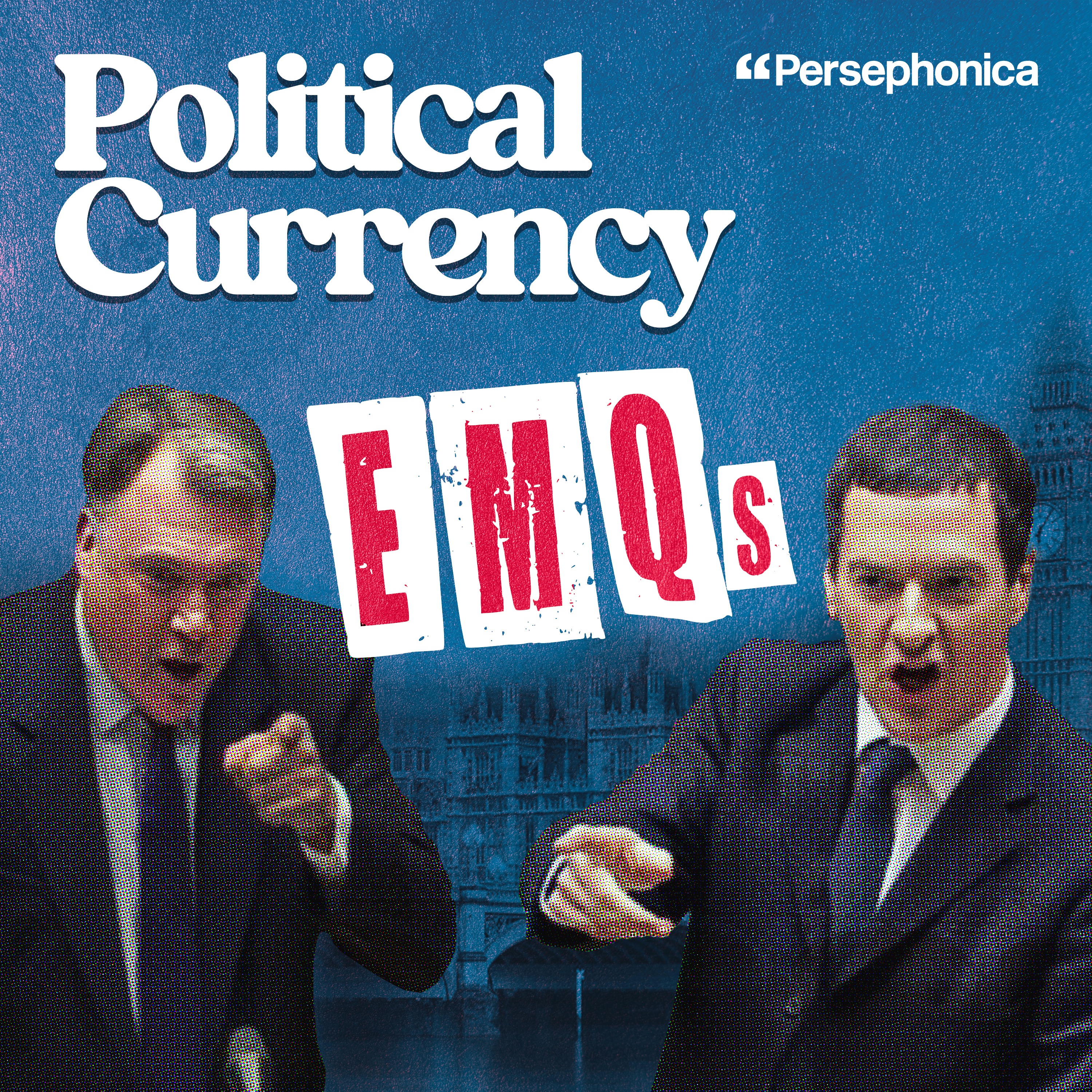
- EMQs: The truth about government war gaming
In short
Ex-Minister’s Questions discusses “government war gaming” and how internal exercises prepare ministers for crises, plus a wide-ranging Q&A on UK politics and policy “small fixes.”
Guests/backgrounds
Host George Osborne and Ed Balls (both former UK Treasury/Shadow Chancellor figures). Guest mentioned: Martin Lewis (MoneySavingExpert; launching Institute for Small Ideas). Political figure discussed: Steve Hilton (former David Cameron ally; running for California governor). No additional in-studio guests.
Key claims
Governments do regular internal war games (e.g., post-9/11 shoot-down decisions; Mumbai-style mass-shooting response; Northern Rock–style banking crisis coordination; bird flu planning). War gaming tests decision-making, coordination gaps, and legal/regulatory frameworks, though it can still miss real-world gaps. The episode also argues “small ideas” can drive practical policy changes.
Notable examples
shoot-down of suspected hijacked passenger planes; Trafalgar Square mass-shooting exercise; 2006 Northern Rock/clearing bank contagion war game with Bank of England/Treasury/FSA; 2007 US/UK financial-crisis roleplay where US agencies wouldn’t sit together.
Written by AI. May contain mistakes.
Chapters
1:48
Introduction to War Gaming in Government
Discussion on the practice of war gaming within government agencies.
“George and I talk about the internal war games we both did in the Treasury in different periods.”
2:14
Steve Hilton's California Campaign Ad
Analysis of Steve Hilton's campaign ad for governor and its implications.
“We, of course, in this podcast have been following Steve Hilton's campaign to become governor of California.”
6:01
Small Ideas Initiative Discussion
Exploration of Martin Lewis's Small Ideas Initiative and audience contributions.
“a colleague of mine on Good Morning Britain on ITV, Martin Lewis, who has been…”
11:20
Driving Test and Line Bike Issues
Discussion on problems with driving tests and suggestions for improvements.
“George always has to boast he's got bigger ideas.”
14:00
Discussion on Cycling Infrastructure and Accident Accountability
Explore the challenges of cycling infrastructure and accountability for accidents.
“And also there's kind of huge problems with people having accidents and running into people and then just riding off.”
26:44
Reflecting on Andy Burnham's Conference Speech
Analyzing the implications of Andy Burnham's recent speech and its impact on constituents.
“Now, the next question comes via Instagram, because you can message us with your questions via the social media apps.”
28:05
Makerfield and Labour's Agenda
Discussion on the political climate in Makerfield and Labour's shifting agenda.
“Are they not talking about whether we should have a PR voting system in the pubs of Makerfields?”
29:50
Radical Policies vs. Expectations
Exploration of Andy Burnham's policy proposals and the expectations of voters.
“speech, has not yet been matched by any really substantive policy proposals.”
31:24
Cultural Recommendations
Hosts share cultural recommendations and engage with listener questions.
“where we talk about the events in between our main book.”
33:14
Politics and Personal Choices
Reflecting on personal political choices and hypothetical scenarios in UK politics.
“you can definitely listen to and Abby's candid conversations with me.”
Show all 14 chapters
36:42
Wine and Politics
Discussion of wine preferences intertwined with political anecdotes.
“That is when Michael Gove knifed Boris and then…”
40:45
Wine and Politics
Discussion of wine preferences intertwined with political anecdotes.
“Ever hit a wall in the middle of the day and a third coffee just doesn't do it anymore?”
42:55
Wine and Politics
Discussion of wine preferences intertwined with political anecdotes.
“I've just finished watching the war game on Sky, which imagines how a fictional cabinet led by a fictional Prime Minister Gove would respond in real time to a Russian attack on the UK.”
51:00
Closing Remarks and Teaser
Hosts discuss upcoming content and how to submit questions.
“Believe in Banking is the award-winning podcast for leaders balancing digital investment with the reality that branches still drive growth.”

Ask about this episode
Get the gist, explore an idea or ask about something said.
 Claude
On Political Currency, what are the key points of this episode?
Searching your listeningTranscript
Automatic transcript. May contain errors.
0:00Ed Balls: Hi, Brooke DeVard host of Naked Beauty. Picture this, you walking from the cold in every room already feels like fall. That's what whole home scenting means at Pura. One system working quietly in the background so your home always feels like the season and like you. Learn more at Pura.com. Hey, I'm running out to drop off a stack of letters and packages. Need anything shipped while I'm gone? Save the gas. Stamps.com lets you print postage and schedule pickups right from your desk. Sync your contacts into the address book. Get detailed accounting insights and get notified the moment your certified mail is delivered.
0:37All from my desk? All from your desk. Join the 4 million businesses using Stamps.com right now with code podcast and get your free welcome gift. Stamps.com code podcast. Taxes and fees apply. Colon cancer is on the rise. It's the second deadliest cancer and the number one cancer killer of people under 50 in the U.S. Yet it remains one of the most preventable cancers. If you're 45 or older and at average risk, it's time to talk about screening. Cologuard Plus is a non-invasive at-home collection kit that requires no prep, can be completed in about 15 minutes, and is 95 % effective. If you've been putting it off, you're not alone.
1:14But timely screening matters. Let's talk about what isn't talked about. Talk to your provider or request Cologuard Plus online, Rx only.
1:48Ed Balls: Do governments war game? George and I talk about the internal war games we both did in the Treasury in different periods. If you've got comments, put them in the comments. And if you'd like to ask a question, you can send a question in on the comments too, or social media, or send us an email, questions at politicalcurrency.co.uk. We love them. We hope you enjoy answering them. On to the show.
2:14Welcome to Ex-Minister's Questions, EMQs. We, of course, in this podcast have been following Steve Hilton's campaign to become governor of California. It's just a few weeks before polling day there. He's the Republican candidate.
2:27Ed Balls: One of your close allies in the David Cameron Downing Street. I have had a great up and down relationship with Steve over several decades. But I have completely admired the way he's thrown himself into American politics. And I'm absolutely amazed. He's still an incredible feat to be the candidate for the governor of California. And he's put out this ad. And I have to say this ad was very reminiscent of some of the kind of quirky, clever, interesting things he did when he was sort of looking after the Tory party's brand 20 years ago. But he's put out this ad. Maybe I'll just play it and then explain it.
3:05You should definitely look it up if you want to see the whole thing. This is Steve Hilton's latest campaign ad in California. And I'll do all the work.
3:21See?
3:30I think I liked it.
3:34Ed Balls: it's important to say isn't it george that if you hear this in audio you may not know what the hell's going on so this is two young women on a bed together and all the implication is let's say it as it is that they're about to try one of them's about to try lesbian sex for the first time with the other one and that but of course the punch line is that she's about to vote republican for the first time. Just try it. Just try it. And this ad, there are other ads, you know, in a similar vein coming out of the Hilton campaign at the moment. And this has caused, this has done what I guess Steve wanted, which is lots of people talking about it, lots of people outraged about it.
4:19When I saw it, I just thought that is absolute. That's the Steve Hilton of old. And we could have run that. I was thinking that's exactly the kind of thing we would have, you know, we could have come up with back in 2010 when he was helping run the election campaign for the Tories. Did you like it?
4:35Ed Balls: I did like it. And I don't know why it's outrageous. It was quite funny. It was quite clever. Although I have a feeling my two daughters in their 20s will both think it was a little bit seedy. And I think if you're Steve Hilton, what is the plus point of the last week? Everybody's talking about your campaign ad. What is the thing which is slightly more uncomfortable in the final weeks before the election? Donald Trump saying on national television, if Iran wants to bomb Los Angeles or San Diego, bring it on. I'm not totally sure whether that was exactly the messaging the Republican candidate and Trumpian Steve Hilton wanted to get the vote out.
5:12Ed Balls: Get the vote out and be annihilated, says Hilton. But anyway, I thought they were good ads. I mean, you know, you always want to be noticed, don't you? And we don't have a kind of TV ad culture, but some of them are so kind of like thumpingly predictable. Yeah, it's the opposite of the classic American attack ad. You know, I'm not bringing up my opponent's, you know, criminal record. But anyway, all this, you know, despite these innovative ads, he is still trailing in the polls. But, you know, we've been following this race from the beginning. And you said from the beginning he was going to get to the final two.
5:53Ed Balls: And you were right. And so as we get towards the American midterms, we'll track his progress. Anyway, let's get on with the show. Our first question actually comes from a familiar TV face, a colleague of mine on Good Morning Britain on ITV, Martin Lewis, who has been… Ah, the money guru. The money guru. I mean, he has been… I first did a thing with Martin Lewis when I was the economic secretary to the Treasury about value for money and travel insurance in 2007. So it's 20 years ago, and he is going so strong, winning awards left, right and centre. And on GMB, we always call him the People's Chancellor.
6:31Ed Balls: Although, of course, Martin hates that label because the last thing he'd want to do is be a political party chancellor and to deliver a budget. Are you sure? That's what he says. Yeah, I don't know him as well as you do. I mean, a few weeks, we were on our main podcast talking about Kemi Badenock and Susanna Reid and I were interviewing Kemi Badenock about student loans. And then Martin Lewis, after the ad break, was then going to come on and he stood in the back of the TV studio and he joined in. And it was quite a moment. Anyway, certainly boosted our audience. He is launching the Institute for Small Ideas, a new charity initiative, asking people for the small, inexpensive, easy things which can make a massive difference.
7:20Ed Balls: And he's got a group of people, including Yorkshire Mayor Tracy Braben, Tamar Finkelstein, Danny Kruger, Jonathan Bartley, Polly McKenzie, Dame Penny Mordent, Emma Roddick, MSP, Cuadro Tuenbeo, chaired by Martin, who are going to look at all of the ideas which come in and then come up with a manifesto of small ideas to put to the government. And here's Martin's question. Hello, I've just set up the Small Ideas Initiative. We want people across the UK to suggest their ideas for small fixes to those life potholes, those processes that don't work, where you just go, why does it work that way? It would be so much better if...
8:00And you can submit them at small-ideas.org. they shouldn't be controversial they should be doable they should be relatively cheap and easy to fix uh we're then going to select 200 of them uh and turn them into professional policy and then a cross-party panel i are going to select 50 to put into a manifesto and try and get the change
8:21Ed Balls: to happen but obviously what i want from both of you is i would be fascinated to know what would your small fixes be so i mean this is like the where are the small ideas in british politics We've got too many of these big ideas. We're overrun with these big inspirational ideas. Let's have the small one. Andy Burnham launched his prime ministership with a whole series of small announcements on VAT and energy. And he made a virtue of them being things which could make a difference in people's everyday lives. It's a bit like the company having a suggestion box. And these days it would be online. But you want people to feel, if you can see something which could be just made better, you want to make a proposal.
9:06Ed Balls: And if you're a good, I think if you're a good corporate leader, then often you can get great innovations from those. So personally, I think it's a great idea. And whether the right, I mean, I understand why they want to have this process to a manifesto, but you kind of want it to be drip, drip to keep coming through. I'm sure they'll have a filter on to make sure there aren't crazy ideas, but maybe there should be a public vote to see what the public think as well as the expert panel. But I like it. Okay, so what's your small idea? So this is, I was thinking, what is my small idea coming in this morning?
9:35Ed Balls: Here's my small idea. This is a football fan's small idea. There is nothing more frustrating as a football fan. If you book your tickets in advance to go to a game and then the Premier League or the championship, change it from 3 o 'clock to 12.30 or to 5 o 'clock. And then actually, I mean, you lose the money on the ticket because often if you bought the cheap ticket, it's non-changeable, non-transferable. Surely the train companies, the transport secretary, the Premier League and football clubs should be able to come up with a plan which allows the football fan to buy a ticket which is transferable.
10:12Ed Balls: So if the game changes to Friday or Sunday or the time changes, you ought to be able to change your ticket without losing money. Small idea, but actually it causes huge anger and upset amongst football fans. Sort it out. It's true. I have a season ticket to Chelsea. It is extremely annoying. Why does it change? Changes because the broadcasters choose the most exciting game and they want them? Or is it because some teams have done well in a European competition and therefore can't play so quickly after the last game? Both of those things. So it can be both. And they try to announce the TV games in advance.
10:52Ed Balls: But if you want to get the best ticket price, you buy your tickets in advance. and it just does cause lots and lots of heartache. That's my suggestion. That is going into Martin Lewis's pot. That definitely qualifies as a small idea. George, honestly, it may be small, but it's actually big. That's Martin's whole point. That was meant as a compliment. Okay, thank you. I was thinking, small ideas, they're not quite as small as yours.
11:27Ed Balls: George always has to boast he's got bigger ideas. I'll tell you something. I mean, I think the government have said they're going to try and sort this out, but then so did the Sunat government and nothing happened. The driving test situation is a total national scandal and a lot of people are caught up in it, hundreds of thousands of people. So to get a driving test for many people is also a gateway to getting a job, right? being able to travel to work or to get a job that involves driving these days you just cannot get a driving test unless essentially as far as i can work it out and someone's going to sue me if i say this but who cares you sort of basically have to sort of bribe the driving instructor the driving instructor gets hold of the um the test slots or or basically what operates in a kind of gray market where these slots are booked and then resold online.
12:24And the only way a normal person can get a driving test in a relatively short period of time in a place somewhere near where they live is to go and buy one of these traded slots that someone has booked. And often the driving instructor is the route into it. And that is something where the government is entirely in charge. The government has set the law that says you have to have a driving licence to drive. it it runs the test and it runs the system for booking the test and now i think basically ever since covid so for the last six years that entire system has been on its knees and it's something that people have daily experience of and it's not the biggest problem in government but it's something that i think people's encounter with it says well this speaks for the whole of the government so
13:11Ed Balls: i don't oppress you but i mean that was obviously a big problem but what is your fix well i think the fix is you have non-transferable slots or, you know, people can't trade. Basically what happens is people go online, who don't, by the way, need a driving test, they get the kind of key slots in the, you know, doable times in centres near London, for example, and then they transfer it for a black market price to someone else. So that is the fix, to make them non-transferable. It's a bit like your, it's the opposite of your football tickets. Exactly. What might be transferable? I think there's also another one, I'm just going to, while we're The reason why it's a good idea, Martin, is because it gets you thinking.
13:51Ed Balls: There's something... I use line bikes quite a lot. In fact, I now have a special helmet. A special helmet. But it is wild the way people ride line bikes. And also there's kind of huge problems with people having accidents and running into people and then just riding off. And, you know, we had a thing on GMB with a woman who was kind of very badly hurt in a permanent way. Don't you think we need to think about the way in which you register and track a line bike user? I mean, if somebody commits an offence, it ought to be possible to know who it was. And for the cameras at junctions to be able to track those kind of users.
14:34Ed Balls: I think that's one thing. And I also think that there is... You should also... Isn't it time to get rid of the Boris bike scheme? It's a bit old-fashioned now, isn't it? The fixed, the line bikes and things in London have replaced those quite large bits of real estate on the road that are for those sort of fixed bicycle terminals. It's true. Although we were in New York last week and actually there the city bike was actually much, much more prevalent. It ought to be possible to make the Boris bikes flexible like line bikes. And they haven't managed to do that yet. Martin, this is a great one. We loved it.
15:08Ed Balls: And small ideas. Ed is your man. Okay. That's a compliment. That means you're going to help with the... Stop thinking about making the central bank independent. Martin has made a 20-year successful media career on the basis of small problems which are very important to people. And I don't think we should run him down. I wasn't running him down. Let's move on. The next question is from Alistair. And this is on the inner workings of number 11. I realise that Ed Bulls and I overlapped for maybe four years at the Financial Times when I was writing for the Arts Page. One of the newspaper's most important political writers, Malcolm Rutherford, became the newspaper's chief theatre critic.
15:54I remember him saying he was working on a piece about lunching all the chancellors of the Exchequer. All of them told him one thing in common. Despite all the big fuss made each year about the budget, The biggest and most prestigious important decisions were made in between budgets and received far less press attention. Is that still true? Has it remained true since the early 90s? Was it true then, do you think? I'd love to know what you have to say. Thank you, Alistair.
16:26Ed Balls: I know that voice so well. It's so, I mean, Alistair. But also Malcolm was a fabulous man. I do actually love the arts coverage in the FT. I think it's one of the strengths of the newspaper. I know that we're talking about a previous era here. I'm not sure I totally agree with Malcolm Rutherford here, who Alistair is referring to. I think chancellors fall into two categories. And of course, there's been quite a few recently, so you have to take them a bit out of the equation. But the longer lasting chancellors fall into two categories. Most chancellors have the most predictable job in the cabinet.
17:06so they choose the moments they can go out and say things they are very unlikely to have some sort of scandal in one of their delivery departments that is causing them trouble so it's not like the education secretary where suddenly there's some crisis in a school or health secretary there's some disease you know you have to respond to or there's the transport secretary there's a train crash normally a chance exchecker chooses the budget and if you're a sensible chance of executive, you'll create a second event in the year, which, you know, Gordon Brown called the pre-budget report and I called the autumn statement.
17:43And those are your big moments in your organising principles. And then you might have a couple of other things, like a big trip to the IMF or your party conference speech, but essentially you're controlling your year. And I don't think for those chancellors, which are the majority of the chancellors, that the events or decisions they take in between budgets are more important. But let me just finish my point because I can see you're about to challenge me on this. I think that once in a while, maybe once every 20 years, a chancellor's there and it's usually just very bad luck. They happen to be kind of in the seat at the time when some almighty financial crash or catastrophe or run happens.
18:29And then the chancellors look utterly impotent. They go from being like standing there with the red box, you know, I'm in charge of everything, to, you know, chasing the financial markets, waiting on the bond traders to make their decisions. And they look, you know, totally driven by events, not in control and having to make massive decisions and big announcements on the fly. and the two most recent examples of that were alistair darling in the middle of the financial crash so forget no one remembers alistair darling's budgets what they remember is like the rescue of the royal bank of scotland and so on or the rescue of northern rock and and you know his sort of urgent statements as the markets were crashing the banks were and people also remember norman lamont's uh kind of black wednesday and you know having to go out and make a kind of press conference in the middle of the well it wasn't the middle light was it was a late evening outside the treasury with a young David Cameron standing behind him who was his political advisor about you know Britain coming off the exchange rate mechanism and I guess if you were to go back to an earlier period there would have been you know devaluations announced by Jim Callaghan and things like that so I I think but that's most chances don't aren't unlucky enough to be kind of in the seat when that happens and most of them therefore the most important announcements are in the budget because they can control that.
19:58Ed Balls: Well, I think we could reconcile your two different arguments there. We're talking here, Alistair, is looking back to the time when I joined, when Malcolm Rutherford, who'd been a leader writer, moved to the arts page. That was 1990, 1991. And of course, that is the era of Black Wednesday, 1992. And that was a moment, as you say, outside of a budget, of a massive crisis moment. Also, chances were in charge of interest, right? policy back then which was not set always in budgets that is true that that's that that is kind of um also true um and and then you know you point to the bank bailout you could say the same thing about um the liz trust bank of england crisis which came after her budget rather than in in the budget but there are sunak's statement a couple weeks after his budget on the covid support schemes that's right most significant thing he announced not in a budget that's right um Gordon Brown made the Bank of England independent and announced Britain wasn't going to join the euro.
21:02Ed Balls: Neither of those were made in a budget. One was made in a pub, wasn't it? But neither of them were forced upon him by events. They were both decisions. It's not always the case. I think the Bank of England is put in a slightly different category. That's the first announcement of a new government. I know it's not. That's true. But the thing Alistair is saying is there can be big, there are massive moments outside budgets and not all of them are forced upon you. That's what I'm saying. However, you are, I think, also completely right that good chancellors, for good chancellors, the budget is the biggest, and I think true of the government, economic and political strategic moment.
21:44Ed Balls: and the mark of a good chancellor is a chancellor who not only makes that a huge event but can create a sense of momentum and future agenda and within that flexibility so that you can deal with the ups and downs now of course sometimes you get blown off course like with the financial crisis in the case of 1992 the problem was they didn't have a credible economic strategy and a credible budget strategy, which is why they did get blown off course. So I think it's both possible to say the budget, as you say, should be the biggest moment strategically. But also there are times when you have not just forced upon you, but chosen events, which can also be a very big deal.
22:27Ed Balls: But good budget strategies and good speech strategies are the ones which create the space for those events to be fitted into. It just goes back to the things we've been saying about John The idea that Andy Burnham and John Healy want a boring budget this autumn just doesn't make any sense to me. Because actually, it's the biggest platform moment. And they need to tell a five to ten year story about the economy and growth and welfare reform and devolution, which all has to fit together within which they've also got to be able to deal with the ups and downs of the economic cycle or war in Iran and short term adjustments they're going to have to make on tax within that wider strategy.
23:06Ed Balls: and if not you end up with as Norma Lamont discovered mini budgets or as Liz Truss and Jeremy Hunt discovered mini budgets to kind of repair the damage so I think we can reconcile both positions very interesting good question thanks for that we'll be back after this break
23:36calm is changing the way people battle excessive fatigue. Ever hit a wall in the middle of the day and a third coffee just doesn't do it anymore? Here's what's actually happening. Coffee only briefly blocks adenosine, the chemical that tires you out. When it stops working, your system is flooded and you crash. Modafinil is a prescription treatment that works in a completely different way. Modafinil works by stimulating multiple receptors in the brain associated with wakefulness, including dopamine, serotonin, norepinephrine, histamine, glutamate, and orexin. It's a more complete solution that gives you 10 to 12 hours of steady focus and energy.
24:18To learn more, go to mod.com. Fill out your intake form, meet with a licensed provider, and if approved, Mod Alert ships straight to your door. Go to mod.com to get started. That's mod.com.
24:35Ed Balls: Hi, this is Mark Bittman from the podcast Food with Mark Bittman. I've been writing about food and restaurants for almost 50 years, my whole career, really. And what I know is that the good restaurants all have something in common. They're busy, genuinely, chaotically busy. And somehow in the last few years, the best of them have begun to make it look easy. And do you know why? Because they're running on toast's technology. Toast is built for restaurant owners who understand that Toast's tools keep the line moving and keep their customers happy, with fewer mistakes and hiccups in ordering and paying.
25:13For owners, that turns busy into business.
25:17Ed Balls: To learn more, head to ToastTab.com. That's T-O-A-S-T-T-A-B, ToastTab.com. Toast, built for busy. Therapy's biggest impact doesn't show up in some dramatic breakthrough. It shows up in the smallest moments. You bite your tongue instead of escalating. You put your phone down instead of firing off that text. You say what you actually mean instead of what would hurt someone else the most. Nobody applauds those moments, but they quietly change your life. That's what growing feels like. And that's exactly what Grow Therapy is here for. Grow is therapy that works, covered by insurance. Sessions average$21 with insurance and some pay as little as$0 depending on their plan.
26:03There are no subscriptions, no long-term commitments. You just pay per session. Grow connects you with thousands of high-quality licensed therapists across the U.S. offering both virtual and in-person sessions nights and weekends. You can search by what matters, like insurance, specialty, identity, or availability. And you can book a therapy session in minutes and begin in as little as two days, not the national 48-day average. See if you could pay as little as$0 for therapy in seconds at growtherapy.com slash ACAST. That's growtherapy.com slash ACAST. growtherapy.com slash ACAST. Availability and coverage vary by state and insurance plan.
26:52Welcome back. Now, the next question comes via Instagram, because you can message us with your questions via the social media apps. And it's reflecting on Andy Burnham's recent conference speech. Hello, my name's Lisa. I'm an accountant based in Norwich. I'm not yet a kitchen cabinet subscriber, but I hope to become one, depending on what happens on the next budget. With the speech that Andy Burnham's just made, has he just completely forgotten about the Makerfield test? because I can't imagine there's much in there other than maybe the care stuff that's going to make his Bakerfield constituents very happy.
27:28Ed Balls: Very smart question, I think, there from... Norwich woman, Lisa. Well, I mean, as you'd expect. And we did say last week... Do you think she's waiting to see if there's a wealth tax before she takes on our kitchen cabinets? I was going to say... She says she's waiting for the next... She'll get a mug and a newsletter. But to be honest, I'm not sure anything in the budget is likely to make it unaffordable. No, that's true. But it's a very good question. We said last week in the podcast that it was striking that Andy Burnham didn't talk very much at all about policing or immigration or small boats or defence issues, which I think would have been in the forefront of people's minds on the doorstep in Makerfield.
28:10Ed Balls: Go back to Makerfield. Are they not talking about whether we should have a PR voting system in the pubs of Makerfields? Well, look, if you go back... That was one of the big announcements in the conference speech. If you go back to the Makerfield by-election, what did Andy Burnham say about tax? Yeah. He said that he was minded to look at raising the personal allowance to relieve the tax burden on working people. That certainly wasn't in his conference speech. And then he also said he was not pursuing what he'd said the previous September about rejoining the European Union. That wasn't on his by-election agenda.
28:44Ed Balls: We got to the Labour Party conference and a version of rejoining the European Union is back on his agenda. So it certainly feels as though he, to some extent, is moving beyond Makerfield. Yes. I mean, I guess he would say capping bus fares, taking VAT off energy bills, sorting out some of those, what is it, being able to cancel app subscriptions. They all pass the Makerfield test. They pass the Makerfield test. Although I think it's to some degree, coming back to our small ideas conversation, I suspect the people in Makerfield want some big ideas about how the country is going to get out of this, not a whole, maybe too dramatic a way to put it, but, you know, this sort of feeling that we're kind of floundering or, you know, treading water as a country and not, you know, things aren't going, aren't where we'd want them to be, to use exactly the language that Burnham used in his conference speech.
29:41I think the message he used in Makerfield, which is, you know, this community and communities like it have been screwed by the way the country has been run for the last 50 years under both Tory and Labour governments, which was repeated in the conference speech, has not yet been matched by any really substantive policy proposals. and to come back to the last question you know if you were going to rip up the economic consensus of the last 50 years and be the most radical government for the last 50 years it seems a bit odd that you'd want your first budget to be boring and steady as she goes so either they're just lowering expectations about the budget and then they're going to surprise us with you know a radical leftist budget that tears up you know neoliberalism or that was all just rhetoric on the Makerfield by-election campaign trail and indeed the Labour conference.
30:36Ed Balls: It might be that Andy Burnham thinks the people of Makerfield actually want to rejoin the European Union and they may have voted 70 % to leave but maybe the world has changed and he may think that as on social care he can persuade them to change their mind. I think the more challenging one in some ways is about tax because is Andy Burnham going to tell people in Makerfield he's going to cut their taxes or in order to deliver his commitments on defence and on social care and on a stronger economy and devolution, I mean, isn't going to have to raise their taxes. And I'm not sure, you know, I'm not sure that ground is being prepared at the moment.
31:13Good question, Lisa. And regardless of what happens in that budget, I hope you do become a Kitchen Camera subscriber and you'll be able to hear about us talking about things midweek between our podcasts. We do a newsletter with voice notes in it where we talk about the events in between our main book.
31:30Ed Balls: Including our cultural recommendations. What did you recommend this week? Some incredibly dull and massively hours-long Wagner opera. Plus traitors. I said there's high culture, which is Parsifal, Wagner's opera now playing at the Royal Opera House, and there's also higher culture than even that, traitors. I, in my last cultural note, was talking about an American novelist called Siri Husted, who is a Norwegian-American. Oh, they're talking about that in Makefield too. And I've gone back to reading her book from 20 years ago, What I Loved. Utterly brilliant. That's the kind of thing you get in our newsletter.
32:10Ed Balls: Don't forget, you can always send your questions in, as Lisa did, through Instagram or through other social platforms or by just going to the comments and sending them to us on YouTube. Our next question is from a fellow podcaster. And apparently you recently recorded an episode with her. Hi Ed and George, it's Abbey Bennington, host of Vintage Politics. George, you recently swapped the political currency studio for my wine and politics show and you reflected over a glass of 2017 red burgundy that in hindsight, you mightn't have made the right decision to leave Parliament when Theresa May called a snap election that year.
32:43If you'd stayed, what's the one thing you could have done to harvest a better Brexit outcome for everyone, including the wine industry? and Ed what's your midweek wine of choice and would you be brave enough to bring it on Vintage Politics thanks Abby I really enjoyed doing the podcast with you it is out today I mean the day we're recording this so by the time this episode comes out tomorrow for our gold subscribers and kitchen cabinet members and on Monday for everyone else you can definitely listen to and Abby's candid conversations with me.
33:21Ed Balls: Are you supposed to be driving people to other podcasts where they should be listening to us? It's complimentary. Is it? Yeah. This is building my brand. Would you, if you had the choice of the hundred... Can I just say, doing this podcast is great, unlike our podcast where we get a nice cup of coffee from the team. Abby produces, or rather this brilliant wine waiter kind of turns up with all these different wines while you're... and of course you know she's very professional and she um kind of swills around her mouth and spits it out into the spittoon whereas i was like i think i'll have a glug of that and i'll have a glug of that and you know as the conversation goes on you become a little bit looser strategy that's why it ends up being a candid conversation so let's start with the politics and then go to the wine yeah um do you think if you hadn't left parliament you would have got into the cabinet and when uh i um i don't know is obviously the honest answer um if i'd stayed in 2017 and i left in 2017 because i'd started editing the evening standard and i decided that's what i want to do and to be honest i thought therese may would at the beginning of that campaign get a get a large majority and she didn't want me in her cabinet.
34:34Ed Balls: But... Hadn't you said that you wanted to chop her up and put her in a freezer? Well, that was an attributed comment in a private meeting, but that came later. Oh, they did it? No, it was just you called her dead woman walking on the Andrew Marge programme? Immediately after the election result. Oh, after the election result. Oh, I see. By that time, you were de-mob. No, I think that is actually the crucial point. I came on the Marge programme to point out what was immediately obvious, if you know about politics. As we said on the ITV election night programme live on our first appearance together.
35:06With this result, she's finished. Took a long time. And no one in the Tory body wanted to say it right then. But, you know, it was clear she was never going to fight the next election after that.
35:16Ed Balls: Do you think that she would have allowed you to be a participant in the Chequers conversation about the Chequers deal? The whole point about the Chequers deal is there was no Chequers deal. David Davis resigned and then Boris Johnson resigned. So they used to talk about this Chequers deal. and I was like, hold on, the Foreign Secretary and the Brexit Secretary have just resigned. You are avoiding all the questions here. If you'd stayed in 2017, would you have been in the May cabinet? My guess, I don't know, my guess is she would have brought me into the cabinet in 2017 because she had to, because she brought Michael Gove back into the cabinet who was someone else she had also dismissed and she brought in various other people.
35:49Ed Balls: Because she was weak. Got rid of. And then the kind of question is what would have happened over the next couple of years with all the Brexit battles in Parliament? and I guess the question is would I have avoided the fate of kind of David Gork and Ken Clarke and you know Philip Hammond who ended up being kicked out of the Tory party by Boris Johnson or would I have strengthened the hand of those trying to land a deal which I think would have proved much more enduring than the deal that ultimately was done the hard Brexit that ultimately was done and is now being unpicked which is stay in some of the economic arrangements of the EU and leave the political arrangement.
36:25Ed Balls: That was the question, though. Do you think Boris Johnson would have made you part of the chucked-out group? No, I think... Well, I don't know is the answer. I mean, I think if he had the chance, he would have done, yeah. Would you have been a candidate against Boris Johnson for the leadership in 2019? Yes, probably, wouldn't I? Who would you have backed in 2017 for the leadership? I did back Theresa May. No, no, but... I mean, sorry. No, because she'd... Oh, you backed... Oh, you did in... Did you back Theresa May in 2017? 2016, yeah. When she won. Of course, 2016, that's right. So that is Andrew Ledsen.
36:58Ed Balls: That is when Michael Gove knifed Boris and then… There's a better way. There's a good what if. 2016 is what I mean. Boris Johnson had indicated that if I supported his campaign in 2016, he would have made me something like a foreign secretary, that he wanted to bind in, in this case, the Remainers. But Theresa May had to bind in the Leavers. and there's an interesting if Michael Gove hadn't done his kind of attack on Boris Johnson and Boris Johnson hadn't stood down in that campaign would he have won not obvious that he would have beaten Theresa May actually but the party could have got behind him then and then what would have happened maybe we wouldn't have had such a hard Brexit and so on but the hard Brexit was driven in part by Boris Johnson wanting the crown and tying his ambitions to get the leadership to the kind of hard brexit is do you go into this detail on the podcast no no i go do you as you get drunk i say can i have another glass of chianti please chianti so that was my that's my that was my um uh midweek wine of choice so let's to go to abby's questions of look i mean of course if invited i'll definitely come on um but on the on the wine question she's particularly saying midweek yes this is supposed to be like the kind of bottle you pick up from the supermarket on the way home i'm quite traditional in my wine drinking.
38:19Ed Balls: I like wine. Quite traditional full stop, actually. Thank you. I mean, given the choice, I would always go for a white Burgundy and left bank Bordeaux. Right. Claret. Left bank. Left bank. Very specific. For those who don't know, there's wines on either side of the river. Definitely left bank. On the white Burgundy, midweek, I would go for the Wine Society, Society White Burgundy which is like just consistently excellent and really, really good value for money midweek if I was going for Claret I mean personally I'm actually quite a big Aubillon fan but I would go for the... Chateau Aubillon Midweek!
39:06For anybody who doesn't know that is like well thousands of pounds
39:10Ed Balls: a bottle probably right? I wouldn't have that midweek even though my brother bought me a Coravan wine preservation system, which allows you to siphon off a bottle. Can't afford that. No, but... Your brother's one of the few people I know who could afford a bottle of shit. What I would go for would be the Wine Society Exhibition Omedoc, which is, you know, a left-bank Omedoc blend. And, you know, it's slightly more expensive than the white burgundy, but still, you know, like markedly under 20 quid. And if you have a caravan thing, you can have a glass and then have another glass in a week's time.
39:45Ed Balls: So those have been my two choices. You don't drain the bottle on the night? Well, it slightly depends. Mid-week. If it's the night after doing the podcast, I'd need two. It's really, Abby, thank you for having me on the podcast. I really enjoyed it. And I hope people enjoy listening to the episode. And we should put in our show notes, just as you plugged some boring academic paper you've done, I'm going to plug the podcast in our show notes. What is really interesting and revealing about these conversations is that you, by definition, assume if it's an academic paper, it must be boring. No. You've not even read it.
40:16No.
40:17Ed Balls: I think that... I'll never find out if it's interesting. I think our listeners are going to EMQ us in. Right. I'm hoping, look, if Abby gets a decent bottle of wine, we'll discuss AI and its impact upon policymaking at the Harvard Working Paper with Niesha Weinberg and Dylan Evans. We'll take a break. We've got time for one more question.
40:44Mod.com is changing the way people battle excessive fatigue. Ever hit a wall in the middle of the day and a third coffee just doesn't do it anymore? Here's what's actually happening. Coffee only briefly blocks adenosine, the chemical that tires you out. When it stops working, your system is flooded and you crash. Modafinil is a prescription treatment that works in a completely different way. Modafino works by stimulating multiple receptors in the brain associated with wakefulness, including dopamine, serotonin, norepinephrine, histamine, glutamate, and orexin. It's a more complete solution that gives you 10 to 12 hours of steady focus and energy.
41:27To learn more, go to mod.com. Fill out your intake form, meet with a licensed provider, and if approved, ModAlert ships straight to your door. Go to mod.com to get started. That's M-O-D dot com.
42:09Ed Balls: relaxed state. Less time managing your supplements, more support for your day and night. Shop Total Human now at onnit.com. When you're running a growing business, the right systems can unlock your full sales potential and make fulfilling every order effortless. Switch to ShipStation before peak season so you're prepped and ready before the rush hits. ShipStation connects Shopify, Amazon, TikTok Shop, and over 200 more marketplaces with one platform that does it all. You can manage orders, sync inventory, track returns, all automatically. Everything your operation needs all in one place. Upgrade your shipping operations to stress-proof your biggest sales days and capture every bit of potential revenue.
42:45Go to ShipStation.com and use code audio and get 30 days free.
42:54So our final question comes from Daljet. Hi, Ed and George. I've just finished watching the war game on Sky, which imagines how a fictional cabinet led by a fictional Prime Minister Gove would respond in real time to a Russian attack on the UK. I wanted to ask about wargaming. It seems odd to me that the first time a Prime Minister is tested on an extreme but plausible situation is when it's actually happening. So to what extent is wargaming used in government? Have either of you taken part in any similar exercises? And do you feel more time should be set aside for them?
43:31Ed Balls: Well, I don't know about you, I've definitely been involved in wargaming within government. Did you wargame issues? What did you wargame? Are you willing to say? No, I don't think any of this is top secret. Although it's not totally clear that you want to announce publicly the details of your wargame, because I think that might be quite frightening and destabilising for people. But internally, you definitely want a wargame. Yeah, there are three things I can remember. So the first was pretty regularly we would do wargaming around the shooting down of potentially having to shoot down passenger planes post 9-11.
44:07You know, I was one of the people authorized to make that decision if the prime minister wasn't contactable. And they were not just...
44:14Ed Balls: You carried those little books around. Yeah, they weren't just like wargames where, you know, it's just involving me. they would actually have like RAF jets in the also the pilots would be practicing the air defense systems would be practicing so that you would have like hundreds of people involved in this exercise um and uh you know but it kind of came down to the question you know in my case it was like chancellor we need a decision do we fire down do we shoot down the plane this is a you know a populated area that people we have suspicions might be have been hijacked so that was an exercise that was done pretty regularly analogous to the situation which happened in the Dubai to Israel flight just recently so that was got to that moment yeah that was done pretty regularly and I think every minister who kind of went through that process of being one of the people responsible would have done exercises um we did when we were in government there had just been that horrific mass shooting in um the hotel in mumbai with people with machine guns going around you know and that was always like how do you deal with four or five people with machine guns in central london you know how do you kind of manage a situation like that and we there was a big big exercise where they actually you know this wasn't secret because they closed off trafalgar square and they again it was an exercise that involved the police the ambulances So that was that was an exercise we took part in.
45:45And then as chancellor, I took part in a really interesting exercise with the U.S. Treasury secretary and the chair of the Federal Reserve and the governor of the Bank of England in Washington, where we did a lot did spend a day, a whole day of all of our lives, role playing, essentially, the collapse of a big American investment bank and the collapse of a big British retail bank. you know unidentity it wasn't they weren't they were just like bank a bank b and how we would coordinate and work together and that we had all the different agencies we did one really interesting
46:19Ed Balls: did you find we did one war game with the americans um where we discovered at that time anyway this is 2007 the americans found it very hard to work together yeah the agencies they wouldn't even go in the same room we sat in the treasury with the chancellor and the governor of the bank of England and the head of the Financial Services Authority. And in the States, they wouldn't sit in the same room. It was very... I did a war game in the end of 2006, which is ironic, really. It took two weeks. It involved the Bank of England, the Treasury and the FSA. The case was a northern building society which gets into trouble because a legal case undermines the value of its collateral.
47:03Ed Balls: And as the crisis develops, it ends up with a three-hour meeting, which we had with me, Mervyn King, the Governor of the Bank of England, Callum McCarthy, the head of the FSA, to work out how we were going to respond. Because by this point, you'd had contagion into a big clearing bank. And at the time, Mervyn King said, I'm very worried about moral hazard. I don't think we can do anything. And me and Callum McCarthy said, really sorry, Mervyn. We're overriding. Exactly. At six o 'clock, the cash machines will stop unless we intervene and we are going to do it. Thank God you were prepared for Northern Rock.
47:34Ed Balls: Well, I mean, unfortunately, as a consequence of this, and this in a way explains this to Daljet, it's partly about putting the principles in a position to understand how the process works. But also it's about discovering whether you have gaps in your organisations or the legislative framework. And one of the problems in this one was Callum McCarthy said, we need a lifeboat. Let's get ABN AMRO, which, by the way, was a slightly odd decision in 2006 to make, given they then were kind of huge trouble in the financial crisis. But Mervyn King said, this will get us into trouble with state aid rules.
48:12Ed Balls: Which it did. Which it did. In the real world. And we then said, well, in that case, we need to work out the legislative framework, how are we going to sort this out? We also got into a problem with the deposit guarantee. and it was decided to have a programme of work to fill in these gaps. And then six months later, we were living in the real crisis. So we were definitely more prepared than we would have been, but we were less prepared than we should have been. So I think those kind, and we did the same thing when I was in the government around bird flu, which obviously helps with COVID preparation.
48:43Ed Balls: So don't think that it doesn't happen just because it's not announced and made public, because actually every organisation has to have a risk register and then work out how you've managed those risks. And the government's no different. That is a great question from Delgit. That's it for this episode of EMQs. If you've got a question, you can email us or go onto YouTube comments or onto Instagram or any of our socials. If it's an email, it's questions at politicalcurrency.co.uk. We always like a voice note. And we'll answer questions on, as you can see from this EMQs, pretty much anything. Pretty much including.
49:14From Chateau Aubriand to Bank Rescues.
49:18Ed Balls: I went to a fancy dinner once, and it was... It was every night of the week, by the sounds of it. Every night of the week. And it was an Aubriant tasting, and they had like three kind of different vintages. It was really good. I was telling you. Yeah. It was really good. I can imagine. Right, well, it's tea and coffee here. We will see you back on Thursday with our main show. See you then.
50:14Ed Balls: Thank you. and supports a calm, relaxed state. Less time managing your supplements, more support for your day and night. Shop Total Human now at onnit.com. When you're running a growing business, the right systems can unlock your full sales potential and make fulfilling every order effortless. Switch to ShipStation before peak season so you're prepped and ready before the rush hits. ShipStation connects Shopify, Amazon, TikTok Shop, and over 200 more marketplaces with one platform that does it all. You can manage orders, sync inventory, track returns, all automatically. Everything your operation needs, all in one place.
50:49Upgrade your shipping operations to stress-proof your biggest sales days and capture every bit of potential revenue. Go to ShipStation.com and use code AUDIO and get 30 days free. Making million-dollar decisions about your branches? You need insights to get that right. Believe in Banking is the award-winning podcast for leaders balancing digital investment with the reality that branches still drive growth. Expert conversations on branch strategy, customer experience, and what actually moves the needle. Designed to empower your decisions. From Adrenaline. Search Believe in Banking and listen now.
From the publisher
Money saving expert Martin Lewis sends in a question for Ed Balls and George Osborne this week, all about the tiny fixes. He tasks the pair with contributing to his new Small Ideas Initiative, proposing their own solutions to the most annoying problems in Britain. Ed goes for football tickets, while George hits on driving tests.
They then turn to a former FT colleague of Ed’s, who asks whether the biggest decisions a chancellor makes happens between budgets. They weigh up the case for and against this, hitting on some of the biggest economic moments in recent decades.
A fan from Instagram then asks if Andy Burnham has failed the Makerfield test, with George feeling his constituents wouldn’t be taken by PR or rejoining the EU. Fellow podcaster Abbie Bennington then asks them about wine and Brexit, off the back of George appearing on her show.
Finally, they reveal their experience with war gaming. How much does the government prepare for the worst? Does it work in the end? Ed reveals one instance that left the government much more prepared for the financial crisis than they otherwise would have been…
Make sure to listen to George’s appearance on Vintage Politics here:
👉 https://podcasts.apple.com/gb/podcast/george-osborne-candid-conversations-on-brexit-ai-the/id1881977789?i=1000793761417
We love hearing from you, so please don’t forget to send all your EMQs to [email protected] and make sure to include a voice note of your question or send a question to our social media handles:
👉 X
👉 TikTok
Thanks for listening. To get episodes early and ad- free join Political Currency Gold or our Kitchen Cabinet. If you want even more perks including our exclusive newsletter, join our Kitchen Cabinet today:
👉 patreon.com/politicalcurrency
Please note: Kitchen Cabinet is only available via Patreon.
Credits:
Production: Sam Burton
Producer: Caillin McDaid
Video Editor: Louis Norris & Sam Gruet
Executive Producer: Henrietta Harrison
Political Currency is a Persephonica Production and is part of the Acast Creator Network.
Hosted on Acast. See acast.com/privacy for more information.
More from Political Currency
All episodes

We use cookies.They keep VO running smoothly and help us improve it. Privacy policy