

 Ask ChatGPT

- Podcasts
- Political Currency
- EMQs: TikTok, Strictly, and foreign aid
In short
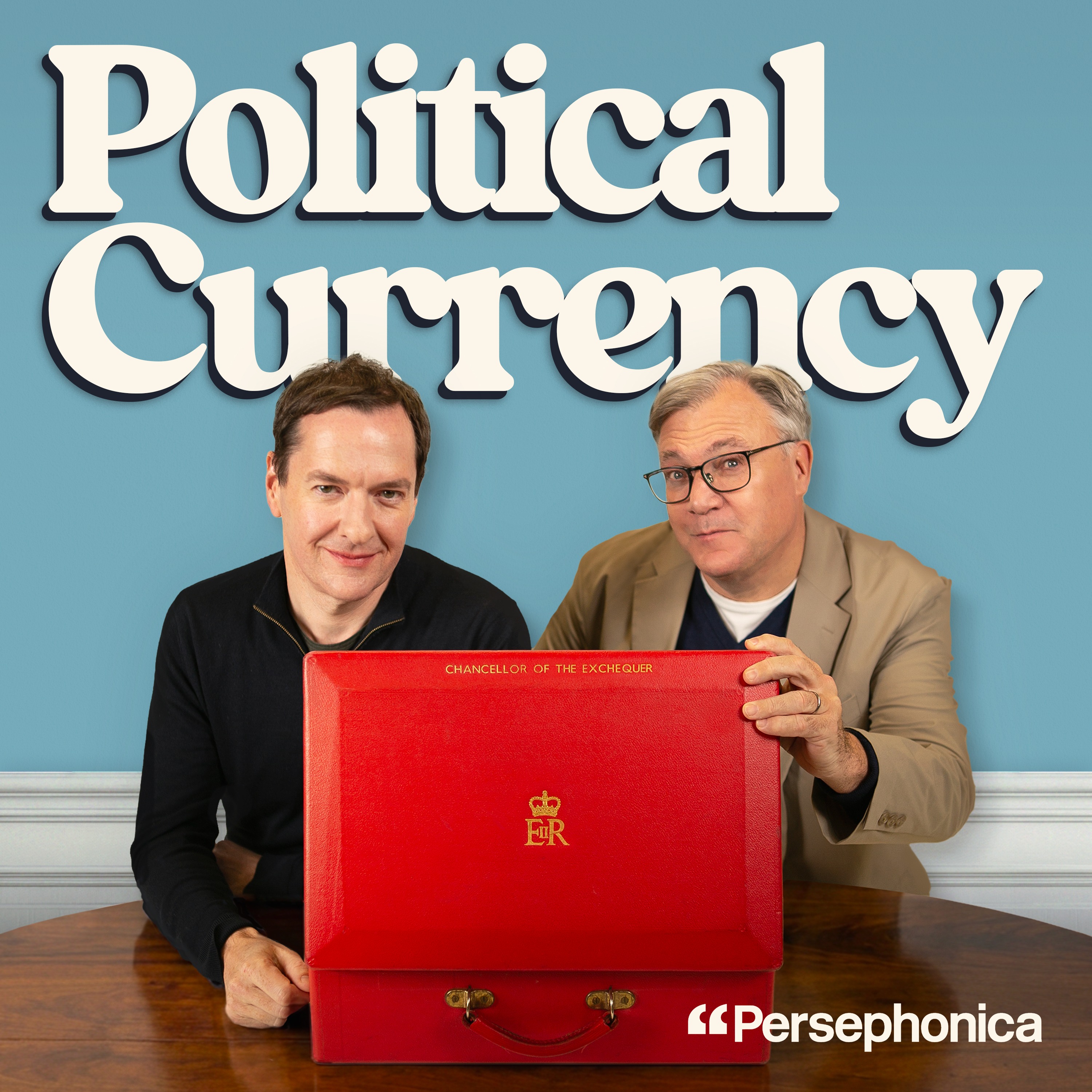
Hosts: Ed Balls and George Osborne
Theme
A look behind closed doors at political decision-making and its impact on the economy.
Frequency
Weekly on Thursdays.
Production
Persephonica
In this episode, Ed Balls and George Osborne tackle listener questions on various topics, including the implications of Brexit, cuts to foreign aid, and their potential hosting of "Strictly Come Dancing." The discussion provides insights into the political landscape, particularly focusing on Labour's stance regarding the EU and the aid community's response to budget cuts.
Written by AI. May contain mistakes.

Ask about this episode
Get the gist, explore an idea or ask about something said.
 Claude
On Political Currency, what are the key points of this episode?
Searching your listeningTranscript
Automatic transcript. May contain errors.
0:00The Chancellor of the Exchequer. Getting a lesson from the Shadow Chancellor on how to balance the books is like getting a lesson from Dracula on how to look after a bloodbath. Ed Balls. A steady-as-she-goes budget. What kind of ship does he think he's on, the Titanic? Bermere, Celeste. Welcome to EMQs from Political Currency with Ed Balls and George Osborne.
0:27welcome to emqs ex-ministers questions and um ed i've got i've got an idea for you i've there's a job we can apply for i've we're tired of podcasting or maybe we could do it alongside our podcasting i'm not actually talking about the american ambassador job the job of the british ambassador of Washington, which has just popped up on the civil service or the government's job website. Quite an unusual job to be advertising there. Anyway, I'm not suggesting we apply for that right now. What, as a double act? Well, why not? A job share. I mean... I think we'd do it pretty well. And we'd, wouldn't we?
1:05We'd satisfy both sides of the aisle, as they would say in the United States. But, no, I'm not actually suggesting that. I wonder who does the interviews. What? for the job or what? Who's the foreign secretary right now? Well, that's even more reason why we might land that job. Second time lucky. Or maybe not. Maybe it works the other way. But what about Strictly? Because Tess and Claudia are standing down after, I think, like 20 years or something of presenting Strictly Come Dancing. And, you know, you've got all the show experience that we need. I've got the big television personality that probably is also required.
1:49So I was waiting to think, what were you going to bring to this party is what I was thinking. A natural flair and musicality. We're good at the soundbuff. The popular touch. Yeah. Well, why not? We could be the new hosts of Strictly Come Talks. So just to wind up, what do you bring to this job? The big TV personality, I told you.
2:14I mean, if Bruce Forsyth can do it, I don't see why we... You are, I mean, you are teetering on the brink of a career in shiny floor TV. How many more jobs do you need? Yeah, this one. Wouldn't it be great? You'd love to present Strictly, right? Come on, you would, instead of, you know, instead of doing the news early in the morning, doing the Strictly late in the evening. Oh, it'd be brilliant. You'd be, you'd have different outfits every week. You'd be in your element. I don't see why not. You feel like you're one of the past stars. The interesting thing is, while we were waiting for you to turn up this morning, I was talking to one of our producers, Sylvia, and I said, how are we going to start the EMQs?
2:55Because, as you know, I think we'll talk about this later, but it's never worked out. It's always very last minute. And she said, well, as a joke, why don't you and George say you're both going to apply to present strictly? And I said, Sylvia, why is that a joke? Yeah. Wow. Why do you think that's funny? I mean, aren't you deadly serious? I would like to be the person who's up in the contestants' gallery. And you could be the... I'll present it. You could be the person in the gallery. That was fine. That was how I used to work with, you know, when I was chancellor and you were shadow chancellor.
3:25David Cameron. David Cameron. You go up in the gallery and I'll be the big TV personality. Look, I think that our podcast is stretching credulity. Right. And rather than dwell on this mad idea, we should get on with it. And we've got our first question. who's actually from Joe Sorrell, who's the Managing Director for Europe, Middle East and East Asia at the Gates Foundation. Hi, Joe Sorrell here from the Gates Foundation. The government earlier this year cut 40 % of the UK's budget for development and humanitarian assistance overseas. And the Shadow Chancellor said last week that a future conservative government would cut two-thirds of what's left.
3:59The governments that you were both part of saw the value of investing in development and global health, even through difficult financial times. How would you convince a Treasury minister today that investing in and development and key global health priorities, such as the Global Fund for AIDS, TB and malaria, is a smart investment in Britain's prosperity and security? Really good question, Joe. And I think when I think back to our time in government and actually the transition to the coalition, the argument we actually made at the time, the Gordon Brown argument, the Brown and Blair argument was fundamentally an argument about global social justice.
4:42It was about what we could do to eradicate poverty and the sources of poverty. That was the sort of moral purpose behind the Millennium Development Goals. That was the kind of thing that Gordon Brown would speak to in meetings in churches before the Labour Party conference or in central London at key moments. That was what the demonstrations in favour of the Millennium Development Goals were all about. And I think that you and David Cameron signed up to that, that you also shared that sense of moral purpose, that it was altruism, it was Britain making its contribution to the world. I guess the answer today is that in order to make this argument, and maybe this is what has not been made enough by us and since, is you have to make an argument also about UK self -interest, the British public interest, the taxpayer interest here, that it's only by spending and investing now in the sources and the causes of poverty and famine and ill health and instability that you can fight off pressures for global terrorism or global migration or climate change or conflicts which spill over borders and destabilise the world.
6:01And at the heart of that, an argument that if you invest now, you make savings for the future and savings which otherwise would hit British taxpayers, our borders, our public interest. I don't think we made that UK self-interest argument enough for aid spending. And that may be partly why, in a cross-party way, the Labour government's cut it back and the Conservatives are saying they want to cut back aid spending even more. Maybe we never made that argument effectively enough. Yeah, no, it is a good question from Joe. And I think I agree with what you're saying there. Look, we have to acknowledge that these are harsher times.
6:44The world has changed. governments feel pinched in their budgets the kind of american global order the sort of clintonian blairite you know turn of the millennium order has um you know fractured and most obviously in the united states so there are lots of reasons why you know it's harder to sort of persuade people that the un is going to come up with some objectives and we're all going and get behind those objectives. And, you know, China and India and the United States and Europe, and we're all going to work hand in hand to achieve these things. You know, we have to recognize those things have changed.
7:23But on the other hand, as you were saying, some of the kind of problems that are bedeviling countries like the UK, like migration, economic migration from Africa, you know, obviously being in country trying to improve life chances in sub-Saharan Africa, you know, has a direct benefit for the UK at the moment in trying to reduce immigration flows. And so maybe the other kind of arguments, as you were suggesting, need to be developed. And it can still have a kind of moral and ethical purpose, but it can have a more kind of practical, here's why it will actually help the UK, you know, in a very kind of real sense.
8:02All that said, I'll make another observation, which is, you know, I think the, You know, and this might provoke kind of big reaction from the aid community, but as the Chancellor who delivered the 0.7 % of GMP aid budget, I feel entitled to do this, which is, you know, the aid community has stayed remarkably silent and unnoisy and compliant about the big cuts in the aid budget that we've seen in the last couple of years. I mean, the first time this started to happen, which was under the Boris Johnson and then Rishi Sunak, kind of chancellorship, premiership period. There was actually a big reaction from the aid community when they started to come off 0.7 % and when DFID was abolished and merged with the Foreign Office.
8:44But the very big cuts that you've seen under the Starmer government, you know, a Labour government, which I guess you would classically think of being a government that these charities might be more comfortable with or certainly have more kind of personal links to and And lots of Labour MPs, you know, before they get into Parliament, have worked in aid charities and so on. You know, they've basically gone quiet. And the truth is, when times are really tough and you're cutting budgets and you're having to raise taxes, you know, as a Chancellor and a Prime Minister, you do tend to kind of pick on, you know, if something's quiet, if it's all quiet in that space and you kind of get away with cutting things, then you're tempted to cut them more.
9:24And that would have also led Mel Stride, the Tory shadow Chancellor, to say, well, hold on, Keir Starmer just got away with cutting the aid budget. We can announce that a further cut as where the Tory government of the future is going to save money. And so I would just say to the aid community, you know, you need to actually get a little bit louder and you need to make life a lot more difficult for politicians who are cutting aid budgets. Because at the moment, it seems to me you haven't done that. And in some respects, therefore, your, you know, your charities are reaping the consequences of that.
9:54So I think, in all these things, carrot and stick. Carrot, here are the benefits of what this aid money does, as well as the moral purpose, which I sign up to. But here's the stick as well. We are going to create a hell of a noise for you if you continue to cut this aid budget or you don't restore it. Very interesting. Is it for the Gates Foundation to lead the noise? Well, I think the Gates Foundation has been a very influential and important body, not only in the money it is given, but also the kind of academic or intellectual rigor it's provided to, you know, what we can use this money to achieve.
10:29And I think it has been, it has a big convening power because it's not just one charity and another charity would say, oh yeah, well, we're not listening. You know, I don't know whether Oxfam talks to the NSPCC or vice versa, or one would feel like, you know, they shouldn't let the other take the lead. I think they do have a convening power. I'm not sure, you're right. It doesn't necessarily need to be the case that gates is the public voice for that but you know when you and i were mps we used to get a lot of i mean it was emails were coming in for mps but you know i used to get like loads of postcards from the aid um charities and from the charity shops on the high street and the volunteers and so on around international development issues and i just you know a labor governor's come in delivered a massive cut to the aid budget and i don't hear the progressive left making much of a noise about it i completely agree you know every time i spoke to the charges at the time, I'd say, why are you sending me these postcards?
11:20Send them to George Osborne. He's the guy who you need to put the pressure on. But it does work, that kind of campaigning. I totally agree. Thank you very much indeed, Joe. Our next question comes from one of our gold subscribers called Sue. Hi, Ed and George. Sue here, a gold subscriber. I would like to echo Peter's comments from last Friday's EMQs when he said your podcast was simply the best around. The thing I like most about your discussions is the easy-natured banter between you. It sounds genuine and is always done with humour and respect for each other and never feels forced in any way, unlike some other podcasts I could mention.
12:01So my question to you is how scripted are your recordings and do you actually need to rehearse at all? Thank you. So the answer, Sue, is that our podcast is pretty much entirely unscripted. Although we would say that, wouldn't we? Even if it was scripted. The reason why it's true is because George always arrives late. We're under massive pressure and we just have to get on with it. So we'll have a very brief conversation about what we might talk about, but we never quite know what's going to happen until we start. We definitely think about each of our three items we talk about and the links into and out of those.
12:39But even then, other than having a broad understanding about what we're going to move through, what subjects we'll cover in what order and the clips. But I think at the top, part of the, I just don't think you can script that kind of conversation. It has to be spontaneous. The only thing actually, Sue, we script in this podcast is the adverts, which if you're not a Gold subscriber, you have to listen to. Sue chooses not to by being a gold subscriber so she gets our podcast ad free but those ads which we have to do because that's the way in which we can support our team and make the podcast work and pay for all the costs those are scripted and And make some money for ourselves Ed I think you can't just say it does pay for the team and it helps support the podcast but come on Of course There's a little bit of money into our pockets Yes Of course but those are scripted and you can tell when we're doing one of those ads because it's a different sound and field.
13:40Yeah, I mean, to just sort of echo that. So with our main podcast, we message each other during the week and we say, have you seen this? Should we talk about that? And we decide on our three topics and then we will have a conversation about how to go through those three topics. So we try and avoid being repetitive. And I guess the way I think about it is, trying, you know, what are kind of a couple of interesting points to make on each of these topics. And EMQs is, I would say, you know, I quite often will just glance at the questions. We know what they are in advance because we've selected them.
14:16We try and get a good mix. But I don't want to kind of over prepare for those because I think part of the freshness of this is, you know, what's your sort of instant thoughts on these things. But if you feel it should be more scripted, Sue, we will happily oblige because we are at the behest of our listeners. I think Sue is happy with it as it is. That's certainly the tenor of her voice note and we hope she continues to enjoy being a gold subscriber. Although, why are you not a member of our kitchen cabinet, Sue, and getting our cultural recommendations in our regular newsletter? I think you'd enjoy that very much.
14:52We'll take a break and then we'll be back with another question shortly.
15:04Welcome back. Our next question is from Cam. Hello team. Love the podcast. You've spoken recently about Ed Davey and now Keir Starmer positioning themselves as the leader of a coalition that isn't Nigel Farage. Indulge me in fantasy politics for a minute, but wouldn't a bold wedge issue here for Labour be rejoining the EU? There is no greater coalition that isn't Nigel Farage. It seems like a silver bullet to lay the blame for mass immigration and economic turmoil at the feet of Farage and what's left of the Tories. Labour would drive home their parliamentary advantage over the SNP in Scotland and change the nature of a debate they're currently not winning.
15:45It's a record of post-election governance they can attach to Farage. George has spoken about the political space in the debate being economic prudence, yet all parties are afraid to touch this political third rail. It requires someone to be brave, stick their head above the parapet, but the payout for capturing the remain plus never farage voters, totalling over 50%, best guess, plus moving the debate away from outright immigration towards more fertile ground seems asymmetric. Many thanks. Well, it's a very interesting question, Cam. Why is no one advocating rejoining the EU? Or even a kind of new referendum?
16:26I guess it'd be quite hard to argue we can rejoin the EU without having a referendum to do so. I think it's because everyone is a bit scared of their shadow on this. I mean, certainly the Conservative Party has decided that it is the Brexit Party, even though a majority of Conservative MPs didn't vote for Brexit. And, you know, a lot of Conservative voters were Remain voters in the kind of middle-class professional areas of the country. And then, you know, the Labour Party went through its kind of trauma in opposition of being enthusiastic about a second referendum and then backing off. Keir Starmer's own personal journey on this being the kind of illustration of it.
17:04Liberal Democrats, if you remember, they fought the 2019 election on, let's have another referendum. They went, they doubled down using your logic that there must be the 48 % of people who voted remain. And indeed anyone subsequently who thinks maybe Brexit was a mistake, even if they voted for it and new, you know, new voters, they, they thought they could become that sort of pro EU party, but they got effectively wiped out in 2019. Having enabled the election to take place, if you remember. So as a result, I think everyone, and I think the same would apply, by the way, to some of the nationalist parties in Scotland and Wales.
17:44Everyone is a bit afraid of this topic. I think for the mainstream parties, it feels still like too much of a leap. And of course, rejoining, you'd have to win a referendum and you'd have to confront, I think, the two kind of big obstacles to winning, which is first, would we have to pay money into the EU? Because we did make a budget contribution to the EU, which I thought was a good investment of taxpayers' money at the time. But it would be, I can imagine, quite a hard argument to win in a referendum. And then you'd also have to win this argument on free movement of people, unless the EU were to change its own policy in this space and in order to allow Britain to, or those who wanted Britain to rejoin to have a chance of winning a referendum.
18:31So I think unless, you know, those are your two obstacles. And I think unless you get some shift on free movement, it feels to me that's the biggest obstacle. And then I think you could probably make the financial argument. You'd be, you know, you'd have a big battle, but you'd have to say the country was poorer for not being in the EU. and we'd have a bigger economy and that would more than pay for the contribution of being a member. And it's not a kind of knockout blow. I think fundamentally, I guess I would say, you don't have to kind of get to that hurdle yet. You don't have to try and jump that fence of EU membership because I think in any case, Britain's membership of the EU, particularly as we weren't in the euro, was in much of the kind of economic arrangements like the single market and the customs union.
19:17And I've argued on this podcast, right from before the general election, that Labour should have at least committed to rejoin the customs union, if not the single market. And the kind of trade deals they've done and are looking to do are kind of inching towards that anyway. So I think you could get to that point where you're in quite a lot of the economic arrangements rather than the actual EU. Now, a big disadvantage, you don't have a say at the top table still. But I suspect that will be the route that we creep back to something that looks not unsimilar to EU membership. Put it this way, I'm sorry to finish here.
19:52If you jump forward 40 years, I think our economic arrangements with the EU will look like we are kind of outer tier members, which arguably we were anyway, when we left because we weren't in the euro. That might be. I don't think there's any prospect cam of anybody at a senior level in our political system making the argument you want, certainly in the next 10, maybe 20 years. And I think there are a number of reasons why. There's a sort of narrow party self-interest argument, which I think is the least important one, but it is important, which is that for Keir Starmer, it would reopen a big divide within Labour because very many Labour voters voted to leave the European Union.
20:44And it would cause a great deal of difficulty now in the parliamentary party because of members of parliament who represent those constituencies. And the Liberal Democrats found as well that it caused big internal fights about whether this was the right argument to make. And the second thing, which is actually go slightly further than what George said, I'm afraid the European Union is not going to want us to rejoin on the old terms upon which we remember, because they cannot send a signal that you can leave and just rejoin this union in a cost-free way. I think it's very hard to see that we could rejoin without having to join Schengen, the passport-free movement across the European Union, which we were outside.
21:27I think it's very hard for them to say that we could rejoin without needing to be on the road to joining the single currency. And that's in addition to the point you were making about the budget. And I think that that political negotiation would be very difficult indeed. And that was why it was such a costly thing to lose, because we were actually a member on terms which made sense for Britain. But I think there's also a deeper point, which is it's very easy to see this from the point of view of being somebody who voted Remain living in a place which is, you know, a fundamentally clearly majority Remain place.
22:03but my experience is that if you go to those parts of the country which were much more divided those places which had you know a clear leave majority even the people who voted remain in those places would be very worried about a government simply coming along and saying we're going to disregard or disrespect to reopen those big divisive arguments I don't think in those places even people who voted Remain would feel happy about us relitigating that referendum because it was so divisive at the time and people would think it's disrespectful and the thing to do is to try and find an argument which can be consensual rather than dividing and I think George is right you can see a path consensually to a closer cooperative relationship with our main trading partner, the European Union, but it would have to be done on the basis of a new relationship for new times, a new security relationship, a new trading relationship, a new economic relationship.
23:08I think if you try to remake the past, go back to what it was, not only will our European partners not want that, but very many people who voted in the referendum will be affronted by that. So you have to talk about the next stage of the British relationship with the European Union, and that might be joining something new, but I'm not sure it will be rejoining something from the past. No, I think all of that is very persuasive. Do you agree with my point that if you fast forward, I mean, who knows because the total guessed this, but if you fast forward like 30 years, you could imagine Britain's relationship with the EU on the economic front, the security front, things like justice and border control and whatever, looking pretty similar to EU membership, even if you're not in the European Parliament, you're not in the European Council and so on?
23:58Well, I do, but I don't think we could stay in the European Union without a move away from open free movement. And I don't think we could have stayed in the European Union and joined the single currency. But you could see a path towards a closer cooperative relationship, which, as you say, will always be imperfect before. And we'll have less say, but also pay less. but a world in which we are in a customs union don't sign up to free movement are not in the single currency but it has to be seen as something which is you know a future step very good question thank you cam we'll take a break and then we'll come back for another question
24:48so welcome back our next question is for one of our kitchen cabinet members who goes by the name of osbornomics on tiktok blimey what on earth is osbornomics going to be asking us about hi ed and george loved your chat about tiktok we were all really happy to hear you talk about it on the podcast. I was personally very flattered that you gave my account a shout out. And George, I'm not a Putin bot. But what we're really fascinated to know is how did you manage to find this side of TikTok? Do you use TikTok? Are you avid TikTokers yourselves? Please let us know. Thank you. George, are you an avid TikTok Osbonomics follower?
25:34Well, I'm not sure I'm a kind of follower in the strict sense that I've, because I'm not sure I've tagged anyone on TikTok, apart from maybe political currency. But yes, I do like TikTok, actually. I mean, you have to be careful or else you can suddenly find an hour has gone by. But I think there are lots of things on it which I really enjoy, not just Osbornomics. of economics. And it's clearly such an effective communication medium and a very clever one. I mean, I actually, for example, these days, I'll tell you, kind of give you an example. When I was editing the Evening Standard, the kind of restaurant review in the newspaper, in the case of the Evening Standard, Faye Mashler, the legendary restaurant reviewer, was the definitive way that many people found out about new restaurants and those restaurants were rated and for the restaurants themselves getting a visit from one of those reviewers was absolutely uh kind of critical whereas these days you know i actually when i'm trying to think well what are the new restaurants that have opened that i should try i would go on tiktok and look at top jaw which is the this brilliant channel by these two guys which kind of says well you know what's the best restaurant in london where's the best place to get a curry you know what's the best place to get a coffee and what's the worst place in London and so on.
26:55And, you know, it's brilliant. And it now is driving, you know, the success or indeed failure of new restaurants around the place. And I hope that they're kind of becoming so successful. I think it was a kind of hobby of theirs, and I was reading an interview with one of them. But now they're kind of teamed up with Gordon Ramsay and so on. I hope they kind of keep the kind of insurgency feel. And I think that's where I love TikTok, both politically on kind of cultural recommendations, on restaurant reviews, on anything that's where music recommends, where it's kind of, it's got that kind of disruptive, raw feel to it.
27:32And so the more, I guess the danger with it is it becomes such a dominant social media app that it becomes sort of all a bit to go back to Sue's question, scripted and contrived and advertised on rather than what the bit I like about it is the kind of rawness of it. Well, I found out about this and not just Osbonomics, but also some of the stuff I was appearing in because of very anguished messages on the family group chat saying, oh my God, oh my God, what has happened? They've even included your summer beard. And this is TikToks of me actually recently, but also back in the late 1990s when I was 29, 30, 31.
28:23This is you smoking. Kids are appalled by the smoking, but this is Gordie Pops.
28:37So for those of you who are listening to this and wondering why on earth we're playing Sabrina Carpenter, This is a TikTok video which has a sort of young Ed Balls in his kind of nerdy advisor phase where he's sort of sucking up to Gordon Brown. It's got lots of pictures of that. And then it's got like the, well, what others would describe as the hot phase of the more rugged, bearded, you know, grizzly bear, later in life Ed Balls. So Ed is now dancing and holding up his phone like a kind of silent disc guy. When did you get hot all of a sudden, it says? I mean, what's going on? This is while I'm smoking 29.
29:20It suggests you weren't for a long period of time, right? So you have to, do you want to live in the present or do you want to defend the past? OMG. What has happened? My algorithm's gone mad. TikTok-fastic. I'm surprised the videos of you smoking haven't been kind of removed from the platform because of the harm they're going to cause youngsters and so on. Well, it's particularly bad because Yvette was about to become the public health minister and I then had to, I couldn't even do it on the side. But I was only ever a very, very kind of, you know, me and actually I was about to say something but then the person I was about to mention was never public to her partner about smoking, so I won't mention it.
30:01We might also get, we might get cancelled as a podcast. we've got time for one final question and it's from Harry Hello Ed and George, Harry from Kent here just wanted to say I'm loving the pod and like listening to it when walking my dogs my question is due to you both having had experience in the journalism world what advice would you give to me and a friend in our final year of uni who have started to post our own political feed on Substack it's called Playground Politics for a cheeky plug I'm looking forward to hearing your advice all the best So thank you very much indeed to Harry. And two final year students doing a journalistic feed called Playground Politics.
30:42Well, there is your shout out from us. But so what is the best advice for you guys doing this political Twitter feed? I would say this slightly echoes, we talked about columns in the newspapers a year or so ago, but I think this equally applies. You could be really insider. What's really going on in Westminster and Whitehall? That's probably hard for you guys to do if you're in the final year at university. You could have absolutely brilliant, wise commentary and analysis of what's going on in politics. And that may be what you guys can do. and there's lots of competition, but absolutely go for it.
31:23It could be that you are TikTok style, fun and entertaining and mischievous and that's what catches on. But I would say there's also a perspective. There is the view of young people about how politics is working, what they think is happening with Farage, what's happening with reform, is Labour delivering. young people's perspectives on issues. I don't feel as though I see enough of that in my feeds, and that's what I would like to read more of. If you just go out and try and do what everybody else is doing, that's a bit of a lottery, and you might be brilliant. But if you go out and do something that nobody else is doing and do it really well, so I would say be fun and entertaining and quirky, but also give us a view, a perspective on politics, which we aren't getting from The Guardian or the FT or the Times or from podcasts.
32:19And if you can do that, Playground Politics has got a real chance. Yeah, I think, well, that's not sure I can add much to that advice, except that I was just, I've been trying to find you on X, I think we call it these days, Ed, rather than Twitter. You have to use the search function, George. Do you know how to do that? I famously didn't know how to do it, which got me to a bit of trouble. Yeah, I have, but I've come up with, there are a couple of playground, but there's two, there's like two playground politics and there's one, right? Which if you look at the picture, I think has a picture of you and Andy Burnham or maybe, is that Gordon Brown or I think it's you.
32:56No, it'd be me and Andy on road swings. Is that the one we're looking at? Is that? Well, I don't know. I've no idea, but I know the picture. Well, that would be, that could well be playground politics. So the first thing is, I think. George says, get a better picture. What you want is a big TV star on your picture. somebody with, you know, shiny floor potential. And by that, George means him. Yeah. Well, I wouldn't put Andy Burnham and Ed Balls. I guess I do put Ed Balls these days on my Twitter thing. No, I think, you know, look, you gave very good advice there. And also just keep it real and keep it, you know, that is the advantage of, we were talking about TikTok before, but X as well, you know, you can either be a kind of voice of authority and you've done it all and whatever, or you can be insurgents.
33:42And the fact that, you know, there are so many political commentators now who have emerged from social media, from X, particularly in the United States, but also here, you know, essential, you know, social media influencers in politics. We would talk about how they've been doing it in other areas like restaurant reviews. There is no reason why your podcast could not become the second most successful and widely listened to politics podcast after ours because I can't think of any other rivals. I'm not totally sure that doing a podcast yet, that's just a Twitter feed, but I think you're saying also do a podcast.
34:16Yes, I am. Anyway, you can absolutely do. Thanks for your question, Harry. That's all we've got time for in this episode of EMQs. Yeah, do keep sending your voice notes, your emails via questions at politicalcurrency.co.uk. Make sure you review the show as it helps us to reach even more listeners and viewers. And we'll be back next week with another episode. See you then.
34:44Thanks for listening to Political Currency. This has been a Persephoneca production.
From the publisher
Why won't Labour make rejoining the EU its new "silver bullet" against Nigel Farage? A listener challenges Ed Balls and George Osborne on tackling the "political third rail" of Brexit. Ed argues the EU wouldn't even want the UK back on its old terms - likely forcing the Euro and Schengen - while George predicts Britain will inevitably "creep back" towards the Single Market.
Then, a direct question from the Gates Foundation confronts the former Chancellors on the 40% cut to foreign aid. George, the Chancellor who delivered the 0.7% target, blasts the "remarkably silent" and "compliant" aid community, delivering a stark warning to "get louder" or face even more cuts.
Plus, with Tess Daly and Claudia Winkleman stepping down, could Ed and George be the new hosts of Strictly Come Dancing? The pair reveal how unscripted the podcast really is, George shares his favorite TikTok restaurant reviewer, and Ed reacts to his "hot phase" going viral on social media…
Thanks for listening. To get episodes early and ad-free join Political Currency Gold. If you want even more perks including our exclusive newsletter, join our Kitchen Cabinet today:
👉 patreon.com/politicalcurrency
👉 Apple Podcasts
Please note: Kitchen Cabinet is only available via Patreon.
Credits:
Assistant Producer: Caillin McDaid
Senior Producer: Silvia Maresca
Video Editor: Maha Al-Badrawi
Executive Producer: Ellie Clifford
Political Currency is a Persephonica Production and is part of the Acast Creator Network.
Hosted on Acast. See acast.com/privacy for more information.
More from Political Currency
All episodes
We use cookies.They keep VO running smoothly and help us improve it. Privacy policy