
 Ask ChatGPT


- Podcasts
- Political Currency
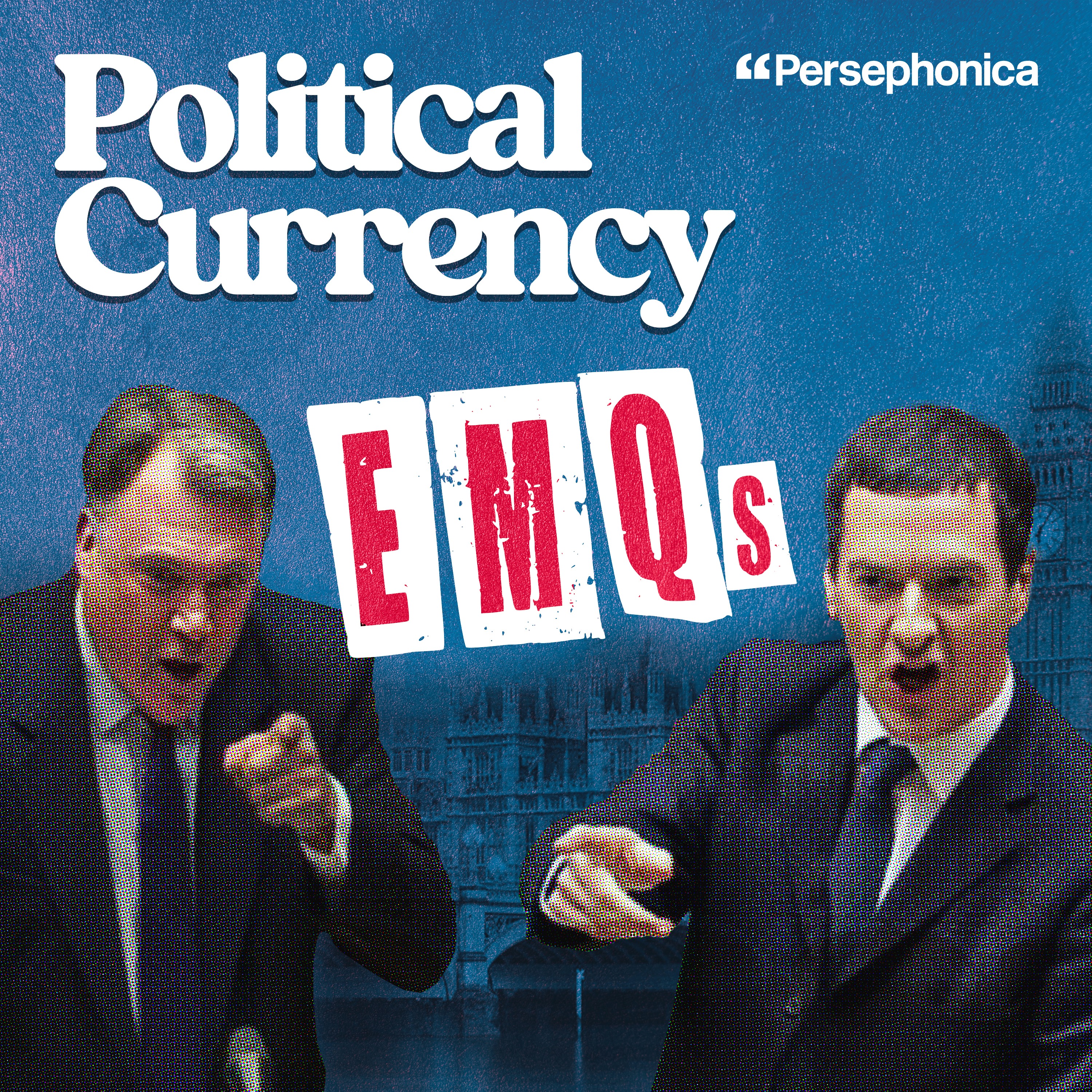
- EMQs: Should John Healey recruit ex-chancellors?
In short
EMQs (Ex-Minister’s Questions) with George Osborne and Ed Balls answering audience questions about political conference “spies,” fringe meetings, Holocaust education, economic “star chambers,” local government reorganisation, and chance encounters with famous people; includes Osborne’s story introducing Boris Johnson to Monica Lewinsky.
Guests
No podcast guests. Hosts are George Osborne (former UK Chancellor; Conservative) and Ed Balls (former UK Shadow Chancellor; Labour).
Key claims
Osborne says he found regular dinners with former Tory chancellors useful while Chancellor; he argues committees that publish reports can backfire (“best committees are the ones that never meet”). On local government reorganisation, they suggest a pause is likely legal/process-related, not abandonment. On Holocaust education, they endorse Holocaust Educational Trust school trips and highlight Natalie Livingston’s book as a way to reach young women.
Notable examples
2005/2006 near-empty fringe meeting with Will Hutton and “Theo Bertram” as a Labour spy; Osborne’s “Gordon Brown autistic” controversy; Nuremberg Women book discussion; viral Auschwitz coffee TikTok; Osborne introducing Boris Johnson to Monica Lewinsky at a drinks party.
Written by AI. May contain mistakes.
Chapters
2:19
Celebrity Traitors and Board Meetings
Discussion on the Celebrity Traitors TV show and a recent board meeting.
“So hello and welcome to EMQ's Ex-Ministice Questions.”
3:05
Experiences in Egypt
Recollections of a recent trip to Egypt and historical reflections.
“And I think, you know, all of your board were there.”
4:36
British Museum Relations with Egypt
Discussion on the relationship between British Museum and Egyptian authorities.
“And then when we went around the Temple of Karnak and then you go, oh, this is the place where Jaws throws the block of stone to try and kill James Bond and the spy who loved me.”
7:10
Conference Experiences
Sharing memories of experiences at political conferences.
“so to go and see the biggest rebuilding of recent years which is this new Cairo Museum.”
8:10
Fringe Event Memories
Recollections of awkward fringe events and humorous political anecdotes.
“I also wanted to ask about any memories of fringe events at party conferences that both of you might have.”
14:02
Conversations on Political Engagement
Learn about personal experiences with political events and audience engagement.
“Yeah, one of the unions, the engineering union.”
24:56
The Idea of a Star Chamber for Economists
Explore the concept of a star chamber involving former chancellors and economists.
“Now, as we were saying at the beginning, this is our second show on YouTube, the second show where you can watch us as well as listen to us.”
28:00
The Role of Economists and Advisors in Governance
Explore the dynamics of economic advisory councils and their impact on governance.
“and learnt quite a lot and helped show up my thinking.”
36:22
Question on Local Government Reorganisation
Discussion on local government restructuring and its implications.
“We'll be back after this break with another question.”
38:44
Memorable Encounters with Famous Figures
Hosts share personal stories of interactions with well-known personalities.
“And so our final question is from Piers.”
Show all 11 chapters
42:00
Meeting Monica Lewinsky at a Drinks Party
The hosts recount a past encounter with Monica Lewinsky and discuss the impact of her scandal.
“I'll tell you what, I was, I've heard stories I was thinking I could tell, but I'll save them up for other podcasts.”

Ask about this episode
Get the gist, explore an idea or ask about something said.
 Claude
On Political Currency, what are the key points of this episode?
Searching your listeningTranscript
Automatic transcript. May contain errors.
0:00Think of a toilet as just an everyday object. Your entire perspective shifts the moment you experience a Kohler smart toilet. Design changes everything, transforming a basic routine into something extraordinary. With standout aesthetics and intuitive controls, these are functional works of art. Stunning design that never sacrifices performance. Enjoy customizable features for elevated comfort and convenience. It's more than a fixture. It's a cleaner routine and a more refined space. Experience the difference of Kohler smart toilets. Find more at Kohler.com. ActiveCampaign is the marketing automation platform built for big swings and big dreams.
0:41With intelligent suggestions powered by AI and your data. Generate ideas in seconds. Import your brand and create full campaigns with simple prompts. Send personalized messages backed by real-time feedback, smart segmentation, and effortless reporting that tracks every win. let's redefine what's possible together get started for free at activecampaign.com hey it's page disorbo from giggly squad everyone is always looking for a new way to make some extra cash but sometimes the easiest place to start is your own closet with a little help from depop think about how many clothes you have that you love but you just don't wear anymore on depop it's quick and easy to list those pieces there's no selling fees and suddenly those clothes have a chance to find someone who actually wants them.
1:27And the best part, you're making room for whatever you're into next. Make money on Depop with no selling fees and find what you want for less. This message is brought to you by Depop.
1:40George Osborne: Welcome to EMQs, Ex-Minister's Questions, with me, George Osborne, and with Ed Balls. I hope you're going to enjoy this show. We've got questions about being a spy at a Tory or Labour conference. conference. We've got questions about whether you should talk to your elders and betters, whether the Chancellor should get the ex-Chancellors round the table. And I'll tell you about the moment when I introduced Boris Johnson to Monica Lewinsky. So you're going to want to listen to all of that. And of course, you can send in your own question to questions at politicalcurrency.co.uk or you can message us through YouTube or through whichever social media channel you're listening to
2:19Ed Balls: So hello and welcome to EMQ's Ex-Ministice Questions. And this is the second time we are doing our EMQs on YouTube. We had a really good response from people last week. And so I thought, given that this is, you know, people might be watching on their TVs, and it's a big TV weekend. This is the kickoff of the new series of the celebrity traitors with Claudia Winkleman presenting this fabulous TV. I am told by people who've seen the first episodes that this series is going to be even better than the first Celebrity Traitors series. It's proper appointment TV. But, you know, it's a thing with traitors for people now to play the game when they're with friends, you know, for the weekend or if they're away on a trip.
3:04Ed Balls: And I just wondered, I know you were in Egypt last weekend on a British museum trip. And I think, you know, all of your board were there.
3:13George Osborne: were you tempted to including claudia were you tempted to play traitors in your off hours in the evening we did not play traitors um claudia is a great member of the board and she was not giving anything away i will i will say to the producers of celebrity traitors uh she says it's great fun and she says it's a bit wild but uh it's definitely worth watching i'll tell you what we did see though um you know we went to cairo went to luxor uh had a board meeting met with uh you know the egyptian authorities and and saw some of the sites but uh i was quite excited to see on the river nile this steamer boat that's sort of moored up and someone pointed out to me was it kind of death on the nile no it was the boat no the boat in death of the nile the original boat from the
4:01Ed Balls: original agatha christie one not the remake oh my gosh yes isn't that cool when was the original one film one like decades ago yes but it's great film um so you can't help but um when you go around
4:14George Osborne: the egyptian side it's the second time in my life i've done it it's but i was a student master of a teacher i mean they they are just think you can't quite believe it's the pyramids it's the sinks it's like tuten karmine's mask you know they're so they're amazing objects and they're And, you know, the whole thing was sort of overwhelming. But, you know, you also can't help but think of the film iconography. So death on the Nile. And then when we went around the Temple of Karnak and then you go, oh, this is the place where Jaws throws the block of stone to try and kill James Bond and the spy who loved me.
4:48George Osborne: And it's also full of film sets. And Cairo itself, we did a reception at the British Embassy. Thank you very much, British Embassy. and you know this is the place where Churchill and General Alexander and General Montgomery and you know all met and there are all these photos on the wall I mean the whole place has a you know a kind of a great romance to it as well as amazing sights what if you're on like a British
5:16Ed Balls: museum shindig like this I mean you know you're there and of course you say you famous sights famous film scenes historical moments but what is the um the british museum thing you do i mean when you nudge and wink do you say and point at things and say we've got one of them or we pinched that in the 19th century or that's what we ought to give back i mean what is the
5:39George Osborne: kind of when you do walk around the sites they go you know this uh there used to be an obelisk here it's now in the middle of paris um the um no it's interesting we have a it's because obviously this is not the case with every country in the world. We have a really, really close relationship with the Egyptian authorities and the museums there and the chair of the committee of antiquities came to our reception and we signed an memorandum of understanding with Egypt. It doesn't have some of the deep politics that go with our relationship with other countries. It's a bit like the French.
6:16Ed Balls: You have good relations with the French these days. Even though you damage the tapestry.
6:20George Osborne: Well, remember, you know, the tapestry depicts their invasion and occupation.
6:25Ed Balls: So when you say the ones that she's a bit tougher, I mean, do you just mean the Greeks?
6:30George Osborne: Well, I would love to deal with the Greeks, but it's some other places as well. You know, the history is quite raw in some other places.
6:40Ed Balls: They don't tend to be the British Museum away day location.
6:46George Osborne: but we're also learning there's an amazing new museum in Cairo by the pyramids for a lot of their antiquities they've still got the old museum which is definitely worth going to see because that's by Tahrir Square famous and that's a brilliant redolent of the history of the museum but the new museum, we're building we're doing a big extension of the British Museum, big rebuilding so to go and see the biggest rebuilding of recent years which is this new Cairo Museum.
7:16Ed Balls: And how's it going with the queues?
7:19George Osborne: The tapestry?
7:20Ed Balls: Yeah. I'm asking you to put your British Museum hat on for a moment. I'm asking actually for a friend. My sister is bringing eight friends down in the third week of December, afternoon to see the tapestry at the British Museum, evening to see Century's Dad at the water routes.
7:34George Osborne: Ah, well, the queues will be similar, won't they?
7:37Ed Balls: Well, we'll have to make sure we manage both of them well. Good to have a good door policy.
7:41George Osborne: We are managing the queues, I would like to think. and the truth is that people when they get in and they see the tapestry they as you know you had the rare privilege of basically seeing it by yourself almost no one has had that you know that's not what the king got but all the prime minister the head balls we rolled out the red carpet
7:59Ed Balls: we did well thank you very much indeed I mean I actually loved it and if you when does the next batch of tickets come out
8:06George Osborne: in the middle of October cool I think it's the 21st of October
8:09Ed Balls: fingers on the bottom we should get on with our podcast yeah
8:11George Osborne: we should definitely now our first question comes from one of our fans on instagram and this is a question from sam hi ed and george this is actually a question for george i want to know
8:25Ed Balls: if he remembers this event that happened in 2005 former number 10 advisor theo bertram on twitter has been talking about it and it's about a fringe event hosted with george and william hutton in 2005. Do you remember it? I also wanted to ask about any memories of fringe events at party conferences that both of you might have. Thanks, bye. I'm just going to prompt George's memory a bit. This is before you were Shadow Chancellor. This is Theo Bertram. He now runs the Social Market Foundation.
8:55George Osborne: No, I think I was Shadow Chancellor at this point.
8:57Ed Balls: Oh, were you?
8:58George Osborne: No.
8:58Ed Balls: He said it was before you'd come to prominence. Maybe you were then Shadow Chancellor.
9:04George Osborne: I was appointed Shadow Chancellor by Michael Howard, not by David Cameron.
9:09Ed Balls: Oh, so he thought you hadn't yet been appointed, which explains why this fringe event, he was there actually as the Labour Party spy. He was doing the same job as you had done at a Labour Party conference, as the Conservative conference, but it was 20 minutes away in some church. And unfortunately, the only people who came were the organisers, Will Hutton, you, and Theo Bertram, who's there as the Labour spy. Will Hutton then says, I'm not sure there's any point in having like a formal meeting. Let's just have a conversation. Let's introduce ourselves. Go round the room to introduce yourselves.
9:44Ed Balls: But of course, Theo Bertram can't introduce himself because he actually works for the Labour Party. So he says, I just kept awkwardly, brazenly mute. They all looked at me as if I was either terribly shy or not very bright or both, and then carried on with Will Hutton asking interesting questions and probing questions about Osborne's economic policy. but um do you remember do you remember this obviously it's it's burned in theo bertram's memory because it was so kind of traumatic for for him yeah i do well i don't remember theo being
10:15George Osborne: there too i mean i do know the bertram uh i don't remember him being there sorry um and um he was the guy who didn't say anything yeah no of course i didn't know he was a spy um talking about spies you could have given him tips yeah i have been i've been the tory spy at the labour conference so i could have given him tips um but i do i definitely remember the meeting with will hutton and i do remember now i'm forced to remember it uh the um the near empty fringe meeting um at that conference all the action was on the leadership contenders and although i was the shadow chancellor as i've been appointed by michael had everyone was interested in the four or five people who were running for leadership and the speeches that we're going to give and so on um
10:56Ed Balls: It is true as well, isn't it? If you are, even if you're a big figure, you arrive at an event, especially if it's outside the security cordon, you walk in, you have no idea whether it's going to be packed and 200 people or three.
11:10George Osborne: I mean, I have lots of, obviously, we have so many conference stories between us. But the fringe meeting that gave me, I think, the most trouble in all my years as Shadow Chancellor and Chancellor, it was like 11 conferences, I guess, was very early on. it might have been 2005 but I think it probably is 2006 um where um I'm being interviewed by Marianne Seacart who was then a columnist on the times and um she's sort of like who is George Osborne and what's his background and his life and she um had discovered that my brothers I've got three brothers had called me as a child this was not a term of endearment knowledge just because I knew the answer to everything I was like you know uh and then I think they were saying I was a smart ass that was their kind of that was the meaning of the of the term and um I mean it could have meant you knew every taxi route in London well the knowledge so um so Marianne goes um what are you you know you were called the not is it true your your brothers called you knowledge and I said yes yes and she said you know are you were you kind of autistic or something like that and I said, well, I didn't know we were talking about Gordon Brown.
12:23Ed Balls: I remember this.
12:24George Osborne: Right. So it was partly my attempt to just sort of diffuse this sort of slightly awkward situation.
12:31Ed Balls: That was then and this is now. You wouldn't say that now. No.
12:33George Osborne: And in my defence...
12:35Ed Balls: I'm not sure you'd have said it then, but definitely not now.
12:37George Osborne: Well, yeah, I was being, you know, this was being directed at me. Anyway, I said this thing and then all hell broke loose and, you know, it became a kind of minor conference kind of crisis and all these, you know, that essentially I had called Gordon Brown Autistic, which, you know, I hadn't directly. But, you know, all these autistic charities came out, you know, and attacked me and then I got all these letters.
13:04Ed Balls: Thea Birch was probably organising it.
13:06George Osborne: All these, like, you know, these parents with these sort of, you know, desperately difficult situations at home were right. Anyway, it had been meant as a sort of jokey way of sort of diffusing a kind of rather pointed question. But that, I think of all the fringe meetings I did over the years, that was the one that was like, oh.
13:28Ed Balls: That was like David Cameron accusing me of having Tourette's and a couple of phone calls and the whole Tourette's world is out there condemning him. Well, I have loads of fringe stories as well. But actually, the one which is most closely related to yours is not a fringe story. The problem with doing this podcast for four years is it's impossible to remember whether you've told these stories before. No one remembers this. They're like fine wines. They're mature. And I'm invited, when I'm a Treasury Advisor, but I'm going for the seat in Normanton to the relaunch of the Wakefield branch of the AU.
14:01Ed Balls: That's one of the unions. Yeah, one of the unions, the engineering union. and I arrive at Wakefield Town Hall and there were seats for 50, a buffet for 50 and when I went in, there was the chair, the secretary at the top table and one person in the room, one. And I walk in and the chair says to me, Eddie says, I'm not sure we need a speech. Let's just sit around and have a conversation a bit like yours. And so we had a conversation, the chair, the secretary, me and the one guest and it had a bit of the buffet and as we walk out, I said to him, I'm really sorry that, you know, tonight it was such a low audience and i you know and you know i didn't do a good enough job at relaunching the branch and he turned to me with his look of shock and said what you're talking about he said until tonight there's only ever been two of us and so and that was that was the story and uh which um so when i heard your story here it reminded me very much of daniel vinkelstein it was probably the same year 2004 well actually one year earlier just about the same in egypt
15:01George Osborne: Another of our trustees, Daniel Finkelstein, was saying, telling a story about how he'd gone to give his first political speech. And there'd been one person in the audience in the speech in East Anglia. And then they got up and said, I'm sorry, I've got to leave. But I'm being breached of my parole conditions if I don't go now. I mean, he walked out as his tag flashed.
15:23Ed Balls: Absolutely. Oh, my goodness. That was a great question from Sam and a great set of tweets from Theo Bertram. And we said that was voiced by one of the producers. Voiced by one of our producers. Right.
15:38George Osborne: Next question. Now, our next question comes from the author of a brand new book, The Nuremberg Women. And it's from Natalie Livingston. Hi, Ed and George. Today marks the 80th anniversary of the verdicts of the Nuremberg trials that brought high-ranking Nazis to justice. I've spent the last four years working to bring to life the stories of the women who played a key role at that landmark event and whose roles have received little attention until now, including the first survivor to tell the world of the horrors of the camps. I know both of you have and continue to place great importance on Holocaust education in your careers, but what more can be done to ensure the lessons of the Holocaust are learnt as survivors pass away and amid heightened anti-Semitism today.
16:27Thank you so much.
16:28George Osborne: Well Natalie thank you very much for your question. I know Natalie and I'm chuffed to have got a copy of the book which you brought along for me Ed. Thank you this morning. All wrapped up. It's very exciting and the book looks terrific so I'm going to read it and I'll just say you know what Natalie has done she has got off the ground. I mean, this thing didn't exist. And she runs an amazing literary festival at Cliveden, the famous stately home outside London, which is, you know, where the Profumo scandal all started for people who like their politics. It all happened to have started in a swimming pool on the Cliveden estate.
17:06George Osborne: But there's no such scandal these days. There's just a really, really good literary festival which Natalie runs. and um and it's i know she's written other books uh this look book looks it's really interesting i would say one of the most memorable trips i've done in recent years i was i think i was at some sort of conference in germany and i thought you know i'm very close to the nuremberg courtroom i could go and just i wonder if you can just turn up at the nuremberg courtroom and i went to the nuremberg courtroom which is still an act or certainly was when i went an active court german court but they've got the famous courtroom where the nuremberg trials happened and the moment you see it it's you go of course this is the room you know and you for anyone who's done their history or you know it's got the flags of the kind of allied powers the soviet union the united states britain and france it's got the american marine the military police officer and then it had the Nazis on trial.
18:05George Osborne: And it was actually an amazing kind of achievement to put this trial on. This was before everything splintered with the Cold War. And then it, of course, established the basis of international humanitarian law and anti-crimes against humanity, crimes of genocide and so on. But I think from the look at, you know, I've just sort of read the blurb and dipped through the book in the last hour having just got it it looks like natalie is bringing to life the stories from the women at the trial because you you know you know the i guess almost everyone on trial i think probably everyone on trial was a man so it's been a kind of male story but of course so many of the victims were women and uh girls and so um well done natalie i can't wait to read it.
18:51Ed Balls: Well, so to Mark, it's published this year in the 80th anniversary. It's called The Nuremberg Women. And actually, the story of the writing of the book is actually fascinating because Natalie says in the Imperial War Museum, there is a famous, huge oil painting depicting the dock of the Court from 600 in the Nuremberg Palace of Justice, portraying the 21 Nazi leaders who appeared there between November 1945 and October 1946. It was painted by Laura Knight, who was... Of course, famous artist. Famous artist, who was sent there by the War Artists Advisory Committee to record what was happening. But what Natalie says is, as she looked at this painting, and she'd seen it very many times, the thing she couldn't get beyond was the fact that I found it impossible to see beyond a glaring absence that it's not a single woman in the picture.
19:50Ed Balls: And then as she dug into this, I mean, the picture was painted by a woman. But as she dug into it, what you realise was that there were loads of women involved in this trial. Women who were journalists, Erica Mann, Martha Gellhorn, Rebecca West. There were women who were legal counsel. There were women who were witnesses. There were women who were interpreters. There were women who were victims. there were women who um who kind of gave the perspective of defeated germany as well and what she does in the book she goes through eight stories and tells the stories of eight women and their kind of engagement with um the the trauma and tragedy but also through to the nuremberg trial and i think just to answer i mean um it has great blurbs from salmon rushley jonathan friedland but I think the answer to her question I mean we all, I mean I talk a lot about the Holocaust Memorial but also both of us are big supporters of the Holocaust Educational Trust and the great work they do in schools our government started, your government carried on financing trips of sixth formers to Auschwitz and I think the answer is Natalie the reason you write this kind of book is so that that can contribute to Holocaust education and there'll be very many girls in school young women who will be inspired by this book to dig into that history and into its very much 21st century relevance and so we were very happy to give the book a plug and uh you know i've only read parts of it and i just delivered it to george in the last hour but it's a good book and if you
21:29George Osborne: go to auschwitz shouldn't complain about the cost of a cup of coffee should you i mean i don't did you see this um quite extraordinary clip that's gone viral this is a it's fact i think she's sort of supposed to be very well-meaning but it's basically a sort of someone who's gone to Auschwitz of course like you know many thousands of people go every week to Auschwitz and but she ends up posting a clip on TikTok complaining about the price of a cup of coffee if you go to visit Auschwitz.
21:55Ed Balls: I've not seen it at all but I mean I need to.
21:58George Osborne: Yeah well okay come on let's get it up let's show you.
22:01Ed Balls: So we got it and it's nine pound for the tour just a little bottle nine pound Very expensive. What do you make of that? I can see why it's gone viral. Totally shocking. And, you know, it's really good having people going to Auschwitz, but you have to go motivated for the right reasons. And I'm not sure the price of the coffee, is it?
22:24George Osborne: No, I think to be fair, she realised that, you know, she might not have got the context right.
22:30Ed Balls: Goodness me. Thanks for your question, Natalie, and for Justin Cohn, for pushing us in this direction from Jewish News. and we'll be back shortly after this break.
22:45Think of a toilet as just an everyday object? Your entire perspective shifts the moment you experience a Kohler smart toilet. Design changes everything, transforming a basic routine into something extraordinary. With standout aesthetics and intuitive controls, these are functional works of art, stunning design that never sacrifices performance. Enjoy customizable features for elevated comfort and convenience. It's more than a fixture. It's a cleaner routine and a more refined space. Experience the difference of Kohler smart toilets. Find more at Kohler.com. Hi, Brooke DeVard, host of Naked Beauty.
23:24Picture this, you walk in from the cold and every room already feels like fall. That's what whole home scenting means at Pira. One system working quietly in the background, so your home always feels like the season and like you. Learn more at Pura.com. Do you snore? Did somebody hand you a CPAP and did you quietly stop using it? The mask that never quite seals? The hose tugging at you every time you roll over? A machine sitting abandoned in a closet? Excite OSA works a different way. It treats a root cause instead of managing the noise, and you use it while you're awake. 20 minutes a day, while the coffee brews, while you set your fantasy lineup.
24:09An FDA-cleared prescription device for primary snoring and mild obstructive sleep apnea. Then you go to bed like a person. Nothing strapped on, nothing plugged in. In clinical studies, 90 % of patients saw a reduction in snoring. No sleep study required. Prescribed online, shipped to your door. Excite OSA at springsleep.com slash sleep20. Code sleep20 for 20 % off. Excite OSA is an FDA-cleared prescription-only device for primary snoring and mild obstructive sleep apnea. Not for everyone. Individual results vary. Risks and benefits at springsleep.com. Welcome back.
24:57George Osborne: Now, as we were saying at the beginning, this is our second show on YouTube, the second show where you can watch us as well as listen to us. And we had a great response to our first show. And this question comes from one of those viewers. It's from Stuart Glass. Would it be a good idea to have a star chamber of ex-chancellors with top economists like Liam Halligan and meet every three months with the current chancellor for the good of the country?
25:23Ed Balls: So that was voiced by one of our producers. Thank you, Stuart, for the question. I mean, I think Liam Halligan would think it was a great idea. And maybe George, if he could fit it in his diary, would think it's a good idea. But if you were the current Chancellor, is this helpful?
25:39George Osborne: Well, so I'll tell you what I did as Chancellor. I did make a big effort to engage with most of the former Chancellors. Now, to be fair, there were fewer former Chancellors then than there have been now, because we've had lots.
25:51Ed Balls: and you'll remember gordon brown famously rang all the former chancellors to tell him he was about to make the bank of england independent but didn't have time to call the cabinet yeah
25:58George Osborne: well uh he probably judged where the most important reaction was going to come from um i i tell you what i used to do um and so it's a version of what stewart's uh suggesting and that was i got all the former tory chancellors together regularly i think twice a year certainly once a for dinner in Downing Street. And at the time, it was Geoffrey Howe, Nigel Lawson, Ken Clark, Norman Lamont. And it was really helpful and useful. And it was two-way, because I was genuinely asking them questions. In fact, I asked Nigel Lawson, separate from one of these dinners, about my reforms to pensions, about removing the requirement to annuitise, which was a top-secret change and had a big impact on the market when it was announced.
26:47George Osborne: And so I couldn't, you know, there was very few people I could talk to. But, you know, he gave me some really good advice. And it just helps talking to someone who's done the job and that kind of understands the pressure. You can kind of cut through, you know, all the kind of niceties of like, well, let me explain how the job works. And of course, it also helps. You know, it was also I was transmitting. I was also trying to buy them into what I was doing. And then I would separately see Anastas Arling a couple of times a year. and we had a really good relationship, particularly as I'd been his shadow.
27:18George Osborne: I never then or since have ever established a relationship with Gordon Brown.
27:25Ed Balls: And now he's done a podcast with the rest of his politics.
27:28George Osborne: I mean, it's not too late. And then to be fair to John Major, he tended to treat himself as a former prime minister rather than a former chancellor. But I would also go and see him.
27:37Ed Balls: He wasn't chancellor for very long.
27:38George Osborne: I would go and see him. He had a flat in South London in Vauxhall and I would go at least once a year to see him. So I always made an effort to go and see the people who had done the job before and to see the kind of former party leaders and former kind of bigwigs. And, you know, I genuinely found it useful and learnt quite a lot and helped show up my thinking. So I did a version of what Stuart's suggesting.
28:09Ed Balls: Interesting, though, that you were talking about former chancellors and you were talking about them giving you private advice and um that's in contrast i think with what stewart is kind of hinting at here when he talks about star chambers and having journalists there as well you remember ken clark in the mid 1990s are you saying liam's not a top economist he's a journalist oh yes top economists brackets and journalists like I mean, he's a top economist and he's a journalist. I didn't, I mean, I think that was more...
28:43George Osborne: Do you think he's a top journalist in an economist?
28:45Ed Balls: I think he's a very, very nice man. And I think he's a top economist and a top journalist. And, but what I'm saying is, I'm not totally sure. I mean, if I were a chancellor, I would want to talk to top journalists and top economists and former chancellors. But would I want to have a star chamber? I was referring to Ken Clarke having his wise men. And this was put together in the 90s and it was a group of top economists. and then they would publish reports in public. And, you know, it served a purpose to Ken Clarke because all these top economists disagreed with each other. And so Ken Clarke just sort of sat back, allowed them to beat each other up and then published a report saying they all kind of disagree.
29:21Ed Balls: And that may have its purpose, but I'm not sure whether, you know, that's the best way to get advice as a chancellor. You know, it may be quite good as a deflection device. When we came in in 1997, we established a thing called the Council of Economic Advisors.
29:35George Osborne: Wasn't that just a way to get more special advisors? Completely it was. Absolutely it was.
29:39Ed Balls: And it never, ever met.
29:41George Osborne: I want to say that's one tradition I continued with. Dr. Rupert Harrison was chair of my Council of Economic Advisors.
29:47Ed Balls: So I think Ed Billiband became chair in 2005, but it never met. I totally was against it ever meeting, let alone any public report. What I wanted was individual top policy people within the Treasury who would go and work with the treasury teams and the Inland Revenue and work on the policy. And the moment the treasury thinks this is like a forum where they are kind of agreeing as a collective and publishing reports, I mean, that would totally backfire. And so if that's what you're talking about, Stuart, I actually think it ends up diminishing their internal impact. I think those former chances have more impact with you because they tell you what they really think and it's not a public statement.
30:27Ed Balls: And, you know, I think if you are Rachel Reeves, John Healy at the moment. It's really good to have the person who could do the Rupert Harrison job, the kind of thing I did with Gordon Brown. But I'm not sure that you want some kind of formal star chamber making public pronouncements.
30:47George Osborne: The best committees are the ones that never meet. I chaired the Economic Policy Committee of the Cabinet and it only meant once in the six years that I chaired it. Now...
30:56Ed Balls: What did they discuss that day?
30:58George Osborne: Well, we had some, I think, lengthy discussion. I was like, we're not doing that again. We could clear everything. I turned it into just a process for clearing things. Now, our next question is from Amy. Hi, Ed and George. Big fan of the pod. As someone who works in local government, I was surprised to learn about the plans to pause local government reorganisation in some areas, including mine, where the intention was to create two authorities replacing one county council and five district and borough councils. Why do you think these plans were paused? And how do you think LGR will fit in with Andy Burnham's plans for devolution?
31:36Ed Balls: So how much do you know about what's going on with local government reorganisation?
31:40George Osborne: Not as much as I should.
31:41Ed Balls: Right. I know a bit about it. Basically, when Angela Rayner became the cabinet minister for housing communities local government, she decided to really push forward not just mayoral combined authorities, but to also push ahead local government reorganisation. So you wouldn't have the mayor and the county council and the district council. And a very controversial thing to do. But I personally think the right thing to do. And although it's a bit complicated and in some areas you get a bit of resistance, I think they've kind of gone through that resistance in lots of areas and realised that there was kind of gains to be made.
32:22Ed Balls: So, for example, the area I know, Norfolk and Suffolk, now with reforms, a big player politically. But actually, they came up with a solution which Labour, Conservative and reform could all live with, which would be a better way of organising local government. And in particular, mesh better with a Norfolk-Suffolk mayor, which is the plan. But Steve Reid, as the Secretary of State in the summer, got into some difficulties legally. You remember that they pushed back some of the votes and there were legal challenges.
32:55George Osborne: Well, it looked like they were trying to avoid bad local elections. That's right. It looked like it was a sort of political move rather than a sensible administrative move.
33:03Ed Balls: And I think that what happened was they realised that they had not quite gone through the proper legal processes on these local government reforms. And so to answer Amy's question, it could be what's going on. I was at a conference a couple of weeks ago where most people in the audience working local government were affected by these reforms. And this is quite big. It's not a small thing. It could be that they are taking a pause to make sure they get the legal position right. In some cases, restart in order to get this through. It could be that actually the government is thinking it's been too ambitious.
33:43Ed Balls: and especially now with the new Secretary of State Angela Rayner's back that they're thinking is this going to cause lots of kind of timely you know time-consuming disputes and maybe we should kick this into the long grass. I don't think we know the answer to that yet. I'm not sure I know but I would be surprised if that's what it's about. I think Angela Rayner who started this ball rolling is going to want to carry it on. I think there's actually quite a lot of appetite around the country for seeing these plans through to fruition. I think it will make the mayoral combined authority model and devolution, which Andy Burnham is championing, stronger.
34:17Ed Balls: So I hope, Amy, that this is a pause to make sure they get the legal process right, not a decision to ditch local government reform. Because I think that would be a great pity.
34:29George Osborne: Yes, I agree with you. I mean, I bear the scars of the Cheshire local government reorganisation when I was an MP. So the Labour government at the time, I was an opposition MP, proposed scrapping the, I think it was six or certainly five district councils in Cheshire and the county council and creating two unitary authorities. And for people who don't understand, it just means, you know, instead of having two councils and two sets of councillors covering an area, you have one council, one set of councillors. And you don't have this sort of division of responsibilities. Who's collecting the bins?
34:59George Osborne: Who's doing planning? Who's running the schools and so on? but the counter argument is it makes government a bit more remote at the county level rather than the very local level anyway the the lead opponent of this was Gwyneth Dunwoody who was the formidable Labour MP for Crewe and kind of like leader of the Cheshire MPs in effect and I was a brand I was the youngest and newest Cheshire MP so I just sort of kept stum and went with everyone's opposition The Tory Cheshire MPs were led by Sir Nicholas Winterton and his wife, Lady Anne Winterton. I mean, formidable versus formidable.
35:37Ed Balls: I mean, Gwyneth Dunwoody versus Nicholas and Anne Winterton. My gosh.
35:40George Osborne: Right. So obviously, I basically kept shtum. Now, I remember this debate in Parliament and Gwyneth Dunwoody's impassioned attack on her own government's plans. And anyway, eventually, you know, essentially, she was ignored and the reorganization went ahead. And we ended up with Cheshire East and Cheshire West and, you know, two very effective councils, perfectly good reorganisation, sensible rationalisation, time of limited resources, you know, making the money go further. So I remember thinking at the time, I'm never going to oppose a local government reorganisation again. So my advice to Andy Burnham and Angela Rayner would be push on with it now.
36:19George Osborne: I mean, don't wait till the general election, push on with it now.
36:21Ed Balls: Thanks for your question, Amy. We'll be back after this break with another question.
36:53That's what growing feels like. And that's exactly what Grow Therapy is here for. Grow is therapy that works, covered by insurance. Sessions average$21 with insurance and some pay as little as$0 depending on their plan. There are no subscriptions, no long-term commitments. You just pay per session. Grow connects you with thousands of high-quality licensed therapists across the U.S. offering both virtual and in-person sessions, nights and weekends. You can search by what matters, like insurance, specialty, identity, or availability. And you can book a therapy session in minutes and begin in as little as two days, not the national 48-day average.
37:33See if you could pay as little as$0 for therapy in seconds at growtherapy.com slash ACAST. That's growtherapy.com slash ACAST. growtherapy.com slash ACAST. Availability and coverage vary by state and insurance plan. Hi, Brooke DeVard, host of Naked Beauty. Picture this, you walk in from the cold and every room already feels like fall. That's what whole home scenting means at Pira. One system working quietly in the background so your home always feels like the season and like you. Learn more at Pira.com. 500 orders a month was manageable. 5 ,000 is madness. Embrace intelligent order fulfillment with ShipStation, the only platform combining order management, warehouse workflows, inventory, returns, and analytics in one place.
38:25What used to take five separate tools, ShipStation does in one. Automate fulfillment and rate shopping to ship up to 15 times more with up to 90 % savings. Go to ShipStation.com and use code AUDIO to try ShipStation free for 60 days.
38:43George Osborne: Welcome back. And so our final question is from Piers. Hi, Ed and George. Piers from Northampton here. Back in 2014, while studying for my A-levels and working part-time at John Lewis, I had the chance to serve both Ian Duncan Smith and his wife in the lead-up to Christmas. I ended up chatting to them for a while and mentioned in the following September how I had plans to go to the University of Sheffield to study for a degree in politics with IDS giving me some good advice about Sheffield as a city and politics as a university subject, which leads me to my question. Are you both able to share an experience where you've encountered someone famous,
39:14Ed Balls: not necessarily involved with politics, out in the wild, and you ended up having a good conversation with them? Many thanks. First of all, I mean, in Duncan Smith, congratulations. Well done. And you probably dodged a bullet because, you know, all of us have moments when somebody comes up to us and, you know, asks us a question. and maybe you're busy. And if he'd been dismissive, he could have ended up being, you know, being exposed by Piers Weston on our podcast 10 or 20 years later. But no, because Ian, in fact, had a nice conversation, gave him good advice. And that's what you should always do.
39:49Ed Balls: It's a lesson for aspiring or young politicians on the way up. Always resist the temptation to say, I'm too busy.
39:56George Osborne: Don't you think it's also such a middle England scene? Ian Duncan-Smith and Betsy Duncan-Smith in John Lewis talking to someone about where to go to university. It's great. That's what keeps our country together.
40:08Ed Balls: It is nice. It is nice. So anyway, Piers's question. Have you got a good one? I've got one good one. I fear I may have told it before, but it's so good I'm going to tell it again.
40:17George Osborne: Okay, well then. Okay, I'll be really quick.
40:19Ed Balls: Labour Party conference. This is our conference, Ian Hughes. Saturday night, I'm doing a big event. Brian Robson, who I'd never met before and didn't know who was going to be there, the England captain is on the platform with me talking about young people and stuff and afterwards we have a conversation you know chance encounter but we got on very well had a nice conversation I mentioned to him you know I think I gave him my mobile because he wanted to talk to me about some education schools issue and I mentioned the fact the next day I was playing in the annual football match MPs versus journalists Andy Burnham was playing and then 8 30 in the morning my mobile phone rings I didn't answer it there was a message it was Brian Robson saying I'll see you at 10 30.
40:57Ed Balls: Oh, brilliant.
40:58George Osborne: So I'm getting a cab over to the game at the cliff in Manchester.
41:03Ed Balls: George Pascoe Watson, Andy Porter from The Sun and The Telegraph. And I say, by the way, we've got a ringer. And they say, who? I said, I think Brian Robson's playing for us. And they laughed at me like, are you joking? We arrived there. Brian Robson turns up, puts his kit on, comes out onto the pitch. Only plays for the first half because he had to go to his granddaughter's christening afterwards. First half, utterly brilliant. The thing I remember most of all, we're halfway through the second half. There is this noise like there's been an explosion. Everybody stops playing and the referee picked up the ball.
41:38Ed Balls: We thought we had to evacuate. It was Brian Robson appealing for offside. And he went, ref, so loudly. We thought somebody had died. But I guess if you're playing in Old Trafford in front of 70 ,000 people, you have to shout very, very loudly as he demonstrated. that is my Brian Robson Labour Conference football story.
41:59George Osborne: Chance encounter. Yes, I've heard. I'll tell you what, I was, I've heard stories I was thinking I could tell, but I'll save them up for other podcasts. The other episodes. This is a good one where I was at a drinks party in London and this was like about maybe six, seven years ago. And someone says, oh, have you ever met Monica Lewinsky? This woman is introduced.
42:23Ed Balls: You need to explain Monica Lewinsky. Bill Clinton's...
42:28George Osborne: Paramore.
42:28Ed Balls: ...dalliance.
42:29George Osborne: You know, I mean, actually, a very tough...
42:32Ed Balls: I had no sexual relations with that woman.
42:35George Osborne: Not once, not ever.
42:36Ed Balls: That was a famous line. I mean, it's a terrible story. Because she was an intern. She was an intern. Bill Clinton...
42:42George Osborne: I mean, she was the most famous woman in the world. Absolutely. When the scandal broke.
42:44Ed Balls: Who knows what happened? But I mean, it was so... I think we do know why. But I mean, I think she... I mean, it had a big, long-term, terrible impact on her life. And she's fought back. I mean, it's an amazing story.
42:55George Osborne: And the whole kind of Democrat establishment turned against her. And, you know, she – anyway. But anyway, and, of course, she's such a famous person. She's a lot of, like, my generation.
43:06Ed Balls: And her picture was everywhere.
43:08George Osborne: Yeah, I mean, she was –
43:08Ed Balls: Was she 17, 18, 16, 17, 18, 19?
43:13George Osborne: And, of course, then you kind of go, like – and then you – I mean, you go, like, oh, my God, like, suddenly I'm thinking about the sex scandal with Clinton. and anyway and she we had a really really good conversation um and she was she was saying i was asking her what she was up to and she absolutely goes around the world talking about vulnerable women and people put under you know sexual pressure in the workplace and somewhat ahead of the me too
43:36Ed Balls: movement that came a couple of years later i mean if what happened then the way it was exposed was exposed now i mean it would have been utterly the end for bill clinton he managed to talk his way out of that it's actually shocking in retrospect to think of it i mean how things have changed when they turned a lot of pressure on her, this teenage girl.
43:51George Osborne: Oh, my God. I mean, such things would never happen in the White House these days, would they, Ed?
43:58Ed Balls: The mind boggles. We won't go there.
43:59George Osborne: But I'll tell you, we were at the drinks party, and then, anyway, I had my chat, and then I suddenly thought, I saw in the corner also at the drinks party, Boris Johnson.
44:08Ed Balls: Oh, did you say to Monica? I said, no.
44:12George Osborne: So I said, there's someone I really want you to meet.
44:15Ed Balls: I thought you were going to say to her, I think you should leave.
44:17George Osborne: No, no, no. I took her up and I go, Boris? And he had his back to me. He turned around and he goes, oh. I said, I really want to introduce you to someone. Boris Johnson, this is Monica Lewinsky. And there was just a little bit of a Boris. Like, oh, hello.
44:36Ed Balls: That was too horrifying for words. I think you should have advised her to leave. I mean, no. Don't worry.
44:43George Osborne: I remained in place as a safeguarding officer.
44:47Ed Balls: I thought you were going to say Boris Becker, but you in fact said Boris Johnson. But I mean, you know, let's not go there either. We won't go there. That was a great question, Piers. And it's actually sparked a whole series of things which you've had to suppress, stories which we could tell. But that is it for this episode of EMQs.
45:05George Osborne: Yes. I hope you've enjoyed it. If you listen, if you've got a question of your own, do email us questions at politicalcouncil.co.uk. But you don't just have to use email. you can use us through the social channels in which you're listening or watching this.
45:18Ed Balls: Including if you're watching on YouTube, you can go to the comments and send your question in there. We love variety in tone, era, subject, get creative. We always like a voice note. But if you send your question on the comments, we can always get back to you and work out how to do the voice note. But we'll be back on Thursday with our main show. We hope you're enjoying EMQs on YouTube. And if you're listening, that's what it's good for as well. We don't like that.
45:44George Osborne: We don't. As long as you're hearing what we're saying or seeing what we're saying.
45:47Ed Balls: As we're never going to claim offside. See you then. Not yet.
45:52George Osborne: See you then.
45:59Hi, this is Brooke DeVard from Naked Beauty. I am always looking for ways to elevate our daily rituals. And the Kohler Smart Toilet is proof that design changes everything. It's this stunning sculptural piece that feels like quiet luxury for your bathroom. It totally transforms your daily ritual into something elevated with customizable cleansing and touchscreen controls. It's functional art that makes your space feel cleaner and more intentional. A modern home deserves a modern toilet. Experience the difference of Kohler smart toilets. Find more at Kohler.com.
46:37Ed Balls: your daily supplement routine doesn't need to be managing a handful of different bottles on its total human brings key research-based vitamins minerals herbs and amino acids together in convenient day and night packs one all-in-one product designed to make supplementation easier the day pack supports cognition focus and cellular energy production at night the night This night pack helps you wind down and supports a calm, relaxed state. Less time managing your supplements, more support for your day and night. Shop Total Human now at onnit.com. Hi, Brooke DeVard, host of Naked Beauty. Picture this, you walking from the cold in every room already feels like fall.
47:20That's what whole home scenting means at Pura. One system working quietly in the background, so your home always feels like the season and like you. Learn more at Pura.com.
From the publisher
A questioner from Instagram takes Ed Balls and George Osborne back 20 years in this week’s EMQs, reminiscing on fringe events at party conferences that drew no audience. They reflect on how to handle hosting a sparsely attended event, and the awkwardness George got into when asked a question about his childhood.
Natalie Livingstone, author of the new book The Nuremberg Women, then asks how we can ensure young people continue to learn about the Holocaust and Nuremberg trials. The pair share the importance of incorporating the Holocaust into the curriculum. George also informs Ed of a viral TikTok on the price of coffee at Auschwitz.
A fan from YouTube then proposes a star chamber of ex-chancellors & economists as a measure John Healey should take. George explains how he did something similar whilst in No. 11, but why it shouldn’t be a public group.
Finally, the pair recall impromptu run-ins with famous people, which spurs Ed to explain how he played football with the captain of the England team, and how George introduced Boris Johnson to Monica Lewinsky…
We love hearing from you, so please don’t forget to send all your EMQs to questions@politicalcurrency and make sure to include a voice note of your question or send a question to our social media handles:
👉 X
👉 TikTok
Thanks for listening. To get episodes early and ad- free join Political Currency Gold or our Kitchen Cabinet. If you want even more perks including our exclusive newsletter, join our Kitchen Cabinet today:
👉 patreon.com/politicalcurrency
Please note: Kitchen Cabinet is only available via Patreon.
Credits:
Production: Sam Burton & Nina Marinkovic
Producer: Caillin McDaid
Video Editor: Louis Norris & Sam Gruet
Executive Producer: Henrietta Harrison
Political Currency is a Persephonica Production and is part of the Acast Creator Network.
Hosted on Acast. See acast.com/privacy for more information.
More from Political Currency
All episodes

We use cookies.They keep VO running smoothly and help us improve it. Privacy policy