
 Ask ChatGPT


- Podcasts
- Political Currency
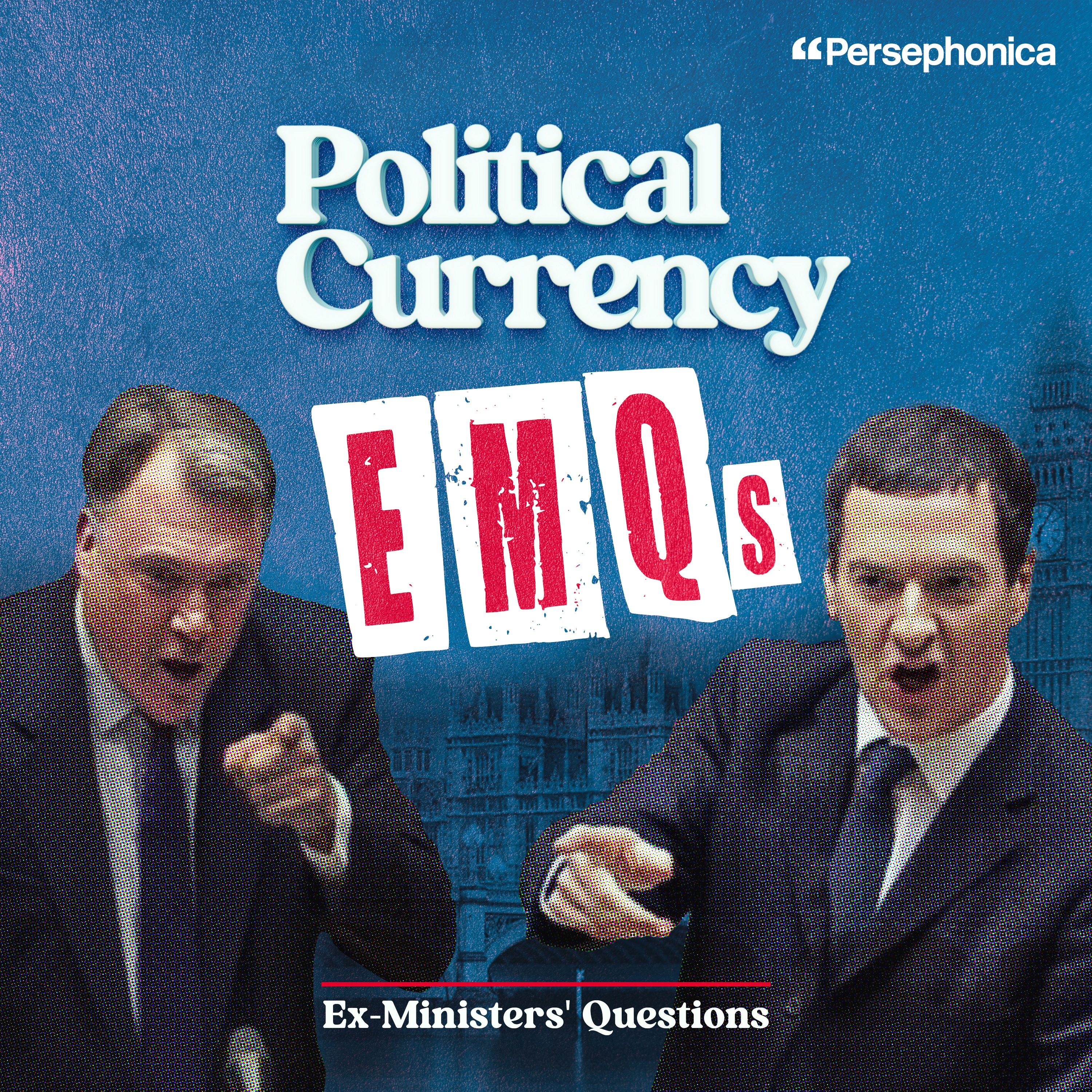
- EMQs: Who can solve the business rates debacle?
In short
Hosts: Ed Balls and George Osborne
Description
Former Chancellor George Osborne and Shadow Chancellor Ed Balls discuss economic and political decisions affecting the nation's finances, providing insights from their experiences in government.
- Introduction
- Discussion of personal health during government tenure, prompted by a question from fellow ex-minister Edward Timpson.
- Reflection on maintaining physical and mental well-being in high-pressure political roles.
- Physical and Mental Health of Ministers
- Key Points:
- Political life is consuming, leading to physical neglect.
- Importance of time management and controlling one's diary to maintain mental health.
- Both hosts shared their experiences of balancing family life with political duties, emphasizing the protective element it provided against political burnout.
- Business Rates Reform
- Question posed by Shevaun Haviland, Director General of the British Chambers of Commerce regarding the ongoing issues with business rates.
- George's Insights:
- Business rates serve as a significant revenue source for the government, complicating reform efforts.
- Historical reluctance from governments to address the issue due to its complexity and potential revenue loss.
- The necessity of a strategic approach to reform rather than temporary fixes.
Written by AI. May contain mistakes.
Chapters
0:45
Upcoming Engagements and Insights
Discussion about Ed's upcoming trip to Versailles and George's travel to Davos, including the importance of attire at these events.
3:13
Mental and Physical Health in Politics
A candid conversation on the impact of political life on mental and physical health, including personal anecdotes from Ed and George.
“On the main podcast, we talked about Ed getting a tease made for Christmas and we compared it to...”
5:48
Business Rates Reform Discussion
Introduction of a question regarding business rates and a discussion on the historical and current challenges of reforming them.
“I think there's a whole separate question of what you do when you leave politics.”
11:10
Challenges in Business Rates Reform
Further exploration of the complexities and implications of reforming business rates, including potential winners and losers.
“It's Siobhan Haviland here from the British Chambers of Commerce.”
14:01
Challenges in Business Rate Reform
Explore the complexities of reforming business rates and the implications for various stakeholders.
“although you can always be careful what you wish for because, you know, there'll be some winners amongst the BCC members, but there'll also be some losers as well.”
18:06
The Difficulty of Simplifying Taxation
Understanding why simplifying taxation can create unintended consequences and complexities.
“you have all these lines to take prepared for you by the Treasury.”
19:12
Trump's Foreign Policy and Business Insights
Analyze how Trump's business background influences his foreign policy decisions.
“It's Christine Murdoch here from Kilcragan in Scotland.”
22:55
Japan's Economic Situation and Debt Crisis Concerns
Discuss the implications of Japan's national debt and potential crises.
“publication of The Art of the Deal, which, as you say, is where Donald Trump created his own mythology.”
28:00
Japan's Economic Stagnation: Causes and Consequences
Explore the complexities of Japan's prolonged economic stagnation and its implications.
“And so far, your worry, this could be the moment of the debt crisis or the moment when everything explodes hasn't happened.”
31:28
Transition to a New Question
The hosts transition to a listener's question about ministerial cars.
Show all 12 chapters
31:43
The Politics of Ministerial Cars and Austerity
A discussion on the realities of ministerial cars and political promises.
“I recently read that David Cameron wanted cabinet ministers to stop taking chauffeur-driven cars and for them to stop carrying red boxes with them.”
35:35
Reflections on Government Logistics and Security
A light-hearted exploration of the logistics and security involved in government transport.
“I used to sit in the front when I was going home.”

Ask about this episode
Get the gist, explore an idea or ask about something said.
 Claude
On Political Currency, what are the key points of this episode?
Searching your listeningTranscript
Automatic transcript. May contain errors.
0:00The Chancellor of the Exchequer. Getting a lesson from the Shadow Chancellor on how to balance the books is like getting a lesson from Dracula on how to look after a bloodbath. Ed Balls. A steady-as-she-goes budget. What kind of ship does he think he's on, the Titanic? They're married, Celeste. Welcome to EMQs from Political Currency with Ed Balls and George Osborne.
0:27hello welcome to ex-ministers questions emqs and you know while i've got you know a humdrum couple of days here in rainy london ed is going to jump on the train and go to versailles the sun king is returning to his palace i'm going to the trinal palace hotel for the franco-brittish clock which is a okay explain what that means in english it's an annual meeting between people from business politics media and um civil society which has been going on for kind of decades where um british and french come together and talk about what's going on in the world it's always really interesting lots to read on the train on the way over so i'll get up to speed next week on the podcast i'll be able to talk about what's happening in french politics with a little bit more kind of inside because of this trip and you i think are also getting on a not a us-style but a plane when you go off to davos do you go in your tech bro hoodie oh the one i'm wearing right now yeah yeah no i think i'll probably wear a suit actually well maybe not for the not front of the flight you should be i think you should be authentic i think you know now you need to wrap up i mean i know because you've not really been to davos it's actually a ski resort so you do have to wear pretty warm clothing one of the classic mistakes is actually to turn up if you're a man turn up in a suit with the black leather shoes and then you see these people the sort of minister from this or that country and they spend the whole week sliding around walking because you can't you can drive from one place to another but donald trump's coming to davos so all the roads will be completely frozen literally in terms of the weather but also metaphorically because of the traffic and it's a tiny ski resort and so you have to walk everywhere and you don't want to be sliding around in your black shoes so you need uh you need some you know sort of stylish ski boots that aren't you can't wear those big moon boots because you look a bit like a wally you need something that kind of sort of somewhere in between no but i think the great thing but this is a key question don't worry it's a key question of all people when the global elite goes to davos there's always a conversation about clothing the great thing though about you uh george is and i can see in front of me now that the great thing this stage of your life yeah you don't mind looking like a wally in order to be authentically who you are.
2:45And that is okay. You can't just insult me like that. I just did. And you were going all the way to Davos, not to ski, but just to do the apri. Yeah, that's true. With the global power elite. Do you remember Mr. Ben? He was telling us on the podcast. What did it, 52 Festive Road? Suddenly, as if by magic, the shopkeeper appeared. and said, why is George Osborne in that hoodie? People will be wondering what on earth we're talking about. On the main podcast, we talked about Ed getting a tease made for Christmas and we compared it to... Which I should say is not a person, it's a machine. Yeah, exactly.
3:24Yeah, well, there may be in Versailles you actually get a real tease made. There's quite a lot of Davos, I don't know. No, and Mr. Ben was a great show, wasn't it? I don't know why they should revive it. Mr. Ben, it was a cartoon, I guess in the 70s, certainly in the early 80s. he would go into a shop, essentially a costume shop, and each week he would dress up as a fireman or a policeman. And then would go through the back door of the dressing room into an adventure. A bit like going through the wardrobe in The Lion, the Witch, and the wardrobe in the Narnia books. We should get on with this podcast because I think you've got...
3:55I'm still recovering from the insult. No, I think it's okay. It was actually meant supportably. Oh, right, okay. Oh, well, that's okay then. No, no, the whole point is that it's okay to be who you are. And if that is who you are these days, and all the words. You're just digging me in. Look, talking of physical and mental crises, which George is obviously in the middle of one at the moment, our first question comes from a fellow ex-minister. Hi, George and Ed. It's Edward Timpson here. And as a fellow ex-minister, I wanted to know how you both kept yourselves physically and mentally fit whilst in government.
4:29Now, I know, Ed, that you ran the London Marathon with me one year. Running the country can seriously take its toll on your physical and mental health. potentially affecting your decision making and perspective. So how did you stay sane and svelte or not, as the case may be? Well, it's great to hear from you, Ed. Ed was a really good minister who brought actually a lot of knowledge about mental health issues and prison issues because his family have long been involved in helping foster children from difficult homes, helping people who've been released from prison find their place in society again.
5:04And of course, his brother is a Labour minister. Ed was a Tory minister. His brother is the prisons minister, isn't he, in the government. So the Timpson family doing their public service. And he asks a good question, didn't he, about kind of mental and physical health while in office. I would say, I don't know whether you agree, I think quite a lot of the challenges come when you leave office. I think for a lot of people, it's such a hole in their life when they stop politics because it's so all-consuming and it's often something people have been ambitious about doing from a very young age. And suddenly they kind of lack a kind of purpose.
5:41And I've spent much of the last 10 years not just finding a place for myself outside politics, but actually giving lots of advice to people who've either been fired or lost their seat or retired from politics. I think there's a whole separate question of what you do when you leave politics. But while you're in office, I would say two things. I mean, it is quite hard because you're so busy and the kind of political life is quite unpredictable. It's quite hard to find space for physical exercise, but it is important. It is really important. And I was definitely on and off on that during my chancellorship.
6:15But when I was on the physical exercise, it was a lot better. But I wish, you know, with a bit of hindsight. As chancellor, you became much more kind of svil. Yes, but that was because I was actually in pretty bad, you know, after a couple of years, I was, you know, I was young. I was in my late 30s and suddenly I was becoming overweight. I was not fit. I wasn't getting out. And, you know, it's not a good place to be. And as I say, in some degrees, I was lucky that I was quite young. Because I think if that all happened to me 10 years later, it would have been even worse. So I made a kind of big mental effort to get back into shape.
6:46On the mental health, I mean, this is hard and everyone's different. One thing I am a great, great advocate of is that if you are a senior politician, and this includes the prime minister, you have got to be in control of your diary is the single most important thing you have to get right and i know people say well what are you talking about because you've got you know a country to run and all this and billions of pounds you've got to make decisions on and so on but your time is ultimately the finite asset and there are always if you're like chancellor or prime minister or cabinet minister there or leader of the opposition there are like so many things you could be doing every single day you're invited to so many things and a lot of them you know would do you some good to do you know if you went to the big dinner in Birmingham of the motor industry that would be a good thing to show up at and they would say oh you know this guy cares about the motor industry but you cannot do all those things and the politicians I saw who lost it are the ones who are physically exhausted and leave no time to think what am I actually trying to do with this job what are the important policy decisions I've got to make so that kind of time I mean I remember David Cameron was accused of chillaxing.
7:56That was the phrase. But what that was, was kind of downtime, thinking time. Yeah, sometimes playing like a game on his mobile phone. But it was just a way of kind of unwinding and creating balance and space. And it's those politicians who often are better and more successful. And it was interesting when I read Tony Blair's more recent book on leadership, not his autobiography, although it's also in his autobiography, which actually on the shelf behind you i can see in both cases talks about the absolute centrality of controlling a diary and so i would say to ed the best way to try and preserve at least your mental health maybe your physical health is to create space in your diary we both had a similar experience and ed mentions me running the marathon i ran the marathon three times like the shadow chancellor but not when we were in government and the 13 years i worked in government as an advisor and then as a cabinet minister were all in my 30s you know really from the age of 30 through to early 40s i think that has two advantages honestly i did very little exercise i there wasn't time to play football i used to play in a football team before we went to government in 97 i didn't go to the gym but you can sort of get away with that yeah the old cheeky fag the old cheeky fag as we know it's literally it's on film you were recorded by the bbc As we know from TikTok, you're absolutely right.
9:19But I think if you or I had been cabinet ministers in our 50s into our 60s, it would be impossible to live the lives that we led back then. You'd have to think more about him, exercise and probably diet. the truth about being in government, it's just inevitable that you eat a less good diet, because so much of stuff is on the move or at events you go to. There are so many drink receptions, but also meetings you have late at night with people, very hard to be disciplined. I think you can sort of get away with that in your 30s. I couldn't get away with that now, I know. But the other thing is that we both had young children when we were in big jobs.
9:57And on the one hand, that is really challenging because, you know, I think it was tough for our kids all under 10 when their mum and dad were both in the cabinet. On the other hand, it meant that our time, protected time, as you say, done through your diary, had to be focused on the children. And we didn't spend Saturdays and Sundays going off to parties here and events there and dinners and whatever. We didn't allow politics to consume our lives seven days a week, even when we're in the cabinet, because that would have just been impossible for the family. And I think actually having young children, as I said, it may be tough for them, but for us, that kind of kept us sane and kept our feet on the ground and kept us doing ordinary things.
10:40And I think that was very important for my mental as well as kind of physical health. And again, that changes. And so as you get older and you see people who become cabinet ministers in their 50s and their kids are older, on the one hand, you know, it's easier for their kids to deal with it. But it's also harder for it not to become totally consuming. And in the end, that probably is bad news. And by the way, I totally agree with what you said about leaving. But I'll not reflect upon that now. Let's go on to our next question. Hi, Ed and George. It's Siobhan Haviland here from the British Chambers of Commerce.
11:14I'm a big fan of your podcast. So the topic of business rates has been hitting the headlines in recent weeks. Our latest quarterly economic survey shows that a third of firms are worried about business rates, and that's the highest level since 2017. Look, news of a carve out for pubs is, of course, welcome. But there are many other firms across the business community, particularly in hospitality, who are suffering. Do you agree that it's time for the Treasury to rethink its plans and deliver a root and branch reform of business rates? And why have successive governments not been able to deal with this issue?
11:55Thanks. So thank you to Siobhan for that question. Having the Director General of the British Chamber of Commerce sending us a question is really good and helpful. And interestingly, since she sent the question in, we already know that Rachel Reeves is widening the scope of the U-turn she's doing, the compensation package she's looking at from pubs, we think, to wider hospitality. But there is a big question Siobhan is asking here about business rates reform because it's one of those things, it's a bit like social care reform. It's been talked about for a long time and never done. And I think there's a number of reasons for this.
12:30One is that it has become such a cash cow. It's such a generator of revenue. I think we're talking 27, 28 billion pounds a year in revenue into the government from business rates. It's also now increasingly important for local government as well because they take a big cut of that revenue. It's also the case that it's complicated and become more complicated, more necessary to think about reform, but harder as you see that shift from place-based retail and hospitality to online shopping and the way in which the high street has been challenged. And it's also the case in any reform. If you can spend money on a reform, it's easier to do a principal reform.
13:15Whereas if you're trying to protect your revenue base and to raise revenue, then it's much harder to deal with the fact that any sensible reform will have winners but also losers. And maybe as well as that, it's never quite got to top political salience. Maybe it's actually closer to top political salience because of what's happened with the pub since the budget than it's been for years. and all those things explain why governments have talked about big reform and then actually sort of ducked it and tinkered and fiddled and that isn't a good thing and as i said on the main podcast maybe rachel reeves as she broadens from pubs to hospitality maybe this will be her moment to say well there's some immediate things i'm going to do but let us set out a more strategic approach to business rate reform i think that would be welcomed by british chamber of commerce members although you can always be careful what you wish for because, you know, there'll be some winners amongst the BCC members, but there'll also be some losers as well.
14:12And that's what makes it hard. Thanks, Sean, for your question. And it's quite an important tax for the Treasury and for local government. Raises, as you say,£26,£27 billion a year. So you can't just get rid of it. And therefore, what are you going to do to make good that revenue were you to replace it? You can either say, well, we're just going to look at how, you know, rates are charged on physical properties. So if you're going to retain a kind of physical property tax, there's a great advantage in physical properties, which is they can't be moved. You know, you can go and find them and inspectors can see them.
14:44So, you know, I remember there was lots of kind of talk of like, well, you know, we should charge less for pubs and more for, you know, Amazon warehouses and things like that. it's actually really difficult to do in practice to work out what's a warehouse that's you know part of a big american tech company or what's actually just a small warehouse on an industrial state on the edge of a town where the local mechanic is doing their work you know when you actually think of like how am i going to not tax shops but tax online retailers it's really hard if you go after the warehouses you can't do that so then you go okay let's stop all this sort of taxing of physical premises and let's somehow tax the online businesses.
15:26And the problem with taxing the online businesses is really twofold. I mean, the first is, OK, you know, what are you going to do? Are you going to tax their revenues? You know, a lot of these companies don't post profits or don't post profits in the UK. You know, if you're just going to do it on their revenue, you could be taxing loss-making businesses and putting them out of business, particularly in a recession. And by the way, the tax is very likely to be passed on to consumers. And so it's a tax on the general population, which, of course, business rates are as well. They're both indirect taxes on the population.
15:56And then if you want to go after the big American companies, you start to run into the United States of America, who says, well, don't you dare tax our companies. By the way, we're going to tax your companies. You know, we're going to tax BP that does business in America. We're going to tax AstraZeneca, who sells drugs in America, and so on. So, you know, then you get to the kind of core of the international tax regime. Now, there were attempts and there have been successful attempts to create more international cooperation on that, although the Trump administration is just sort of backing off.
16:27So you kind of end up, I mean, I went through several attempts to look in the early stages of let's try and get rid of business rates altogether. And I had six years at the Treasury, so I had a long time to do it. And we did this twice and did all this work. None of it leaked. And you just come back to it's just really hard. And it's not obvious that you won't be creating as big a problem for yourself elsewhere. Council tax reform is the same. Right. Yeah. Good example. And so then you end up, you get to your budget and say, well, I've got to do something on business rates. And you end up with like, let's give a discount for pubs, let's say.
17:01And it's all fiddly and it often makes it more complicated. Or a temporary relief for the pandemic. Yeah. Or, you know, there was a really good, well-intentioned Gordon Brown scheme, which was, you know, let's have rate relief if you invest in depressed areas. And then that led to a kind of tax scam where suddenly people were moving their hedge funds headquarters, just no one was working in it, to some depressed area. You know, it's really complicated. And I always think these problems is, you know, you say this about social care as well. When people go, oh, these politicians, why can't they solve these problems?
17:36The reason why some of these problems persist is because they are very difficult. They're not easy to solve. And you will create a lot of losers in your solution. If you think it's straightforward to get rid of business rates or dramatically reduce them, you've either got to cut public expenditure by£26 billion. That's not straightforward. Or you've got to find someone else to tax for£26 billion. And ultimately, as economists will tell you, all taxes fall on individuals. It's also the case when you're changing an existing system, you have all these lines to take prepared for you by the Treasury.
18:13You know, on average, businesses will gain nine out of 10 will be better off. But the problem is... It's the one out of 10. The pub in your constituency, which is much worse off, is the one which then catches the headlines and the special cases. Was there some pub? I remember visiting a pub in your constituency on a campaigning visit. But I don't know why that would have been the case. Maybe it was because when I was shadow chancellor, maybe it was like their beer duty had gone up or something like that. Anyway, I remember getting some pub. but it was on the edge of a motorway or the edge of an a road big busy uh the um the m1 the m62 and the a1 all intersected it was one of those it was one of those big pubs with a kind of big children's playground type thing and uh on the edge of a big anyway luckily i've wiped that from my mind we'll take a break so have i as you can hear we'll take a break and be back in a moment
19:12Welcome back. Our next question comes from Christine. It's Christine Murdoch here from Kilcragan in Scotland. I always smile when people say they love the podcast. Why would we waste hours of our life listening if we didn't enjoy it? I'm not a gold subscriber nor a Kitchen Cabinet member, so will my question be answered? We'll soon find out. It's this. Is Trump's foreign policy shaped by his experiences in the boardroom where a strong company can take over a smaller, weaker one? I look forward to your answers many thanks bye bye well first of all you ask an excellent question Christine good to hear from you from Scotland why is she not a kitchen cabinet member though because she's enjoying it anyway a bit she'd enjoy it more if she was a Christian because she'd get the newsletter on a Monday we need to upsell her she'd get a political currency mug look Christine we love the fact you love the podcast but honestly join us yeah together we have a world to win yeah I would definitely recommend a gold subscription and if you like that for a week or two upgrade to a kitchen cabinet members of Christian.
20:09Anyway, her question. And you would have got an e-Christmas card from us. You would have done. Digitally signed by us. Hand digitally signed by us. Well, can we just say to you, Christine, Happy New Year. Yeah. Think of that as your digital New Year card from us anyway. Trump's foreign policy experience. Strong companies take over smaller, weaker ones. Well, I mean, unfortunately, the history of the world will also suggest, Christine, it's not just, you know, Donald Trump's experience in the boardroom. It's the experience of geopolitics and the history of the world that larger countries get to push smaller countries around.
20:40Now, that's a big generalization. Sometimes smaller countries, you know, think of Singapore, Switzerland, maybe Abu Dhabi, you know, can have an outsized influence on events. And there have been long periods of history when large countries have very little impact on global events. I mean, it remains a bit of a mystery why the big countries of South America don't have a kind of bigger overall global impact. But yeah, OK, I would say, you know, it's a broad rule of human history that stronger, larger countries tend to push the smaller countries around unless the smaller countries kind of form some kind of alliance.
21:15It's true that Trump, I think, doesn't care for any of the attempts that have been created to mitigate that feature of human history. So he doesn't really care for the UN or the IMF or even the Western alliances. doesn't seem to care very much for NATO and the G7 and so on. And those are all attempts by stronger countries, principally the United States, to say, you know, we will allow some space for the smaller countries. What he does bring to politics, which is quite unusual, is this sort of very, very transactional business approach. You know, and it's set out in his book, The Art of the Deal, which was the thing that launched him onto the public stage when he was a business person, which is, you know, go in hard, ask for a big amount, and you won't get the big amount, but you might get half of it.
22:06And so if you take something like Greenland, it wouldn't really occur to most American presidents to say, I want Greenland to become the 52nd state or the 51st state of America. But he might think, I'm going to ask for that. I won't get that, but I may get a big US military base in Greenland. And that approach, which is very disruptive, you know, rubs up against the way we've done politics since the second world war international politics i think is because he's not been someone who's sort of grown up in the political governmental world all that says he's now a pretty experienced politician because you know he was president of the united states in a previous term and so on so i don't think you go on saying he's the outsider but he certainly continues to bring that unique approach to his governing the interesting thing is that next year is the 40th anniversary of the publication of The Art of the Deal, which, as you say, is where Donald Trump created his own mythology.
23:01And it is all about the power dynamic. I would be very surprised if any business schools teach using The Art of the Deal as a business manual. I'd be surprised if it's seen as state of the art in terms of business strategy, but it is absolutely the story he wanted to tell about himself. If you don't want to pay your bills, don't pay your bills. And if you're big enough, you can get away with it and the big taking over the small. I think two things. First of all, one, you are right to talk about alliances. In business, when you're a big company taking on a small company, the chance of the small company working in concert with other small companies is much less because it's a competitive world.
23:43In the case of Donald Trump taking on Little Greenland, well, he is as a consequence taking on Greenland and Denmark and the European Union and the large majority of NATO countries. And so therefore, those alliances are more complicating for that approach if you try to translate it from the business world into the foreign policy world. But the other thing in the art of the deal, which he says, is don't fight on too many fronts, that you need to know that you're really focusing in the areas where you can win. That's not Clausewitz on war. I think going into 2026, I certainly wonder whether Donald Trump is at risk of fighting on too many fronts.
24:23If you look at polling, including, by the way, the American opinion polling as to whether Donald Trump should be trying to take over Greenland, let alone using military force to do so, and that is radically unpopular in American politics at the moment amongst the public. Interestingly, the... Did you see it was a bit pathetic? It was presented as European Union sending a military force to establish its sort of presence in Greenland, but it turned out to be like two officers from the German army and like someone from the Italian army or whatever. I mean, it was like pretty lame, not the Italians, it was someone.
24:58I don't think the White House situation room would be overly perturbed by the Greenland defense force. No, although, you know, one butterfly's wing can, flapping can cause consternation around the world. Tornadoes on the other side of the world. And therefore, you know, maybe they thought they didn't want to kind of, you know, overdo the provocation. Thank you for that fabulous question, Christine. Our next question is for Michael. Hi, George and Ed. You mentioned over Christmas that you enjoy knowing where people are listening to you from. I've kicked the new year off by visiting Tokyo. I think that you mentioned the election of Sanai Takeichi on the podcast last year.
25:37My understanding is that Japan's national debt is now 250 % of GDP. This year, Takeichi is looking to pump a lot of money into the economy on the fiscal side to encourage growth, whilst Governor Ueda is looking to increase interest rates to control inflation and encourage foreign buyers of JGBs. Many commentators are worried about either the gradual decline of the Japanese economy or a sudden debt crisis caused by borrowing becoming unsustainable in a manner similar to the Greek debt crisis. Do you think that either of these are likely? And is Japan an early warning signal for Western economies with aging populations?
26:33Thanks. yes michael good to hear you are listening in tokyo that is great one of my favorite places in the world japan's very cool there's an amazing uh we should we maybe should come back to this on the main podcast japanese politics we don't often do that but it's a very important member of the g7 and they have their first female prime minister first in their history and she is on a bit of a roll and i think she's just called a snap election hasn't she and she She is the Iron Lady of Japan. By the way, this is all me trying to avoid having to pronounce her name. But I'm going to... Takaichi.
27:08Takaichi. Sanae Takaichi. And she's become such a hit that I was reading that there are restaurants that serve special Sanae because she's told people what she eats and you can eat what she eats. And anyway, she's become a bit of a cult. And that's obviously unusual because there'll be one or two exceptions in my lifetime. But generally, Japanese prime ministers are somewhat anonymous on the global stage. We used to laugh that there were so many Japanese prime ministers, but there have been so many British prime ministers, I don't think we can laugh anymore. But anyway, coming back to your question, I mean, maybe, Ed, you'll take over here.
27:39But I think the big answer here is that the Japanese public invest in Japan much more so than the British public. So Japanese savings basically allow them to run larger budget deficits and debts, right? That's right. And I think, Michael, people have been asking the question you're asking here pretty much repeatedly now over 30 years. And so far, your worry, this could be the moment of the debt crisis or the moment when everything explodes hasn't happened. Just to put some context on this, we talked in the main podcast about interest rates in Britain and America being over 3%, historically really quite low coming down, but not expected to come down much below 3%.
28:20Japanese interest rates last year went up to 0.75%, which was the highest level they've been for three decades. This is an economy which has been sort of stuck in not an inflationary cycle, but deflationary cycle for three decades. And the reason is, as you said, the Japanese population saves so much as it ages, doesn't spend. And the only way the Japanese economy has been able... And it's monoethnic, so it doesn't have immigration essentially increasing its population even as the original population ages. That is right. Now, normally in an economy where you have deflation, what you would do is you would cut interest rates.
29:02But interest rates, as I just said, have been historically so low in Japan, it's what Keynes called a savings trap. Basically, you get stuck in a low inflation, low interest rate equilibrium. You can't get out of it. And the only thing you can do is to try and use fiscal policy to spend more. And that's what the Japanese have been trying to do for 30 years, to try and get their economy to grow, as a result of which you've seen this big rise in government debt, as you say, Michael, up to 250%. But the government borrowing is the counterpart to huge private consumer saving, which is why overall things are still in balance.
29:39If consumers suddenly decided to start spending like mad, then suddenly you'd have a big rise in interest rates. You might have a debt crisis. No sign of that happening so far. Maybe 2026 will be the year. And I think the interesting thing politically in this election, as you said, we'll come back to the politics. I mean, she's saying she's going to spend more in order to try and get the economy moving despite that high level of debt. Do we think there will be a Japanese prime minister who will decide that opening immigration to ease that population pressure will be the answer? Because that is the economically sensible thing to do, but not on the Japanese political agenda.
30:17So at every stage for 30 years, people have asked a question you've asked, Michael. and at every time in the last 30 years it's turned out not to happen and that japan has carried on in this sort of stasis type situation it's been in and i think if you had to guess in 2026 you'd say whatever the result of the general election things are unlikely to change but you know when trump wrote in the art of the deal his other thing was he was complaining bitterly about japanese manufacturing the trade surplus that japan had with the us so it's funny because China has to a large degree sort of replaced the role that Japan played in the 1980s.
30:56China would not have been, it would have been barely mentioned in his 1987 book, barely mentioned in the 1988 US presidential election. It was all about the Japanese threat. And before the crash in 1990, the value of the imperial palace land in the middle of Tokyo was higher than the valuation of all land in the whole of California. then you had this real estate crash stock market crash and japan has been stuck in this um situation for the following 30 years and they're still not out of it and it doesn't look like things are going to change let's take a break and we've got time for one more very quick question
31:43welcome back our final question is from hamel and this has been voiced by one of our producers Hi Ed and George. I recently read that David Cameron wanted cabinet ministers to stop taking chauffeur-driven cars and for them to stop carrying red boxes with them. How did chauffeur-driven cars work? Did you get a choice or was it always a Jaguar? So I think this is a question for you to start. Well, this was a classic thing where you say stupid things in opposition, which you then live to regret in government. Things you say in opposition is we're going to have a much smaller Downing Street. We're not going to have nearly as many political advisers.
32:13We're going to get rid of the grace and favour homes. These are the things you say in opposition. And then you get into government, you go, well, I quite like the homes. And actually, Downing Street's a bit understaffed. And these departments could do with a few more political advisers. And if we don't charter a plane, it's going to be impossible to get to the big summit. They were going to cancel the government plane. Anyway, a version of this was the promise before 2010. Remember, in the context of we were saying there had to be some really difficult decisions on public expenditure and there was going to be austerity and so on.
32:43But we would, you know, you have to show you're prepared to wear the hair shot yourself. And so we were going to cut the use of ministerial cars. Steve Hilton was a big advocate of this. You know, as many people pointed out after the election, the great advantage that Steve has was that he wasn't a minister, so he didn't actually have a car to lose. And in fact, he could use the Downing Street cars. There's a fleet of cars that serve the... Was he the guy who walked around barefoot? He did. How's he doing becoming governor of California? He's leading the polls in California to be the next governor of California.
33:14We should come back to that soon. I mean, he is... I mean, it's quite tight, and I wouldn't say anyone's got a big lead. I was in California last week and I did get an update on the Hilton campaign. So we can maybe come back to that. Anyway, the answer is what happened was it used to be that every minister had a car back in the 80s and 90s. And they'd have a government or before and they'd have a government driver and so on. And then what happened after 2010 was that the junior ministers, a department would have like, which might have like five ministers, would have two cars. There was a sort of pool cars.
33:45And, you know, there was you had to sort of book the cars and share them with other people. Although you had your own cars, Chancellor. So there were two things. One is the senior cabinet ministers have their own cars. If you had police protection, then you get your own car. Was it a Jaguar car? Well, I had a Jaguar. I had Alistair Darling's Jaguar. But then I said, well, OK, I want a British car. Interestingly, the armour-plated cars. The Jaguar is a British car. No, no, no. The armour-plated, mine wasn't the kind of armour-plated cars. I think BMW were the only people who made them, so that you couldn't have a British car.
34:13I thought, you know, why do I have to have a Jaguar? couldn't I get a Land Rover like a Discovery? And I went on a visit to Jaguar Land Rover in Birmingham and I said, could I get one of your cars to drive around in? Right. And, you know, it'd be a sort of essentially a sort of advertising Britain, but also much nicer for me. And so, yeah, they said yes. Anyway, and so for a while I was the only one in the cabinet who had this nice Land Rover, but everyone then kind of cottoned on saying, oh, George's car is quite a lot nicer and also nicer than all these Priuses we're being told we have to drive because of climate emissions and so on.
34:45And so I noticed by the time I stopped in government that quite a lot of people have got their hands on a Land Rover discovery. Interesting insight, which I bet you don't know, and I bet very few of our listeners will know, but there's a big gender divide on this subject. If you are a woman, foreign secretary, home secretary, and you have to get in and out of an armoured Land Rover, much, much harder. much much harder to get out in a sort of delicate way because it's so high up so actually ask priti patel or theresa may what they think of um the land rover suela braver i'm sure as well they much prefer the um armored saloon cars i had a maggie maggie thatcher had a jag didn't she she had a jag i had a jag although it was it was an environmentally friendly jag you didn't have two jags no i only had one jag my driver was called steve and he was absolutely brilliant and we'd get in the car on the way home.
35:40I used to sit in the front when I was going home. If you had to work, you'd sit in the back, sit in the front of the way home and we'd put on magic or smooth. The people's man. It's such a relaxing journey home. The thing I think people often forget about cars is that it is... They're essential. No, but it's part of your office. I know you have to go to work on the tube, general public or the train, but we politicians, it's very important for our work. But I think often, if you are a government minister, you're on the phone and it's not possible to make those calls on the tube or in a taxi. So part of the office.
36:14Anyway, I'm a bit out of date for how it works now. So it's interesting. There's no one parked outside your house most days. Yeah, but because of security, it's unusual. The biggest threat to the Foreign Secretary is ours, but we're not having him in the car. No, I don't quite know how the government car service works anymore. So I think we're a bit out of date. Leave my husband behind. That's how the government car service works. Well, that is. you don't get one at three in the morning to take you to good morning brunton i get in a car yeah an uber or whatever but it's not it's not armored protect you from the fans look basically the tease made goes off yeah i get my tea 3 45 get in the car read newspapers on my ipad love it i don't need protection we are done thanks for your question hamel that was a sort of rambling and incoherent set of answers but we enjoyed it that's all we've got time for in this episode of emqs yeah do keep sending us voice notes emails questions at politicalcurrency.co.uk and do make sure you review the show because it helps us reach more listeners and we'll be back next week um i'm off to paris george is off to davos and we'll report back next week actually i think you might be doing the podcast from davos yeah we'll see your sort of sunny global elite well these two members of it will be scattered it'll be it'll be in a trashed room with room service everywhere empty bottles of champagne george osborne that might be the trianon Palace just outside Paris.
37:36That is not the hard-working technocrats of Davos. Get your hoodie on. It's time to record. See you next week. See you then.
37:52Thanks for listening to Political Currency. This has been a Persephoneca production.
From the publisher
Fellow ex-minister Edward Timpson sends in a question this week, asking Ed Balls and George Osborne how they stayed mentally and physically healthy during their time in government. The pair share their guide for what all ministers should do to remain fit in and out of office.
Shevaun Haviland, Director General for the British Chambers of Commerce, then asks how the ongoing issues with business rates are solved permanently. George explains why this tax is one that causes issues for every government, and the problems inherent to reforming it.
A listener sends in a question from Tokyo, allowing Ed and George to delve into the decades-long standstill of the Japanese economy and the cult-like following new prime minister Sanae Takaichi has gained.
Finally, George explains why it’s easier to make promises in opposition than stick to them in government, revisiting plans by the Tories to downsize government cars before the coalition, and why it didn’t work out that way.
We love hearing from you, so please don’t forget to send all your EMQs to questions@politicalcurrency and make sure to include a voice note of your question.
Thanks for listening. To get episodes early and ad- free join Political Currency Gold or our Kitchen Cabinet. If you want even more perks including our exclusive newsletter, join our Kitchen Cabinet today:
👉 patreon.com/politicalcurrency
Please note: Kitchen Cabinet is only available via Patreon.
Credits:
Research: Sam Burton
Production: Caillin McDaid, Caitlin Hanrahan & Sam Psyk.
Video Editor: Avi Asher
Executive Producer: Ellie Clifford
Political Currency is a Persephonica Production and is part of the Acast Creator Network.
Hosted on Acast. See acast.com/privacy for more information.
More from Political Currency
All episodes

We use cookies.They keep VO running smoothly and help us improve it. Privacy policy