
 Ask ChatGPT


- Podcasts
- Political Currency
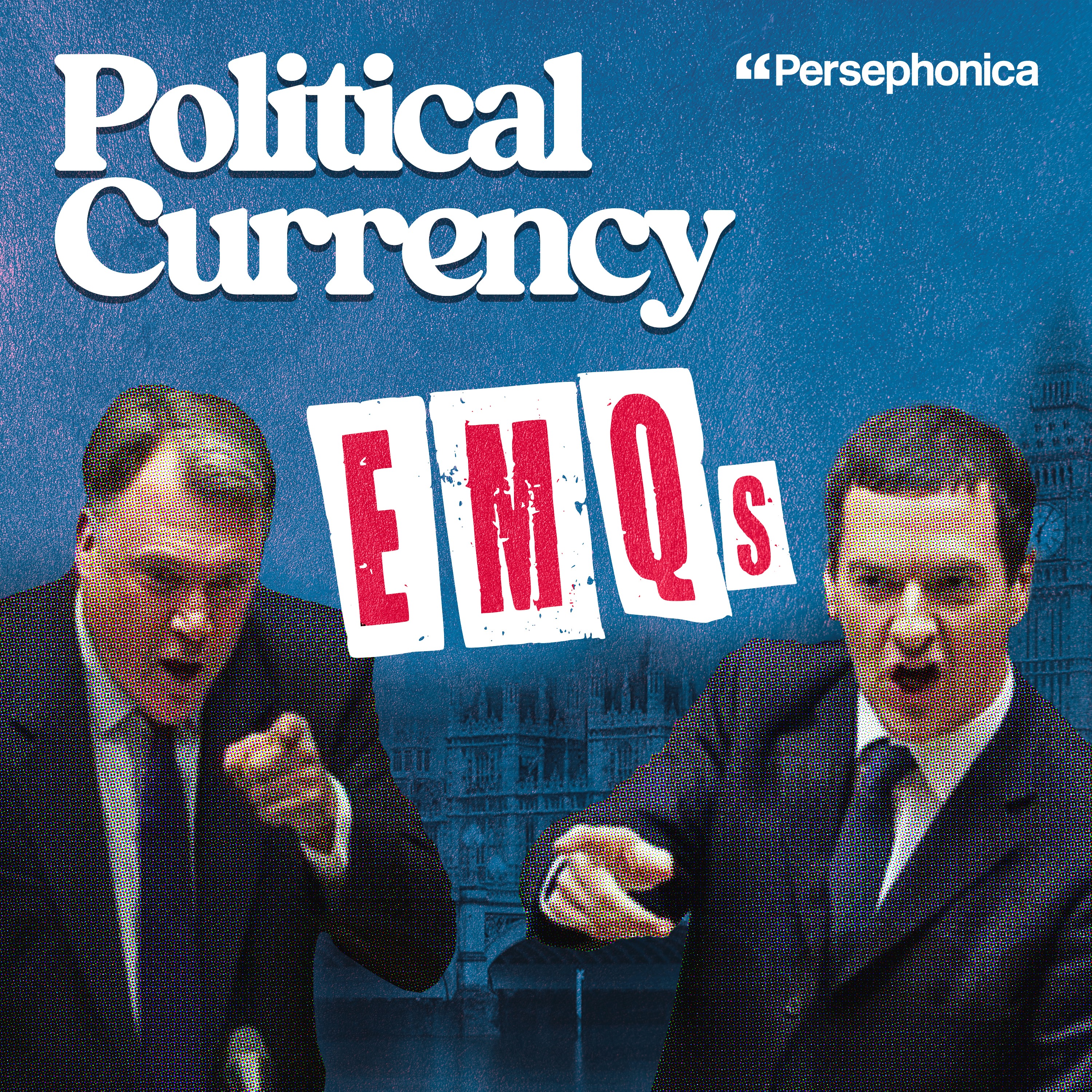
- EMQs: Will the AI bubble burst?
In short
In this episode of Political Currency, hosts Ed Balls and George Osborne discuss the implications of artificial intelligence (AI) following the AI Impact Summit. They explore how their past experiences with the dot-com bubble and the rise of social media can inform current governmental approaches to AI. The episode also touches upon the controversial appointment of Antonia Romeo as Cabinet Secretary and the broader issue of misogyny in politics. Additionally, they examine the UK’s investment landscape for deep tech startups.
Written by AI. May contain mistakes.
Chapters
2:30
Celebrating Podcast Success
Ed and George celebrate their Political Podcast Award win and receive gifts.
“This is the first time back in our studio since we won our Political Podcast of the Year award.”
6:12
Question from Verity Harding
Verity asks Ed and George about lessons from past technological changes.
“I was at the summit too, and although I was very sad not to see George, I did get to interview Rishi Sunak on stage about his experiences dealing with AI as Prime Minister.”
6:50
Lessons from the Past in AI
Ed and George discuss insights from their experiences with technology in government.
“And let me start with the history and then personal experience in government and then come on to kind of the current challenge, which I think is much greater than I faced or I dare say you faced.”
12:30
Government Branding and Identity
A discussion on the naming and branding of government departments.
“So burying your head in the sand is not going to be the right approach.”
14:02
Branding in Government: The Importance of Unified Identity
Explore the significance of cohesive branding in government services and initiatives.
“So is he right, George, that you took a sort of more narrow, single branding, unified approach?”
23:50
Misogyny in Politics: Addressing Gender Bias
Discuss the ongoing issues of misogyny in politics and the importance of accountability.
“So I think Emma makes a really important point and I know that very many people will agree with her and this is kind of difficult because we don't know the details of what's happened in the particular case of Antonio.”
28:05
Analyzing the Cabinet Secretary Appointment Controversy
Discussion on the appointment of the Cabinet Secretary and its implications.
“The recommendation was not Antonio Romeo.”
31:33
Tamara Finkelstein's Question on UK Investment in Tech
Addressing Tamara Finkelstein's concerns about funding gaps in deep tech startups.
“We are very optimistic about what the UK can achieve with the extraordinary talent we have, but getting scale-up finance in the UK is harder than it should be.”

Ask about this episode
Get the gist, explore an idea or ask about something said.
 Claude
On Political Currency, what are the key points of this episode?
Searching your listeningTranscript
Automatic transcript. May contain errors.
0:00Ed Balls: History shows women keep showing up for everyone, every day. But who's showing up for you? Grow Therapy helps you put your mental health first, with therapy that's covered by insurance and built to support you. Whether it's your first time in therapy or your 50th, Grow makes it easier to find a therapist who fits you, not the other way around. You can search by what matters, like insurance, specialty, identity, or availability, and get started in as little as two days. There are no subscriptions, no long-term commitments. You just pay per session. Grow helps you find therapy on your time. Whatever challenges you're facing, Grow Therapy is here to help.
0:42Ed Balls: Grow accepts over 100 insurance plans, including Medicaid in some states. Sessions average about$21 with insurance and some pay as little as$0, depending on their plan. Visit growtherapy.com slash ACAST to get started. That's growtherapy.com slash ACAST. growtherapy.com slash ACAST. Availability and coverage vary by state and insurance plan.
1:08Verity Harding: Hey, moms and dads, if you're tired of getting the deer in the headlights response every time you bring up family plans with your kids, let me introduce you to your new best friend. The Skylight Calendar. Skylight Calendar was designed to help you manage the chaos of family life. Ditch the mental load of juggling everyone's schedules by pulling it all into one clear space. This all-in-one smart touchscreen calendar brings visual structure and color coding across your schedules, tasks, lists, and other family needs. Right now, Skylight is offering our listeners$30 off their 15-inch calendars by going to myskylight.com slash get30.
1:47Verity Harding: Go to myskylight.com slash get30 for$30 off your 15-inch calendar. That is myskylicht.com slash get30.
2:01George Osborne: The Chancellor of the Exchequer. Getting a lesson from the Shadow Chancellor on how to balance the books is like getting a lesson from Dracula on how to look after a bloodbath.
2:11Verity Harding: Ed Balls. As steady as she goes budget. What kind of ship does he think he's on? The Titanic? The Mary Celeste.
2:19George Osborne: Welcome to EMQs from Political Currency with Ed Balls and George Osborne.
2:29Verity Harding: So hello and welcome to EMQ's Ex-Minister's Questions. This is the first time back in our studio since we won our Political Podcast of the Year award. I finally... Did we win? We did, actually. Oh, good. I actually also brought into the studio, to go onto our mantelpiece here, Ellie Clifford's Political Producer of the Year award as well. So that's also very exciting.
2:53George Osborne: Where's mine? I forgot to bring the trophy in.
2:56Verity Harding: Did you? Yes. anyway i've got it at home don't worry in that case look we'll look forward to getting it in may then yeah now look we have got on the table in front of us we've got all sorts of treats in boxes
3:09George Osborne: and these all come from our friends at amazon uh i think you've heard of them omg congrats it says and we've got a little card here with a big love heart on it and it goes dear dino he's the founder of persifonica our production company ellie our producer of the year not our the producer of the according to those important awards. George and Ed, congratulations on your success and many wins at the Political Podcast Award. Wishing you all the best in 2026. Best wishes from the spoken word team at Amazon Music. And we have got biscuits. We've got an OMG congratulations biscuit. We've got a biscuit bottle of champagne.
3:49George Osborne: Chateau Persephone. What is in these boxes? Oh, we've got these boxes, which we were told by Ellie we couldn't open. that's because she's produced for the years so she's yeah it's a bit like that noel edmund's game show isn't it when you've got to open the box off oh my god that's not the reveal did we oh my god oh my goodness look at this this is a portrait of me as a biscuit i've got a massive
4:12Verity Harding: black bogey i don't understand that what what has happened there i don't think you're being very i
4:19George Osborne: need to pick my nose so i think we should explain to people who might be just listening to this rather than watching it that uh we have got these giant biscuits which are basically portraits of us and because i'm a better politician than ed i'm going to start by thanking all those who put the effort into creating this i want to particularly thank the creator and the artist they're beautiful who drew this what's a little black thing on my nose doing before we get on to ed's bogey um i'm just going to say a big thank you they're wonderful thank you anderson this is good i've my kids are gonna love this i think mine's quite good actually yes you sort of
4:58Verity Harding: look like you're about to go on stage in some kind of risque review late at night in the west end i
5:05George Osborne: think it's a bit like you know what we noticed there's this trend now for people instead of having actual photos of themselves when they're kind of on their messaging services they have their kind of avatars which always make them look a lot younger than they actually are this biscuit it definitely makes me look a lot younger than I am. Although I am younger than you because you've just celebrated your 59th birthday. Do you know the eyes are amazing, aren't they? How do they manage to do their eyes so skillfully? He's desperately trying to claw back the bad will he's created with the Biscuteers in London.
5:39George Osborne: I'm afraid I've tried to wipe my nose. You're literally picking your biscuit nose. I know. Anyway, for anyone who... This is all the more reason to watch us, isn't it? on YouTube and other video channels. I'm just eating a C and congrats. Right. I think I'm going to eat a G for George. And we are going to have our first question, which is from someone we both know, but it's great to hear from her, Verity Harding.
6:03Ed Balls: Hi, Ed and George. It's Verity Harding here. I'm a huge fan of the podcast, so thank you for the shout out last week on your episode about the India AI Summit. I was at the summit too, and although I was very sad not to see George, I did get to interview Rishi Sunak on stage about his experiences dealing with AI as Prime Minister. And it got me thinking about a question for both of you. You were both in power at previous times of great technological change, Ed with the advent of the World Wide Web, and George, you were in power during the rise of social media. So my question for both of you is, what lesson could you take from your previous experiences of dealing with transformative technologies while in government, and how could they possibly apply to help the current government in tackling this big new challenge and opportunity with AI?
6:50Ed Balls: Thanks so much.
6:51George Osborne: This is a very good question, Verity. And let me start with the history and then personal experience in government and then come on to kind of the current challenge, which I think is much greater than I faced or I dare say you faced. So when I was in politics, it was the sort of dawn of the social media age. It really started to sort of catch up with us towards the end of my time in office. So, you know, to begin with, the 2010 election was fought with billboards and TV ads and so on. And by the time I got to the 2015 election, it was all giving large sums of money to buy Facebook ads. And I had a Twitter account and so on.
7:26George Osborne: And it was changing things. It was changing things in the personal, I think, life experience of politicians, because they could now be sort of reached directly with messages and with emails from their constituents. And you could have a kind of conversation with colleagues in government through messages, some of which came out during that Leveson inquiry. So subsequently, we've seen with things like the COVID inquiry, and we will see with the Mandelson files how that all played out. Also, I think it was a sort of loss of privacy for individuals because everyone walked around with a camera rather than just, you know, some people being followed by paparazzi.
8:00George Osborne: So there were lots of changes, but also it changed, you know, government delivery of services. And there was a unit called the Government Digital Service, which I think did a really good job back then in moving quite antiquated government systems online. And you'll just notice it. Often successes are taken for granted in public administration, but things like the application for a passport these days is so much easier than it used to be, or paying your vehicle excise duty or whatever it was to be. So these were all examples. However, all of that said, I don't think they're anything like as transformative as potentially AI is for government services and for societies.
8:36George Osborne: the job displacement the new industries that will be created the new ways of thinking about the delivery of government services if you're positive about it you could say it's going to solve the big problem of our age which is there ain't enough money to go around and public services are creaking at the seams others are more worried about the you know impact and both those things can be true at the same time but the final thought i'd have is that sometimes when you're living through this, you don't really notice it. And I remember talking to David Caron about his autobiography he was writing and looking at some of the drafts, the early drafts that he'd written.
9:10George Osborne: He asked me to take a look at what did I think. And I remember saying to him, you know, maybe you should also try and set this in what was going on around the world. And, you know, when you became leader of the Conservative Party, the iPhone didn't exist. Facebook didn't exist. And by the time you left office as prime minister these things were you know hugely important and i don't think when you're kind of living through it you necessarily see those big trends i think ai is different because it's coming so quickly so sort of self-evidently that maybe that is going to be
9:41Verity Harding: a different experience so verity's question to both of us is what we learn from our past experience and it is true that um in the early years we were in the treasury we had the dot-com bubble and the bursting of the dot-com bubble. There was, at the time, a tendency to think, well, you know, is this stuff real? Is it really going to last? And was it just ephemeral? I think one of the obvious lessons is that even if you do get a bit of a bubble, and we talked about why there is probably a bubble happening in AI at the moment, the mistake is to ignore the underlying reality of what is really going on.
10:15Verity Harding: And it would have been a mistake to ignore the dot-com revolution simply by the bursting of that bubble. But I think there is a second lesson I learned. And actually, I learned this from going back and looking at, I mentioned it last week, Verity's book, where she sort of traces this story. And what she argues in the book is that it's also the way in which the regulation evolves and the sort of wider kind of social impact depends upon how the politicians are seeing things at the time. So if you go back to that time at the turn of the millennium, Clinton and then in the early part of George Bush it was seen very much as an economic event which was happening by the time you get into the Bush presidency his approach changes to seeing this revolution is more about surveillance and its use in conflict and then later you see how Obama sees things that are very much in a sort of diplomatic foreign policy context and we're now back into a trump period where it's very much about the economy and jobs and productivity and what that tells you is that politicians and how they see things and how the context of the time shapes things is also very important so if you think about what's going to happen in the next year independent of what happens with ai and productivity i would say because of what is happening in the world, the Epstein files, the grooming gang scandal, the huge parental worries about social media, but also online pornography, there is going to be an element of the AI response, which will be about tougher regulation and the protection of children.
11:57Verity Harding: And at a different time, in a different context, that may not have happened, but it is going to happen now. And that will be shaped by politicians so i think to the politicians who are listening to this it is true that how you think about the technology is important but also your political and cultural response will also
12:18George Osborne: shape things into the future too what about saying that in fact this generation of politicians not just here but around the world will be judged by history by how they adapted their societies to AI.
12:31Verity Harding: Opportunity and threat.
12:32George Osborne: Yes. If a fifth of what is, or a quarter of what is said about AI turns out to be true, let alone all of it, it will be utterly transformative and it will be a bit like kind of facing the Industrial Revolution but all happening in the space of five years rather than 50 years.
12:45Verity Harding: So burying your head in the sand is not going to be the right approach.
12:48George Osborne: And also dramatically changes the fates of nations. It catapulted Britain's fortunes to the top of the pile and countries that didn't adapt to the Industrial Revolution ended up being invaded. And you wouldn't know, you know, if you're like living the day-to-day experience of a government minister, which is, you know, the Mandelson files, next week's spring statement, you know, the Gorton by-election, you might miss that. It is, you know, I think, certainly I think every single cabinet minister should be asking, in my department, what are we doing to get ready for the AI age?
13:20Verity Harding: I think you're right. Let's move on. Our next question comes from Anthony. Hello, Ed and George. I have a question about how you each approach the naming and visual identity of government departments. Ed, when you were Children's Secretary, your newly created Department for Children's Schools and Families adopted a rainbow logo and a distinct visual identity. It attracted criticism over costs and whether an individual government department needed its own brand in this way. George, when the coalition came into office in 2010, Then DCSF became the Department for Education and the Rainbow branding was retired.
13:53Verity Harding: More broadly, your government moved towards a simpler, more unified identity for all departments, including the creation of a single website, gov.uk. Can you both explain your different approaches and why you think the naming and branding for government matters? Thank you. So is he right, George, that you took a sort of more narrow, single branding, unified approach?
14:15George Osborne: Well, there are a couple things going on. I think it was partly, I'm having to remember back here, but I think partly in opposition, as is often the case with opposition, you pick up on things that probably had become excesses in government and say, you know, we're not going to have all this rebranding and blah, blah, blah. I seem to remember lots of kind of complaints about the cost of logos. And therefore, when it actually came to us having our logo, we were like, oh, we better make sure it's a bit cheaper. there were two reasons to try and bring things together as a sort of unified like this is HM government.
14:47George Osborne: So the first was what we've just been talking about which was the.gov online presence of the government. You know you didn't have to go to sort of completely separate bits of the internet to renew your vehicle tax or apply for a passport or you know fill in a welfare claim. You know there was sort of one overall government service that was quite counter-cultural in Whitehall. And then the second reason was, interestingly enough, were two kind of policy initiatives. So first of all, the increase of the aid budget. It was very unpopular with the public, even though we absolutely thought it was the right thing to do.
15:19George Osborne: It was consistent with what Labour had been seeking to do in office. and we wanted things branded like UK so that people could see because one of the complaints was we're not even getting any credit for this abroad and so there was a sort of branding around you know this is UK aid and then that thinking led to in the fight with Scottish nationalists I thought that money goes to Scotland and the Scottish government is putting the saltire over everything and saying funded by the Scottish government but a lot of this money is coming from the UK government and some of it's coming directly into Scottish projects.
15:56George Osborne: And, you know, we need to say funded by the UK government and we need to have the Union Jack to essentially advance the union cause. And so that also was a kind of whole of government effort to brand things as not just from the Department of Education or whatever, but from HM government of the United Kingdom.
16:14Verity Harding: Which, of course, the European Union tried to do with their approach which they do structural funds well they do although in the end it didn't quite work um didn't work in the uk so actually really good question and i'll answer your dcsf point in a second but first of all there's times when you have a historic branding that you do not want to lose so all this stuff about the lib dems let's have a new growth ministry in birmingham you want the brand of the treasury as controlling the public finances controlling value for money to ditch the treasury ban would be a crazy thing.
16:49George Osborne: I should say just on that, we've talked before about the Lib Dem plan and we should discuss it more because Nick Thomas Simmons, cabinet minister, trade supremo or negotiated with the EU, who's a big fan of this podcast, has sent me loads of material on the history of the treasury and attempts to replace it.
17:06Verity Harding: Very good.
17:07George Osborne: So I think we should come back to that. I just wonder, because you've mentioned again, this Lib Dem plan to get rid of the treasury.
17:13Verity Harding: But I would not rebrand the treasury if I was any sensible prime minister. Secondly, there's times you want to say, you know, focus people's minds. Here's what's going on. So you remember DCMS, Culture, Media and Sports, became DDCMS, the Department for Digital Culture, Media and Sports, which was good until they then decided to have a new department called DCIT, which then meant DDCMS had to go back to DCMS. I think in the end, I know why they did it, but that becomes confusing. think about all the changes dti dbt biz i mean the overall impression of all those changes in the branding of the business department is that it's just confusing and i think it'd be better to stop with dti but you know it doesn't sound like you really know what you're doing however there are times when it is really important and this is the argument i'm going to make we had a department for education the new department which i was in charge of in 2007 was a different approach.
18:13Verity Harding: It was about getting parents and GPs and the police and children's services working with schools to tackle the barriers to children's progress. That's why it was a department for children's schools and families. You wanted a different name and a different branding because you were trying to say to public service deliverers across the country, this is different and culturally different. We had a children's plan. As Anthony says, there was all this branding. I came back into the department the first week of January and there had been this massive rainbow in the department foyer and they took it down and I said where's the rainbow and they said well because all the sunshine had gone no no they know because it was inside they said they said well we've done the children's plan now so we took it down I said what are you talking about the whole point of a rebranding is you have to remind people of this every day every email which went out from the department had the rainbow on the email sign off we use the branding on all the things we were doing because you're trying to drive home that this is a change and when
19:15George Osborne: michael go where did you did you i thought you sold the gold instead of having a pot of gold
19:19Verity Harding: at the end of the rainbow i can't say i mean sorry i'm not even going to descend to the deep triviality like eat bite your head on your amazon cookie and let me get on with a serious point michael go dumps it all in 2010 goes back to the bland dfe and it was a big mistake and i think he knows it was a big mistake but my failure was to persuade him to embrace the cultural change anyway in that case i think the branding was really important because it was a big signal and you know there will still be um people now remember it well i can think of one you not sure about
19:52George Osborne: the uh well i've actually got a serious point here which is whatever the policy imperative and merits of what you're talking about and obviously i can see they can be pretty strong i mean it was call the department for education you probably a bit like the dti everyone still calls it the dti even though department for business even they don't know what the latest name is and did you actually have to go and call it the department of children and families you know you could argue it shouldn't every department in government be a department for families i mean isn't that what the treasury is trying to do with its tax credits and isn't that what the welfare department's trying to do support families and i just wonder whether you could have achieved the same thing and whether the brand branding actually made any difference with anyone you know look george you know the
20:37Verity Harding: private sector better than me i have a feeling that they think these brands are quite important
20:41George Osborne: i noticed that coca-cola don't keep changing their brand well you remember they changed the
20:45Verity Harding: recipe and then they had to go back to um coca original so if it's a mistake you're right but i think probably if you're trying to signal change sometimes the brand and the logo and what it says about what you're trying to achieve can be quite important.
20:59George Osborne: The government's so kind of ephemeral and you're trying to get people to notice what you're doing. You've got quite short periods of time. If you're just sort of, I don't know, kind of rearranging the brass plates in Whitehall, I don't know. I'm personally a bit sceptical.
21:14Verity Harding: Look, it didn't work, so you're probably right. However, I think there are times when it can make a big difference.
21:21George Osborne: Let's bring back the ring.
21:23Verity Harding: Let's have an ad break and we'll come back after this break.
21:26George Osborne: Actually, the question we got after the break is about someone who absolutely will have a say on this stuff going forward.
21:44Ed Balls: History shows women keep showing up for everyone every day. But who's showing up for you? Grow Therapy helps you put your mental health first. with therapy that's covered by insurance and built to support you. Whether it's your first time in therapy or your 50th, Grow makes it easier to find a therapist who fits you, not the other way around. You can search by what matters, like insurance, specialty, identity, or availability, and get started in as little as two days. There are no subscriptions, no long-term commitments. You just pay per session. Grow helps you find therapy on your time. Whatever challenges you're facing, Grow Therapy is here to help.
22:27Ed Balls: Grow accepts over 100 insurance plans, including Medicaid in some states. Sessions average about$21 with insurance and some pay as little as$0, depending on their plan. Visit growtherapy.com slash ACAST to get started. That's growtherapy.com slash ACAST. growtherapy.com slash ACAST. Availability and coverage vary by state and insurance plan.
22:53Verity Harding: Hey, moms and dads, if you're tired of getting the deer in the headlights response every time you bring up family plans with your kids, let me introduce you to your new best friend. The Skylight Calendar. Skylight Calendar was designed to help you manage the chaos of family life. Ditch the mental load of juggling everyone's schedules by pulling it all into one clear space. This all-in-one smart touchscreen calendar brings visual structure and color coding across your schedules, tasks, lists, and other family needs. Right now, Skylight is offering our listeners$30 off their 15-inch calendars by going to myskylight.com slash get30.
23:31Verity Harding: Go to myskylight.com slash get30 for$30 off your 15-inch calendar. That is myskylicht.com slash get30.
23:50George Osborne: welcome back now here's a question from emma and this question has been voiced by one of our
23:54Verity Harding: producers as a senior woman in business i've had to deal with innuendo and boys club gossip i've been horrified about how antonio romero has been treated in the media despite being cleared by an independent reviewer a decade ago what do you think needs to be done to tackle ongoing misogyny in public life. So I think Emma makes a really important point and I know that very many people will agree with her and this is kind of difficult because we don't know the details of what's happened in the particular case of Antonio. We both know her really well, a very impressive civil servant and she is the first woman to be appointed as the cabinet secretary and that should have been a great moment for celebration and it has been overshadowed as Emma says by this row in the media.
24:43Verity Harding: I said last week on the podcast, I thought Keir Starmer should have had a quick process independently done in order to kind of clear the air. But that is not what they decided to do. And I think that is unfair on Antonia. But to stand back more broadly, I mean, there is clear...
25:00George Osborne: Wait, sorry, unfair. You think they should have run the process?
25:02Verity Harding: I think they should have run the process. I think that would be fair on Antonia, because I think to the extent that this is just misogynistic noise about something which was looked at and decided years ago that would have knocked that on the head and that would have been the better thing to have done. But stand back, there has been consistent briefing from Number 10 and the Opposition Leader's Office over the last few years, which has been consistently targeted on women in the Cabinet. There has been social media attacks on members of Parliament in the last 10 years, which have been disproportionately on women.
25:35Verity Harding: Look at the treatment of diane abbott and then when you move to the epstein files i mean what that reveals about how some men in politics and in business and the media talk amongst themselves about women including senior women is utterly shocking and you know if you want evidence that there is a boys club well there was certainly a boys club out there with some very powerful people involved in it so there is misogyny in our politics and our wider society it needs to be rooted out and i hope that antonio romeo as cabinet secretary will play a leading role i'm sure she will want to do this in helping to root out that misogyny here in the uk and in our politics and in our parliament in the way in which our government operates and if that's what she does then i think i will be massively cheering her on and i think very many people will as well and i know you will emma yeah
26:26George Osborne: Yeah. So look, I'm a friend of Antonia's and I'm also an admirer because I think if you look at the departments where she has been permanent secretary, she has made a measurable impact. And that is not true, I'm afraid to say, of many permanent secretaries, quite a few permanent secretaries who come and go through departments without making much of an impact. But if you look at the Ministry of Justice at the moment, that is a department that she used to run and got a reputation under her management of being more forward-leaning in terms of adoption of technology, more contemporary working practices.
26:59George Osborne: and, you know, a department that had a bit of a reputation for being sort of a combination of a backwater and a bit of a mess with things like prison places and courts. You know, I'm not saying those public services don't still face big strains, but the Ministry of Justice is held up as an example of a well-run department. And I think she's been, you know, bringing the Home Office, which she's been the Department of Secretary, into shape as well. And that's a notoriously difficult department to manage. And so I think she will bring kind of dynamism and energy to the cabinet office. And I think it's a great it's actually a great tribute to the British Civil Service.
27:34George Osborne: And I would give Keir Starmer credit here that a he thinks she's the best person for the job. And, you know, she was accused in the past of being kind of like Liz Truss's person because she was in fact appointed by Liz Truss to be permanent secretary of the Treasury. And then that appointment was rescinded by Liz Truss as her government fell apart. But Keir Starmer has seen that that's not Antonio Romero's political bias. That's just her being a good civil servant trying to serve the political masters of the day.
28:04Verity Harding: Well, let's be honest, George, there was a proper process for the appointment of the cabinet secretary done a year ago. The recommendation was not Antonio Romeo. It was actually Tamara Finkelstein, who we're going to come back to in a moment. Keir Starmer at the last minute decides neither to appoint Tamara Finkelstein or to appoint Antonio. Instead appoints Chris Wormald, who he then removes a year later in a peremptory way with briefing from his own number 10 that he's not up to the job. So I'm not sure if I feel inclined to give Keir Starmer any credit for his approach to the appointment of the Cabinet Secretary at all in the last year and a half.
28:41Verity Harding: And given you then had these problems about Antonio and the investigation in the Cabinet Office years ago, driven by Simon MacDonald, I think that Antonia was probably the right person to have appointed a year ago, and Kirsten Armagh didn't. But given all of that noise, I think it would have been better if he'd done things properly this time around. So I don't think it was a moment of great leadership. I think it was messy and unfair on her.
29:05George Osborne: Well, okay. But I think, you know, it was the right decision, put it that way. And I certainly think you're right. A year ago, it was, we commented on the podcast, it was a very odd choice he made. And he had, There were three very strong candidates, actually. There was Ollie Robbins, who he then got in to run the Foreign Office, and Antonio and Tamara Finkelstein. And I do think a lot of the coverage is pretty misogynistic, to be honest. And I don't think a male permanent secretary accused of similar things would get anything like the coverage in the press that she's had. And I think it's great credit to her that she hasn't said, I'm packing all this in and going to work in the private sector.
29:41George Osborne: She wants to continue to serve the public. And I think it's one of the better things the government have done.
29:47Verity Harding: Well, having her as cabinet secretary means there will be a focus on this like there's never been before about misogyny and the way in which the government operates. And so that's a very, very good thing and all power to Antonia.
29:56George Osborne: Now, you were giving it away a bit because we're going to take a break and we're going to come back with our final question. And that is from Tamara Finkelstein.
30:15Verity Harding: Hey, moms and dads, if you're tired of getting the deer in the headlights response every time you bring up family plans with your kids, let me introduce you to your new best friend. The Skylight Calendar. Skylight Calendar was designed to help you manage the chaos of family life. Ditch the mental load of juggling everyone's schedules by pulling it all into one clear space. This all-in-one smart touchscreen calendar brings visual structure and color coding across your schedules, tasks, lists, and other family needs. Right now, Skylight is offering our listeners$30 off their 15-inch calendars by going to myskylight.com slash get30.
30:54Verity Harding: Go to myskylight.com slash get30 for$30 off your 15-inch calendar. That is M-Y-S-K-Y-L-I-G-H-T dot com slash get30. That new thing? Yeah, we've got it. The Drop by GNC, bringing you all the newness that matters, handpicked by the pros who actually know what's up and what's proven to work. We keep you on top of the trends and dialed into what's next, whether you're crushing it at the gym, leveling up your game, or thriving every day. The Drop by GNC is where the latest solutions in health and wellness land first. Non-stop innovation and fresh finds daily. Explore what's new and what's next on The Drop by GNC.
31:42George Osborne: welcome back here is Tamara's question hi Ed and George Tamara Finkelstein here I'm a gold subscriber and obviously I love the podcast I've recently become the chief executive of the Royal Academy of Engineering which is a fellowship of the most talented and experienced engineers and technologists in the UK, including academics, industrialists and entrepreneurs. We are very
32:08Verity Harding: optimistic about what the UK can achieve with the extraordinary talent we have, but getting scale-up finance in the UK is harder than it should be. The UK has a four to eleven billion dollar late stage funding gap every year. Why can't we get more UK investment into UK deep tech startups to help them scale. Really interested in your ideas. Thank you. Isn't it good that Tamara, I mean, she's stepped down as permanent secretary of DEFRA, the environmental department, and she's gone on to this new job, backing entrepreneurs, engineers, with this focus on technology and AI through the Royal Academy of Engineering.
32:49Verity Harding: I mean, she will have great experience. I worked with her very closely when she was at the Treasury years ago. So all power to her elbow as well.
32:55George Osborne: Well, the most important accolade that she has among her many accolades is that she's a gold subscriber to this podcast that
33:02Verity Harding: shows exceptional judgment and she raises an important point here about the ai funding gap i mean i'm not sure if it's only in ai but it certainly is the case in ai that you hear regularly that people with growing businesses find it hard to access that kind of venture capital support in the uk and i guess given the scale of the investment you're talking about in ai i mean that is a particular challenge?
33:26George Osborne: Yeah, I mean, look, I think lots of chancellors have tried to address this with tweaks in budgets. And certainly I tried. You know, I introduced enterprise investment scheme, the seed enterprise investment scheme. Rishi Sunak had a whole thing about startup capital. Rachel Reeves has talked about it. What Tamara's talking about here is the fact that it is true that despite the UK being a global home of finance and a global home of a lot of innovative financial firms and some really good venture capital firms, it's nothing like the scale of the venture capital industry in the United States. But interesting, it's not the whole of the United States.
34:02George Osborne: It's very much focused on Silicon Valley. And there's one road called Sand Hill Road in Silicon Valley, where all these big firms like Sequoia and Andreessen Horowitz and so on have their offices. And people often say when they look to the kind of ingredients of what has made Silicon Valley. They say it's a combination of the entrepreneurs coming out of Stanford University, the money on Sand Hill Road, and the government, for those who are in favor of industrial strategies, having big research laboratories like NASA has one of those big research laboratories there. And that sort of triangle has come together.
34:34George Osborne: And they often say in Britain, you know, we have great universities, there's government support for science, but the venture money has been missing. Or where it comes, it basically persuades British firms to go to america to get the venture money i don't think it can be simply addressed by like further tweaks to the tax system because i think we've all tried those and there have been like a litany of these things so i don't think it's that it's probably much more of a cultural change which is harder to bring around kind of risk-taking fear of failure stigma of companies going bust in britain much greater than in the u.s and the u.s they say you know they want founders who've experienced failure as well as success.
35:12George Osborne: And that's not true here. And that the institutional investors here are much more small C conservative and kind of stick with the, you know, the older firms, which is why, you know, I think it's an absolutely amazing thing about the American stock market, that the biggest companies in America, the largest companies, just most of them didn't exist 20 years ago. You know, Google and Meta and Nvidia. And yet look at the British stock market. I mean, They're great companies, but they've been around for like 150 years. Rio, Tinto, BP, HSBC, you know. And that stems from this lack of the startup culture and the startup capital.
35:49George Osborne: But I don't think kind of government, like some wheeze in a budget, is the solution tomorrow.
35:54Verity Harding: I have a proposal for this, and it goes back to Verity's first question at the moment about whether governments and politicians seize the moment. And you said, George, they'll all be judged on how to deal with this. In Tamara's question, she's asking whether the companies move, although you would think if this is the right place to locate, it ought to be possible to access money from around the world if it's a profitable opportunity. So I'm not totally sure whether even saying that our capital markets aren't deep enough or the attitude of pensions to venture capital in the UK is backward looking or in Europe, it quite answers Tamara's question.
36:29Verity Harding: And I think it might be what you were suggesting there, which is there's something about the sort of corporate governance and accountability regime about operating in the UK and in Europe compared to America, which means that people who have growing businesses decide that things are too restrictive here and that they can't get the rewards that they want or that they will have a burden of scrutiny on them, which they don't really want to bear. I think, look, Tamar Finkelstein, very experienced Treasury, more widely permanent secretary. She's a good person to get onto this. Shreeti Vadira just stepped down as the chair of Prudential after a long career in the private sector, but also in my time in the Treasury.
37:09Verity Harding: She knew more about capital markets and the work we were doing through the Higgs Review, the Miners Review, and before the financial crisis to answer these questions. what Rachel Reeves should do or Peter Kyle or some combination Keir Starmer is get Tamar Finkelstein and Shreeti Vadira onto this question together. Let's have the Finkelstein Vadira report. I'm not sure we can wait a year. Three months time. Interim report in three months time. Full report by the budget. Tell us what needs to be done. So Tamar you've asked a good question but George and I I think we think you should answer it.
37:44George Osborne: Can I just do a little shout out for the Finkelstein family? So their mother survived Belsen concentration camp. And, you know, I remember she's now sadly passed, but she's an absolutely amazing woman. And their father survived suppression and unbelievable hardship under Stalin. And they had three children. Tamara Finkelstein has been permanent secretary. She's now the chief executive of the Royal Academy of Engineering. There's someone called Sir Anthony Finkelstein, who I know, but he's not widely known, but he was the chief scientific advisor for national security for the British government, which brackets is Q.
38:23George Osborne: And he's now president of City University, part of the University of London. And then there's Daniel Finkelstein, Lord Daniel Finkelstein, Lord Finkelstein, who is the Times columnist. They are three absolutely remarkable servants to British public life. absolutely and of the three of them looks like danny's the sort of thicko isn't he
38:42Verity Harding: absolutely well look tomorrow thank you for your question and to your public service and that's all we have time for this episode of emqs if you want your burning questions answered do send us an emq preferably with a voice note to questions at politicalcurrency.co.uk uh yeah make sure you
38:58George Osborne: include that voice note because it really helps us bring the questions to live and we're going to be back on thursday with another episode of our main show see you then
39:14George Osborne: Thanks for listening to Political Currency. This has been a Persephoneca production.
39:28Verity Harding: That new thing? Yeah, we've got it. The Drop by GNC, bringing you all the newness that matters, handpicked by the pros who actually know what's up and what's proven to work. We keep you on top of the trends and dialed into what's next. Whether you're crushing it at the gym, leveling up your game, or thriving every day, The Drop by GNC is where the latest solutions in health and wellness land first. Non-stop innovation and fresh finds daily. Explore what's new and what's next on The Drop by GNC.
From the publisher
On the heels of the AI Impact Summit, former advisor to Nick Clegg and author Verity Harding asks how Ed Balls and George Osborne’s experiences of the dot com bubble and rise of social media can inform the current government’s approach to AI. They also discuss whether AI is heading for its own Dot Com crash.
And, what’s in a Department Name? More than you’d think apparently. The pair get surprisingly passionate about the joys of a government department rebrand - reminiscing on the coalitions unpicking of the Whitehall reorganisation done by New Labour. Ed is still bitterly disappointed at the abandonment of the DCSF.
And, turning to the appointment of Antonia Romeo as Cabinet Secretary - and the wave of misogynistic commentary that followed - Ed and George ask, given her obvious qualifications, why didn’t Keir Starmer appoint her sooner?
Finally, former civil servant Tamara Finkelstein asks why investment into UK deep tech startups is so lacking, and what can be done to close the gap with the US? Ed and George pose a challenge to the government to address this issue sooner rather than later.
We love hearing from you, so please don’t forget to send all your EMQs to questions@politicalcurrency and make sure to include a voice note of your question.
Thanks for listening. To get episodes early and ad- free join Political Currency Gold or our Kitchen Cabinet. If you want even more perks including our exclusive newsletter, join our Kitchen Cabinet today:
👉 patreon.com/politicalcurrency
Please note: Kitchen Cabinet is only available via Patreon.
Credits:
Research: Sam Burton
Production: Caillin McDaid, Caitlin Hanrahan & Eve Jones
Video Editor: Avi Asher
Executive Producer: Ellie Clifford
Political Currency is a Persephonica Production and is part of the Acast Creator Network.
Hosted on Acast. See acast.com/privacy for more information.
More from Political Currency
All episodes

We use cookies.They keep VO running smoothly and help us improve it. Privacy policy