
 Ask ChatGPT

- Podcasts
- Political Currency
- Has Keir Starmer missed an opportunity on his visit to China?
Political Currency29 Jan 2026 · 54m · 13 chapters

Has Keir Starmer missed an opportunity on his visit to China?
In short
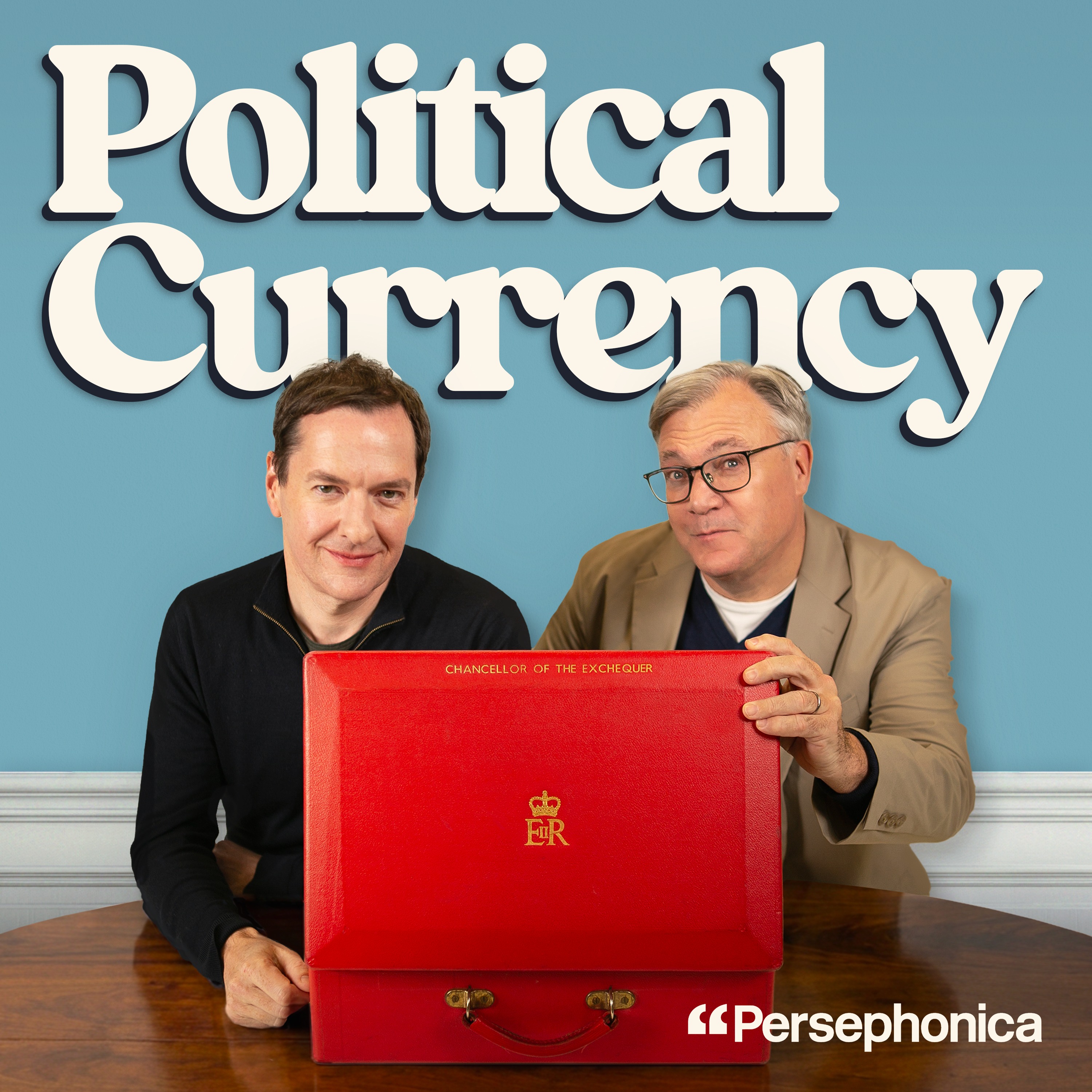
Hosts: Ed Balls and George Osborne
Produced by
Persephonica
Release Schedule
Every Thursday
In this episode of Political Currency, Ed Balls and George Osborne reflect on recent political events, including Keir Starmer's visit to China, challenges faced by the Labour Party, and developments in U.S. immigration politics. They also discuss new research from the Institute for Fiscal Studies regarding housing, intergenerational wealth, and social mobility in the UK.
Written by AI. May contain mistakes.
Chapters
0:46
Reflections on Political Podcast Awards
Hosts discuss their win at the political podcast awards and funny moments from the event.
“Yeah, I think it must have been the after parties at the political podcast awards, which I didn't see you at the after parties.”
4:56
Prime Minister's Visit to China
Discussion on Keir Starmer's visit to China and its significance amidst political tensions.
“We're going to start with the Prime Minister's visit to China, which is underway as we record this podcast.”
6:19
Analysis of Starmer's Strategy
Exploration of Starmer's approach to China and the criticisms he faces regarding human rights.
“An important and significant visit, but we're not totally sure exactly what its importance and significance is going to be yet.”
7:49
Geopolitical Implications of Engagement
The hosts reflect on the importance of engaging with China and the implications for UK politics.
“It's just been announced that China is going to give British visitors to China visa fee free travel if you're going for visits under 30 days.”
14:01
Keir Starmer's China Trip: A Missed Opportunity?
Discussing Keir Starmer's recent trip to China and its implications for his leadership.
“I think you're totally right that Keir Starmer should be doing this.”
18:16
Navigating Domestic Pressures and Political Rivalries
Examining the domestic challenges Keir Starmer faces within his party and the implications of political rivalries.
“Yeah, and tarish some whiskey and so on.”
22:35
The Conservative Party's Dilemma: Embrace or Exclude?
Analyzing the current state of the Conservative Party and the challenges faced by Kemi Badenoch.
“But what you're saying is Keir Starmer is not strong enough to take the risk of the open, embracing strategy.”
28:00
Shifts in Conservative Party Dynamics
Explore the shifting allegiances within the Conservative Party and the implications for leadership.
“The economy is the place to pitch your tent.”
31:52
Immigration Debate in American Politics
Discuss the recent immigration controversies in the U.S. and Trump's response to them.
“American politics in the way that even those used to the roller coaster of American politics would have found quite extraordinary.”
39:44
International Tensions and Political Distractions
Analyze how international military movements could distract from domestic issues in U.S. politics.
“There are a couple of sort of read across to the UK here.”
Show all 13 chapters
42:00
Upcoming Topics on the Podcast
The hosts preview discussions on the UK housing market and its impacts.
“Wouldn't surprise me if we're talking about Iran next week or the week after on this podcast.”
42:39
Intergenerational Wealth and Housing
A deep dive into a paper on housing prices and social mobility in the UK.
“Well, I think it's always interesting on this podcast when we can talk about something quite economic-y, which turns out to have big political ramifications.”
48:10
Political Implications of Housing Policy
Discussion on housing policy impacts on regional growth and social justice.
“large-scale house building in the southeast despite what you know the labor government promised because actually the planning bill has been somewhat watered down Labour's defending a lot of these seats.”

Ask about this episode
Get the gist, explore an idea or ask about something said.
 Claude
On Political Currency, what are the key points of this episode?
Searching your listeningTranscript
Automatic transcript. May contain errors.
0:13This is Political Coancy with Ed Balls and George Osborne.
0:27so we are remote and for the second week running george osborne has lost his voice last week it was the late night davos lash that he was out on but this week closer to home last night big celebrations and you've lost your voice. Yeah, I think it must have been the after parties at the political podcast awards, which I didn't see you at the after parties. I don't know where you were Emily Maitlis's after party or Alistair Campbell's after after party or Rory Stewart's breakfast party. But we were the winners. Let's cut to the chase. I've got one here. The political podcast of the year is political currency.
1:09Hold it up a bit so we can see it properly. A bit more. there you are but also and in some ways i think even more satisfyingly even more excitedly in the room for us our producer ellie clifford won producer of the year so two awards and brilliant recognition why have you got her trophy well because i wanted to show her award you've nicked her award on the screen so i said to her let me take it home she is going to be able to put this on her mantelpiece i think you'll have to remember to bring yours in to put in our studio in the future but so we could say that ellie and the whole persifonica team made such a big difference and uh we wouldn't have won podcast of the year if it wasn't for them i wanted to celebrate ellie as well and we actually got to make a speech with giles brandress and the mooch last night i said something very worthy about how um our podcast was all about believing in politics and inspiring the next generation and you basically slagged me off no i was unbelievably nice about you.
2:09You were actually. You're obviously a misremembering. Well, you did say that you wanted to destroy me 10 years ago. And if this was the Tudor era, I would have been beheaded. Well, that's true. And we wouldn't be able to do the podcast, would we? That is true. Do you know, neither of our contributions remotely came close to the story that Anthony Scaramucci told this audience in Westminster. There were lots of MPs in the room. Actually, I was on the table with three very impressive young Labour MPs. The mooch told the story of when he had had a phone call with Donald Trump during his first term.
2:43And Donald Trump had complained to him on the phone because he'd phoned late at night on Valentine's Day in, I think, 2018, he said. And Donald Trump was complaining to him that because the White House was a public building, or as Donald Trump described it on the phone call, public housing, you know, which is in America, the equivalent of sort of, you know, council housing here. You know, he said he's in public housing and as a result, he couldn't get any porn channels in the White House. And he was complaining to Scaramucci that he couldn't get the, couldn't get onto the adult channels on the White House.
3:17This was a real story. This was like absolutely stunned room. It was stunned. Nobody laughed because we realized it wasn't a joke. And then at that point thought, goodness me. And then because we didn't laugh, Giles Brandreth, the host, decided to retell the whole story. in order that we properly understood the full horror of this and then went on to speculate about which British political leaders needed to get on to the porn show. It all got out of control if you asked me. Don't you think we should give some shout-outs to electoral dysfunction, to politics with Jack and Sam? Is it Jack and Sam?
3:51It's not Jack and Sam anymore. Politics with Anne and Sam. Apologies to Anne McAvoy. You know, it's interesting. That Jack and Sam label got so into my head. And also we were just pipped for the, apparently for the People's Choice Award. We were ahead in the polling. And then a podcast called Simple Politics stormed late. They have a very loyal audience who all voted. So they won the People's Choice Award. I mean, I think if we were Donald Trump, wouldn't we complain that the election was stolen? Well. The ballot boxes were stuffed somewhere in the voting in Pimlico or Atlanta or something like that.
4:27We should be sending the FBI in. Katy Perry, who runs In House, and they were the organiser of it. She used to work in Number 10, didn't she? Yes. On the media side. She said that you, in advance, kept texting her to say, am I going to win? Am I going to win? So we did. We did. As you said to me, Leonardo DiCaprio would only come to the awards if he knew he was going to win. And I said, I know, but George, that's because he's Leonardo DiCaprio. Yeah. And what are you suggesting? I'm not suggesting anything. Let's get on with the show. We should. We've got lots to talk about. We're going to start with the Prime Minister's visit to China, which is underway as we record this podcast.
5:03But we're also going to reflect on his week because he's stopped Andy Burnham, the mayor of Manchester, from becoming a candidate in a parliamentary by-election. And we're going to mention also and talk about the Conservatives' week as well. Kimmy Baden-Württemberg has been under pressure from both the right and the left in her party this week. Then we're going to turn to America because we said last week Donald Trump was going to pivot from the international scene in Davos, backing down on Greenland, get back to domestic issues with the midterms coming up. But actually domestic issues have been rather difficult for him, particularly in Minnesota because of the killing and the clashes there.
5:40And we thought we'd reflect upon what this tells us about the way the immigration debate in America is unfolding because it's really, really fascinating. Yeah, and it, of course, has implications across the Western world as well, because the immigration debate there has echoes here. Then we're going to look at an interesting report that the Institute of Fiscal Studies has put out about rising intergenerational wealth and falling home ownership. In particular, the impact of the big house price boom in the late 90s and the 2000s, and it's kind of ripple effects into the next generation and what that means for social mobility and the distribution of wealth in our country.
6:18so a bit of a longer term look at the kind of bigger issues that tend to move the political dial but don't always get the headlines that's right well we're going to start with Keir Starmer's week a week which began with the big row about the blocking of Andy Burnham from standing in the Gorton and Denton by-election come back to that in a moment because there are moments when as a prime minister you are so relieved to get on an airplane and fly out of town and because you've got the chance to shift the agenda and maybe turn off the Wi-Fi for a couple of hours and also to take a captive audience of journalists with you who want to report the story that you are going to be talking about because that justifies the trip they're on and why their news desks have paid all this money for them to fly and that's what happened with Keir Starmer taking a big group of business leaders, journalists, also some cabinet members out to China for the first visit by a British Prime Minister to China since 2018.
7:19An important and significant visit, but we're not totally sure exactly what its importance and significance is going to be yet. I think the significance is that it's taking place. I mean, let's start with that. I think it's, you know, utterly bizarre that no British Prime Minister, and we've had quite a few since 2018, has visited China. And that has not been the pattern in other Western democracies where the leaders of France and Germany have made visits. And of course, Donald Trump is going to head to China later this year for his second state visit. You know, I think in Britain, we're in a rather narrow debate, which is why is the British Prime Minister going to China when all these other world leaders, Western leaders, who have very similar concerns about espionage or human rights or, you know, China's role in the world, feel that it's absolutely necessary to engage with the world's second superpowers.
8:12superpower. And I absolutely applaud Keir Starmer for ignoring those critics on the sidelines and getting on with the job of being a British Prime Minister, which is to represent your country abroad, try and get some inward investment into Britain, support British business, and above all, try and manage a very difficult global environment, which you can't do if you're not talking to China. It's just been announced that China is going to give British visitors to China visa fee free travel if you're going for visits under 30 days. That's the first of what is set to be a series of important but not kind of earth-shattering announcements.
8:52I think the interesting thing about Keir Starmer's trip is that unlike Mark Carney, who was in China a couple of weeks ago and then used his speech at Davos to talk about how this is part of a huge change in the global order. He, like other leaders, other middle powers, needing to engage with China, the emerging second world power in a world dominated by world power tensions. Keir Starmer doesn't use that sort of bigger geostrategic language to describe the importance of his trip. Yeah, I mean, I think that probably reflects a bit on Keir Starmer himself. I mean, that's not, he doesn't tend to use those sort of big, grand eloquent statements.
9:33Arguably, I think he needs to do more of trying to set out a longer term strategy and vision for his government and would do well to not copy Mark Carney, but do something like Mark Carney has done, which is set out his country's approach or his government's approach to foreign policy. I would just say one thing, which is these China visits, I've been on quite a few myself with prime ministers, they're quite kind of taxing, you know, personally taxing for a prime minister. You've got a big time difference. So you've got a jet lag issue. You know, the meetings with the Chinese president and the Chinese premier, there are different figures, you know, are quite intense, quite transactional.
10:09You absolutely have to be on your game. The British press is always looking to kind of trip you up on, you know, perfectly legitimate issues, but, you know, not central to the visit around human rights. It's fraught with problems. And, you know, I thought it was interesting if you listen to this exchange between Keir Starmer and Chris Mason. Chris Mason doing his job, but I thought Keir Starmer also doing his job in trying to explain why he was in China and taking on the classic press question you get when you travel to China on human rights. There are though big differences, significant differences between the UK and China in terms of outlook.
10:47How forcefully did you raise issues such as the joining of the pro-democracy campaign at Jimmy Lai, the treatment of the Uyghurs Well, we raised those issues, as you would expect. Part of the rationale for engagement is to make sure that we can both seize the opportunities that are available, which is what we've done, but also have a mature discussion about issues that we disagree on. Were they listening on that, you think? Yes, we did have a respectful discussion about that, raised those issues, as you would expect. When you were on the visits you did with David Cameron in that, as Keir Starmer was saying, the more positive era of Anglo-Chinese relationships before the Ice Age, which began in 2018, you were quite careful not to make a big deal of those sort of more human rights issues.
11:37the Chinese state media praised you for being grown up, for kind of focusing on the big issues. Was that like a decision? Was there a cost you paid for going low-key on those things? Is Keir Starmer right? I mean, he's answering the questions, but that respectful language is quite low-key and downplaying. Well, you know, we would always raise human rights issues, issues around Xinjiang, around Hong Kong, in any trip to China. but it wasn't the center point of the or central focus of the trip or else frankly there wouldn't be a trip and there wouldn't be a dialogue with china and you would never have the opportunity to make any points about human rights and i think the kind of critics you know there's a there's a bunch of people including it it pains me to say the leader of the opposition at the moment who says he shouldn't be going to china i mean that is you know that is all about being an opposition rather than being a government in waiting a government in waiting starts to think about how it's actually going to manage relations around the world.
12:34It's obviously an extremely difficult geopolitical situation. The relationship with the United States, vital as it is, is, you know, troubled because of issues like Greenland and indeed what we're going to come on and talk about later in the podcast. Some Conservative Prime Ministers like Boris Johnson and Rishi Sunak did actually go out of their way to say we've got to have a constructive relationship with China, even though there weren't physical visits at that time. I don't really understand there are you know there's a bunch of people who say we want no relationship with china no conversation we want basically no relationship with the european union we can't talk to the american president because he's threatening nato countries and they end up saying essentially the only two people we talked in the world are the australians and by the way they're now a center left government who don't particularly want to talk to these conservatives and the new zealanders And, you know, it's just not a realistic or pragmatic or effective approach to foreign affairs.
13:33It's all about domestic posture and fine, but it doesn't actually get you very far. And I think Keir Starmer's right to bite the bullet. And look, I'll make a prediction that whoever is the next conservative prime minister, whoever that person turns out to be, maybe can be made or not, maybe her successor will be someone who is talking much more practically about engaging with China and potentially even doing, as David Cameron did in opposition, a visit to China as opposition leader. and you start to build the relationships you're going to need when you're prime minister because on that opposition trip he did, he met for the first time President Xi who at that time was not yet president and that proved to be an important beginning of a relationship that matters if you're the country's leader.
14:14I think you're totally right that Keir Starmer should be doing this. In the way it's being done, you can see some of the tensions in his prime ministership. I mean, first of all, those people who say never hear Keir should be staying in Britain. I mean, as the election becomes closer and the question is raised, what would a Farage prime ministership be like? What would a Baden-Ock prime ministership be like? You need the contrast between a British prime minister, Keir Starmer, who is clearly able to do that big job on the global stage, and he's actually been good at it over the last years. That is a good contrast for him if he's playing a long game.
14:53there is a sort of tension though because if I was Keir Starmer would have been using some of the language you just talked about I would want to elevate the importance of this trip I'd want to talk about you know the importance of tackling global climate change which you've got to engage the Chinese on and trade the WTO the world economy the future of geopolitical security and Russia the importance of development aid and tackling global poverty all things were actually dialogue with China is just really, really important. But he's not choosing to do that on this trip. He's choosing to make it much more prosaic.
15:30And you can feel the tension in Downing Street at the moment between those of his advisors saying, Kier, this is a strength for you. Get out there on the global stage. And those people saying, no, cost of living is the key. It's what's happening for British families in their pockets. And you've got to talk about that all the time. So he goes all the way to China and then gives the impression that the reason he's there is because he's tackling the cost of living crisis and it's going to be the impact upon energy prices for families or jobs and prices for families, which is just so much harder to pull off.
16:04I mean, it's just not credible. The announcements today will be incommensurate with the scale of the cost of living crisis. And then what it means is that Chris Mason and the political reporting, rather than putting Keir Starmer on the global stage as a world leader, because he invites them to say, is this really working to turn around my domestic challenges? Is it going to solve the cost of living Christ? It pulls him back to the part of the agenda where at the moment he is weaker, and it makes it easier also for them to say, and those things which are controversial here in Britain, like the Uyghurs or Jimmy Lai or the embassy, are you getting proper answers?
16:42And I think it's easier to deal with those sensitive issues if your pitch is global and strategic. but the moment you reduce it to the sort of bread and butter of domestic politics, it opens up the travelling media pack with him to go for him harder on those issues than they otherwise would. And let's be honest, it's really hard being able to keep on that big global narrative and deal with those domestic issues. Keir Starmer is not somebody who feels as though he has the dexterity domestically to handle that the way some prime ministers did in the past. And think to yourself, what's the aftermath going to be?
17:18Did the China relationship really solve the cost of living crisis? Are you sorting out the human rights issues in China? Are these security things really going to be a threat to the UK? I mean, he opens up those criticisms, and I don't think he needed to do that. Yeah, I mean, look, I would say his task at the moment is to look and feel and be like the prime minister of the country, because he's under such domestic pressure, in particularly in his own party, and appearing on the world stage and dealing with the president and China definitely, you know, actually helps domestically, much more so than talking about the cost of living.
17:50Although I think you do have to try and also explain to the British public why trade and investment, you know, ultimately leads to pounds in people's pockets. But if that's the test for this trip, he fails. This trip can't pass that test. And therefore, he should make the test geopolitical leadership on the big issues which will shape the world rather than say, well, it's not really about that. It feels defensive to say, is actually really all about the cost of living for British families. That's why I'm here. That isn't why he's there, really. Yeah, and tarish some whiskey and so on. In fact, the kind of geopolitical environment sort of opens itself up to quite big statements at the moment without those looking too pompous or ridiculous.
18:26I think, you know, there is a desire to hear how are countries like Britain going to navigate this environment? Close allies of the United States who've been, you know, in a state of shock because of events over recent weeks. And you're right that there's kind of more of an opportunity. Maybe he can do that. Maybe China is not the place to actually deliver the speech, but do set yourself up for the speech in the same way that Mark Carney went to China and then gave the speech on more kind of familiar territory back in the West. I just think those advisors in Downing Street telling him it's always got to be about the cost of living.
18:57You know, I really care about what's happening in Ukraine with Russia, because if not, we'll pay a higher cost in our energy bills this year. It's actually about something rather bigger than that. And that isn't to say that's not important. but actually if that is the test he can't pass that test i think he just needs to elevate have the confidence to be a global leader and he's got the opportunity take it yeah do you think in that meeting he had with xi and they exchanged notes on dealing with trouble in their own camp and getting rid of rivals because xi has just deposed the head of the military in china in a pretty dramatic purge of uh you know one of the most most senior people in china beneath him.
19:39Continual charges of corruption and mispractice and who knows what the truth is but that is an easier way of dealing with your rivals and the way you have to do in British politics. Yeah in Britain you have to say not that you're being sent off to a re-education camp but you can't stand in the Gorton and Denton by-election. That's the sort of British equivalent. You know that's the life of a prime minister isn't it? You know one day you're sort of chairing the NEC meeting on how to handle Andy Burnham and then like two days later you're taking a kind of military salute from the People's Liberation Army in Beijing.
20:11Presumably you had these issues with Boris Johnson but you know back in the day 2014-15 when you and David Cameron were off to do Chinese visits you've also got Boris Johnson coming back wants to be an MP you could have tried to block him it's lose-lose because if you let him back in it's destabilizing and if you block him it's destabilizing so how do you think you handle it and did Keir Starmer do the right thing at the weekend? Well, it's quite an interesting what if, which perhaps we should unpack on one of our EMQs. In 2015, Boris Johnson was still the Mayor of London, but he wanted to come back into Parliament in the 2015 election.
20:47We could have said, and it was discussed at the time, you're the serving Mayor of London, you can't also be a Member of Parliament. Unlike Burnham, that wouldn't have triggered necessarily a by-election because under the law at the time, which has been altered since, you could be both Mayor and an MP, as indeed Ken Livingstone had been. But you could have said you can't be a candidate at the 2015 election and that would have kept Boris Johnson out of parliament. I think it's being altered. I don't think it's altered yet, actually. I think in this case, it was the Labour rules, not the law. I think there is a proposal for it to become law, but it's not actually happened yet.
21:16Yeah. Anyway, it was definitely a what if. What if Boris Johnson hadn't been in parliament in 2015? Coming back to the current situation, you're right, it's lose-lose for Starmer. But I think he took definitely the better path, the lesser loss, which is a difficult weekend, bad headlines, but you've blocked Andy Burnham coming back into Parliament. Even if you then go on and lose this Manchester by-election to reform, that is still way better than having in Parliament Andy Burnham explicitly there, whatever he says, whatever Andy is saying, to be a challenger for the leadership of the Labour Party.
21:57There has to be a candidate you vote for. It's not like the Tories, whether you just have a sort of no confidence in the leader. Here, you have to vote for someone else. And Andy Burnham would immediately have been that alternative person. And the only reason he'd be coming back into Parliament is to hold that vote. You know, not an easy situation, not a situation any Prime Minister wants to get themselves into, where their leadership is under all this speculation, and they're having to kind of fight off challenges, but still far better to block him at this point than have to face his challenge in Parliament in a few months' time.
22:29But that is a reflection of the reality of where Keir Starmer is in this Parliament and his standing with the public. Because if he was a bit like David Cameron and you in 2014-15 in charge, if he was strong, if he wasn't sort of under that kind of pressure, the alternative path was to say, you know, come back, looking forward to having a big beast in the Cabinet. it you've been a great mayor we need you to go and sort out one of the kind of big challenging issues we need to sort out as a country you could put him in charge of um defra and say um sort out our relationship with the farmers with the same skill that you've sorted out your relationship with them the people of manchester the reason kia starma wasn't able to do that was because he wasn't strong enough to do that and so it's a reflection of the political pressure he's under that the strong, confident thing, which is to allow him back in, I mean, I agree with you, there's risks in both.
23:23But what you're saying is Keir Starmer is not strong enough to take the risk of the open, embracing strategy. And therefore, he has to say, in that case, if I lose the by-election, I'll get the blame. I've got the mayoral elections coming up, which I'm going to get the blame for. The test at the moment is, every week, has Keir Starmer strengthened his position within the party, within parliament and with the voters compared to last week i mean in no sense did those dealings with andy burnham strengthen keir starmer's position it was weakening now what you're saying is that it would be even more weakening if he did the strong and confident thing and that might be right but um it's a reflection of how bad things are i was watching the night manager with fear on sunday night and then it went straight into the 10 o 'clock news and i watched the kind of headlines of the 10 o 'clock news, and they were just terrible for the Prime Minister.
24:17I mean, it was all about the weakness of his premiership. And actually, I bet a lot of people were watching that news bulletin because of the success of that brilliant drama before. So, you know, it's obviously a very bad situation to be in. But in that very bad situation, I still think much better to keep Burnham out. And for Andy Burnham, I mean, what was he really expecting? Was he expecting to be blocked and is this all just sort of staking a claim for a couple of years hence he's still got the basic problem which is he can't be the leader of the Labour Party until he's a Labour MP and at this moment it's not really clear how he gets in until the next general election which case anyway that's you know a whole different ballgame.
24:55Which is what Keir Starmer shared with them all those political journalists on the plane to China that he's very very keen to see Andy Burnham coming into parliament at the next general election now um I bet he is but that doesn't really help Andy Burnham's political ambitions. And he doesn't take the pressure away from Keir Starmer. If anything, it ups it, but it makes it much harder for Andy Burnham to be the figurehead. But he's absolutely going to be the agitator now, isn't he? I think if I was Keir Starmer, I might think to myself, what can I do? The one thing Andy has done, actually with great skill, is unite the people of Manchester around an economic mission and vision.
25:37And why doesn't Keir Starmer decide? And there are some scientists going on, but say to the Treasury, let's embrace this mission. Let us go for the city regions, back the mayors, kind of go for a much bigger sense of the economic growth and productivity and fairness agenda is all about the big cities of England and the UK. and allow Andy to be a partner and a hero within his realm. Now, Andy may find that a bit galling, but he's not going to say no. I mean, sometimes you have to turn challenge into opportunity. That's what I would do if I was Keir Strahm, where I would try and make Andy Burnham an even bigger hero of Manchester.
26:15You're the king in the north, and you always would be the way I'd put it. Talking of embracing mayors, Kemi Baden-Lock did the reverse this week, didn't she? because Andy Street, who was the very successful Conservative mayor of the West Midlands, he, together with other very prominent past Conservatives, like Ruth Davidson, who led the revival for the Conservative Party in Scotland, prominent cabinet ministers from some years ago, like David Gawke, Amber Rudd, Gavin Barwell, who was Theresa May's chief of staff, they all collectively launched this movement called Prosper UK, which is supposed to be focused on the economy, hence the name, but is really advocating the case for the Conservative Party moving to the centre ground again.
27:01And it released some interesting polling saying there's still loads of votes there for the Conservative Party to get. And this is all in the week when another Tory MP on the right, Swella Brabman, defected to reform. Kemi Bedelock's response was, you know, a bit like Keir Starmer, was also utterly unrelaxed. And she just sort of went out of her way to say they can get out of the way. She said, I only want conservatives in the Conservative Party, suggesting that Andy Street, Ruth Davidson, Amber Rudd, David Lidington, who was the deputy prime minister under a conservative government, these aren't proper conservatives.
27:39It is not a path that is going to lead to anything other than a further narrowing of her base of support. And it's not what the big leader does. But you can see the dilemma she's in, Because on the one hand, she has people like you, Andy Streak, Ruth Davidson, saying that you've got to embrace the centre ground, stop all those voters leeching off to the Liberal Democrats in seats where they are our biggest challenger. The economy is the place to pitch your tent. On the other hand, she's got Nigel Farage to deal with. Nigel Farage can't now say, you know, we are the new party. We're the outsiders.
28:15We are a break from the past because he's now got so many former Conservative cabinet ministers and ministers in his party. You know, there are now, as I think we were saying last week, more people who've joined Farage from Liz Trusser's cabinet than are on Kemi Bednock's front bench. So this is, you know, clearly the right of the Conservative Party shifting over to become part of reform. But what Nigel Farage can say is I'm the strong guy. I'm the one who can really deliver this agenda. I'm the one who can really make sure on immigration and the borders and on tax cuts. I'm the real deal and Kemi Badenoch is um you know just a lukewarm weaker softer version and if she starts to lean towards the center ground which is the confident thing to do she opens up that flank on the right of people saying yeah well the thing about Kemi is she's the half measure version of Farage who is full fat and so she's torn I mean if she goes in the direction you're suggesting, she makes it easier for Nigel Farage.
29:20And if she leans towards Nigel Farage is not the real deal I am, full-throated, which is what I think she was doing in this speech this week, she then makes it much harder for her to be the uniting figure into the centre ground. And the skill is to be able to do both. But you've got to be strong to do that. Yeah, you do. I think it probably comes down to how you think you might, you know, do at the next election, if you're only aiming for 20 % of the vote, then maybe you think you can find a space between sort of centrist conservatives and reform. I'm not sure that space exists, although there's 20 % of the vote there.
29:55And it's also sort of setting yourself up for a minority party and possibly in a kind of coalition government of some form. But if you speak to the senior conservative advisors, they say, no, no, you can win the election with the lowest share of the vote than used to have to. But I think that's, you know, a big mistake. You want to be maximizing your vote at this point, three years after the general election. Maybe when you get close to the general election, you have to make some ruthless decisions. But at this point, you want to be bringing the Tory party family back together again. She keeps saying, end the psychodrama.
30:24Well, then don't, you know, prolong it. And you want to get to a point, look, it's easier done after you've lost a few elections rather than having just lost one election. But, you know, you want to be sort of healing the wounds you know Andy Street Ruth Davidson these are some of the most successful Conservative politicians of the last 15 years who won in unusual places that the Conservative Party absolutely needs to win again and you should be embracing them giving them a warm embrace and not not I mean they are national names who don't want to leave your party I mean you know that that's quite unusual at the moment I don't I thought it was an utterly bizarre response and not very well thought through when you should just embrace them all I mean you want to end up and ultimately in a position, and I do understand this is much easier after there's been years of bloodletting and exhaustion, but you want to end up in the position which David Cameron ended up in, where in his shadow cabinet, he had both Ken Clarke and he had William Haig, and he was getting Ian Duncan Smith to do work that led to Ian Duncan Smith being in the cabinet.
31:25And you want to be the person who brings the family together again, not reminds the family why they're constantly split. Now, last week, we were discussing, weren't we, that the conservatives in Britain shouldn't be majoring on immigration. Well, one country where you can't avoid the immigration debate and where it has really exploded in the last week is the United States, where the killing of two individuals by federal agents in Minnesota has really turbocharged American politics in the way that even those used to the roller coaster of American politics would have found quite extraordinary. over the last few days and we're going to be turning to that next
32:16so welcome back we're going to turn to minnesota i was saying last week that donald trump should get back to the domestic agenda after being so focused on greenland which was causing him some political difficulties in the polling but of course the domestic agenda i met was the economy In fact, we've seen these shocking scenes in Minnesota, killings, the killing of René Goode, and then another killing this weekend, a nurse, Alex Pretti. And Donald Trump now in a very difficult position because Pretti was carrying a gun, totally legal in Minnesota. His Homeland Security chief, Kristi Noem, said he shouldn't have been.
32:48He was called a domestic terrorist. And the polling is saying that Donald Trump is losing this argument. He's now pulled the head of the Federal Immigration Agency, ICE, Gregory Bovino, out of Minnesota. He's been speaking, reaching agreement with Governor Waltz. This is the same governor who was Kamala Harris's running mate against Donald Trump. He was the vice presidential candidate. Donald Trump is beating a retreat on the politics of immigration. He's saying he's dialing it down, taking the temperature out of it, not going the way he expected. What did you make of this? Well, I thought in some ways the most interesting thing was corporate America, which has been absolutely loathe to criticize Trump, the leaders of these big companies, have been very reluctant to say anything over the last year when there have been tariffs and, you know, all sorts of strange things that Donald Trump has said.
33:45And it felt on this issue, and in particular, the death of the intensive care nurse, Alex Pretti, which, you know, if you look at the video, looks horrific. I mean, it looks more like an execution than a struggle or a self-defense by the agents. You know, they've all felt they had to speak out. And I thought that was quite a moment because people have been extremely nervous to take on this administration. But I think they felt they could in part because Donald Trump, whose I think political instincts you know should never be underestimated had himself i think presumably by watching the video sense that things have gone too far and he's obviously got a hard line element to his movement particularly on this whole issue of immigration deportment um and this guy um gregory bovino who um who's the kind of head of ice he reminds me a bit i don't know if you've seen that really really good movie at the moment that's up for all the oscars uh one battle after another the Leonardo DiCaprio movie.
34:42And I think he's a bit like the character in that movie who's actually running the immigration detention center. Anyway, I think Trump himself sensed this is all too much. And it's Trump himself, not a junior official in his administration, who signaled the kind of recalibration or the backtracking. And then that led to this guy being taken out of Minnesota. This is what Donald Trump said. And they met with the governor, the mayor, everybody else. And we're going to de-escalate a little bit. But I will tell you, you look at the numbers, they're doing better than they've done in many years because we took thousands of criminals out of Minnesota.
35:24The very fact, Ed, as you were saying, he's even talking to the governor of Minnesota, who he ran against in the election and has been nothing other than extremely rude about ever since, shows that I think he knows this is not the best territory for him to be on. And by the way, of course, it's still got lots to play out. There's the whole question of whether there's going to be charges against these federal agents and what ICE is going to do. Having said all that, I think it would be a huge mistake to assume that the country, both the United States and other countries like our own, are no longer kind of concerned about immigration or even if they feel that these actions are beyond the pale, that they don't want to see effective control and the dealing with illegal immigration.
36:08I think you're totally be right. But actually, I think Donald Trump's biggest worry will be with his MAGA base, rather than business leaders or even general public opinion. I mean, what is always true about the immigration debate is that people can feel two different things at the same time. They can absolutely want to secure the borders, stop people coming in and abusing the system, root out the criminals. That is all deep in the politics of both our countries. But at the same time people also want us to act in a proper and british way or an american way if you're in the united states and that's with decency and fairness i remember in my own constituency people who were being very angry about immigration being out of control also being angry that a family who'd been living in the community for some time was having to uproot and leave because they hadn't got their visa right to stay and they think i know but that's not fair because you know they're good people and they're part of our community.
37:08So I think there is a reaction of American voters in general saying that what is going on here is indecent and not American. You then have overlaid on top of that Donald Trump saying this guy, Alex Petty, who was murdered, that he shouldn't have been carrying a gun. This is the state of Minnesota in which concealed carry is legal. He wasn't doing anything wrong. And you've got the NRA, the gun lobby out disagreeing with Donald Trump and saying, no, hang on, the American thing to do is to carry a gun. And the idea that him carrying a gun meant he was a domestic terrorist who could be gunned down is ridiculous.
37:46But actually, the deeper problem is this, which is, if you are going to be a MAGA leader, that part of the right in America, they don't really believe in the state. They don't really believe that the state will be on your side. They're kind of inclined to see conspiracy theories. We know that. And always up to now, Donald Trump has been able to tell his base that the real truth isn't what you're seeing on the television. It's something else. You know, that whole use of fake news, I'll tell you what's really going on. And I think what's happened in the last few days is lots of people who are on that side of politics, they hear Donald Trump or Kristi Noem saying, you know, he was a terrorist, he was pulling his gun, he was a danger.
38:29And when they see the pictures, they think, but that is not what we're seeing. That's just not true. And after the big row he had at the end of last year about Epstein, Donald Trump not being willing to bear all and tell the truth, and the criticism he had from the MAGA side saying, is he covering up what's really going on? This now looks like the state in Washington covering up a truth and trying to claim him something is untrue which people can clearly see is true which is he wasn't a threat and he wasn't drawing a gun and he had been disarmed and I think Donald Trump can't afford to be seen by not just the NRA but the Maga right more generally to be you know a person in government who's not telling the truth who's actually trying to peddle fake news and that is why he needs to pull away from this.
39:21I mean, the cut through that the René Good killing has had, massive. Alex Pretti as well. The polling all shows a big shift away from the Republicans in the centre. But actually, I think on the right as well, this is a danger for Donald Trump and he needs to get out of this very quickly. I think that's what's going on. Yeah, you're right. But I think he's spotted that. He is good at this. There are a couple of sort of read across to the UK here. So first of all, you know, this proves, if you look at the whole deployment of ICE, that it is unbelievably difficult to deal with people who are in the country already illegally.
39:59And yet, if you look at the Reform Party in Britain, and indeed the Conservative Party to some degree, and they're both talking about deporting thousands of illegal people who already exist here. That is extremely hard to do in a democratic society. If it's hard to do in the United States, it's going to be even harder to do here. The Windrush scandal was precisely driven by this attempt to clamp down on illegal immigration, or people who are already in Britain illegally, and then you end up with a bunch of people who'd come from the Caribbean who didn't have quite the right papers being persecuted.
40:33In an un-British and unfair way. Right. To your point, which is people, they wanted illegal immigration dealt with, but that didn't mean they wanted this person who didn't have, you know, because their grandparents didn't have the right papers with them, kind of kicked out. In practice, whatever the rhetoric in the run-up to the British general election, were any government to attempt anything like this, it would fall apart and be a disaster for them. I think the other kind of thing I'd reflect on is, you know, it's something I've sort of observed before. The fact we're having this conversation, the fact lots of people from Britain talk about this.
41:04I was just in Germany this week. I'm almost talking about it in Germany. You know, we all feel we do have a right to interrogate and comment on American domestic politics. And then we all get outraged when American politicians like Donald Trump say anything about our domestic politics and our domestic situation. So there's a little bit of hypocrisy there. And I think we're quite right to talk about it, but then understand that Americans are going to have a view on us. And the final thing I just wanted to put on the record for the second week running, whilst all this is happening, there's an American aircraft battle group heading towards the Persian Gulf and Iran.
41:39There's a big buildup of US military forces in and around Iran. And I said last week, people said to me in Davos, take a look at that, there's going to be a strike on Iran. And there's a quite substantial buildup of American forces. And you can perfectly see Donald Trump also thinking, well, maybe we need to change the conversation here in the United States and let's turn to abroad. We will watch that space. Wouldn't surprise me if we're talking about Iran next week or the week after on this podcast. We're going to talk finally in a moment about what's happening in the UK housing market and the extent to which rapidly growing house prices in London have been both economically but also socially damaging and unfair.
42:22And we'll just talk about that briefly when we come back after this break.
42:38welcome back now a couple of weeks ago ed you drew my attention to an interesting paper that had come out from the institute for fiscal studies on intergenerational wealth uh housing and the house price boom of the 1990s and 2000s tell me i mean we we know house prices went up a lot and we know that people have been shut out of the housing market but what did you think was sort of particularly interesting about this paper? Well, I think it's always interesting on this podcast when we can talk about something quite economic-y, which turns out to have big political ramifications. And I think this does.
43:12That's why I spotted it. It's a working paper by David Sturrock and Peter Lavelle from the IFS. It's called How to Have Prices Affect Social Mobility. And the interesting thing is they point out that over the 1990s into the 2000s, you've had a big difference in what's happened to house prices between London and the southeast and the rest of the country. The average house price compared to earnings has gone up a little bit in the northeast, the northwest, Yorkshire, but has shot up in London in the southeast. That's why house prices are so much higher and it's so much harder to get on the housing ladder if you're living in London in the southeast compared to 20, 30 years ago.
43:56And the question they ask is that it's clearly benefited people who owned houses where the prices have shot up a lot but what's it done to the life chances of their children and so they're able to track individuals over the last 40 50 years and see the impact of living in a rising house price area when your parents own their home what impact that has on your life chances your chance of being a property owner your chance of getting a good job. And what they point out is that people whose parents owned homes are always likely, are always more likely to be homeowners themselves. But that hasn't really changed.
44:40So even though house prices shot up in London, the southeast, it's not made the children of people who benefit from that more likely to be homeowners. But what it does do is it substantially increases the value of the homes they're then able to buy because their parents are passing on wealth to their kids who can then get more easily onto the housing ladder and get more valuable houses and the question then is what impact does that have on their life chances their wages the chances of getting good jobs and what the paper shows and it's very clever because it compares people who are renting or whose parents rented compared to people who are buying houses or their parents are buying houses and they basically show that compared to people who were renting in London or parents rented the children of homeowners have seen their housing wealth their underlying wealth but their job chances shoot up substantially that people who grew up in London, the South East are much less likely to move, to live and do good jobs outside London, the South East, but they are much more likely, especially men to have really good jobs in London, in the South East compared to renters.
45:55And what that tells you is that's not simply about the underlying job market or their skills. It's about the housing tenure. So basically the rise in house prices and London the southeast for the parents has given a big boost directly to their children's earning power. So that says the rise in house prices has led to more inequality and less social mobility. It's actually made it harder relatively for the children of renters. But that then takes you into the bigger politics and we were talking about Andy Burnham earlier. Why has the regions outside London and the South East found it so much harder to grow.
46:33And the answer is because people in the rest of the country who would normally be moving to London, looking for jobs, which would tend to push up wages outside London, they aren't moving because it's unaffordable. Rents and house prices are just unaffordable, so they don't move. But the people who are moving to London or staying in London are the people who can afford to do so because their parents had expensive houses, which went up a lot. And so, you know, you are much more likely to be moving to London or living in London in a high paid job if your parents have housing wealth. So actually, the thing which is holding back growth in the rest of the country is also contributing to inequality and unfairness in our country.
47:18If you want to tackle growth in our country, but make things fairer regionally, you've got to build more houses in London, the southeast, and you've got to boost the economies of the city regions outside London and the South East. And this paper says that's not only a growth imperative, it's also a social justice, social mobility imperative. So Andy Burnham is right to make his argument as the mayor of Greater Manchester that this is a growth agenda, but it's also a fairness agenda too. If you're going to point out the NIMBYs in London and the South East who are stopping the houses being built, what they're doing is not only holding back growth, they're also entrenching unfairness in our country so it has quite big political significance in some ways you know it didn't tell me something i didn't kind of intuitively think anyway but if you look to the solutions the truth is i don't think you are going to see large-scale house building in the southeast despite what you know the labor government promised because actually the planning bill has been somewhat watered down Labour's defending a lot of these seats.
48:21There are powerful campaigns to stop building in the Greenbelt in the southeast. And a better answer, you know, I'm all for it, but, you know, and I'd love to sort out things we've discussed in this podcast before, like getting that new town in Ebbsfleet up and running by allowing them to build a town centre rather than being put off by the fact there are spiders in the grass there that they can't, you know, get rid of. All that said, you know, this regional agenda, what I used to call the Northern Powerhouse, The paper we talked about that the Treasury had produced in the last couple of weeks around Northern Rail, Andy Burnham's agenda, all of that is you've got to double down on.
48:57I thought there was one interesting observation, though, particularly as we were just talking about the United States. I mean, the British conversation is still all around home ownership, and the wealth is tied up in home ownership. And we have lost a conversation, which we used to have in the 1980s, and which is very, very live in the United States about ownership in equities, in companies, in shares, the share-owning democracy. And, you know, it's not actually clear in the last 10 years, not the period we're talking about here, which was the boom in the 1990s and early 2000s. But, you know, home ownership, you actually would have done better potentially owning a bunch of stocks if you were just simply trying to increase your assets.
49:40And the political debate in Britain is still around, you know, stamp duty holidays and house building. I totally understand that, but there's not a kind of broader dimension of other assets you might own to secure your future. And, you know, and if you made those a bit easier, it's hard to get together the money to buy a house. It's not so hard to get the money to buy some shares, right, because they can, you know, the entry point is much lower. And maybe we should be having more of a debate about that than just coming endlessly back to the home ownership debate. Look, I understand the argument.
50:17But in the end, over the last 30 years, it was really in your interest to invest, if you could, in London and South East housing, because the returns have been so substantial. And that's what the paper shows. And while it is absolutely right to say that investing in local transport and innovation in the city regions outside London, the Southeast is vital unless you also deal with this London Southeast housing imbalance, unless you make it easier for people outside London, the Southeast to rent in London and you make it less attractive for every higher educated person to stay in London because that's where the big gains in housing wealth are coming from then very hard to see that growth in balance being tackled so you know it may not be sufficient tackling the issue of housing and house building in london the southeast but it may be necessary and that's a growth and a social justice imperative and if i was kirsten i would be making that argument if you're going to do the um let the builders build tackle the blockers you should make that a fairness argument as well as a growth argument no and by the way you need to you know you need to we're two years into this labor government planning reform was one of their absolutely big election pledges controversial at the time we need to be seeing the houses being built now to see the benefit of it and you know i the we haven't touched on it on this podcast but there was a big announcement this week about leasehold reform there's a kind of also question which is if you make renting very expensive as well as home ownership then you really are locking people out and renting becomes expensive because landlords can't afford to rent or they don't see the incentives in renting anyway it's a it's a it's a fascinating paper it still suggests to me that the best thing you could do is try and do what you know has been done in manchester which is create an alternative center of economic power in the united kingdom well um we can keep debating that that is all though for this podcast um we'll be back on monday with ex-minister's questions as always if you're a valued member of a kitchen cabinet or a gold subscriber you can hear it early or ad free you can listen early to the political podcast of the year 2026 yeah by the way thank you to everyone who did vote for us in those political podcast awards thank you to the jury uh you obviously knew what you were doing because you gave us the award uh we are very grateful and um our producer ellie who has no voice on this show except through us even though she's instrumental to it she was dead chuffed to get the award wasn't she?
52:55She was. If you fancy reviewing our show if you think we deserve this award give us a review on whichever platform you use and don't forget our next newsletter if you're a Kitchen Cabinet member we'll be arriving on Monday in your inbox. I've got a really good political cultural recommendation to make for you. If you're a Kitchen Cabinet member honestly it's really good. We will see you then. See you then.
53:24Thanks for listening to Political Currency. This has been a Persephoneca production.
From the publisher
It’s official: we are the champions. Fresh from two wins at last night’s Political Podcast Awards, a victorious Ed Balls and George Osborne look at two fairly drastic political recalibrations at home and abroad.
Keir Starmer flew to China this week, amidst renewed tensions over his leadership, marking the first prime minister to visit the country in 8 years. Ed and George question why Number 10 played down this significant geopolitical moment, and how it reflects the tension surrounding Starmer leadership. They also look at Andy Burnham’s failed return to Westminster and Kemi Badenoch’s threats to her left and right.
Meanwhile, in the United States, Donald Trump is forced to de-escalate his position on immigration following multiple fatal shootings on the streets of Minnesota. Has the White House lost control of the narrative? And if so, what does this tell us about the limits of a hardline on the politics of immigration?
Also, the pair highlight a new Institute for Fiscal Studies paper, which looks into how the house price boom and intergenerational wealth is affecting home ownership and social mobility in the UK today. What impact is this having on people’s life chances? And is the Labour government able to tackle it in light of its watered down planning reforms?
We love hearing from you, so please don’t forget to send all your EMQs to questions@politicalcurrency and make sure to include a voice note of your question.
Thanks for listening. To get episodes early and ad-free join Political Currency Gold or our Kitchen Cabinet. If you want even more perks including our exclusive newsletter, join our Kitchen Cabinet today:
👉 patreon.com/politicalcurrency
Please note: Kitchen Cabinet is only available via Patreon.
Credits:
Research: Sam Burton
Production: Caillin McDaid & Caitlin Hanrahan
Video Editor: Avi Asher
Executive Producer: Ellie Clifford
Political Currency is a Persephonica Production and is part of the Acast Creator Network.
Hosted on Acast. See acast.com/privacy for more information.
More from Political Currency
All episodes
We use cookies.They keep VO running smoothly and help us improve it. Privacy policy