
 Ask ChatGPT


- Podcasts
- Political Currency
- HOT TAKE: Our verdict on Burnham’s conference speech
Political Currency29 Sep 2026 · 36m · 12 chapters
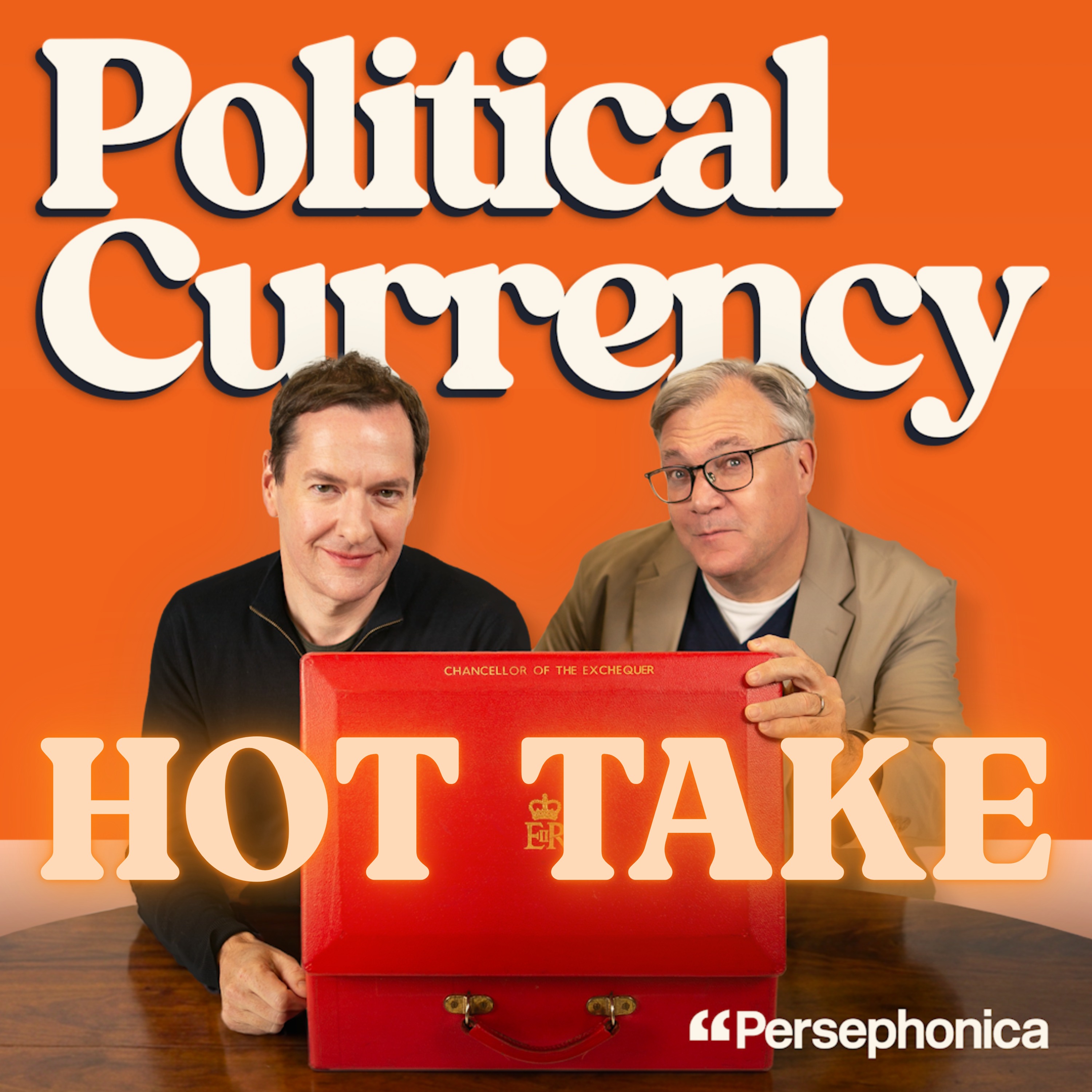
HOT TAKE: Our verdict on Burnham’s conference speech
In short
Ed Balls and George Osborne give a “hot take” on Andy Burnham’s first major Prime Minister/Labour conference speech, focusing on its emotional delivery and specific policy pledges—especially social care, pensions/triple lock, voting reform, and EU relationship—while questioning funding and economic realism.
Guests
Ed Balls (former Labour Chancellor; political commentator/host). George Osborne (former Conservative Chancellor; political commentator/host). No other guests appear.
Key claims
Burnham’s speech was unusually communicative and genuinely emotional (choked up over his father’s recent death) and avoided direct opposition-bashing. It offered big, “crunchy” announcements but left the money question largely unresolved. The pensions plan appears to end the “ratchet” element of the triple lock without clearly removing it, yielding little near-term fiscal headroom.
Notable examples
Social care “free at point of use” on NHS principles with major new state responsibility; pension changes tied to ending the ratchet effect; commitment to change Westminster voting system (PR vs alternative vote left ambiguous); promise to set out options for a closer EU relationship (possibly single market/customs union/free movement).
Written by AI. May contain mistakes.
Chapters
0:00
Analyzing Burnham's Speech
Hosts discuss the highlights and implications of Andy Burnham's speech.
“When you're running a growing business, the right systems can unlock your full sales potential and make fulfilling every order effortless.”
2:15
Analyzing Burnham's Speech
Hosts discuss the highlights and implications of Andy Burnham's speech.
“Yes, we are live again today because his successor, Andy Burnham, has given his first big speech as Prime Minister and leader of the Labour Party to the Labour Party conference and had quite a lot to say.”
4:30
Emotional Resonance of the Speech
Exploration of the emotional elements in Burnham's delivery and personal context.
“member of the Labour cabinet you would go oh thank god at last we've got someone who can communicate because he's a good communicator now and that speech was a good act of communication.”
7:03
Policy Proposals from Burnham
A breakdown of Burnham's key policy announcements, including social care.
“Yeah, and he definitely spoke of emotion, essentially, that his father couldn't see this moment.”
8:43
Critique of Nostalgia in Politics
Discussion on Burnham's nostalgic references and their implications for the future.
“Whether in fact they stand up to scrutiny, which is what you're really asking, and we should start with social care, is I think more challenging.”
10:45
Social Care and Economic Implications
In-depth analysis of Burnham's social care plan and its economic ramifications.
“Just explain, yeah, maybe explain to people who haven't heard what he...”
14:00
Analysis of Burnham's Speech on Pension Reform
Discussion on the implications of Andy Burnham's proposals regarding pension adjustments and the potential impact on pensioners.
“All the journalists were saying he's ended the triple lock.”
27:32
Labour's Strategic Maneuvers: Voting System and Brexit
Examination of Labour's commitment to electoral reform and critique of Brexit's outcomes as presented by Burnham.
“There's quite a lot of politics in this, which we should unpack.”
28:07
Burnham's Electoral Strategy
Discussion on Burnham's stance on proportional representation and its implications for Labour's coalition strategy.
“He's the first Labour leader to say Brexit has failed or the costs have outweighed the benefits.”
30:26
Shifting Political Alliances
Analysis of how Burnham's speech appeals to traditional Labour voters and the potential impact on party dynamics.
“And I felt that this was a strategy which was more about shoring up the centre and the left vote and not seeking to do what...”
Show all 12 chapters
33:08
Expectations and Challenges Ahead
Examination of the reactions to Burnham's speech and the broader implications for Labour's future and opposition parties.
“But, you know, we should read some of the comments.”
35:53
Listener Feedback and Future Topics
Hosts review listener comments regarding Burnham's speech and preview future podcast topics.

Ask about this episode
Get the gist, explore an idea or ask about something said.
 Claude
On Political Currency, what are the key points of this episode?
Searching your listeningTranscript
Automatic transcript. May contain errors.
0:00When you're running a growing business, the right systems can unlock your full sales potential and make fulfilling every order effortless. Switch to ShipStation before peak season so you're prepped and ready before the rush hits. ShipStation connects Shopify, Amazon, TikTok Shop, and over 200 more marketplaces with one platform that does it all. You can manage orders, sync inventory, track returns, all automatically. Everything your operation needs, all in one place. Upgrade your shipping operations to stress-proof your biggest sales days and capture every bit of potential revenue. Go to ShipStation.com and use code AUDIO and get 30 days free.
0:30Hi, this is Mark Bittman from the podcast Food with Mark Bittman. I've been writing about food and restaurants for almost 50 years, my whole career, really. And what I know is that the good restaurants all have something in common. They're busy, genuinely, chaotically busy.
0:48Ed Balls: And somehow in the last few years, the best of them have begun to make it look easy. And do you know why? Because they're running on Toast's technology. Toast is built for restaurant owners who understand that Toast's tools keep the line moving and keep their customers happy, with fewer mistakes and hiccups in ordering and paying. For owners, that turns busy into business. To learn more, head to toasttab.com. That's T-O-A-S-T-T-A-B, toasttab.com. Toast, built for busy. There are moments that reveal who we are and who we're meant to become. For those born to lead, such moments call for a vehicle of equal distinction.
1:34Dynamic by design, uncompromising in execution, the Range Rover Sport was engineered for those rare individuals who demand the world and possess the conviction to claim it. When your time to lead arrives, you need a vehicle that rises to meet it. The Range Rover Sport. Exclusive offers available now. Explore further at Range Rover.com.
2:03Ed Balls: So hello and welcome to this political currency hot take with me, Ed Balls. And me, George Osborne. Look, we've not done a live hot take since the days of Keir Starmer's resignation. So things must be serious. Yes, we are live again today because his successor, Andy Burnham, has given his first big speech as Prime Minister and leader of the Labour Party to the Labour Party conference and had quite a lot to say. We're going to give you our hot take now. We'll be back on Thursday, as usual, once the dust has settled, to reflect upon the reaction to the speech and also to look ahead to how the Conservatives will react in their conference next week.
2:41Ed Balls: But in the meantime, we're really interested to know what you think as well. Yeah, send in your thoughts and questions and we will try and answer them today. And if there are some good ones we don't get around to, we will answer them later in the week. So Andy Burnham painted a big canvas in this speech. Politics has failed for 40 years, but I'm going to turn things around. He basically said, these are the great moments of post-war politics, 1945, 1964, 1997 and today. So he's certainly going for it with this speech. What did you think? Yeah, well, I think he will be pretty pleased, Wendy. I mean, he will think I have achieved what I set out to achieve and I have answered the big questions that were starting to loom over the Burnham premiership, which is, do I have a plan?
3:37Am I all talk? Am I going to make some difficult decisions? And, you know, am I more than, you know, a kind of cheeky chappy from the north who drinks a pint and plays the guitar? I think that's what he was trying to do. And it was quite an unusual speech. I mean, he said it was unique and no one had ever given a speech like this before. That's not true. But it's certainly true that he did not, for example, engage in lots of bashing of the opposition. You know, there were no references to the Tories, really. There were no jokes at the opposition's expense. and I think you can fairly say he did set out a number of big crunchy policies and a big we'll come on and discuss what they are I think above all there was a lot of emotion in the speech for people who haven't watched it you know he chokes up when he talks about his father who died in the last few weeks and I think if you've been sitting there in the hall as a Labour delegate or member of the Labour cabinet you would go oh thank god at last we've got someone who can communicate because he's a good communicator now and that speech was a good act of communication.
4:45What do you think?
4:45Ed Balls: I think the emotion was absolutely real and genuine. Sometimes people joke about the politician who can bring on the tear. I mean, Andy Burnham was genuinely choked up in that moment. And I think it's actually quite complicated to unpack what is going on because yes, absolutely, it's about the death of his father and Andy Burnham taking on the the mission and the mantle which comes from his parents and his family and also his regret that his father's not there to see the speech and he went to hug his mum but also you'll know this George we both sat for you know in the past decades in in conferences watching the leader's speech thinking will I as prime minister ever get the chance to make that speech.
5:35Ed Balls: And I had one go to be Labour leader in 2010. It turned out you never had that moment to fight a leadership campaign, which is the loneliest, most exposed, hardest thing you ever do in politics, because politics is normally kind of a team sport, not in a leadership election, really. It's about your platform. And Andy Burnham has essentially done this three times. He did it in 2010 when he came fourth. He did it in 2015 when he came second. and then he left politics and he's finally come back again. He's finally doing the speech that he always wanted to do. And I think that emotion is also, don't forget this, last year, Labour in government, Keir Starmer's prime minister, Andy Burnham leaves the conference during the speech.
6:23Ed Balls: He's a bit lampooned. Go back to a couple of years before 2024. 1934, Andy Burnham was, you know, the butt of jokes. Keir Starmer was standing up in fringes when he was on and up and the Tories were in trouble, telling Andy Burnham jokes. I mean, Andy Burnham was, you know, down and out. I think he thought for the third time, he's not going to get his chance. He thought he was done. So he's there as Prime Minister making that speech. And I think for him, in some ways, of all the people I've worked with in politics, I think for him, And that sense of fulfilment of getting there, I think, is bigger for him than just about anybody I've ever seen.
7:04Yeah, and he definitely spoke of emotion, essentially, that his father couldn't see this moment. There was a lot, you know, he owed a lot to his father and, you know, spoke movingly about their upbringing. And, of course, it informed the kind of speech. And the speech, you know, what he said was, I'm going to be honest. And I mean, that was the crux of it, wasn't it? for those who haven't seen the pictures he's standing below a banner that says hope again and he says in the speech hope is about honesty and we should probably turn to the specifics on social care on the EU, on voting system and so on I think the question which will come on to, which lingers over all of this was, but can you pay for it and what about the money because that was the bit of the speech which was sort of least fleshed out But let's start with, should we start with the social care announcement?
7:59Ed Balls: I think just to say one thing, I think people will criticise his speech for being very Burnham vibes based, you know, Labour comfort zone, kind of a bit like John Healy yesterday, rallying the Labour audience. But on the other hand, he said he would do big policy and big strokes. And he definitely did that on social care, on Europe, on PR. I mean, these are big, bold things he is saying. So I think, you know, I don't really like the streak of populism. You know, all politics has failed other than me and I'm going to sort it out. Although he does say that I failed as well. But the sort of populist, anti-Westminster, anti-politics rhetoric, I always think is dangerous for political leaders.
8:42Ed Balls: On the other hand, hope, optimism and big, big ideas. He definitely rose to that. So he said he would and he did. Whether in fact they stand up to scrutiny, which is what you're really asking, and we should start with social care, is I think more challenging. OK, but there's another odd thing about the speech, which is it's quite sort of nostalgic. It's quite no one has said in British politics for 40 years, let's go back to the 70s. But he is that is basic. You know, he says the economy was better. The society was fairer. My family had more chances before Thatcherism, before neoliberalism, in effect, before New Labour, as well as the years that followed the Tory years afterwards.
9:26and it's quite an you know it wasn't the speech particularly rooted in the future you know i think another leader would have potentially spoken much more than he did he did mention it but about ai or you know the advances in technology and quantum computing the dangerous world you it's quite a kind of let can we go back to the world that gave my family opportunities and the labor world i was comfortable with and i thought that's quite an unusual framing And no Labour politician has really dared say that since at least the 1990s. I mean, they tried in the 1980s and then kind of, you know, Tony Blair and so on came on and said, we've got to move on.
10:04But anyway, but let's start with that.
10:07Ed Balls: The reason was because in the 1990s and the 2000s, we didn't want to go back to the 1970s. We didn't want to go back to industrial dispute and the economy declining and kind of inflation in the double digits. And so, look, if you want to make the Labour Party clap, you go for nostalgia. You always invoke 1945. He did a bunch of that. And that is OK. But I think the real test is whether you answer the future question, which is, of course, what the general election is going to be about. And on social care, he absolutely ramped up the rhetoric and the policy. I mean, he is promising. the... Just explain, yeah, maybe explain to people who haven't heard what he...
10:52I was just asking before we went live, what exactly has he announced? So you tell me what you think he's announced.
10:58Ed Balls: First of all, he has said in the next Parliament, based on the Casey review, there is going to be a new contract, a social contract based upon social care, which is about care being on NHS principles free at the point of use and you're talking there about many billions of pounds a year and you know if it's all totally free like the NHS where you don't even pay your living costs when you go into hospitals you don't pay for your food or your overnight bed I mean you're talking about 18 billion pounds a year and he's certainly leaning that way but even if it's less than that and it's more like Scotland where your health care is free but you still make a contribution he said in the speech nobody should be paying from their pension for their care but of course if you are paying your living costs you are going to be making a contribution to your care and if that's gone it's huge billions the question then is a very big extension of the state I mean this would be a major new thing that the state was taking on essentially i mean i know it does of course local authorities do already have responsibilities in social care but this is a big you know at as he would like to see it at least style we're taking on a brand new kind of big responsibility and it's well beyond the importance of recognizing the care workforce and paying and training them properly and it's well beyond saying that the nhs and the social care system must work more closely together.
12:30Ed Balls: It's even beyond saying that people who need huge amounts of care shouldn't have to lose their homes, which was what the Dilnot review recommended to you back in your time as Chancellor, is actually even bigger than that, because it is saying what happens when you go into hospital for a week for an operation, your recovery could potentially be free for somebody who goes in for one, two, three, five, ten years in care. And he's not choosing at the moment to scale it back. And then the impression created which he's going to pay for it not by tax rises, he didn't talk about tax. No mention of tax at all.
13:14No. He didn't say taxes would be lower, but he also didn't say the rich need to pay more. There wasn't a whole section of the speech which you might imagine from a Labour leader about taxing billionaires and so on. That's right. That was completely absent.
13:29Ed Balls: What he did instead was he leaned into the briefing of the last two or three days, which is this is the end of the triple lock. That was the impression created because the triple lock stays for this parliament where pensions go up by 2.5 % or inflation or earnings, whichever is the highest. And he said in the next parliament, it would be either 2.5 % or inflation. That sounds like he's ditched the earnings link. No longer will pensions keep pace with earnings. And he certainly allowed people to conclude that on social media. All the journalists were saying he's ended the triple lock. But he also has this stray phrase in there, which is, but we'll also make sure that pensions keep pace with earnings.
14:13And you think, well, but isn't that the triple lock?
14:15Ed Balls: And of course, the answer is that what he seems to be suggesting is in a normal year, pensions go up by two and a half percent or inflation, whichever is higher. Which essentially was the situation. I mean, the two and a half percent was introduced after the Gordon Brown 50p. But when inflation was very low one year, there was, you know, Gordon Brown only increased the pension very small amounts. After that, in effect, there's been a kind of flaw on pension rises. So the earnings was the big thing that Margaret Thatcher came off. The Margaret Thatcher government and the Barbara Castle and others campaigned to reintroduce.
14:56He's implying that's broken, but there was this strange sentence.
15:00Ed Balls: Yeah. And I think what he's saying, this is an Institute for Fiscal Studies proposal, which they call ending the ratchet effect. and it has sort of slight echoes of Robert McLennan, 1986. You remember the STP leader who made a whole series of announcements based on IFS press releases, each one of which was really quite good policy, but in political terms, it was all quite hard to explain and he got into terrible trouble. You and I are the only people who remember Robert McLennan and the lovely McLennan family. But just to explain this, if you have a year under the triple lock where earnings go up faster than prices, then the pension has gone higher.
15:41Ed Balls: If you have a year in which inflation is higher than earnings, that means the pension jumps higher than earnings, higher than it would have done if it's gone up by earnings. But then the next year, that's its starting point. So if you have five years where inflation is higher than earnings and the next 10 years when inflation is the same as earnings, in 15 years' time, the pension will be higher than earnings because once you put that inflation rise up, It never comes back. And what the economists say, if you look over the last 15 years since you introduced the triple lock, because there have been those years when inflation was higher than earnings and that locks in, it means that the overall pension has gone up more than earnings and the cost is some£9 billion a year more than it would have been if you'd only had an earnings link.
16:33Ed Balls: So I think what they're saying is the automatic thing would be 2.5 % or RPLA, but we'll also have an adjustment mechanism to make sure that the pension never falls behind earnings, but it never goes faster. Of course, this has a number of problems. Number one, it requires, unless it's actually set out in a formula, the Treasury to decide every year that they are going to honour the earnings catch up. Which leads to a vote in Parliament. Which is not without risks. But the second thing is this. It's very unusual looking forward for the Office of Budget Responsibility or the forecasters to forecast times when inflation is faster than earnings.
17:17Ed Balls: That normally happens in a recession, which are often surprises, or happens when you have some big unexpected inflation shock like happened after COVID. In those times, what happens is, oh my goodness, inflation is much higher. We've got a big fiscal hit. will have to find the money. It's a fiscal negative. In normal forecasting times, as you look forward, I mean, there might be small differences, but they're quite small. So if you move to the new formula, as I understand it, what will the savings be from election day 2028 for the next 10 years? The answer is potentially zero, but at best, maybe half a billion pounds a year.
17:57Ed Balls: Half a billion pounds a year when Andy Burnham is setting out a proposal to spend somewhere between eight and 18 billion pounds a year the gap between the any savings you get on this new quasi triple lock and the cost of pensions are very you know it's a huge gap which he hasn't solved in the in the speech at all and then i think the other political thing we have hold on just yeah go on that i mean just on the numbers i mean what you're saying is it's essentially a mechanism to make sure that if you have consistent years when inflation is high on earnings that you keep kind of bringing the pension value down.
18:33That's right. Which Rishi Sunak did actually do in one year when we had very high inflation because of the Ukraine invasion a few years ago. What it doesn't address, or it opens up a new, you know, reopens the old argument in British politics of the 1980s and 1990s and 2000s, which is, do the pensioner population over time, if you're not raising the pension by either earnings or pension, whichever is higher, sorry, earnings or inflation, whichever is higher, Over time, the pensioner population gets poorer, relative, crucial word, to the rest of the population. But that's what the pensioner poverty action groups were all about.
19:09So, you know, this isn't going to be Andy Burnham's problem, even if he's an unbelievably successful prime minister. Because it's only something that accumulates over time.
19:16Ed Balls: His problem is that actually this doesn't provide him really with any significant pot of money to spend on social care in the next certainly five to 10 years. And I think there's a second problem as well. On Good Morning Britain this morning, we had Robert Jenrick from Reform. saying this is hitting the poorest pensioners. We had Michael Gove, Kevin Maguire, and Sharon Graham, the head of Unite, all saying, why are they targeting poor pensioners by getting off the triple lock? There's now going to be a battle because number 10 is having to come out this afternoon and say, despite what you think you heard in Andy Burnham's speech, he hasn't really got rid of the triple lock.
19:52Ed Balls: It's just a different triple lock. The Conservatives and reform are going to say, no, he is getting rid of the triple lock. So there's a fight for who's going to lose, But I think this is the bigger problem. If he was actually doing a bold reform to the triple lock, and it was saving him£5 to£8 billion a year, then he could then say, well, if you're going to put the triple lock back, how are you going to pay for the social care reform? Actually, it's a free lunch for the Conservatives and the reform. They can fight him on fairness without there being a funding gap because there's no money. So I think the politics of this is quite messy for the government.
20:27I mean, to be fair, he did acknowledge in the speech that he might pay a political price first. What about then, you know, turning on to the kind of tax and spending? And he recommitted to the fiscal rules. But there was very little about these are really difficult times. Get prepared for tough decisions. This budget's going to, you know, have to hurt. All the kind of language, well, quite similar to the language I would have deployed in conference speeches and budgets 15 years ago. but also similar to the language that Labour chancellors, for example, in the 1970s deployed, like Dennis Healy.
21:01So he's not done any of that. His, you know, I mean, that's obviously a conscious choice. I'm not even going to get into this. This can all be parked into the budget. And then essentially his kind of economic growth plan, he says, is based on Manchesterism. But there was very little reference, wasn't there, to enterprise business. I mean, I'm not saying they weren't mentioned, but it was all about taking control, public ownership of water, of electricity, creating a new grid company, transport. You know, and he actually explicitly says the country went wrong when we started privatizing these things.
21:39That is a reopening, a thing we thought had been settled in the 1990s, didn't we, when New Labour kind of accepted the Thatcher privatizations. Now, we'll see whether in practice, you know, turns out to be that or it's sort of consultative committees with local councils and not real national ownership. But the rhetoric, if you were sitting in New York or, you know, some capital market somewhere thinking, is Britain a place where I want to bring my private capital? The speech was all about public capital, that public money, about public ownership. It wasn't about the market and private enterprise, was it?
22:16Ed Balls: And to the extent that he talks about business, he says business wants proper control of basic essentials like water, electricity, gas as well. And therefore, that is why my nationalisation policy is in business's interests. Although it's all very vibey, because if you actually look, for example, on water, huge applause for changing the law so that water companies can be brought back into public ownership, while saying the private companies who do a good job delivering water will work with them. So this is not some blanket, you know, practical delivery. Although it may lead with rail companies over time, it's led to more and more rail companies becoming publicly owned.
22:58And you could end, you know, you could imagine 10 years time, quite a few water companies being in public ownership now.
23:04Ed Balls: And, you know, and, you know, he says, I have a growth plan. It's public control and evolution. And, you know, as we've discussed many times, I think there's some quite big missing links in that. But the reason why he's not going further in policy terms on the nationalisation and stuff is because of money. And this is where you come back to, you know, if I was John Healy standing there and, you know, cabinet ministers gupping down a few times clapping, but you're feeling quite queasy. Because what is the reality of this speech today? It basically raises social care expectations hugely. um defense spending isn't mentioned but john healy has got you know a huge challenge to deliver his own resignation letter from earlier in the summer and then quite striking quite striking defense spending wasn't mentioned not mentioned at all and then you've also got the fact that next year there's a spending review where at the moment across government departments what is happening to public spending in the year before the general election is falling i mean maybe he's just saving that all up but it's certainly if you think of a speech from gordon brown or tony blair you know they would have been trumpeting the additional billions they're spending on the health service the new schools the new hospitals and so on and even though rachel reeves did deliver a massive increase in public spending during her time as chancellor paid for by a pretty hefty increase in taxes um it's interesting that he he doesn't want to take any ownership of that.
24:34I mean, there was a cursory mention of Keir Starmer at the beginning, but there's no attempt to kind of create continuity with the first two years of a Labour government. And isn't it a kind of, it's a left-wing... I think what he is doing though, George, I think... It's left-wing economics without any money. I mean, that's what it is.
24:47Ed Balls: Which is why it all has to become about my 10-year plan rather than my two-year plan. He has to fight the next election on, you know, we're going in the right direction, stick with me. But it's actually, you know, this is going to be a very difficult budget and a very difficult spending review and did the prime minister make the chancellor's task easier well he didn't go out and explain how hard it's going to be on the other hand he didn't ratchet up immediate spending commitments for the next year they're all still to um still to come but i mean you know i mean he said it's about honesty and i think in some aspects of the speech he's very honest and open but in terms of the growth macro fiscal dilemma for britain and the choice we're going to have to make about taxation and spending, that wasn't addressed in either of the speeches this week.
25:34And he's still linked to, you know, he's linking his success to cost a living. And he's not in control of that, ultimately, because of what's going on in the world.
25:54Hey, I'm running out to drop off a stack of letters and packages. Need anything shipped while I'm gone? Save the gas. Stamps.com lets you print postage and schedule pickups right from your desk. Sync your contacts into the address book, get detailed accounting insights, and get notified the moment your certified mail is delivered. All from my desk. All from your desk. Join the 4 million businesses using Stamps.com right now with code podcast and get your free welcome gift.
26:20Ed Balls: Stamps.com code podcast. Taxes and fees apply. Your daily supplement routine doesn't need to be managing a handful of different bottles. Onnit's Total Human brings key research-based vitamins, minerals, herbs, and amino acids together in convenient day and night packs. One all-in-one product designed to make supplementation easier. The Daypack supports cognition, focus, and cellular energy production. At night, the Nightpack helps you wind down and supports a calm, relaxed state. Less time managing your supplements, more support for your day and night. Shop Total Human now at onnit.com. Bad news travels fast, and bad AI conversations can travel even faster.
27:03Because one mistake can happen again and again and again. Parloa Lens helps you spot those problems across every conversation. And Navigator helps you figure out why they're happening and what to do next. So your AI agents don't just handle more conversations, they get better at handling them. That's the power of Parloa. Find problems before they find your customers at Parloa. P-A-R-L-O-A dot com.
27:31What about, there were two very kind of big other maneuvers, which, you know, There's quite a lot of politics in this, which we should unpack. The first was to announce a commission on changing the voting system for Westminster. And more than that, an explicit commitment that Labour would fight the next election on a change to the voting system. And then second, there was saying that later in the year, the government's going to set out options on a new relationship with the EU because Brexit has, in effect, failed. He's the first Labour leader to say Brexit has failed or the costs have outweighed the benefits.
28:15Should we take PR first? I mean, to me, he's locking in his coalition for after the general election. He's done his deal with the Liberal Democrats in public. I mean, the Conservatives are going to find it very hard to match that. Perhaps they were never realistic coalition partners for the Conservatives. But there is definitely a big groundswell of support within the Labour movement now for PR. But Labour was always one of the great defenders of first-past-the-post with the Tories and did extremely well out of it two years ago. So what's going on there?
28:49Ed Balls: Well, his language was careful because he says he wants an electoral system because they change politics where every vote counts. but what he doesn't say is every vote counts equally and it's not at all clear whether this is actually about proportional representation which is the the radical thing it would change British politics and you know potentially lead to the Labour Party breaking up and you know a a series of coalition governments into perpetuity or whether actually every vote counts means the referendum that you had back in the early 2010s, which is around alternative vote, which is not a proportional system, not that radical, squeezes unpopular parties like reform, but is less destabilising to the political system.
29:43When you say unpopular, you mean unpopular with non-reform voters. Exactly. They're no one's second choice. That's the theory, isn't it? That's what I mean.
29:51Ed Balls: Everybody other than reform voters at the moment wants to vote to stop reform winning. And in that world, that kind of voting reform is bad for reform. Is he actually going to go for PR? We will see. I think you open up a Pandora's box of forces and changes, which, you know, as I said, I'm not sure that either of the big parties survives that. No. And of course, you know, the trouble with the PR system is he would have had to clear that speech with Ed Davey before delivering it, which maybe he won't be so keen on. um no i mean that it's interesting anyway i think it's but he's definitely put a big card on the table for a hung parliament i think i mean i think there's also another thing which i felt listening to it the speech has you know an appeal to traditional labor working class voters um you know quite a lot of the nostalgia is about that but what he didn't do which was um more the morgan McSweeney, Keir Starmer style, was appealed more overtly to the Brexit voting, anti-immigration part of the population which have been tempted towards the Tories and to reform.
31:09Ed Balls: And instead, on Europe and on PR, he was leaning more towards the, as well as those traditional Labour voters, but who might have voted to stay in the European Union, who weren't anti-immigration, to people who are tempted to go to the Liberal Democrats or to the Greens to the left. And I felt that this was a strategy which was more about shoring up the centre and the left vote and not seeking to do what... I mean, of course, in recent weeks, we've seen exactly the same thing happen on Israel and Palestine, very different from what Keir Starmer was doing two years ago. It feels like Andy Burnham is breaking from that Morgan McSweeney mindset.
31:46Yeah, definitely. And I thought the other significant speech was Ed Miliband's speech with a very kind of conference applause generating attack on Israel for people who didn't see that. It's not just about winning the Hobans
32:00Ed Balls: and Pancras by-election. It's also I think what they think they have to do to win the... I think they are partly right because Labour's been losing far more voters to the Greens and to the Lib Dems than they have been losing them to reform. Maybe they've been listening to this podcast because we've been talking about that. And we did say immediately after Burnham's election that it looked like he was being a kind of uniting the left, that that was the central strategy and being a kind of somewhat populist left wing leader in the speech. Should we move to just quickly on the European Union? He says, because we're running out of time, we can follow this up in the main podcast on Thursday.
32:37Please listen if you haven't already. Listen to our podcast, our regular podcast. he says he's going to come up with options on what a closer EU relationship might look like but we don't know what those are but they could I guess range from everything from we're going to rejoin the EU to we're going to rejoin the single market to we're going to rejoin some form of the single market to we're going to rejoin the customs union or we're just going to have a closer trade deal with the EU he left all that open but he did he's definitely raised expectations that there's some big move on the coming that's right and it feels like
33:09Ed Balls: he's saying the 2024 red lines may be up for grabs so he's willing to have the conversation about single market or customs union or free movement or the kind of things you would need to do to do a swiss style deal but in in in quite soft terms and so again it's a break from the Keir Starmer approach is where Rachel Reeves was sort of leading as chancellor in the second half of her time in the Treasury. But, you know, we should read some of the comments. Justin Clayton, 3022. I think the speech did look forward. Concrete pension changes, ambitions for social care, EU relationship, voting system, public control of essential public services.
33:51Ed Balls: That is right. Although TimeBandit719, won't social care bankrupt the country like the NHS? Well, I mean, that is part of the funding challenge. And we can't see the other comments because somebody needs to scroll up. I've got one come up here. Justin Clayton, I think the speech did look forward. I just read that one. Concrete pension change. Oh, right. That's what I read. Sorry. Hugo Taylor was the one I was looking at. Has he just ripped up Thatcherism and killed reform and the Greens in one blow? Well, that's actually quite a good question, isn't it, Hugo, to help us bring this to inclusion.
34:25I mean, so did he really rip up 40 years of neoliberalism? Was it a brand new way of running a country? and politically has he dealt a blow to reform and the greens maybe reform with the change to electoral system and greens with uh the uh you know all the all the rest of it i think i think
34:45Ed Balls: i think if you are a labor delegate or um a backbench labor mp at this conference kind of go for it thinking we're back in the game we've got you know a leader who can communicate there There are loads of things I could give standing ovations for. It felt quite nostalgic. Good vibes. And I think if you were the Greens, you know, or Reform, or the Tories, you think, you know, this is a serious political challenge from us, you know, to us now. So I think, you know, that Hugo's right to say, you know, he's putting these things on the table in a more emphatic way. But do you go away? and if you're a cabinet minister or a senior backbencher, he's been around a long time, do you go away and think, you know, I can see the path to the election victory.
35:35Ed Balls: I know how we're going to show people a lot done, a lot more to do. I can see how the budget and the spending of you is going to set out the clear dividing lines with the Conservatives and reforming the Greens. I think you go away thinking the kind of questions I had, they're still there, but it was a good speech. yeah i think if you're the tories uh if you're reforming your greens you'll be thinking okay you know we've now got a labor leader who can communicate who can do big politics who's got a political strategy and he's certainly thrown us some curveballs we're going to have to deal with on things like social care and indeed you know what do the tories do when all this legislation comes in to assert public control over some of the utilities do they vote against it for example um but then the dust will settle a bit and you say well he didn't really get into the meat of politics over the next couple years which is uh tax and spending cost of living inflation the macro environment the bond market debt or you know the the kind of economics which are going to be the the subject of the budget but i think you would if you if you're being you know I think he will feel job done I deliver the speech I wanted to deliver for these last 20 years as you said at the beginning and I think he's just sewn up the Liberal Democrats so he's got his he's got his coalition in waiting so since there may well be a coalition government after the next election we waited until after the election was up to negotiate his coalition he's just negotiated it in public social care thank you Ed Davey European Union closer relationship thank you Ed Davey changed the voting system oh my god that makes the liberal democrats go weak at the knees and we know what it's like don't we to go away from a conference where you think um dear me that didn't go very well and uh i'm not sure we can win and the party's in its comfort zone but we're not facing up to you know any of you know our weaknesses and our problems and that you know people will not feel like that about this conference i go away feeling upbeat but i think if you're john healy you go away thinking goodness four weeks yep and if you're only bone you're gonna have a pint in the bar or two or three thank you listen thank you very much for listening to our hot take today i hope you've enjoyed it we're gonna of course be back on thursday when we will be able to digest all of this and also have a look at what's going on what else is going on in the world because we are not an island in that sense we've had a great response to our first ever YouTube EMQs this week.
38:14Ed Balls: And if you've got questions, you can send them on YouTube comments below or on Instagram or on Twitter or email them to us, questions at politicalcurrency.co.uk. We'll ask your Labour and Conservative and political questions, anything you like, to be honest, in this week's EMQs, which you get early if you are a Gold or a Kitchen Cabinet member. Yeah, and we'll be dropping this live stream onto our podcast channel, so if you've only joined halfway through, you can listen to the whole thing there or if you missed it you're listening to it now and we will see you on thursday see you then thanks for listening to political currency this has been a persephonica production.
39:07Too many credit unions are still the best kept secret in their communities. Tansley Stearns, CEO of Orsa Credit Union and leader of the Backbone Coalition, is changing that. In episode 86 of Believe in Banking, she shares how storytelling can build visibility and drive real growth. From Adrenaline, search Believe in Banking, episode 86, and listen now.
39:37Ed Balls: Some days, getting the work done isn't the problem. Staying locked in is. AlphaBrain is Onnit's daily nootropic formula for cognitive support, designed to support memory, focus, attention, and mental clarity. Its formula with science-driven ingredients include theanine and huperzine A to support focus and memory. And it's caffeine-free. So when you're deep in the work, AlphaBrain helps support enhanced productivity and tune-out distractions. Get focused on what matters. Shop AlphaBrain now at onnit.com. Hey, it's Paige DeSorbo from Giggly Squad. Everyone is always looking for a new way to make some extra cash.
40:14But sometimes the easiest place to start is your own closet, with a little help from Depop. Think about how many clothes you have that you love, but you just don't wear anymore. On Depop, it's quick and easy to list those pieces. There's no selling fees, and suddenly those clothes have a chance to find someone who actually wants them. And the best part, you're making room for whatever you're into next. Make money on Depop with no selling fees and find what you want for less. This message is brought to you by Depop.
From the publisher
Andy Burnham’s first Labour conference speech was pitched as a break from your standard conference speech, but did it deliver? Ed Balls and George Osborne went live earlier this afternoon to give their verdict on the speech.
How will reform of the triple lock work? Has he sewn up a coalition with the Lib Dems? Is his social care plan too ambitious? All of this and more is answered on this Hot Take episode.
We love hearing from you, so please don’t forget to send all your EMQs to questions@politicalcurrency and make sure to include a voice note of your question or send a question to our social media handles:
👉 X
👉 TikTok
Thanks for listening. To get episodes early and ad- free join Political Currency Gold or our Kitchen Cabinet. If you want even more perks including our exclusive newsletter, join our Kitchen Cabinet today:
👉 patreon.com/politicalcurrency
Please note: Kitchen Cabinet is only available via Patreon.
Credits:
Production: Sam Burton
Producer: Caillin McDaid
Video Editor: Louis Norris & Oliver Geraghty
Executive Producer: Henrietta Harrison
Political Currency is a Persephonica Production and is part of the Acast Creator Network.
Hosted on Acast. See acast.com/privacy for more information.
More from Political Currency
All episodes

We use cookies.They keep VO running smoothly and help us improve it. Privacy policy