
 Ask ChatGPT


- Podcasts
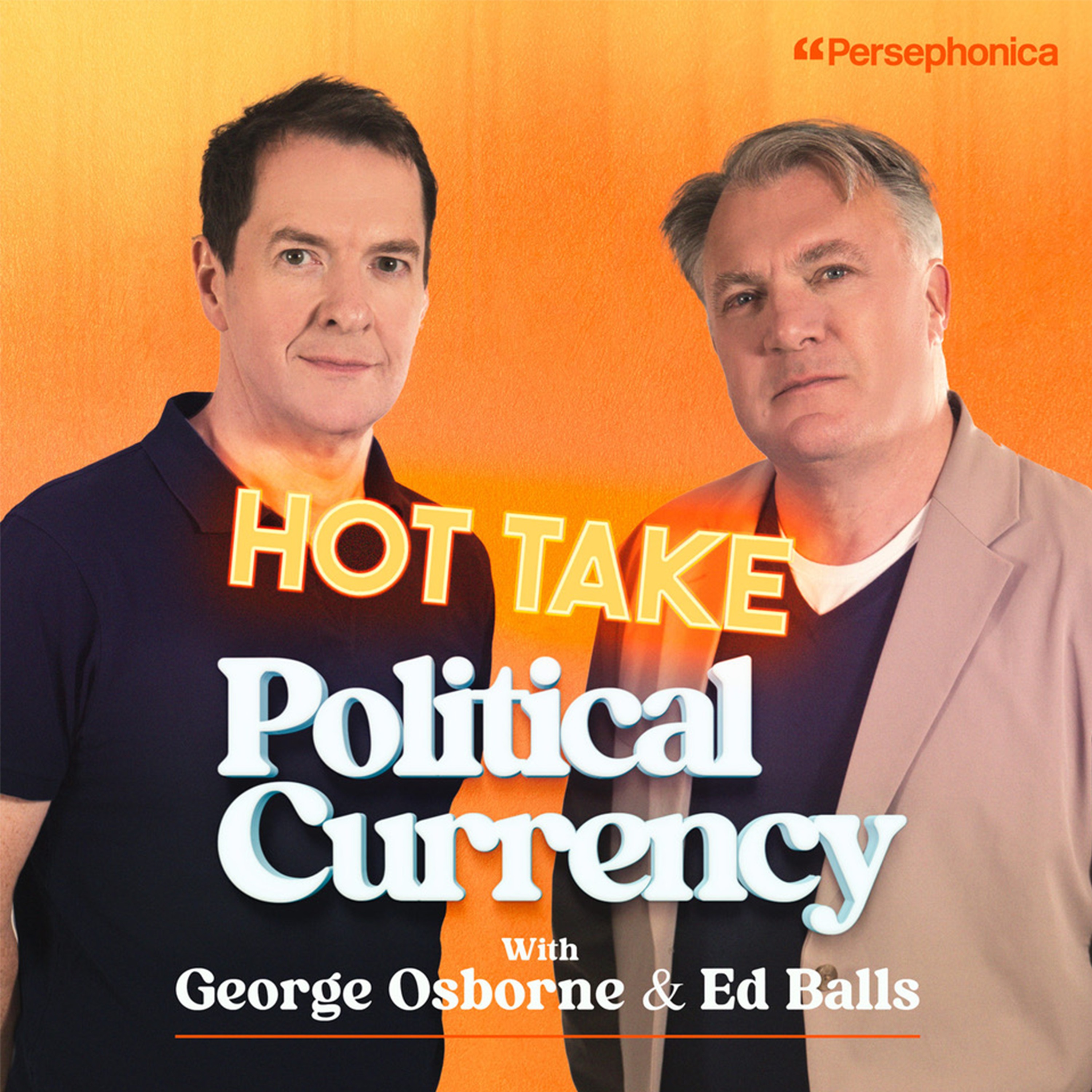
- Political Currency
- HOT TAKE: Starmer resigns, what comes next?
In short
Keir Starmer’s resignation as Labour leader and Prime Minister, the timetable for the leadership contest, and what it means for Labour’s prospects and UK governance.
Guests
Ed Balls (former UK Labour minister; co-host of Political Currency) and George Osborne (former UK Conservative Chancellor; co-host). Both react live to Starmer’s resignation statement.
Key claims
Starmer’s resignation speech was “rushed and thin,” with a clinical list of achievements and little storytelling or admission of mistakes. The premiership is framed as lacking a coherent narrative and learning. Andy Burnham is expected to become PM after nominations open 9 July and close 16 July, with Parliament rising around 16 July. A likely “pre-contest” could still occur even if Burnham is favored.
Notable examples
Starmer’s “small boats” boast; references to anti-Semitism efforts; winter fuel payment U-turn; “cash for suits and glasses” scandal; welfare reform; Liz Truss comparison (2022 chaos claim); NATO/EU summit timing and defence spending uncertainty.
Written by AI. May contain mistakes.
Chapters
1:08
Starmer's Resignation Announcement
Discussion on Keir Starmer's resignation and its implications.
“So hello and welcome to this special episode of Political Currency with Ed Balls and George Osborne.”
2:15
Evaluating Starmer's Leadership
Analysis of Starmer's speech and leadership challenges.
“But what did you think of this statement, George?”
4:34
Impact on the Labour Party
Discussion on the impact of Starmer's departure on the Labour Party's future.
“I remember Gordon Brown and his children leaving Downing Street, but I'm afraid I'm gonna have to agree with you about this.”
7:02
Next Steps for Labour Leadership
Exploration of potential successors and the leadership contest process.
“Otherwise, it's just your legacy and you're the only person who will fight and defend it.”
9:39
Preparing for a New Prime Minister
Discussion on the preparations needed for Andy Burnham's potential leadership.
“Are all these people at Al Cairns going to go, no, no, I'm going to trade in now.”
14:01
Starmer's Leadership Challenges
Explore the challenges Keir Starmer faces as he prepares to potentially step down.
“and he had years to plan for it, is that things went wrong really quickly and he never really recovered.”
18:06
The Political Landscape Ahead
Discuss the implications of leadership changes on UK politics and Burnham's potential role.
“It's also more complex compared to, for example, Jim Callaghan or Gordon Brown or Theresa May to do that from the backbenchers.”
25:46
Legacy and Future Predictions
Examine the legacy of Starmer and the future political landscape in the UK.
“When you think about it, however frustrated and angry he is, and however skeptical he is about Andy Burnham, whether Andy Burnham is really up to this, Keir Starmer and Andy Burnham are now tied together.”

Ask about this episode
Get the gist, explore an idea or ask about something said.
 Claude
On Political Currency, what are the key points of this episode?
Searching your listeningTranscript
Automatic transcript. May contain errors.
0:00Ed Balls: You've got social dialed in. Search is doing its thing. So why do your marketing results look the same as six months ago? That's because you're fishing in the same pond as everyone else. Podcast listeners are a different audience entirely, more engaged, harder to reach through traditional channels, and ready to act when someone they trust makes a recommendation. We're Acast, and we put them right in front of you. Browse thousands of the world's leading podcasts, book host reads or run your own ads, and track every conversion in real time. Same skills you already have, brand new results. Acast.
0:35Ed Balls: Acast.com slash advertise.
0:55This is Political Currency with Ed Balls and George Osborne.
1:08Ed Balls: So hello and welcome to this special episode of Political Currency with Ed Balls and George Osborne. Now you've almost certainly seen the news this morning, even if you weren't watching it live on Good Morning Britain, that Keir Starmer has resigned as leader of the Labour Party and set the timetable for his departure and for him handing over the position of Prime Minister. We're live on YouTube now. This episode will also drop on our podcast platforms shortly. And it was in the end, at the very ending, it was pretty clear this was going to happen when Downing Street were not commenting overnight on the expectation of a resignation statement.
1:52Ed Balls: And then as we were live in Good Morning Britain, suddenly before the assembled press pack, the podium was brought out into Downing Street. The speech ended on a rather unusual for Keir Starmer moment of emotion when he paid tribute to his wife Victoria and to his two children and was tearful before hugging his wife and going back into Downing Street. But what did you think of this statement, George?
2:19George Osborne: Well, it's good to be on the show. And by the way, something has just happened to me that has never happened to me before in my life. I was vox popped in the street by a camera crew asking what I thought of Keir Starman's resignation just as a regular member of the public by ITV, by your outfit. And then they suddenly went, hold on, isn't that George? And I went, yeah, I'm actually on my way to a podcast. He said, oh, Ed Balls won't mind you doing the reaction here. And I said, no, no, no, I've got to save it for the podcast. I think you should be exclusive. Yes. I mean, I'm going to be, look, it's obviously a moment of great personal sadness for him.
2:57George Osborne: And unlike some prime ministers who sort of know they're up against it from the moment they become prime minister, because they kind of tail end Charlies. And I think Rishi Sunak always knew he was to have a challenge winning an election and so on. I think Keir Starmer two years ago would have expected to be a prime minister for at least five years, maybe 10, 15 years. and so it's obviously a personal tragedy for him and a disaster for the Labour Party which we'll come on to but I'm afraid and I don't mean to be uncharitable on such a difficult day for him I mean the speech in many ways summed up the problems of the premiership there was no overarching theme of what he felt he had achieved in office beyond the very act of getting Labour in which in the history of the Labour Party might have some significance but to the rest of the country who cares and and then he reels off a list of achievements as he would put it two of which i think anyone listening would go you've got to be kidding i mean one was restore britain's reputation in the world and second was uh kind of restore economic stability i mean those are two things that are absolutely not the case when britain has yet another brand new prime minister coming just you know two years after the last one so um i felt the speech was apart from the emotional bit at the end about his um you know thanking his wife and his children which you know i've lived in that building and i know how um intense it can be but um i thought the fact he couldn't sum up his government at the end of it sort of spoke to the problem which is he didn't know what it was for at the beginning of it?
4:33Ed Balls: Look, there is a tendency to eulogise when leaders depart, and also to be emotional. I remember Gordon Brown and his children leaving Downing Street, but I'm afraid I'm gonna have to agree with you about this. I mean, it did feel like it was rushed and thin. I think they may have decided this wasn't the moment for the big valedictory statement, the big statement of Keir Starmer's achievements, that will come later. And they wanted to make sure that they get some lines into the first drafts of the obituaries tomorrow morning, the political obituaries in particular, the fight on anti-Semitism. But as you said, other than at the end, it wasn't a speech which had emotion and passion.
5:19Ed Balls: There was a list of achievements which was a bit kind of clinical. and you know I thought the small boats achievement was also one hell of a boast to um to make um politically um and there was no sense of um the state he inherited the country and what he's done to heal or the nature of the challenges which are still faced and his worries and concerns about the the future and you know harking back to our podcast last week when I mentioned Liz Kendall not being mentioned on social media. When Keir said, because of the choices that I made at the beginning of his list of achievements, and I'm thinking, Keir, it's a team sport.
6:02Ed Balls: And the whole of the cabinet, who you want to go out there and make public declarations of support, I mean, share your achievements, but also share your errors. And there was no reflection on mistakes made or an acknowledging of that. It was almost as though his departure was being done to him. So in that sense, it did feel a bit of a microcosm of the whole premiership, not really able to tell a story with passion and to show learning. And so I'm afraid I felt the same way as you did.
6:39George Osborne: Yeah, I can see why you might not feel it's a team sport this morning because his team, you know, tied him to the post and had a firing squad. But I agree with you, you know, even if that's the reality of what has happened in the last few days, if you want to speak up, speak to your, you know, what you feel you've achieved in number 10 over two years, you know, you want to bind other people into it so that it's a shared legacy. Otherwise, it's just your legacy and you're the only person who will fight and defend it. What about what happens next? I mean, I think I know what happens next. Tell me why I'm wrong.
7:13George Osborne: If I'm wrong. I mean, although he set out a timetable for a leadership contest almost immediately after his resignation, two things happened. Andy Burnham confirmed he was a candidate. That would be shock of the year or shock of the decade if he said he wasn't. And then Wes Streeting said, I'm backing Andy Burnham. So presumably, you know, it's highly likely. I know in politics nothing is, you know, 100 percent. But it is very, very likely now that Andy Burnham will be the prime minister by what, the 9th of July or the 16th of July? I mean, mid-July. What do you think?
7:46Ed Balls: I think it's highly likely that Andy Burnham becomes Prime Minister. And if he becomes Prime Minister, he becomes Prime Minister on the 16th, 17th of July, on the basis of what Keir Starmer has set out. And of course, it's for the Labour National Executive Committee to actually confirm this. What Keir Starmer did was, he said that the nominations for the leader open on the 9th of July, close on the 16th of July and that he would stay on as prime minister until the process is complete and um and parliament uh returns and that would be the beginning of September if there was to be a contest but as you say um if nobody gets uh the 81 nominations other than Andy Burnham Andy Burnham does become Prime Minister on the 16th, 17th of September, just in passing, July, July, sorry, July, yeah, of July, in passing, because it's just an interesting thing to note, but let me come back to you to answer your question.
8:46Ed Balls: Parliament rises on the 16th of July. So Andy Burnham would become the Prime Minister as Parliament departs. When Keir Starmer, when Gordon Brown became Prime Minister within government, he took over and almost immediately was in Prime questions. Theresa May, I think, had eight or ten days between her becoming the Prime Minister at the end of July and the Parliament rising for the summer. Normally, if you become Prime Minister, you have a moment where you are acclaimed, you're at the very beginning. Andy Burnham, on this basis, if there's no contest, doesn't become Prime Minister until some weeks into his premiership.
9:25Ed Balls: And by the time he becomes, therefore, the Prime Minister at promises questions he's already having to deal with events which have occurred decisions he may have made mistakes which have uh gone wrong so he doesn't get that clean moment in parliament and it's a bit easier for keby bay not to do uh actually what you and david cameron did to george to gordon brown on his first day and throw him off with um with with difficult questions but um even if there's no contest uh and i think that is likely because of the timetable which is set There will now be a pre-contest from today until the 16th of July where people will seek to get nominations.
10:07George Osborne: As you said. Well, hold on. Let me just question you on that, Ed. Isn't it a done deal? Are all these people at Al Cairns going to go, no, no, I'm going to trade in now. I'm going to try and book my slot in the Burnham government by coming out with professions of loyalty so that you might know within, you know, as I say, a day or two, that there's not going to be a contest, that Andy Burnham's about to be crowned. And then Starmer, by the way, doesn't even get his, I mean, he does in theory get his three weeks, but not in practice because, you know, sorry, in practice he won't because, you know, it will be clear Andy Burnham's the prime minister within a day or two.
10:44Ed Balls: Well, it's slightly, it depends how you read what West Streeting has done. I mean, what West Streeting has done is announce he is going to challenge Andy Burnham, put his name in the frame and then withdrawn with an expectation that he's going to be part of the Burnham candidate if you are a upcoming young potential minister who wants to get their name in the frame why don't you follow the same pattern back in 2010 when I did the leadership election we had public hustings not just of the parliamentary Labour Party but in public during the period when nominations were going to be, were being sought.
11:24Ed Balls: And it is quite possible that somebody thinks, I mean, you know, there's been speculation about Darren Jones, somebody senior or somebody more junior thinks it's good to have a debate. It's good to put Andy under pressure. I would like to have the profile. I want to be interviewed on the television every day for the next three or four weeks. it might be that somebody says I can't believe Labour is about to have an election where there is no woman stands and therefore a woman isn't it puts themselves forward and even if they end up at the end withdrawing to support Andy Burnham at least they've had a woman in the frame I don't think it will be a senior member of the cabinet but it could happen so you may be right in 48 hours we will say this contest is over even if in process terms it doesn't end until the 16th of July and doesn't start until the 9th of July that's when the nominations begin I think it's more likely that there will be people who will put their themselves forward and there will be a debate and Andy Burner will be under pressure to respond and engage don't forget Gordon Brown in 2007 did public hustings with John McDonnell and Michael Meacher at the Institute of Education where he debated the future with two guys who got nowhere near getting nominations, but they wanted their place in the sun.
12:42Ed Balls: So, you know, look, I might be wrong, but my hunch is there will be a pre-contest. Right.
12:51George Osborne: Now, if you're Andy Burnham, I mean, you are, it's so evocative, isn't it? We were talking about this a few weeks ago, sort of Game of Thrones, the King in the North coming down. But these days you don't come on, you know, with a big army. You come on the Pendolino on the West Coast mainline. And I'm recording this not far from Euston Station where he'll get off and there'll be a circus there and he's going to swear in as an MP. That's an odd moment for Kirstana. You know, the prime minister who wins a by-election in office and has to sit there and, you know, watch this guy get sworn in. What do you think he needs?
13:28George Osborne: I mean, I will argue, and again, I'll put something to you and you challenge me. All the process of talking to all the Labour MPs is pretty important. And there are lots of Labour MPs who have never met him, right? So he's not been an MP, even though he's been a big figure in the kind of Labour movement. And yet, you know, if he's going to take over in two or three weeks' time through his Prime Minister, he needs to really get moving on, or four weeks' time, get moving on, like, what is his plan for government? because the one thing we learned from the Starmer premiership, and he had years to plan for it, is that things went wrong really quickly and he never really recovered.
14:07George Osborne: You know, the winter fuel payment decision was something they hadn't planned to do, was sort of more, you know, spoke to an absence of other ideas, the scandal they didn't handle well around the, you know, cash for suits and glasses and all that kind of stuff. So, you know, he has got to do, these things can't be manufactured overnight. He needs like a plan for government, a plan for running number 10. And I would argue a kind of, well, maybe come back to this, you know, what is he actually going to say and do over the coming weeks? Because the British public are going to form a view on him. They don't really have a view on him at the moment.
14:40George Osborne: And they're going to form a view in the coming week.
14:43Ed Balls: I think I'm right in saying, and this is my reading of what's been in the papers in the last few days, is that actually Andy wanted this process to go through until September. He wanted to take over before conference, but he really wanted this period to be able to prepare and to plan. And the way in which the timetables are working out, the way Keir Starmer has done it, means he could become Prime Minister more quickly than he wanted rather than it being pushed further away. And I also think, I mean, back in 2007, Gordon Brown quite welcomed the idea that there was a process to get the nominations because it does give some legitimacy to you getting the office.
15:26Ed Balls: And so I don't think Andy Burnham will shy away from having that kind of public pre-process up to the 9th of July while he's doing the planning on the side. And, you know, and I think the chances of having done a lot of that so far are probably quite slim. him. The other thing, as you said, is it gives him a chance to meet lots and lots of people. He's got to be very careful that he doesn't sort of start conducting de facto his reshuffle before he's actually become prime minister, because if that leaks out, that is quite destabilising.
16:05Ed Balls: But there's a lot of work to do and he needs to get on and do it.
16:08George Osborne: No, I mean, there'll be endless speculation about who's in the cabinet and particularly who takes the role of Chancellor. And, you know, I think it's highly unlikely that Rachel Reeves survives as Chancellor, though she may have a job in the government in some place. Although if she announces, George,
16:25Ed Balls: if she announces during this period, in order not to be denied the job, that she has decided to stand down or to absent herself, that increases the pressure on Andy Vernon to say something more quickly, which he probably won't welcome.
16:40George Osborne: yeah although given my own experience of this you know i think it's actually more sensible if you're not going to be appointed as chancellor for that to be made clear to you and then you can go on your own terms and you don't have to go through what look what i had to do with theresa may so you know i think i would have been certainly better for me and i would argue better for her anyway but so if you know i think if it's going to be andy burnham and he's not going to appoint her he should make that clear to her privately so that she can make her own decisions about when to make an announcement so there'll be a lot of speculation about personnel there'll be a lot of speculation about team he doesn't you know although he's put together a team for the by election you know this is nothing like what you have in opposition where you know you were an advisor to gordon brown for years and i me and david cameron spent years in opposition thinking about things you know he doesn't he's got some people we've talked about on previous podcasts who are kind of close aides of him and the chief of staff and so on but nothing like the kind of team you need to put together for Downing Street.
17:37George Osborne: Although I guess he probably has been doing quite a lot of thinking about that. Has he been interviewing people? Has he been, you know, Lou Haig, as we're told, is very important. Josh Simons, who was the guy who actually vacated the maker field seat, is now meant to be close and working with him. My friend Jim O 'Neill is, you know, providing him with ideas. But it's not yet a kind of Downing Street team. And we know what, again, what a mess Starmer got into with Sue Gray and his various directors of communications.
18:06Ed Balls: It's also more complex compared to, for example, Jim Callaghan or Gordon Brown or Theresa May to do that from the backbenchers. I mean, I know the civil service or people on behalf of the civil service will already be reaching out to the Burnham team. But back in those times, I mean, it was possible for there to be, you know, an extensive Gordon Brown conversation with Number 10 and within the Treasury and other departments about how the transition would occur while he was still Chancellor. Even if it looks like Andy Burnham is not going to be challenged and he's going to become the prime minister, much harder for that to be done with a backbench member of parliament in the House of Commons.
18:48Ed Balls: It's not impossible. Getting those personal decisions is right. Of course, the other thing is important to say is the government still has to function. And the thing we know about the 16th of July date is that comes before the putative Starmer EU summit, which was the week after. Now, I would say if I was Keir Starmer or Andy Burnham or the European Union, I would not want to have that summit in the third week of July. because if Andy Burnham's just become the Prime Minister, it's too quick. And you use the excuse that the leadership election might be going on until September. But you also have the NATO summit in the first week of July, which Keir Starmer is going to have to go to.
19:31Ed Balls: Does he go there naked? Or does he go with an agreed defence investment plan? Is that a plan which is the same as the one John Healy rejected? Is that a plan that Andy Burnham signs up to? Does Andy Burnham say, it's helpful for you to get that out of the way for me now but I'm going to have to start some process of my own to then re-look at it over the next six months. How does Keir Starmer go to the NATO summit, having failed to agree with the defence investment plan and trying to show Britain leading on the international stage?
20:01George Osborne: But he can't go with an agreed plan because Andy Burnham can't commit billions of pounds to defence spending, which has an implication for other department spending, for taxes, for the fiscal rules, until he's looking at all those pieces together. And we know it's an incredibly hard conundrum to solve because Keir Starmer couldn't solve it. And arguably Rishi Sunak didn't solve it either.
20:24Ed Balls: So, you know, you could say that the plan which is cut on the table is less than what John Healy wanted. But at least it's a start. Can you really? I mean, it might be easier for Andy Burnham to be bought some time to have Keir Starmer say, well, OK, well, that's the one which we have agreed. and, you know, absent John Healy. And we're going to then come back to it in the autumn for round two.
20:47George Osborne: Yes, although I'm not sure what status it has been. I don't think it's been put to the cabinet and formally adopted, has it? So, but it's in this kind of, I mean, I think if you were looking, we were talking about this on the main podcast, you know, well, come on, let's come on to Starmer's legacy. I mean, the real legacy is not about Keir Starmer. It's about these multiple prime ministers that Britain has been having. I mean, it's quite staggering compared to not just our lifetimes, but, you know, all periods of British history, unless you go back to the sort of, you know, early, very beginning of the 19th century and middle of the 18th century.
21:24George Osborne: I mean, you know, in other words, in the modern period of Britain's parliamentary democracy, there has never been a situation like this where you have one prime minister after another every couple of years, seven prime ministers in a row. So, I mean, Emmanuel Macron as president of France has probably dealt with six different prime ministers during that period. So in that kind of environment, I think it's a mistake to just think this is all about Keir Starmer and his communication problems, or indeed it's just a sort of Labour Party problem. Because probably on the Tory benches, they're like, oh, great, and there'll be definitely some schadenfreude on the Tory side, which is, huh, you thought Labour, you were so good and you made fun of us having all these leadership changes and the chaos and all that.
22:06George Osborne: and look, you're in the same mess. But I think the question is, why is Britain in this mess? And until someone comes up with a kind of convincing answer, a theory of why we're in this mess, which goes beyond, well, we've had Tory prime ministers or we've had Keir Starmer, they're not actually going to be able to come up with the answers and solutions that get us out of this political chaos.
22:28Ed Balls: Look, we were playing on Good Morning Britain this morning, the clip from Keir Starmer as Liz Truss resigned back in 2022, saying we can't have any more of this chaos and we need a general election now. And I can assure you that Andy Burnham and Keir Starmer won't be making a similar claim about the Labour chaos. And I think, you know, although we were talking there about defence and about the EU summit, I mean, for every cabinet minister, they've got decisions on their desk and they're going to be told by the civil service, you must make this as a deadline. And they're thinking, I know, but is this something which I can sign up to knowing that Andy Burnham will or won't agree to it?
23:07Ed Balls: So there is a danger for Keir Starmer in his legacy that this next few weeks is messy and chaotic. But then beyond that, he didn't really seek to answer your bigger question, why is this happening? And nor did he seek to answer the issue about his mistakes. And I think that one of the frustrations when I think back over our conversations in the last two years. If you think about the things which had gone wrong in the Stama premiership, I think the winter fuel allowance, where he did a U-turn in the end, or Peter Mandelson, where he ended up sacking him, or on welfare reform, which is now being revived.
23:41Ed Balls: On every one of those, there was a big mistake, but their handling of the mistake, they then spent months and months not making decisions and getting themselves into terribly messy situations I mean, I think governing in the last two years has just been done so poorly, and that is a big part of the Starmer story. And it's easy to think of excuses about, I know, but maybe governing is just not possible in this era. I'm not sure I buy that. I think you can do it well or badly.
24:13George Osborne: I totally agree with that. And I think if you can look at both centre-right and centre-left governments around the world that are actually doing quite a lot. I mean, the Australian government, you know, I mean I don't think anyone says Prime Minister Albanese is like the most charismatic politician Australia has ever had and yet you know he's endured in office longer than most recent Australian Prime Ministers. Mark Carney is setting you know things alike you know with lots of interesting policy ideas that you just don't see coming out of this government here in Britain. Now I think it is perfectly possible to govern but there are big challenges which you have to be you have to make some bold decisions depending on where you come from on the ideological spectrum on Britain's growth prospects.
24:53George Osborne: I think you have to be very clear-eyed about the politics that Brexit has left us. And, you know, in a sense, you know, the Tory party is saddled with being the Brexit party, even though most of its MPs voted Remain. And the Labour Party, you know, many of its voters voted Brexit. And yet it's the sort of... So, you know, no one has come forward. None of those string of Tory prime ministers towards the end, nor Keir Starmer have actually sort of nailed, this is my analysis of what's gone wrong, and here is my bold solutions, which you are either with me, Ori, or not, and I'm going to stick to them, to get the country out of the hole.
25:33Ed Balls: The great irony, though, for Keir Starmer, and this is coming to the bigger question about legacy and how he will be looked back on, will he be looked back on as the guy who could win an election over six years as Labour leader from Jeremy Corbyn, wins a general election, but then just ended up not governing very well. When you think about it, however frustrated and angry he is, and however skeptical he is about Andy Burnham, whether Andy Burnham is really up to this, Keir Starmer and Andy Burnham are now tied together. If Andy Burnham fails and Labour loses the next general election to reform other Conservatives, Keir Starmer's place in history will be the guy who messed up a Labour majority and it wasn't possible to turn it round.
26:16Ed Balls: If Andy Burnham is able to govern more effectively and to do a better job and turn things around in the polls, that is the best outcome for Keir Starmer. That secures a better place in history as the guy who brought Labour back into government after all those years of opposition. So however frustrated Keir Starmer is today, he needs Andy Burnham to succeed as much as Andy Burnham needs Andy Burnham to succeed.
26:43George Osborne: hmm no that is a very good point i mean and if they fail i think their history will look back on this period since 2016 of a series of prime ministers in the mainstream parties who came and went and heralded the arrival of nigel farage and that was a and keir starmer
27:01Ed Balls: doesn't want that to be his legacy any more than and no one's no one remember their name on most their names um anyway but we can talk about this more on thursday when we do our main
27:12George Osborne: episode yes i know it's a very odd experience downing street you're so aware that you're at the center of power that when the power goes and i remember those last few it was like for me it was like the last couple of weeks in downing street as well after david cameron announced his resignation you know from the front steps as kia starmer did the power just evaporates and um and you feel it more acutely inside the building even than people see from outside the building so yes we've got to talk about in the coming weeks hope you can join us on thursday for our regular weekly podcast
27:47Ed Balls: but that is it for this week's emergency episode of political currency back on thursday and don't forget if you're a kitchen cabinet member you can also get our weekly newsletter a mug a members only chat early emqs ad free the whole caboodle we will see you on thursday see you then
28:13George Osborne: thanks for listening to political currency this has been a persifonica production
28:26Ed Balls: do you keep hearing podcast ads like this one for example but always wonder how you actually get involved with them for your own brand or organization? Well, it's easier than you think. We're Acast, and we give you the platform to do it all yourself. Browse thousands of popular podcasts, choose the shows that match your perfect audience, set your budget, and launch. And if you want a hand, our podcast specialists are there to help you launch with confidence. This is podcast advertising without barriers. Get started at acast.com slash advertise.
From the publisher
After Keir Starmer delivered his resignation speech this morning, Ed Balls and George Osborne reflect on what comes next for the government, for the country, and for the outgoing Prime Minister. Was Starmer’s ‘clinical’ address a sign of a weak legacy and further inability to communicate his successes? The pair argue the performance was lacking in both emotion, and in recognition for the work of his cabinet colleagues.
Plus, as Wes Streeting backs down and a coronation of Andy Burnham seems imminent, will any other Labour MPs dare to stand against the King of the North? Or will they now start trying to book a spot at the next Cabinet table instead? Ed suggests an outsider candidate could launch a pre-contest to have their moment in the limelight and give Burnham some scrutiny. Meanwhile, George speaks of the need for Andy Burnham to nail down a plan for the government and get ahead of the tide of public opinion.
Lastly, they discuss where this leaves the Labour government two years on from its landslide majority. Has Starmer fallen into the same trap as previous governments of not sticking to a clear plan, as George says? And, as Ed theorises, is the Starmer legacy now tied to the performance of a future Burnham government?
We love hearing from you, so please don’t forget to send all your EMQs to questions@politicalcurrency and make sure to include a voice note of your question or send a question to our social media handles:
👉 X
👉 TikTok
Thanks for listening. To get episodes early and ad- free join Political Currency Gold or our Kitchen Cabinet. If you want even more perks including our exclusive newsletter, join our Kitchen Cabinet today:
👉 patreon.com/politicalcurrency
Please note: Kitchen Cabinet is only available via Patreon.
Credits:
Research: Sam Burton
Production: Caillin McDaid
Video Editor: Oliver Geraghty
Executive Producer: Ellie Clifford & Henrietta Harrison
Political Currency is a Persephonica Production and is part of the Acast Creator Network.
Hosted on Acast. See acast.com/privacy for more information.
More from Political Currency
All episodes

We use cookies.They keep VO running smoothly and help us improve it. Privacy policy