

 Ask ChatGPT

- Podcasts
- Political Currency
- Is Shabana Mahmood the heir to Blair?
In short
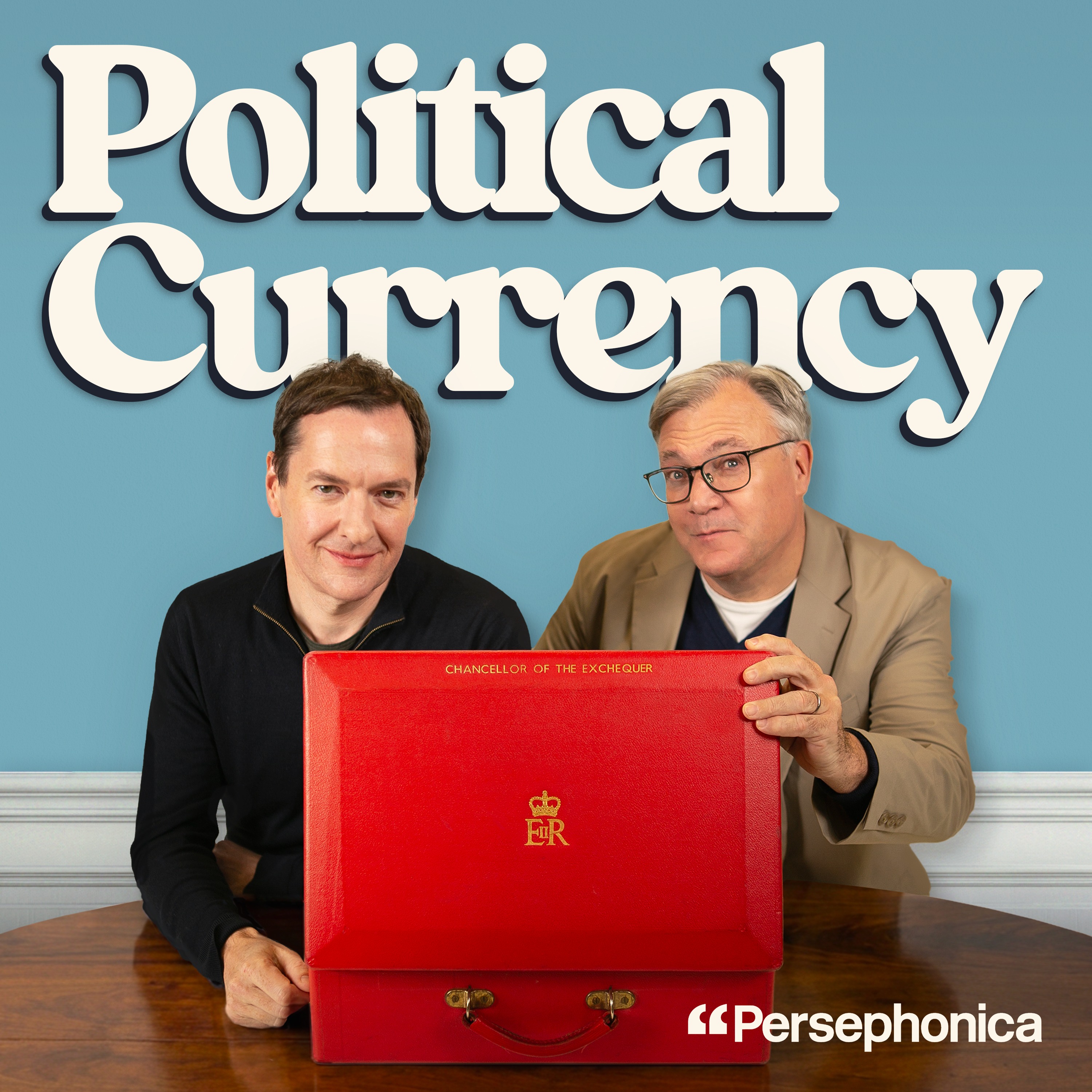
Hosts: Ed Balls and George Osborne
Release Day
Every Thursday
Description
A podcast offering insights into political decisions that impact the economy, hosted by former political rivals.
- The episode kicks off with a humorous anecdote regarding Peter Mandelson and a dinner at George Osborne's house, leading into discussions about the current political landscape and the upcoming Budget.
Written by AI. May contain mistakes.

Ask about this episode
Get the gist, explore an idea or ask about something said.
 Claude
On Political Currency, what are the key points of this episode?
Searching your listeningTranscript
Automatic transcript. May contain errors.
0:13This is Political Coancy with Ed Balls and George Osborne.
0:27so we are in the studio in hoxton and so much to talk about today but before we do i have been besieged for the last week by people saying to me you've got to ask george because after last week's podcast a story dropped in the daily mail about um peter manderson coming around to yours for dinner in West London and then getting caught short, waiting for his Ubers late at night, which got cancelled and ended up being photographed, I think by the Daily Mail, having a piss against a lamppost outside your house. And, you know, I'm not going to ask you who else was there. I'm not going to ask you what the subject of the discussion was.
1:07You know, I'm not going to ask whether you were both sharing thoughts about your career plans and job opportunities and all that kind of thing. I just want to know, why did Peter Mandelson stay outside? I mean, did you not open the door to him? If he was desperate to relieve himself, why didn't he come back in the house and say, can he use your loo? Why did he decide to break the law, it seems, allegedly, outside in the street? I mean, have you banished him? I don't really have a very good answer for you. Then, of course, I would have opened the door if he had rung, or indeed, if you had rung and you wanted to come and use our facilities.
1:45I might have been walking past and suddenly think to myself, I need to relieve myself. Shall I pop round to George's? He had been at your house for dinner for the previous three hours. Why didn't it occur to him to come back and ring the doorbell? He didn't ring the doorbell again then? No. Anyway, you can ask him if you like, because goodness knows. But I tell you what... Can you not give us any insight? Well, not really, except that I feel pretty sorry for him, to be honest. But when you've got to go, you've got to go. Which is why I've gone before we sit down and record this podcast. When you've got to go, you've got to go.
2:14I mean, you know, there is so much in that phrase. Anyway, I'm going to use this as a rather clunky segue to something which is much more edifying, which is we are auctioning on this podcast a very large bottle of Paul Roger champagne, which definitely if you drink this Jeroboam, which is three litres of champagne, you will need to go to the new at some point. But it is... That's a terrible segue. It is a terrible segue. Anyway, it's for a really, really brilliant cause. This is to raise money for Sarcoma UK. And this is in the memory of someone we both knew really well, Chris Martin, who was a civil servant, ended up being the top civil servant in Downing Street, the principal private secretary to David Cameron, and then tragically died at the age of 42.
2:58And his widow, Zoe, has done a brilliant job ever since that tragic death of raising money and awareness for sarcoma. And this bottle of Pro-Roger is signed by all nine living prime ministers. So I know we have got some people who listen to the show who are political obsessives, who like to collect some memorabilia. This is a pretty unique thing. This is a bottle signed by all nine living prime ministers. And if there's a new prime minister in the next year, we'll get them to sign it too. Definitely. This is a fundraiser for Sarcoma, which is happening next Thursday night, the 27th. I'm comparing.
3:34I've actually compared it for the last 10 years. It's been going for a number of years, all raising a huge amount of money for Sarcoma UK. And George and I are going to do a political quiz. I think we might share some of our questions for our golden Kitchen Cabinet subscribers in due course from that quiz. But this is an auction. In the show notes, you can see how you can bid for this bottle of champagne. I mean, very special. I should just point out that although it is being signed by all nine living prime ministers, and all nine living prime ministers have agreed to sign it, one of them apparently has not got round to it yet.
4:04So it's currently signed by eight, but it's going to be signed by the ninth. Get who is the prime minister who hasn't quite got round to signing the bottle. Well, you told me so. But I think I would have got there. Boris Johnson is a busy guy. He's a very, very busy guy. He's travelling all around the world doing important things. I don't know what they are, but he's almost certainly making speeches, which are probably totally unprepared, but it doesn't matter. And to be honest, he could buy this bottle of champagne and probably blow all of our listeners out of the water with a bid. He could probably buy Paul Roger vineyard at this rate.
4:35And it's Churchill's favourite champagne, of course. And Boris Johnson styled his career on Winston Churchill, although some of the parallels didn't work out in the way that he wanted them to. And the great thing is if he was to bid for the bottle, we could take it around for him and then he could sign it and then keep it. Yeah. Two birds with one stone. Anyway, it's in the show notes and it's going to close next Thursday, the 27th at 10pm. So you've got a whole week to bid if you would like to for a great cause And also, I think a great auction prize, a bottle of champagne signed by nine living prime ministers, currently eight, borrows to come.
5:07There we are. Anyway, it's already been bought. So even if the budget puts up taxes on champagne, you will not have to pay them, which, by the way, is another segue to say we are going to be talking about the budget, aren't we, on this show. We've got a week to go. It's been a pretty chaotic week since we last recorded a podcast. And it looks like there's been a big U-turn on whether to put up income tax, the rates of income tax and instead they're going to go for what they're calling a smorgasbord of tax rises. Anyway, we are going to talk about the budget with a week to go. We are. Then we're going to turn to a story which was sufficiently big that it actually for a few days ended all that budget speculation and all that mess around West Street being briefed against by number 10.
5:50This is the Home Secretary Shabana Mahmood announcing on Monday to Parliament hugely significant reforms to the British asylum system. Controversial, done in a very kind of dynamic and hard-hitting way. And it's had, you know, support and criticism from the left and the right of British politics. And we are going to talk about Shabana Mahmood's week second. And then we're going to turn to a rather odd subject, you might think, which is cloud seeding technology. This is basically when you fire chemicals up into the air and it causes rain to happen or if you fire them somewhere else it means that rain doesn't happen over a particular location they've been deploying this technology in tehran because there is a drought in iran it's been deployed by the chinese it was suggested to me by well i'm not allowed to say this is a podcast so far of jarring segues and the segue in item three is going to be so jarring let's just say we're going to move from tehran by a cloud shooting to politics in another part of the world leave people guessing george sacramento or is that too much of a clue that is not too much of a clue okay well we're going to start with um the budget a week ago we were recording this podcast and after a dramatic two weeks in british politics we'd had the charles of the exchequer rachel reeves doing that very unusual live press conference at 10 past eight in downing street in which she had basically said taxes are going up by saying everyone must do their bit she was signalling and that was absolutely what was being encouraged by all of her media advisors.
7:23This was going to be breaking her manifesto commitments not to raise income tax, VAT on national insurance. That was then followed up with an interview with Matt Chorley of the BBC the following Monday, Monday of last week, in which she repeated that manifesto point. She said she could stick with her manifesto but the cost of that in terms of cuts to capital spending would be so big and we in our podcast last week were saying well this is controversial, challenging because the politics of breaking a manifesto like that is quite significant. On the other hand, it's hard to see how she can credibly go after the scale of tax rises she needs without breaking the manifesto.
7:58And she was getting huge plaudits from the financial markets for the clarity of that commitment to raise income tax. That's where things had landed. And then our podcast landed on Thursday evening. And then at 10 at night, a story to the Financial Times, a further momentous U-turn. The government, we were told, has ripped up these plans. The Chancellor is no longer going to raise income tax. She's no longer going to break a manifesto commitment. Led to complete chaos on the financial markets on Friday. So a week out, where does this leave the budget? That's what we're going to talk about now. Before we do, here's a quick reminder of Rachel Reeves' journey to today.
8:36I did not come into politics to raise taxes on working people. So my promise to you is this. Labour will not put up your income tax, national insurance or VAT. That extending the threshold freeze would hurt working people. It would take more money out of their pay slips. I'm keeping every single promise on tax that I made in our manifesto. So there will be no extension of the freeze in income tax and national insurance thresholds. Public services now need to live within their means because I'm really clear. I'm not coming back with more borrowing or more taxes. At the Budget, we protected working people by keeping our promise not to raise their rates of national insurance, income tax or VAT.
9:26Every time, on every issue, it is Labour that is standing up for working people and standing up for our national interest. So when you leave this hall, when you return to your communities and your workplaces, let the message ring out that there is only one party that was founded by working people and only one party that is committed absolutely to defending their interests. If we are to build the future of Britain together, we will all have to contribute to that effort. Each of us must do our bit for the security of our country and the brightness of its future. It would, of course, be possible to stick with the manifesto commitments, but that would require things like deep cuts in capital spending.
10:12The long and short of it is it's a complete fiasco. It's one thing to say, I'm going to break the manifesto commitment for the reasons she gave right at the end there, because the world is different. The cost of keeping to the manifesto commitments are deep cuts in public expenditure, which as a Labour chancellor, I'm not prepared to do. And they were laying the ground for that. It's precisely what they were laying the ground for. And the plan from the Resolution Foundation, originally, that think tank which Torsten Bell helped set up and is now helping on the budget as a Labour minister, was that you put an income tax up by a couple of percent and then you cut national insurance by a couple of percent or a couple of pence, I should say, in both cases.
10:47And most working people are no worse off, but you are taxing people like pensioners and unearned income and so on. That was the plan. It was clearly the plan. It was submitted to the OBR and they were laying the ground in public for the breach of the manifesto. And we said, and we weren't the only people to say it, that is a big gamble, breaking your manifesto promise on income tax, being the first chance in 50 years to raise income tax. This is a huge, huge deal. But they'd kind of clearly got to that point. What is extraordinary is then to hit the kind of screeching U-turn. What is not so strange in the history of budget making is to still be having big decisions a couple of weeks out.
11:23So I think, you know, for people who say, oh, it's all a bit chaotic, sometimes in budgets, you are still making big calls on policy a couple of weeks out. But what you're not doing is doing it in public and starting to lay the ground for the thing you're about to do and then doing that U-turn. I don't think actually the leak to the Financial Times was deliberate, as I understand it. So I don't think they were expecting it to be in the paper, but it was. And as you say, it had this real world impact, which, by the way, everyone who listens to this podcast and lives in Britain is paying for, which is more expensive money because of bond yields and a cheaper currency.
11:57So less money compared to other people in the world. That's the real world consequences. And, you know, it has, I'm afraid, completely kind of torpedoed the attempt to tell a story about this budget, which, you know, many people, including us, have been urging them to do. and I think where you're left as you approach the budget with a week to go we can come on and discuss you know what might be in it but it's this sort of central narrative which is the economy is screwed and that's why we're going to have this terrible budget that's not a message you want the government to be the government's got to be communicating yeah things are tough but we're having the budget to do this there was this opinion poll published this week by yougov which asked the question how is the government handling the economy and only one percent of the population 1 % of the population think the government is handling the economy very well.
12:45And for context, and I'm borrowing here from lobby journalist Jason Groves, who pointed this out, 1 % of the country thinks the government's handling the economy well. 4 % of people think Prince Andrew's doing a good job. You know, it is pretty, pretty dire. I think if you were trying to look for a kind of silver lining, you would say at least still anchored in people's minds and the market's minds, despite the movements last Friday, is she is still going to meet the fiscal rules that she set out. There's not going to be a dramatic kind of loosening of policy. As a result, you're unlikely to get a kind of big adverse bond market reaction when the budget is finally presented.
13:21But you will end up with a set of things which are going to be quite difficult to explain to the public, not least because you're now shone a big spotlight on them, including income tax thresholds which you being frozen which rishi sunak did for many years you can point that out as a labor chancellor that your predecessor did it but you know she was there on the record in the house of commons saying they hurt working people and i'm not going to do it so even that's going to be pretty hard for her to swallow they are definitely back now to what is called the smogasbord budget which is they have to have lots of tax rises you like a smogasbord when you're on holiday and you go do you like the fact there's a bit of cheese and herring and salami or you just I don't want this Scandi smorgasbord.
14:02We actually started our holiday the year before last in Stockholm in a little kind of hut, holiday place by a fjord just outside of Stockholm. And I put together a very good smozgabord. But, you know, I wasn't trying to win the confidence of the international financial markets while I was doing it. It had a rather small audience who gave me a big thumbs up. I also cooked a paella in Stockholm, which has nothing to do with Sweden and has nothing to do with this podcast either. The thing about the smozgabord problem. By the way, I wonder whether they have fields in Sweden. Just saying. Might be a Norwegian thing.
14:32There was a lot of water. We'll come back to water later. So the problem is that if you've got to put together lots of different smaller tax rises, it's harder because they've got to add up. They've got to work. There'll be lots of questions raised about, you know, well, if they do a rise in gambling taxes, is that going to bring in the money? Or are you going to see gambling companies moving abroad? There was an ITV story from Joel Hills this week about Skybet apparently already moving out to Malta or to Gibraltar in terms of their domicile. Who gets hit in terms of people's savings or their pension savings?
15:04I think they've ruled out when they were going for the income tax rise this hit to partnerships. The point, though, is that the markets had been told, no, we're not doing that. We're doing a clean tax rise for everybody, which will bring in the money and rebuild the margins. And, you know, that was the messaging. We were talking last week about the financial markets. And I said, you know, this briefing, which we'd seen from Keir Starmer and from Number 10, from Rachel Reeves' people as well, that no, no, we must stay in post because we're the people the markets trust. And we said, well, that is a bit of a hostage to fortune if the markets turn against you.
15:37And it might be that the market moves. It could be because they're worried you might be moved. But it could also be the market moves because they're worried that what you're doing is a bit chaotic all over the place. And on that Friday of last week, when suddenly the clean tax rise was off the table, the rise in markets wasn't because Rachel Rees was going to get sacked. It was because people thought, well, this is chaos is not what you've been telling us the last two weeks. Who is in charge of this process? It's led to two kind of odd speculative theories. One is that Keir Starmer actually thought that if you raise the prospect of an income tax rise and then said, aha, no, we're not doing it.
16:09That would be good news. People would feel good about it. I don't think I think that's retrofitting what happened. It's absurd. They were clearly thinking very, very seriously about doing it. And the second theory is maybe the Treasury was trying to say they'll do income tax to manipulate the markets to reduce the bond yield so that the OBR in their forecast would score less debt interest savings. And then once the forecast had been completed by the OBR, you say, no, we're not actually. And at that point, market rates go up again. I wouldn't put that past the Treasury. No, but it's ridiculous.
16:42Both of these theories tell you that people are standing back, scratching heads and thinking, how could the Treasury be organising this in such a chaotic and incompetent way with all these contradictory briefings? Any conspiracy theories better than none lets a light upon two. By the way, the idea that this was done by two Treasury officials, this wasn't done by the political Treasury. I find that really hard to believe. I don't know, but I just don't. In my experience, Treasury officials don't go and brief about the budget 10 days out, especially about something as sensitive as the OBR forecast.
17:15And if you look at the original FT story, it didn't say the OBR forecast is improved. It said that after the huge political reaction to the botched Keir Starmer No. 10 briefing against West Streeting, combined with Lucy Powell, the new deputy leader, Turns out West Streeting subsequently all saying you must keep to the manifesto. They made a political decision that the cost of breaking the manifesto was so great they had to get off it. And that was the U-turn. And I have to say, I find that rather more plausible. But ultimately, the right calculation, right? I mean, I think it would have been extremely hard.
17:48And the other odd thing, by the way... Well, we just agreed on this because, you know, I've always said I wouldn't start from here. I never thought that this was the right manifesto commitment to make. I always thought that the... The odd thing about, by the way, this policy is it was only going to raise£6 billion. If they did the Nasher Insurance Office, which we don't know they were going to do. This isn't a history show. So, you know, it's clear they're not going to do this now. But the odd thing about this whole discussion was they were going to risk breaking the manifesto commitment for not very much money and not solving their problem.
18:17And the income tax thresholds, which, you know, absolutely you can legitimately argue is also a break of the manifesto because Rachel Reeves was attacking it before the election. You heard that in the clip from the Labour election broadcast, which was the first bit of the clip. You know, she was saying it again in her budget last year. I mean, that is a tax on working people. But let's be absolutely clear, because, you know, there'll be lots of progressive people listening to this. If you freeze the thresholds, that is the most regressive way of raising money from income tax that hits the poorest hardest, because it hits someone earning£12 ,570, which is where the threshold is, or just a bit above it.
18:55You know, they get dragged into that threshold. Whereas if you just raise the main rate of income tax, actually people who earn more pay more. So it's got a long history in British politics as a kind of stealth tax. And as Chancellor, you know, partly at the urging of the Liberal Democrats, we actually doubled the threshold because it was a progressive thing to do from around£6 ,500 to £12 ,500 by the time I left. You know, they are going back to the kind of later Tory policy. And now there's going to be so much attention on it. There's no chance this is going to be a stealth tax, you know, it's going to be widely reported.
19:26It looks like you're also going to have like a high value property tax, which are additional council tax bans, which I also looked at, as we discussed in the show, albeit to use it to cut income tax. Although we have to be so careful. We don't know. A week ago, we were saying it's going to be an income tax rise because that's what we were being told so clearly. We don't know. I mean, to answer your question, I wouldn't have made the manifesto commitment. I wouldn't have said what was said in last year's budget. I would have used the spring to get off the manifesto because the world had changed when we discussed this a few weeks ago about whether breaking the manifesto at that point for rachel reeves was doable you said no and i said it's really difficult i can't see what the alternative is because i fear that the smozka board isn't going to work but once they decided to tell everybody they were going to do it i thought well you know that is brave but also it's consistent with a strategy of getting this done and getting through the next three years and hoping that things turn around.
20:24To say you're going to do it and then change your mind is, I mean, that is the thing which feels so wildly distended. Well, to do it in public, isn't it? I mean, as I say, I mean, that's the odd thing. When you were kind of clearly laying the ground as we heard. It reminds me of something that was messaged to me earlier this week by one of our political editors who said, have you discussed Ed Balls for Chancellor on your pod recently? That's a bit like saying, discussing Andy Burnham for Prime Minister. about, you know, Andy Burnham is not a member of Parliament and neither am I. And I have no intention of becoming a member.
20:54I think if I asked Andy Burnham, he might say he wants to be a member of Parliament. In fact, that Labour MP Clive Lewis, who is the Norwich South MP, a town close to your heart. Former seat of Charles Clarke. Right. And he's volunteered to... Who lost his seat with a bit of help from the Greens. So, you know, complicated seat to step into. Anyway, so you've certainly done your homework. It comes back to, you know, And we don't want to sound like a stuck record on this podcast, but it's all about in politics. You have policies and ultimately you are judged whether those policies succeed or not in the real world.
21:29But you do have to set them in the context of a story and a narrative and you have to explain what you're doing and why you're doing it. And that is particularly the case when you are asking people to give you more of their own money by raising their taxes. And, you know, with a week to go, where do you think we are in terms of this is where I started this segment. the budget narrative? Because it seems to me there's nothing now left other than the economy's in the mess. So I'm afraid the budget's not going to be very nice. The budget narrative has completely collapsed into chaos. And that attempt to set out the budget narrative was done in that unusual press conference at 10 past eight in the morning in Downing Street to pave the way for a decision about taxes, which has now been removed.
22:11Now, I felt at the time, it was too backward looking about who was to blame in the past. And there wasn't enough of a story about the vision for the future, the growth plan, what we need to do together to improve our public services. But even that has sort of been ditched. I don't know what the narrative is. I think there's one other point I would like to say, which is... Probably the two-child policy is going to be the big reveal on the day, isn't it? A watering down of or abolition of. Well, in a way, that's the point I want to make because, you know, how can we say that the big reveal in a week's time is going to be the thing which has been discussed for the last two weeks.
22:44What kind of reveal is that? Something weird has happened. I know that this probably started actually with Alistair Darling, but I think it's something which has taken over just in the most recent years. Discussion in public of the budget and budget measures and in such a sort of open and briefed way. I mean, these days, I mean, it happened in the FT last week with that story where the spokesman says that the Treasury doesn't comment on budget speculation. And you kind of laugh out loud because the Treasury is clearly behind all of this budget speculation. And it didn't used to be this way. And there is such a double standard here.
23:19If you work in the private sector, if you're working in a bank, in a regulated financial services company, in a company as well, there are such strict rules, rules about how information is passed and shared, the way in which your phones are monitored, what you're allowed to say to other people in your own organisation, which are both in criminal law, but also in the regulatory framework. That sort of respect for market-sensitive information, I think, was also reflected in the way in which the Treasury used to go about budget-making. You remember Dalton in 1947 having to resign as Chancellor because he mistakenly said to the Evening Standard a few things which were going to be in the budget an hour before he delivered it.
23:56He went like tuppence up on beer, one pence up on cigarettes, and then he had to resign. Labour's last old Etonian Chancellor. The budgets I was involved in, on the day of the budget, so this is not like a week before, the day of the budget, we would have come in in the morning, the political editor of the BBC, ITV and Sky, and have a conversation. It would be me and the head of communications, full knowledge of the permanent secretary. We would talk through the message of the budget, but also broadly the order in which things would unfold. there is no way in that conversation we would ever mention any of the individual measures because the view was that was market sensitive and you couldn't say market sensitive things to journalists in advance and you know what was said last thursday night to the ft about ditching the income tax rise that was clearly massively market sensitive because it moved markets the next day and that's happened again and again and i don't understand why we've ended up in a situation where the Treasury, politically, but it also seems the official Treasury, is allowing a market-sensitive, rolling speculation coming from within the institution about budget measures, which, if that was happening in the private sector, there would be kind of massive anger and regulatory investigation.
25:11I'm not saying that it's leading to people trading on the basis of this information, although they clearly could. I'm just saying it's so disorderly and inappropriate, for it and i don't understand how it's happened well i think that it's a good question i think there are two things there so the first is i think the treasury certainly in my day did respect things that were genuinely market sensitive so for example when i announced big changes to pensions and the requirement to annuitize or getting rid of the requirements first i knew about that was when you said it had to be top absolutely had to be top secret because it affected the the share price and you know bond prices in a big way of course and second you know when i announced a sugar tax that had an impact on the share price of Coca-Cola and the like, although, you know, they more than coped with it.
25:57So I think there was always a high degree of sensitivity around things that were market sensitive. But the truth was, and this was true when Gordon Brown was chancellor, and certainly once I've been chancellor for a bit, we weren't going to be moving the UK gilt market and the stock market with our budgets. Gone were the days when... Although Rachel Rees has been doing that. No, no, but that's my point, that there was, I think, a kind of laziness came into the trade. I don't mean laziness in a bad way. I just mean people thought, well, it doesn't really matter if we allow a bit of speculation about income tax and whatever and whether we're going to put up the thresholds or freeze it because fundamentally this is not actually going to move the bond market or the stock market.
26:35And the truth is now, because Britain's right on the edge of the confidence in the bond market, things like this are moving, making big movements that, by the way, involve many tens of billions of pounds in these markets, moving around and prices shifting. So it's partly a reflection of the fact we are back into a time when everything the government says on the economy is very, very market sensitive. And second, I think it's true, you know, Alice Darling, you mentioned, he was the first chancellor who used to then do the Sunday show, which is the Andrew Marr show back then, before his budget on the Sunday before.
27:08And I felt kind of obliged to carry it on, though maybe that was a mistake. And, you know, because he had sort of set the precedent. I know I was for a very uncomfortable TV appearance when you only got a couple of days to the budget. Absolutely, it's all done and dusted and the speech is written and so on. But certainly into the kind of Treasury's official thinking, press office thinking, as well as the special advisor team and number 10 was make sure there are no nasty surprises on budget day. So that all that is left are the good things, the extra money being spent on things or the tax cuts.
27:39So tax increases where they weren't market sensitive to particular companies were generally briefed out. And I think if you've looked at recent years under the last, you know, I mean, there were seven chancellors since me. So this is plenty of different examples. But that became the kind of practice. We're now in a very, very different world because of that bond market jitters. Started under Liz Truss, but certainly there now with Rachel Reeves. And you return to the original thinking behind budget secrecy when we used to have a more closed economy. which is these things really do matter now. And it goes wider than the bond markets.
28:13I mean, there's a very good daily email which comes from the Times business people. This is Richard Fletcher, business editor on Monday morning. Budget speculation takes its toll. Further evidence this morning of the damage being wreaked by mounting speculation of tax rises ahead of next week's budget. They have house builder Chris Nicholson blaming continued uncertainty surrounding government tax policy as it warns its full year profits will be at the low end. Two separate surveys overnight, slight big falls in business confidence. The truth is, if you have this rolling speculation, that everybody thinks, well, until I know where it's going to be, because I think I might be in the frame, I'll just make no decisions.
28:48And so it is blighting. I would say the permanent secretary of the Treasury needs to have a look at this. I think the Treasury Select Committee needs to have a look at this. We need to ask, are the rules which are now governing the way in which governments go about managing information flows before budgets really fit for purpose? Because I think the private sector is working by much higher standards and the government used to. And I think it's actually dangerous and destabilizing. And I think that's much more important, by the way, than whether the ABI has one or two forecasts in a year. Yeah, but all that speculation, which you're right, and there was a Barclays survey, isn't it, that is saying that it's hit investment decisions by small and medium sized businesses over recent months and so on.
29:26It's clearly having a significant impact on business confidence, all this speculation about the government's economic policy. But, you know, frankly, it's not about whether things are being leaked from the budget. It's because people sense there isn't a plan. That's the overall problem here. So I come back to kind of where I started. We're a week to go to the budget and we don't know what this budget is supposed to do or, you know, where it fits into a plan. now I have to say that is all quite a contrast with a number member of the cabinet Shabana Mahmood who has absolutely set out a clear plan on tackling illegal immigration and the asylum system but the big question is is she going to be able to deliver it or is the political reaction from the left going to be so strong as to overwhelm her and indeed how does she feel about the political reaction from the right and we're going to turn to that next
30:27welcome back so on monday shabana mahoud the home secretary announced what she described as the most significant changes to our asylum system in modern times and i have to say this was probably not a case of exaggeration or overstatement which is not unheard of in politics so those announcements included instead of a five-year wait for indefinite leave to remain for people who've arrived illegally or irregularly, it would be a 20-year wait, a big, big increase. The refugee status of people will be reviewed every 30 months. And if they've come from a country that is now safe, they can be returned, including with their children, and they would get financial support to do so.
31:07But they would be forcibly removed if they refuse. There was all sorts of things about withdrawing housing and financial support for people who refuse to work or people who break the law. There's a threat of visa bans on countries, and there are some examples given, like Angola and Namibia and the DRC in Central Africa, countries that aren't cooperating on deportations. There's going to be reforms to the ECHR articles on things like family reunion and the rights of family integrity. There would be deportations to safe countries such as Syria, which aren't happening at the moment. And pick up an idea I think we discussed on this podcast.
31:46They're going to get rid of the judges, the sort of immigration judges system, and have instead an independent appeals body and tribunals which wouldn't be using these kind of judges, but instead have some, at the moment, ill-defined kind of new adjudicators. Anyway, that is a summary. I hope I got that broadly right. This is the way that Shabana Mahmood described it in the House of Commons on Monday. I know the British people do not want to close the doors, but until we restore order and control, those who seek to divide us will grow stronger. It is our job as a Labour government to unite where there is division.
32:24So we must now build an asylum system for the world as it is, one that restores order and control, one that opens safe and legal routes to those fleeing danger across the world, and one that sustains our commitment to providing refuge for this generation and those to come. So how did it land? What's her assessment of that? I think Shibana Mahmood will be really pleased by the scale and the impact that the announcement had. And the truth is what she did was brave and hugely authentic. When in the House of Commons she pointed out in that coruscating way to the Lib Dem intervention that she knows what it is to be at the receiving end of racism.
33:06And unless we have secure borders and asylum system, which demands popular consent, then we won't have a country which is united. We'll have a country which is divided and in which people feel threatened in their communities. I mean, when she argues that our country will be divided and people will face the threat she's felt in her life, unless you have borders and an asylum system, which has kind of integrity and public consent. I think that's like a really important argument to make. And so good for her and a powerful argument. I mean, I think it raises lots of delivery and political challenges.
33:45And, you know, I mean, I think that risk taking, which is, you know, as well as sound communication, which is part of who she is, how this is going to land the next few years. It's a bit like a budget, isn't it? You judge a budget on the day of the budget, but also how it feels a week and three months and six months later. and I think one of her aides talked about Mahmoodism. And the question is, what is that? And I think we're going to discover that over the next one or two or three years. But I think they'll be pretty pleased. Well, you say it's like a budget. Of course, it's actually not like the budget we've just been discussing, because I think in terms of execution of the delivery, the laying of the ground, you know, it all felt coherent.
34:25And it was, I don't think I'm exaggerating, I think it was brilliantly delivered as a political package. with certain messages going to the right-wing media, certain messages going to the left-wing media. People will say, I'm being cynical. That's how you do politics effectively, right? There was always a piece from Tony Blair in The Sun talking about his love for the pound and a piece from Gordon Brown in The Guardian talking about what he was doing on child poverty. That's how successful governments operate. So I thought it was extremely well executed. Now, of course, you know, some of this was all in the pipeline.
34:55I'm not expecting you to comment because of your own family connections, But it's pretty clear that the previous Home Secretary, Yvette Cooper, was already looking at, for example, asylum seekers not being able to bring over family dependents. The Home Office was looking at removing visas from countries that weren't cooperating, like Namibia. And we have discussed on this show, and I think there was a lot of Whitehall looking at this, dealing with the kind of immigration judges who, you know, it was felt were not being very helpful in trying to run an immigration system that Parliament and all parties in Parliament pretty much wanted to see delivered.
35:33But, you know, where I think she's kind of gone much further, she's first of all talked about this 20 year wait before you have indefinite leave to remain. And the kind of counter argument she actually heard from Andy Burnham this morning, which is, hold on, that's a very long period and it leaves people very unsettled. And don't we want people to integrate? I think the most kind of effective counter argument is, you know, we want an integrated society. So people have to have some assurances that they're going to be here for the long term. Then there's this whole thing of like reviewing people's status every 30 months.
36:06It's a similar argument. I think we have to ask ourselves the question, how realistic is it that we're going to be able to ask people to leave after they've been here for a while and started to have children and families and so on? And by the way, will the courts allow that to happen? And then there's this reform of the ECHR. This is absolutely critical. We discussed this before. We've said, and I believe still, this is something that Keir Starmer could really do with his premiership as the human rights lawyer who takes the fight to reform the ECHR to Europe. You know, is that going to be realistic?
36:36Or are you going to find court saying, well, hold on, that's not what the ECHR says. So there's a lot of delivery issues here. And, you know, as we know with the Home Office, it's all very well to make the announcement. It's in like a year's time when you've lost this appeal and this person hasn't been deported and it all starts to fray. And the numbers, You know, of course, the ultimate test of this is going to be in a year's time, how many people have crossed the channel. And if it continues to go up, then, you know, she is setting herself up for a failure, isn't it? So but if you don't deal with it, as she effectively says, then we're going to lose the centre ground argument for immigration and an integrated society.
37:18Let's come to the electoral politics and Andy Burnham in a moment. If Mahmoodism won is being brave and authentic in communication, she passes that test. I think the second test of Mahmoodism is, as you say, about delivery, because what she did is she's hugely up the ante. She said, unless we act, we risk losing popular consent for an asylum system. And acting means getting the numbers down. And she's put that even more in lights for this parliament than before. It's why Kemi Badenoch and Nigel Farage can sit back and say, well, you know, go on then. Let's see you deliver. And of course, this comes after a previous Conservative government, which clearly failed to deliver.
38:01They had legislation which did aspects of this and then pulled away with it for their Rwanda policy. And Sunak said, stop the boats. He has said since being Prime Minister was his biggest mistake. And David Cameron said, I'll get migration down to the tens of thousands. And David Cameron said that I'll have a renegotiation of our migration relationship with Europe. and that failed, and then Rishi Sunak as well. In lights now, in this parliament, they've got to deliver. And some of those things, you know, in the statement you can see the work which has been done in the last year around illegal working or deportations, they're going to supercharge that with, as you said, more movement on visas and on Syria.
38:38The change in the appeal system, which will take time, will speed things up. It's not at all clear, though, that doing a 30-month assessment of every asylum seeker is going to speed up the process. It's not at all clear that the ECHR legal process will actually be accelerated in this parliament by any of this talk of ECHR change. The 10 to 20 years makes no difference to delivery. The delivery stuff, the here and now, is really hard and it's got to be done in a way that it wasn't done in the last parliament. And I think that the moodism on delivery says, judge me, I will. It's a bit like Steve Reid in housing saying the week before, build, baby, build, hold me to account.
39:20If I've not built the houses, then my job should be on the line. And that is brave, but it's quite a challenging thing to do. And it's not clear that the headline grabbing measures in this package are the things which actually have any positive impact on delivery. They may end up slowing things down if you need to do millions of reassessments every 30 months as situations change for all of these different people in the system. The nuts and bolts of whether this can be sorted out are now going to be more under scrutiny than they would before. So it is a big delivery challenge and many before have failed.
39:58But there'll be very many people in our country, Labour, Conservative alike, hoping that the Home Office can deliver. Yeah, I mean, you could argue that the government's got to deliver on this anyway. So, I mean, yes, you know, you're setting yourself up for failure if you don't succeed, but you're set up for failure at the moment anyway. So much better to have a big coherent plan to try and deliver. Let's look at the reaction. So let's start with the reaction from the left. You know, how worried will she be at Lord Alf Dubbs coming out there earlier this week? You know, he's, I'm sure lots of listeners to this program know, he was on the Kindertransport, one of the children who escaped kind of the Holocaust, came to Britain, he's been a Labour peer, longstanding voice in this space.
40:39You know, he was pretty brutal in his attack on her. Lots of leftish leaning Labour MPs, but also the Greens, the Liberal Democrats, they're breathing down the necks of Labour MPs in their seats. Is she going to be worried about that? Or Morta Point is, you know, a rather flaky number 10 who doesn't have a long history of standing by people who are in trouble. Are they going to get cold feet about all this? She shows no sign of being worried about it. This morning on the Today programme, when asked about Alf Dubs, she says, I love him, but I disagree. And she wasn't really giving any ground in that.
41:11I think that the things which have been controversial are actually the things which are less about delivery in this parliament and more about the things which will kind of deliver more long term philosophical change. deporting children, which Alf Dubs is very upset about. I mean, the legal obstacles to that happening are very substantial. You had the Albanian prime minister attacking her for appeasing the far right by saying that she would be deporting failed Albanian asylum seeker families if they have children. But let us see how easy that is to do. The debate about 10 to 20 years, which Andy Burnham was highlighting, this is not going to materially impact in this parliament, but clearly changes the culture around asylum and migration.
41:55As Nick Robinson was saying to Shabana Mahmood this morning on his podcast, isn't this making the environment rollingly hostile? I think actually the most revealing moment, I think, was on Monday with the Sun headline. The Sun headline going into the statement was copying what has happened in law in Denmark. there would be a confiscation of people's jewellery and valuables if they were coming over on small boats and then going into the asylum system. Now, cause huge online reaction all through Monday, that Sunfront page. From the right, this is exactly the right thing to do. From the left saying this is horrifying and appalling with echoes of 1930s Germany.
42:39Ends up with the minister in the morning not being quite clear what he was saying. and Shabana Mahmood being more cautious in her statement, not taking away wedding rings, but clearly the valuables confiscation on the table. That is a charging of the political environment which plays into your question about Greens and Liberal Democrats. If you think Labour's biggest challenge politically for the next election is Labour voters going to reform, then these hard messages land. But I think actually the polls say that the biggest challenge Labour has is Conservatives going to reform and the uniting in Red Wall seats of the Conservative Reform Anti-Labour Coalition into one vote.
43:25It was the splitting of that vote which allowed Labour to do better in the Red Wall at the last election. The leeching of Labour votes has been more to the Greens and to the Liberal Democrats over the last year. And if you're a Green or a Liberal Democrat voter, and you see a briefing from the Home Office, we are going to be confiscating the jewellery of asylum seekers, even if it turns out that you're kind of softening the policy later on in the House of Commons. It's what people hear and it's what people believe. And people think, well, actually, is that really the kind of party I want to support?
43:58Very important substack from Peter Kulner this week. He's the great polling guru. Polling guru. Looking at what the latest YouGov polling tells us about people's tactical voting propensity, The next election, like the last election, importantly will be about will Conservatives vote reform to stop Labour in a Labour reform seat? Will some Labour voters vote Conservative to stop reform in a Conservative reform seat? But crucially, will Greens and Lib Dem voters vote Labour to stop reform in a Labour reform seat? and all of this plays into that and I would say where Shabana Mahmood ends up in parliament on Monday was more nuanced but that confrontational nature of that sudden briefing is very risky for that broader Labour coalition with the Greens and the Liberal Democrats.
44:49She's deciding that that is what she's going after but I would think if I was in number 10 I would be concerned about how this lands. We'll see how this works because as you said this isn't a budget this won't come to Parliament next year, there will undoubtedly be a focus amongst Labour MPs on child deportation around 20 years, around jewellery. These may be amendments which don't go through in the law, although I would think that there will be a consensus in the House of Commons and amongst Labour MPs to want to see asylum reform get into law. But, you know, that part of Mahmoodism concerns me because i'm not sure that picking a fight with the left on jewelry or child deportation believing that's going to get you support from the right is necessarily the best politics i mean i yeah i hear what you're saying although i i think we should make a distinction here by the way between green and liberal democrat voters because i remember in all the analysis we used to do of liberal democrat voters they're actually quite conservative and right-wing particularly in places like the west country but on the right you've had an interesting reaction haven't you both from reform and from the conservatives so the conservatives have said yeah you know we welcome some of this but it doesn't go nearly far enough and reform have gone you know love the language yeah why not like shabana moods signed up to us and reform put up this what we can't call a tweet anymore a post on x which was essentially a picture of shabana looking like a kind of teenage girl at the end of her bed with a sort of picture of um nigel farage as a you might have a kind of football hero or a pop star in your bedroom and reform party stuff around her bedroom and they said good morning shabana mahoud and then she's she's responded on on social media by saying over my dead body let's say i'm going to take them i think from the conservative point of view they're not going to want to hear this but so what it is absolutely in the interest of the conservative body to get this issue off the political agenda by the time of the next general election right there is no way people are going to vote for the conservative government in four years time to sort out the borders because so they need shabana move to deliver they absolutely need shabana move to because people are not going to say let's get kemi badenok in you know the conservative who was in the cabinet when immigration rocketed and you know the boats were coming across the atlantic to sort out this problem again.
47:11And Mel Stride said this at the Tory conference. He said this in a fringe meeting. He said, and he's a wise voice in the Conservative family at the moment, and he said in a fringe meeting, we need Labour to succeed on border control. Because if the issue of the election is who's going to secure our borders, they're not going to say, well, let's try the Tories again. They're going to say, let's try reform. So I think what she's saying, Kemi Bainrock is fine, which is, you know, it's a good start. We'll support this, but she should go further. That's what you should say as opposition leader. But what, you know, this is not where you should be pitching your battle.
47:47You shouldn't be now, you know, saying it's not nearly enough and, you know, having lots of press conferences about it. Reform, on the other hand, of course, you know, they have no interest in this succeeding politically. And what do you take to this kind of argument of the kind of critics, the kind of liberal critics, centre ground critics who say that, you know, Siobhan Mahmood has, you know, there's this phrase that's entered politics recently, the Overton window, which is basically the window of what's possible in politics to talk about, you know, that she is giving permission to reform. I think she gives a very convincing argument, which you hear on that Nick Robinson interview, which is that there are bigots who I have no time for but there are people who are angry that the system isn't working that angry that anger goes from anger and resentment to you know bigotry if we don't deal with it and i'm saying you are right to be angry the system isn't working i'm going to deal with it so i'm not increasing the overton window i'm dealing with a real problem but what do we think about that that you know is she ultimately playing into reform's hands i think when she says you know tommy robinson saying the overton window is shifting and that she should be kind of defensive about that.
49:03She says, don't be ridiculous. You know, he is a racist who doesn't want a Muslim woman like me to be in our country, and I'm going to have no truck with that. And that is right. And the idea that any government at the moment could not be talking about immigration control and asylum reform and the need to sort this out, and that to do so is hostile or playing reforms game, I think is a nonsense, because absolutely every voter wants to know that our borders are being properly managed and you have to go after that and that is what a Labour government has to do as a Conservative government as well.
49:40I think that the point where I have a concern is when she, you know, her line about Nigel Farage praising her or saying he supports her or this tweet, ex-advert about her being a reform fan, she just says Nigel Farage can sod off And I'm not sure that is enough. I don't think you can just dismiss these people as people who I'm just not going to even engage with. They can all sod off. You have to make an argument. And I think this is where I would like to see Mahmoudism develop a bit more over the next year. What I want to know is how the values which underpin Shabana Mahmood and this Labour government's approach to immigration and asylum are different from the values which underpin the Nigel Farage reform approach.
50:30And I don't like it when you have these nods in a reform direction which are superficial and irrelevant but are playing their political game like the jewellery briefing to the sun. I think it may be that child deportation falls into that camp as well. What she needs to do is set out in a way that is compelling a tough approach to border and asylum reform, which is a labour approach, not a reform approach. And she doesn't want to say to Alf Dubbs, we disagree. She wants to say to Alf Dubbs, look, we agree on the importance of a fair, underpinned by mainstream Labour. But actually, you know, I think there would be your values as well.
51:15Values when it comes to the asylum and immigration system. And rather than just saying, you know, I disagree with my critics to make an argument about how this is a reform which is based upon fairness and justice and, you know, our approach to asylum. I think that that is what she wants to do. And when she's doing kind of interviews, that's where she gets to. But some of the noise which happens from the Home Office at the moment is actually, I think, kind of more reform nodding than it needs to do. And I would be, you know, I think a dividing line. In all the time I was involved in politics, we always wanted, when it came to reform, to be able to underpin our reform with our values, to say this is our approach, not their approach.
52:02You mean, by the way, public service reform, not the political party reform? No, I meant public service reform. But I was actually thinking of welfare reform as well. In the end, the Gordon Brown team, and I think the Tony Blair team, when the Tony Blair team was really working well, was all about our values underpinning our approach, which is different from the conservative or the reform approach. And the point where Tony Blair started to get into difficulty was when he was defining himself by attacking the Labour approach rather than setting out the Labour approach. And what you don't want to do is say, I'm a reformer because I can say something which sounds like what reform says.
52:42What you want to say is, I'm a reformer because these are the right policies underpinned by my values, which are not what reform stands for. And that is where I think she needs to be. And I think she was a lot of the time in her statement. But I think some of the media noise around it sometimes gives the opposite impression. And the trouble is all of those Green Liberal Democrat voters and soft left voters, they have long memories. And I think this jury thing was a mistake. Yeah, I think she's basically got it right. I mean, I'm very impressed by the way she's done it. And I'm with her. You know, if we don't secure the border, we don't address people's very legitimate concerns of thousands of people coming across in boats, then we're going to lose the whole show.
53:25We're going to. And, you know, you do. I'm with her on that. But you do need to adjust to the things like, you know, we don't have to go into it at length here. We might pick up it again. But if you don't deal with the fact like if you exclude anyone with a child, well, that is like a whole. There are like thousands and thousands of people who arrive in this country and then have children. what we're just saying i mean this is actually where the biden administration fell apart on issues like child detention at the border and they you know they were too liberal and it allowed for donald trump to come in and but look what about of course the united states being born in america gives you citizenship rights which um in this in in this new world are kind of more complicated yes but listen you know you're saying mahmoudism you're talking about tony but is she the heir to Blair let's just kind of try and round this up with uh a quick word about her I mean she is so the most important thing about her is she is a big fan of this podcast and she is a political currency gold subscriber so she is already doing all the right things to get herself to the top but you know I would say when she was the shadow treasury minister against me she was part of your team, you know, she was good in Parliament.
54:33And I remember kind of facing her across the dispatch box, but she didn't really stand out. I wouldn't have said like, she's one of the big future stars, which was obviously my mistake because she has become one of those big stars. But I saw her, you know, a few months ago, I was talking to an event and I was like very impressed with the kind of conversation and back then she was the justice secretary you know who exactly is she is she really now the favorite to be the next prime minister of kia starmer falls and um what i was going to ask you i was thinking about this this thing called you know she's supposed to be a member or a or she's a part of a faction called blue labor which i associate with a slightly um crackpot guy called glassman um i'm don't want him to sue me because he's a nice guy but you know i wouldn't turn to him for all of my political advice morris glassman a labor peer that's what i last time i kind of checked in on blue labor it was like associated with him so what is why is she talked about as being this blue labor thing the great irony um in um this idea that shabana mahoud and blue labor are the heirs to Tony Blair.
55:52I mean, this is Tony Blair, who in 2004 championed free movement from the East European accession countries to Britain when other countries in Europe were saying, no, we're going to have controls because he thought open migration was a good thing for the British economy and also for British European policy. I mean, Tony Blair was never a blue Labour politician who always believed in an open global economy. He was never a protectionist. He thought international trade was important. And the idea of kind of blue labour as kind of protecting communities and the working class against international and economic change.
56:32I mean, that was never what he was about. So this idea of Shabana Mahmood as the heir to Blair, new labour and blue labour being equated doesn't really make sense at all. I think that the wrong way for her to go out about being an heir to Blair is post-2001 Tony Blair picking fights with the Labour Party to try and give definition. Because I think that's the wrong way for her to unite the Labour Coalition at a time when it's fragile. And by the way, it's totally the wrong way for her to be leader of the Labour Party if that's what she wants to do. If you look at the work, which West Streeting has been doing over recent months to reach out and broaden his reach into the soft left of the Labour Party.
57:16I mean, it may be that Shabana Mahmood thinks there is 80 nominations from the hard right. But I'm not sure that is the way. The hard right in the Labour Parliamentary Party. In the Labour Party, in the Labour Parliamentary or the blue Labour right. But I'm not sure that is the way. I mean, you know, it may be what Morgan McSweeney is advising her. But of course, Morgan McSweeney was the guy who ran Liz Kendall's election campaign in 2015 for the Labour leadership, which she lost badly because there wasn't the votes there. And Jeremy Corbyn went on to win. So I'm not sure that's the right strategy.
57:51I think she is an heir to Blair and an heir to Brown because she's a reformer. She's a moderniser and that she can communicate well to unite a broad Labour coalition if that's what she chooses to do. But I think that's the question she has to ask herself. Is that what she's actually intending to do at the moment? There's a very interesting final point here, which is William Hague used to always say to me, what makes a prime minister is also what breaks them. So Margaret Thatcher, you know, she's strong iron lady. By the end, she's sort of arrogant, out of touch. John Major is, you know, not Margaret Thatcher.
58:24He's the ordinary man, but then maybe is seen as too ordinary at the end. And, you know, Tony Blair, great communicator in the end, too slick and so on. um you know what made keir starmer in terms of positioning him to become lady of the late body was he served in jeremy corbyn's shadow cabinet when many people didn't and now people are saying well what does this guy really stand for and did he ever have a plan i think it's interesting about shabana and she's not alone i know this applies to yvette and and indeed rachel reeves and people but she refused to serve in jeremy cabinets she refused to serve in jeremy corbyn's shadow cabinet and I'm just putting out that might turn out to be the thing you needed to have done to give yourself kind of real definition and people to believe you do have values and you're trying to achieve certain things in politics that go beyond your own ambition so anyway I think we look we could we can come back to this but she's definitely one to watch and I think she's given us a masterclass this week in how a government can communicate you are right definitely one to watch somebody whose star has risen, somebody with kind of depth and political experience and authenticity and a strategic mind.
59:36And she's got some big choices to make in the coming weeks and months. We're going to take a break and then we're going to talk about other big choices being made in other parts of the world.
59:56Welcome back. So we were talking in EMQs about COP and the fact that climate change was slipping down the agenda a bit internationally. The world leaders are not turning up. But there's a part of the world in which climate change is having a very real impact. And I was drawn to this by reading a Substack blog by Peter Frankapan, the Oxford historian, guy who wrote that very, very good book, The Silk Road. and it was about Iran and the fact that Iran is currently facing a massive water crisis. The reservoirs are at very low capacity, driest autumn in 50 years. Genuinely talk about whether or not at a certain point they may have to evacuate the capital Tehran.
1:00:47At the moment in Tehran, the water pumps are not working overnight. And there was a very interesting piece by Patrick Winter from The Guardian, who's been out in Tehran talking about the huge political and social turmoil being caused by this water shortage. In fact, the Iranians, the BBC report, have been cloud seeding. They have been firing at the cloud to try to induce rain amid this historic drought. I just thought our listeners would be fascinated to know that climate change seems to be having a very real effect on politics in Tehran. and the Iranians are trying to shoot down clouds. Well, actually, they don't want to shoot down clouds.
1:01:25They want to create clouds. That's the whole point of this technology. And this is not the first time I've come across this. I have discussed this at the highest levels of government. I had conversations about this when I was in Downing Street. And I'm going to explain why. What, about Iran and clouds? Not about Iran. Well, we did have discussions about Iran, but that was all about nuclear clouds rather than real clouds. They're not going to evacuate to Iran, are they? Well, I don't know. It's obviously a pretty desperate situation. But what's involved in this is it's not as kind of crazy as you might imagine.
1:01:57You basically fire rockets into the sky and they are packed with silver iodide crystals. And that this allows essentially droplets of water. These particles become things around which water can coalesce and it leads to rain. And they've done this in China, in drought stricken areas of China. They actually did it in Britain in the 1950s when they were experimenting with this technology, apparently. But there is a big problem. And in Iran, it's actually already led to this problem, which is you can't really control what then happens. And there's now been some flooding in other bits of Iran when they've been trying to do this.
1:02:36And in China, there's always rouse, which is you're sort of stealing the rain from some other province when you do it. and in britain when they were experimenting with this in the 1950s there were 35 people killed in a flood disaster in limouth because the raf were doing rain making experiments over southern england i have no idea right well not i to be honest till i investigated this but the reason i it all kind of triggered a memory in my mind is that when i was in government we were talking about the 2012 olympic games there was this big issue of what to do if it rained a lot of it i I mean, that would kind of ruin the opening ceremony, ruin some of the big days.
1:03:12And in the 2008 Olympics, i.e. the one that had gone immediately before, Beijing had seeded rain around Beijing, not over, seeded the clouds around Beijing so that it rained outside Beijing and it didn't rain on the Olympics. No way. Yes. So they had actually done it. So totalitarian states actually do control the weather. Right. Control the weather. And our great policy guru at the time, Steve Hilton, raised in government this question, which is why don't we use this Chinese technology, which they've just used in the Olympics, to stop the rain happening over the Olympic Games? And the mayor of London at the time, a certain Boris Johnson, said, no, no, no, we love the rain.
1:03:58It's, you know, it's all, you know, helps form the British character. it also reminds me of a conversation i had when we were going to do that special jubilee water pageant and it was predicted to rain on the day it did rain and remember almost killed the duke of edinburgh who got a kind of fever as a result and i remember raising the question well why don't we just move it to the next weekend and everyone looked at me like i was an absolute idiot but anyway steve hilton did raise this and it's worth just keeping an eye on steve hilton because the latest polls in California suggest that he is potentially on course to be the next governor of California.
1:04:37So our segue has just taken us from Tehran, China and the British Olympics to Steve Hilton's governorship bid in California. And the capital of California, Sacramento, hence why I mentioned it earlier. But here is a clip, not from some crazy right wing TV show. This is a clip from CNN. Poll shows a Republican leading the field for the June primary. EMC research found 20 percent of likely voters support Republican Steve Hilton. Democrat Katie Porter follows with 16 percent. The only other Republican in the race, Chad Bianco, came away with 14 percent. He's a Riverside County sheriff. Meanwhile, 11 percent favored Congressman Eric Swalwell, who hasn't officially entered the race, but certainly seems like he's about to.
1:05:20In California, remember, the top two candidates move on to the general election regardless of party. So you could have a Democrat versus Democrat, Republican versus Republican or Democrat versus Republican. So I would just say it now seems very likely, and I might look like a fool in a few months time. Very likely. That Steve Hilton is going to be on the ballot paper for the governor. So in other words, he will come potentially in the top two, maybe not very likely. Are you sure? More likely than not. Oh, look, he's currently on 20 percent. Yeah, but this is. There's two Republicans. It's in a multi-horse race, right?
1:05:52So in other words, 20 % is pretty good when there are lots of gamblers. But it's not happening until next June. So there's kind of seven months to go. And presumably the field narrows. Well, I... Is it transferable votes? No, no, no. It's just a straight vote. Right. And then whoever gets the two most number of votes goes through to the final ballot paper. Now, the big challenge then is if there's a Democrat in a Democrat state, can Steve be that person? But, you know, his first challenge is to get himself on the ballot paper. It's not unlike the French presidential election. The first round, you know, Macron got onto the ballot paper with 20 something percent of the vote.
1:06:28But then he's up against Le Pen, wasn't it? And then people coalesced around him. So it's very interesting. And I would say it's worth checking out if you're interested in British politics and American politics. Steve's campaign videos, his campaign appearances. He's basically also got this TV show. He used to be a regular Fox News presenter with his own show. Now he is a regular Fox News commentator. But he puts out a show every week, which has all the production values of a Fox or CNN show. But it's his campaign show. Here's just to give you, again, another flavor of it. Here's a clip from one of the last week's show.
1:07:07Hello, everyone. Welcome to the Steve Hilton Show special edition of the show today, reflecting on last night's election results. I'm taping this on Wednesday morning. Tuesday was election day, of course, across the country. We had big elections in New York, New Jersey, Virginia, and right here in California on Proposition 50. I'm going to get into all of that. We've got some California news coming up with Susan Shelley and an interview with someone you'll find really interesting. She's been a great champion for the cause of girls sports in California. She's now running for the state legislature.
1:07:42And she has an amazing story about one of the incidents that really shone a spotlight about on the outrageous issue that we talk about often, which is the way that biological boys have been allowed to not just compete in girls sports, but invade girls spaces. That is Steve Hilton's election material, but it's obviously presented as a show. And I would say Steve Hilton is passing the first test of politics, which is, do you really want it? He is working flat out to become the governor of California. And if he pulls it off, what an amazing story that's going to be. Whatever your thoughts about him.
1:08:19And remember, this is the guy who ditched me during the referendum. So, you know, I have a lot of history with him. But I have to say, I do rather admire what he's doing right now. Of course, he was about in that episode of his campaign programme to go on and talk about those elections we've just seen in the United States this November, which were very good for the Democrats in Maryland, in New York and in Virginia. I think at the moment, probably you'd expect, given Donald Trump's unpopularity, for next autumn to be a good time for the Democrats' midterm. So this is not an easy environment for a Republican to win anywhere, and especially probably in California, because 20 or 30 percent is not going to be enough to win.
1:09:00However, due to the wonders of Google, I was doing some searching while you were talking because I wanted to bring this full circle and get back to our segue. And this is a report, July 2024, paired by Golden Together, a movement to restore the California dream. Has a forward by Steve Hilton. I think it must be his think tank. And it's on water abundance. Water, water everywhere, not a drop to drink. He quotes Coleridge. There's not many people who run for governor of California who quote Samuel Taylor Coleridge. We have the opportunity to invest in a series of projects or guarantee a future of abundant water instead of what we have now, man-made water scarcity.
1:09:38Overall, we conclude a capital investment of$150 billion is required to be provided by private and public sector funds without any overall increase in public spending or taxes. It sounds like Steve Hilton has found the magic money tree in California to fund his project. But interesting, as part of his pitch, of course, we remember back in the fires in California earlier in the year, Donald Trump making a lot of politics out of water scarcity in California. So maybe Steve Hilton, I don't know what he's going to be pledging in terms of clouds and shooting them down or shooting crystals into them or whatever.
1:10:13Is he learning from Tehran and their challenges with water shortages and reservoirs? We'd have no money in them. He's certainly providing a platform for tackling water shortages with water abundance. So, you know, giving him a bit of a shout out here on the water episode of Political Currency. When you said you were going full circle, you're going to bring us back to Peter Mandelson and water abundance. but you didn't. Anyway, that's a good place to... That is a good place to end the show, I think. Thank you very much for listening. We are going to be back on Monday with ex-minister's questions.
1:10:45Although let's be clear, the reservoir had not run dry. That was all part of the problem that late night in West London. Don't forget that you can hear our episodes of EMQ's Early and Ad Free if you become a member of our Kitchen Cabinet or a gold subscriber. And as a member of the Kitchen Cabinet, you also get access to our live recordings, our fortnightly newsletter our members only chat and even your own political currency mug and don't forget the champagne auction for sarcoma uk for the chris martin fundraiser next thursday and the link is in the show notes hopefully boris johnson who's bound to be a regular listener to our podcast will get the ninth signature on the bottle in time and we'll see you soon well you'll see you then
1:11:35Thanks for listening to Political Currency. This has been a Persephoneca production.
From the publisher
A dramatic U-turn from Labour has stopped them from breaking their manifesto, but it has also left the Budget looking messy and wide open to risk. The expected income tax rise has been shelved in favour of what some insiders call a “smorgasbord” of smaller taxes. In this episode of Political Currency, Ed Balls and George Osborne dig into whether this was a rushed scramble or a smart political play. - and the extent to which it has knocked Rachel Reeves off the story she had been shaping in the run up to Budget week.
Away from the Budget noise, all eyes turned to Shabana Mahmood and her sweeping overhaul of the asylum and refugee system. The announcement has split Labour supporters. Is this the arrival of what some are already calling "Mahmoodism"? And will these measures work in practice, or just push parts of the left toward the Greens or the Lib Dems?
Finally, George and Ed look from Tehran to California, where George’s former colleague Steve Hilton is suddenly leading the race for governor. Can his Trump style rhetoric, polished social media - and even the promise to control the weather - deliver an upset in a solidly Democrat state?
You can access the link to the Chris Martin auction here: https://astarauction.com/Chrismartinquiz
The link will remain open until 10:30pm on the 27th November.
Thanks for listening. To get episodes early and ad-free join Political Currency Gold. If you want even more perks including our exclusive newsletter, join our Kitchen Cabinet today:
👉 patreon.com/politicalcurrency
👉 Apple Podcasts
Please note: Kitchen Cabinet is only available via Patreon.
Credits:
Assistant Producer: Caillin McDaid
Senior Producer: Silvia Maresca
Video Editor: Maha Al-Badrawi
Executive Producer: Ellie Clifford
Political Currency is a Persephonica Production and is part of the Acast Creator Network.
Hosted on Acast. See acast.com/privacy for more information.
More from Political Currency
All episodes
We use cookies.They keep VO running smoothly and help us improve it. Privacy policy