

 Ask ChatGPT

- Podcasts
- Political Currency
- Starmer v Streeting: Is it curtains for Keir?
In short
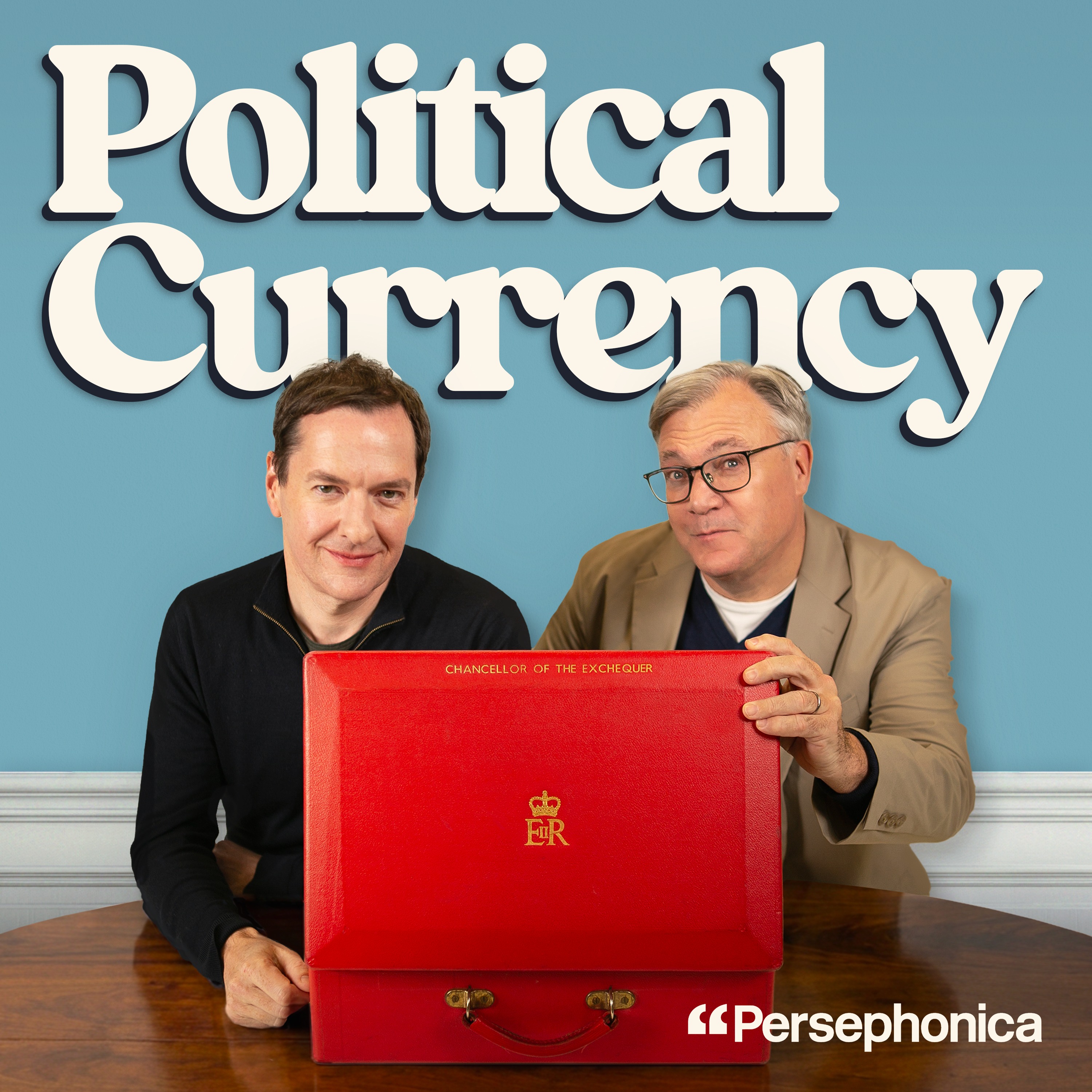
In this episode, Ed Balls and George Osborne discuss a recent political crisis within the UK Labour Party, focusing on the alleged coup by Health Secretary Wes Streeting against Leader Keir Starmer. They also explore the turmoil at the BBC following controversial management decisions and examine Donald Trump's reaction to events in South Africa and the American political landscape.
Written by AI. May contain mistakes.

Ask about this episode
Get the gist, explore an idea or ask about something said.
 Claude
On Political Currency, what are the key points of this episode?
Searching your listeningTranscript
Automatic transcript. May contain errors.
0:13This is Political Currency with Ed Balls and George Osborne.
0:27So we are back. We are recording remotely today. And, you know, there's quite a lot going on in the world. The British politics in turmoil, international relations in turmoil. We're going to be talking about all these things this week, the BBC in turmoil. But in the Financial Times today, hot seat BBC seeks boss with talent and political savvy. And who is in the list of runners and risers second after Charlotte Moore, the former BBC boss, George Osborne. With a picture of you, you are being tipped to run BBC. Well, of course, I'm flattered every time one of these kind of establishment jobs comes up.
1:05Can you fit it in? Well, you know, I guess, first of all, I could commission this podcast, couldn't I? That would be an early step I could take as a DG. And I've got a very good candidate, if I was director general, for the real job that needs filling at the BBC, which is who's going to host Strictly Come Dancing. I thought Mr Edward Balls could be my first appointment. Look, we'll have to get my people to talk to your people about that. We'll have to get the agents involved. Look, George Osborne, former chancellor, run a major media organisation, The Evening Standard, runs a major cultural organisation, The British Museum, international reach, banker, experience in fundraising, clearly politically independent, knows all about the tough decisions.
1:46And let's be honest, given that as chancellor, you managed to completely shaw off the BBC in the license fee negotiations, poacher turned gamekeeper, you'd totally know what the treasury would be up to, totally outmanoeuvre them. I also think the other thing which we should say to number 10, that if they want to end this podcast, and maybe they do, what better way to get political currency off the air than to make you director general? It is true that when I was interviewing for being chair of the British Museum, quite understandably, actually, the board at the time were concerned, you know, hold on, you know, you're a former politician, would you be independent enough?
2:26And independent at the time, it was like a Tory government. And the British Museum was very kind of protective of its independence. and my basic pitch for the job was no one knows these bastards better than me i'm your best guarantor of independence i absolutely know how they operate and think it is true that having done two bbc license negotiations with uh i certainly know how the treasury thinks about these things and when i say politically independent what i mean is nobody could say you were a labor stooge i don't think anyone would say i'm a tory stooge anymore we should get on with our podcast we're going to come to the bbc in a moment but first of all where are we going to start yeah well listen we are going to start with the quite extraordinary reefing war that has erupted this week at the top of the cabinet from number 10 downing street against the health secretary and the health secretary's pushback and a leadership crisis made in downing street and we're going to be talking about that then we're going to go to the BBC, the resignation of the Director General and the Head of News at the weekend after days of turmoil over the editing of that Panorama programme about Donald Trump, but also Donald Trump now launching a big legal action against the BBC, asking for a billion pounds of, I guess, British taxpayers' money to compensate him for the harm which was done by the airing of a programme in Britain, which as far as we can see had absolutely no impact at all on the American election result because he won anyway and nobody watched the program in the United States.
3:56But anyway, we'll talk about that second. Yeah. And then people might not have noticed, but Donald Trump has announced he is not going to be traveling to the G20 summit in South Africa, the first time an American president has not attended a G20 summit. We'll touch on what that means for the G20, but we're also going to use that issue because it's all to do with the South African government's treatment of the white Afrikaner population, and talk about this kind of wider race issue inside the MAGA movement and identity politics on the right of American politics, which has exploded in the last couple of weeks.
4:33And I guess whether any of that, hopefully not, but whether that is going to be coming across the Atlantic towards us. But let's start with the quite extraordinary events this week in number 10 Downing Street, the attack on the health secretary, Wes Driting, the night before he was due to do a media round and talk about some new announcements in the health service. We had people who clearly, the senior political journalists of Fleet Street and the BBC and others, felt were speaking on behalf of the prime minister, coming out and saying that Keir Starmer would see off any challenge to his leadership, that he would fight for the leadership of the Labour Party, And in particular, West Streeting was on manoeuvres and they had an eye on him.
5:18And the extraordinary thing about all of this was none of this speculation was in the media at that point. It wasn't Downing Street responding to this speculation. It was Downing Street creating this speculation. And it led to West Streeting having to defend himself the next morning on the media round. I guess many people listening to this podcast would have heard some of that. I was listening to him on the Today program. And I have to say, I thought he did a very, very good job. It was a masterclass in how to do quite a tricky Today programme interview. Here is the health secretary explaining himself.
5:52What's your message then to people who have been briefing this? What would you say to them? Well, firstly, I'd like to commend them for at least taking on board the feedback about sexist briefings, because we've seen this before. Lucy Powell, Bridget Phillipson, Angela Rayner could go around pretty much the entire cabinet table. So at least they're picking on one of the boys now. I think our deputy Lisa Lucy Powell was absolutely right about that toxic culture that needs to change. I do think that trying to kneecap one of your own team when they are out, not just making the case for the government, but actually delivering the change that we promised, I think that is also self-defeating and self-destructive behaviour.
6:29I can tell you, without having even spoken to the Prime Minister, what he thinks of briefing, what his reaction will be to the front pages and the broadcast bulletins overnight. and I wouldn't expect him to waste loads of time on this. I just think, you know, and this interview is in many ways a reflection of the problem. We're spending way too much time talking about what is ultimately Westminster bubble nonsense and trivia. I think whoever's been briefing this has been watching too much Celebrity Traitors and this is just about the worst attack on a faithful I've seen since Joe Marler was kicked out and banished in the final.
7:01So that was a kind of medley. So we don't get ourselves into the trouble the BBC has got itself into. And let's be clear, we have spliced together different clips from Wes Streeting's interview there. But look, he came out batting, didn't he? And he was very loyal to the prime minister and everything he said. And at the same time, taking a massive swipe at the team at Downing Street. I guess the question for you, Ed, is quite often in a party, you get ideological splits. You get factional conflict. I mean, you saw it under the kind of Brexit rows with the Theresa May government, for example. You quite often get a huge personality whose ambition is really hard for a party to contain.
7:47So arguably, Roy Jenkins in the 1970s for Labour was a kind of difficult person for the Labour leadership to handle. And Michael Hesseltine, arguably, with Margaret Thatcher, Boris Johnson with David Cameron, Theresa May. I mean, West Streeting is clearly ambitious to be prime minister, but it's perfectly manageable. And I think he would have expected to have to wait quite a few years for the Starmer premiership to run its course before having a crack at number 10. So it doesn't sort of fit into those categories of kind of leadership challenges or leadership issues inside a party. To my mind, it speaks more of the basics, which is the government's unpopular, the prime minister's unpopular.
8:27By the way, we just heard the economy is not doing well today. Latest figures show the economy grew just 0.1%. So the overall backdrop for the government is pretty miserable. And yet, into all of this, it feels like an entirely sort of self-inflicted wound by the Starmer operation and the people who claim to speak for him. I guess it's a sort of straightforward question, but what on earth has really been going on? Look, it's really hard to read the runes because it has been such a wild 48 hours. And there are so many people talking to the newspapers and to the broadcasters from within number 10 and more widely and often in a quite contradictory way.
9:09I think you can say, ostensibly, they set out to try and weaken West Streeting because they believe he is on manoeuvres. And as you said, look, the government's unpopular. Keir Starmer is unpopular. was streaking in recent weeks, we've noted that he's taken a different line on ID cards. He said things about Gaza, which were different from what the prime minister was saying. And it would be totally unsurprising in any political moment, if people who are your supporters in parliament aren't thinking to themselves, if Keir Starmer at some point falls on his sword, are we ready for the leadership election to come?
9:45But they decide to go out, as you say, in this very heavy, clearly authorised briefing. There is no way Chris Mason on the 10 o 'clock news on the BBC says this is what is being said about West Streeting unless he believes this is very authoritative. And in that moment, they transform West Streeting from seeming like, in their mind, somebody who is causing them some trouble behind the scenes, to in public, the innocent party who's been wrong. This has come completely out of the blue. West Streeting is allowed to go on the Today programme and has permission to say incredibly heavy things about the toxic culture in Number 10, pointing the finger at not just people in Number 10, but Morgan McSweeney, the Chief of Staff in particular.
10:30When he uses the word kneecap, I think West Streeting is absolutely pointing the finger in Morgan McSweeney's direction because, of course, Morgan McSweeney and his family has history in Ireland and with the IRA, his grandfather was an activist. That is what that was signalling. And as a consequence... You think it was deliberate? I mean, it's an interesting observation. The use of the word NICAT was a deliberate kind of reference to Morgan. I don't know that, but I would say every Westminster watcher in the lobby heard that and immediately made that connection. And West Streeting is very skilled and very smart, would have known exactly what he was doing.
11:07Keir Starmer at that point in Prime Minister's questions is hugely on the defensive. He'd be thinking to himself, how have I been put in this position? Although interestingly, when he then goes to the parliamentary committee, which is the senior backbenchers in the afternoon, he's actually... After PMQs. After PMQs, he's less accommodating. He says, you know, that he's standing by Morgan McSweeney. He's a bit dismissive of all of this, which kind of causes quite a big reaction, the parliamentary Labour Party over the course of the afternoon. What is really going on with your question? I think there's just a few things to note, as you read the runes.
11:40First of all, from the briefings, I think it is pretty clear that Keir Starmer knew what was going to be done. It says in The Guardian today that he is still cross with West Streeting. This was a strategy he had signed off. I don't think Morgan McSweeney and the senior Downing Street team do this in such a widespread way to the media without any reference to Keir Starmer. And they are clearly now telling people that there was a strategic conversation about the need to put Marcus down. Keir Starmer's going nowhere. He will fight any challenge to him. He is going to deliver for the country in Downing Street.
12:17That was not something which was being said without Keir Starmer being involved. I think Keir Starmer knew about that, was part of the conversation, probably at the weekend. This was not a surprise to him. Can I just press you on that? You've got other points to make. Sometimes there are politicians who let things be done on their behalf. And they kind of know it's going on, but they don't ever sort of want to be party to the conversation. Are you saying like Keir Starmer knew, you know, he just sort of said, someone deal with all this leadership speculation or someone take Wes Streeting down a peg or two.
12:52Do we know enough about how, because of course the way he presents himself is he's, I'm not the usual politician. I didn't grow up in Westminster. You know, I was a serious lawyer. I don't play these kinds of games. I mean, that's the way he's projected himself and the way he speaks about himself in public. But you're suggesting he must have, like, you know, he knew something like this was going to happen, even if he didn't know exactly how it was going to be done. Well, I think there is a distinction in your question between this being said in general and West Streeting. And let me come to that in a moment.
13:20On the former point, it is often the case, prime ministers, and I've been involved in these conversations with prime minister or chancellors, they agree that we need a strategic move, but they don't get involved in the detail. But I think the argument, the markets won't wear it, I'm going nowhere, anybody thinks I'm being pushed aside, no way, that is something which Keir was part of before the briefing and his aides are now telling people, it's in the Guardian and the Times today, that he knew. This was not a strategy that he was oblivious to at all. Secondly, though, if you look at the original briefing, which went to Patrick Maguire on The Times, the original briefing is about people who are causing trouble.
14:02There aren't names. And then what happens is the briefing over the evening gets supercharged with the injection of the name West Streeting. Now, the guys doing this briefing from number 10, they must have known people would go immediately to West Streeting. They might go to Shabana Mahmood. They might go to Andy Burnham. But that wasn't part of the original briefing in the afternoon. So the hit job on West Streeting was not part of the original Downing Street plan? I think it was not part of the original Downing Street plan. Keir Starmer won't have known about that hit job, but he's probably rightly angry about that because he thinks it's really stupid, which, by the way, it was.
14:36And if you look at the newspapers, there is now a big thing going on within Downing Street as to where that came from. Was it Morgan McSweeney? Well, it's pretty clear that West Streeting thinks it was. However, Morgan and others are saying that didn't come from us. We don't know why that happened. And then if you start to kind of read the rooms, who could have done this? It started yesterday morning with people saying, is it cabinet office sources? Which could have been somebody close to Keir, like Chris Ward, his former aide, who's now cabinet office minister. Could it have been one of the other junior ministers?
15:09The thing which then kind of arrives in the Guardian overnight is a briefing from number 10 sources saying relations have also deteriorated between McSweeney and Darren Jones, the chief secretary to the prime minister who is understood to be frustrated at how frequently the government's attention is pulled onto scandals or briefing and counter-briefing so the interesting thing about that is that is Darren Jones's people having a pop at McSweeney but does Darren Jones have people of course he does sorry that's a serious question I thought he's just you know he's like a loyal star marade isn't he he has special advisors but Downing Street sources here are not Morgan McSweeney or Tim Allen or the number 10 operation.
15:51This is Darren Jones' people described as number 10 sources. And that is leading people in the number 10 operation to say, maybe the hyping up of the West Streeting element was done by, not a cabinet office minister, some junior guy, maybe by Darren Jones, who as chief political secretary to the prime minister can be described as a number 10 source. How has this happened? And well, Darren Jones, who's not so keen on either Morgan McSweeney or West Streeting in recent weeks, it seems, decides to enter into the story. That is the speculation that they are saying, which is why they are a bit affronted by the West Streeting attack.
16:28But then The Guardian reports this morning. I mean, it is so fascinating. By the way, I'm absolutely love Ed. I'm loving this criminology. This is like, you know, who's standing next to the party secretary at the Red Day Parade? In The Guardian today, there are six different things being said at the same time from people in Number 10. It includes, by the way, Darren Jones having a pop at Morgan McSweeney and speculation back that actually is Darren Jones involved in this. Starmer is still angry at West Streeting for what he's been doing, particularly around welfare, digital ID in Gaza. although Keir Starmer also thinks that he's a highly effective minister.
17:08A source from Number 10 says there was no direct briefing against Wes from anyone. But then another source says that there was a briefing, but it wasn't meant to be against Wes. It was just meant to be in general. So the reason why Keir Starmer can be angry at PMQs about the Wes briefing is because he's been told by his people that didn't come from us. But the reason why he has to stand by Morgan McSweeney to the Parliamentary Committee in the afternoon is because the more general idea that he's going on and he's seeing off these plotters, that wasn't something done by stray briefers and junior guys in number 10.
17:44That was something which they had decided strategically to do, by the way, really foolishly, because if you set off with a massively heavy briefing on a Tuesday evening to lots of different senior journalists, the danger of you losing control is very high and they completely lost control over about three hours, which ends up with this massive crisis, which inadvertently, although predictably, has ended up strengthening West Streeting, who they were trying to take down, or somebody was trying to take down, or the plotters, who they were definitely trying to take down, and has weakened Keir Starmer, even though Keir thought this was being done to show he was strong.
18:18So, I mean, it is chaos. Right, I think I follow all of that. Going forward, so first of all, on West Streeting, you know, I've spoken to a few Labour ministers in the last couple of weeks who have said to me, oh, Wes is on manoeuvres a bit. And I wondered whether you thought, you know, Gordon Brown was always quite good at kind of knocking out kind of rivals who were, you know, merging. People like Alan Milburn and Stephen Byers and Charles Clark, they were kind of taken down a few pegs by the Brown team. Are we seeing something similar to that? Although, of course, that was Gordon before he became prime minister.
18:52And it's quite a different thing as a prime minister to take down your own cabinet, which seems a bit, put it mildly, more than a bit self-defeating. So first question to follow up is like, is the kind of taking down of Wes Streeting justified a bit because Wes is getting ahead of himself and indeed trying to establish himself as distinct on some issues like ID cards and Gaza? I think when Tony Blair was prime minister and knew that at some point he was going to leave, there was always going to be people who were positioning themselves and doing some preparations. And as a political leader, you have to be relaxed about that.
19:29The times when Gordon Brown, as Chancellor, was able to respond heavily was when people overstepped the mark. So when Alan Milburn pops up with some briefing about tax policy or Stephen Byers on the euro, when these were treasury responsibilities, then you could push back against that. But actually, I think the interesting thing, I think you're wrong about Gordon Brown there. In fact, he faced these kind of plots quite regularly when he was Prime Minister. The autumn of 2007, before the conference, but also in the July, a David Miliband article, which arrived out of the blue in The Guardian about the state of the government, didn't mention Gordon Brown, hadn't been cleared by number 10.
20:08There was then the James Pennell plot in the summer of 2009 to try and leave Gordon Brown out and David Miliband in. In January 2010, the Steve Byer's Jeff Hoon letter. So there were four different times. I think the thing that you have to do when you're a prime minister and you face these kind of challenges is you have to be patient and you have to wait until the person who's doing the manoeuvring makes a mistake and goes too far. If West Streeting had said something critical of Keir Starmer or something which was clearly coded as an attack on his leadership or the direction of the government, at that moment you can step in and respond and say put up or shut up.
20:50Expose him as a traitor, to use the celebrity traitors thing, yeah. And if you go to that David Miliband article in The Guardian in July 2007, first of all, the article emerges. Number 10 say, why is David Miliband saying these things? David doesn't respond at all. It ends up in the conference speech in September with Gordon Brown being able to say this is no time for a novice because David didn't put up. The difference here is that they were not patient. If it was the case, but by the way, I don't think there's any evidence that West Streeting was doing anything untoward. He was just being a politician who's thinking the polls are bad and at some point there might be a change and I need to be ready.
21:30And by the way, I'm going to flex my muscles a little bit on ID cards or on Gaza. And he's, by the way, he's also got a highly marginal seat, hasn't he? So Gaza is a real issue for him locally, yeah. Because they piled in so hard when there hadn't been the overt provocation, they turned him into the innocent party. And did West Streeting hide in the way David Miliband did when they pushed back, came from number 10? Absolutely not. As you said earlier, he went out and with great clarity, credibility and political savvy, totally pushed back. And he said things which in normal circumstances would be terrible things to say.
22:08I mean, he said number 10 has a toxic culture, but because he was the wronged party with an attack which came out of the blue. And so if you think there is that kind of plotting going on, you have to wait and you have to be patient. And when they make a mistake, that's the point when you call them out. If you go early like this, it's naive and self-defeating. And that is why Keir Starmer and his team end up in such a mess. It's why Morgan McSweeney's job is suddenly being questioned in all the newspapers today, because it was such a strategic error to do what they did on Tuesday. Even if the West Streeting attack wasn't part of the strategy, implicitly, that's what they were doing.
22:46And they were doing it in a way which looked unprovoked. Okay, so last week we were speculating idly, and before this happened, that in fact there may be a change of personnel in Downing Street. And we were speculating that Tom Baldwin or Tim Allen or Jonathan Powell might come in or Louise Casey might come in to be the kind of new chief of staff. And that Morgan Mussouini would kind of revert to more the campaigning role that he has traditionally had. Where do you think all of this leaves the kind of Downing Street operation? because it's absolutely, feels at the moment, kind of pretty shredded, doesn't it?
23:19It's worth just hearing, by the way, isn't it, Keir Starmer has to, in the PMQs, against some quite effective questions from Kemi Baden-Ock, has to say things which no Prime Minister really wants to say. This is just a clip from him. And let me be clear, of course, Mr Speaker, I've never authorised a tax on Cabinet members. I appointed them to their post because they're the best people to carry out their jobs. I think if you are the Prime Minister, the one thing you don't want in the House of Commons is to be laughed at when you say something big and serious. And I'm afraid if you have a Downing Street operation on that scale and impact, which was clearly targeted at cabinet ministers, even if they didn't intend it to be called out personally in ways in quite the same way it happened, to then say nothing to do with MeGov doesn't quite cut it.
24:05You had Alistair Campbell and Tom Bould on the Today programme this morning, both being careful not to name names. But when Alistair Campbell says, you know, when you become the story, that's a huge problem. Morgan McSweeney has clearly become the story now. But I think the issue is competence, how they ended up in this situation, how you end up with a Downing Street, which has, you know, clearly there are multiple people speaking to the media as a number 10 spokesperson or source, contradicting each other and clearly saying things which are more self-interested than in the prime minister's interest.
24:40In the end, the leadership in Downing Street, the Prime Minister and the Chief of Staff, have to take responsibility for the effectiveness of their operation. And in the last 48 hours, their operation has been deeply cack-handed and they've got to sort it out. And how many people have been removed from Downing Street in the last year because they were sorting out the operation? Sue Gray's got to go, she's no good. Liz Lloyd's got to go, she's no good. They've been through three different directors of communication who've all been ditched along the way. you have to ask some big questions about why is ditching the medium-ranking people not solving the problem?
25:15I think it is striking. I think if you look at the Cameron or Blair operation, obviously there are lots of problems along the way. But their Downing Street team, number 10 Downing Street teams, were utterly loyal to them. Utterly loyal. They were big figures, big egos and so on. But there was no undermining of the Prime Minister. Because the other feature of this is a lot of these people are pretty loose with their views about the abilities of the prime minister they're supposed to be serving in number 10. It's not just that they're fighting on behalf of Keir Starmer. They're quite rude about him, if you hear them out.
25:48And interestingly, if you go back to the Maguire-Pogren book about the Starmer operation in opposition into government, you remember the quote about who's driving the DLR train. the suggestion that Morgan McSweeney was not really loyal to Keir Starmer, much more loyal to the project, and he should be deciding who's really going to lead this. The irony in that book is who was the candidate which everybody thought in Morgan McSweeney's mind was the guy who would take over if Keir Starmer fell by the wayside? It was Wes Streeting. The most interesting thing is that people think that Morgan McSweeney has now decided to shift camps.
26:23It's I think probably Shemana Mahmood rather than Wes Streeting is his chosen candidate these days, which is why when they then say the attack on West Streeting didn't come from us, people think, really? Really? Are you sure? Okay. And what about, to sort of pick up actually on West Streeting's Today program interview, you know, he says, you know, people want to hear us talk about the real world, real policy. Obviously, people listen to our podcast are interested in politics. But we have spent, you know, the last 15 minutes talking about the dysfunction at the top of the leadership of the Labour Party.
26:53Where does this lead in the real world? Because I'll give you one theory. I mean, this now puts the storm of premiership, you know, a big question mark over whether it's going to last the parliament. And it's not unlike, you know, there are, I think, similarities with Boris Johnson winning in 2019. Great win, massive win. You know, you assume he's going to be prime minister for 10 years and within three years he's out. And in the end, what brings him down is frustration amongst the Conservative Parliamentary Party at his handling of issues and his number 10 operation. and of course against a backdrop in which he is unpopular in the polls as well because of things like party cake but it's the sort of hand that you know he can't run a tight ship and keir starmer here he is he's only a year and a bit after a big election win is in a sort of similar situation so what do we think the real world consequences i'll put one out there which is i think starmer now has to move left and start throwing red meat at the parliamentary labor party to kind of try and keep himself secure and that will lead to more sort of classic sense i'm using kind of inverted commas here, left-wing policies.
27:56So for example, it now looks pretty clear in the budget that they will do something on the two-child limit. Keir Starmer was indicating that this week. Even though, and we won't debate the merits of the policy here, but a classic sort of political strategy would be in a budget in which you're going to increase income tax potentially on the whole population. That is not the budget where you then say, and the money is going to be spent on some, at the moment, in opinion polls, whatever you think of the policy, pretty popular policy of two-child limit. We're going to get rid of that, and we're going to do this unpopular thing of give lots of money and benefits to families with large numbers of children.
28:38So we're going to put up people's income tax to pay for more benefits for large families. That's not a kind of classic and smart political maneuver, but it's what you might do, because it's a kind of left-wing thing to do, redistribution and so on, tackling child poverty, you know, you would do if you're in trouble. And I think you might see more and more things. Someone, a Labour figure was suggesting to me in the last week that they might have to revisit that campaign on the women's pension age, the WASPy women, because that's another kind of totemic left-wing cause that they had apparently said they're not going to deal with, or, you know, they weren't going to revisit.
29:14But if Starmer is in trouble, don't you get the red meat strategy? We said last week on the podcast that the most revealing moment in the Rachel Reeves pre-budget messaging wasn't her statement in Downing Street. But it was when she was interviewed by Andrew Marr on LBC, said something she hadn't said in her main statement, which was if she resigned, what would the markets make of it? And we've had that confirmed in the last few days from the briefing from number 10. You can't get rid of Keir and Rachel because the markets won't wear it. Oh, and by the way, and we'll also have to have a general election, which, by the way, is complete nonsense.
29:51I mean, there was no general election when Rishi Sunak took over or when Gordon Brown took over in 2007. So that doesn't add up. But I think the market point is real. And I don't think the next Leave of the Labour Party, whether that happens before the election, which is possible, or when Keir Starmer moves on, if it happens in government, there'll be no resiling from the fiscal rules. Because I think that is the market reality. The test that they're setting up, would the markets be destabilised by pre-budget and straight after the budget, some precipitate move to get rid of Rachel Reeves and Keir Starmer?
30:20Absolutely yes, because even though the fiscal rules, I think, are going to have to stay in place, that would be a question mark. And the markets are sceptical about Britain and Labour at the moment. So they're right to run that argument. I don't think, by the way, that necessarily means that you can't move on child poverty and the two-child limit. I think in the end, leadership is about winning arguments and making them popular and doing the right thing and winning the argument for its popularity is something which good leaders do. So I think that is absolutely up to Keir Starmer and Rachel Reeves to do that if they choose to do so.
30:48And I think you can be beaten on that argument myself. I think you can win that case on fairness and its popularity too. But if Keir Starmer starts to challenge Rachel Reeves on fiscal probity because he needs to throw red meat and start questioning the fiscal rules and market support, that would be rather contradictory to the briefing that they did this week. So I don't think that they can easily do that. But you are absolutely right. They'll make more concessions, as we saw over welfare reform. I don't know what you think. I find this market briefing line quite difficult. It feels very defensive and risky to me.
31:23and we have to stay because if you got rid of us, the markets won't wear it. It's quite good if the IMF say that or a market commentator says it or the Institute for Fiscal Studies say it, but the government saying that about themselves, it's such a hostage to fortune because if the markets do take against this government, well, in the coming weeks and months, Rachel Reeves and Keir Starmer have said, well, if the markets take against this, it's because they aren't trusting what's on offer and they don't really want to be in that position. But I would say it is true that markets would be worried about something destabilising happening, but they also worry when governments look like they've not got a grip and they aren't in control.
32:03The last couple of days have not looked like Keir Starmer was in control. And it's kind of not surprising to me there was a bit of a market wobble. So I'm not sure this is a great argument for them to run. I think it's a hostage to fortune. It's quite risky and dangerous, and it could turn out to bite them hard if they're not careful. I mean, you just feel like there's going to be a moment, doesn't there? There's going to be a sort of, doesn't mean by the way Kirsten on the falls, but there'll have to be some kind of reckoning, some kind of John Major put up or shut up moment. When Wes Streeting said, you know, trying to kneecap one of your team when they're out there making the case for the government, it was actually pretty reminiscent of the Geoffrey Howe resignation speech that led to the downfall of Margaret Thatcher.
32:42There were quite a lot of parallels because you talked about having the cricket bats broken when you went out to bat for the government. And of course, when you go back to the Tom Watson-led challenge to Tony Blair in 2006, which was at the time described as a coup, the outcome wasn't Tony Blair being forcibly, reluctantly turfed out of Downing Street through a challenge. It actually precipitated the final stage of a cooperative handover between Tony Blair and Gordon Brown. So that's what you call the coup you organised, a cooperative handover. We've cooperatively handed over the TV station in the airport.
33:20We have discussed this before. And without repeating myself, the one thing Gordon Brown was totally allergic to was the idea of him leading a challenge against the sitting prime minister, because he thought that you never recovered from that. and that was the wrong thing to do. And West Streeting is taking exactly the right position. And I'm just pointing out to you that one of the things which can flow from that, I think West Streeting is strengthened. Keir Starmer now can't ignore him. And more than that, if West Streeting says things about the direction of the government now, they'll be taken more seriously across the parliamentary Labour Party, in Parliament and more widely.
33:56And look, all West Streeting has to say is there's a question about the fiscal rules and whether the markets would wear any change. I mean, he doesn't have to say this in public, but he can say it at the time of his choosing. I think spending£6 billion on an ID card system won't work. And I would abolish that crazy plan immediately and use all of that to reduce the deficit. And in so doing, strengthen the fiscal position rather than weakening it. They've handed over ammunition to him and he can just decide at what point to deploy it. He doesn't have to do that precipitately. He doesn't have to do that in a challenging way, but he is strengthened by this and that can't be what they intended.
34:32I do think Wes Streeting's run at leadership got off to the best possible start when he did an interview with us over the summer on our podcast. And we will be doing some more interviews, won't we, as we get close to Christmas with some other people. So, you know, you know where it all started right here. I'm told he's coming to hear Centris Dad live in December. So, you know, he's obviously... That's the surest sign that he's got his eye on the top. Anyway, all of this, of course, has been reported on the BBC. And Chris Mason has been doing a very good job as the political editor taking us through it all.
35:04But unfortunately, that's another national organisation that has also been in crisis this week. And we're going to be turning to the BBC next.
35:19The next part of this podcast is brought to you by Indeed. So at the moment, a lot of stories in politics revolve around fiscal transparency. A lot of conversations aren't there about the budget at the moment and money has always been central to the discussion in politics but i find there's much more discussion about transparency and money and other walks of life too what do you mean by that well if you think about it so many of the big stories of the last year have come back down to like transparency about what the money is how much money there is available where is it coming from i'm thinking about stories about football clubs and transfers stories about the duke of york prince and the former duke of york prince andrew former prince and the problems he got himself into and stories about you know positive stories like when taylor swift goes on tour how much money do the cities get when she turns up and does one of her concerts but also with people saving for their pension or in their isa people want to know that the way their money is being invested is being invested in things which they value and can respect and that is why these days there is an increasing focus on ethical investing or on the environmental and social impact of investing and i think all of us want to know where our money is actually being stored and the impact is happening more widely on society so whether you're talking about company accounts or you're talking about the way in which financial services firms talk about the way they manage their portfolios it's all about transparency giving us confidence that the values which we try to live our lives by is also being reflected in the way in which we invest or spend our money yeah and i think a common thread here is that we now expect more from the things we care about whether it's that football club i was talking about or an artist or a public institution transparency around finances is important because it gives confidence and it just feels fair.
37:16That fairness point is very true as well because it works on a personal level too. You might be buying a house or planning a holiday, planning for a new job. From the off, you want to know the full picture. What is the company you are going to be employing to do your trip? What is the truth about the house you're about to buy? All those surveys you need to have and want to have. But also, if it's a new job, the company you're working for, but also the deal the terms the conditions the fine print transparency on those things is really important too yeah it reminds me a lot of the questions we get don't we from listeners about how to progress in their career path and getting an interview for a position you want can be hard enough without having to try and tease out from the person interviewing you what exactly the salary for the role is that is one scenario which i guess many people will relate to why can't businesses be more upfront about the salary for a role when they advertise it so often adverts are so unclear what the actual salary will be sometimes it's not there at all sometimes it's a very wide range depending upon a set of criteria which you don't know the answer to when you actually put your application in yeah it is odd isn't that i mean job seekers they're expected to apply for a job without knowing how much it pays and so they put a lot of work in they put a lot of work applying for an interview, getting an interview, doing the interview.
38:33And then they might find that the salary isn't what they're expecting, not even close to what they're expecting. And I guess from the other side of the fence, you know, the employers will be putting a lot of effort into interviewing people and spending time running an interview process. And then they get to the point where they want to appoint someone and they've got their salary expectation in the wrong place. It's kind of like a double blindfolded poker. The employer is hiding the salary, hoping they'll find a candidate who accepts it, employees applying for jobs and hoping the salary is fair.
39:04And the danger is both waste time, energy, goodwill, all because no one's willing to say up front what the job actually pays. There just has to be a better way than this. And whether you're entering the workforce or you've got years of experience, these are the barriers that so many people come up against. I think many people will agree with that. And so does Indeed. On their platform, you can set salary expectations, filter roles by salary so you recommended ones that align with what you want that's brilliant as we've seen so often across so many different sectors salary transparency matters and the more it can become the norm the fairer and more productive workplaces will be so if you like the sound of this all you need to do is download the indeed app and set your salary expectation to be matched with the right jobs for you
39:52so welcome back now we rather got into the detailed weeds of what has been happening in the media and in downing street in the last few days and we're just speculating and trying to read the runes hopefully that was interesting we're going to talk about the bbc next and i think probably george it would be a mistake for us to go into the same degree of detail over events and the BBC board in the last nine months and scandals that they've dealt with in the past and the kind of difficult challenges that have been debated internally around editorial guidance over the last few months. But it is worth talking about because out of the blue, I would say, we saw the resignation at the weekend, not just of the head of news, Deb Returnis, but also the BBC Director General, Tim Davey.
40:41and he has explained that this is about the independence and integrity of the BBC but that he wasn't pushed and he chose to take this move for his own reasons at this time and it does raise some big questions about where things go next but as I said reading the runes and trying to really get to the the bottom of it is very hard but it seems to me on the one hand people say there have been editorial problems in the BBC in recent months, in particular around the handling of this Panorama programme. We talked about it earlier and the candid way in which it was edited, debated for months without them making a public statement.
41:25And you don't have to believe that the BBC is biased or impartial to think that went wrong. And there were also some handling issues around some of the Middle East reporting, although people on both sides of the argument think the BBC has been unfair. And in the whole issue of trans rights, a lot of people are angry about the decisions the BBC made. This is all set out in the Michael Prescott memo, which was leaked to the Telegraph, which many people think has in it some good points, but is pretty partial and not a complete view of what's gone on. But I think it's pretty hard to stand up the idea from all of this that there have been problems, but it's not clear that this was a biased BBC at all.
42:08On the other side, people say, oh, no, it was actually a Robbie Gibb, Theresa May's former head of communications. It was a Gibb-led coup. Because we should say he's on the board of the BBC, isn't he? Robbie Gibb. That is right. Although he's one of many and quite why Robbie Gibb as one individual could prevail across the whole board to force out Tim Davy, it doesn't really add up to me. And, you know, people say that the Robbie Gibb wanted Tim Davies to stay. But the one thing you can say is that the corporate governance handling over this over the last week and over months, the chair is Samit Shah.
42:44I mean, it has been chaotic how they didn't grip this earlier, how they didn't make decisions about the importance of acknowledging mistakes months ago, how it ended up with Tim Davie and Deborah Turnis being prevented from going out and apologising or explaining after the Prescott memo was leaked. I mean, it doesn't make any sense. And it does feel as though this sort of corporate governance leadership collapsed at a key moment. Yeah, you need the BBC chair to be out there batting for the organisation when they get themselves into trouble. And, you know, because they're the national broadcaster, so publicly funded, and still so important in the coverage of our politics, even if it's then disseminated through social media and so on, rather than, you know, the 10 o 'clock news.
43:33You know, you need your chair to be a kind of someone who can weigh in and just say, like, all right, you know, we've apologized, we're moving on. And be able to stand up to the kind of pressures you're going to get always, as the BBC is going to face. From both sides. You're going to get pressures from the left who feel you're not taking left radicalism properly. You're going to get pressures from the right who say you don't reflect right-wing views properly. You get pressures from rival media organizations. GB News, The Telegraph have both been involved in this. But of course, they've got a commercial interest.
44:07And the Daily Mail has had a long-standing view that the BBC is an unfair competitor because of its public funding. So you've got a lot of forces out there. I thought the kind of interesting thing, so first of all, you know, there is a big set of questions, which I still think are unanswered as to like why, you know, once it was clear that a mistake had been made, a kind of essentially a sort of editing mistake, as far as I understand it, whether deliberate or not deliberate by the Panorama team. You know, once that was identified, you need to move quickly and you need to move even more quickly in an age where, you know, everything is circulated on social media platforms and speculated about.
44:47Also, I think, you know, it's interesting that the Director General, Tim Davie, felt he had to go. Because you could say, well, this is really the head of news's issue. Although she's, you know, Deborah Turnus is highly rated and regarded and has worked outside of the BBC very successfully. And personally brought in by Tim Davie. I mean, I think he very much brought her in to do a job. So I think he will have felt a lot of loyalty to her. Yeah, and I think, you know, he was taking the right approach, which is the director general cannot be constantly doing the kind of day-to-day editorial decisions on BBC News.
45:19They've got a big job of making this broadcaster relevant in the digital age and with the likes of the streamers of Netflix and Apple and, you know, YouTube and so on out there. And you can't, you know, you need to know when, as director general, as indeed as chair of the BBC, you need to dive into something because there's a growing problem. But, you know, that's really something you should, you know, the day-to-day handling of these complaints and issues should be one for the head of news. And I think Tim had been doing a pretty good job, actually. I mean, it's incredibly tough for the BBC at the moment, given the competitive landscape and fundamentally the kind of lack of money that the public funding means the BBC has available to it.
46:00And that will always be the case, whatever happens really with the license fee, if it remains publicly funded. So in that world, I think he's kept it relevant. We were talking earlier about Celebrity Traitors, that massive hit, BBC show, BBC News, still dominant force here. I think the digital, you could argue the BBC's website and digital presence is really the UK's far and away, the biggest UK's biggest presence in the digital world these days. So you can say all those things. I think, you know, what to me is interesting is coming back to the government. You know, where was the kind of government on all of this?
46:38I mean, there have been times when the government has gone to war with the BBC. I mean, famously in the Thatcher period, the Director General, Alistair Milne, was effectively forced out by the Thatcher government and the then Chair of the BBC. I mean, again, famously the Chair and the Director General had to resign under the Blair government over the reporting of the Iraq war and the failure to find weapons of mass destruction. And that was probably the kind of hairiest moment for the Blair government before eventually he left office. So you have moments when the government really steps in and is aggressive.
47:17And you also have moments when the government steps in and defends the BBC. And I remember when I was in office, George Entwistle, the director general, had to resign after only being in office, I think only doing the job for about 50 days. And he, you know, there had been an accusation that a conservative peer had been, you know, involved in sexual offenses, which was totally unsubstantiated and untrue. And he quit over the handling of that. But the government, the Cameron government was very supportive. And Chris Patton, who was chair of the BBC at the time, I guess it helped that there were, Here was a former senior politician who was a kind of bruiser in the best sense of the word, knew how to handle himself in public.
48:03But he came to us in Downing Street and said, which director general would you be happy with? Even though it's absolutely not a government appointment. The government appoints the chair of the BBC, but not the director general. But I think he was sensibly checking with Downing Street, given the state of the crisis. And I remember the meeting in Downing Street and we said, well, Tony Hall is pretty good and he's been head of news. and he'd been, I think, kind of passed over when the job had come up previously. And anyone who knows Tony Hall knows he's no conservative, so it wasn't us trying to put in a kind of stooge, quite the reverse, you could argue.
48:35But we said, yeah, look, if you appoint Tony Hall, we'd be really happy with that. And we want the BBC back on its feet, and we're not picking this moment, even though it was about a conservative peer, to have a big row with the BBC. Anyway, neither of those things have happened at the moment. you know okay number 10 you could say have been pretty preoccupied as we've been discussing um i think lisa nandy the secretary of state for culture has sort of made it clear she wasn't like massive fan of tim davy but she wasn't maneuvering against him as far as i could see but there hasn't been much comment from her from dcms from the government you know and you could argue you know whatever you think about um the mistakes made around panorama about the panorama program the editing of it and, you know, what Trump's role exactly on the 6th of January and that Capitol Hill riot was.
49:28Nevertheless, the BBC is a big, big national asset. I think for a progressive centre-left government, you would want to step in and say, look, OK, they made mistakes, but we're right behind them. And by the way, we're going to work with them to come up with, you know, a secure future for this national broadcast. I haven't heard that. I mean, maybe to be fair, they'll come back to me and say well actually Lisa did say that it's just you were all talking about Morgan McSweeney and whatever this week but um I have not heard that and I get the sense that the BBC has been sort of left sort of somewhat hung out to dry to handle this by itself.
50:02I think Keir Starmer did say that after Tim Davy had resigned but that's a bit late and um and I do think there's a wood for the trees problem here which is that it's easy if you're the culture secretary to call out particular incidents which have gone wrong but you also have to see things in the round to see the bigger picture the bigger picture is that the BBC is a massively important institution for us at a time when truth is so contested and so challenged having a respective independent public sector broadcaster which is with global reach is a vital not just national asset, but asset for our politics.
50:44The thing I find deeply discomforting in the last few days, you know, I don't think there was a coup. And I do think the BBC has made some mistakes. But seeing people piling in saying, you know, from the right, this is the end of the BBC. It's a failed institution. It's just kind of corrupt and partial. You know, we're at the end of the road. I mean, the rank hypocrisy of this being said by people who often work for news organisations which get nowhere near the standard of scrutiny and independence and accountability which the BBC faces every day. And I do think that this is a vital moment to defend the BBC and what it stands for.
51:29And you can do that while saying sometimes it makes mistakes. And I have not heard that in the last months anywhere near loud enough from DCMFs also from number 10 as well and it would have been much better because they would have known what was going on. They ought to have been pushing for action earlier behind the scenes because it was necessary in order to protect the standing and integrity of the BBC and I think they were as you said probably a bit sleep on their watch and that is a problem. So the BBC is not biased. I don't think there was a coup. The corporate governance has failed but where was the government defending this institution when it should have been doing so loud and clear and calling out the, as I said, the hypocrisy of the BBC critics who pile in for their own self-interest and political interest and would happily see a hugely important national institution destroyed and time for a fight back.
52:28You know, it's definitely one of the things that surprised me as Chancellor, even though I've been shadowed to Chancellor for five years, how much involvement behind the scenes the government has with the BBC and therefore what it can do to support the BBC if it needs to do and reform it if it feels it has to. And the Royal Charter renewal coming up is a big moment actually for this government to get behind the BBC, which I agree with you is an incredibly important institution for the UK. And it's probably our most visible and pervasive expression of our soft power around the world. I've got an interesting question, I think, for you, which is, you know, of course, the row involves the President of the United States, a key ally and person who Keir Starmer has established a good working relationship with.
53:17And the President of the United States has said he's going to sue the BBC. Perhaps we should just let's hear from Donald Trump. We'll see what he said about this. Going ahead and suing the BBC. Well, I guess I have to. You know, why not? Because they defrauded the public and they've admitted it. And they're top echelon. Director General and the CEO. This is within one of our great allies. You know, this is our supposedly a great ally. BBC have the government has a chunk of that one, I guess. But that's a pretty sad event. They actually changed my January 6th speech, which was a beautiful speech, which was a very calming speech.
53:55And they made it sound radical. I should also say that Donald Trump posted on Truth Social, his social media outlet, he said, thank you to The Telegraph for exposing these corrupt journalists. And his press secretary, Caroline Levitt, said this, BBC News is dying. Everyone should watch GB News. They're weighing into the British media market. But here's a question for you, Ed. I mean, this is something the government could help with, right, isn't it? I mean, the BBC is being sued for a billion dollars by the president of the United States. And is this a moment where, I guess, it wouldn't just be DCMS, but the foreign office and number 10 needs to say, well, look, maybe we can help you with this.
54:36And maybe we can have a word with the White House and get, you know, you'll need to apologize, which I think everyone's expecting the BBC to do in the next couple of days, formally to the president. But then, you know, there'd definitely be a role for the British government in perhaps contacting the American administration and saying, with the president now, accept the apology and back down. Look, part of our problem at the moment is we can't send the ambassador to Washington to go and have a word with the president. I think if you are the government at the moment, if you're number 10, you've got so many issues which are so difficult dealing with the American president, whether that's on tariffs or on Gaza in the Middle East or on Ukraine.
55:18And the idea of having to use up political capital on defending the BBC in this way. I mean, it's not an easy ask. On the other hand, there is no possibility that British taxpayers' money via the BBC can go to Donald Trump to buy him off. And the interesting thing about the way Trump goes about his media relations is that he threatens these massive lawsuits. I think, by the way, it's not at all clear in legal terms, him taking civil action in Florida against the BBC for perverting the American election in this biased way is quite going to work, given that nobody in Florida had the opportunity to watch this panorama programme when it was first broadcast or while they were considering their votes in the American presidential election, which he then won.
56:08I think legally, it's kind of shaky. Of course, it will come down to whether people might have seen clips on social media, but certainly wasn't broadcast there. But in power play terms, pretty much every other media organisation in America, when faced with this challenge from Trump, has paid him off. The only exception is News Corp, the Murdoch organisation, who is being threatened on legal action because of the Wall Street Journal and what it reported about the cartoon drawing that Donald Trump allegedly gave to Epstein as part of his birthday celebrations. I'm glad you used the word allegedly because successful as political currency is, a billion dollar lawsuit would be problematic.
56:56I absolutely carefully use the word allegedly. But News Corp is fighting that. Every other media organisation has paid tens of millions of pounds to settle because they don't want the power play fight. And that's what this is all about. But if Donald Trump wants a power play fight for the BBC, taxpayers' money can't be used to settle. Well, no, but exactly. So hold on. That's precisely my point, which is, you know, who knows what's going to happen in the American courts. But if, you know, if the BBC is required to pay money for essentially license fee, tax pay money, to Donald Trump's personal bank account, that is going to become an issue for the British Prime Minister and the British government.
57:39So maybe, you know, we've been talking about trying to get ahead of events and trying to anticipate where things are going and not be pushed around by things. I'm just saying this might be a moment for the foreign policy establishment and number 10 to say, maybe we do need to lean into this a bit. The only point I was making was a preemptive out-of-court settlement of taxpayers' money to stop the legal action is not going to wash. And so you either fight it or you persuade Donald Trump that this is not something that he wants to pursue. But I mean, is there any persuading them? I mean, as he said, his posts are wild.
58:18Maybe you'd have to shrug your shoulders and let the legal action take its course. But I mean, I don't think there's any good choice here. And how they've ended up in this mess. This was fixable months ago. It was fixable months ago when they knew they had a problem and it wasn't on anybody else's agenda. It could have been dealt with, apologised for and got out of the way. I mean, they were talking about this within the BBC for months. So that is where I started. It's a huge corporate governance failing. Anyway, it's the kind of thing that Keir Starmer could have had a word in the ear of the American president about when they sat next to each other at the G20 in South Africa.
59:03But Donald Trump has announced he is not attending that. and it's also coming to a time when the MAGA movement is itself riven over issues of identity politics and we are going to turn to that for the final part of the podcast.
59:27Welcome back. So we're going to turn to two different Donald Trump issues which have arisen in the last few days But actually, there is an interesting link, I think. We're going to start with the G20. This is the meeting of the biggest industrialised countries in the world. The leaders meeting every year, but there's also meetings of the finance ministers and the foreign affairs ministers. The next meeting is happening shortly in South Africa, this year's G20 summit. And Donald Trump has just announced, not only will he not be attending the G20 summit in South Africa, but he has now decided that nobody will go from the American government.
1:00:06And he's doing so by returning to an old argument that he's made regularly, which is widely believed amongst his supporters, although the South Africans say it's entirely untrue. This is what he said on True Social. Afrikaners, people who are descended from Dutch settlers and also French and German immigrants, are being killed and slaughtered and their land and farms are being illegally confiscated. No US government official will attend as long as these human rights abuses continue. He basically says there is a genocide against white citizens happening in South Africa. Although the president of South Africa, Cyril Ramaphosa, says, have they told you where that is, Mr.
1:00:46President? I'd like to know where that is because this I've never seen. The Americans boycotting the whole G20 summit, even though the next summit next year in 2026 is being hosted by America. Well, it certainly proves one thing, which is if you live long enough, you see everything. Because one of the biggest issues in my childhood was the treatment of the black population in South Africa by the Afrikaner government. Never thought I'd live to see the day when it was the persecution of the Afrikaners, which we were being told was the big issue. It is astonishing. The G20, you know, you and I both very much involved in the organization, was an American creation.
1:01:24It was actually created, wasn't it, by Treasury Secretary Larry summers originally at the time of the Asian financial crisis at the end of the 1990s, when it was felt that the G7 was too Western and the IMF had been discredited in the eyes of the Asian governments that were being required. Too many Europeans. Yeah. There was a sort of pick, wasn't there? The IMF managing director at the time was a French guy and he was seen as too kind of high-handed. Anyway, the G20 was created... Michel Camdesou. at a finance minister level. And then in the kind of depths of the financial crisis, George W. Bush attended a meeting of the finance ministers as president and kind of it morphed with, I think, British support and Gordon Brown support into a leaders summit.
1:02:10You know, I think everyone would say the highlight of the Gordon Brown premiership was his hosting of the G20 in London in, I think it was April, wasn't it, 2009. It was a kind of American-British creation, and it's pretty devastating, whatever you think of Donald Trump, that the Americans aren't going to show up because it completely neuters this organization. And I would say, although people will say, well, it's proved pretty ineffective and it doesn't police the world, I don't think it was ever set up to do that. It's actually not like the UN. It's not like the IMF. It's just a gathering. It's a moment when, you know, you don't have to schedule a big sort of superpower meeting between the Chinese and the Americans.
1:02:48And there is a regular routine of the world leaders meeting each other. And that is a good thing for the world. And actually, the G20 has been very effective at progress checking and commissioning other organizations, it doesn't have a permanent secretariat to get on and do things. And so it's definitely a real shame and a kind of blow to global governance and global stability that the Americans won't be showing up. It's also just such an own goal. Aside from, as you said, the shocking nature, as far as I can see, made up allegations about this genocide in South Africa against the Afrikaner whites.
1:03:23I think there is a dispute about land confiscation. Of course. Definitely a bit more complicated than it looks, but I don't think anyone's claiming there's a genocide, well, apart from the President of the United States. And crime is high in South Africa. I don't think there's any evidence that crime is worse against white farmers or Afrikaner farmers. The idea of the genocide is a thing which is just very hard to kind of stand up and substantiate. But it's so not in America's interests. The G20, they're hosting it next year. It's a way to have influence on the global stage. And what they do by not turning up is that they suddenly make China seem the reasonable multilateralists.
1:04:01They're the ones who are willing to come to the meeting to engage in global dialogue on the kind of big issues of common concern. Why would Donald Trump cede that standing to China? I mean, it's so counterproductive. It's a bit reminiscent, isn't it, of under the first Trump presidency, pulling out of the World Health Organization and sort of essentially allowing China again to be the kind of reasonable people who are investing in it and getting their officials to rotate through its offices. Just before a pandemic. Yeah. But what's the connection here with what's going on in the MAGA movement then?
1:04:34The other thing which has been causing huge eruptions, a row which has broken out about a young American far-right activist called Nick Fuentes. He's a 27-year-old Holocaust denier. He has said kind of shockingly racist things about people of Jewish heritage within America, anti-Semitic things about the use of their power. He appeals for a white Christian-led approach to American politics. He was interviewed by Tucker Carlson, the Fox News host and Trump ally. Well, ex-Fox News host, we should say, crucially, and has his own show, doesn't he, on X, on Elon Musk's X, formerly Twitter. Fuentes appeared on that show and said a bunch of things which were pretty offensive.
1:05:25And then the Heritage Foundation, which is a right of centre think tank in America, which has in the past backed the Carlson show financially. The head of that, whose name is Kevin Roberts, supported Carlson, refused to distance the Heritage Foundation from this interview with Fuentes, which has then led to a huge outcry on the right of American politics. people saying that this is anti-Semitic and the Heritage Foundation should not be involved and distancing themselves, withdrawing from it. Should we just hear a little bit about what Fuentes was saying to Carlson? I think that neoconservatism, where does it arise from?
1:06:04It arises from Jewish leftists who were mugged by reality when they saw the surprise attack in the Yom Kippur War. Yeah, well, that's a lot of it for sure. But then like, how do you explain, Mike Huckabee, Ted Cruz. And there are a lot like that. John Bolton. I mean, I've known them all. George W. Bush, like Karl Rove. I mean, all people I know personally who I've seen be seized by this brain virus. And they're not Jewish. What you're saying about putting aside the tribal interest for the corporate interest, that's absolutely the case. The main challenge to that, a big challenge to that is organized Jewry in America.
1:06:44We thought carefully about whether we should broadcast that. But we decided it was important to understand what is going on in sort of MAGA right politics in America. And I think that the common thing between what's happening with South Africa and the G20 and this row is that if you have a broad tent in politics, the question is how broad does your tent go? And at what point do you need to call it out? The reason Donald Trump is not going to South Africa is because so many people on his own side believe these allegations about the Africana genocide that he's choosing not to confront it, but to go along with it.
1:07:22Similarly, I mean, Fuentes, along with Kanye West, went to see Trump at Mar-a-Lago before the presidential election. This is shocking, but it does kind of raise questions about at what point does your broad base become unacceptable? The reason I think this is interesting is because you've seen a parallel in the challenges that Nigel Farage has faced with reform in recent months, whether it was Elon Musk or Tommy Robinson or within his own party, Rupert Lowe, saying some shocking things and calling out Nigel Farage for not supporting them. And Farage is caught between, on the one hand, Richard Tice saying, that isn't who we are.
1:08:03And Nigel Farage thinking, I know, but these are our supporters. And can I hold this tent together? And I don't know what you think. I think there is a line. And as far as I can see, the Afrikaner genocide and Fuentes' gross antisemitism, they are on the wrong side of the line. Yeah, I think it's very interesting that the kind of radical right, the MAGA right is splintering. And it should be said that Fuentes was a big critic of Charlie Kirk, who was that young Republican activist who was assassinated. So, you know, there are very different factions here. I mean, I guess I would sort of conclude with sort of two cautionary tales.
1:08:37The first is, you know, I was trying to think what was the best way to express this, but, you know, for the Jewish community, both here and in the United States, you know, who have felt very much under pressure, feel the anti-Semitism at their door. And I'm not going to kind of weigh into the whole row about Israel's behavior in Gaza. But I think I have been a little bit nervous on behalf of the Jewish community, where I see them sort of placing too much emphasis on their relationship with the right in politics. In Britain, it's with the relationship with the Conservative Party. By the way, I think, you know, Conservative Friends of Israel does a great job, and so on.
1:09:12You see it in the United States with a relationship with the Republican Party. It's really important that the Jewish community is not partisan, that it's representative of the whole country, and it has good relations with the left of politics as well. You're seeing in the Republican right is the rise of anti-Semitism. And of course, it doesn't need to be said, really, but historically, you know, it was the fascist right that led to the Holocaust. So there's that kind of point there about antisemitism. And then the second point, there's actually, we decided to talk about this a couple of days ago when we were discussing what to do on this podcast.
1:09:45But as it happens, Daniel Fingerstein, and my friend, your friend as well, you know, wrote a good column in the Times about this week as well, which is the woke right. I think identity politics has done a lot of damage to the prospects for the left in politics in Western democracies. And if you get identity politics on the right, that is going to be very, very damaging for the prospects of the right as well, the conservative right. And the best of conservatism is when it, you know, it doesn't care where you come from, who you are, it doesn't see people in terms of ethnicities or genders or particular social backgrounds.
1:10:21It's for an opportunity society, which, by the way, Kemi Baden-Ock is a very good expression. And so there's just a cautionary tale here of the MAGA right appears to be at least parts of it heading down this very unattractive identity politics around Christianity and Judaism and alone Islam and so on. And it's something we absolutely want to try and keep at bay here in Britain. I totally agree. And that's why I think those voices in reform who've called it out are important. And I hope Nigel Farage continues to listen to them and to listen to you as well. That's all for Political Currency. We'll be back on Monday with Ex-Minister's Questions.
1:10:56And of course, you can hear it earlier and ad-free if you become a member of our kitchen cabinet. We've been talking about the kitchen cabinet, haven't we, on this show. Ours is much more harmonious. That is right. You get extra recordings. You get a fortnightly newsletter, a members-only chat, even your own Political Currency mug. And if you are a Gold subscriber, you get all of our episodes ad-free. And don't forget, we're also on YouTube. Search Political Currency. You can watch all our best episodes and interviews there. Yes, check them out. if you've not already done so. And we will see you next week.
1:11:25See you soon.
1:11:34Thanks for listening to Political Currency. This has been a Persephoneca production.
From the publisher
A bizarre briefing war has exploded in Westminster, with Wes Streeting accused of plotting a coup against Keir Starmer. Ed Balls and George Osborne analyse the ‘toxic culture’ in Number 10: who was really behind the briefing, and has this ‘self-destructive’ move inadvertently strengthened Streeting while fatally weakening the Prime Minister?
Meanwhile, the BBC is in turmoil, with its Director General and Head of News resigning over the Donald Trump Panorama controversy. With George himself now tipped for the top job, the pair unpack the corporate governance collapse. And, can Donald Trump really win his $1 billion lawsuit against the British broadcaster?
Finally, Ed and George turn to Donald Trump snubbing the G20 over his claims of a "genocide" in South Africa. They explore the deepening divisions in the MAGA movement over controversial figures like Nick Fuentes, and ask if this identity politics of the "woke right" is a brand that Nigel Farage is about to import to the UK.
Thanks for listening. To get episodes early and ad-free join Political Currency Gold. If you want even more perks including our exclusive newsletter, join our Kitchen Cabinet today:
👉 patreon.com/politicalcurrency
👉 Apple Podcasts
Please note: Kitchen Cabinet is only available via Patreon.
Credits:
Assistant Producer: Caillin McDaid
Senior Producer: Silvia Maresca
Video Editor: Maha Albadrawi
Executive Producer: Ellie Clifford
Political Currency is a Persephonica Production and is part of the Acast Creator Network.
Hosted on Acast. See acast.com/privacy for more information.
More from Political Currency
All episodes
We use cookies.They keep VO running smoothly and help us improve it. Privacy policy