
 Ask ChatGPT


- Podcasts
- Political Currency
- Sue Gray: Why working under Keir Starmer became ‘unbearable’
Political Currency20 Aug 2026 · 59m · 22 chapters
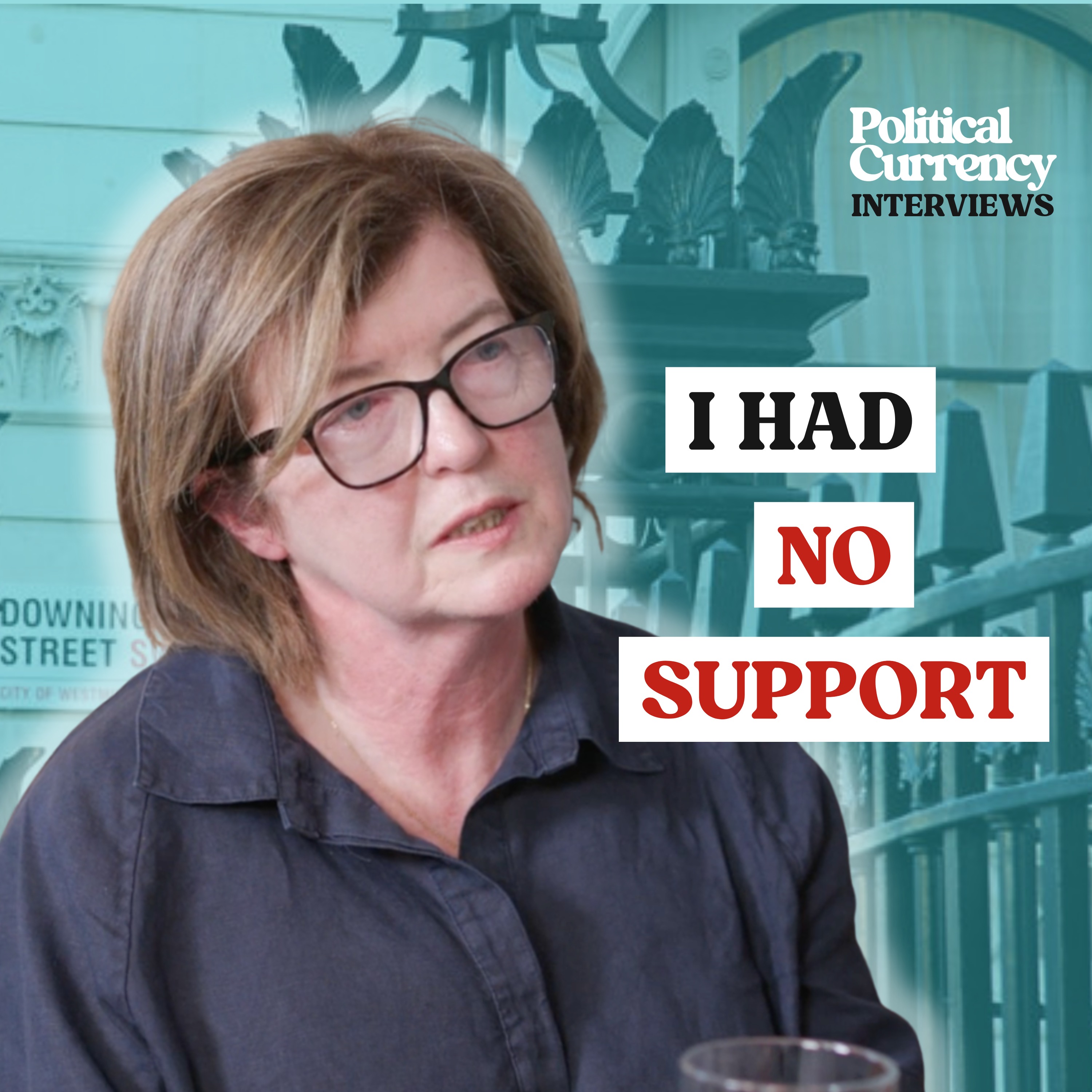
Sue Gray: Why working under Keir Starmer became ‘unbearable’
In short
Sue Gray, former UK civil servant and Downing Street chief of staff, explains why working under Keir Starmer became “unbearable,” focusing on her shift from confidential ethics work to political exposure, internal briefing wars, and the lack of a cohesive early government agenda.
Guest backgrounds
Sue Gray was born in London to Irish immigrant parents, joined the civil service at 17, later became Director General of Propriety and Ethics in the Cabinet Office (2012–2018), and led high-profile investigations including Partygate. She stepped down as Starmer’s chief of staff in Oct 2024, became a life peer, and now chairs the Northern Ireland RSPCA and is pro-chancellor of Queen’s University Belfast.
Key claims
She says Partygate work was factual and impartial, and that she had no contact with Starmer until after the report was published. She argues advisors “should not be the story,” and that briefing campaigns—“recording” narratives and targeted leaks—made her life and work “very, very difficult.” She also claims Downing Street lacked effective leadership vision.
Notable examples
She describes creating daily Shadow Cabinet meetings (from Sept 2023), investigating/handling propriety issues across prime ministers, and cites early government negativity (e.g., winter fuel allowance abolition, “suits and glasses,” Waheed Ali pass) as crowding out positive policy announcements.
Written by AI. May contain mistakes.
Chapters
0:33
Introduction to the Interview
The host introduces the guest and sets the stage for the conversation.
“The Cologuard test is non-invasive, requires no special prep or time off, and you start screening right from your home.”
1:32
Sue Gray's Impact in Politics
Sue Gray reflects on her experiences as Keir Starmer's chief of staff and the challenges faced.
“It was definitely unbearable, particularly for me.”
3:06
Reflections on Leadership and Challenges
Sue discusses the difficulties of government and leadership dynamics.
“She's now chair of the Northern Ireland RSPCA, the pro chancellor of Queen's University Belfast.”
4:33
Early Life and Career Beginnings
Sue shares her upbringing, family influences, and early career decisions in the civil service.
“We're going to come back to all of that later on.”
9:50
Running a Pub and Community Lessons
Sue discusses her experience running a pub and the valuable lessons learned about community.
“And I think that was very, very important in your future career.”
15:31
Sue Gray's Ascent in the Civil Service
Sue Gray shares her journey from a unique background to a senior civil service role.
“you rise up to very senior level in the British Civil Service.”
18:09
Navigating Challenges and Expectations
Discussing the challenges Sue faced in her civil service career and how she managed them.
“You are the person who sorted out problems.”
21:05
Experiences in Northern Ireland
Sue reflects on her time as the head of the finance department in Northern Ireland.
“I mean, it was something that you were, you know, excellent at.”
24:45
The Investigation into Partygate
Sue discusses her unexpected role in the investigation into Boris Johnson's conduct.
“And very unusually, you did an interview with the BBC.”
27:44
The Impact of Public Scrutiny
Exploring how the investigation changed Sue's public perception and role.
“of agreeing, I was thrust into the limelight in a way that I had never experienced.”
Show all 22 chapters
28:00
Navigating the Partygate Report and Transition
Discussion on the challenges of reporting on the Partygate scandal and the transition to working with Keir Starmer.
“And all of a sudden, I was out there without any, without any support.”
36:23
Preparing the Labour Opposition for Government
Insights into the restructuring of the Labour Shadow Cabinet and the transition to a government-preparatory role.
“but you finally arrive as the person who's coming in to prepare the Labour opposition for government.”
42:00
Preparations for Government: A Team Effort
Discover how the shadow cabinet prepared for government and the challenges faced in planning.
“you know, for people, for the shadow cabinet, a lot of the focus was on helping them prepare, making sure they had plans.”
43:50
Media Strategy and Early Challenges
Learn about the initial struggles and media challenges faced by Keir Starmer's government.
“And, you know, I think that is obviously media, policy, strategy.”
46:00
Internal Conflicts and Briefing Wars
Explore the internal conflicts and briefing wars that arose within the team and their impacts.
“But it didn't feel as though there was a big, detailed, positive policy agenda.”
48:40
The Burden of Briefing and Resignation
Understand the pressures of briefing within the political landscape and the decision to resign.
“But they remember that and the winter allowance, you know, so vividly.”
54:25
Reflections on Support and Leadership Challenges
Reflect on the support received and the leadership challenges following the departure from government.
“What point did you decide, did you and Keir decide that this couldn't carry on?”
56:00
Reflections on Government Dynamics
Discussion about the challenges and dynamics within government leadership.
“the relationship that I had with the mayors and that, you know, what I formed in Northern Ireland, that real belief in moving power out of Whitehall and just being more reflective of the society.”
57:28
Comparing Leadership Styles
Insights on the different leadership approaches of Keir Starmer and Andy Burnham.
“And, you know, that is definitely what everybody is looking for.”
1:01:18
Evolving Civil Service and Governance
Discussion on the evolution of the civil service and current governance challenges.
“But do you think that British government, the British state, is less effective than it was 10 and 20 years ago?”
1:02:24
Personal Reflections and Future Prospects
Sue Gray shares her enjoyment of public life and her experience with the RSPCA.
“And could you ever imagine being enticed back into it yourself?”
1:03:33
Personal Reflections and Future Prospects
Sue Gray shares her enjoyment of public life and her experience with the RSPCA.
“I'm Jake Stouck, co-founder and CEO of Serval.”

Ask about this episode
Get the gist, explore an idea or ask about something said.
 Claude
On Political Currency, what are the key points of this episode?
Searching your listeningTranscript
Automatic transcript. May contain errors.
0:01You stopped waiting for permission and started building yourself, your dreams, your credit. Experian Boost could turn your on-time payments into instant FICO score gains. Every bill you paid could become proof of your power. Self-made? Absolutely. Self-funded? Experian could help you get there. Download the Experian app today. Results will vary. Not all payments are Boost eligible. Some may not see improved scores or approval odds. Not all lenders use credit information impacted by Experian Boost. See Experian.com for details. This message is brought to you by Cologuard. If you recorded songs off the radio for a mixtape, it might be time to screen for colon cancer.
0:37The Cologuard test is non-invasive, requires no special prep or time off, and you start screening right from your home. It's just three simple steps. Set up, sample, and ship. If you're 45 or older and at average risk, ask your doctor about the Cologuard test. Available by prescription only. Learn more or request a prescription at Cologuard.com slash podcast. Hey, before your Q3 call, I've got the campaign brief ready, built from last quarter's data and the competitive landscape. Great. Did you include the differentiation angle the CMO asked for? Already in there. Three angles no competitors using right now.
1:15Just need your approval. Approved? Thanks. Oh, agents, where would we be without you? Hmm, somewhere with a lot more tabs open. Create your first Monday agent in minutes at monday.com.
1:32It was definitely unbearable, particularly for me. It was just affecting me and my life. Did Keir understand? Was he willing to act? I talked to him, but I was disappointed to investigate the activities of the Prime Minister and others. I was thrust into the limelight in a way that I had never experienced. I really believe that advisors should not be the story. I'm here in our studio today in Hoxton, but still without George Osborne, as we're in the midst of our summer interviews. And this is the penultimate edition of those summer specials. And it's a real treat. Today's interview is the first time our guest has spoken publicly since she stepped down as Prime Minister Keir Starmer's chief of staff in Downing Street in October 2024.
2:23Born in London to Irish immigrant parents, she left school and joined the civil service aged 17. She took a break from public service in her 20s to run a pub in Northern Ireland with her husband. From 2012 to 2018, she was Director General of Propriety and Ethics in the Cabinet Office, and the BBC dubbed her the most powerful person you've never heard of. Her step out of the shadows began when she carried out the investigation into Partygate, and following that, the then-leader of the opposition, Keir Starmer, recruited her as his chief of staff. She followed him into number 10, served as Downing Street chief of staff for the first three months of his premiership before being forced out amid a blizzard of bad publicity.
3:03And she was replaced by Morgan McSweeney. She became a life peer in the House of Lords. She's now chair of the Northern Ireland RSPCA, the pro chancellor of Queen's University Belfast. And she also chairs an investment advisory consultancy. Absolutely fabulous to have you here with us in Hoxton. Lovely to be with you, Ed. Now, from that bio, it's almost two years since you left Downing Street after a turbulent few weeks. And of course, since then, Keir Starmer has had a continuing turbulent time as Prime Minister, left the job just a few weeks ago. And given that at the time there were people who said, well, you know, it's not working and it's Sue Gray's fault.
3:51I'm sure that as a human, you feel terrible sympathy for Keir Starman, what he's been through. But also as a human being, you must feel a bit of vindication that after you left, things didn't go well. They went badly. I think as I look back on that, I think what I knew was always going to be the case, government is difficult. And opposition and government are very different beasts. And there is some sadness on my part to see what's happened. But also I think it is a recognition of just how difficult everything is. difficult but also over these two years compared to other prime ministers that you and I have both worked with this was not a functioning and effective Downing Street I think there are good people and I think everybody was trying probably their best but you know you need leadership vision and I think that will have been very difficult in these times.
5:04We're going to come back to all of that later on. Let's start at the beginning, because as I said in the introduction, for you, your Irish family roots are hugely important, but you grew up in North London and you didn't go to university. You left school, went to the civil service when you were 17. I think you started in the employment service, started off this very long and in the end, very distinguished career in the civil service. But just explain what was happening in your life, age 17, when you decided to start your public service career. So I think before getting to that point, I think I should take you back a little bit.
5:44I was born, brought up in Tottenham in North London, hence me being a Spurs supporter. And I grew up in a large Irish extended family. My mum in particular had six, my mum had six siblings. They were all incredibly close. Their mother had died and they were incredibly close. My grandfather, you know, they absolutely worshipped him. And we grew up, all of us together. I have, you know, along with 15 cousins and we were very, very close. I'm still close with my cousins today. and you know we were really happy we were loved I didn't realize until I went to secondary school probably just how poor we were because I never felt that but when I went to secondary school I realized that but even so you know I grew up in a loving really caring family and I have one brother who I am very close to.
6:49And then suddenly, you know, my dad had a couple of heart attacks. And then unfortunately, on the third one, died very suddenly, which was unexpected. But at the same time, probably inevitable. And a couple of months before that, I had taken the decision to leave school and get myself a job. And I didn't really quite know what I was going to do. And I saw an advert in the paper for an admin assistant in the civil service, which was the most junior grade, applied and was absolutely staggered that I got the job. But, you know, actually ended up in the civil service. I think actually it was great for me at that time.
7:33It gave me stability. I worked with people who looked out for me. And that was what I really needed. after my dad died, my mum, who had struggled with mental health issues, so all of my childhood, I could remember my mum having mental health issues and sometimes coming home from primary school and being met by one of my aunts. And I always knew that my mum had had to go into hospital and she would have attempted to take her life. And that's quite a difficult thing when you're growing up but kids you know very resilient at the same time but my aunts in particular all looked out for me so I felt this great love and warmth from my whole family and then yeah I took the decision to leave and go and join the civil service working in a benefits office.
8:29Did you feel as though you needed to go out to work to in a way escape from the tension and the pressure of home? I felt I needed to go to work, a little bit of that, but mostly to support my family, you know, to support, to help support my mum. So it was a financial decision. Yeah, yeah, to help support my mum and my brother. And, you know, he was 14. And I think, you know, he was with my dad when my dad, you know, took his, you know, had a heart attack and died and my brother was there. So I felt very much the need to support them. And how old were you when your mum died? My mum died much later on then.
9:09But, you know, she struggles throughout her whole life. So how did those experiences shape you, the adult, the public servant? Well, I think that I've taken a lot of my values from my period of growing up, um you know looking out for people um honesty all the things that you would expect but also resilience the resilience and a strong work ethic um you know my dad would have had you know at least two jobs um my mom had a job um we grew up in you know in in a family um that worked very hard as i think a lot of you know that was the time people did that um I think it was also a difficult time to and I've spoken about this to be Irish in London um but my parents were really very proud of being Irish but very proud to be British as well and to welcome everything that was you know that that was sort of like they welcomed life and they taught you right and wrong they definitely taught me right and wrong.
10:20And I think that was very, very important in your future career. Yeah. Although I didn't know that obviously that was going to be my future career. And sometimes I used to find myself later on, you know, in the role I had, particularly in the cabinet office and that propriety and ethics role, thinking, you know, wow, how have I ended up here? and yeah most of it will be because of my what was instilled in me. I've just got to ask you because I want to get on to the civil service career but of course in your 20s you go out off with your husband Bill who's a folk singer to run a pub on the northern southern border in just outside New York and it's such a huge decision and I think in the conversation you had with Tom Baldwin and he says to you, was that actually because you were, you know, an agent of the British state and you laugh out loud.
11:16I always thought to myself when I heard about this, because, you know, people still believe that of you. I thought Sue is the kind of person who sometimes just did things she wanted to do. Yeah, I mean, it was a really wild decision. And I, you know, I was working in a benefits office and had done several jobs, and just thought, actually, this opportunity arose to buy this pub. And Bill and I discussed it and thought, absolutely, let's go for it. Was he a Republican? No, no. So you did the pub running? I did the pub. Did he sing? So after a couple of months, I think he felt it probably wasn't for him.
12:00And I thought, you know, actually, we've bought this place now. We're going to make this work. And so he went back to he would he would go back to London quite regularly. And then he would he would if when he was back singing in the pub along with another guy. And, you know, we would have bands in there, other bands. And I learned so much. I learned I learned about the importance of community and the community were amazing how they supported each other. and I learned how to run a business, particularly a small business, which are actually just-in-time deliveries. And, yeah, I mean, I had some difficult things to deal with.
12:45Look, this is not the most, you know, at that time, this was not the safest and most stable part of the world to run a pub in. No, but I was very fortunate in that, you know, honestly, the people that would come into the pub were so massively supportive of a night time when I'd be locking up one of them would always stay and actually help me lock up because it was in the middle of the countryside you know there were no street lights and they would you know they were really supportive of me and some of the people that I got to know have remained friends. You've never been tempted to go back and run another pub?
13:27Definitely not. It's really hard work. It's very hard work. And they all, people, I think, often want to see the people that either own it or lease it. And they want to see them present. And so, yeah, very hard work.
13:55Hey guys, it's Mary from Two Judgy Girls. This episode is sponsored by Aerie. If you're counting down the minutes until you take your bra off when you get home, it's probably the wrong bra. Or if the straps are digging into your shoulder or you're constantly adjusting throughout the day, it's definitely time to get a better fit. That's why we love Aerie. Their bras are designed to be the essential effortless first layer with soft fabrics, great fits, and up to 59 sizes. So you can find the one that's right for you. Your bra should be holding you in, not holding you back. Visit Aerie.com to find the right bra for you.
14:31That's A-E-R-I-E.com. Hello, I'm Monica Reinagle, host of the Nutrition Diva podcast. Summer is here and with it, the hot and sticky weather. A morning working in the garden or maybe on the golf course can leave you more depleted than you realize. And plain water isn't always the most efficient way to restore the balance. That's where Liquid IV comes in. Its science-backed formula is clinically proven to hydrate faster than water alone. Whether you're exercising, playing outside, or simply surviving a summer heat wave, it's an easy way to stay hydrated. Shop now at liquidiv.com. Liquid IV, hydration that goes wherever life takes you.
15:11There's never been a better time to get outside and experience the benefits of nature. Discover nearby trails and explore the outdoors with AllTrails. Download the free app today and find your outside.
15:30So you come back to England and then over lots of departments, you rise up to very senior level in the British Civil Service. As somebody who was Irish, a woman, left school at 17, You know, you weren't Oxbridge, you weren't a man, you'd not been to a top university. I mean, you were quite exceptional. I thought, yeah. I mean, I think when I came back from Northern Ireland, so I was on a career break and I had to make a decision after three years. Do I stay where I am and resign or do I come back? Felt like the right time to come back. I'd probably learnt and done as much as I could with the pub.
16:17So I come back and I go into what would have been, you know, the headquarters, into the centre of a government department. And I can remember there for the first time, though, feeling that my background was very different in a benefits office. I don't think I felt that. But when I came into the centre, into a London office, I realised that my background was different. And that wasn't necessarily an advantage? No. And I realised, you know, sitting around a table, I would hear mostly guys talking about the colleges they'd been at. I didn't know they meant Oxford or Cambridge. I thought they meant Tottenham Tech.
17:02and I can remember feeling when I would be asked, you know, what college had I gone to, just feeling that, you know, really insecure and just thinking like, this is so not the thing. And privately, I would have had my own thoughts about them. But, you know, I can remember as I progressed thinking, you know, I never want people to feel the way that I felt. These guys would sometimes talk in Latin. Things that I think can make you really feel that you're, you know, you're set apart. And I just remember thinking, I always remember thinking, I am going to do my very best. And I'm actually partly going to prove to them what I can do.
17:47But also, I'm going to try to make sure that I treat people very differently. But these men, and we're talking here about, You know, the cabinet secretary, the most senior people in the whole of the civil service, Gus O'Donnell, Jeremy Hayward, they come to rely upon you and you, the person, Sue Gray, to a huge degree. You are the fixer. You are the person who sorted out problems. You are the one who often prevented problems happening in the first place. I think the first time that I remember meeting you, there may have been previous times, was when Gordon Brown was prime minister. and for a couple of hours I was on the inside of the reshuffle as it was happening with the big board with all the names and you were the person who Gordon Brown was turning to and saying this person, that person and you were saying potential difficulties or challenges or things that would have to be managed.
18:42I mean you were the person who behind the scenes people hugely relied upon to keep the show on the road and to stop the grenades exploding. Yeah, I mean, I think that, you know, it is incredible to think that's where I ended up. And I just think I approached those discussions, those meetings in a very direct, straight way. That would have been my upbringing. and I think to be fair to you know Gordon, you, Gus, Jeremy actually nobody thought, everybody just, people valued my advice and my experience. I think that the truth is Sue, they got you to do the things they were probably a bit squeamish about.
19:33When it came to dealing with John Prescott on the front of the newspapers having an affair with a civil servant, sending Sue Gray to find out the facts or the challenges Tessa Jow was having with her husband's business dealings. You did the investigation into Damien Green. It was you that Jeremy Hayward said sought out a pass for Lex Greensill. I mean, all these things, you were the one who did the stuff which I think maybe they were quite worried about doing themselves. Yeah, but I think in asking me to do those tasks, I always knew I had their support and, you know, I could go and talk to them.
20:10And I think one of the great things actually in a job like that is being able to sit down and talk with the cabinet secretary, sometimes have a difference of view. And, you know, I can always remember Jeremy Hayward and me, we were discussing a particular issue and we started at opposite ends of the discussion. and over the quite, you know, I suppose, lengthy discussion over a few days or whatever the issue was, we would meet in the middle. And actually, we would reflect on how we had gone about the task. And I think, you know, I always felt I had their support. Because I don't think in the end, in those conversations, it was likely that you were the one changing your mind.
20:58I mean, the reputation you had was a sense of right and wrong about the right way to do things. I mean, it was something that you were, you know, excellent at. And that was your reputation through a series of prime ministers. You were not only beyond reproach, but you knew how to protect reputations, avoid mistakes, to keep things on the straight and narrow? I never felt, I felt encouraged by all actually, by Prime Ministers of all, you know, all the Prime Ministers I've worked with, the Cabinet Secretaries, senior ministers. I always felt that they wanted my view and I could give my view, even if they were not going to like that view.
21:41I also think that in that role, a lot of what you do, you stop things from happening. And so you don't really, people don't know about it. I remember sending you, because I had to, this was the rules, the book I wrote after the 2015 election. So I was no longer a member of parliament. I'd not been a government minister for five or six years. But I sent you the full manuscript and you came back and told me a couple of things. One was about the story about the Japanese finance minister. And you just said, you know, are you sure you want to tell it in that way? Because it sounds like you were accusing him of being drunk.
22:17And I said, I'll change the word soon. But I mean, the attention to detail, I never doubted that I was going to take Sue Gray's advice. Good. At all. And I don't think anybody did. But then you go to Northern Ireland, you're in the finance ministry, you apply to be the senior civil servant in Northern Ireland, and they don't give you the job. And they also didn't give you a job in the trade department. What was it about this boys club and these Oxbridge men who were happy for you to solve their problems, but when it came to a leadership role, they didn't give you one? So, first of all, I think my time in Northern Ireland from 2018 to 2021, I absolutely loved that job running the Department of Finance.
23:08And you wanted to stay. Yeah. And I think people thought at the time when I went there, that was a really strange thing to do. I felt it was time to spread my wings from the cabinet office. And I went first 18 months without ministers, actually, in Northern Ireland, and then the second 18 months with ministers. and I think you know five parties in government in Northern Ireland at that time when they when the when the executive and assembly came back and a very very different role you know running the finance department being responsible for you know a huge budget in in Northern Ireland and And I did enjoy that job.
23:57And I did apply to be the head of the Northern Ireland Civil Service. And I was unsuccessful, to be fair. I don't think that that was a decision ultimately taken by the then first and deputy first minister who were both women. and but I learned a lot you know I learned about the need first of all I actually think it was my first real insight into devolved government and how devolution works and I could remember you know receiving a call from the treasury or somebody and them talking about they were going you know a policy they were going to announce that morning and yet we'd had no involvement and I just found that quite remarkable.
24:43So, yeah, I'd love to have stayed. It wasn't to be. And very unusually, you did an interview with the BBC. I did, with Gareth Gordon. What a civil servant normally does. And in that interview, you said that you thought that you were too much of a challenger, a disruptor. And in the end, the system. Yeah. And I think that is right. I think that, you know, they probably took a bit of fright, possibly. But anyway, that was the decision that was taken. I respected the decision. They re-advertised and I decided not to apply. I decided not to put myself through that a second time. But it's not the last time you don't get a promotion?
25:27No, no. So I then return and I work with Michael Gove. And that was a great period as well. and I became his second permanent secretary and worked very well with him, followed him to the levelling up department. And then, yes, I was encouraged to apply for a permanent secretary role in the trade department and was unsuccessful. At this point, your career takes a turn. As I said, you step out of the shadows because Simon Case is recused from doing the investigation into Boris Johnson over Partygate and the breaking of rules and all the huge furore which is happening. And you agree to do the investigation.
26:23At the time, this was seen as a great coup for Barthes Johnson. Sue Gray, the person who more than anybody knows right and wrong, the person who's the guardian of Whitehall integrity in the Cabinet Office, that you're going to do this investigation. But it doesn't turn out the way he probably expected. So I think agree might be too generous a word. And the guy who actually was a successor to me in the Propriety and Ethics team called me and asked me to do the investigation. And I said, you know, I didn't think it was for me because I was actually really enjoying my day job. um also and i you know i think i felt that this was a really difficult task to ask a civil servant to investigate essentially you know uh the activities of the prime minister and others and um and simon case the cabinet secretary had not wanted you to do it no i don't well i don't know but he i believe okay i don't know um but anyway in the end it became clear that really this request was not a request.
27:37So yeah, I had to get on with it. And within minutes probably of agreeing, I was thrust into the limelight in a way that I had never experienced. You know, as a civil servant, you talked earlier about the person who nobody's ever heard of, you know, that is the role of a civil servant, I think, behind the scenes, giving advice, which should remain private. And all of a sudden, I was out there without any, without any support. In a public role. In a public role. To do a public report, which everybody knows is going to determine the fate of the Prime Minister. And, you know, I guess you're hugely exposed.
28:24And I felt real pressure. You know, I felt, you know, I'd be on the tube and people would approach me and recognize me. And I'd be walking down the road. I think that whole period just changed how I, you know, how I was seen. But you're a public servant. Yeah. And you have to really, I do believe that when you're asked to do something, you serve. Some of the accounts of that period, Tim Shipman says this in his book, say that although in the end your report is hard hitting, actually the truth was worse than you reported. That there were some things where you thought, you know, I'm going to draw a veil over that.
29:12It's too much to say that in public. Is that right? I don't know. I don't know what he's referring to. I mean, I think that the job for me was to report very factually about what had happened. It wasn't for me to, you know, give my view. It was to report on the facts. And that is what I believe I did. I mean, afterwards, because of the fact you then chose to make public that you were going to work for Keir Starmer, afterwards, conservatives close to Boris Johnson, I think probably Boris Johnson himself, they all said this was, you know, a party gate, was a manufactured plot put up by Labour and Sougrain was part of it.
29:59and it was all a stitch up, I think was the phrase. Although, as I say, at the beginning, everybody thought Boris Johnson was pulling a fast one. It was a great appointment. But I mean, when people say it was all a stitch up and you were used and it was all just a plot, how do you feel about that? I think that the job of establishing the facts, which is the job that I did, and I did it in the way that you'd expect any civil servant to do it, with impartiality, honesty. And, you know, it was obviously interrupted. The process of that report was interrupted by the Metropolitan Police doing their own investigation, issuing their fines.
30:39And I absolutely did what you'd expect me to do, which is just reported on the facts. I was not, you know, I wasn't talking to Labour. I wasn't thinking anything like that. I was just getting on with the job that I'd been given. Although with Michael Gove's permission, you had started the conversations with Keir Starmer before the Partygate report was completed? I don't know. Or is that not right? No, I don't think that's right. That's not right. You mean what? So the whole Partygate report was finished before you had any contact with Keir Starmer? Fine. Okay. Yeah. It's good to correct that because, you know, in the maelstrom of things which I said, some people say that your conversation started earlier.
31:24And I think the Tories alleged that. So I think the Partygate report was published in the May and it was much later in the year that I got approached by Keir. Which is, you know, I said going to run a pub in Yurie was a leap. But I mean, this for a senior career civil servant to consider and then decide to move over and to become the chief of staff to the leader of the opposition. I mean, that is also a huge risk to take. What was in your mind at the time? Was it partly that you'd not had the promotions you should have had in the civil service and therefore you were going to plough a different furrow?
32:08No, I really, if I look back on that and why, and I can understand, you know, how some people will have felt about it, but I saw it as public service. I saw preparing an opposition party as a critical part of public service. And in fact, I think, you know, for the future, I do think that, you know, government should consider whether for a future opposition party, they should second somebody, you know, a senior official to help them prepare. so I saw it as a public service an extension of the public service that I had given my whole life to really and of course you know Keir Starmer has not had an easy time as a leader of the opposition I mean look to be honest turning Labour around for the Corbyn year very hard had some political challenges he's been through Morgan McSweeney a period of chief of staff Sam White is a period of chief of staff who's um so he's looking for something new and um this was all reported at the time what he wanted was a senior experienced civil service servant who could do the preparations for government that was explicitly what he was looking for and i know that they um um they looked at a number of names but you were the top of his list did you know that that is what kia starmer was wanting I don't know whether did they come to you or did you put any feelers out that you no no they came to me I didn't put any feelers out because it was absolutely not the thing I was thinking about um and I um yeah I mean I just you know I thought it was you know any really important role to prepare a party that could be in government that hadn't been in government for some time and that was really what sort of influenced my decision do you remember the moment when you knew you'd got the job well i'm not sure i thought of it like that i um was there a conversation with keir starmer where he said well i think if you recall i think the news got leaked right and so um so it was leaked before before i'd made this before we had made the decision i see the final decision
34:40This message is brought to you by Cologuard. If you recorded songs off the radio for a mixtape, it might be time to screen for colon cancer. The Cologuard test is non-invasive, requires no special prep or time off, and you start screening right from your home. It's just three simple steps, set up, sample, and ship. If you're 45 or older and at average risk, ask your doctor about the Cologuard test. Available by prescription only. Learn more or request a prescription at Cologuard.com slash podcast. This message is brought to you by today's sponsor, Walden University. Set a course for change. Now is the time to make a real change in your life, career, and community.
35:21At Walden University, we give you the support and flexibility to get the W. Walden's online programs are designed for working professionals like you. You'll gain hands-on skills to take on real-world challenges and succeed. Your future is waiting and Walden is here to help you achieve it. Take the first step to make your impact. Visit waldenu.edu. Walden University. Set a course for change. Certified to operate by Chev. Back to school is busy enough. The last thing you need is shopping that makes it harder. Whether you're moving into a dorm, your first apartment, or just getting organized for the semester, Wayfair makes it easy to get everything you need in one place.
36:01Furniture, bedding, storage, decor, study essentials, all at prices you'll love. With fast shipping before move-in day. Get everything you need for back-to-school season. Shop Wayfair.com today. Wayfair, every style, every home.
36:23Now, there was a kind of long period which has been written about, about, you know, all of the attempts to put barriers in the way, the whole sort of, you know, the cooling off period you have to have coming out of the civil service, which I'm sure was hugely frustrating. but you finally arrive as the person who's coming in to prepare the Labour opposition for government. And you come in in the middle of a bit of a maelstrom over the Middle East and what Keir Starmer has said about Gaza. My memory is that for the Shadow Cabinet, you were a complete breath of fresh air because finally there was somebody coming in to work with Keir who thought talking to the Shadow Cabinet about policy was a good thing and that the start of the daily meeting, which you were organising with Keir and the senior Shadow Cabinet members, it would have been Yvette, David Lammy, Angela Rayner, others.
37:23I mean, this was a big change for everybody. So I arrived in September 2023. Yeah. and the first thing you know I discussed with Keir was we should have an 8 30 daily meeting very similar to the daily meeting that you have in number 10 that we would run things as though we were you know getting in in government but not taking anything for granted and we had that meeting, I invited, you know, the chief whip, the shadow chief whip, the, you know, the then shadow chancellor, shadow deputy, you know, the deputy prime minister, Angela Rayner. Were you surprised to find out that hadn't happened before?
38:14A little bit. They were quite, I think they were quite surprised to be invited. But anyway, it was a good thing. You know, it was a good thing to do, reduce some, you know, some of the people that would have attended or would have been in the room, you know, kept the meeting small. And then, you know, when the events of Gaza happened, I then put in place another meeting to follow that one and invited the shadow ministers who had responsibilities. So Yvette, David Lamy, Lisa Nandy, Angela Rayner, the chief whip, you know, people who had a view who were actually working well and flat out actually with colleagues, with others to get their views.
39:03I mean, that seemed to be absolutely the thing to do, recognising also if we got into government, it's departments that have those, ministers that have those powers. The Shadow Cabinet, the Parliamentary Labour Party, the mayors, they all said it was such a change, such a breath of fresh air because they hadn't really been spoken to before. There was a sort of a group around Keir, a different kind of boys club, who kept things very tight and you broke into that. Yeah, but I mean, that was the right thing to do. And I can't comment on what had happened before, but it felt the right thing to do, particularly at this moment when, you know, in the next year there was likely to be an election.
39:47Did Keir's operation feel like a group of people who were ready to go into government? At that time, I don't think that the fact the shadow cabinet really weren't getting the exposure they needed and wanted, I think, yeah, just said there was a lot to do. And from your point of view, that meant that from the start there was friction? I think there was friction. And I think I recognize that probably a few people had their noses put out of joint because of it. And some of those people you probably didn't think would be the kind of people who ought to be surviving into government. I think government and opposition are very different.
40:31And I'm not sure I would say they shouldn't have survived. But I do think that we needed bigger people, people with bigger experience to be heads of, whether it was, you know, comms or policy or strategy. Government is very, very different. And the way things develop, I think this is a fair categorisation, is that there is one group of people led by Morgan McSweeney, whose job is to run the campaign and the messaging and the resourcing of the campaign. And then there is a separate group run by you, which is really about preparing for government and different people, different rooms in the headquarters, actually a different building for some of the work.
41:18the work, it becomes quite separate. I think what was difficult was I joined, it was only nine months between starting and the election. And so people are focused on the campaign. You have to win. And I get all of that. But I think, you know, so I focused, you know, a lot of the focus was on supporting the shadow teams, shadow cabinet ministers who Keir had said, when he shuffled them, actually on the day I started, that, you know, they would be in their jobs, they would follow through on those jobs into government, which was great. And therefore, you know, for people, for the shadow cabinet, a lot of the focus was on helping them prepare, making sure they had plans.
42:08I mean, I do believe they had plans. They did a lot of work. If I look at you know shabana mahoud um actually yvette john healy david lammy peter carl they did fantastic were streeting fantastic work and preparing for government you know and that you know that that was the job that i you know was there to support them with um and then obviously there was the job of preparing you know for number 10 um but very much this has to be a team effort But you have, but it's different people. So you have people like former Conservative minister Nick Bowles, you have James Lyons, you have Torsten Bell, who were not part of the Morgan Group, were working with you on the preparations.
42:54One of the things which is very striking to me, and obviously a lot of the detailed accounts of this come from the Patrick Maguire, Gabriel Pogren book. They obviously talk to very many people on one side of the argument. I didn't see there was a lot of view in that book. That's how it read to me. But at one point, Matthew Doyle, who's the head of comms, says that we thought Sue was working out the plan and we arrive in government on the first day and there's no media grid and there's no plan for the first hundred days. And what on earth was she doing all that time? So I think, first of all, I think the media grid might be for the media team.
43:39And he was the head of comms. So you slightly wondered yourself, what was he doing for the last three months if he wasn't thinking about the first hundred days? But I do think that it is a team effort. And I think that you have to have all members of the team on board. And, you know, I think that is obviously media, policy, strategy. you know yeah it in the book he says he didn't find out he had he had his job until polling day and that's why he didn't well do any preparations for government well i think to be fair is that plausible i think to be fair i think that i look i can understand on the one hand kia didn't want to confirm people's jobs he didn't want to look like he was measuring up the curtains i get that but i'm not sure that i would agree with that account right um i mean he He may not have known until quite immediately before, but I think the focus had to be you had to do your job, the job you were doing at the time, whether or not you were going to be in government afterwards.
44:45So they ought to have been drawing up the first 100 days media grid. I think they should. I think you had to be a team. Exactly. And in the access talks, did individual cabinet ministers get into that kind of detail? Yeah. So I think the, you know, the access talks from the people that are... These are the discussions between the civil service and ministers before they actually arrive. Yeah, and they're confidential and they weren't authorised until quite late. But that is the prerogative of the, you know, the prime minister of the day. But when they happened, you know, ministers went into it and they embraced it.
45:22And we were getting reports back. There was a lot of work going on. And, you know, those talks were very active. The thing I feel looking back now, I find it hard to remember in the first weeks of the government, the positive, big news stories that Keir or Rachel Reeves or other cabinet ministers were announcing. I mean, I remember the abolition of the winter fuel allowance and the black hole. And we all remember the scandals about his suits and his glasses and Waheed Ali's pass. But it didn't feel as though there was a big, detailed, positive policy agenda. And in that vacuum, all this negativity happened.
46:14Yeah, I mean, I found. I mean, I think I found the briefing very difficult. and I get the media wanting to scrutinise. I totally get that. But some of this was coming from my own team. Of course. And that was very difficult. But when I think of the work that had gone in before the election on the health side, the work that John Healy had done with his defence counterparts, and David Lammy, you know, and actually a lot of the work that I had done supporting them. So, you know, whether it was, you know, working with the Irish and the then Irish ambassador to help prepare for the bilaterals and the, you know, I think restoring British Irish relationships, working with, you know, the European Commission, presidents, chief of staff, and, you know, working with the US administration, you know, a lot of work went into this.
47:24And I do think that, you know, there was a lot done and a lot of announcements made, a lot of good work. We wouldn't be able today to talk about some of the things that have happened without that planning and without that work. But why wasn't Keir Starmer himself demanding in the meetings before the election I need to know what my big positive announcements are going to be for the first two weeks. Because I don't think he was, was he? I think he was really focused on the campaign. Right. And not really thinking about the aftermath. I think he was focused on the campaign. He will have been thinking about the aftermath.
48:13He will have been thinking about it. But a bit like Matthew Doyle, he was probably not doing his bit for the team in planning for the future. It was they all said, well, you know, we'd leave that to Sue. I'm not sure they did say we'd leave it to Sue.
48:34Yeah. I mentioned suits and glasses. The reason I say that is because for a Good Morning Britain audience, which I present now, But they remember that and the winter allowance, you know, so vividly. The Sue Gray I worked with when you were in the cabin office, I mean, you would have been so hard line on those things. But what actually happened? I think it's really difficult to talk about, you know, individual things. I do think as a former civil servant, as a political advisor, I do think you, you know, you shouldn't reveal in individual conversations. But there were definitely mistakes. Yeah.
49:12I'm not asking you to tribute Blaine. No. I think to myself, if Sue Gray had known this, she would have been saying, what on earth are you doing? A lot of what, you know, some of that also, decisions on that were taken long before I arrived. But I just think, I don't think it's right to talk about. Morgan McSweeney said last week in, I think, in an interview he was doing that the abolition of the winter fuel allowance was all the fault of civil servants in the Treasury.
49:42I'm not sure that that how how could he say that I mean my memory from the time is that the treasury was slightly aghast I don't know about that but I mean I do know you know ministers take decisions um and that that is you know ministers take decisions you get advice and ministers take decisions. I understand. We talked about briefings. And the truth is, very quickly, into the government, I mean, there's so much briefing. And a lot of it is directed towards you. And a lot of it is, I think, quite underhand. You can see what people are trying to do. They're trying to kind of set you up. Did you know from the beginning that that's what people were doing?
50:30No, I realised afterwards that that is an approach where you build people up and then you look to brief.
50:51so it seems to me that uh briefing began you mentioned that earlier and there are lots and lots of different stories in these weeks which are all aimed at you and whether it's you know about um sue gray going on all the trips or um lobbying for money for casement park or she's a bottleneck on decision making or she's trying to reduce special advisors pay but she wants to be paid more and there's this whole series of things which are very pointed and um they often very unfair and um you must have felt kind of i didn't come in to do this job to put up with all of this did you say to kia what's going on why is this happening around me i am i'm When it first started, I think actually it started in opposition and I would read about things that I would have said or not said and then obviously it carried on.
52:03I had always taken a view as a civil servant and actually as a special advisor that you should be able to speak freely in rooms. You know, we talked earlier about some of the advice that I would have given prime ministers over the years. And that was always on the basis that you could talk freely in the room. And I couldn't recall those sort of discussions being briefed out. And yet here I found myself, you know, stories about, you know, actually supposedly trying to move Morgan McSweeney to the back of the building. actually that was a genuine you know I can't believe so many of you are going to sit in this small room let's find a better room for you.
52:49Not wanting to see papers? None of these things I mean actually the civil service raised some issues about that and then I was reading about it and it just became it just got to the point where you know everything you say you feel is somebody is recording it did kia understand um i was he willing to act i talked to him a couple of times about it um and as i said i don't really want to disclose individual conversations but i was disappointed that not more was done because i think it could have been done and the truth was by this point you have I think big support in the cabinet in in the PLP yeah but on the inside you know yeah you are at loggerheads with individuals and not just men some of the women as well were you know all the boys club briefing meant that people like I know Jill Cuthbertson, Vidya, Holly Ridley were all saying I know but we're women are being we're being devalued with this boys club story I mean it did become unbearable it was definitely unbearable particularly for me um and i would say that none of that briefing came from me um i um yeah i think it was it was very difficult and it was just affecting you know uh me and my life um and you know i was getting into the office very early in the morning.
54:19I was leaving late to avoid, you know, just, yeah, it was very, very, very difficult period. What point did you decide, did you and Keir decide that this couldn't carry on? Yeah, I think the point at which I resigned, we talked about it, you know, we had talked a couple of times and I really believe that advisors should not be the story. The frustration is you were so known for being a brilliant manager of relationships in government, within the civil service, with cabinet ministers, despite, as we said, some of the challenges you faced in your career. but stepping into this political world as a civil servant in the end you ended up in a war-like set of relationships with political people and in the end that didn't work no I mean I think I would say it was with uh you know there was clearly a difference of you with a few political people I think I actually had a lot of support um and uh I know that you know people were very continued to be supportive um I was trying to do things a little bit differently um and you know I think an example of that would be you've referred to it about how I well a couple of examples how I was working with the shadow cabinet teams and then obviously the cabinet when they when they came into government um and very much somebody who they were picking up the phone you know to I also think the relationship that I had with the mayors and that, you know, what I formed in Northern Ireland, that real belief in moving power out of Whitehall and just being more reflective of the society.
56:17I, yeah, I mean, I have, you know, they were good things to do. I've learned a lot. And yeah. If you look at what was said at the point you departed, finally, Sue Gray's gone. Now Keir can lead. Downing Street's got to function. The truth is, it got much, much worse. And so many chiefs of staff, so many head of comms, so many reorganisations. the one thing which at the time I remember thinking was um you know the risk of the Peter Manson appointment and then how things subsequently transpired the fact that um Morgan pushed this the fact that Keir didn't really engage I just think the Sue Gray I knew from all those years in the cabinet office would have been saying when Peter was being considered for this job are you sure have you understood the risks have we properly done the due diligence I wonder whether you want to say anything about that that's what i i believe um i don't really want to talk about an individual appointment but i think the thing i said earlier is you know a lot of you know what you do in government is stopping you know you stop things from certain things from happening um or you you know government is difficult i guess look uh i started this conversation by saying that things got worse um i guess the the the challenge to you is that um you were responsible for the transition and for managing those early months and the lack of positive agenda the fact that it went wrong for kia early i mean how much of that in the end do you think was your responsibility um i mean i think ultimately you know you have a leader of the party, you have a Prime Minister, leader of the opposition, you have to set your vision, your agenda.
58:20And, you know, that is definitely what everybody is looking for. The contrast with Andy Burnham, Andy Burnham has had so much less time to prepare and very short period of access talks. But I mean, what a different transition he's had in the last three weeks from the first three weeks of Keir Starmer in the end is the biggest difference the principle um I think uh Andy has come in with a very clear view of what he wants to do and you know he's got huge experience not just a government central government but also being a mayor and delivery and I think it's a very you know they're very different people they are very different people that is certainly uh true on this podcast george and i have spent two years saying to kia you know this is what you need to do and um i think we were probably two small people amongst very many others saying it and i'm afraid um kia starmer wasn't in the end a very good uh a very good listener he wasn't a very good he wasn't collegiate when it came to the conversation about policy or politics was he honestly ed i don't think it's really for me to that is fine that is my judgment let me just ask you about um where we are now because as you said you've known andy burnham really well yeah um you also know james pinnell well i don't know how much you know um louise hague there was actually kind of conversations a few weeks ago about whether sue gray would come back i don't know whether you had any conversations with them but um what advice on the basis of your experience now would you give to um to to you know this new prime minister to Andy Burnham and his team about what you've learned is the most important thing about making a um a number 10 work so um I do obviously know Andy Lou James very well uh Jane, you know, I think I want them to succeed and I'm sure they will.
1:00:25I think, you know, if I look back on it all, what I really would encourage them to do is to work with the civil service and trust, you know, put their trust in it as well as challenge, obviously. But I think there are, you know, there are great opportunities if everybody can work together. People say, compared to when I was a cabinet minister, when you were kind of a rising star in the civil service, that Britain's become ungovernable. That's why we've had such a succession of prime ministers. We've had all of this turbulence that the politicians aren't any good anymore. The civil service isn't as good as it used to be.
1:01:10The counter argument, which I and George make on this podcast, is actually in the end, it's about political leadership. And that is the thing which we haven't got right in the last few years. But do you think that British government, the British state, is less effective than it was 10 and 20 years ago? No, I think if I look back on the civil service I joined and spent much of my career in, you know, it has continued to grow, develop. It's a very different civil service today. I don't think... It's not gone backwards. It's not gone backwards. It's actually evolving. And it's going to evolve now again.
1:01:56And establishing an office in the North, number 10 in the North, I mean, actually really positive. I think it will absolutely change some of the way of thinking. Something you were championing when you were in Downing Street. Yeah, I just think it's just, you know, I learned that when I was in Northern Ireland working in the devolved government. So I do think, you know, the challenges today are different. Social media, everything is just very different. But I think there's great opportunity. And could you ever imagine being enticed back into it yourself?
1:02:37um i am enjoying uh you know i'm i'm enjoying myself um and uh you know i get to um uh i get to take part in many aspects of public life um you know you talked about me at the beginning chairing the Northern Ireland RSPCA, the USPCA. When I went for a chat with them about taking on the role, I came away with a puppy. And, you know, so, yeah. Well, thank you very much indeed for what has been many decades of public service and for so many of us having been such an important and valued colleague and actually for very many of us giving us advice, which we were very wise to pay heat to. And thank you for joining us on Political Currency today.
1:03:32Thank you, Ed.
1:03:39I'm Jake Stouck, co-founder and CEO of Serval. We built Serval to automate the IT work that slows companies down. Onboarding, password resets, access to applications, my laptop stopped working. While employees wait for help, their real work is put on hold. IT desperately wants to automate this work, and that's why they need Serval. You just tell Serval what you want to automate in plain English, and it's built. No drag-and-drop workflows, no expensive consultants. Employees get unblocked, and IT teams go from drowning in tickets to building what actually matters. With Serval, IT becomes the AI engine powering the entire company.
1:04:18This is a new way to run IT. We guarantee you'll automate 50 % of all tickets and we'll prove it to you in a free four-week pilot. Go to serval.com slash tickets. That's S-E-R-V-A-L dot com slash tickets.
1:04:50and even suicidal thoughts. That's where Gab comes in. Gab offers safer phones and watches for kids with no social media tailored to every age, offering the right tech at the right time or tech in steps. From GPS tracking enabled watches for younger kids to phones with parent enabled apps for teens, each device allows kids to more safely grow their independence. Visit gab.com slash get gab and use code get gab for an exclusive offer. That's gab, G-A-B-B dot com forward slash get gab. Gab, tech and steps. Independence for them, peace of mind for parents. Hey guys, it's Mary from Two Judgy Girls.
1:05:28This episode is sponsored by Aerie. If you're counting down the minutes until you take your bra off when you get home, it's probably the wrong bra. Or if the straps are digging into your shoulder or you're constantly adjusting throughout the day, it's definitely time to get a better fit. That's why we love Aerie. Their bras are designed to be the essential effortless first layer with soft fabrics, great fits, and up to 59 sizes so you can find the one that's right for you. Your bra should be holding you in, not holding you back. Visit Aerie.com to find the right bra for you. That's A-E-R-I-E dot com.
From the publisher
The third of our exclusive summer interviews sees Ed Balls sit down with the former Chief of Staff for No. 10 Sue Gray. In her first major interview since her dramatic split from Keir Starmer’s team, she details the lead up to entering Downing Street and just where things went wrong.
Gray explains how she tried to prepare Starmer’s team for government in 2023, where things went wrong at the beginning, and what it’s like to be on the receiving end of an internal briefing war. In this tense and emotional conversation, she shares her raw reflections two years on and why things were not working at the top of government.
Born in Tottenham to immigrant Irish parents, they also discuss her background, her meteoric rise through the civil service and what went on behind the scenes with her report into Partygate and the end of Boris Johnson.
We love hearing from you, so please don’t forget to send all your EMQs to questions@politicalcurrency and make sure to include a voice note of your question or send a question to our social media handles:
👉 X
👉 TikTok
Thanks for listening. To get episodes early and ad- free join Political Currency Gold or our Kitchen Cabinet. If you want even more perks including our exclusive newsletter, join our Kitchen Cabinet today:
👉 patreon.com/politicalcurrency
Please note: Kitchen Cabinet is only available via Patreon.
Credits:
Production: Sam Burton & Nasreen Arain
Producer: Caillin McDaid
Video Editor: Sam Gruet
Executive Producer: Henrietta Harrison
Political Currency is a Persephonica Production and is part of the Acast Creator Network.
Hosted on Acast. See acast.com/privacy for more information.
More from Political Currency
All episodes

We use cookies.They keep VO running smoothly and help us improve it. Privacy policy