

 Ask ChatGPT

- Podcasts
- Political Currency
- What REALLY goes on at party conference?
In short
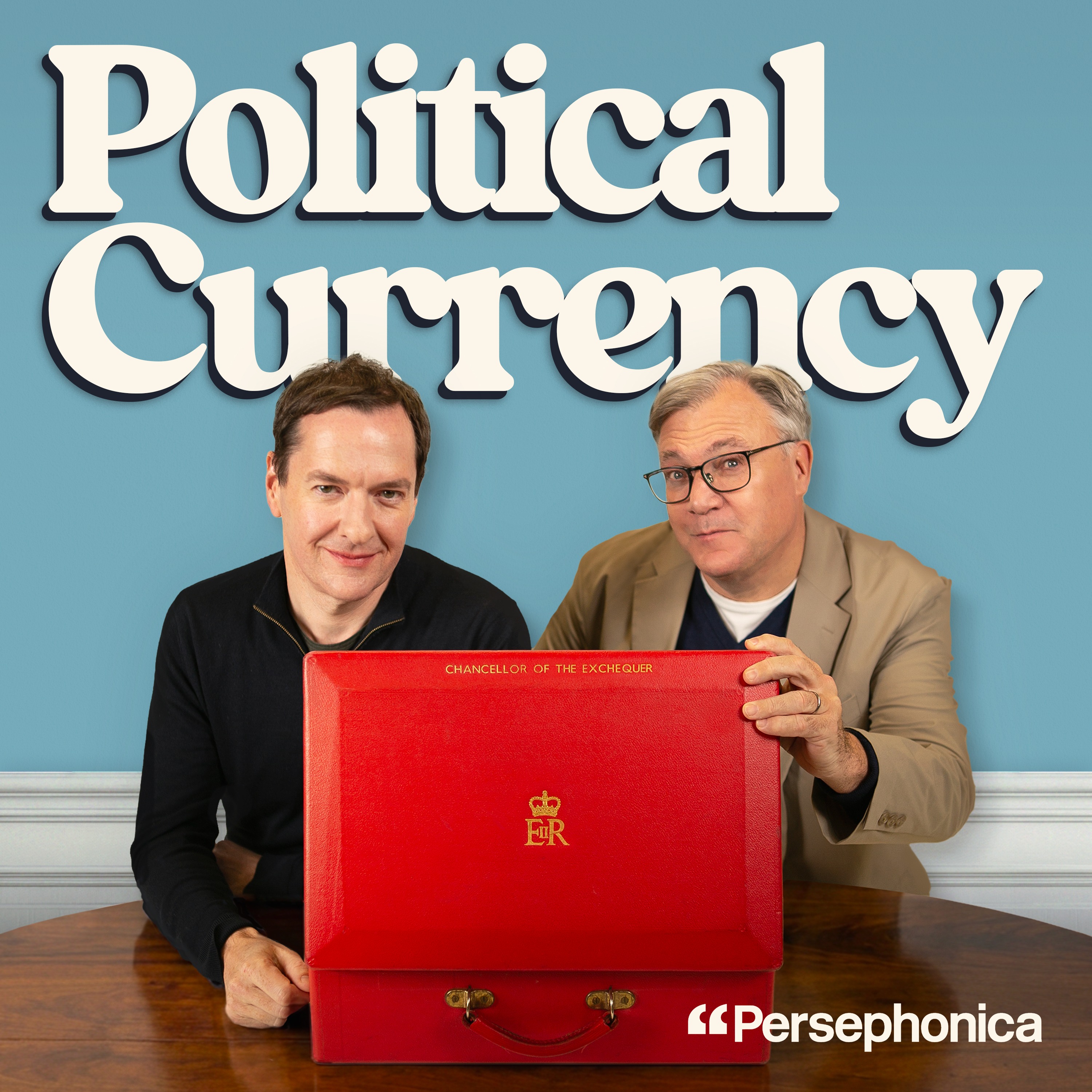
Hosts: Ed Balls and George Osborne
Production
Persephonica
Episode Release
Weekly on Thursdays
Contact
Social Media
@polcurrency
In this episode, Ed Balls and George Osborne dive into the intricacies of party conferences, sharing personal anecdotes and insights. They reflect on the behind-the-scenes dynamics that can make or break these high-stakes political events. Special contributors, including Lord Eric Pickles, Sir Oliver Letwin, and journalist Nick Robinson, share their remarkable stories from past conferences, spotlighting unique experiences and mishaps.
Written by AI. May contain mistakes.

Ask about this episode
Get the gist, explore an idea or ask about something said.
 Claude
On Political Currency, what are the key points of this episode?
Searching your listeningTranscript
Automatic transcript. May contain errors.
0:00Lord Eric Pickles: That new thing? Yeah, we've got it. The Drop by GNC, bringing you all the newness that matters. Handpicked by the pros who actually know what's up and what's proven to work. We keep you on top of the trends and dialed into what's next. Whether you're crushing it at the gym, leveling up your game, or thriving every day, The Drop by GNC is where the latest solutions in health and wellness land first. Non-stop innovation and fresh finds daily. Explore what's new and what's next on The Drop by GNC. Shipping, billing, admin, payroll, marketing. You're managing all the things. So why waste time sending important documents the old-fashioned way?
0:38Lord Eric Pickles: Mail and ship when you want, how you want with Stamps.com. Print postage on demand 24-7 and schedule pickups from your office or home. Save up to 90 % with automated rate shopping. That's why over 1 million small businesses trust Stamps.com. Go to Stamps.com and use code PODCAST to try Stamps.com risk-free for 60 days. Guys, it's no use putting it off. The best time for an underwear refresh is now. Tommy John underwear is designed for a perfect fit that stays put all day. There's zero chafe thanks to four times more stretch than competing brands. And their innovative horizontal quick-draw fly is a game changer.
1:17Lord Eric Pickles: With over 30 million pairs sold, there are thousands of men out there more comfortable than you. Don't settle for less. Go to TommyJohn.com today for 25 % off your first order with code COMFORT. That's TommyJohn.com slash comfort. Tommy John, comfort perfected.
1:49This is Political Codency with Ed Balls and George Osborne.
2:03Ed Balls: So hello and welcome to a special episode of Political Currency. Rather than our usual EMQs, we thought with the two main parties' conferences are now getting underway. We've had Reform and the Lib Dems, but Labour and Conservatives coming up in the next two weeks. Rather than our usual EMQs, we would focus on what it's really like at conference and also get some special guest contributors to tell us some stories. They're not really questions, but they're going to spark us off to remember some of the things which we've been involved in, but also to give some advice to those people off to conference in the next couple of weeks about how to get it right and not to monumentally screw up as it is possible to do at conferences.
2:42George Osborne: Yeah, I think I spent about 25 years of my life around this time of year heading off to what started off as a sort of seaside resort and then ended up as being a big city because the conferences switched, at least the Tory conferences switched from places like Blackpool and Bournemouth to Manchester and Birmingham. And I remember at the time you're like, oh God, I've got to go off to the party conferences. But of course, I loved it. If you're into politics, this is, you know, politics on speed. And there's a bit of me that slightly misses the fact I'm not going to be there.
3:14Ed Balls: How old were you when you went to your first one?
3:15George Osborne: The first conferences I went to were in 1994. So I guess I was 23.
3:22Ed Balls: The first Labour conference I went to was also 1994. I only went to the Labour conference.
3:28George Osborne: But I went to the Labour conference too because although I was working for the Conservative Party, I was the official Conservative Party observer. So we were at the same conference.
3:36Ed Balls: We're going to come to special conference roles in a second. The thing about the conference is it's like this kind of goldfish bowl of everybody seeing each other the whole time. The days are long. There's kind of receptions and speeches, but also walking between places. I can remember my first conference working with Gordon Brown, 1994. The point when I knew that I had stayed up too late was when I was in the conference hotel bar. I can't remember whether it was in Brighton or in Blackpool. the guys had arrived to set up the set the cameras and the chairs and the sound equipment for BBC breakfast and for the ITV I think it would have been whichever was the ITV breakfast show at the time when you're in the bar at a conference and it's the night before and they're already setting up the breakfast tv for the next morning is the point where you realize
4:28George Osborne: you should probably turn in we should explain shouldn't we I'm sure lots of our listeners have either been to conferences or heard about them but you know there's a there's a kind of conference hall where the formal conference happens and people give the speeches like the leader of the party and then there's a conference hotel where most people are staying not all people those people in sort of basically cheaper accommodation in other hotels but there's one hotel which is within the security cordon so you you don't have to kind of go in and out through metal detectors and that's where there are a load of sort of side events and dinners and lunches and and a lot of bar chat.
5:04George Osborne: And we ended up, of course, as like cabinet ministers doing the kind of big speeches and having the big dinners with the newspaper groups and so on. But we started off, didn't we, as just there, as you were saying, in the bar, two in the morning. And you'd love it. If you were 23, as I was, you'd suddenly find yourself talking to, I don't know, the Chancellor of the Exchequer or something would be standing next to you in the bar and you'd go up and have a word with them.
5:27Ed Balls: And you wouldn't have a bed in the conference hotel, would you? You'd be in a boarding house somewhere down the seafront.
5:32George Osborne: I was in a terrible boarding house in Blackpool. That was the first one I went to. It was just quite an experience for a boy from central London.
5:42Ed Balls: So I'm going to start with a contribution from the co-chair of the Holocaust Memorial Foundation with me, but of course, famous for being a Conservative cabinet minister, now the Lord Eric Pickles. Because we were talking about conferences a couple of years ago, and he was remembering his first years at the Conservative Party conference in the 1980s, where he played an unusual role for the Conservative Party. And thinking of you with your unusual role going to other conferences, I asked Eric whether he would just tell us his story.
6:16Lord Eric Pickles: I've been going to the annual Conservative Party conference every year since 1970. The nature of the conference has changed quite a bit. When I was chairman by that time it really had become just a rally and the ability for individual representatives to really affect the Congress had long gone. But in the early days that wasn't the case. There were proper debates and the leadership of the party was always very worried about what was coming up from the constituencies. so people could vote on what was to debate it. Now in the early 1980s I was a National Young Conservative Officer and my role in the very difficult debate which was usually either on law and order or on immigration was to sit next to Denis Thatcher who was a very agreeable guy just to give him some guidance as to how to applaud.
7:17Lord Eric Pickles: I was introduced to him and they said this is Eric and when he applauds it would be helpful if you applauded and we managed to do that one or two occasions where I think he wanted to applaud and I would do a Jeev-like cough to to prevent him but by the second year he got the hang of it and he said I've got this worked out Eric basically if I agree with it I sit on my aunt and if I'm violently opposed to what the speaker is saying, I'll applaud. I said, that's just it. He was a lovely guy to work with.
7:55Ed Balls: Isn't that a brilliant story? So basically, there you are in the conference hall with, I don't know, Harvey Proctor from the Monday group saying something outrageously controversial. And Dennis Thatcher realised that in his moment when he wants to applaud, that was when he sat on his hands and Eric coughed.
8:11George Osborne: And also a great job for Eric to do, managing the prime minister's spouse. I mean, there are lots of, you know, there are lots of funny roles at conferences, aren't there? I mean, I've done quite a few of them, actually. So, you know, I mentioned I was the official Conservative Party observer at other people's conferences. And I remember going to the big Tony Blair conference, the first one when he was Labour leader, and he gave his big clause for speech. I almost stood up and applauded and then thought, I better not do that because I'm the actual Tory party observer here. And I've got it on my badge.
8:42George Osborne: And then, you know, my job back then, people listening to this who are younger than us are going to go, this is ridiculous. You're talking about the age of kind of the steam train and the horse and car. I had to go and get a copy of Blair's speech, which they were handing out. They handed out paper copies. It was all pre-internet. And I had to run to the exhibitors stands where companies would have little stalls and go to the BT stand. And the BT stand had a fax machine, of course, British Telecom. And I would literally fax the Tony Blair speech to number 10 Downing Street so that the prime minister could read it, John Major at the time.
9:19George Osborne: And that was like my main job, just getting these speeches back to the government. So for me personally, going to the Labour conference was so interesting.
9:28Ed Balls: That is such a brilliant story from Eric. It reminds you that at a conference, because there's all that focus, the small things going wrong can become massive problems. There was a point when Gordon Brown looked quite uncomfortable on the front road during a Tony Blair speech, splashed the standard, caused us huge problems. But there was a famous moment where we really needed an Eric Pickles style person, not with the husband of a woman prime minister, but the wife of a Labour prime minister. This was back in 2006, the conference of 2006, where Tony Blair had announced it would be his last conference and an expectation that he was going to be de facto handing over to Gordon Brown the following year.
10:11Ed Balls: And Tony Blair and Gordon Brown had decided they were going to make fulsome speeches in support and praise of each other. So Gordon, in his speech, it went down very well in the hall. One of his really good speeches, Gordon was a brilliant conference orator, but he talks about the closeness of his partnership with Tony Blair. Straight after the speech, Cherie Blair, Tony Blair's wife, is leaving the conference hall. There will have been people with her, but they didn't manage to, in pickles terms, get her to sit on her hands. She's asked by a journalist what she thought of what Gordon has said about them both working closely together, him and Tony Blair.
10:52Ed Balls: And she said, well, that was a lie.
10:54George Osborne: I remember the excitement
10:56Ed Balls: when we heard that in the opposition. One little sentence totally blows out of the water. The whole Gordon Brown speech, all those weeks of work, all that careful preparation, one stray comment, you know, leads to the news, the newspapers, disaster. Although it gave Tony Blair the next day a brilliant line, even more galling for Gordon Brown. She not only overshadowed his speech, but she stirred Tony Blair up with one of the classic conference speech jokes the next day. Let's hear it.
11:24Lord Eric Pickles: Thank you to my family, to Cherie. I mean, well, at least I don't have to worry about her running off with the bloke next door.
11:40George Osborne: Yeah, but not great for a conference management at the time. One of my jobs, another one of those early jobs I had was a chaperoning former leaders of the party. And when I was working for William Hague and, you know, it was a terrible situation for the Conservatives and no one was interested. They were all paying attention to the likes of Tony Blair. My job was to chaperone Margaret Thatcher. Talk about Dennis Thatcher and Eric's job. I had to chaperone Margaret Thatcher and Edward Heath. But, you know, I was barely born when he was prime minister. And we had to basically keep these two people apart.
12:16George Osborne: They were like bitter enemies. They had been for, you know, 30 years at that point. And, yeah, my job as this, again, this kind of, I guess by then I was about 26 or something, was to take Margaret Thatcher around the conference. And, of course, you know, this person had totally dominated my childhood. I didn't know what to say to her. I was told to keep her out of trouble, which obviously was impossible. And I remember one such conference where the whole conference, we had all these plans for how we were going to be a strong opposition and take the fight to Labour. just became completely dominated by this rather bizarre situation of the house imprisonment in Wentworth of General Pinochet of Chile, who had been put under house arrest by the British government.
13:03George Osborne: And Margaret Thatcher just decided at the Tory party conference to say it was all wrong. And, you know, her friend General Pinochet should be released. Totally destroyed our conference planning and our news agenda. and I'm afraid the young George Osborne did not do a very good job of keeping Margaret Thatcher quiet. Surprise, surprise.
13:23Ed Balls: And nor did the minder with Cherie Blair but thank you to Eric Pickles for that brilliant story. We'll take a break and then we'll have another guest contributor.
13:41Lord Eric Pickles: Guys, it's no use putting it off. The best time for an underwear refresh is now. Tommy John underwear is designed for a perfect fit that stays put all day. There's zero chafe thanks to four times more stretch than competing brands. And their innovative horizontal quick draw fly is a game changer. With over 30 million pairs sold, there are thousands of men out there more comfortable than you. Don't settle for less. Go to TommyJohn.com today for 25 % off your first order with code COMFORT. That's TommyJohn.com slash COMFORT. TommyJohn. Comfort perfected. when you manage procurement for multiple facilities every order matters but when it's for a hospital system they matter even more grainger gets it and knows there's no time for managing multiple suppliers and no room for shipping delays that's why grainger offers millions of products and fast dependable delivery so you can keep your facility stocked safe and running smoothly call 1-800-grainger click grainger.com or just stop by grainger for the ones you get it done.
15:11Lord Eric Pickles: Explore what's new and what's next on The Drop by GNC.
15:20George Osborne: So welcome back. I mean, I think one of the things we touched on earlier with the security cordon that you sort of take for granted now at conferences is the very high degree of security. So there is a kind of ring of steel thrown around, particularly the Labour and Conservative conferences. So they literally erect a kind of metal fence. There are police checks. There are lots of armed police around. And it can be, again, a real pain in the ass for a lot of the delegates who have to kind of queue up and get through the metal detectors, although they try and make that as easy as possible. I think we should start by reminding ourselves of an enormous moment in British history which could have turned into an absolute catastrophe.
16:01George Osborne: And that was the IRA attack at the Grand Hotel in Brighton at the Tory party conference in 1984. And that bomb went off, killed a number of people, but far fewer than the IRA had hoped for, frankly. And there were kind of moving images, weren't there, of Norman Tebbett, who only recently died, but him being kind of pulled out of the rubble. But the crucial thing is they didn't kill Margaret Thatcher, but they got unbelievably close. And her bathroom in her suite was completely destroyed. We have spoken to someone who I know very well who was there that night and gives this, if you know who I'm about to introduce, you'll know this is a very typical and rather understated contribution from my great friend Oliver Letwin.
16:47Lord Eric Pickles: I found myself awake at a very early hour and realised that there was something wrong with the window of my room. And then I realised that it had actually blown in. So not still realising what had really gone on, I went out in the corridor to go and talk to reception. by coming down in the lift, and I found that the lift wasn't working, and then I had a very strange feeling that there was a wrong kind of lighting going on, and then I looked behind me, and where the front of the hotel should have been across the atrium, there didn't seem to be a front of the hotel anymore, and the strange light was coming from the moon, and it was at that point that I realised that there had been something very definitely wrong like the building or part of it collapsing and then I thought to myself maybe it's a bomb.
17:51Lord Eric Pickles: And therefore I realised that I wasn't going to be able to go down in the lift and I headed for the fire escape where I found as I was going down directly above me Keith Joseph coming down with his red boxers dressed in an immaculate red and blue silk polka dot dressing gown. So I helped him with one of his boxes, and we went down the steps out into the front area, looking on to the hotel, where there were a large number of other people gathering, also from the hotel. And I found myself also in a queue leaving Keith to make a phone call from the next door hotel that had not been blown up, where the journalists were staying.
18:42Lord Eric Pickles: And while they were trying to phone in stories, I was trying to ring my wife just to let her know that if she saw in the morning that Grand Hotel had been bombed, I was still alive. And I returned to Keith, who was nonchalantly observing the scene, I suppose, having had a very distinguished war record, he was used to this sort of thing, or more used to it certainly than I was. I can't remember to which of us it then occurred that there was going to be a significant problem about the fact that we were all in dressing gowns and pyjamas and we were going to have to appear at the conference the following morning.
19:23Lord Eric Pickles: And Keith equipped me with a telephone number And I went back to the phone booth and phoned Marcus Seif, who arranged for Marks and Spencers to send us a large amount of clothing.
19:36Ed Balls: That's the main things I can remember of that night. As you say, kind of understated, but very powerful when you actually rethink about what Oliver is saying about the kind of the horror of that experience. The thing I'd say is for quite a lot of our listeners who may not have been involved in or aware of politics at that time, those events were simultaneously, they were deeply shocking, but they weren't entirely unexpected. I mean, in the years before, you'd had murders of parliamentarians close to Margaret Thatcher, Aerie Neve, Ian Gow in parliament outside his home. It was the case that politics operated with a sense of concern and fear because, in a sense, we were at war with the IRA.
20:24Ed Balls: And I think probably security is much tighter now than it would have been back in 1984. but it may be that our awareness of threat is less uppermost in our minds than it would have been for politicians back at that time. And of course, very famously, Margaret Thatcher, having had this unbelievable trauma, chooses against advice of her people close to her who are worrying about her, chooses to come to the conference and speak to the conference that morning, just a few hours after the bombing, with her knowing that close colleagues and friends of the herds had lost their lives. And this is just a brief excerpt from that astonishing contribution at the conference that morning.
21:04Lord Eric Pickles: But the bomb attack clearly signified more than this. It was an attempt not only to disrupt and terminate our conference, it was an attempt to cripple Her Majesty's democratically elected government. That is the scale of the outrage in which we have all shared. And the fact that we are gathered here now shocked but composed and determined is a sign not only that this attack has failed but that all attempts to destroy democracy by terrorism will fail i think it's
21:46George Osborne: a reminder isn't it i mean we talk a lot about violence in american politics right now the assassination of charlie kirk the attempted assassination of donald trump uh the assault on Democrats, state legislators, and so on. I mean, political violence was a big feature of British politics, of which that's probably the most spectacular example. But as you say, Conservative MPs have been killed, Ulster Unionist MPs have been killed. If you go back, in fact, throughout the 20th century, there were, for example, attempts on Lloyd George's life. So it wasn't just unique to that period of IRA terrorism.
22:20George Osborne: And of course, we have had Joe Cox and David Amos murdered as serving MPs, and we knew both of them well, in the last 15, 20 years. So political violence is there. The conference is a gathering of politicians, so it's a big, big target, and the security is therefore very necessary. But it kind of adds, doesn't it, to that kind of claustrophobia of a conference because you really are locked in. It's difficult to explain if you've not been to one of these things. you sort of forget that there's a world outside while you're there and i remember the most for me the most kind of striking example was in opposition this is in 2008 and you know by this point i'm the shadow chancellor i've been shadow chancellor for three years you know we're coming as the force in british politics the polls are suggesting we might win the election and then the financial crash happens and the collapse of Lehman Brothers.
23:17And it's all happening while we're having our
23:20George Osborne: conference. And I just remember sitting down with David Cameron in his hotel suite, watching the television as the US Congress failed to pass the TARP, which was a kind of bailout program and sent the kind of markets into another plunge. And just thinking what we are doing here, which we think is so important and we have spent months preparing is utterly irrelevant to what is going on in the in the real world. Normally you don't get that kind of shock but that was the moment I thought actually maybe what's happening here doesn't really count.
23:54Ed Balls: That is right although when you're there it's quite hard to keep a grip on the rest of the world because it becomes such a goldfish bowl of focused media attention. I think one of the challenges when you are a cabinet minister that you're still doing your job, you may have kind of government papers and red boxes brought down to you by private secretaries, but it's a little bit like being on an airplane. People always say that politicians say, make mistakes often in airplanes at 38 ,000 feet flying over to Japan because you can talk to the media and sort of lose a bit of discipline and kind of get drawn into the camaraderie and the tightness of that airplane ride and make mistakes.
24:34Ed Balls: The same thing can happen at a conference because it's such a goldfish bowl of focused media attention. We thought we would talk a little bit about media focus as our third item in this special conference edition. And again, we have a special contributor who's going after the break to tell us a story.
25:03Lord Eric Pickles: with a problem. Warby Parker's was simple. Glasses are too expensive. So they set out to change that by designing glasses in-house and selling directly to customers. They're able to offer prescription eyewear that's expertly crafted and unexpectedly affordable. Warby Parker glasses are made from premium materials like impact resistant polycarbonate and custom acetate. And they start at just$95, including prescription lenses. Get glasses made from the good stuff. Stop by a Warby Parker store near you. If you work in university maintenance, Grainger considers you an MVP because your playbook ensures your arena is always ready for tip-off and Grainger is your trusted partner.
25:42Lord Eric Pickles: Offering the products you need all in one place from HVAC and plumbing supplies to lighting and more and all delivered with plenty of time left on the clock so your team always gets the win. Call 1-800-GRAINGER, visit grainger.com or just stop by Grainger for the ones who get it done.
26:47George Osborne: Welcome back. So at the party conference, you have the kind of senior leadership of the party. You have some of the MPs, but by no means all the MPs. Many MPs don't go to their own party conference. You have businesses, various NGOs and charities, but above all, you have the media. You have all the newspaper groups there in strength. And of course, you have the broadcasters. And part of the job, if you're a cabinet minister, is you have these lunches and dinners, don't you, with all the different newspaper groups. And if you're trying to run a conference, as I did for many years, what you're really trying to do is impose on all of this kind of chaotic and sort of anarchic environment.
27:25George Osborne: some kind of grid, some kind of discipline, some kind of plan to get your message across, which is usually centred around big policy announcements in the key speeches from the leader and the chancellor or shadow chancellor, whoever happens to be. But of course, all of that can go completely awry, can't it? The real story is what the media are after. And the real story is usually not the policy announcement that people running the conference would like it to be.
27:53Ed Balls: Look, it especially feels as though that is going to be the reality for Keir Starmer going into the Labour Party conference in the next few days, because all this leadership speculation around West Streeting, Shabana Mahmood, what does Number 10 really think of their favoured candidate? Do they have a favoured candidate? Is there going to be a contest? And then Andy Burnham, who's already dominated the run up to the conference, with his contributions, goodness knows what he's going to be saying in Liverpool.
28:21George Osborne: It's quite unusual, isn't it? Sorry, Ed, it's quite unusual just to interrupt you there for a bit, because I think the Tory conference is also going to be dominated by leadership speculation. Quite unusual for both the Conservative Party and the Labour Party to have this challenge. And just as Andy Burnham is a kind of external factor, I wouldn't be surprised if the Tories are very nervous of another MP defecting to reform on the eve of Kemi Badenoch's speech or the like. So the leadership speculation is probably the most damaging thing you can have at a conference, isn't it?
28:50Ed Balls: let alone what Boris Johnson, Liz Truss or Robert Jenrick are likely to be saying. What is very hard to do is to stick to that agenda, your chosen agenda, if there's another question being raised. Nick Robinson tells a story of a particular moment which we've discussed before on this podcast. And I think we may have provoked him into a bit of memory. Party conferences are in reality speed dating conventions for politicians, journalists and lobbyists talking over food, drinks, late night parties, far too much alcohol and too little sleep. And the fun comes when what you hear behind the scenes makes it into the public space.
29:34Lord Eric Pickles: I sat next to Gordon Brown in a tiny bedroom converted into the Today programme studio at the party conference at which he and his advisers were talking about whether to call an early general election to cash in their chips. Gordon, in his interview, denied that this was happening and I had to decide as the BBC's political editor what I said straight afterwards. My mum wanted me to tell the truth, I thought. So I did. Everyone I'd spoken to, his advisers, his cabinet members, his members of staff, were talking about nothing other than an election. The Prime Minister was furious, stormed out of our little studio, slammed the door,
30:17George Osborne: and I was told later that he'd said to his advisers, who the hell's Nick Robinson been talking to? The answer came, everyone, Gordon, everyone. Clearly, even now I can't confirm whether everyone included a certain Ed Balls.
30:33Ed Balls: Well, look, it certainly did. That was Nick Robinson, today programme presenter, political thinking podcaster. I think we quoted his political thinking podcast last week. I mean, actually, you know, I'm not sure I told the story inside the room on the election in 2007 or not. But I remember now that Tuesday morning, Gordon Brown did that interview. That evening, very late at night, I was at the Rupert Murdoch News International Party and spoke to Nick Robinson. And we were talking about the election. And I'd been very cautious about going for an early election. But it was so much being talked about, including by the whole number 10 Brown operation.
31:13Ed Balls: It was everywhere. And Nick Robinson said to me, do you think that he will take the risk of going for an early election? And I said, well, that all depends, Nick. This was a private comment, late night at a drinks thing. I said, it all depends where the risk really lies. Is it now more risky to go for the election or is it now more risky not to go for the election and to delay with all this speculation? and then I made the classic mistake which you can make at conference. I think I left there about 1.32 in the morning and at 7.30 I was back in that little bedroom Nick talks about doing an interview with Sarah Montague for the Today programme and Sarah Montague said to me, do you think the Prime Minister will risk an early election?
31:54Ed Balls: And I said, well it all depends Sarah where the risk really lies, which was a sensible thing to say to Nick Robinson at one in the morning at a do, was totally the wrong thing to say in front of millions of people on the Today programme because of course I then ended up contributing to that speculation. You know, Ed Ball suggests not to go early would be the risky thing to do, which of course, by the way, is exactly how it turned out. You have to be so careful when you're at a conference. Everything you say, everywhere you look, might be being recorded, you might be on camera, but you can get into the comfort zone of saying things to people privately and suddenly find out you're sharing them with the Nation on the Today programme.
32:32George Osborne: Yeah, although to be fair to you, you're doing what people tend not to do at conference. You were saying on air what you were saying privately at one in the morning, whereas the normal pattern at a conference is on air to say, we're all right behind the leader. I have total confidence in him or her. And then at 1.30 in the morning at the news international reception to say, she's got to go or he's got to go. So I think you're beating up on yourself when actually you might not have had to contribute to the speculation, but at least you were doing it publicly rather than privately. I remember I was a junior whip as an MP during Ian Duncan Smith's leadership.
33:10George Osborne: And his leadership basically imploded at the Tory party conference in 2003. As the whip, one of the jobs of the whip's office at the party conference is indeed to kind of fan out through the conference, pick up the intelligence, go to the meetings of the kind of troublemakers in the cabinet who are giving a fringe speech. and then there was a kind of uh you know a morning and afternoon whips meeting with the chief whip to report on the situation and we'd gone into that conference with a lot of speculation about in duncan smith being deposed as leader and uh it should sort of been held off a bit by the start of the iraq war but by the time we got to the autumn of 2003 it was you know impossible to hold it back i just remember these meetings with the chief whip saying to us like you know so what have we found I mean, you know, who is saying Ian's got to go?
33:58And the whip's going, everyone is saying Ian has to go.
34:05George Osborne: And then he had his speech, right? And we'd all been briefed. Like the one thing we had to do is make sure the speech, you know, was going to be a success. And this was the, this wasn't the quiet man speech. This was the quiet man's here to stay and he's turning up the volume speech, which was the second one he gave. and we'd all been instructed we had to give these standing ovations and it was like i just remember as this uh mp it was like being in the kind of north korean parliament you know we all had to get up again and again and someone had kind of basically got the cue wrong and thought instead of like maybe three or four standing ovations would be like enough essentially a guy called richard i won't say more than that uh had been instructed get some standing ovations and so literally after every three or four sentences that Ian said, he would stand up.
34:56George Osborne: That was a cue for me and all the planted stooges to stand up. And so this is literally this conference got up again and again and again, and it looked absolutely ridiculous. It contributed to the whole idea that the whole thing's about to fall apart.
35:12Ed Balls: And how long did he last after that?
35:13George Osborne: Only a few weeks, because the moment we got back to Parliament, there was a no confidence vote in him?
35:18Ed Balls: Well, of course, that 2007 story from Nick is Gordon Brown at his pretty high point as Prime Minister, very strong in the polls, go for the early election. The following year, at the Labour Party conference, he was massively under pressure. Of course, that we've talked about before, the this is no time for a novice speech, which kind of got him out of a hole.
35:38George Osborne: Your line, right? Or no, Rebecca Brooks's line.
35:40Ed Balls: It was my line, but it was spotted by Rebecca Brooks. I said it to her and she said, that's the line, which I've told that story before. But at that conference, this is another lesson for aspiring politicians and cabinet ministers. David Miliband was the foreign secretary. He made his speech, I think the day, two days before Gordon Brown, when Gordon Brown was under a lot of pressure. And he'd done his speech. And then back at the conference hotel, he got into a lift with his aide, Sarah Schaefer. And there was a third person in the lift who looked a bit scruffy, I think, in kind of jeans and trainers, and they weren't really concentrating.
36:17Ed Balls: And they had a conversation in which David says, you know, I couldn't have gone any further. It would have been a Heseltine moment. He'd toned down his speech because he didn't want to be seen to be critical of Gordon Brown. That would be the wrong thing to do. And the aide says that that was completely right. He couldn't have gone any further in criticising Gordon Brown. And unbeknownst to the two of them, the third person in the lift, rather scruffily dressed, was a BBC political producer. This story, I don't know whether it was Nick's producer or another producer, I don't know, but on the BBC website, Miliband Heseltine moment fear.
36:53Ed Balls: David Miliband has been overheard telling aides he toned down his speech to Labour's conference to avoid it being seen as a Heseltine moment. So at the conference, any lift you're in, always be careful. Any conversation you have, any fringe meeting even if they're taking photos you remember david maliband and the banana i mean that became a metaphor for kind of slipping up banana skins we should explain shouldn't we he'd
37:15George Osborne: picked up a banana basically to eat a sort of fuel on the go and you know all the cameras were following because you get followed there's no there's no there's very few sort of private spaces you get followed a bit like no one's ever seen a kind of american politician walking around congress that kind of followed it's quite similar to that and he was just carrying this banana and And I remember, you know, I think in 2008, we were absolutely at the top of our game as an opposition. In fact, we found 2009 quite a lot harder and 2010 in the run up to that election harder. But 2008 was probably our moment when we were really, really flying.
37:50George Osborne: And Andy Coulson, our director of communications at the time, the moment he saw the banana thing with Miliband holding this banana, a Tory conference was coming a week later, he commissioned these kind of life-size cutouts of David Miliband and big boxes of free bananas for people at the Tory conference. And we put them around the conference center. So that's the other thing. If you're the opposition, I'm sure Labour felt this in like 2023, when you're coming and you basically know you're going to win, you can't ever admit that to yourself. that sort of the conference of a party about to come into office is when everything is clicking and all the stories we've told aren't happening there's discipline everyone's on message no one wants to get on the wrong side of leadership no one dares say anything at 1 30 in the morning that might get reported back to the prime minister and then they might or prime minister to be and they might not be in the future government the media are all behaving that's you know there is We've told the story of conference disasters and mistakes and tragedies in the case of the bomb.
38:56George Osborne: But the boring conferences are the ones that go really well for the leadership.
39:00Ed Balls: There are, though, moments where the media can be on your side, kind of unexpectedly, in these late night incidents. It's not always the case that the late night incident can trip you up. There's a kind of famous moment in Labour circles. I think it was the 2007 conference where there was a late night argument in the bar between Ian Austin, who was at the time Gordon Brown's press officer, and Darren Murphy, who had been Alan Milburn's press officer for years. I'm not sure what job he was doing at 2007. And it was a personal row about Darren's sister and something which Ian had said. They face up to each other and then Darren Murphy goes to the floor.
39:38Ed Balls: So the claim is that Ian Austin has clocked Dan Murphy late in the bar. Terrible news story. But standing at the bar was Tom Watson, who went on to become deputy leader of the Labour Party. Ian Kirby, who I think at the time worked for the News of the World, political editor. And Vincent Moss, who was political editor of the Sunday Mirror. And the three of them saw this incident. And in a 2007 version of what we now in football called VAR. They all got together and they said, we all saw it. There was no punch. It was a dive. And therefore, they ruled it as, you know, a not penalising offence. And Ian Austin was absolved.
40:21Ed Balls: So sometimes, you know, the media can be on your side. And although I think squaring up in the bar late at night is never a good idea. But it was a dive. There was no incident.
40:30George Osborne: I think the only physical fight I ever stopped as an adult was one between Peter Mandelson and the president of the World Bank. But that didn't happen at a party conference. And I'll save that for another one of our podcasts.
40:41Ed Balls: We have so many stories we could tell about party conferences, but we'll have to wait for the next one to tell more because we are out of time. That is it for this special episode of Political Currency.
40:51George Osborne: Yeah, we'll be back next week with another episode of our regular EMQs. I hope you've enjoyed this diversion into the world of party conferences. and of course we're going to be talking about the party conferences that are happening on the main podcast but politics is well and truly back and we want your questions and so do send them in to questions at politicalcurrency.co.uk make it a voice note so we can hear your voices too maybe a bit croaky if you've been up late at the party conference if you want to record one at 1 30 in the morning at the party conference and send it to us all the better and i think questions about
41:25Ed Balls: party conferences for next week's EMQs halfway through between the Labour and the Conservative Conference. That would be great. This week was a special episode on party conferences. Maybe next week we'll end up with some special conference EMQs. And let's hope so. We will see you soon back next week. See you then.
41:50George Osborne: Thanks for listening to Political Currency. This has been a Persephoneca production.
42:24Lord Eric Pickles: We'll be right back.
42:52Lord Eric Pickles: We'll see you next time. Always gets the win. Call 1-800-GRANGER, visit grainger.com, or just stop by. Grainger, for the ones who get it done.
From the publisher
When does a party conference go well? And when does disaster strike? Ahead of the main party conferences, Ed Balls and George Osborne dive into their memories to reveal what really happens behind the scenes.
From George's first job as a Tory 'observer' faxing Tony Blair's speeches to No. 10, to Ed staying up so late he saw the breakfast TV crews setting up, they share the ultimate insider's guide to navigating this political “goldfish bowl”.
The pair are joined by special contributors with their own incredible stories: Lord Eric Pickles on his bizarre role managing Denis Thatcher's applause; Sir Oliver Letwin with a powerful, first-hand account of the 1984 Brighton bombing; and journalist Nick Robinson on the moment he confronted a furious Prime Minister.
Plus, Ed and George discuss what separates a good conference from a disastrous one, and why you should always be careful what you say in the lift…
To get episodes early and ad-free, join Political Currency Gold or the Kitchen Cabinet:
👉 patreon.com/politicalcurrency
👉 Apple Podcasts
Please note: Kitchen Cabinet is only available via Patreon.
Credits:
Assistant Producer: Caillin McDaid
Senior Producer: Silvia Maresca
Video Editor: Oliver Geraghty
Executive Producer: Ellie Clifford
Political Currency is a Persephonica Production and is part of the Acast Creator Network.
Hosted on Acast. See acast.com/privacy for more information.
More from Political Currency
All episodes
We use cookies.They keep VO running smoothly and help us improve it. Privacy policy