
 Ask ChatGPT


- Podcasts
- Political Currency
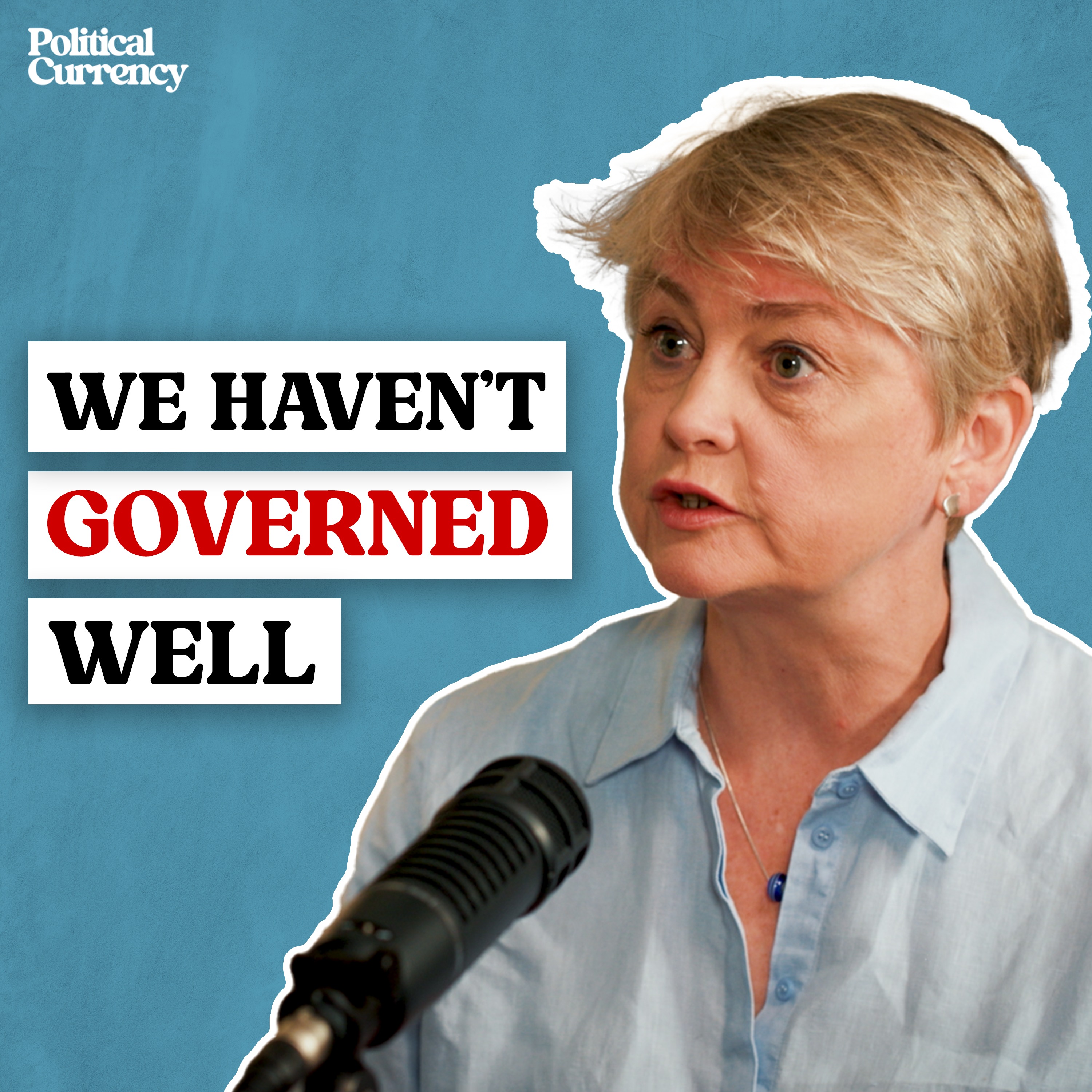
- Yvette Cooper: What Starmer got wrong
In short
Yvette Cooper, newly appointed UK Secretary of State for Health and Social Care, discusses why Keir Starmer’s government “got it wrong,” what’s changed in being a minister since 1999, and how to finally reform social care and protect early childhood support (Sure Start). She argues reform should start from outcomes for families and children, not from “reform for reform’s sake,” and that social care failures drive hospital “corridor care.”
Guest backgrounds
Yvette Cooper is a long-serving Labour MP (nearly 30 years), previously a junior health minister (1999), and has held multiple cabinet roles including Home Secretary and Foreign Secretary. She was politically active in the 1980s in anti-apartheid activism and studied PPE at Oxford and at Harvard. Her husband is Ed Balls, a former cabinet minister and co-host of Political Currency.
Key claims
Starmer’s leadership style (“solutions, not problems”) didn’t fit politics’ emotional engagement needs; government machinery faces new pressures from social media and legal processes; social care reform keeps failing because the public avoids the funding choice and because the problem has worsened with ageing.
Notable examples
Sure Start’s rollback after 2010; 2012 NHS structural reforms creating parallel bureaucracy (Department vs NHS England); social care causing A&E delays and patients stuck in hospital; neighbourhood policing as an outcomes-first model; Alan Milburn “in the shower” Dallas analogy; her mother-in-law’s dementia care navigation.
Written by AI. May contain mistakes.
Chapters
2:29
Yvette Cooper's Background and Political Journey
Explore Yvette Cooper's political background and her rise in government.
“Hello and welcome to Political Currency with me, George Osborne, but not with Ed Balls.”
4:28
Transitioning Roles in Government
Discussing the experience of switching roles and its challenges.
“I think I'm mainly pissed off that as Chancellor, they've invited the Shadow Chancellor on, which is what I always used to try to pull off when I was Shadow Chancellor.”
6:54
Changes in Politics and Governance
Examine how being a minister has evolved over decades.
“Well, so it's even more so because, I mean, when I was first appointed as a junior health minister, it was 1999.”
11:16
Current Challenges in Government
Analyzing the challenges faced by modern government systems.
“are as a country so do you think it's more difficult being a minister today than a minister 27 years again?”
14:00
Analyzing Leadership Failures in Labour
Discussion on the failures of Keir Starmer's leadership and the challenges faced by the Labour Party.
“So undoubtedly, the set of changes there.”
16:57
The Challenges of Government and Leadership Style
Exploration of the issues within the Labour government and the contrasting leadership styles of Keir Starmer and Andy Burnham.
“Or was it more ad hominem that, you know, Kier Starr, a decent person as he is, who was just ultimately not able to do the job as prime minister?”
24:56
Andy Burnham's Political Evolution
Discussion on Andy Burnham's growth as a political figure and current challenges for the Labour Party.
“Furniture, bedding, storage, decor, study essentials, all at prices you'll love with fast shipping before move-in day.”
28:00
Economic Challenges and Future Directions
Discussion on the economic challenges facing the UK and the importance of having a vision to navigate them.
“Ultimately, your future or the future of this government is going to be tied to it.”
29:28
Need for Domestic Reform in Public Services
Exploration of the lack of substantial public service reforms in recent years and their implications.
“So on social care, for example, a lot of the sort of changes that we want to see might take time to do.”
31:35
Failures in Health Care Reform
Analysis of past health care reforms and the importance of focusing on effective outcomes rather than slogans.
“But, you know, well, they had some big headlines about reforms.”
Show all 17 chapters
33:25
Social Care System and Its Challenges
Discussion on the failures of the social care system and the need for reform to support families and communities.
“So I massively want to see big focus around maternity and children's health.”
35:56
Historical Attempts to Reform Social Care
Review of historical attempts to reform social care and the continued challenges faced in addressing it.
“The reason my view, as someone who looked at it when I was in office, fundamentally the political system won't tackle it is because fundamentally the country is not prepared to face the choice of who pays for it.”
37:45
Navigating the Social Care System
Personal insights on the difficulties of navigating the social care system, highlighting the need for better support.
“And we actually found this quote from Barbara Castle, who was the Health and Social Services Secretary 50 years ago, said 50 years ago there should be more integration between the NHS and local authority social care.”
41:45
Political Consensus on Social Care Reform
Discussion on the possibility of achieving a political consensus around social care reform amidst challenges.
“because so many people have moved away from where their parents live for jobs, for work, for family reasons, and are now trying to sort out care that their mum needs or that their dad needs 100 miles away.”
42:00
Political Consensus: Is It Possible?
Explores the challenges and possibilities of achieving political consensus in a divided environment.
“And how to navigate that, I think, is really, really hard.”
49:30
Navigating Personal and Political Life
Discusses the challenges of balancing family life with a political career, including unique experiences with maternity leave.
“In this interview, you have spoken about your mother-in-law.”
56:00
Yvette Cooper on Political Dynamics and Public Perception
Yvette Cooper discusses her experiences in Parliament and the changing attitudes towards women in politics.
“But it was a striking an arrival of a lot of women MPs into Parliament.”

Ask about this episode
Get the gist, explore an idea or ask about something said.
 Claude
On Political Currency, what are the key points of this episode?
Searching your listeningTranscript
Automatic transcript. May contain errors.
0:00Hey, it's Paige from Giggly Squad. We need to talk about the iconic Abercrombie denim because it's all I've been wearing around lately. Their high-rise wide leg jean has become such a staple in my closet, especially when I need something that just goes with everything. Their neutral garment dyed denim is perfect. And when I'm going out in the West Village, you know it's a bra-free top and a pair of low-rise jeans. Between the classic fit and the viral curve love fit that eliminates waist gap, there's literally a pair for everyone. It's truly denim made iconic. Shop Abercrombie denim and more in the app online and in stores.
0:38Recently, I was talking with a friend about my career, how I was starting to feel stuck at work. I had a good job on paper, but something was off. I didn't know if I needed a new role, a new field, or just more confidence to ask for what I deserved. My friend mentioned career coaching and said that working with a coach was like therapy for your career. At first, I was like, okay, what exactly does that mean, and what am I supposed to do with that information? Let's just say I had my doubts, until I tried it. My coach helped me figure things out. She listened, really listened, and helped me go from where I was to where I wanted to be.
1:17We built a plan. She kept me accountable every step of the way, and now, months later, I'm in a completely different place. If you've hit a wall at work, you too can benefit from career therapy. Visit strawberry.me slash career to get matched with a coach today. That's strawberry.me slash career. Hi, I'm Nick, co-host of The Best One Yet. You optimize your workouts, your portfolios, and that rando startup idea that hit you in the middle of the shower. But if you're not hydrated, you're already playing catch-up. So we keep a stash of liquid IV in our studio. One stick mixed into 16 ounces of water is clinically demonstrated to hydrate faster than water alone with three times the electrolytes of the leading sports drink, plus eight vitamins and nutrients.
1:58Whether you're traveling, exercising, or podcasting, the best business news ever, Liquid IV makes it easy to stay hydrated wherever life takes you. So shop now at liquidiv.com. Liquid IV hydration that goes wherever life takes you. I still feel angry with you for having cut Sure Start. You can build consensus in retrospect. The founding of the National Health Service, that was - Very good example, yeah. I thought that would be the same with Sure Start. We obviously didn't manage to do that before 2010 because it then has unlavelled. We thought it was OK.
2:32Hello and welcome to Political Currency with me, George Osborne, but not with Ed Balls. We are off from our regular programming over the summer to interview some key players in politics. My guest today was born to a maths teacher mother and a trade union leader father. Bit of red aristocracy going on there. She was politically active in the 1980s in the anti-apartheid movement, but she said protesting was not enough. She wanted to be in power. She went to Oxford. She got a first in PPE. She went to Harvard. She's been an MP for almost 30 years and she became a minister 27 years ago. She is now in the cabinet.
3:12She has held many cabinet roles, many different roles in government departments. She's seen government change over the years. She's got the key brief now, of course, of managing the health service and social care reform. And for this podcast, she has a particular claim to fame in that her husband was also in the cabinet with her. And that husband left the cabinet to do things like Strictly Come Dancing, but found his feet again and co-hosted the podcast with me. So we are talking about Ed Balls' wife, but I think, to be honest, Ed Balls these days is more like Yvette Cooper's husband. Yvette, it is brilliant to have you here in the studio.
3:50Welcome to your husband's office. Thank you. Thank you. Am I sitting in Ed's chair normally? Do you switch around to chairs? We never switch around. And we gave you Ed's mug, although it hadn't been washed up. So we've gone and washed it up. The political currency mug. And I think probably some of these books here are your books. They probably are. They may be ones that I never, ever read. But I'm not sure if Ed ever read us either. And a very nice picture of the two of you, what, 10, 15 years ago, shaking hands? This is when we would have killed each other. This is on the Andrew Marsh show. By the look on your faces, you can tell.
4:28I think I'm mainly pissed off that as Chancellor, they've invited the Shadow Chancellor on, which is what I always used to try to pull off when I was Shadow Chancellor. but anyway no it's great to thank you so much for sparing the time and this is being listened to in the middle of the summer but I am speaking to you quite soon after your appointment as Secretary of State for Health and Social Care congratulations on that returning to a department you were in as a junior minister 27 years ago yeah so we're going to ask all about that but I just want to For our listeners and viewers, what is it like?
5:05You know, one day you are the foreign secretary. You're packing your bag, I guess, because that's what foreign secretaries do. There's no one else who packs their bag. Packing their bag to go to, you're packing your bag to go to a conference in the Philippines. And then suddenly you're on your way to a hospital in Reading instead. I mean, I know you are used to this because you've done quite a few different jobs in government. But what is that experience like? Yeah. I mean, look, there is a sudden sense of whiplash about it because you are suddenly focusing on an entirely different set of issues.
5:37And in 2022, when Keir Starmer brought me back into the shadow cabinet, actually health was what I'd asked for to do, shadow health at that time. And that was partly because I never didn't expect Labour to get back into government at that point. I'd done shadow home secretary before. I thought to do shadow health. So it's always something, therefore, and as you said, I was 27 years ago, I was a junior health minister. So, you know, on the one hand, there's this amazing, this incredible job. And on the other, it's hang on, this is a massive shift, you're having to switch the things that you focused on.
6:12And, you know, having had a series of different reshuffles, there's obviously something frustrating about all of those things you were working on that you're no longer able to see through things that you wanted to do. and so on but you then arrive back in the health department and this both amazing set of opportunities of things we can do things you want to work on and a real sense of familiarity it's like going somewhere just so familiar it's like if you go back to a town you haven't been to for for 10 years but you know really well and and suddenly it all comes rushing back is it like You go back to your school hall and it turns out to be much smaller than you remember.
6:54Well, so it's even more so because, I mean, when I was first appointed as a junior health minister, it was 1999. So we were two years into a Labour government after a very long period of conservative government where, you know, our strong sense was NHS had been badly run down, just like what we've inherited this time as well. and we were doing a new 10-year NHS plan, which we've just been doing now. We were doing a new cancer plan for the first time, which we've just done a new cancer plan. We were talking about Agenda for Change and the workforce issues. We were talking about social care reform.
7:35So many of those things just feel it's exactly the same set of issues. and we had um i the first event i did with the nhs leadership event was with nurses chief nursing officers who were the most phenomenal people in the health service who really hold the health service together and so i was describing this to them how much it felt like going back to the same set of issues all over again and i use this thing which you would probably get but i'm not sure probably a lot of our listeners wouldn't which was i used the analogy i said it feels to me as a child of the 80s that watched too much Dallas, it's like I woke up and found Alan Milburn in the shower.
8:17Right. And half the audience think this is really funny because, of course, Alan Milburn was the Secretary of State when I was first appointed. Alan Milburn is now the lead non-executive director for the health department now. And we remember that iconic Bobby Ewing scene in Dallas. But half the audience are thinking, what on earth is she talking about? Why is she talking about showers? What's Alan Milberg got to do with it? This real mix of how people react. But it has that sense. It's like, oh, hang on, I've just woken up and I'm dealing with the same issues all over again. OK, but that is, you know, I think one of the most interesting things about your career is you must be one of the most experienced British government ministers in the history of the British government.
9:01I mean, you have done all these different jobs. You've been Home Secretary, Foreign Secretary, health secretary you were a cabinet minister you know 20 years ago or so you're a junior minister in the health department almost 30 years ago what has changed i mean you you were the first minister before the iphone was invented before facebook existed as a we had pages we had pages that was the big modernization the tory party to catch up with new labor you know in some sense It is very familiar, healthcare, the NHS and so on. But being a minister, being a frontline politician, has that changed or is it fundamentally the same, even if the technology is changing?
9:44So I would say there are some things which are just exactly the same. Just the sort of common sense of do you feel that there's a sense of moral purpose behind what you do, behind whether that is tackling injustice or inequality or the things that you passionately care about. And that mix between in a constituency, you know, it's like you're responding to really local and immediate concerns people have in the constituency at the same time as trying to think about the big changes you want to see in the country. Some of those things feel exactly the same. And some of the ways in which departments work and work across government and the way decisions are made feel very, very similar.
10:28but in other ways look the big transformation is the online communication social media the pace at which modern communications moves the the pace the expectations the rising expectations and there's a democratizing element to that where everybody can have their say where something can go viral a campaign on something that might have been hidden for years can just go viral can take cough can build support and that's amazing but alongside that the sort of toxicity and some of the the the pace of expectations and the the anger that you can also see articulated online that affects our politics as well and a lot of that i think can be quite damaging as to who we are as a country so do you think it's more difficult being a minister today than a minister 27 years again?
11:25Is it? I think it probably is, yes. Because you are responding to the real key to being a minister, you have to be able to think where do we want to be in a year's time? What are the things that we need to change that want to be different in a year's time, or maybe two years time, three years time, maybe even five, 10 years time? What are the things we need to do now that will make us a stronger or a fairer country. And that is in huge competition that's always in tension with what's the immediate crisis? What have you got to do to deal with something happening today? That is much more acute now because the immediate crisis can change within hours because of the big public debate taking place on it.
12:15If you look back at 1997 when you get elected and the Tony Blair government, and I would argue people might disagree, the kind of David Cameron coalition government. I don't think there was ever a kind of argument at the time that Britain was ungovernable, that government was inoperable, that nothing could be done. There was certainly contention about what was being done, you know, whether this was the right policy or not. and the debates were fierce, as I remember when I was in government. But what sort of crept into the political discourse is this sort of broader thing, which is the system itself no longer functions, that ministers say things, then nothing happens, that the civil service is no longer kind of fit for the modern age, that legal bureaucracy or illegalese has kind of suffocated government's abilities to do anything.
13:10And, you know, these these aren't kind of Tory or reform arguments or Labour arguments. They're kind of quite common arguments across the parties at the moment. Do you think there is something in that that that fundamentally government isn't functioning as effectively as a as a machine as it was when, say, when you were last in the cabinet? I'm not going to take you back 27 years, but take you back to kind of 2009 when you're the work and pension secretary. Do you think that the kind of machinery of government doesn't function in the way it used to? There are definitely new challenges for the machinery of government.
13:50And I think the pace of the social media, the pace of change, you know, Actually, you can see AI coming down the track at us as a massive thing that's going to challenge the way we do politics, the way that government works and all those sorts of things. So undoubtedly, the set of changes there. I think I am also sympathetic to the idea that some of the the way in which we get caught up now in legal processes is not the way it used to be. And so the way in which we have to now have long consultations on things, because otherwise there'll be a judicial review where actually you might be able to move much faster.
14:26There are some of those issues as well. That used to be a kind of Michael Gove, like the blobs taken over type of argument, which people, including some people in the Conservative Party, were pretty dismissive of. Yeah, I don't think. But so you don't have to then go to the other extreme and say, oh, no, let's abandon the rule of law. because you can just say, look, there's some changes that we should reflect on there and you don't have to kind of caricature everything. I think that the stuff that Andy Burnham's now doing in terms of devolution, you did some of that. Andy's sort of pushing it now on steroids now in terms of that is really important because that sense of local decision-making is hugely important, actually, both for getting economic growth and for making people feel connected.
15:15So I think that's important. But some of it is we've made things harder. I think successive political leaderships have also actually just struggled to respond to the nature of changes. I mean, I don't think Boris Johnson was ever fit to be Prime Minister. He had a charismatic appeal. I don't think he was ever fit to be Prime Minister. And we could all see that car crash coming a long way off. And so some of this is about political leadership. Some of it is about systems changing as well. I think that's sort of central unanswered question from Labour politicians such as yourself at the moment in British politics, which is why did the Keir Starmer government fail?
15:59I mean, you were elected in 1997 with a huge Labour majority after a long period of Conservative government. And the Tony Blair, Gordon Brown government got to work immediately and lots of things started to happen and change. And, you know, there was a real sense of kind of optimism and movement. I remember back at the time I was working the leader of the opposition's office. um you come to 2024 you're elected again in castleford and huge labor majority long period and then it like it i mean let's be honest it completely fails because two years later the parliamentary labor body decide to get rid of this leader who has led them to that victory what happened what's your kind of now we're a little bit distant from all the you know change of leadership and andy's return to parliament and becoming prime minister So what's your kind of view?
16:53Is it was it a kind of structural problem? Is it something to do with Britain becoming ungovernable? Or was it more ad hominem that, you know, Kier Starr, a decent person as he is, who was just ultimately not able to do the job as prime minister? so um uh so obviously clearly uh things have gone wrong um i think it's important to recognize actually kia was the leader of the labor party for six years actually to be at the top of politics for six years that in itself that isn't unusual now and you you know have to have a level of resilience to be able to do that right at the top at a time when you know this frenzied social media environment.
17:36And I did not think Labour was going to be elected again. I thought we were facing an existential crisis for the Labour Party in 2019. I thought we might actually just fall apart completely as a party. And what Keir managed to do was to pull the party back together, to make us electable again, to get us back into government. I really did not think that was achievable. And I think probably he was the only person. Sorry to interrupt, but did you ever, I mean, people like Tony Blair were quite actively at the time saying, maybe we need to create a a new political party or a new political force on the left that, you know, the hard left have captured the citadel was the argument, which they'd never done before, even in the 1980s with militant.
18:15But you never, you obviously stayed as a Labour MP. Never. I never, ever considered that. Look, you know, obviously the Corbyn years was a very difficult period for me, but it was like, I'm not going to let the hard left take our history, our party, our values, all of the things that Labour stood for, that Labour has achieved, the founding of the National Health Service in the first place, that is something that's all of our tradition and all of our set of values for the future as well. So, no, I was never interested in any of that. This is always, you know, I've always been, this is our Labour Party, this is my Labour Party, and not walking away from it.
18:54You choose not to serve in the Shadow Cabinet. I don't know if you were ever offered the job in the Shadow Cabinet under Corbyn, but you made that decision not to serve in the Shadow Cabinet, minute and then you know you're right he leads obviously Labour to this spectacular recovery from the worst result to one of the best results in a period of five years but then why does it go wrong yeah so um look I think I don't think we've done government very well in the last couple of years um I think we've been pursuing a lot of really important things a lot of things we've made massive progress on and achieved we've got 3 ,000 more neighbourhood police on the beat in the first year a really big shift for someone like Casford Town Centre we've got NHS waiting times and lists coming down you've got a whole set of things you know new policies being introduced that make a massive difference but I think the focus shifted quite a lot so we had missions in the first six months and then they kind of disappeared but some of it is probably also if I think about it as maybe a style of leading the government that maybe doesn't necessarily work in politics.
20:08So, you know, you can think about leaders of different organisations will sometimes say to you, bring me solutions, not problems, or other people who say, no, I want to see the problems, you know, different styles of leadership. I think Keir's style of leadership was bring me solutions, not problems. And I'm not sure you can do that in politics because I think in politics, the thing you see with Andy is, it's like, hang on, bring me the problems. I want to talk to you about the problems. I want to engage. I want to hear about the problems. And I want us to work together in solving them. And maybe the bring me the solutions, that can work in other forms of institutions.
20:46Actually, in some ways, it can be quite a legal and judicial approach. You see the sets of problems and solutions set out for you and you choose between them. I don't think the nature of politics is you've got to have a passion and be hungry about the problems and what it is you want to solve. So to give a sort of contrast, when we did the immigration white paper, it was, you know, Keir wanted the immigration white paper. Actually, we did a lot of the work on it in the Home Office and a whole set of plans that bring legal migration back under control, a whole set of reforms around illegal migration and so on.
21:27But then Number 10 wanted Keir to announce it on his own and to front that up. And so I didn't see what was going to be said or what the announcement was. But I show up. So you're the Home Secretary. You've done a lot of the work. Yeah. So obviously you're going to then have to defend the policy and deliver it. that you're not actually involved in the launch. Yeah, and that was the way that the number 10 operated. It was like, well, you can sit in the front row of the launch, but actually the Prime Minister is going to launch it, but actually the Prime Minister has not really been involved in the development of the policies.
21:59Whereas the contrast, I mean, we've just, the week in which we're recording this, we've just come from doing the social care launch. Actually, the energy behind doing social care, a lot of that has come from Andy. I'm still new in post. A lot of that's come from Andy because it's something he's been passionate about, but he wanted to then talk a lot about what's the problems here? How should we be thinking about it? How should we be trying to solve it? And he wanted me to be part of the event, launching it, to be speaking at it, to be talking about it. And I think that's maybe a, there's a difference in style of operating.
22:34And I think it's not just in modern politics. You know, for me, you know, those were the sorts of conversations that I had with Gordon Brown, with Tony Blair, with Ed Miliband. and I assume you would have had with David Cameron, where you are having those raw conversations about, oh, my God, this terrible thing is happening in the country. How are we going to solve it? What are we going to do? What do we care about? And I think the Keir's style of leadership, which is very effective in other ways, actually just didn't fit with that emotion that you need to drive change and involve people and include people in politics.
23:15Yeah. I mean, look, I mean, there's some basics to political leadership, aren't there? You've got to be able to communicate. You've got to be able to run a team. You've got to be able to create loyalty and so on. And, you know, a lot of that just didn't materialize every last couple years, much to my surprise and I think the surprise of other people.
23:38Hey, it's Paige from Giggly Squad. We need to talk about the iconic Abercrombie denim because it's all I've been wearing around lately. Their high rise wide leg jean has become such a staple in my closet, especially when I need something that just goes with everything. Their neutral garment dyed denim is perfect. And when I'm going out in the West Village, you know it's a bra free top and a pair of low rise jeans. Between the classic fit and the viral curve love fit that eliminates waist gap, there's literally a pair for everyone. It's truly denim made iconic. Shop abercrombie denim and more in the app online and in stores your team just added its 67th ai tool and also your 67th security blind spot the good news the vanta agent works like a grc engineer in the background finding every app your team uses scoring the risk and drafting fixes for you vanta is the platform used by over 16 000 fast-moving companies like ramp cursor and harvey who are shaping the future with AI and staying ahead of AI risk.
24:40Get started at Vanta.com. Back to school is busy enough. The last thing you need is shopping that makes it harder. Whether you're moving into a dorm, your first apartment, or just getting organized for the semester, Wayfair makes it easy to get everything you need in one place. Furniture, bedding, storage, decor, study essentials, all at prices you'll love with fast shipping before move-in day. Get everything you need for back-to-school season. Shop Wayfair.com today. Wayfair, every style, every home. Turning to Andy Burnham, who's, am I allowed to say, sort of our generation? Yeah. You know, we're basically the same age.
25:23Yeah, he'd have got the Alan Milburn in the shower joke. I mean, when I've asked Ed this, you know, and I think we all kind of broadly came into Parliament at the same time or some of us were political advisors before we came into Parliament. I don't think any of us would have said, I don't think I would have said back in 2001 when I became an MP, it's going to be Andy Burnham. You know, you were well-known at the time. Your husband, Ed, was well-known when he came in. The Milibands weren't well-known. You know, Andy Burnham was known, definitely. But have you noticed a kind of change from the guy who you kind of sat alongside on the green benches and in cabinet 20 years ago?
26:11You know, what is happening? Because I think he is definitely something's happened. He's sort of clicked into a different level of performance, hasn't he? So I think what Andy was probably always good at, but is something that maybe really matters now, is the sense of just emotional connection. And that is something that is also in a world of social media, it's really obvious. And so it's obvious what he cares about, feels, can feel passionate about. That's really important. I think he's also had that period away from Westminster and looking at it from the outside. So he understands the way that national politics works.
27:00But actually, he's been in a different place on it. And then that coming back, that brings new energy back into the system. And, you know, we're all older. But back when we started, it was all like Bill Clinton, Tony, the young. young Barack Obama. What about, you were Chief Secretary to the Treasury. I definitely feel at the moment I think he's got off to a strong start, and I've said so on the podcast, but there's a kind of big looming question, which is the economy, the budget that's going to come in the autumn. All of this is great, including in social care and health. We'll come on and talk about that in a minute.
27:41But there's a kind of elephant in the room, which is at some point you're going to have to make some very hard decisions because you could argue that ultimately what undid Keir Starmer was not just the kind of inability to communicate effectively or run Downing Street effectively but these really difficult choices you know where you're constrained by the parliamentary Labour Party and what it will accept the bond market and what it will accept the kind of limits to how much you can tax Britain without damaging economic growth and those questions which I know you know You're the biggest spending department out there.
28:17Ultimately, your future or the future of this government is going to be tied to it. So I think you're right that there are real challenges in the world that don't change because the prime minister's changed. There's really big questions about where we're going to be as a country in five years time, in 10 years time. And that includes the importance of strengthening our defence, which is obviously something I've been focused heavily on as Foreign Secretary, is the importance of how we strengthen defence and resilience in a fast changing and deeply uncertain world. And there's also the changing expectations around public services at home and underpinning all of that, the need to get economic growth.
29:02So, of course, all of those challenges remain. I think, though, when you've got difficult choices to make, when you're trying to steer a path through that, having the sense of what are the values that are going to guide you? Where do you want to be? Everybody knows you can't do everything all at once. And you've got to have a vision, though, of where you want to get to. Being able to tell that story in terms of the values that you have, the vision that you want to see is really important. So on social care, for example, a lot of the sort of changes that we want to see might take time to do. But if you can at least describe what's the purpose, where do you want to get to over time, that can still be really important.
29:48One of the kind of things that when we were, you know, when I was active in politics, you're very active in politics still, big kind of public service reform took up a lot of the political space, education reform, welfare reform, health reform. And I look back at the kind of Tony, the latter years of the Tony Blair government, I think he would, although most people were talking about the aftermath of the Iraq war, he wanted to talk about the changes he was making to health care and the like. And I feel in quite a lot of these spaces, almost nothing has happened in the last sort of 15 years that the kind of domestic reform agenda, where is the big push on education reform?
30:28Where's the big push on health care reform? Where's the big push on welfare reform? Is that all starting to come back? Do you think into, I mean, you know, with the conversation about the new NHS tenure plan, the conversation about social care, why did it disappear? Why, you know, I'm not saying you will say, well, actually, this education secretary was doing this or this health secretary was doing that. but that the sort of new labor and i would argue cameron kind of emphasis on domestic form just kind of evaporated was it because the world got harsher the brexit was a distraction to put it mildly covid knocked everyone sideways why do you think it it just sort of disappeared from the The very front line of British politics.
31:15So I would say, I think, a couple of things. First of all, I think there was, there's a way in which reform of public services became actually more of a sort of a slogan than actually anything that was really focused on delivering for communities and for people. So look at the Andrew Lansley health reforms, a total car crash, made things a complete nightmare, actually made things much harder. But, you know, well, they had some big headlines about reforms. I don't disagree, but I think it actually put off anyone touching health reform for not a generation, but for a long time. Yeah, but I think you've got to have a different kind.
31:53To me, you've got to have a different sort of approach to reforming public services. If you make the mantra, you know, hey, we are reforming public services and that is, you know, just kind of can end up just sounding a little bit macho and a little bit like, oh, yeah, what we really believe is moving structures around and management. A little bit Tony Blair. I just I feel like I have heard those phrases an awful lot in the 27 years. You know, I've heard and sometimes there is real substance behind them. And sometimes it's just a slogan for the sake of it. and, you know, just proof of virility.
32:26We're shunting around some deck chairs and some structures. I think you have to start with what matters in the country. So on policing, for example, with things we were doing in the Home Office, we started with the most important thing is to get neighbourhood policing back. You've got to change the focus of policing back to neighbourhood policing. Then you've got to have the specialist crimes that are also being let down, violence against women and girls. We were failing on knife crime. But you start with neighbourhood policing, drive neighbourhood policing. There's a set of reforms that follow from that about policing standards and policing processes.
33:02But the really thing that matters is, are there more police in Casford Town Centre or not? That's what people want to see. So look at it that way around. So I think some of this is actually we should shift to focusing on outcomes and then you thread your way backwards to what are the reforms that are needed to deliver it rather than starting with some slogans about reforms. I take the same view on the health service. So I massively want to see big focus around maternity and children's health. just as a tangent I still feel angry with you for having cut Sure Start which was my programs that I rolled out back in the day.
33:42I said to Bridget Phillipson when we did this interview a year ago you've been in government for a couple of years you can reintroduce it. Honestly I tell you the Sure Start I am really keen I'm really keen to go back to those principles of Sure Start so that would be a big priority for me because I think actually it was really damaging to lose that big focus but it's for me I'm starting with the families, with the kids, with what it means and the way in which services are failing to actually properly support families together. I'm not going to start with, hey, I am the health secretary that has got reforms with, you know, all in capital letters for the sake of reforms.
34:21I'm going to start with the kids. Abolishing public health. Oh, NHS England. Yeah, abolishing NHS England. Right. So it was a really interesting one. So I did start from my kind of starting point was, so sorry, why are we abolishing NHS England? And what has been really interesting now sort of looking at it is how much NHS England had become such a different institution compared to my recollection of the NHS executive back in the day when I was a health minister. And so you've got this entire parallel structure and this non-functioning relationship between the Department of Health and the NHS England.
35:02Huge amounts of parallel bureaucracies that also weren't. So you had health ministers not being able to get proper information because it was in NHS England and it would take a long time to get it. So I see that as actually being having to deal with some of the damage from the landslide reforms in 2012, whenever it was. but I'm not seeing reform for the sake of reform what I'm interested in is the outcomes the people the families the communities and and that's that's why that sort of focus things like the sure start as well so I think part of what's happened is or what ought to be happening is focusing on outcomes so the reason social care reform matters and yeah we talk about social care reform is because we know there's a whole lot of families who are being really badly let down and we know that there's a lot of people being treated on trolleys in you've got corridor care taking place because so many elderly and frail people are ending up in hospital when they shouldn't because social care is broken so you start from again the families rather than oh let's come up with some reforms for the sake of it okay and then what is your confidence on so i I don't disagree that social care is a very serious problem in the country.
36:16The reason my view, as someone who looked at it when I was in office, fundamentally the political system won't tackle it is because fundamentally the country is not prepared to face the choice of who pays for it. Do people who've saved in their lives pay for it or does it pay for out of general taxation and at the cost of other things you might do with that money? so what makes Andy Burnham because it's obviously his passion and you now as the social care secretary think hold on you know I can succeed where Gordon Brown failed because that was the first time this was attempted in my memory David Cameron failed Theresa May arguably loses her majority in the general election over this issue Boris Johnson fails we might agree both of us on why that happens you know Rishi Sunak as Chancellor introduces a social care levy that then gets scrapped.
37:10Keir Starmer says he's going to do something about it. You wouldn't have done all these jobs and still be at the top of the cabinet if you were not good at kind of picking what's going to succeed and what's going to fail. And I know to some degree this has been handed to you by the Prime Minister, but what makes you think on the seventh or eighth attempt at this in my adult lifetime, we're going to succeed? Yeah, it's worse than that. there have been 22 attempts to reform or propose reforms on social care just since I was elected. Right. Right. So that's, you know, we can get back to the Royal Commission in the late 90s and so on.
37:45Of course. And we actually found this quote from Barbara Castle, who was the Health and Social Services Secretary 50 years ago, said 50 years ago there should be more integration between the NHS and local authority social care. So actually, these debates have been going on for a very long time. So the challenge is significant. I think... Why do you think they've all failed? I mean, what... So I think... If you don't understand why they failed, you probably are not going to be able to understand what might work. So I think that partly, look, this is a much more acute problem now because of the ageing population, the demography, you know, there are far more people needing care now.
38:26So you go back in the day, 50 years ago, when Barbara Castle was looking at this, actually, the life expectancy was so much shorter. The number of people who needed long term care was much lower. So some of it is we are now facing a much more real problem for most families now. We'll have somebody or no somebody affected by the need for social care. So it reaches far more people. But I think the thing we always fail to do is have a sense that this actually affects everybody. Because as long as you think, well, it might not affect my family. It's not something I really need to worry about or focus on.
39:06There's other things that's a problem. The fact that it has such a massive impact now on our NHS. The fact that if you go to A &E, you could be waiting a lot longer because of failings in social care, that you could be waiting longer to get a bed in hospital because there are people who are in hospital who don't have social care to go to. So it's a more acute problem. Yeah, it's a more acute problem, but it also affects all of us. So it's not just those families who have a really acute pressure. It's affecting all of us. But we still have to, I think, make that argument and establish that. So everybody needs to feel part of it.
39:39And that, I think, is what Andy was trying to do this week, is make this a bigger argument, not just something that affects some people. You never know whether it's going to be you or your family. Actually, this is affecting all of us. I also think we look there'll be a debate and Louise Casey's doing an independent debate about how things are funded about you know how what's what's fair. But there's also there is some system issues. And look, here's where I do think there are system reforms that are needed where you've got it's been a kind of patchwork process of how do you solve the fact that there are people in acute hospitals who shouldn't be in there.
40:20and we've had a layer upon layer of different patchwork attempts to think okay this is how we'll prevent people going into hospital okay this is how we'll get people out faster maybe into intermediate care maybe into some nhs funded and do you have maybe some local council funded and it's all a mess and actually you could do that in a much more effective way even kind of apart for even within existing resources even within existing systems there's a lot of things that actually if everybody came together, we could make improvements. Do you have any personal experience with this, or you and Ed and your family?
40:55We've got my mother-in-law has dementia. And I know Ed will have talked about that quite a bit. She's been in long-term social care. And the point at which it was just clear that actually his dad couldn't cope anymore with her condition had just deteriorated so much. finding a way through the fog of how do you find the right kind of social care? Is there something we can get? Can we get people to come into the home? Can we get, does she need to go into a place? Well, if so, what and how? Navigating that. And also I think... Even though you're Yvette Cooper and Ed Balls and you... Yeah. If anyone knows how to navigate the system, you will.
41:39And you still see the fog of all of that. Right. And also you realise how much for people as well. People are now doing that at a distance. because so many people have moved away from where their parents live for jobs, for work, for family reasons, and are now trying to sort out care that their mum needs or that their dad needs 100 miles away. And how to navigate that, I think, is really, really hard. And do you think sometimes there is a genuine consensus over a very difficult issue? I mean, I saw it in my own political career where Labour and the Conservative Party came together on raising the state pension age, which is bitterly controversial in other countries, or on issues like tuition fees, which, again, was very controversial, but there was essentially a kind of political consensus around it.
42:27I mean, is it possible to get a political consensus on this? I was the guy, a shadow chancellor, who did the death tax campaign against Andy Burnham. Yes, remember that one as well. Close to the general election. He makes a slip up, in my view, or the brown government makes it. And, you know, so is it possible you've got three years to go, not five years to go to an election? You know, already, Kemi Badenoch is saying no more taxes. Nigel Farage is saying I'm not even invited. Or is it, you know, is it one of those things you don't actually always have to bring in the you can make the Bank of England independent and then challenge your political opponents?
43:06Well, you're going to not make it independent. or you know i created the obr and challenged labor to you know stick with it or get rid of it but you're very experienced you've seen all these different forms of cross-party cooperation or lack of is do you actually think it's possible in such a heated environment such a competitive political landscape you know still an election which people feel is you know the outcome is open we don't know the outcome of the next general election what how realistic are you about that So I think there are some things you can build consensus on, some things you probably have continued disagreement about.
43:45It's definitely easier to build consensus when you're in the middle of a parliament than, you know, in the final run up to an election when, you know, people have a kind of, you know, all gloves are off, whatever sense of it. and also trying to create a sense that somebody's going to have to solve this. And, you know, if it's not this government, it's going to have to be the next government or we're going to end up with a never-ending growing crisis for our NHS because we're not doing things to solve social care. Are you right that this is hard? Yes. And I think this is it is interesting that Andy has chosen to to focus on things that are really hard.
44:28He's not playing it safe, but he didn't play it safe by standing in Makerfield. You know, he stood in a constituency that actually was potentially hard to win because of all of the reform votes and the local elections and so on. So he's ready to do that, but doesn't mean to say it's easy and may mean these are things that you can do step by step. But I guess you're right. Sometimes you can also you can build consensus in retrospect as well. So the founding of the National Health Service, you know, that was a very good example. Labour government opposed by the Conservatives. But, you know, after that, would any Conservative government have wanted to destroy the National Health Service?
45:08It became part of the institutional fabric like Bank of England, Independence, OBR, a lot of those sorts of changes. And I suppose it's the my kind of sense of my frustration and failures. I thought that would be the same with Sure Start. And I still want to build that national consensus. So we've been talking about social care reforms. I actually want to build that national consensus on how we start our kids lives and how we build that consensus so that no future government of whatever party would think, do you know what it's okay to rip up sure start because actually we established this is something that's so important in children's lives and we didn't obviously didn't manage to do that before 2010 because you know it you know it then has unraveled you thought it was okay it was relatively straightforward too yeah you yeah and that's and i think some of that interestingly is because at a local level because it's so much about um families for that initial your first five years of life and people move through and so therefore the families that are then coming the new young families don't know that there used to be a sure start so they're not then demanding in the local area you know it's like you've got a long conversation about there was evidence anyway no the evidence but the evidence now is that it had a massive impact i agree there's a really good impact but it's also to be honest like if you are a mum in an area like like Castleford or Pontefract or whatever, you know it has a massive impact.
46:41You could feel it has a massive impact because you know the pressures that mums are facing. You know actually what Sure Start did in terms of bringing people together. I didn't need an evaluation to discover actually this was working because you could feel it. You could know. Just as a tangent, I was actually because of one of my areas. Castleford was in the first wave of the Sure Start areas. So we were also included in the evaluation and we just had our middle child. So we had in the independent evaluation, had somebody knock on the door to do the independent evaluation of Sure Start, who came in to talk to me as a local mum.
47:18She asked me this question. She said, do you know? So can you tell me what you know about Sure Start? And I said, you know, I'm really going to have to stop you because I just think I'm going to skew your results. I created it. I helped create it.
47:37There are moments that reveal who we are and who we're meant to become. For those born to lead, such moments call for a vehicle of equal distinction. Dynamic by design, uncompromising in execution, the Range Rover Sport was engineered for those rare individuals who demand the world and possess the conviction to claim it. When your time to lead arrives, you need a vehicle that rises to meet it. The Range Rover Sport. Exclusive offers available now. Explore further at RangeRover.com.
48:34Ollie's sleep helps you fall asleep, stay asleep, and wake up feeling refreshed. Because as you know, the morning mayhem comes early. Visit Ollie.com and stock up on back-to-school must-haves today. That's O-L-L-Y dot com. These statements have not been evaluated by the Food and Drug Administration. This product is not intended to diagnose, treat, cure, or prevent any disease. This message is brought to you by Cologuard. If you recorded songs off the radio for a mixtape, it might be time to scream for colon cancer. The Cologuard test is non-invasive, requires no special prep or time off, and you start screening right from your home.
49:11It's just three simple steps. Set up, sample, and ship. If you're 45 or older and at average risk, ask your doctor about the Cologuard test. Available by prescription only. Learn more or request a prescription at Cologuard.com slash podcast.
49:30In this interview, you have spoken about your mother-in-law. You were just talking about one of your children there. But I would say looking at you, and you're actually talking about Andy Burnham being very kind of emotive in the way he talks about issues. I would say you are quite a reserved individual. You haven't put your family kind of centre-side. You don't always draw on your own kind of life experiences when you communicate as a politician. Is that because that's who you are as a person? You've just got quite a reserved person. Or do you think, is there a bit of you that thinks, come on, let's just get on and do the job rather than...
50:07I think there's part, well, there's probably a mix of things. Partly, we've always been fierce about protecting our kids. And you can see how, you know, for children in politics, and our kids at least grew up before all of the wildness of social media. you know i think um and so wanting to keep them out of things it would have been really easy as um as a minister with responsibility for children's services to talk all about the kids and so on i used to talk about being a mum i didn't talk about the kids i mean you are the first minister in british history who took maternity leave right yeah i mean i think from memory it had to be kind of created for you because there was no because ministers aren't technically employed are they they kind of hold the whole positions they don't uh under the crown they don't it was i was such a mess it was um i went um i went to tell the prime minister first and and he said oh right right okay uh i don't know how tony blair tony blair at the time so it was like well i i don't know how that works but you know look congratulations and you better go work something out better go and talk to the um the cabinet secretary so i talked to I talked to Gus O'Donnell who said, well, no idea how we do this.
51:22You're technically, you're appointed by the Queen. So, you know, I don't think I should go and ask the Queen. I don't think she took maternity leave, did she? Right. She might not have been that sympathetic. It was literally, what do we do? So he said, well, you work it out, draw it up. So we had to sort of draw up what, and I went for a six-month period because that was the civil service maternity period at the time. So it's kind of let's stick with that. Of course, you can't really take six months maternity leave from being an MP. There's still stuff that comes up in the constituency. But we sort of managed it.
51:57And the health department was really, really supportive and wanted to make this work. When I was later, tried to do the same again for our third child in when I was in what was then Office of the Deputy Prime Minister's Communities and Local Government Department. Oh, God, it was so hard. and because people didn't understand i think the i don't know whether it was the sort of permanent secretary's approach at the time or the sort of senior civil service in and it just it was really hard and they even though this was your third child you were more experienced yeah and actually that was much much harder because we hadn't put in place formal rules around it and they just they sort of wanted to just cut me off completely so i couldn't keep in touch with what was going on it It was, yeah.
52:43And so it made me just realise how much we were still dependent on individual attitudes, on individual people understanding. Quite a lot of men, by the side. Yeah, it was. Although, yeah, it wasn't all, sadly. But it was, and actually Harriet Harman was my champion who I went to see to say, ah, this is not working, help. And she was the one who helped just, Let's drive a process so we can actually draw up what a proper process would look like. It's quite often said that female politicians have had a kind of even harder time recently because of social media and that the kind of online commentary is particularly vicious.
53:27And of course, you know, both Anne Whittacombe and Joe Cox have been murdered, although sadly David Amess as well. But do you think in some respects, like the attitudes towards maternity have improved since when you started? I mean, presumably, I kind of I mean, I think there are more women in the cabinet now than men, aren't there? And do you think that there are it's not all been getting worse? There are some things that have been getting worse. Yeah. So I think the toxicity in politics has got worse. And there is definitely greater hostility toxicity that you see towards women, also towards black and Asian women as well.
54:15then that is undoubtedly the case. But I think attitudes towards maternity, towards women and men working in a... I think that has changed. I think that has improved. I think when I was... So when I was first appointed, I had a five-month-old baby, so I hadn't even really finished a sort of six-month maternity for our oldest. And I took quite a bit of... I'd said publicly I didn't want to be doing boxes in the evening because we should be doing that paperwork during the day. Or I'd do it the weekend. But in the evening, I was wanting to put the kids to bed. And if we had a system in government that meant, well, all the decisions have to be taken between eight o 'clock at night and eight o 'clock in the morning, when you don't even have civil servants to ring up and say, well, what is this?
55:07So this makes no sense to me. That felt like a bad way to do government, but also felt like a mad way to balance, you know, to manage it. At that time, it was a really big deal and I took a lot of flack for it. Now, I don't think anybody would bat an eyelid about that, about just saying we need to change the patterns when you do things, how you do things as a minister. So I think some of those things have changed. And I think probably the attitudes for me and Ed both being in politics together is probably changed now compared to then, even if we're now doing different public roles, I think it's probably changed as well.
55:47Well, I mean, I think you are the first, maybe the only husband and wife in the cabinet. I wonder what was that like for you? Because, you know, I remember you, you know, you were elected in 97. There was a, you know, probably a pretty sexist phase at the time, one of the Blair babes. But it was a striking an arrival of a lot of women MPs into Parliament. And you were then appointed as a junior minister. I remember, you know, I remember, well, there's Yvette Cooper and you stood out as a young new minister. I kind of got the impression that when Ed enters Parliament, he's got a reputation as Gordon Brown's right hand person.
56:24He I don't want to say he overshadows you, but there's a lot of attention on him, even though you're doing quite similar jobs. He's education secretary or work and pension secretary, you know, similar kind of public service cabinet jobs. He he attracts both good and ill, like a lot of attention. and then you know he's the shadow chancellor as you know i know of course from my encounters with him and then he loses his seat and then you kind of come back sort of center stage is that a fair or is that just me you know because obviously i interacted with him a lot in my political career is that a fair though that you felt obviously he didn't want to leave politics he was defeated in his seat that that it actually enabled you to for example run for the leadership and stuff like that groups so i think there have been um i think attitudes have changed over time so when um back under the last labor government with both of us in uh both of us mps both of us then as cabinet ministers and i think that is right and there's never uh been any other couple um as cabinet ministers there was some uh some focus group polling and i can't remember who had done it during that period, sort of before the 2010 election, and that had concluded, and that had asked questions about the two of us and concluded we were weird.
57:53Because, well, how could you have two cabinet ministers, a couple, both in a job like this, but particularly that I was weird. And that it was particularly the most of the sort of the condemnation or the hostility was towards me and that why would I be doing the same job as my husband and especially with young children and so on. And we, because you could sort of instinctively feel that as well. We never did interviews together. There was always a lot of pressure, people saying, oh, do a joint interview. We didn't do interviews together. We didn't do visits or events. We maybe once or twice for particular reasons, we did some joint visits.
58:36The only photographs of us together would be walking up the cabinet walking up Downing Street to the cabinet because actually that would have looked even weirder if we'd arrived at different times. You honestly had thought about that. You thought, what's going to look weirder? Yeah, yeah. And so we had to make a sort of conscious effort to just keep what we did very separate because of the sort of public response to it. That feels different to me now. I don't feel now. Now, of course, Ed's doing very different jobs, different, you know, I usually wake up and think, oh, my God, what has he said on Good Morning Britain this morning?
59:13Or what has he said on the podcast? But no, I don't have at any point now people assuming that I'm responsible for what Ed has done or said. And or that I am somehow affected by what Ed has done or said. We're treated very much kind of separately. I don't think that's just because Ed is now doing a very different job. I think that's because attitudes have changed. You don't think there's so... I wonder if that's true. I'm not sure it's... I mean, I thought it was striking. I don't know what Andy Burnham was really thinking. But when there was talk of the Miliband brothers coming back into the cabinet together, or David coming back into the cabinet with Ed, suddenly the soap opera starts again.
59:56and I can imagine if I was sitting there with Andy Burnham, James Pennell, I was like, we don't need that. And I think there's also, in a husband and wife team or a couple, there's just going to be an element of domestic soap opera. Maybe, so maybe that's right. Maybe that's right. What I'm really saying is, you know, it hasn't been a bad thing for you that his career has taken a totally different turn, even if of course it's not what he would have wanted yeah i mean you know i think um uh i mean i think you know and you'll know from sort of talking to ed that he has a sort of a particular kind of um a real strength in terms of understanding politics of drive energy and so on so for me in 2015 i think that was a huge loss for us um in the labor party and to have that the sort of strength and capability and so on.
1:00:54I don't know. To me, it also feels it's not just about us doing different things. It does feel like the attitudes are different. Because, you know, look, Eddie's talking on Good Morning Britain. I mean, he's saying all sorts of things. He's interviewing people. Exactly. And he's a very tough interviewer. I mean, he takes on. Yeah, tell me about it. Did they ever phone you up and say, what the hell is your husband up there? I know. Oh, God, you think, what has he said now? but so in his defense if anyone had listened hopefully some people on this podcast do to his critique of what kirsten was getting wrong right from the very first weeks it was spot on it would and it turned out to be true in turn so yeah and that's why i mean about having that effective understanding but i suppose the um the sense for me of uh you know what's he done now kind of thing actually it's mild compared to the sense the kids had when he was doing strictly come dancing he's like well I was going to end because I've been to some of his performances at the when he's playing with his band and you're there which I was thinking even when you you know maybe a bit easier as health secretary because you're usually in the UK but as foreign secretary you're also and then the last time one of your daughters got up on stage and I was thinking there's no way my children would get up on stage if I if I was playing the drums in a flat cap.
1:02:21Do they... It's hard to know if you're the parent, you know, because ultimately you're not living the lives of the children. But they feel like they have survived, two parents at the top of sort of British public life and in the public eye, and whether they're, you know, negotiating with Donald Trump or doing Gangnam Style, somehow they have managed to... Is that right? Do you feel, you know, as a mother, as a parent with Ed, that you have managed to bring them through all this? Ah, well, in some ways that's foremost for them to say, not for us. I mean, I desperately hope so. We sort of tried very hard, but you know what it's like.
1:03:00You just, you hope that that's what you've done. Somebody did say to me quite early on, and it's something that I have said to other working parents, is, you know, in the end, you're never going to get everything right. whatever you do as a parent, your children are always going to be cross with you or, you know, angry with you for something because, you know, that's their job is to be, you know, cross with you. So it might as well be something good that they're cross with you about. It might as well be something that you were doing that at least had, you know, the right intentions or the right sense of purpose.
1:03:36And, you know, because you're always going to feel guilty as a parent. You're always going to feel a little bit cross as a child as a teenager growing up and you just desperately want to try and navigate that as effectively as possible well from what i can see you've done it incredibly well both of you thank you yvette cooper for joining me thank you very much
1:04:07Back to school is busy enough. The last thing you need is shopping that makes it harder. Whether you're moving into a dorm, your first apartment, or just getting organized for the semester, Wayfair makes it easy to get everything you need in one place. Furniture, bedding, storage, decor, study essentials, all at prices you'll love with fast shipping before move-in day. Get everything you need for back-to-school season. Shop Wayfair.com today. Wayfair, every style, every home. This message is brought to you by Cologuard. If you recorded songs off the radio for a mixtape, it might be time to screen for colon cancer.
1:04:43The Cologuard test is non-invasive, requires no special prep or time off, and you start screening right from your home. It's just three simple steps, set up, sample, and ship. If you're 45 or older and at average risk, ask your doctor about the Cologuard test. Available by prescription only. Learn more or request a prescription at colaguard.com slash podcast. Hi, I'm Nick, co-host of The Best One Yet. You optimize your workouts, your portfolios, and that rando startup idea that hit you in the middle of the shower. But if you're not hydrated, you're already playing catch-up. So we keep a stash of liquid IV in our studio.
1:05:18One stick mixed into 16 ounces of water is clinically demonstrated to hydrate faster than water alone with three times the electrolytes of the leading sports drink, plus eight vitamins and nutrients. Whether you're traveling, exercising, or podcasting, the best business news ever, Liquid IV makes it easy to stay hydrated wherever life takes you. So shop now at liquidiv.com. Liquid IV hydration that goes wherever life takes you.
From the publisher
Our second summer interview sees George Osborne sit down with the new Health Secretary and one of Labour’s most experienced ministers, Yvette Cooper. She was the first minister to take maternity leave and is of course George’s podcasting partner’s other half. They talk about her nearly 30 years as an MP, how politics has changed and what it was like being in cabinet with her husband Ed Balls.
They also discuss her new brief, how she plans to tackle Britain’s social care crisis and her plans to prioritise families. She explains how Andy Burnham’s leadership style differs from Keir Starmer’s and why those differences contributed to the latter's struggles as prime minister.
They delve into how she’s stayed at the top of Labour, across almost 30 years and the challenges keeping their family life private while being public figures.
We love hearing from you, so please don’t forget to send all your EMQs to questions@politicalcurrency and make sure to include a voice note of your question or send a question to our social media handles:
👉 X
👉 TikTok
Thanks for listening. To get episodes early and ad- free join Political Currency Gold or our Kitchen Cabinet. If you want even more perks including our exclusive newsletter, join our Kitchen Cabinet today:
👉 patreon.com/politicalcurrency
Please note: Kitchen Cabinet is only available via Patreon.
Credits:
Production: Sam Burton & Nasreen Arain
Producer: Caillin McDaid
Video Editor: Louis Norris
Executive Producer: Henrietta Harrison
Political Currency is a Persephonica Production and is part of the Acast Creator Network.
Hosted on Acast. See acast.com/privacy for more information.
More from Political Currency
All episodes

We use cookies.They keep VO running smoothly and help us improve it. Privacy policy