Ask ChatGPT
 Post Money
10 Aug 2026 · 52m · 27 chapters
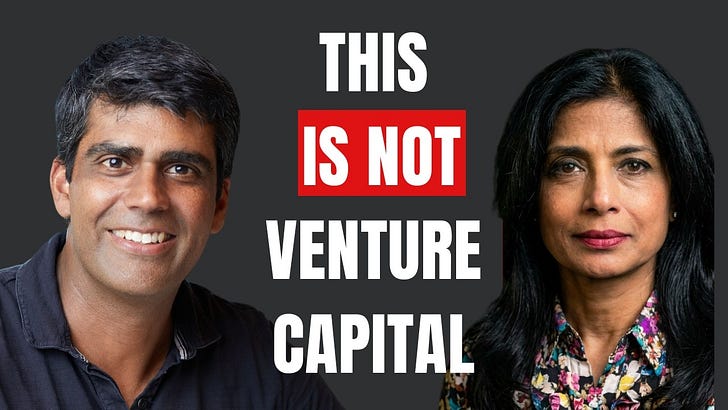
Venture capital and AI hype distortion; why “60% to two companies” is misleading; how capital formation, company building, hiring, and regulation are changing; and what durable value will look like across the AI stack.
Sunil Dhaliwal, founder and general partner at Amplify Partners (about $2.5B AUM). Amplify backs early technical founders at the intersection of technology and biology; launched Amplify Bio 1; invests in infrastructure, developer tools, data, security, and AI applications.
Most “mega-round” concentration is private “momentum” capital, not traditional VC; durable value won’t accrue only to frontier labs; attention and noise drive fundraising; growth still matters most—when growth slows, boards push toward cashflow breakeven or product retooling; regulation is coming heavily due to politics and safety concerns.
Amplify wins include Datadog, Fastly, Near Protocol, Anchorage, Runway, Temporal, DBT/5Tran, Hex; new investment Swamp (open source) and Swamp Club.
Written by AI. May contain mistakes.
Learn about the focus of this episode on AI and venture capital trends.
“venture capital dollars in the first half of 2026 has gone to just two companies.”
Discussion on the growth of Amplify Partners and its investment focus.
“decades as a venture capitalist, investment banker, and operator.”
Exploring the significance of backing technical founders in venture capital.
“Right around 2012 was when it got started, started.”
Insight into the launch of Amplify's dedicated bio fund and its strategy.
“They're great guys, but you're sticking to early stage.”
Discussion of synergies between technology and biology in investment.
“and really take advantage of the things we're seeing.”
Highlighting successful investments from Amplify and their impact on strategy.
“between the two, unlike the first incarnation, a la Polaris and Atlas, who tried to do both from a single fund.”
Learn how to evaluate technical founders within the current AI landscape.
“Private company growing incredibly quickly, you know, first and largest investor there.”
Explore the evolving sources of innovation beyond frontier labs.
Discuss the concept of durable value in technology investments.
“it was driven by a sort of, I'd say, continuum grade of innovation.”
Understand why not all innovation values are found in frontier models.
Differentiate between private and venture capital in the tech landscape.
“Yeah, the cracks may be happening there.”
Examine the economic implications of capital concentration in tech companies.
“I think it is wild to imagine a world for probably 30 reasons, but my favorite being this, simply like, do you think that our government will allow 5%, 10%, 20 % of GDP to land in the hands of two or three companies?”
Clarify the distinctions between venture capital and private investment flows.
“all day long, just on the basis of like, there are entrenched interests that have no desire to cede everything to people just because they're hyper-capitalized and can kind of undercut other people's business models.”
Highlight potential misconceptions founders might have about venture capital.
“venture capital dollars in the first half of 2026 has gone to just two companies.”
Discuss how capitalization trends are changing in the AI sector.
“And it's changing because if you are a large Sand Hill Road firm, you can go raise five, 10, $20 billion.”
Learn how founders should navigate the complexities of building AI companies.
“And if that wasn't true, you would see people, you know, moving en masse, right, to small funds that did only specialized things, but it's not what's happening, right?”
Understand the dichotomy of funding access among tech companies.
“Like, can I even raise money if I'm not anthropic?”
Explore the implications of seed funding trends on startups.
“And here there may be a difference between model companies and that are maybe more capital intensive, but let's not talk about those.”
Discuss the importance of wise capital management for founders.
“And we'll look back on 2025, 2026 as funding blips.”
Explore how the funding landscape is shifting and its implications for startups.
“And now we are seeing companies that are, you know, launching with 100 million of seed funding, right?”
Learn about the critical role of attention in building successful companies today.
“So whatever money has been raised, what are you seeing that is different now than say five years ago?”
Discuss how AI and technology are changing hiring practices and efficiency in startups.
“Anything are you seeing, you know, obviously AI is bringing huge productivity gains to everybody?”
Understand the challenges SaaS companies face with growth and funding amid economic shifts.
“This is a question on behalf of both CEOs and VCs.”
Examine the impending regulatory scrutiny on AI companies and its implications.
“And I think you articulated it well, but good for founders to hear it.”
Learn about the importance of constructive participation from tech companies in regulatory discussions regarding AI.
“And this is not going to end with a light regulatory touch.”
Explore the implications of AI development on venture capital and the potential for government involvement.
“I don't know if we're going to see you do your seed round, you do your A round, and then you do your government round.”
Discover an exciting new investment in an AI-focused project called Swamp and its unique approach to AI reasoning.
“Yeah, a lot will have happened between now and that event.”

Get the gist, explore an idea or ask about something said.
 Claude
On Post Money, what are the key points of this episode?
Searching your listeningAutomatic transcript. May contain errors.
0:0060 % of U.S. venture capital dollars in the first half of 2026 has gone to just two companies.
0:08Sunil Dhaliwal: These are not venture capital dollars. They're private technology dollars. Can I even raise money if I'm not anthropic? If you're not growing zero to 20 in the first year, I'm just not interested. We're going to have tons and tons and tons of examples of people who raise a lot early, spend a lot early, make tons of noise, but ultimately just don't deliver great products. There is no more popular punching bag than a frontier lab right now across the world and across this country. This is not going to end with a light regulatory touch. This is politics, and people need to understand which way the wind is blowing.
0:41Sunil Dhaliwal: AI is getting scary. The education you save for for your kid may or may not be worthless. We don't really know. Meet Sunil Dhalival, founder and general partner at Amplify Partners. With$2.5 billion in assets under management, Amplify invests at the earliest stages of company formation in technology and the intersection of technology and biology. In this conversation, we cover a lot of ground, from what is new and different about company formation and capitalization in the age of AI, to how founders are feeling unprecedented pressure to rise above the noise, to compete, to raise capital, to win, to the backlash the largest AI companies are facing and what that may mean for AI regulation, to where value will ultimately accrue once the confusion and the euphoria about early AI development has settled.
1:34Sunil Dhaliwal: And the job that you thought you were going to have for 30 years might have a five-year horizon. We don't really know. Welcome to Post Money, the podcast where venture capital meets the founder's journey. I'm your host, Nilanjana Bhamek, founder and general partner at Converge VC with over two decades as a venture capitalist, investment banker, and operator. On this show, I sit down with visionary founders and investors to uncover what really happens when you raise money and build companies at the bleeding edge of technology. From the investor's perspective to the founder's vision, these are the stories behind the capital, the conviction, and the companies shaping our future.
2:11Welcome, Sunil. I'm so excited to have you on the show today. I've been really looking forward to this conversation.
2:17Sunil Dhaliwal: Thanks, Nalanja. It's good to be here. Awesome. So we have known each other since your Battery Ventures days, and you have done extremely well. You set out as a solo GP when it wasn't a thing. And what was it, 2011-ish, 2012? Oh, yeah. Right around 2012 was when it got started, started. Yeah. 11, 12. And then, you know, you've grown it to$2.5 billion in AUM since then, and you are putting multiple funds to work. So catch us up on what is Amplify today? Yeah, so in a lot of ways, Amplify today is the same thing Amplify was when it got started. And so Amplify is still backing technical founders from the very beginning.
3:02Sunil Dhaliwal: And I think that's the through line for pretty much all of our investments is someone who's a practitioner, an engineer, a researcher, a scientist, someone who's incredibly close to their domain, who knows their problems and has therefore a really good insight on a solution. And so that hasn't changed. We've gotten bigger in dollars, but we have also gotten bigger in terms of our team, which means that our growth rate has been moderate and that's allowed us to stay very focused on early stage. So yes, we did raise a combined 900 million of capital in our last set of funds, but the vast majority of that's dedicated to early stage and the remainder is dedicated to leaning into our breakout companies.
3:49Sunil Dhaliwal: So while we can go$100 million deep on a company over its life, we don't spend our time really pursuing growth stage investments and other kind of expansion stage pre-IPO things from other portfolios of other investors. We tend to stay focused on our companies that we get involved in early. Well, that is very refreshing to hear. So you, You, you know, it's what, going 14, 15 years now. You've done very well. We'll come to some of your breakout companies, but you have resisted the temptation to go raise a billion dollar diversified fund and resisted the pressure to put Dari Amadei's or Sam Altman's picture on the front page of your website.
4:32They're great guys, but you're sticking to early stage. So that's great news for the vast majority of founders out there.
4:41Sunil Dhaliwal: I think a lot of it is there's a mix of what you're good at. And then there's also a mix of what you like to do. And then really importantly, and I think a lot of people look past this, you know, we're in the investment business. Like this is not a zero sum game, but it's very competitive. And if you actually want to deliver good returns and outperform, I think you got to always ask the question, where do I have an edge? And I think it's very easy to fool yourself into imagining you have an edge where you don't. And that tends to be part and parcel with, I think, a lot of people who have had their mandate widely distort over the course of a decade.
5:24And the jury will, of course, come in eventually as to whether or not those were good
5:30Sunil Dhaliwal: or bad decisions from a returns perspective. But in our business, it takes a decade. So, So, you know, half those people will be long gone by the time anyone realizes it wasn't a good one. I know that's a good and the bad with long horizons to results. Right. So, well, before we get, we'll unpack that a little bit later. But before we get to that, I think one of the more interesting news coming out of Amplify was the launch of a bio fund. And that is, is that a dedicated fund one? It is. Tell us more. We raised Amplify Bio 1 last year alongside Amplify 6. And the reason was we had been really increasing our exposure to the intersection of AI and biology.
6:16Sunil Dhaliwal: It was something we did as far back as 2014. We had some notable successes like recursion pharmaceuticals back in the 20-teens and then started to grow our exposure meaningfully in the last three, four years. And what we realized was a lot of these companies, particularly the ones that apply AI and develop therapeutics, they've behaved very, very differently, obviously, to most traditional infrastructure technology, whether that's how they capitalize or their timelines or the return profiles or when you can actually wring out risk and how they are a very different product. So in terms of actually doing what we said we would do with the capital, our goal was to separate that out, have a dedicated base of LPs who wanted that exposure.
7:03Sunil Dhaliwal: But at the same time, and this was hearkening back to the Amplify One lessons of 2012 and 2013, I'm a very big believer that if you're going to have something that's an emerging strategy, it really pays to make it a first-class citizen, declare your focus, organize a team, compensate and incentivize that team very specifically around their goals, and not make a strategic push kind of the third, fourth, or fifth priority in a large pool of priorities. And so separating out the fund really accomplished one set of things for our LPs, but it also accomplished this other set of things for us to go be competitive in the market and really take advantage of the things we're seeing.
7:49That's right. I mean, you also want access to the best deals in that sense. A dedicated fund sends a very different signal than a mixed pool. what about the team? I mean, do you see this to be a dedicated team inside Amplified that just does bio?
8:05Sunil Dhaliwal: Yeah, for the most part. Or are there synergies between the tech side and the bio side? Yes and yes. I'll go to the synergies first. What we are not doing is clinical stage life sciences. For people who have taken a drug through phase one and they're looking for capital to go and run phase two and phase three trials and take something from an X hundred million dollar valuation to hopefully a billion dollar outcome. That's not our entry point. We're still coming in early and we're still coming in for companies where there is a meaningful intersection between applying computing and data as well as applying meaningful biological insight.
8:49Sunil Dhaliwal: And it's that intersection is where we play. Where the synergy has come in is it has really surprised us as to how few AI native investors there are who think deeply about these business models, these companies and biology in particular. So I think the synergy has been we have a very differentiated position and point of view on most of the key technologies and approaches that these founders are taking, where I think a lot of other investors that are maybe more bio-focused do not. That allows us to have a lot of people weigh in from what I'd call the traditional tech side of the house and kind of give opinions and actually not be lost when it comes to what we're talking about.
9:34Sunil Dhaliwal: that's a lot of the overlap where we felt it was different is you know you do need to add a reasonable amount of biological understanding and experience and so we've meaningfully grown our team with depth on this side so you know my partner Elliot Hirshberg's PhD in genetics also trained as a computer scientist he's been you know a writer and investor and a bench scientist and computational scientist, all in biology. He's kind of joined and is a big part of our push here. We've added another PhD in immunology to the team, a former biotech founder. We've got advisors and operating partners who have, again, dual trained in both CS and in biology.
10:22Sunil Dhaliwal: So that's the stuff where we've added a lot of dedicated depth. Very exciting. Looking to hear more good news come out of the bio fund. And this time, it'll be interesting because there is an intersection between the two, unlike the first incarnation, a la Polaris and Atlas, who tried to do both from a single fund. But there really wasn't an overlap between the tech and the bio. But it looks like AI is very meaningfully impacting a certain segment of the bio industry, and you're playing in that. Coming back to the tech side, you guys have done very well since your inception, what have been some of the big winners?
11:03Just catch the audience off on something. What have been some of the big wins for Amplify? And then what worked, you know, and how have these wins sort of shaped your thinking about future investing, future strategy, and how you approach your advice to portfolio companies, the do's and don'ts?
11:21Sunil Dhaliwal: I think, you know, our success over the years had a series of things that have been very consistent about it, but then also some notable things that you look at in moments in time and you start to see different themes expressed. So our core theme all the way through, as I mentioned, is we are working with engineers, technologists, practitioners, people who really understand these hard problems. But we're also working with those people because we like to invest in companies that can develop meaningful technical moats in a lot of categories that can be win or take most. And, you know, being the 13th or 14th most deployed database is not as relevant as being the first top two or three.
12:01Sunil Dhaliwal: And I think technical strength and differentiation plays meaningfully into how your best companies in databases, data infrastructure, security in developer tools and distributed systems, a lot of kind of hard infrastructure domains, the technology really matters. And so that, I think, is quite consistent across the funds. But you do see these trends that come and go. So our first fund, I'd say the largest successes there by a large margin were companies like Datadog and companies like Fastly. They were both companies that went public. Datadog, I don't know what the current market cap is now. I'm sure it's probably north of$80 billion.
12:44Sunil Dhaliwal: Fastly peaked at a$10 billion market cap. And those were, again, companies that were driven meaningfully by distributed systems and developer tools. When you look at the things that really mattered the most in Fund2, if I think about the strongest company, you know, Near Protocol, that was kind of one of the earliest developer-focused crypto platforms was a meaningful winner. And also Anchorage, which is institutional custody built with a security mindset that's Still to this day, you know, custodies and processes, you know, billions upon billions of dollars of institutional crypto assets that is a meaningful kind of infrastructure service provider in that domain have been some of the stronger companies.
13:25Sunil Dhaliwal: And then as you kind of move into funds three and four and beyond, you see a lot of growth in things like data infrastructure, you know, companies like DBT, now part of 5Tran, companies like Hex in the analytics space, but then also the emergence of where AI came in. So, you know, we were very early investors in the AI trend and, you know, Runway, which is a foundation model in the video space and last round was over$5 billion. We were first investors in Runway. Companies like Temporal, which is in the distributed systems infrastructure space, and they created the durable execution category, you know, a large$5 billion plus value.
14:05Sunil Dhaliwal: Private company growing incredibly quickly, you know, first and largest investor there. So you kind of start to see the trends emerge over time, but there is always this very technical engineer centric through line in the middle. Right. So I think what you're saying is sort of the strategy has stayed focused on, you know, identify very strong technical founders who have an insight into an emerging problem. And then the fund vintage captures whatever that tech wave may be, whether it was cloud ops, you know, the early 2010-11s, it's crypto in the middle, it's obviously machine learning, etc. around data infrastructure in the teens and then beginning to catch the AI development, right?
14:47So coming fast forwarding now, I think a lot of our listeners, founders and VCs would be very interested in hearing your views on sort of what, how do you look at technical insight, a technical founder today in a world where a lot of the really advanced innovation is happening in a select few frontier labs, if I may, right? So a lot of what we took as technical insight, you know, you talked about databases and infrastructure security, what have you, it was driven by a sort of, I'd say, continuum grade of innovation. Now we have a very different type of innovation that is happening in these AI labs, and it is sort of captive in those labs.
15:33So what is technical insight and what does a great technical founder look like in this world?
15:39Sunil Dhaliwal: Some of it's different, but a lot of it's the same. And I think it starts with an observation that I believe deeply, which is the future of technology is not just a frontier model. And yes, frontier models continue to advance what can be done in language, in video and creative, in audio, in biology, in a whole number of domains. Some very meaningful unlocks are happening by pushing forward the frontier of what AI can do. That is absolutely true. But what I reject is the idea that, number one, that's where all the durable value sets. I think durable value is still very much in question there. And I think we're recording this in July and we're coming off the backs of a few weeks of a Kimmy announcement and real questions about how one defends durability of frontier capex and frontier spend when you don't get to amortize a long frontier cash flow to back up.
16:40Yeah, the cracks may be happening there. So we'll come back to that, but please go on.
16:46Sunil Dhaliwal: Yeah. So I would just say that we can look backwards and say, this is where a lot of investment has gone. And this is where a lot of kind of exciting innovation that's happened. But I think it would be foolish to suggest that that's where the innovation ends. And also - I think sort of the question is slightly different. It is not whether all the innovation is in the models, whether open or closed source, whether they monetize or not. That's a different sort of thing. Whether that technical insight will increasingly come from people who are in these front, the folks that are in the deep depths of it?
17:23Or do you think there is a large ecosystem like the application layer, like all the peripheral tooling, that all the enterprise problems, which are mostly, let's call it AI applications. Do you still believe that that is where future value will accrue?
17:39Sunil Dhaliwal: 100%. I absolutely believe that value is going to be distributed across all these layers. I think it is wild to imagine a world for probably 30 reasons, but my favorite being this, simply like, do you think that our government will allow 5%, 10%, 20 % of GDP to land in the hands of two or three companies? It doesn't even stand to reason. And we're watching in real time how this plays out like there is no more popular punching bag than a than a frontier lab right now across the world and across this country like data center revolt is is directly pointed at frontier labs with because that's the tangible thing people can fight against you know job loss all this sort of stuff so just to be like oh well look these super companies are going to emerge they'll they're going to innovate and own everything like and let's all go home and live on welfare, right?
18:36Sunil Dhaliwal: Hell no. I mean, I would bet the opposite side of that as all day long, just on the basis of like, there are entrenched interests that have no desire to cede everything to people just because they're hyper-capitalized and can kind of undercut other people's business models. Like that's not going to happen. That's the second reason as to why I don't think this is where all the innovation comes from is because people don't all congregate in these places. Like, yes, at this moment in time where capital is available, capital is making it very easy to go recruit there. But you and I both remember the exact moment in time when we said the same thing about Facebook.
19:15Sunil Dhaliwal: We said the same thing about Google. We said the same thing about, you know, the winners in the AI, excuse me, the Internet revolution 10 years prior to that. And under no circumstance did those companies ever consolidate innovation. In fact, the larger they got, the worse they got at innovating because the capital needed a return and politics and infighting and all that same stuff. So innovators dilemma, and that is not going to change. And so I absolutely think that there's going to be great innovation coming from other places. Fantastic. Well, that's music to everyone listening to this podcast.
19:52And so So good of you to reaffirm that conviction. But just a fun fact, despite what you just said, I was just looking at some pitch book data, and 60 % of U.S. venture capital dollars in the first half of 2026 has gone to just two companies.
20:12Sunil Dhaliwal: Mistake. Not true. And I'm going to tell you why it's not true, because they're not venture capital dollars. They're private technology dollars. And those are very different things than venture capital dollars. This is, yes, VC dollars. I know what you're saying. This is where, I mean, what is going on? What's going on is private companies and venture capital are not the same thing. So, venture capital, subset of private companies, subset of private capital. Private capital is anything that you can't access through the public markets. And if you have the greatest innovative move in technology, probably in global economy in the last 20 years happening right now.
20:54Sunil Dhaliwal: And your ways to play it as a public investor, which, by the way, is 90 plus percent, 95 percent of global capital. You're like, I can buy Nvidia, you know, maybe EAMD or I can go gamble on SK Hynix and Samsung if I want to get really aggressive or maybe like buy data center real estate and put a crazy multiple on it. Like the bubbles in those small companies are directly reflective of there just aren't really great ways to play this. So the amount of demand to get that money into the private companies is super high. And people like you and I have enjoyed a glorious position for 20 something years or 30 something years where we've been the gatekeepers.
21:36Sunil Dhaliwal: Like you want private in a company innovation, you got to come through us. That is totally changing. And it's changing because if you are a large Sand Hill Road firm, you can go raise five, 10, $20 billion. And it's not because your returns are amazing. That's not what's happening. It's just they present the value proposition of we can deploy large amounts of your capital into anything that looks like it has momentum. And I would argue full on that that is not venture capital. The vast majority of dollars you're talking about is not getting venture capital allocated. It's like momentum private company allocated.
22:14Sunil Dhaliwal: And they are not. Okay. Thank you for clarifying, because of course, those firms are still called venture capital firms. And to paraphrase what you just said, a very small percent of their business may be picking, which traditionally LPs gave them capital for, but a big pool of their capital now is about access to mega IPOs. So that's... I mean, that's a bad, but they're greatest. And if that wasn't true, you would see people, you know, moving en masse, right, to small funds that did only specialized things, but it's not what's happening, right? There's plenty of capital that's out there. And that capital, for the most part, just says, access constrained, get me into the stuff that matters.
23:01Sunil Dhaliwal: Because if I don't have it, by the time it gets public, and I'm investing at $1.75 trillion for SpaceX, all the returns out of it. And I can't go make the money I want to make. Yeah, I think this is just very important for founders to hear that there is plenty, plenty of true venture capital dollars still available that is investing in the traditional venture asset class and not to get too hung up in these big, big mega rounds of money that are going into these very later stage, a handful of 10, 20 companies, if you will. But that can be a very misleading signal to founders. So thank you for clarifying that.
23:42So just shifting gears to a little bit. In this present moment, this kind of sort of schizophrenic news going on, on capitalization, company building, mega rounds, you know, pitch book putting out data like this, where it's extremely confusing for founders, like what is going on, right? Like, can I even raise money if I'm not anthropic? Do I even, you know, rise above Lightspeed's bar or whatever it is, whoever's door they may be knocking on. So let's just peel back the curtain a little bit. What are you seeing in your companies, in the Amplify portfolio companies, in terms of what is sort of current, you know, thinking on two things, capitalization, and then really building the company, what is different.
24:30So for example, you know, is sort of some kind of a new norm emerging in terms of, you know, time to series A, or a minimum amount of capitalization gets you ahead, or, you know, or is it still old school, as in, get the product right, you know, make sure you got something before you start pouring money on sales and marketing and going raising a big round, sort of just help us understand both the capitalization side on what's happening with companies that are playing in this AI world. And here there may be a difference between model companies and that are maybe more capital intensive, but let's not talk about those.
25:07Let's talk about sort of bread and butter venture capital, not AI model companies. And then we'll get to the operating side. What's happening on the recruitment? What's happening on headcount what's happening on operating metrics? Just anything you can share from what you're seeing in your portfolio.
25:22Sunil Dhaliwal: Even when you exclude the foundation model companies and frontier lab companies, I would say that capital formation has changed and how investors are thinking about growth has changed. And it's not because that the world has just changed and the industry's changed and now this is the new way things are done. It's because there are viable alternatives for them to go focus on. And so it's very real that if you're like, I'm going to go from a few hundred thousand dollars to a few million dollars of revenue in this year, and then I can think I can go from a few million to, you know, six, seven, eight the following year, numbers that would have been stunning five, seven years ago, they're not as well regarded today solely because they're being compared to other things that are growing more quickly.
26:10Sunil Dhaliwal: And the tricky part is it remains to be seen as to whether or not those growth rates, margin structures, and ultimate value that that's being created in some of those companies, when you take out perhaps the inference that's blended into those growth rates, some of those things maybe will turn out to not be as shiny as they are at this moment. In which case I would say, yeah, I don't think anything's really changed. you know, durable revenue, contribution margin, consistency, as well as a value delivered to a customer, like that's everything. And we'll look back on 2025, 2026 as funding blips.
26:53Sunil Dhaliwal: But however, if those are the ways that one can now go build durable companies, and I think there's lots of application companies in particular that have proven so far that you can grow very quick on a land grab and backfill capabilities and get your customers to stay over time, that people will say, scaling with capital is a competitive weapon, and scaling with capital is going to be important to me. And then they start balancing this game of, all right, am I in this haves category from even before I start the company where 20 people will compete for me? And just because it's my name and my brand, I can go raise 20, 30, 50 million to start a company?
27:34Sunil Dhaliwal: Or are they going to say, well, that isn't me. And so I have to go and figure out how to be relatively efficient, get some breakout momentum, and then on the backside of that, figure out how to scale up my capital base quickly. And there's a very much a haves and a have-nots dynamic that we see when you think about those two buckets. That's right. And that is exactly, that's the reasoning that circulates down all the way to the inception of the company. And now we are seeing companies that are, you know, launching with 100 million of seed funding, right? So precisely that logic. The Carter data is surprisingly clear.
28:1190 % of the companies are raising the old-fashioned way, a couple of million for the seed, you know, and majority still takes two, three years before they can hit the A, but it's the 10 % that is in this outlier category that is dominating the news and sort of putting a lot of fear and confusion in the rest of the market. But time will tell whether those companies ultimately are able to put that capital to good use or not, as you said. So I think it's just people need to focus on where their strengths are, spend the money that they raise wisely, and then not get too caught up, perhaps, in sort of what their competitors have raised.
28:49Sunil Dhaliwal: And I think people are solving for different things. There's a lot of people who will say, gosh, I'm not going to get what I want for my company if I don't raise$100 million right out of the gate. They don't ask the next question, which is if I don't deploy that$100 million wisely, what does my company look like? And does anyone care? Is my company broken before it even got started if I don't do that well? There's different people, different risk tolerance are gonna do things different ways. I have not seen the case where you can realistically deploy capital better when you don't have a product understood, well understood, you don't have a poor knowledge of what the customer needs.
29:33Sunil Dhaliwal: You can't throw money at those things and expect it to somehow go better. I don't think that that's somehow changed in this market. So my bet is we're going to be really anchored to the one or two successes that survivor bias tells us where the proof points that raising a lot of capital is the right thing to do. But at the same time, I think we're going going to have tons and tons and tons of examples of people who raise a lot early, spend a lot early, make tons of noise, but ultimately just don't deliver great products and then really are kind of stuck without room to maneuver. Well said. Shifting gears to sort of company building away from the capitalization.
30:13So whatever money has been raised, what are you seeing that is different now than say five years ago?
30:19Sunil Dhaliwal: I think in keeping with what we see and, you know, all walks of life or all corners of life in 2026 is being able to gather attention matters a ton now. Just having the ability to stand out in the eyes of a candidate, in the eyes of a future investor, in the eyes of a customer, a partner. Attention matters a lot. And I think that that does play into how people are building companies at the moment, whether it's the mega rounds or whether it's announcing their valuations because I suppose when you tell someone you raised at a high price, that's the signal that your company is going to be good, not a signal that your equity is probably going to worth a little bit less.
31:09Sunil Dhaliwal: But all versions of the attention economy, I think, are very real and play into how people build companies. Cutting through the noise is harder than ever. Um, you know, I, I, I can't respond or even like put a positive comment on all the product releases that show up in my LinkedIn feed or my Twitter feed in a day. It's just, it just gets so noisy. Um, that changes a lot of how people have to build companies. And I do think at the same time, people also have to recognize that, you know, you're really going to have to pick what investor you're going after in subsequent rounds because there are some who say if you're not growing zero to 20 in the first year I'm just not interested right and that I'm not saying right or wrong I'm just saying that it's true that certain people won't be interested if you don't look like that so that's a thing to consider as a founder right are you going to go out and say, I have to build this way and, you know, growth at all costs and like fake it till I make it just to bring in that next round of capital and get on that treadmill?
32:18Sunil Dhaliwal: Or are you going to do something that is probably a little bit more rooted in value to a customer and, you know, working through hard problems and therefore probably building something that might go slower, but might be more durable? Anything are you seeing, you know, obviously AI is bringing huge productivity gains to everybody? And are you seeing any reduction in headcount on the product side in any of your portfolio companies where it's more about hiring a few super, whatever, super engineers, super product managers, super XYZ, and then the net number of headcount you might have seen in any function five years ago.
32:59Do you see any noticeable change already?
33:02Sunil Dhaliwal: I think there's a noticeable change in how far you can get at the beginning with fewer folks. So really good people can go farther. And this is, there's an echo of when the cloud took off to me, you know, when cloud and cloud infrastructure really took off. One of the things that allowed people to do was just move from idea to production way quicker, you know, both in terms of how you built, but also in terms of how you distributed. And that took a number of heads out and time out of the traditional development cycle of a company. What do I need to put in place just in order to build my software?
33:40Sunil Dhaliwal: How do I deploy it? How do I get it to customers? How do I stand them up and support them? All those things required fewer heads. But I don't think what ended up happening in hindsight was the mythical one person to one trillion dollar company, because a lot of the other functions, when you want to now grow quickly, you're still going to lean in when customers want people holding their hand to make it work or to actually do marketing that cuts through the noise or to build the features of the product that might not be sexy to you, but are going to be really meaningful to your customers to actually get them to deploy a large price point.
34:23Sunil Dhaliwal: So in a weird way, the most successful companies still keep hiring for all those reasons. Right. That's right. That's right. And they are in a race to get ahead. So and they need the people. Okay, great. Let me ask a slightly different question here. A lot of folks are companies. This is a question on behalf of both CEOs and VCs. We saw a bit of a double whammy in 21-22 to this topic of raise a lot of money and then get stuck. So there's a whole bunch of software companies that are, and all of us have them in our portfolio companies. So I think every VC is struggling with this right now. and many SaaS CEOs are, which is they have a double BAMI.
35:08They raised a lot of capital in the COVID Zoom bubble, if you will, of 21-22. The cap table is heavy, not easy to maneuver, raised a lot of money. They may have a critical mass of revenue in whatever SaaS function they were doing, from 10 to 100 million, but they're now suddenly facing a cap table challenge because growth is decelerating and they're facing AI headbands. I just wonder, I mean, what would your advice be to both board members as a board member to those companies or to those CEOs? And how should they be approaching this current moment? And if you have any examples you can share on how folks both, you know, how clear eyed investors need to be and how to make it still sort of something that is, you know, where the team can make money.
35:58Yeah.
35:59Sunil Dhaliwal: So if you're thinking about this from a founder's perspective, what you have to remember that sits at the core of all of this is growth. Growth is the only thing that matters because you're not running profitable software companies, I'm imagining for the most part. So corner case, maybe. If you're not running profitable companies yet, you are proving the value of what you're doing by how quickly it can grow from small to big to huge. And when growth starts to slow or objectively becomes slow, you're in a very bad place because no one's going to pay for a non-growing company and take all that risk.
36:40Sunil Dhaliwal: And as you pointed out, you've got all this other money that's kind of stuck because they did pay for that growth. And not only are they not getting it, but their presence on the cap table is an impediment to getting new capital if you need it. And so I feel like most companies right now, they've got three options and one of them is temporarily kind of closed off. So one of the options is you sell, you say, hey, maybe the price isn't as good as it used to be because the growth has come down, but there is value based on this revenue and a prevailing market multiple on the seller. That's been hard to do right now because there aren't a lot of people who are actively buying in the private equity domain.
37:19Sunil Dhaliwal: There isn't a robust public market. And the large public acquirers are saying, if it feels like legacy, I'm not going to get any credit for buying that. And it feels like risk to me, not opportunity to me. So that whole side of the market is very much shut down right now. And so now you've got two other options. One is you get yourself to cashflow breakeven to facilitate whatever return to growth or acceleration of profitability or some drive to value creation that doesn't require other people's money, right? That's kind of the second option. Or the third is, is you're dramatically retooling and trying to figure out what about your product, your market, and your business is actually going to be changeable to get you back on a growth track.
38:02Sunil Dhaliwal: And companies, you know, used to funnel into three buckets, and now they're funneling into two because the M &A side is pretty much shut off, even for, you know, PE backed software, it's for the most part closed. So I think the boardroom conversations that people, you know, aren't in that, that if they were, they would be hearing people say, well, look, you're either going to figure out what the product change is going to be to get this thing growing again, to take advantage of AI tailwinds, or we're not. And we're just going to get this thing profitable. So at least you have the opportunity to run a company when, you know, where the alternatives go out of business.
38:41Yeah, well said. And that is the conversation. And I think you articulated it well, but good for founders to hear it. You know, sometimes the news is what the news is.
38:51Sunil Dhaliwal: And we've got all three in our portfolio, as you said. We've got companies. Yeah, and all of us have all three. Yeah, the context, which is some days, you know, the first board meeting you go to is, it's like, how are we doing on our drive to cash flow break? event. And then the next one is, how are we doing on our retooling of our products to be AI native and changing out team members and rebuilding product surface? It depends on the company, and some do it better than others. And some are doing all three of it. Shifting gears a little bit. So coming back to this very interesting AI moment, you brought up the backlash against a couple of companies generating massive wealth, a couple of data centers generating backlash in many counties.
39:42And then we have the administration talking about taking ownership in the largest AI companies in the United States. I mean, do you think it's all talk or do you think regulation of some form is coming in a big way?
39:57Sunil Dhaliwal: It is the opposite of all talk. Regulation is coming in a massive way. I mean, there's no, there's absolutely no way around it. And I think people can wring their hands and say, regulatory capture. And they can say, if you look at the numbers, the best thing for our economy to do is stop. This is politics. And people need to understand which way the wind is blowing. And there aren't a lot of folks out there who are going to stop and say, you're right. You built this thing. You say you can't secure it anymore if it goes too fast. So you want everybody, you know, you want us to, but you want us to be kind of hands off and let you self police it.
40:38Sunil Dhaliwal: And oh, by the way, at the same time, like you're all worth tens or hundreds of millions of dollars and you have this value that nobody else gets. It's like the ultimate set of self-serving arguments that gets dropped on the 99.99 % of the population that has nothing to do with the things we think about. And at the same time, when you're like, yeah, the education you save for for your kid may or may not be worthless. We don't really know. And the job that you thought you were going to have for 30 years might have a five-year horizon. We don't really know. Don't really care, but we don't really know.
41:13Sunil Dhaliwal: It's just a terrible list of facts to go and tell, again, that 99 % of people. The AI safety bill that just got put forward was shockingly bipartisan in its support. I said, what's a surprise that it was shockingly bipartisan support, right? You know, that's right. It was shockingly bipartisan of people who are just like, who can say pretty much anything about what they, you know, what they believe should be done next. Because right before that statement will be the like, see what these AI companies should be have done. Therefore, we need AI security, or therefore we need a data center ban, or therefore we need national interest in all these companies or we need export controls or open source controls.
41:58Sunil Dhaliwal: The logic is really flawed. I'm not saying it's good on so much of this stuff, but you can just look and see which way the wind's blowing right now by how quickly people are running to blame AI and or foundation model companies for anything that's going wrong. And this is not going to end with a light regulatory touch. Right. So in a heavy regulatory, again, we'll not go too deep into this. That's a very big topic. But I'm just curious, two questions for you. What should Silicon Valley listen up and any comments to them on being a participant at the table that's a constructive participant to regulatory oversight?
42:46question number one. And number two is, if that logic is taken to its extreme, where we do see for the first time some level of government ownership in national interest companies, what does that mean for venture capital?
43:00Sunil Dhaliwal: I think on the first part, I would say, you know, what do we need, what needs to be done or what should people be doing? Yeah, I if you are if you are a company and you are not framing these conversations in terms of things like safety, in terms of respect for intellectual property, in terms of having an understanding of how these tools can be used to create jobs, not destroy jobs. in terms of thinking about this as mitigating the wealth concentration effects that people have already been seeing in the country for 15, 20 years. If you are silent on those issues and tone deaf on those issues, I think you're going to be in trouble.
43:46Sunil Dhaliwal: By the way, I'm prognosticating and I hate prognostication business, but you asked, so I'll give you my prognostication. I think if you come across as tone deaf there and you're not actively steering a conversation on that, I think you're done. And whether you're a techno optimist, and you're going to say, you know, just go faster and build more. I think I saw that as the Zuckerberg headline this morning, like we don't need regulation, we need to go faster, right? Or if you're on the other side, and it's like, AI is getting scary, we need guardrails, which seems like the term du jour. It doesn't matter on which end of the spectrum you believe.
44:28Sunil Dhaliwal: People need to be out there advocating for good policy because I just don't think startups are going to be able to sip this one out. Numbers of our AI companies have policy folks. And I think if you're jaded, you listen to this and you go, oh, great, they're just going to lobby to make an extra dollar. And if maybe you're a little bit more optimistic, you're going to say, oh, they're going to bring an intelligent perspective to a conversation, knowing that they need to get regulators to hear all sides, lawmakers to hear all sides. Otherwise, something's going to get foisted on them and they're not going to like that answer.
45:09Sunil Dhaliwal: On the national ownership part, I haven't thought super deeply about like what like the 3D chess. But what I would what I would say is it's the first time in a long time that, you know, I think you've seen whether it's quantum or or foundation models or, you know, we now saw just this morning a billion dollar plus loan guarantee for a company trying to develop hypersonic. hypersonic commercial aviation, thinking about what is in the national interest being on that roadmap and then knowing how to access capital, I think will be an opportunity for many people who are building in certain ways. And it'll certainly distort the venture markets where people will go after projects that they specifically, because they feel like they're in what's been deemed to be the national interest, and that will absolutely suck up talent and capital.
46:11Sunil Dhaliwal: I don't know if we're going to see you do your seed round, you do your A round, and then you do your government round. I'm not sure about that, but it will be a distorting factor. Yeah. Okay. Well, this is obviously a fascinating question. Maybe we can talk about it a couple of years down the road. If you and I are both around doing this business, right? So parting question, the reason I brought that up also is, do you think in five years' time, an AI model and an agent will be talking to me from that room and doing your job? 100 % no. I'm going to modify your statement to 100 % and say, he changed this, I'm going to say 100 % yes.
46:54Sunil Dhaliwal: If I'm going to be talking to you along with my AI agent and that's going to be helping me do my job, the answer is absolutely yes. And I, but I think if people really believe that in competitive industries like investing, that what you're, that human involvement will be a detriment to performance, not, you know, an augmenter to performance of fantastic AI technology, you know, I would one, disagree with them. But two, I would say, you know, then I really don't care if it's just you and us that are not in the job. Because if it's true that a human cannot augment an AI system in five years, I think there's a much greater societal change that's happening than whether or not venture capitalists are writing checks.
47:53Yeah, a lot will have happened between now and that event. So I agree with you. Well, I said parting question, but I'm going to add one more parting question so that, you know, founders and VCs listening to this can get a peek into what's exciting for you. Share a new investment that Amplify has just made and something that you guys are excited about.
48:15Sunil Dhaliwal: I'll talk about one thing on the tech side that's very recent. It's a software project called Swamp, and it's an open source project. And it comes from repeat founders who have been involved in companies like Chef and System Initiative. And they have built distributed systems, infrastructure, and developer tools for a long time. And in the world of AI, they're asking the question that kind of gets to the heart of some of the overhype, which is, why do we let AI reason about everything when we actually don't want it to reason about everything? Right? for anyone who's the AI maximalist that says, yeah, well, they will generate all of that every time, you know, infrastructure we generated, code we generated, it'll be totally ephemeral.
49:04Those are anti-patterns to what people actually want out of their systems.
49:09Sunil Dhaliwal: And so what Swamp is really about is figuring out what parts of a system need to be ironclad, locked down, never changing and which parts of a system actually benefit from the reasoning and the iteration capabilities of AI. And when you think about in the context of building and running infrastructure and building and running systems, you can start to think about both how those two things need to live together in harmony, but also what you would actually need as kind of a harness to let AI do the things that it's great at, but also count on the core repeatability and stability of infrastructure that isn't moving every time you happen to look at it again.
50:03Sunil Dhaliwal: So Swamp's this really fast open-growing source project and Swamp Club is the company around it. And it's kind of fun to see a company that talks a little bit about not being an AI maximalist also enjoy some of these same AI growth dynamics that we talked about, where people are like, I just want to use that. And it grows quick. And the next time customers show up, and it's kind of fun. That's awesome. But that is probably sort of capturing the most current thinking on where AI should be used, where to apply it, and where you don't need AI. So they're actually, what a cutting edge company, right?
50:40They're kind of capturing the sentiment of the market almost on current developments.
50:46Sunil Dhaliwal: And we're going to see more of that in more places, right, where people are going to have to understand what problems the tool is good for and which one it is not. Yeah. Well, thank you, Sunil. This has been absolutely awesome. I've so enjoyed this conversation. I'm sure our audience will say the same. So thank you for taking the time. And I hope to have this conversation again with my friend Sunil the Human in five years' time. Same, Nalanjana. It's always a pleasure to see you. Thank you very much for having me on. Make sure to subscribe to Post Money for weekly conversations with thinkers, founders, and investors shaping the future of capital and startups.
51:25I'm Nilanjana Abhamik, and I'll see you next week right here on Post Money.
Sixty percent of US venture capital dollars in the first half of 2026 went to just two companies, but Sunil Dhaliwal argues that much of this money should not be considered traditional venture capital at all.
In this episode of the Post Money Podcast, Sunil Dhaliwal, founder and general partner at Amplify Partners, breaks down how AI is changing startup formation, fundraising, hiring, growth expectations and the venture capital industry itself.
With approximately $2.5 billion in assets under management, Amplify Partners invests at the earliest stages of company formation, backing deeply technical founders across infrastructure, developer tools, data, AI and the intersection of technology and biology.
Sunil explains why massive late-stage technology rounds are distorting venture funding statistics, creating unnecessary anxiety for founders who are still raising traditional seed and Series A rounds. He also discusses the growing divide between highly capitalized founders who can raise tens of millions before launching and everyone else who must prove product demand before scaling.
Inside The Episode:
* The difference between venture capital and private technology capital
* Why most founders should ignore the noise around $100 million seed rounds
* How AI has raised investor expectations for early revenue growth
* Why large amounts of capital cannot compensate for weak product understanding
* How attention now influences hiring, fundraising and customer acquisition
* Whether AI will allow startups to operate with much smaller teams
* Why successful companies may continue hiring despite AI productivity gains
* The three options available to overfunded, slow-growth software companies
* Why AI regulation will be far more aggressive than many founders expect
* How AI startups should engage with policymakers
* Whether AI agents will replace venture capitalists
* Why long-term AI value will extend beyond frontier models
* Amplify’s investment in Swamp and the limits of AI-first infrastructure
Watch Full Episode On Youtube
About Sunil Dhaliwal
Sunil Dhaliwal is a General Partner at Amplify Partners, a venture capital firm with $2.5 billion under management focused exclusively on backing technical founders at the earliest stage. With founding investments in companies like Datadog, Fastly, Temporal, Chainguard, Modal, Runway, Hightouch, Luma, and Hex - Amplify has been at the forefront of infrastructure and AI investing for over a decade.
Sunil founded the firm after spending over a decade at Battery Ventures. He has been named to the Forbes Midas list multiple times in his career and recently launched Amplify's first dedicated fund focused on the intersection of AI and Life Sciences. He is a native of Western New York, a Red Sox season ticket holder living in California, and faithful alumnus of Georgetown University.
Connect with Sunil Dhaliwal: https://www.linkedin.com/in/sunildhaliwal
About the Host
Nilanjana Bhowmik is a General Partner at Converge and host of the Post Money Podcast, where she speaks with founders, investors, and industry leaders shaping the future of technology, innovation, and venture capital. Through in-depth conversations, Post Money Podcast explores the ideas, decisions, and trends driving the next generation of transformative companies.
Connect with Nilanjana Bhowmik: linkedin.com/in/nilanjanabhowmik
Converge VC website: converge.vc