Ask ChatGPT
 Post Money
3 Nov 2026 · 31m · 14 chapters
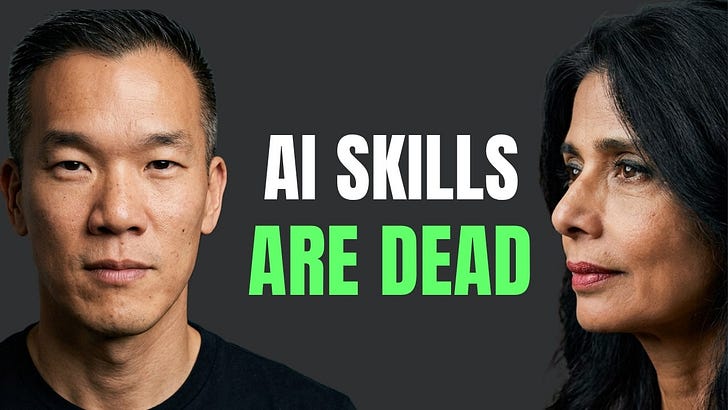
Larry Cheng (Volition Capital) discusses today’s venture/growth market: why “AI expertise” may be obsolete, how SaaS is re-rating from revenue multiples to free-cash-flow multiples, what investors should fund now (capital-efficient, bootstrapped growth), and risks/opportunities around massive AI players like Anthropic.
Larry Cheng, co-founder and managing partner at Volition Capital (spun out of Fidelity Ventures in 2010; ~$2.5B AUM; sixth fund ~ $950M). Host: Nilanjana Bhamek (Converge VC).
Volition targets bootstrapped, revenue-built software/internet companies (median ~$10M revenue, ~100% growth, little/no institutional capital). SaaS companies will be valued “like normal businesses” (profit/cash flow), not revenue. Multi-stage mega-funds expand the market but FOMO pushes overcapitalization. AI demand is capacity-gated; compute downturn could start at “neocloud” financing.
Chewy (bootstrapped pet e-commerce), Creatio (bootstrapped CRM no-code), an affiliate-marketing company growing 80–90% and profitable. Anthropic IPO discussion: ~$65B ARR, ~$600B long-term compute deals; potential public-market drawdowns (70–90% peak-to-trough) but “I’ll be ready to buy.”
Written by AI. May contain mistakes.
Discussion on the evolving investment environment and what experienced investors are focusing on today.
“In this conversation, we zero in on how very experienced investors like Larry are viewing the current environment on the eve of Anthropik's much-anticipated IPO with both great expectations and some measured caution.”
Larry Cheng discusses his journey in venture capital and the evolution of Volition Capital.
“So just maybe take us quickly through where you started, what was the world and the investment thesis then, and what is it now?”
Insights into the focus on bootstrapped companies that are capital efficient and how they are identified.
“What are some recent investments you've done that exemplify that model today?”
Examples of recent successful investments that embody the bootstrapped model.
“We don't typically take control of the business.”
Discussion on the challenges facing SaaS companies and advice for founders to adapt.
“I mean, now they may have a burden cap table.”
Exploration of the competition between venture capital and private equity in the current landscape.
“We never bothered about terms like that, but now we have to for those class of companies.”
Explore how the venture capital landscape is changing amidst market pressures.
“So in that world, how do you think about the market evolving?”
Discuss the implications of Anthropic's S1 filing and its unprecedented valuation.
“If demand slows and those deals could be an anchor, that could kill them.”
Understanding the challenges of SaaS companies transitioning to AI-driven models.
“And I think this is so massive, both sides could be very successful.”
Analyze the potential scale and impact of AI on various sectors and economies.
“Not everyone can pull that off because the biggest impediment is culture, right?”
Learn how investment strategies are adapting post-AI advancements.
“And so I can't make these predictions, but I think we're going to be okay for a while.”
Explore how companies need to adapt their structures to succeed in modern markets.
“And just to say, hey, you know, the world's different now.”
Learn why asking questions is crucial for success in the AI-driven landscape.
“So I don't know if it's necessarily you have to be demonstrated AI native like right now, although that's always helpful, but you have to have the posture that you're learning.”
Understand different investor strategies and how they impact founders.
“There are other investors who are just swinging for the home run.”

Get the gist, explore an idea or ask about something said.
 Claude
On Post Money, what are the key points of this episode?
Searching your listeningAutomatic transcript. May contain errors.
0:00Nilanjana Bhowmik: Boy, am I glad that I'm not in like mid-stage venture stuff right now.
0:04Larry Cheng: I underestimated the size of the opportunities that are emerging. Now, if you're a company that's got a sort of a billion dollar potential, that's small. It's an interesting time because you're seeing very capital inefficient businesses are raising tons of capital. And also you're seeing a ton of bootstrap companies as well.
0:18Nilanjana Bhowmik: So there's a handful of AI native companies that are just raising whatever they want at whatever valuation they want, right?
0:26Larry Cheng: It's not all about financial metrics.
0:28Nilanjana Bhowmik: Meet Larry Cheng, co-founder and managing partner at Volition Capital, a growth investment firm with$2.5 billion in assets under management. Larry has been investing in technology for over 30 years and seen his share of tech cycles and economic cycles. In this conversation, we zero in on how very experienced investors like Larry are viewing the current environment on the eve of Anthropik's much-anticipated IPO with both great expectations and some measured caution. What are they looking for in new investments today that is different? And how are they advising their portfolio companies to navigate this current, very turbulent market?
1:11Nilanjana Bhowmik: Please tune in for the full conversation.
1:14Larry Cheng: I would be nervous if I was in a data center market. If the AI market has a downturn or blows up, I think it might start sort of at the neocloud layer, financing drying up. We've seen nothing like this.
1:24Nilanjana Bhowmik: Welcome to Post Money, the podcast where venture capital meets the founder's journey. I'm your host, Nilanjana Bhamek, founder and general partner at Converge VC with over two decades as a venture capitalist, investment banker, and operator. On this show, I sit down with visionary founders and investors to uncover what really happens when you raise money and build companies at the bleeding edge of technology. From the investor's perspective to the founder's vision, these are the stories behind the capital, the conviction, and the companies shaping our future. Welcome, Larry. Delighted to have you on the show today.
2:00Nilanjana Bhowmik: Great to see you.
2:01Larry Cheng: Great to see you again. Yeah, great to see you. It's been a long time.
2:03Nilanjana Bhowmik: You're that rare VC that used to be not only a varsity football player, but also a penny stock trader. So that's a unique combo.
2:13Larry Cheng: Is it really? I never thought of it that way, but I guess that is a little bit unique. Yes, I got into penny stocks right out of college, and it actually helped me get my first job in VC, to tell you the truth. It was a longer story.
2:23Nilanjana Bhowmik: Okay, there you go. You proved yourself as an investor in a different way to a venture capital firm. It's true. Yeah, yeah. Now you, Roger and Sean spun out Volition from Fidelity Ventures in 2010, and you have done a tremendous job building it. I think you just announced your sixth fund at close to a billion, if I'm not mistaken. Yep, 950. Thank you so much. Yeah, congratulations. Great job. So just maybe take us quickly through where you started, what was the world and the investment thesis then, and what is it now? Obviously, markets evolve and, you know, companies evolve, firms evolve. I'm curious to hear what has that arc been like for volition?
3:06Larry Cheng: What's funny is when we raised this most recent fund, Fund 6, one of the LPs brought out our pitch deck from Fund 1 as if maybe we didn't remember it and asked us, what do we think has changed and what's the same from this Fund 1 pitch deck? And I know that pitch deck. And the amazing thing is not much has changed in terms of our focus. It's stayed the same. It's bootstrapped, capital efficient, software internet companies in the$5 to$50 million revenue range. So we're really working with more bootstrapped founders. And that's been the space that we've occupied since 2010. and still do. We do write larger checks today, so that's changed.
3:40Larry Cheng: We do have more resources to bring to bear for our portfolio company, so that's changed. But our stage focus and our underwriting has remained the same throughout this entire period.
3:50Nilanjana Bhowmik: Okay, so the stage focus is, let me relay that back to you, five to 10 million, did you say? Or five to 15 million in revenue?
3:57Larry Cheng: Five to five zero, five to five zero. I would say our median - Five to five zero, yeah. Yeah, our median company is about 10 million in revenue, growing, call it around 100%, and has done that with very little or no capital raised.
4:11Nilanjana Bhowmik: Those are hard businesses to find. Everyone's looking for them and no prior capital. Is that right? You said bootstrap?
4:18Larry Cheng: Yeah, bootstrapped or no institutional capital. So if there's a little bit of seed funding, that's fine. We want our companies to have largely built themselves on revenue and customers. And you know what? Every time I talk to a VC and I say, that's what we're looking for, they always think that's really hard to find. And the funny thing is we find them every single day because that's all we do. And so, no, even particularly in this era, the ability to bootstrap the company and get it going in the AI world, there's just a plethora of them. So it's an interesting time because you're seeing very capital inefficient businesses are raising tons of capital.
4:48Larry Cheng: And also you're seeing a ton of bootstrap companies as well.
4:51Nilanjana Bhowmik: Yeah. Tell me about it. So give us some examples. What are some recent investments you've done that exemplify that model today?
4:58Larry Cheng: You know, over our history, an early investment was Chewy, which was bootstrapped in the pet food e-commerce space. Creatio was a CRM company that was a no-code play that started out of Europe and moved to North America. That was also bootstrapped. I've done a company recently in the affiliate marketing space that has also been, they've raised a little bit of seed money and now they're growing 80, 90, are very aggressively and profitable. And so there's a range of companies. I would say one way that we have expanded and diversified is we don't expand stage. We don't try and go after larger companies.
5:30Larry Cheng: And we try to expand horizontally where we can find our bootstrap founders. So we started more B2B SaaS, and then we layered on transactional internet and e-commerce, layered in some more ad tech and the advertising ecosystem. And so we've more expanded horizontally. And there's always capital-efficient founders in these segments.
5:47Nilanjana Bhowmik: You bet. If you're looking for it, I'm sure you can find them and you're finding them very successfully. That's tremendous. What about founders seeking an exit or partial exit? Do you do those?
5:57Larry Cheng: Yeah, it's not uncommon. When we first started, it was 100 % of our capital went to primary, to growth capital. And these days, I would say it's more like 80-20, with the 20 being secondary or liquidity. Sometimes that liquidity is for seed investors or other shareholders. Sometimes it's for the founder to de-risk a little bit. But for the most part, we want our founders to have pretty significant skin in the game. And so if there is some liquidity, it's just a small portion.
6:21Nilanjana Bhowmik: All right. But you will consider some level of prior capital funding that is prepared to get out. and then, you know, you're coming in and taking a controlling stake. Yeah, you know, this used to be a very noticeable segment of VC exits since 2010, right? The P market by transaction volume was probably, by at least numbers, was way bigger than the strategic market for VCs to exit. Now, they weren't the biggest exits in a VC's portfolio, but just talking for the five, six funds have managed, It used to be a pretty good segment of those 3x to 5x exits for VCs. And, you know, you transact to a PE firm.
7:01That market has more or less gone away from what it appears.
7:06Nilanjana Bhowmik: Just unpack. You're closer to that market than the average VC guest on my show. So unpack that for us. What's going on?
7:13Larry Cheng: Yeah, I'd make one clarification. We don't typically take control of the business. So we're not a full exit type of equity provider.
7:19Nilanjana Bhowmik: You're not that, but I think you have a closer perch to that market than my usual VC guests.
7:27Larry Cheng: We've been in this industry a long time together. And there was an era where, of course, the strategic acquirers should be paying more logically with Synergy than a financial buyer. And it seemed like we went through like a decade or 15 years where that was not the case. Interest rates were low. That was cheap. And the financial buyers were paying a higher price and moving faster than strategics. And, hey, I'm not going to complain. That was a good thing for us. Most of our exits have happened to either a financial buyer or a sponsor-based strategic, as opposed to pure-play strategic. And that's a good thing for us and for liquidity.
7:59Larry Cheng: And so it's a very active market. And it's definitely slowed down recently, I would say, as people work through salespocalypse and figure out how companies are valued in this era. But for a very long while, that's been a very robust area of liquidity.
8:11Nilanjana Bhowmik: Yeah, interest rates certainly have a lot to do with it, right? You were in a near-zero interest rate market. That certainly fueled a lot of it. We'll come back to Sassocalypse or Sass Apocalypse, however. But well, I want to get your views on that as well. So let me just parrot this back to you. Today, you're very much in the growth capital market, ideally bootstrapped companies, but you will consider this is because the vast audience here is founders listening to this show. But if they have taken some capital, that's OK. But if it's got 100, 200 million of venture capital on this cap table, that's not your deal.
8:45Larry Cheng: Yeah, I would say if you wanted a rough rubric, if you've raised more capital than you have revenue, it might be harder for us.
8:52Nilanjana Bhowmik: Okay, I like that.
8:53Larry Cheng: And never say never, but that's a rough rubric.
8:57Nilanjana Bhowmik: Okay, yeah. Okay, very good. And then what would be sort of the median check size that goes into the total transaction in the deals that you're doing for the latest fund?
9:06Larry Cheng: I'd say right around$30 million, so the range is probably$15 to$60. But we have ways that sometimes when a company is a little bit younger, we might put in a smaller check and have some rights to size up that check over time. So there are ways to skinny down. And of course, we can participate in like$100 million financing. So there's a lot of flexibility in the middle of that.
9:24Nilanjana Bhowmik: Got it. As you're speaking, I'm also thinking that right now it's a very, very interesting market. Suddenly capital has disappeared for a very large segment of the software market. So there's a handful of AI native companies that are just raising whatever they want at whatever valuation they want, right? But for the vast majority of the rest of the market, the SaaS market particularly, you could have perfectly healthy businesses at 50 million, 100 million, growing maybe not 100 % a year, but growing quite well and probably near break-even. What is your advice to those founders? I mean, now they may have a burden cap table.
10:02Nilanjana Bhowmik: Most of them probably do, so they may not be a fit for volition. But is this an opportunity for a class of investors? I mean, it does seem to me like we have sort of SaaS apocalypses, put a whole bunch of very good businesses in a very bad bucket for the moment. Is this an opportunity for investors? And what would your advice be to those founders? Like, you know, get profitable fast, slow down growth, but profit over growth. Like, give us some, you have a broad perch, you have a lot of portfolio companies. I'm sure there's many of them could be facing that situation themselves.
10:33Larry Cheng: Well, if you look at the public markets for SaaS, the median multiple is 20 times forward free cash flow. And so what you have is this dynamic.
10:42Nilanjana Bhowmik: I'm hearing free cash flow after a long time. So let's keep going.
10:47Larry Cheng: It's interesting. Like we could spend a lot of time on this, but that's the median. And the top quartiles are more like 30 to 40 times free cash flow. But it's not a revenue multiple in the public markets. If you look back, about half of SaaS companies have actually traded down over the last six years. That means they have not created any market cap accretion in the last six years. And so that's been a re-rating that's happened in the public market view, which is it's gone from a revenue multiple in 2020 to a free cash flow multiple in 2026. So what's happened is all of these private companies in our and where we live, they've been valued off of revenue multiples.
11:20Larry Cheng: They don't have earnings in free cash flow yet for the most part. And so where we're stuck is your growth investor, your P investor, who would look at that 100 million ARR SaaS business, sees the public market sitting there with a free cash flow multiple and sees a prior financing at 10 times ARR and something's got to give. And what's giving is no one's funding it because the existing cap table won't take that, the new multiple. And so it's not that the businesses are bad. And I think SaaS companies will be sturdier than people project. They will be around for a long time, even with the capacity to replicate some of their software.
11:52Larry Cheng: where they will be around, they're just going to be valued like normal businesses. Normal businesses have to make money. That's how it works. And that's what's happening in this era right now is that multiple, really a contraction and normalization.
12:04Nilanjana Bhowmik: Right, right. So it's back to the basics. Now, finally, SaaS companies are being valued at every other business and it's back to DCF, right? Yes, in some sense. We never bothered about terms like that, but now we have to for those class of companies. And that's great advice. So you're saying break even fast, get to cash flow, and then you grow at the pace that you can grow, depending on the capital that you can amass.
12:27Larry Cheng: If you look in the public markets, what's interesting is it's not all about financial metrics. When you have life for financial metrics, certain subsectors actually are the greatest predictor of your multiples. So security software and infrastructure software just trade at a higher multiple, even with the same financial performance, and horizontal vertical stats trade at a lower multiple. And so there is bifurcation there as well, even if the performance is the same.
12:49Nilanjana Bhowmik: There is strategic value multiple sum on it, and that is predicated perhaps on many things like churn likelihood, growth prospects in the future, what have you. Okay, just coming back to sort of the market as you see it, I just wanted your commentary on, again, you're sitting between the VC world and the PE world in many ways, right? You're seeing a bunch of different that comes from VCs and backed companies, and you're seeing also have your approach into PE deals. What is your view on what is happening on more the venture world, which I think competes aggressively with many of the what used to be hot PE deals, which is the emergence of these massive multistage funds?
13:29Nilanjana Bhowmik: And to me, at least going by for the moment, their exit multiples and their fundraising track record, I mean, they are really killing it in many ways. And most of my guests here have, on this show, have robustly stood up against it and said, you know, for early stage and for venture or even for PE, single strategy delivers better results. But for the moment, the data seems to say otherwise. I'm just curious, what do you think of this phenomena? I mean, just look at Andreessen competing very well and very well at the seed stage all the way to, you know, hyper growth stage and will give every P firm a run for its money.
14:11Nilanjana Bhowmik: Right. So in that world, how do you think about the market evolving? How do you think about your own strategy evolving or other P firms evolving? What do you foresee?
14:21Larry Cheng: Boy, am I glad that I'm not in mid-stage venture. It's tough right now.
14:25Nilanjana Bhowmik: It's tough there, right?
14:26Larry Cheng: I will say, when Andreessen raised their most recent fund that's massive, I would have thought that there's no way you can generate a great return with that size. And I think I'm wrong. I underestimated the size of the opportunities that are emerging. And so kudos to them. What I would say, though, is because the exits have gotten so massive and now everyone talks about, oh, I'm going to be a trillion dollar company. It used to be a billion dollar when we started. And there is this FOMO within the VC world of like, you have to be in those big names. And it's also a FOMO in the LP community as well.
14:59Larry Cheng: And so now if you're a company that's got a sort of a billion dollar potential, that's small. But you can have a great return. It can be a great outcome. And so it's almost like the market has expanded for us with these large multi-stage firms because they only care if it can be a trillion-dollar business. And we know that you can have great returns in much smaller levels than that. So kudos to them, but I think the market is still open underneath it.
15:25Nilanjana Bhowmik: Open underneath it. It's expanded underneath it. And there is an opportunity there if you are disciplined at the enterprise and you maintain that discipline through the roots of the company. If you don't overcapitalize these companies, all chasing trillion dollar outcomes, then you can have fantastic returns both for the founders and for their investors. And therein lies the dilemma and therein lies the conflict sometimes.
15:48Larry Cheng: You're talking a growth equity investor right now. Okay.
15:54Nilanjana Bhowmik: Well, I have to ask you this because we are weeks away from the biggest IPO ever in the tech world, which is that of Anthropik. So I can't but ask you your takeaways from the Anthropic S1. Any commentary on any observations?
16:11Larry Cheng: Wow. So, I mean, we've seen nothing like this. What are they at? 65 billion ARR. They've added about 50 some odd billion of ARR in the last, I think, like nine months, maybe. That's just to put that in perspective. That's more than sort of all the SaaS companies combined. And if they trade like$2,$2.5 trillion, that's basically an aggregate market cap of the BVP cloud index. And so we've never seen anything like this. What's fascinating, though, is they have$600 billion lined up in long-term compute deals. And with all these AI companies, therein is the lever. Like if those deals are great and they grow, they will have such a competitive advantage.
16:54Larry Cheng: If demand slows and those deals could be an anchor, that could kill them. I happen to think that they will be a competitive advantage. I think if they're at$100 billion of ARR plus, they'll be okay. I think if they're at$200 billion ARR, they will be minting money under those deals. And I think they'll be in that range. But it's very interesting because this is one way the AI world is different than the SaaS world is that as an application vendor, you still have to have an infrastructure strategy. And that didn't used to be the case with SaaS. And so I think their advantages may compound. Having said that, if you look at all the market-leading tech companies in the history, whether it's Amazon to Apple or Cisco, Intel, Oracle or Palantir, PayPal, Pinterest, Netflix, they've all fallen at some point in their public lives by 70%, 80%, 90 % peak to trough.
17:45Larry Cheng: And so it would not surprise me at all if there's some hiccup somewhere along the way in Anthropik's public life where something similar happens. And I will say if it does happen, I will buy. I will be ready to buy because I think the demand for AI is really much larger than in prior sort of technological shifts.
18:05Nilanjana Bhowmik: Yeah, and not only just the demand for AI, but what these companies have shown, Anthropik and OpenAI, particularly in terms of their capabilities. So piggybacking on that, any views on open weight, open source, how rapidly it's catching up and the valuations that these two companies specifically, proprietary models, are seeking? I mean, where do you see the role of open source, open weight in both growth terms as well as having implications on the valuations of these two companies?
18:32Larry Cheng: It's fascinating the way it's playing out because as Anthropik goes public, you know, foundational models are losing market share. And logically speaking, there's a good driver of that. I actually, I think there's this notion that models will be commoditized and therefore you get into open weights and you can have a sovereign stack and all of that. And for sure, there's a lot of companies that will need to have verticalized their own stack. I'm not sure models will be commoditized, to be honest. I might bet against that. I think there are compounding advantages to intelligence. One of them is compute and capital, which I think Anthropoc is flexing right now.
19:07Larry Cheng: And so I think there'll be a place for both. And I think this is so massive, both sides could be very successful.
19:13Nilanjana Bhowmik: I'm into that. We want this to be a growing pie and not a zero-sum game, right? So well said. So just in that context, now when you're looking at a new investment, right, we touched on a bunch of things. We touched on how a single company is about to be as valuable as the entire SaaS market, which you and us and many other VCs have poured billions of dollars into in the last 10 years. How many of them survive, use their customer base, etc. to make the transition to an AI company remains to be seen. But that's a different topic. But as you look at a fresh investment today, right, in this world where these are the growth expectations, at least for AI companies, you have a significant amount of intelligence IP.
19:57Nilanjana Bhowmik: What we used to invest in as core IP now residing basically in the model. Even the agentic infrastructure is developed and delivered by these companies. What are you looking for? Like, what is it that you look at and say, okay, this is, I believe this is a sustainable advantage for the next three, four, five years beyond a customer base, right? Because customer bases, again, we can talk about that, right? I mean, how defensible is your customer base for how long? It gives you some time, right? The customer is not about to rip you out, hopefully overnight. But we are hearing about a lot of companies ripping out well-known SaaS products and building their own or getting consulting firms to come in and build much cheaper versions.
20:38Nilanjana Bhowmik: Hey, that hundred million contract with Salesforce no longer makes sense. You know, we can get it done cheaper. Accenture will come in and build it for us. It is happening. We don't know. But anyway, just I'm just painting that picture to understand how a very experienced investor like you who's done lots of this, who's looking at this present moment, looks at a new company doing, let's say, the 10 to 50 million in revenue, what else besides the revenue, quality of management team, customer base are you looking for to give you that confidence that, you know, these guys will, or gals will write the wave?
21:12Larry Cheng: You know, the analogy I might use is when you walk through the airport and you go to the newsstand, there are like 25 brands of water on the shelf. And why do those brands even exist? And when water is like, there's probably a dispenser right on the wall, right next to you. It's because companies differentiate even on commoditized products on different variables. And I'm not a SaaS investor. I'm more of an internet investor. And in my world, there's never been IP in the product. You've had to differentiate on things like distribution and customer service, network effects, community, brand, and those types of things.
21:42Larry Cheng: And so those muscles and to spot those are very well developed here. I've never had the advantage of saying, this core product, no one can replicate. Most businesses in most industries, There is no core IP differentiation. That's a very slim sliver of the market. But yeah, businesses have for a long time been differentiated on different bases. And whether it's integration into your tech stack, whether it's regulatory compliance, whether it's a data mode, whether it's network effects, there are different ways to differentiate. However, I will say one thing, which is I'm a little bit sanguine on the idea that these SaaS companies can then become AI companies.
22:15Larry Cheng: I think they think they can. I'm not sure it's as simple as they might think. I think their understanding of what an AI company is probably more narrow than what it is in reality. And now they should. They should build agentic products in upsell and they have the right of sort of first refusal on the agentic revenue of their customers. But I don't think it'll be that simple.
22:34Nilanjana Bhowmik: It won't be that simple. And there is a fundamental shift. If you unpack a SaaS company, what is it? It's a UI and a workflow. And then it's somebody else's third party's database on which some data recites. Okay, the workflow is getting replaced by agentic automation that belongs to the infrastructure provided by one of these large model providers. The intelligence that is executing on the data belongs to these companies. So what exactly is the SaaS company then offering? They have to completely, no one cares. If the agents are running everything, no human is interacting with the software anymore.
23:06Nilanjana Bhowmik: You don't need a UI, right? So I too am very much a believer that these companies, the ones that will survive, have to completely reinvent themselves, use their customer base, cannibalize some of their own business and come up with something brand new. And that is hard. Not everyone can pull that off because the biggest impediment is culture, right? You're in love with your product. You don't want to see around the corners. And so we'll see. But I am betting on at least the publicly traded ones where the founder is still at the helm. Those are the ones that I believe have a good shot at coming out of this because those have a product-centric culture.
23:42Nilanjana Bhowmik: and if the founder, you know, wants to cannibalize his or her own business, they can. Yeah. And please, disclosure, no stock advice here.
23:52Larry Cheng: No stock tips for me? I thought you were going to give me one. No stock tips. I actually think you said something really important there, which is cannibalizing your own business. There needs to be like a segment, part of the org whose job is to ignore everything that's been done in the past and beat them. And there has to be space for that. But if everyone's just trying to build AI on top of whatever the existing platform is, I'm not, I think that may be more challenging.
24:17Nilanjana Bhowmik: Yeah, that's more challenging for sure. Okay, so any other comments on this AI moment? You know, what is massively exciting and massively scary as we look at, you know, everything that's going on on a daily basis in the world of AI?
24:32Larry Cheng: I think relative to past tech shifts, this one's going to, obviously it's already bigger. And I think the reason it's bigger is because all the past tech shifts have been gated from a market opportunity perspective by one thing, which is the human population and the birth rate, because that's going to gate the number of cell phones people are going to buy. And so this one's not gated by that. It's gated by how many agents there are, and that can scale infinitely and what they're doing. So it's really almost gated by GDP, but GDP can grow very quickly and much faster than the birth rate. So I think this is going to be a much bigger opportunity, but it's also very disruptive because it's going after intelligence.
25:09Larry Cheng: And intelligence sits at the core of so many different things like education and so forth. So there's a lot of disruption to come.
25:14Nilanjana Bhowmik: Yeah, for the moment, it seems to be gated by capacity, compute capacity data center. And that has already become a bit of a lightning rod going by the political debate around it. And I'm curious to get your views on it. You know, there's the data center compute naysayers. And there are those that are like, you know, we're going to lose our competitive advantage if we slow this down. Any thoughts on that?
25:39Larry Cheng: I would be nervous if I was in a data center market. It's a very leveraged segment of the market. And I think if the AI market has a downturn or blows up, I think it might start sort of at the neocloud layer with financing drying up. It's a very low marginal cost business to provide compute. And so the minute there's the demand sort of drops below supply, the marginal price will come way down. But by the same token, it seems like compute sold out for the next couple of years and the demand is massive. Growth could be much faster if we had the capacity, right? Yeah. And GPU rental hours going up and the shelf life of a B200 is extending.
26:20Larry Cheng: And so I can't make these predictions, but I think we're going to be okay for a while.
26:24Nilanjana Bhowmik: Good. Okay. Jess, this has been great. Just coming back to brass tacks of portfolio management now, sort of you've invested in a company and, you know, we talked about how you always look for that differentiator and you've invested in many successful internet companies. As you sort of look at, you know, what's happening in terms of efficiencies gained from AI, capitalization, we talked about how is your thinking change evolved as a board member? Once you've made the investment, you look at the portfolio company. And what is, I'm just curious, what's your counsel to your portfolio companies on how they should be thinking about capitalization, how they should be thinking about headcount, how they should be thinking about marketing, sales, everything, which is different from, let's say, even two years ago.
27:09Larry Cheng: It's a great question. And it's probably a bad answer. It's somewhat dependent on the people involved in the company, because the one asset that we bring as an outsider is we're seeing a lot of different companies. And you and I know that a truly agentic marketing organization isn't even an organization. It's an agent swarm that is running that. But it depends on where that portfolio company is on whether they can do that and adopt that. And I had this very, maybe I shouldn't say this, but I will. I had a board dinner the past week and we were talking about introducing a new product and the CEO was saying they didn't have people in that department to sort of design and build that product.
27:48Larry Cheng: and by the board meeting the next morning, I had built the deck for a sort of the thought piece around which products to consider. And I had actually built two or three television commercials advertising the products, which were lovely and beautiful. And just to say, hey, you know, the world's different now. You don't necessarily need the new product org to launch new products. And you don't necessarily need a marketing department to launch your campaign. And so you kind of have to meet a company where it's at and to help try and pull it into the right direction.
28:15Nilanjana Bhowmik: I'm curious, are you looking to bring in more AI machine learning talent across the board in all portfolio companies? Is that sort of almost table stakes right now? And how is that going?
28:26Larry Cheng: I think it's table stakes and it's table stakes here and in all the portfolio companies. Everyone's learning at the same time. So I don't know if it's necessarily you have to be demonstrated AI native like right now, although that's always helpful, but you have to have the posture that you're learning. And so one of the metrics that I'm trying to impute with all of my interviews is how many questions does this person ask every day? Because that's how you learn. And we're looking for high question askers, which is sort of representative of curiosity, because that's how you scale as AI scales.
28:58Nilanjana Bhowmik: Yeah, you know, you've made a tremendous case for volition today. Thank you for that. And just your experience and wisdom speaks in your commentary. Any last parting thoughts to share with the founder that's looking for growth capital that has a choice of term sheets and make the case for why volition?
29:16Larry Cheng: I would say understand the underwriting philosophy of any investor that you're going to take on. For some, like us, we don't like to lose money because we don't want the founders and the management teams to lose money. But we also know how to hit big ones as we have in our history. So we talk about helping founders achieve their dreams without risking them.
29:36Nilanjana Bhowmik: There are other investors who are just swinging for the home run.
29:40Larry Cheng: And if you lose every single time except for one, but you make it up all on the one, that's fine. I mean, that's not a bug. That's a feature. But there's a lot of pain in that process. There's a lot of founders that will lose out. And so now there are founders who are looking for that. If that's what you're looking for, go for it. You will have a very aggressive capital partner who will try and create the largest business possible. But for a lot of founders, they don't want to take that type of risk. They want to have upside, but not bet the whole farm. And I think we're better suited for that type of founder.
30:08Nilanjana Bhowmik: Well said. Well said. So you want them to help them reach their dreams without risking the entire business. That should be a good and memorable and honorable goal. So, well, thank you, Larry. This has been tremendous. And thank you for doing the show. And I hope to have you back as you launch your next fund.
30:27Larry Cheng: Awesome. Thanks so much. Take care.
30:28Nilanjana Bhowmik: Make sure to subscribe to Post Money for weekly conversations with thinkers, founders, and investors shaping the future of capital and startups. I'm Nilanjana Abhamik, and I'll see you next week right here on Post Money.
Anthropic’s anticipated IPO is putting the extraordinary economics of the AI boom to the test. As AI companies attract billions in funding, established SaaS businesses are struggling to raise capital, even when their revenues are growing. Larry Cheng believes the market is undergoing a fundamental reset. But where does that leave founders, and which investment opportunities are being overlooked amid the rush into AI?
In this episode of the Post Money Podcast, host Nilanjana Bhowmik speaks with Larry Cheng, Co-Founder and Managing Partner of Volition Capital, about the changing economics of venture capital, the SaaS valuation reset, and what it takes to build a defensible technology business in the age of AI.
Larry brings a perspective shaped by three decades of technology investing and a remarkably consistent investment philosophy: backing high-growth, capital-efficient businesses that have demonstrated real customer demand. Volition recently closed its sixth fund at $950 million, yet its focus on bootstrapped and largely self-funded companies remains much the same as when the firm launched in 2010.
The conversation raises some uncomfortable questions for founders and investors alike. Are SaaS companies becoming ordinary businesses again? Can established software businesses reinvent themselves fast enough to survive AI disruption? Could the next AI market correction begin in the data center and NeoCloud sector? And why does Larry believe a billion-dollar company can still be an extraordinary investment, even as the biggest venture funds chase trillion-dollar outcomes?
Inside The Episode:
* The SaaS valuation reset: Why public SaaS companies are increasingly valued on free cash flow rather than revenue multiples, and what that means for founders seeking growth capital.
* The opportunity in bootstrapped startups: How Volition identifies businesses generating $5–50 million in revenue with little outside funding.
* The changing venture capital market: Why mega-funds are chasing trillion-dollar outcomes, and how smaller, capital-efficient businesses can still generate exceptional returns.
* Anthropic’s IPO and AI economics: Larry’s assessment of extraordinary AI growth, long-term compute commitments, and the risks hidden behind massive valuations.
* The future of SaaS in an AI-native world: Why adding AI features may not be enough, and what could give software companies a lasting competitive advantage.
* Where the AI boom could break: Why Larry is watching data centers and NeoCloud financing for signs of a downturn.
* Running companies with AI: How agentic workflows are changing product development, marketing, hiring, and headcount decisions.
* What Larry looks for in founders: Why intellectual curiosity and the ability to ask better questions are becoming essential leadership qualities.
* Choosing the right investor: The importance of understanding a VC firm’s investment philosophy before accepting a term sheet.
Watch Full Episode On YouTube
About Larry Cheng
Larry Cheng is the Co-Founder and Managing Partner of Volition Capital, a Boston-based growth equity firm focused on high-growth, capital-efficient technology companies. He leads the firm’s Internet and Consumer investment team, with a focus on e-commerce, internet services, consumer brands, digital media, and gaming. Larry was the first institutional investor in Chewy and has backed companies including GlobalTranz and Grove Collaborative. Before co-founding Volition Capital in 2010, he held investment roles at Fidelity Ventures, Battery Ventures, and Bessemer Venture Partners. He also serves on the Board of Directors of GameStop and is a graduate of Harvard College.
Connect with Larry Cheng: https://linkedin.com/in/larrycheng
About the Host
Nilanjana Bhowmik is a General Partner at Converge and host of the Post Money Podcast, where she speaks with founders, investors, and industry leaders shaping the future of technology, innovation, and venture capital. Through in-depth conversations, Post Money Podcast explores the ideas, decisions, and trends driving the next generation of transformative companies.
Connect with Nilanjana Bhowmik: linkedin.com/in/nilanjanabhowmik
Converge VC website: converge.vc