Ask ChatGPT
 Post Money
30 Jul 2026 · 16m · 6 chapters
How Snyk scaled beyond $100M ARR, reaching ~$350M ARR, by evolving go-to-market and product, making disciplined capital decisions, and proactively scaling leadership/teams.
Peter McKay, CEO of Snyk (developer security). Background: built Snyk’s growth from a few million ARR to ~350M ARR; led shifts from PLG to enterprise; managed multiple inflection points and acquisitions. Host: Nilanjana Bhamek, founder/GP at Converge VC.
Security can be PLG; scaling requires changing sales motion (PLG upsell to top-down enterprise) and product (single to suite to platform). The hardest part is people: upskill leaders, move/replace before “crash.” Capital matters mainly for runway and ROI; don’t spend just because you raised.
COVID-era advice to cut vs Snyk doubling down (more sales, engineering, product). Rule: only raise if new round is 2x prior value; ~$365M cash in bank; 13 acquisitions (team/tech).
Written by AI. May contain mistakes.
Peter McKay explains what Snyk does and its unique security approach.
“Yeah, Sneak is a developer security company.”
Discussion on the journey from small revenue to significant growth at Snyk.
“I know there's a lot there, but there's a lot there.”
Peter discusses the importance of team growth and management during scaling.
“But it was, you know, we did a lot of, a lot of, I think the hardest part on that journey is by far and away the people.”
Exploring how capitalization impacts growth and the importance of cash management.
“It is knowing six months ahead of when someone's going to hit a wall and being proactive and talking to them about it.”
Learn about the importance of cash management in scaling a SaaS business.
“And we've invested massively in our AI business that gets us to kind of break even.”
A reflective conclusion on leadership and candid conversations in business.
“What a tremendously inspiring leader you are.”

Get the gist, explore an idea or ask about something said.
 Claude
On Post Money, what are the key points of this episode?
Searching your listeningAutomatic transcript. May contain errors.
0:00Welcome to Post Money, the podcast where venture capital meets the founder's journey. I'm your host, Nilanjana Bhamek, founder and general partner at Converge VC with over two decades as a venture capitalist, investment banker, and operator. On this show, I sit down with visionary founders and investors to uncover what really happens when you raise money and build companies at the bleeding edge of technology. From the investor's perspective to the founder's vision. These are the stories behind the capital, the conviction, and the companies shaping our future. So I know most people tuning in really know Sneak.
0:35You've built a tremendous brand out there, very successful company. But for those who may not know too much, just a 30 second on what is Sneak?
0:45Peter McKay: Yeah, Sneak is a developer security company. So when you think of software development, You know, we try to, everybody's trying to go faster and faster in the way they're developing software. And so what Sneak did is embed security into that software development lifecycle. So all the things that you would think about kind of doing after the fact, we said, no, we're going to do that throughout the software development. So when you're ready to release a feature, you've already gone through all your security. You found your security vulnerabilities and you fix them. So develop fast, stay secure. Developer loves security trusted.
1:23Peter McKay: That's been our model. So what you have achieved here is absolutely tremendous. And, you know, when you joined the company, obviously, Guy had done a tremendous job. And he had, I imagine, some sales motion, some revenue. And you saw something here and said, yeah, I can partner with you. We can team up and I can take it to, you just mentioned 350 million, you know, your line of sight. So a few million, I don't know, maybe 2 million, whatever the revenue was at that time to, let's say two, two to 350. I mean, that is very hard. Okay. This is not some, you know, model company consumption, you know, this is durable revenue.
2:04This is enterprise revenue. This is long sales cycles. most security companies get stuck at the 50 to 100 million and they start stalling. You took this from a couple of million to now looking at 350 million of ARR. Just let's unpack that. This is very interesting to a lot of founders. What does it take to go from here to there? Yeah.
2:27Peter McKay: I know there's a lot there, but there's a lot there. Yeah. I think that one thing I would say is it's not like we didn't stop at different points along the way. and hit our inflection point. It wasn't like, you know, just an even line that went up. It was a bumpy. Yeah, yeah. I always say to everybody, we were never as good or never as bad as we think we were. You know, it's like, you know, we're somewhere in the middle and we stayed humble as we were growing. We weren't, we knew we could always be doing a better job for our customers. So the way we started, we, you know, it was a lot of transitions.
3:04Peter McKay: You know, we went from a fully PLG bottom up when nobody thought security can ever be a PLG motion. So it was PLG. We upsold from PLG and then we went in kind of top down through security. So that was a big journey for us. We started with a single product. Then we went to a portfolio of products. Then we evolved to a platform. We started kind of going after everybody to starting to go much more aggressive at the enterprise where we saw this huge opportunity. we started very focused on the u.s and then we started to go global and so we kind of looked at all these were different growth vectors that we looked at as we were evolving and we tried to take it out of you know a little at a time you know we just took you know nailed it before we scaled it we try to you know knock down a segment and then go to the next and then so we're pretty methodical maybe a little bit too much at times we made a lot of good bets along the way like we stayed in front.
4:03Peter McKay: You know, a great example of coming out of COVID, everybody, every venture firm out there was telling us to scale back, you know, cut your resources, stop your burn, you know, live for tomorrow. And my gut told me that was not the right thing to do. And we did the opposite. We doubled down, we added sales teams, we added more engineering, we built more product, and it was by far and away the best bet we could have made and so you know as much as you have a lot of people telling you what to do yeah ultimately you got to trust your gut and you got to go with the which what feels right and and we made a lot of you know if we made you know five really good decisions we probably have one or two of you know bad decisions along the way that you know you know someday i'll look back and I'll be able to, yeah, I'll look back and I said, we shouldn't have done that.
4:58Peter McKay: But it was, you know, we did a lot of, a lot of, I think the hardest part on that journey is by far and away the people. Because, you know, when you start, you're building. Yeah, let me, let me, you know, that, that requires a lot of organizational speed and execution. So you're going, your sales motion is changing, right? You're going from PLG to PLG upsell to enterprise top-down. You're going from a single product to a product suite. So that, you know, and you're the CEO. I mean, you're relying on others to carry out your vision. So, I mean, that requires a lot of getting ahead of the organization, building the organization, upskilling.
5:41I mean, can you double-click? How should founders think about that?
5:44Peter McKay: Yeah, yeah. So it was, you know, when you're smaller, you know, I think a lot of times you hire, you know, athletes, like people who can do a lot of things, right. They can move them around and they can kind of take, you know, four roles. And as you get bigger, you know, roles get narrower, right. And you get more specialized because, you know, you don't need a person doing five things. You need three people doing five things. And so, um, you know, roles get narrower as you get bigger and bigger, you know, from going from 40 people to, you know, a thousand people, you know, you divide things up and and you know some people is it's funny we started with athletes moved to specialists and we're kind of getting back to athletes so i could touch on that the kind of the ai era in a bit but it was this this scaling of people is the challenge some people can scale um and and when we were growing at 100 150 year over year you're out growing people pretty freaking fast.
6:44If they're not growing at 150%, then you're outgrowing them.
6:48Peter McKay: And you had amazing people who have helped you get to a certain point, but the business was outgrowing them. And either they took a smaller or smaller role or they left. And you had to have these difficult conversations, which I think is probably the hardest part for founders to do, is how to make a call before the crash happens. You know, how to save a person before you know they're going to crash. And that's the hardest thing, to be able to see around a corner where my VP of sales isn't going to get me another two more quarters. So I need to build a plan of how do I up-level my CRO or my engineering leader.
7:33Peter McKay: And you have to have these incredibly painful, difficult conversations with people as you get to this next scale. Because if you don't, the board will be doing that to you, right? So the only way you can scale is you got to scale your team. And some can, your job as a CEO to get everybody going around the same pace, right? Don't be the slowest person. You know, don't be the reason I always, my least inspirational line, don't be the reason I can't go fast. And so if my marketing team has fallen behind or my engineering team is falling behind. You know, you do your best to help them, but at some point they may be tapped out in that role.
8:17Peter McKay: And so you either move them into a different role or you move them out because they want to go do something or they're more of a startup person versus a scaling person. This is the hardest part of the CEO job. It is knowing six months ahead of when someone's going to hit a wall and being proactive and talking to them about it. It's like, look at, you know, how are you feeling? You know, this is the pressure is getting. You haven't, you know, you feel like you can make this happen. Like if you don't, let's talk about it. Let's be proactive. Let's figure out the right way. And in doing that proactively, it's just a better way to handle it.
8:56Peter McKay: And maybe it's because I've been doing this for so long. You can kind of see the writing on the wall. You can see who's stressing, who's holding things, you know, where the frictions come in the stress um and so getting in front of that is staying in front is really really hard so that was you know you think about how many people that you pass through in seven years that seek amazing really good friends of mine like people who you've you know you've gone to battle with you know just either they opt out or you had to move them out because they just couldn't scale. If you're sitting and you're the CEO and you're looking around and everybody on your team is doing the biggest job they've ever done in their career, then you're in trouble.
9:44Very, very important lesson there, Peter. The founder slash CEO is only as successful as their direct reports and their direct reports are only as successful as their team, right? So it's a continuous evolution. And so this is sort of one of the number one jobs of a leader is to continuously upskill.
10:03Peter McKay: Yeah, this is, I had this, so I was at board with Guy Oseek, and I was, you know, he was talking to me about this person he had that wasn't doing the job. And I said, Guy, you know, you have to talk to the person, you know. Well, what do I say? I said, you got to say this, this, this, this. And, you know, I'd call him the next week, he would call. I said, did you talk? No, I didn't talk. I said, Guy, if you don't do this, we're going to be talking to you at the end of the year about someone doing it to you. Because if you can't do this, this is the fundamental part of the job. If you cannot do this, you shouldn't be in the job.
10:40Well said, well said. Let me touch upon, so organizational growth leadership, obviously extremely important. What is the role of capitalization? You know, sometimes sort of founders can take sort of maybe the right or wrong signals from everything that gets published, right? Oh, if I just had the capital, I could grow faster. Or Sneak was able to do this because they're, you know, Peter was able to go raise a lot of money. And so capital obviously has a role to play with speed of execution. But can you just unpack that, you know, for founders, like when, how much, and how much, you know, when it's too little, too hard?
11:21I mean, just how did you think about capitalization as a CEO? And how do you think about capitalization today versus, you know, 10 years ago? Yeah.
11:29Peter McKay: So I'd say majority of my career raising capital was never easy. You know, it was always, you know, you're always thinking about cash, right? You're always thinking about cash. That's the job of the CEO. Make sure you have enough cash, like never run out of cash. Make sure you're not earning cash. Like it's always about cash. Right. And so sneak was different because I never raised any money. Money came to us, but I was never raised in it. And then we had a simple rule, which thinking about it now was, you know, it's very different. We would never do another round unless it was twice the value of the prior round.
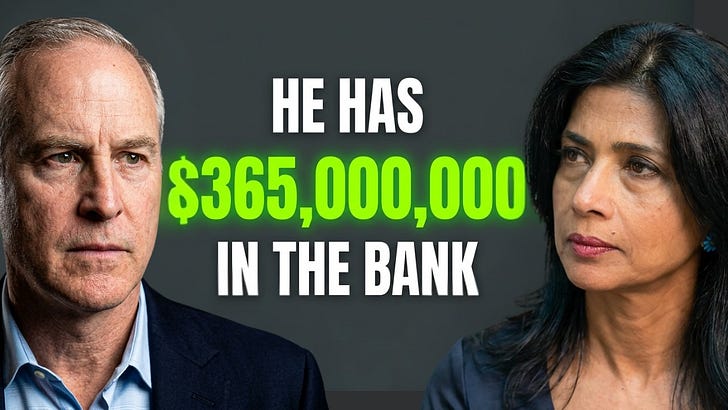
12:10Peter McKay: And that was the but but it was so crazy that everybody was like, okay, if I give it to you now, would you take the money? And we're like, I guess. Um, and so we did, you know, yeah, we raised, we raised a lot of money. Uh, you know, we raised the last two rounds. Um, and I still have all that money. I still have$365 million sitting in the bank and I'm, um, you know, break even, I don't burn any money anymore. Um, so, you know, we're, you know, we raised it and we put it in the bank and I get, you know, $2 million worth of interest every month on it. So we don't spend it unless it's an acquisition move.
12:49I would say, to answer your question, you always need to make sure you just have enough runway.
12:57Peter McKay: I see people who are over-paranoid on dilution or not paranoid enough about dilution. You know, the people who were didn't pay any attention to it. And then, you know, two or three rounds later, they have like nothing left of equity. So I don't I don't know the right answer. I think you're saying in your case, you were in a moment in the market where just, you know, money was knocking on the door as a very smart CEO. You took the money. Why wouldn't you? You always take the money when it's knocking. That's lesson number one. And I think what I just heard you say is be very wise in your spend. Just raising doesn't mean go and spend.
13:39So you still have your last two rounds of cash sitting in the back. I mean, that is a smart, right? Otherwise, you run into a different kind of wall.
13:49Peter McKay: Yeah. Now when we see this opportunity, if you really think of our business, we're kind of a rule of 40 business over here in our kind of our, I don't want to call it a legacy business, but our traditional business. The SaaS business. Let's call it the SaaS. The SaaS business. Right. And we've invested massively in our AI business that gets us to kind of break even. But I'm able to do that because I have so much cash to take bets and put more money down in some of the bigger moves. We made 13 acquisitions over the years, mostly team and tech, where we have a skill set we want to bring in and technology we want to build to accelerate our roadmap and our vision.
14:34Peter McKay: So, you know, we've been smart, frugal, and, you know, but unless we see a really strong ROI, save your cash. Save your cash. Save your cash. And it's a little bit like musical chairs, right? It's cash, cash, cash, and then the music stops, and then you can't get any cash. And so having been through it so many times in my career, I'm always assuming that the music is going to stop fairly soon. And I just always need to be ready for that day. So thank you for this candid conversation, Peter. What a tremendously inspiring leader you are. I hope so. Oh, absolutely. You are. And your track record speaks for itself.
15:21And thank you for being so candid and so honest. Thanks for having me on.
15:25Peter McKay: Absolutely. Thank you, Peter. Make sure to subscribe to Post Money for weekly conversations with thinkers, founders, and investors shaping the future of capital and startups. I'm Nilanjana Abhamik, and I'll see you next week right here on Post Money.
Growing a startup from $2M to $350M ARR requires much more than a great product. Every stage of growth demands new leadership, new systems, new sales strategies, and difficult decisions that most founders never anticipate.In this episode of the Post Money Podcast, Peter McKay, former CEO of Snyk, explains how the company evolved from a small developer security startup into a business approaching $350 million in ARR. Rather than telling a success story in hindsight, he breaks down the sequence of strategic shifts that made continued growth possible: moving from product-led growth into enterprise sales, expanding from a single product to a platform, recognizing organizational inflection points before they became crises, and making difficult leadership decisions long before performance visibly deteriorated.
Inside The Episode:
* How Snyk evolved from a single security product into a platform business.
* Why great employees can become the wrong leaders as a company scales.
* The hardest conversation every CEO eventually has to learn to initiate.
* How to identify organizational bottlenecks months before they become visible.
* Why Peter doubled down on hiring and product investment while others were cutting costs.
* A practical framework for fundraising, dilution, and deciding when to raise capital.
* How acquisitions became a tool for accelerating product development instead of simply buying revenue.
* The leadership mindset required to keep a company growing beyond its early success.
Watch Full Episode On YouTube:
About Peter McKay
Peter McKay is a five-time CEO and one of the most experienced operators in enterprise software, with a track record of scaling and exiting multiple companies across cybersecurity and infrastructure.
He most recently served as CEO of Snyk, where he helped scale the developer security platform into a global business approaching $350 million in annual recurring revenue (ARR) while expanding its product portfolio, enterprise presence, and AI capabilities. In 2026, after seven years as CEO, he transitioned to the role of Advisor at Snyk.
Before Snyk, Peter held CEO roles at companies including Veeam and Desktone, and has been involved in several successful exits to companies like VMware and IBM.
Known for his operator mindset, Peter focuses on execution, speed, and making decisive bets ahead of market shifts, including pushing early into AI while most companies were still experimenting.
Connect with Peter McKay: https://www.linkedin.com/in/pemckay/
About the Host
Nilanjana Bhowmik is a General Partner at Converge and host of the Post Money Podcast, where she speaks with founders, investors, and industry leaders shaping the future of technology, innovation, and venture capital. Through in-depth conversations, Post Money Podcast explores the ideas, decisions, and trends driving the next generation of transformative companies.
Connect with Nilanjana Bhowmik: linkedin.com/in/nilanjanabhowmik
Converge VC website: converge.vc