Ask ChatGPT
 Post Money
17 Aug 2026 · 33m · 14 chapters
Mercury Fund managing partner Blair Garrou argues that venture and AI-driven “vertical orchestration” opportunities are increasingly emerging from Middle America (e.g., Houston, Texas, Rockies-to-Atlanta). She says the post-COVID founder diaspora and easier capital access let non-coastal startups compete, and that AI won’t replace everything via generic tools like ChatGPT/Claude; instead, domain experts will automate industry workflows.
Blair Garrou is co-founder and managing partner of Mercury Fund (software-only VC), headquartered in Houston. She previously worked with DFJ Mercury (materials/biotech/software). She launched Mercury Fund in 2013 after spinning out from DFJ. Mercury is ending its fifth fund (~$165M) and raising a sixth.
Middle America can produce $100M–$300M exits; loss ratio has been under 20%. Coastal VCs may fund later, but local firms win early attention and hands-on support.
Collide (AI for energy orchestration; ex-landmen/petroleum engineers; displacing Claude/Perplexity); Omniscience (clinical trial data orchestration; $10M booked first half of year, likely $30M+); CART.com (Houston e-commerce roll-up; seeded ecosystem; produced ~100 millionaires in Houston). Also mentions Venus Aerospace (AI-enabled rocket propulsion; 15% more efficient; Lockheed Martin first customer) and Moshi (24/7 quant/market analyst in Houston).
Written by AI. May contain mistakes.
Exploration of investment opportunities in Middle America and beyond.
“We've been investing in Middle America longer than anybody.”
A discussion with Blair Garrou about the Houston startup scene and Mercury Fund.
“It's a great thing to do on a Friday afternoon.”
Blair shares the history and strategy behind Mercury Fund's establishment and growth.
“And I really would love to double click on what it all means.”
Discussion on how COVID-19 has changed the venture capital landscape.
“So when I was working with the DFJ funds, it was really about Texas and the Southwest, right?”
Exploration of new trends in software and AI following COVID-19.
“Think about the diaspora coming out of places like New York and San Francisco, right?”
Explore the potential of vertical orchestration in automating workflows.
“Just look at the bloodbath in the public markets.”
Insights into how large companies struggle with AI integration and the resulting investment opportunities.
“And, you know, so that's that's where you think the middle America opportunity is.”
Discussion on how founders from middle America are creating successful companies.
“but they've gotten six POCs with pharma and a lot of exciting things happening with the FDA and some other places.”
Understanding the benefits of local venture capital over coastal firms.
“And that's where just having a strong local ecosystem is very important.”
The story of Cart.com and its role in creating millionaires in Houston.
“And then secondly, you know, you're underselling yourself.”
How remote communication has changed the fundraising landscape for startups.
“I mean, you know, success breeds success.”
Explore how investment strategies are evolving in middle America, focusing on AI and physical technologies.
“And maybe you're going and visiting on your third meeting.”
Discover why Houston is an attractive location for startups outside traditional tech hubs.
“Well, this has been most exciting and what a great conversation.”
Learn about exciting new companies and investments emerging from Houston and the role of innovative technologies.
“On a parting note, any exciting new investments that are underway that we should know about?”

Get the gist, explore an idea or ask about something said.
 Claude
On Post Money, what are the key points of this episode?
Searching your listeningAutomatic transcript. May contain errors.
0:00We've been investing in Middle America longer than anybody. Lots happening outside of Silicon Valley and Boston and New York. We knew that we could grow companies and sell them for between$100 and$300 million. The line the media or a lot of West Coast VCs say is everything will be done through ChachiPT or through Claude. And we're finding that is not the case. Can founders build unicorns outside the coastal hubs of Silicon Valley, New York, or Boston? Absolutely, says Blair Guru, co-founder and managing partner of Mercury Fund, a venture capital firm that has been investing in the middle of America for close to two decades.
0:40Blair explains how this time it may really be different, especially post-AI. The talent and the capital are available aplenty, but most importantly, the insights and know-how may increasingly emerge from the middle of America, where most of the country's largest industries are headquartered and which are now ripe for disruption or enhancement post-AI. She has launched a 24 by 7 quant and market analyst that is essentially the analyst that every financial professional really wishes they had. If it deserves a$25 million check in a Series A, let's go get that. A lot of reshoring, things coming back to manufacturing, coming back to America.
1:23Success breeds success. Welcome to Post Money, the podcast where venture capital meets the founder's journey. I'm your host, Nilanjana Abhamik, founder and general partner at Converge VC with over two decades as a venture capitalist, investment banker, and operator. On this show, I sit down with visionary founders and investors to uncover what really happens when you raise money and build companies at the bleeding edge of technology. From the investor's perspective to the founder's vision, these are the stories behind the capital the conviction and the companies shaping our future. Welcome to the show, Blair.
1:59Excited to have you today. Thank you for having me. I'm really excited as well. It's a great thing to do on a Friday afternoon. On a Friday afternoon. And before we get in, I wanted to ask you, how did Houston react to the World Cup? Really well. I was able to go to a couple of games. We had six games here. Which ones did you go to? Amazing. Yeah, so I went to one of the Portugal games and then went to see the Netherlands play. Excellent. But the real excitement is I was able to go down to Estadio Azteca and see Mexico play in Mexico City. And that was a lot of fun. Fantastic. So excited to have this conversation today.
2:36We are just at such a massive inflection point in venture, in the startup ecosystem. There is so many winds that are flowing, that are changing how we have thought about entrepreneurship, about venture capital. You know, there is obviously the big elephant is AI that that's changing, reshaping many, many industries. There is also sort of a lot of reshoring winds going on, right? So a lot of reshoring things coming back to manufacturing, coming back to America. And many of these things have really put sort of middle America front and center in the conversation. And so that's why I'm excited to have you.
3:17You've been sort of at this middle America investing, honing the strategy and that story for some time now, two decades, if I remember correctly. So excited to have you. And I really would love to double click on what it all means. What does middle America mean? But before we get to that, a very quick maybe recap of how Mercury Fund started. Yeah, you bet. But so I think, you know, as we were kind of chatting about, we were part of the DFJ network originally. So Tim Draper, Steve Jurvetson, they put together this international network of funds. You know, after the internet came about, you know, Tim famously said, hey, VC is not going to be in our backyard.
4:03Founders will be everywhere. So VC needs to follow the founders where they are. And so myself and a few other partners partnered with them to launch a fund called DFJ Mercury, was very broad, did materials, biotech, and I let our software practice. But that's really how we got started. Being in Texas, and we're headquartered in Houston, I remember right before we started, Austin Ventures, Seven Rosen, the big dominant funds in Texas, they both kind of said, hey, venture is dead, right? This was the mid-2000s, and they were moving much more towards private equity. And I think what they missed was the largest run-up, right?
4:39Deals and funds that we've ever seen. And so our whole notion was, hey, look, intelligence, adaptive founders, those things don't end on the coast. They can be anywhere. But it was a real hike. It was a haul up until COVID. We had some decent wins and some decent successes early. But eventually, I spun out a small team out of DFJ Mercury in 2013 to start a software-only fund called Mercury fund. We had learned a lot about what middle American founders needed, what they were good at, how to drive parity with their competitors on the coast, and also how to attract money from the coast. And so I really wanted to do that in a concentrated portfolio of software-only companies, and we've been doing that ever since.
5:24Fantastic. Well, congratulations to you. Well, timing matters, right? You started at when others were exiting the stage, perfect time to enter and set up. And then And venture takes a long time. Results take a long time. It requires a lot of stamina. And you have stayed in the business and done very well. You're now, so was it two funds under DFJ and now you're on your fifth or sixth fund? Catch us up. Where are you at now? Yeah, so we are in the ending stages of our fifth fund. We'll go out and raise our sixth fund here shortly. Well, congratulations, you know. Yeah, thank you. That's amazing.
5:58And how big was the last fund? 165 million. 165 million. I mean, that's a very, very strong number for a fifth fund. So congratulations to you and the team for sort of the stamina and getting from here to there and a lot of success in the future. Oh, I appreciate it. Which brings us to, so you have in all this time, the mandate has been to, like, was there a mandate as in our geofences here and our stages here? Just catch me up on when you started, what was the high-level strategy and what is it today? So when I was working with the DFJ funds, it was really about Texas and the Southwest, right?
6:41That was an area that they wanted to have a presence. There wasn't a lot of seed capital, if you remember that time. And Austin was not Austin, definitely, you know, back then. When we started Mercury Fund in 2013, at that point, it was really the entire ecosystem between the Rockies and Atlanta, right? Didn't really incorporate New England or the Northeast, mostly because they didn't need our capital. And we wanted to go to these secondary and tertiary environments where there was a huge supply demand imbalance. There were lots of entrepreneurs, some with really, really good ideas, but there was really angel investors, maybe a handful of small funds, but really no institutionalized venture that you see today in places like Boston, New York, and California.
7:28And that was really the case leading up until, I would say, the COVID days. And one of the other things that we found too is that when the era of SaaS and cloud computing started to mature and you started to see more and more vertically focused SaaS companies around these industry ecosystems, that's when a lot of VCs started to pop up in middle America. Now it was in, you know, kind of the 2010s timeframe. Okay. So early days, just at the origin, just sort of Texas, if you will, because that's where DFJ wanted to focus. And then when you spun out in 2013, you expanded that scope. So RTP, Atlanta, obviously, you know, Colorado, you know, Denver.
8:05Chicago, Denver, Austin, Dallas, Houston. Okay. Excellent. So, So and then you mentioned, so that's where you started investing your Mercury Fund, which is no longer the DFJ umbrella. So really going up to those markets. And you mentioned a couple of times until COVID. What do you mean by that? What happened in COVID? Yeah. So when we put Mercury Fund together, we knew that we were somewhat capped on return potential. Right. There weren't a lot of billion dollar outcomes in the middle of the country, but we knew that we could grow companies and sell them for between 100 and 300 million. Right.
8:42Right. And that really good enterprise software range. And so because of that, we were looking for ways to limit our downside or our loss ratio. And really, since we started Mercury Fund, our loss ratio has been well under 20 percent, which is unheard of in venture. Right. And you have to do that, right? You're making the math work on up to$300 million exits. So you can't have sort of, you know, write a lot of write-offs and then you got to have sizable ownership for funds to make money, right? So that goes to your fund strategy. Okay. And now you're saying things are different. That gives you more flexibility or so double click on that.
9:22Yeah. So moving into COVID, entrepreneurs moved everywhere. Think about the diaspora coming out of places like New York and San Francisco, right? People were like, you know what, I want to go home. I want to go to where my university was, or I just want to go to Charleston, South Carolina. And so entrepreneurs started moving wherever that they wanted to launch something because it was the era of SaaS. You had all the tools. You could do anything remote. And that's when our phones started ringing off the hook. All the institutional investors I'd called in the past said, hey, we're starting to think now that venture is everywhere.
9:57Tell us more about your business model. And that was the first piece. But the second piece was we saw founders that if they were getting market share, they could then go out and aggregate capital of the hundreds of millions and build billion dollar businesses. You know, the number of unicorns prior to COVID versus the number of unicorns after I think was 25 to one. And so you could start really building a venture portfolio with really nice billion dollar outcomes after that fact. Okay, so two COVID tailwinds to your business. One, sort of a founder is no longer thinking that, you know, it's only Boston and Silicon Valley.
10:36I can start a company where I want to because I can build a hybrid company. I can build a remote only company. I want to be close, you know, to my parents for help for the kids or I want to ski, what have you, right? So that's one. So founder migration outside of, and obviously, you know, we saw what happened to San Francisco, right? It was a major migration from there to Texas for many reasons. And one of them perhaps was COVID. So that's one. And you're saying the other thing that got easier was capital started coming into these companies from other locations. So if you were, let's say, seeding a company in Texas, you're more assured that growth capital from other places will come in if the company performs.
11:20So these companies now are able to raise money, more money, and therefore compete with other Silicon Valley companies or Boston-based companies that are raising lots of capitals, which then obviously increases the total outcome number potentially, right? And then that means bigger outcomes for funds that are backing these companies at the earliest stages and hopefully great returns for your LPs. Exactly. Exactly. That's right. Okay. Excellent. All right. So that's fabulous. What else are you seeing of late? That is, you know, is there a change in the type of companies that are getting built? Like what is double click for us if there is a phenomena that our listeners should be aware of?
12:04And, you know, is there a concentration of the type of companies, particularly post-COVID, post-AI? One of the things that happened was in the rise of vertical SaaS, right, that happened about 10 to 12 years after Salesforce.com dropped. So think 1999 all the way to 2012. A lot of funds started popping up around industry clusters because that's where you found these software companies solving problems in real estate tech and energy tech and health tech and construction and manufacturing. AI comes, that kind of subsides a bit, and everything started moving back to the West Coast because these foundational models were being built.
12:45you had to have data scientists with West Coast pedigree coming out of the open AIs and the cleans and the perplexities. But a funny thing happened. About two and a half, three years ago, we started investing in, again, what we invest in, domain expert founders, solving industry problems. And they were building with AI. And they were using the foundational models as conversational interfaces. But they were building orchestration platforms. And they were automating the workflows from the industries in which they came and they were winning. And we've seen this more and more and more. And we have probably talked to over a dozen of the Fortune 500 executives in major companies and all these industries.
13:30And the line the media or a lot of West Coast VCs say is everything will be done through ChatGPT or through Claude. And we're finding that is not the case. And I'm happy to kind of dive into that more. Yeah. I mean, that is the tension today is how powerful will these models be and what will be the role of? Will, you know, vertical SaaS has been declared dead. Just look at the bloodbath in the public markets. And so will a new model emerge where it's vertical orchestration or something else that is automating workflows in very, very deep vertical problems or industrial problems? But that is certainly an area where a lot of VCs are investing in, us included.
14:23You know, we are trying to find those very deep tribal knowledge heavy areas that can be automated with AI or augmented with AI. And perhaps what you're saying is that many of these very large companies or that type of activity is actually sitting in middle America. And executives could be coming out of, let's say, Home Depot or the next large oil distillery and spotting a problem. And they're going to build that company in Houston. Right. So that's sort of the bet, if you will, that that that deep, the next frontier after the models is the application of AI. And what will that be? And, you know, so that's that's where you think the middle America opportunity is.
15:15We do. Yeah, we do. Over and over. We've seen companies over the last 24 months try to build internally, try to build their own LLMs, try to build by forking off ChatGPT or Claude, even trying to use more horizontal platforms like Palantir or Gleaner Perplexity. And over and over, they're ripping about. And these aren't small companies. These are the largest pharmaceutical companies, the largest financial services companies, the largest energy companies. And we're watching it over and over and over. And when we talk to our founders and we're doing diligence, because we want to make sure that we're investing into an industry in which this is happening, we're like, well, have they not talked to Anthropic?
15:57And they're like, yes. And Anthropic has said, we don't do that. We produce horizontal market knowledge worker tools. We don't do specific workflows. And I think that is something that the coasts will fund, but they won't fund it first because of the issue of the bifurcation of VC with the mega funds and the smaller funds. Right. Okay. So is there an example? Can you share some examples of recent investments you've done? Yeah, absolutely. Yeah. So one is called Collide. And Collide, we believe, is going to be the leader in AI for energy. And they have an orchestration platform for agents they build where they're four deployed employees, right?
16:38Some are engineers, some aren't. They are ex-landmen and women, petroleum engineers, regulatory consultants. And they go on site with mid-sized and major energy companies, and they're automating their workflows. But they understand the regulatory environment. They're doing it within the framework of the energy company. And many times they're working with energy companies who are programming and clawed, but their complaints are, all of our employees have clawed. We have all of these silos of development. It's not coordinated. We just need to hand this off to a third-party developer, right? And you and I have seen this over the last 20 years in venture, right?
17:17All of these tech revolutions where you think things will kind of be one or two winner-take-alls or something that's horizontal, it all moves to the application layer. And we saw this starting to happen two years ago, and now we're seeing it everywhere. Like we thought financial services would be different, and we have a company working with the largest financial services company. It's no different. You know, we thought healthcare would be different. We have a company called Omniscience, and they're managing clinical trial data in an orchestration manner. They built a harness, they built all these agents, and it goes out and takes data from all these silos.
17:54We thought that it would have a half dozen dozen middle mid-tier companies and big pharma would be waiting. but they've gotten six POCs with pharma and a lot of exciting things happening with the FDA and some other places. But they've booked 10 million worth of business the first half of this year, and will probably book over 30. And this is like in a vertical AI company that no one's ever heard of. And they're displacing Claude and Perplexity and all these other products. And And again, we're just seeing this over and over and over. No, that's awesome. There's obviously a lot of vertical AI orchestration getting funded.
18:35You're making a further point. You're saying that many of these companies are not getting built just in Silicon Valley because these founders have worked in these companies and they were in these companies and most of these larger companies that you would think would be doing this themselves. They're not in Silicon Valley or Boston, but they're sitting in middle America. So these founders are leaving those companies, whether in Ohio or Houston, what have you, and starting these companies. So pay attention. Yeah, pay attention. And again, I think the coasts will end up investing in these companies.
19:09Right. But like who will invest first, right? That's right. Yeah. I think the Silicon Valley firms and the Boston growth firms will come knocking once the metrics are in place. But who will invest first is always the chicken and the egg. And that's where just having a strong local ecosystem is very important. So what is the case to, you know, there's quite a few Middle America firms now. There's Chris Olson's Building Drive Capital. I don't know if you guys have investments together. There's Cluster in Chicago. There's obviously Austin has come back or sort of rebuilt, if you will. So our business is always competitive.
19:49And so make the case for two things. One is I'm a high flyer repeat founder and, you know, all the Silicon Valley firms are calling me. And so I have a choice between a very value add local firm or one that is focused in my market like Mercury Fund or I have a choice between some Silicon Valley brand name firm. Why should they take your money? That's question number one. And then question number two is why you versus, let's say, Drive Capital? So I think the first question, why take someone's money in the middle of the country versus going directly to the coast, is attention, frankly, right? We've seen a lot of companies, you know, sometimes we'll lose, you know, to bigger firms on the coast to do seed funding, but they're not giving a lot of attention to companies that stage, especially the pre-seed and the seed stage, right?
20:41Right. They'll invest and they'll open their network up, but they're not going to spend a lot of time working on product market fit, go to market strategies, hiring, all those things that take a lot of heavy lift. The coastal firms that are putting money to work early, they they work with lots of companies. They just don't have time to spend on each of them. So we like to say, look, if you work with us, if you truly have those metrics that are taking off, our job is to help build you and then take you to the light speeds and the Andreessen's and the Menlo's of the world, right? If your company deserves it, right?
21:14If it deserves a$25 million check in a Series A, let's go get that. If not, we'll just get normal growth equity capital and you kind of go on your way. To your second question, why us versus anyone else? I think we have built a really interesting platform to help companies. We have our own AI research lab called Quicksilver that we work directly with AI companies because we were in AI very, very early. We've got a series of fractional executives. And we also do a lot of things much like private equity firms do where they're working kind of side by side with the company. We've been investing in middle America longer than anybody, right?
21:54We were the first institutionally backed fund to consider that region and a region unto itself. So I remember Steve Case, you know, launching Rise of the Rest and, you know, the Sequoia guys launching Drive. And these are all great things. Like we like the competition. We like the ecosystem growth, but we've been doing it so long. We just have lots of frameworks and ways that we know how to get middle American founders, if their goal is to get to the East Coast, to get to the West Coast, to raise more capital, that's what we try to do for them. Yeah, excellent points. You know, a local venture is a very sort of local and hands-on business.
22:30Let's not forget that. And that early getting to that early, whatever it is, product market fit or revenue traction, it's a long, hard journey. And you want investors that are really there for you. I mean, that will take your call at midnight and that will sort of, you know, be patient and not sort of fly in, fly out. So that I 100 % agree. I think all founders should find smart local capital and sort of resist the temptation of shiny money flying in and flying out. And then secondly, you know, you're underselling yourself. You've been in the business 25 years and it's not just the network, But really, really understanding these markets, really understanding these markets in terms of where the talent lies, what has been hard historically, you know, what mistakes not to make.
23:23All of these are just huge institutional knowledge that is very hard to replicate by a new firm. Yeah, I think there's a lot of smart VCs out there who are minted during the easy years, right? Kind of that run up of quantitative easing. And when things are good, it's very easy to come in quarterly, sit on a board, make some introductions, and then take off back to Silicon Valley to your enclave. But when things are hard, when the credit markets are hard and you have venture debt, or it's really difficult and it's taking five, six months to raise an A, do you just abandon your company and not show up to your board seat because it's not interesting anymore?
24:02Or do you lean in? And I think for founders, right, that you and I have worked with for decades, are you just going to quit when it gets tough? Because a lot of times your VCs will, right, depending upon numbers. And so that's another kind of key differentiator at those earliest stages. Once there's more money on the line, the things start to really stick. But it's really difficult to do a deal in Chicago when you are a five-hour flight away. And it's day-to-day, hand-to-hand combat. Right. And so I've seen that throughout my career. Fabulous. Okay. So just, you know, I see one of your exciting investments is cart.com.
24:43And I just wanted to, that's a great story. That's a founder that is based in Houston, Omar. And then he's building a great company. And maybe you can double click a little bit for us and sort of how did that investment come about? companies. It's probably one of Houston's first. I don't know if maybe our handful of unicorns minted recently. So tell us more. Maybe that's sort of a, there's some instruction here for founders who may be thinking about starting companies in Houston. Yeah. So Omer, he kind of had the deck stacked in his favor. So I've been teaching the venture capital course at Rice University for about 18 years.
25:26I just teach one course a year. I love it. And he took my course way back when. So he and I were friends. He was at Home Depot and he was thinking about launching a business with his co-founder, Jim Jacobson. They brought it over to us. We whiteboarded it a bit. And then we ended up seeding it, leading the EA and helping him grow. But this was in the 2020 time period. And he had the audacious idea of doing a roll-up within e-commerce solutions. And so that company went out and acquired eight different companies, grew organically as well, but it grew to a half a billion of revenue in less than five years and profitable with really good gross margins.
26:06It was just an absolute thunderstruck deal that grew. And what was great about it is that was one of the first examples we saw where an entrepreneur that we think is world class like Omer. I mean, he was the senior exec at Home Depot, an entrepreneur before that. He was able to go out and raise three, four hundred million dollars in the period of four years. I mean, he was raising every six months, right? Much like you see in the Northeast or on the West Coast. And he was doing it from Houston, Texas. Now, he had a distributed workforce, right? Because COVID allowed you to work remotely. People cared less about whether he was in Houston or San Francisco, for that matter, because he was building this global tech enabled e-commerce solutions business.
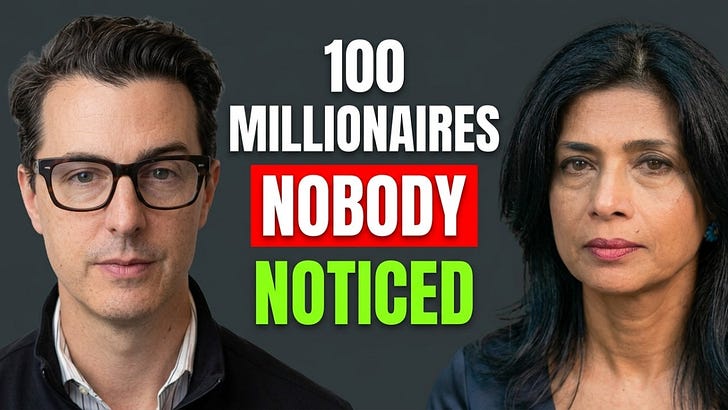
26:47And it was just really great to see. But that company, because they did a couple of secondary liquidity plans with their employees, it already produced 100 millionaires in the Houston area alone. Right. So 100 millionaires. And they've gone out and they've seeded other companies and they've start that ecosystem build process in Houston. That's been much, much slower to build in areas like Boston and New York. And that's just been really great to see. Yeah, that is such a wonderful story. I mean, that's, you know, obviously we want Omar to continue and build a huge company here, but he has already begun.
27:24I mean, you know, success breeds success. So it's very important to have these signature companies, companies that are doing well, that serve as role models, that give some liquidity. There's some, you know, there's some little bit of money in the bank where I can quit my job and start my company and I want to make more. So that motivation, so that that cycle is already beginning to happen in Houston, it sounds like. And I think one of the things that you mentioned, you mentioned this earlier COVID phenomena, but just fundraising has gotten, you know, there used to be I have to fly in to meet a company.
27:55And I think sort of just all those, the web communication, Zooms, et cetera, have also made it much easier to get past the first set of conversations and get comfortable with the company and then be able to write a check. And maybe you're going and visiting on your third meeting. So a lot of friction has come down. So which is all going in the favor of companies based in middle America and funds like you, yours, Mercury, that are backing them. I was curious, how do you think about sort of non, I think Mercury is doing more than just software? Do you invest in technology other than software? Do you do life sciences?
28:32Do you do physical? Tell us about how do you think about it. When you concentrate on middle America, I imagine you have to be a little bit broader, right? It's kind of hard to do only SaaS if you're sort of geo-restricted. How do you think about it? Yeah, no, everything we do, Neil and Janna, starts with software. So we like the last five years has been all AI and blockchain infrastructure. But we're also looking at physical AI, right, where AI enables hardware. And so CART, CART has a lot of supply chain and 3PL to it. And so that was software enablement. They're now an AI enhanced company through and through doing some really interesting things.
29:09But one of our most recent investments is a rocket propulsion company called Venus Aerospace. And so Sassy Duggleby, the CEO of that company. Now, is that a software rocket propulsion or actual rocket propulsion? It's actual rocket propulsion. Actual. So that's a very hardware company. There you go. Very hardware. But they only were able to design their rocket because of Gen.AI. Of course. So they were able to use AI to go through the design elements and then use additive manufacturing to drive it. But they have completely changed the entire framework of their company, building their own software and doing a lot of things that other hardware companies can't do because they're not AI centric.
29:51Now, they're keeping all of that AI and software internal, you know, being proprietary to what they're doing. But they have built an engine, a rocket engine that's 15 percent more efficient than anywhere else. And Lockheed Martin is their first customer. They just announced a$90 million Series B round, and they are moving into the hypersonic space as well as space propulsion. And we're seeing more and more of these physical AI deals, not just robotics, physical AI, but physical AI on the workbench, in the factory floor, you name it. And we think that's another area where middle America can win in the AI space on a go-forward basis.
30:30Absolutely. That seems to be a big theme playing out just because of sort of the manufacturing concentration, obviously reshoring elements, reshoring tailwinds, if I may. And then a lot of that sort of knowledge, understanding coming out of the large ecosystem outside of the big manufacturers and starting companies. Well, this has been most exciting and what a great conversation. And listen up, founders, if you're looking to start a company away from expensive real estate in Silicon Valley and Boston or New York, consider Houston. Consider Houston. Exactly. Excellent. Well, thank you for doing this.
31:16On a parting note, any exciting new investments that are underway that we should know about? And if they're in stealth, it's okay not to mention the name. Yeah, there's a company that we put in a warehouse line of credit that'll go into our next fund that we're really excited about called Moshi and M-O-S-H-I. And a young woman who was an amazing trader at J.P. Morgan and a data scientist. She has launched a 24 by 7 quant and market analyst. OK. That is essentially the analyst that every financial professional really wishes they had. It doesn't do the trading for you. It just looks at all the longitudinal data and it basically tells you based upon your positions, what are the things that you need to be thinking about?
32:01It helps you look around corners. And she is literally like 50 for 50 doing demos and people saying, I want that. I want that. And again, another example of something where you would think people would just code their own cloud agents and build those up. But because of her understanding of those markets, those trading markets and the financial markets, she's been able to build something up over the last two years. And so Moshi, which is here in Houston, we've been incubating it here. You'll hear a lot more about that down the line. Excellent. So all the way from, let's see, e-commerce fulfillment to space rockets to quant trading, lots happening outside of Silicon Valley and Boston and New York.
32:44And so founders, listen up and pay attention. Thank you, Blair. This has been absolutely awesome. Thank you for your time. And what a delightful conversation. Make sure to subscribe to Post Money for weekly conversations with thinkers, founders, and investors shaping the future of capital and startups. I'm Nilanjana Abhamik, and I'll see you next week right here on Post Money.
Houston built an e-commerce company to half a billion in revenue in under five years, minting about 100 millionaires along the way. It's also home to a rocket engine 15% more efficient than anything else on the market. None of it required moving to San Francisco.
Blair Garrou, co-founder and Managing Partner of Mercury Fund, has been investing between the Rockies and Atlanta since Texas’s biggest funds were declaring venture dead. He joins Nilanjana Bhowmik to explain why the value in AI is moving to the application layer, why the Fortune 500 keeps ripping out horizontal AI tools, and why the founders who win that layer tend to come out of the industry rather than out of a lab, which puts them in Houston, Chicago, Denver and Dallas, not in Silicon Valley.
Middle America isn't a consolation prize. It's where the domain experts are, and in this wave of AI, domain expertise is the moat.
Inside The Episode:
* Why Mercury began investing outside traditional coastal technology hubs long before it became fashionable
* How the economics of investing in Middle America historically differed from Silicon Valley venture capital
* How access to coastal growth capital opened the door to much larger outcomes outside Silicon Valley
* Why Blair believes the application layer of AI could create another major opportunity for Middle America
* What large enterprises are discovering after experimenting with ChatGPT, Claude and other horizontal AI platforms
* How Collide is building AI around workflows inside the energy industry
* How OmniScience is applying AI to clinical trial data and winning business from major pharmaceutical companies
* Why founders should think carefully before automatically choosing a famous Silicon Valley investor
* How Cart.com grew to roughly half a billion dollars in revenue in less than five years
* How generative AI contributed to the development process behind Venus Aerospace
* Why manufacturing, aerospace and industrial technology could become major AI opportunities for Middle America
Watch Full Episode On Youtube
About Blair Garrou
Blair Garrou has spent the majority of his career advising and investing in technology entrepreneurs. He is co-founder and Managing Partner of Mercury Fund, an early-stage venture capital firm investing in disruptive technology startups outside Silicon Valley. With nearly $1 billion in AUM and $15 billion in startup value creation since inception, Mercury uses an operationally focused investment strategy to help companies achieve rapid, sustainable growth.
Blair has also played an active role in building Houston’s innovation ecosystem, launching startup accelerators and investment organizations designed to expand educational and funding opportunities for entrepreneurs. He is an Adjunct Professor at the Rice Jones School of Business, where he teaches venture capital, and received his B.S. in Management from Washington and Lee University. He also serves in board and advisory roles across a number of business, university, healthcare and cultural organizations.
Connect with Blair Garrou: https://www.linkedin.com/in/bgarrou/
About the Host
Nilanjana Bhowmik is a General Partner at Converge and host of the Post Money Podcast, where she speaks with founders, investors, and industry leaders shaping the future of technology, innovation, and venture capital. Through in-depth conversations, Post Money Podcast explores the ideas, decisions, and trends driving the next generation of transformative companies.
Connect with Nilanjana Bhowmik: linkedin.com/in/nilanjanabhowmik
Converge VC website: converge.vc