
In short
Podcast Episode Summary: Are ICE Officers Doing What They’re Trained to Do?
Episode Overview
- Podcast Title: Post Reports
- Hosts: Martine Powers and Elahe Izadi
- Air Date: January 13, 2026
- Focus: Examination of the killing of Renee Good by ICE Officer Jonathan Ross in Minneapolis, the conflicting narratives surrounding the incident, and the broader implications for ICE training and accountability.
Key Details of the Incident
- Renee Good was shot by ICE Officer Jonathan Ross while behind the wheel of her SUV near her home in Minneapolis.
- Discrepancies exist between federal claims of self-defense and assertions from community members that her death was preventable and indicative of aggressive ICE tactics.
- The incident has sparked scrutiny of ICE's operational protocols and training practices, particularly in light of increased immigration enforcement under the Trump administration.
Context and Background Renee Good
- Community Role: The extent of Good's involvement with local "ICE Watch" groups, which monitor and document ICE activities, is still being determined.
- Witness Groups: These groups exist to provide accountability during ICE operations and have been active since before Trump's presidency.
Officer Jonathan Ross
- Background: Experienced officer with a military and law enforcement background, previously worked with Border Patrol and ICE.
- Previous Incident: Prior to the shooting, Ross was involved in a traffic stop that resulted in serious injury from a suspect dragging him with their vehicle.
Analysis of the Encounter
- Video Evidence: Multiple videos show the events leading up to the shooting, raising questions about Ross's actions and adherence to de-escalation practices.
- Criticism of Tactics: Law enforcement experts criticized Ross's decision to approach Good's vehicle aggressively and stand directly in front of it, going against standard safety protocols.
- Potential Alternatives: Experts suggested that alternative approaches could have been employed, such as allowing Good to leave and later apprehending her using her license plate information.
ICE Training and Policies
- Changes in Training: The current administration has shortened officer training from 4-5 months to just 2 months, raising concerns about adequacy and thoroughness.
- Shift in Enforcement: The podcast discusses the significant increase in immigration enforcement actions and the rapid hiring of new officers under the Trump administration.
- Civil vs. Criminal Enforcement: ICE's role primarily involves civil violations of immigration law, yet aggressive tactics have led to violent confrontations.
Community and Official Reactions
- Local Officials' Response: Following Good's death, Minneapolis officials have expressed outrage and called for accountability, but have faced challenges in accessing investigations conducted by federal authorities.
- Political Fallout: The Trump administration's decision to send additional ICE officers into Minnesota has led to a lawsuit from state and local officials, alleging the deployment is politically motivated and unconstitutional.
Conclusion
- The episode highlights ongoing tensions regarding immigration enforcement, community safety, and police accountability. The investigation into Good's death remains ongoing, with implications for ICE's operational practices and community relations.
Key Takeaways
- Accountability in Policing: The need for clear accountability mechanisms in ICE operations is underscored by the fatal encounter.
- Training and Procedures: The adequacy of ICE's training, especially in high-pressure situations, is a critical issue.
- Community Impact: The incident exemplifies broader societal concerns surrounding the interaction between law enforcement and immigrant communities, particularly in the context of heightened enforcement actions.
Next Steps
- Continued monitoring of the investigation into Renee Good’s death and potential policy changes within ICE.
- Exploration of community responses to ICE actions and the evolving landscape of immigration enforcement in the U.S.
Written by AI. May contain mistakes. Listen to the episode to check what was said.
Chapters
Tap a time to open that second in VOThe Incident Overview
1:30 to 2:38
Discussion surrounding the shooting incident involving Renee Good and ICE officer Jonathan Ross.
“Today, is ICE doing what they're trained to do?”
Renee Good and ICE Watch Groups
2:38 to 4:52
Exploration of Renee Good's potential involvement with local ICE Watch groups and their mission.
“Some are folks who come to immigration courts, and this happened long before Trump took office, who go just to witness.”
Jonathan Ross's Background and Actions
4:52 to 7:18
Analysis of officer Jonathan Ross's experience and decisions during the incident.
“I know that you and our colleagues have been talking to some law enforcement officers, basically asking them, you know, watch the video, watch the different angles.”
Assessing the Incident through Video Analysis
7:18 to 9:21
Examination of video footage of the incident and expert opinions on police conduct.
“And I just wanted to know one other thing.”
Unexpected Perspective from Officer's Video
9:21 to 9:50
Revelation about officer Ross filming during the incident raises questions about his focus.
“I think one other detail from these videos that we've seen that was pretty surprising to me is that one of the camera points of view that we have is from the phone camera of Ross himself.”
Changes in ICE Training and National Trends
13:15 to 14:03
Discussion on the changes in ICE training and the broader national context of immigration enforcement.
“Like, look, we are hiring more people to do immigration enforcement.”
Training and Language Use in ICE
14:03 to 14:30
Explore the changes in training and language use among ICE officers.
“They have reduced the Spanish language classes and they're using translation technologies and, you know, and those kinds of things to communicate in multiple languages instead.”
Policing in Minneapolis and ICE's Role
14:30 to 15:16
Discuss the unique challenges ICE faces in Minneapolis post-George Floyd.
“I think what's interesting here is that this isn't a city's police department that is doing this.”
Enforcement and Civil Violations
15:16 to 16:10
Understand the nature of deportation and civil immigration violations by ICE.
“How do we sort of rebuild trust with communities that maybe don't trust us?”
Investigation of Good's Death
16:10 to 17:24
Examine the circumstances and investigations following Renee Good's shooting.
“and now they're a target for deportation.”
Show all 11 chapters
Federal Investigation Procedures
17:24 to 18:46
Learn about the federal process in investigating officer-involved shootings.
“Homeland Security Secretary Kristi Noem said that Renee Good attempted to run him over and rammed him.”
Transcript
Automatic transcript. May contain errors.0:01Renee Good was behind the wheel of her SUV last Wednesday. just blocks from her home in Minneapolis where ICE officers were facing off with residents. Good never made it home after one of those ICE officers, Jonathan Ross, opened fire.
0:21Multiple videos have emerged of that fatal encounter, and some things are clear. According to a post analysis, Good's SUV did move toward Officer Ross, who was standing in front of her car. Ross was also able to move out of her way since he fired at least two of the three shots from the side of her car. But a lot of the other details of what happened before and during those moments are still in dispute. Federal officials say Ross acted in self-defense and accused Good of trying to run him over. Some community members and lawmakers say Good's death was preventable, that she was just trying to drive away.
1:08This singular incident has raised bigger questions about how ICE trains its officers, especially now that President Donald Trump has sent more ICE officers into communities across the country. From the newsroom of The Washington Post, this is Post Reports. I'm Elajeh Izadi. It's Tuesday, January 13th. Today, is ICE doing what they're trained to do? Immigration reporter Maria Cicchetti joins my co-host, Martine Powers, to explain the tactics ICE officers are supposed to use and who holds them accountable if they go too far. I'll let Martine take it from here.
2:01Maria, thank you so much for being with us. Thanks for having me. So just to understand the circumstances that led up to this moment that we've all seen on camera, I want to talk about Renee Good and the kinds of groups that have cropped up in Minneapolis and other cities, these Ice Watch groups. Tell me more about what they're doing and whether Good was involved with any of those groups. So I think folks are still trying to figure out how involved she was and how, you know, whether she was even watching that day or just got caught up in a bad situation, as our reporters were told. But these groups have existed for a long time.
2:40Some are folks who come to immigration courts, and this happened long before Trump took office, who go just to witness. And there are groups that if they hear ISIS in the neighborhood, again, long before Trump took office, they would go and just, you know, they get trained to just be witnesses. Some film, some just watch, but because these arrests are secret, right? So you'll see in a lot of the videos where people, witnesses are asking for the person's name and asking for a phone number where they can tell your relatives where you are. Because otherwise you could just disappear. You could be in Mexico that night if you have a final deportation order.
3:15So they see it as a public service, as a calling in many ways. And that's what they're doing. They say they're serving as witnesses and advocates for immigrants. So let's also talk about Jonathan Ross. What do we know about him as an ICE officer, the kind of experience with this agency he'd had coming into this moment? So there's been a lot of talk about ICE hiring thousands of new officers and talk about their training. But that is not Jonathan Ross. He is an experienced immigration and border officer. He was in the Army, Indiana National Guard. He deployed to Iraq. He started with the Border Patrol.
3:54So he was on the U.S.-Mexico border doing patrols, gathering intelligence. And then he joined Immigration and Customs Enforcement as an enforcement and a removal officer. So he detained and deported immigrants for civil violations. And from your reporting, there is some information about a previous policing experience that Ross had had in the months leading up to this. Right. So Department of Homeland Security Secretary Kristi Noem mentioned that an officer, she didn't name him, but provided enough details that it was easy to identify him, had recently been in a dragging incident where he did a traffic stop.
4:32And he was dragged. He got stuck in the car of somebody he was trying to arrest and was dragged for about 12 seconds going at what he said was a pretty high speed and he suffered serious injuries. So that's some of the context that people are thinking about, too, of, you know, where his head might have been at coming into this. I want to talk about what's in the video and how we've been able to assess some of what you see play out. I know that you and our colleagues have been talking to some law enforcement officers, basically asking them, you know, watch the video, watch the different angles.
5:08And you tell us, like, what do you see here? Can you talk me through some of that? Like both what you've been focusing on in these videos, what plays out, and then what you've heard from law enforcement officers that they had to say about this? Yeah. So law enforcement officers, people trained in these fields, scrutinized these videos. And they said they saw multiple violations of best practices.
5:35So first you see one officer approach Renee Good's driver's side door. So she's right on the other side of this and it appears that she was, you know, communicating with them. Later videos showed. So her window was down. But the officer starts yanking on the door. So former officials told me, you know, that is an escalation. That person is coming in hot and they are trained to de-escalate. So, for example, when you get pulled over for speeding, you know, the state trooper is supposed to stand outside your door, greet you, ask for your license and registration. and they don't try to get you out of the car like that.
6:12They ask you to step out of the car. I mean, this is like training. And so to approach somebody and yank on their car doors if you want to rip them out, that's not their training. The other thing they saw is where Jonathan Ross was. He was like circling the SUV. You know, when she went to move, you know, he was in front of her. And I've heard over and over again, you should never be in front of the vehicle. So you're putting— Like as a cop, you don't stand in front of the vehicle in which you are, you know, interacting with the driver, potentially trying to arrest them. Yes. I mean, just—you shouldn't stand in front of a moving vehicle, right?
6:50Anyway, but— This is true. I mean, it's just, you know—but it's also, you know, you're putting yourself in a position where you can be in danger or you might be compelled to use deadly force and you don't want to use deadly force, right? And so you just get out of the way. And if you look at the street, there's two lanes on that street. And she's in one lane and a little bit over. But there's room. You know, there's movement. And so we still don't know if she touched him with the car. But we do know where he was. And I just wanted to know one other thing. What happened after he shot her? So she's in an SUV.
7:30So there were other people in the street that day. You know, there could have been any number of people. It was a Snowy on the side. You can see what happened to her car after he shot her. It became a missile. And it spun out of control. So that action also put him potentially and other agents and officers and any civilian on the street in danger. I think people are saying that over and over again. And that's what you see. So from your sense of the conversations that you had with law enforcement and experts who are looking at this, did they have the takeaway that this was preventable? Yes. I mean, it was interesting because overwhelmingly, I think people were very critical of Ross's decisions.
8:14But one said, look, you know, where he was in that moment, you know, at the end of the day, you know, they might find that this shooting is justified because he was in front of her. She did move the car toward him, but he shouldn't have been there. and his training is that he shouldn't have been there. You know, the way law enforcement is supposed to stop people is using vehicles. You know, you position your vehicle in front of them if you want to block them. Another way some people said have dealt with that situation is that if she was wrong to block their path and she was frustrating law enforcement, then they could have just let her go.
8:50Right? I mean, some folks were saying that too. It's like, okay, if she's turning the wheel away, if that's what happened, because I'd like to see all the video, but that's what it appears happened. You could just let her go. You have her license plate. You know, other law enforcement officials were saying. So they were like, if you have her license plate, you can go arrest her later at home. And there's no street confrontation anymore. Yeah, yeah. So there's a lot of decisions that they could have made. But it may be, you know, one person told me it may be that this is justified because he was in a position of danger.
9:18But they also felt that he didn't have to be. I think one other detail from these videos that we've seen that was pretty surprising to me is that one of the camera points of view that we have is from the phone camera of Ross himself. That like Ross, this officer, was filming as this all played out, including as he shot good. Which struck me as odd that like an officer both holding up a phone and like having a gun in the other hand. Yeah, I mean, that is a – it's a huge question, and it will undoubtedly come up during the investigation. You know, was he in a stable position? Was he paying attention?
9:58Was he aware of his surroundings or was he focused on filming? And there were issues with that in the dragging incident in June as well. And he did something that law enforcement experts say is not a best practice. He reached both hands into the car, and the car took off, and he was attached to it, stuck in it. officers say you should never reach into a vehicle like that. And, like, is this a thing that's happening more now, that ICE officers are filming some of these moments in policing, or that, like, not body cam footage, but that they're using their own phones? That's a really good question.
10:33And given the secrecy in this agency, it's really hard to know. And it raises questions, too. You know, how is this information going to be preserved? Is it, you know, is it on his personal cell phone or his government cell phone? I mean, was it handed over to investigators? any independent investigators. And certainly there are state and county investigators who are concerned to see it too. And I'm sure lawyers as well. So there's a lot of questions about what we're seeing and whether we're seeing all that we could see.
11:08After the break, Maria and Martine talk about how ISIS training has changed since Trump has come back into office. We'll be right back.
11:27Every January, we all make our list of New Year's resolutions. For some, it may be to work out more, or for others, to eat healthier. For some, it may be to finally start that small business idea you've had, but just haven't pulled the trigger on yet. Well, there really is no better time than now if you have that idea. Ride the momentum of New Year motivation and turn your idea into something real. Whatever it is, though, the most powerful move to make it all happen in 2026 is to start your business with Shopify. Shopify gives you everything you need to sell online and in person. Setup is fast with Shopify's built-in AI tool that writes product descriptions and headlines and help you edit product photos.
12:05Marketing is built in too. Create email and social media campaigns that reach customers wherever they scroll. As you grow, Shopify grows with you. Handle more orders, expand to new markets, and do it all from the same dashboard. In 2026, stop waiting and start selling with Shopify. Sign up for your$1 per month trial and start selling today at shopify.com slash reports. Go to shopify.com slash reports. That's shopify.com slash reports. Hear your first this new year with Shopify by your side. Good journalism is even better when it's shared. With a premium subscription to The Washington Post, you get three extra accounts to share with friends and family, so they can stay informed too.
12:48Right now, you can get a premium subscription to The Post for$6 every four weeks. Just$6 unlocks trusted reporting to share with other people in your life. After your first six months, it'll cost$19 every four weeks. You can cancel anytime. Head over to WashingtonPost.com slash subscribe and get premium access to The Washington Post today. That's WashingtonPost.com slash subscribe. So let's zoom out for a second and talk a little bit more about what we've seen nationally, this very sharp uptick in immigration enforcement actions around the country, as well as this rapid hiring, right, that we've heard from the Department of Homeland Security.
13:31Like, look, we are hiring more people to do immigration enforcement. We've got more people out on the streets. It's clearly a point of pride for this administration. What does that mean for the number of new officers we have out in the streets and the level of training that we've got? Well, training has been shortened. It was four to five months before, and now it's down to two months. You know, DHS will say they have not cut, you know, the vital substantive training in law enforcement. They have reduced the Spanish language classes and they're using translation technologies and, you know, and those kinds of things to communicate in multiple languages instead.
14:15And there are more languages, obviously, than Spanish that are important. But they say that training is still very robust. And they're saying they're attracting people who are experienced. And, you know, and just, you know, as this incident shows, you know, I mean, Ross was not a new hire. So and other people in other police forces, you can see their training is different from how that traffic stop was handled. I think it's also worth talking about the fact that this is happening in Minneapolis, which is a city that, you know, was maybe the epicenter of this country is kind of reckoning with the state of policing and what we want and don't want from policing in the aftermath of 2020 and the death of George Floyd on the streets of Minneapolis.
15:01I think what's interesting here is that this isn't a city's police department that is doing this. This is ICE. And that while cities around the country and their police departments have been having a lot of these conversations about what does good policing look like? What is de-escalation? How do we sort of rebuild trust with communities that maybe don't trust us? It seems like ICE here is under a different mandate. Right. Talk to me a little bit about that, like that difference between what we might see with other police agencies versus how ICE is conducting these kinds of immigration actions right now and the kinds of approach that they're taking.
15:37So this fatal shooting has just, you know, ignited just an angry, visceral response from the mayor, from people on the street. So a lot of people who get deported were first arrested for some kind of criminal allegation like shoplifting. And some of the folks have been convicted of very serious offenses. And they're not U.S. citizens. But in the process of searching for these targets, ICE is sweeping up anyone they come into contact with. So someone who under Biden, you know, could have been perhaps someday a candidate for citizenship if that legislation had been successful, but it wasn't. and now they're a target for deportation.
16:21I mean, deportation, enforcement and removal is not criminal. They're going after people for civil immigration violations. They overstayed their visa. They crossed the border. They're working here illegally. This is a civil process supposed to be detained and deported. You know, it's not punitive. And so the notion that something like that should lead to violent clashes and angry crackdowns, that's something that, you know, that they feel should not happen. But, you know, but this is the challenge also for immigration officers, in fairness to them. I mean, they're saying, look, you know, this is the policy.
16:56This is your political feeling, but this is what the law says. And this is what our job is. We're here to enforce the law. Just as they exercise more prosecutorial discretion under Biden and they let people go, Trump was elected and this is his policy. And that's what they're doing. And to what extent is Good's death and the circumstances that led up to it, is that going to be investigated by the government? DHS has said the FBI is investigating. And so I know locals are very interested in investigating, but they've expressed concern that they're not getting access to the investigation. So that's a real challenge.
17:33Homeland Security Secretary Kristi Noem said that Renee Good attempted to run him over and rammed him. and we've seen more and more video calling that into question. I mean, he wasn't rammed. He was treated and released at a hospital. If you're rammed by an SUV, you would expect more serious injuries than that. And we have seen that kind of, you know, response from law enforcement in the past. But if the federal government is going to be investigating it, then generally there's a period where you have to gather evidence, you have to conduct interviews. I mean, the immediate aftermath is not the moment to decide if it was a justified shooting or not and to immediately defend him.
18:11You have to, you know, this is the secretary and the agency where they're going to have to decide to take some action. Does Jonathan Ross go back on the street? Was the shooting justified? What's going to happen to him? And so all of those things are questions. And at the beginning of the investigation is not usually where you have the conclusion. So what is going to be happening in this case going forward? My understanding is that, you know, the federal government will conduct an investigation into this. There'll be an internal investigation in ICE. And they'll hopefully inform the public about, we certainly will push for that, about what the results are.
18:46Maria, thank you so much. Thank you so much for having me.
18:53Maria Sacchetti covers immigration for The Post. She spoke to my co-host, Martine Powers.
19:02Since Good's shooting, Minnesota officials have accused the Trump administration of blocking the state from investigating her death. In response to the shooting, the Trump administration announced it's sending hundreds of additional ICE officers into Minnesota. State and local officials in Minnesota have responded to that with a lawsuit. On Monday, they sued DHS, alleging the surge of ICE agents into the state is politically motivated and unconstitutional.
19:35That's it for Post Reports. Thanks for listening. Today's show was produced by Savvy Robinson. It was mixed by Sam Baer and edited by Dennis Funk. If you love our show, help other people discover it by leaving a rating on Spotify or a rating and review on Apple Podcasts. I'm Elahe Izzadi. We'll be back tomorrow with more stories from The Washington Post.
20:18Good journalism is even better when it's shared. With a premium subscription to The Washington Post, you get three extra accounts to share with friends and family, so they can stay informed too. Right now, you can get a premium subscription to The Post for$6 every four weeks. Just$6 unlocks trusted reporting to share with other people in your life. After your first six months, it'll cost$19 every four weeks. You can cancel anytime. Head over to WashingtonPost.com slash subscribe and get premium access to The Washington Post today. That's WashingtonPost.com slash subscribe.
From the publisher
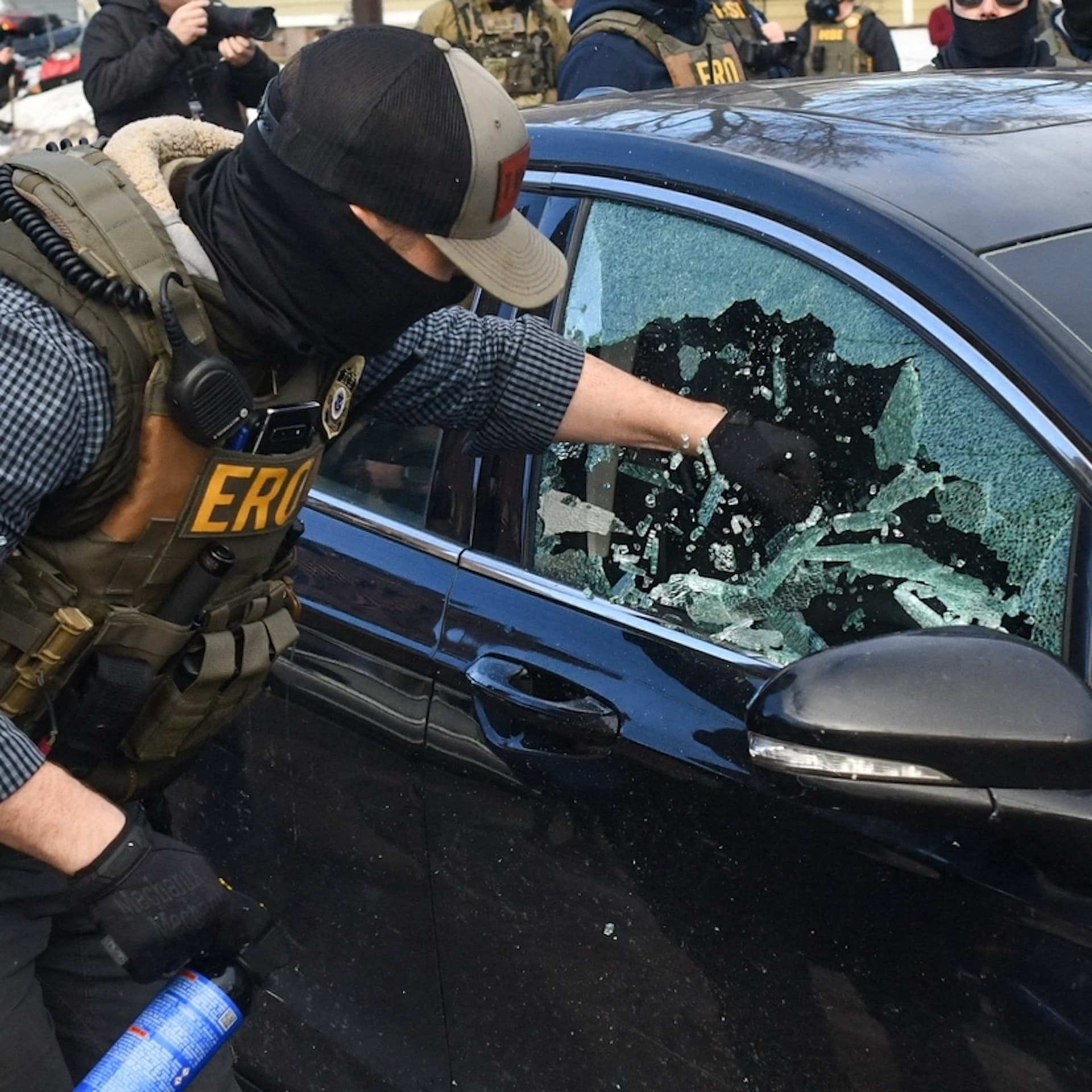
Conflicting narratives of Renée Good’s killing in Minneapolis have quickly emerged – federal officials claim the ICE officer who shot her was acting in self-defense, while others believe her death was easily avoidable and that ICE’s tactics are overly aggressive.
Host Martine Powers speaks with immigration reporter Maria Sacchetti about how law enforcement officials are scrutinizing the shooting and what accountability in this case could look like.