In short
Post Reports Podcast Episode Summary: Bad Bunny, the Super Bowl and a MAGA Meltdown
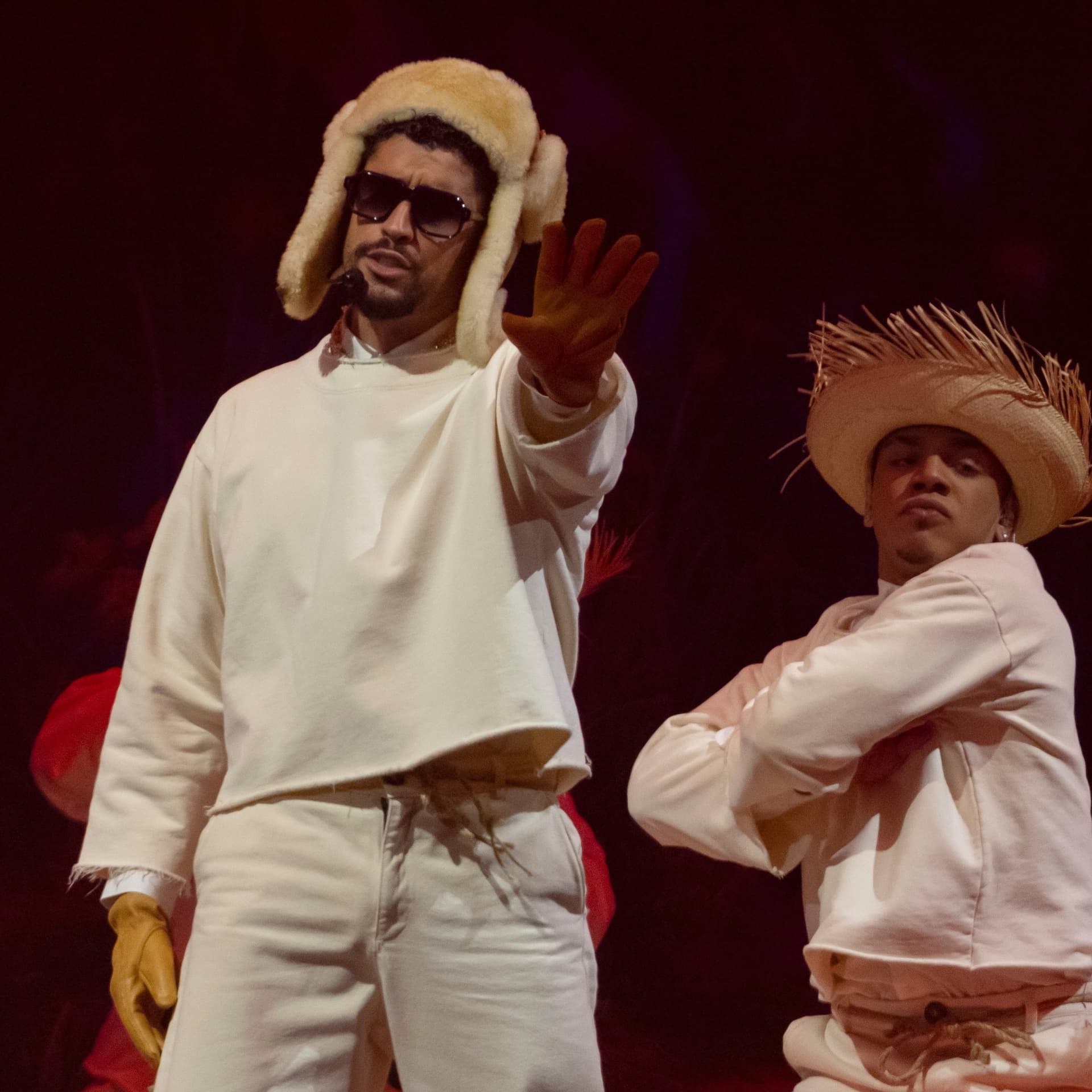
Episode Overview In this episode of *Post Reports*, hosted by Colby Itkowitz with guest Sabrina Rodriguez, the discussion centers around Puerto Rican music superstar Bad Bunny's upcoming performance at the Super Bowl halftime show. The announcement has ignited controversy among right-wing commentators, primarily due to Bad Bunny's use of the Spanish language and his comments regarding U.S. Immigration and Customs Enforcement (ICE).
---
Key Themes and Discussions
Bad Bunny's Rise
- Artist Background: Bad Bunny, whose full name is Benito Antonio Martinez Ocasio, is a prominent musician known for his contribution to Latin music.
- Recent Successes:
- Release of his seventh album, *Debí Tirar Más Fotos*.
- Sold-out concert residency in Puerto Rico.
- Headlining the Super Bowl halftime show, a significant milestone for any artist.
Reaction to Super Bowl Announcement
- Public Response: Fans of Bad Bunny celebrated his selection for the Super Bowl, reflecting his cultural significance and popularity.
- Bad Bunny's Statement: He expressed pride in representing his culture, stating, "This is for my people, my culture, and our history."
Political Backlash
- Right-Wing Criticism:
- Notable MAGA influencers criticized the choice due to Bad Bunny's Spanish-language music.
- Comments from figures like Danica Patrick and Marjorie Taylor Greene indicated a sentiment that Spanish-language performances were inappropriate for a major American event.
- Greene suggested making English the official language of the U.S. and criticized the NFL for allowing "demonic sexual performances."
- ICE Concerns:
- Bad Bunny's previous comments about fears of ICE raids during his concerts became focal points for the backlash, as he expressed concern for his primarily Latino audience.
Trump's Response
- Delay in Commenting: Trump took over a week to respond, initially showing little engagement with the controversy.
- Comments on Bad Bunny: Trump referred to him dismissively and suggested a boycott of the NFL but quickly shifted the conversation to other topics.
Bad Bunny’s Counteraction
- Saturday Night Live Appearance: Bad Bunny used his platform to mock critics during his SNL monologue, emphasizing the importance of his performance for Latinos and asserting that his cultural contributions cannot be erased.
Cultural and Political Implications
- Cultural Flashpoint: The episode underscores the intersection of culture and politics, particularly how Bad Bunny's popularity and cultural identity challenge right-wing narratives.
- Identity Politics: Rodriguez discusses how Bad Bunny's success in an era rejecting multiculturalism showcases the ongoing cultural wars in America. His unapologetic embrace of his Puerto Rican heritage resonates deeply with Latino audiences.
- NFL's Position: The NFL has not publicly addressed the backlash, but they view Bad Bunny as a strategic choice to reach a broader international audience.
Conclusion
- Political Influence of Artists: The episode concludes with a discussion on the political weight of cultural figures like Bad Bunny. While celebrity endorsements may not sway votes directly, their existence and representation play significant roles in contemporary social issues.
---
Key Takeaways
- Bad Bunny is a prominent cultural figure whose Super Bowl performance has sparked significant political discourse.
- The backlash against his selection reflects broader cultural tensions in America, particularly surrounding language and identity.
- The NFL's choice to feature Bad Bunny is part of a strategy to expand its reach to diverse audiences, indicating a shift in how cultural events are perceived and marketed.
Final Remarks This episode provides a lens into not just the music industry but the cultural and political landscapes of America, highlighting the powerful role that artists play in shaping narratives around race, identity, and representation.
Written by AI. May contain mistakes. Listen to the episode to check what was said.
Transcript
Automatic transcript. May contain errors.0:00Right now during the President's Day Sale, you can get a Washington Post premium subscription for just$3 every 4 weeks. And that includes three extra accounts to share with friends or family. After your first year, renews at$19 every four weeks. The Washington Post. Power. Perspective. Premium. Learn more at washingtonpost.com slash subscribe.
0:29Bad Bunny is having a phenomenal year.
0:35The Puerto Rican music superstar put out a new album earlier this year. It's called Devi Trar Mas Fotos, and it spent weeks at the top of the charts. Here's a bit of the first track.
0:50And this is just his latest success. Since his debut album in 2018, Bad Bunny, whose full name is Benito Antonio Martinez-Ocasio, has become a global sensation. He consistently sells out tours. He and Taylor Swift, they're often vying for top spots on the streaming charts. Now he's set to headline one of the biggest stages for a musical artist, the Super Bowl halftime show. But that performance has ignited a political firestorm on the right.
1:25From the newsroom of The Washington Post, this is Post Reports. I'm Kolbia Kowitz. It's Thursday, October 9th. Today, national politics reporter Sabrina Rodriguez explains how Bad Bunny ended up in the crosshairs of MAGA's culture wars.
1:47Hi, Sabrina. I'm so excited to have you on. I'm so excited to be here with you. Okay, so in late September, the NFL announced that Bad Bunny would be the halftime show performer. And to put it mildly, that announcement has generated a lot of feelings. So what happened? So we saw the NFL make their big announcement, you know, of who the Super Bowl halftime headliner would going to be. You know, they usually do it a few months in advance. They, you know, will announce it in the middle of a game. They did it very textbook on a Sunday night football game, put the ad. It showed, you know, Bad Bunny in his traditional Puerto Rican baba hat with a beautiful beach sunrise and him sitting on a football goalpost.
2:33And how did Bad Bunny fans respond to him being chosen? And what did Bad Bunny himself say? For fans of Bad Bunny, it's not a big surprise to see that he's going to be the Super Bowl headliner. He has had like a tremendous year as an artist and a tremendous run in recent years. You know, he's one of the most streamed artists in the world, three-time Grammy Award winner. I think what summed it up was the statement that he put out when it was announced that he was the pick. And here's what he said. What I'm feeling goes beyond myself. It's for those who came before me and ran countless yards so I could come in and score a touchdown.
3:13This is for my people, my culture, and our history. Be dila a tu abuela que seremos el halftime show at the Super Bowl. go and tell your grandma that we're going to be the halftime show of the Super Bowl. So Bad Bunny puts out this statement, and it's all about, you know, he's proud to be picked, and he's doing this for his Latino and his Puerto Rican culture and background. But then the next thing that seems to happen is this massive reaction from the political right. So what did happen next? We saw from right-wing influencers, MAGA commentators on social media, a lot of this conversation happening, of course, on X, was a lot of anger over the NFL's choice.
3:58One of the biggest reasons we've seen MAGA commentators focus in on is the fact that Bad Bunny performs exclusively in Spanish. One of the posts that we saw on X from Danica Patrick, the former professional racing driver and rising conservative pundit, her post was no songs in English should not be allowed at one of America's highest rated television events of the year. Then from there, we saw, you know, a lot of commentary describing his music and his performances as demonic, people criticizing the sexually suggestive messaging in some of his songs. Then we even saw Congresswoman Marjorie Taylor Greene weigh in on this, and she said on X, It would be a good time to pass my bill to make English the official language of America, and the NFL needs to stop having demonic sexual performances during its halftime shows.
4:53And one thing I noticed, Sabrina, is that Bad Bunny had some comments about immigration and customs enforcement, or ICE, that have become a big focus of this right-wing backlash. What did Bad Bunny say that they've been objecting to? So I think a little context is Bad Bunny just wrapped up a 31-show sold-out concert residency in San Juan, Puerto Rico, for his newest album, Debe Tirar Más Fotos, or I Should Have Taken More Photos. It's really a celebration of Puerto Rican culture and the way that the album celebrated the culture. He wanted to bring people to the island to kind of see firsthand what Puerto Rico is like, how beautiful it is.
5:36And in addition to the residency, he also announced a world tour where he's going to be traveling around the world. He's doing shows in places like Mexico, Spain, France, Japan, Australia. but noticeably absent from there was the U.S. mainland. In an interview with ID Magazine in the middle of September, he acknowledged that part of the reason that he had foregone doing shows in the U.S. mainland was because of fears that his concerts could become a real spot for ICE raids. Given that his fan base is primarily Latino, know, there was really a concern that he had that it would just become a spot for that.
6:19So he's basically saying, I don't want to endanger my fans. Yes. But what's interesting is that now he actually is doing a show in the United States, and it's perhaps the biggest stage that you can perform on in the mainland as a musical act, and that's the Super Bowl. I mean, could we see ICE enforcement at the Super Bowl? What has the Trump administration said? The highest profile person in the Trump administration to speak up about this was Homeland Security Secretary Kristi Noem. She was on conservative podcast The Benny Show with Benny Johnson, and he asked her about all this controversy.
6:55What is your message to the NFL? What is your message to Bad Bunny? Will there be ICE enforcement at the Super Bowl? There will be because the Department of Homeland Security is responsible for keeping it safe. She specifically said that ICE will be all over the place. So, yeah, we'll be all over that place. And I can't. We're going to enforce the law. So I think people should not be coming to the Super Bowl unless there are law-abiding Americans who love this country. And she sent a message to the NFL where she said that they suck. They suck and we'll win and God will bless us and we'll stand and be proud of ourselves at the end of the day and they won't be able to sleep at night.
7:33and, you know, kind of reeled against them for making the decision that they've made. I'm trying to imagine, Sabrina, like what would it even look like to have ICE agents like patrolling the Super Bowl? I think it's a real open question, Colby, what exactly that would look like. Are they going to be looking for identification, for passports, for, you know, proof of citizenship for attendees? Are they going to be doing that for people in the performance, for backup dancers, for crew, for people working at the venue? There really hasn't been many details released about what that will look like. But you do quickly see Noam and President Trump's advisor, Corey Lewandowski, as well, saying, oh, but ICE will be there, just to clearly send a message.
8:24So people in MAGA world are complaining about this, people in Trump's orbit, his administration. What about Trump himself? Has he said anything about this? It's really interesting, Colby, because Trump actually was uncharacteristically quiet about this for several days. He took over a week to weigh in on it. And ultimately, the way he responded to it was in an interview with Newsmax where he was asked about it. The NFL just chose the bad bunny rabbit or whatever his name, this guy who hates ice. He doesn't like you. He accuses everything he doesn't like of racism. Do you think maybe we should just kind of entertain blowing off the NFL like a boycott or something along those lines?
9:07This guy does not seem like a unifying entertainer. And a lot of folks don't even know who he is. I never heard of him. I don't know who he is. I don't know why they're doing it. It's like crazy. But it was interesting because in the tee-up of being asked about this, he was asked by Newsmax's Greg Kelly if he thought that people should boycott the NFL over this decision. And Trump did not engage with that in his response. He spoke very briefly about Bad Bunny and then pivoted very quickly to complaining about the kickoff rule in the NFL. While we're at it, I'd like them to change the kickoff rule, which looks ridiculous, where the ball is kicked and the ball is floating in the air and everyone's standing there watching it.
9:51Something he's really griped about several times, but it was interesting to see just kind of how quickly he moved on from Bad Bunny and his own answer there. Has Bad Bunny himself responded to all of this, responded to this backlash to him headlining the Super Bowl? So this was very well-timed, but this past weekend, Bad Bunny was the host of the season 51 premiere of Saturday Night Live. And in his opening monologue, he sort of mocked his critics. You might not know this, but I'm doing the Super Bowl halftime show.
10:33And I'm very happy. I'm very happy. and I think everyone is happy about it. They showed a mashup of short clips featuring different Fox News personalities that was spliced together. Even, even Fox News. Bad Bunny is my favorite musician and he should be the next president. And in his opening monologue, he also delivered a message directly to Latinos in Spanish. where he was saying that, you know, his selection was an achievement for all Latinos. And I think his word choice here was very intentional.
11:25That no one can remove or erase our mark and contributions to this country. And there he kind of moved back into a joke and in English said, If you didn't understand what I just said, you have four months to learn.
11:41After the break, how this bad bunny controversy fits into the ongoing fights over identity politics in America. We'll be right back.
11:56Hi, I'm Susan Glasser. I'm Jane Mayer. And I'm Evan Osmos. And we host the Washington Roundtable from the New Yorker's Political Scene podcast. For me, this is the water cooler. This is a wonderful chance to sit down with two of the smartest colleagues in the country and, you know, just kind of compare notes. No, that's so true, because first of all, we are actually friends in real life. But I can't wait till Fridays to hear what you guys think. Everybody sees the headlines, but you guys fill in the gaps. I also think, though, occasionally we get somebody to come on, and I'm always smarter for it.
12:30And if you get a great historian who can tell you about a presidential election 50, 60 years ago, often it can help you understand about what's happening today. So if you're looking for weekly insights into what's going on inside the Beltway, please join us every Friday on the Washington Roundtable, part of the New Yorker's Political Scene podcast.
12:52Right now, during the President's Day sale, you can get a Washington Post premium subscription for just$3 every four weeks. And that includes three extra accounts to share with friends or family. After your first year, renews at$19 every four weeks. The Washington Post. Power. Perspective. Premium. Learn more at WashingtonPost.com slash subscribe.
13:24So Sabrina, I want to take a little step back here and provide some history. Because there's a few aspects of this story that make it a really interesting cultural flashpoint, with a lot of echoes to the culture wars from the first Trump administration. As we've noted, Bad Bunny, he's very proud of his Puerto Rican heritage. And, you know, I remember in his first term, Donald Trump, he drew a lot of criticism from people on the island for the federal government's response to Hurricanes Maria and Irma in 2017. His administration was slow to send aid to the island. How does all of that history fit into Bad Bunny's politics now related to Trump?
14:09So Bad Bunny grew up in Puerto Rico. And I think an important primer is the fact that Puerto Rico is a U.S. territory, which means if you're born in Puerto Rico, you are a U.S. citizen. But if you grow up on the island, you are not able to vote for the U.S. president. Only if you live in the U.S. mainland are you able to vote for president. So Bad Bunny has been careful about how he talks about U.S. politics, gets involved. But he has been vocally critical of President Trump in the past. Early on in his career, he, when Hurricane Maria devastated Puerto Rico, he was very active in the humanitarian efforts and the recovery afterwards.
14:49And at one point during a Somos Live benefit concert that was huge at the time for helping with the recovery, he wore a shirt that says, Are you a tweeter or a president? So a direct reference to Trump at the time. And more recently, in the 2024 presidential election, he threw his support behind Democratic nominee and then Vice President Kamala Harris. And it just came shortly after a rally at Madison Square Garden for Donald Trump that we saw one of the speakers, comedian Tony Hinchcliffe, make a joke about Puerto Rico. There's a lot going on. Like, I don't know if you guys know this, but there's literally a floating island of garbage in the middle of the ocean right now.
15:36Yeah. I think it's called Puerto Rico. OK. All right. Right, right. And I remember you covering that at the time and Puerto Ricans feeling incredibly offended and that the Bad Bunny endorsement that came shortly after felt like it could be like a turning point in the race. It was that final week before Election Day, and you saw Democrats really try and seize on it and seize on the Bad Bunny endorsement to try and drum up more excitement to get more people out to the polls. Of course, we know ultimately what the outcome was, but that was one of those moments that Democrats started to feel that they had a little bit of momentum, particularly as they saw sort of a slippage with Latino voters.
16:20The other cultural institution here is the NFL. And I think it's important to note that Trump has sparred with the NFL in the past, right? What's his relationship like with the NFL? Trump has long had a tumultuous relationship with the NFL. He during his first term in particular had issues when there were players that were kneeling during the national anthem. So all of that controversy. Now fast forward to his second term. He's the first sitting president to attend the Super Bowl, as he did this past year. He has proudly hyped up that the NFL draft will be taking place in Washington, D.C. in 2027.
17:03So clearly his relationship with the organization has changed. And what has the NFL said about all of this controversy around the bad buddy pick? The NFL has not spoken out about the backlash. We've seen that Commissioner Roger Goodell has not spoken about the selection or the backlash that has ensued. But when the announcement was first made, we saw in a statement from the NFL, an NFL official say, as one of the most influential and streamed artists in the world, his unique ability to bridge genres, languages, and audiences makes him an exciting and natural choice to take the Super Bowl halftime stage.
17:44I think it's important to note here that the NFL has been very open in trying to reach an international audience. They really want to expand their global reach. And that adds to why Bad Bunny makes sense as a Super Bowl halftime show headliner. So by picking someone like him, they might bring in people who maybe wouldn't be really interested in watching the game or are not super invested in American football, but may be tuning in to see that performance. That's so interesting. So basically the idea being like, listen, the American audience isn't the only audience we care about. 100%. I mean, they've been very clear that there is a lot of money to be made by looking at international audiences and really trying to expand the footprint of the NFL.
18:34So, Sabrina, after talking about all of this with you, clearly Bad Bunny has been thrust into this moment in American politics where one political party has rejected multiculturalism. And Bad Bunny's Latino culture is his brand, right? It's a huge part of his popularity. So how much political influence does someone like Bad Bunny have in this moment? I think Bad Bunny endorsing a candidate or expressing support for a candidate. it. We've seen, proven many times over, not just with Bad Bunny, but with other celebrities, that that does not necessarily mean that he's going to sway his fans to vote one way over another.
19:22But I think that Bad Bunny's existence is political. The fact that Bad Bunny is an artist who is, again, one of the most streamed in the world, that all his songs are in Spanish. This This is Bad Bunny's brand, is him unapologetically Puerto Rican, his unapologetically singing in Spanish. He does speak English, as he has in interviews and everything, but he chooses to create his art in Spanish and to just be himself. And I think that existence in this era is particularly going to resonate with Latinos and I think beyond to people that are just paying attention to this moment in politics and culture.
20:09Sabrina, thank you so much for coming on. Thank you so much for having me.
20:16Sabrina Rodriguez is a national politics reporter for The Post. Earlier today, conservative group Turning Point USA announced that they are hosting their own halftime show during the Super Bowl. They're calling it, quote, the All-American Halftime Show.
20:33That's it for Post Reports. Thanks for listening. If you're looking for the latest updates on the big news of the day, check out our morning news briefing, The Seven. We bring you the seven stories you need to know about every weekday morning by 7 a.m. You can listen to it wherever you listen to podcasts. Today's show was produced by Laura Benchoff. It was mixed by Sam Baer and edited by Ariel Plotnick. Thanks to editor Sean Sullivan. I'm Colby Echowitz. We'll be back tomorrow with more stories from The Washington Post.
21:17Hi, I'm Susan Glasser. I'm Jane Mayer. And I'm Evan Osnos. And we host the Washington Roundtable from the New Yorker's Political Scene Podcast. For me, this is the water cooler. This is a wonderful chance to sit down with two of the smartest colleagues in the country and, you know, just kind of compare notes. No, that's so true, because first of all, we are actually friends in real life, but I can't wait till Fridays to hear what you guys think. Everybody sees the headlines, but you guys fill in the gaps. I also think, though, occasionally we get somebody to come on, and I'm always smarter for it.
21:51If you get a great historian who can tell you about a presidential election 50, 60 years ago, often it can help you understand about what's happening today. So if you're looking for weekly insights into what's going on inside the Beltway. Please join us every Friday on the Washington Roundtable, part of the New Yorker's Political Scene podcast.
22:13Right now, during the President's Day sale, you can get a Washington Post premium subscription for just$3 every four weeks. And that includes three extra accounts to share with friends or family. After your first year, renews at$19 every four weeks. The Washington Post. Power. Perspective. Premium. Learn more at washingtonpost.com slash subscribe.
From the publisher
Puerto Rican music superstar Bad Bunny is having a phenomenal year. His seventh album, “Debí Tirar Más Fotos,” came out in January and spent weeks at the top of the charts. He sold out a musical residency in Puerto Rico. And now, he’s set to headline one of the biggest stages for a musical artist: the Super Bowl halftime show. But that performance has ignited a political firestorm on the right. MAGA influencers are criticizing the choice because Bad Bunny, born Benito Ocasio Martinez Ocasio, sings in Spanish, and because he expressed fears this year that U.S. Immigration and Customs Enforcement could pursue fans at his shows.
Host Colby Itkowitz speaks with national politics reporter Sabrina Rodriguez about this right-wing backlash and how it fits into ongoing culture war battles.
Today’s show was produced by Laura Benshoff. It was edited by Ariel Plotnick and mixed by Sam Bair.
Subscribe to The Washington Post here.