
In short
Podcast Episode Notes: Can You Choose to Be Happy?
Episode Overview
- Podcast Title: Post Reports
- Episode Title: Can you choose to be happy?
- Release Date: October 18, 2023
- Hosts: Martine Powers, Elahe Izadi
- Featured Reporter: Maggie Penman
- Featured Guest: Atdhe Trepka, filmmaker and creator of the documentary series "Are You Happy?"
- Theme: Exploring the concept of happiness through public interaction and psychological research.
Key Themes and Discussions
Atdhe Trepka's Journey
- Background:
- Atdhe Trepka is a filmmaker who began asking strangers about their happiness five years ago.
- He quit his day job to pursue this project, resulting in a documentary and a non-profit initiative.
- Initial Inspiration:
- Inspired by a 1960s French documentary titled *Chronicle of a Summer*, where a psychologist asked people about their happiness.
- Public Interaction:
- Trepka interviews individuals across various locations, capturing a range of responses.
- The interaction often prompts deeper reflections on their lives and emotions.
Insights on Happiness
- Unique Perspectives:
- Each interview provides distinct insights into happiness, with responses ranging from lighthearted to deeply introspective.
- Connection Between Happiness and Sadness:
- Trepka notes that often the happiest individuals have faced significant challenges or hardships.
- Happiness is perceived as a choice that involves recognizing positives even amidst life's difficulties.
Research Insights
- Expert Opinion:
- Dr. Fuchsia Sirwa, a professor of social and health psychology, contributes her expertise on the psychological factors of happiness and optimism.
- Optimism:
- Defined as the expectation of positive outcomes, which can lead to proactive behaviors and improved well-being.
- Dr. Sirwa emphasizes the importance of retraining the mind to focus on positives, particularly through practices like gratitude.
- Gratitude Practices:
- Engaging in gratitude lists can help shift focus from negatives to positives, fostering a more optimistic outlook.
- Regular gratitude practice can lead to long-term changes in mindset and emotional resilience.
Challenges to Happiness
- Critiques of Happiness as a Choice:
- The discussion acknowledges that framing happiness as merely a choice can be reductive, especially for those facing significant life challenges (e.g., grief, illness).
- It’s recognized that a more nuanced approach is necessary, particularly for those experiencing severe emotional distress.
Key Takeaways
- Happiness is Complex:
- Happiness is not simply a state of being but a continual process involving both acceptance of negative experiences and the active pursuit of positivity.
- Importance of Support Systems:
- Trepka highlights the value of familial and social support in achieving happiness, stating that those with a supportive network are among the happiest individuals.
- Practical Applications:
- Listeners are encouraged to engage in gratitude exercises as a means to foster a more positive and resilient mindset.
Conclusion The episode presents a rich tapestry of insights into happiness, showcasing personal experiences, expert advice, and practical strategies for cultivating a happier life. Through interviews with everyday people and discussions with psychological researchers, it emphasizes that while happiness can be influenced by choices and mindset, it also requires recognition of life's complexities and challenges.
---
Additional Information
- Contact: For more stories or to engage with the team, listeners can reach out via email: podcasts@washpost.com.
- Newsletter: Subscribe to *The Optimist* newsletter for uplifting stories [here](https://www.washingtonpost.com/newsletters/the-optimist/?utm_source=podcasts&utm_medium=referral&utm_campaign=post-reports).
Written by AI. May contain mistakes. Listen to the episode to check what was said.
Transcript
Automatic transcript. May contain errors.0:00Right now during the President's Day Sale, you can get a Washington Post premium subscription for just$3 every 4 weeks. And that includes three extra accounts to share with friends or family. After your first year, renews at$19 every four weeks. The Washington Post. Power. Perspective. Premium. Learn more at WashingtonPost.com slash subscribe.
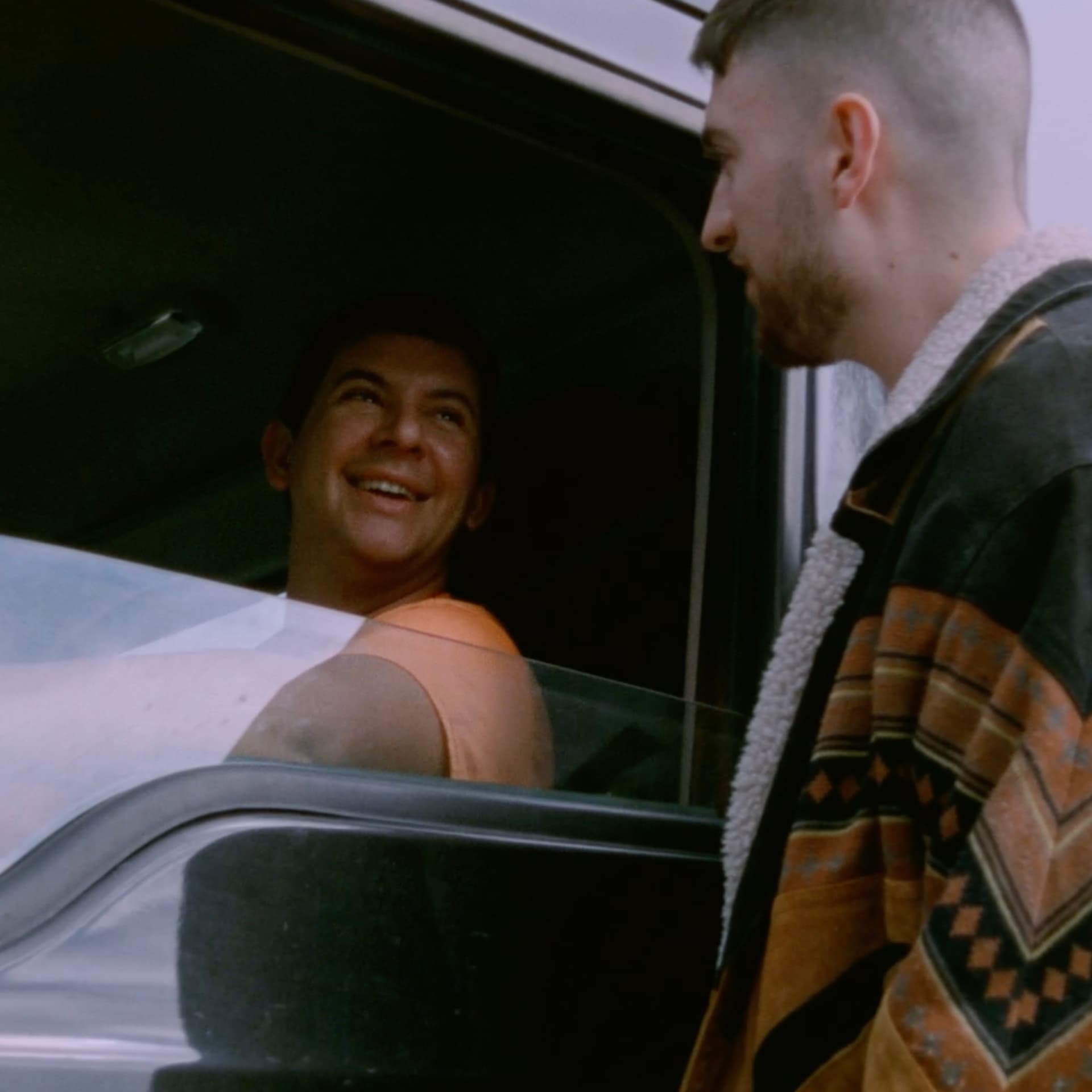
0:30For the past five years, Alde Trepka has been going up to strangers and asking them a simple question. Can I ask you a question? Oh my goodness. No. The question is, are you happy? I, who are you? These videos reach millions of people on Instagram and TikTok. And taken together, the answers tell a story. They've informed Alde's ideas about happiness. Even the really silly ones. Are you happy? Yeah, very happy. What's making you happy? Maybe I can't go a day without eating pickles. When Alday first started doing this, it was just him and sometimes his brother helping him out. He quit his day job and traveled around with his camera.
1:17Now he has a whole team of other filmmakers helping him. And they've even made a documentary. Are you happy? Of course I'm happy. I'm curious. What makes you happy? Not much. Everything. Good lunch, fresh, good weather, bad weather, I don't care. Happy anyway. I wanted to know, what has Alday learned about happiness from having all of these conversations with strangers? I'm Maggie Penman. This is Post Reports Weekend. It's Saturday, October 18th. I'm a reporter for The Optimist. It's a section of The Post full of inspiring and hopeful stories about things that are going right in the world. And today, I'm talking to filmmaker Alde Trepka about how we can all be a little bit happier, even if you're going through something really difficult.
2:18And we hear from a researcher who offers some very tangible advice.
2:28okay um so could i have you start by just saying who you are and how we should identify you yeah so my name is ade trepka um and i am the creator of uh are you happy which uh is a documentary series where i travel around the world and ask strangers if they're happy It's also turned into a nonprofit where we help other nonprofits promote their works on our page. So it's a little bit of a documentary series and supporting other nonprofits. And how did you get this idea to start asking people if they're happy? So as a filmmaker, I'm always looking for different sort of stories to tell. and in the early 1960s there was a documentary film that came out uh in france called chronicle of a summer and uh it was like a psychologist going out on camera asking random people different questions and one of those questions was are you happy what is your life the question would be Are you happy?
3:44Are you happy? Monsieur, please, are you happy? I was really fascinated by that idea. And so I thought, you know, what would it look like if we modernized that and took it around the world? And then we started recording in 2019 and then started publishing right around COVID. And within like a week, you know, it ended up catching fire. There's a comforting sameness to these videos. I have watched an embarrassing number of them on Instagram. Usually the filmmaker is off screen, so you just see the person they're approaching. Even though we've been doing this now for going on five years, every answer is still unique and every perspective is different.
4:32And it's always still very exciting for me to ask people. we are all quietly dealing with our own our own you know um and like what are you happy does is it kind of like interrupts your day a little bit and while you're sort of quietly dealing with this in your head someone walks up to you and asks are you happy and what you'll notice is like when when people get asked that question, they kind of like fan through all the things that they've been thinking about, all the things in their life. And in that moment, they will decide to tell you if those things are defining them as unhappy or as happy.
5:19And like I said, we're all dealing with sadness, with negative things and good things. But I feel like the difference between happy people and unhappy people is the ability to say, you know what, despite the fact that I'm down on my luck, despite the fact that I might not have things, this sandwich is really making me happy. One video that I've watched over and over is of this young guy at a gas station in Miami. I think it's fair to say he is objectively beautiful. He's got a little bit of a smile on his face. He's in amazing shape. And he looks like somebody who's in a good place. He's got his life together.
5:58But when he's asked if he's happy, he says that he's not. I don't know, man. I just feel like I moved to Miami like four months ago, and I just feel like the pace of life is so fast that I just feel like I wake up and the day's over. You know, I don't feel any sense of accomplishment in my days, really. I do medical advice sales. Even after all this time, Alday is surprised that he still can't predict how someone will answer his question. The happiest people I've met have oftentimes gone through the most unhappiest things you can imagine. And they're able to process what happened, again, in a way that they find they could move on or even find joy in it.
6:47And I think, you know, happiness has to come with some amount of sadness. You know, you can't be fully happy unless you've experienced real sadness. There's one of those people in the documentary, this dad who's been watching his son skateboard in a park. He's really thin and he's wearing a beanie. It turns out he has stage four cancer. Are you happy? Um,
7:13some days. I have a stage 4 rectal cancer so it's I was happy to make it through the first year I don't know, I guess I am because I'm happy that I didn't even get to sit here and watch them do all this and everything because I never thought I'd see a lot of this this might be a little controversial but I do think happiness is a choice and it's a choice we have to make every day and throughout the day, we have to decide if something that goes wrong or not according to our plan is going to be a negative or is going to be a positive. I struggle a little bit with the idea that happiness is a choice.
8:01Thinking about people who are grieving or seriously ill or just lost a job, I think it can be really reductive to say that they could just choose to be happier because there are so many things we can't control. But I spoke to a researcher who studies well-being and she said there is some truth to what he's saying. Positive psychological factors and factors related to resilience can help people reach their goals and improve their health and well-being. So things like self-compassion and gratitude and being future-oriented, that type of thing.
8:40After the break, we'll tell you how you can be happier. No, really. We will. We'll be right back.
8:59Hi, I'm Susan Glasser. I'm Jane Mayer. And I'm Evan Osmos. And we host the Washington Roundtable from the New Yorker's Political Scene podcast. For me, this is the water cooler. This is a wonderful chance to sit down with two of the smartest colleagues in the country and, you know, just kind of compare notes. No, that's so true, because first of all, we are actually friends in real life. But I can't wait till Fridays to hear what you guys think. Everybody sees the headlines, but you guys fill in the gaps. I also think, though, occasionally we get somebody to come on, and I'm always smarter for it.
9:33And if you get a great historian who can tell you about a presidential election 50, 60 years ago, often it can help you understand about what's happening today. So if you're looking for weekly insights into what's going on inside the Beltway, please join us every Friday on the Washington Roundtable, part of the New Yorker's Political Scene podcast.
9:55Right now, during the President's Day sale, you can get a Washington Post premium subscription for just$3 every four weeks. And that includes three extra accounts to share with friends or family. After your first year, renews at$19 every four weeks. The Washington Post. Power. Perspective. Premium. Learn more at WashingtonPost.com slash subscribe.
10:27So could I have you start by just introducing yourself, just saying who you are and what you do? Sure. My name is Dr. Fuchsia Sirwa. I'm a professor of social and health psychology at Durham University in the United Kingdom. I came across Fuchsia Sirwa's research on optimism and how believing good things will happen can actually make good things happen. Stay with me here. I know this sounds a little woo-woo, and I'm not talking about, like, manifesting positivity or anything like that. Dr. Sirwa has done some research on people living with chronic incurable illnesses. you know, you would think it might be really difficult to see, you know, the future in a bright and positive way.
11:12But one of the things that I found in that research was that even people dealing with, you know, really distressing chronic condition can have an optimistic viewpoint. And so I think all that to say that optimism is very important for a number of reasons. But what it basically is defined is having the expectation that outcomes will be positive. And it doesn't mean you sit back and just wait for everything to fall into your lap. It's a general mindset that's expecting that more good things than bad will happen to you in the future. And if you have that perspective, you are not more likely to sit around and wait for things to happen.
11:53You're actually, what the research has shown is that you're more likely then to take action and do the sorts of behaviors that will support that belief. Right? Because if you think there's no hope, you're not going to do anything. But if you think there's hope, if you think that things are going to work out somehow, that it's not actually going to be as bad as that, that there is a silver lining there somewhere, which is sort of like a core sort of cognitive process in optimism. Then you're going to go, yeah, and I'm going to do whatever I can to help that along. I think many of us know intuitively that thinking positively is good for us.
12:26No matter what is going on in our lives, it helps. If that's not the headspace you're in right now, though, that is okay. Because Dr. Sirwa has done research on how you can get there. I think the key thing is there is about being able to find ways to focus on the positives, right? Because if you only focus on the negative, if you only focus on how bleak things are, how terrible they are in the world or in your life or whatever, you're going to get really depressed. You're going to get really unmotivated to do anything. But that is a mindset. That's a perspective. And so for every negative you can see, there are positives.
13:05And part of that is getting out of sort of black and white thinking. It's either has to be all perfect or it's all a disaster. And so that type of thinking can actually interfere with that. and actually seeing things on a little bit more of a gray scale to say that there may be some really negative things in this situation right now and you know my relationship or with my health but there's actually some pretty positive things that are going on and I can build on those positives so it is about training your mind to notice those positives like try to find the silver lining in a dark exercise and there are exercises that people can do so as soon as you start running down here's all the negatives well is there anything positive in that anything positive you can see coming out of that situation.
13:43So it's getting your mind to become aware and realize that there is a possibility for positives. And to that end, there's one practice that's actually quite simple and quite powerful though too for helping people shift their perspective to start noticing the positives and that's practicing gratitude. Because gratitude by definition is noticing first the positives and then appreciating them. We always focus on the appreciating, you know, like, oh, I'm really thankful for this. You can't be thankful for something if you don't notice it as a positive. So that's actually a skill set where you have to, you know, cultivate that and writing down gratitude lists, like three good things that happened to you today, and you force yourself to think about three good things.
14:29You're now shifting your perspective to focus on what there's some positives there. I'm going to make a list of them. And as you start to do that more, so one of the things that happens with these sort of gratitude lists or gratitude journals, and there's lots of apps out there that offer people, you know, these gratitude journals, it's quite popular right now. And, you know, you kind of think, oh, that's all really nice. And like, it actually is a very powerful tool, because what you're doing is you're resetting your thinking, right? You're resetting your mindset now so that you become better at spotting the positives.
14:57And when you become better at spotting the positives, that's now an opportunity to start realizing that positives are possible even in the most bleak and grim circumstances which can then help you cultivate that hope and that optimism for the future yeah that's great and i think you know it's funny gratitude journaling and meditating i think is advice a lot of people get when they're feeling down and i think often it's easy to tune that advice out, right? Because you're like, yeah, everything sucks. I don't want to journal. Like, I don't want, you know, I'm like, I don't want to meditate. Like, I'm so stressed, you know, whatever, whatever it might be.
15:35So is there is there like specific research you could talk about where you've seen the actual changes that happen in people when they practice these simple things? I mean, so there's research on gratitude has been around for a while. There was one study that was done a few years back and they found that um just said to engaging in sort of you know gratitude lists and journaling that the effects persisted for like six months later in terms of shifting people to become more grateful and you know after after a certain point you don't need to keep doing those lists it's a tool to train your mindset that's what it is so i think people get stuck on this idea that it's just a list, I'm going to do this list.
16:23No, it's actually a tool. You're retuning your brain to think, notice those positives a bit more. And it becomes, it soon becomes a habit. And then you will just think more gratefully about the world, right? Dr. Sirwa did want to emphasize there are limits to what gratitude and self-compassion can do. If somebody is having moderate to severe depression or other mental ill health conditions, those are always best treated by professionals first. They might prescribe some of these sorts of exercises in addition to meditation and other practices and other therapeutic processes. I don't want to make it sound like a secure all for everybody.
17:04It's not going to be suitable for some people. And this is about some of the gratitude research as well, too, that just, you know, telling somebody who's really depressed to find something positive, it just, they tune right out.
17:23Learning more about the research about retraining your brain reminded me of something Aldea Trepka said about happiness. Happiness is almost like a muscle, right? If you work that muscle and you start to sort of change the chemistry in your brain to turn negatives into positives and turn unexpected changes in your life into a positive, you're like working that muscle. And then eventually, that's just kind of who you become and how you'll naturally look at things. And so it's been a journey for me. Of course, before I let him go, I had to ask if he was happy. And he said that he was. But not because of his success or how many followers he has on TikTok.
18:11I've got, like, my family. And I think that people maybe take that for granted. But if you have that, you really are, I say, in the top one percentile of the happiest people in the world. If you have that support system around you, I feel like that's, like, paramount to happiness. Whether intentionally or not, it kind of sounds to me like Alda is practicing gratitude.
18:38I'm Maggie Penman. I'm a reporter for The Optimist. If you want to hear more stories like this on the weekend, please send me an email. You can reach the whole team at podcasts at washpost.com or just me at maggie.penman at washpost.com. today's episode was reported and produced by me with help from tadmoldoon emma talcoff and sean carter who also mixed the show my editor is allison klein if you want more optimistic content check out our newsletter i'll put a link in our show notes where you can subscribe thank you for listening and have a great rest of your weekend
19:28Hi, I'm Susan Glasser. I'm Jane Mayer. And I'm Evan Osnos. And we host the Washington Roundtable from the New Yorker's Political Scene podcast. For me, this is the water cooler. This is a wonderful chance to sit down with two of the smartest colleagues in the country and, you know, just kind of compare notes. No, that's so true. Because, first of all, we are actually friends in real life. But I can't wait until Fridays to hear what you guys think. Everybody sees the headlines, but you guys fill in the gaps. I also think, though, occasionally we get somebody to come on, and I'm always smarter for it.
20:02If you get a great historian who can tell you about a presidential election 50, 60 years ago, often it can help you understand about what's happening today. So if you're looking for weekly insights into what's going on inside the Beltway, please join us every Friday on the Washington Roundtable, part of the New Yorker's Political Scene podcast.
20:48subscribe
From the publisher
Are you happy? How would you answer that question if a stranger with a camera asked?
Five years ago, filmmaker Atdhe Trepca quit his job and drove across the country with a camera, asking hundreds of people that question.
His videos reach millions on TikTok and Instagram, and now he’s made a documentary.
Today, Optimist reporter Maggie Penman shares what Trepca has learned – and the research that backs up his observations.
If you want to hear more stories like this, please let us know. You can reach the whole team at podcasts@washpost.com or email Maggie at maggie.penman@washpost.com.
Today’s episode was reported and produced by Maggie Penman, with help from Ted Muldoon, Emma Talkoff, Reena Flores, and Sean Carter, who also mixed the show. It was edited by Allison Klein.
The Optimist has a newsletter! Subscribe here.
And, subscribe to The Washington Post here.