 Ask ChatGPT



The episode explores why people can’t stop scrolling home listings on Zillow and similar sites, and what that reveals about modern real estate and human psychology.
Rachel Kersias, a Washington Post reporter who writes about homes and living spaces.
Zillow is a dominant “real estate information” tech database (not a brokerage like Redfin) powered by MLS data; it drives massive browsing (2.4B visits in Q1 2025) far more than actual homebuying (~4M sold in the U.S. last year). Compass is suing Zillow, calling it a monopoly under antitrust laws, arguing for “pocket/private” off-market listings before MLS/Zillow posting.
a $3.995M Washington, D.C. “tranquil neighborhood” listing with a video tour; “as-is” and “cozy” as euphemistic red-flag language; advice to go in person because photos/staging can mislead.
Written by AI. May contain mistakes.
Discuss why people obsess over home listings and the implications of sharing them.
“Today, forget about Instagram, forget about Facebook, or even LinkedIn.”
Compare Zillow and Redfin, their business models, and their impact on real estate.
“But what really crystallized it for me is a colleague of ours was buying a home.”
Learn about Compass's lawsuit against Zillow and the allegations of monopoly practices.
“And they're all getting their information from the same place, which is MLS.”
Examine how online listings have transformed the role of real estate agents.
“Companies like Compass are trying to kind of expand their off-market listings for what they're calling them private exclusives.”
Discover the diverse motivations behind people's daily visits to real estate apps.
“And how does that compare to other social media platforms if we are thinking about these apps as social media platforms?”
Learn how social media is changing the real estate landscape.
“And I will also say a lot of social media sites like Instagram and TikTok are also in the real estate listing game now, too.”
Explore why people are drawn to Zillow even when not house hunting.
“John Deere certified pre-owned equipment and more options to their lineup can shop at machinefinder.com.”
Understand how to interpret real estate listings and avoid pitfalls.
“A lot of people, this is really what they're doing in lieu of really house hunting, right?”

Get the gist, explore an idea or ask about something said.
 Claude
On Post Reports, what are the key points of this episode?
Searching your listeningAutomatic transcript. May contain errors.
0:01John Deere is putting in work and putting up highlights. Oh man, look at those passes. Tillage, planting, harvesting. Three years in and these pre-owned machines are still at the top of their game. We're talking reliability, performance and long-term potential. And get this, these veteran machines can pick up the latest precision tech with ease. You know it and fans ready to add John Deere certified pre-owned equipment and more options to their lineup can shop at machinefinder.com. Booyah!
0:32okay rachel um grab your phone i'm about to send you a text message i wanted to send you this because i have this really weird habit that until recently i thought was just a thing that i do and the people in my life do when i'm like going to different places in different cities even if i see a for sale sign on a house i will google the the address of this house and I will look it up. And this is a house I go to do physical therapy and I drive by this very opulent house. It is five bedrooms, six baths, over 6 ,000 square feet. Also relevant information, we've got a two-car garage. This is a newly constructed home located in a, quote, tranquil neighborhood.
1:21In Washington, D.C., where things can be very expensive. So, dear listener, this house is way beyond my means and many, many others. It's$3.995 million. Yeah, that's a$4 million home right there. Rachel Kersias writes about homes for The Post. And lately, she's been reporting on a website a lot of people, me included, are obsessed with right now. Zillow. So I sent her a link to a listing that I've been keeping an eye on for months. What I love about this listing is, If you look at the very second option under the photo, what is it? It's a video tour. Oh, yeah. I mean, and these are so common. I can't tell you how many of these video tours I have watched in my spare moments.
2:11Yeah. I mean, it's like you might be rich and famous, but I can look inside your house.
2:21From the newsroom of The Washington Post, this is Post Reports. I'm Elahey Izadi. It's Wednesday, June 25th. Today, forget about Instagram, forget about Facebook, or even LinkedIn. I'm talking with Rachel about why one of the hottest social media apps right now might be Zillow. She explains how Zillow became so dominant that one real estate company is suing them and calling them a monopoly. And we also talk about why so many of us cannot stop looking at houses we will never buy.
3:00Hi, Rachel. Hey, good to be here. Yeah, I'm really happy to be taking a break from the news and talking to you about this actually like pretty fascinating dynamic and trend that you've picked up on. First, how did you come to this reporting? Why did you decide to look at this? Well, I am absolutely a person who is looking up home listings all of the time. But what really crystallized it for me is a colleague of ours was buying a home. And all of these people, of course, are asking like, oh, send us some in the listing. Send us what you're looking at. And she kind of felt uncomfortable doing so because she realized how much more revealing it was than people were even asking in their questions.
3:45Suddenly, by sending along these listings, she's telling people, first of all, about her income bracket and about how much she is able or willing to spend on a home, as well as her taste, her preferences. All of these things are getting revealed by listings. And that was kind of percolating in the slow cooker of my brain, along with, you know, daily going to Zillow, Redfin, all of these sites and looking at listings and realizing just what a rich terrain this is for understanding how we interact with the idea of home. Yeah, that's so fascinating. I love the way that you approach your work and your reporting because you are thinking about the like underlying dynamics and what this might mean about how we interact with our spaces and what that says about us.
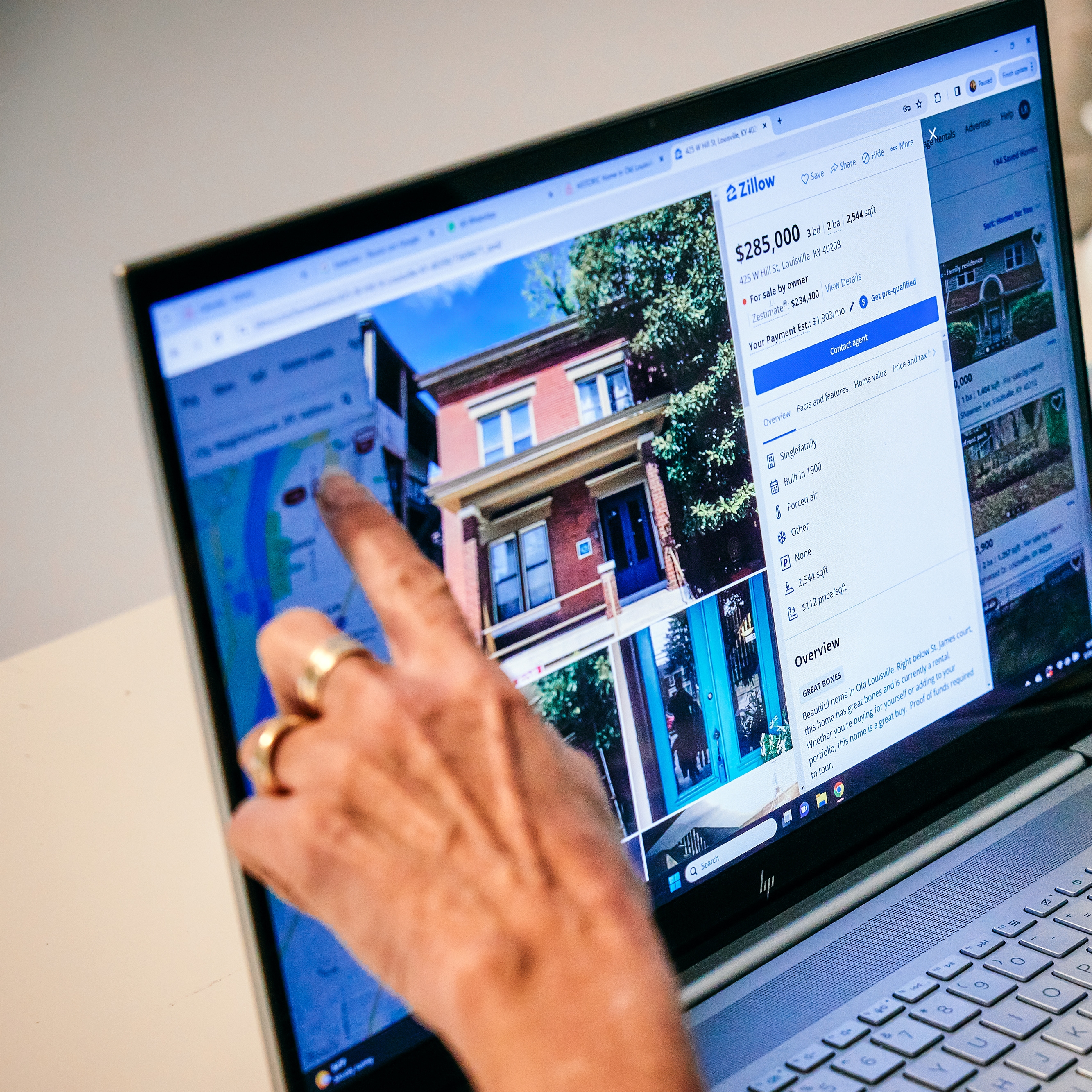
4:29So for people who are not maybe as addicted or well-versed to these sorts of sites or platforms. If you're out there. If you're out there, yeah. Just explain what kind of information can you find on a real estate app or website? Platforms like, we're talking about Zillow, Redfin, there's others as well. What information could we expect to see on them? You can literally discover just about anything about a home or apartment from these listings. So the home's layout, what it looks like, this sale history, whether it was ever taken off the market, any environmental risks having to do with the home, its walkability score, the schools.
5:08Which is like how walkable it is to other stuff. Right. Or how connected it is to public transportation, etc. The annual tax bill. So many different pieces of information are available, like when it was built. AC, does it have gas heating? Just from really small details to the really big pieces of information, it's all there. And of course, you're also going to see a bunch of photos, which are probably among the most popular elements of these listings is just getting to go through all of these photos, many of them staged. I would say it's a red flag if there aren't any photos. Oh, like, yeah. Okay.
5:46We'll talk about the code and the red flags in a moment. I know like a lot of your reporting was about Zillow. I have Redfin on my phone and in my mind, they're like the same thing. Are they? They're different. And first of all, I would say that to me, Zillow has become like a metonym for all home listings in the way when we're talking about Xerox or Kleenex or Band-Aid or something like that. But Zillow is basically a tech company that provides real estate information. Redfin is trying to do a really different thing. Redfin is actually a brokerage, which means you could hire a Redfin real estate agent to buy or sell your home.
6:21And their whole model is they want to rely less on commissions for agents and more on salary. So they are just offering very different business propositions. I see. I see. Whereas Zillow is more like just a pure real estate database. Yeah, that's right. And they're all getting their information from the same place, which is MLS. And just real quick, what is MLS? MLS stands for Multiple Listing Service, and it's a database used by real estate professionals and brokers where they basically put all the information about their listings into this database, and then that database ends up feeding all of these other sites.
6:59Okay, so there are differences between platforms like Redfin and Zillow, but what I'm hearing you say, Rachel, is that it does sound like Zillow really does have a lot of power in this market. Yes. Zillow is the big dog. And Zillow is what people think about when they're thinking about home listings. And this idea that Zillow is so powerful is actually the subject of a new lawsuit that came out this week. So tell me more about this lawsuit. So Compass is a major brokerage. They have a lot of real estate agents. And they are suing Zillow. And they're calling Zillow a monopoly. And they're basically saying that Zillow is violating antitrust laws.
7:43Compass wants to be able to post homes privately on their own special network, but still reserve the right to go on Zillow later on. Sometimes with certain home sellers, real estate agents won't put a home on MLS and it won't appear on sites like Zillow. This might happen if your client is incredibly wealthy or incredibly private. These are called off-market listings. You might have also heard them called private listings or even pocket listings. Companies like Compass are trying to kind of expand their off-market listings for what they're calling them private exclusives. It sounds expensive. Yeah, I mean, and it's intended to sound expensive and exclusive and exciting.
8:28And if you hire a Compass agent, you will have access to these special homes that no one else has access to. Compass says, basically, we're just testing the waters. It's like a soft launch of a home sale. Because as soon as a home goes on MLS and then goes on Zillow, a countdown clock starts, right? Sometimes buyers will see red flags on sites like Zillow. For example, how many days it's been on the market. Have they had to change the price a certain amount of time? I mean, I look at that when I'm looking at listings. I'm like, is this a hot commodity or not? Right, exactly. Have you been languishing on the market?
9:06Then maybe I could put in a lower bid. And so what Compass is arguing is, look, we're just trying to figure out what the right price is. And then once we've kind of beta tested it, then we'll put it on MLS and it'll go to Zillow and all of these other places. Zillow saw that this was happening and basically said, no way. If you don't put a listing on Zillow within 24 hours, you're banned, you're blocked. And that ban is going to go into effect at the end of June. Before that ban is going into effect, Compass is suing, basically saying, you have too much power here. Like, let us do what we want.
9:48And Zillow is saying, you know what, like, you're not being fair. You're not creating a transparent marketplace. How have these sites and these apps changed the world of real estate? I mean, there are people, this is their job to sell homes, to buy and sell homes on behalf of their clients. How have these websites changed that? One of the main things that has happened as a result of these online home listings is that the role of the real estate agent has changed. It used to be you've relied on your agent to find homes and help you book those tours. Now, homebuyers can do that on their own. How popular are these websites, do we know?
10:28Zillow told me that there are 2.4 billion visits to its site. That was just in the first quarter of 2025. And just to compare that to, like, how many people are actually buying homes, in all of last year, just about 4 million homes were sold in the United States. So if you want to extrapolate that, that tells us that most of the time when people are looking at Zillow, they're not buying homes. They're just looking. And how does that compare to other social media platforms if we are thinking about these apps as social media platforms? So by unique visitors, Zillow ranks about 15 in the United States in terms of traffic, just like period.
11:11Oh my gosh, 15? So by unique visitors, yeah. And that's according to SimilarWeb, which is a digital marketing intelligence company. And that company also compared it to, it gets about as many visitors as weather.com. So figure, you want to know like what... Sorry, Rachel, that's a website I check every day. Great. And are you also checking real estate listings every day? Well, I don't know. I guess so. And so that's more than PayPal, just a little bit less than the New York Times. And Zillow is the most popular of these sites, but other sites are also, you know, Redfin, In Realtor.com, Homes.com, they're also getting quite a bit of traffic as well.
11:52So, Rachel, I want to understand more about how these sites got so popular and why. So if we were to think about the categories of people who are visiting this site every day, who are they? The first one is the house hunters, the people who are genuinely looking to buy a house or see what the market is like. And they're looking at these listings. Also homeowners who maybe recently bought a home or not so recently bought a home, and they're just trying to keep tabs on the local market and figure out how much is their home worth? Did they make a good decision, feel validated or not in their decision, or keep tabs on their neighbors?
12:29And for renters or for people who aren't in the market at all for a home or don't have a home, it can be the equivalent of window shopping. It's aspirational maybe of like, what would it look like if I lived here? Or maybe sometimes it's a little bit masochistic, like, oh, I'll never live here. One person who I spoke to, she got rid of all of her social media apps and loves Zillow, Redfin, listings. And the way she described it to me was it's voyeurism without the guilt. You can, she used to be really into celebrity gossip and then kind of started feeling icky about it. But for the most part, when you're looking at home listings, you don't really have to feel icky.
13:07Here's all this information out there, and you just get to peruse it and enjoy it. Yeah, I'm getting to know the market. I'm not going to be frivolous. Yeah, this is an economic moment for me. And I've also spoken to people who said that often they feel inspired. They're like, oh, this is a way that I could organize my living room or pick a backsplash or even decide, like, what kind of couch do I like? Here's like 30 different couches. And you can see them in the context of a home rather than just an image of a couch. Yeah, I also feel like, you know, when you were talking about this person who got rid of all their other social media apps, and those apps can just deliver a lot of stressful information.
13:50And I wonder if there's this sort of almost like benign appeal of just looking at these houses, almost sort of like home redecorating TV shows that just like is very soothing. Yeah, I think that's right. And I will also say a lot of social media sites like Instagram and TikTok are also in the real estate listing game now, too. Wait, really? Yeah, a lot of agents, for example, try to sell, especially younger agents, are trying to show tours and kind of get homes to go viral like good viral on other social media sites as well. Just because people are interested in homes. We're nosy and we like learning about how other people live.
14:31And the only other thing that I'll note about kind of the social media element of all of it is I spoke to multiple people who told me that they wished that Zillow was more of a social media site in that it had like direct messaging. Like they would love to just directly message their friends. Like, look at this one. Look at this one. Like have a comment section on like, check out this bathroom backsplash. Exactly. And I guess like for some reason it's somewhat onerous to then just link in a text message. I don't know. I mean, to me, it's fine to just send it to the group chat.
15:07Well, let's take a break there. And when we come back, Rachel will explain why this addiction to Zillow is actually tapping into an ancient instinct. We'll be right back.
15:46We'll be right back. John Deere certified pre-owned equipment and more options to their lineup can shop at machinefinder.com. Booyah! Did you know you can play the Washington Post's games for free? Find the crossword, keyword, ridges, and on the record in the Washington Post app or at washingtonpost.com slash games. No subscription required.
16:15so rachel i want to kind of tap into the deeper psychology here of why people who are not in the market to buy a house they aren't using these apps and websites to actually just buy a house why would they be spending their time on these apps what did you learn about just sort of human behavior as you dug deeper into this. One researcher that I spoke with was telling me that basically this trend just reflects that as humans, we love dirt. We love inside information and that that's a good thing, right? It's not just us being nosy. It's that we've developed this interest over time because it allows our communities to better understand each other, to enforce norms, and just more broadly, work.
17:05And I guess I'll also say that not all of this is like, oh, we're trying to learn about our community in a positive way. Which would be great. Yeah, which is also great. But also I think that it can serve as a sort of page six. You get these kind of blind items revealing information and intrigue about people that you might not otherwise know. And some of it is like, oh, I wonder how that renovation looks. But other of it is like, are they getting a divorce? Oh, my gosh.
17:36And we should also say, and we've kind of alluded to it, is that it's hard for a lot of people to buy a house right now. I mean, we're having this fun conversation, but the reality is that this is out of the realm of possibility for many people. Right. And especially for younger generations. I mean, there's a lot of data out there about millennials and younger people the first time they can buy a house versus, like, the older generations. And so I'm wondering what your thoughts are on that as you were digging into these sites being used for more vicarious browsing. I think that's absolutely a part of the equation.
18:09A lot of people, this is really what they're doing in lieu of really house hunting, right? Like rather than really looking around seriously and saying like, I don't know about this furnace. It'll cost a lot of money to replace. I mean, rather than doing that, they're just kind of looking because it's a fun thing to do. It's like if you're going to a website for a really luxury, good item, and you're just looking to look, be like, what would that be like to be able to actually buy this while knowing, like, that's just not in my budget. But then does that lead us to sort of develop unrealistic expectations or just feel bad about our own circumstances?
18:52I think so much of the internet makes us feel bad about our own circumstances. And sure, I definitely spoke with people who said that they felt bad going to home listings and thinking, man, I would really love to live there, but that's just not in the cards for me. I've also spoken to people who said if you kind of are going with no expectations of like this is what I want This is what I deserve and yet it's not happening for me Then it's a little bit more of like a mindless fizzy fun situation I think it kind of depends like so many things on your kind of emotional state going into it Yeah, the other thing that i'll say about it is For a lot of people it's a way to kind of imagine other versions of their lives.
19:33They could have lived right If I stayed in my hometown, would I be able to afford a home there? What would that look like? Oh, my gosh. Right. What would happen if I decided to move to a Grecian Isle? What kind of beautiful home? I mean, you could look anywhere, right? I spoke with people who told me that any time they visit a place, one of the first things they do is look at online real estate listings. And it's just another way to get your bearings of what would my life be like if I lived here or if I were this person? And I guess whether that makes you feel good or not depends on how you feel about your current life.
20:09Yeah. Well, Rachel, before you go, since you are now, you know, you are an expert on how to how to look at these apps and websites. What are red flags we should be looking out for? What are some like features that like if you are immersed in this world, you are going to notice these things are these things. Or if this listing doesn't have that, then you should move on. Or, oh, this is like classic or this is just this picture is totally misleading. One thing that I really love about the listings is you basically have to adopt this like euphemistic code or language to fully understand what's going on here.
20:42Like, for example, if they say as is, that's like, oh, there's probably something seriously wrong with this home. Cozy generally means very small. And the words that they use I tend to find really interesting because their branding, and I just think it's fun and funny when you start to like really read a lot of them, you get a sense of what they mean. I spoke with one real estate agent who told me that a couple of times when she spoke with people who were finally in the market to look after spending years of cruising on Zillow, they were kind of taken aback when they actually went into these homes in real life and realized that a lot of the way that homes are photographed and staged online is somewhat misleading or that they're actually smaller in person or whatever.
21:29And it kind of reminded me of, you know, online dating and then meeting someone in person. And you're like, you don't look at all like your photos. But like to carry that analogy even further, it's like I've only been swiping for years and then I'm finally meeting a human being in real life. And my expectations are totally off base. Yes, exactly. And so I think that the main advice I would have is like if you are genuinely interested in looking at a home, like you got to go in person. Yeah. You know, the online element is just part of it. And you really need to go in person to get a sense of what it's actually like.
22:05Real estate agents told me that they were also looking at kind of like the less sexy elements of a home. For example, like, when has the electrical box been updated? Like, what does the roof look like? Like, these are the kind of, I guess, pun intended nuts and bolts element of buying a home that like, you're not really looking at if you're just kind of frivolously... If you're going to your physical therapy appointment and just be like, ooh, let me look at this$4 million. Right, exactly. Like, when was the heating system updated? Yeah, I need to know about this HVAC, for real. Exactly. Well, Rachel, thank you so much for joining and sharing all this with me.
22:42I really appreciate it. Yeah, happy to join you. Thanks for having me.
22:49Rachel Kersias writes about homes and living spaces for The Post. That's it for Post Reports. Thanks for listening. If you're looking for the latest updates on the big news of the day, check out our morning news briefing, The 7. We bring you the seven stories you need to know about every weekday morning by 7 a.m. You can listen to it wherever you listen to podcasts. And before you go, I wanted to tell you about an exciting new season of Try This, a podcast from the Washington Post that tries to help us live better lives. It's hosted by my friend and colleague, Christina Quinn. And this new season is all about keeping your gut healthy.
23:29Christina finds out what's really going on inside of our guts and why we should all care about it. We'll put a link in our show notes, or you can find Try This wherever you get your podcasts. Today's show was produced by Tadeo Ruiz Sandoval and Emma Talcoff. It was mixed by Sean Carter and edited by Lucy Perkins. Thanks also to Jenny Rogers. I'm Elahe Izadi. We'll be back tomorrow with more stories from The Washington Post.
24:10Oh, man, look at those passes. Tillage, planting, harvesting. Three years in, and these pre-owned machines are still at the top of their game. We're talking reliability, performance, and long-term potential. And get this, these veteran machines can pick up the latest precision tech with ease. You know it, and fans ready to add John Deere-certified pre-owned equipment and more options to their lineup can shop at machinefinder.com. Booyah! When it comes to the big questions, who you ask matters. From breaking news to politics that impact your life to advice you can trust. Get answers you don't have to question with Ask the Post AI.
24:51Trained exclusively on post journalism with clear sourcing. And if we don't know the answer, we'll tell you. Ask the Post AI. Find it on WashingtonPost.com or in the app. Thank you.
Many people who visit Zillow aren’t even buying houses — they’re just looking, sharing and daydreaming about their ideal home. The site has such a powerful hold on the market that one real estate company filed a lawsuit this week calling Zillow a monopoly.
Elahe Izadi talks with reporter Rachel Kurzius about how we got here and what this house-hunting obsession says about us.
Today’s show was produced by Emma Talkoff and Tadeo Ruiz Sandoval. It was edited by Lucy Perkins and mixed by Sean Carter.
Subscribe to The Washington Post here.
Need a gut check? Find the new season of “Try This” here.