In short
Podcast Notes: Post Reports - "Could You Give Up Your Smartphone for a Month?"
Episode Overview This episode of Post Reports features Brittany Shammas, a Washington Post reporter, who participated in a month-long challenge to use a flip phone instead of a smartphone. The podcast explores the personal experiences and insights Brittany gained from this experiment, as well as the broader implications of smartphone usage in modern life.
Key Themes
- Motivation for Change
- Personal Realization: Brittany's smartphone dependency became concerning when she noticed her infant mimicking her smartphone habits. This prompted her to reconsider her daily routines.
- Morning Habits: Brittany revealed that her mornings often started with scrolling through news and social media, which she identified as unhealthy.
- The Month Offline Challenge
- Cohort Experience: Brittany joined a group in D.C. that aimed to ditch smartphones for a month, dubbed "Month Offline."
- Initial Skepticism: Brittany was initially skeptical about the program's legitimacy when she first saw a promotional sign.
- Community Support
- Shared Journey: The challenge involved weekly meetings where participants shared experiences and supported each other in their offline journeys.
- Diverse Participants: The group included a variety of individuals, each with unique motivations for reducing smartphone usage, such as nostalgia for face-to-face interactions and the desire to break free from social media habits.
- Exploring Friction
- Concept of Friction: The organizers emphasized the value of friction in daily life, suggesting that some inconvenience can foster deeper connections and mindfulness.
- Nostalgia for Simplicity: Participants expressed a longing for simpler interactions that smartphones often disrupt, such as needing to ask for directions or phone numbers.
- Logistics of Going Offline
- Challenges Faced: Brittany encountered various obstacles, such as needing to replace smart devices like baby monitors with traditional alternatives and learning to navigate without GPS.
- Discomfort and Discovery: The experience revealed both discomforts and unexpected joys, including greater presence during time spent with her child.
- Post-Challenge Reflections
- Behavioral Changes: After completing the challenge, Brittany made conscious efforts to change her smartphone habits, including reducing screen time and being more selective about app usage.
- Long-term Impact: Although she returned to using her smartphone, Brittany noted a strong desire to maintain some of the mindfulness practices she learned during the challenge.
Key Takeaways
- Mindfulness over Convenience: The experiment highlighted the need for conscious engagement with technology rather than mindless scrolling.
- Community's Role: Participating in a group setting provided motivation and accountability, making the challenge more manageable and enjoyable.
- Re-examining Relationships with Technology: The challenge encouraged participants to critically assess their smartphone usage and consider what changes they might want to implement in their lives.
Conclusion Brittany's month offline revealed both the challenges and benefits of stepping away from smartphones. The experience not only fostered a deeper connection with her surroundings and loved ones but also led to a critical examination of how technology influences daily life. This episode serves as an invitation for listeners to reflect on their own technology habits and consider ways to cultivate a healthier relationship with their devices.
---
For more insights and to dive deeper into Brittany's story, you can read the full article [here](https://www.washingtonpost.com/dc-md-va/interactive/2025/smartphones-dumbphones-month-offline/?utm_source=podcasts&utm_medium=referral&utm_campaign=post-reports).
Written by AI. May contain mistakes. Listen to the episode to check what was said.
Transcript
Automatic transcript. May contain errors.0:00A biotech firm scaled AI responsibly. A retailer reclaimed hours lost to manual work. An automaker now spots safety issues faster. While these organizations are vastly different, what they have in common sets them apart. They all worked with Deloitte to help them integrate AI and drive impact for their businesses. Because Deloitte focuses on building what works, not just implementing what's new. The right teams, the right services and solutions. That is how Deloitte's clients stand out. Deloitte. Together makes progress. I want you to tell me about this experiment you did on yourself. What did you do?
0:48So for a whole month, I put away my smartphone and switched over to a flip phone or a dumb phone and navigated life. Like it was 1995, right? Yeah, exactly. Brittany Shamus is a local enterprise reporter for The Post. And a few months ago, she joined this group in D.C. to do something that a lot of us fantasize about. She put her smartphone away for a whole month. It all started for Brittany with this morning routine that a lot of us have. So, I mean, I had this habit of starting all my mornings by reaching for my phone on my nightstand and scrolling through Twitter. Immediately checking all the news.
1:33Tonight, President Trump's federal policing effort. President Trump's assault on the judiciary. President Trump's murder. Trump imposes 100 % terror. But also all the social media apps. And I had thought over the years, like, this probably isn't the most healthy way to start a day. But I would just keep doing it. And then about a year ago, something happened that made Britney start to question her routine. She had a baby. And at some point she realized her baby was starting to mimic her interest in this smartphone. My baby would reach for the phone and like it seemed like he knew how to swipe.
2:12It scares me that he wants the phone too and he's doing that because of me. And so that alarmed me and where I was like, I should change something here. I'm Maggie Penman and this is Post Reports Weekend. It's Saturday, November 22nd. I'm a reporter for The Optimist, the section here at The Post where we talk about good news, things that are going right in the world, people who are trying to make the world a better place. There's so much that technology has done to connect us, and new research even shows that keeping up with technology can be good for our brains as we age. But if you're anything like me or Brittany, you sometimes spend more time on your phone than you want to, and you struggle to stop.
2:56So today, we're following Brittany as she joins this movement of people who are trying to get us off of our smartphones and back into the real world.
3:11Can I ask, what is your screen? I feel like this is such a personal question. Okay, so embarrassingly, it used to be seven and a half hours. You have to tell me yours now. So let me check. I will say I learned that seven and a half, Like, I was shocked by how many people were at that or higher. More than two hours a day. That's how much time on average I'm spending on my phone. And that feels like a depressingly huge amount of time, but it's actually a lot less than most Americans. If you want to have a humbling experience right now, open up your screen time report and look for yourself. You can also see what apps you're using, which I did, and it was weird.
3:49Okay. So most used messages, Chrome, Nanit, Baby Monitor, CVS. CVS. I don't know what I'm doing with the CVS app. I think, I don't know if this is your experience, but one thing that I've noticed, this phone has become the catch-all. Yeah. And so it's very hard to put fences around what you're using it for. Yeah. Because you open it up thinking like, oh, I really need to order groceries. We're out of milk. and then before you know it, you're like deep on the Instagram of like your friend's friend's friend and you're like, how did I get here? And then you snap out of it 30 minutes later and you're like, whoa.
4:29So this past summer, Brittany was going about her life, spending over seven hours a day on her phone, feeling like it was probably bad but also not knowing how to change it. And then she saw a sign. A sign showed up literally on my street one day. And it said, ditch your smartphone, switch to a flip phone, join a cohort of like-minded people for offline challenges. And I walked by this sign like twice a day every day because it was on my path to get to daycare, actually. And so I'm like, huh, what is this? Could it be a scam? Like, could it be? They're like, give us your smartphone. Yeah, exactly.
5:10I'm like, what? So I called the number. it was like a toll-free 1-844 number. I left a message. Hi, my name is Brittany Shammis, and I am actually a reporter with The Washington Post. I came across one of your signs, and I was curious to learn more about what you guys are doing. And they called me back, and they said, thanks for your application to the month offline program. Yeah, and I was like, whoa, whoa, whoa. That's not what I meant. Right, I'm like, wait, actually, I wasn't trying to apply. I wanted to write a story. And they're like, well, you can write a story. if you join. They wanted you to experience it firsthand.
5:47Exactly. That's what they said. Yeah. My first question when Brittany told me she was doing this was, what did your editor say? Because as I mentioned, Brittany is a local enterprise reporter, which means she's constantly jumping on stories, running around the city, reporting and fielding messages from back in the newsroom. I still remember her face. She was standing at my desk and she's like, but how would I get a hold of you? And I was like, well, you can still call me. She's like, oh, I guess that's true. So you had to convince your editor. Was there anyone else in your life who was like, what the heck?
6:20So my husband was all for it because he was like, you are a power user of your phone. You use your phone way too much. You need to do this. Actually, my family seemed a little bit confused. My mom's like, well, I deleted your phone number. Is that what I should do? And so Brittany got her friends and family on board and then she had to prepare herself. I started getting text messages from Month Offline that gave instructions on what to do next. So there was a text that said, come to the saloon, a bar on New Street in D.C. I think it was like 7 o 'clock. Look for the man in sunglasses and tell him the secret password.
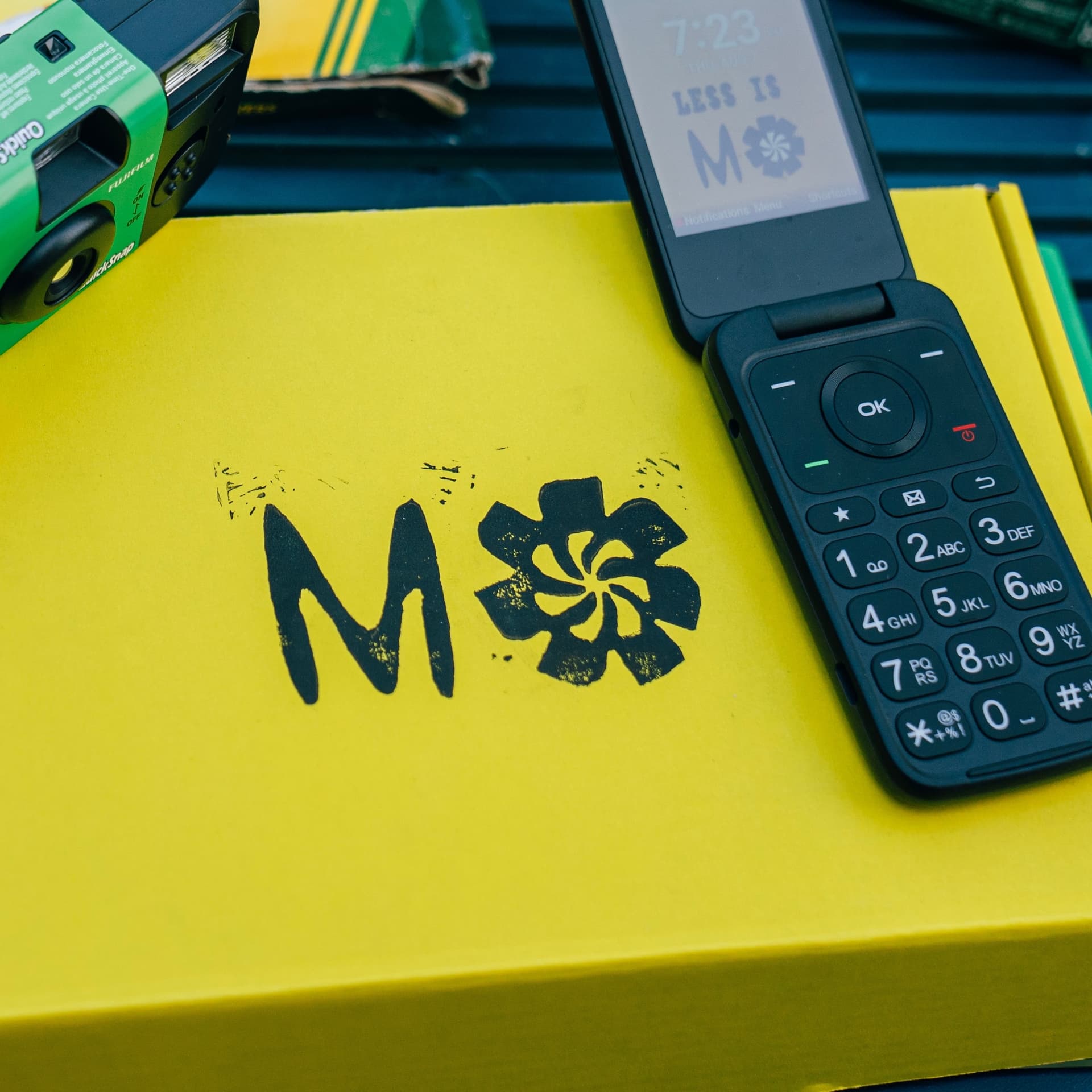
7:07Ooh. Okay. My friends are like, did you just join a cult? Yeah, what's happening here? So I was kind of nervous, actually. Yeah. I remember it was raining that night. So I show up at the bar and, you know, I'm looking for the man in sunglasses. On a rainy night. On a rainy night. So I walk up to him and I said my secret password. Do you remember what it was? Les is Mo. M-O. For a month offline. Yes. And who was this man? It was Grant. I had this like funky fedora hat and like these glasses that I got at a thrift store. And I was just standing outside in front of the saloon and people that tell me the passcode.
7:48And then we like sent them in with like one of the offline wristbands. Grant Bessner is one of the creators. He's in his late 20s. He's originally from South Florida. Looks a bit like Miles Teller. Looks a bit like Miles Teller. It's really interesting tracking phone relationship by birth year. So I was born in 97. So my first phone was a flip phone in like sixth grade. And the iPhone came out in 2007. Grant told Brittany that by the time he was in high school, it felt like it was just a matter of time before he and everyone else he knew had a smartphone and spent a lot of time on it. I got my first iPhone maybe like junior year of high school.
8:33You know, it was just like inevitable. It's like, oh yeah, this is the world that we're in. Everyone has an iPhone now. Yeah, and I kind of was like default on that until in graduate school when I was living in New York City. I was writing my thesis and I was having a hard time focusing. I was just like watching tons of YouTube videos and I was like, this is stupid. And I knew the city. It was an easy enough grid to get around, so I didn't really need my phone for navigation. So Grant got a quote-unquote dumb phone. The one he got is called the Punk'd Phone, and it looks like a little calculator.
9:11It's basically a cell phone that can make calls and send texts, but that's about it. Yeah, it was great for a bit, but then I found that it, like, isolated me a little bit because I fell out of, like, all these group chats. So I kind of would go back and forth between my smartphone and the punked phone. And I would, like, move my SIM card in between the two maybe, like, several times a day. Then Grant moved to D.C. And he went to a Shabbat dinner organized by this guy, Danny. He was asked to put his phone in a bag at the door for the night. And he pulled out his dumb phone. And so we kind of connected over that and became friends.
9:48and in subsequent months had been going back and forth about our own phone usage and ways that we could try to inspire other people to try being off of a smartphone. Grant started experimenting with a different strategy, forwarding calls from his smartphone to a dumb phone. That way he could still make plans in the group chat when he was at his computer. His iMessages would appear on his laptop. But when he was sleeping or at dinner with someone or just out in the world, he wasn't glued to his phone. The dumb phone operated more like a pager, a way someone could call him if they really needed him, but not really engage him in conversation.
10:27I'd say anecdotally, it's just improved my life. I have a better attention span. I sleep better. I'm more present in conversation. I notice my thoughts more. I used to listen to a lot of podcasts when I would do other things, and I have time to just notice what I'm thinking or really be immersed in the moment that I'm in. And so I think it's led to a slower but richer life experience. He and his friend Danny started talking about how to encourage more people to put their smartphones away. And they settled on asking people to try it just for a month. It felt important to, like, make this a time-bounded challenge because I think one of the biggest barriers, it seems like a permanent thing.
11:18And it's also a big investment of time and money to buy a phone, figure out which phone to buy, getting a phone plan. So if you just made it really easy and there was a hard cutoff, it's like, oh, it's only a month, then you could try to leave your smartphone because you knew it had an end date so that there was less at stake to make the switch. Enter Brittany. She sees one of Grant's signs, calls the toll-free number and signs up for the challenge. And after the break, we're going to hear about what she learned. We'll be right back.
11:56From biotech and retail to automotive and transport, the world's leading organizations are scaling AI responsibly. While their industries differ, what they have in common is Deloitte. We don't just implement what's new, we build what works. By weaving tech-enabled solutions into the fabric of your business, we help you navigate complexity and drive meaningful change. Sure, it's tempting to think of AI as the answer, but Deloitte knows it's just one of many. Because services and solutions that address the unique challenges of your business need to be woven into the fabric of your organization. with a deep understanding of your industry and where it's headed.
12:38That's what Deloitte teams do together to help you set your businesses apart. Deloitte. Together makes progress. Right now, during the President's Day sale, you can get a Washington Post premium subscription for just$3 every four weeks. And that includes three extra accounts to share with friends or family. After your first year, renews at$19 every four weeks. The Washington Post. Power. Perspective. Premium. Learn more at WashingtonPost.com slash subscribe.
13:16So Brittany went to the first meeting of her month offline cohort. It cost$75 to join for the month. And at that first meeting, Brittany met the people who she would be spending every week with. And her first question was, who are these people who are willing to give up their smartphones for a month? That night, there was a guy who was very into movies and he wanted to use a flip phone because he was tired of watching movies while staring at his cell phone. There was a sociology professor who was in her 50s and, you know, said that she had this like very embarrassing Facebook habit that she wanted to break.
14:00There was a business owner who had this nostalgia for go-go parties where people were just like totally locked in and present. And it was like interactive because the band would like shout out your name. So you'd be, you know, listening for your name to be called out. Yeah, he missed that. He missed the friction of having to ask somebody for their phone number and figure out a way to write it down.
14:33This word friction is something that researchers have been talking about a lot lately. The whole sell of the smartphone was that it would make things easier. Getting directions, taking pictures, looking up information, ordering things online, connecting with friends. But the idea of friction is that there might actually have been some value in a little bit of inconvenience or a little bit of difficulty. Grant Bessner and the other organizers of Month Offline talk about friction a lot. And the idea that the smartphone is actually taking something away from us. It reduces friction between you and needing to consciously make a decision about what you think about and how you spend your time.
15:17So if I'm bored, I need to think, OK, I'm feeling bored. What do I want to do now? instead of impulsively reaching for my phone. The people who created Month Offline were like obsessed with the word friction. Fruitful friction, they would say. And they basically were like, you should need to ask people for directions. Like you should be - It's a moment of connection. Exactly. Like you should be more grounded where you live. The sort of like unexpected joys of having to pick up the phone to call somebody or having to like rely on your community for help are strangers. And I think there's a real nostalgia for those kind of moments.
15:57One thing I notice, and I imagine this is even more striking if you don't have a smartphone, but like I'm always so struck by how odd it is. Like you get into an elevator, everyone's looking at their phone. No one talks to each other. Yeah, exactly. I feel like anytime someone is like behaving strangely near me, I realize they're distracted by their phone. Yeah.
16:21I asked Brittany how the month offline actually worked logistically. So the group would have us meet every Tuesday and they gave us like everything we needed to make the switch. So they provided the flip phones. They had this tech support that they were calling the dumb bar instead of the genius bar. Love it. Troubleshoot issues that would come up. And then at those Tuesday meetings, people would like kind of compare notes on how it was going and try to help each other with challenges that people would run into. What Brittany quickly discovered is just how hard it is to do anything without a smartphone.
17:00Literally everything in my house is like, do you want to connect this to your smartphone? I'm like, no, I just want to use my washing machine. Right, like why do I have a smart oven? Yeah. Who asked for this? No one. But I hadn't really thought about this before talking to Brittany about it. But there's so many ways in which the world just assumes you have a smartphone now. And that's actually a pretty accurate assumption. According to Pew Research, 9 in 10 adults in the U.S. do have a smartphone. But for Brittany to navigate the world without one, that took some planning. Okay, so one of the big things was my baby monitor was on my smartphone.
17:37My baby monitor is also on my smartphone. That was like the first thing is because I need to buy a baby monitor with an antenna. I got one of those. I went through this whole thing of finding my smart trip cards for the bus and the metro system and trying to figure out like, do these things have any money on them? Like, do I have enough money to get around? The bus routes had all changed the night before this started. Oh, my God. So I was like, OK, I should try to figure those out. And I looked but was like, I'll just ask people. I'll wing it. Yeah. I'll just wing this. And so I like went to my bus stop and was staring at the physical map.
18:18And if I drove somewhere, I would have to like print out MapQuest directions basically. I also remember those days. Yeah. Yeah. I learned you can call Uber. You can call ChatGPT. It was funny to like listen to people's experiences with this stuff. Wait, how do you call Uber? They have like a phone number? What? I think it's like kind of intended for senior citizens. But a group of people in Washington, D.C. was using it. That's amazing. In our month. Yeah, somebody said they called it. And the driver showed up and was like, I couldn't wait to see who like, who called, who literally called Uber.
18:57So armed with MapQuest and a dumb phone and a low-tech baby monitor, Brittany started her month offline. And right away, she noticed how some things were different. And I used to, I'd give the baby a bottle in the morning and I used to just sort of be like, looking at my phone in the other hand. And like, that was out. So I just hung out with the baby, which is really nice. I mean, I was like so much more present because I had no other choice. There was truly nothing to do on the flip phone. There were lots of things that were sort of like mysteries to me. Like, it'd be like, what's the weather?
19:30I don't know. I'll have to go outside and find out. Yeah. Yeah. Technically, I was allowed to use my laptop, but you were supposed to keep it in one part of your house. And sometimes was like enough friction that I just wouldn't bother. Yeah. So I read way more. I always had a book on me like for the bus. That was really nice. I did feel more like clear minded and more present. I would just have to like wonder things, you know, like I would be like, oh, I want to look up this. Like who is that actor? Exactly. Yeah, I guess it'll just remain a mystery to me. Brittany said what was most revealing about this exercise was just learning which things she really missed.
20:10The things that could be uncomfortable were like sort of the utilitarian purposes of the phone, like not having my Apple wallet. And so one time I forgot my money and I just had to like walk out of a coffee shop. Because, you know, you just you're so used to having a backup. Yeah, exactly. I went on a road trip that was supposed to be four hours and turned into seven. Ha! And that was a challenge. So Brittany made it through the month. She got back on her iPhone, and that was four months ago now. So my question for her was whether this experience had really changed anything about the way she uses her phone now.
20:51I've changed some habits, which I am happy about. I don't reach for the phone and scroll first thing every morning. I never brought that back. I have tried to be more mindful about what I'm using since I discovered things that I missed and didn't miss. So I try not to spend as much time on social media or sort of like randomly Googling things. It's hard to be as like purist about it as you are when you just absolutely don't have the phone. And it wasn't really an option for me to just like completely switch over to a flip phone because I really, I use it a lot for work. And I do use it for like some parenting things.
21:31Like for instance, my daycare communicates through WhatsApp and I want to be reachable to the daycare, of course. And about that screen time. Brittany got it down to five hours a day, an improvement from seven and a half. She still wishes that number was lower. Earlier this month, I actually went to an event for another month offline cohort at a phone-free bar in D.C. I wanted to see who else was interested in trying this out. My name is Sarah Reed, and I'm an assistant principal. I'm someone who would love to experience life offline and have a dumb phone instead of a smartphone, but I need my smartphone for work.
22:14And I'm thinking a lot about who can participate in something like this and who can't. This question of access and scalability is something that I really wondered about myself. Is this really the solution to breaking our phone habits? I think what I took away from it is like, it's not giving up the smartphone entirely and using a flip phone, but more sort of examining how you're using your phone and are you happy with how you're using it and do you want to make changes so I think like I have thought of that month as not like this is how I'm going to live my life although in some ways I really wish I could there are people from the group who still are using their flip phones the majority of the time I do think they've tapped into something in the sense that there's a lot of people feeling like uncomfortable with the way they're using their phone are sort of starting to like interrogate it or second guess it and want to make changes.
23:15Is this the way? I don't know, because it is hard to just sort of do it yourself. Brittany said one of the things that makes Month Offline effective is that you're not doing it alone. You're doing this with a community. So you don't have FOMO or worry as much about what you're missing out on in your group chats. At the end of the month, where Brittany landed is that she's very happy to have Google Maps back and Apple Wallet and all the conveniences that many of us have gotten used to. That was a big takeaway for me. Like, this is an incredible tool. It's so much more convenient to have. But I should try not to get distracted by the other things that I didn't miss that much when I didn't have them.
23:57For me, that's often easier said than done. But after revealing my screen time to the world, I decided to make some changes. I've deleted some apps that often pull me in and tried to leave my phone in another room when I don't need it. If you want to work on getting your screen time down too, send me an email at maggie.penman at washpost.com. Maybe some positive peer pressure can work for all of us. Brittany Shamus is a local enterprise reporter for The Post. If you want more stories like this on the weekend, email us at podcasts at washpost.com. And we'd love to know what topics you want us to cover.
24:36We'll be doing a lot more stories about our habits and how we can change them around New Year's, so send us your questions. Today's episode was reported by Brittany Shamus and Ted Muldoon, who also produced and mixed the show. My editor is Alison Klein. I'm Maggie Penman. Have a great rest of your weekend.
25:23We'll see you next time. fabric of your business, we help you navigate complexity and drive meaningful change. Sure, it's tempting to think of AI as the answer, but Deloitte knows it's just one of many. Because services and solutions that address the unique challenges of your business need to be woven into the fabric of your organization, with a deep understanding of your industry and where it's headed. That's what Deloitte teams do together, to help you set your businesses apart. Deloitte. Together makes progress.
26:24Thank you.
From the publisher
A group in D.C. ditched their smartphones for a month. Washington Post reporter Brittany Shammas joined them. Here’s what she learned.
If you want to learn more about Brittany’s story, you can read it here.
To subscribe to The Optimist’s newsletter, click here.
Today’s show was produced by Maggie Penman and Ted Muldoon, who also mixed the show.
Subscribe to The Washington Post here.