
In short
After ICE detention, rural Louisiana becomes a “last lifeline” for detainees with scarce legal help; the episode follows immigration lawyer Chris Kinison as Trump-era enforcement expands and court processes become more rigid and backlogged.
Guest backgrounds
No recurring guests. Narrator Ruby Kramer (Washington Post reporter) introduces the story. Main subject is Chris Kinison, 46, who runs a one-man immigration law practice (Liberty Law Group) in Alexandria, Louisiana, representing detainees in facilities across the state.
Key claims
Trump’s January 2017-era policies increased arrests and detention numbers beyond capacity; many detainees lack representation; immigration judges become less flexible; bond and asylum outcomes hinge on changing policies and even judge “compassion,” plus logistics like remote video hearings.
Notable examples
Faraday, Louisiana (River Correctional Center, GeoGroup); a Guatemala client (Juan Tecu Coche) misidentified on a video docket; Arminio Martinez-Morales (34) seeking cancellation of removal with U.S.-citizen autistic children; detainee color-coded risk (red domestic violence/gun, yellow DUI); calls from families facing “self-deport” paperwork and bond-hearing elimination.
Written by AI. May contain mistakes. Listen to the episode to check what was said.
Chapters
Tap a time to open that second in VOSetting the Scene in Detention
0:45 to 1:23
An overview of ICE detention facilities in Louisiana and the role of the lawyer Chris Kinison.
“He heard from family after family whose loved ones had ended up in the state's detention system, and I got a sense of day-to-day life inside the actual facilities where his clients were being held.”
The Challenges of Immigration Law
1:23 to 3:52
Chris Kinison navigates the complexities of representing detained clients amidst changing policies.
“Christopher Kinison tried to find his client on the computer screen, but the video feed was too grainy to make out faces.”
A Day in the Life of Kinison
3:52 to 6:48
A glimpse into Kinison's daily challenges, including phone calls with desperate families.
“The phone ringing, desperate families, cases that were getting harder to win, a to-do list he couldn't keep up with, and policies in Washington that kept changing and then changing again.”
Personal Background of Kinison
6:48 to 11:34
Kinison's journey from missionary upbringing to becoming an immigration lawyer.
“Kinnison opened his law firm, Liberty Law Group, in 2019.”
Meeting Clients at Detention Centers
11:34 to 14:01
Kinison prepares for a meeting with a client at an ICE detention center in Gina, Louisiana.
“He thought maybe one or two of the cases stood a chance.”
Immigration Law and Personal Beliefs
14:01 to 19:15
Explore how immigration law shapes personal lives and beliefs.
“But he did talk about it with his family.”
A Day in the Life of a Detainee
19:16 to 23:03
An in-depth look at the life of an ICE detainee and their struggles.
“Kinison put his fist flat against the plexiglass, and Martinez Morales put his fist against it on the other side.”
Legal Battles and Family Concerns
23:04 to 26:04
Understanding the legal battles faced by detainees and their families.
“At 8 p.m., he went to a Bible study with some of the other men.”
Challenges in Immigration Proceedings
26:05 to 28:00
Discuss the challenges faced in immigration proceedings and the unpredictability of outcomes.
“He looked at his cell phone and saw a story about an ice raid at a Louisiana racetrack two hours away.”
The Uncertainty of Immigration Bond Hearings
28:00 to 29:33
Explore the complexities and uncertainties surrounding immigration bond hearings.
“and ICE would keep him in detention for only a matter of months.”
Transcript
Automatic transcript. May contain errors.0:00Christopher Kinnison:Hi, I'm Ruby Kramer. This is Post Reports Weekend. It's Saturday, August 23rd. I'm a national narrative enterprise reporter, and what you're going to hear in a moment is a story I wrote about an immigration lawyer who mostly represents people who have been detained by ICE and sent to rural Louisiana. I'll be narrating it. This reporting is part of a Washington Post series called Deep Reads. It's part of our commitment to narrative journalism. I wanted to tell a story in part about what actually happens after someone has been detained by ICE. For some detainees, they end up in Louisiana, which is home to nine ICE detention facilities.
0:39Christopher Kinnison:Many of these detainees never get legal representation. Some of them find Chris Kinison, who is an immigration lawyer at the center of this story, based in Alexandria, Louisiana. He heard from family after family whose loved ones had ended up in the state's detention system, and I got a sense of day-to-day life inside the actual facilities where his clients were being held. More than anything, I saw an overwhelmed immigration lawyer who was struggling to understand what his work was really becoming under this new administration. Okay, here's the story.
1:23Christopher Kinnison:Christopher Kinison tried to find his client on the computer screen, but the video feed was too grainy to make out faces. What he could see was a small room with white walls, a table, and 13 men wearing the same green and white striped jumpsuits, all waiting to appear before a judge who had the power to deport them. I'm not sure which one he is, Kinnison said, looking closer. The men were being held in Faraday, Louisiana, inside a place called River Correctional Center. All over the country, people who had been detained by U.S. Immigration and Customs Enforcement were being sent to facilities like this one.
1:59Christopher Kinnison:A former prison on a rural two-lane highway, in a town of 3 ,000, in a part of the South where immigration lawyers are scarce and denial rates for requests to stay in the United States are among the highest in the nation. Kinnison, who is 46 years old, worked at his own one-man law firm in the central Louisiana city of Alexandria, putting him within a two-hour drive of the state's nine ICE facilities, the highest number of any state other than Texas. Most of his clients were detainees, and his business cards promised, quote, fervent representation for uncertain times because he knew how quickly immigration policy could change with every new administration.
2:43Christopher Kinnison:But nothing had prepared him for the change that began when President Donald Trump took office in January. Arrests were up in every part of the country compared with the year before. There were reports of people being detained by ICE at courthouses, farms, car washes, a meat production plant in Nebraska, an Italian restaurant in San Diego, and outside a church in Oregon, sending the number of people in immigration detention to more than 56 ,000, well over the budgeted capacity of 41 ,500. One in every eight of those detainees ended up somewhere in rural Louisiana, becoming some of the most hidden away people in America.
3:22Christopher Kinnison:Every week, more calls came into the law office in Alexandria, and now it was half a year into Trump's presidency, and Kinison hadn't been able to slow down long enough to process what his days at work were becoming. A chime sounded and more faces appeared on his screen. A judge logging on from a courtroom in Fort Worth. An ICE attorney logging on against a plain blue background from where Kinison didn't know. All right, the judge said. Mr. Kinison, are you ready? Kinison stays at work. The phone ringing, desperate families, cases that were getting harder to win, a to-do list he couldn't keep up with, and policies in Washington that kept changing and then changing again.
4:08Christopher Kinnison:The work he liked most was helping asylum seekers from all over the world, like the Syrian surgeon who fled the Assad regime in 2012 and became one of his first big clients. But at the start of his second term, Trump began to reject new asylum seekers from crossing the border and as a result, Kinnison was spending more and more time on what he called, quote, interior cases, representing people who had already been living here for years, with homes, jobs, and often children with U.S. citizenship, and were just trying to find a way to stay. Now, Congress was preparing to triple funding for detention centers and double capacity to 100 ,000 beds, even though Kinnison couldn't imagine the courts taking on any more volume.
4:52Christopher Kinnison:The system in Louisiana was already so backlogged that immigration judges in Texas had been presiding over cases remotely, which was why Kinnison was at his desk in Alexandria watching a judge in a courtroom in Fort Worth who was seeing a pixelated image of Kinnison's client 400 miles away in Faraday. He was a 23-year-old man from Guatemala named Juan Tecu Coche. Except now, Kinnison heard the judge saying a different name. Molina, the judge said. Kinison looked at his notes, then back at the screen. Oh, Your Honor, he said. My client is Juan Tecu Coche. That's my client's name. He heard typing on a keyboard somewhere off camera.
5:38Christopher Kinnison:I think you said the wrong name, Kinison said, knowing the judge had mixed up the last three digits of his client's alien number, or A number, the ID assigned to detainees by ICE with one of the other men in Faraday, because these were the kinds of things that Kinnison saw happen in immigration detention. Oh yeah, the judge said, it's the other case. One of the men in green and white stood up near the front of the room and traded seats with another man. This was Kinnison's client, whose face he could finally see, and whose name the judge was saying correctly now. One, he said, is that correct, counsel?
6:17Christopher Kinnison:Yes, Your Honor, that's correct, Kinison said, staring at his computer. He liked to believe that there was still room for compassion in the country's immigration system, and that it was his job to try to create it. But the reality had become this. There was no personalization, only more of the churn, moving faster and faster.
6:52Christopher Kinnison:Kinnison opened his law firm, Liberty Law Group, in 2019. He was one of the few immigration lawyers in Alexandria, and he worked out of a unit in a small office park, where he still hadn't gotten around to putting a sign up on the door. His wife, Tiffany, an elementary school teacher, had only just started helping him part-time, but otherwise it was just Kinnison, alone in his office. He looked at the time. Almost 9 a.m. The phone rang. On his computer, Kinnison opened the same Word document he opened every morning. It was 531 pages long, and it contained a running log of his notes from every new caller who reached out to his office.
7:30Christopher Kinnison:How did people find him? Referrals from clients, Google searches for lawyers in Louisiana. He didn't always know. Good morning, Liberty Law Group, Kinnison said. On the other end of the line, a woman was speaking Spanish. Kinison asked her to wait while he patched in an interpreter. The woman said she was trying to reach her son. He was in Louisiana somewhere. She needed help. Okay, Kinison said, and in his Word document, he typed out the date and began his first entry of the morning. Let me ask you some questions so I can understand his case a bit better. The questions Kinison asked were almost always the same.
8:07Christopher Kinnison:How many years had her son been in the United States? Did he cross the border illegally? Did he come on a visa? As an asylum seeker? From what country? Did he have family members with legal status in the U.S.? Parents? Siblings? A spouse? Children? Did he have any criminal history? The answers almost always told him whether someone in detention had a shot at being released on a bond, or avoiding deportation, or had no shot at all. Since Trump had taken office, Kinison had seen judges becoming even more rigid in their decision-making. Now his phone calls felt like a long line of people he mostly couldn't help.
8:46Christopher Kinnison:He had made a choice to be as honest as possible on every call. He didn't want families spending their money without knowing the merits of their case. But it meant hours each week doing what he did now with the woman on the phone. At the present time, he began to say, after he had heard the details of her son's case, There's nothing he can really do to remain in the U.S. Kinison waited for the interpreter to pass on the message. The woman on the phone was quiet. Do you have any questions? Kinison asked. The next call came a few minutes later. It was the owner of a construction company whose workers had been picked up by ICE.
9:27Christopher Kinnison:Kinison began to ask his questions again. Another call. It was a woman trying to help her partner. He had been detained by ICE after being pulled over because something had been wrong with the tags on the car. He had a young child and was his family's main provider, which might help the man get released on bond, but he also had multiple arrests for marijuana possession. That's going to be a big problem for a judge, Kinison said. Even though I know he has a child, I can hear her now. Another call came in. It was a woman trying to build an asylum case to stay in the U.S., who had cancer and was beginning treatment soon.
10:05Christopher Kinnison:Would that help? Once again, Kinison tried to answer as honestly as he could. I do believe that it's going to be extremely difficult to win, he said. The phone rang again. A mother trying to help her son. A man calling about his brother. And now a woman whose voice sounded familiar. But before Kinison could ask if they'd already spoken, she hung up. The phone rang again. Same number. This time a man was speaking. Yes, sir, Kinison said. I just spoke with, uh, I don't know her name. Do you guys want to hire me? The line went dead. Answer is no, I guess, Kinison said. He hung up the phone and answered another call.
10:50Christopher Kinnison:It was late afternoon. A woman was trying to help her brother. He was being detained and had been urged to sign paperwork agreeing to, quote, self-deport. Now he was awaiting a deportation he'd never meant to agree to. I understand, Kinnison said. I don't think a judge... He stopped himself, then began again. I don't think there's a way I could have the court undo that signature, he said. I could certainly try, but I'm not super confident that the court would... He stopped himself a second time. If you want to call me back with the A number, I'd be happy to look at the case for you, okay? He hung up.
11:27Christopher Kinnison:He believed what the woman was saying. He'd heard other stories just like it, but that didn't mean he could win the case. He looked at the Word document on his computer. Fifteen calls so far today. He thought maybe one or two of the cases stood a chance. I'm just... I'm tired of losing, he said.
12:05Christopher Kinnison:The next morning, Kinnison got in his car and put his phone away. He had a client he was meeting in person for the first time at a facility in Gina, a town an hour away and near nothing at all. It was a case he thought he might actually win, with a judge he thought of as fair, and a preliminary court date scheduled for the next morning. He passed the billboards and strip malls of Outer Alexandria, and soon the road to Gina was timber tracks and open fields of green. Kinison had spent a lot of time on drives to detention centers, asking himself how he'd ended up doing this kind of work in a place like this.
12:41Christopher Kinnison:He was the son of two Southern Baptists who'd moved to Laos in the 1970s to serve as missionaries. The war in Vietnam drove them to Thailand, and that's where Kinison was born, in a small countryside hospital. He grew up moving around Thailand and attended an English language school in Malaysia with classmates from all over the world. But by 18, he was longing to experience a life in the U.S. That began a long search for a place to be. First to college in Alabama, then back overseas to teach English in Cambodia, then back to the U.S. to attend a seminary school where he met his wife. Together, they started a life in Louisiana, the state where she had grown up.
13:23Christopher Kinnison:He'd wanted to go back abroad to do human rights work, but after law school, his only job offer was from a general practice law firm in Alexandria, where he mostly represented insurance companies in car accidents. In the mornings, he would sit in the law firm's parking lot, willing himself to get out of his car. One day, he took on an immigration case that had come to the firm, and then another, and when a colleague said to him, those aren't the kind of people our clients want to see walking the hallways of our office. He told himself that he was at the wrong kind of firm. Kinison didn't talk much in Alexandria about the work he did now.
14:00Christopher Kinnison:Most people didn't ask. But he did talk about it with his family. Love God, love others, he told his daughters. And he had come to believe that immigration law was his way of doing that in his own life, and that whatever decisions he had made in the past hadn't led him to working for the church or for a nonprofit overseas. They had led him to this in central Louisiana. Kinnison turned off the highway, and soon the road opened to a clearing of tall, thin pine trees, a parking lot filled with cars, and behind it, one of the largest ICE detention centers in the country. Out front, a flag bore the logo for GeoGroup, the for-profit prison company that operated the 180 ,000-square-foot facility.
14:47Christopher Kinnison:Kinnison parked and stepped out onto the pavement with a file folder in his hand. Hey, Chris! He heard a voice say. A pickup truck swung around and came to a stop in front of him. Two ICE agents were inside with the windows down. The one in the passenger seat was a man who went to Kinnison's church in Alexandria and was now leaning on the center console. How you doing? he said to Kinison. Good, good, Kinison said. Just headed out to lunch, the agent said. And as they drove off, Kinison made his way across the parking lot to the main entrance. A series of two locked gates, two layers of chain-link fence, coils of barbed wire, and past all that, a sidewalk, flower beds, and a lobby door.
15:33Christopher Kinnison:Inside, Kinison was led down a hallway to a visitor's area, where two young girls were putting toys away into a bucket on the floor. The girls were crying. A woman was with them, and from a cubicle along the wall, behind a plexiglass divider, a man was watching them getting ready to leave. Kinison passed by in silence and entered the next room, a row of more cubicles reserved for lawyer visits. He sat down in one of them and stared at the plexiglass until a door opened and his client, Arminio Martinez-Morales, who was 34 years old, stepped inside. He wore a tan sweatsuit, and beneath his collar, Kinnison saw the edge of a red jumpsuit, part of a system ICE facilities in Louisiana used to classify detainees by their risk level.
16:21Christopher Kinnison:Arminio, how are you, sir? Kinnison said. Martinez-Morales smiled. So, we have court tomorrow, Kinnison said, scooting his chair closer so he could speak through the slats cut into the plexiglass. You don't have to be stressed. I see your face. You're nervous. The only purpose of the hearing is we just have to give the judge the application. Kinnison held up the file folder. Inside was a 13-page application for a, quote, cancellation of removal that would allow Martinez Morales to stay in the country if he could prove to a judge that he'd lived here for at least 10 years and that his removal would result in, quote, exceptional and extremely unusual hardship for his children.
17:02Christopher Kinnison:Kinnison said all that would be easy. Martinez-Morales had been at the same address in Alabama since he arrived from Guatemala in 2007. He had four children, all U.S. citizens, ages 11, 9, 6, and 3. Two of them had autism and required special care. But there was a third thing Martinez-Morales needed to prove. He'd need to show he had been, quote, a person of good moral character, as defined by federal immigration law. Kinison said, The biggest issue with that is your arrest, right? In 2023, Martinez-Morales' estranged wife accused him of having, quote, punched me in the arm and face, end quote, during an argument outside a restaurant, according to court records.
17:46Christopher Kinnison:In 2024, Martinez-Morales had accused her of sending men to his home where they, quote, slammed me on the floor, end quote, and, quote, quote, punched my lower back and spinal cord and my head as if it was a punch bag, end quote, according to other court records. She had pleaded not guilty to the charges against her, and Martinez Morales had denied the charges against him, but he'd been taken into ICE custody before he'd been able to enter a plea. Martinez Morales said, it's not making sense. Kinison said, I understand. He knew from experience that the lives of his clients were rarely straightforward, and that immigration court was a difficult place to litigate the nuances of accusations and denials.
18:32Christopher Kinnison:We just have to prove to the judge that you did not do anything wrong, he said. He took out a pen and started to go through the application with Martinez Morales, 13 pages about 18 years in the U.S. Address, income, work, education, the cash on his bank account and the value of any property he owned. Listen, Kinison said when they were done. I cannot guarantee that everything will go the way we want it to go. I can only guarantee that I will do my best for you, okay? Martinez Morales said he understood. I'm sorry you're in here. I know this is not a good place to be, Kinison said. Do you get to play soccer outside?
19:13Christopher Kinnison:Do you get to go outside much? Martinez Morales nodded. Ninety minutes, twice a day, he said. Everything else is okay here? Kinison asked. Martinez Morales said it was. Everything is okay. The food is okay. It's okay. Good to hear, Kinison said. All right, man. Thank you, sir. The two men stood. Kinison put his fist flat against the plexiglass, and Martinez Morales put his fist against it on the other side. I'll see you in court tomorrow, okay? said Kinison. And then he watched Martinez Morales turn around, step through the door, and disappear.
20:06Christopher Kinnison:On the other side, Martinez Morales returned to the room where he lived now. It was a large room, with rows of bunk beds, tables, chairs, toilets, showers, telephones, and two TVs, one that played in English and another that played in Spanish. Since his arrival a month before, Kinison had been his first visitor. In every way, his life was now a hidden one, cut off from everything that had been happening since he entered ICE custody. He hadn't seen his children since he arrived, didn't know where they were, and didn't know what they knew about what happened to him. He didn't know what was going on with the court cases in Alabama.
20:45Christopher Kinnison:He didn't know much of anything that happened outside the room where he spent almost all of his time in the Gina facility. It was the place where he ate, prayed, slept, and got out of bed each morning, beginning at 5.30 a.m., when he was awoken by staff handing out breakfast, a bag with a sandwich inside, and a container of milk. Every morning, Martinez Esmeralda slid off his top bunk, grabbed one of the bags, climbed back into bed, and tried to fall back asleep. Every day he wore a red jumpsuit. By now, he knew what most of the colors were supposed to mean. Red was for domestic violence and gun charges.
21:21Christopher Kinnison:Yellow was DUIs. Blue was low level for things like traffic tickets. The people he lived with wore red and yellow. The only time he saw the people in other colors was on Sundays, for church. Over time, he made friends with some of them, including with people who told him they weren't trying to fight their deportations. They had convictions on their records that would almost guarantee their removal. Martinez Morales didn't. You can fight it, his friends told him, and Martinez Morales tried to keep those words in his mind as the weeks went by. One day, when the staff and Gina offered him $1 an hour to work in the kitchens, he told them no.
21:59Christopher Kinnison:On another day, he said, when immigration officials offered him a$1 ,000 stipend to return to Guatemala, he said no. A good opportunity, he said the officials told him. I'll fight my case, he said he told them. But as the days passed, the cases involving Martinez Morales in Alabama, cases that would affect how the immigration judge in Louisiana would see him, carried on without him. He wasn't able to show up at his arraignment in Montgomery, where he had planned to plead not guilty, because he was being held in Gina. Meanwhile, the case against his wife was nearing a trial date, and the prosecutor didn't know that his main witness was in ICE custody.
22:40Christopher Kinnison:Martinez Morales had been telling himself that God had a plan for him being in this place, and now his lawyer had told him that if he could make his case to a judge, he'd eventually get his green card. So it's a big deal, Kinnison had told him in the visiting area. A few hours later, Martinez Morales was back in the room with the bunk beds, still hearing those words. He read his Bible. He went to the yard. He came back to the room. He had dinner. At 8 p.m., he went to a Bible study with some of the other men. When that was over, he called his brother, who was his closest family member and also the one paying for the lawyers.
23:18Christopher Kinnison:Not just Kinison, but a criminal lawyer in Alabama, whom Martinez Morales didn't know and hadn't heard from. The money I can make back. It's my kids, he told his brother, and he worried most of all about his two oldest boys. They had autism that limited their speech and mobility. Martinez Morales thought he'd been able to give them everything they might need in life so far. He made a good living as a contractor, and the work allowed him to take the children to school in the mornings and be home by 2 p.m. to meet their bus. Good moral character was the phrase Kinison had used. Immigration law defined it as character that, quote, measures up to the standards of average citizens of the community in which the applicant resides, end quote.
24:06Christopher Kinnison:When he woke up the next day, Martinez Morales was taken to the other side of the facility to see a judge who would eventually decide if that was true of him. There were other people in the room, but he didn't know who they were. He told himself it was only a preliminary hearing. He looked at the judge. He wondered what she thought of him in his red jumpsuit. He saw Kinnison's face on a monitor in the courtroom. Mr. Kinnison, how are you, sir? The judge said. Kinnison was in his office in Alexandria, peering into a screen at another blurry image. Good morning, Your Honor, he said. I'm well.
24:57Christopher Kinnison:After the hearing, Kinnison opened the calendar on his computer. That isn't optimal, he said. The judge had given him less than two months to prepare for Martinez-Morales' final hearing, one where he would be in person in the courtroom, presenting evidence and questioning witnesses. That doesn't give us a whole lot of time, he said. I'll have to let his family know. I'll have to email them right now. He pulled up a new email and began to type. Good morning, he wrote. He needed help, he told them. He needed school records for Martinez-Morales' children. He needed police records. He needed character witnesses who could testify on Martinez-Morales' behalf.
25:35Christopher Kinnison:And to testify in immigration court, they had to be people with legal status in the U.S. He needed all this soon. Thank you, he wrote. He sent the email and then put the case aside. He had another hearing for another client, an asylum seeker from Pakistan who had entered the country last year. He thought it was a strong case. He opened the video software again and shut his office door. How'd that go? His wife asked from the other room when it was done. Denial, he said. He looked at his cell phone and saw a story about an ice raid at a Louisiana racetrack two hours away. More than 80 people arrested.
26:14Christopher Kinnison:He took a phone call from a New York-based immigration lawyer looking for advice about dealing with immigration judges in the South. Process is the same, he told her. The grant rate is just lower. He took a call from the owner of a nearby business asking Kinison to talk to his employees about their legal rights. Kinison said he would and that he had done visits like that before. You're not going to bring ICE, the man said. I have no affiliation with ICE. That goes against everything I believe in, Kinison said. We don't know who we can trust, the man said. I'm an immigration lawyer, Kinison said.
26:51Christopher Kinnison:It's my job to protect people with no legal status in this country, not turn them over to ICE, so don't worry, that will not happen. He hung up. He looked at his to-do list. At the end of the workday, he drove home, went to bed, and was back again in the morning. He unlocked the door, turned on the lights, sat down at his computer and checked his email. No response from Martinez Morales' family yet. Instead, he had two missed calls waiting for him, both from the same woman. She was calling about her fiancé, and as soon as Kinnison listened to the voicemail she had left, he thought that this would be another call about another person he could not help.
Read the full transcript
27:31Christopher Kinnison:He opened his Word document and scrolled down to the bottom, page 541. He called the woman back. Yes, good morning. This is Chris Kinison. I got your message about your fiancé's detention, he said. I'd be happy to talk to you about that. Kinison started to go on, but the woman stopped him. The case turned out to be more complicated than he had anticipated. The woman's fiancé might be eligible to stay in the country on a special kind of visa, he told her, but those visas took years to get approved, and ICE would keep him in detention for only a matter of months. To stay, he would need to be released on bond.
28:09Christopher Kinnison:Soon, the Trump administration would seek to eliminate immigration bond hearings altogether. This man still had a chance to get one. But Kinnison knew those chances were already low. On some days, they felt impossible. And now he tried to explain why. It depends, he said. If the judge is... He stopped. He started again. I'm not sure how to describe this, but if the judge has compassion for your fiancé, then he might be able to get a bond he said son of a the woman said it just depends on the type of judge that we get he thought for a moment about how to answer it was the judge it was the latest policy memo from ice it was the detention facility where the man happened to be placed it was the hearing date they happened to give him it was how much time he had to prepare it was whether he would be in the same room as the judge or a blurry face on a screen.
29:07Christopher Kinnison:It was the money in the man's bank account and whether it was enough to hire legal representation. Kinison knew it depended on so many of these things, all the way up to the person elected president of the United States. I know that's crazy to say, he told the woman, but yes.
29:32Christopher Kinnison:Thanks for listening. Again, my name is Ruby Kramer. I reported and narrated this story. Bishop Sand produced audio for this piece.
30:26Thank you.
30:32WashingtonPost.com or in the app.
From the publisher
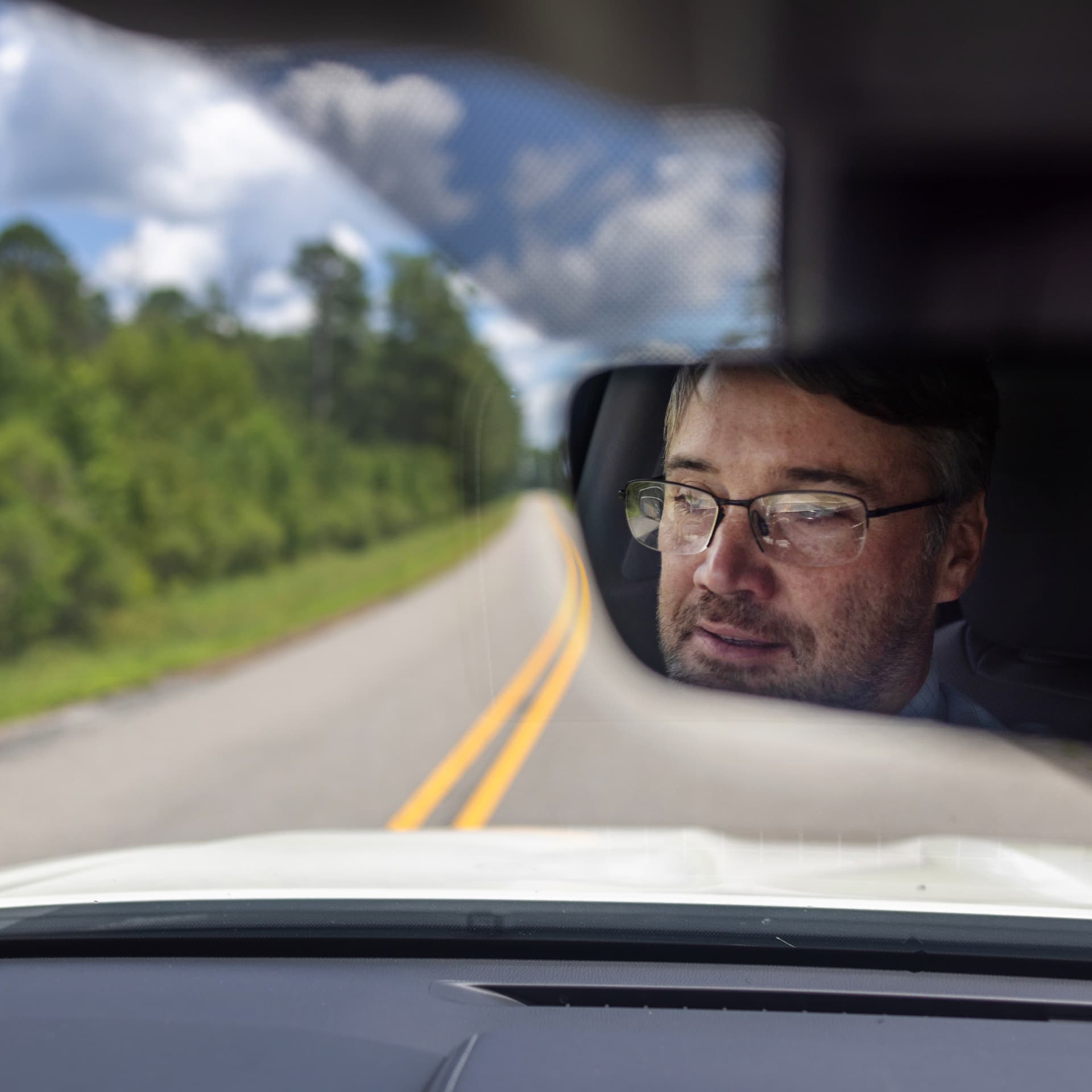
Christopher Kinnison, 46, worked at his own one-man law firm in the central Louisiana city of Alexandria, putting him within a two-hour drive of the state’s nine ICE facilities, the highest number of any state other than Texas. Most of his clients were detainees, and his business cards promised “Fervent Representation for Uncertain Times,” because he knew how quickly immigration policy could change with every new administration. But nothing had prepared him for the change that began when President Donald Trump took office in January.
Arrests were up in every part of the country compared with the year before. There were reports of people being detained by ICE at courthouses, farms, car washes, a meat production plant in Nebraska, an Italian restaurant in San Diego and outside a church in Oregon, sending the number of people in immigration detention to more than 56,000, well over the budgeted capacity of 41,500.
One in every 8 of those detainees ended up in rural Louisiana, becoming some of the most hidden-away people in America. Every week, more calls came into the law office in Alexandria, and now it was half a year into Trump’s presidency, and Kinnison hadn’t been able to slow down long enough to process what his days at work were becoming.
Ruby Cramer reported, wrote and narrated the piece. Bishop Sand composed music and produced audio.
Subscribe to The Washington Post here.