In short
Podcast Episode Summary: Post Reports - Get Ready for Trump’s World Cup
Episode Overview
- Title: Get ready for Trump’s World Cup
- Date: December 8, 2026
- Hosts: Ava Wallace, Thomas Floyd, Rick Maese
- Focus: The intersection of the 2026 World Cup and U.S. politics, particularly President Donald Trump’s involvement and the implications of his administration’s policies.
Key Themes
- The World Cup Draw
- Event Details:
- The World Cup draw took place at the Kennedy Center, featuring performances by well-known artists (Andrea Bocelli, Robbie Williams, etc.).
- The event was described as a mix of an awards ceremony and a sporting event, likened to "Selection Sunday" for college basketball.
- Importance:
- The draw determined the groupings for the World Cup matches scheduled for the summer.
- It officially marks the start of the World Cup season, allowing fans to plan travel and purchase tickets.
- Trump’s Influence
- Role at the Event:
- President Trump was notably involved, attending as a co-host alongside leaders from Canada and Mexico.
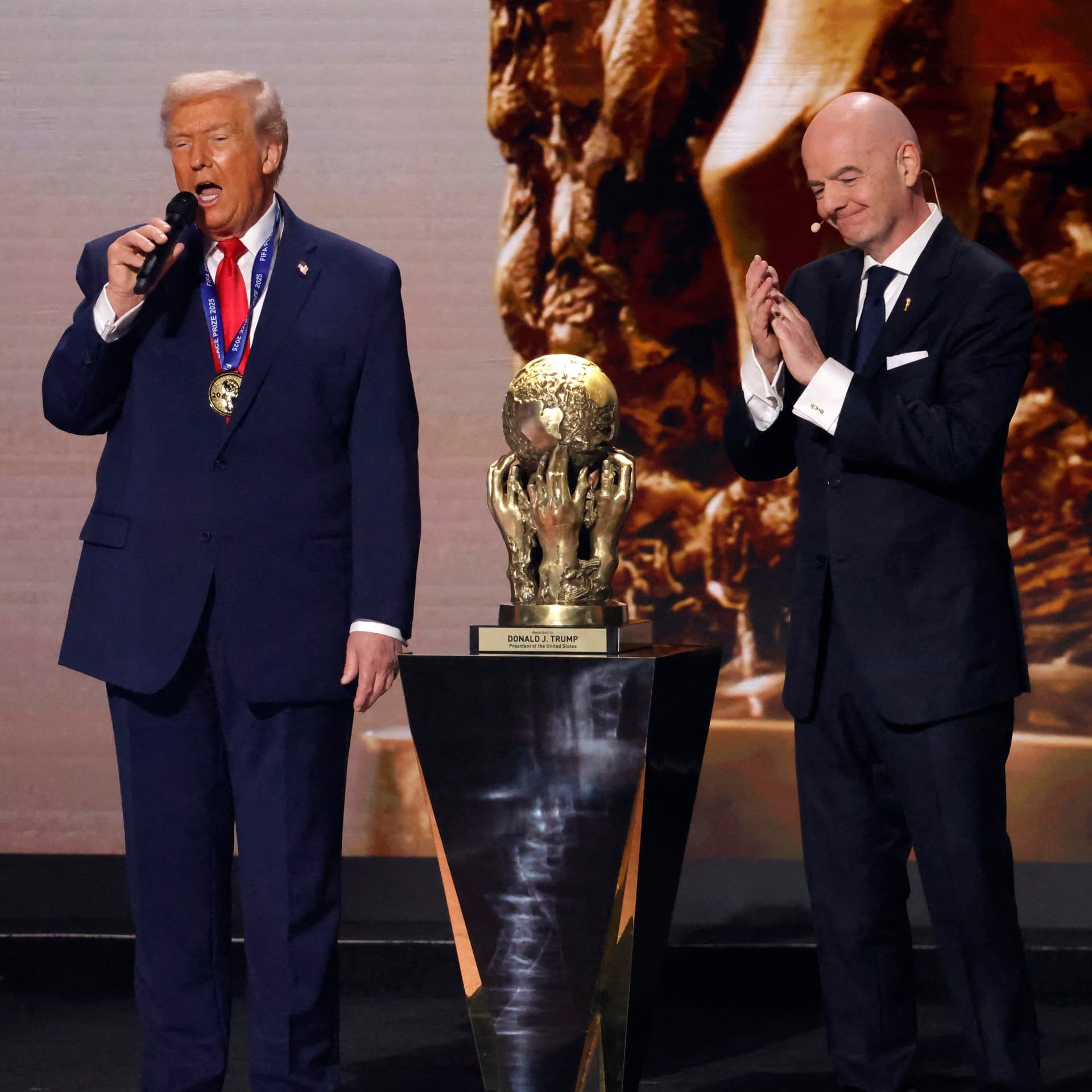
- He was presented with an inaugural FIFA Peace Prize, raising questions about the motivations and implications behind this award.
- Relationship with FIFA:
- Trump's administration has developed a close relationship with FIFA, specifically with FIFA President Gianni Infantino.
- The Kennedy Center's hosting of the event was influenced by Trump's lobbying efforts, marking a significant political shift in how sports events are integrated with U.S. governance.
- Political Undertones
- Concerns Raised:
- Human rights groups are concerned about the implications of Trump's policies intersecting with the goals of the World Cup, particularly regarding immigration.
- The U.S. has adopted strict immigration policies that may conflict with the World Cup's intention to promote tourism and cultural exchange.
- Public Perception:
- Leaders from Canada and Mexico are cautious not to offend Trump, navigating a delicate political landscape while promoting the event.
- Future Implications of the World Cup
- Format Changes:
- The 2026 World Cup will see an expansion from 32 to 48 teams, resulting in a longer tournament and more matches.
- Anticipated Challenges:
- Concerns about how U.S. cities will prepare for the influx of fans and potential safety issues, including possible enforcement actions related to immigration during the tournament.
- Team Performance Expectations:
- The U.S. Men’s National Team drew a favorable group, raising expectations for advancement into the knockout rounds.
Key Takeaways
- Trump’s growing involvement in the 2026 World Cup raises questions about the intersection of politics and sports.
- Human rights concerns regarding immigration and the hosting of international events are pertinent issues as the tournament approaches.
- The changing format of the World Cup may alter fan engagement and overall experience.
Conclusion This episode of Post Reports highlights the complex intertwining of sports and politics, as the upcoming 2026 World Cup in the U.S., Canada, and Mexico is not just a significant sporting event but also a focal point for political discourse and human rights discussions. The involvement of President Trump and the implications of his administration's policies create a narrative that extends beyond the soccer field, prompting listeners to consider the broader impact of such events on international relations and domestic policy.
Written by AI. May contain mistakes. Listen to the episode to check what was said.
Transcript
Automatic transcript. May contain errors.0:28I, um, what did you guys think of the trophy? talking about this unusual trophy that was presented at the World Cup draw ceremony at the Kennedy Center in Washington, D.C. this past Friday. It wasn't a soccer trophy. It was a special prize presented to Donald Trump. Because the focus of this World Cup isn't just soccer. It's also U.S. politics.
0:52From the newsroom of The Washington Post, this is Post Reports. I'm Ava Wallace. It is Monday, December 8th. Today, we are recapping last Friday's World Cup draw, President Donald Trump's increasing involvement with the event, and why some are concerned the tournament could be overtaken by U.S. politics.
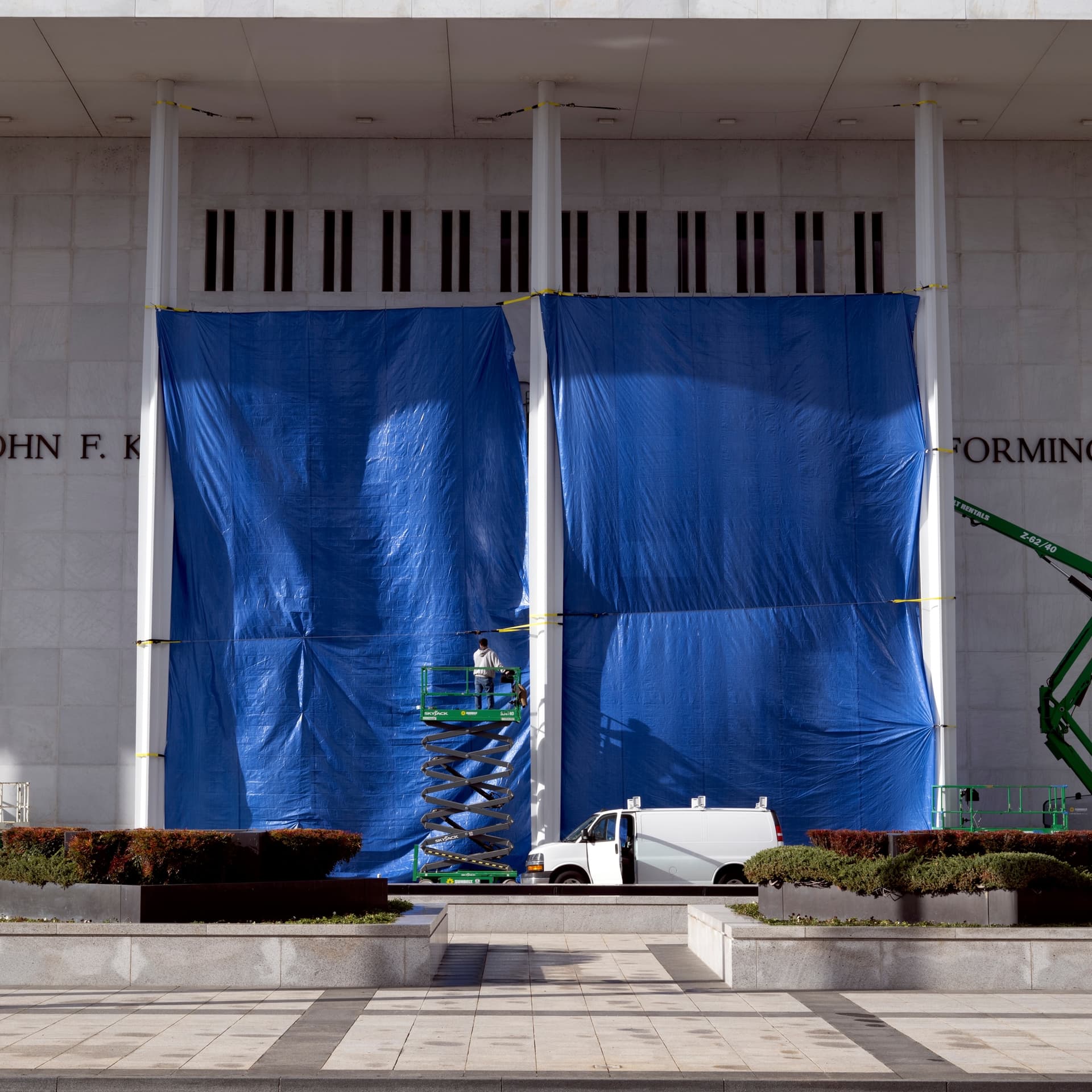
1:16So, Thomas, the Kennedy Center is the nation's cultural center. It's historically been a venue for shows, performances. I've seen ballets there, all types of things. But last Friday, you were there for a sporting event, which I don't think I've ever been to at the Kennedy Center. It was the World Cup draw for our non-sports followers. Tell us what that is and how the event went. The World Cup draw has become something of a mashup between Selection Sunday and the Oscars. The first hour, hour 20 minutes of this year's event looked a whole lot like a glitzy awards ceremony. We had a musical guest, Andrea Bocelli, Robbie Williams, Nicole Scherzinger, Lauren Hill.
2:00We had a pre-taped sketch that involved Matthew McConaughey and Salma Hayek. We had interviews in the audience, a monologue from Kevin Hart and Heidi Klum, banter among various dignitaries and celebrities. And then the final 40 minutes, we got down to business. That's the Selection Sunday part. We are picking lottery balls out of bowls and using that to determine what the groups will be at the World Cup next summer in the United States, Canada, and Mexico. The U.S., Canada, and Mexico actually have known their groups for almost two years. Those were locked in because they are the co-hosts. But everything beyond that, which teams would be in all the other groups, who they would play, what the schedule would be, what cities they'll be playing in, what countries they'll be playing in, that was all determined.
2:51over this past weekend. And now if you are a fan going to the World Cup, you can really start to plan travel. You can buy tickets. You can, you know, take vacation days. This is where, you know, the planning for the World Cup really begins. You can bankrupt yourself to buy tickets. Exactly. Yeah. And DC, how did the draw ceremony end up here? It was widely reported to be bound for Las Vegas. That is where the World Cup draw was held when the U.S. previously hosted the World Cup. And then something at the 11th hour, it appeared to change to the Kennedy Center. Donald Trump, now the chairman of the Kennedy Center, after his administration took over the arts facility earlier this year, he has a tight relationship with FIFA President Gianni Infantino.
3:37And it is understood that he lobbied for the Kennedy Center to host this event. And the World Cup draw is a really big deal. It's kind of trumpeted as the unofficial beginning of World Cup season. I read so many things that were like the World Cup starts today. President Trump is one of three hosts. So Mexican President Claudia Sheinbaum was also there. Canada's Prime Minister Mark Carney was there. But President Trump himself seems to be positioning, recentering focus directly on Washington, D.C., directly on him. And he's going to be quite involved in the upcoming games. Are leaders of the host countries often this hands-on?
4:16Well, I mean, I'd say no. If we go back, I mean, if we go back historically. So 1994, as Thomas mentioned, was when the Men's World Cup was last in the United States. So that draw was a very Vegas-esque affair. It had Stevie Wonder, Dick Clark, Rod Stewart. Sounds great. But it did not have any politicians. There were no heads of state there. And I'm not even sure anyone gave it a second thought back then. But I would say things have changed a little bit. over the past few cycles. And if you go back to, I don't know, Brazil, I think even South Africa, maybe, but certainly Russia, you know, the heads of state were in attendance at the draw, but it was mostly ceremonial.
4:51They were there to kind of wave their hand, you know, smile for the camera. Trump took it to a whole new level and FIFA took it to a whole new level this time. Okay, so now President Trump is really getting involved, it seems. And he's kind of involving Washington, D.C. and the Kennedy Center to do it. Thomas, you'd mentioned earlier this year that the administration had seized control of the Kennedy Center. The Board of Trustees voted to install President Trump as the chairman of the board in February. The former president was removed from her position. It's been a little bit of this hostile takeover by the Trump administration.
5:24Rick, you also reported that for the World Cup draw on Friday, FIFA paid nothing. They got to use the space for free. Can you tell me a little bit more about that relationship between the Kennedy Center, the Trump administration and the World Cup? What has that become? Yeah, I mean, historically, it is an apolitical venue. It's a place to watch plays and musicals and symphony orchestras. And Trump is just another example of him kind of putting his fingerprints on whatever he can. And the organization and the center has changed. And there's new leadership. The Post has reported there's plunging ticket sales.
5:57The type of programming they're bringing in is different as some acts refuse to come. And they're recruiting other kinds of acts to show up. And so the center is just fundamentally changing. And we saw it again Sunday night with the Kennedy Center Honors where Trump was not only there in a box, he was actually on stage. He was emceeing the thing. He said he played a role in selecting which artists were honored there. Kiss, George Strait, Gloria Gaynor. I mean, Trump said he was the one that played a role in picking those. And he even joked that he might give himself a Kennedy Center Honor Award next year.
6:27So we're just seeing that whatever he can kind of put his fingerprints on and tailor to his kind of tastes, that's what he's doing. And so, as you kind of mentioned, FIFA signed a contract where they're paying zero rent and they took over the Kennedy Center for three weeks. There were no shows that were in the concert hall for that period. Now, Kennedy Center, I should point out, has pushed back. Kennedy Center officials say, no, we're actually getting millions of dollars. They've provided no documentation. They don't answer any questions about that. And FIFA has declined to comment. So we don't really know if the administration is making any money, but there's certainly on paper there's no evidence of that so far.
7:03And that's just kind of a big deal because hosting something like a World Cup is usually a chance for the host nation to increase tourism, to make some money. FIFA is this huge body within sports that everyone pays attention to that's quite wealthy, got all these celebrities out to the Kennedy Center on Friday, but is not paying to use any of that space. Thomas, how did Trump and Infantino's relationship begin? How did it evolve? When did they first become friends? Infantino has been a constant presence at Trump's side ever since the second Trump administration began. There have been many a photo opportunity where Infantino miraculously appears alongside Trump.
7:45There was a visit by the Italian club Juventus to the White House during the Club World Cup in June. This is a new event or rather a reinvented tournament that FIFA experimented with in the United States last summer, basically as a trial run for the traditional World Cup. Imagine your World Cup with national teams, except this is club teams. This is Real Madrid, Chelsea, Inter Miami, clubs from around the world all came to the United States this past summer and played in a month long tournament that looked a whole lot like the traditional national team World Cup. And when Juventus played a game in D.C.
8:29a few hours before the match at Audi Field, they did a photo op at the White House and Infantino was there. Does the FIFA president need to be at the White House for a photo op with an Italian soccer team? It's a little unusual, but that's just the kind of relationship that they have. And they seem very friendly. Infantino was at, he was there earlier this past week when there was the sort of renaming of the Donald Trump Institute for Peace here in D.C. The two just seem to be in each other's orbit a lot. And it's unusual, but it just seems to be the way it is going into this World Cup. I mean, you're right.
9:10He's appeared at political events. You know, it's not just sporting events. Infantino is showing up wherever he can. If there's a Gaza Peace Summit, he might be there in the background. He's almost like positioning FIFA as, you know, this nebulous nation out there. And him as another leader that should have a seat in the United Nations. And Trump is giving him an audience more so than most of our allies at this point. Giving him an audience and also turning around and saying, shouldn't we rename American football? Wasn't that he made comments about the NFL, right? We got to come up with a different name.
9:37There's pandering going on back and forth. That's big pandering. Rick, what have leaders in Canada and Mexico, what has their reaction been, if you talk to anybody kind of after the World Cup draw, or just generally about how Trump is inserting himself here? I think you're seeing a lot of political tap dancing. You know, no one wants to offend Trump. They don't want to offend the United States. I think you hear mostly whispers. And I talked to some folks last week, both before and after the draw, about Trump specifically. And people don't want to tackle it head on. They don't want to, they don't want to, you know, upset the waters at this stage.
10:10We saw the head coach of Canada, Jesse Marsh, spoke with reporters on Friday after the draw. And Marsh is an American, a very outspoken American. And he was asked a couple of questions and he kind of turned to his PR guy and said, hey, I'm not supposed to talk about this, right? So it's very clear. No one wants to say anything. They want the focus to turn to soccer as quickly as possible and away from Trump. I will also chime in and say U.S. coach Mauricio Pochettino, midfielder Tyler Adams, and Ford Christian Pulisic all addressed the spectacle, all brought up Trump during availability after the draw, and they all spoke very positively.
10:44They all spoke about taking pride in the event. There was a lot of talk about how it was this uniquely American spectacle, that it felt something like, you know, a Super Bowl halftime show type vibe that was distinct from what FIFA normally stages. And, you know, at least, you know, publicly, the key figures from the U.S. men's national team are going along with this and speaking positively about Trump and his administration.
11:19After the break, we're going to talk about why some critics are concerned about President Trump's increasing involvement in the World Cup and how his administration's immigration policies might clash with the goals of the tournament. We'll be right back.
11:42One of the more interesting things, you guys, about soccer is, and the World Cup in particular, is host countries usually use it as almost kind of a tourism advertisement. They want to say, come to our country, look at what the show we can come on, look at all of the great things we have here. But the U.S. is not really in that kind of mode right now. They're very much saying with President Trump's immigration policies, like, actually, we don't want a lot of people coming into this country right now. So with President Trump's growing involvement, there are a lot of concerns about that, about how his immigration policies clash with the goals of the World Cup.
12:21Has the World Cup always been this political? Have we ever seen these clashes before? I like the way you phrased that, because I went to an event Friday night sponsored by the Mexican hosts, and everyone was just going on and on about how our country is open. We want to see the world here. Usually countries use events like this to showcase themselves to the world, to invite people into their borders, and to promote long-term tourism. I mean, you think about the World Cup, there's going to be, I don't know, Thomas, but a billion viewers or something over the course of the tournament. That's a lot of eyes on your country.
12:50And I think Mexico and Canada especially are taking that kind of approach. They want to show off their people, their culture, their places, their cities. The United States, a little bit different. They're clearly saying all the right things. They're saying we want to see you come in here. They're looking forward to the visitors. But on the other hand, there's at least two nations or we know there's two nations that have qualified, Iran and Haiti, whose fans are not welcome here. They're not going to be able to get visas the way things currently stand. And it kind of is sending a broader message to not just those countries, but other countries that, hey, United States wants some of you here.
13:22And then another thing people are worried about is what are we going to see in some of these U.S. cities when the World Cup actually comes to town? You know, first of all, Donald Trump is threatened to move matches out of some of the cities that he deems unsafe. And, you know, the people are very concerned about some of the raids they're seeing, you know, in places like Los Angeles. And so there was a question last week, Andrew Giuliani, he's the head of the task force between the White House and FIFA, was asked, you know, are there going to be raids during the World Cup? And he would not he would not rule it out.
13:51He says safety is the top priority for this president and we're not going to rule anything out at this stage. So I think a lot of people are keeping a close eye on that. They don't want the spotlight to be on, you know, immigrants being detained and deported in the middle of the World Cup. And Trump has threatened to kind of loosely threatened, I guess, to take some hosting capabilities away from cities. Can he do that? It's kind of like a political cudgel he's using at this point. I guess he can't do it himself. He can lean on FIFA to do it. It'd be very difficult for them to relocate matches this far down the road.
14:21But, yeah, cities that he has a particular issue with, you know, he's mentioned Los Angeles, Seattle, Boston. And never mind that some of these places are San Francisco. The games aren't actually in, you know, San Francisco or Boston. So he's upset with some of the Democratic leadership in these places. And I suspect we're going to keep hearing these threats until the games actually start. And Thomas, one of the featured moments on Friday was Trump winning this FIFA Peace Prize that FIFA created a few weeks after he was passed over by the Nobel Peace Prize Committee. What is this prize? Why did President Trump win it?
14:56What happened there? The FIFA Peace Prize, as is very subtly named, was in fact announced, I believe, about four weeks after Trump was overlooked for the Nobel that he actively campaigned himself for. In this situation, I think it is it's not overly difficult to connect the dots. I think Infantino sees Trump as an ally. He wants to have Trump on his side going into this World Cup. There are many reasons why FIFA benefits from the administration of a host nation being friendly to their organization. There were$600 million of funds in the legislation passed earlier this year for FIFA World Cup security.
15:45There was a program recently announced that will allow for visas for World Cup ticket holders for those visa interviews to be conducted faster than they would be normally. These are just some of the reasons why FIFA would want to be really friendly with Trump, really friendly with his administration. And if they can stroke his ego with a FIFA Peace Prize when he feels spurned by the Nobel Peace Prize, then, you know, they are not above doing that kind of thing. And I think that is what we saw on Friday. You know, the award itself, there's no set criteria for the thing. So we've asked FIFA a series of questions and saying Human Rights Watch also sent a very detailed letter, pointed letter with questions.
16:29Who's making this decision? What are the criteria? What was taken into consideration? who ultimately chose Donald Trump to be the first recipient. There are no answers. And you can say the fact there are no answers, maybe that is your answer. Rick, why are critics concerned about this peace prize that FIFA kind of made up? You know, can't FIFA just give a guy a prize if they want to? What are people saying about it? Well, look, FIFA always has obstacles to navigate when it's staging this tournament. It's a huge undertaking to host all these matches in cities across the country or across the continent in this case.
16:59In the past several cycles, human rights focus has been on, you know, people getting pushed out of their homes to make way for new stadiums. South Africa. Yeah, the treatment of workers as they've kind of built up these new stadiums as we saw in Qatar. And kind of is a backlash to that or, you know, that kind of triggered a lot more conversations around human rights in the World Cup. And for the first time, FIFA said, you know, we want to see all the bids for the 2026 World Cup, but we actually want a human rights component included. Give us your strategy. How are you going to take care of people?
17:29And so that was part of the United bid that we saw several years ago. And they accounted for human rights and said, you know, this will be the tournament that takes it into consideration more than any other. And so I think some of the concern is, is that really what we're seeing, you know, in the United States of America right now, the way the Trump administration stance has been on immigrants and deportation? And so that's really got a lot of critics and human rights advocates up in arms because they're saying, how can we honor this guy, give him this kind of award, platform him this way? when all of his actions, you know, on the ground are sending a different message to the world right now.
18:06Thomas, what can we expect from this upcoming summer aside from, I'm actually, I'm not mad that DC is not a host. I don't want the traffic. Like, that's such a selfish, like, sports writer thing of me. But, no, Rick said that we're going to kind of see a transformation from some of these cities. But what can we expect from hosts, from people traveling around? Just, you know, tell me everything. Well, the big headline, you know, aside from the political angle at play here, is this is the first 48-team World Cup. The World Cup had been frozen at 32 teams since 1998. So that means more teams, more co-host nations, more matches.
18:47The tournament is a week longer. It is now, I believe, 39 days, which will make it easily the longest World Cup in history. You have to play eight matches in order to win the World Cup. So it is going to be quite the enduring spectacle this summer. It will be fascinating to see how this sort of stretched out 48-team competition changes the fan engagement, changes the quality of play on the field. There are also storylines about preparedness in terms of, you know, field conditions, midsummer temperatures in the United States. We have the World Cup finals at 3 p.m. kickoff at MetLife Stadium in East Rutherford, New Jersey in mid-July.
19:34So there are there are all kinds of kind of interesting questions and storylines surrounding this World Cup. It just seems to have been eclipsed for now by the Trump administration's involvement in the proceedings to date. And just quickly, U.S. team, pretty friendly draw, right? Yes, they drew with the World Cup draw to give a quick rundown. There are four pots of teams that are basically ranked by, you know, the first pot is the highest seeds and then the second pot is the second highest seeds and so on. The U.S. drew the easiest team from the second pot, Australia. They drew a middle of the pack team, Paraguay, from the third pot.
20:14And then from the fourth pot, they drew a European playoff winner that, you know, it'll probably be Turkey, which is not the most difficult matchup they could have drawn. So all in all, it's a group that I think the U.S. would certainly expect to get out of. And it's also, you know, three teams that they have played in the last year. They beat Paraguay last month. They beat Australia in October. They played Turkey pretty tight in June while fielding an experimental team. So this is a group I think the U.S. would feel pretty comfortable about. So they're going to win, right? They're totally going to win the World Cup.
20:50Called it here. They got to get out of group state, though. Yeah. Like, they have to. They're home turf. Yes. And also a quirk of the 48-team World Cup. If you finish in third place in your group of four, you probably will still advance with the way the format works. So it's actually not particularly difficult to make it to the knockout round now. They could do third. Yeah. Right? Check in with me in July. Yeah, we'll see. Thank you both. I think that was a good place to leave it. But I appreciate you being here. Thank you so much, Rick. Thank you. Thanks, Thomas. Thank you.
21:25Rick Mace and Thomas Floyd both covered the draw ceremony for The Washington Post. Today's episode was produced by Lucas Trevor with help from Josh Carroll and Alana Gordon. It was mixed by Sean Carter. It was edited by Thomas Liu and Reena Flores, and thanks to Sarah Larimer and Joe Tone. I'm Ava Wallace. We'll be back tomorrow with more stories from The Washington Post.
From the publisher
The 2026 World Cup is being held in the United States, Canada and Mexico. Before the tournament selection took place Friday in Washington D.C., FIFA President Gianni Infantino presented President Donald Trump with an inaugural Peace Prize from soccer’s global governing body. Celebrities from the worlds of sports and entertainment were also included in the programming lineup.
On today’s episode of “Post Reports” host Ava Wallace is joined by Washington Post sports journalists Thomas Floyd and Rick Maese. They break down what happened at last week’s World Cup draw and how it will shape the tournament this coming summer.
Then, why some human rights groups are raising questions about the relationship between President Trump and FIFA.
Today's episode was produced by Lucas Trevor with help from Josh Carroll. It was mixed by Sean Carter. It was edited by Thomas Lu and Reena Flores. Thanks to Sarah Laramier and Joe Tone.
Subscribe to The Washington Post here.