In short
The episode explores how generative AI is reshaping dating apps and online courtship. It centers on Richard Wilson (31, San Diego), who suspected his dating-app match used ChatGPT: she sent “essay”-length messages, but was quiet in person; she also remembered an obscure brunch detail and asked questions that felt like ChatGPT. Richard didn’t ask directly, leaving him anxious about “who” he was connecting with. The guest, Tatum Hunter, a tech reporter at The Washington Post who covers Internet culture, explains that AI is used via standalone tools (rewriting messages), AI “dating coach” apps (e.g., Riz), and in-app features by Match Group (Tinder/Hinge/etc.) that read DMs to warn against offensive messages, suggest profile/photo edits, and even include an AI flirting game.
Key claims
AI can “amplify” users’ messaging, but may increase impersonality, manipulation, and uncertainty about authenticity. Notable examples include Tinder’s voice-based AI character game and Match Group’s DM “ping” feature.
Written by AI. May contain mistakes. Listen to the episode to check what was said.
Chapters
Tap a time to open that second in VOInterview with Tatum Hunter
2:57 to 3:25
An introduction to Tatum Hunter's insights on AI in dating.
“Today, how artificial intelligence is changing the way people meet and fall in love.”
Richard's Experience with AI in Dating
3:25 to 4:38
Discussion of Richard's doubts about AI use in dating.
“First of all, Tatum, I have to ask about Richard.”
Basics of Dating Apps
4:38 to 7:12
Understanding how popular dating apps operate today.
“So I'm like, where are the essays in person now?”
Generative AI Tools in Dating
7:12 to 12:16
Exploring various AI tools available for dating app users.
“Since the arrival of dating apps, we've seen it go from something that's quite stigmatized, oh, what a weird thing to meet your partner online, to now if you meet someone in person, that's shocking.”
Pressure on Dating Apps to Integrate AI
12:16 to 14:02
Examining the industry's pressure to adopt AI technologies.
“Small talk is really heavily coded, right, especially on dating apps.”
Integrating AI into Dating Apps
14:02 to 15:36
Explore why dating apps are integrating AI and the potential benefits.
“Tatum, let's now talk about why these companies are using and integrating generative AI more into their apps.”
Challenges and Changes in Dating Culture
15:36 to 17:03
Discuss the evolving sentiment towards dating apps amid rising harassment and competition.
“And a significant chunk of people who get that message decide not to send it.”
The Impact of Generative AI on Dating
17:03 to 19:18
Analyze how AI tools are altering dating dynamics and perceptions of authenticity.
“And there was a group of users, you know, who sued Match Group for what they claimed was an addictive app, an app designed to keep them swiping, designed to keep them single, to benefit the company's bottom line.”
Real Stories: AI's Influence on Dates
19:18 to 21:46
Hear about personal experiences affected by AI interactions on dating apps.
“And in that sense, you see that it's gamified.”
Future of Dating: Real vs. Digital Connections
21:46 to 22:48
Speculate on the future of dating and the balance between online and real-world interactions.
“What's the future of the dating landscape?”
Show all 11 chapters
Closing Thoughts on Dating Apps and AI
22:48 to 24:25
Reflect on the implications of AI in dating and the importance of genuine connections.
“I also don't think generative AI will be any sort of silver bullet for them because at the end of the day, I think humans want a human connection.”
Transcript
Automatic transcript. May contain errors.0:01John Deere is putting in work and putting up highlights. Oh man, look at those passes. Tillage, planting, harvesting. Three years in and these pre-owned machines are still at the top of their game. We're talking reliability, performance and long-term potential. And get this, these veteran machines can pick up the latest precision tech with ease. You know it and fans ready to add John Deere certified pre-owned equipment and more options to their lineup can shop at machinefinder.com. Booyah! Earlier this summer, Richard Wilson sent a long message to a woman he met on a dating app. When she replied, something felt off.
0:43You know, I ended up sending them like what was essentially like a letter's worth of info in a text message, just because I don't get the text all day. And I got like more than a letter in return. And that for me was a little bit interesting because not everything that I said needed to be addressed. So my alarm bell started going off. Richard is 31. He lives in San Diego, and he's been using dating apps for a couple of months. So this kind of energy matching was not what he was used to. And then this woman brought up a minor thing he had said in passing two weeks before about something he had eaten at brunch.
1:22Of all the things for someone to remember about you, like, it just really feels like this person is hearing and listening. to every single thing that I'm saying. And then the questions that they were asking definitely felt like something that I would have seen on ChatGPT if ChatGPT was trying to entertain me. Richard met up with her, and she was a real person, okay? She was not an AI bot. But he suspects the woman was using artificial intelligence in their lengthy pre-day conversations. Because in person, the woman was very quiet and not talkative. Richard spoke about this experience with my colleague, Tatum Hunter.
2:02Well, generative AI that can speak naturally and understand the written word is popping up in all sorts of consumer tech products, including apps for dating. Tatum is a tech reporter at The Post. She writes about Internet culture. And lately, she's been noticing signs of artificial intelligence everywhere, including on dating apps. where people are looking for real human connection. This was interesting to me because I'm always curious about when consumer tech develops and it has this ripple effect where a new feature appears in your app and six months down the line, the way you relate to your mom is different.
2:43That kind of thing happens all the time. And this is a great example of how a really subtle shift in our apps can have some pretty big consequences for our sex or romantic lives. From the newsroom of The Washington Post, this is Post Reports. I'm Elajeh Izadi. It's Thursday, July 10th. Today, how artificial intelligence is changing the way people meet and fall in love. Tatum explains why dating app companies and some users are embracing AI. And what that means for people looking for romance.
3:24Tatum, thank you so much for joining me today. Thanks for having me. First of all, Tatum, I have to ask about Richard. Do you know if he ever asked his date if she was using AI? Richard felt too nervous to ask his date right out if she had used AI to write those messages. The other day, I had floated the idea that I was like, oh, I had brought up ChatGPT for something with work. and she jumped on and was immediately like, oh my God, I love ChatGPT so much, I use it all the time. And then I didn't want to pry too deeply into it, but to me, I was like, uh-oh. He'll kind of, for the rest of time, just be wondering, which is so interesting to me because we don't have this etiquette yet of disclosing when we're using AI to write emails or to write romantic flirty texts.
4:10So his paranoia can kind of consume him. Yeah, like anyone else would. Yes. So I called Richard back to ask where they had landed. Okay, so the person who you were curious if they were using Chachi PT, what's your status now? We are still talking. We had met like a couple days ago, and I definitely, I think that was like my biggest indicator was that they were actually like very quiet and they had a lot of anxiety in person. Meanwhile, they were sending me these essays responding to my messages, right? So I'm like, where are the essays in person now? Like, I was actually very much enjoying them, which is probably because ChatGPT was affirming all of my bullshit.
4:50But the fact that when we got in person, it was like, oh, I'm the one leading the conversation now. Then I was like, OK, this is actually very strange that, you know, I'm getting two sentence answers when I have been getting essays. Part of Richard's problem is that he doesn't know whether she was using ChatGPT to chat with him. And that uncertainty changes the quality of their connection. He's sitting there wondering, who was I talking to? Who was I connecting with? Who was I falling for? Mm-hmm, mm-hmm. I want to talk more about how people are using AI in all sorts of ways in dating online. But before we do that, for people who have never had to date online, whether they like it or not, what are the basics of dating apps?
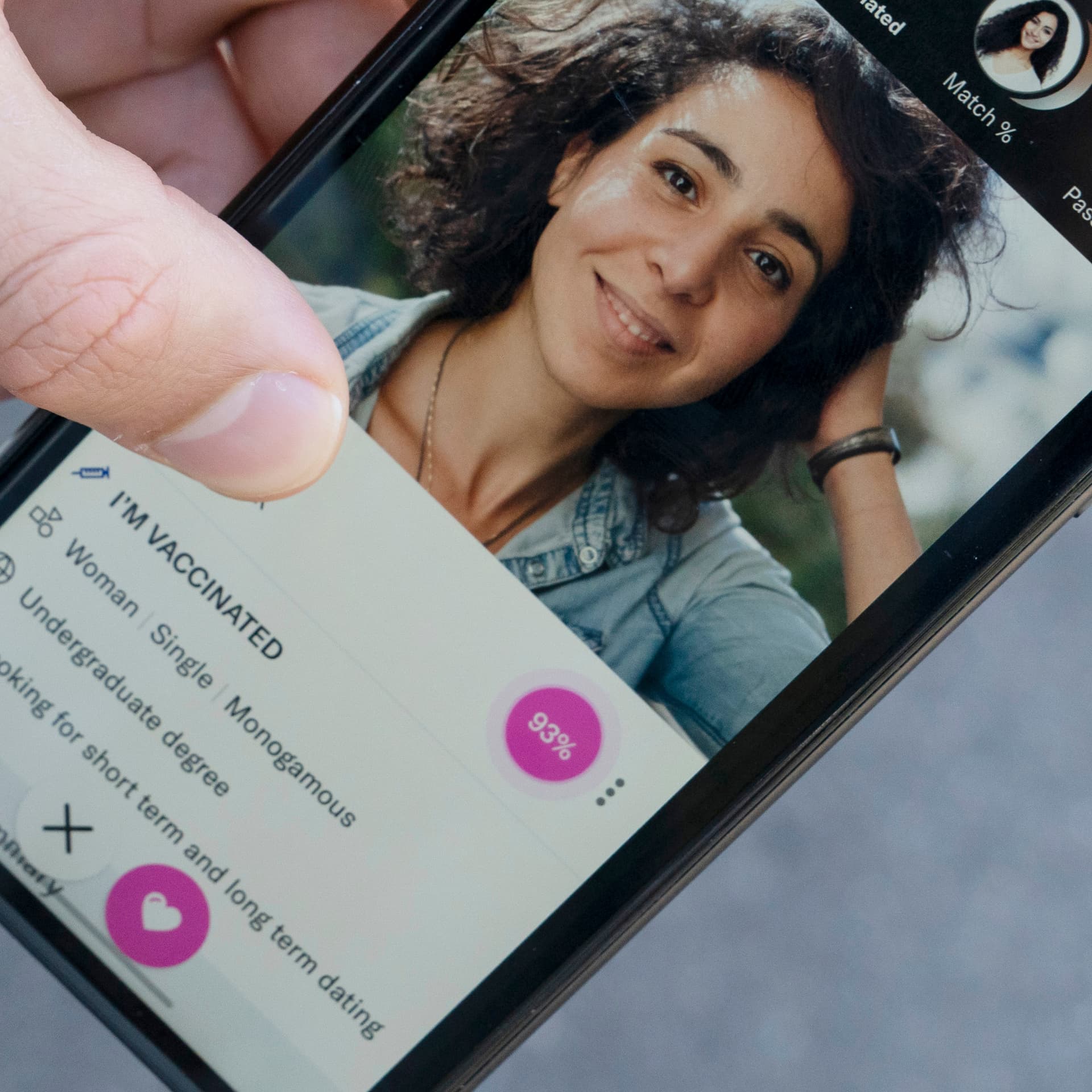
5:34How do they work? What are the dating apps that are really popular out there? So if you are going to go on a dating app, you have a few different options. You could get on to Hinge, which is known as a little bit more relationship-focused. You could get on to Tinder, which is known for being a little bit more come-and-go, maybe for hookups or one-off days. So on a dating app, you are seeing people's photos and usually a handful of blurbs about them. Maybe they're answering some prompt questions that the app gives them. Maybe they're freewheeling, describing their hobbies, their work, their personal life.
6:08and you are deciding on each photo normally whether you're saying yes to this person, I would be interested in matching with them and getting to know them better or no, this person isn't for me. Once you match, you usually get the capability to message back and forth with that person. So there's a lot that goes into this. You have to have an opening line that... Written. Yeah, right. You have to... Ideally, that references something about that person and feels unique to them. Then you have to have some chit-chat and develop this rapport, then you have to set up an in-person date and get that person to actually show up.
6:44So, you know, from the beginning of creating your profile to the end of seeing a human in person, there's a lot of opportunities to fumble. And Tatum, how widely used are dating apps right now? So Pew Research says that about a third of U.S. adults have used a dating app in their hunt for love. And there are some studies that suggest that most relationships now begin on the internet. So they really have fundamentally changed the way people are dating if they are quite popular. Absolutely. Since the arrival of dating apps, we've seen it go from something that's quite stigmatized, oh, what a weird thing to meet your partner online, to now if you meet someone in person, that's shocking.
7:25Yeah, you're a unicorn or a dinosaur. Either way, right? Yeah. So Tatum, tell me how people are using generative AI on dating apps. So if you want to use AI in a dating app, you have a few options. You can use a standalone tool like ChatGPT to come up with or doctor the messages that you're sending to people. You can also use something that's billing itself as like an AI dating coach like the app Riz, which is asking you to upload screenshots of your conversations with people on dating apps so that it can tell you what to say next or give you tips for how to come off better. Okay, and so what about any features that dating apps themselves are using within their own platforms?
8:07Yeah, now Match Group, the biggest dating app company, it owns Tinder, it owns Hinge, it owns Plenty of Fish, it owns Match.com, is introducing generative AI features into its app. So it's always had some form of artificial intelligence powering its algorithm, right? Now it has AI also reading your messages to stop you from sending weird stuff, reading your profile to give tips on how to best present yourself, and also looking at your photos to give suggestions for the most flattering ones to use. Have you experimented with any of these tools? I'm on Hinge myself, and when I filled out my profile, I immediately got prompted to share more, share more.
8:46A few months ago, I tested an AI game that Tinder released. It was inside the app. And they said, we're going to have you talk out loud to some AI-powered characters to help you get better at flirting. And so I tried my hand with a few different fake guys. So in one situation, I was at an airport. I'm holding my cell phone here right inside the Tinder app. And his voice comes forth from the phone. And he's like, oh, hey. Like a speakerphone or something. Yeah. I like it's not written text, right? He's speaking powered by generative AI. And he says, hey, I'm so sorry. I must have gotten your suitcase by mistake.
9:24What? And then it's my turn. I have to talk and I have to I have to be charming. I have to be flirty. And so I tried my best to be kind to this stranger who'd stolen my luggage. And he asked me if I wanted to go get coffee right then. And I said, no, I'm at the airport. I got a flight to catch. No, how about, you know, so I clearly said the wrong thing because I got dinged for kind of being chilly, for not being accommodating to this AI man. A lot of dating apps, when they're justifying their use of AI, are falling back on this idea that we need help. People need help sounding flirty, sounding thoughtful, sounding desirable.
10:05And that AI can help smooth out some of these rough edges of your personality and help you connect with people more successfully. But it sounds like from that experience you had with that feature, that it didn't really, like, it didn't feel like that's what it was doing for you. Well, the suggestions it gave me, like if I were to round up the feedback I got from this AI game, it said, you know, be more accommodating and kind. Share more about yourself. Don't make jokes. Oh, like at all? Keep it, you know, don't, I think it told me I was being snarky or something. So you can see how there's a world where that kind of feedback would help someone.
10:43And there's a world where it makes no sense at all. The way that these models get trained is on giant amounts of text, like from the internet. And the internet reflects the biases that are in society, right? So it's kind of hard to be chatting with an AI guy and have him tell you that you're being snarky and you're not sharing enough about yourself and not being accommodating. Like, hey, where'd you learn this? The internet? Yeah. Wait, did you learn this from guys on the internet? So it's hard because when AI shows up somewhere, it brings all of humanity's strengths and foibles with it. I would imagine a lot of people listening to this would be feeling from uneasy to horrified at the idea that generative AI is being used in all these ways and it's coaching you to do certain things that feel like not aligned with your personality, kind of telling you to behave differently.
11:34But on the other hand, how is this any different than someone hiring a dating coach to help them craft better messages or come out of their shell? I mean, there's so many people who are shy or people who come off great in person, but if they're trying to write something out to someone, they suffer. Or how is this even different than using spellcheck, which is a form of AI to make yourself seem smarter by not misspelling every other word? One researcher I spoke to used the word amplifying. You're not hiding yourself. You're amplifying yourself if you use generative AI to converse, like, with a potential match.
12:10So I had one guy reach out to me saying that it's been immensely helpful to him because he's a little shy. He kind of struggles with small talk. Small talk is really heavily coded, right, especially on dating apps. Yeah, you're asking about that person's day, but you're really kind of tossing the ball into the air, seeing how they hit it back. And that can feel really stressful if that's not your wheelhouse. So what dating apps are saying and what some users are saying is that this helps me get to that in-person date where my real self can shine through. Yeah, I'm not a great texter, but I'm a great guy and I deserve to get seen.
12:46After the break, why dating app companies are feeling the pressure to use AI. We'll be right back.
13:39We'll be right back. Look at those passes, tillage, planting, harvesting. Three years in, and these pre-owned machines are still at the top of their game. We're talking reliability, performance, and long-term potential. And get this, these veteran machines can pick up the latest precision tech with ease. You know it, and fans ready to add John Deere certified pre-owned equipment and more options to their lineup can shop at machinefinder.com. Booyah! Tatum, let's now talk about why these companies are using and integrating generative AI more into their apps. So across the consumer tech industry, there has been a real enthusiasm for adding AI features.
14:22And, you know, sometimes these companies will get made fun of, like, who asked for this? Like when Meta introduced those personified bots, right, with different celebrities and characters that people can chat with, there was a big reaction from consumers, like, who asked for this? On the other hand, you don't have to look far to see people really having great experiences using it for email, using it for party planning, for brainstorming a trip, for all sorts of other things. So dating app companies, they don't want to get left behind. They also want to keep people on the app. They make money by selling subscriptions, right?
14:56And so the more valuable those subscriptions seem, the more people are going to pay for them. So maybe one day we could see AI features behind a paywall, right? You're on Hinge. You don't get the bot, you know, that helps you with this or that unless you're a premium member. Or, you know, it just helps them continue to get a flow of new customers onto the app because they claim their goal is to get people on there and then off of there so that they can go recommend Hinge to their friends, for example. So I talked to Match Group a lot for this story, and they said that their goal in adding AI is to boost authenticity, transparency, safety, so that people are having a better user experience.
15:35For example, they have a feature now that is reading your DMs, and if you're about to say something weird or offensive or abusive, it'll ping you and say, are you sure you want to say that? And a significant chunk of people who get that message decide not to send it. So that's great because people are seeing fewer offensive messages. But it's also a little bit scary, right? Like what if you're showing up on a date with someone who is about to hit send on something insane and then they got stopped by AI? Good point. Before you were talking about how popular or widely used dating apps are, but what is the state of the business industry, the business of dating apps right now?
16:12So dating apps have, you know, continued to grow. They have been on an upward trajectory. But if you are paying attention to the culture around dating, the people's sentiment toward dating apps has kind of tanked in the last few years. You see some metrics showing that people experience a lot of harassment. They experience a lot of frustration. And that the whole experience has begun to feel impersonal or maybe a little alienating because of the constant stream of new options and because of what some— And sorry, when you say options, you're talking about like human beings. Oh, yeah. Like it's not the illusion of choice.
16:54It's real, baby. Like, there's always somebody hotter, better, you know, smarter, funnier, waiting just on the other side of that swipe. And there was a group of users, you know, who sued Match Group for what they claimed was an addictive app, an app designed to keep them swiping, designed to keep them single, to benefit the company's bottom line. Has Match Group said anything in response to that lawsuit? As far as people's accusations that dating apps are purposefully keeping you on there, trying to upsell you, keeping you swiping, making you addicted, Match Group has said our goal is to deliver on our promise of getting you, you know, what you're looking for and getting you off the app.
17:37And their hope is that you'll then turn to your friends and say, hey, I had a great time on Hinge. Those friends are single or will become single and then they'll get on and it'll be, you know, this circular loop where nobody has to stay single and trapped. So are these AI features making it more likely people will find value in these apps? Like, is it making these apps more relevant in some way so that they can do better business? For companies like Match Group, that's definitely the hope, that AI features will make dating more efficient and more successful for people who are on the apps. I think when it comes to consumers, it certainly depends on who you ask.
18:16The people who are making use of, you know, something like ChatGPT and then plugging it in to Hinge are probably going to say that it's been a boon for them, right? Because it probably does help them say more and say it more eloquently, maybe. But for the people on the other side who are sitting there wondering whether a partner is using it or being really vulnerable and showing up with their authentic, unpolished self might feel really frustrated by that. Yeah, or feel like, how can I compete against someone else using AI? And in a way, like, maybe it's a little bit of a dating app arms race where when you do feel like the person that you're trying to connect with has an endless stream of other better choices, or at least the illusion that they do, you might be reaching for whatever tool you can find to make yourself sound and look more desirable.
19:06Hmm. But then does the use of generative AI on dating apps make trying to date this way even more impersonal than it already is? One thing we've seen over time, perhaps, is the human connection in dating apps getting more and more and more abstracted. Sure, there's behaviors like ghosting, but there's also behaviors like gaming the algorithm, swiping no on everyone so that you look really choosy and desirable and you see more attractive partners, swiping yes on everyone so that you maximize your chances of getting a match. And in that sense, you see that it's gamified. It's like a video game. These aren't people, they're pixels.
19:44And then when you add in the idea that people might be using some little in-app AI tool, it's easy to blink your eyes and say, what are we doing here? What's my goal? And who am I speaking to? And who am I? Yeah, I mean, like AI kind of can leave me feeling that way sometime. Like, who actually am I in this interaction? Absolutely. So I think there's one interpretation where you use these AI tools to get that first date. You show up. Of course, you're yourself. That's your only option. And it's a connection and everything's fine. But then there's an example like Richard's story where somebody might have used AI to create this false sense of intimacy.
20:28So then when Richard's driving home from that date, he likely feels more frustrated. And in fact, he said, you know, he felt resentful of AI. He felt frustrated with dating apps and he felt lonely. It's just you're not speaking to them anymore. I mean, I have no illusions about that. Like the minute you're answering with an AI, it's no longer you, right? It's the incredibly highly polished trying to affirm all of the things that you think they want. And to me, it just feels incredibly manipulative. Okay. So are Richard and this woman still dating? So Richard did go on a second date with this person.
21:02He was like, maybe if I give her another chance, her, you know, there will be more opportunities for her real personality to emerge. But their second date was a disaster. Richard is a homeowner, which he's very proud of. And so for the second date, he invited this woman over to see his house and to give her a tour. So he gives her a tour of the home. And when they got to his bedroom, she got really pushy physically in a way that Richard did not think was hot, did not like. He was shocked, and it left him wondering if he had been able to get more signals from her true personality. If she hadn't had a tool like ChatGPT to help her say normal stuff, could he have picked up on some weird vibes earlier?
21:46Oh, wow. What's the future of the dating landscape? Like, given your reporting, what do you think is next when you think of dating apps? I could see a world where there's a little bit of a reaction to people's exhaustion and frustration with dating apps that drives them back into the real world to make connections. And those real world connections might be app enabled. For example, I wrote a couple years ago about a speed dating app in San Francisco that you'd show up and meet people in a physical location, but you'd have the app in your hand and it would give you little icebreakers and suggestions for conversations.
22:20Some people find these real life groups on Reddit, on Meetup. So I think when I am sitting around on the Internet trying to get a sense of how people are feeling, I see especially young people have some really smart and cogent critiques of meeting people this way and some real interest in like what would it be like if I just bumped elbows with somebody at a bar and we struck up a conversation. So I don't think dating apps are going anywhere. I also don't think generative AI will be any sort of silver bullet for them because at the end of the day, I think humans want a human connection. So Tatum, you've said you're on Hinge yourself.
23:01After you did this reporting into how AI is being used increasingly in this space, how are you left feeling about these dating apps? I think that I don't want to know how effectively you can leverage tech tools to create a good impression. I want to know whether you can show up and be a little bit vulnerable, whether you can be an imperfect person when you're showing up on a date with me, because I need you to be able to love me, another imperfect person, without seeing my, you know, ugly, gritty parts and hopping right back on hinge for the next best thing. Well, Tatum, I wish you the best of luck out there.
23:41It's, it's, it's, it's, but it sounds like there's some good things out there too. So. Absolutely. Tatum, thank you so much for joining me. Thanks.
23:53Tatum Hunter is a tech reporter for The Post. That's it for Post Reports. Thanks for listening. Now is a great time to subscribe to The Washington Post. Our 4th of July sale is still underway. That means you can get a core subscription for just$29 for the first year. This is a limited time offer. And again, it's only$29 for your entire first year. It renews at$120 annually. And as always, you can cancel at any time. To get that$29 deal, go to WashingtonPost.com slash subscribe. You can also look for a subscription link in our show notes.
24:38Today's show was produced by Tadeo Ruiz Sandoval. It was mixed by Sean Carter and edited by Reena Flores. Thanks to Yunhee Kim. I'm Elahei Izadi. We'll be back tomorrow with more stories from The Washington Post.
25:21We'll be right back. and pick up the latest precision tech with ease. You know it, and fans ready to add John Deere certified pre-owned equipment and more options to their lineup can shop at machinefinder.com. Booyah! Did you know you can play the Washington Post's games for free? Find the crossword, keyword, ridges, and on the record in the Washington Post app or at washingtonpost.com slash games. No subscription required.
From the publisher
Artificial intelligence can help you draft better emails, summarize long documents and now it could even be your online dating coach. Dating app companies say generative AI is a great way for people who might be shy or awkward to present themselves better. But others are worried this could make it harder to know who is on the other side of the screen.
Host Elahe Izadi speaks with internet culture reporter Tatum Hunter about the ever-changing dating app landscape and how artificial intelligence could change the way we view romance.
Today’s show was produced by Tadeo Ruiz Sandoval. It was edited by Reena Flores and mixed by Sam Bair. Thanks to Yun-Hee Kim.
Subscribe to The Washington Post here.