In short
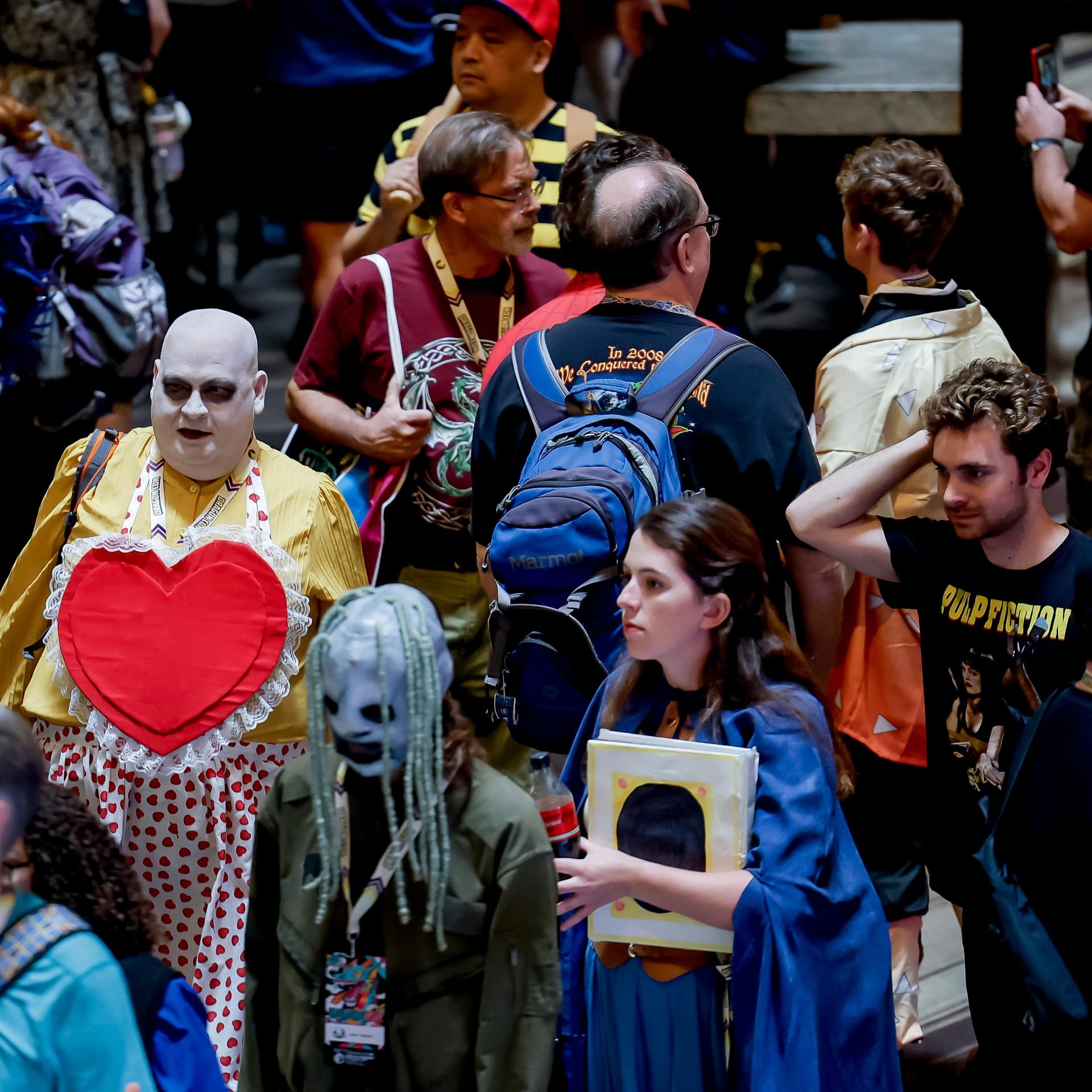
The episode explains how fan fiction moved from online “fringes” into mainstream publishing. It defines fan fiction as stories using pre-existing characters, shows, books, or even real people, often written for free in a “gift economy” (not sold due to copyright).
Key claims
AO3 and other platforms made fandoms less balkanized; low expectations let standout writing “blow you away”; traditional publishing is adopting fanfic practices like trope marketing, first-person present tense, and more queer pairings. Notable examples include “One Direction as a Fruit Bowl,” Dirty Dancing fanfic about Baby and Johnny, and Fifty Shades of Grey originating as Twilight fan fiction (via alternate-universe/AU).
Guests
Rachel Kersias, a lifestyle reporter for The Washington Post who reads and writes about fan fiction; she also discusses interviews with other fanfic writers, including Christina Lauren (Lauren Billings and Christina Hobbs), who met writing Twilight fanfic.
Written by AI. May contain mistakes. Listen to the episode to check what was said.
Chapters
Tap a time to open that second in VOThe Absurdity and Depth of Fan Fiction
0:00 to 1:59
Explore the surprising emotional depth found in absurd fan fiction concepts.
“One of the people that I interviewed for my story was telling me that she read a fanfiction about the bandmates of One Direction, but they're all fruit in a fruit bowl.”
Defining Fan Fiction
2:07 to 3:14
Learn what constitutes fan fiction and its various forms across genres.
“and why the publishing industry is starting to take it more seriously.”
The Evolution of Fan Fiction Platforms
3:14 to 4:30
Discover how fan fiction has transitioned from zines to online platforms.
“Like, could I understand politics if instead of this political relationship, it's a sexual relationship?”
The Gift Economy of Fan Fiction
4:30 to 5:47
Understand the unique characteristics of fan fiction as a gift economy.
“But Archive of Our Own was actually created by librarians and has a really strong archivist bent of, can we save and preserve all of these works?”
The Blurred Lines of Fan Fiction
5:47 to 7:12
Examine the debate on whether all creative works can be considered fan fiction.
“Well, I was going to say that, like, if the definition of fan fiction is something that's kind of based on or inspired by something else, then, like, almost everything we consume is kind of fan fiction, right?”
Fan Fiction's Impact on Traditional Publishing
7:12 to 8:00
Explore how trends from fan fiction are influencing mainstream publishing.
“Because so much of fanfic is based on copywritten work.”
Community and Emotional Connection in Fan Fiction
8:00 to 10:37
Learn about the sense of community and emotional ties within the fan fiction world.
“But the fact that all of this is being written without hopes of making money on it means that people have the ability to be way more creative, right?”
Why Fan Fiction is Becoming Mainstream
11:57 to 14:00
Uncover the reasons behind fan fiction's rise into mainstream literature.
“people don't think of it as like good writing or serious writing that, you know, it's just like super fans.”
The Evolution of Fan Fiction
14:00 to 17:39
Explore how fan fiction has evolved into a mainstream literary form.
“There is a lot of explicit works on Archive of Our Own and in fanfiction more general.”
The Impact of AI on Fan Fiction
17:40 to 20:14
Discuss the implications of AI in the fan fiction community and its authenticity.
“And so I'm generally inspired by when I look at fan fiction and you can comment or what have you.”
Transcript
Automatic transcript. May contain errors.0:01One of the people that I interviewed for my story was telling me that she read a fanfiction about the bandmates of One Direction, but they're all fruit in a fruit bowl. And she was like, what an absurd and outrageous idea for a story. And then she found herself incredibly shocked by how deeply moving it was, how they were able to convey all of these emotions of loss and meaning into this kind of ridiculous premise. Does the fruit get eaten? I believe different things happen to each of the fruits. They get sliced up. Yeah, exactly. It rots. Yes, exactly. Like, what is life in a fruit bowl? You know, it's kind of a mixed bag.
0:44Yeah, yeah. That's Rachel Kersias. She writes for the lifestyle section at The Post. Over the past year, she's become a big reader of fan fiction, which is fans making up stories about existing characters or even real people. A lot of it is based on popular books like Harry Potter or on TV shows like Parks and Rec. Other times, stories are a bit more unique, like, say, One Direction as a Fruit Bowl. Nothing is really off limits. For instance, like, since I was five years old, I've always wanted to know what happened to Baby and Johnny from Dirty Dancing. Not having searched for that particular couple, I feel incredibly confident that you would be able to find fanfic about them.
1:25and literally anything, you can find fanfic about Sesame Street. There are no gatekeepers in fanfiction. So I would be lying to you if I was like, everything is excellently written. But I think that the reputation is that fanfiction is poorly written, which actually just leaves you open to have your mind absolutely blown by some incredible, incredible writing. And because I think the expectations are low, when people blow you away, they really, really blow you away.
1:59From the newsroom of The Washington Post, this is Post Reports. I'm Colby Ickowitz. It's Thursday, September 18th. Today, we take a look at the world of fan fiction, how it's become so influential, and why the publishing industry is starting to take it more seriously.
2:24So I've been really excited to talk to you about this because like fanfiction, it's not something that I've like been a big reader of, but I know that it's something that people are incredibly into. And so let's like start with the very basics. What is fanfiction? Fanfiction is basically any story that is based on pre-existing characters or shows or books or worlds. And those pre-existing characters could be invented by another writer or creator, or it could be real-world fanfiction based on athletes, celebrities, politicians. Really, anything you could think of, someone has probably felt inspired to write about and these days now publish online.
3:05I will say in advance of this conversation, I did go like down a deep dive of Donald Trump fan fiction. And there's a lot of it. It is really fascinating to read political fan fiction because it's clearly a way that people are wrestling with current events, with power dynamics and trying to understand them kind of like a skew. Right. Like, could I understand politics if instead of this political relationship, it's a sexual relationship? Right. Right. Especially last year, there was so much political fan fiction about Elon Musk and Donald Trump. Oh, interesting. Like traditionally, where are they sharing and reading?
3:42Like where are people finding fan fiction? Initially, people, and when I say initially, I mean in the 1960s and 70s, there were zines and dedicated fans would write these works and compile them and send them to each other. but that was all very particularly in one show or one fandom. Like maybe we're both Star Trek fans and we're writing that fanfic. But the big shift that's happened in the past like 20 or so years is that now you can find most fandoms on these bigger platforms where all of them are kind of compiled together as opposed to balkanized into each fandom. And the biggest one, certainly the one that I use the most, is Archive of Our Own, also called AO3, though you can also find it on Wattpad and Tumblr and just in a lot of various places online.
4:30But Archive of Our Own was actually created by librarians and has a really strong archivist bent of, can we save and preserve all of these works? That's so interesting. I mean, how many people are writing fan fiction and then how many people are, like, engaging and reading it? A website like Archive of Our Own has tens of millions of unique visitors every month, which I think is pretty tremendous. I think when you go by, like, hits or clicks, It's a little difficult because, you know, if you're reading a chapter, it might be the same person again and again. But it's tough for me to say how many people are writing fan fiction.
5:04Some of the people that I interviewed said that before the Internet, they were just kind of inspired after reading, say, Sweet Valley High or whatever of just, I want to write a story about this. And it's almost this like intrinsic urge that we have when we hear stories. We want to contribute to them or be a part of them. And I spoke with one person who told me that the whole idea of fanfiction kind of harkens back to like ancient troubadours, where it was they would come to every town and they would have these certain characters, these archetypes that everyone knew. And those are who they would tell stories about because that's who everyone was interested in.
5:43And it's kind of the same thing of like these characters that are kind of in the ether. What can we do with them? How can we make them special? And that's why I think you see on fan fiction and, honestly, traditional publishing, a lot of takes that involve Greek mythology or biblical tropes or all of these different things that have kind of been in the creative ooze for a long time. Well, I was going to say that, like, if the definition of fan fiction is something that's kind of based on or inspired by something else, then, like, almost everything we consume is kind of fan fiction, right? I mean, how do you, like, what's the distinguishing?
6:21So that is such a good question because I think that that's something that people who are really involved in fanfiction are wrestling with. If you ascribe to this kind of big tent philosophy, then you're right. Basically, everything is fanfic, right? Like, most of Shakespeare's stuff, for sure, like Romeo and Juliet is fanfic of Pyramus and Thisbe. And then all of his historical plays are basically real person fiction, right? I mean, East of Eden is definitely Bible fanfic. And by that measure, so is Paradise Lost. I mean, I could go on and on. I mean, most of the recent Pulitzer Prize winners for fiction are technically fanfic, right?
6:56Like, think about Percival Everett's James, which is a new version of Huckleberry Finn told from a different perspective. Now, I think that that is the big tent, right? Fanfiction is everything and everywhere. But if everything is fanfiction, then, like, what is the point of a definition? Right. And so the more that I was talking to people who really like wrestle with these questions on a daily basis, what they were telling me is there is something very unique about things that are created in the gift economy, right? Because so much of fanfic is based on copywritten work. You can't sell it, right?
7:33So you're just doing it for the fun of it and you're doing it to connect with other people and with the stories. And so there's a version of fan fiction where it is things happening kind of like outside of the marketplace. So when you say gift economy, you mean like people are just putting this stuff out there for people to read for free. Right. Exactly. Because you can't sell it. That would be, you know, that would be breaking the law. If you were trying to make money on your own Harry Potter story, like you might get sued. Yeah. Almost certainly. But the fact that all of this is being written without hopes of making money on it means that people have the ability to be way more creative, right?
8:11And if I'm not worried about how the audience is going to respond or what advertisers will do, I can really play around both in terms of like form, in terms of subject. And, you know, if I am running, say, an ABC procedural, I have a lot of shareholders who I have to engage with before I can decide to do a pairing. If I'm just someone who watches the show and I imagine two people being together, I can just write it. I can just make it happen. And so I think that that's why we're starting to see and have been seeing now for some years a lot of practices that started in fanfiction now bubbling into the traditional publishing world because a lot of the most successful things that we've seen begin in fanfiction are now kind of entering the traditional marketplace.
9:00Definitely. We're going to talk more about that for sure. But I am wondering, like, for the story that you wrote about fanfic, you actually interviewed like several fanfic writers. What did they tell you about why they love writing it? A big part of it is the community, that you are writing things for people who share your kind of niche or particular interests, and that it kind of becomes a writing seminar. There's a big part of fan fiction where you have what are called beta readers. You have people read your stories before you publish them kind of to a broader audience, and those people are kind of giving you tips.
9:37So especially if we're talking about teens, for example, being a very famous demographic of fanfic writers and readers, there's a lot of talk out there about how, like, teens don't like writing. Teens aren't interested. It's like, well, a lot of them are certainly very interested in writing about things that they're already interested in. And guess what? It's making them better. I also spoke to the writing duo who go by the pen name Christina Lauren. Their names are Lauren Billings and Christina Hobbs. They actually met writing Twilight fanfic. and now they're best-selling authors together. And one thing that Christina told me that was so lovely was she compared the fanfiction community to going to a concert.
10:17I just remember it's the same feeling you get when you're in a concert where you're just surrounded by people who are sort of like as breathlessly happy about something as you are that like share joy and that's what it is. The fact that like people love a thing so much they want to read, you know, Harry Styles as an apple. I have friends whose, like, frontal lobes were forged in the flames of fanfic. Like, since they were teenagers, they have been in this world. And that's not me. I literally got into it, like, a year ago. And I think that's why I can really see now, like, oh, there's so much fanfiction everywhere, and I'm just noticing it.
10:56And I lived so much of my life not seeing it. But with those friends, I feel like my relationship with them is so strengthened, because we talk about fan fiction all the time.
11:10After the break, how fan fiction leapt from online fringes into the mainstream. We'll be right back.
11:27When it comes to the big questions, who you ask matters. from breaking news to politics that impact your life to advice you can trust. Get answers you don't have to question with Ask the Post AI, trained exclusively on post journalism with clear sourcing. And if we don't know the answer, we'll tell you. Ask the Post AI. Find it on WashingtonPost.com or in the app. You know, this idea that fanfic, you know, people don't think of it as like good writing or serious writing that, you know, it's just like super fans. But you said that it's starting to seep into kind of the main publishing world. What does that mean?
12:10How is it crossing over? Some of the writers that I spoke to told me that it used to be seen as almost like a black mark on you if you were a fanfic writer and now trying to go traditional, that it was like weird or something like that. That is definitely no longer the case. Basically, you see agents seeing popular fics and soliciting those authors to say like, ooh, do you think that we could turn this into a traditionally published book? Or do you have any pitches? Because I love your writing. You also see, I think, based on the popularity of fanfic, the way that books are marketed is so, especially genre books, it's based on tropes.
12:49Like they'll be like, oh, only one bed. She fell first, he fell harder. Like, all of these various things. Like, Archive of Our Own didn't invent the one bed trope, but it certainly popularized being able to search for it. And so now people know that they can kind of, like, search for these things. And they want to search for them in traditionally published works as well. Another thing that I learned when I spoke with writers was that they feel like the first-person present tense writing is something that was popularized through fan fiction. this sense of like deep urgency in telling a story and has since seeped into traditional publishing.
13:25And I would say even more broadly, like a very popular thing to do in fanfic is queer pairings that didn't exist in the canon work. And these sometimes angsty, sometimes really joyful stories about these pairings. And just overall, I would say in traditional publishing, you're seeing a lot more queer romances. Like what I'm gathering is that a lot of the fanfic has to do with romantic relationships. what happened next or relationships that didn't exist in the original work and you want to know what would happen to them. So like, is the content PG or is it often sex forward? There is a lot of explicit works on Archive of Our Own and in fanfiction more general.
14:07I would say that there's so much wrestling with desire. And sometimes that is PG. Like there are absolutely some fan fictions that you could read to your seven-year-old. And a lot of them have ratings, like they'll say explicit or mature or teens and up or what have you. But I would definitely read them first before you start reading them to your seven-year-old. And a lot of fan fiction has a reputation of only being smut. And there are absolutely so many fan fics that are just about characters getting it on in like very particular and sometimes shocking ways. But I think that doesn't entirely encompass what fan fiction is.
14:46Interesting. So what do you think has changed that has made it kind of more mainstream? I think part of it is that traditional publishing is like looking for ways to be profitable. And now you can literally see how many people are reading these fan fictions. And it's millions of people. Another thing is that a lot of people who now comprise the literary world, like editors and agents, grew up reading fan fiction. And so they don't view it askance in the same way where maybe previous generations did. They view it as, yeah, this shaped me. And these are legit writers. Also, I just think that you see a growing awareness that you can start writing anywhere, right?
15:30Like you don't need to have a particular pedigree. Like people can go on TikTok and go viral with a certain story and suddenly they have a book deal. So why not fan fiction writers? I mean, one of the most famous examples of that, of course, versus the Fifty Shades of Grey. A hundred percent. And yeah, famously Fifty Shades of Grey was Twilight fan fiction. Right. And I think that that really opened people's eyes even to the idea that, oh, but they have different names. There's no vampires. Yeah. I always wondered about that, actually. Can you explain that? Because in the original version of the fanfic, was it Edward and Jacob and Bella?
16:06Was that her name? I have to be totally honest with you. This is a major fan fiction blind spot for me. I have not read Twilight. I have not read Fifty Shades of Grey. But my understanding is that it was always what's called like an AU, an alternate universe. I see. And this is quite popular, right? Like there are a lot of times where you'll find characters, but maybe instead of meeting at work, they met in a coffee shop. Maybe one of them is actually a rock star and the other is their bodyguard or things like that. You see characters kind of transposed into totally different worlds. Interesting.
16:39So then from there, like these fanfic authors that you spoke to, are they excited by the fact or optimistic that there is a way for them to then move into like a profitable form of writing? It totally depends on the person. I think some people probably feel like anyone who gets a traditional contract is like selling out. I think some people are pretty jazzed about the idea of making money off of their pastime. I think it also depends on how we talk about fanfiction, right? Like, for some people, fanfiction is a stepping stone to traditional publishing. For others, it's an end in itself. And it is pleasurable for its own purpose.
17:23And there's no need to then get a book deal or something like that. You know, with the growing interest in fanfiction, like, where do you think it goes from here? Like, is it just going to keep getting bigger? I feel like it's already pretty big. I think also I would be remiss not to talk about like I think fan fiction is like somewhat pure, but like fandoms more broadly can be really toxic and messed up. And so I'm generally inspired by when I look at fan fiction and you can comment or what have you. The comments are pretty tame that there is this understanding that this is somebody who gave you a gift, right?
17:59Like they didn't have to write this. They wrote it in the hopes that you would enjoy it. If you don't enjoy it, basically like keep your mouth shut and move on. Yeah, yeah. But I think that as you find more people getting interested in it, maybe fewer people have that understanding of like, let's try to be nice here. That being said, I also think that the kind of what are the most popular will always change and kind of ebb and flow a little bit. And so I'm just kind of curious to see what happens with that. And I don't really even have any guesses because I'm always just shocked by what people write about in a good way.
18:35Like, to me, one of my favorite feelings in the world is being surprised. And I'm always surprised when I look at fan fiction. Yeah. Isn't it what you said about it being pure and this opportunity for people to kind of express themselves and be creative? And I was sitting here thinking, like, I wonder how AI is going to impact that. Have any of the authors you've spoken to, are they worried about that? I have absolutely seen controversies online about people who used AI to publish fanfic. And in a lot of ways, that flies in the face of everything fanfic is, which is you're doing the effort because the doing is pleasurable.
19:16Yeah. But I also think some people just like want that dopamine rush of publishing something and then hopefully people respond to it and what have you. So I've definitely seen those controversies. I'm sure like basically everything else, we will see kind of what AI does or can do. I have also seen a lot of people putting their stories on private mode in the hopes that kind of like those AI crawlers that train themselves on websites won't be able to train themselves on the fix that people write. So it is absolutely a presence in the fan fiction community and people are figuring out kind of how to combat it or wrestle with it or like figure out is there an appropriate use for it?
19:57And I think probably different people come down in different places on that. But to your question of like the quote unquote purity of fan fiction, I think that for me as somebody who is literally a professional writer and like writes because I like it, but also because like I have to. It was really delightful for me to get into fan fiction and remember like a lot of people write just because it's fun as hell. That really inspired me and just made me feel really grateful. every time I sit down like at the keyboard. I think about how there are people who sit at the keyboard just in the hopes that like maybe they'll make someone else giggle or maybe they'll make someone else cry.
20:37And like just doing it for the love of the game is so beautiful to me. I love that. Thank you so much for coming on and talking to me about this. Yeah, thank you for having me. I think of a better way to end the conversation, so thank you.
20:55Rachel Curzius is a lifestyle reporter for The Post. That's it for Post Reports. Thanks for listening. Today's episode was produced by Sabby Robinson. It was edited by Peter Bresnan and mixed by Sam Baer. Special thanks to books editor John Williams. I'm Kolbie Ickowitz. We'll be back tomorrow with more stories from The Washington Post.
21:21You know, I used to have a fantasy that I would play their child. in like a Dirty Dancing sequel. So maybe I will write that. I think maybe you should. A story about their love told from the perspective of their child sounds incredible and I would absolutely read it. Okay, well, I'll send you my first draft. I'm looking forward to it.
21:44When it comes to the big questions, who you ask matters. From breaking news to politics that impact your life to advice you can trust. Get answers you don't have to question with Ask the Post AI. Trained exclusively on post journalism with clear sourcing. And if we don't know the answer, we'll tell you. Ask the Post AI. Find it on WashingtonPost.com or in the app.
From the publisher
In fan fiction, nothing is off limits. Writers create stories about popular media like “Twilight,” while others envision romantic relationships between world leaders. Until recently, this type of fiction wasn’t taken seriously by the publishing world. But now, major deals are being made — like a reportedly seven-figure movie rights deal paid for a book that began as Harry Potter fan fiction.
Host Colby Itkowitz speaks with lifestyle reporter and fan fiction reader Rachel Kurzius about what distinguishes fan fiction and why the genre has become so appealing.
Today’s episode was produced by Sabby Robinson. It was edited by Peter Bresnan, and mixed by Sam Bair.
Subscribe to The Washington Post here.